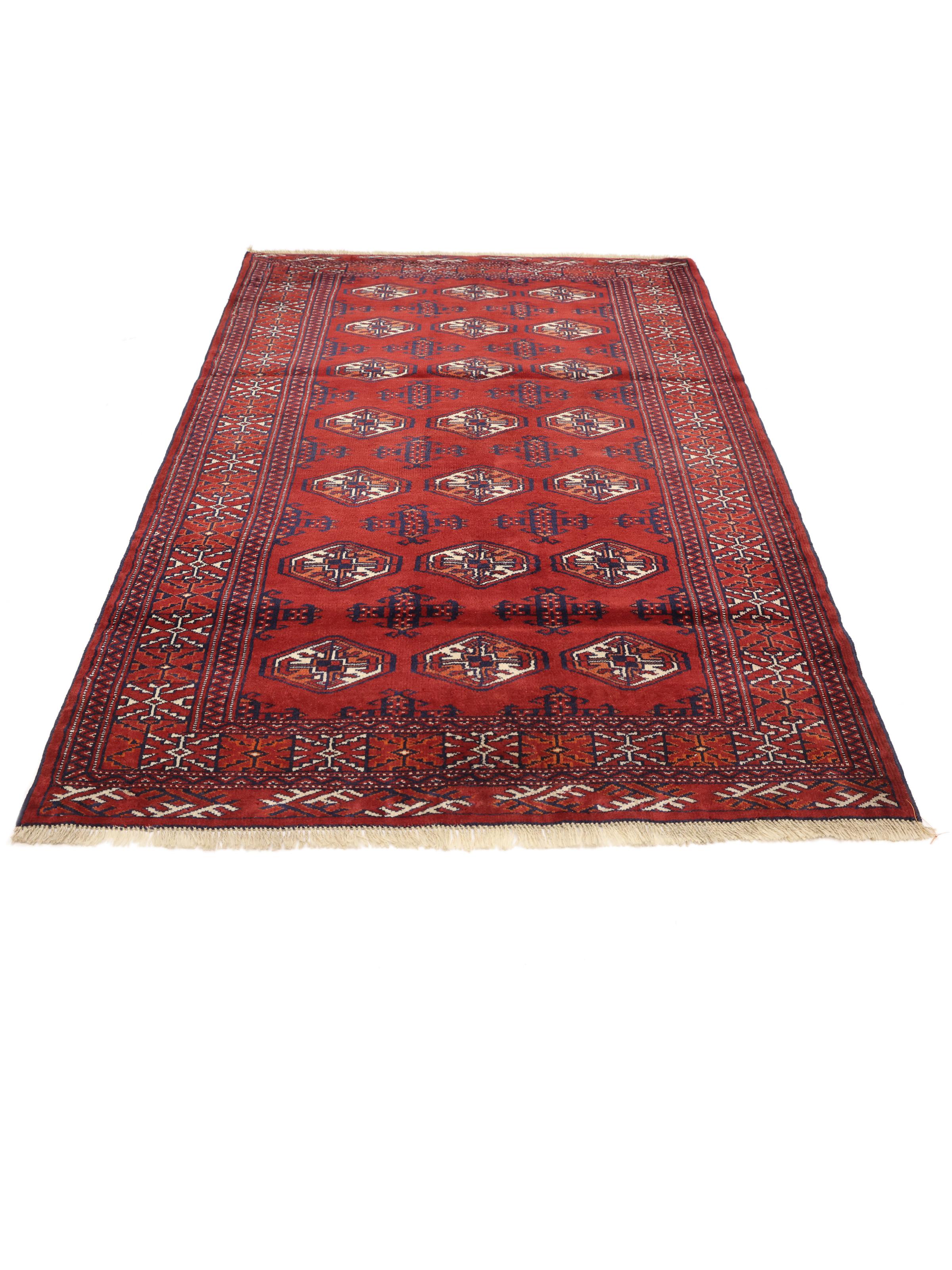
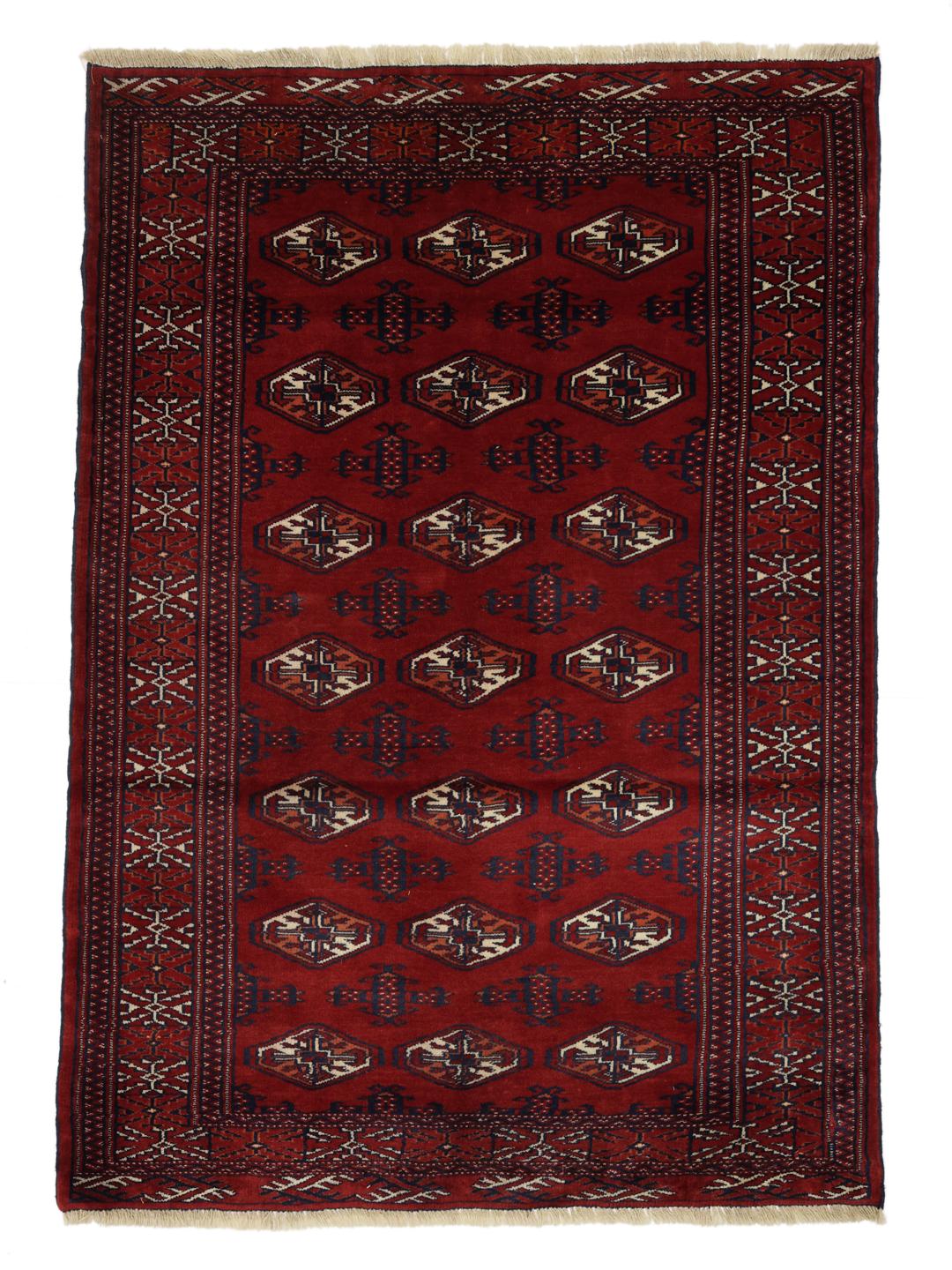
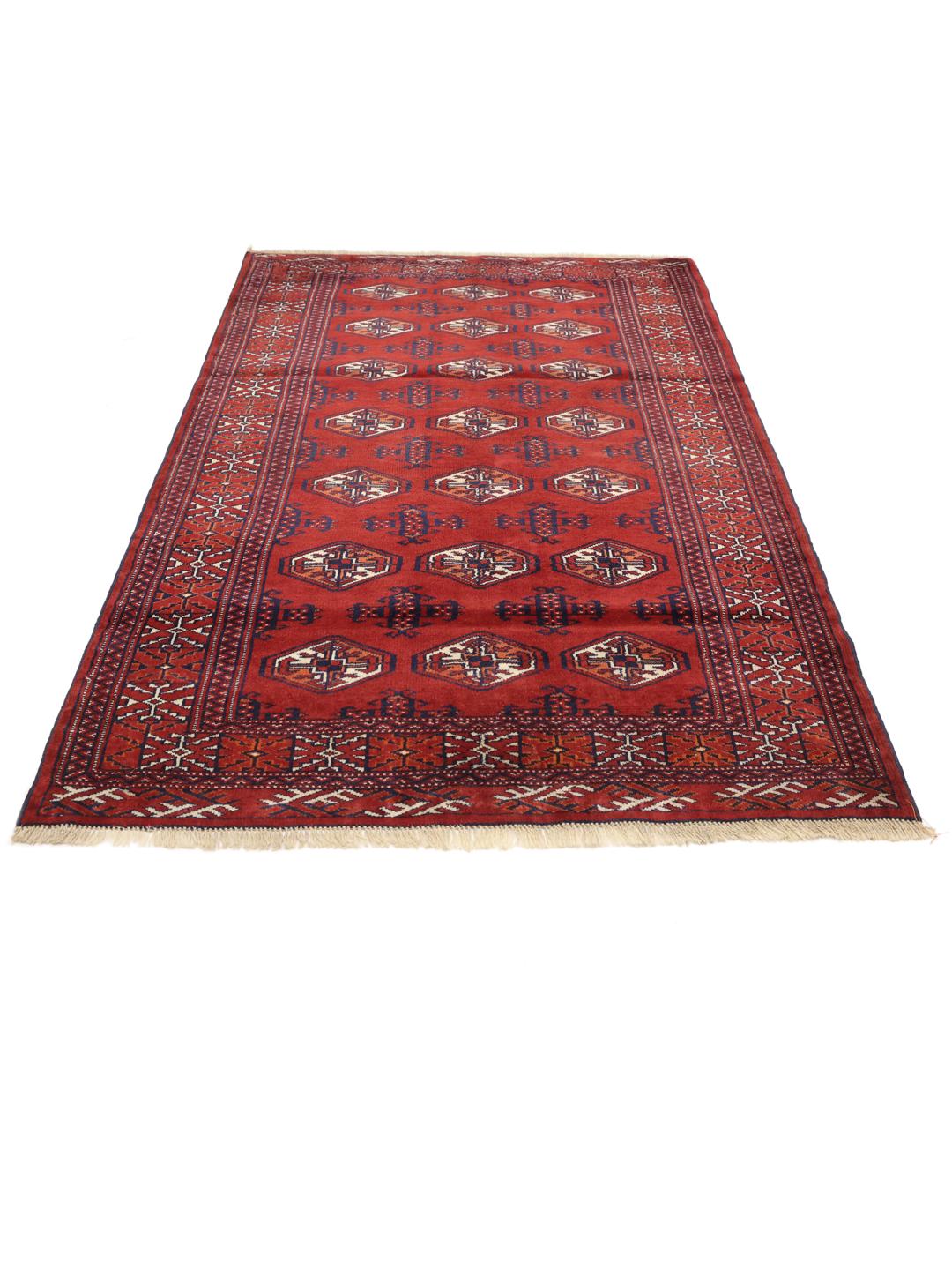
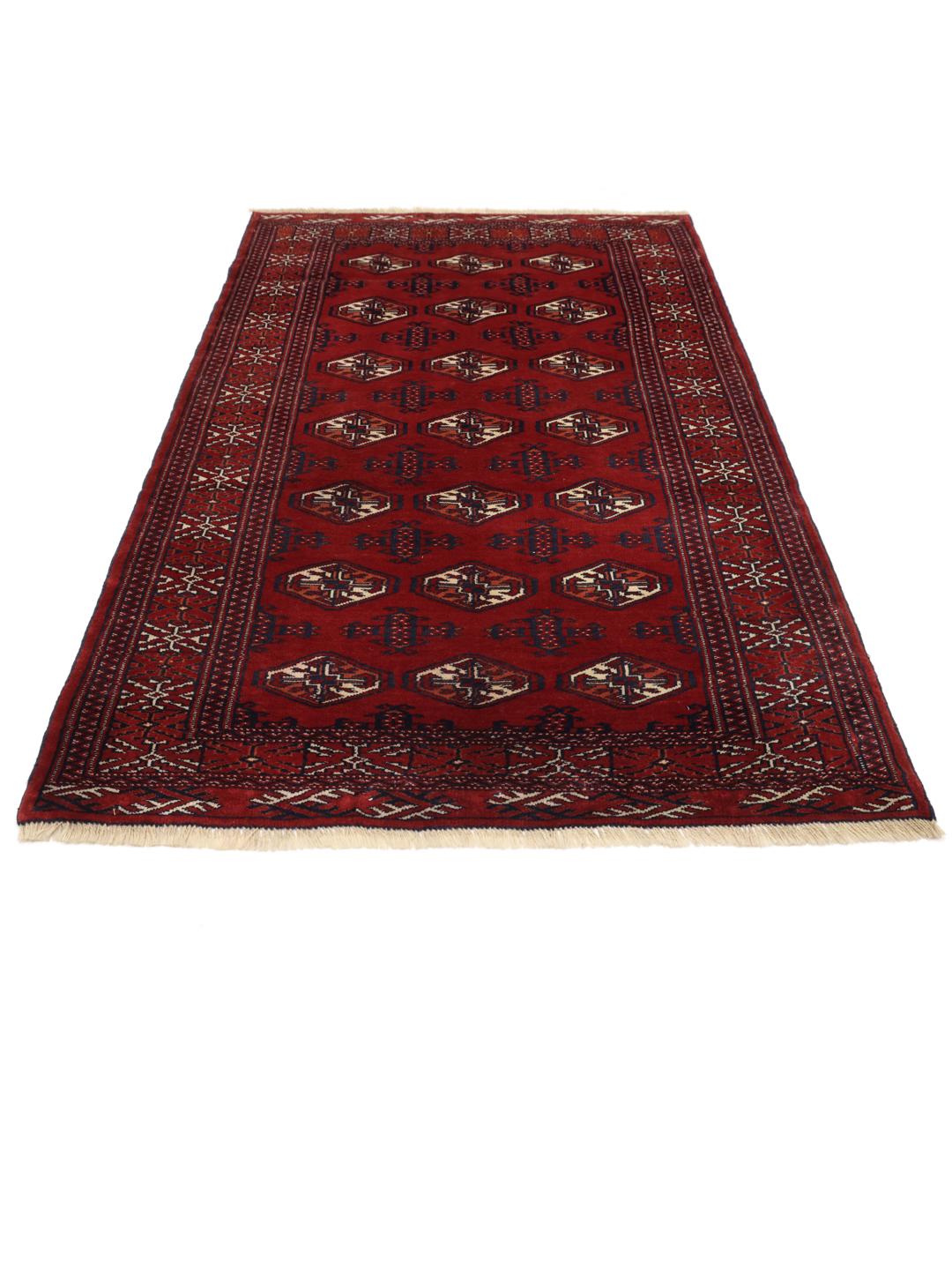
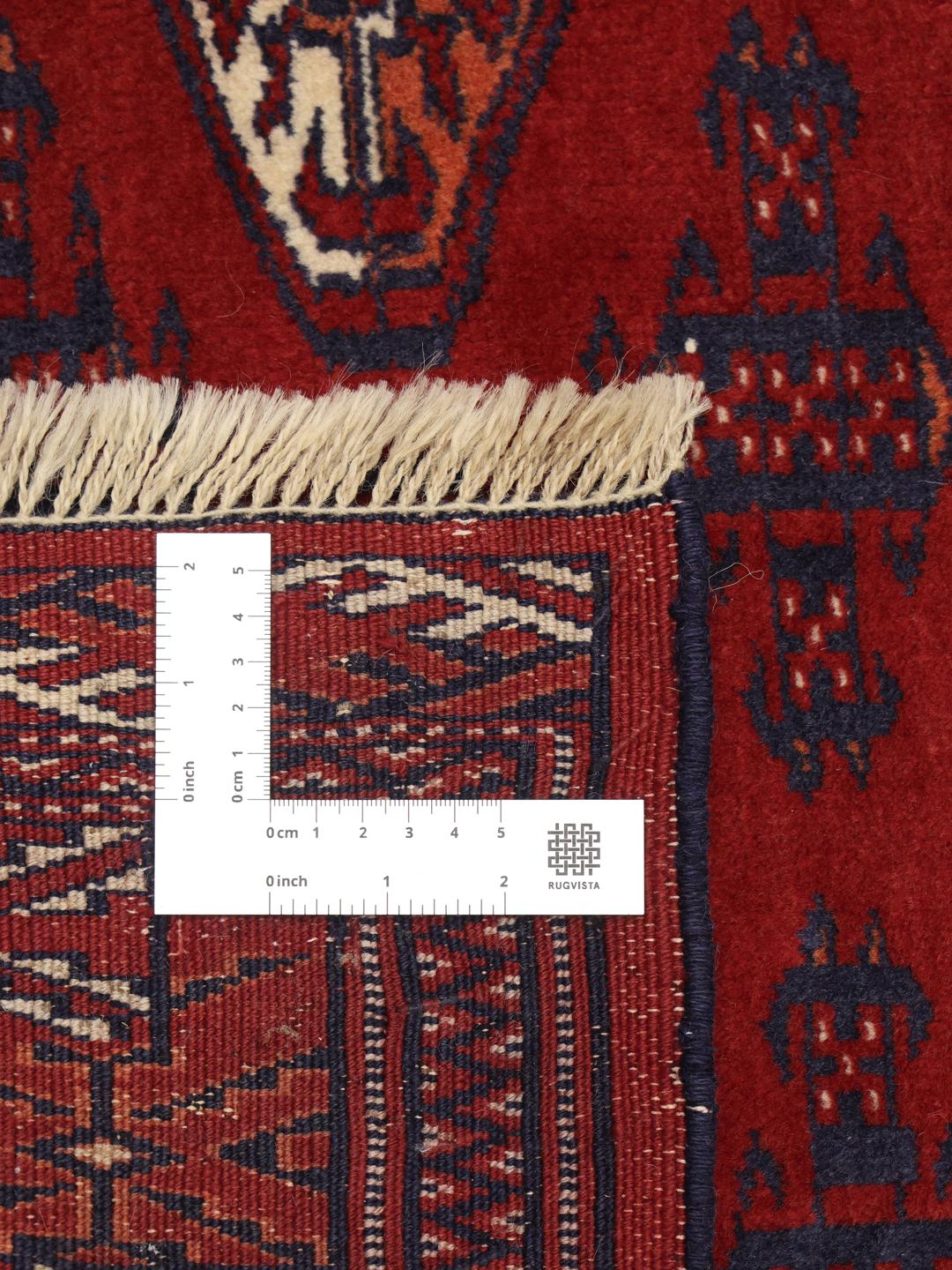
The Turkaman rug tradition traces its roots to the nomadic tribes of Central Asia, where weaving was a vital part of daily life and cultural identity. Over centuries, these weaving practices migrated and evolved as tribal groups moved across the region, eventually influencing the textile arts of the broader Middle East. Today, these rugs are celebrated for their distinctive aesthetic and the profound sense of heritage they carry.
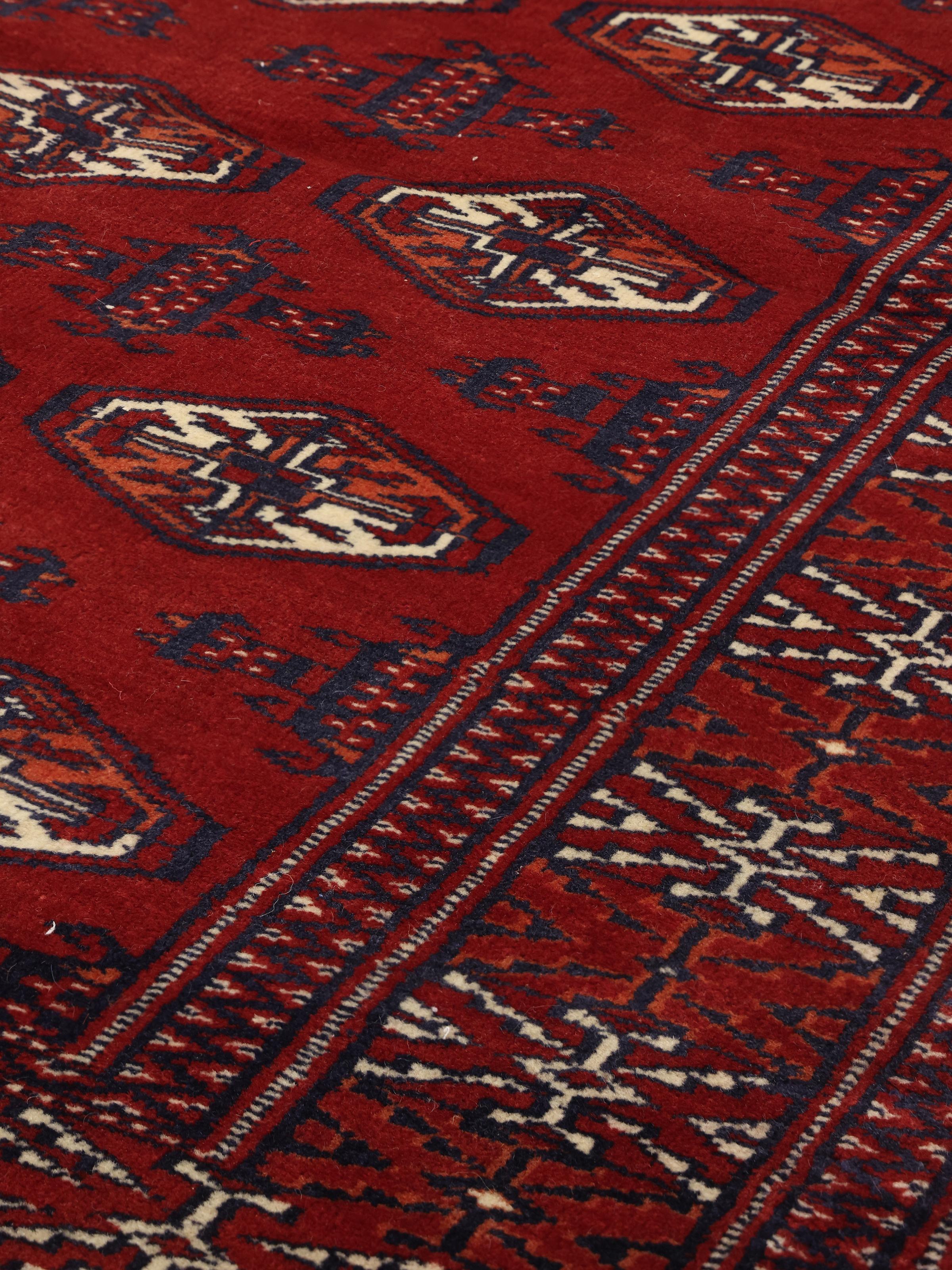
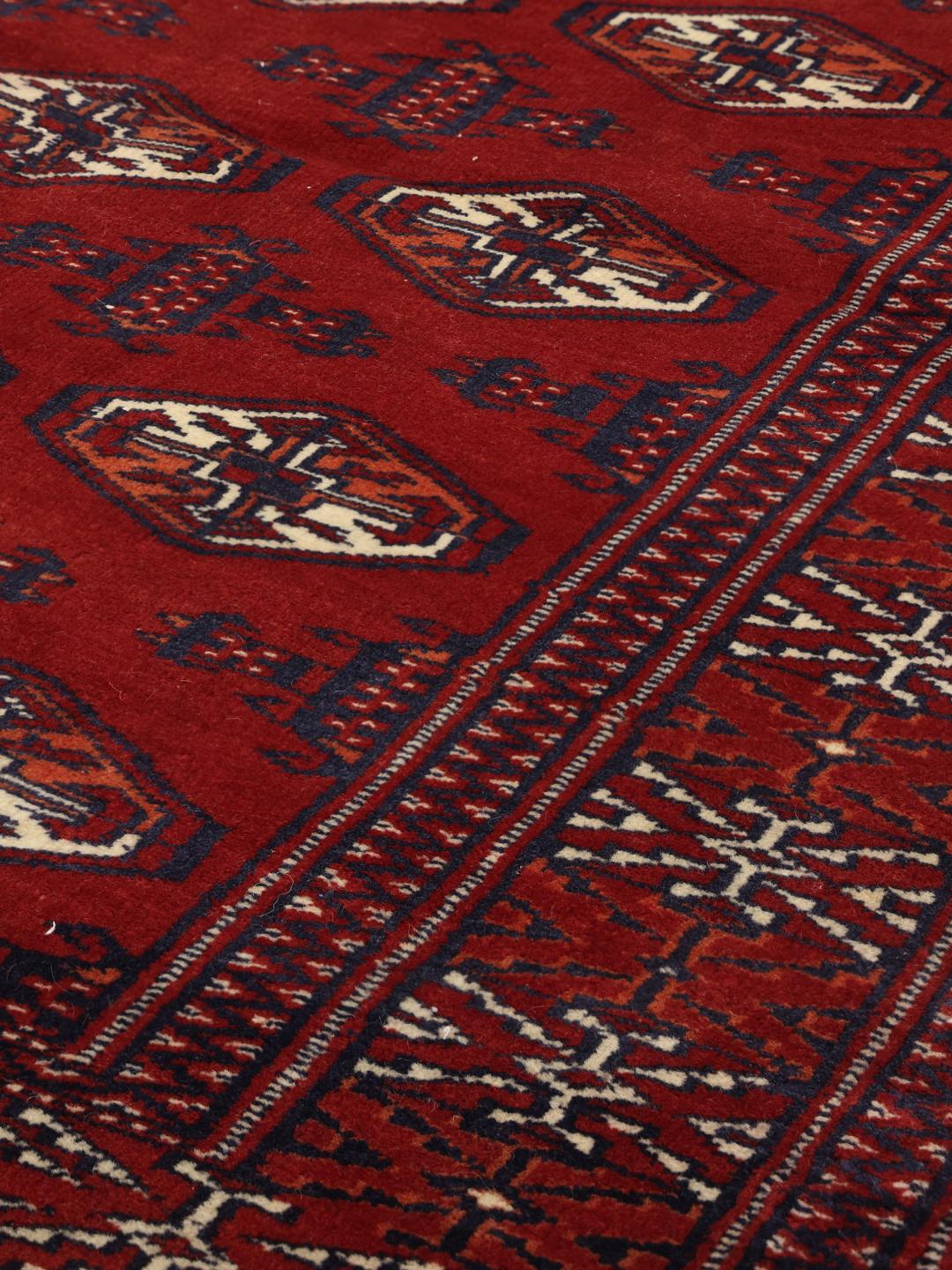
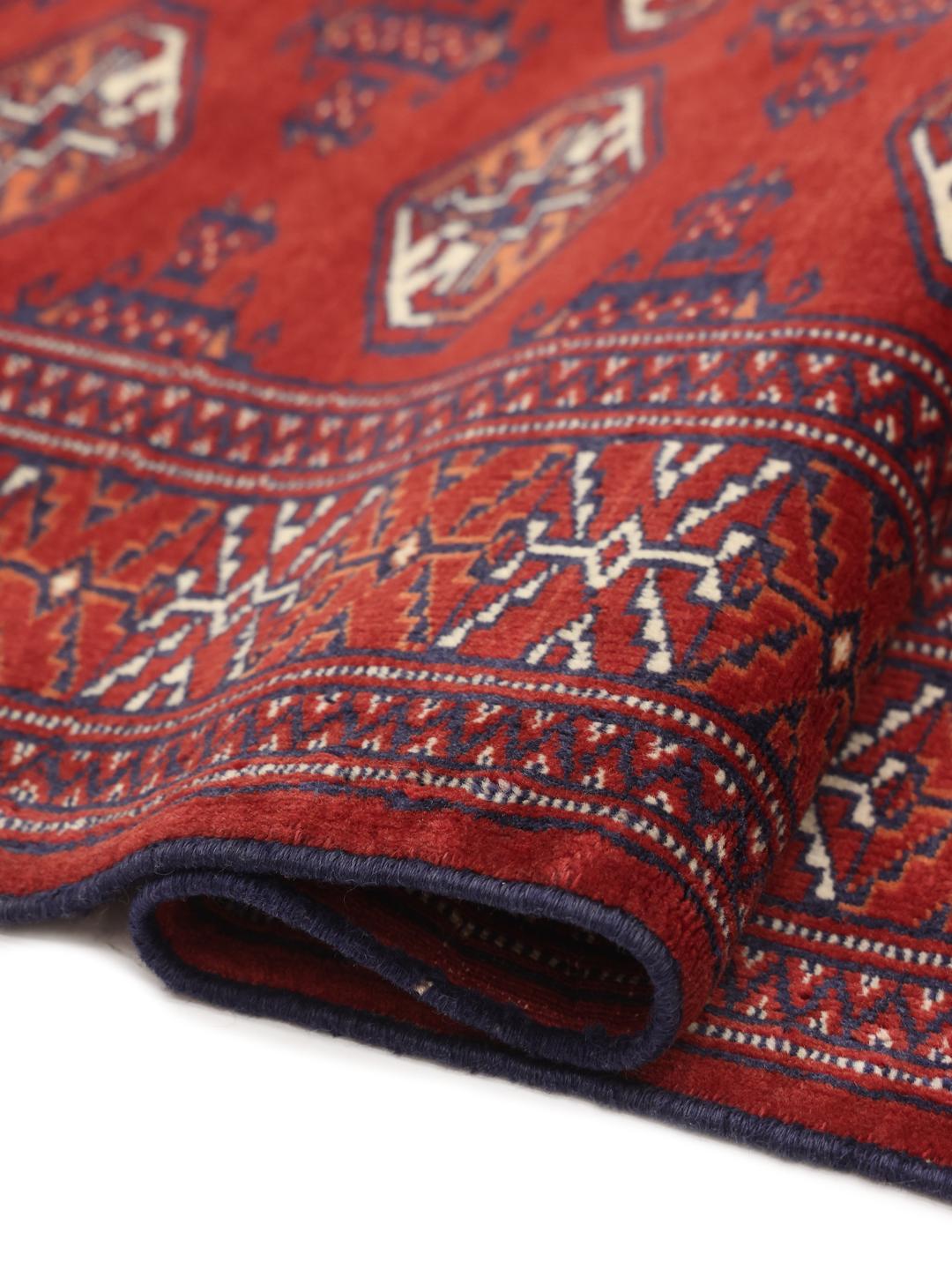
The terminology surrounding these rugs often refers to specific tribal affiliations and regional styles, each with its own set of technical nuances. The use of high-quality wool, often sourced locally, is a cornerstone of this craft. By employing traditional knotting methods, weavers are able to create a pile that is not only dense and durable but also possesses a natural, subtle sheen that catches the light beautifully.
Signature design elements often include the repeating gul, a stylised medallion motif that represents the tribal lineage and history of the weavers. These motifs are usually arranged in a formal, grid-like structure, framed by complex, multi-layered borders that showcase the weaver's attention to detail. The deep, earthy red tones seen in this piece are a hallmark of the tradition, symbolising warmth and endurance.
Owning a Turkaman rug is an opportunity to connect with a storied past. Collectors and enthusiasts value these pieces for their authenticity, the skill required to produce them, and the fact that they represent a living history of nomadic craftsmanship. By bringing this rug into your home, you are preserving a tradition of excellence and securing a piece that will continue to gain character and value as the years pass.