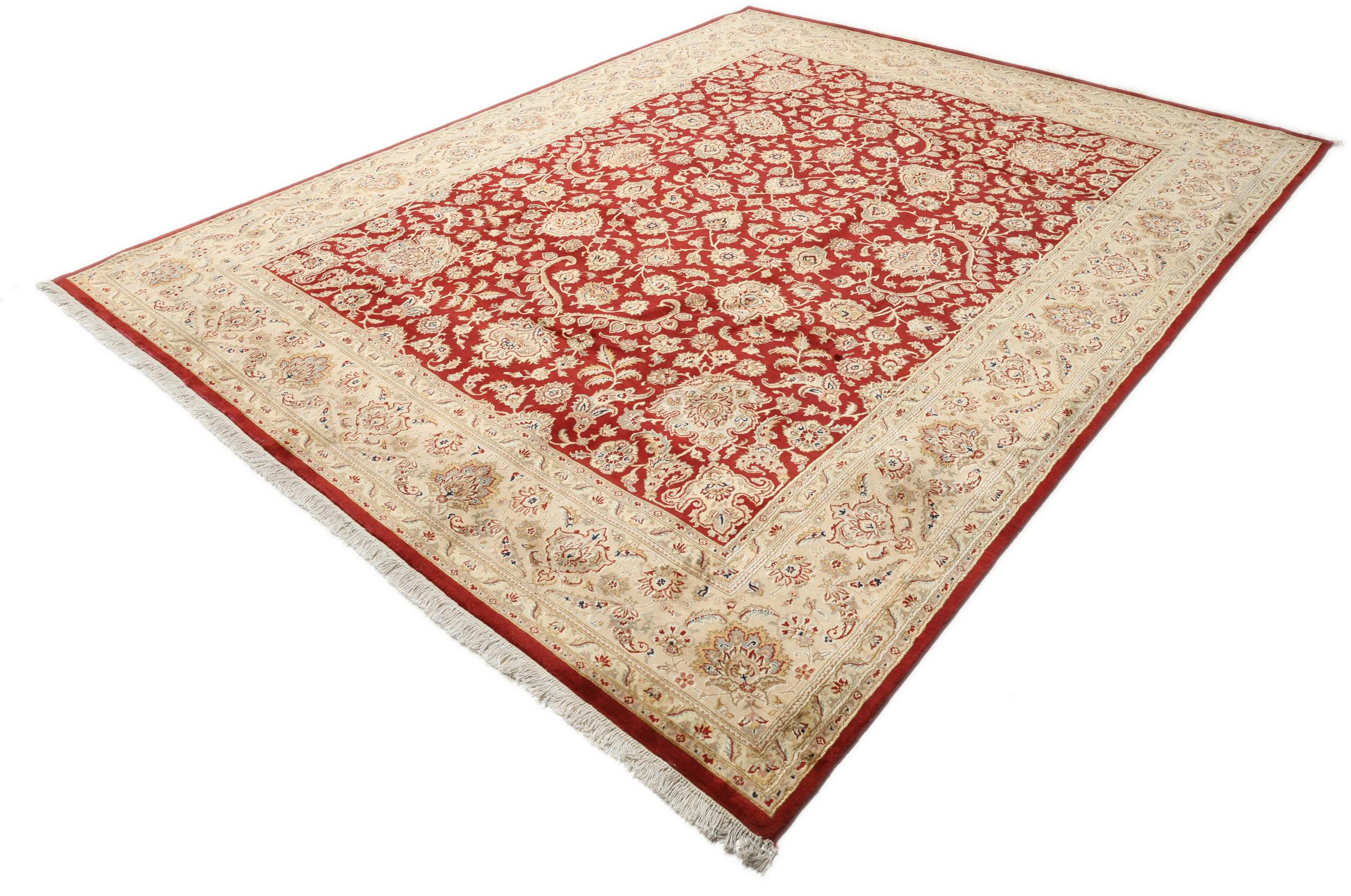
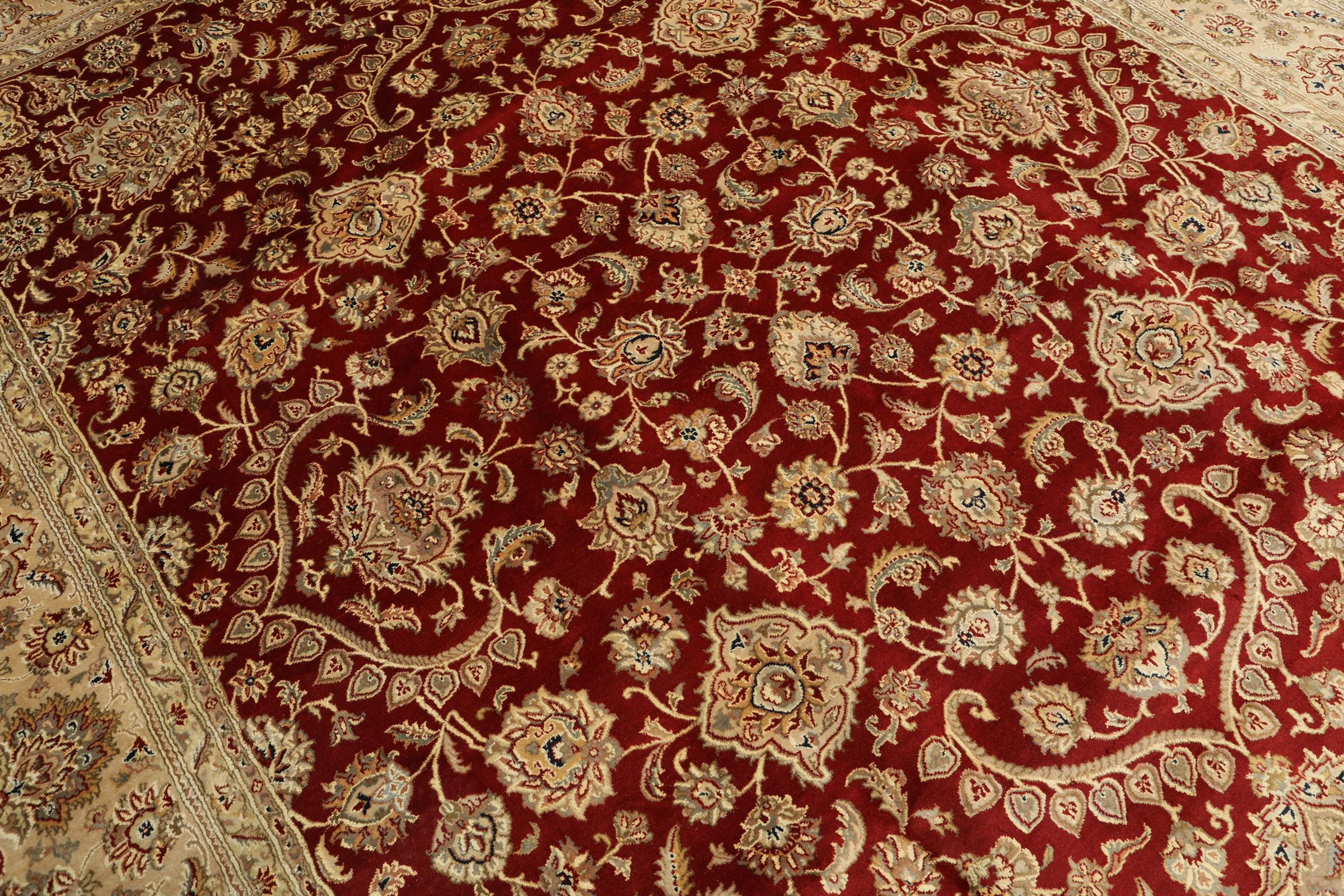
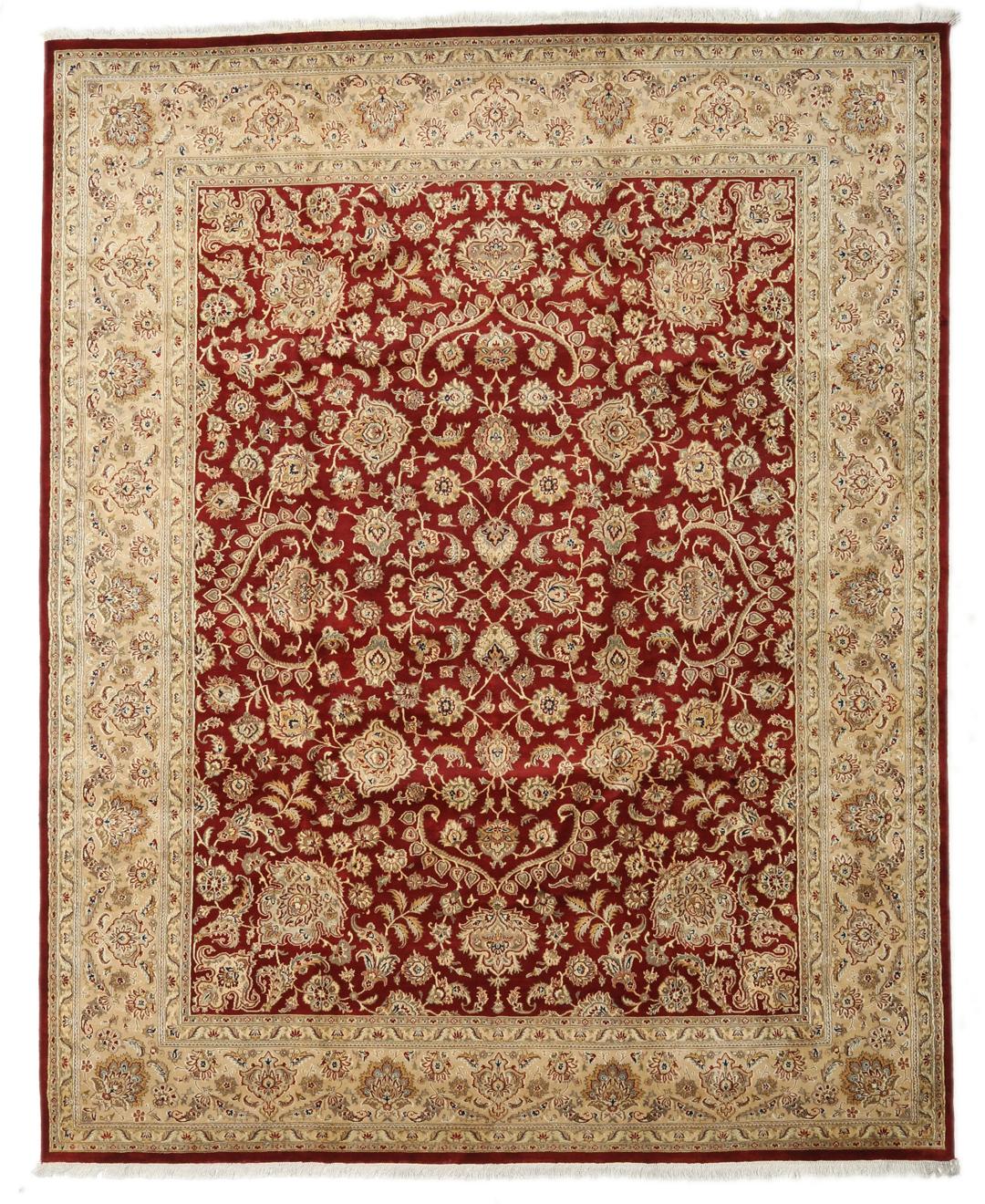
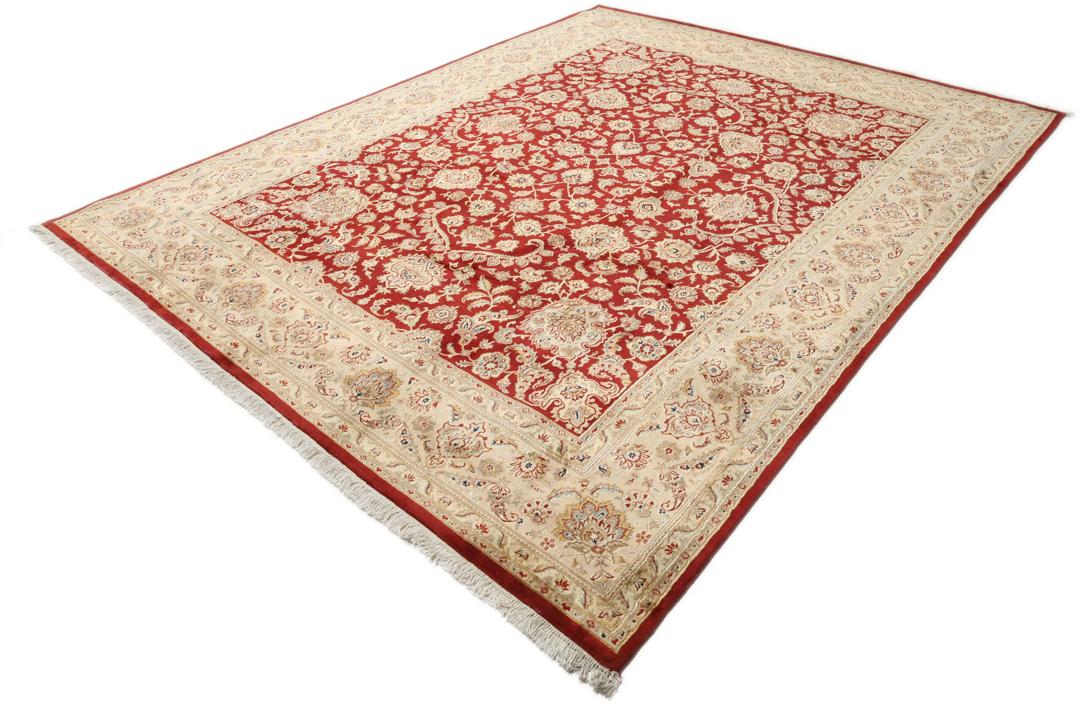
Tabriz rugs take their name from the historic city of Tabriz, located in the north-western region of the Middle East. This city has long been a vital hub for the textile trade, serving as a crossroads for artistic influences moving along the ancient Silk Road. While the tradition originated in this historic region, the skill and techniques have spread globally, with India now serving as a prominent centre for producing high-quality examples that honour these original design principles.
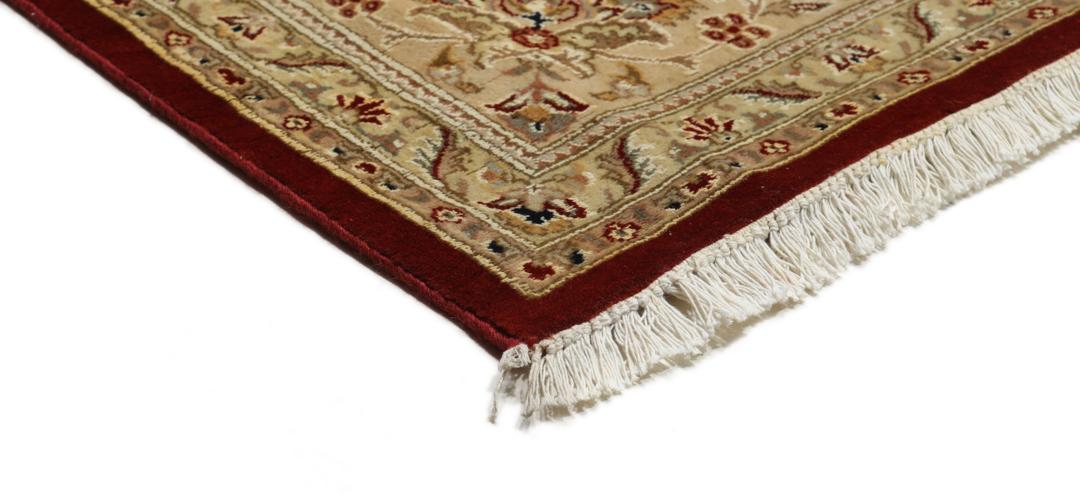
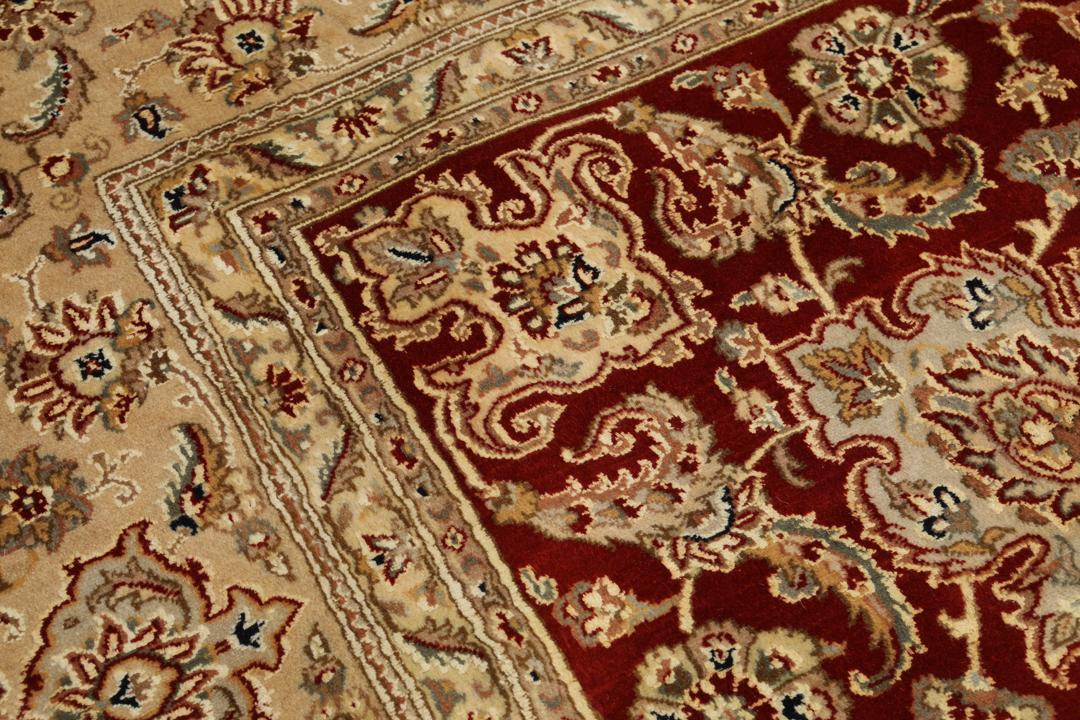
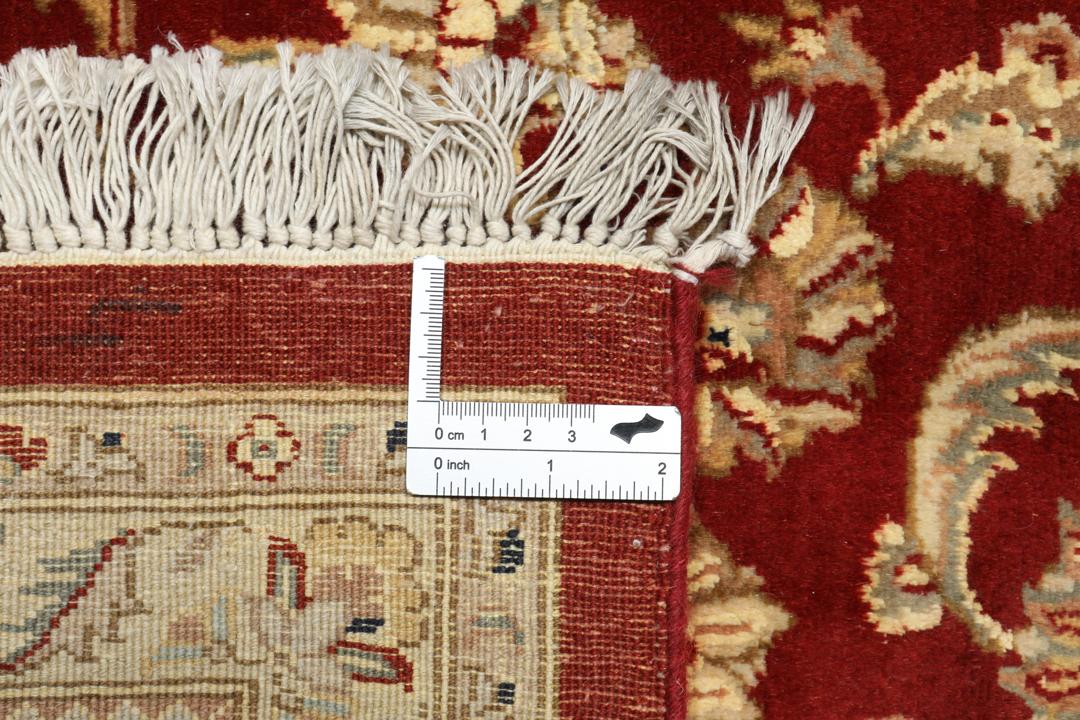
The term Tabriz is synonymous with a high standard of precision and artistic variety. These rugs are celebrated for their sophisticated construction, which often utilises a dense knotting technique to allow for incredibly detailed and complex patterns. This approach to weaving is what gives the rugs their legendary durability and fine, lustrous pile, making them prized possessions that can withstand generations of use while retaining their aesthetic vitality.
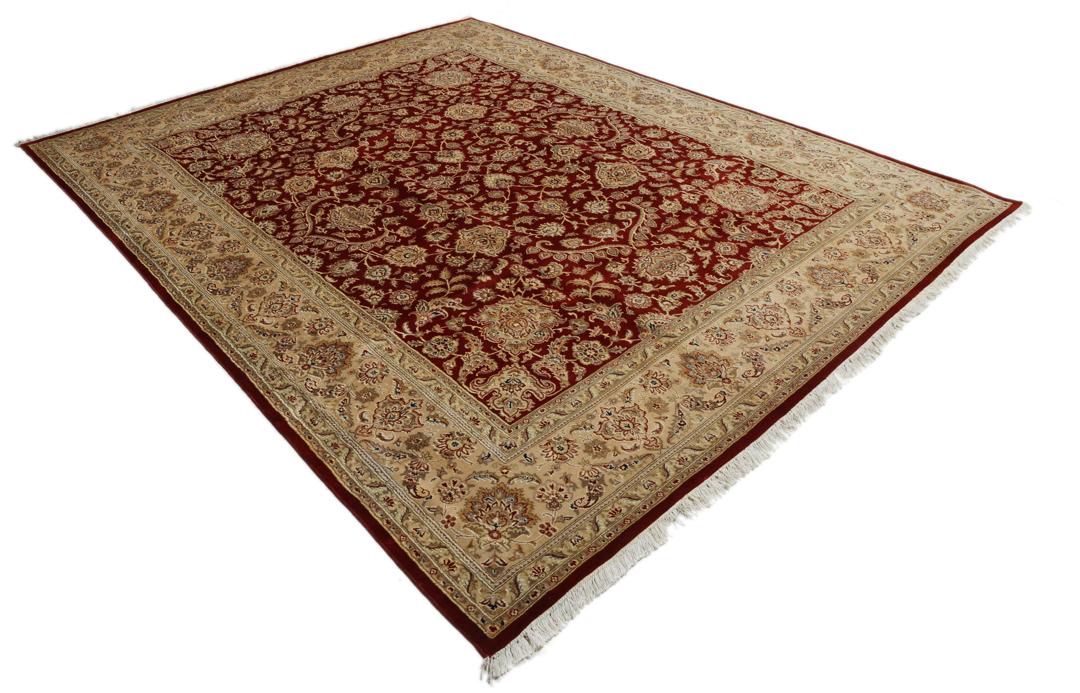
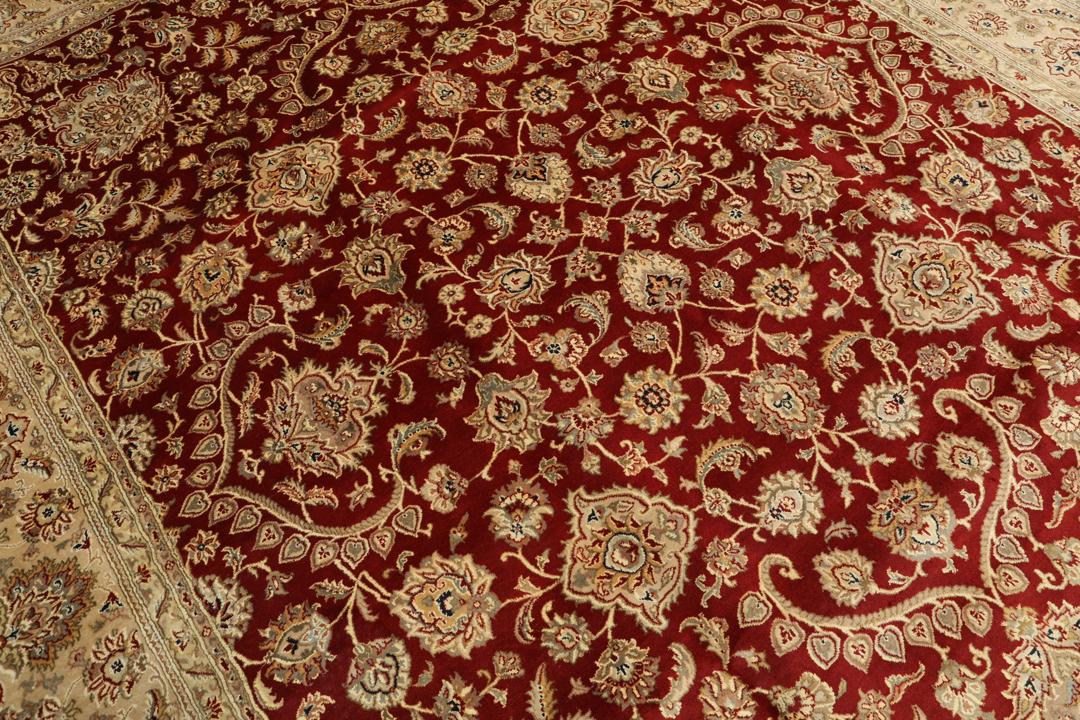
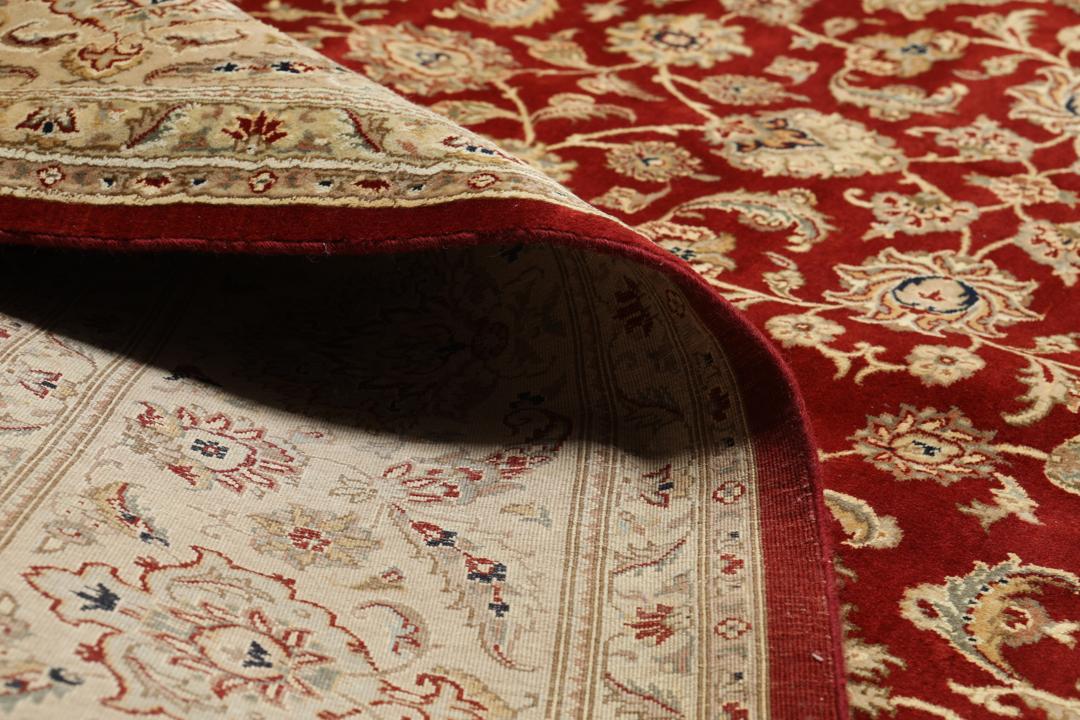
Visually, the Tabriz style is known for its formal beauty. It frequently features a central medallion surrounded by a field filled with intricate floral sprays, vines, and palmettes. The border is usually just as detailed, framing the central motifs with a repeating rhythm of botanical elements. While this specific piece showcases a classic red and beige palette, the tradition is vast, often incorporating a wide range of colours that highlight the complexity of the woven design.
Collectors and design enthusiasts value Tabriz rugs for their cultural weight and the undeniable skill required to produce them. Owning a piece from this tradition is an invitation to engage with a history of artistic excellence that spans centuries. It is not merely a floor covering but a legacy of human effort, representing a standard of beauty and functional utility that remains as relevant today as it was in the royal courts of the past.