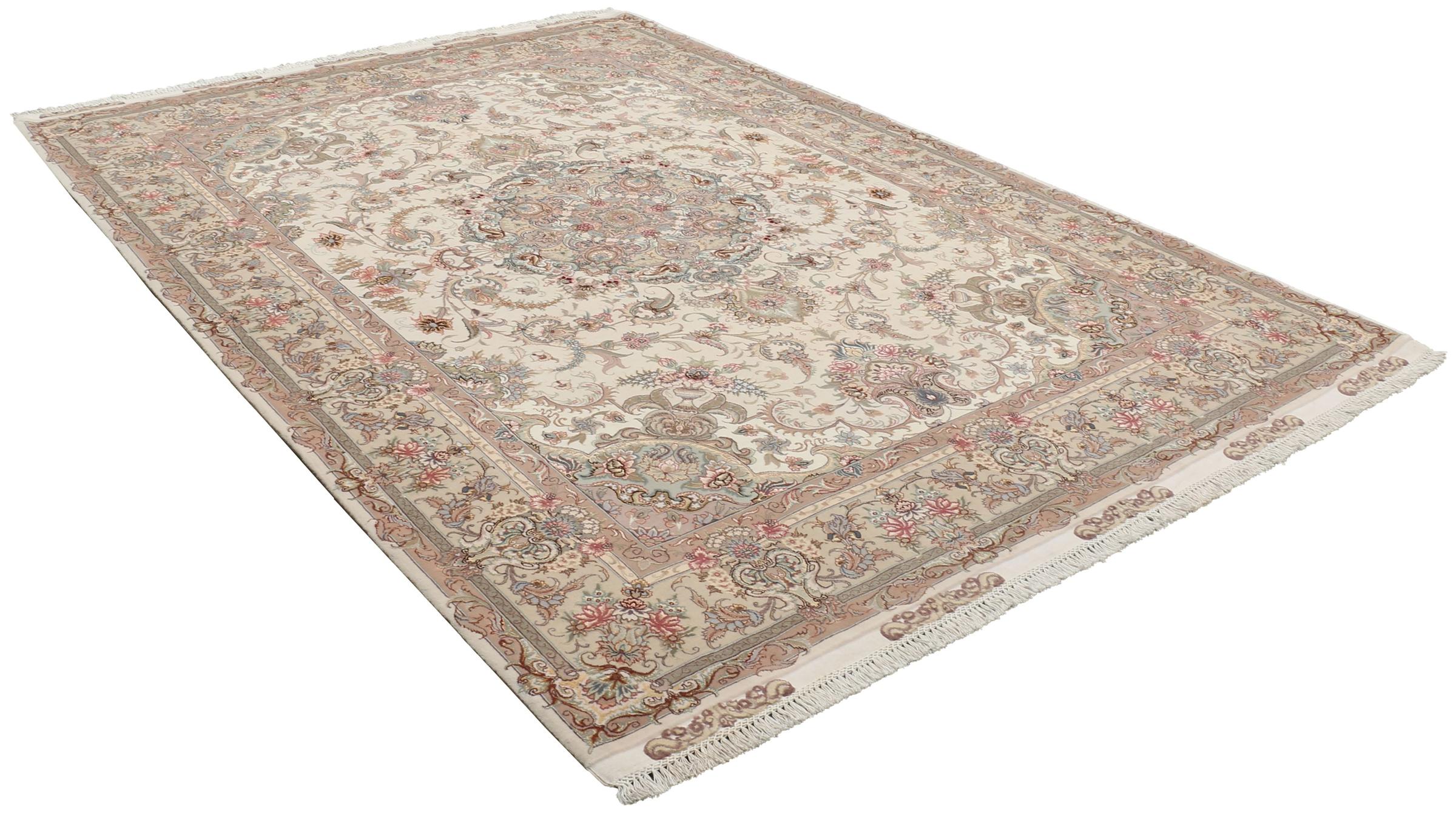
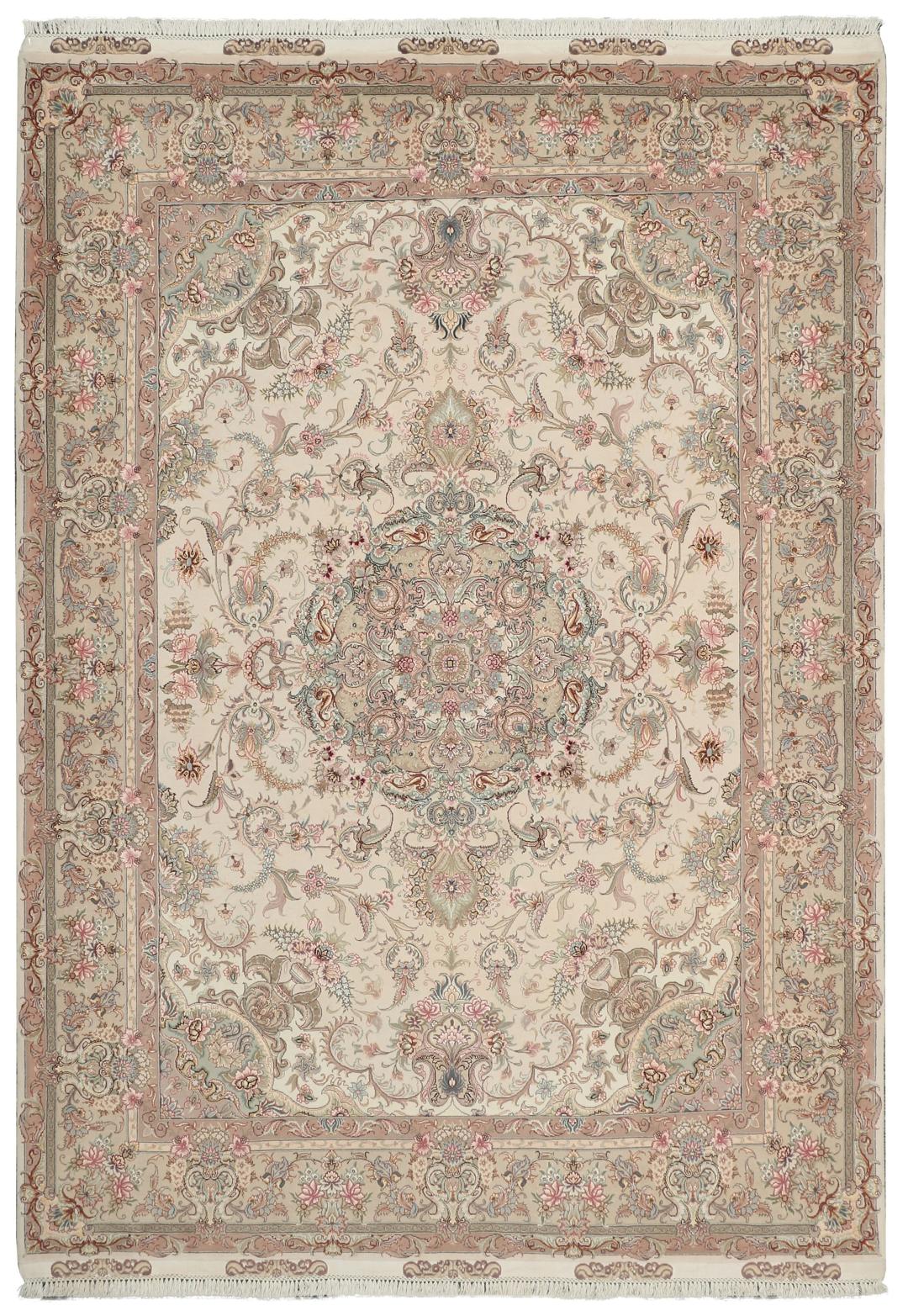
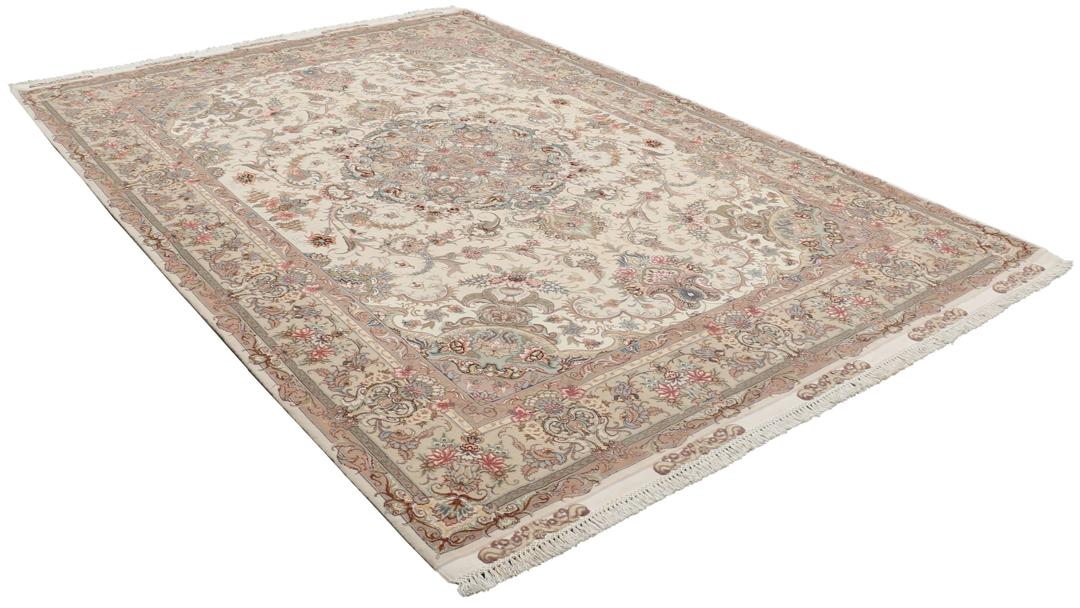
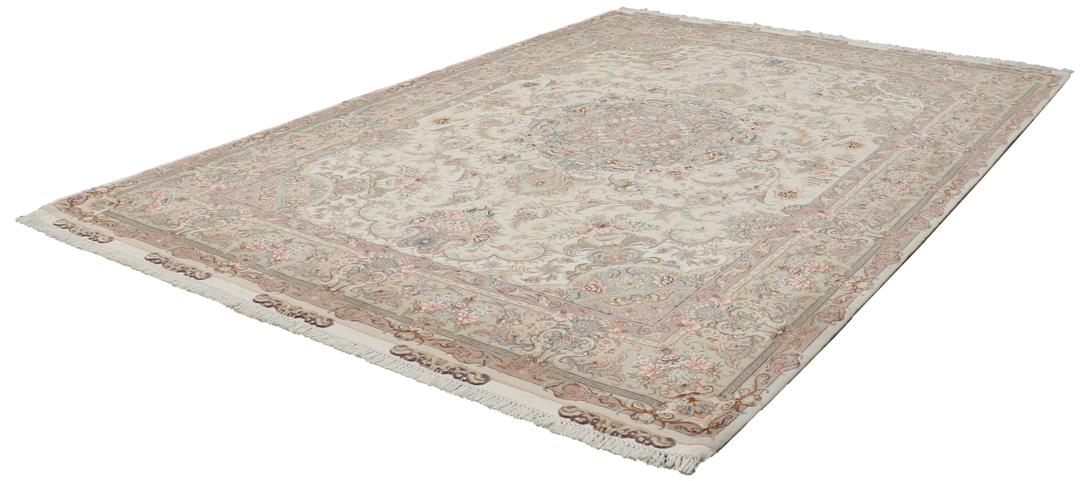
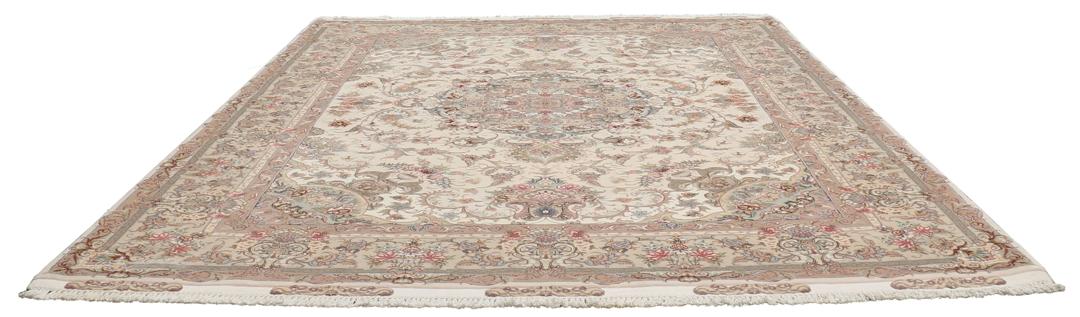
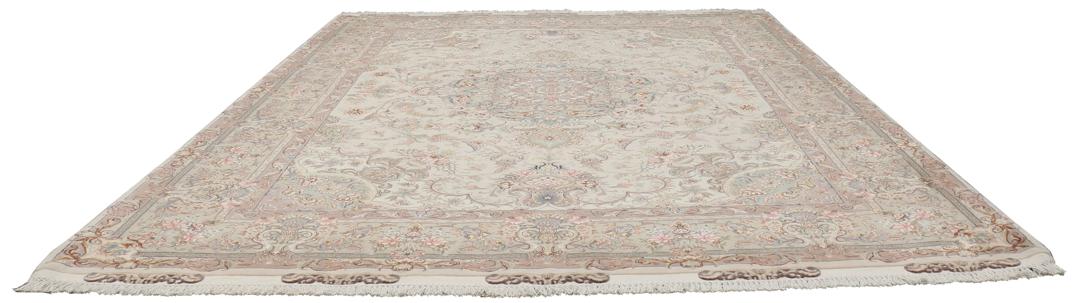
The Tabriz tradition originates from one of the oldest carpet-weaving centres in the Middle East, a city that has served as a vital crossroads of culture and trade for centuries. Rugs from this region are celebrated for their technical sophistication and their ability to incorporate diverse artistic influences, ranging from classical garden scenes to complex, architectural medallion layouts.
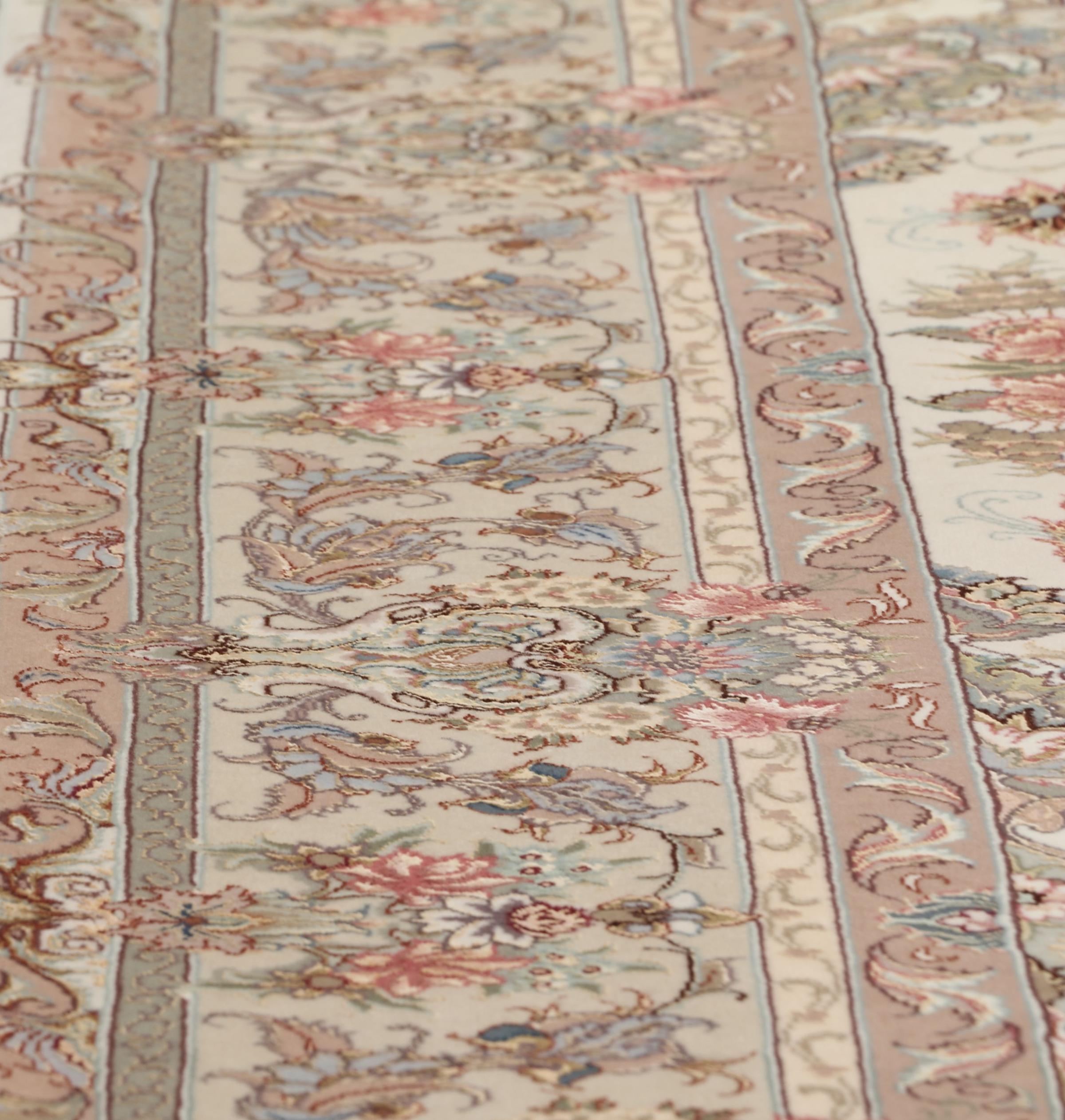
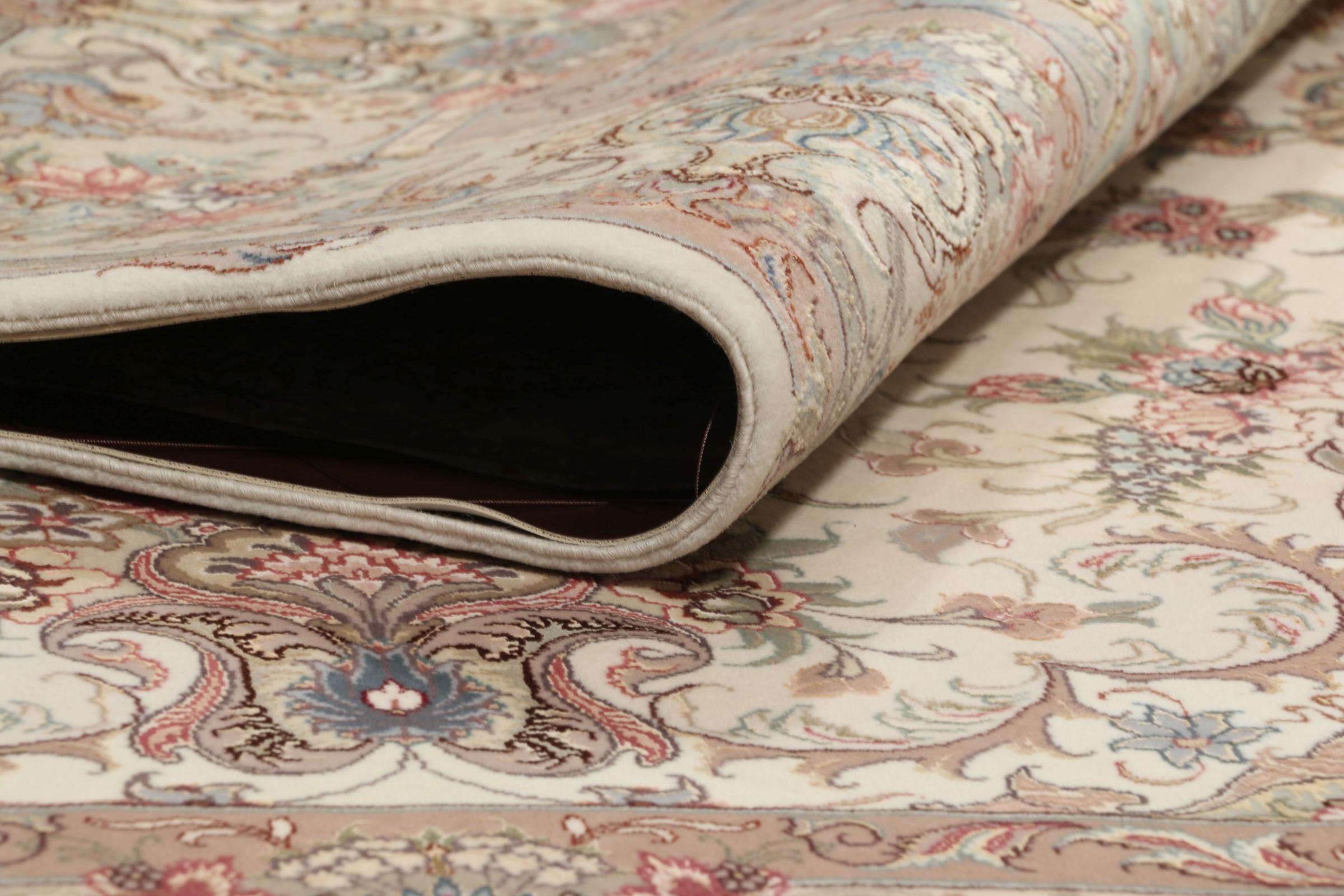
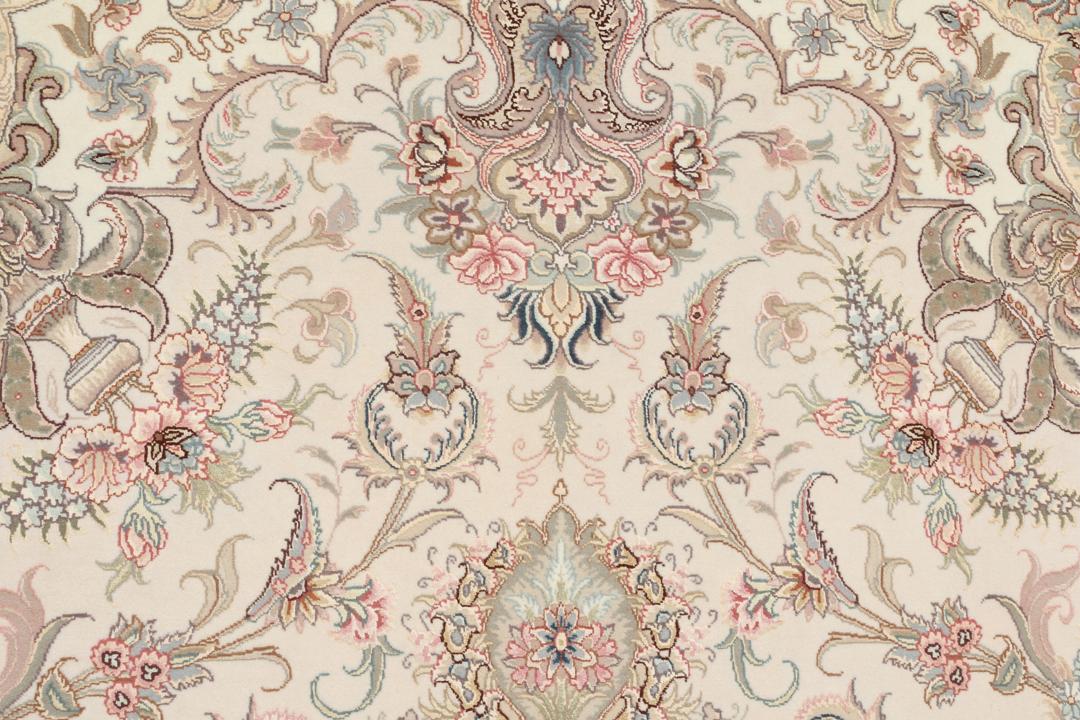
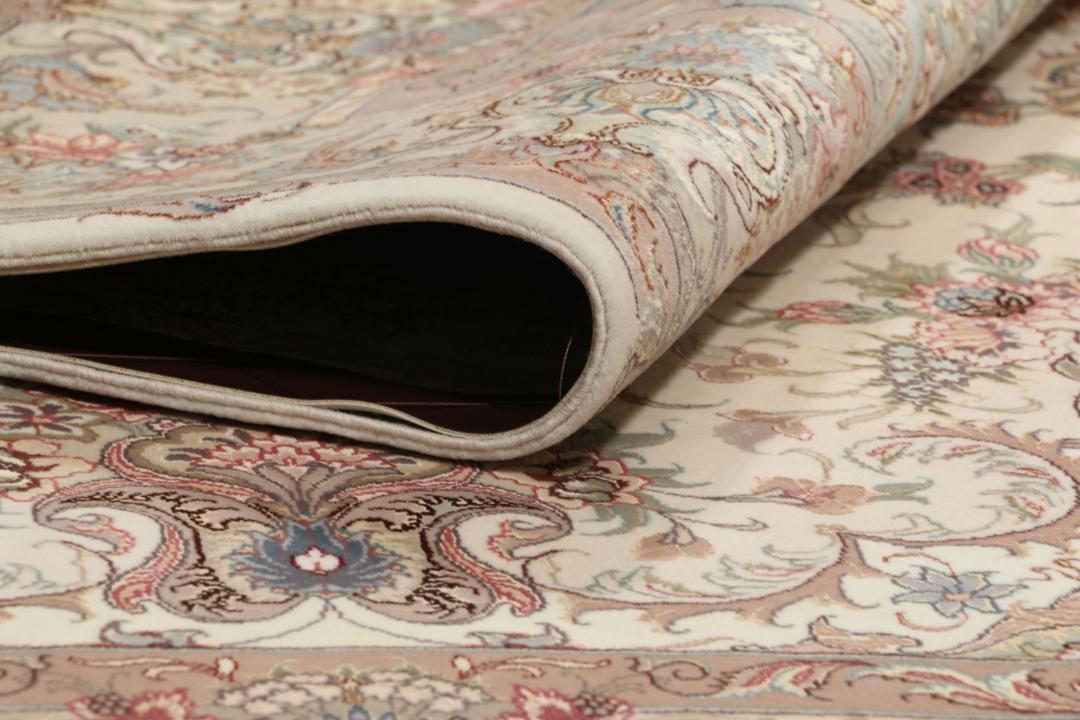
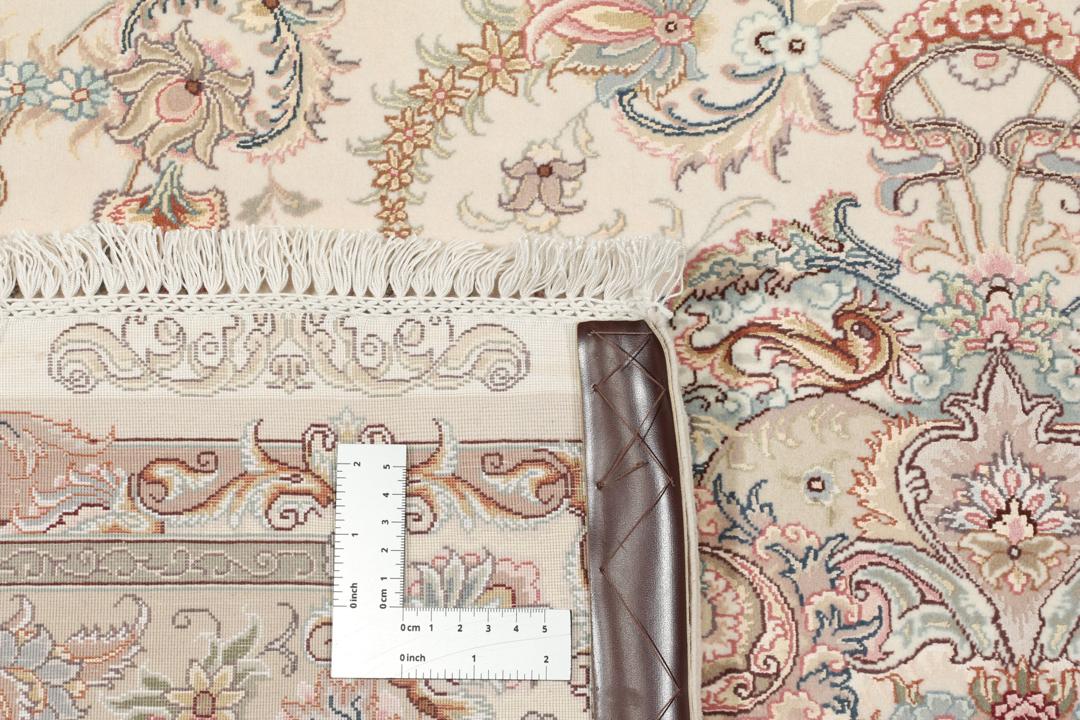
The term 'Raj' refers to the standard of fineness in the weaving, specifically the number of knots across a set measurement. A 70 Raj designation indicates an extraordinarily fine weave, which necessitates a level of expertise that only the most seasoned master weavers possess. This technical complexity allows for the characteristic 'painting with wool' effect, where shading and intricate curves are rendered with near-photographic accuracy.
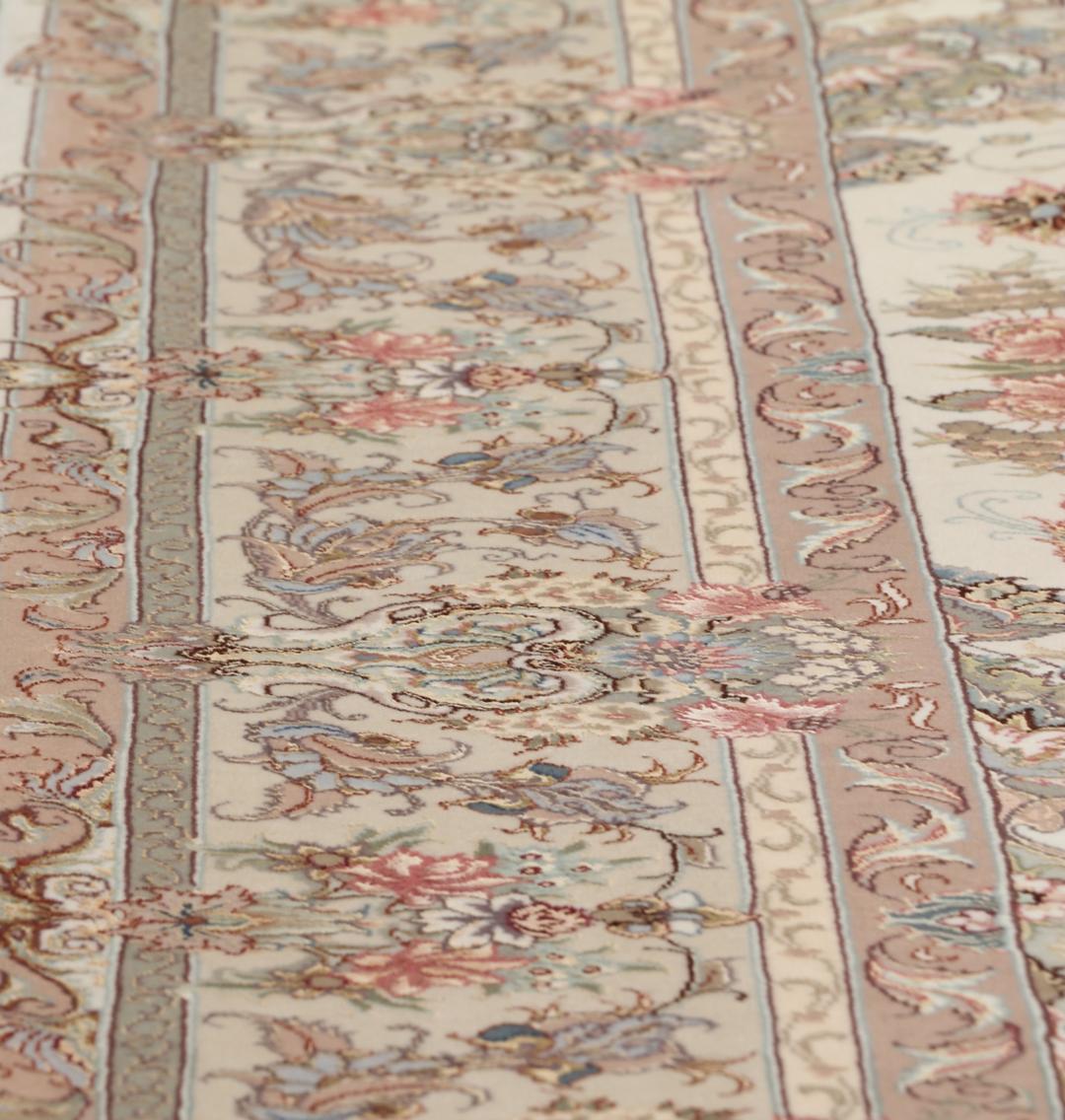
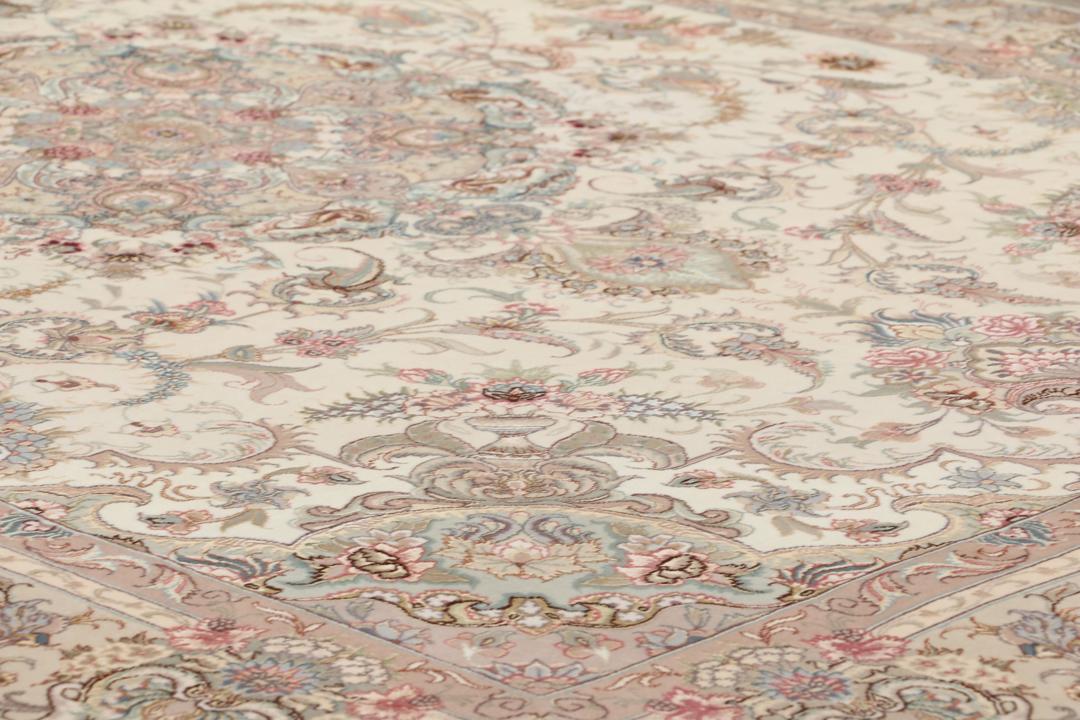
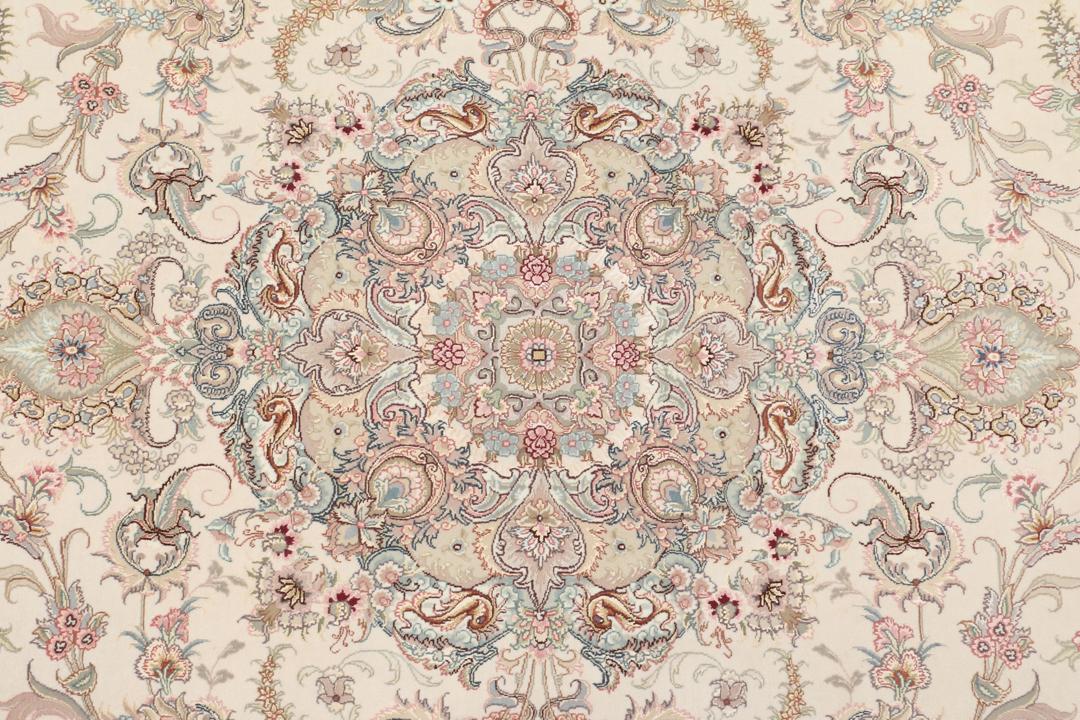
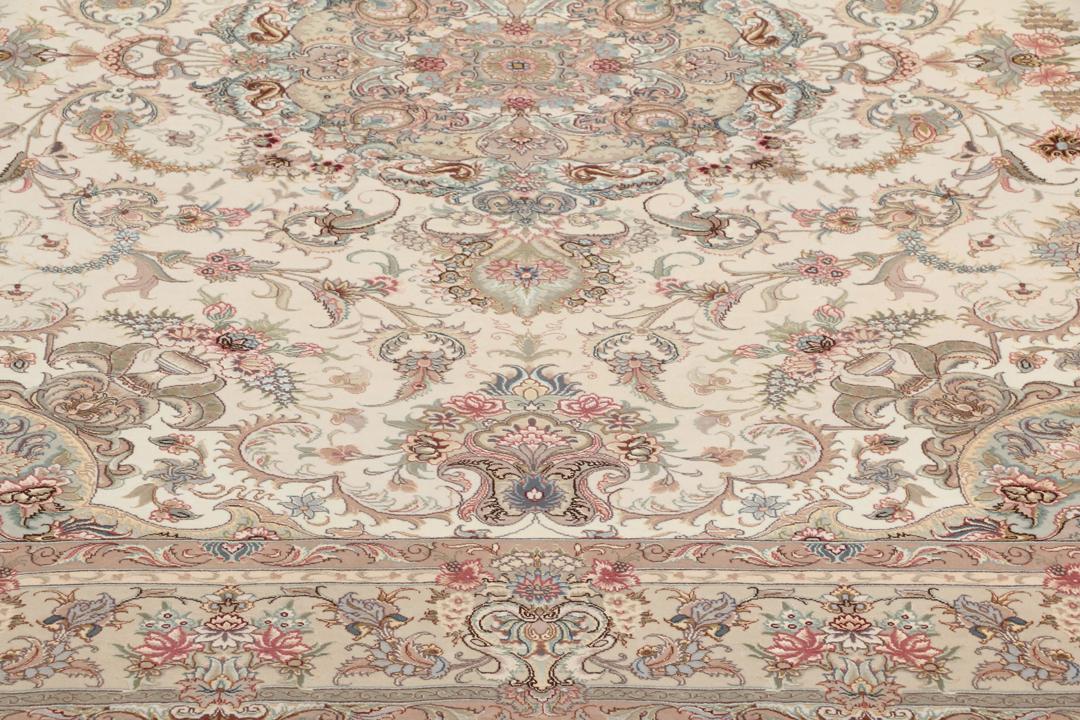
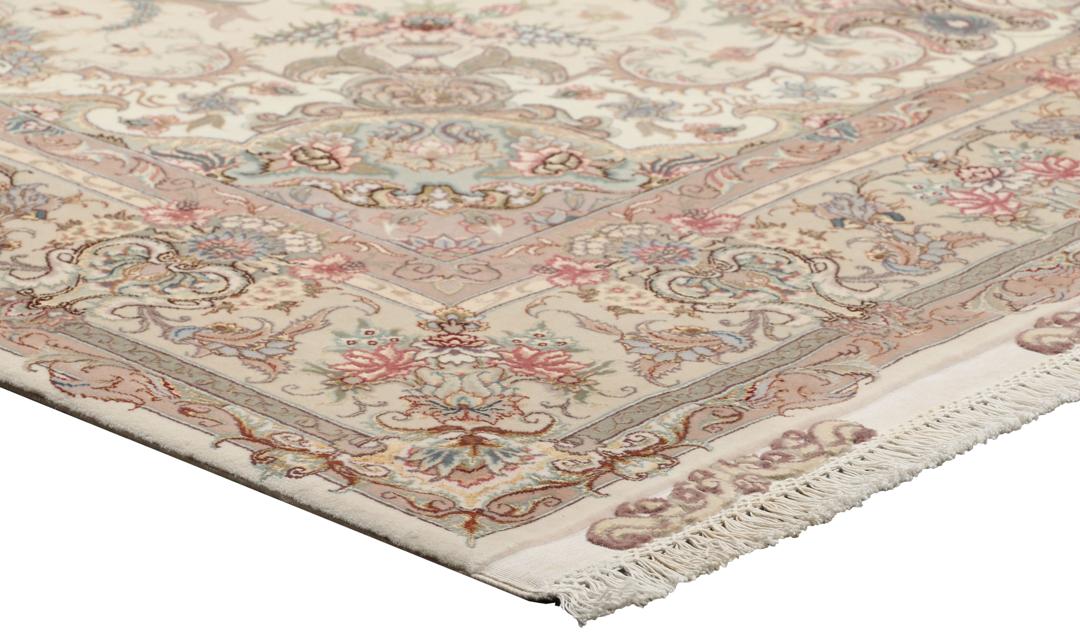
Visually, Tabriz rugs are known for their formal elegance. They often feature a central medallion surrounded by a sea of delicate, interlacing floral sprays, vines, and palmettes. The borders are typically multi-layered and provide a structured frame that complements the organic, flowing lines of the central field. This specific piece showcases a refined palette that highlights the interplay between the intricate motifs and the open, airy composition.
Owning a 70 Raj Tabriz is a commitment to preserving a legacy of immense skill. These pieces are highly sought after by collectors not only for their aesthetic beauty but for the sheer dedication required to produce them. To possess such a rug is to hold a connection to an ancient craft that prizes patience, precision, and the pursuit of perfection above all else.