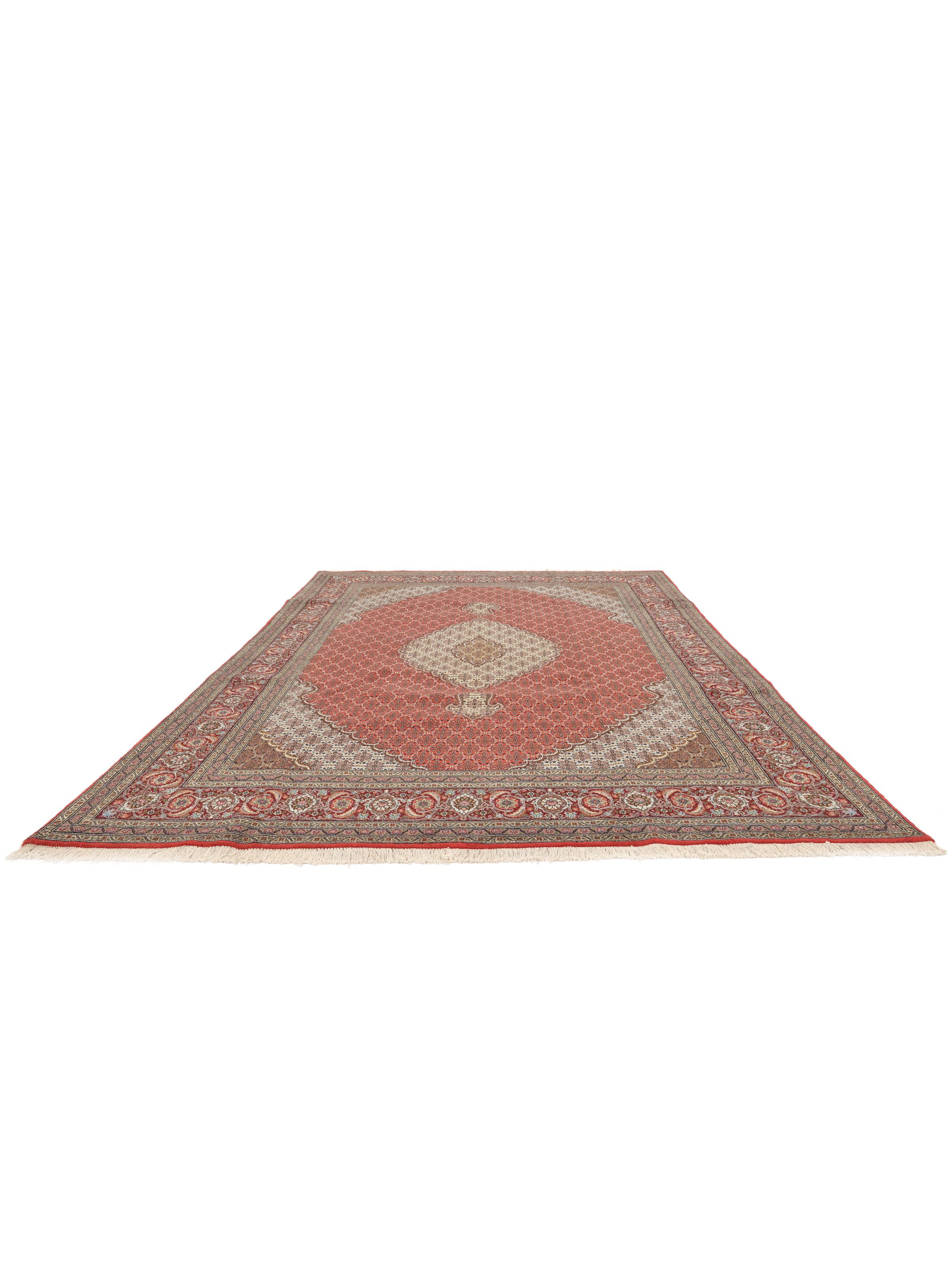
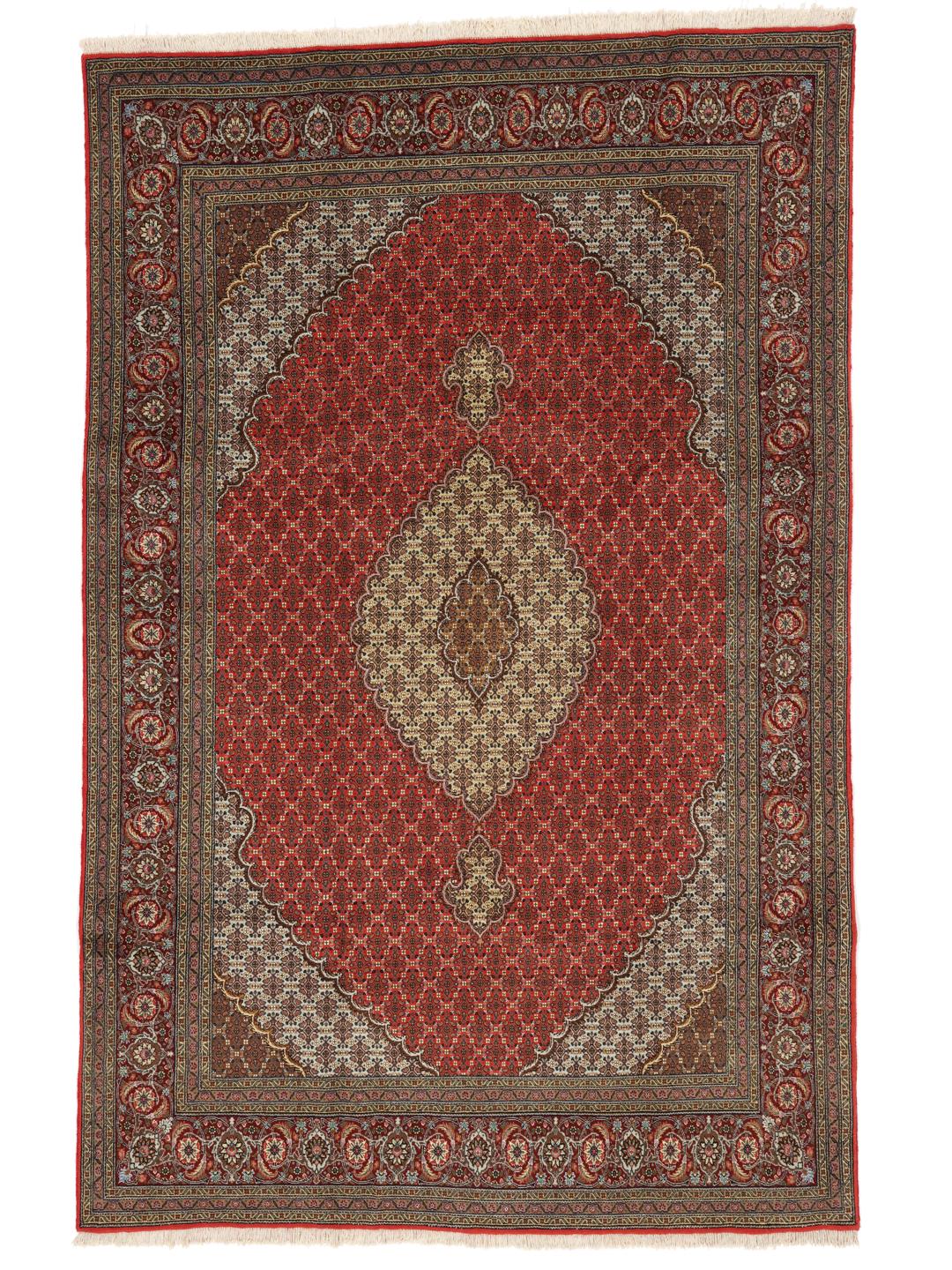
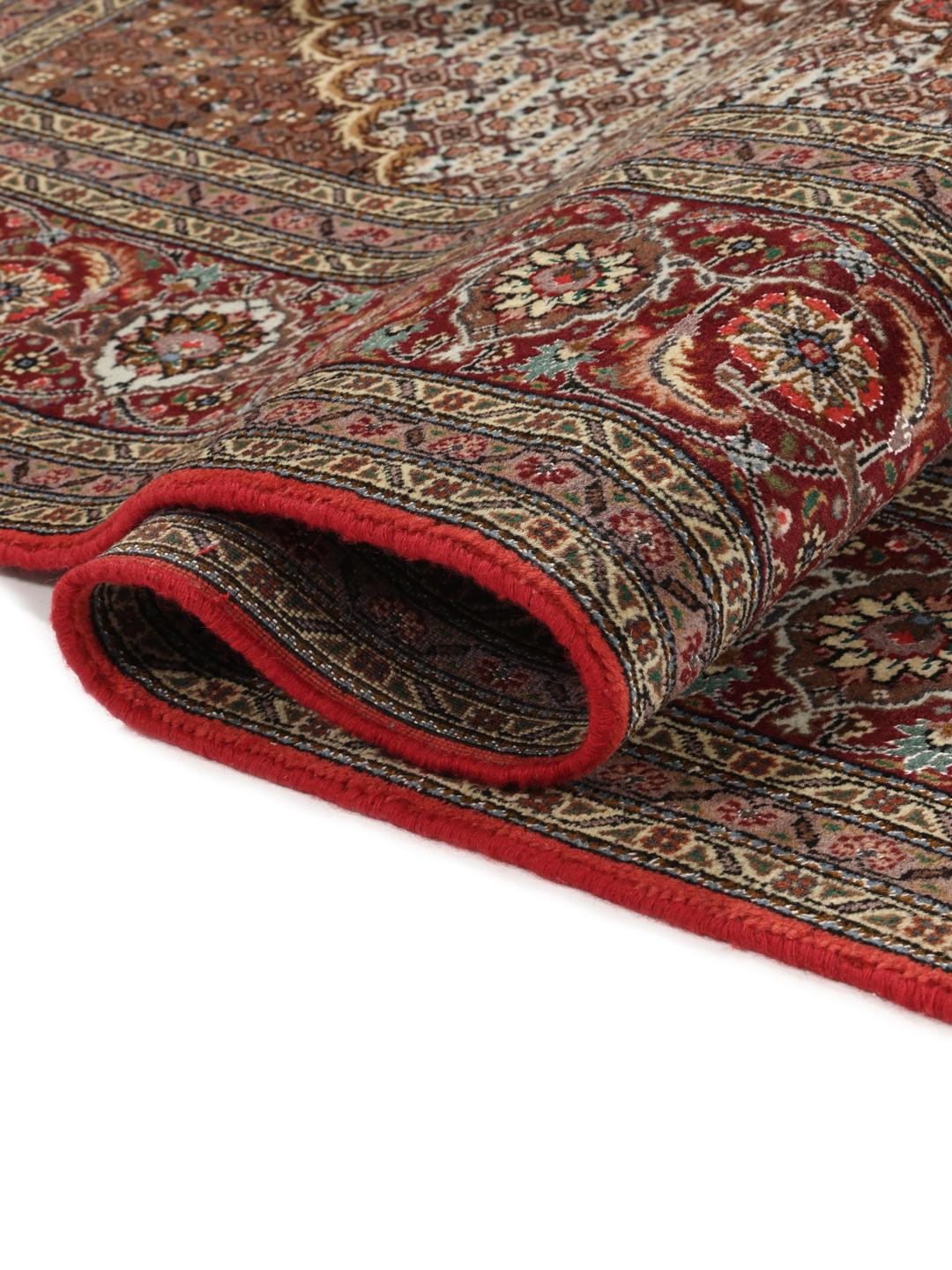
Tabriz rugs originate from one of the oldest carpet-weaving centres in the Middle East, located in the historic city of Tabriz. This region has served as a vital crossroads for trade and culture for centuries, allowing local artisans to absorb and refine influences from across the Silk Road. The result is a tradition of weaving that is celebrated for its technical excellence and artistic diversity.
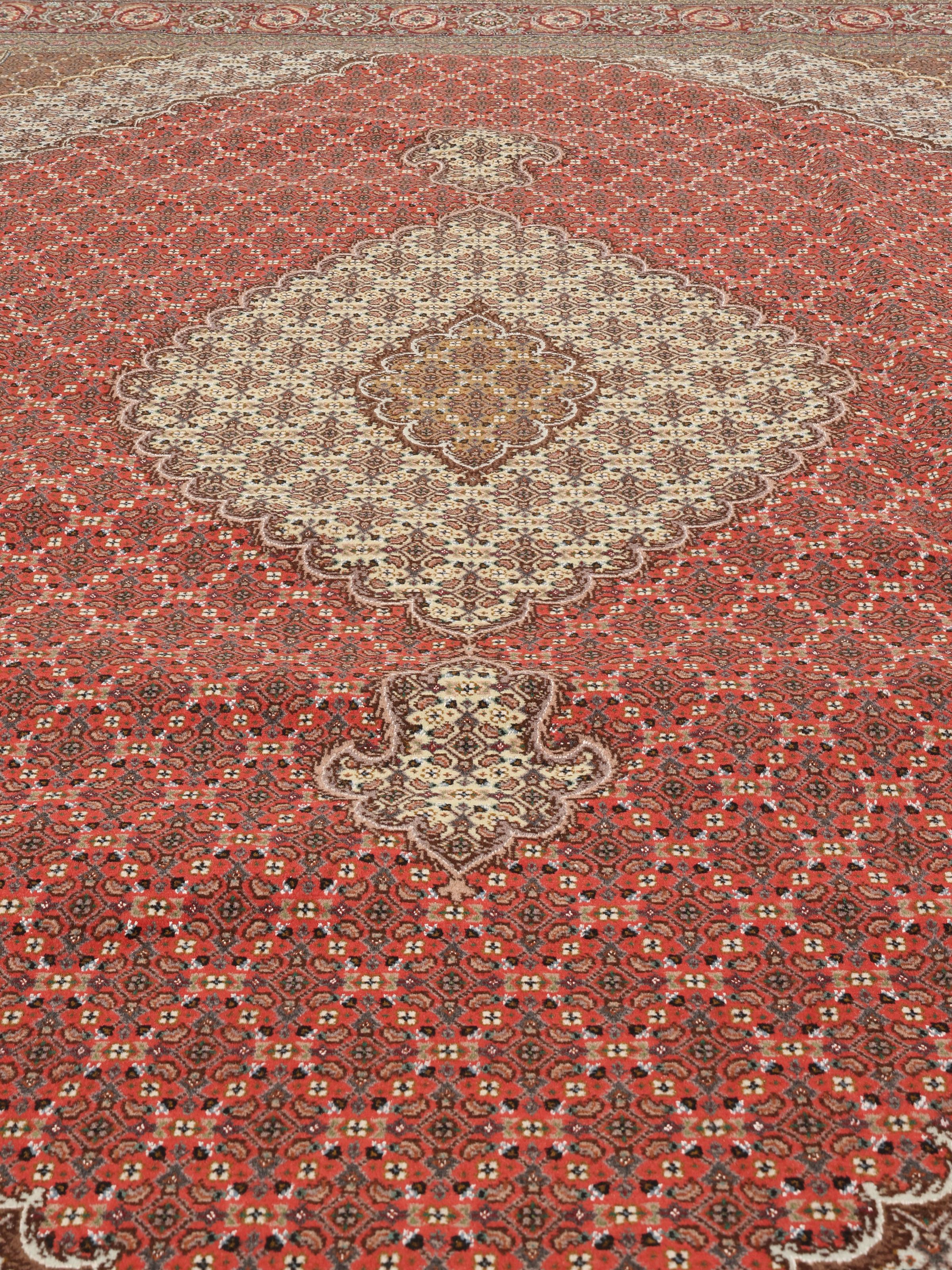
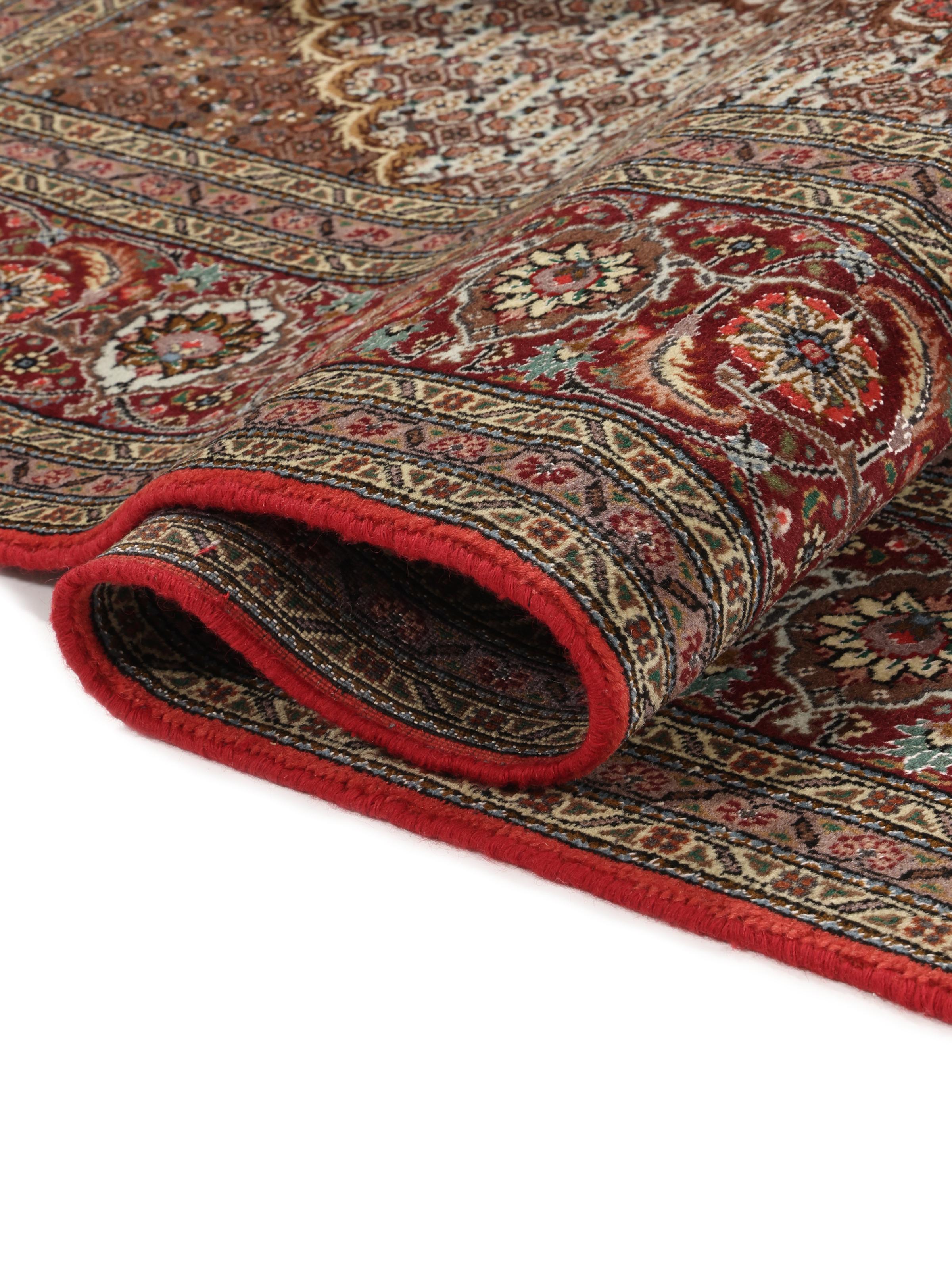
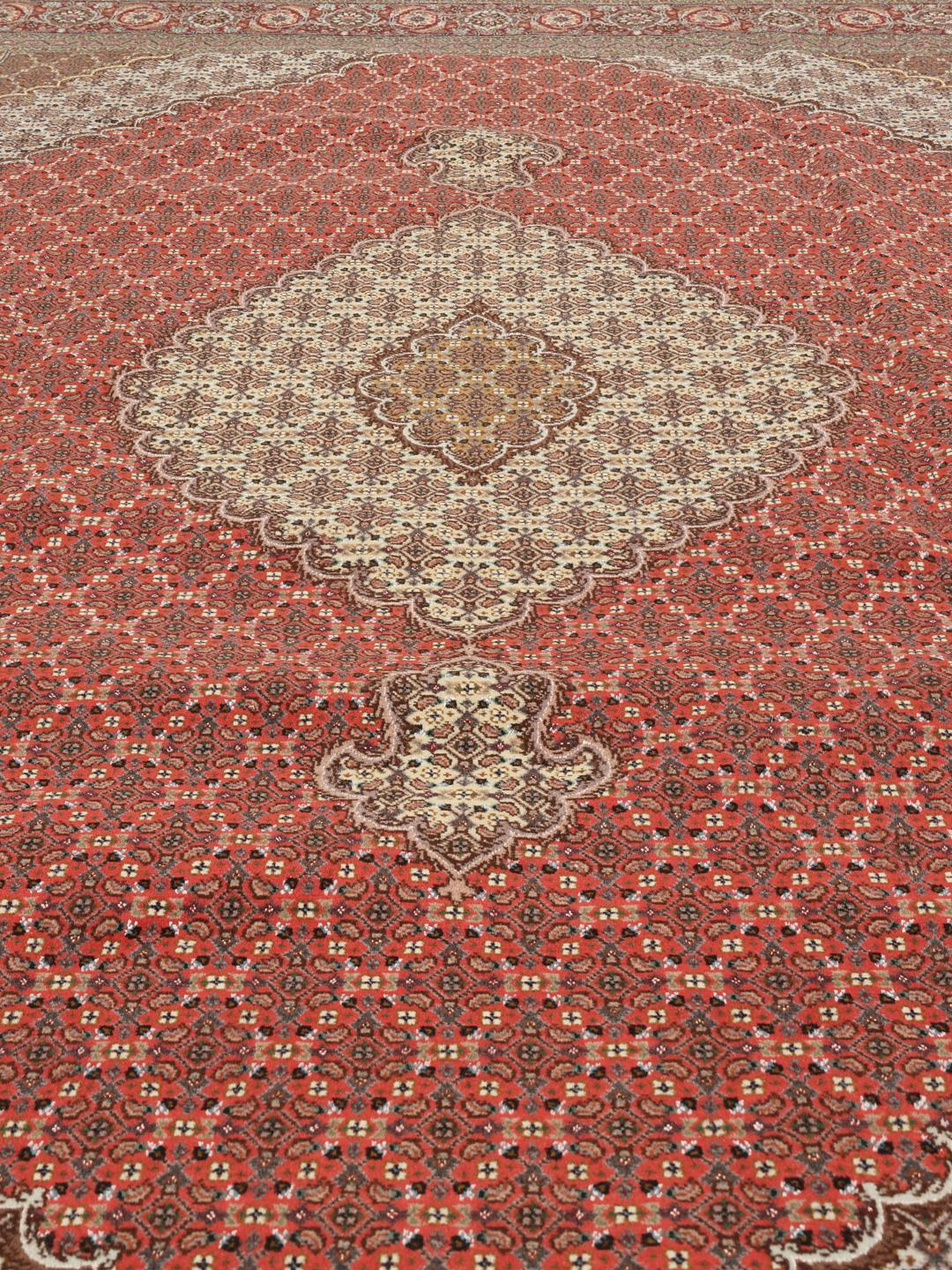
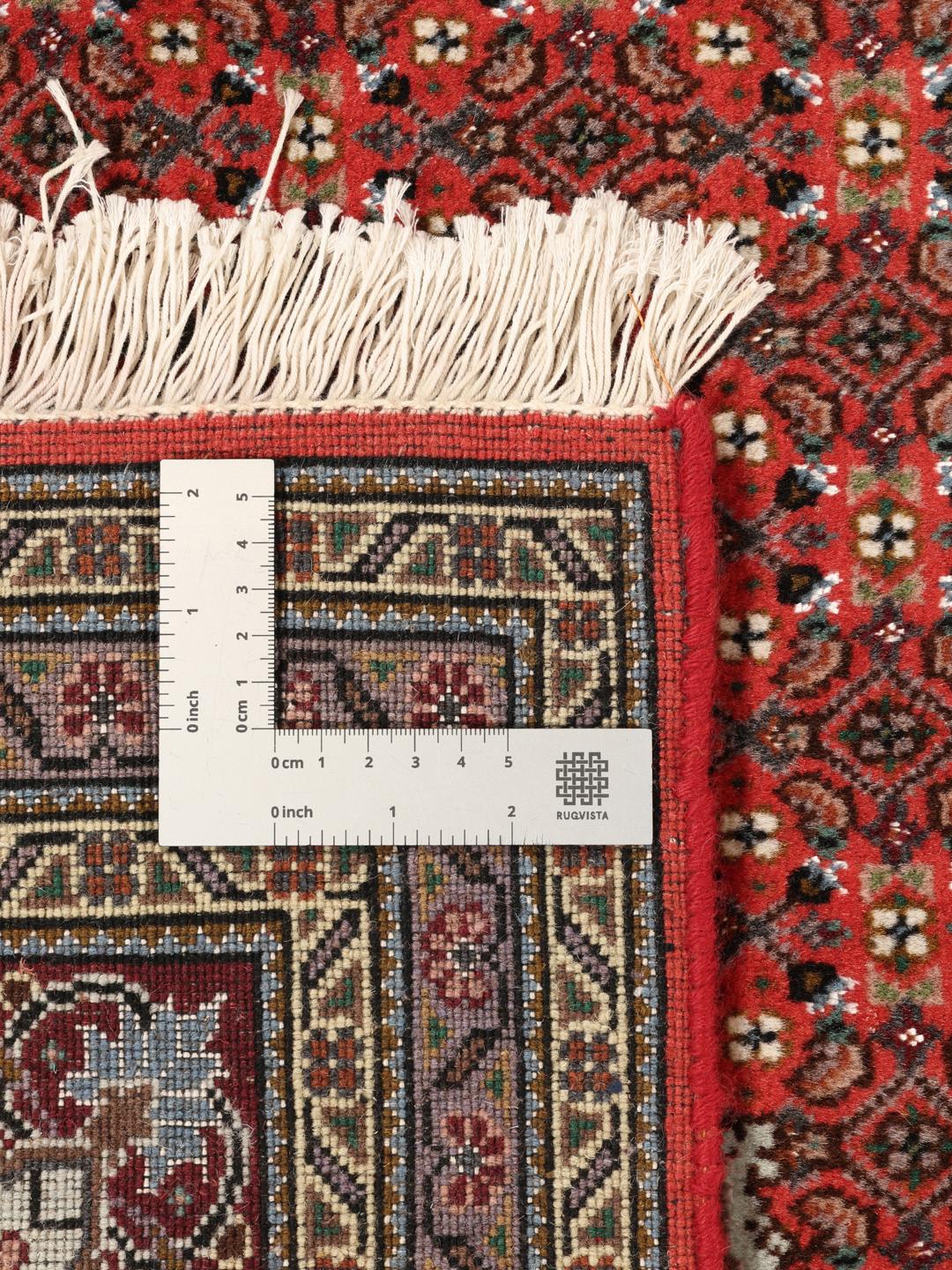
The term 40 Raj refers to the traditional system of measuring knot density in Tabriz rugs, based on the number of knots per 7 cm of width. A 40 Raj rating indicates a high level of precision and quality, ensuring a fine, sharp design and a pile that is dense and luxurious. This technical standard is a hallmark of the region's commitment to creating rugs that are both functional floor coverings and intricate works of art.
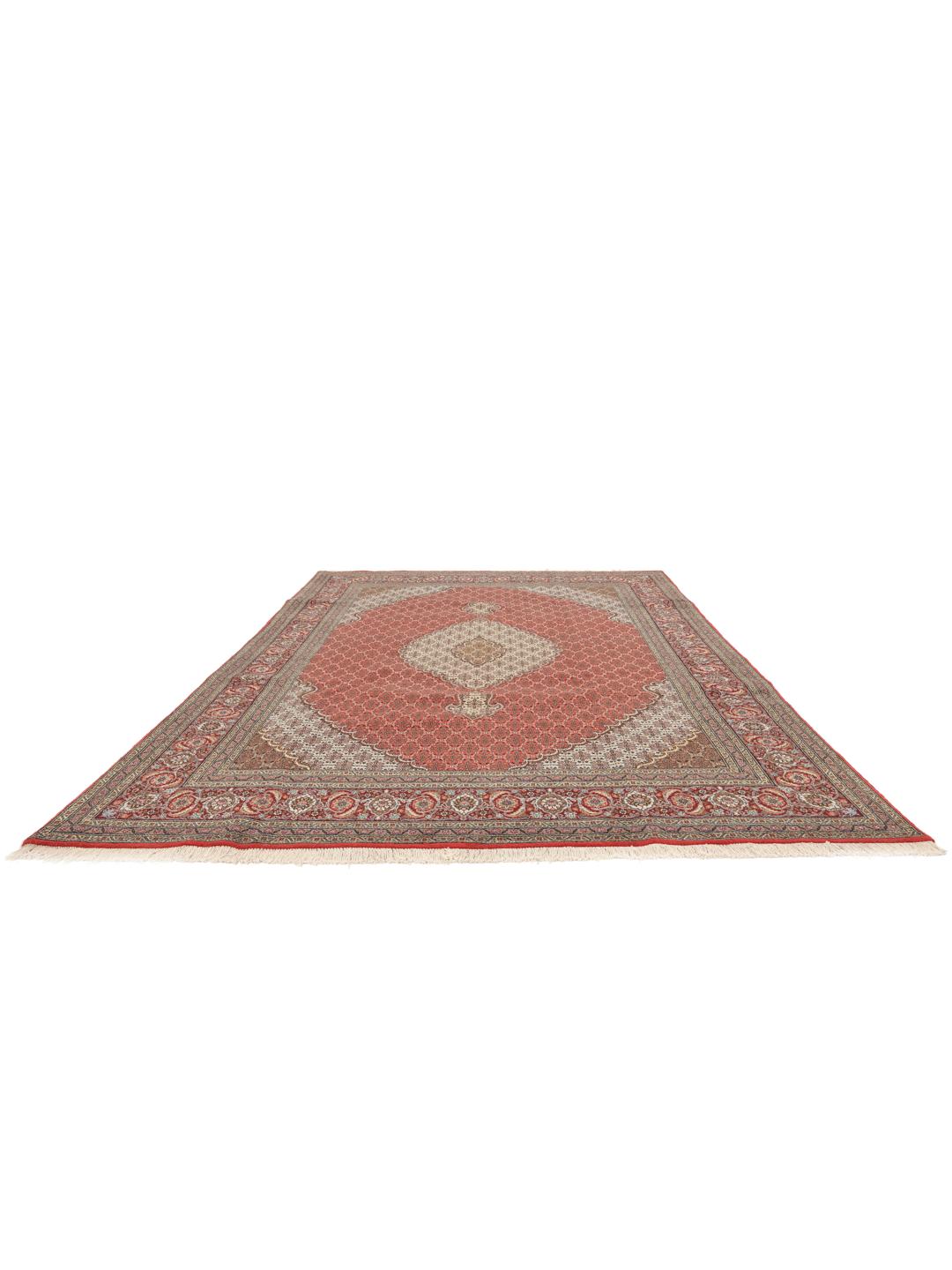
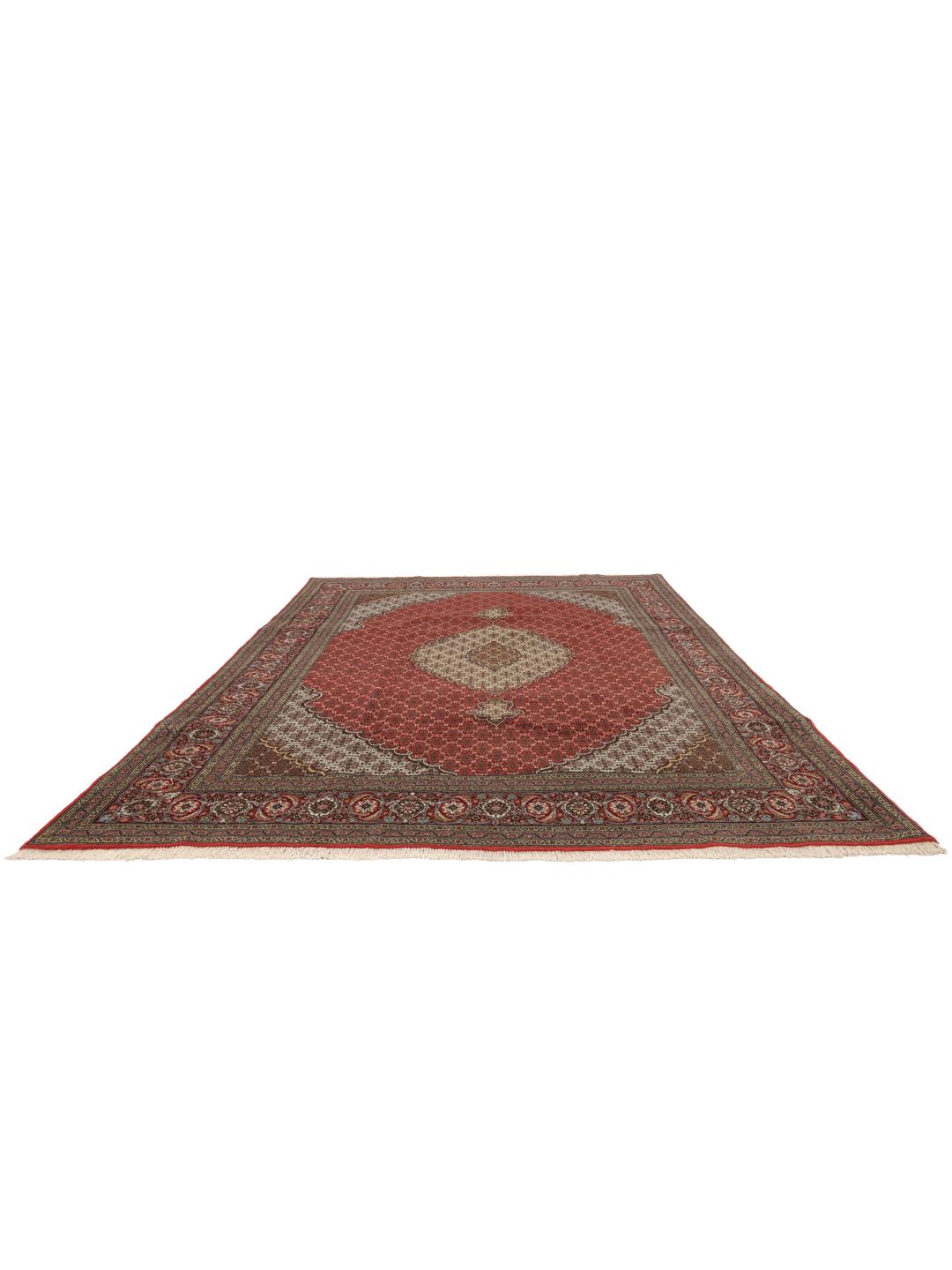
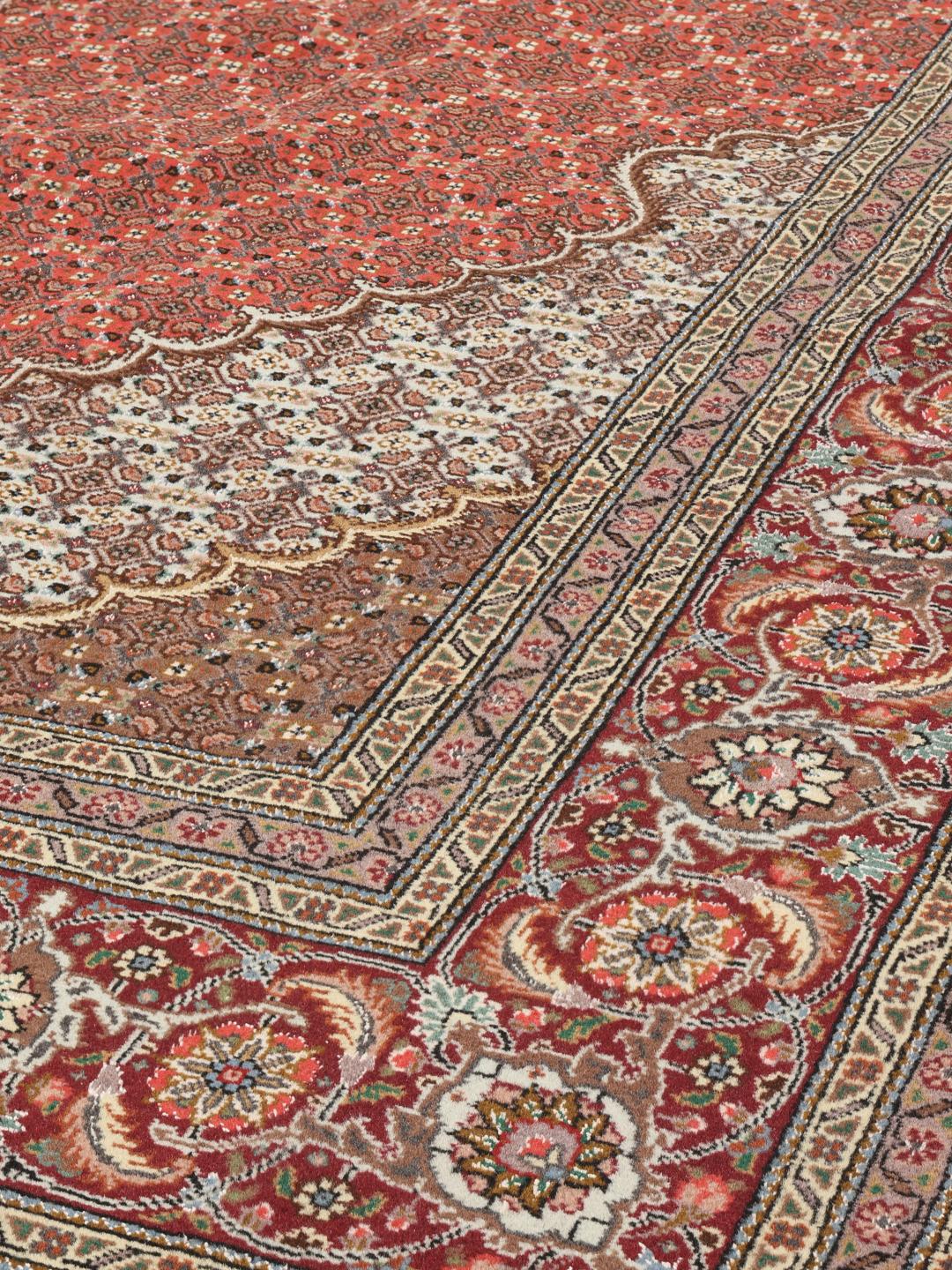
Visually, these rugs are known for their expansive, well-composed designs. They often feature a central medallion surrounded by ornate floral motifs or intricate geometric patterns, all framed by a wide, detailed border. While red is a classic and traditional choice for the field, the inclusion of contrasting beige and other subtle tones highlights the skill involved in balancing complex colour palettes to achieve a harmonious and balanced look.
Collecting a Tabriz rug is a way to celebrate a legacy of skill that has been passed down through generations of weavers. These rugs are highly valued not only for their beauty but for the cultural heritage they represent. By bringing one into your home, you are acquiring a piece of history that reflects the patience, dedication, and artistic vision of a master craft tradition.