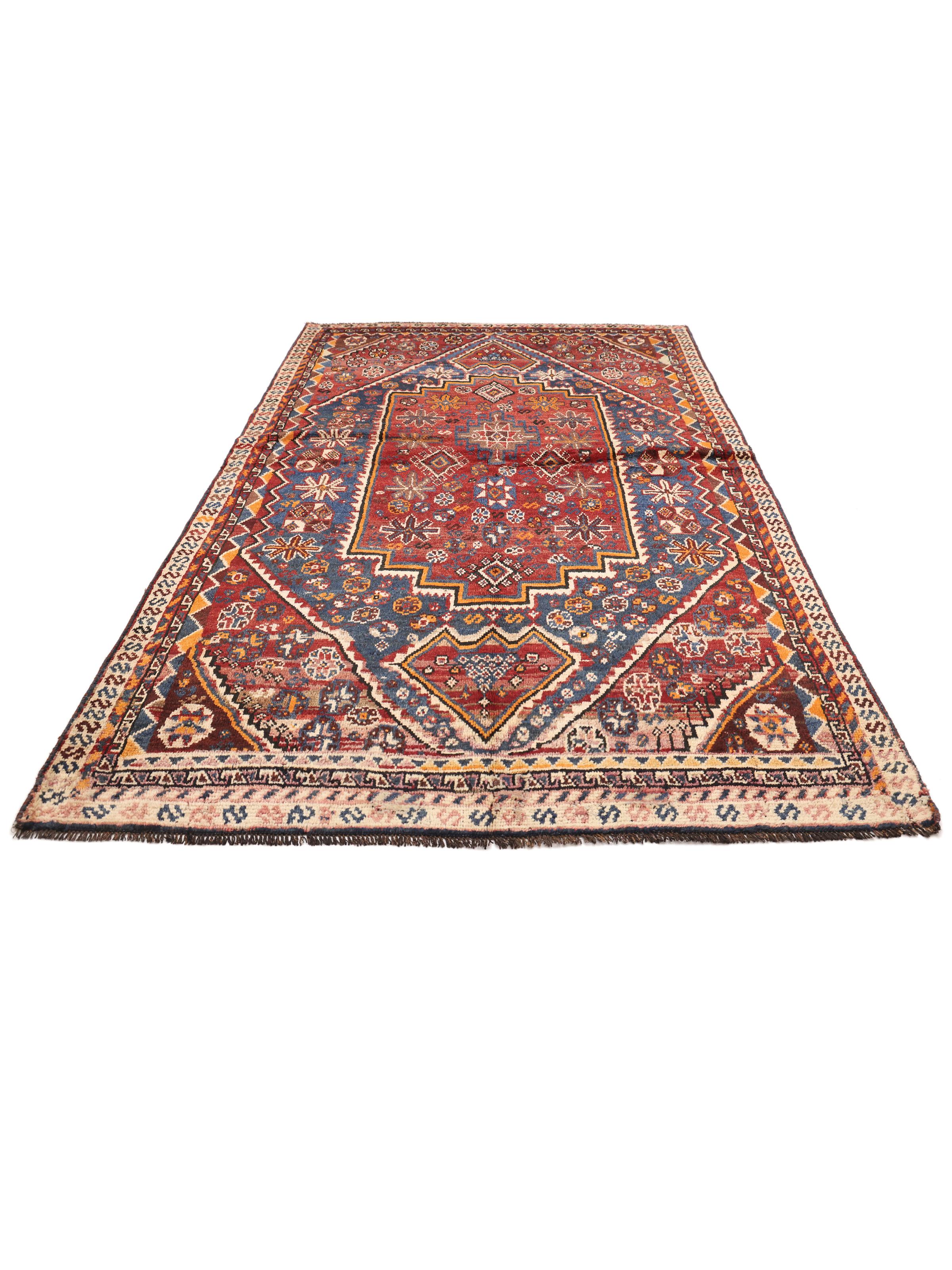
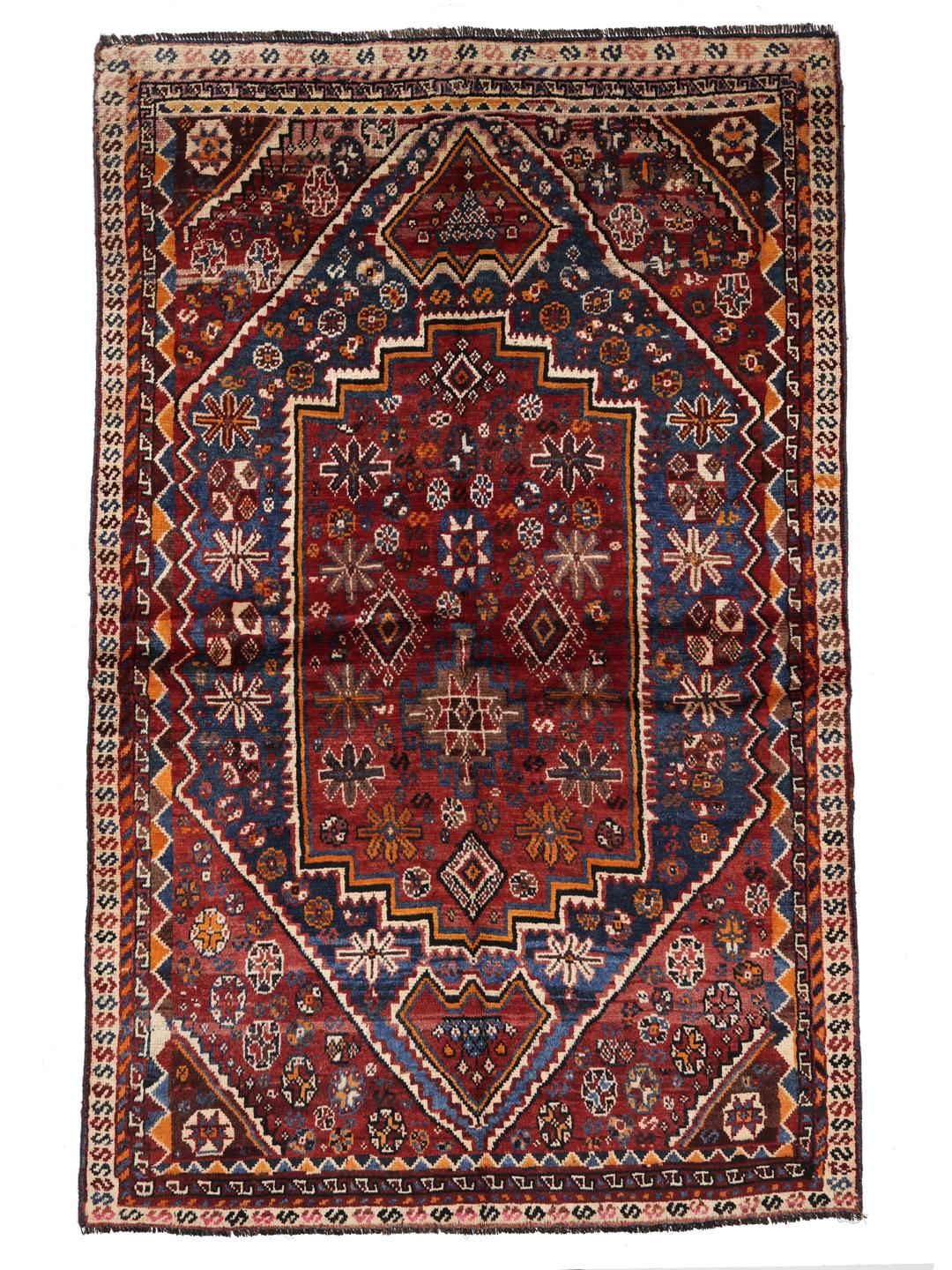
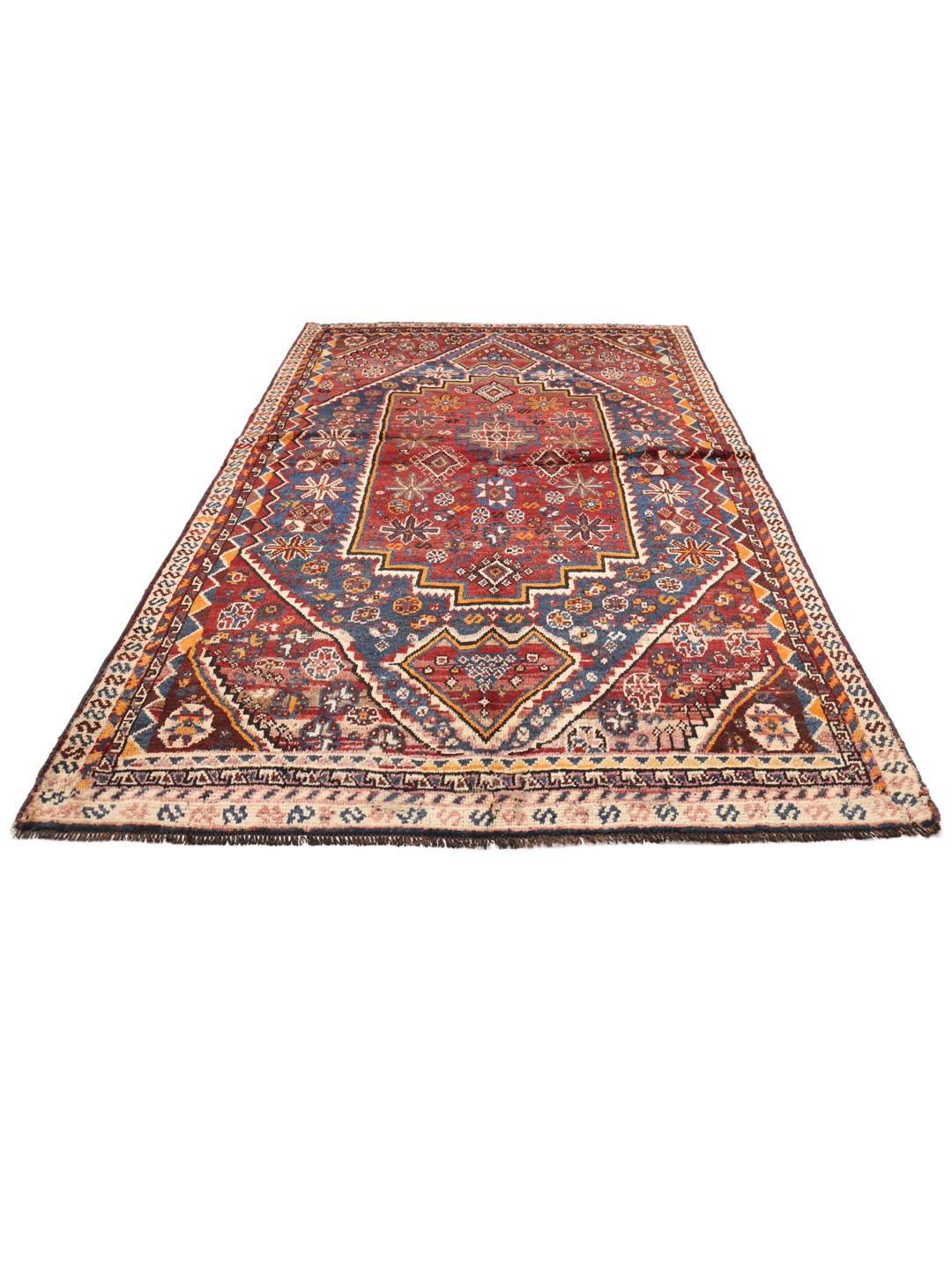
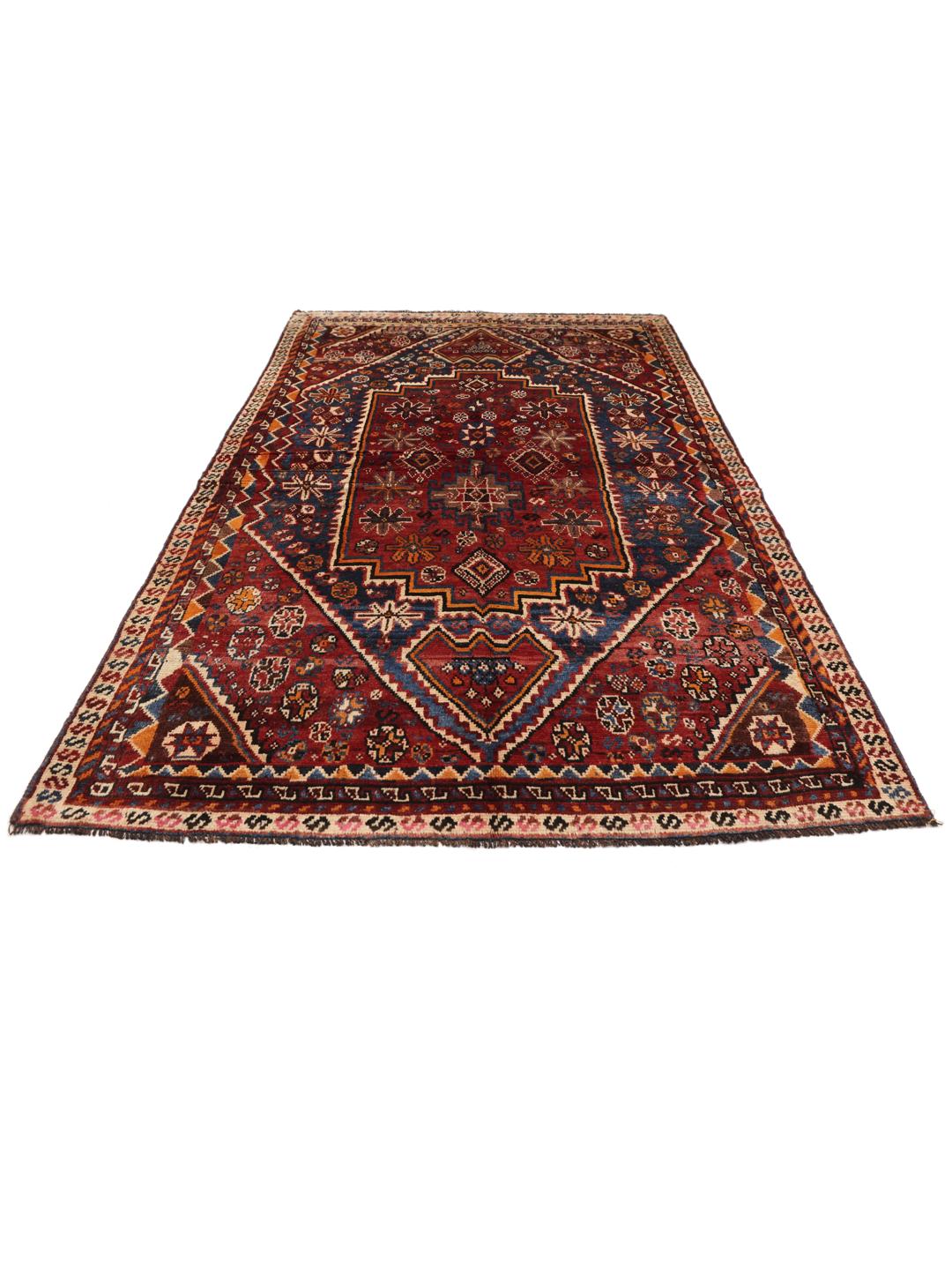
Shiraz rugs originate from the Fars province in the Middle Eastern region, a territory with a long and storied history of nomadic and semi-nomadic weaving. These rugs are deeply tied to the lifestyle of the Qashqai and other tribal groups who have migrated through the rugged landscapes of the region for centuries. Their designs are not dictated by rigid urban workshops but are instead drawn from the memory, imagination, and natural surroundings of the weavers themselves.
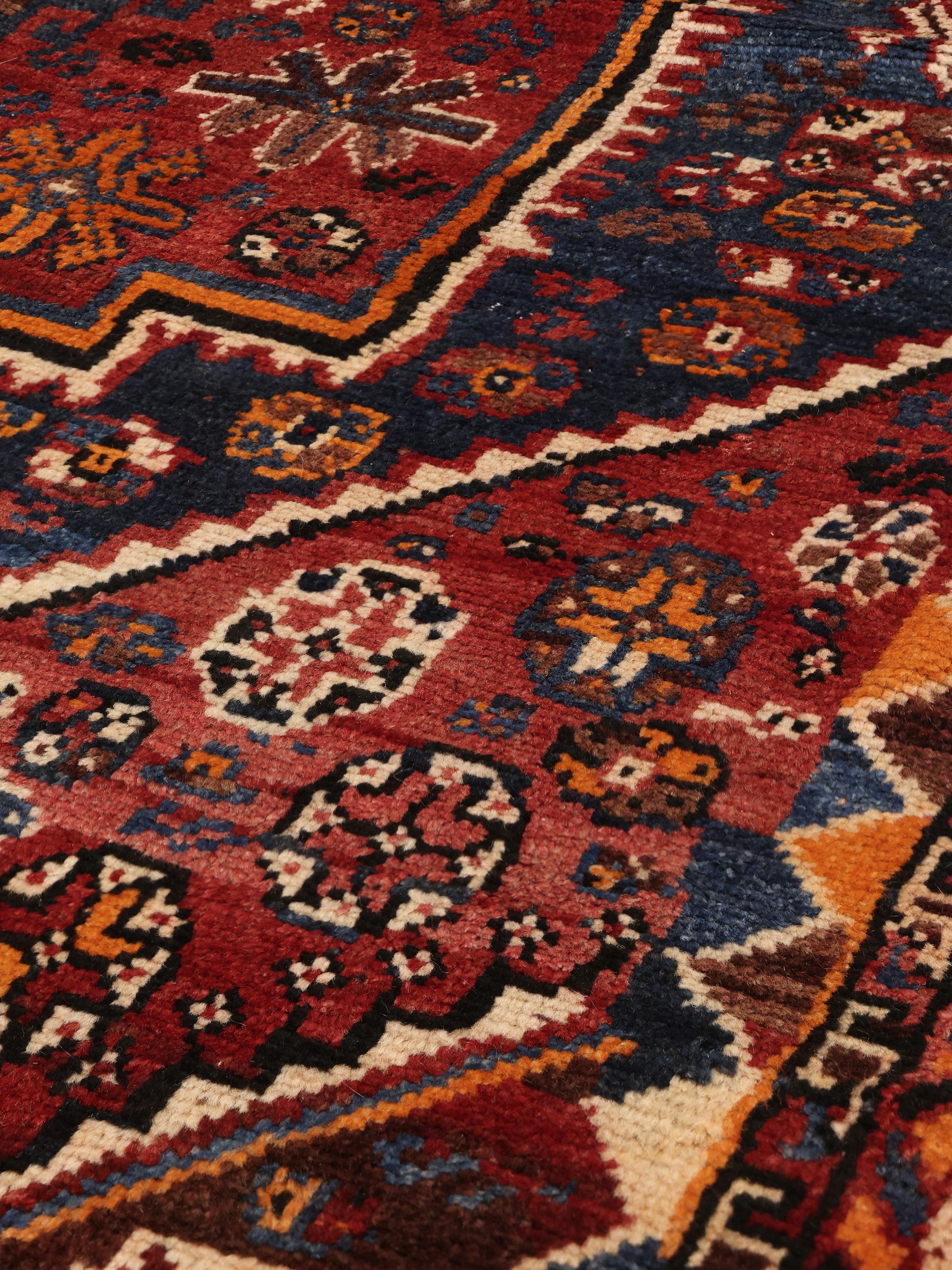
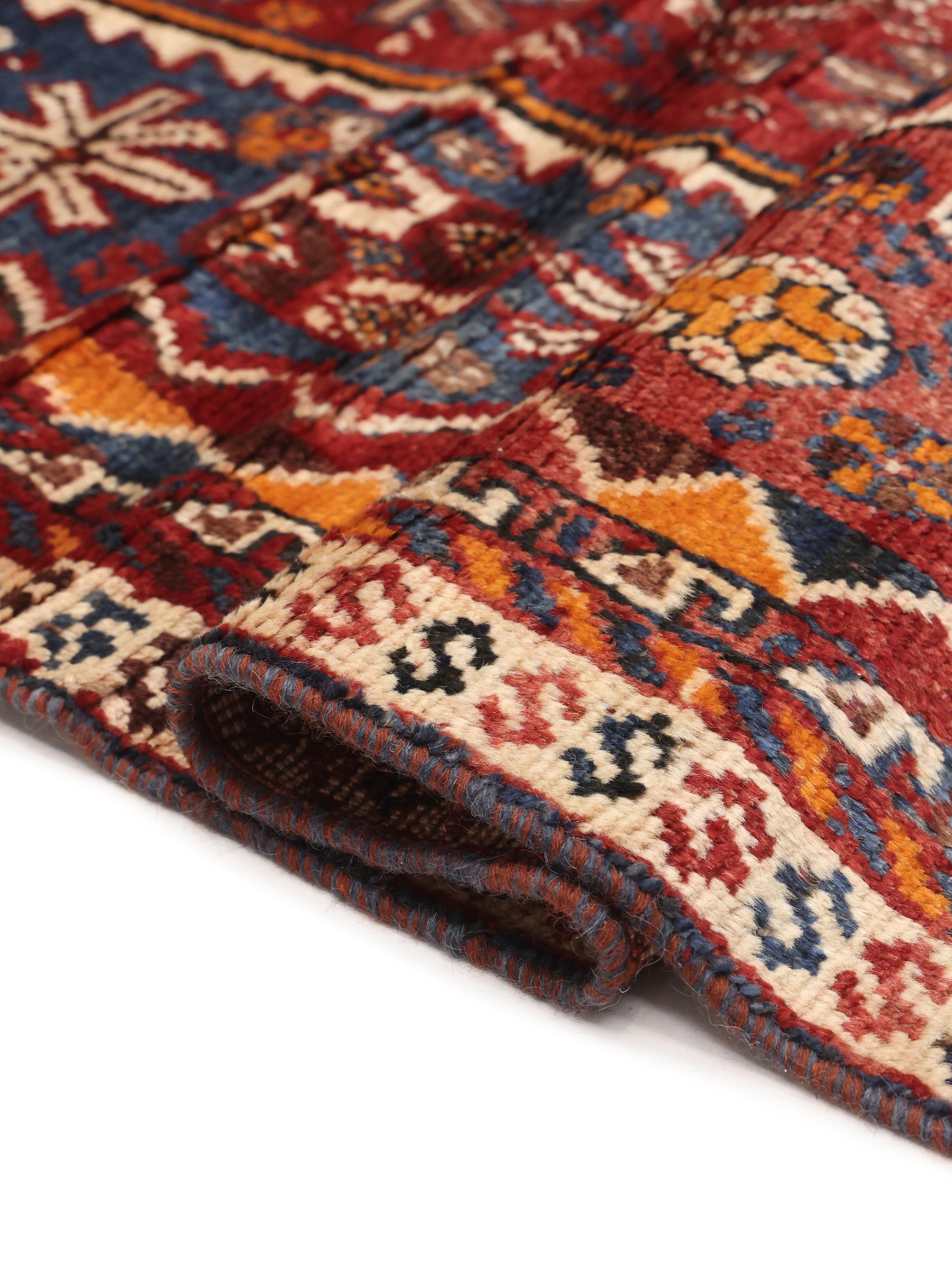
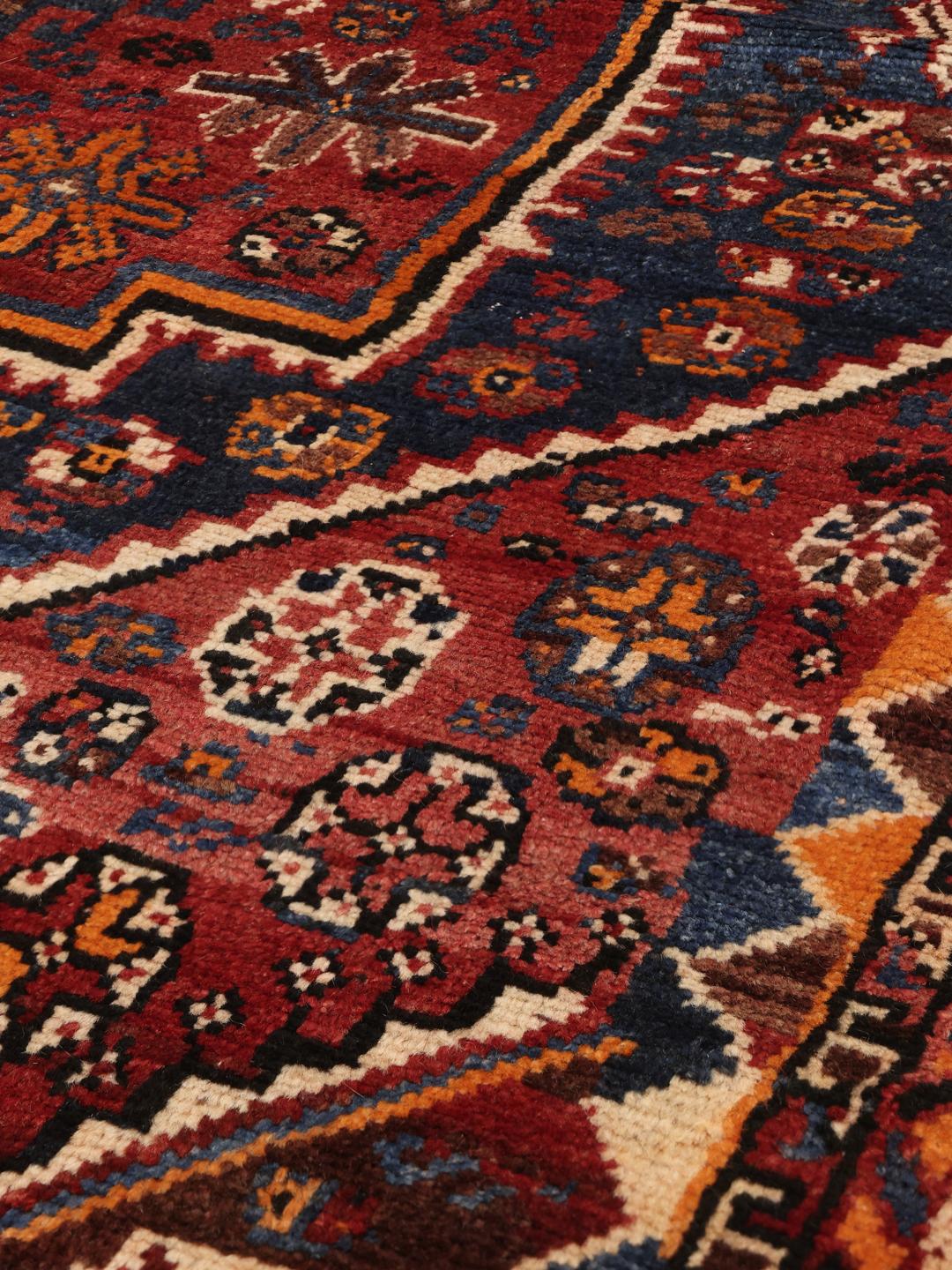
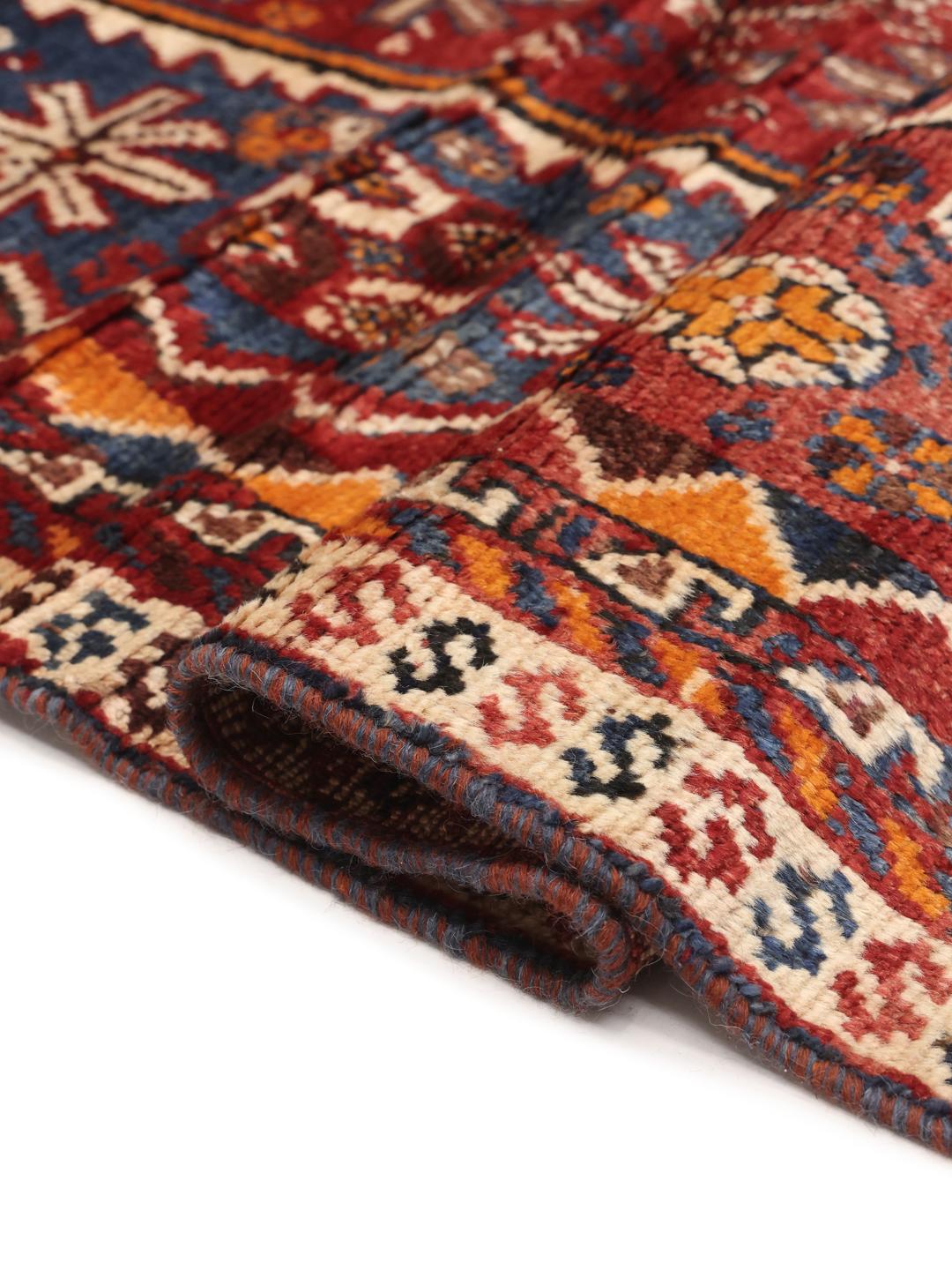
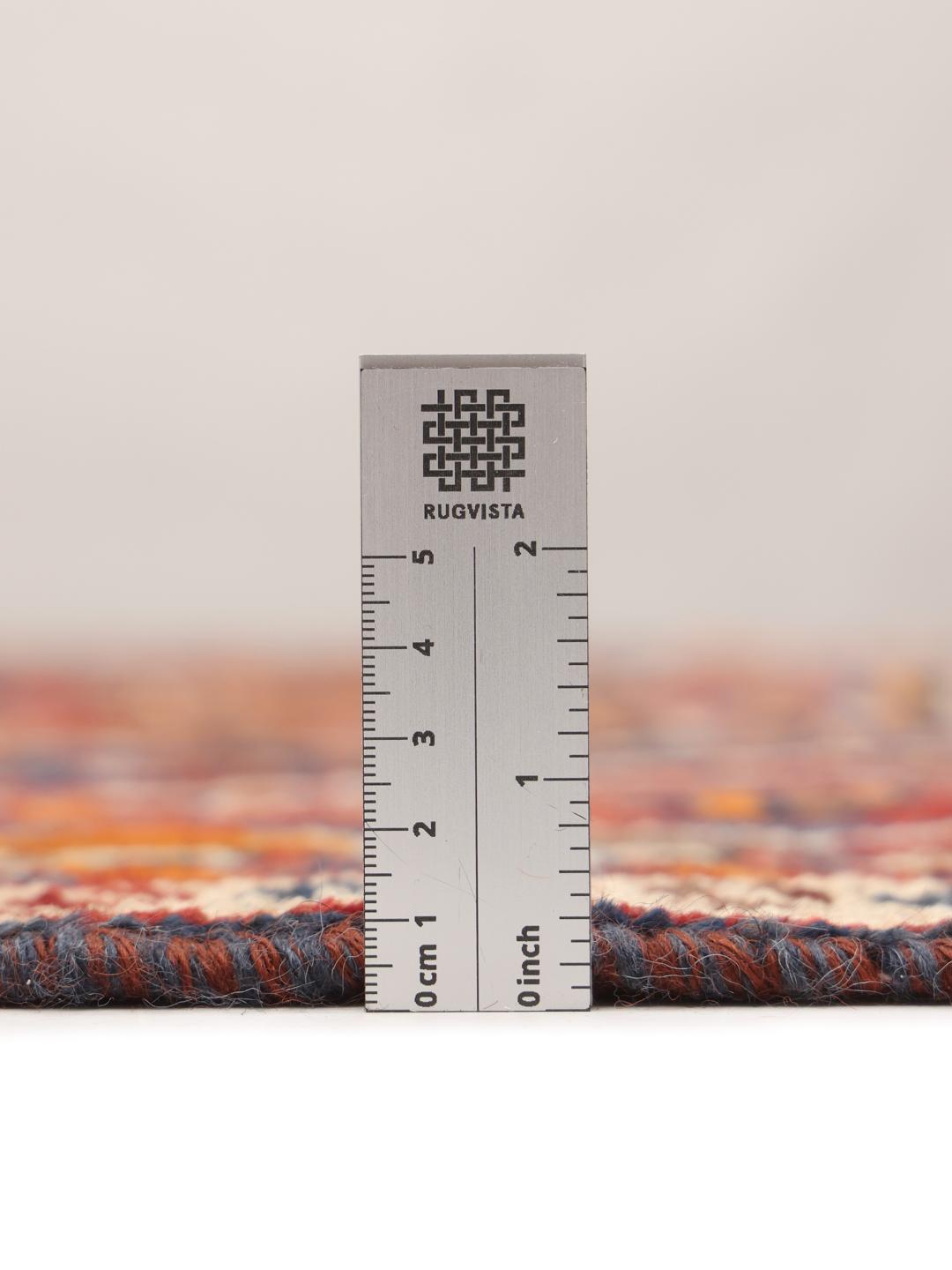
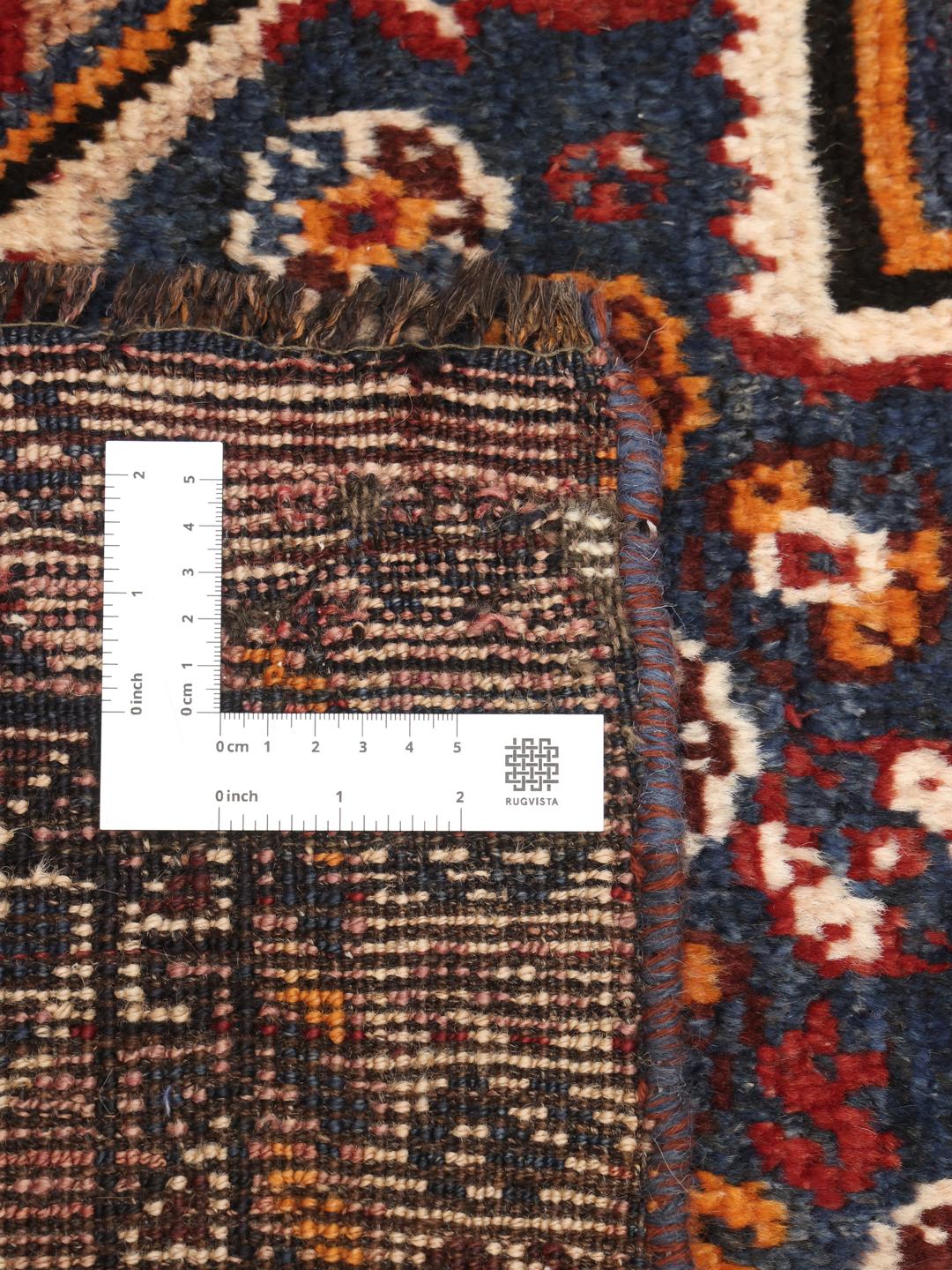
The construction of a Shiraz rug typically involves a wool foundation, which provides the strength and flexibility needed for the nomadic lifestyle. The term 'hand-knotted' here refers to the use of a symmetrical knot, which is a signature of this tradition. This method results in a pile that is slightly more relaxed than those found in formal city carpets, giving the rugs their characteristic soft, plush feel and a charming, slightly irregular geometry that collectors highly prize.
Visually, these rugs are defined by their bold, geometric language. You will often find central medallions, intricate diamond motifs, and stylized floral elements that reflect the flora and fauna of the southern landscape. The borders are frequently decorated with geometric repeating patterns, which frame the field like a tapestry. While red and blue are traditional, the specific combination in this piece highlights the contrast between the earth-toned warmth of the wool and the cool, deep blues often derived from natural indigo dyes.
These rugs are widely considered collector's items because they represent an authentic, unvarnished form of cultural expression. Owning a Shiraz rug is like owning a visual diary of the weaver's world, capturing stories, symbols, and artistic traditions that have been passed down through generations. They are valued for their honesty, their cultural weight, and the way they bring a sense of grounded, human-centred history into a modern home.