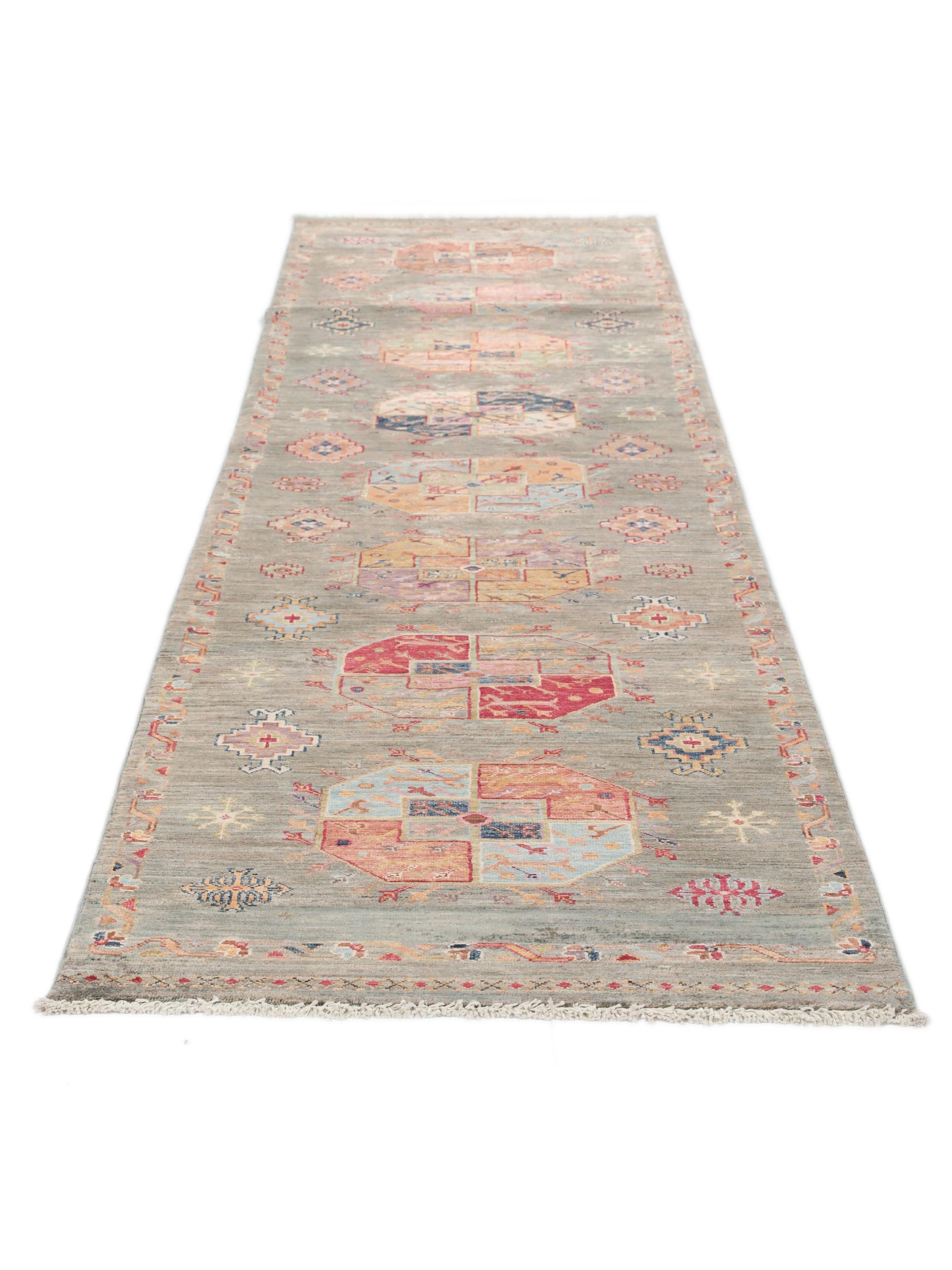
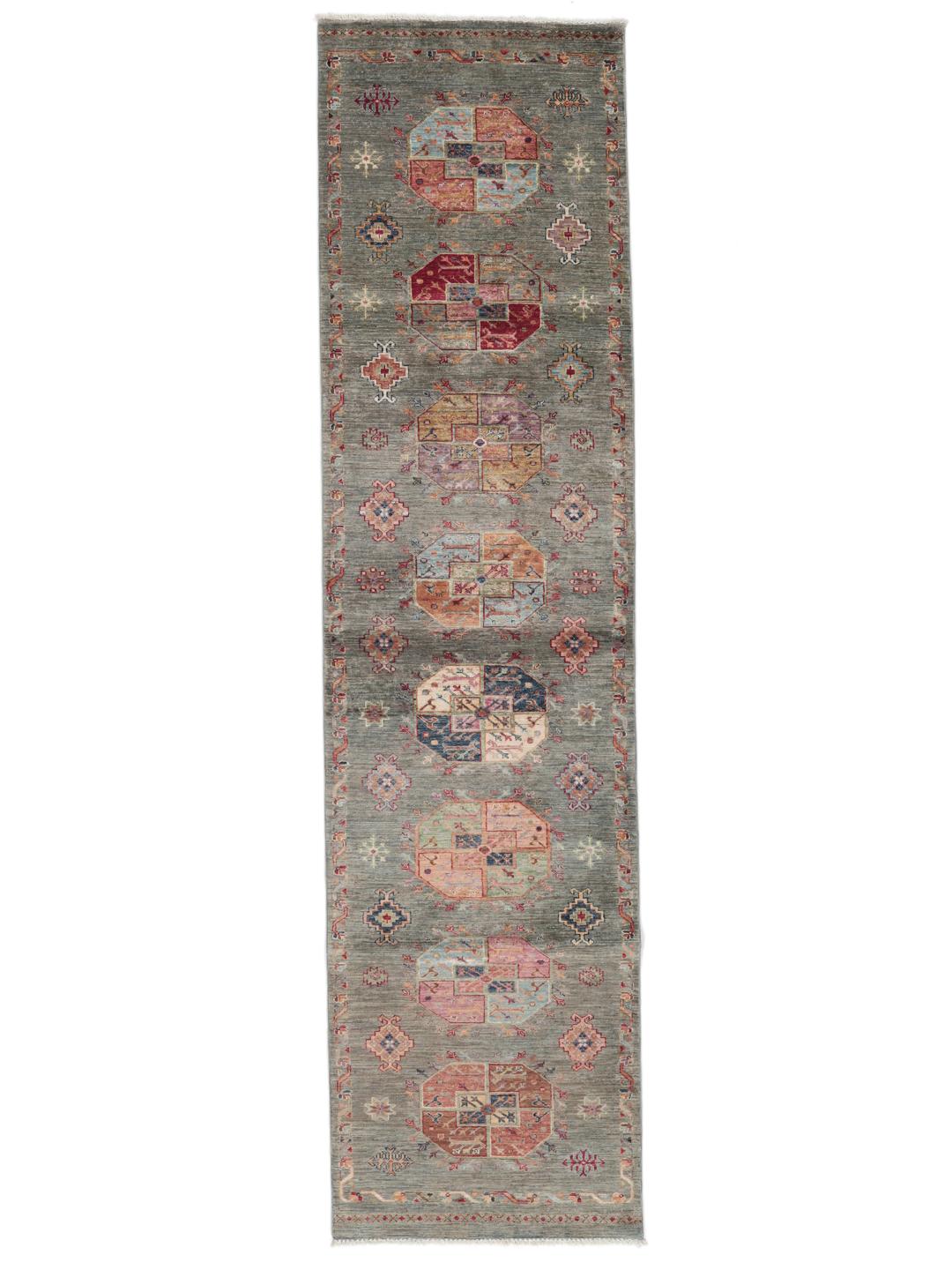
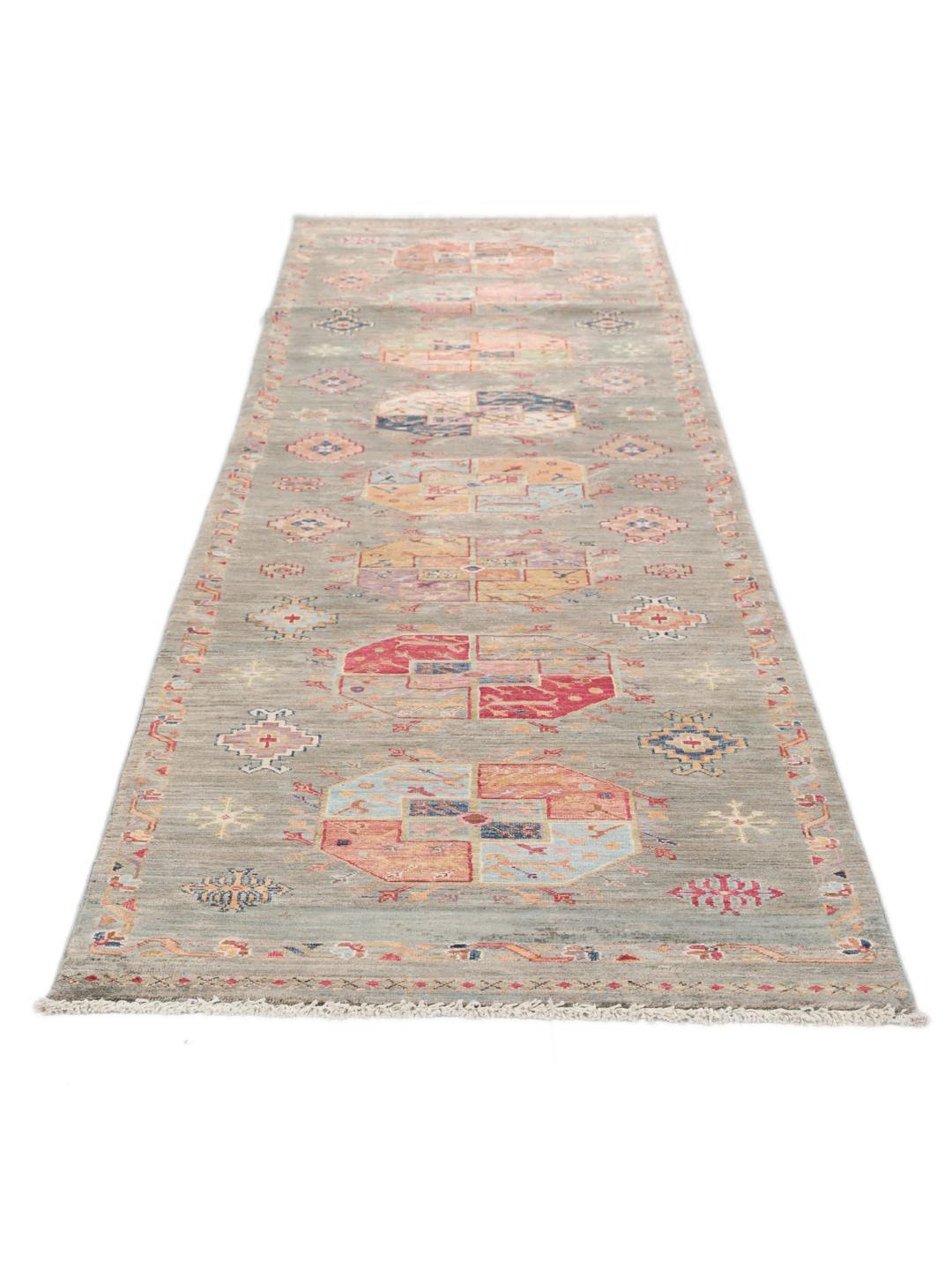
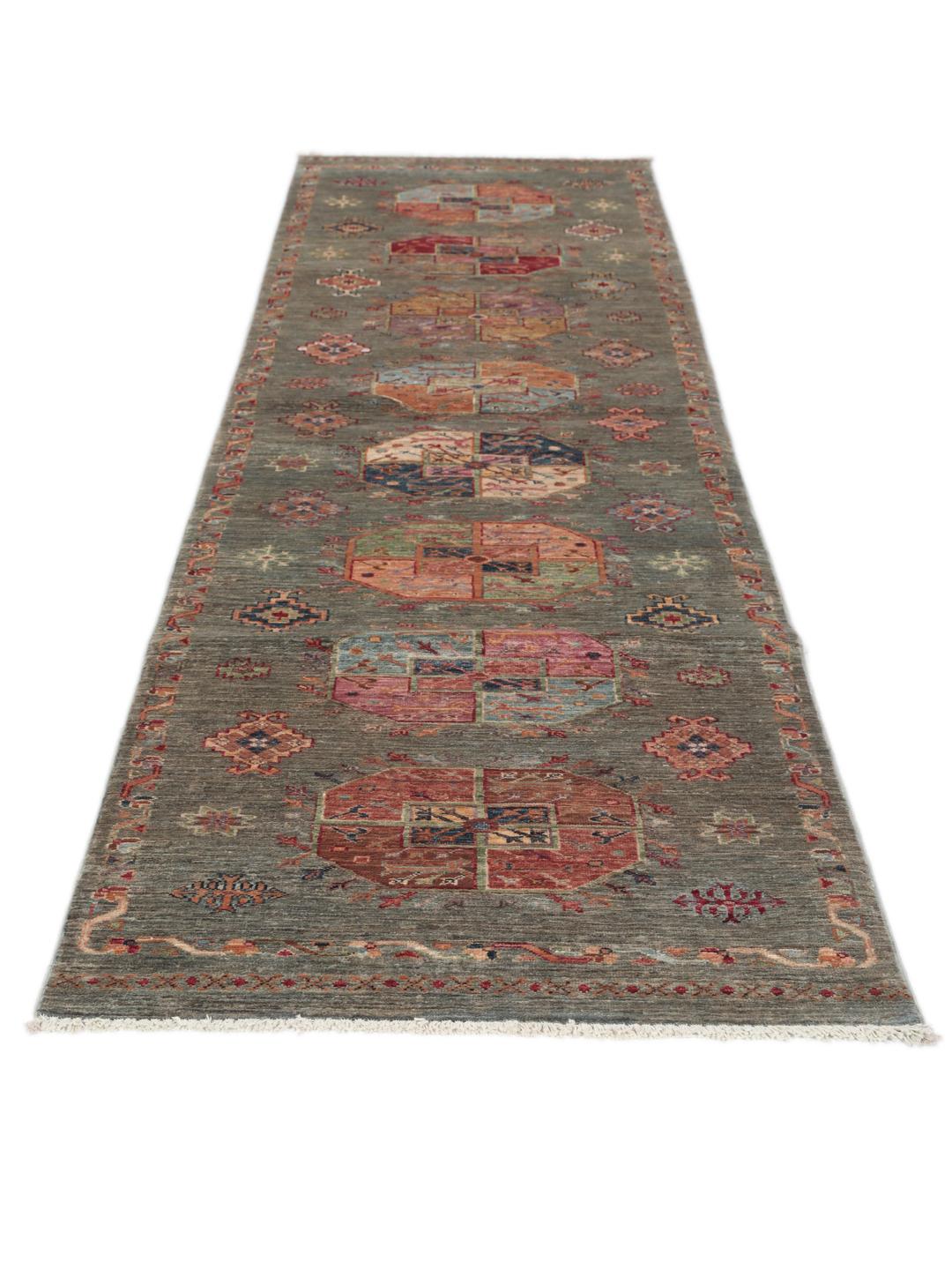
The Shabargan runner finds its roots in the rich weaving traditions of Northern Afghanistan, a region with a long history of nomadic and village-based craftsmanship. These rugs are often influenced by the cultural tapestry of the Silk Road, blending ancient geometric motifs with the creative vision of local artisans. By working in their own communities, weavers preserve techniques that have been passed down through generations, ensuring that each rug tells a story of its specific origin.
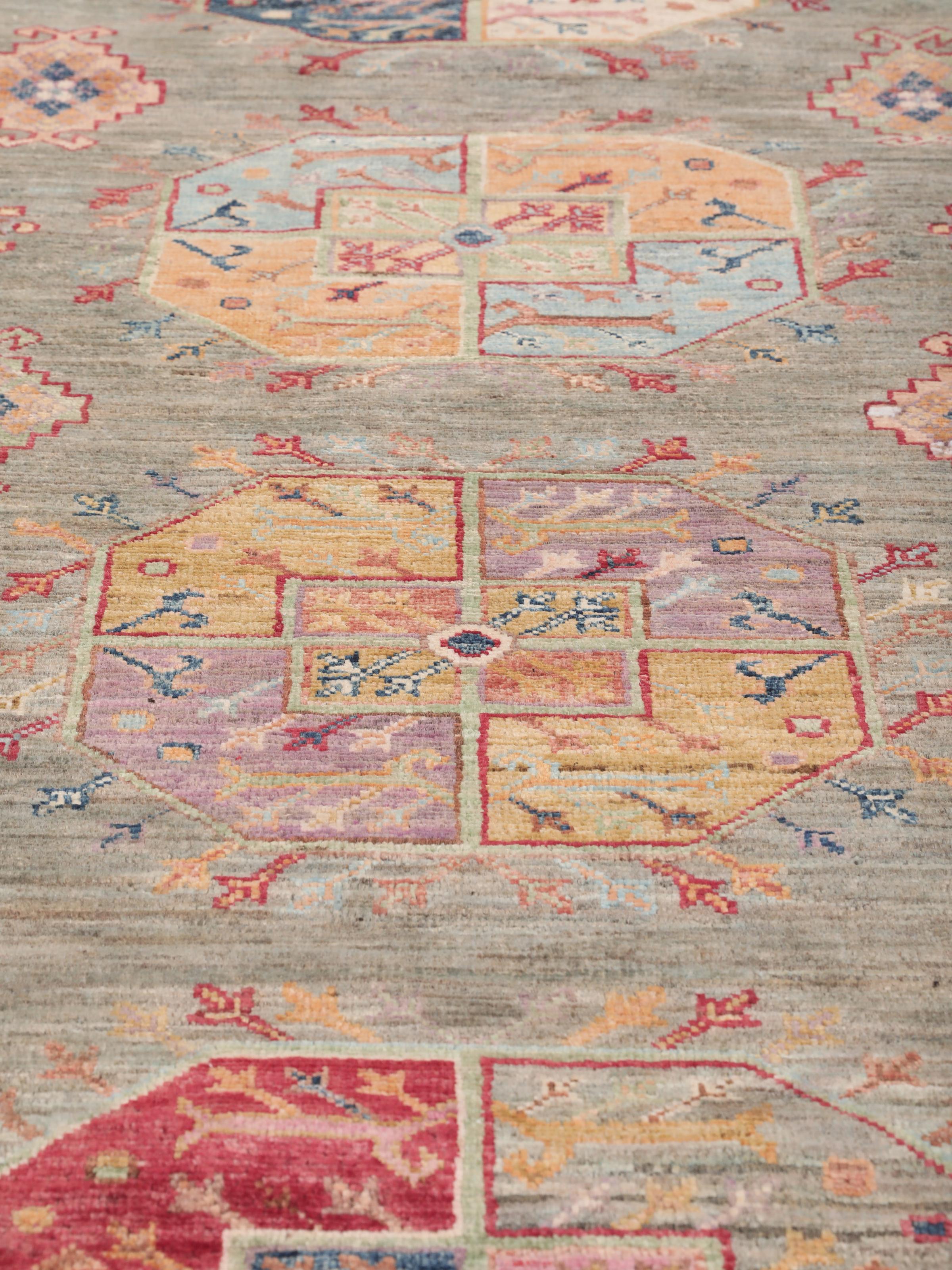
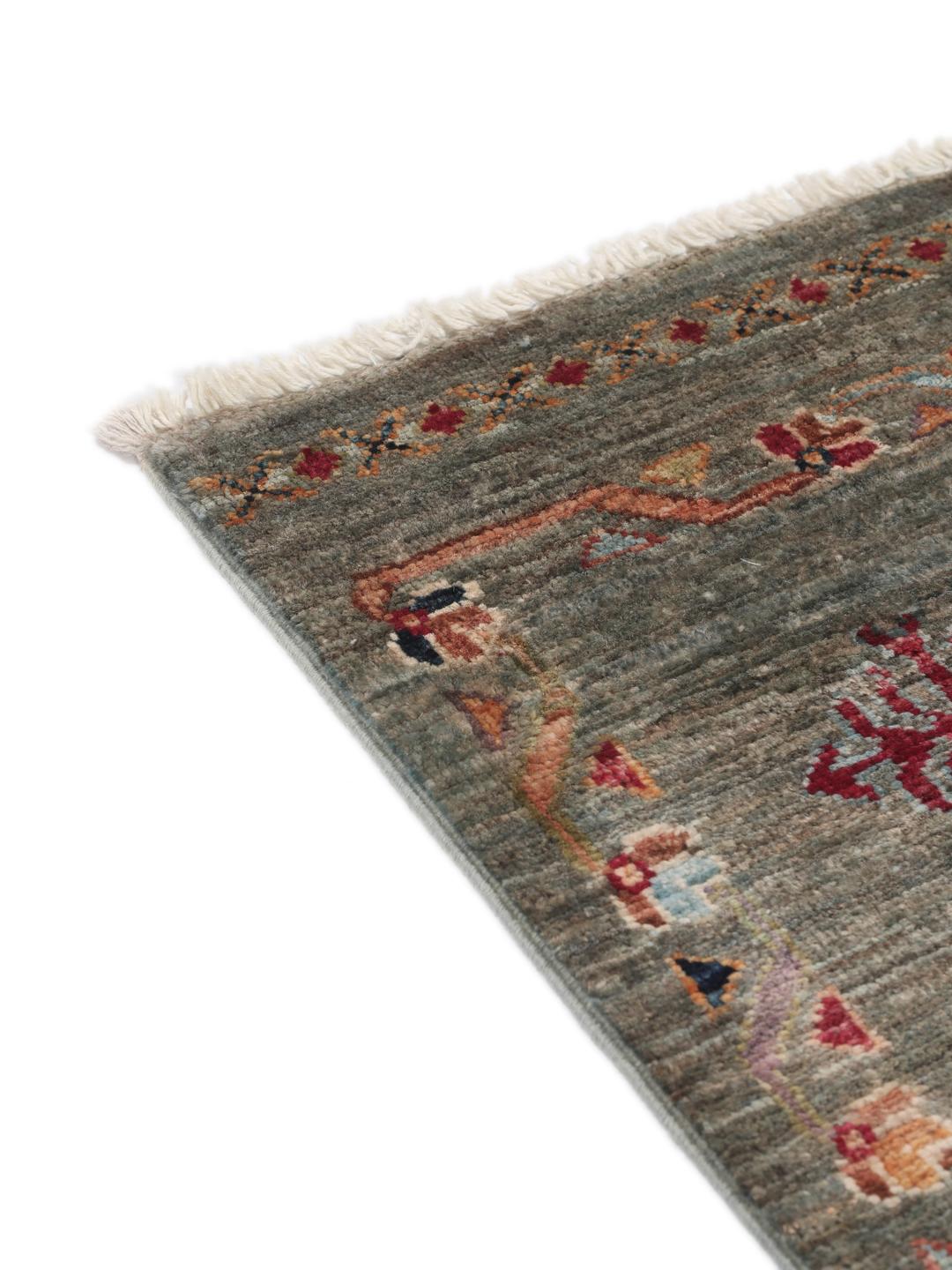
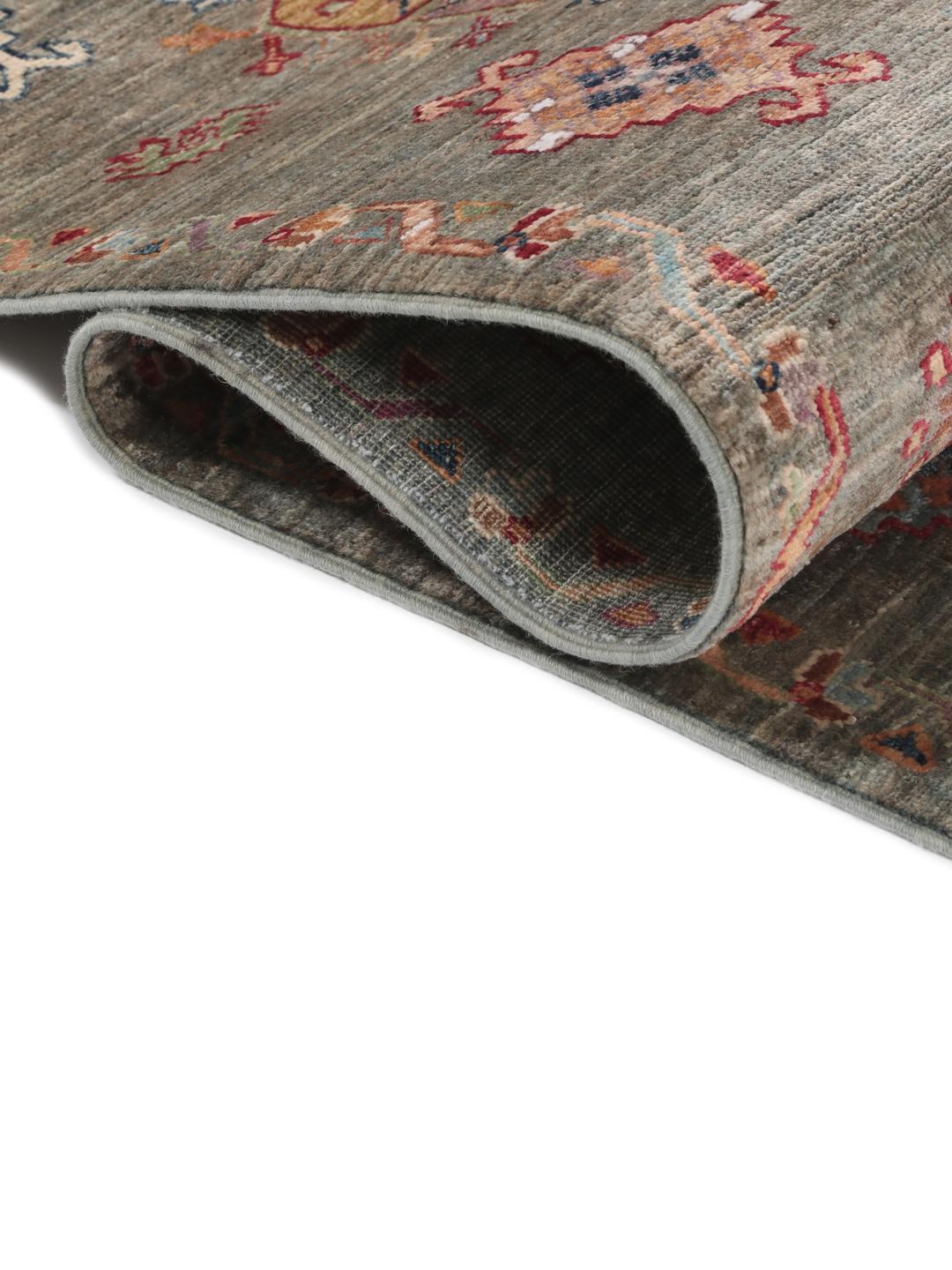
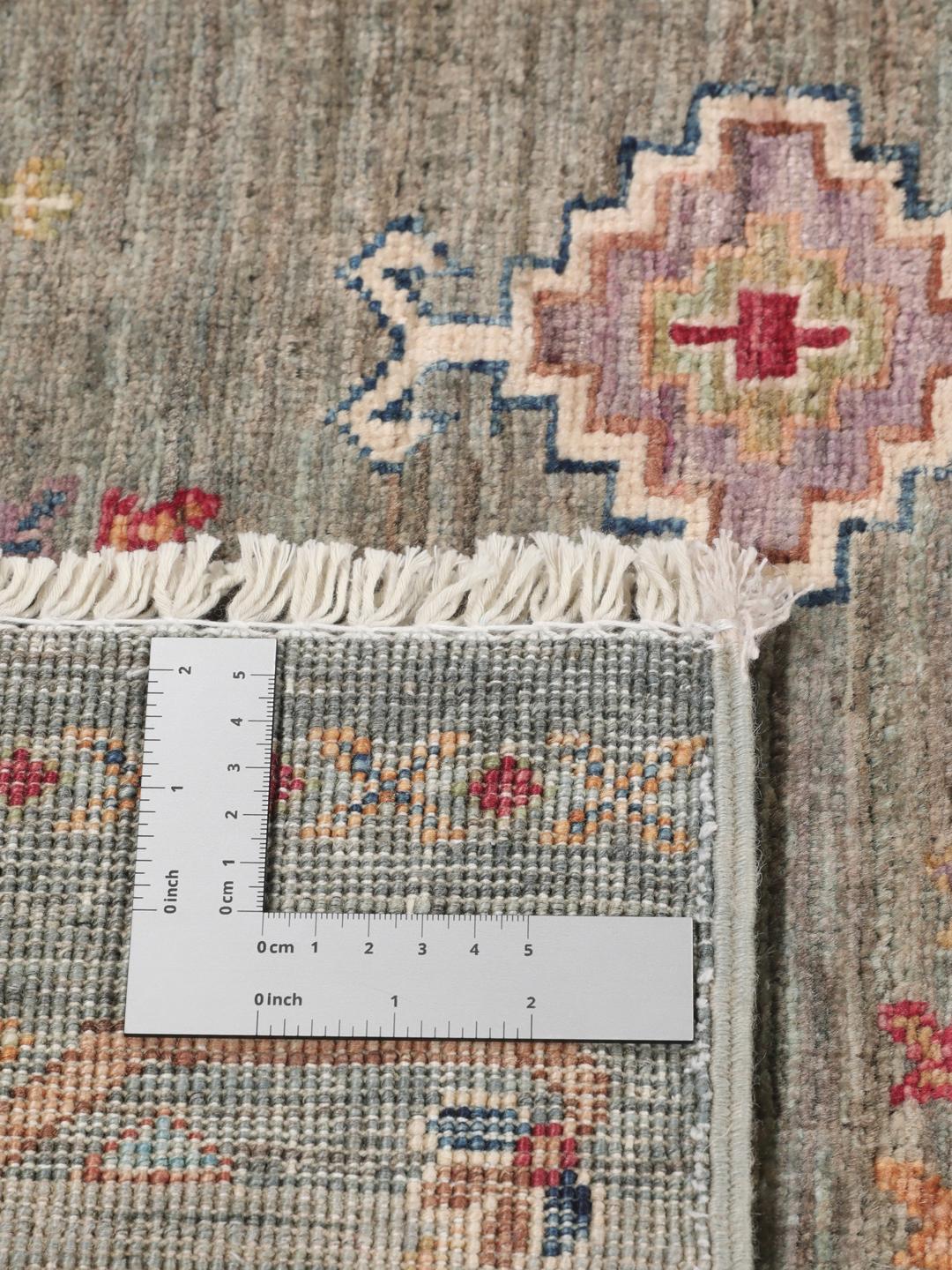
The term 'hand-knotted' refers to the traditional method where individual strands of wool are tied around the warp threads of the foundation. This labour-intensive process is what gives the rug its durability and allows for the intricate, sharp patterns that define the style. Unlike mass-produced alternatives, this method creates a pile that is deeply connected to its base, resulting in a product that ages beautifully and retains its structure over decades.
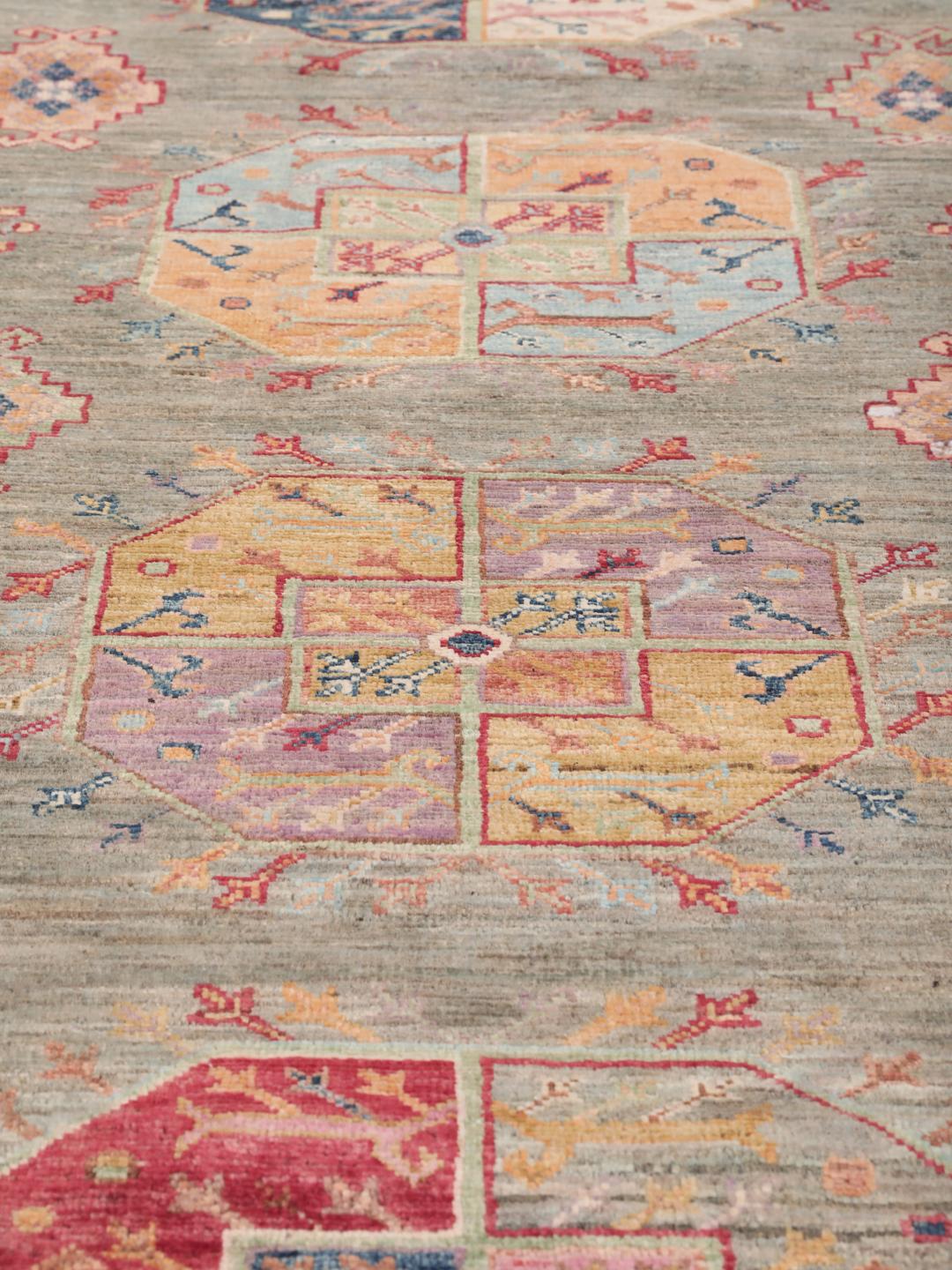
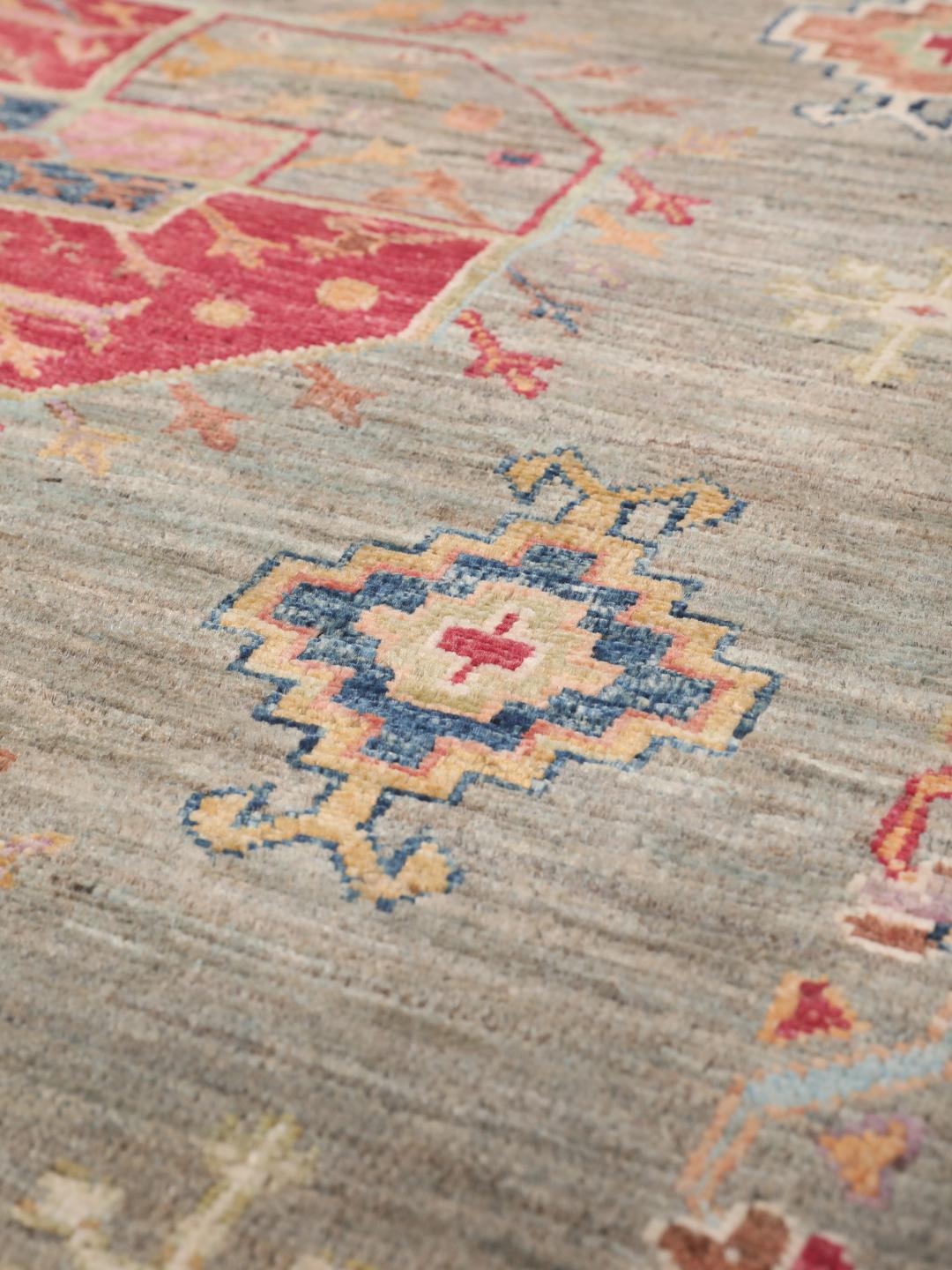
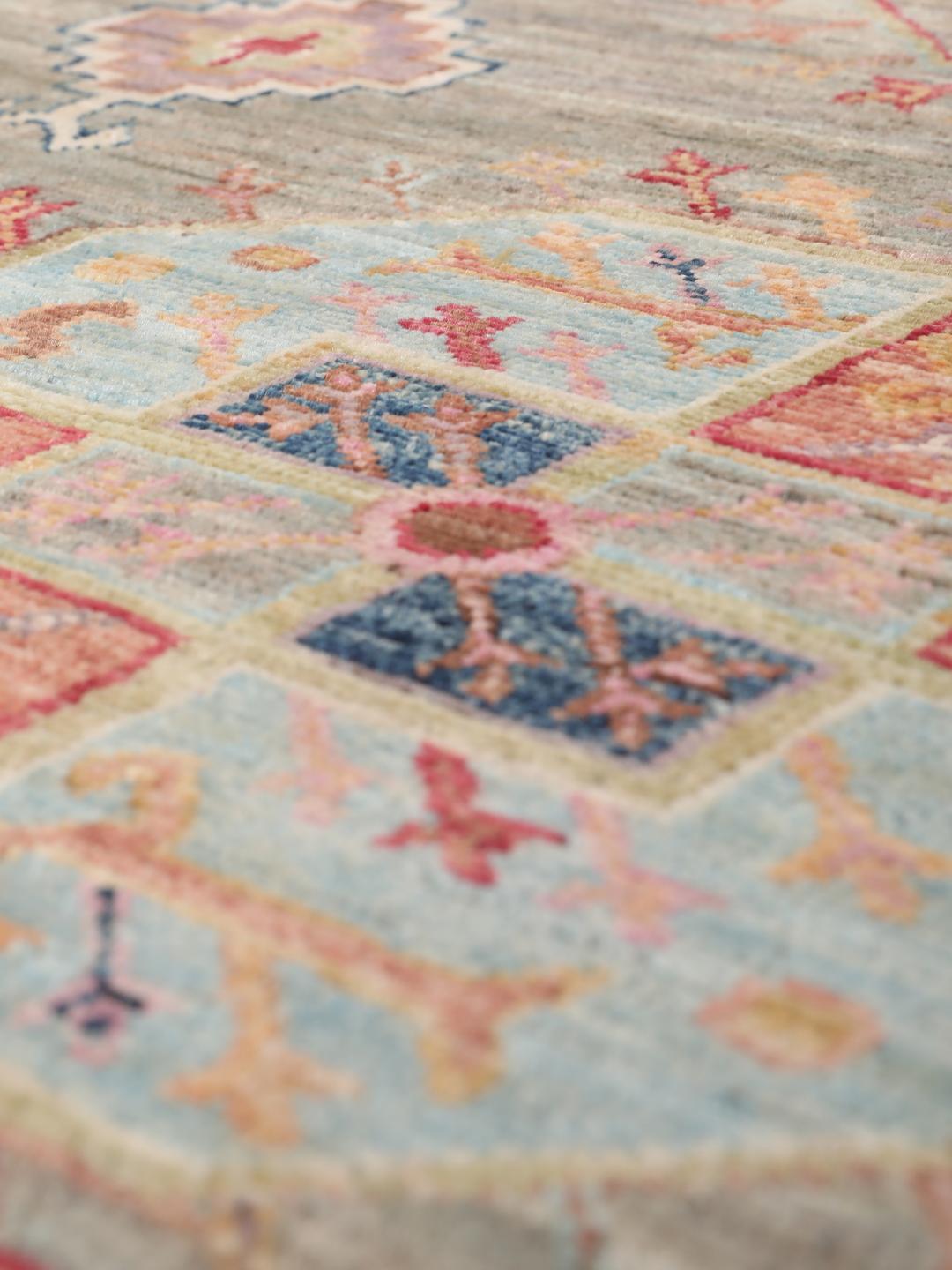
Visually, this tradition is known for its bold use of geometric medallions and symbolic motifs. The medallions are often arranged in rows, creating a rhythm that is both orderly and artistic. While red is a common colour in this region, the use of a muted grey field in this particular runner provides a contemporary interpretation of the classic style, allowing the vibrant colours within the medallions to stand out with striking clarity.
Owning a hand-knotted rug from this tradition is an act of appreciation for human skill and cultural heritage. Collectors value these pieces for their authenticity and the unique imprint of the artisan who made them. Rather than a generic floor covering, these rugs are seen as enduring investments that carry a sense of place and history into a modern home, bridging the gap between ancient craft and contemporary living.