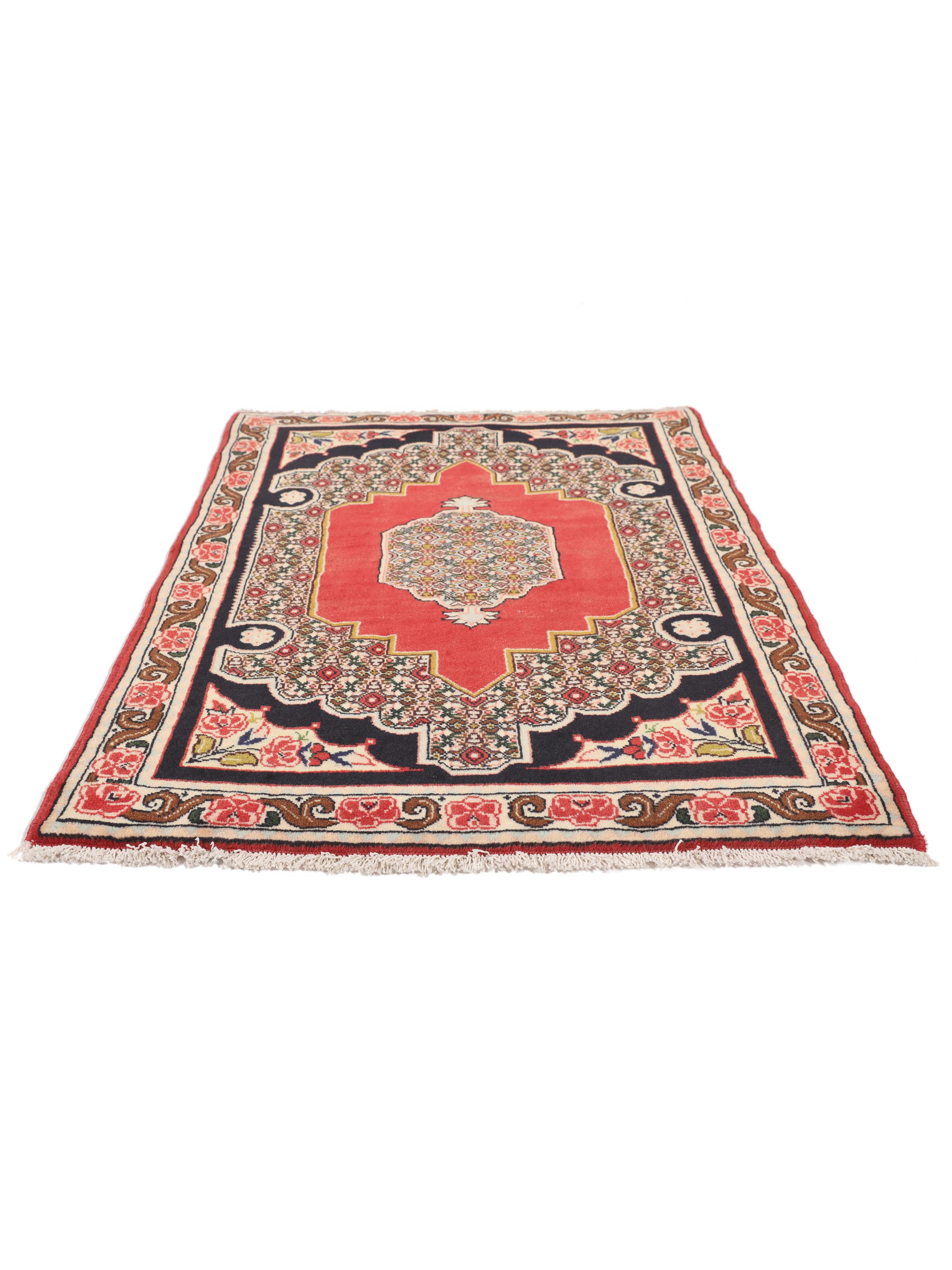
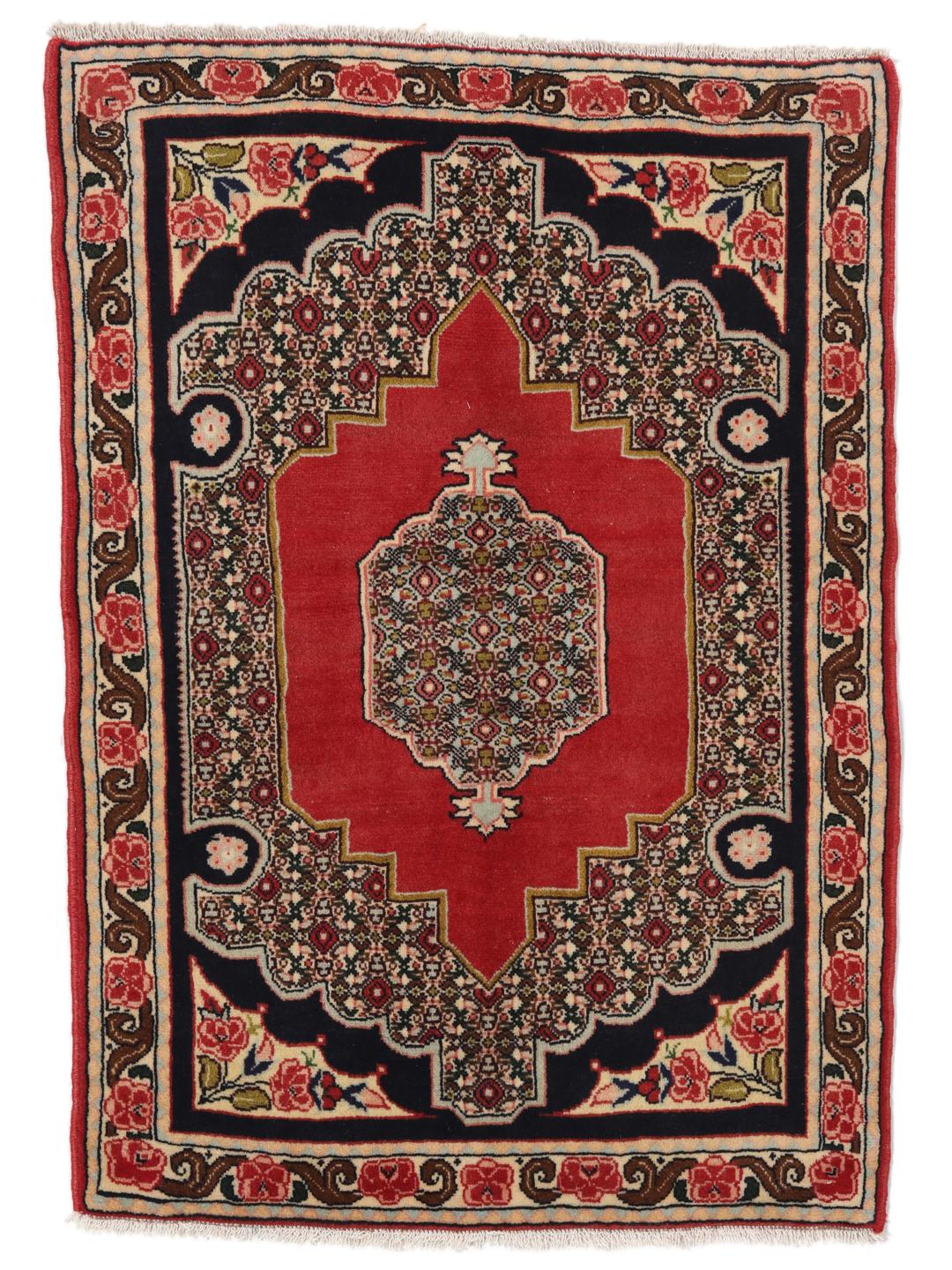
Senneh rugs originate from the mountainous regions of the Middle East, specifically from the area known today as Sanandaj. This region has long been a centre for sophisticated textile production, influenced by a blend of local tribal traditions and more formal, courtly design aesthetics. The rugs are celebrated for their distinctive balance between bold, central medallions and delicate, repeating floral patterns.
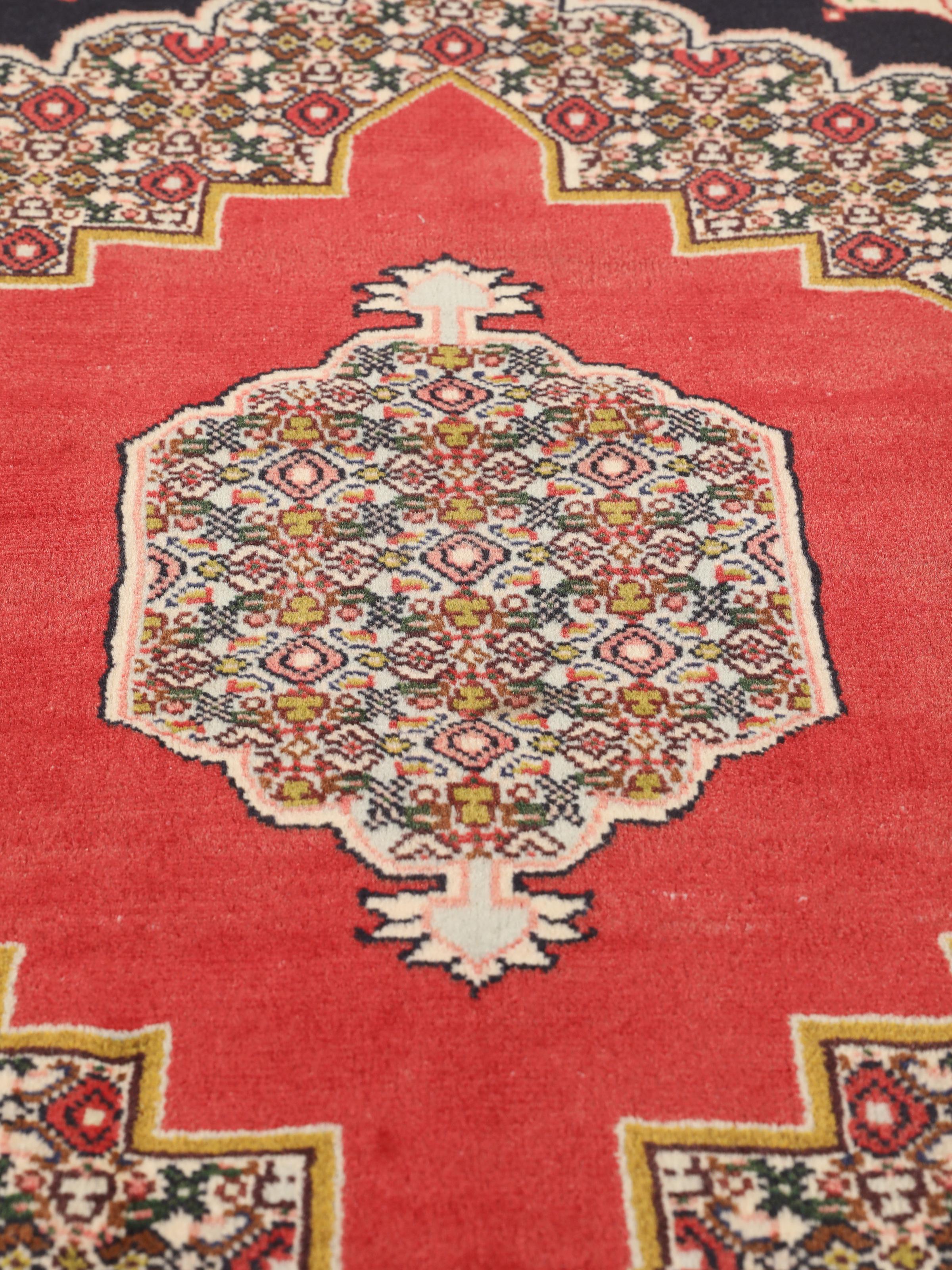
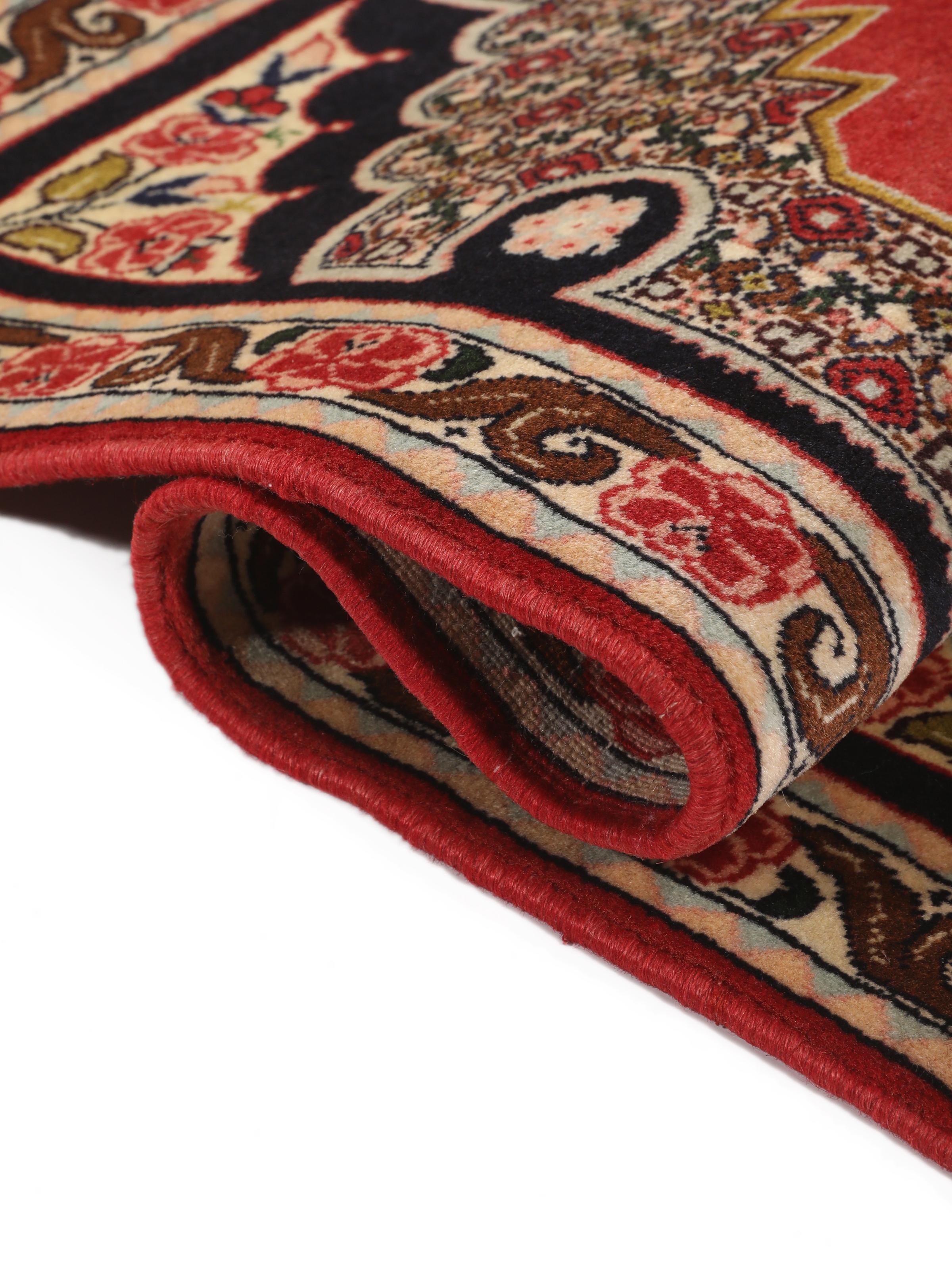
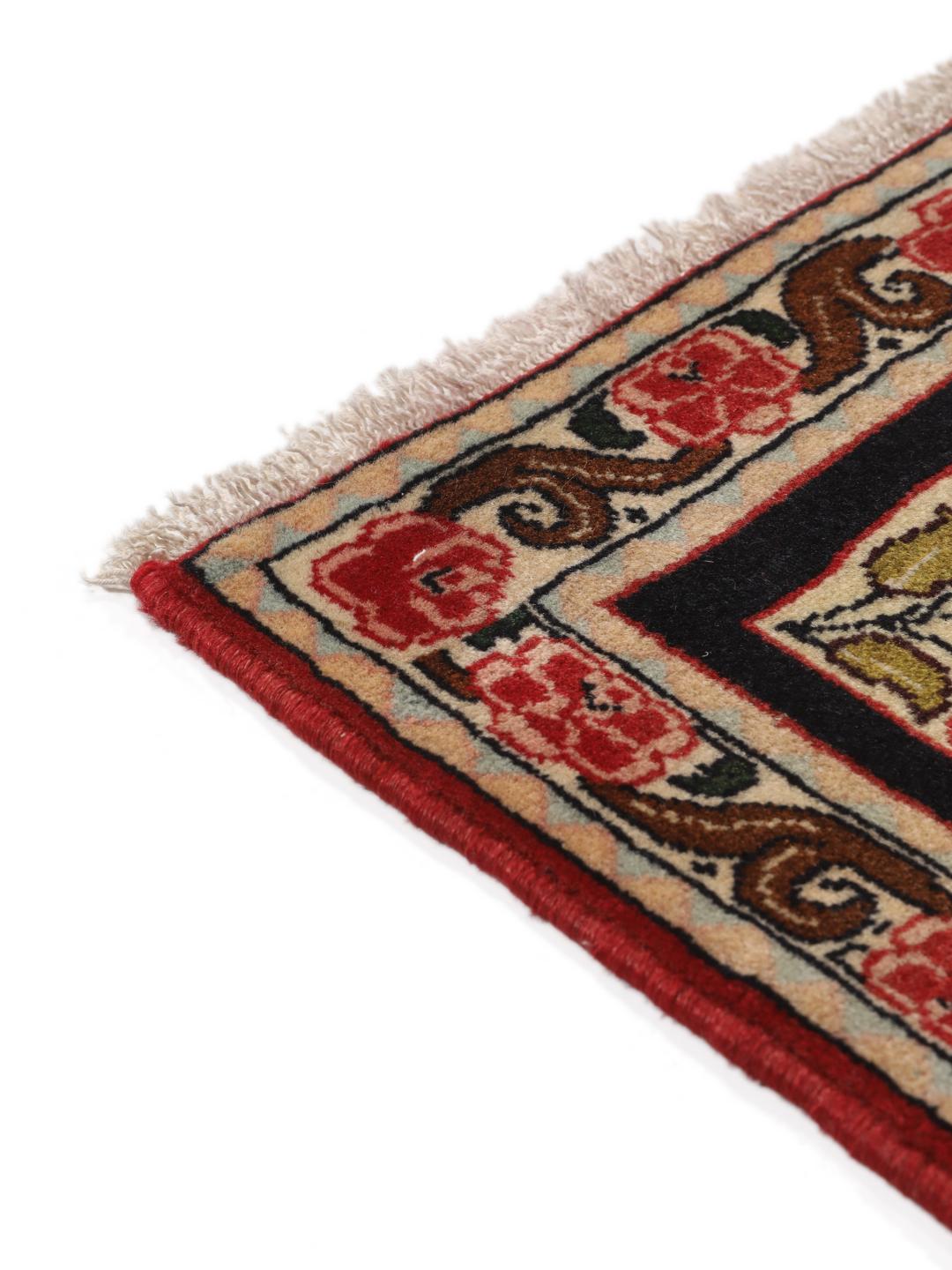
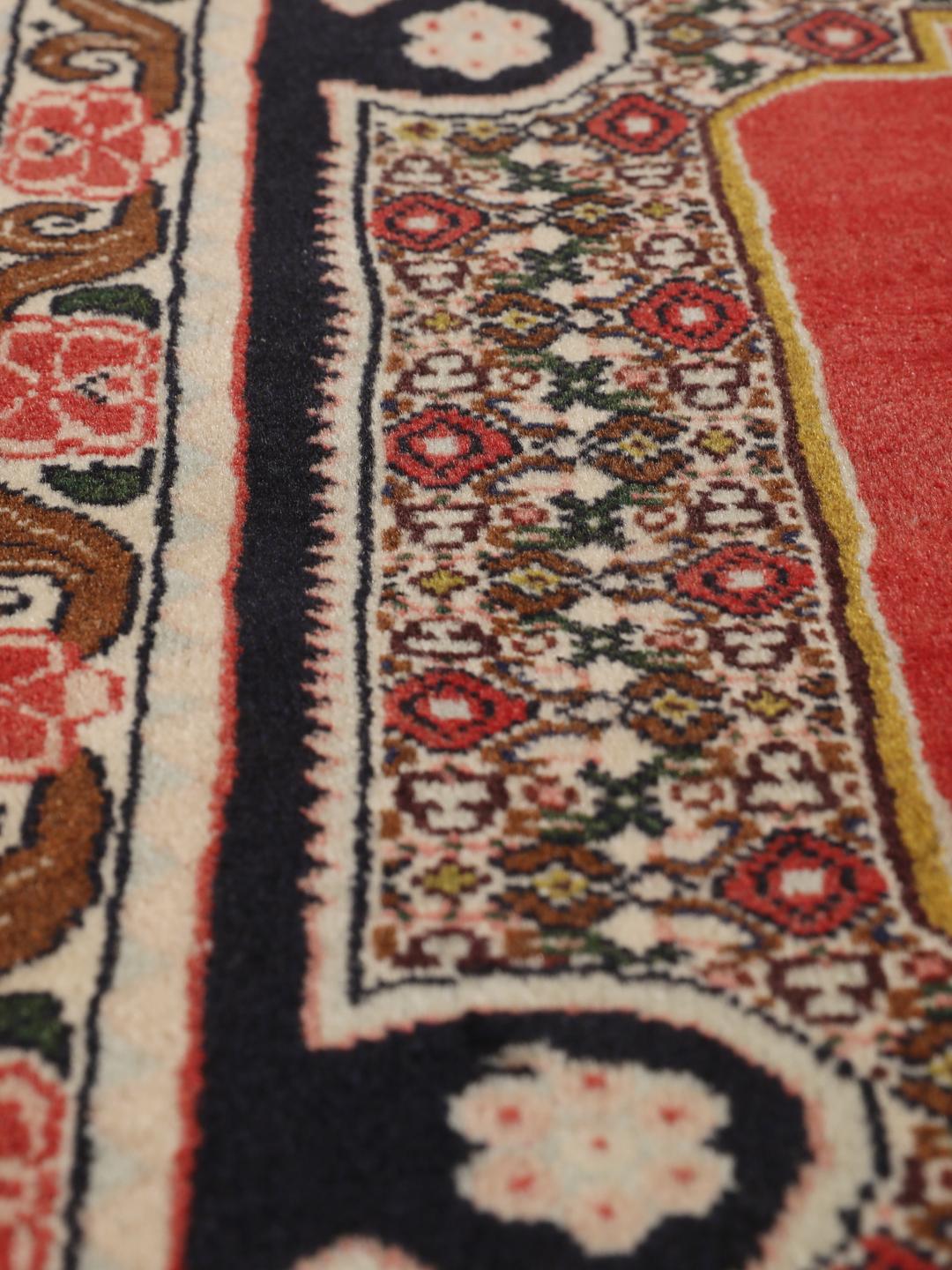
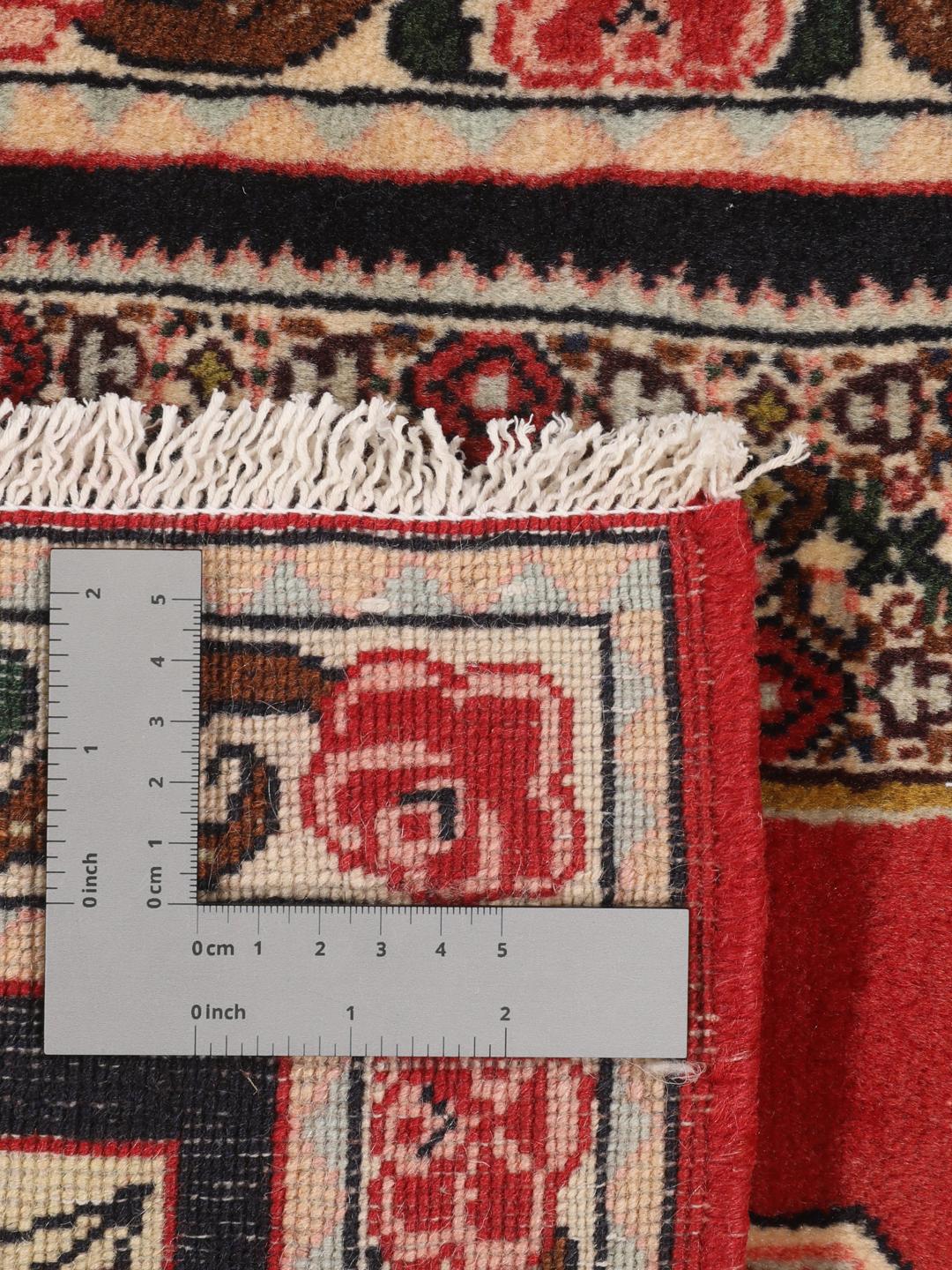
The term Senneh refers not only to the origin but also to a specific, highly refined weaving technique. Artisans in this tradition are known for their ability to create rugs with a remarkably fine and dense structure, which allows for intricate detailing that is rarely seen in other types of rugs. This technical mastery ensures that the patterns remain crisp and clear even after many years of enjoyment.
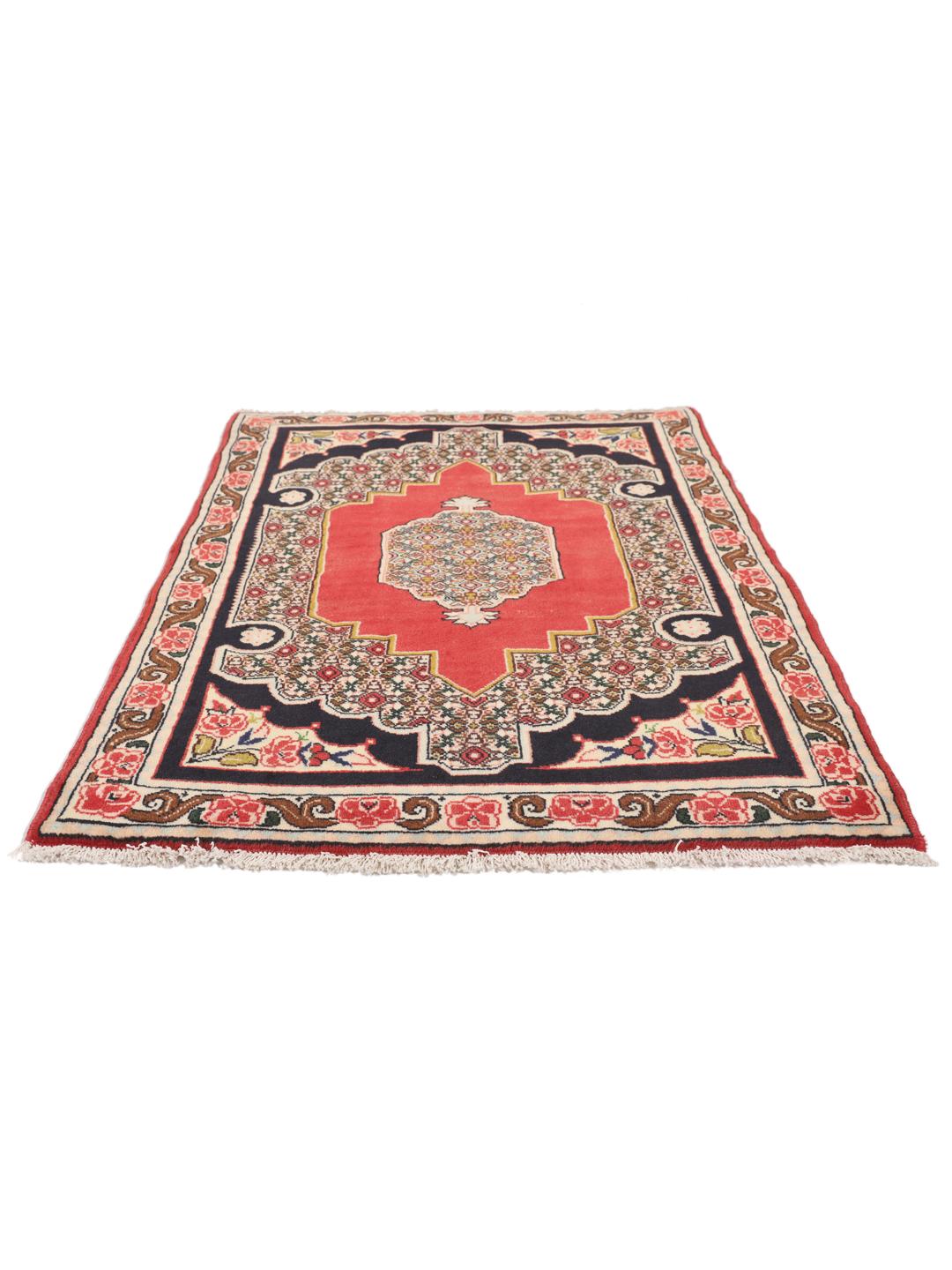
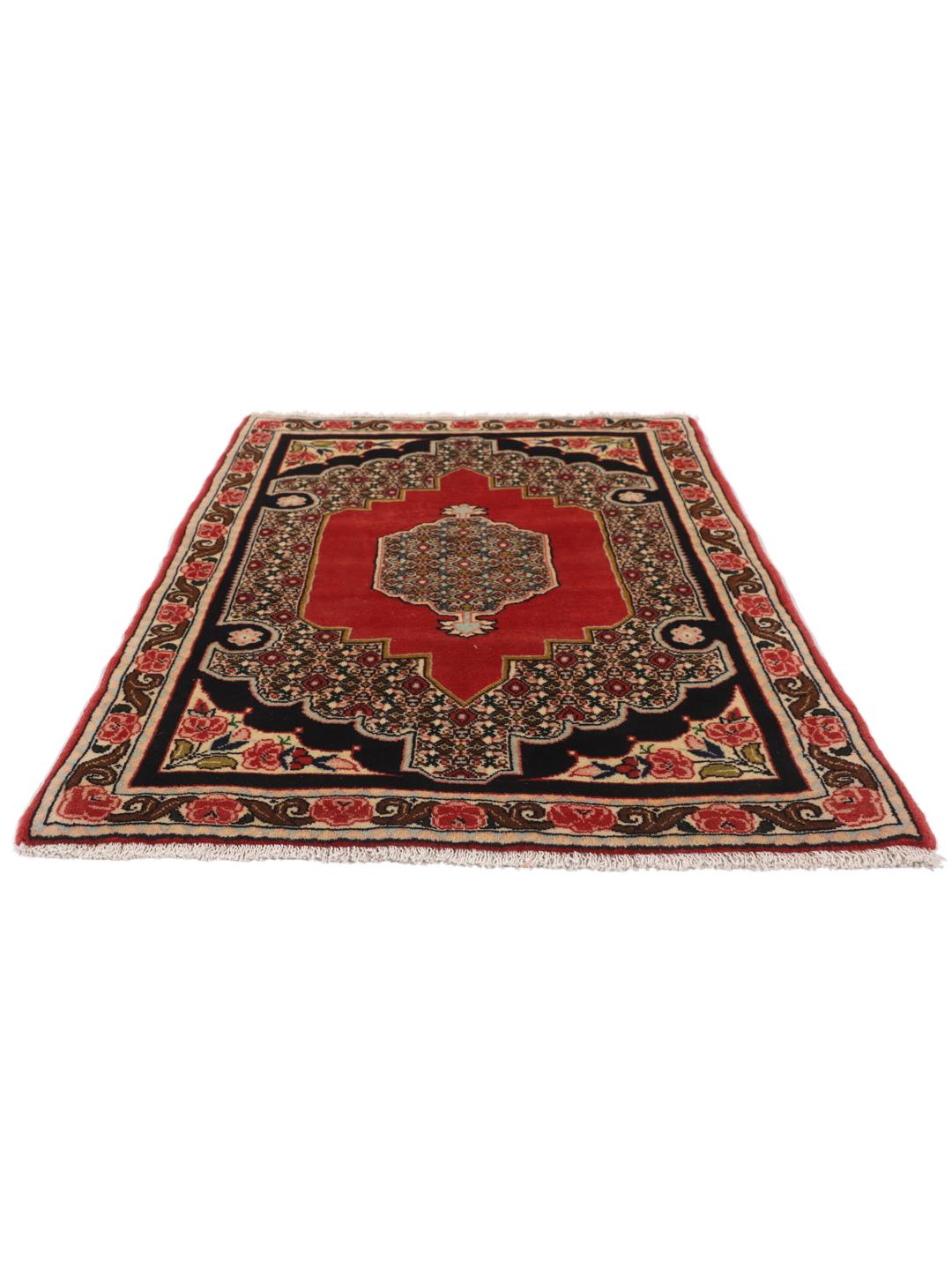
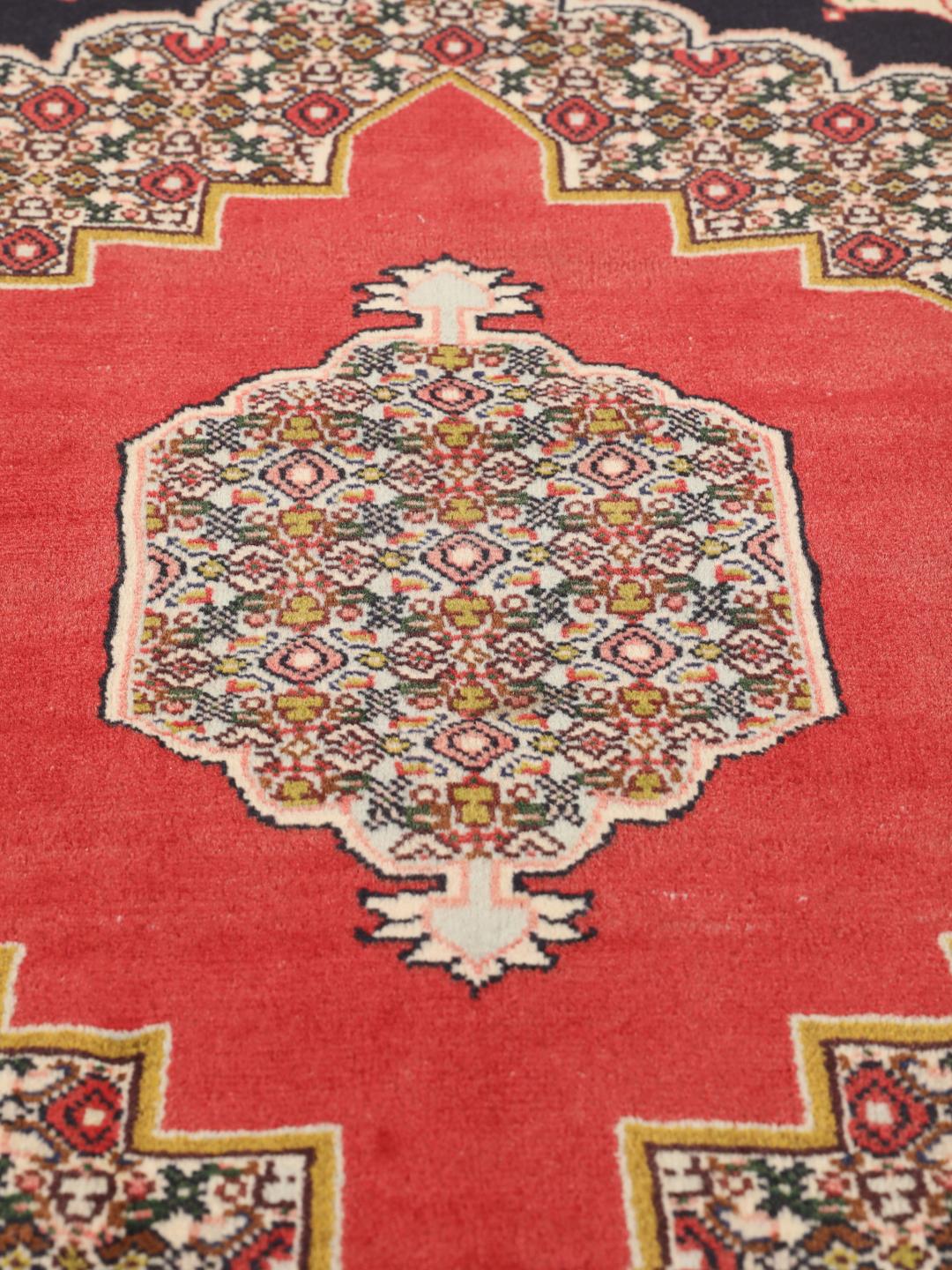
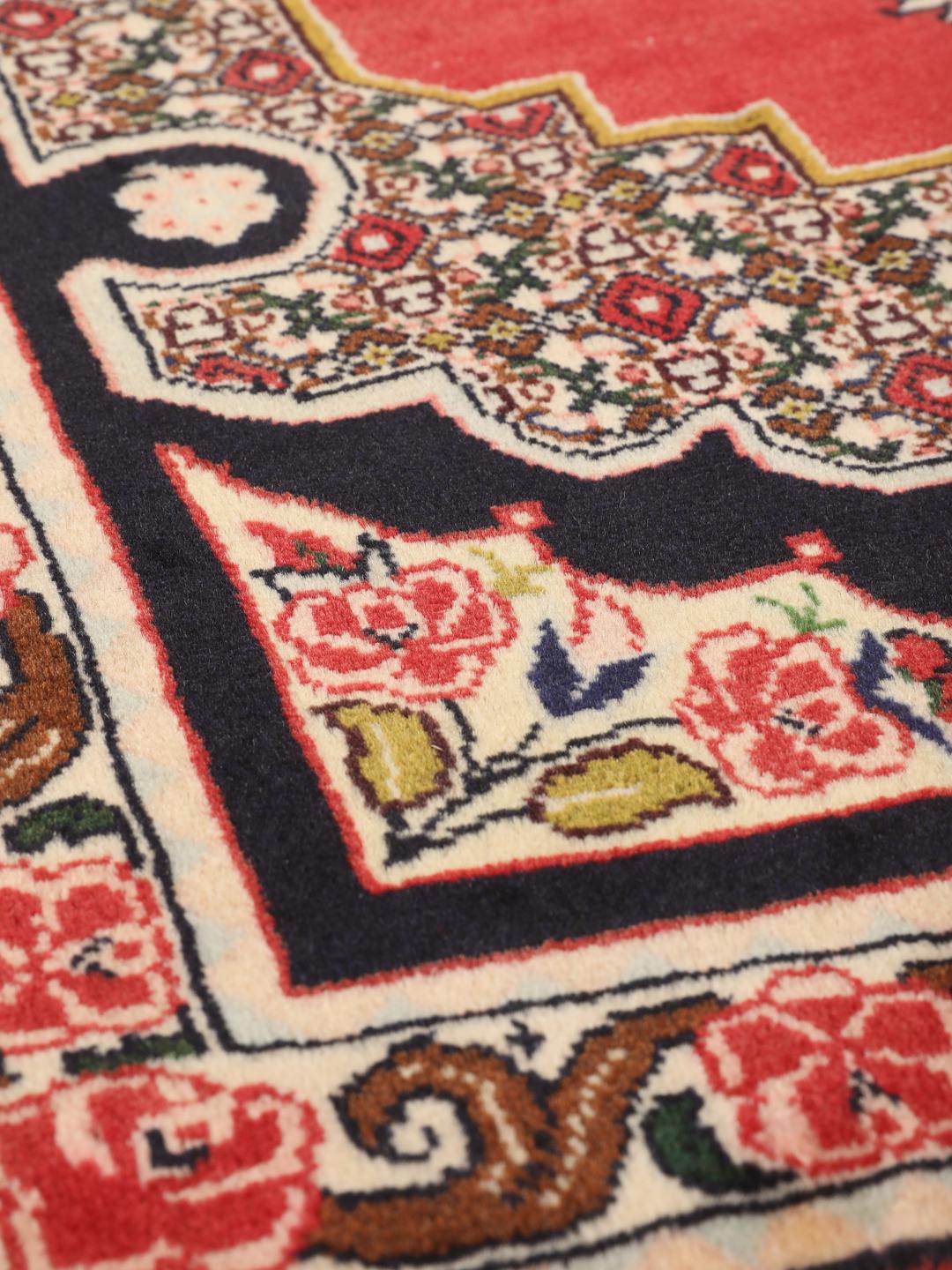
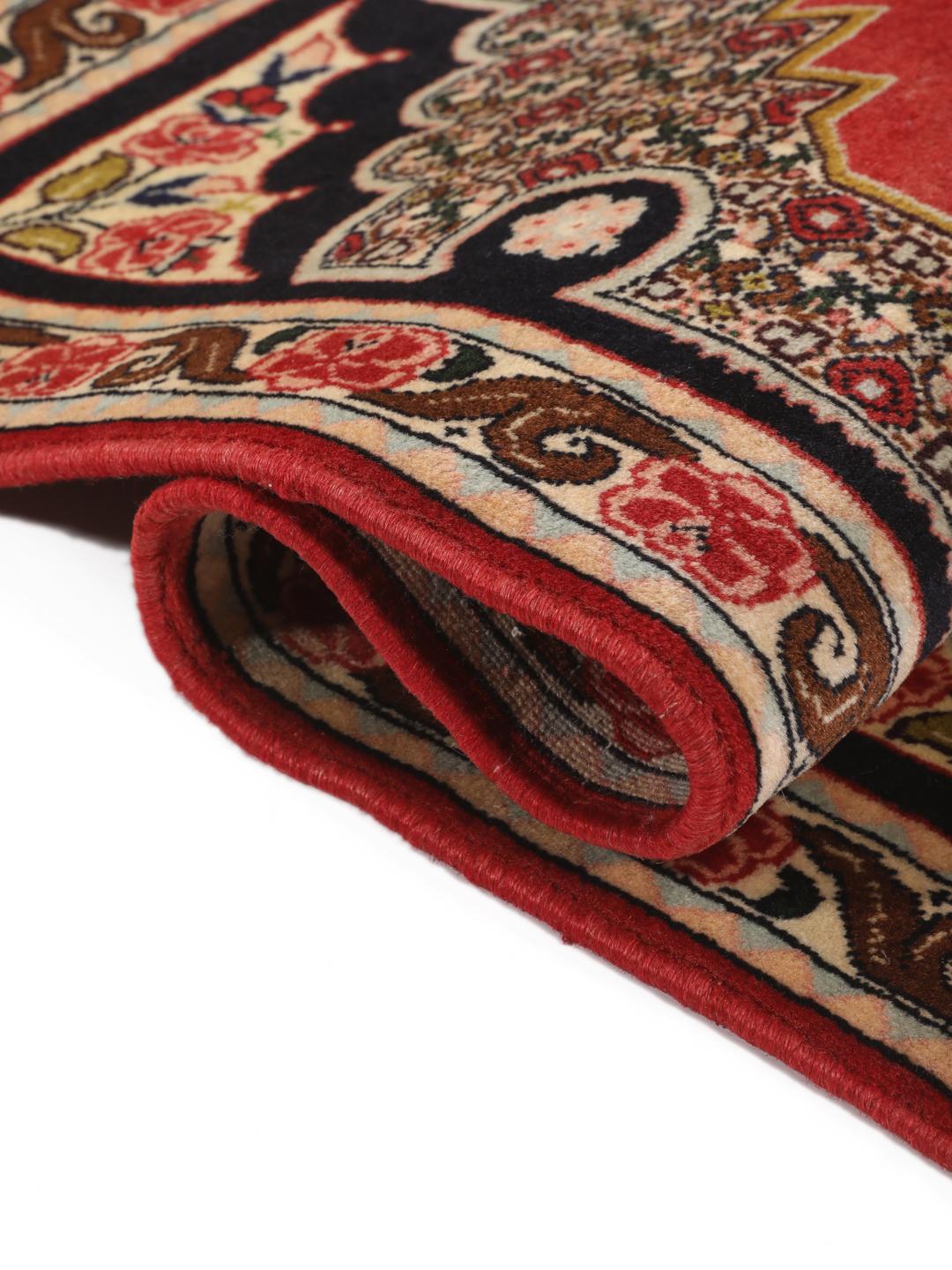
Visually, Senneh rugs are easily recognised by their frequent use of the herati motif, a rhythmic pattern of a central flower enclosed by four curved leaves. While many examples feature a more muted palette, this particular piece stands out with its vibrant red field and stark black borders, showcasing a bold departure from traditional colour schemes that highlights the creativity of the weaver.
Collecting a Senneh rug is a way of honouring a long-standing heritage of craftsmanship. These rugs are highly valued for their ability to harmonise with various interior styles, acting as a bridge between historical tradition and modern living. Owning one is a testament to an appreciation for human skill and the enduring beauty of traditional floor coverings.