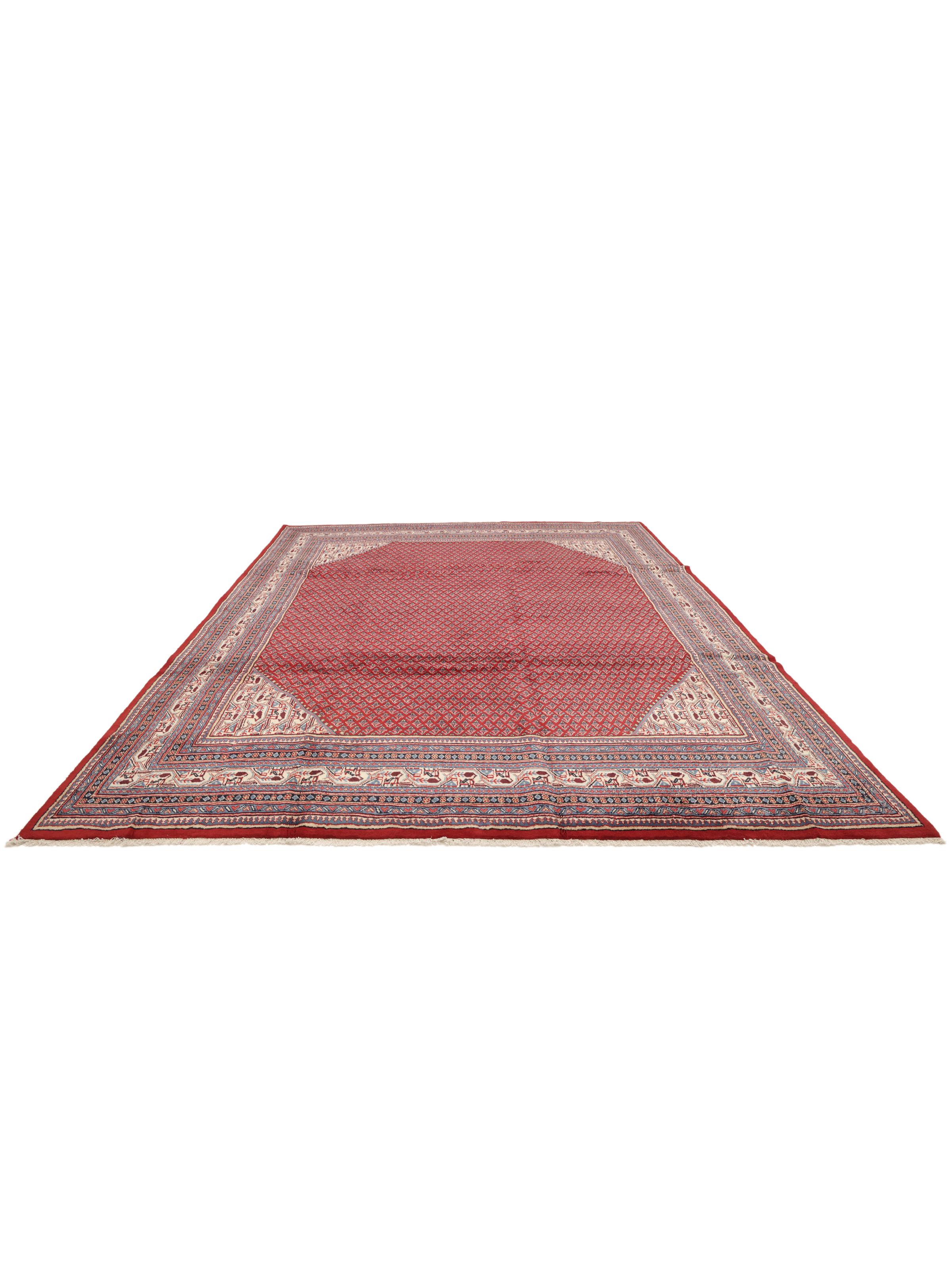
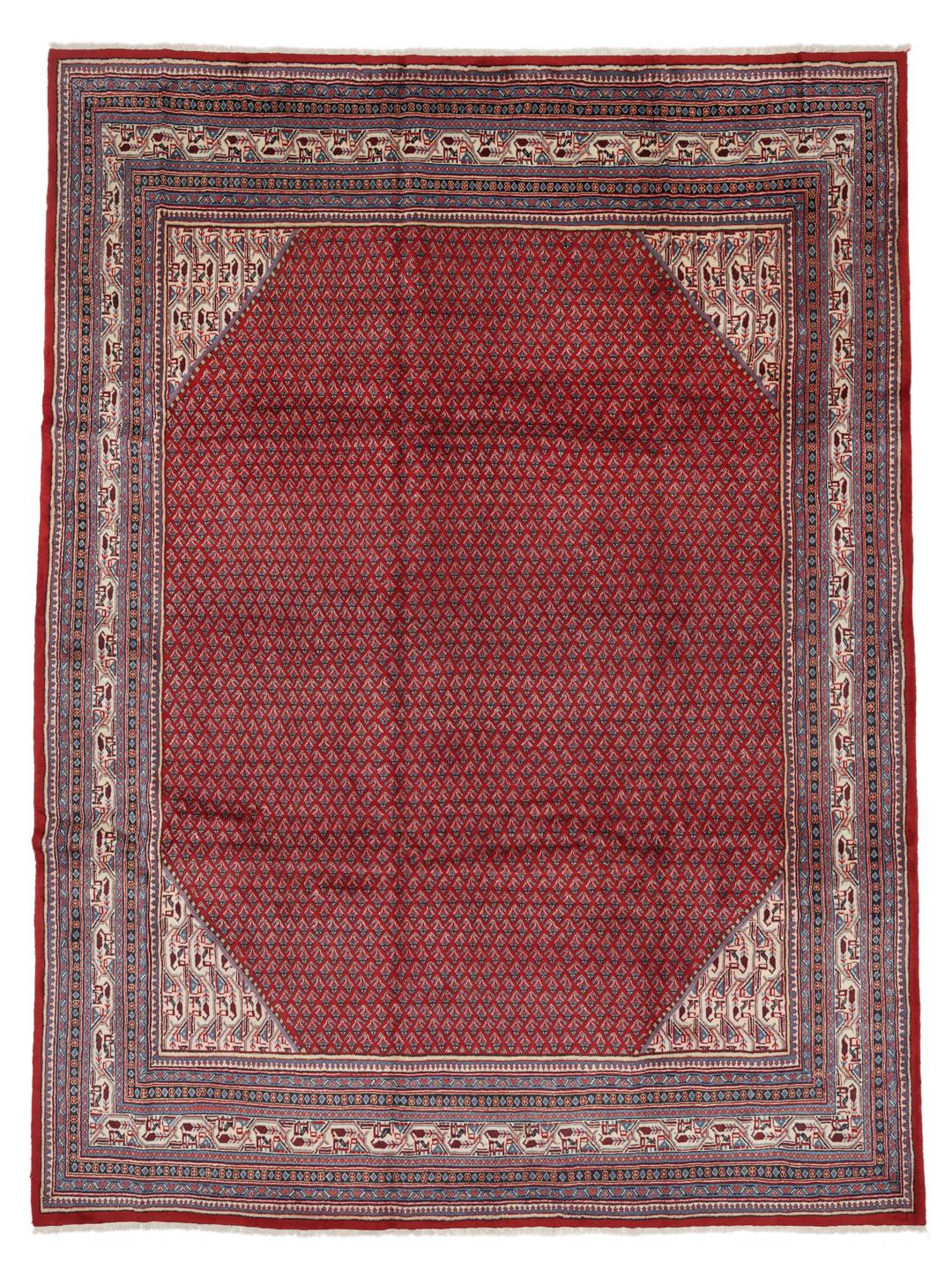
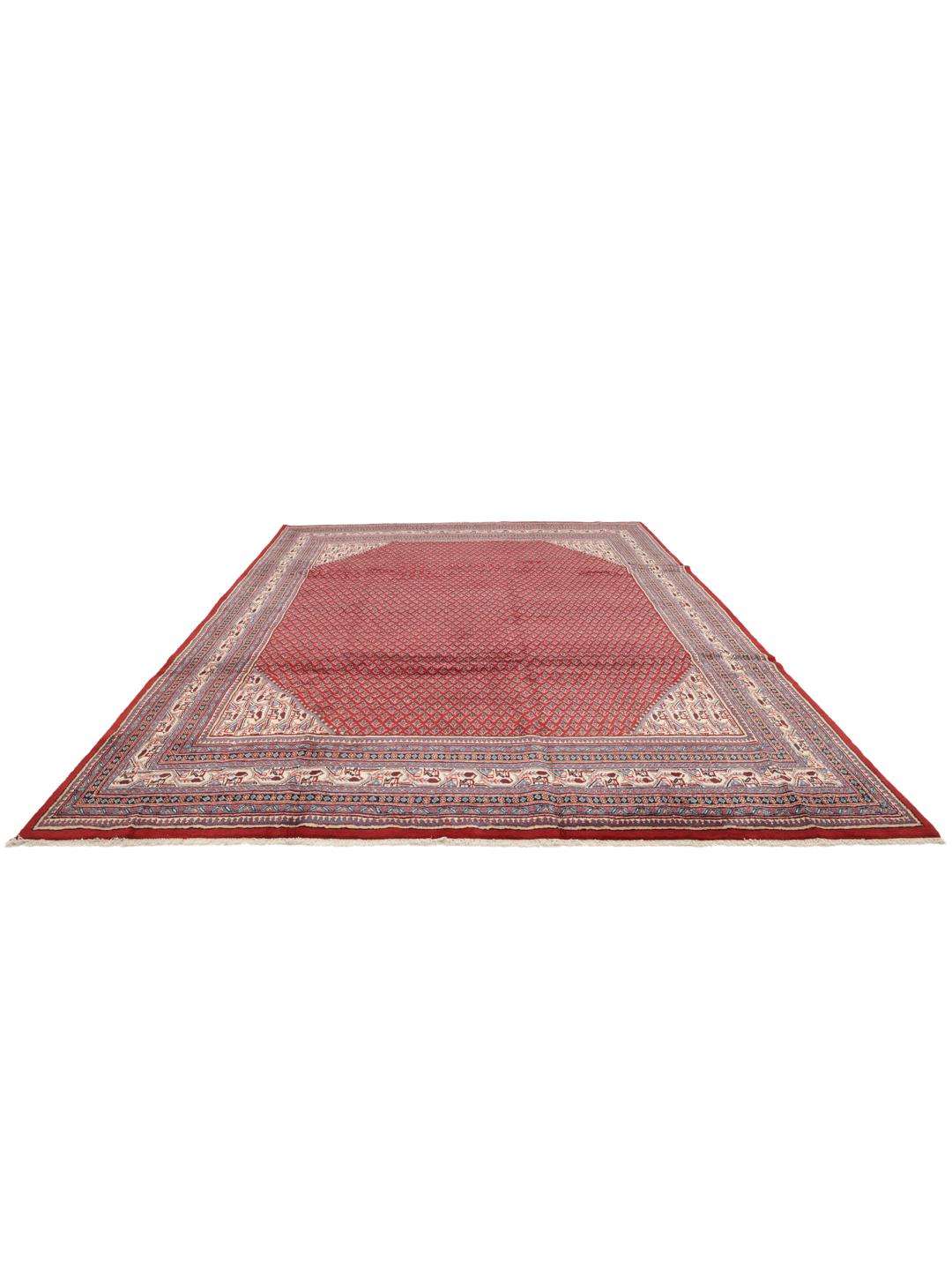
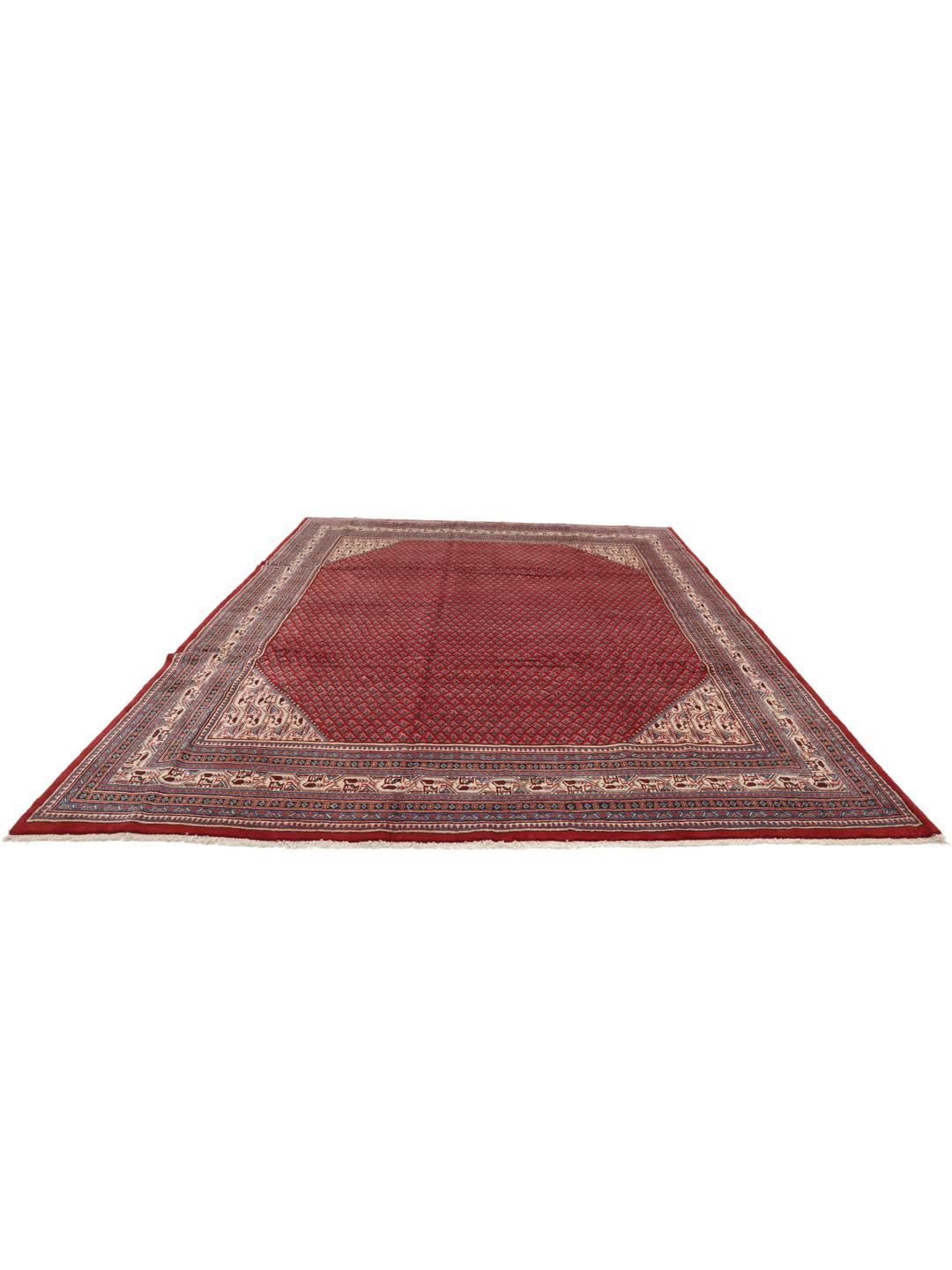
The Sarough rug tradition finds its roots in the village of Sarouk in the Middle East, a region celebrated for its long-standing commitment to fine weaving. Historically, these rugs became world-famous for their durability and the high quality of the local wool, which was prized for its natural sheen and strength. Over time, the style evolved to include the elegant Mir-i-buta motifs, which are elegantly repeated across the field of this piece.
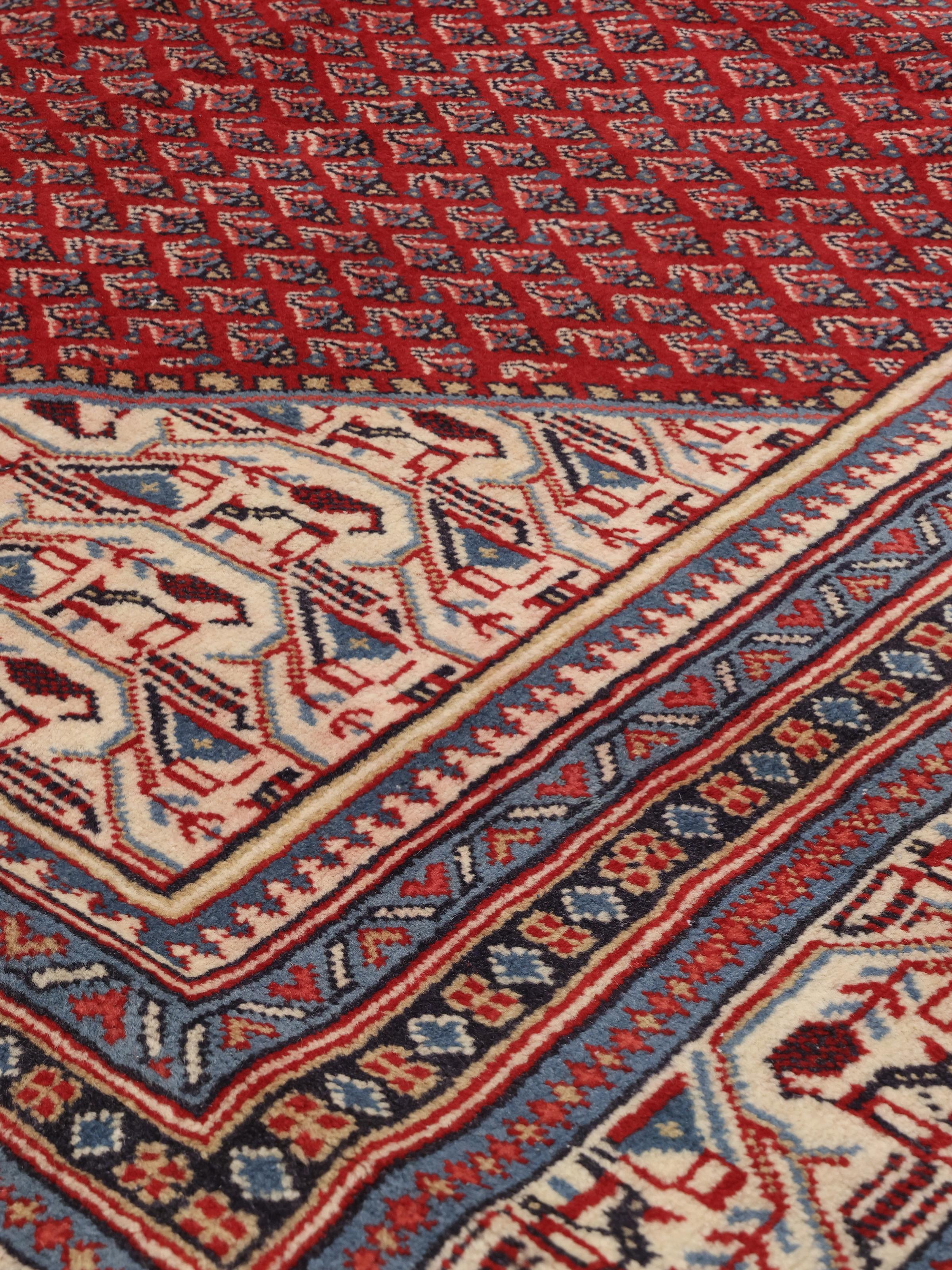
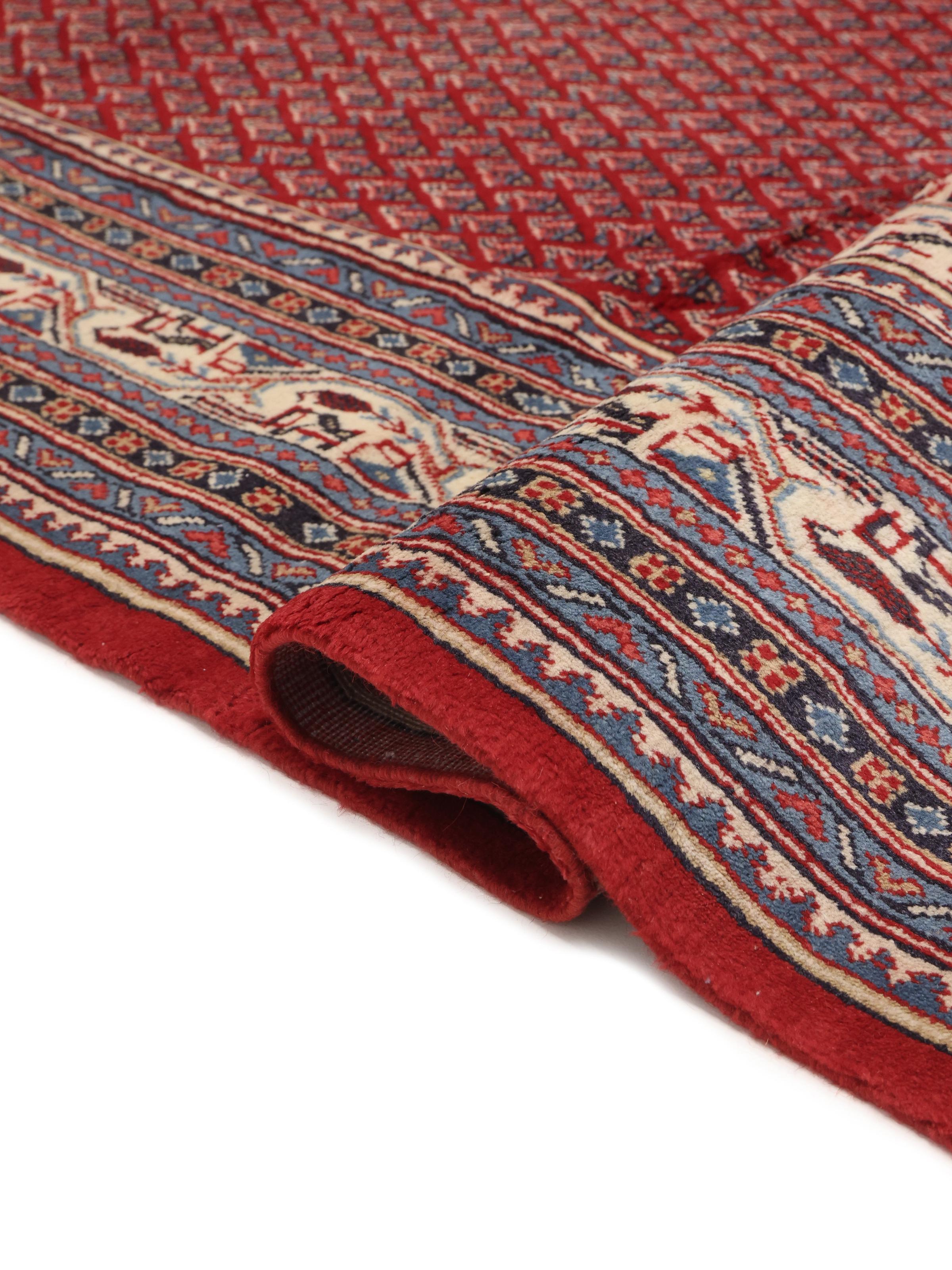
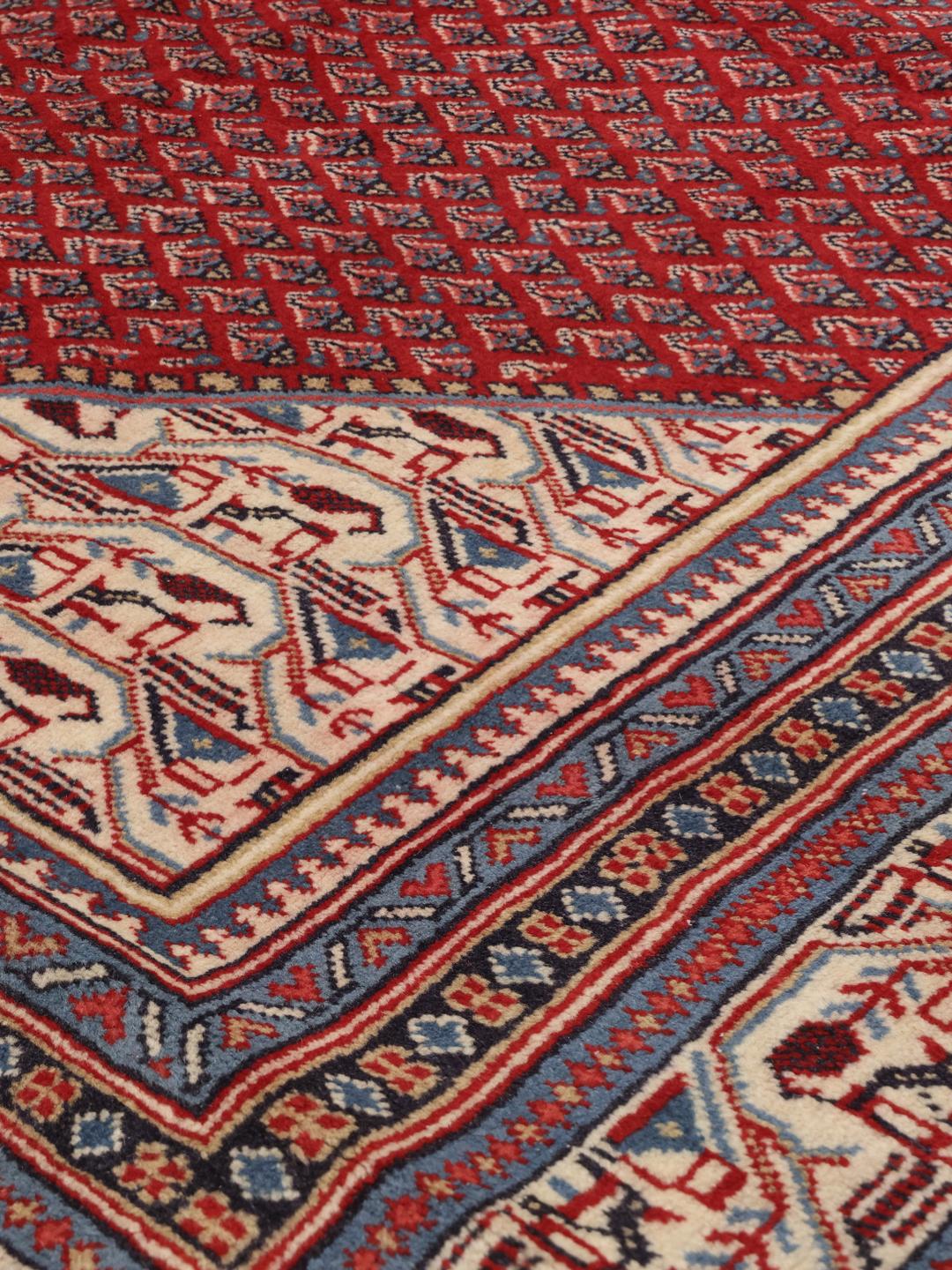
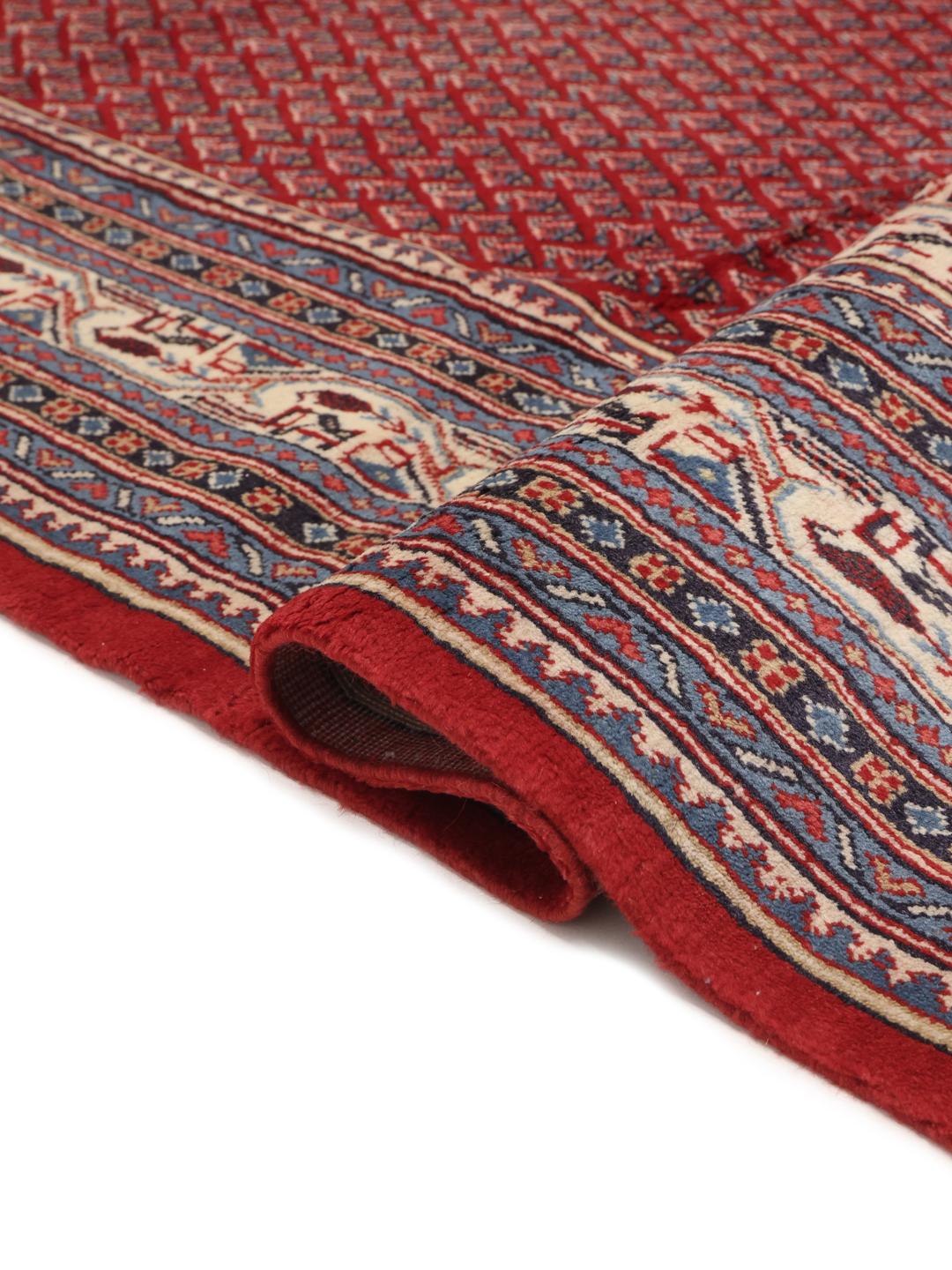
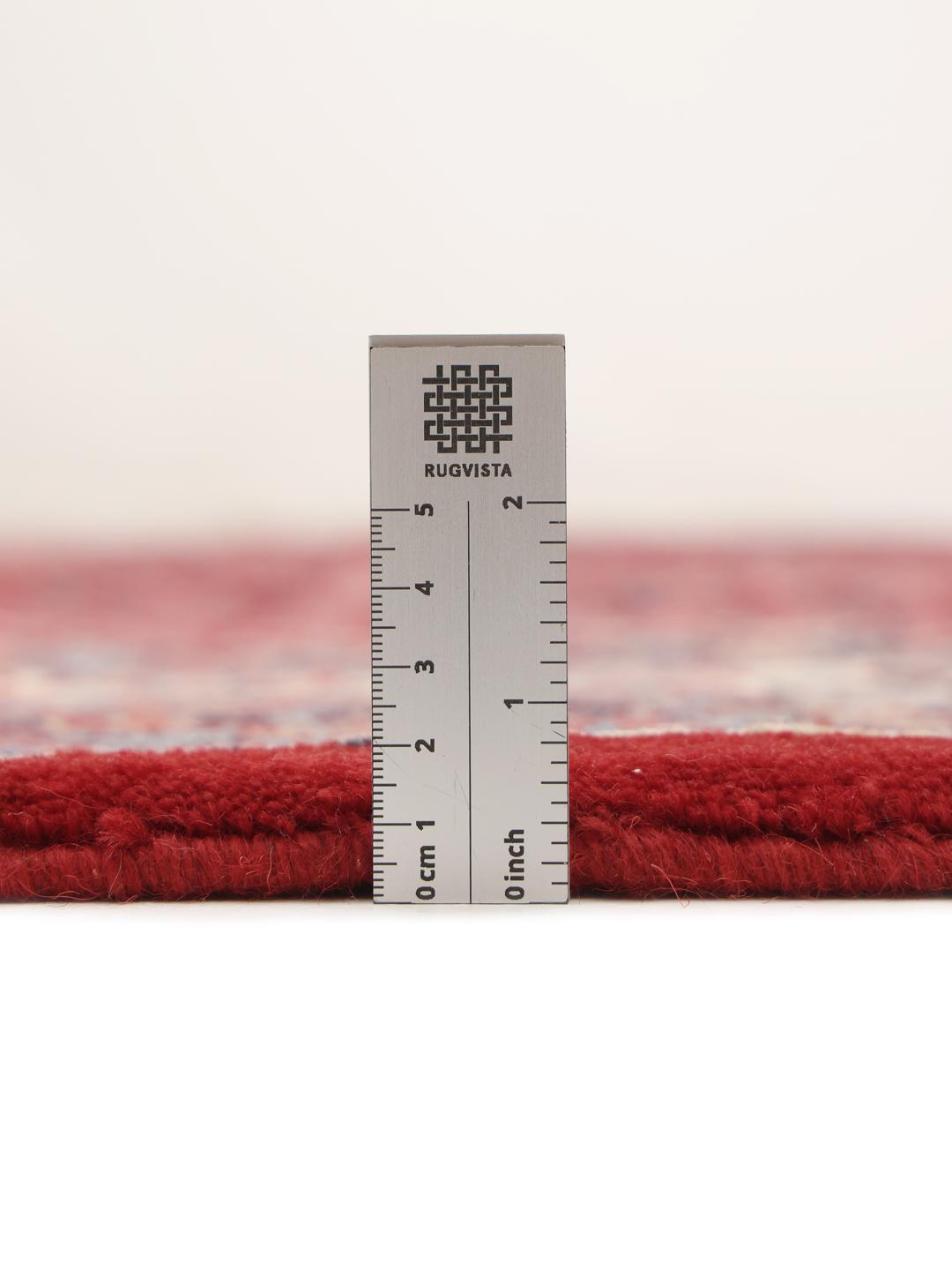
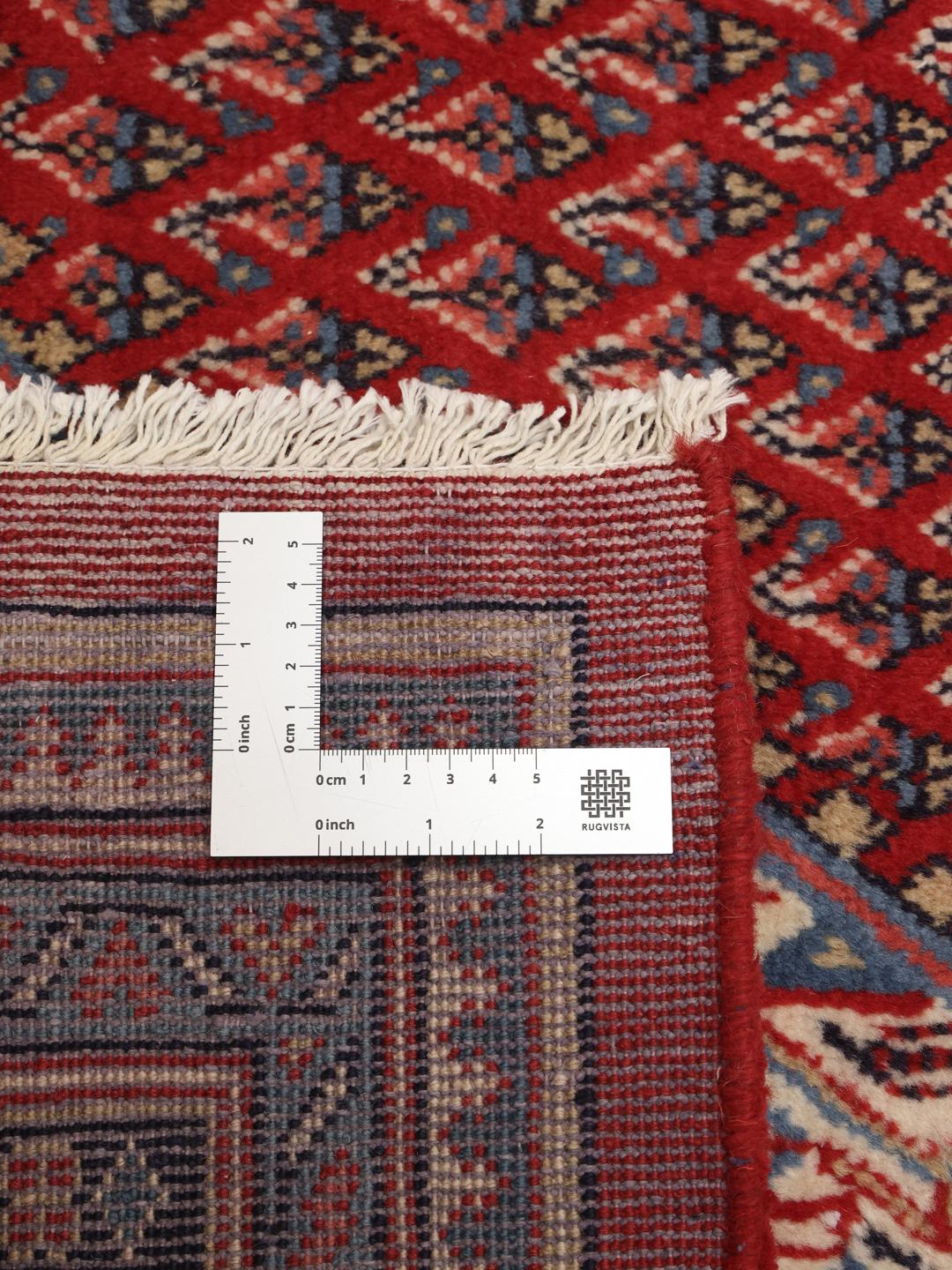
Understanding the quality of these rugs requires looking at the construction. The foundation is built with a sturdy cotton structure that provides a stable base for the dense, hand-knotted wool pile. This combination of materials is essential for maintaining the rug's shape over decades of use, ensuring that the intricate patterns do not distort and the pile remains plush and full.
The design language of a Sarough Mir is unmistakable, characterised by a central field filled with small, repetitive teardrop-shaped motifs known as the Mir-i-buta. These are often enclosed by a formal, decorative border that frames the central field with precision. The choice of deep red for the primary field is a classic tradition, symbolising warmth and vitality in the local culture, while the contrasting beige highlights add clarity and focus to the design.
These rugs are highly sought after by collectors and homeowners alike, not just for their visual appeal but for what they represent in terms of heritage. Owning a traditional Sarough Mir is an act of preserving a craft that has been passed down through generations. It is a piece that carries the weight of history, offering both a functional floor covering and a significant cultural narrative that enriches any space it occupies.