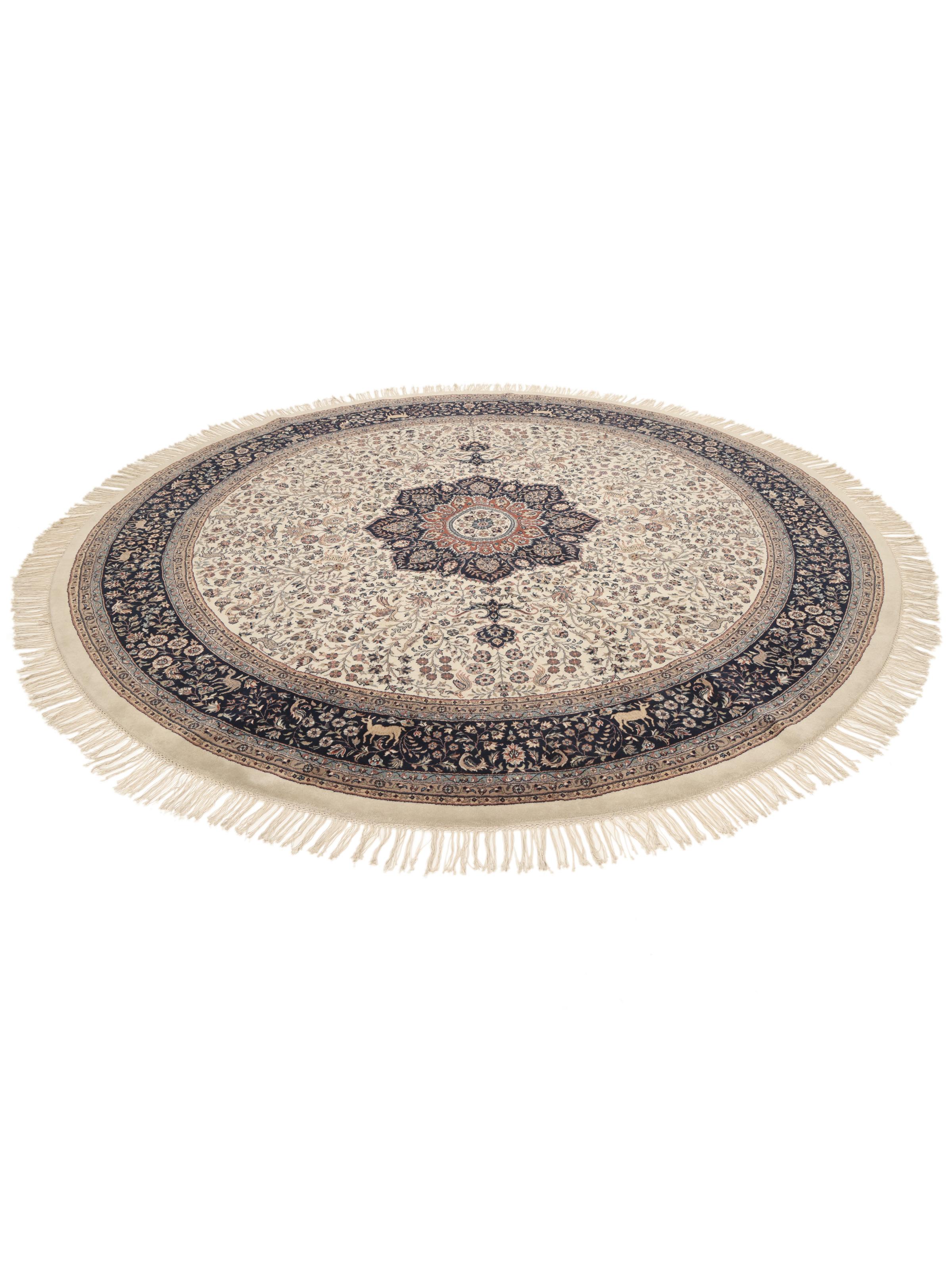
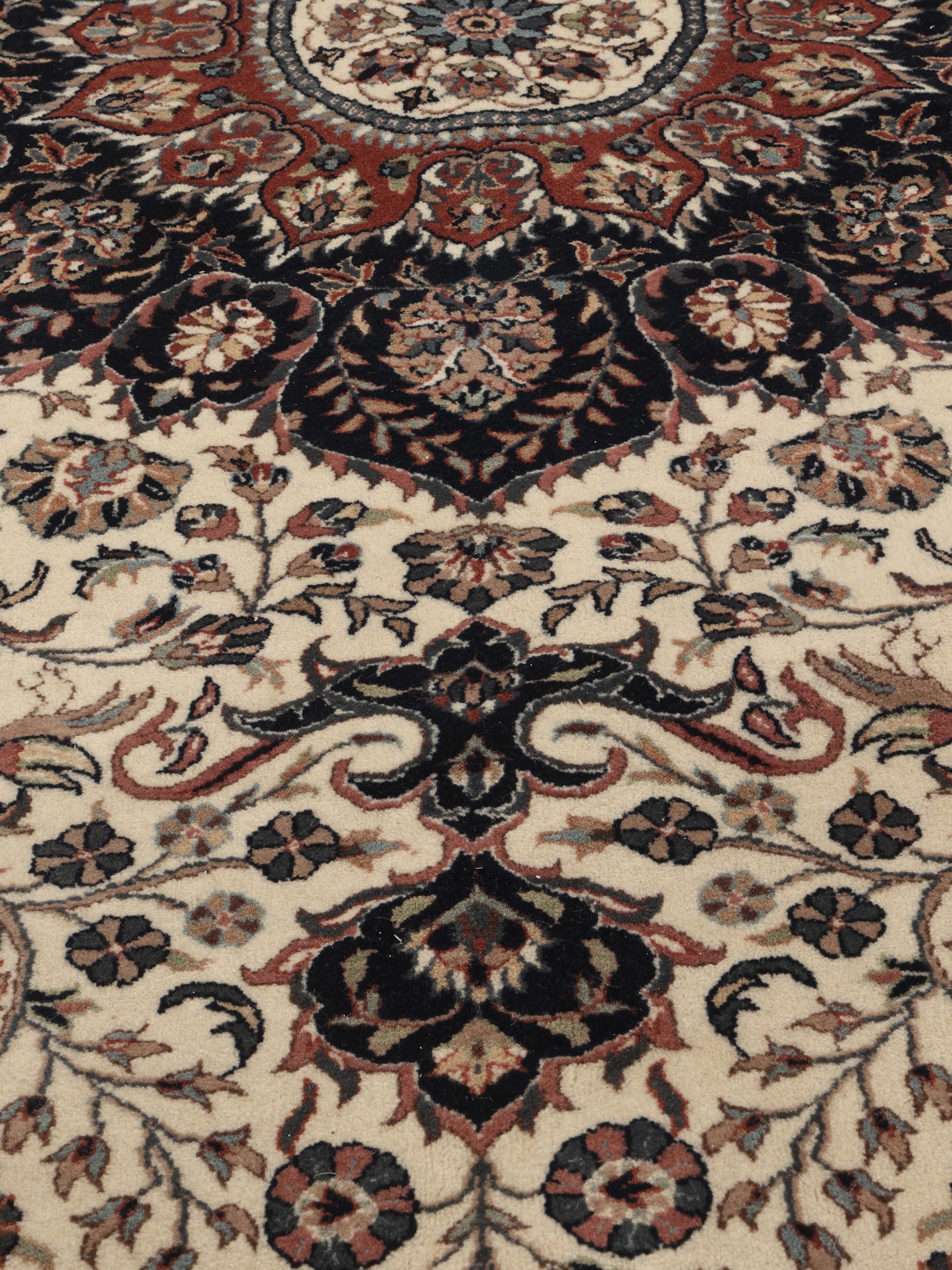
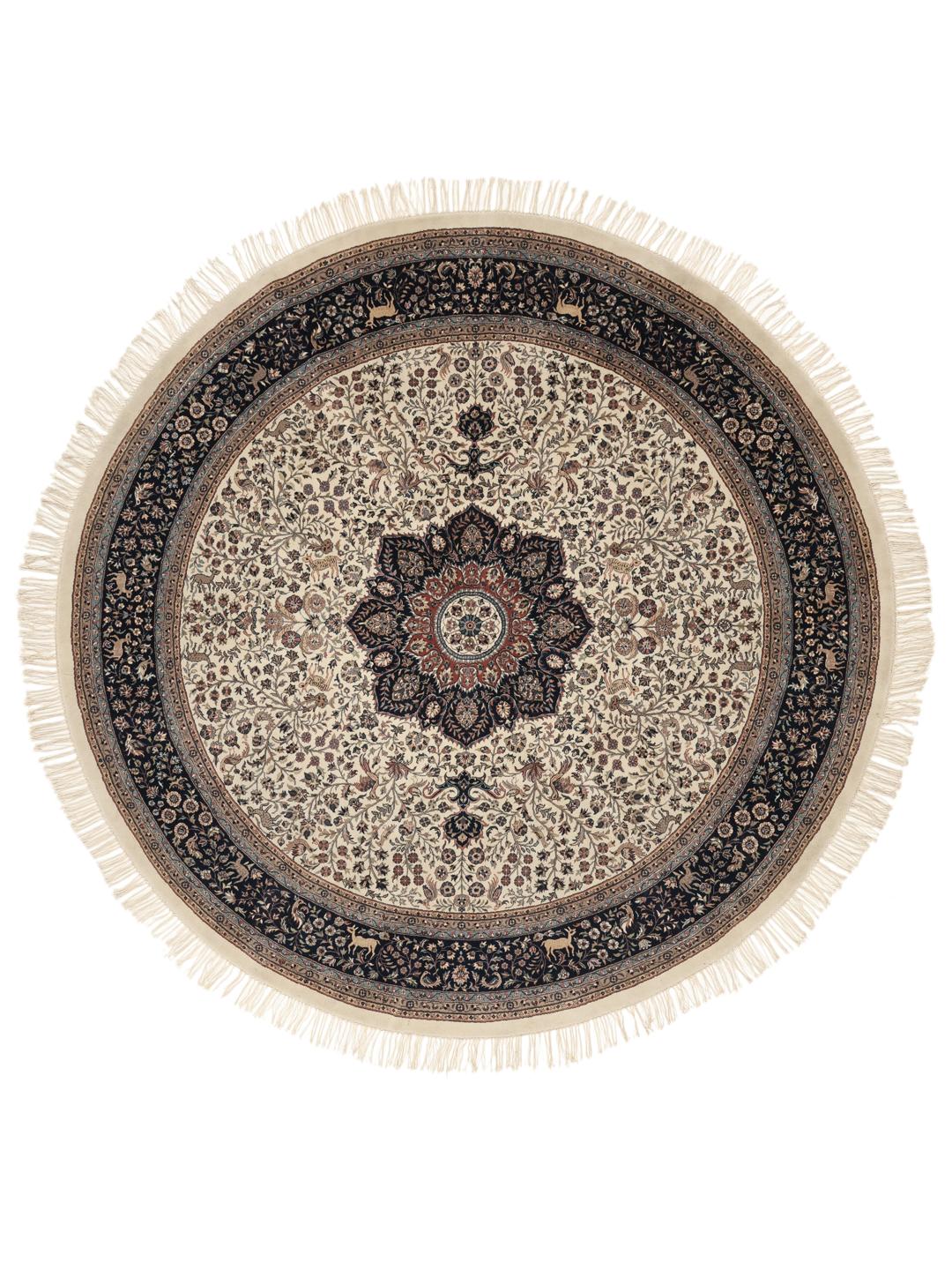
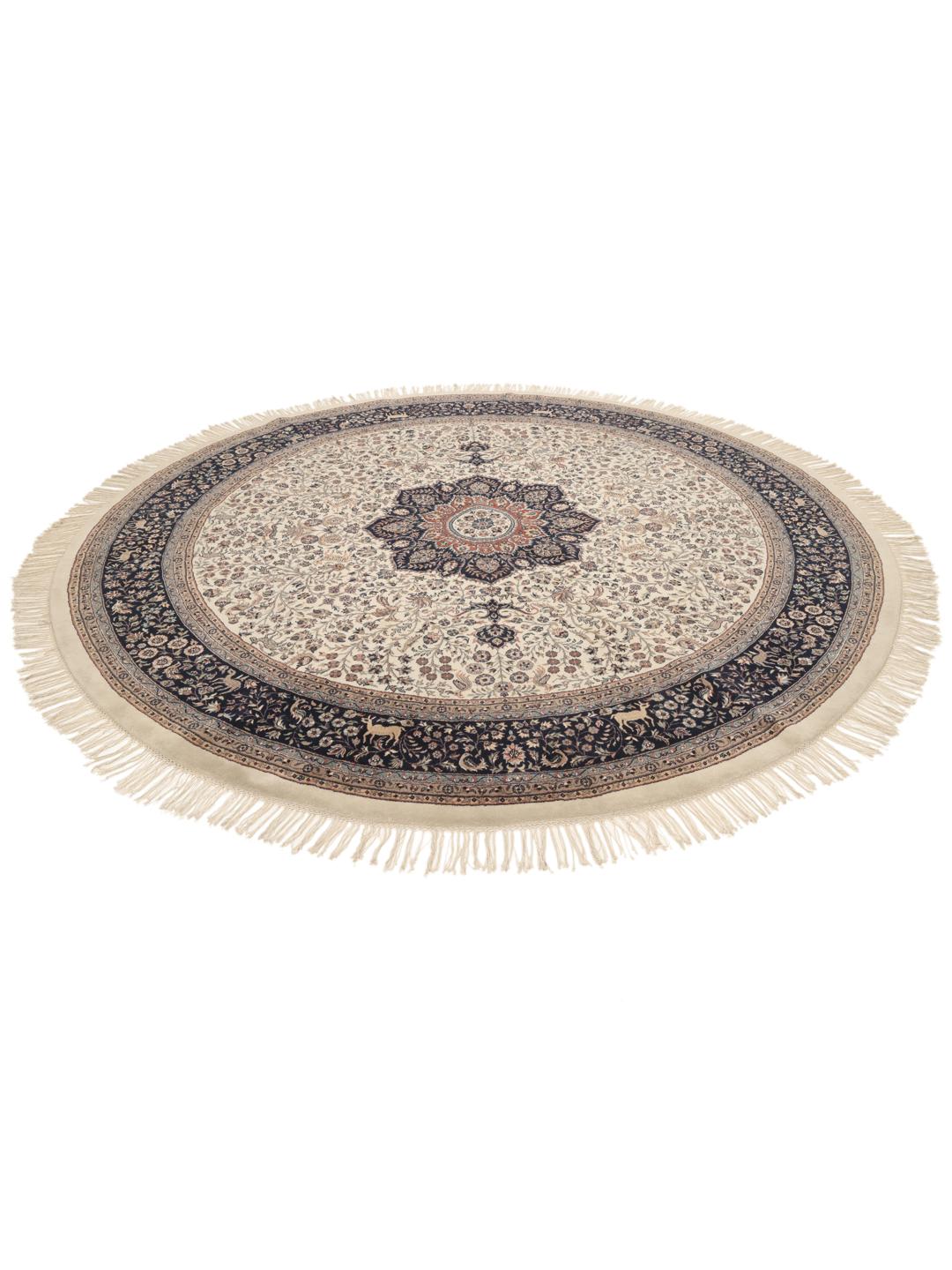
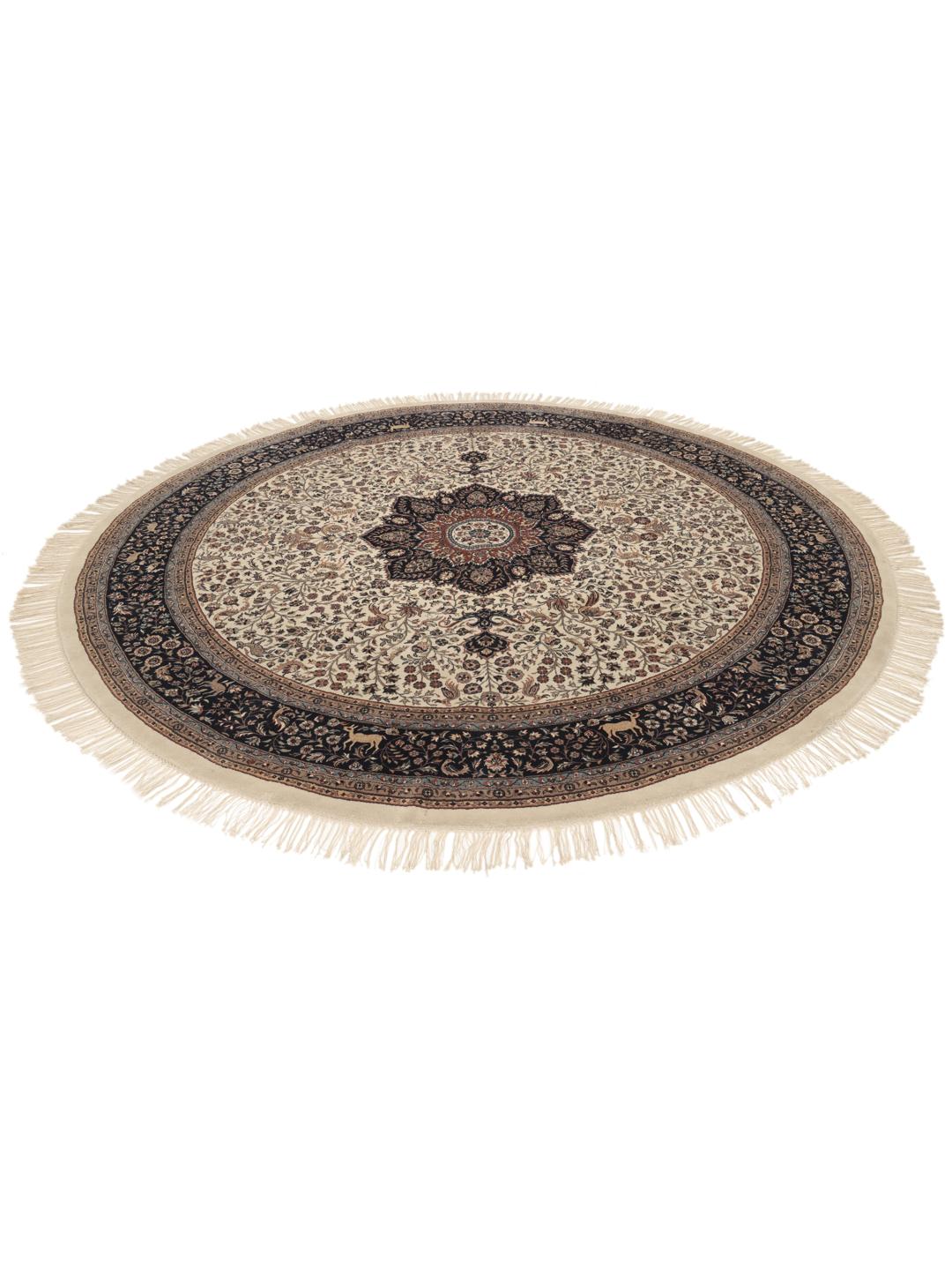
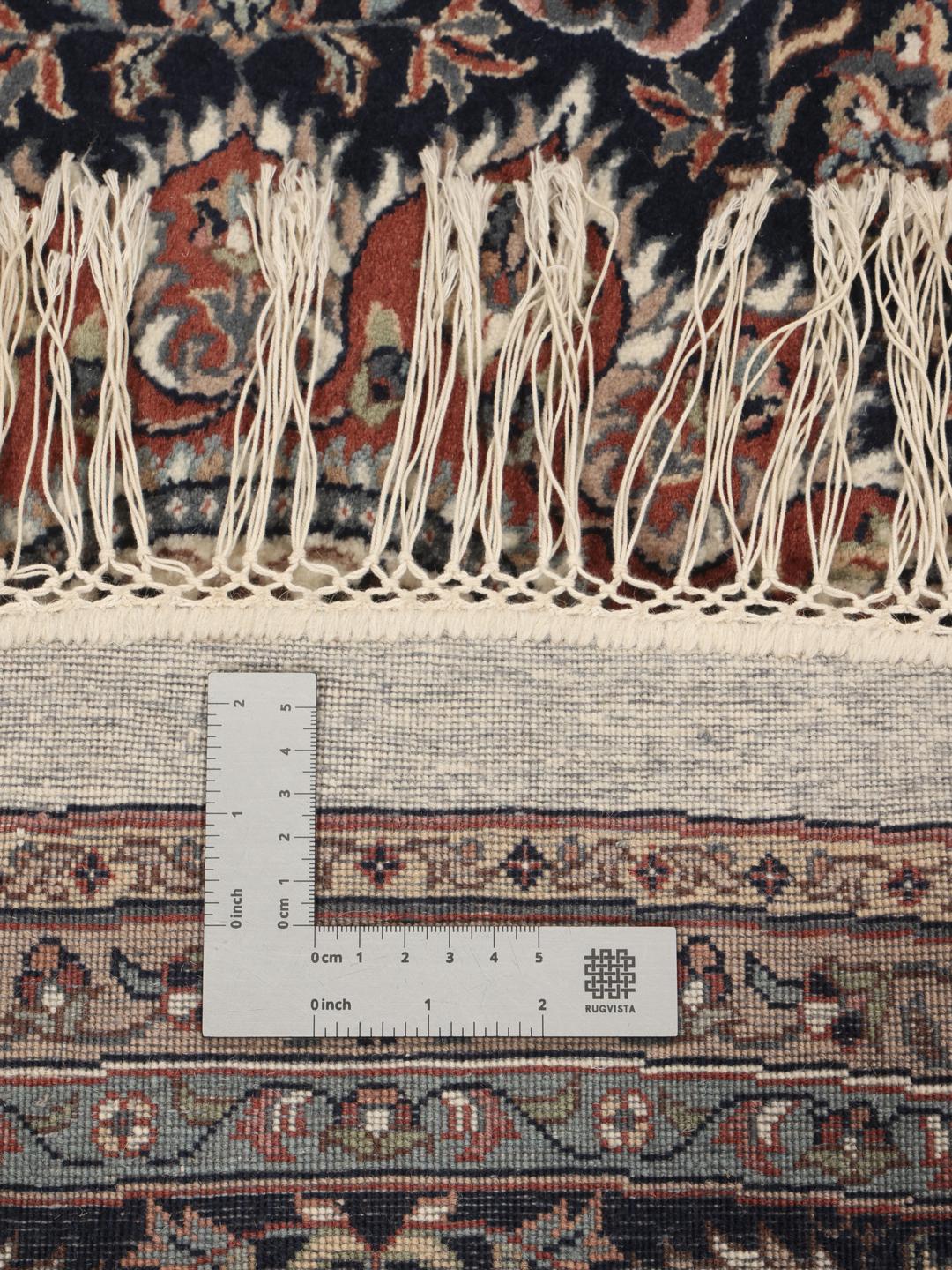
The Sarouk tradition is deeply rooted in the history of the Middle East, specifically named after the village of Sarouk in the Arak region. Historically, these rugs gained immense popularity in the early 20th century, particularly in North American markets, where they became celebrated for their heavy, durable pile and refined, elegant floral designs. This specific style, often referred to as Sarough American, represents a continuation of that legacy, now expertly produced by weavers in India who have mastered these classic techniques.
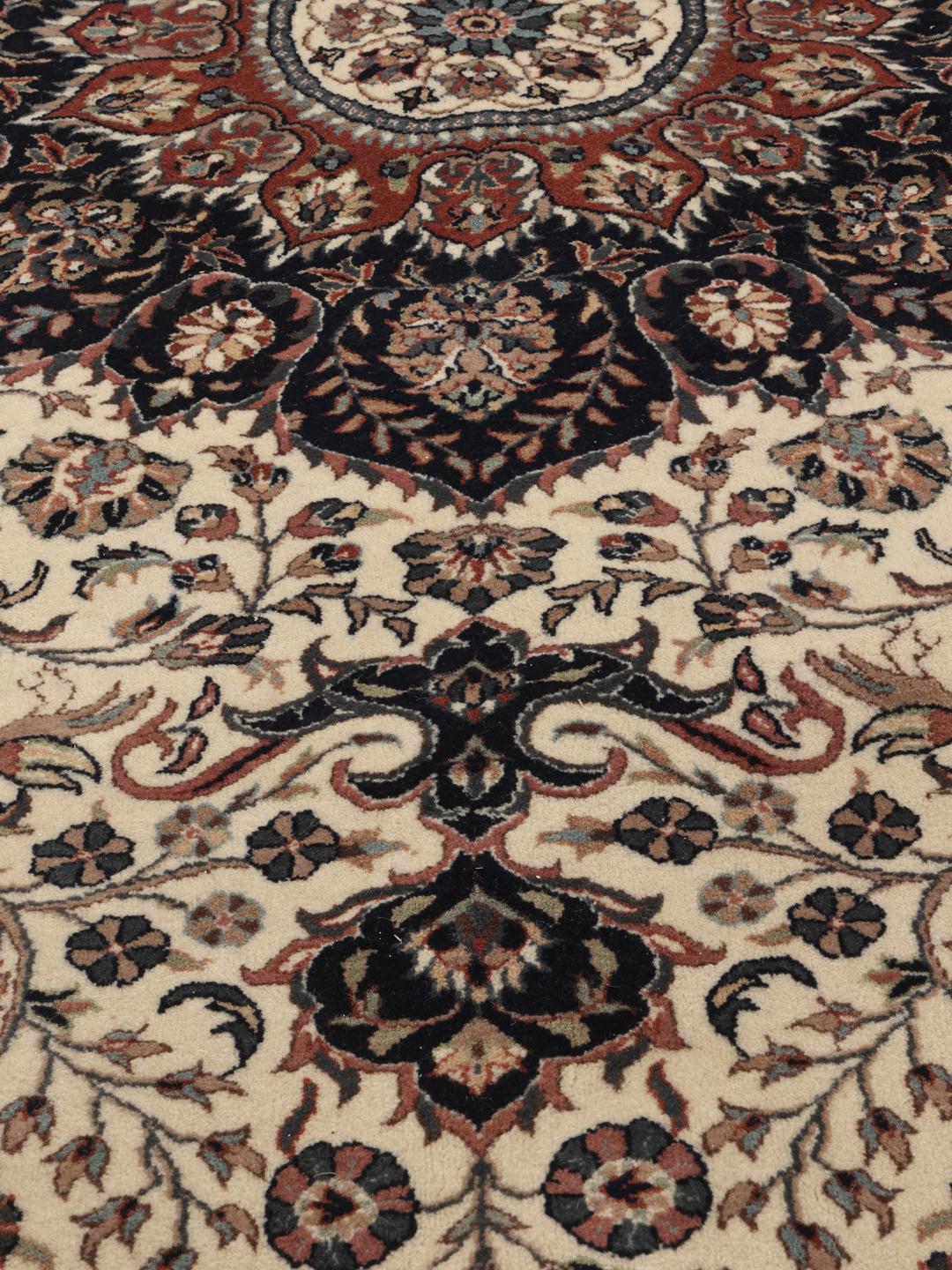
The term Sarouk refers to a specific design vocabulary that balances formal structure with naturalistic motifs. These rugs are known for their intricate floral sprays, scrolling vines, and often a central medallion that anchors the composition. The use of high-quality wool is essential to this tradition, as it allows for the fine detail work seen in the borders and the field, while providing the resilience that has made these rugs famous among collectors for over a century.
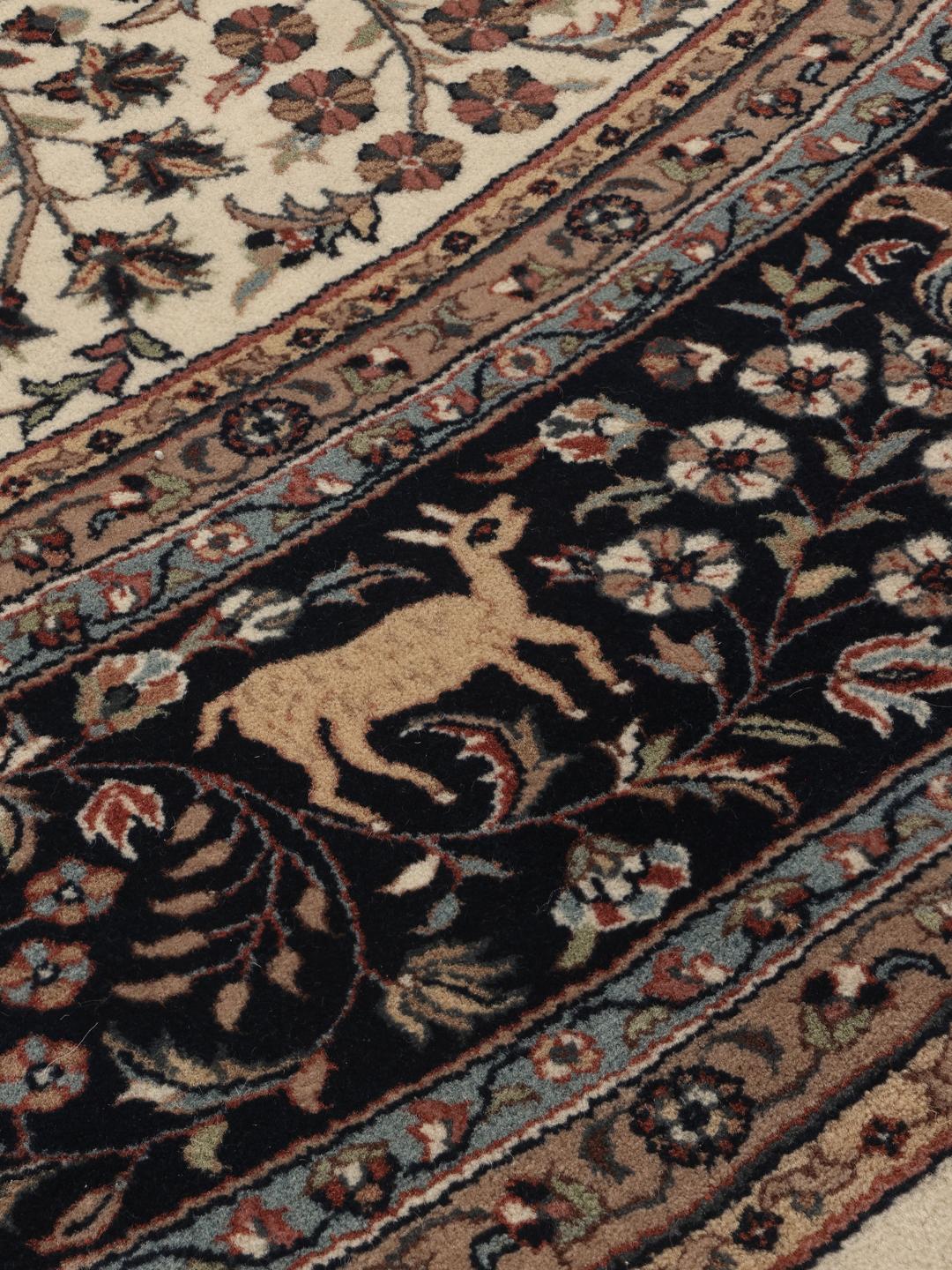
The design of this particular rug is a beautiful example of the classic Sarouk aesthetic, featuring a harmonious blend of floral elements and a balanced colour palette. The inclusion of decorative borders and a central medallion is a hallmark of the style, reflecting a desire to create a sense of order and beauty within the home. Such designs are intended to be timeless, fitting seamlessly into various interior styles while maintaining their distinct cultural identity.
Owning a hand-knotted rug of this lineage is an investment in skill and tradition. Because these pieces are made by hand, they carry the imprint of the weaver's touch, which imbues them with a character that mass-produced items lack. Collectors value these rugs not only for their beauty but for the connection they provide to a long-standing craft tradition that emphasises quality, detail, and the enduring nature of hand-woven art.