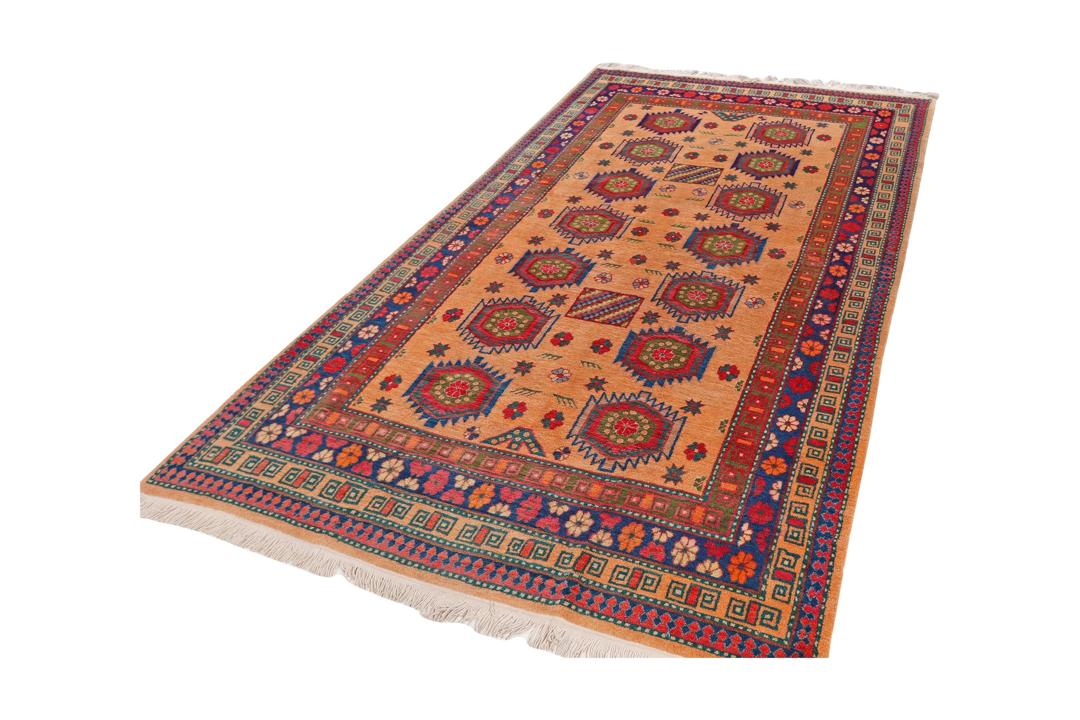
Samarkand rugs are named after the legendary Silk Road city in modern-day Uzbekistan, a historic crossroads where diverse cultures, artistic traditions, and trade goods converged for centuries. While the name evokes the ancient oasis, these rugs were historically woven across a wider region including parts of East Turkestan and China, blending Middle Eastern design sensibilities with distinct Chinese aesthetic influences.
The term Samarkand in the rug world often refers to a specific decorative tradition characterised by a unique fusion of styles. These rugs frequently feature a mix of floral and geometric motifs, often rendered in a way that feels both formal and organic. The technical quality is defined by the use of high-quality wool, which provides a lustrous sheen and a robust, resilient pile that has allowed these pieces to survive for generations.
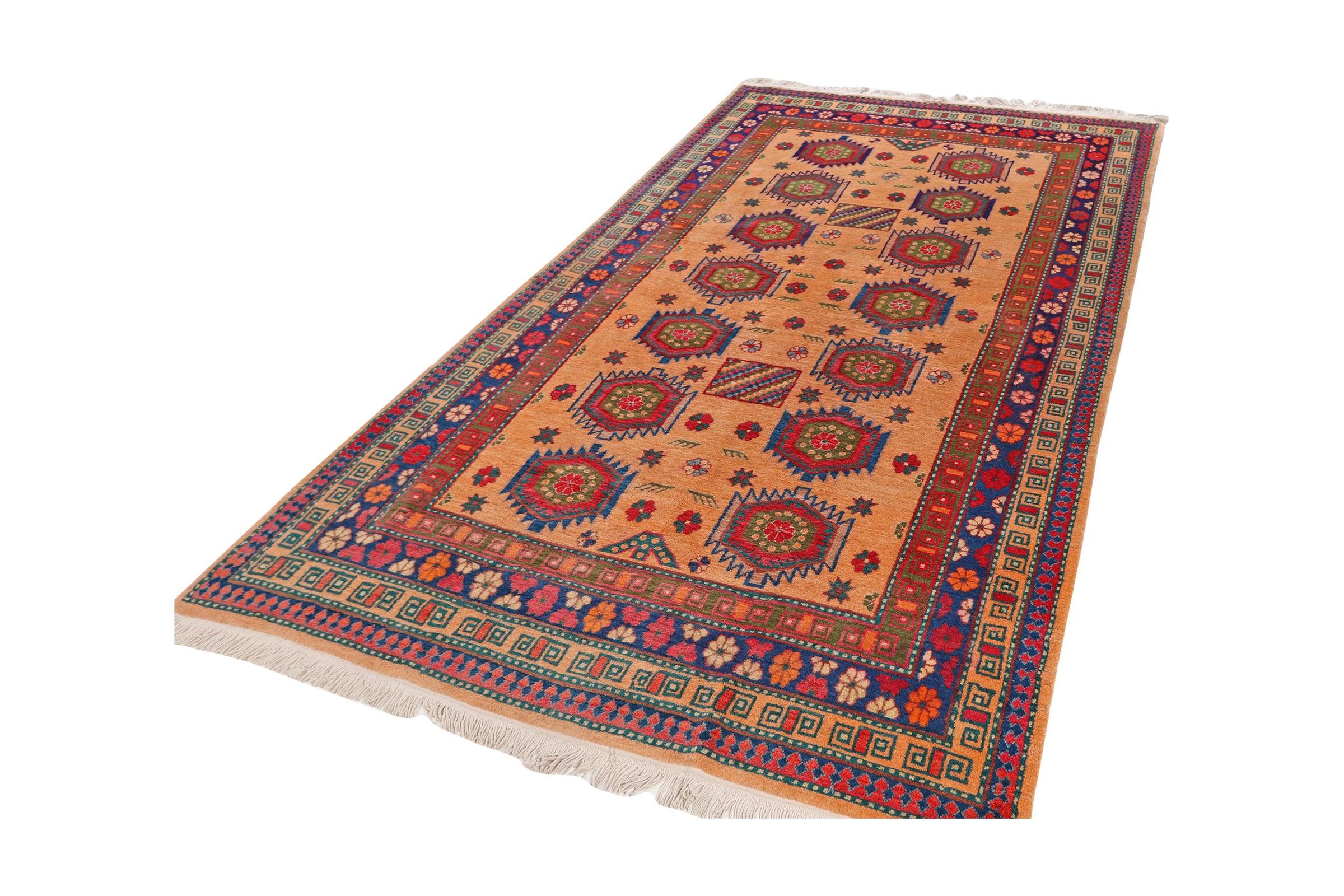
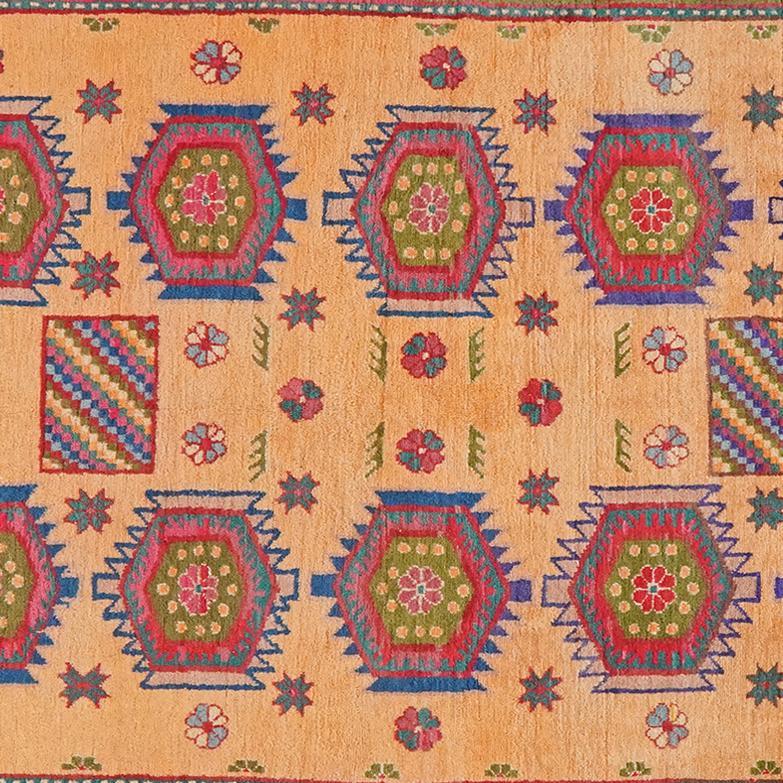
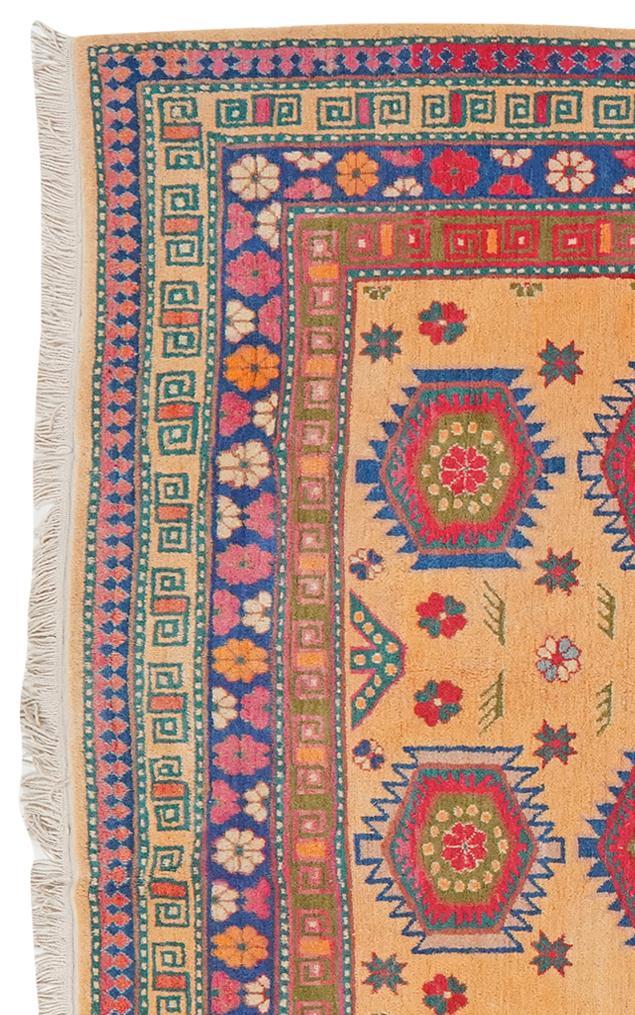
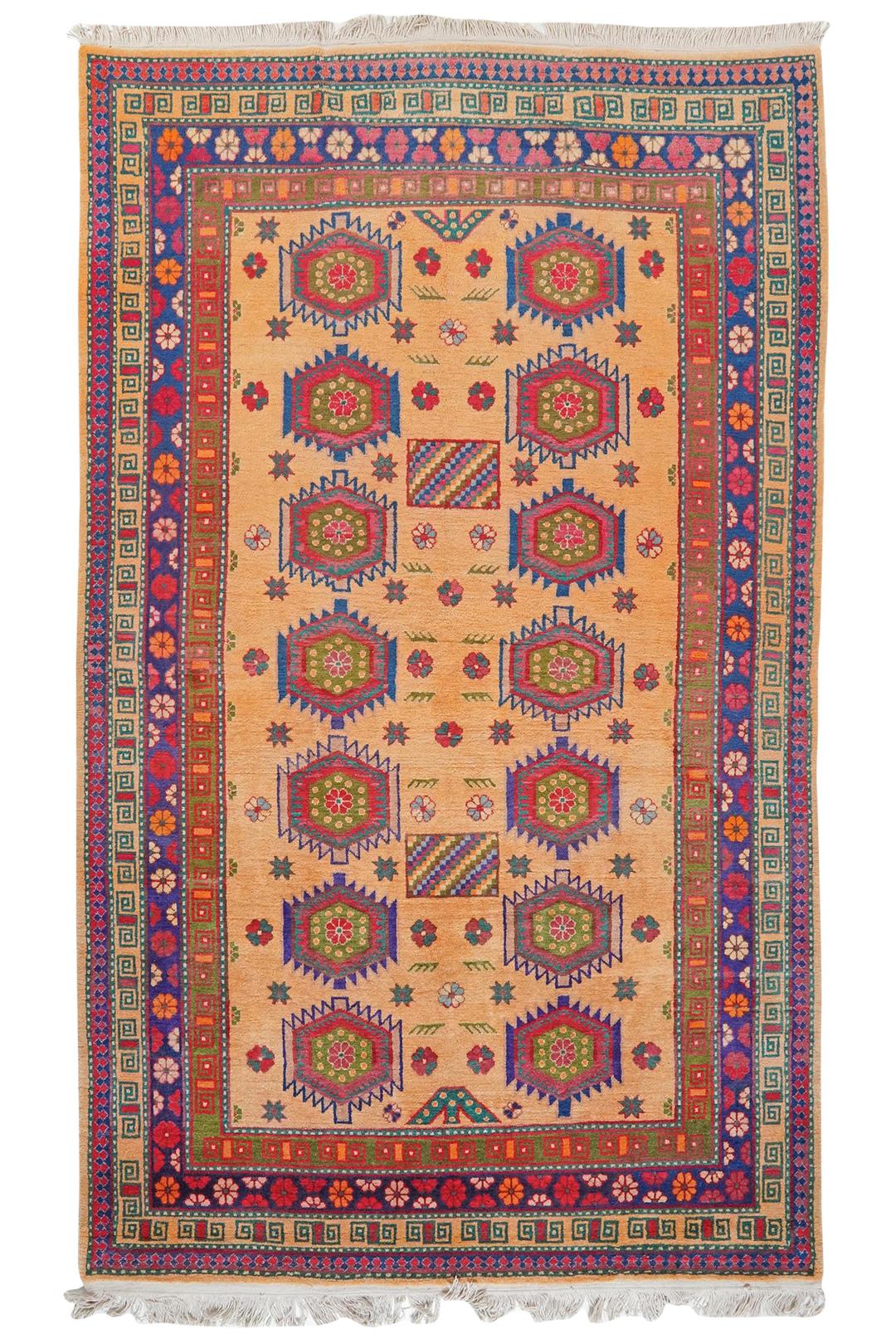
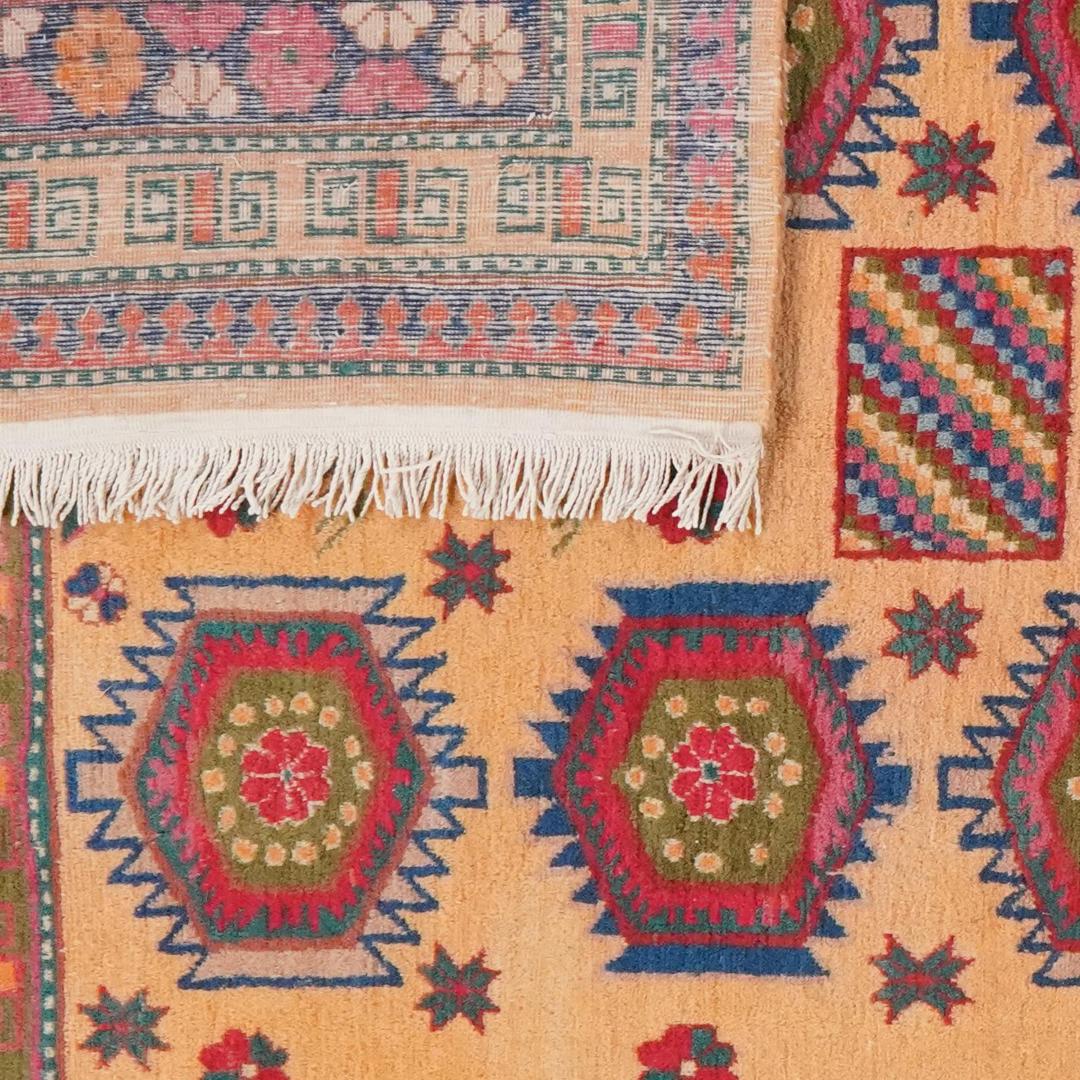
Visually, these rugs are celebrated for their distinctive use of colour and space. It is common to see a field filled with repeating medallions, often in the shape of pomegranates or geometric shapes, framed by wide, elaborate borders. This particular piece showcases the traditional affinity for bold, contrasting tones and complex, rhythmic patterns that define the classic Samarkand look.
Collectors value Samarkand rugs for their rarity and the way they bridge the gap between different design worlds. Owning a piece from this tradition is an opportunity to hold a fragment of Silk Road history. It represents a mastery of craft that honours a nomadic and mercantile past, offering a level of cultural depth that mass-produced floor coverings cannot replicate.