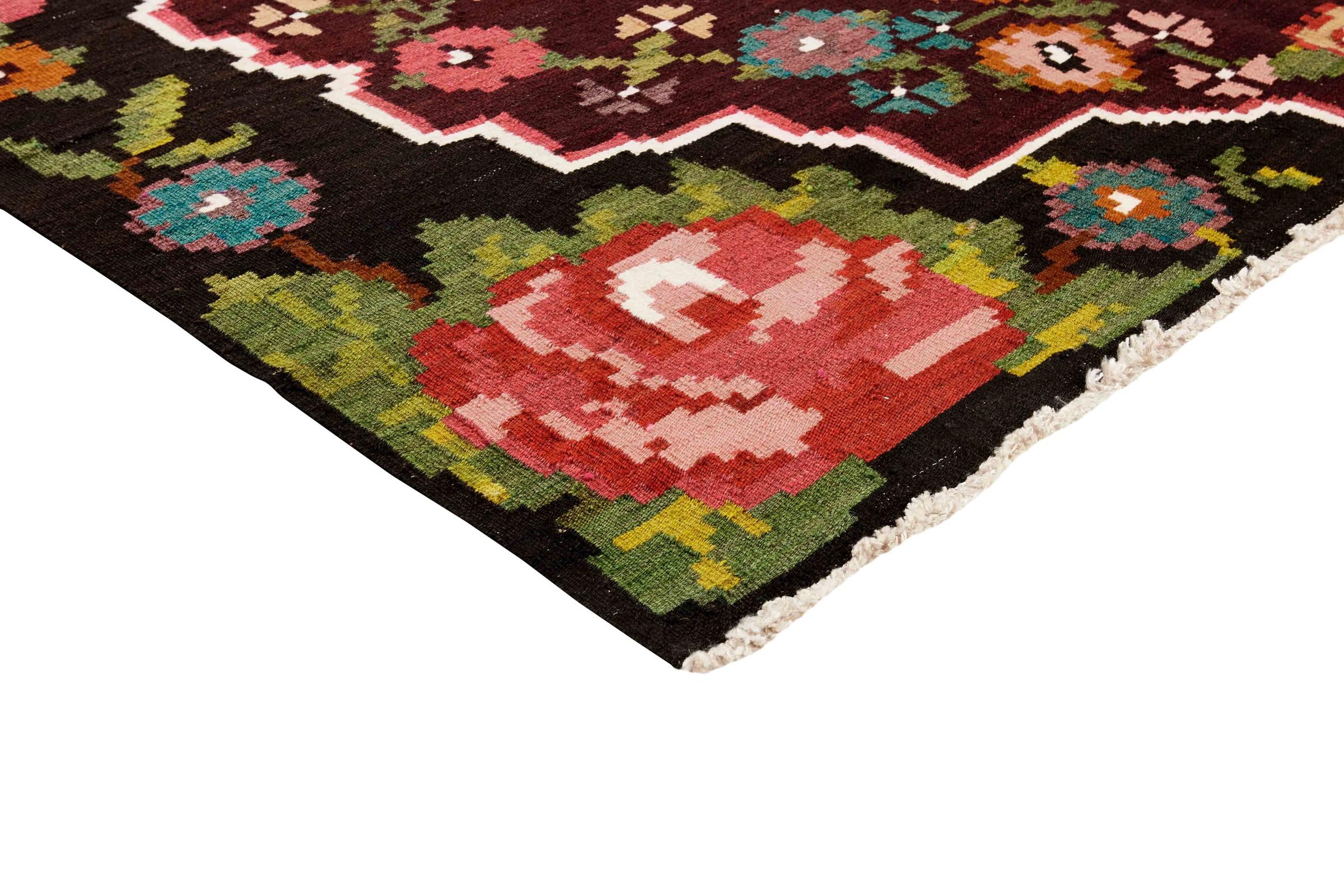
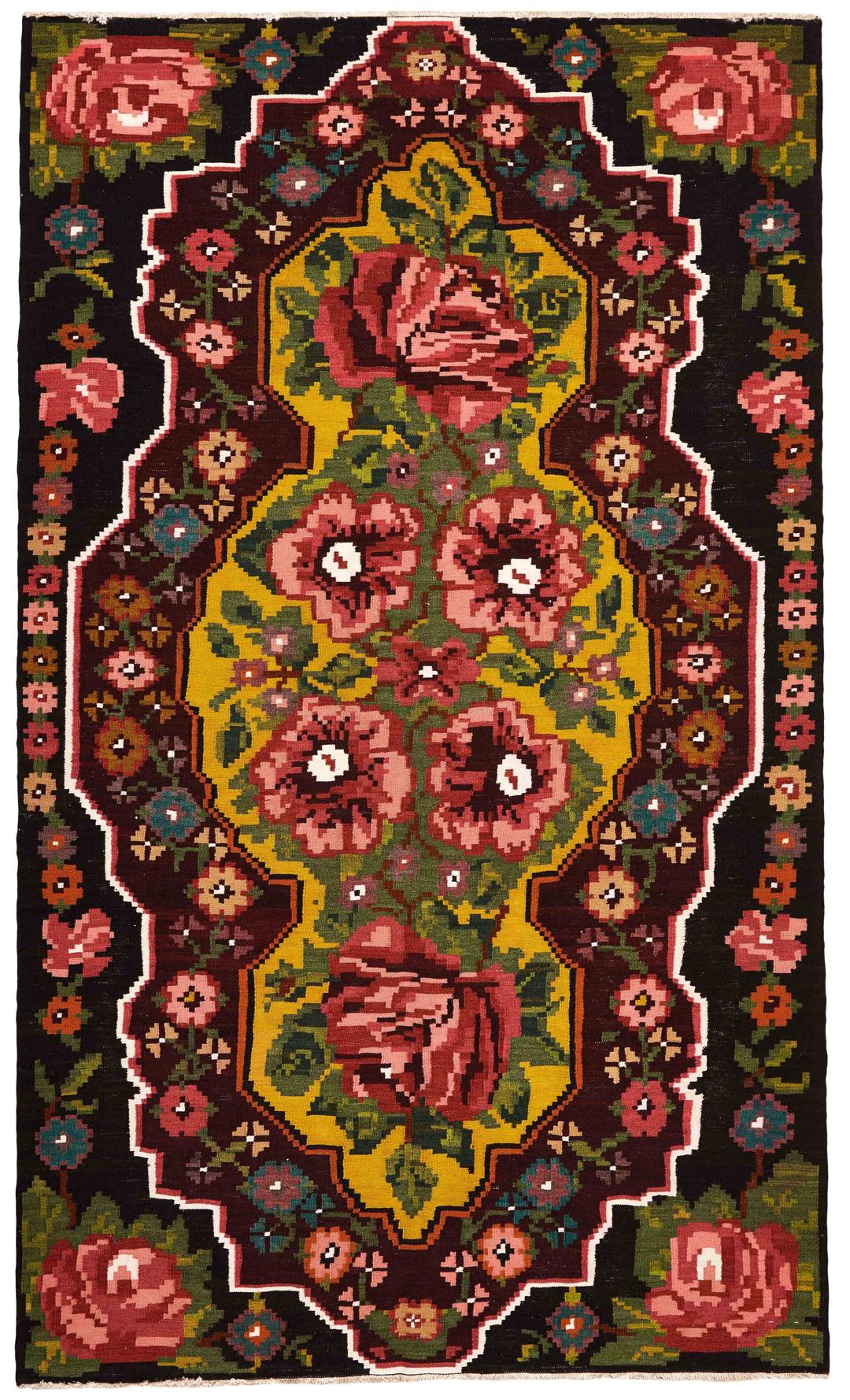
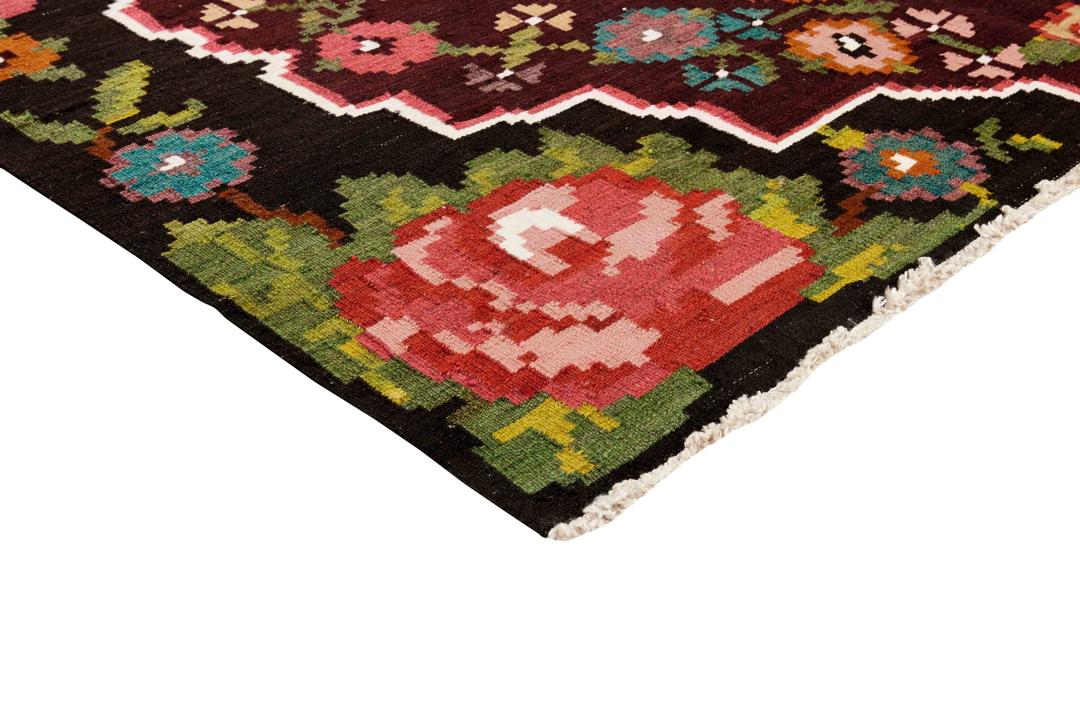
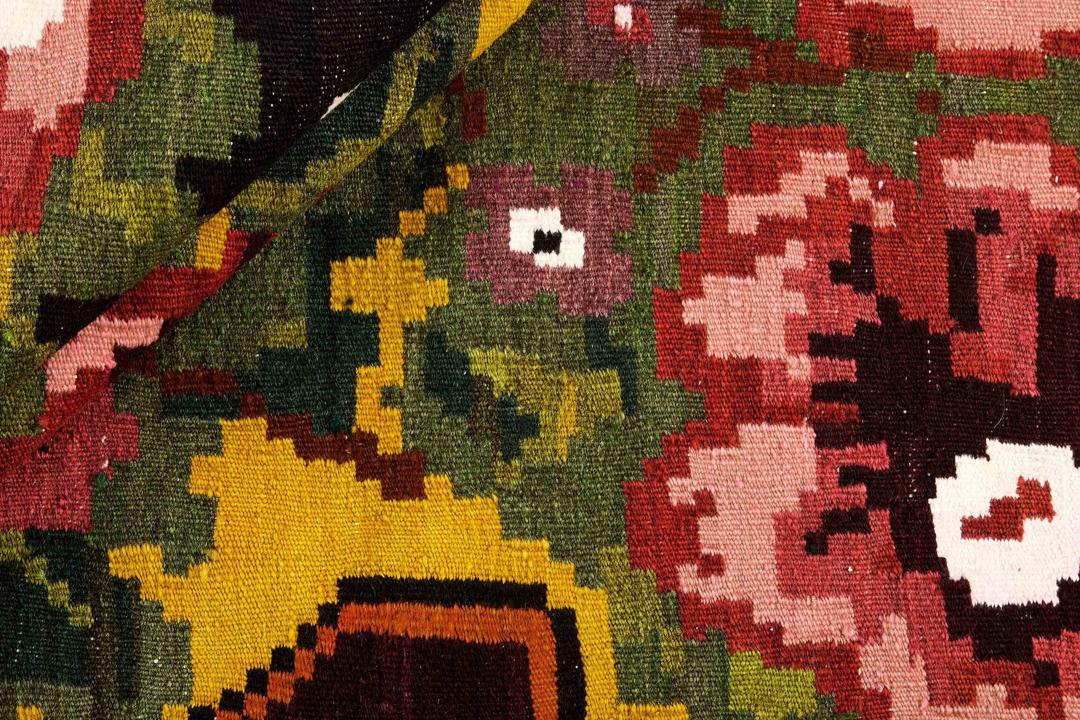
The Rose Kelim tradition finds its roots in the historical region of Moldova, where textile weaving has long been an essential part of domestic life and cultural expression. These rugs are renowned for their distinct aesthetic, which often features lush, oversized floral motifs—frequently roses—set against dark, dramatic backgrounds. This style evolved as a unique synthesis of local folk art and broader European influences, creating a visual language that is both romantic and grounded in regional history.
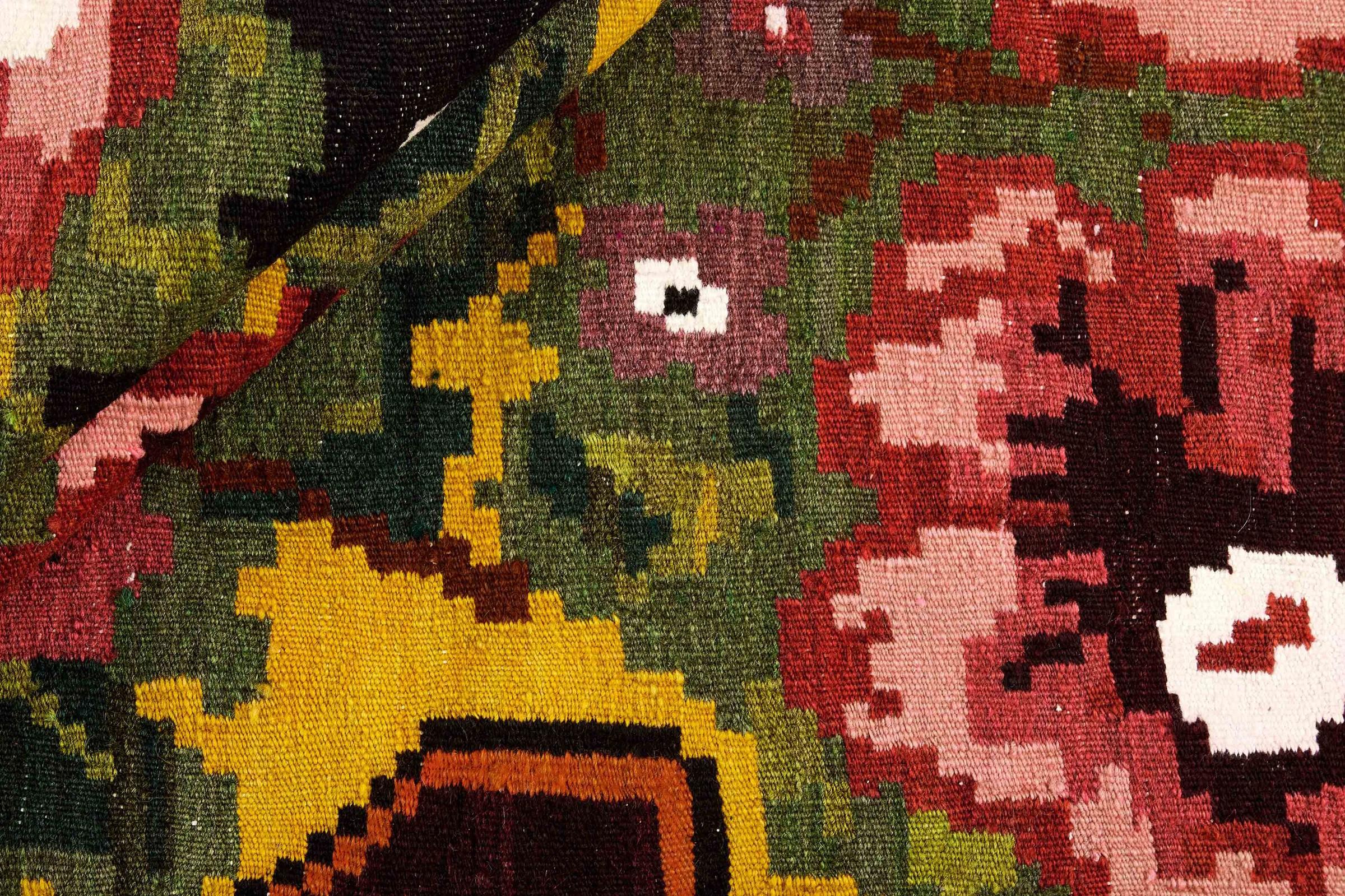
The term 'kilim' refers to a specific flat-weaving technique where the design is created by interweaving the coloured weft strands through the warp. Unlike pile rugs, kilims are woven without knots, resulting in a lighter and more versatile textile. This technique requires an immense level of control and foresight, as the weaver must manage the pattern and tension simultaneously, ensuring the motifs remain sharp and the structure remains uniform.
Signature design elements in these rugs include the prominent use of roses and other garden flowers, which symbolise fertility and beauty in local folklore. The contrast between the vibrant, blooming petals and the deep, often dark or earthy field colours is a hallmark of the Moldovan tradition. This specific piece captures that classic contrast, using colour to draw the eye to the central floral arrangements that define the aesthetic.
Collecting Moldovan kilims is a way to preserve a rich cultural heritage. These rugs are highly valued for their artistic depth and the human story woven into every thread. Owning one is more than just a decor choice; it is an act of stewardship for a craft tradition that represents the skill, history, and aesthetic values of the region.