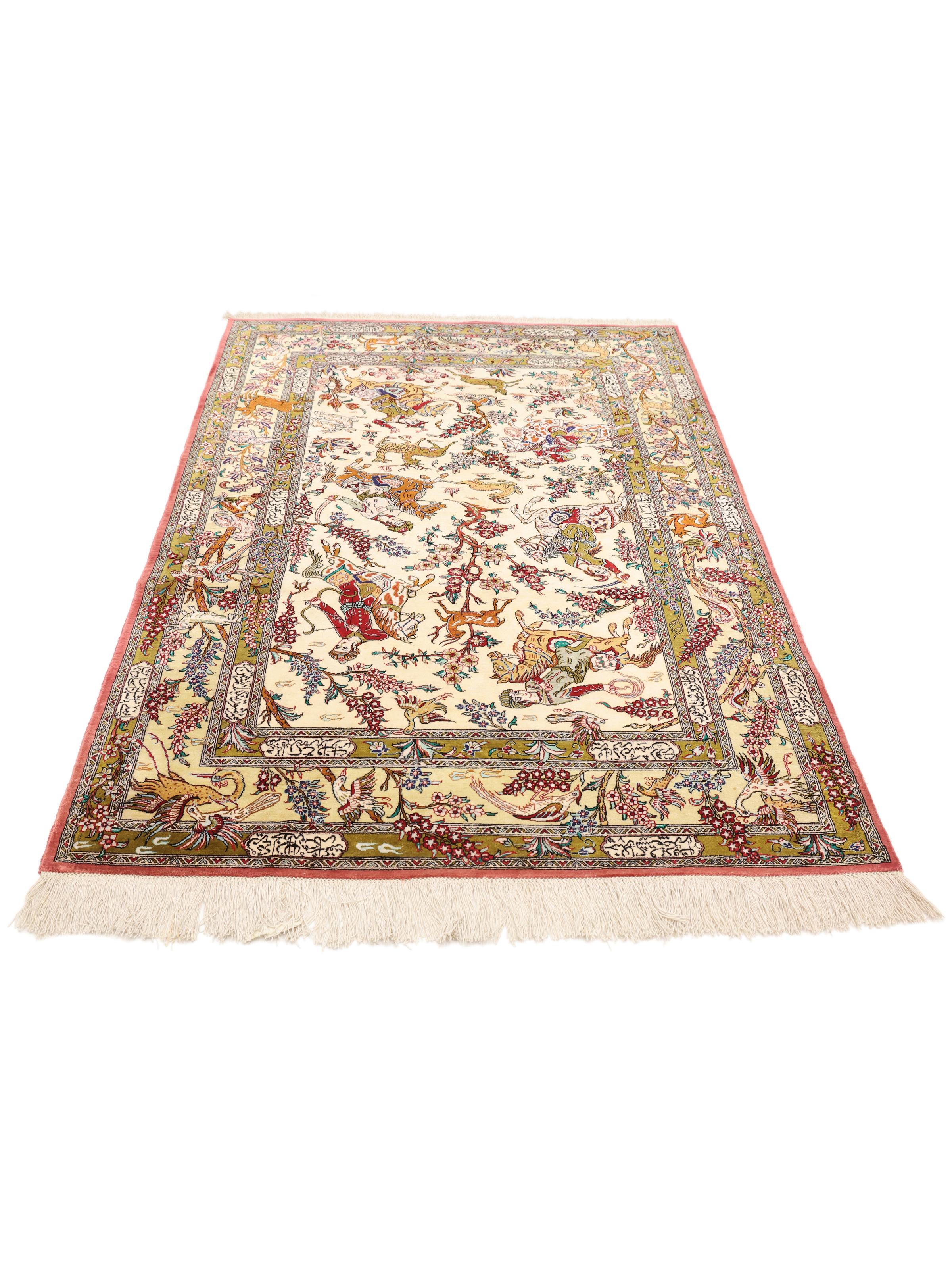
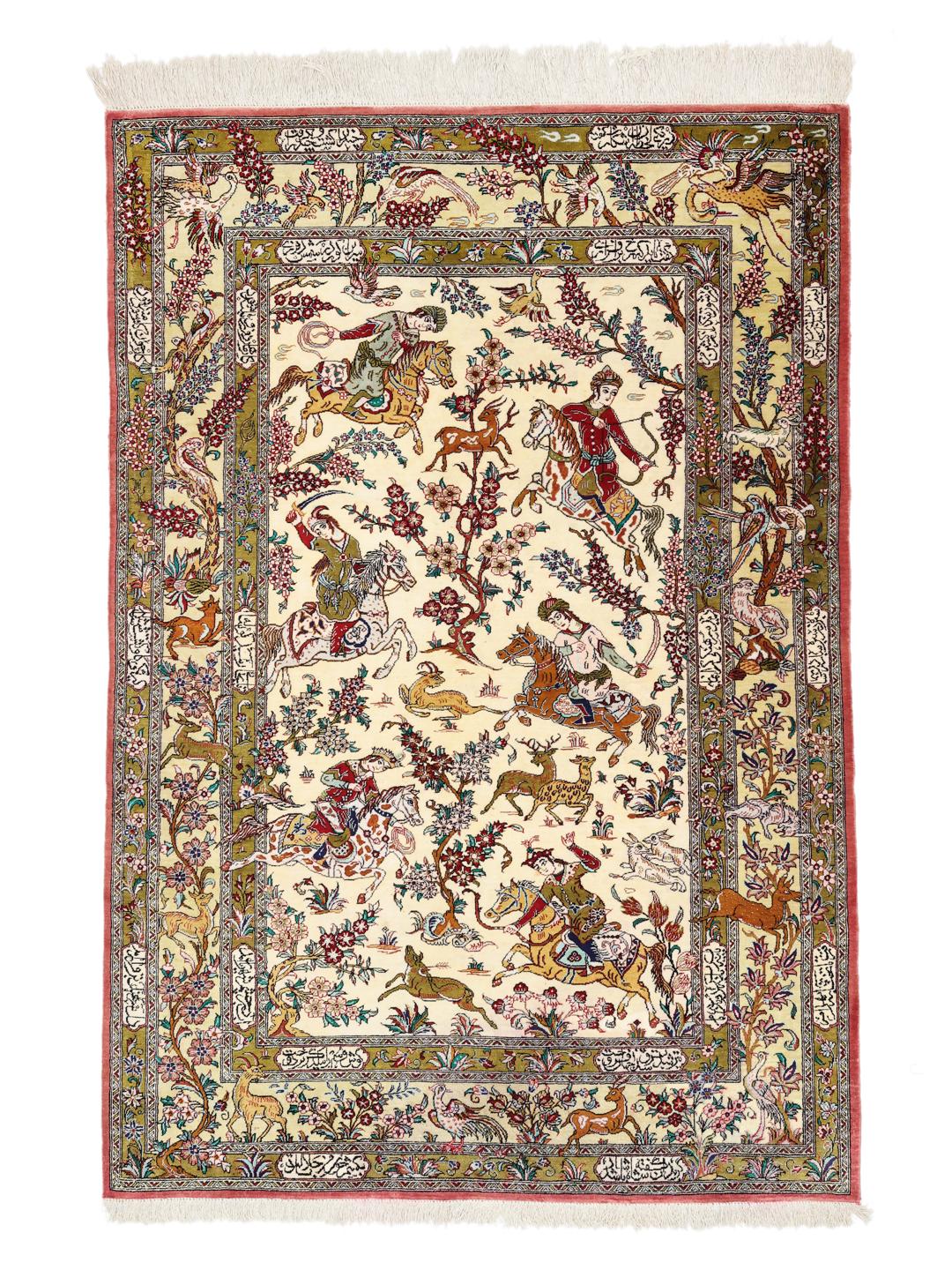
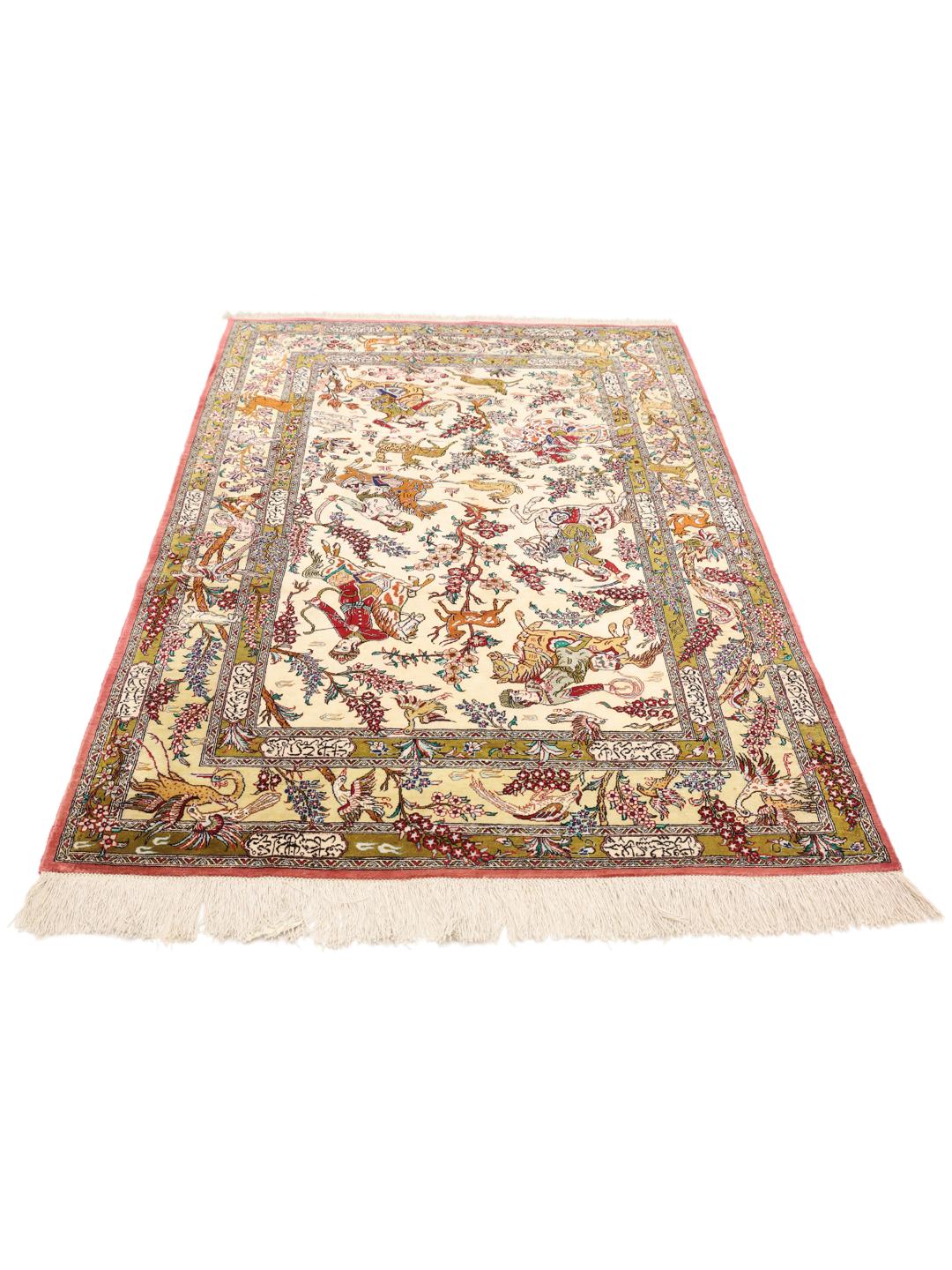
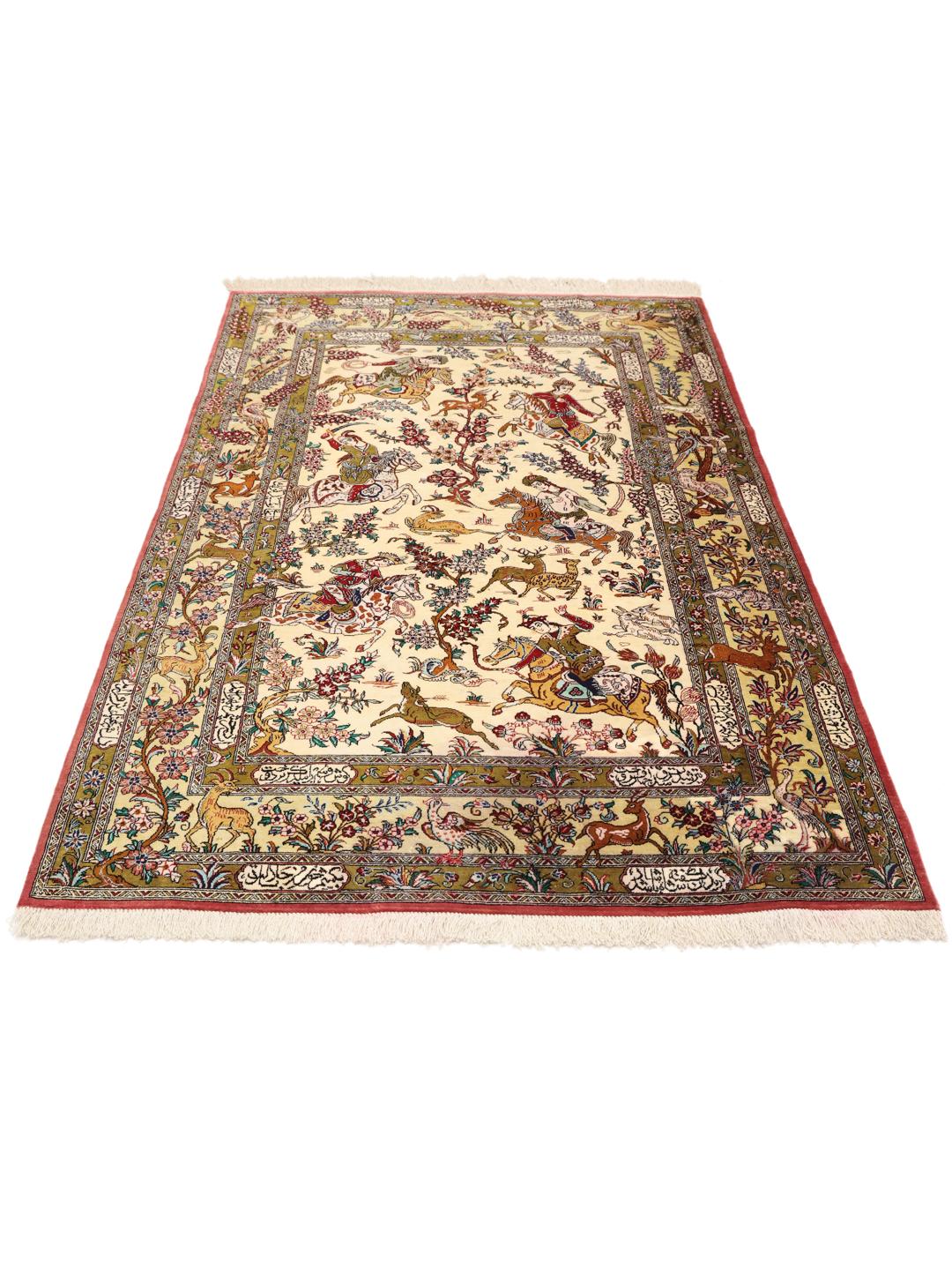
Ghom rugs originate from the holy city of Qum in the Middle East, a region that only began producing hand-knotted rugs in the early 20th century. Unlike older traditions that rely on ancient tribal motifs, the Ghom style is renowned for its openness to innovation, frequently incorporating sophisticated pictorial scenes, intricate floral patterns, and elements borrowed from other famous weaving regions.
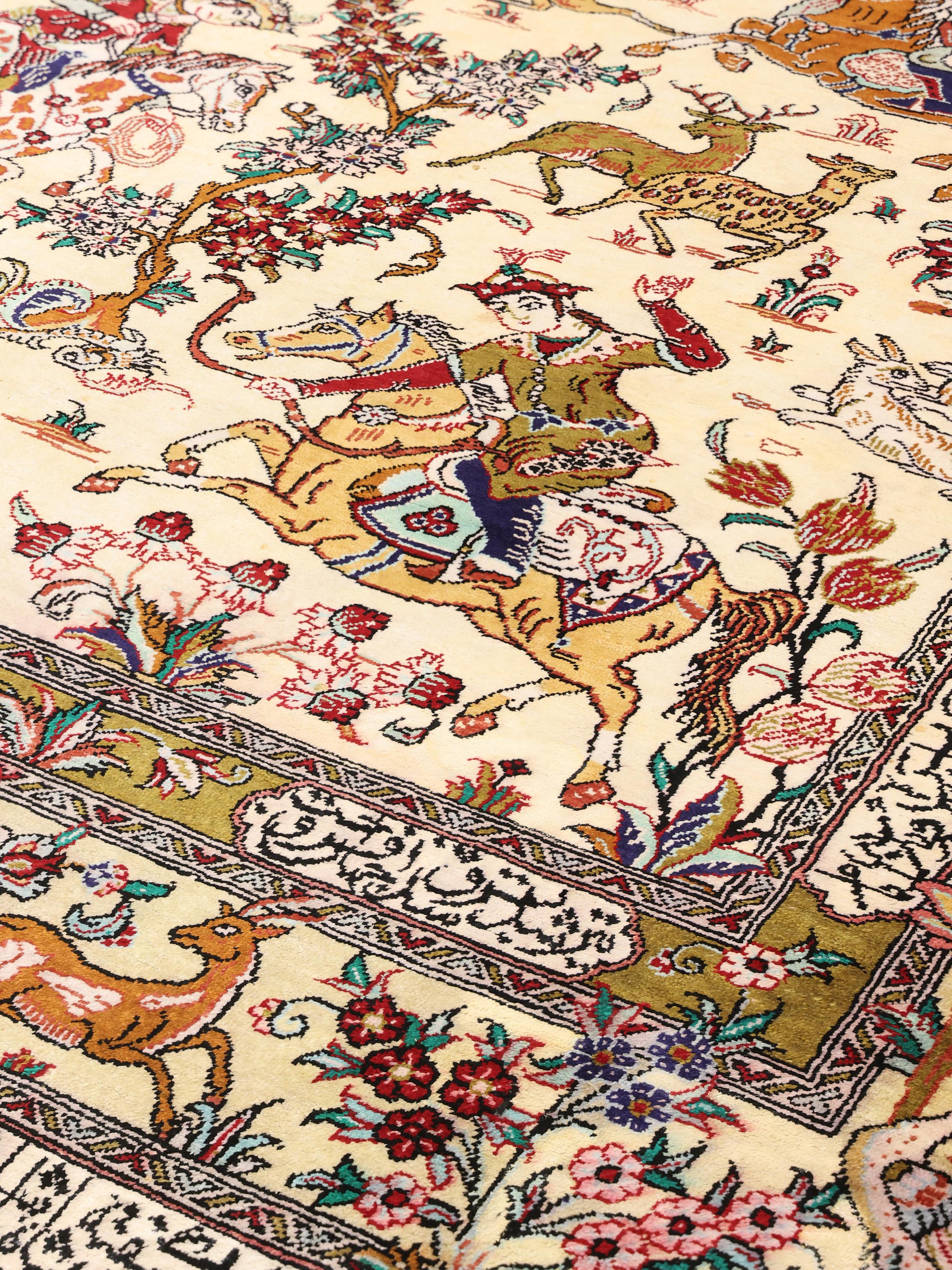
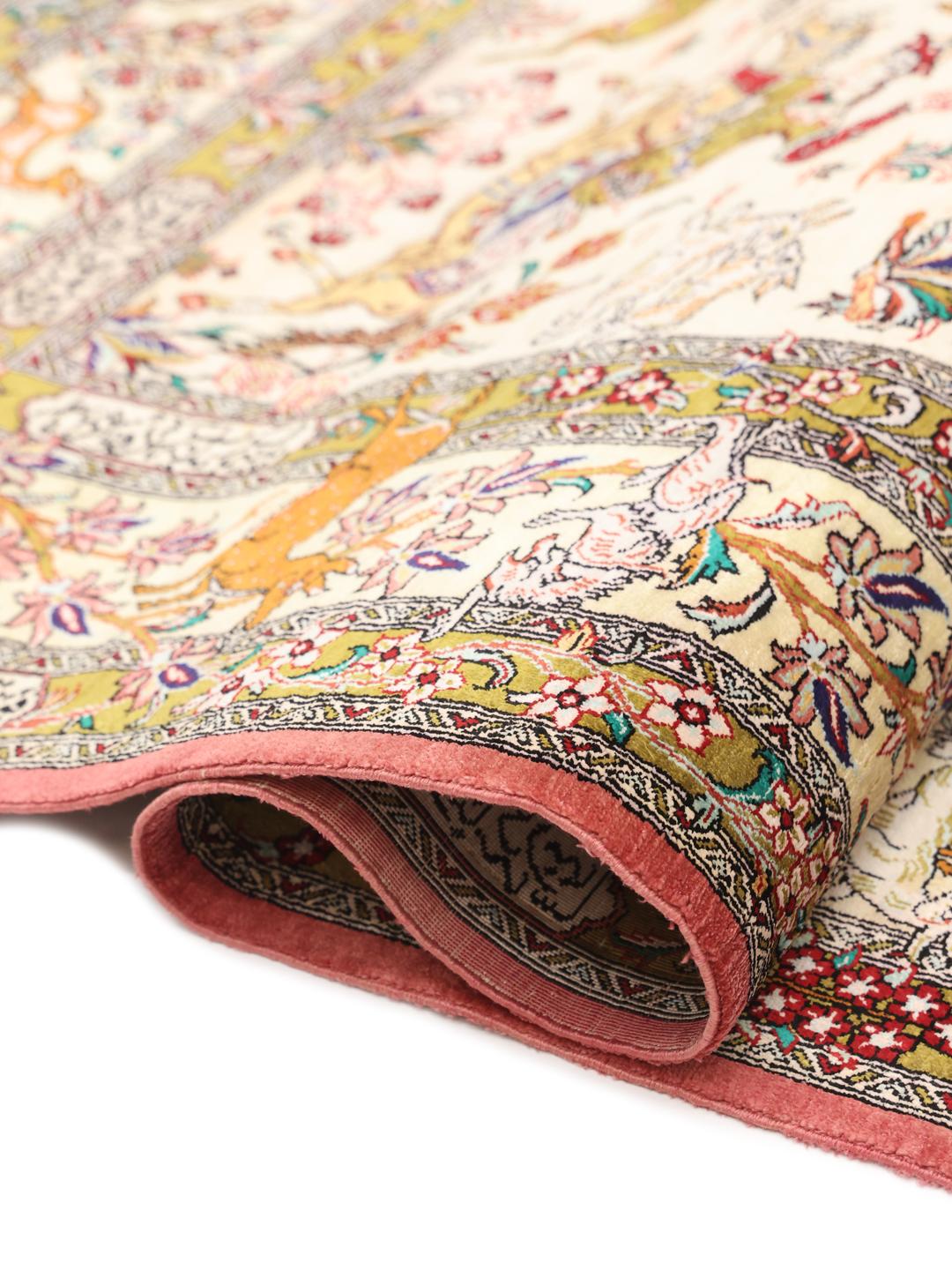
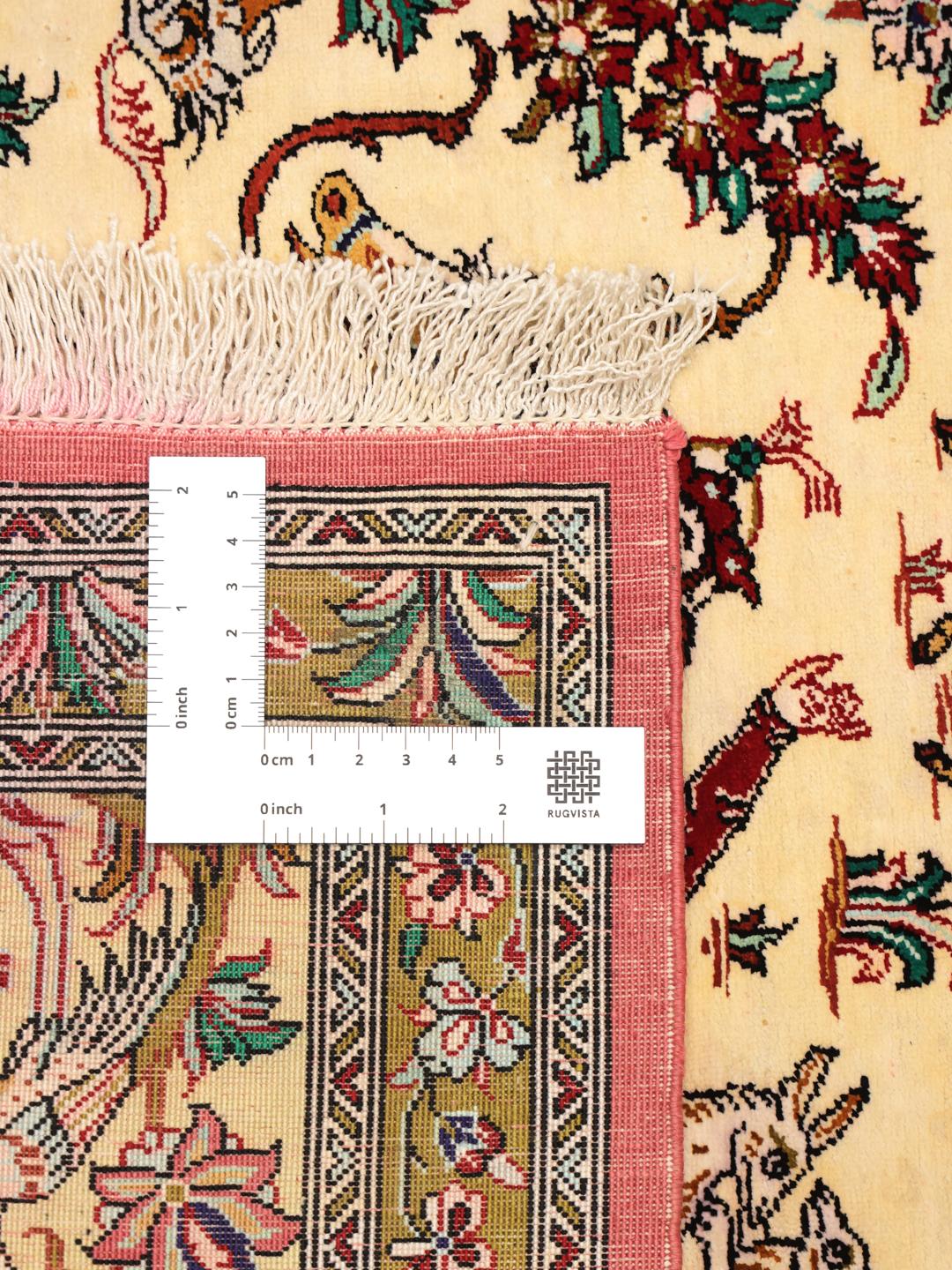
The term silk refers to the luxurious, natural filament used to create both the pile and the foundation of these rugs. Working with silk requires a much higher level of precision than wool, as the material is thinner, stronger, and more light-reflective. This allows for a much finer knot count, which is why Ghom silk rugs are celebrated for their ability to depict complex narratives with the clarity of a painting.
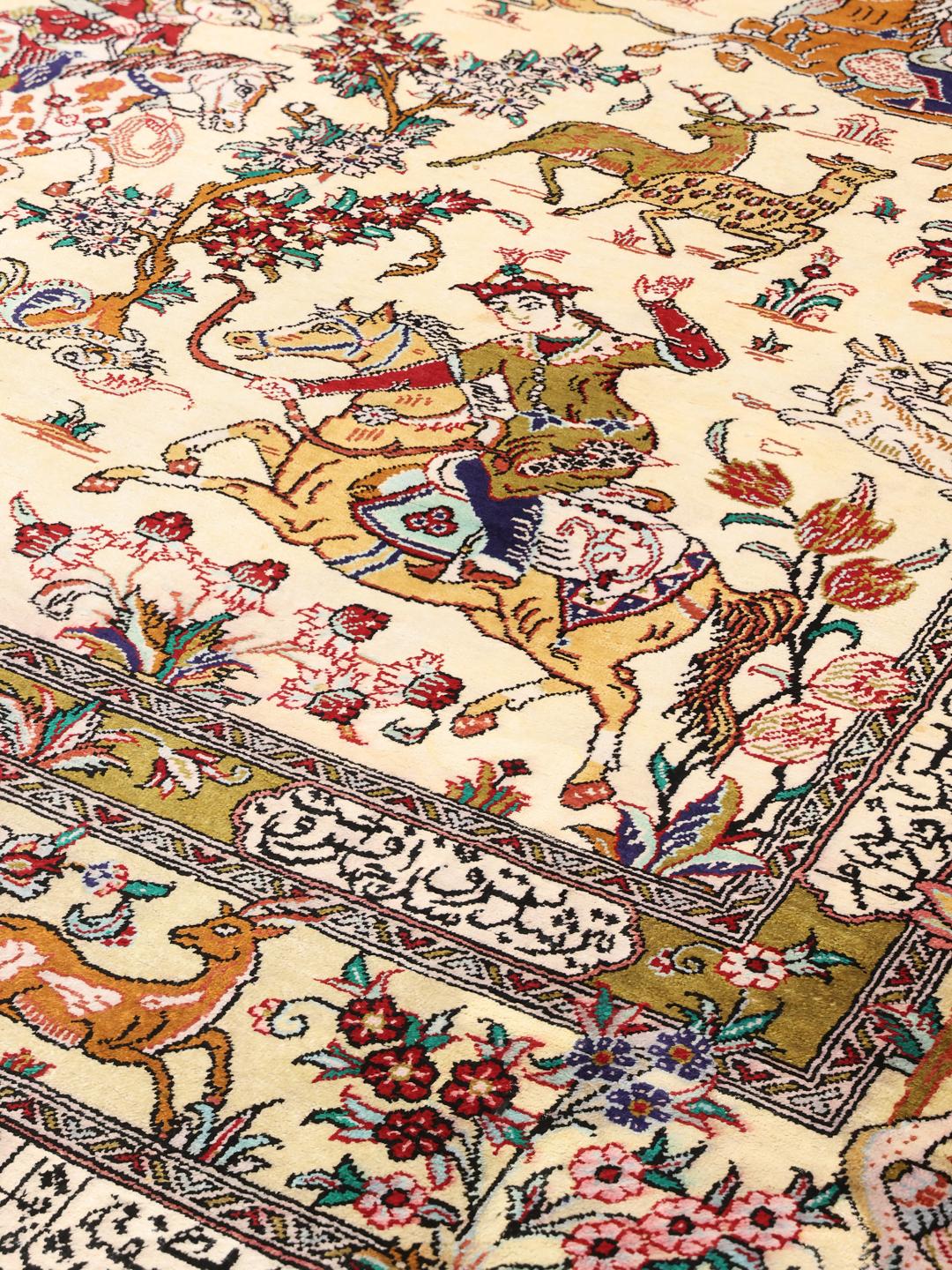
The design of this rug follows the traditional hunting scene, a motif deeply rooted in Middle Eastern art history. These depictions of riders, animals, and lush, flowering trees are not merely decorative but are symbolic representations of power, nature, and the cycle of life. The ornate borders frame these scenes, providing a structured balance to the fluid, organic movement within the central field.
Owning a Ghom silk rug is considered a significant investment in cultural heritage. Because they are produced in limited quantities by master weavers, they are highly sought after by collectors who value the marriage of technical perfection and artistic vision. This rug is more than a floor covering; it is a legacy piece that preserves a high-level craft tradition, offering a sense of history and prestige to any interior.