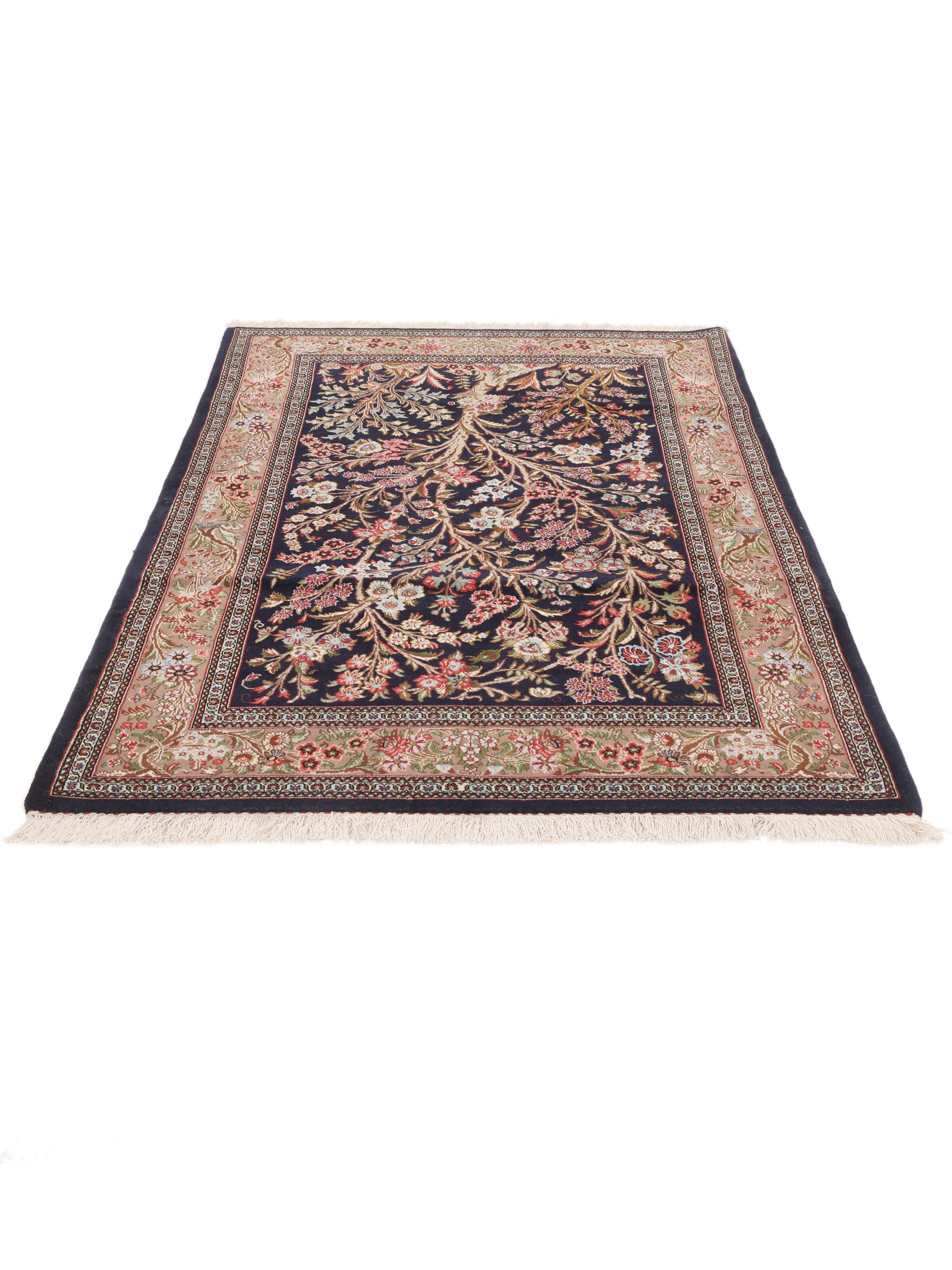
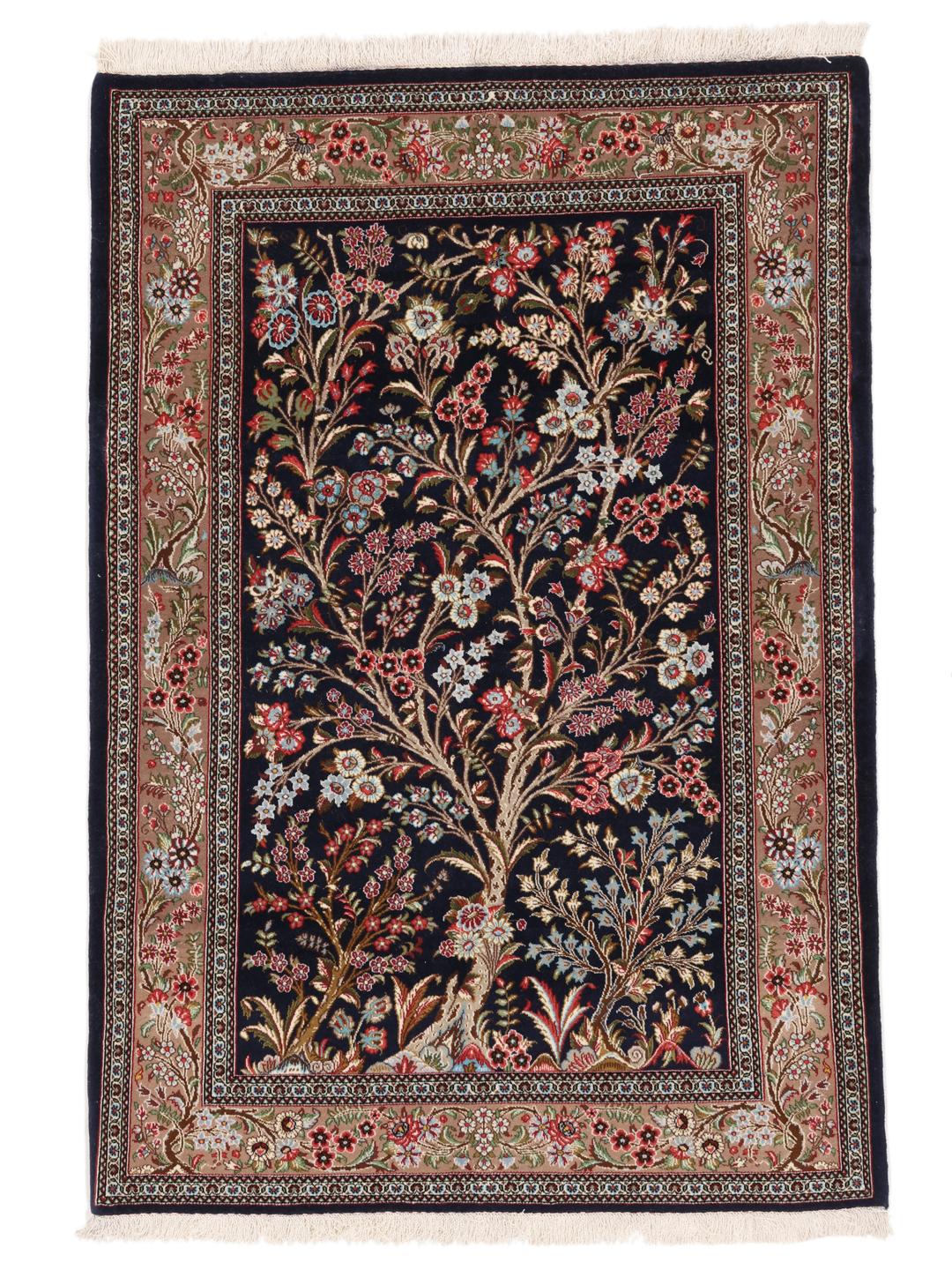
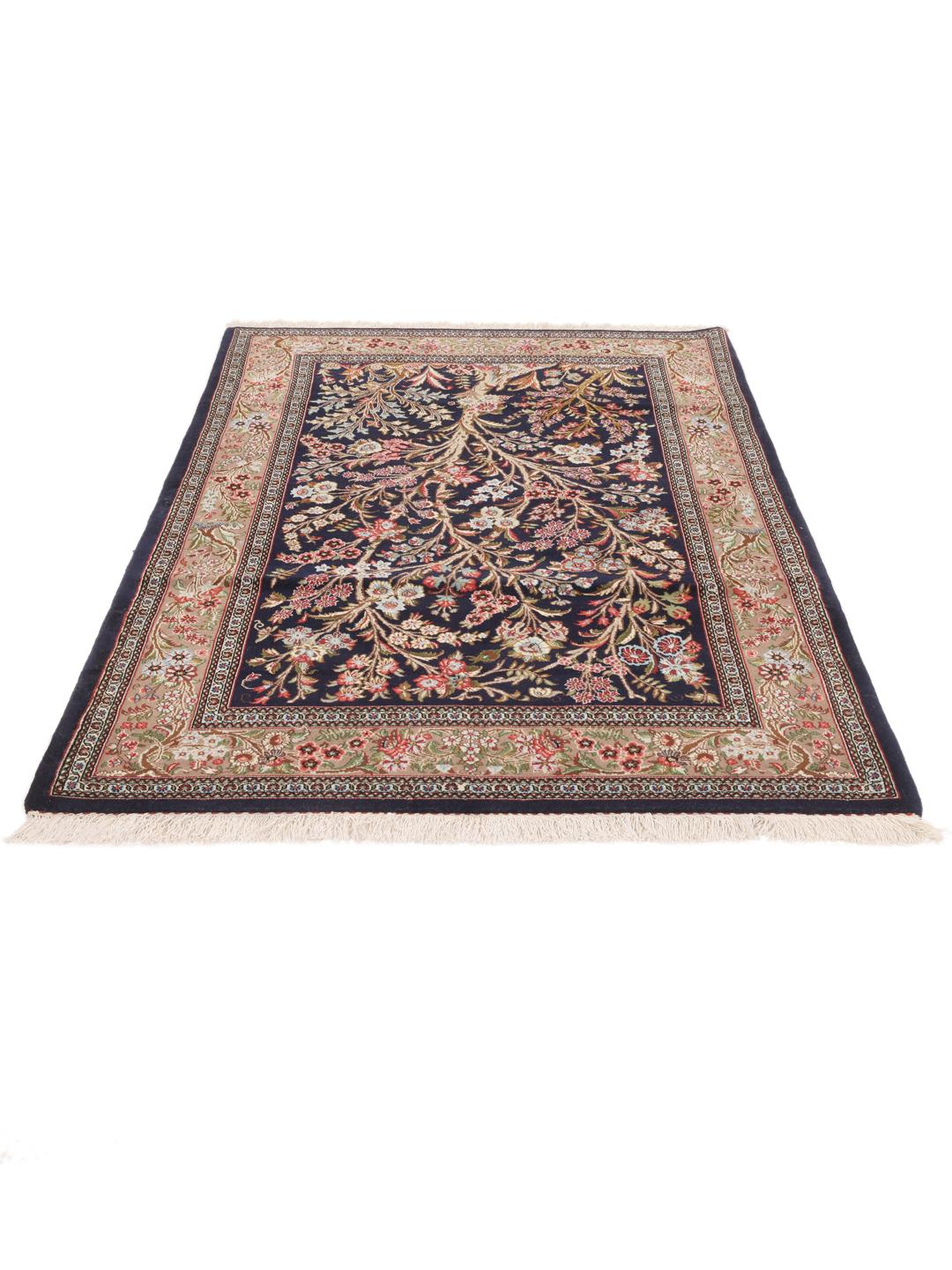
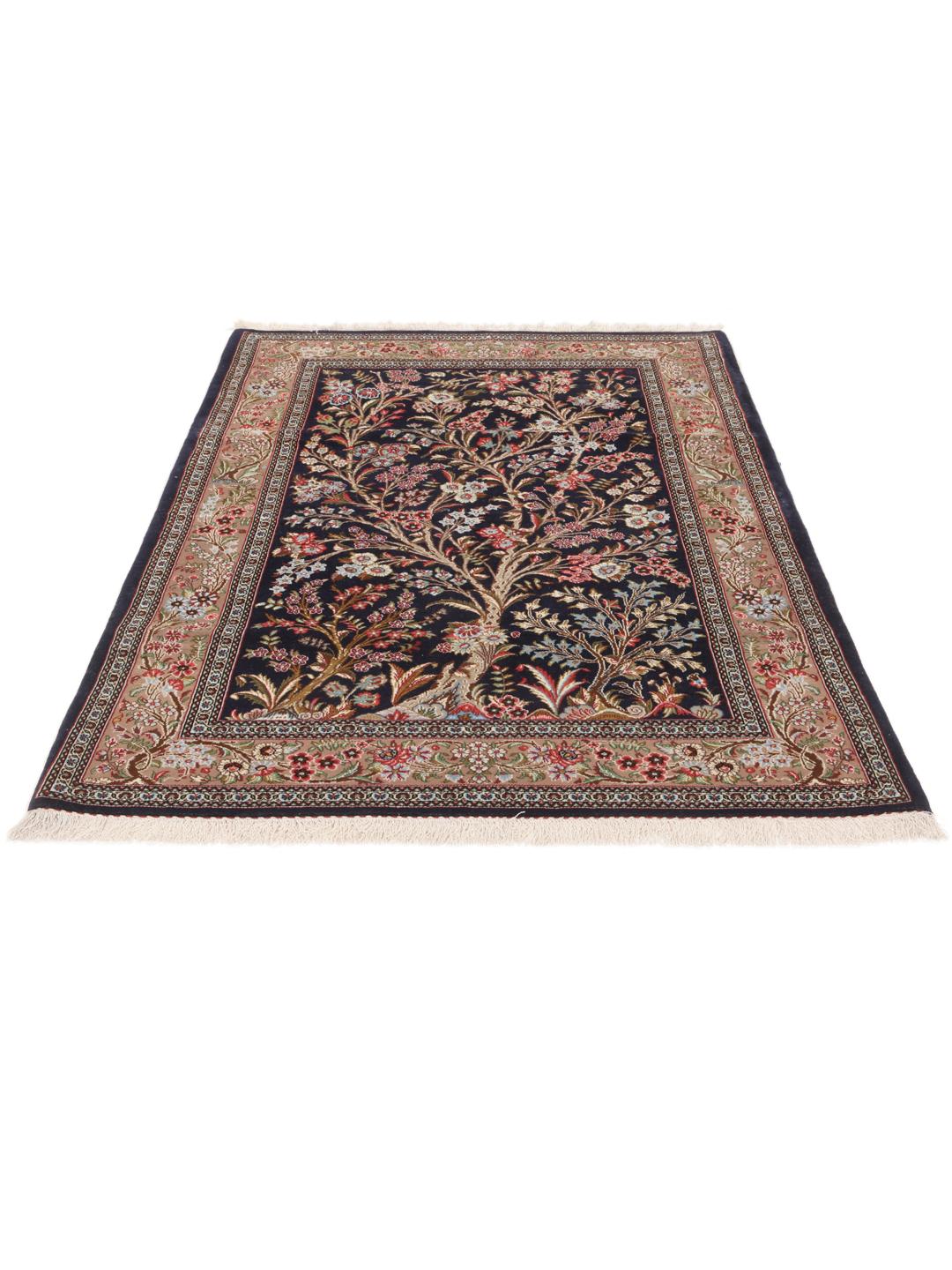
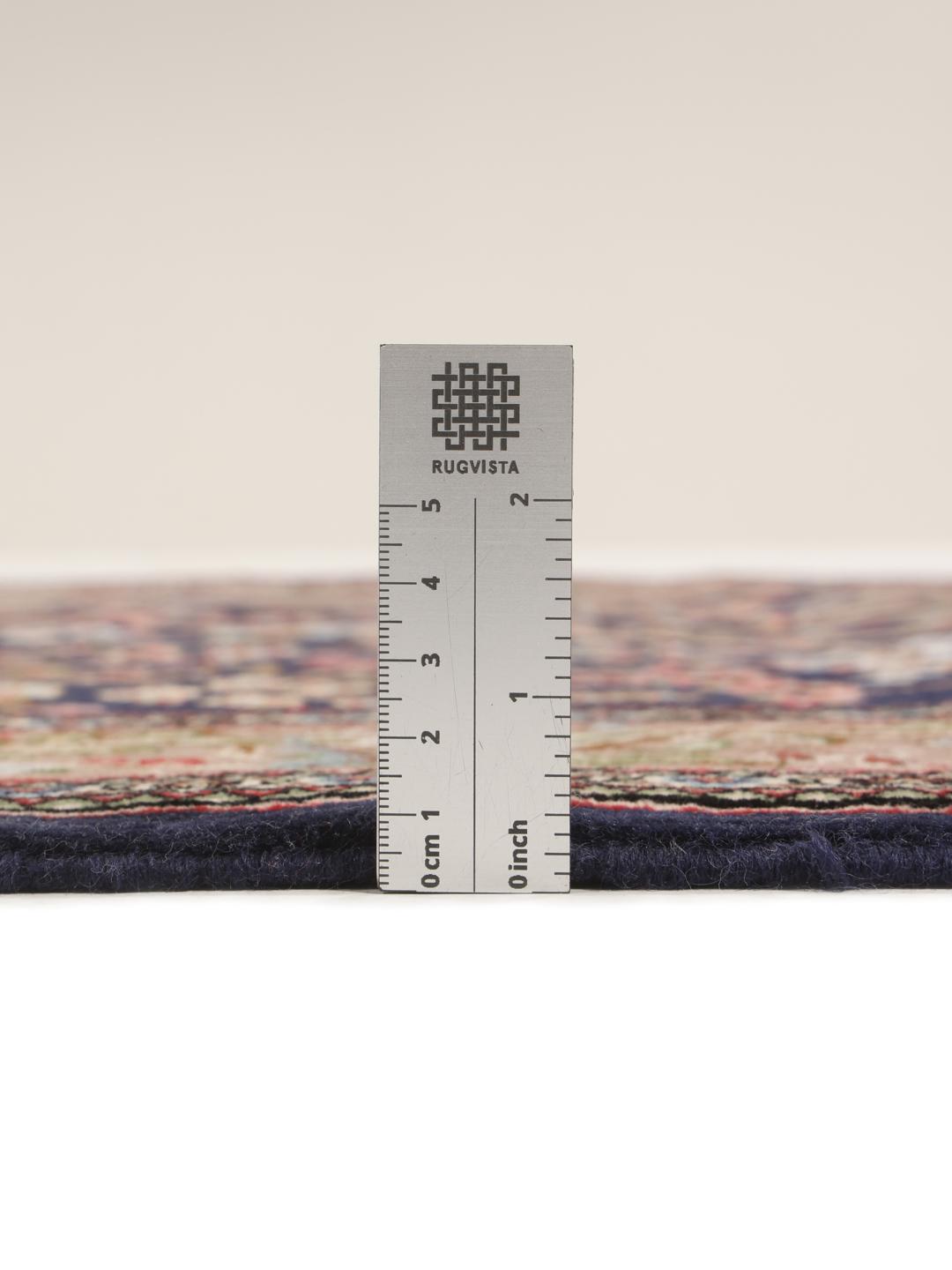
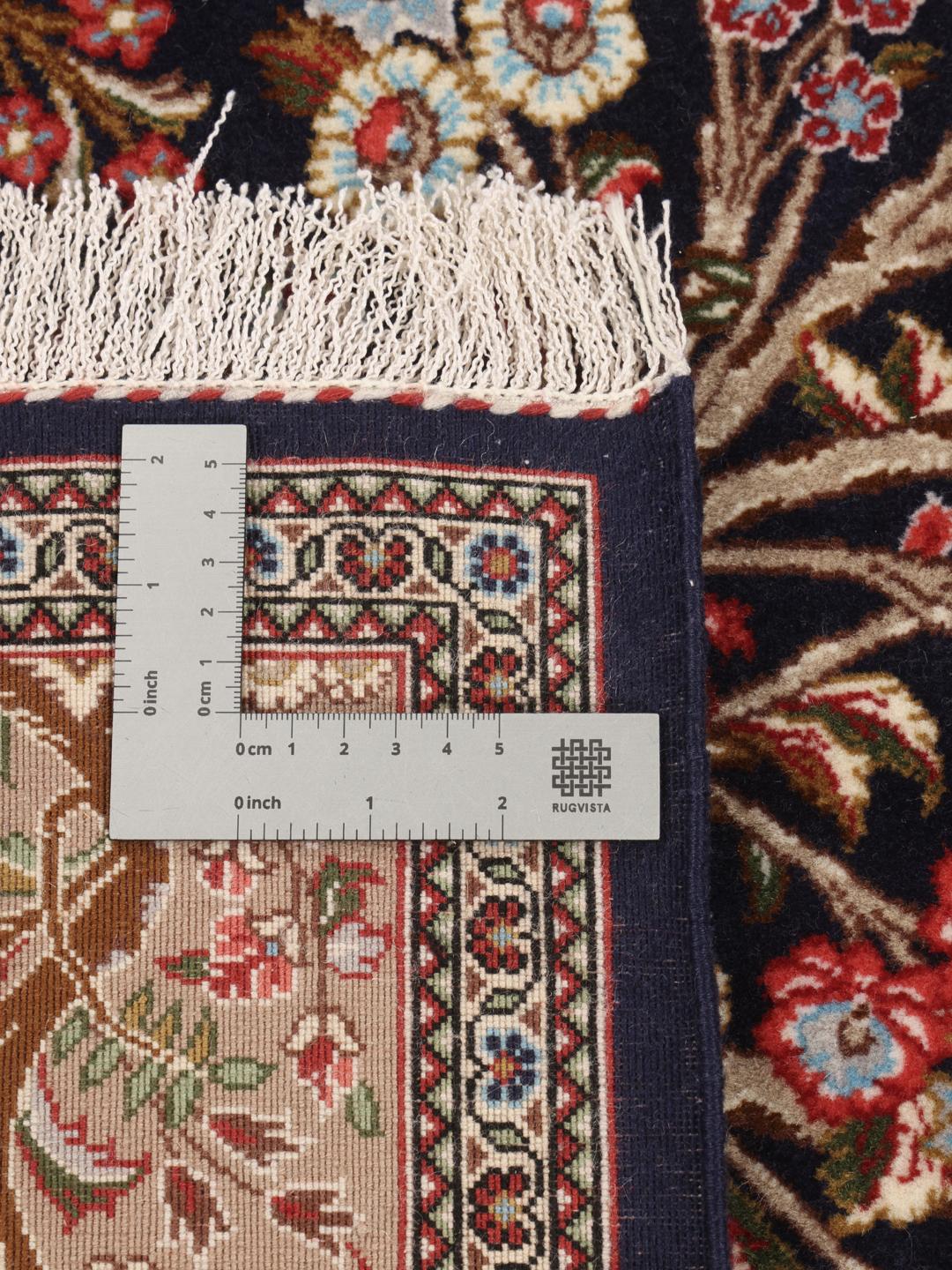
The Ghom tradition, while rooted in the broader history of Middle Eastern weaving, represents a relatively modern evolution in the region. Unlike older traditions that rely on ancient tribal motifs, Ghom rugs often draw inspiration from a wide range of classical styles, blending them into a cohesive and often highly detailed aesthetic. This flexibility has allowed Ghom weavers to become masters of adaptation, incorporating fine materials and complex designs that push the boundaries of what is possible in hand-knotted textiles.
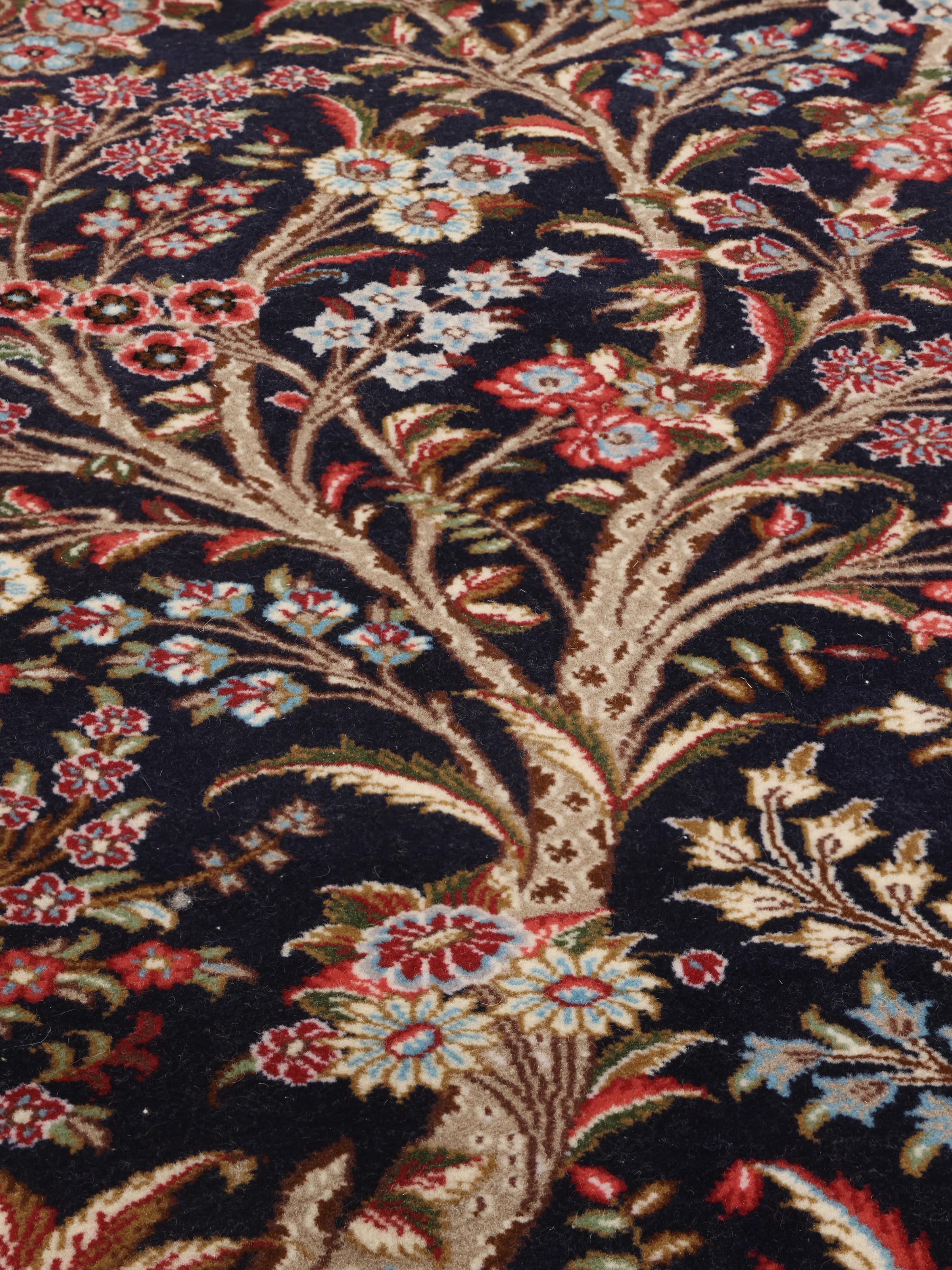
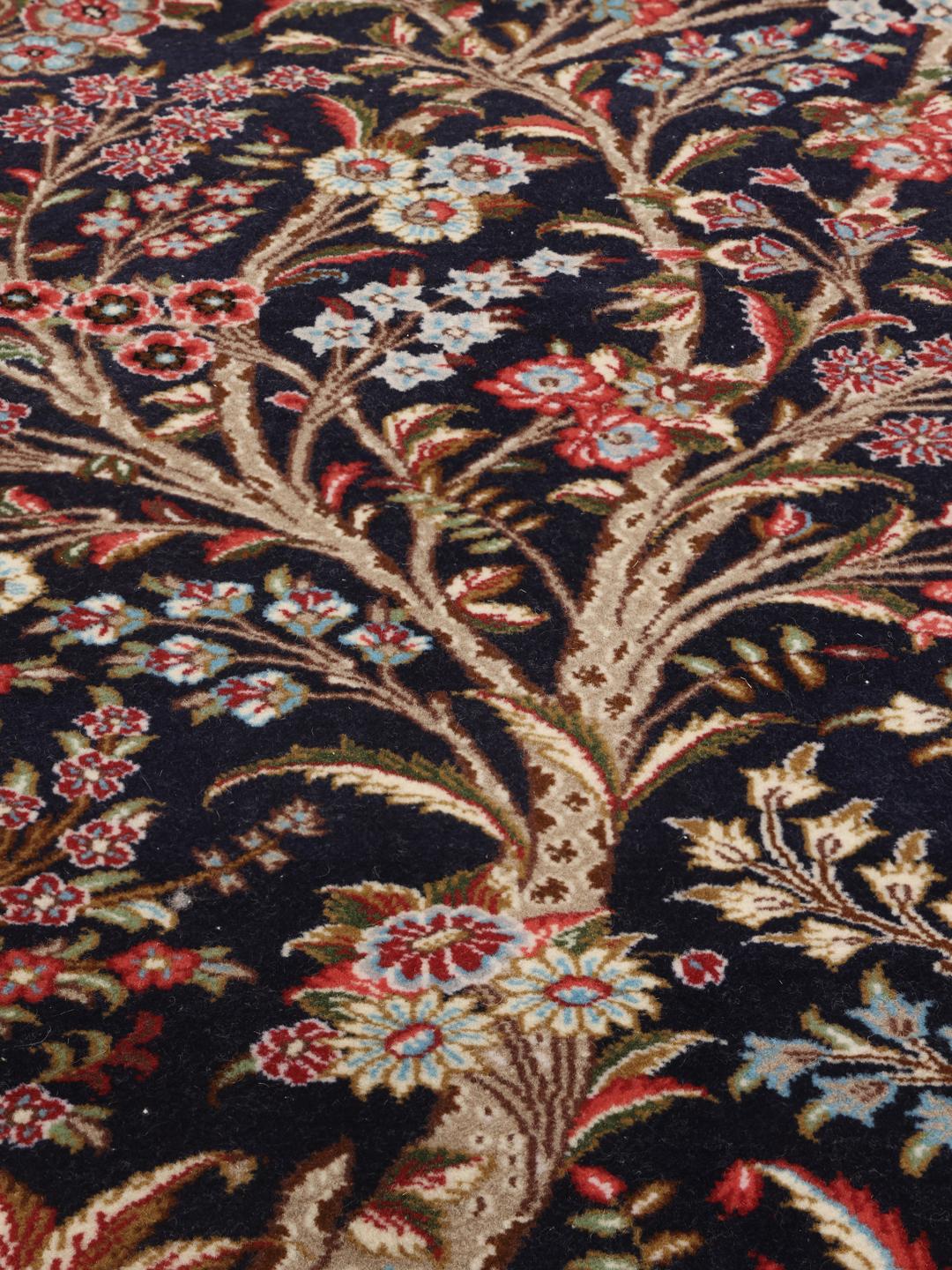
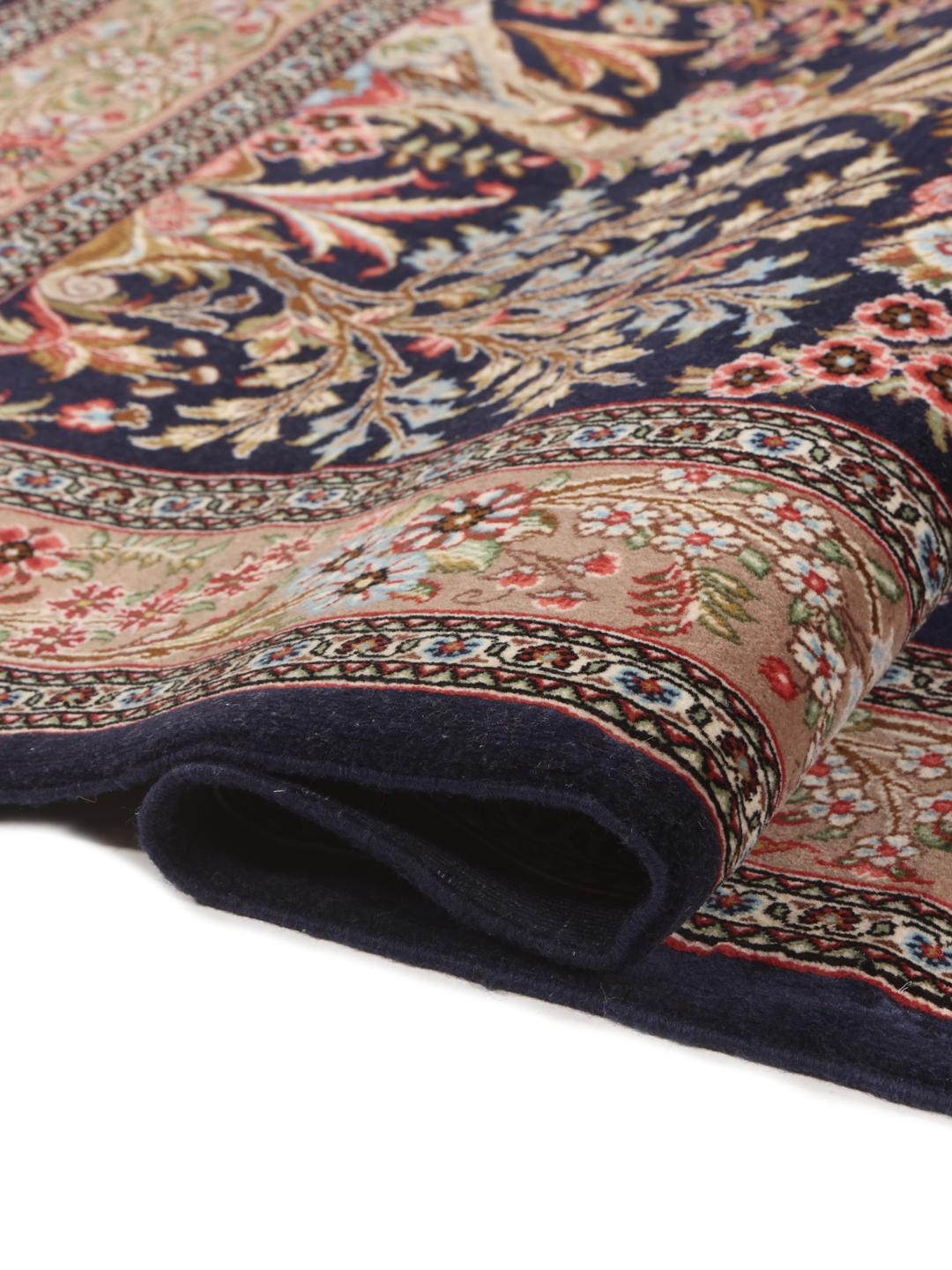
In the world of fine rugs, the term 'Kork' refers to the use of high-quality, soft wool often harvested from the neck of the sheep, which is then blended or combined with silk to create a pile with a distinct, subtle lustre. This combination is highly prized because it offers the durability of wool with the refined sheen and delicacy of silk. The result is a pile that reflects light beautifully, adding dynamic depth to the rug's intricate patterns as you move around the room.
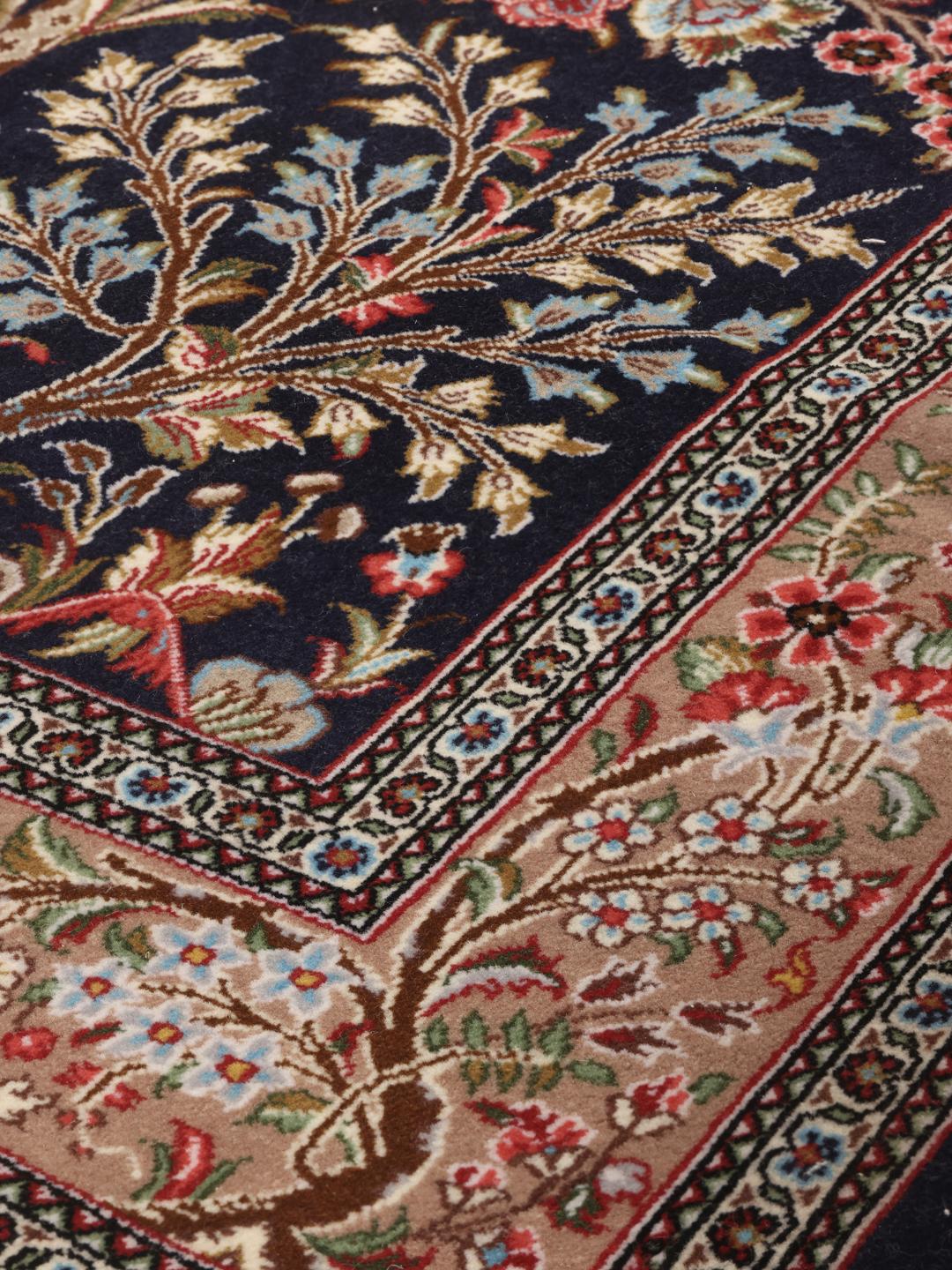
The tree-of-life motif depicted here is a profound symbol in Middle Eastern art, representing the connection between the heavens, the earth, and the cycle of life. It typically features a central trunk that branches out into a symphony of flowers, birds, and vines. This design is not merely decorative but serves as a narrative element, telling a story of growth and natural harmony that has been celebrated in weaving traditions for centuries.
Collecting a piece from this tradition is an act of preserving a sophisticated craft. These rugs are valued not just for their aesthetic grace, but for the immense technical challenge they present to the weaver. Because they are often produced in smaller, specialised workshops, they carry a level of exclusivity that appeals to those who appreciate heritage, skill, and the lasting value of a well-crafted object.