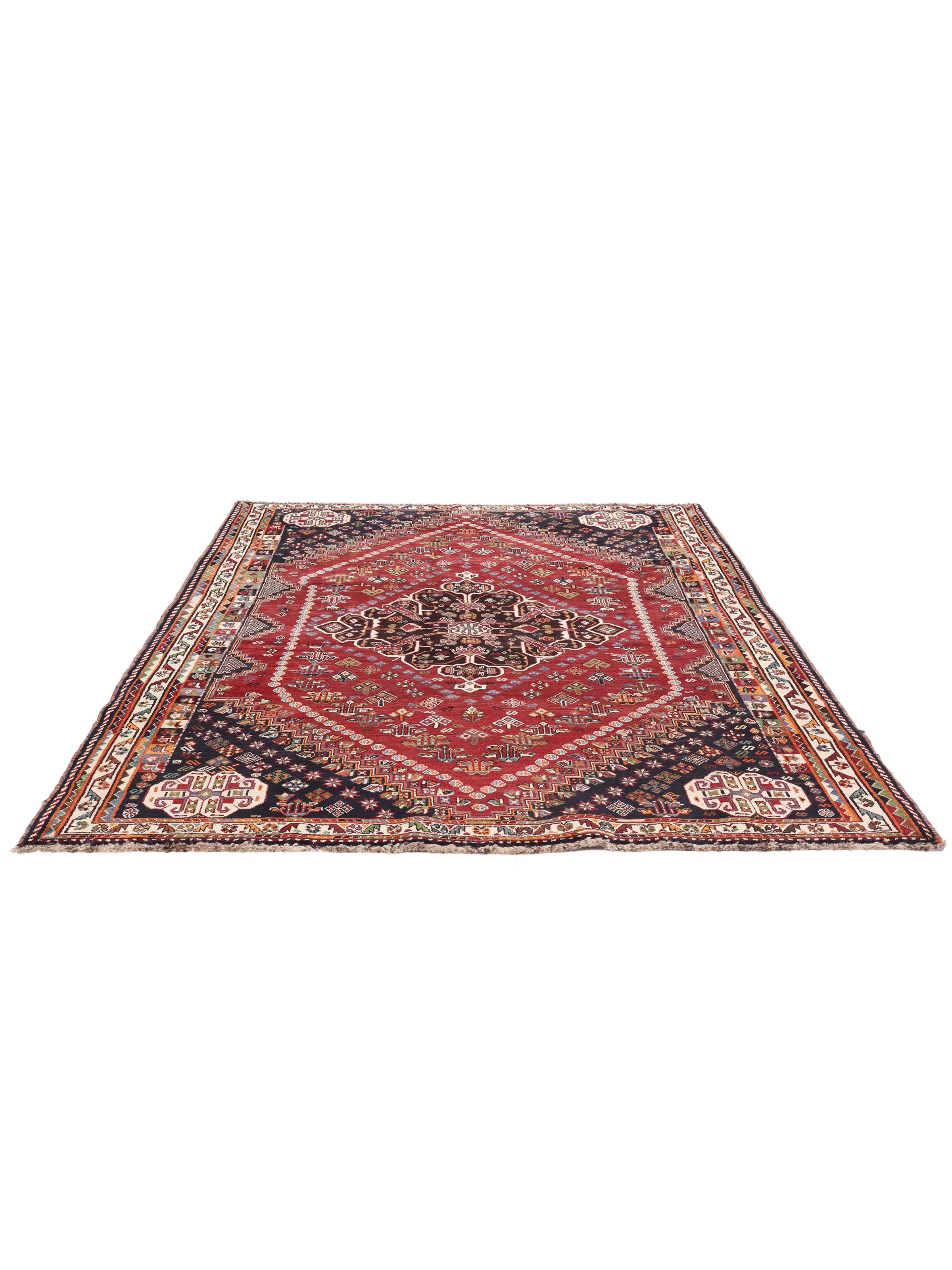
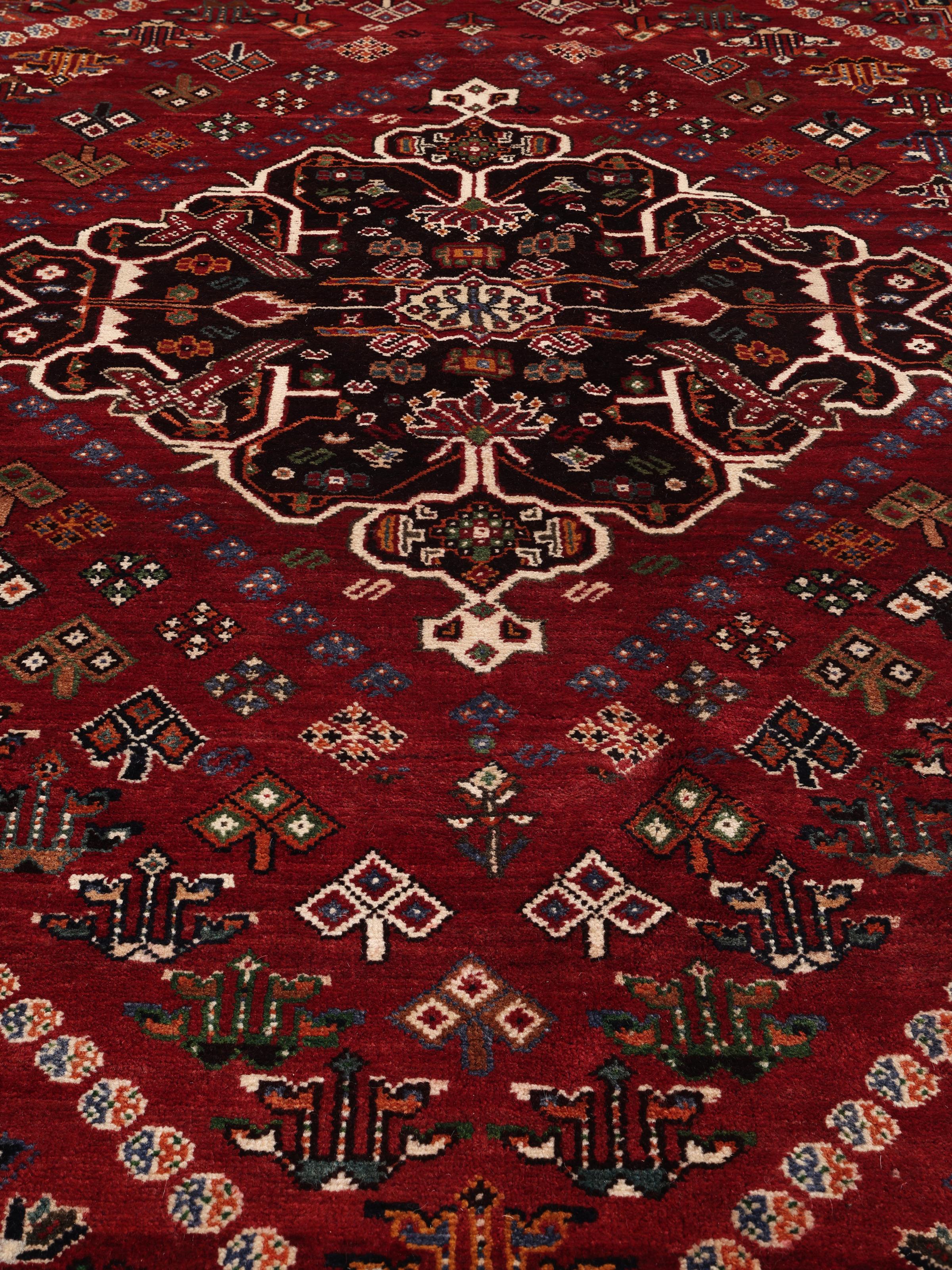
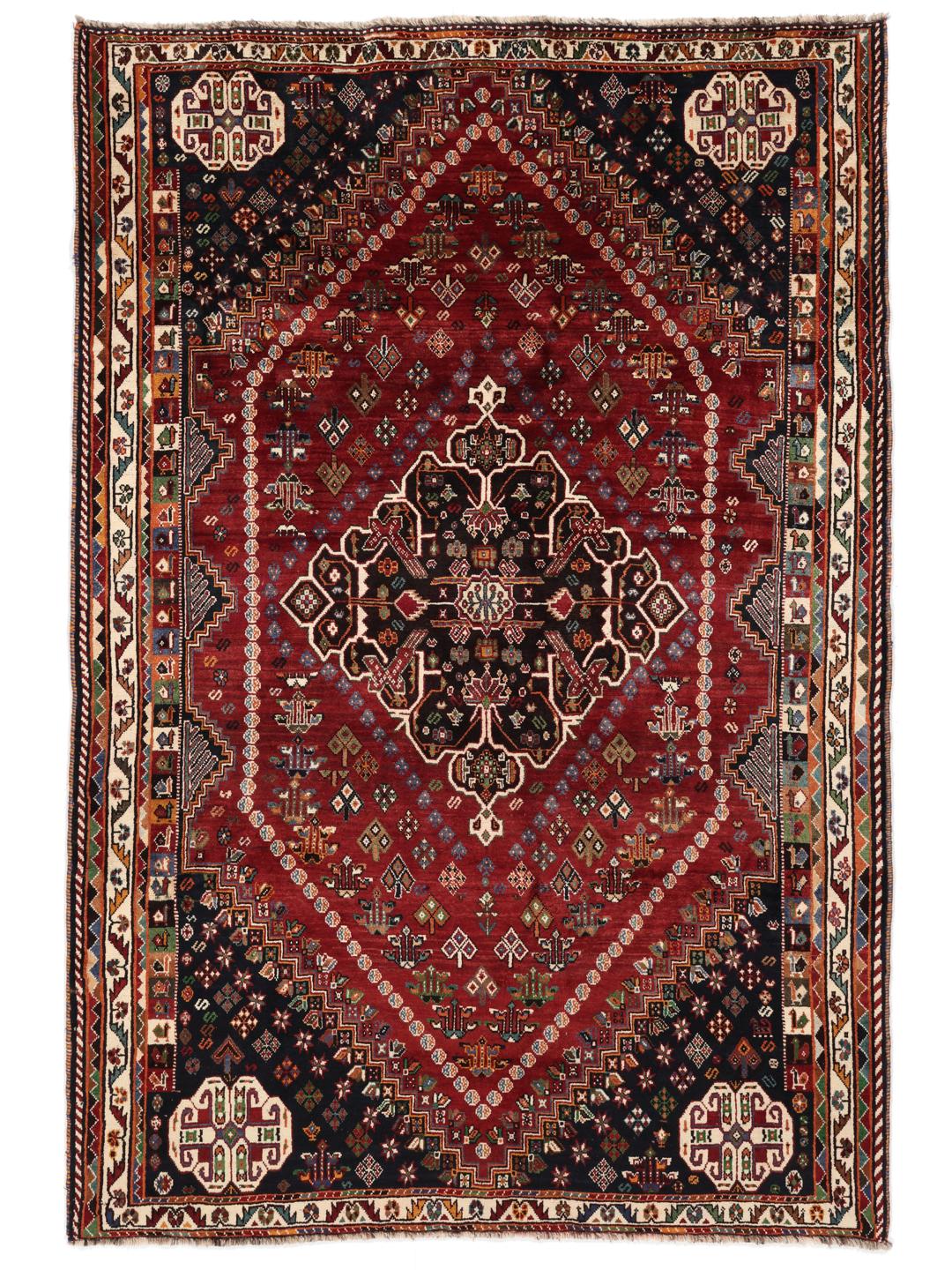
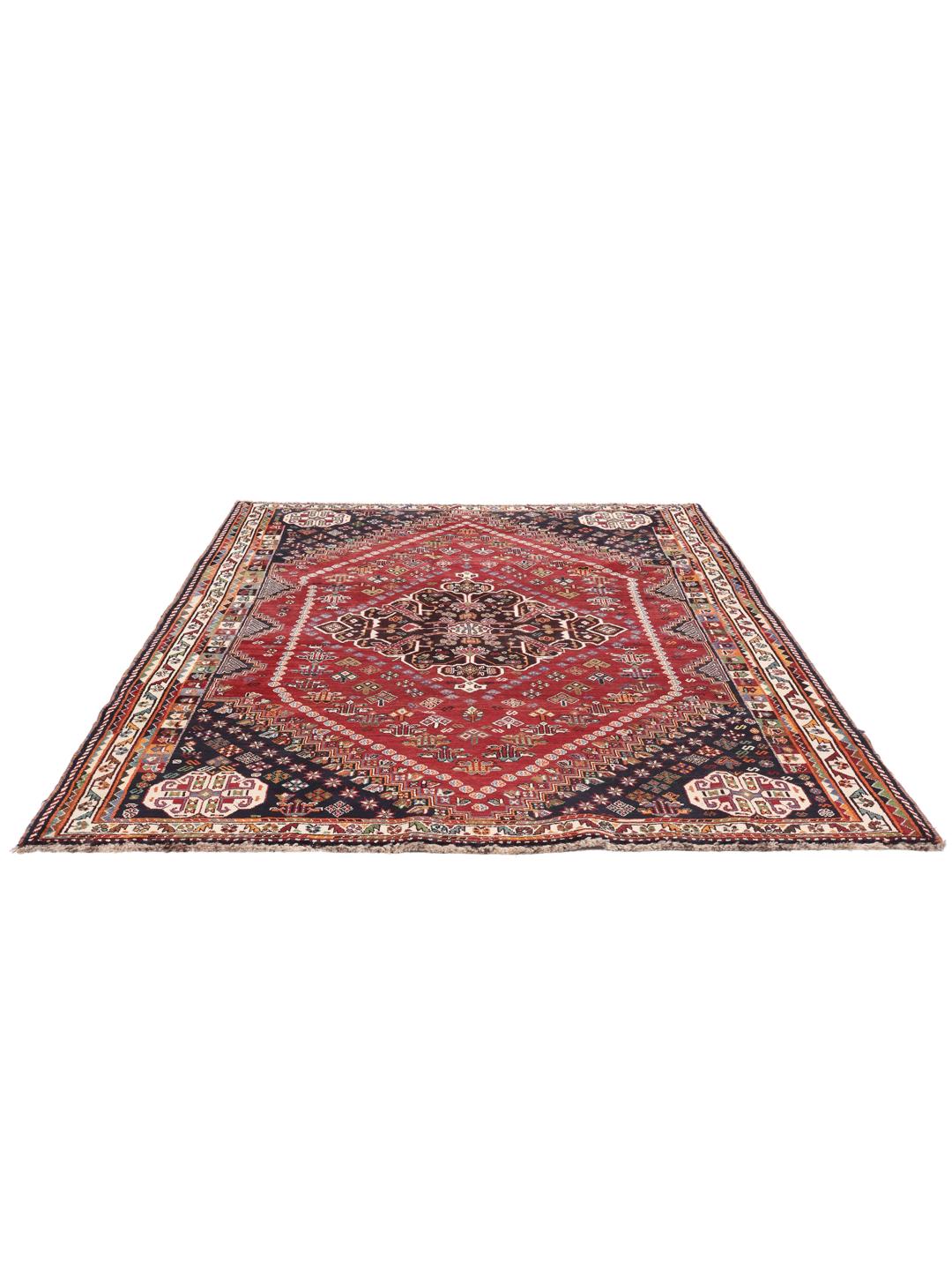
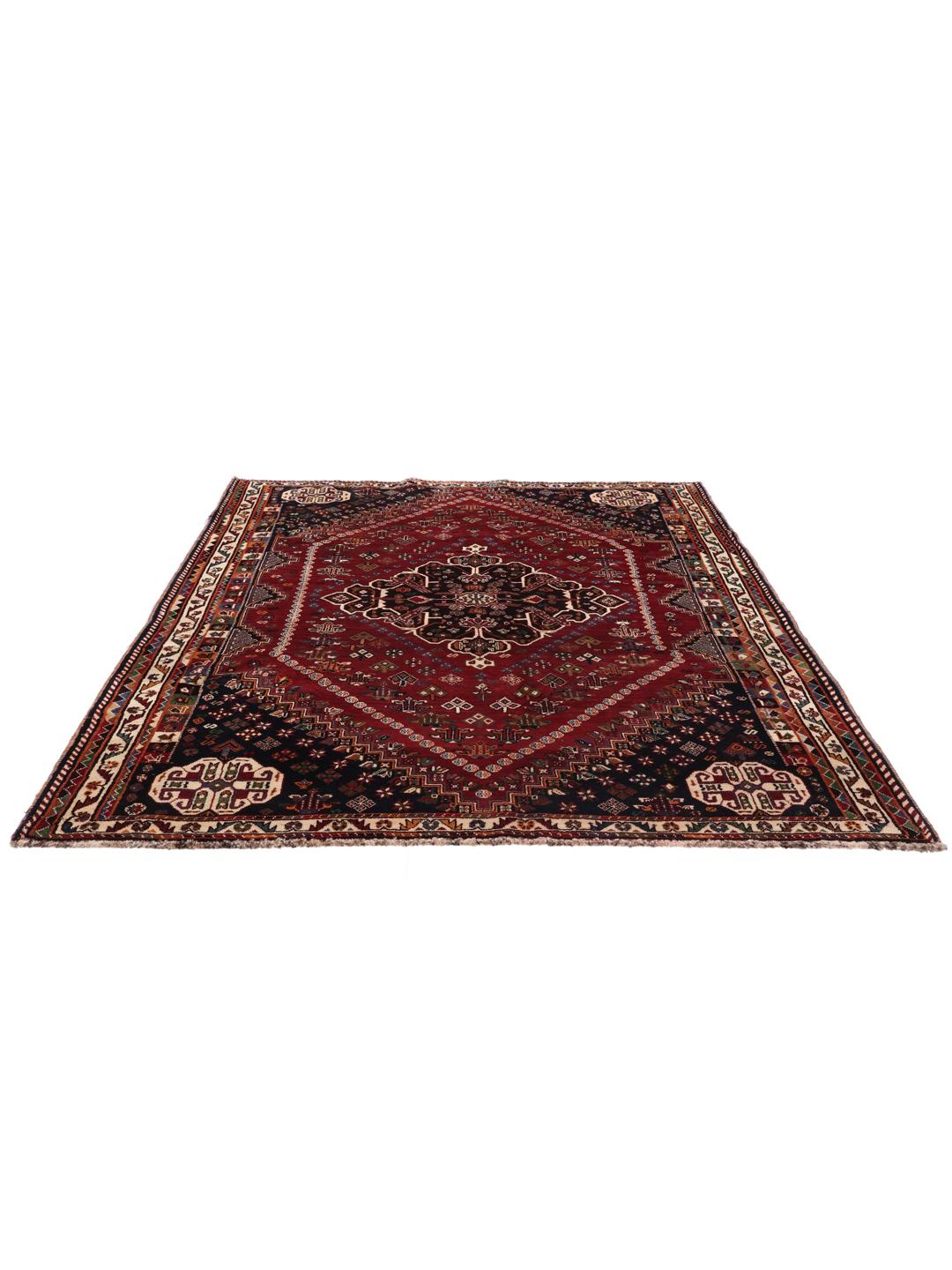
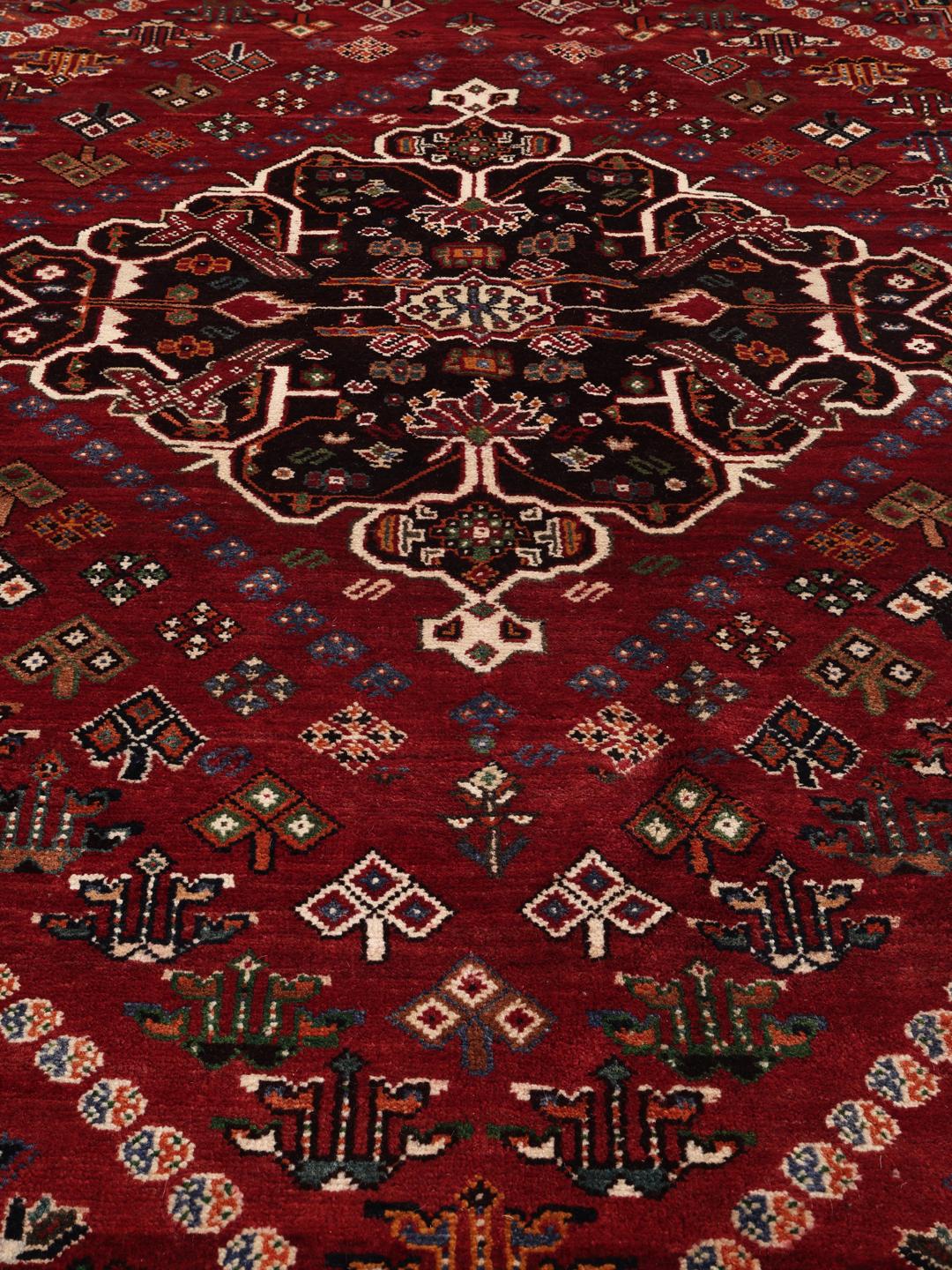
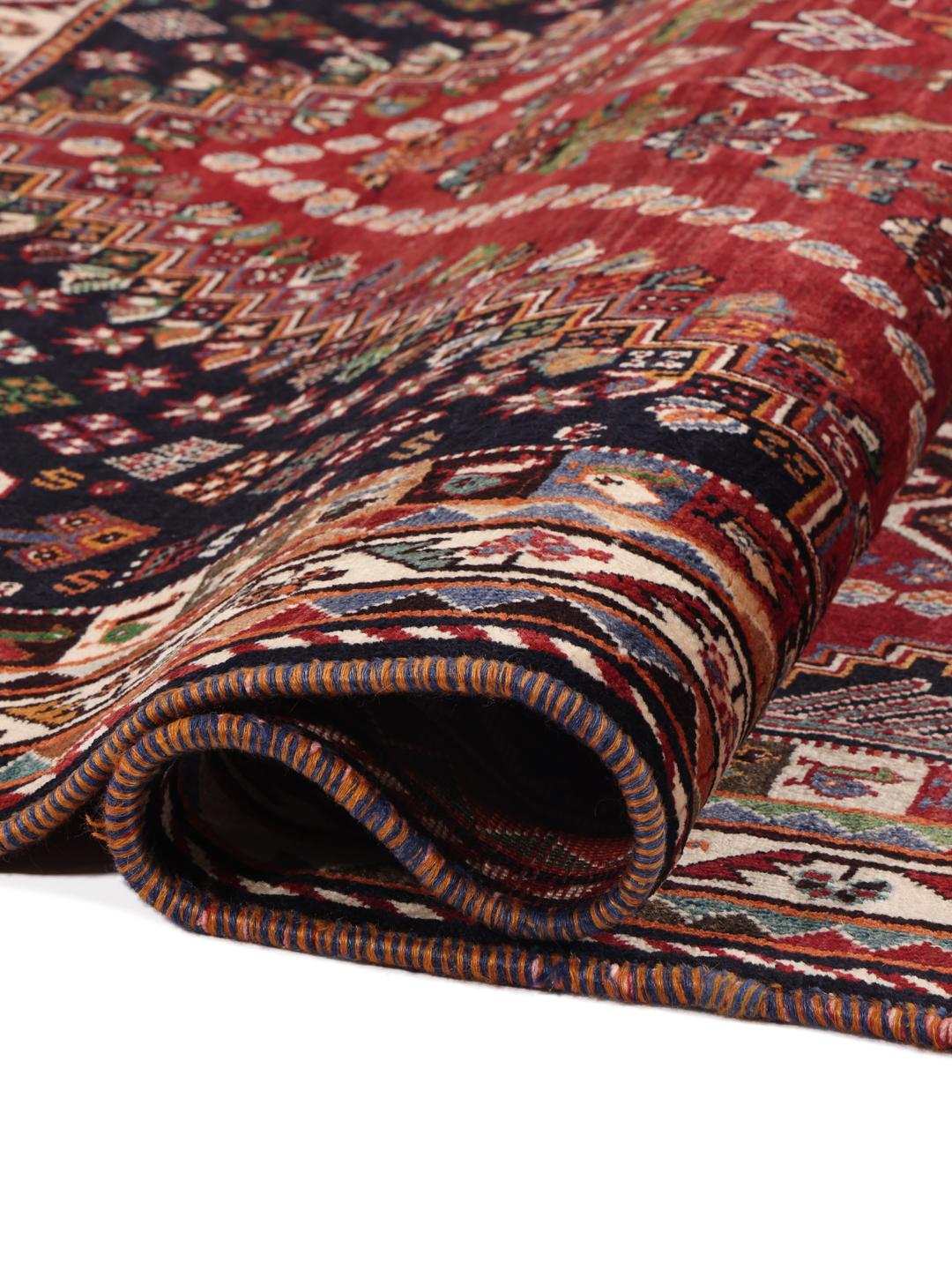
The Qashqai rugs originate from the nomadic tribes of the Middle East, a region with a deep and storied history of textile art. These tribes have travelled through mountainous landscapes for centuries, carrying their weaving traditions with them. The patterns often reflect the natural world and the tribal identity of the weavers, serving as a visual language that communicates heritage and social standing.
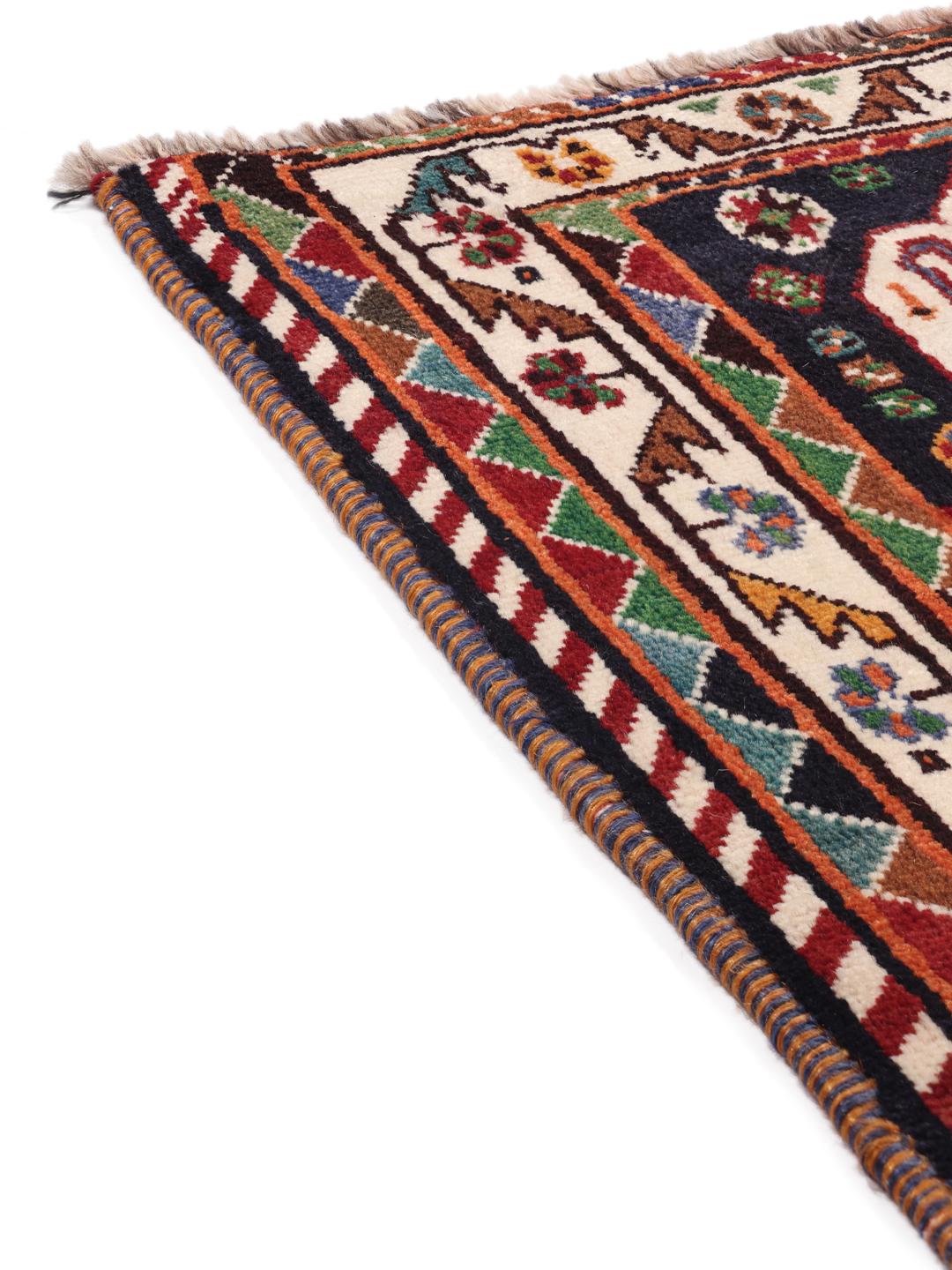
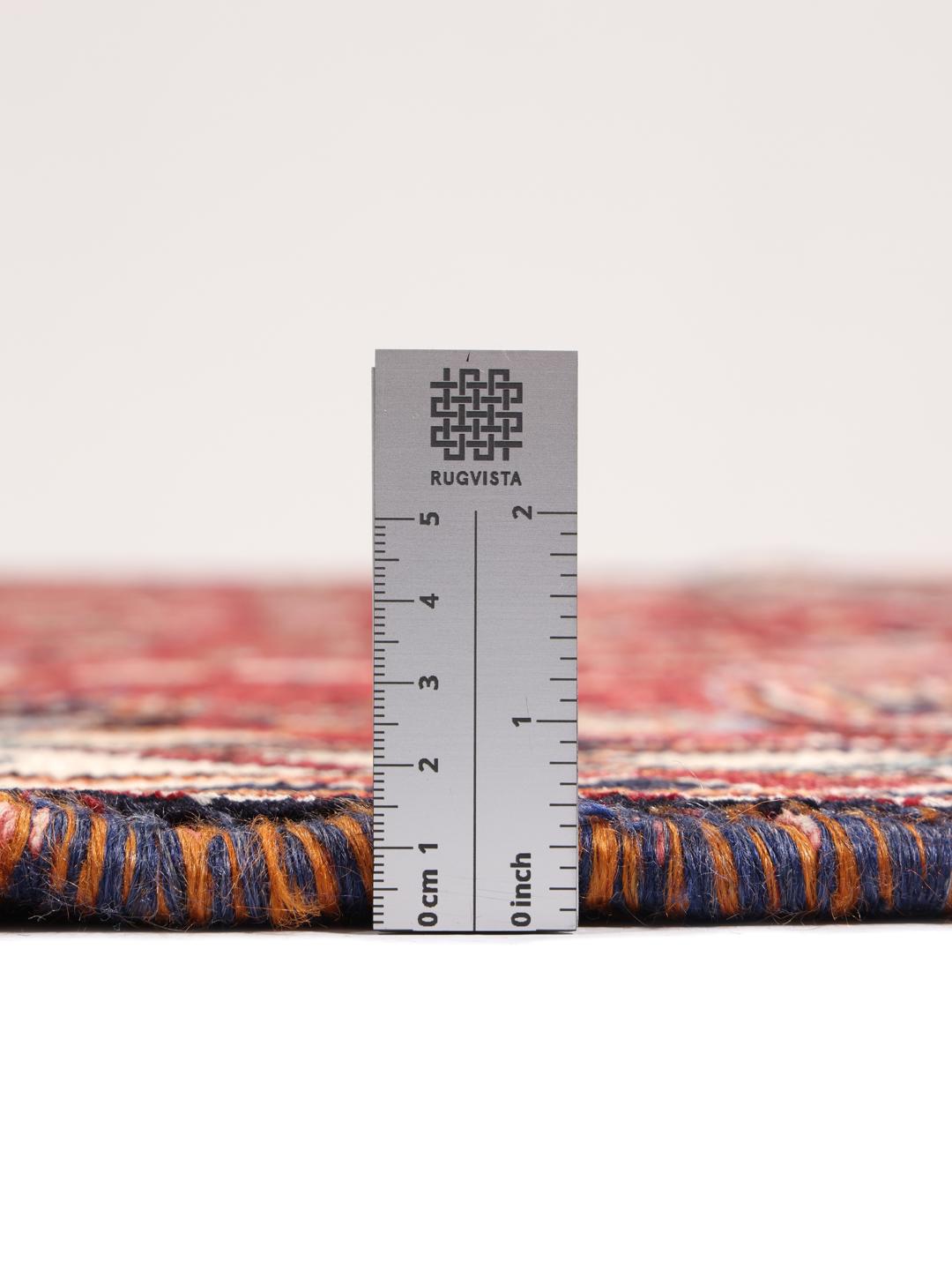
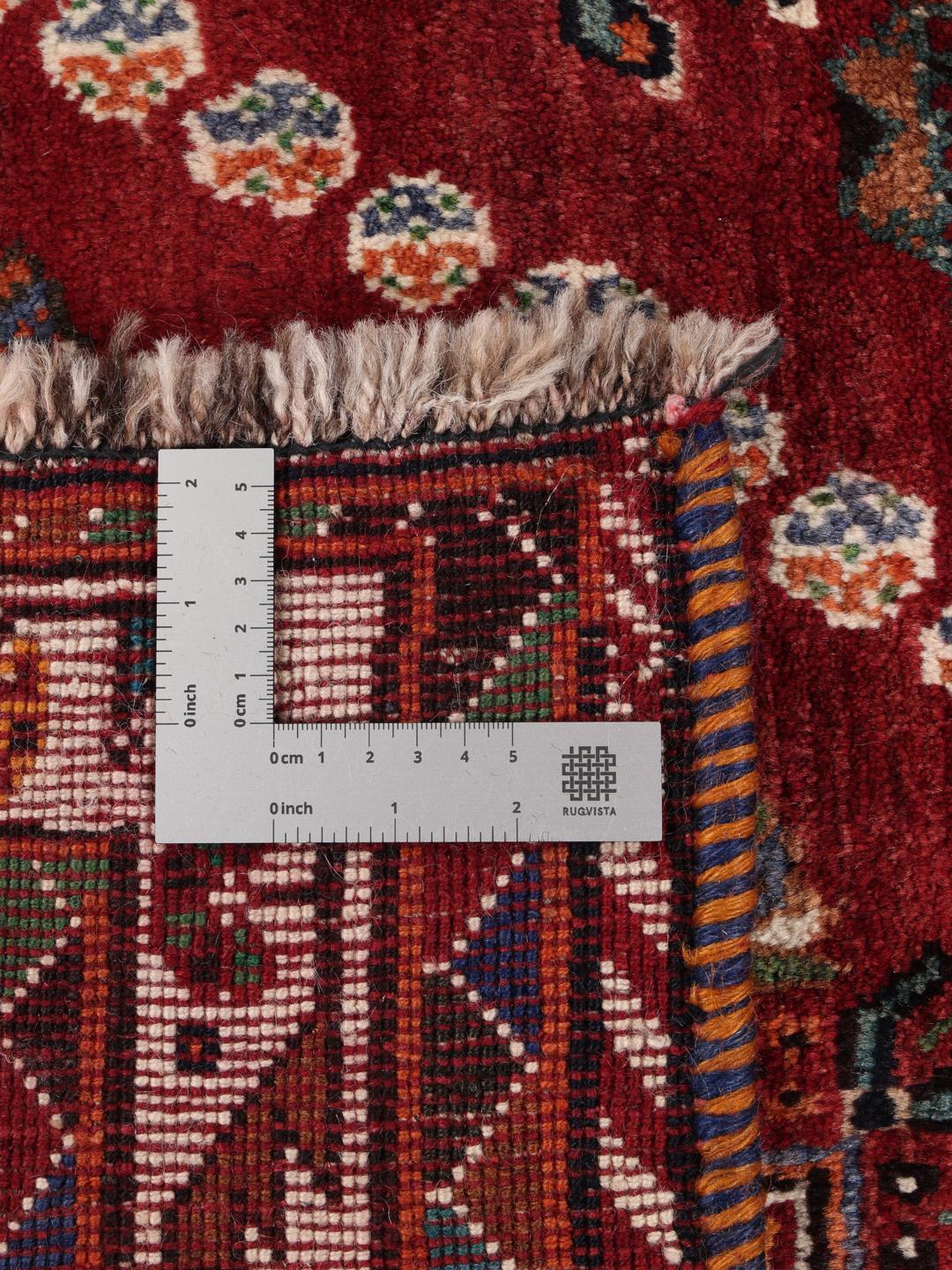
Technically, the Qashqai style is renowned for its use of high-quality wool and a specific knotting technique that results in a durable, flexible, and vibrant rug. The use of double-weft construction is a hallmark of this tradition, providing extra strength to the foundation and allowing for the intricate, curvilinear designs that distinguish these rugs from simpler nomadic counterparts.
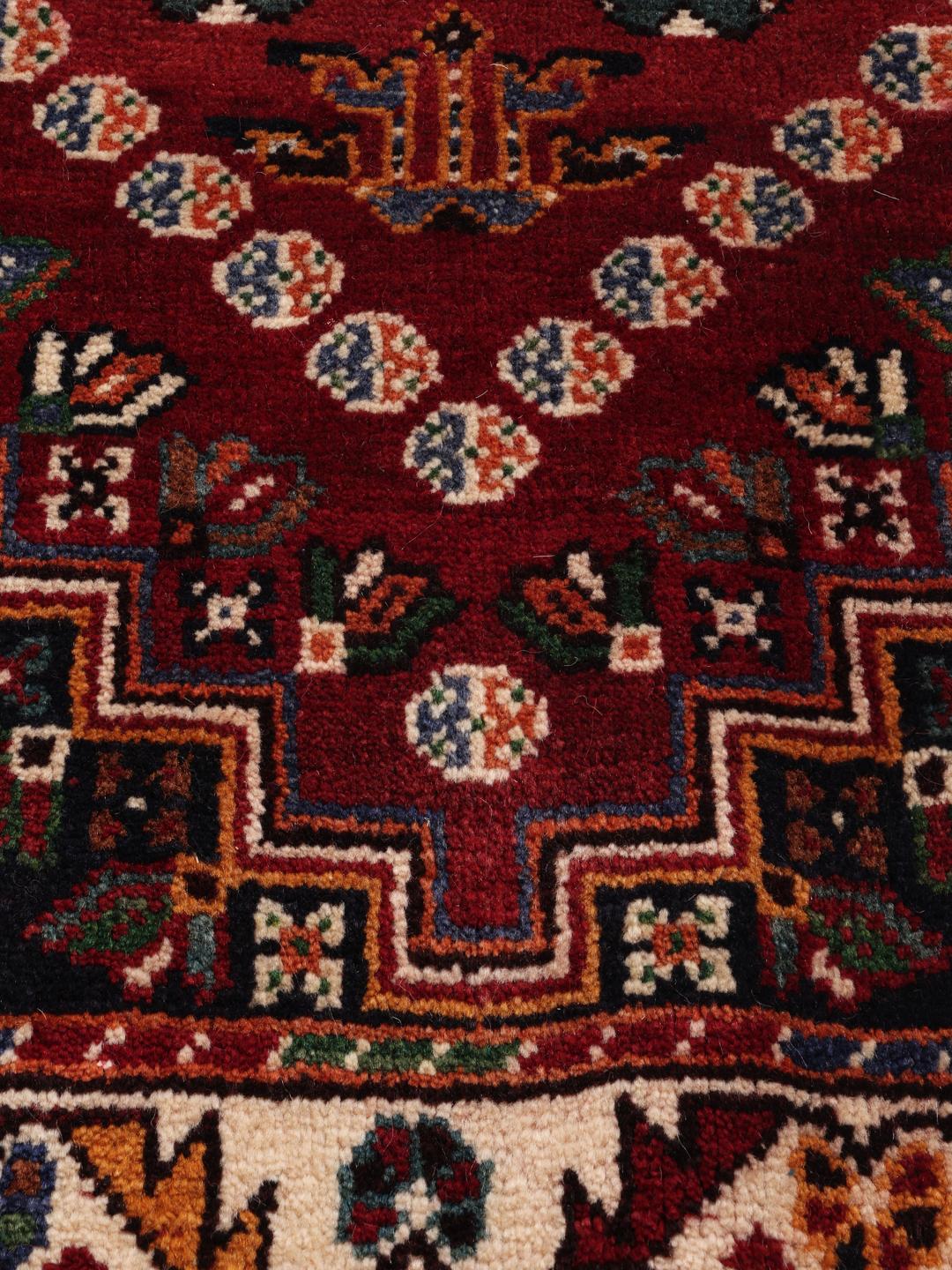
The visual language of a Qashqai rug typically includes geometric medallions, stylized animals, and floral motifs, often arranged in a symmetrical field. The borders are frequently decorated with complex patterns that frame the central design, showcasing the weaver's ability to balance space and colour. The use of deep reds and blacks is iconic, often achieved through natural dyes that have been perfected over generations.
Collectors value Qashqai rugs for their authenticity and the skill required to produce them without the aid of modern machinery. Owning one is an investment in cultural heritage, as these pieces are not merely floor coverings but artefacts of a nomadic lifestyle. They represent a bridge between the past and the present, offering a timeless aesthetic that continues to be celebrated in homes around the world.