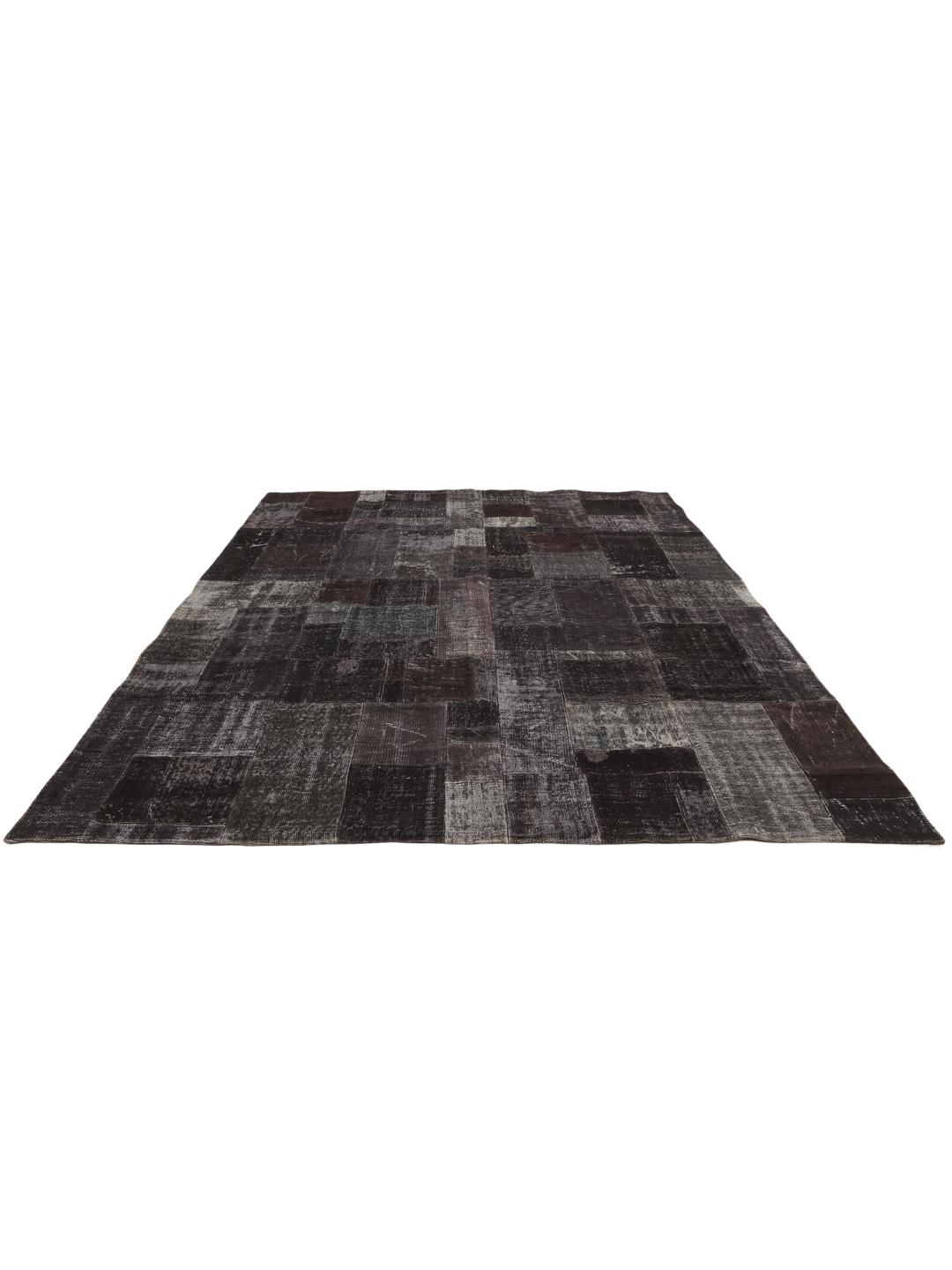
Patchwork rugs represent a fascinating evolution in the long history of textile arts in Turkey. While the country is world-renowned for its traditional, intricate hand-knotted carpets, the patchwork tradition emerged as a way to honour these legacy pieces. By carefully selecting fragments from older, well-loved rugs that may have had damaged borders or sections, artisans provide a new, functional life to the Wool, ensuring that the legacy of the original weave continues.
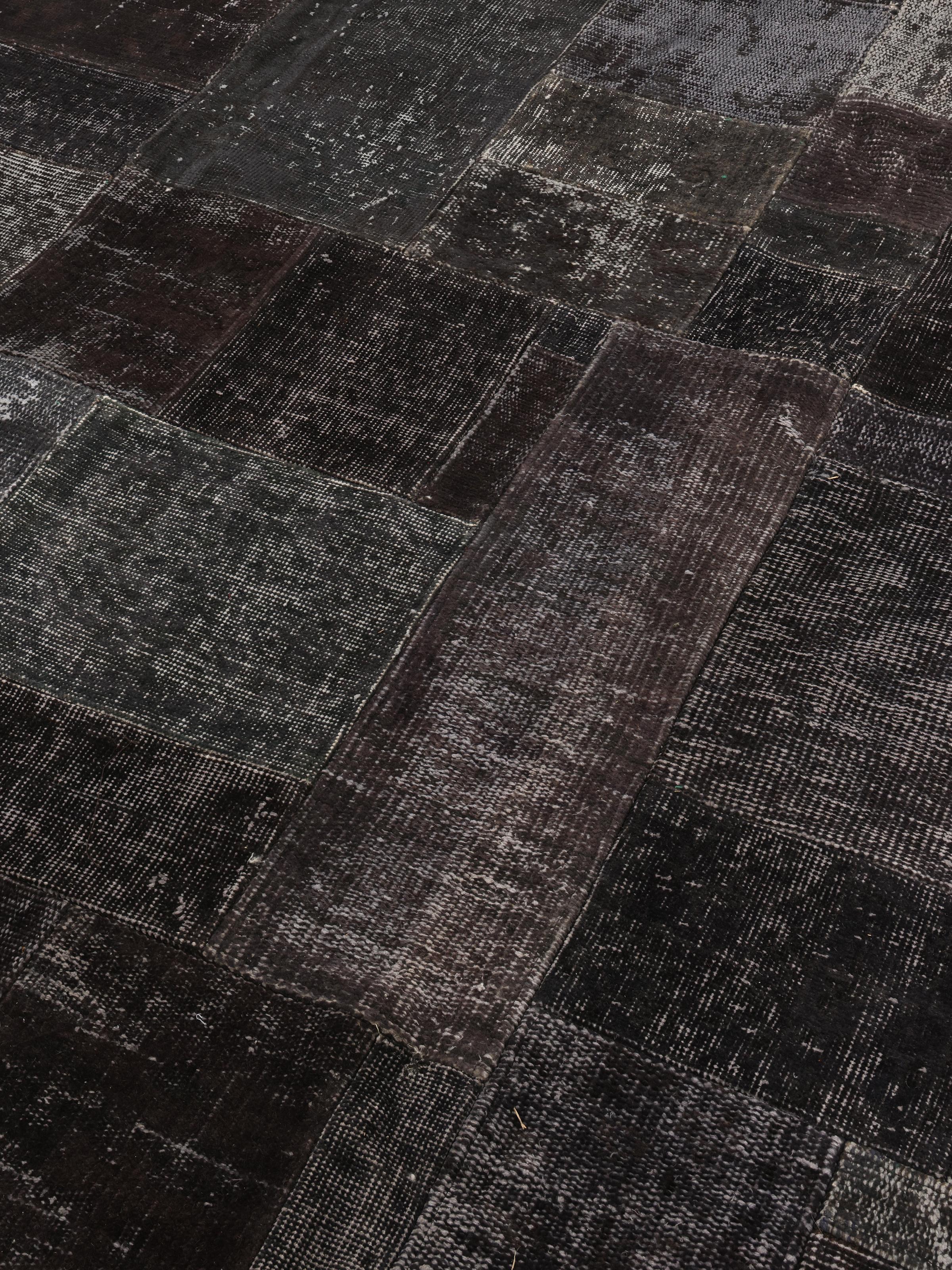
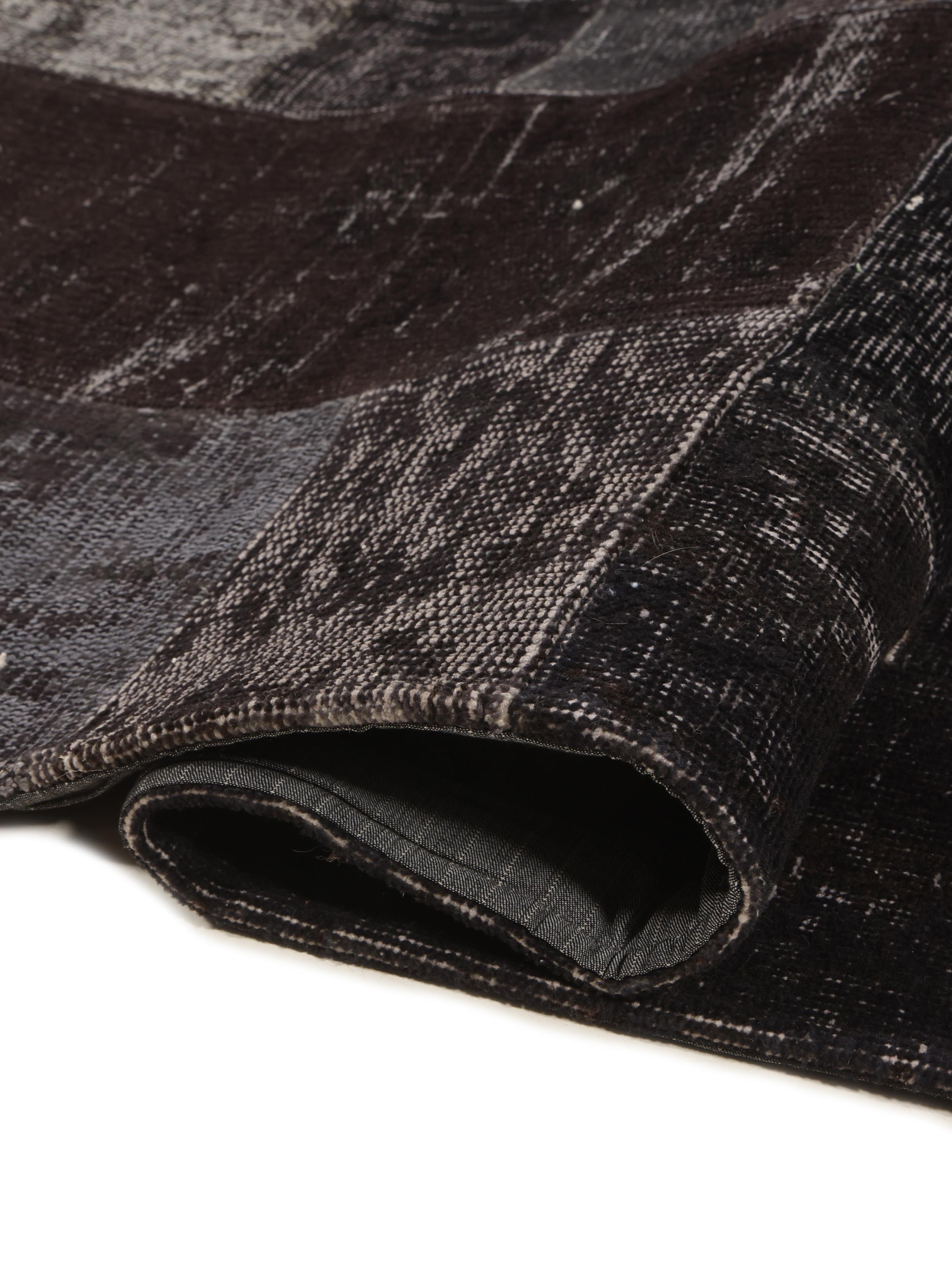
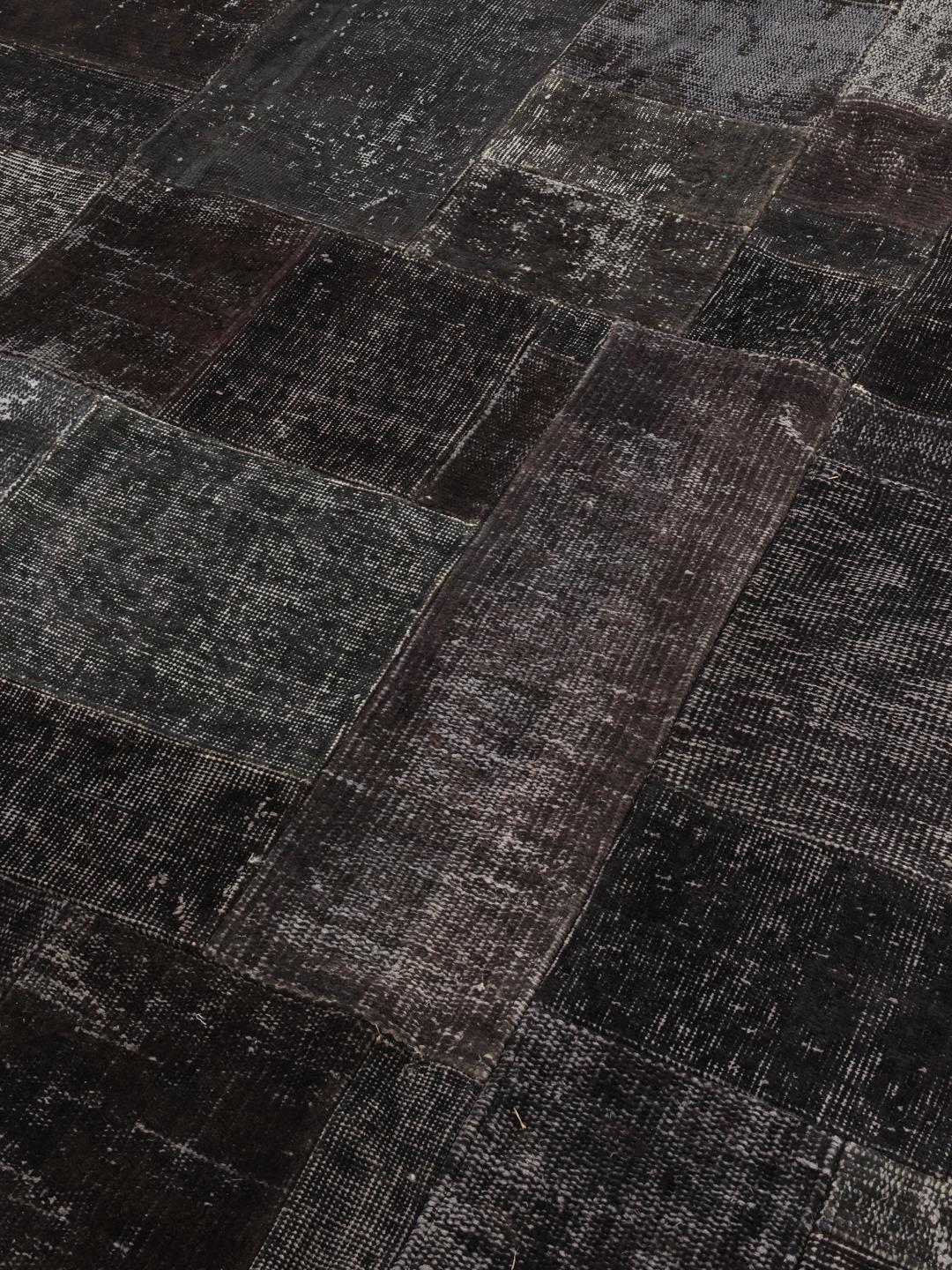
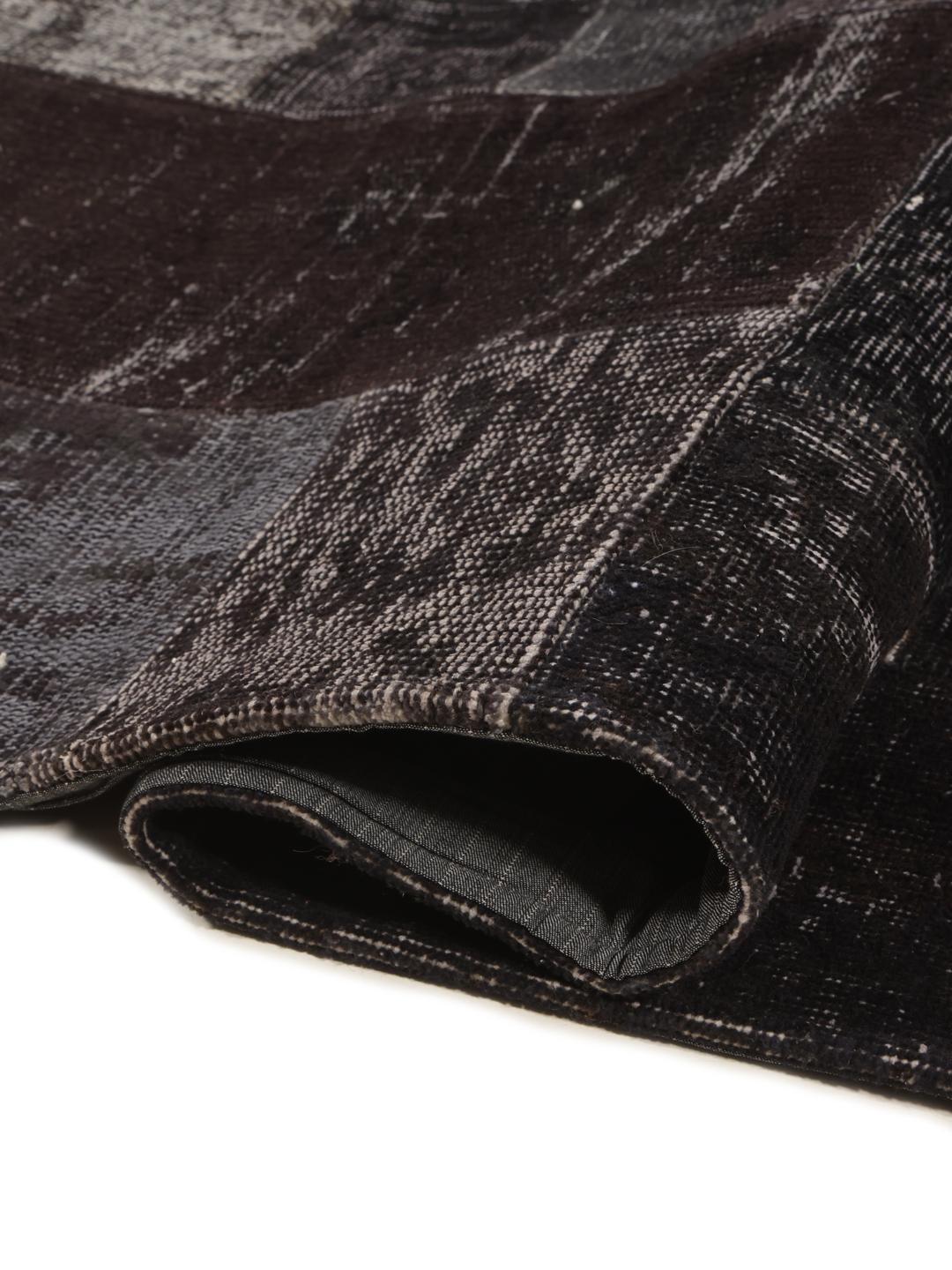
The term patchwork refers to the intentional assembly of these varied sections, which requires a deep understanding of rug construction and design composition. In this tradition, the focus is on achieving a balance of colour and texture. Even within a single piece, the viewer can often see the distinct knotting styles and varying pile heights that indicate the diverse origins of the individual fragments, creating a mosaic of textile history.
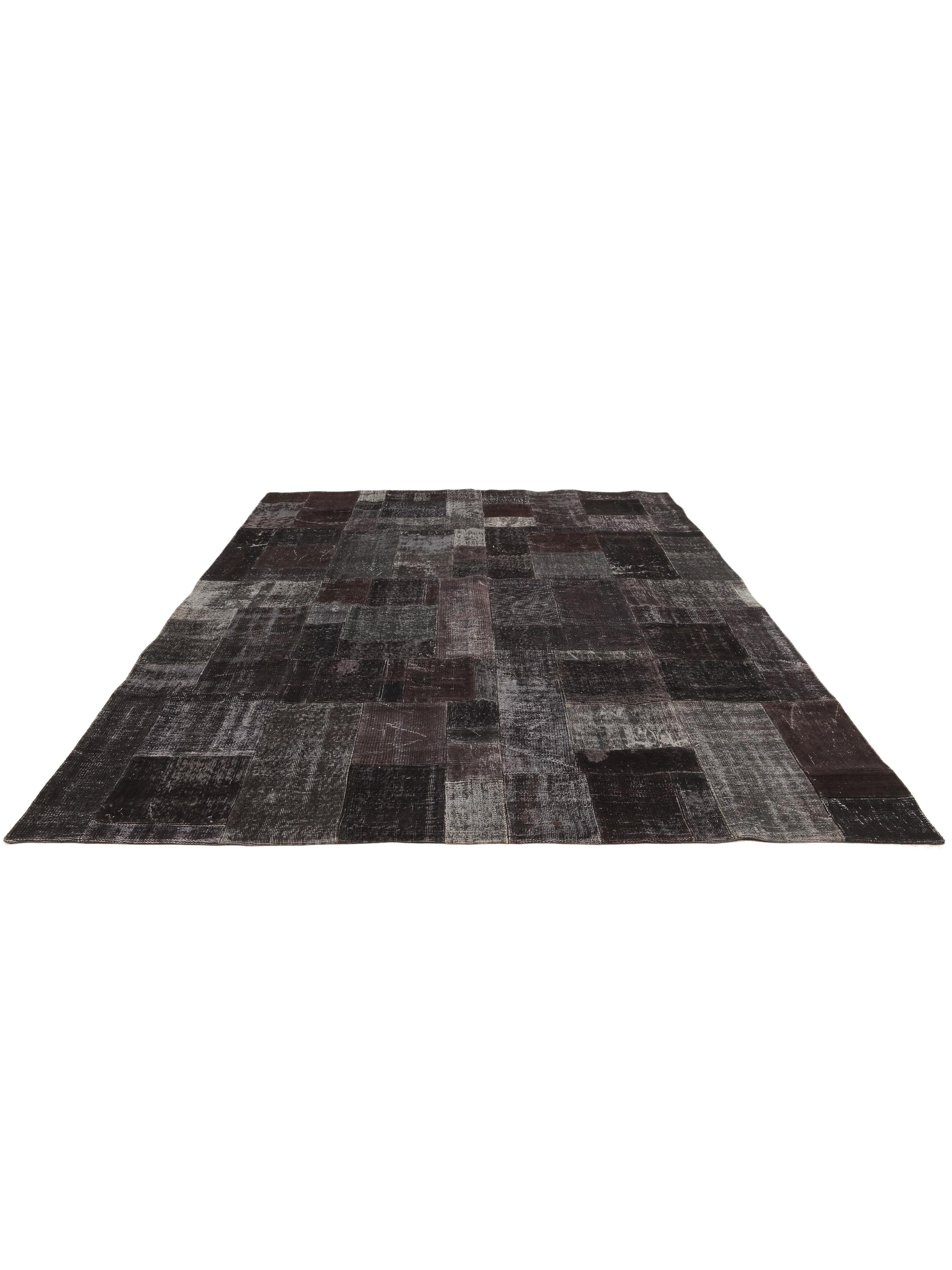
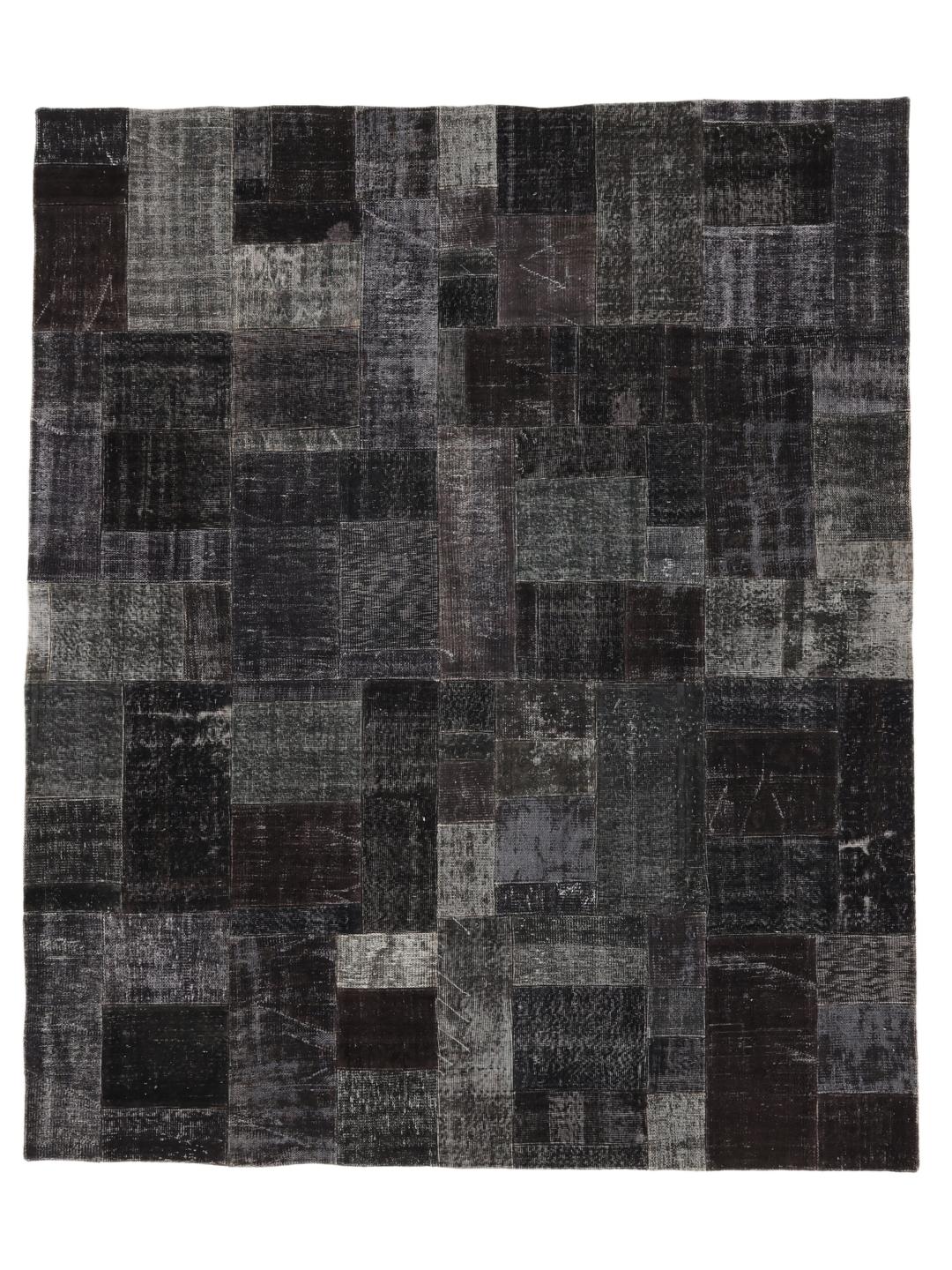
Visually, these rugs often lean into a more restrained palette, though they can also be vibrant. In this specific piece, the use of black and dark-grey tones emphasises the texture and the subtle differences in material age. The design relies on the geometric interplay of the patches, creating a modern aesthetic that feels very much at home in contemporary interiors while still maintaining the soul of a traditional rug.
Collecting a patchwork rug is an act of preserving history. Because they are constructed from genuine, hand-knotted vintage fragments, they carry the weight of decades of use and care. Owning one is an invitation to house a piece of cultural heritage that has been transformed by modern design, making it a perfect choice for those who value both the story of their home furnishings and the lasting quality of natural materials.