Patchwork rugs represent a fascinating evolution in the history of Middle Eastern textile art. While traditional hand-knotted rugs are typically woven as a single, continuous piece, the patchwork tradition emerged as a way to celebrate and repurpose the finest fragments of older, worn rugs. This creative approach allows for the preservation of historical patterns and designs that might otherwise be lost, giving them a second life in a contemporary format.
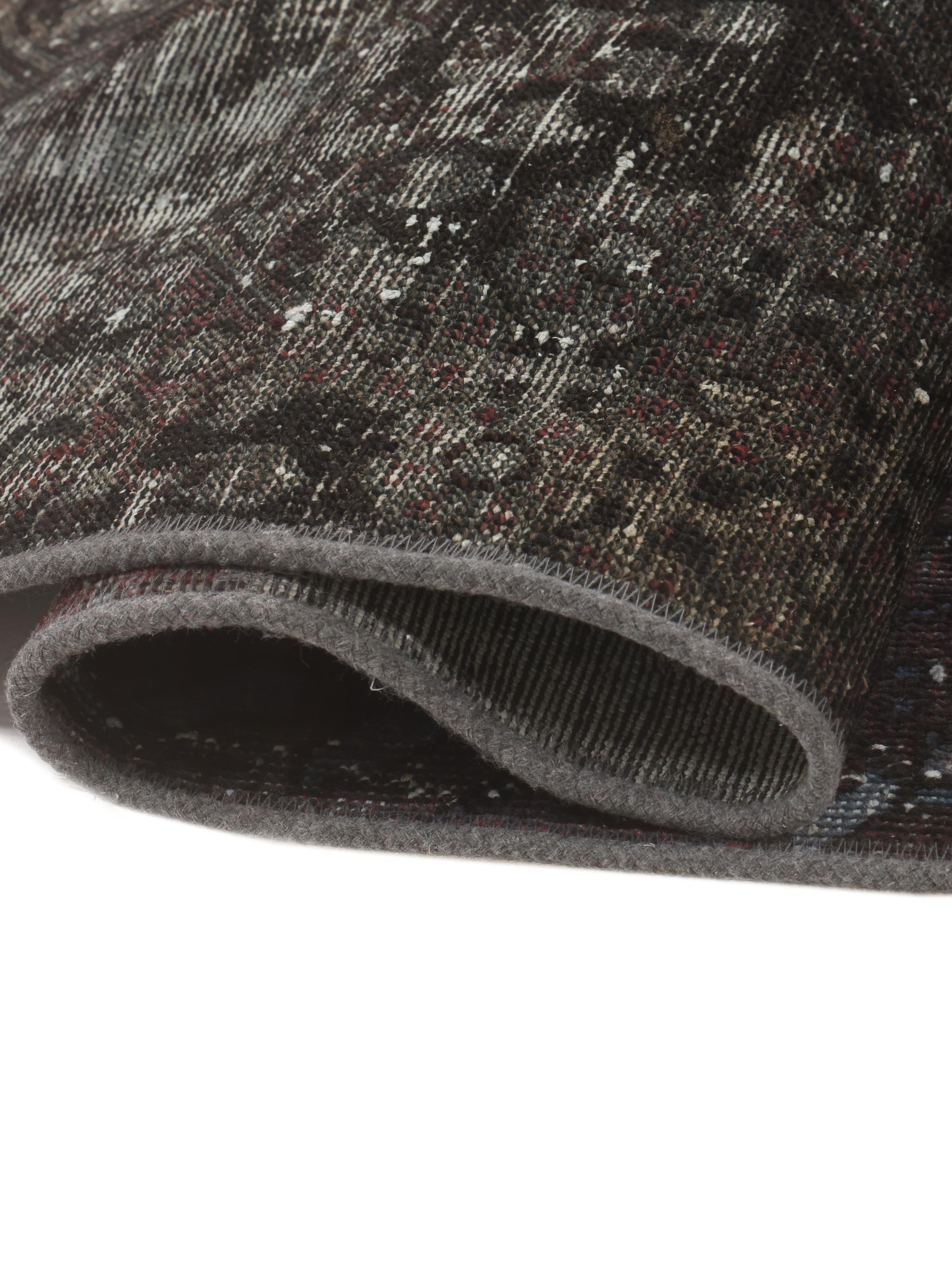
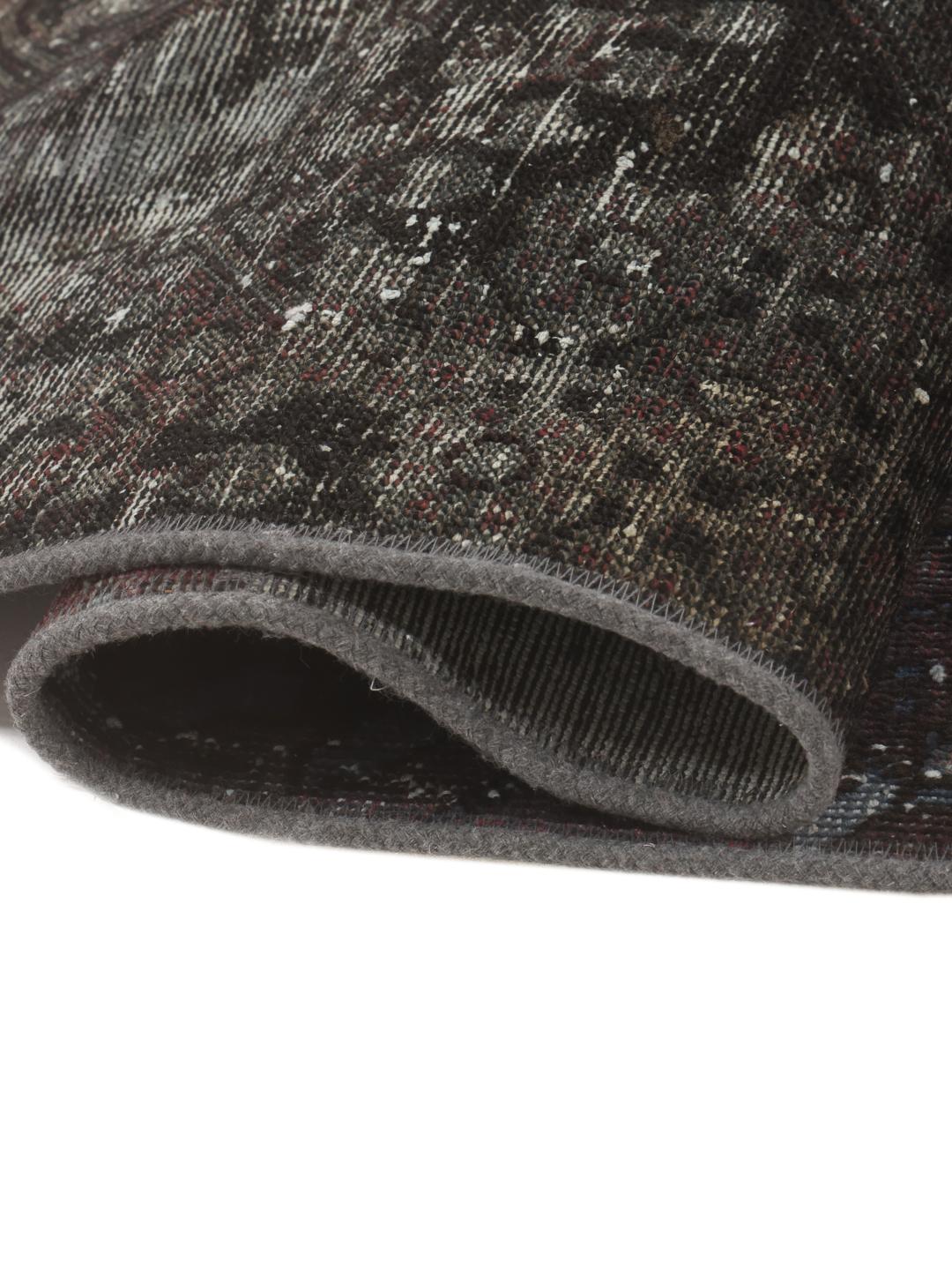
The technique involves the careful selection of high-quality wool segments, which are then expertly joined to create a new, cohesive design. This process requires a deep understanding of colour theory and pattern placement, as the artisan must ensure that the transition between different sections feels intentional and balanced. It is a modern interpretation of ancient craft, bridging the gap between historical weaving methods and modern interior design needs.
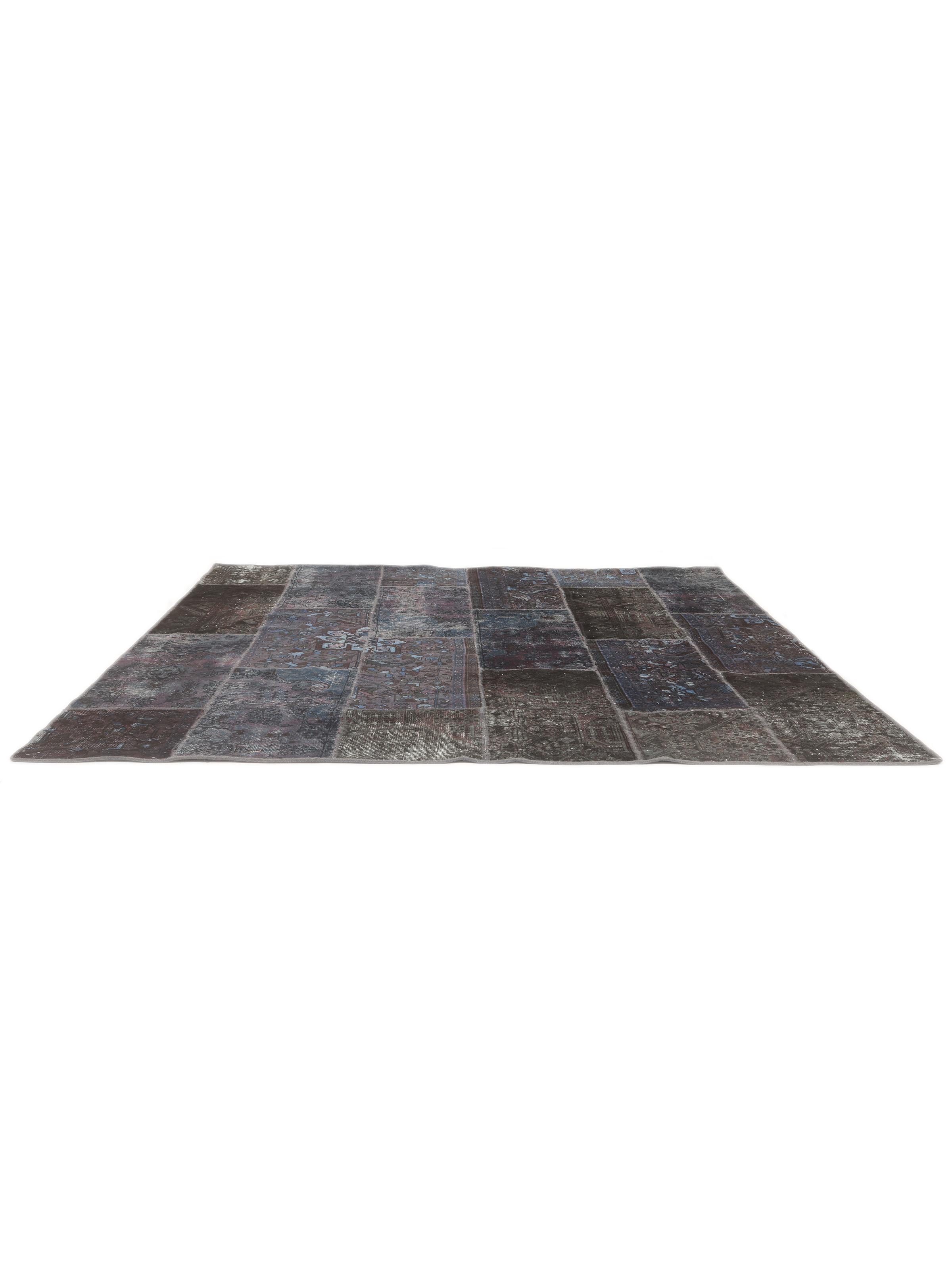
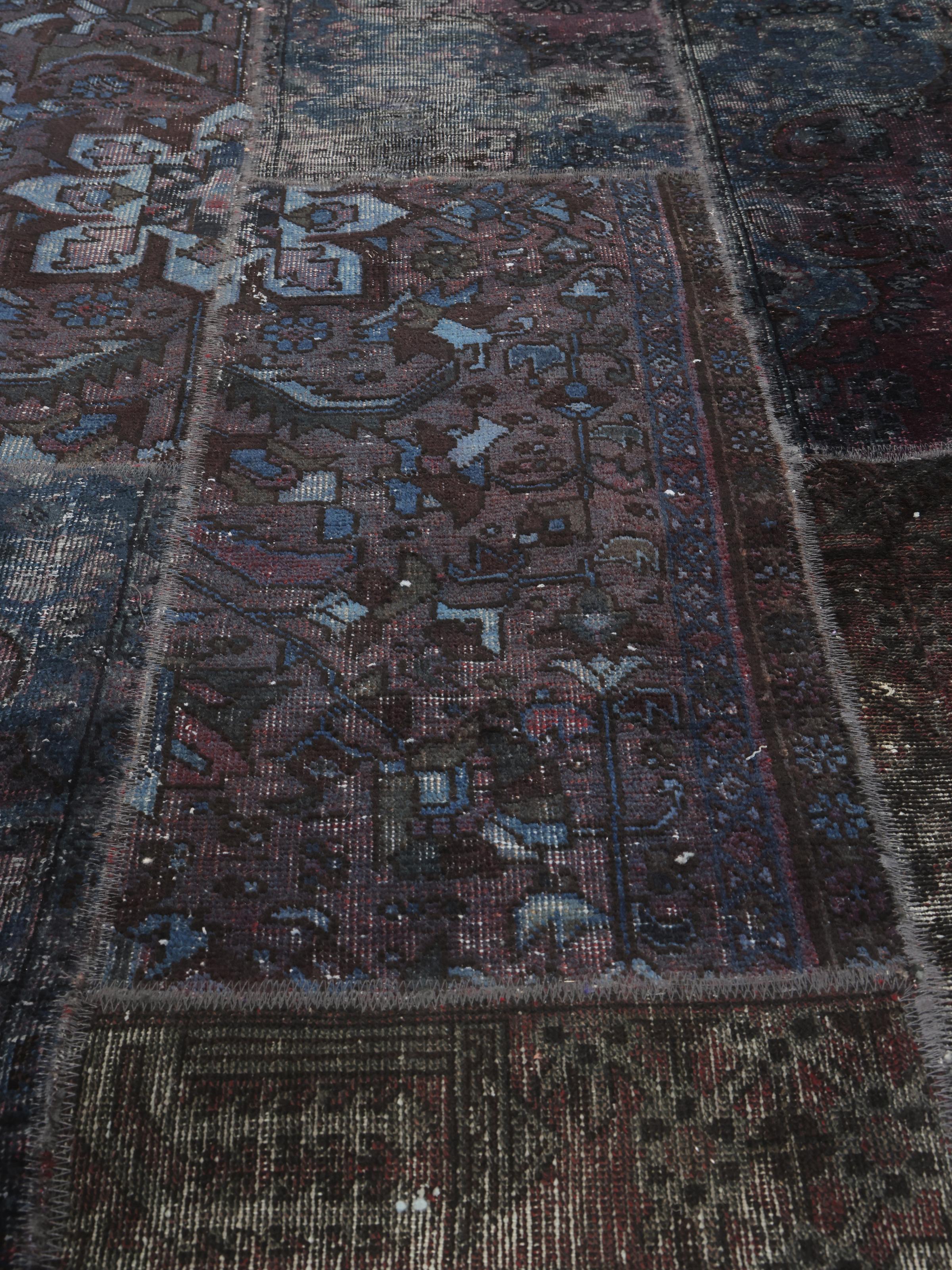
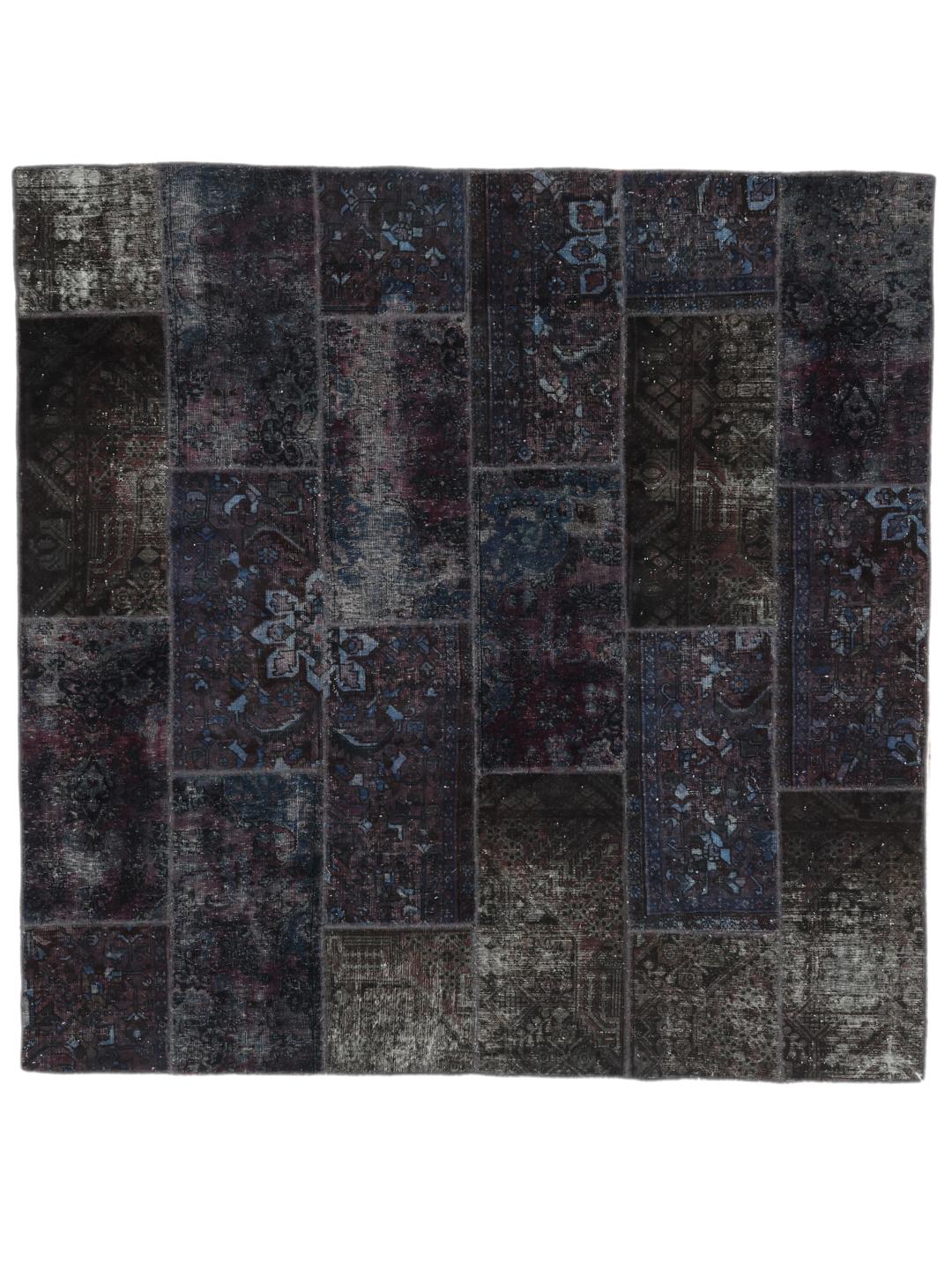
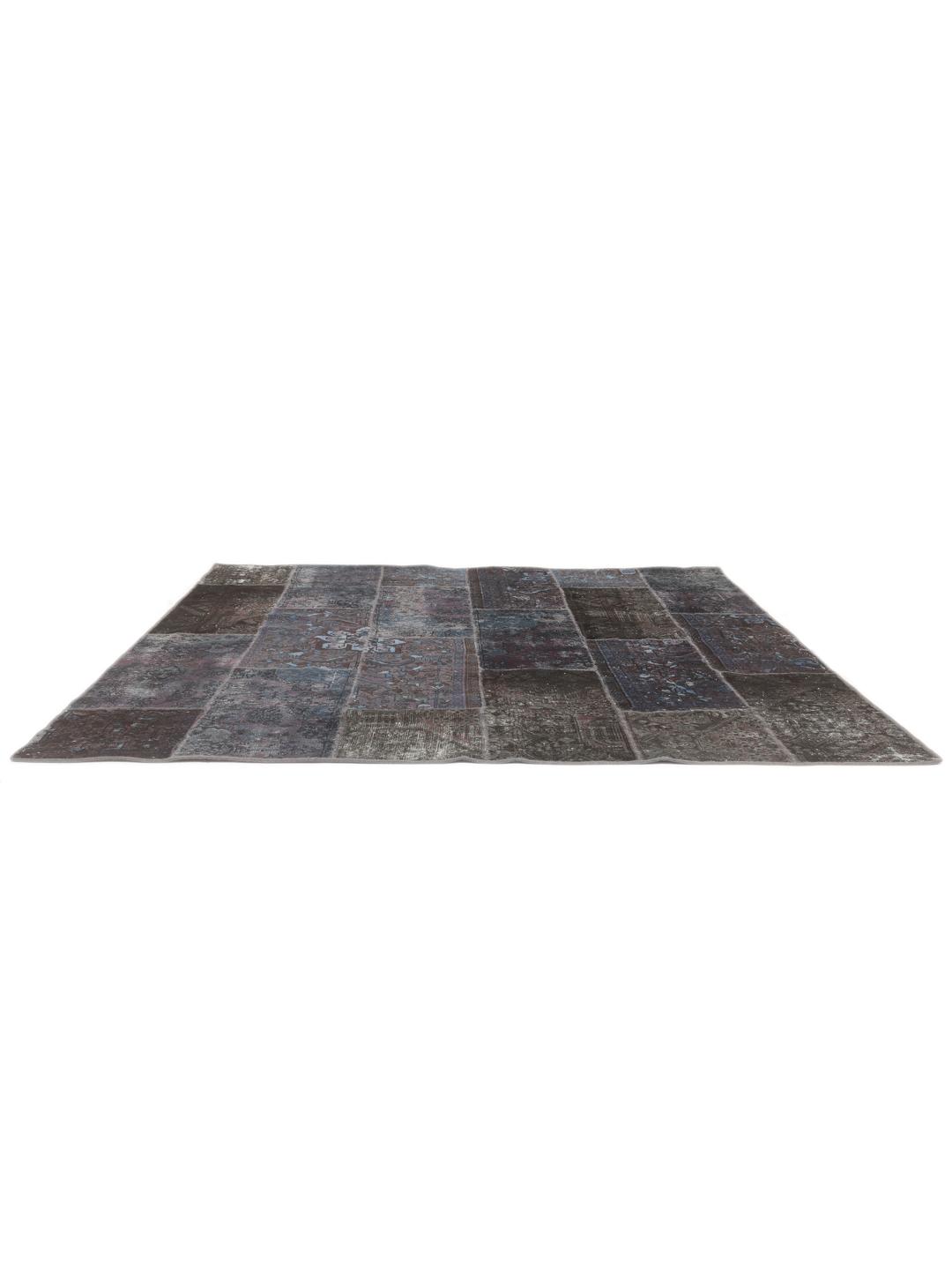
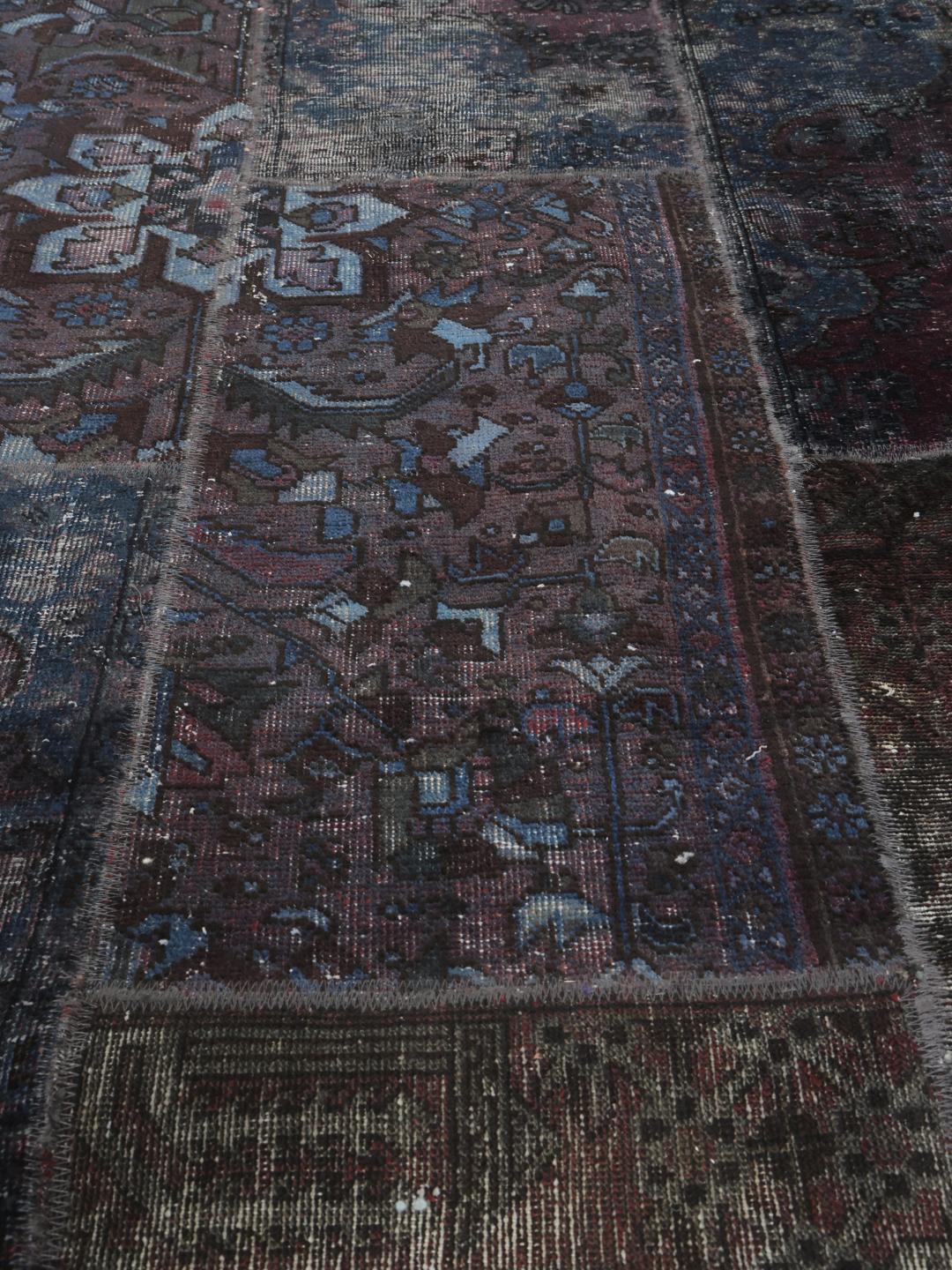
The visual language of these rugs is defined by the rich diversity of their components. Each square or rectangular section may feature distinct motifs, borders, or colour palettes that reflect different weaving traditions. In this particular piece, the deep, dark shades create an atmospheric, moody aesthetic that is both timeless and bold. The juxtaposition of these varied elements creates a rhythmic, almost architectural pattern that draws the eye and invites closer inspection.
Owning a patchwork rug is an opportunity to possess a piece of cultural history that has been thoughtfully reimagined. It is highly valued by collectors and design enthusiasts alike, not only for its unique visual appeal but also for the skill required to assemble it. By choosing this rug, you are supporting a tradition that values sustainability, artistry, and the enduring beauty of hand-knotted textiles.