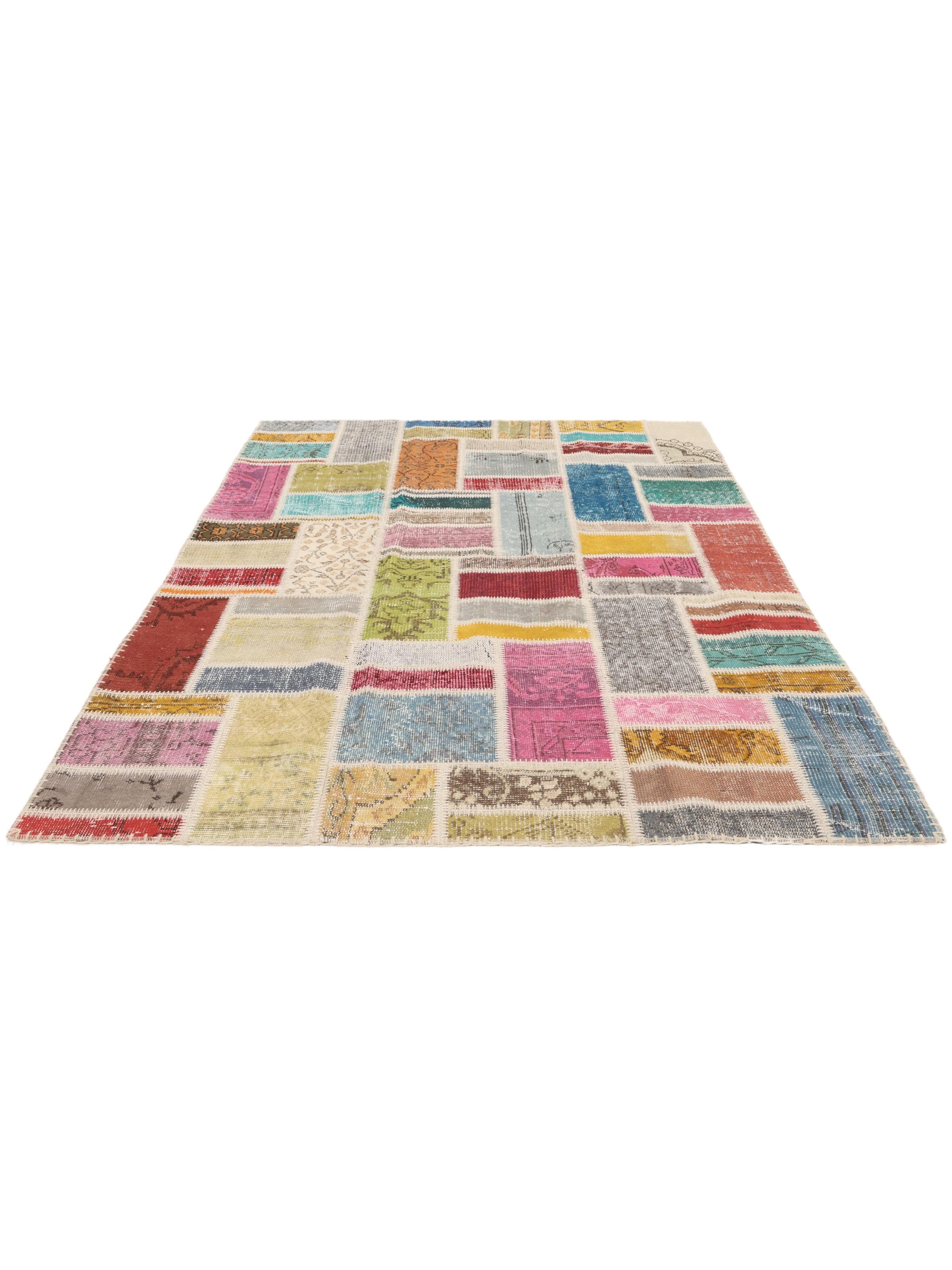
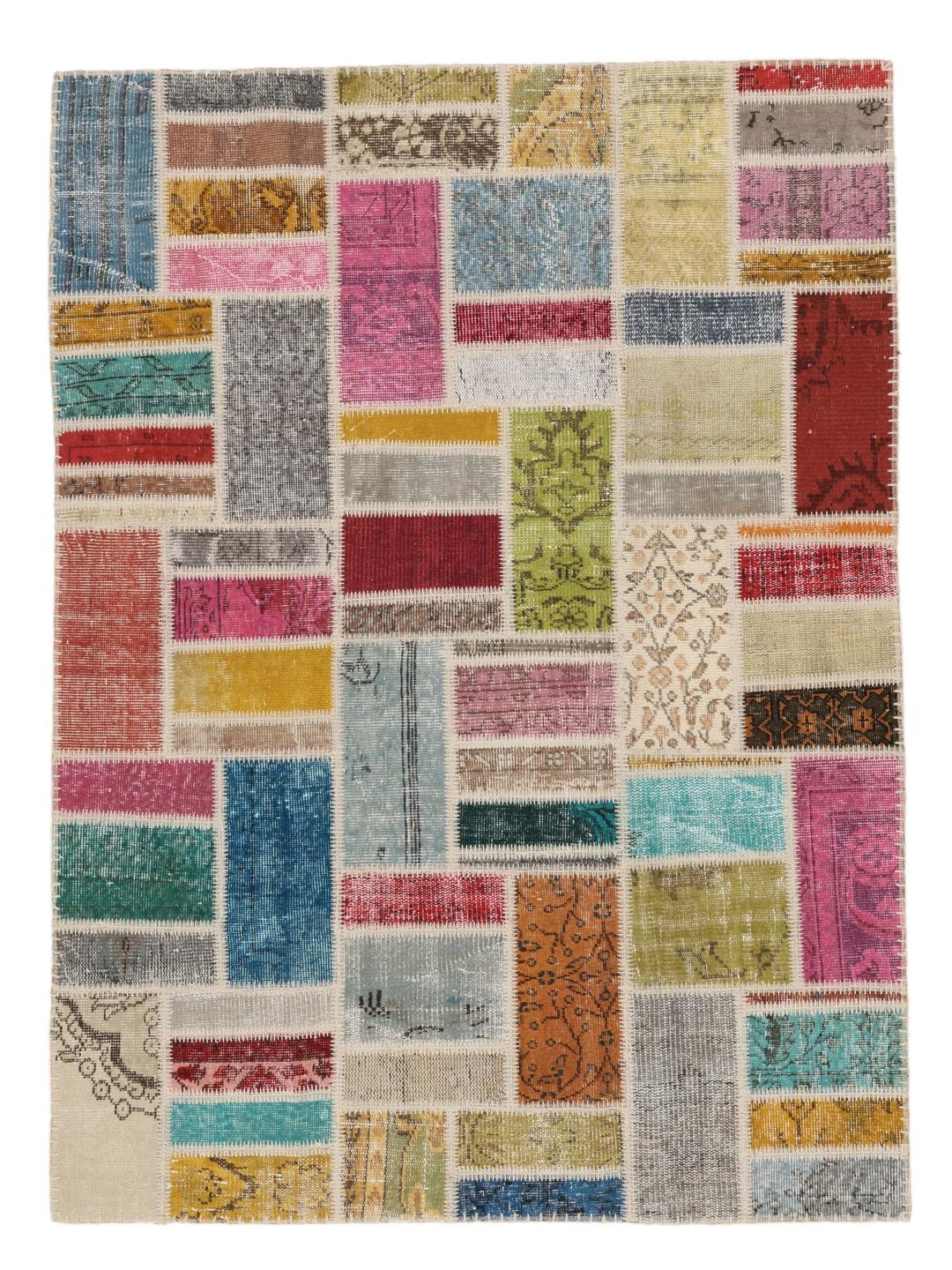
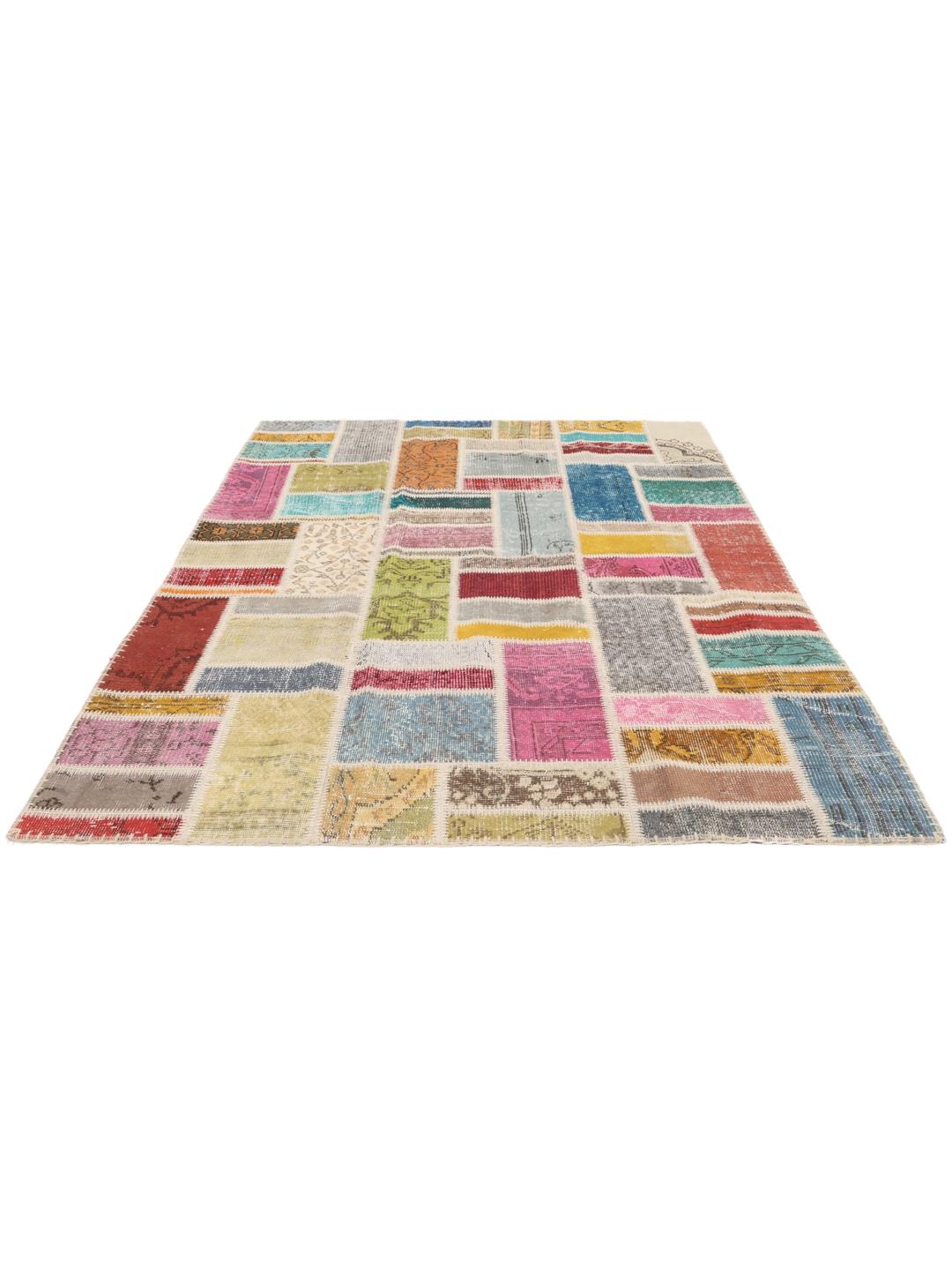
Patchwork rugs represent a fascinating evolution in the history of textile art, particularly within the Middle Eastern craft tradition. Historically, this style emerged as a resourceful way to repurpose older, beautiful rugs that had sustained localised wear. By selecting the best-preserved sections and joining them into a new composition, artisans created a way to honour the legacy of the original weaving while giving it a completely new life.
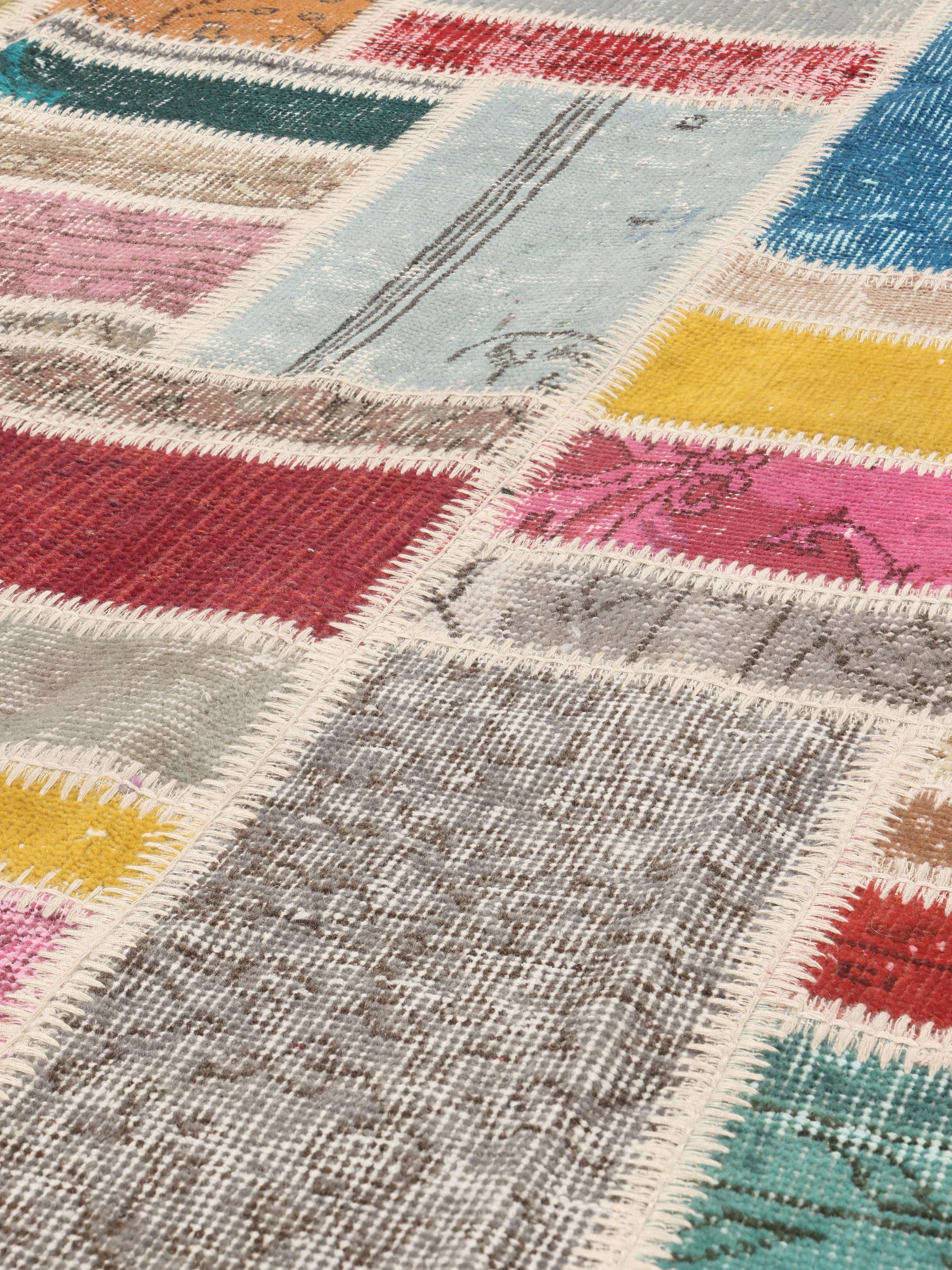
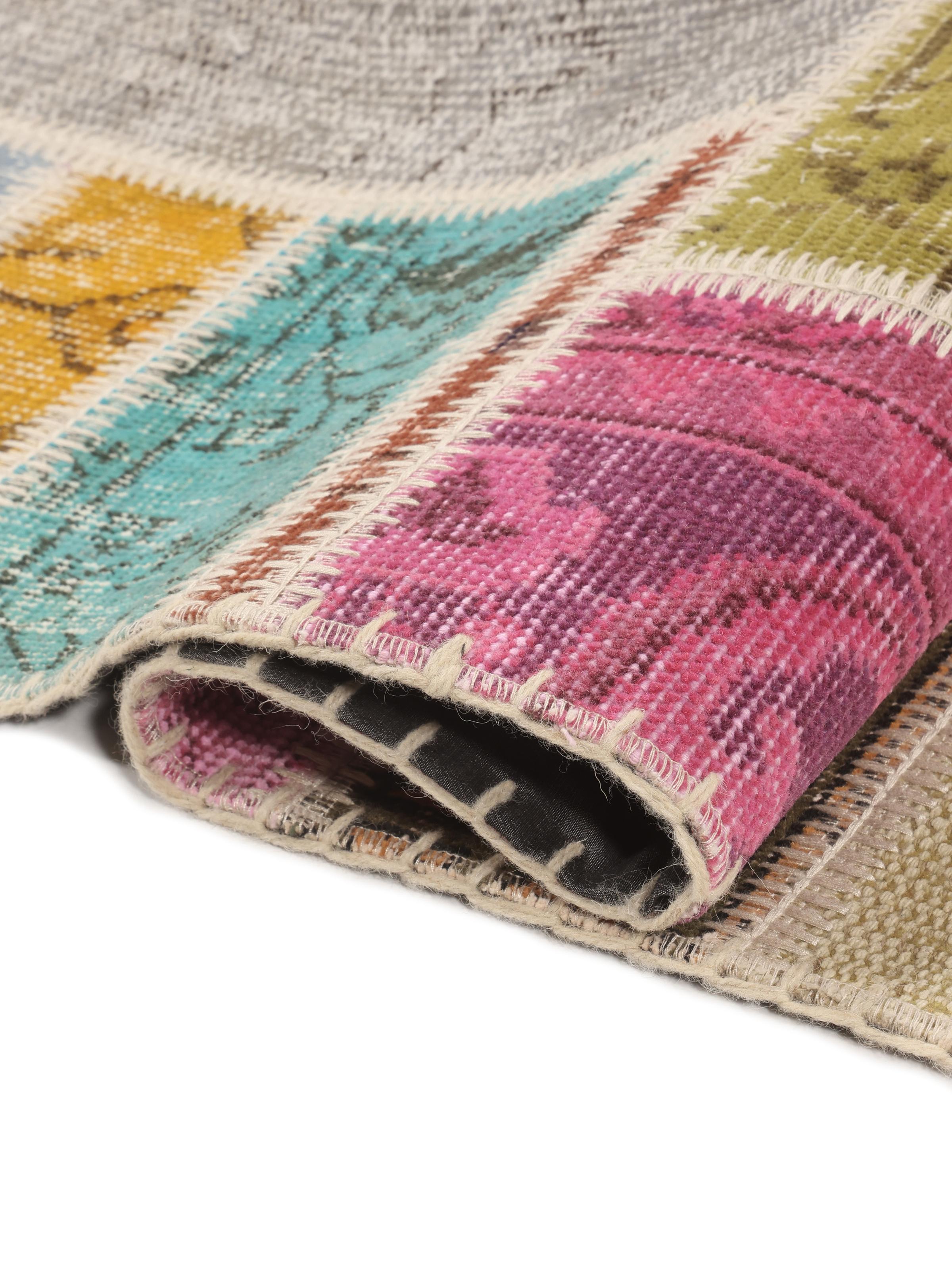
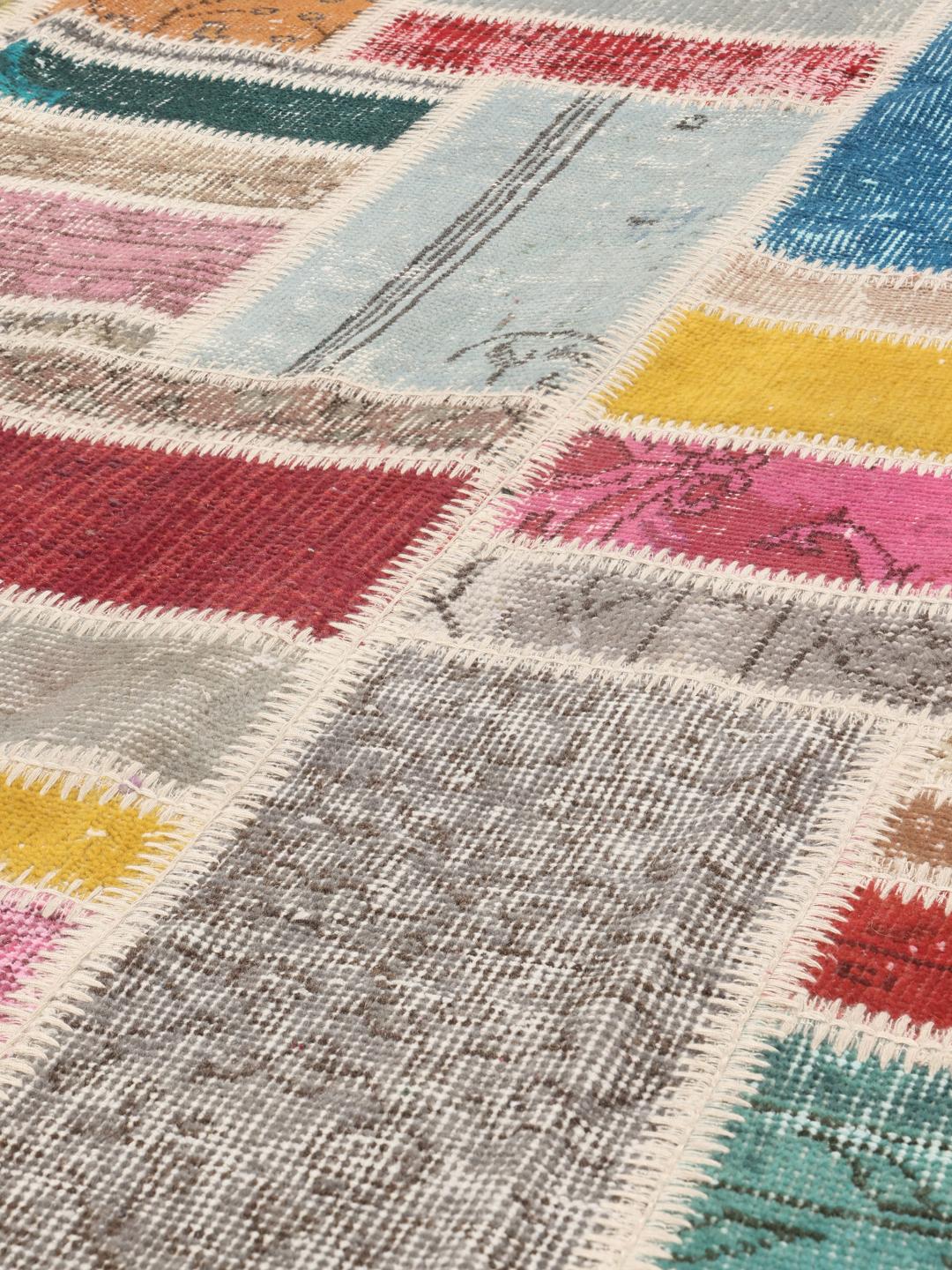
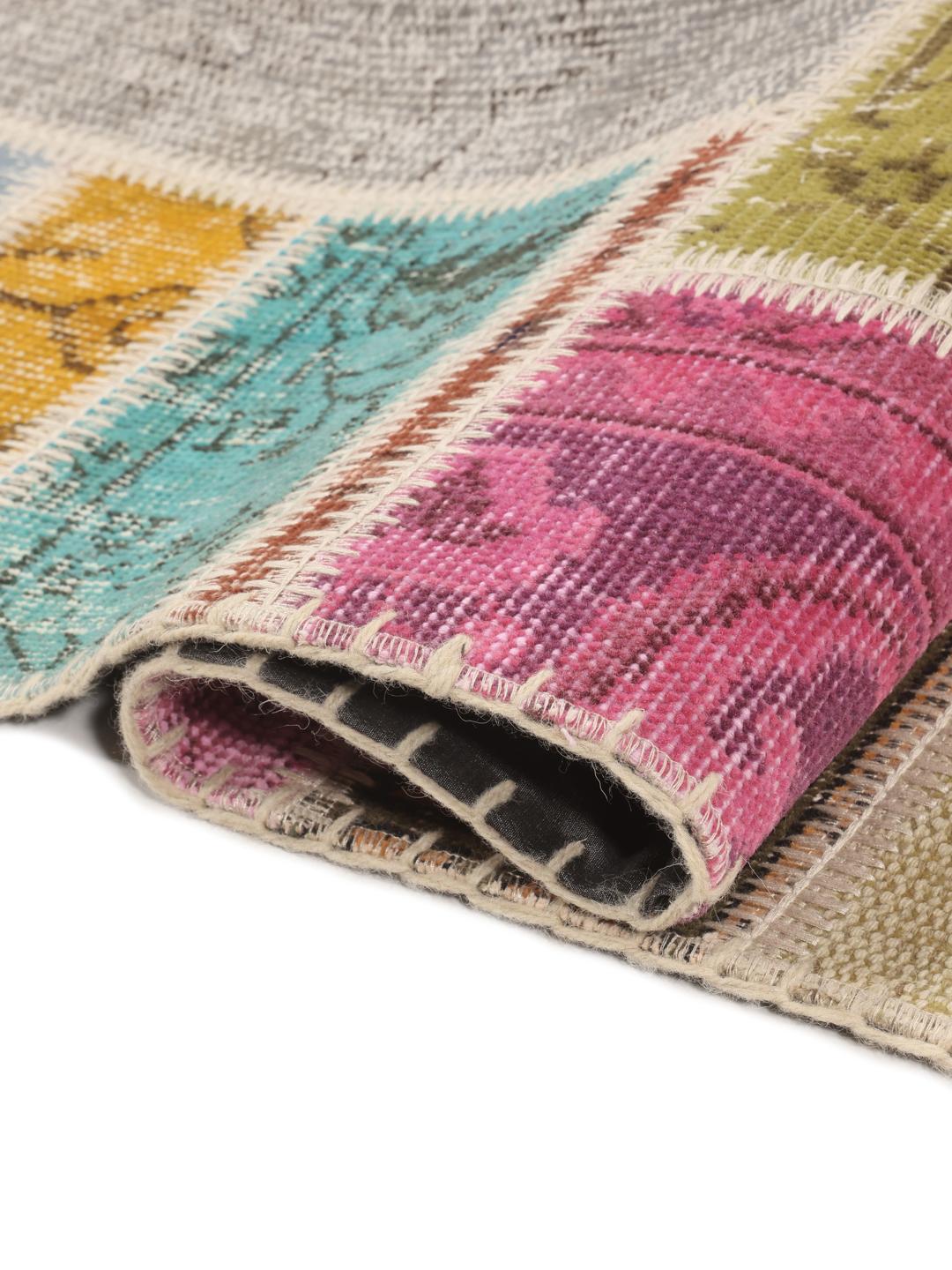
The terminology surrounding this craft centres on the assembly process, where the foundation and pile of various pieces are integrated. In this rug, the use of wool provides a natural resilience and a rich, deep colour saturation that synthetic materials simply cannot replicate. The skill lies in the balancing of different textures and patterns, ensuring that the transition between patches is smooth and the overall structure remains stable and flexible.
The visual language of this piece is defined by its eclectic mix of motifs, which draw from a wide range of regional styles. You may notice hints of traditional floral or geometric patterns embedded within the patches, all brought together in a modern, abstract arrangement. This layering of historical designs with contemporary layout makes the rug a bridge between the past and the present, offering a depth of character that feels both familiar and refreshingly new.
Owning a patchwork rug is a way of participating in a long-standing tradition of sustainability and artistic reinterpretation. It is highly valued by collectors and design enthusiasts alike because it showcases the ability to transform fragments into a unified, powerful statement. This rug is a testament to the skill of the artisans who curated it, representing a unique intersection of heritage, creativity, and lasting quality.