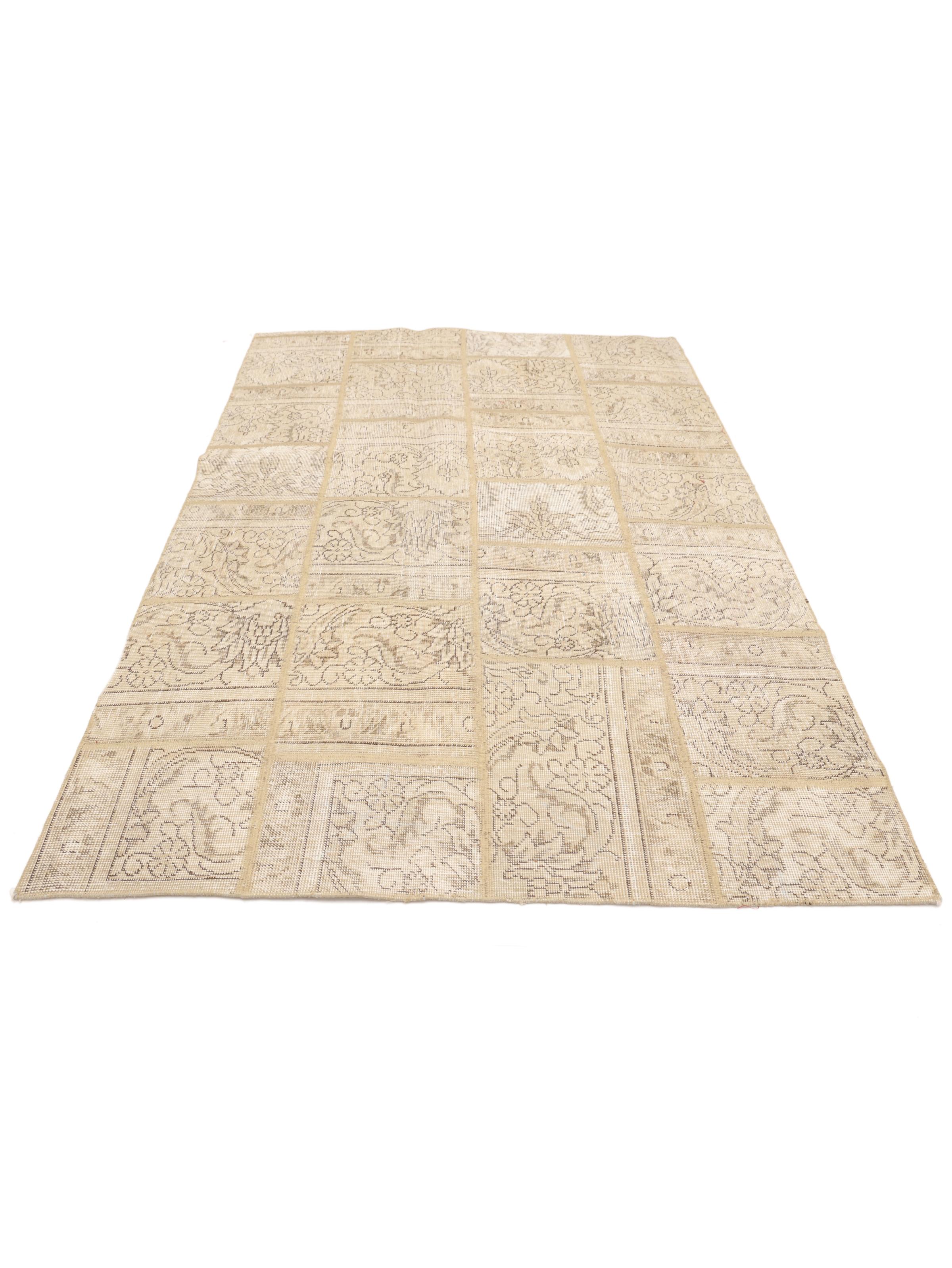
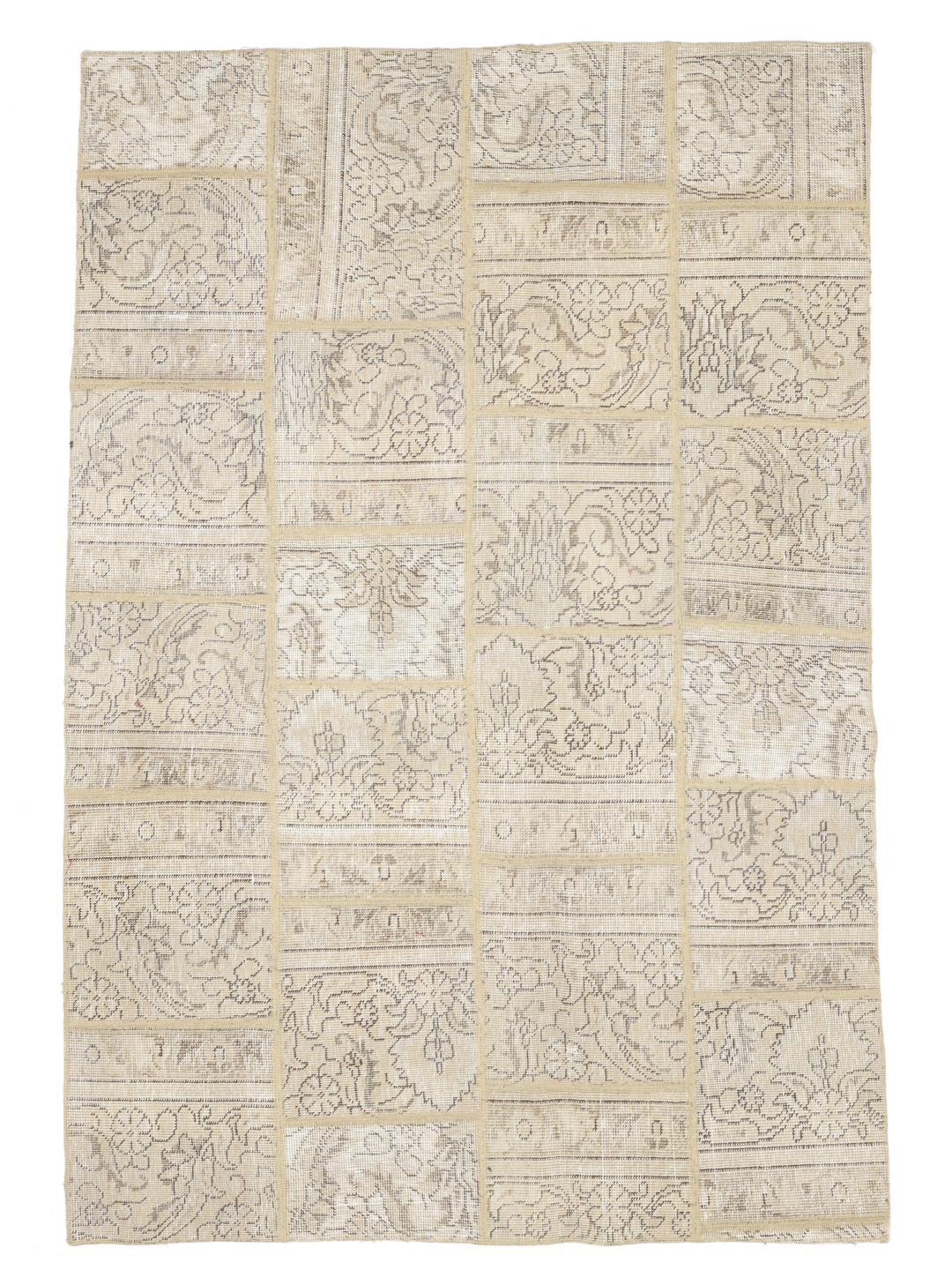
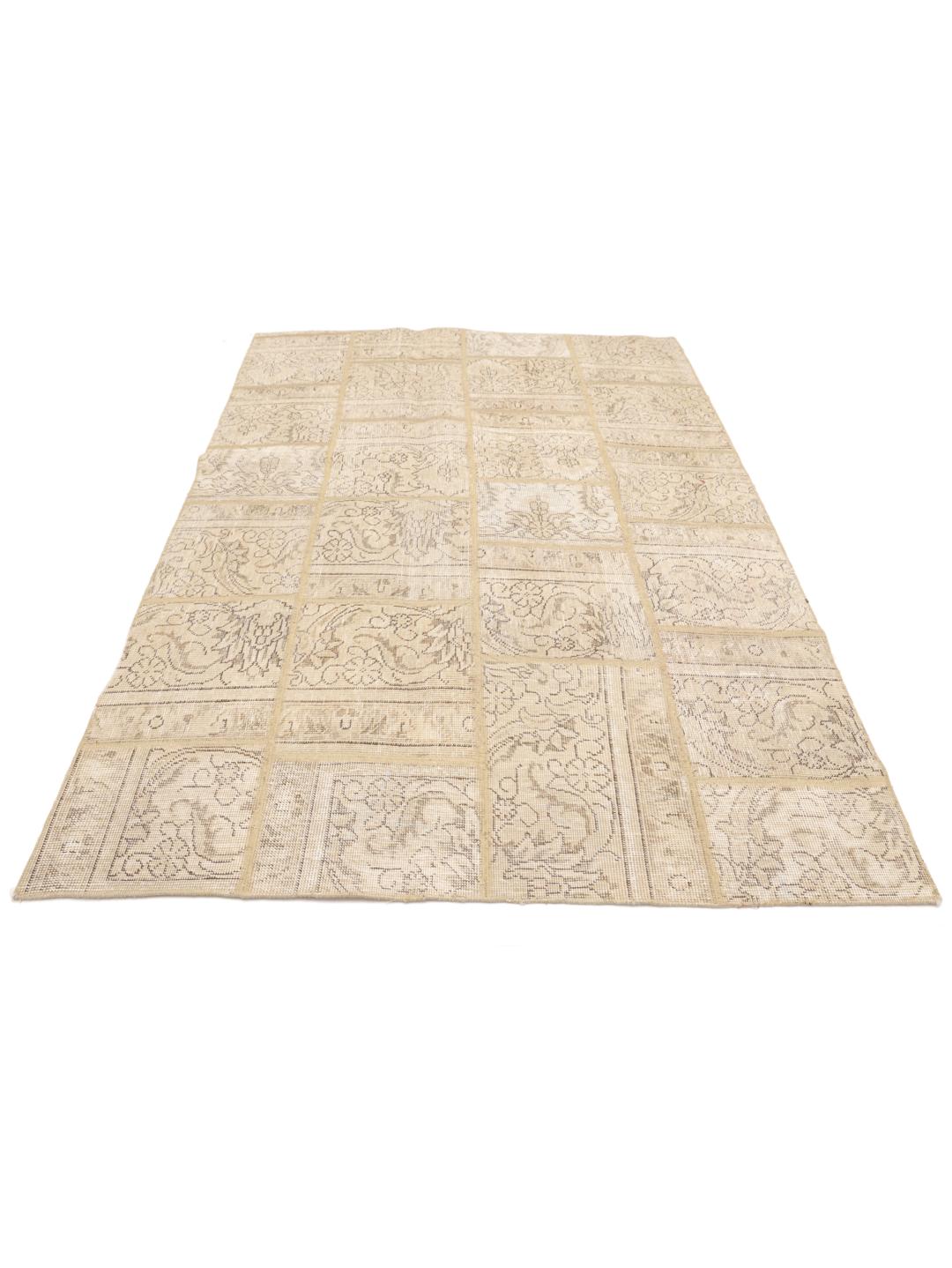
The tradition of the patchwork rug is a modern evolution of long-standing Middle Eastern weaving practices. Historically, carpets were cherished family heirlooms, repaired and maintained for generations. When a rug reached a point where it could no longer be fully restored, the idea of reclaiming the still-intact sections emerged, allowing the soul of the craft to endure in a new form.
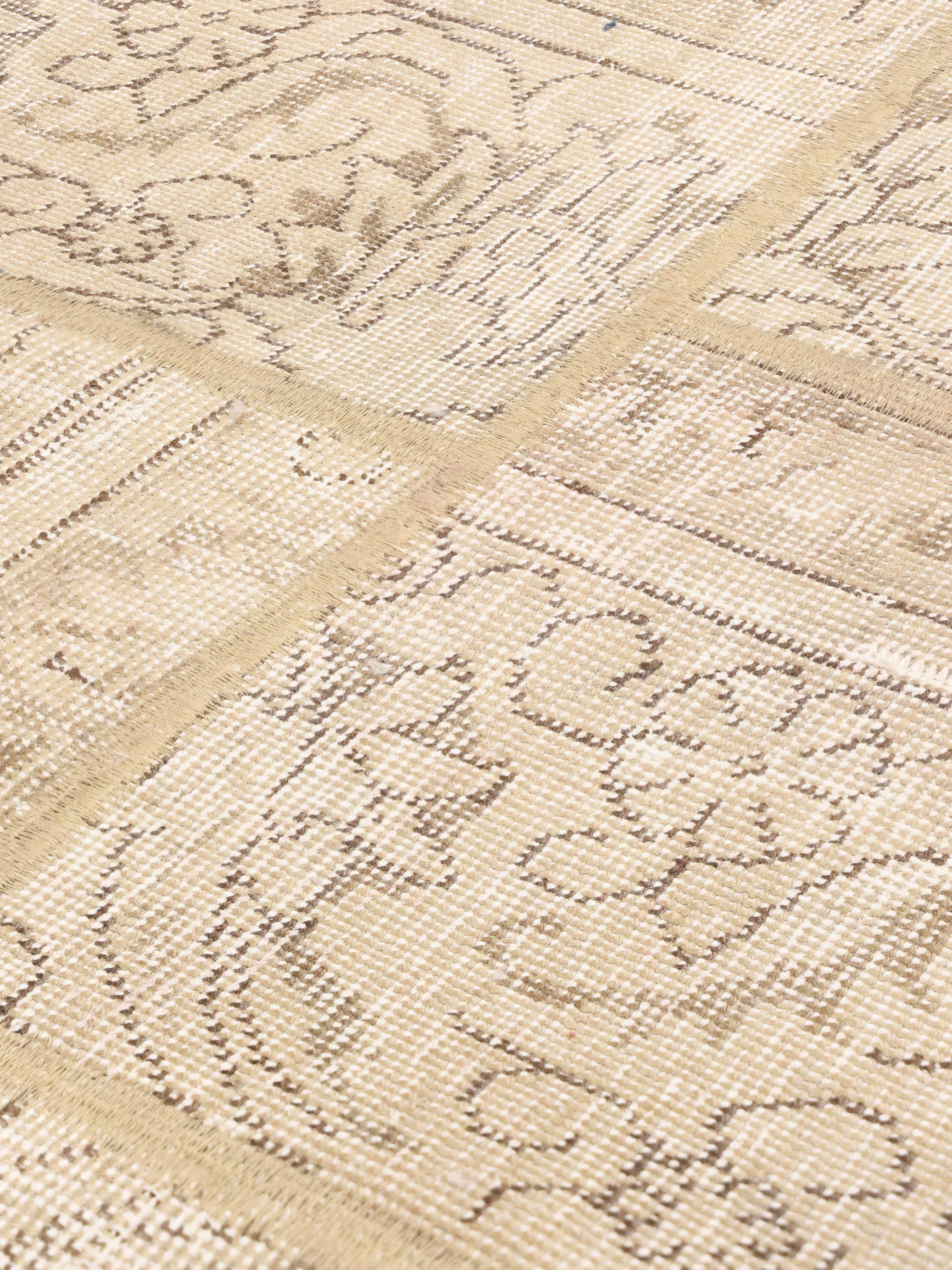
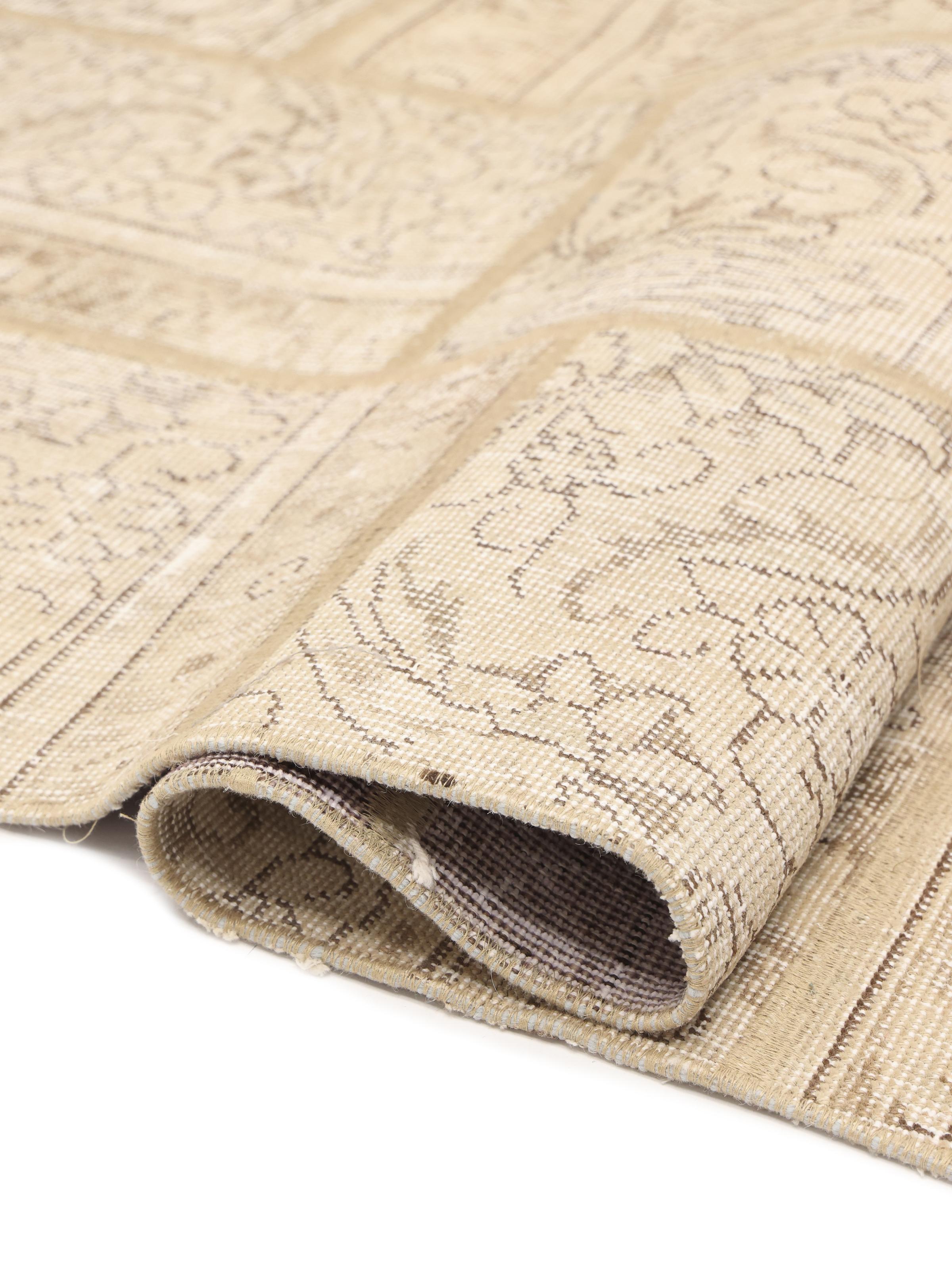
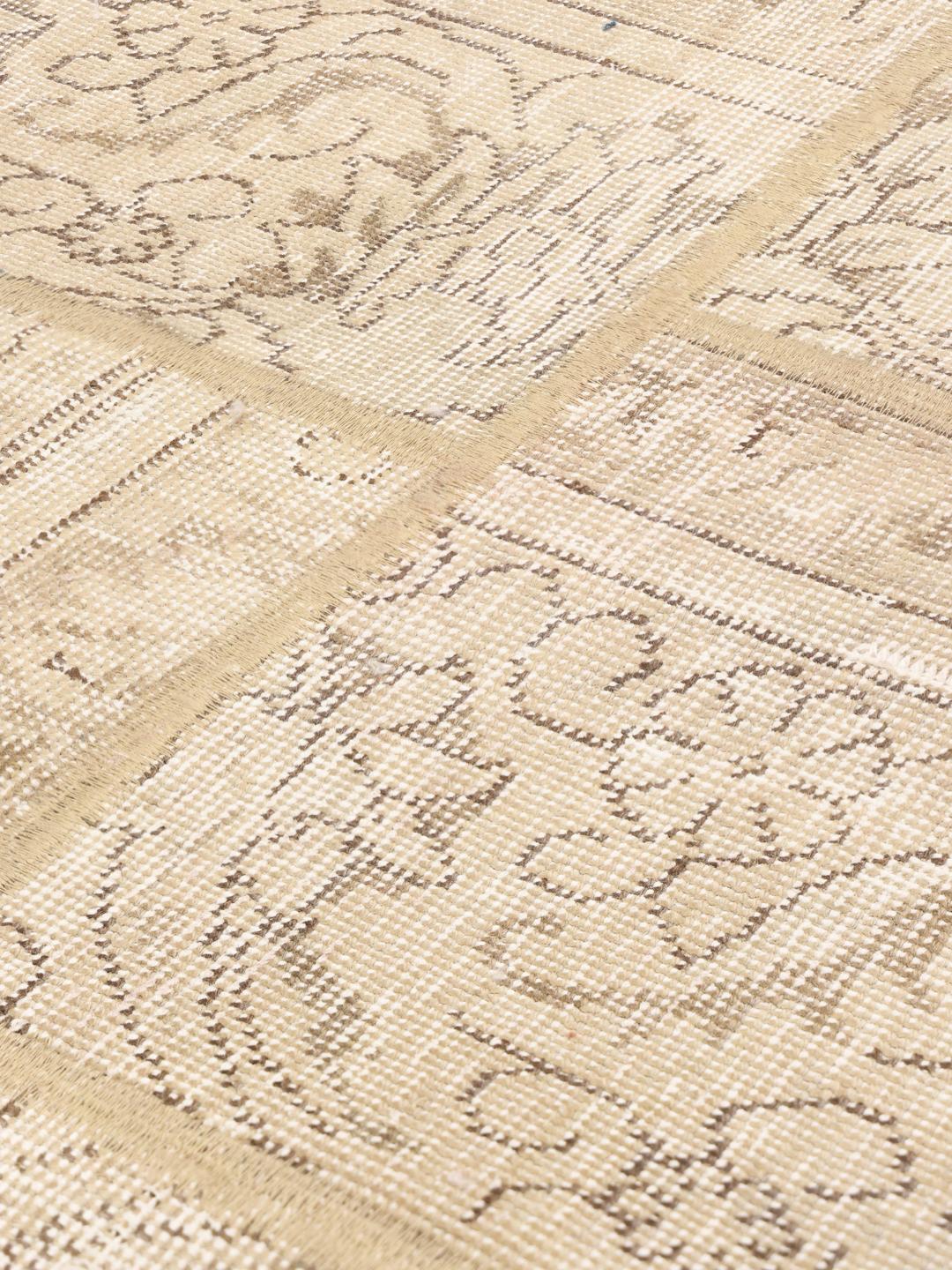
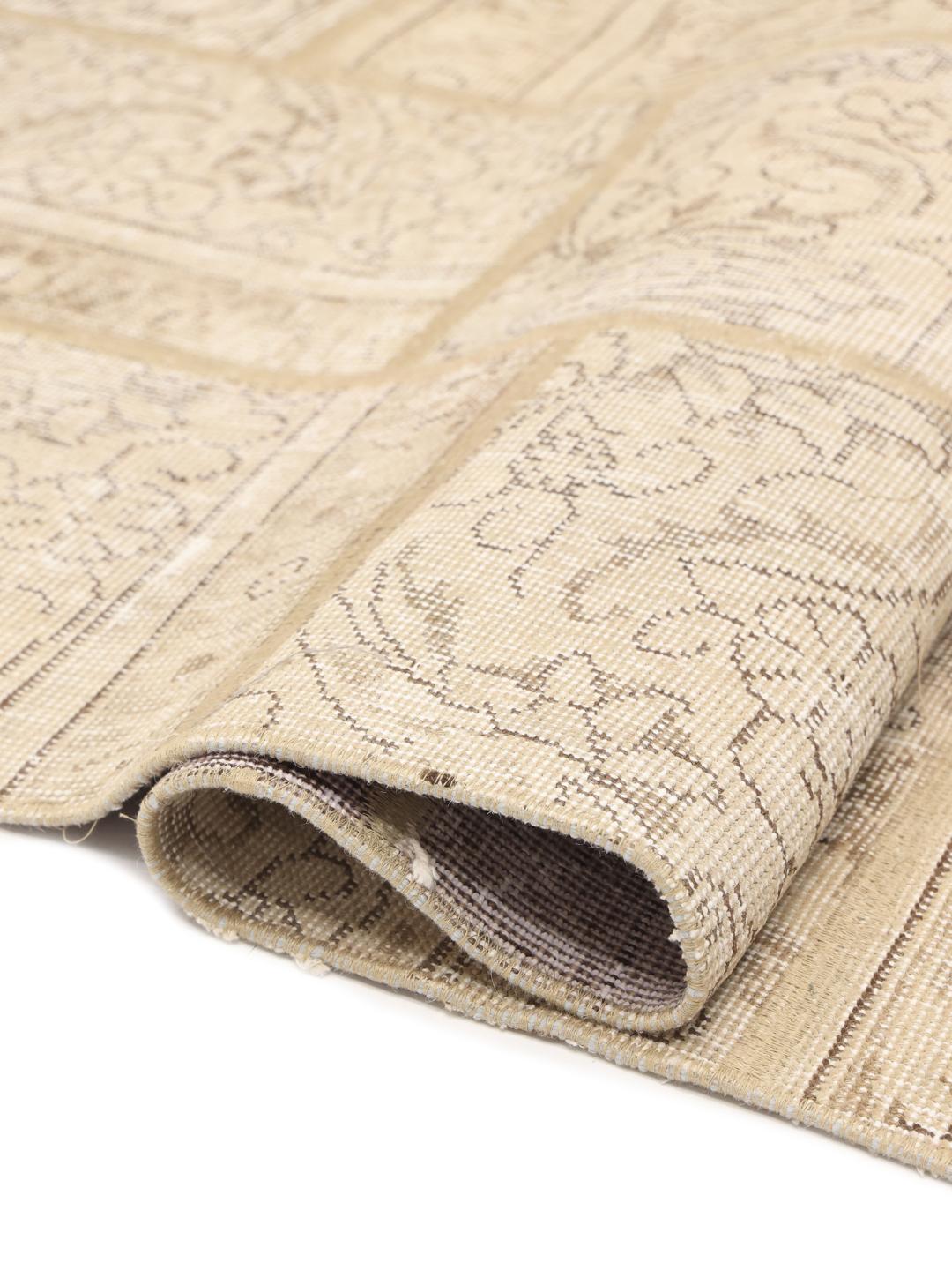
Each fragment within this rug carries the technical legacy of its origin. Many of these sections feature dense, hand-knotted Wool pile, a technique that has defined Middle Eastern rug-making for centuries. The process involves tying individual knots onto a sturdy base, a method that creates a durable and lustrous pile. When these pieces are joined, the result is a mosaic of different weaving densities and textures that tell a story of regional craftsmanship.
The designs found in these patchwork pieces are often inspired by traditional floral, medallion, and geometric motifs. By isolating these sections, the patchwork highlights the intricate details that might otherwise be overlooked in a full-sized carpet. The visual language here is one of repetition and contrast, where the neutral tones allow the complexity of the patterns to shine through without overwhelming the room.
Collecting a patchwork rug is an act of preserving history. It celebrates the skill of the original weavers while demonstrating a forward-thinking approach to sustainable design. Owning such a piece is an opportunity to connect with the heritage of the Middle East, as each section represents a small piece of a much larger, global tradition of textile art and human effort.