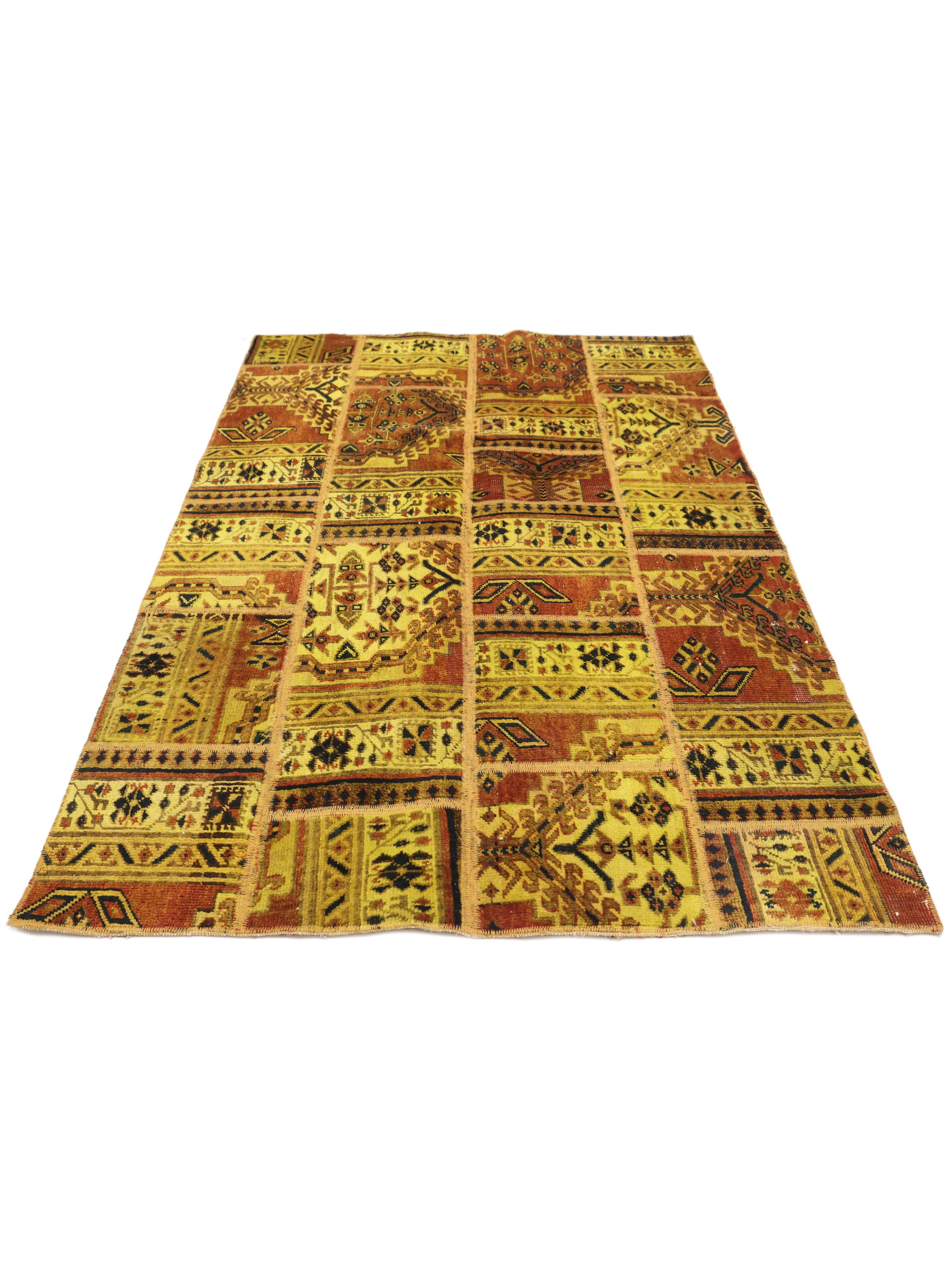
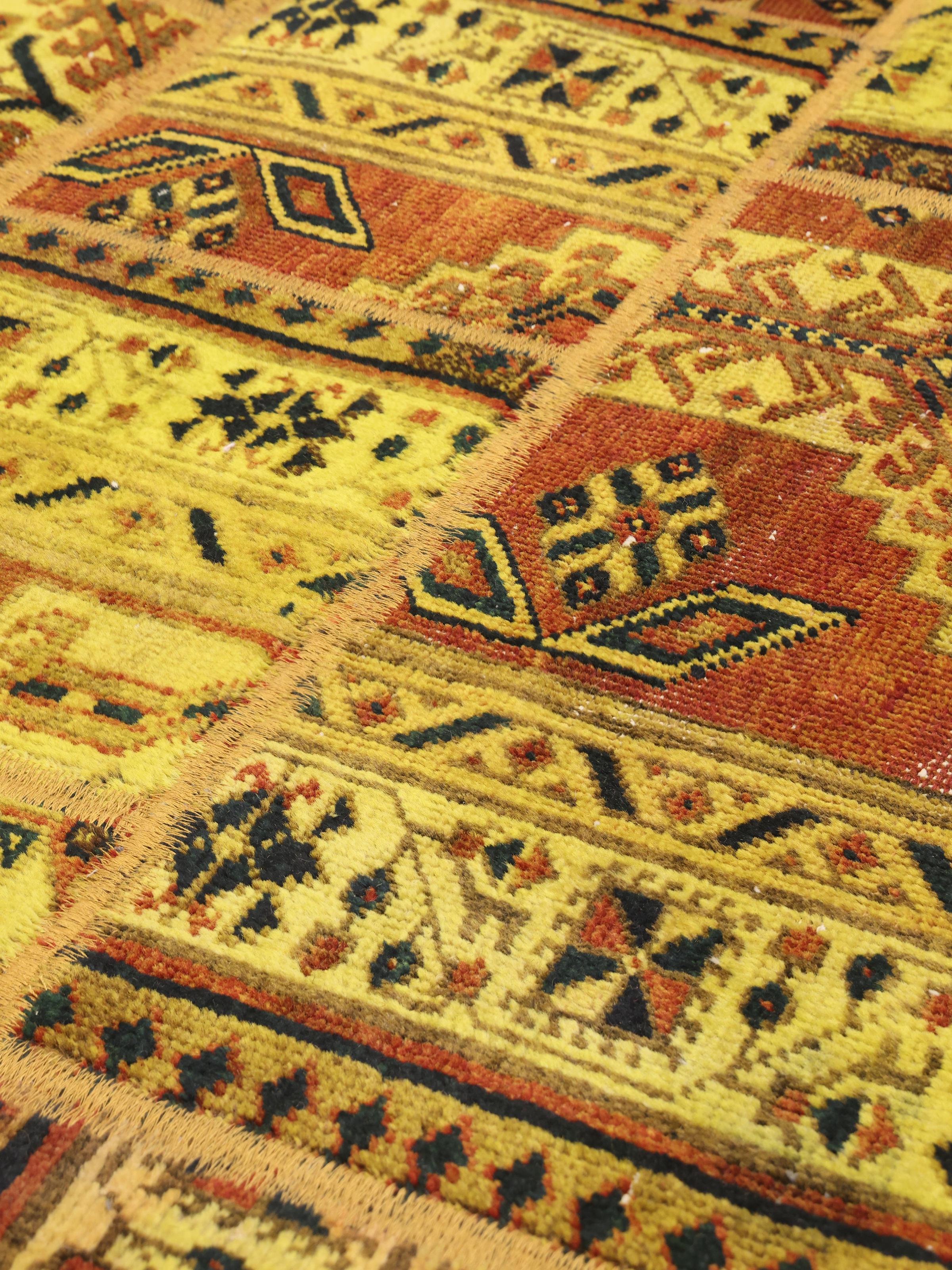
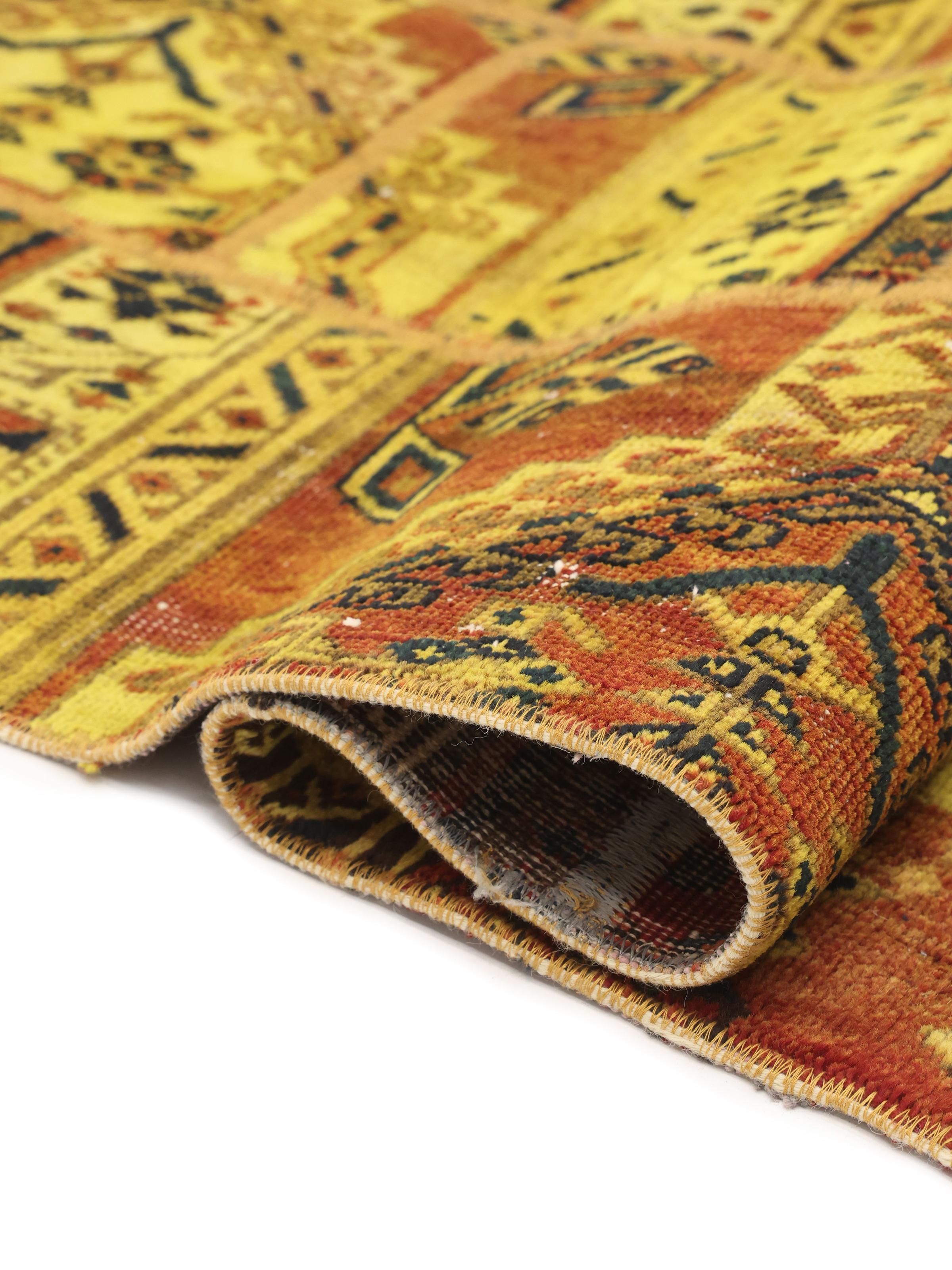
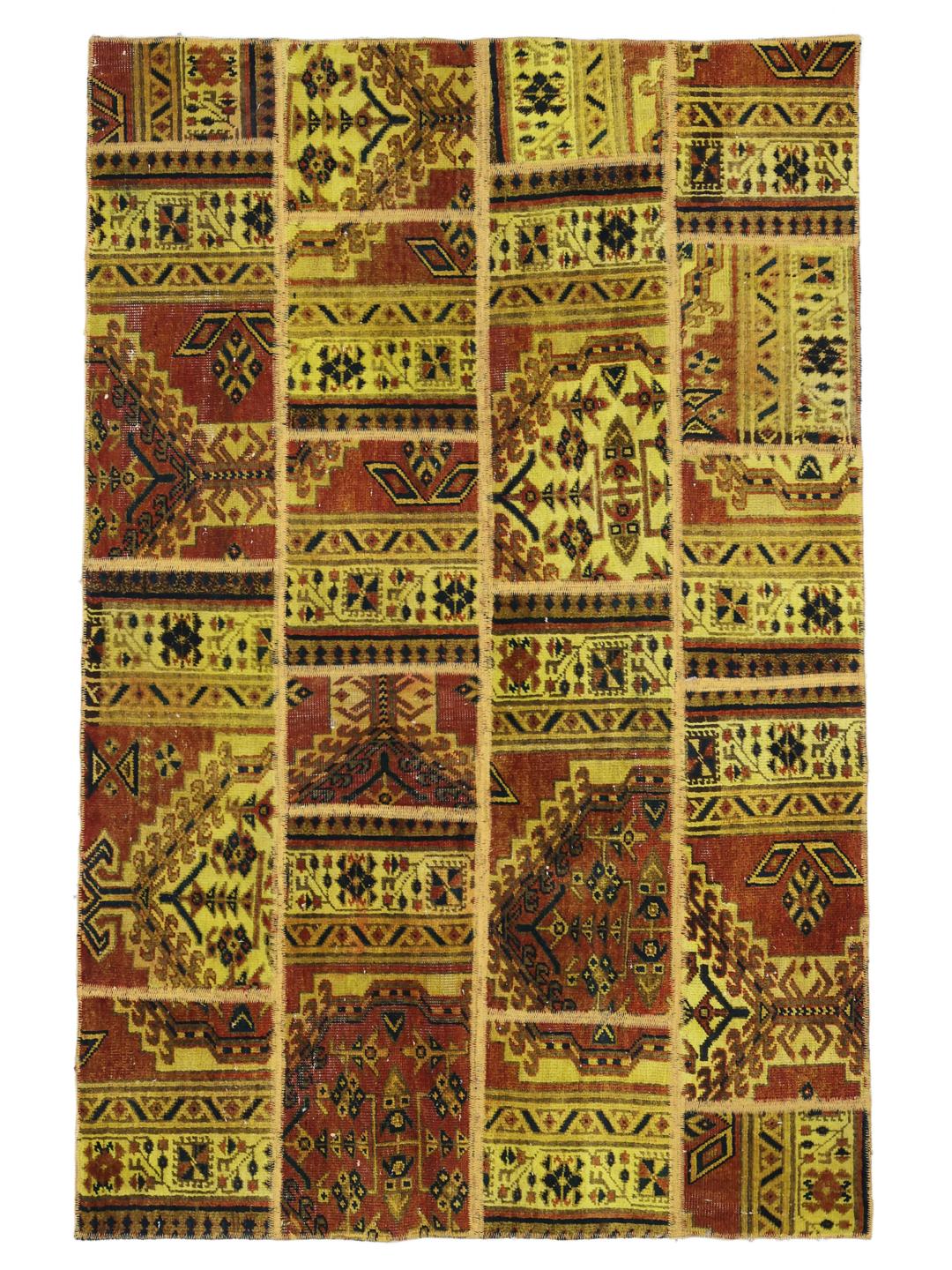
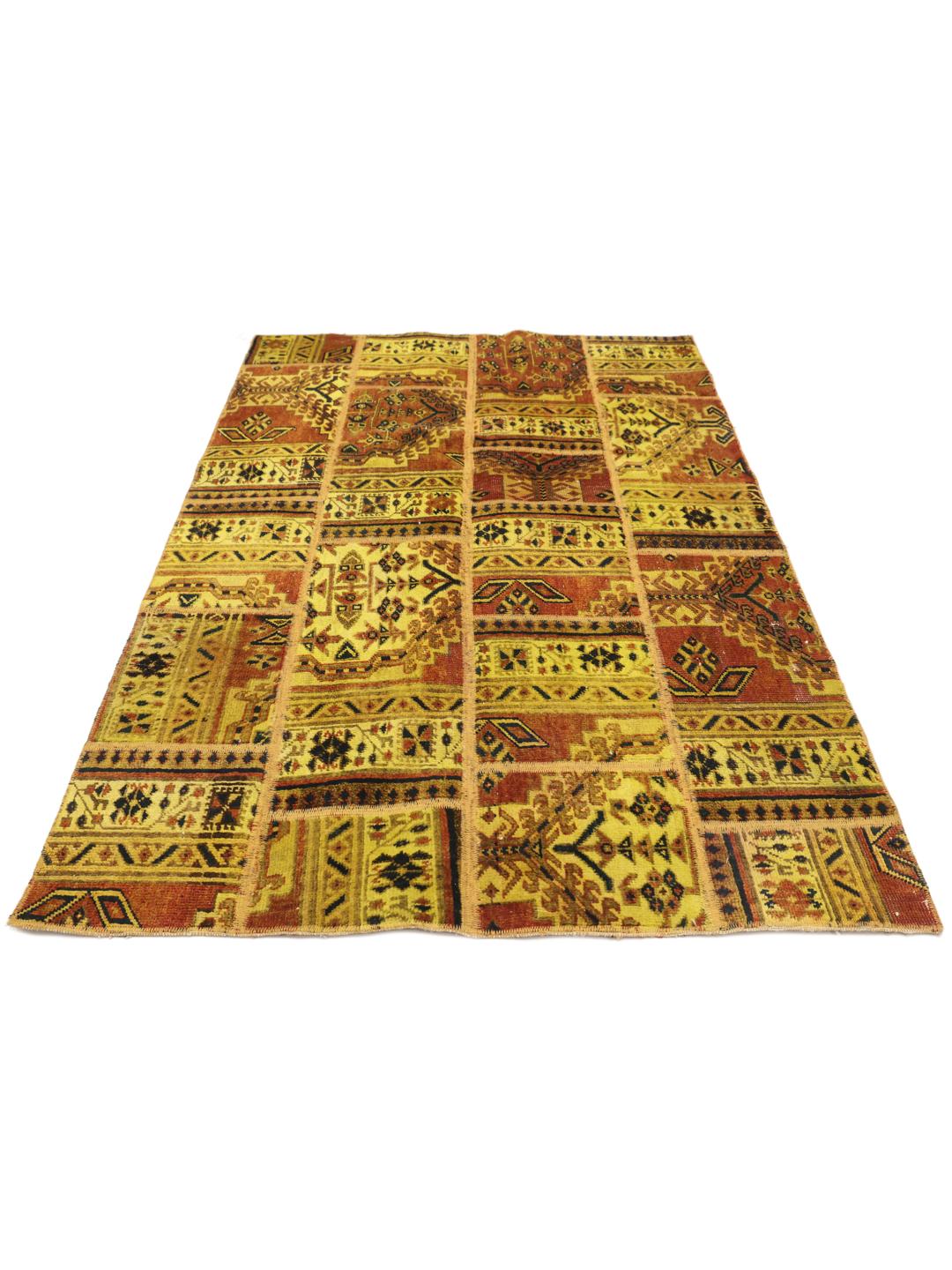
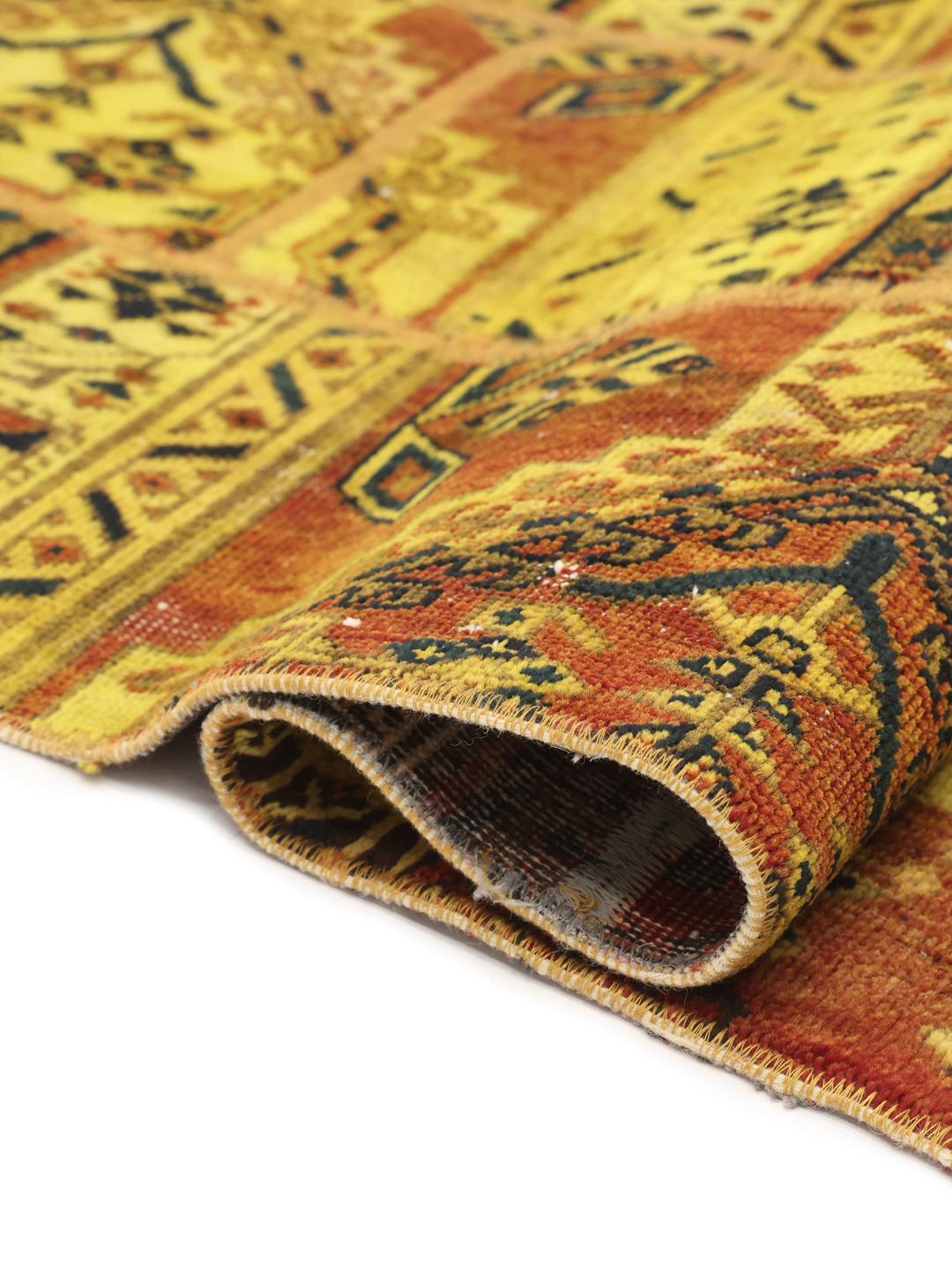
Patchwork rugs represent a contemporary evolution of Middle Eastern textile traditions, born from the desire to preserve the beauty of old, damaged, or worn hand-knotted rugs. Rather than letting these pieces be lost to time, artisans carefully select the most intact sections to create new, artistic compositions. This practice has become a vital way to honour the legacy of regional weaving while adapting it to modern design sensibilities.
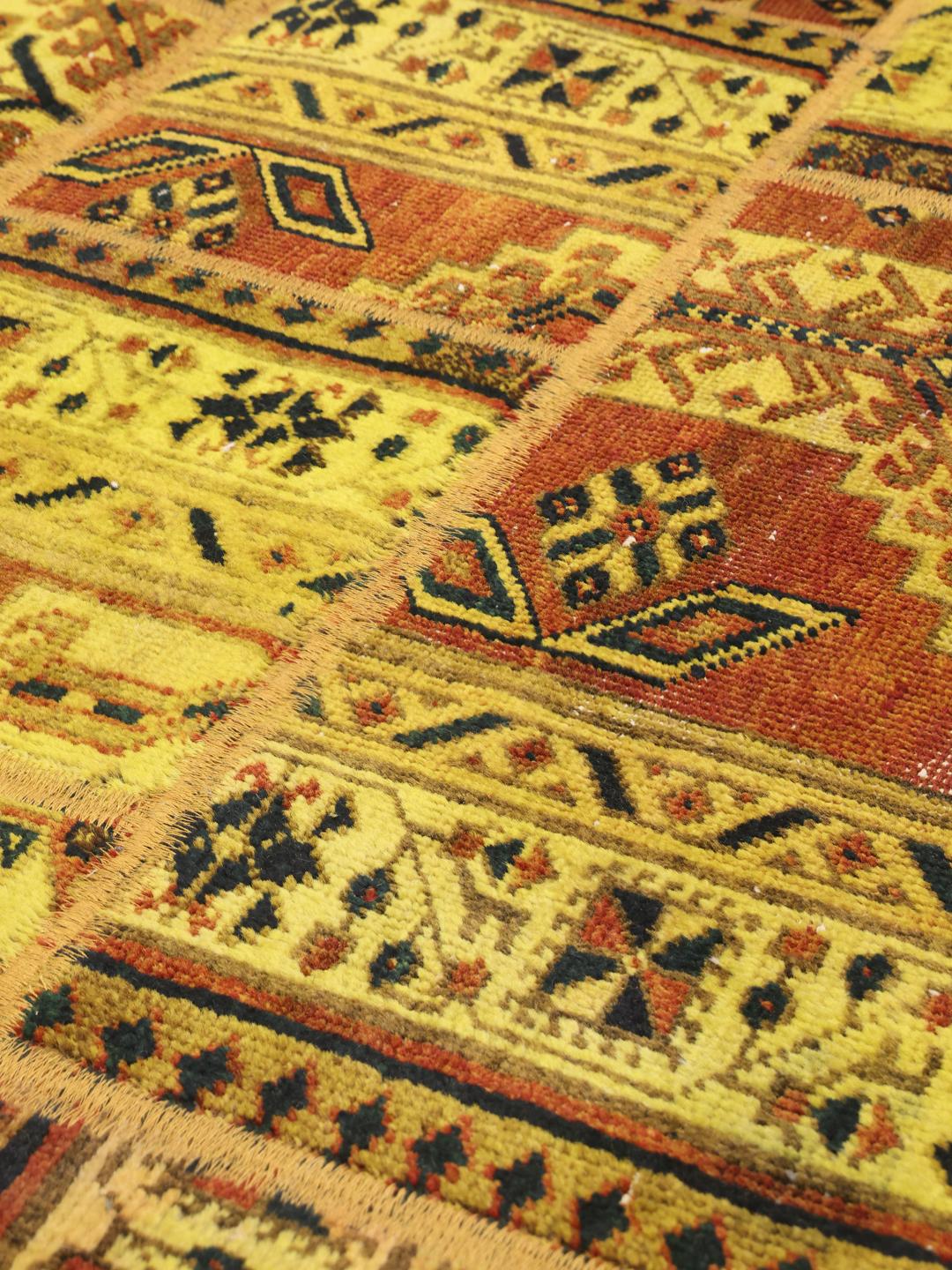
The individual fragments used in these rugs are often sourced from various traditional weaving regions across the Middle East. Each piece carries with it the specific techniques, dyes, and motifs of its origin, ranging from complex floral patterns to bold tribal geometric designs. By stitching these diverse elements together, the patchwork process creates a dialogue between different styles and eras, resulting in a rug that is a microcosm of regional artistry.
Visually, these rugs are defined by their eclectic and vibrant character. While a standard rug might feature a single consistent pattern, a patchwork design offers a multitude of motifs, borders, and colours within a single frame. This unpredictability is the hallmark of the style, as the placement of each fragment is an artistic decision intended to balance the overall look while highlighting the intricacy of the individual components.
For collectors and homeowners alike, these rugs are highly valued for their unique provenance and the skill required to unify such disparate pieces. Owning one is a commitment to the preservation of traditional craft, as it breathes new life into centuries-old techniques. It serves as a bridge between the past and the present, ensuring that the artistry of master weavers continues to be celebrated in contemporary homes.