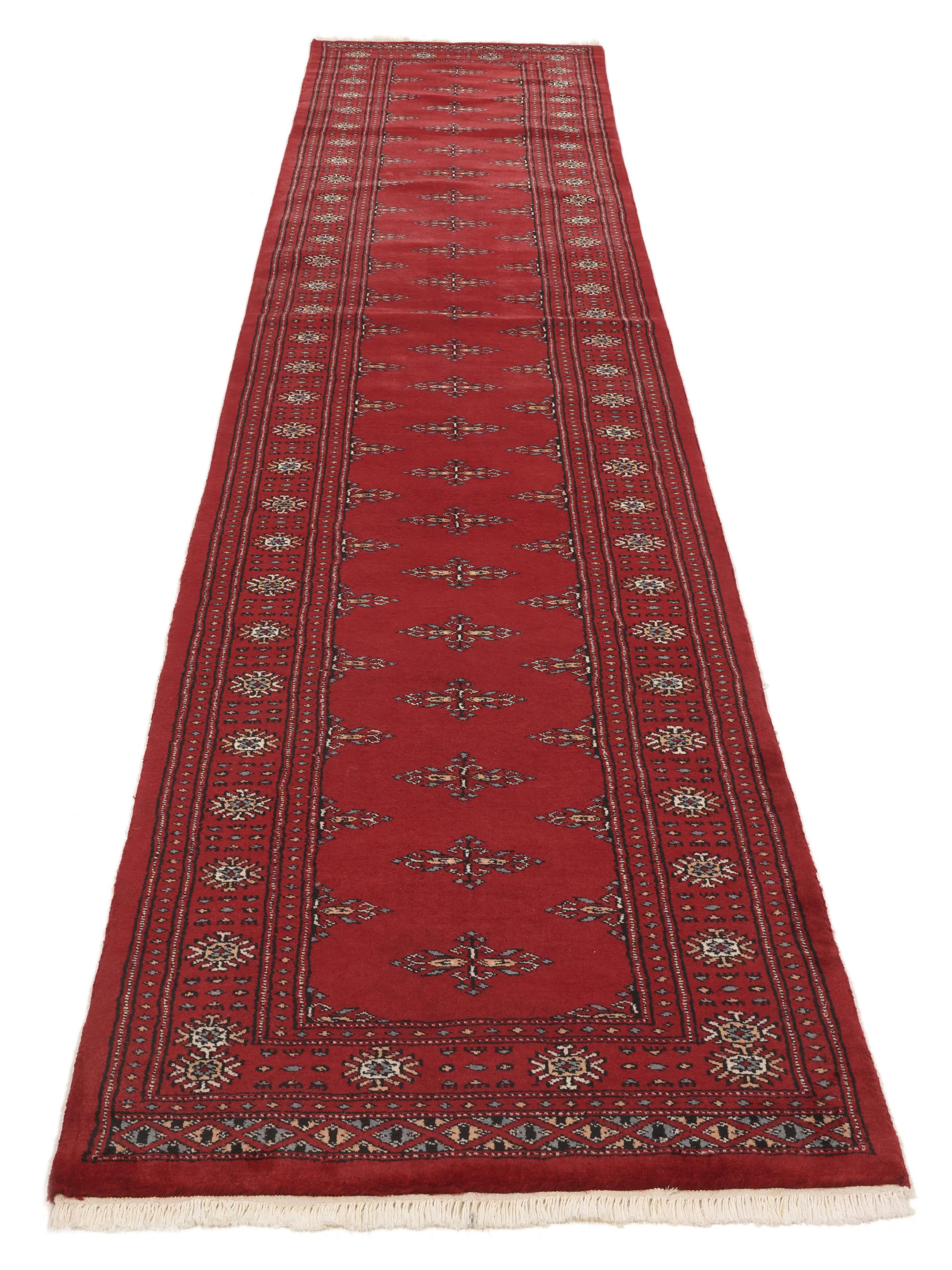
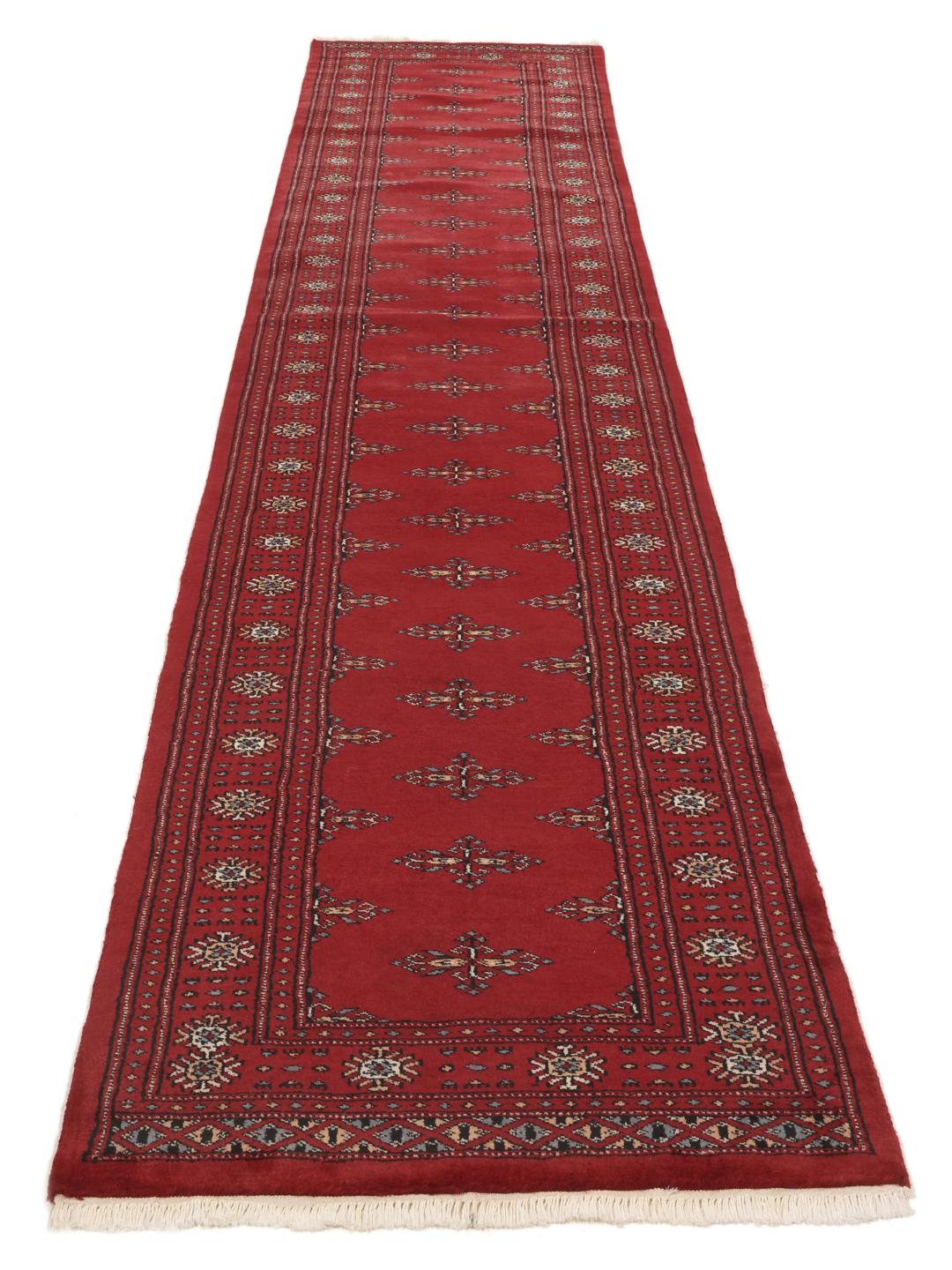
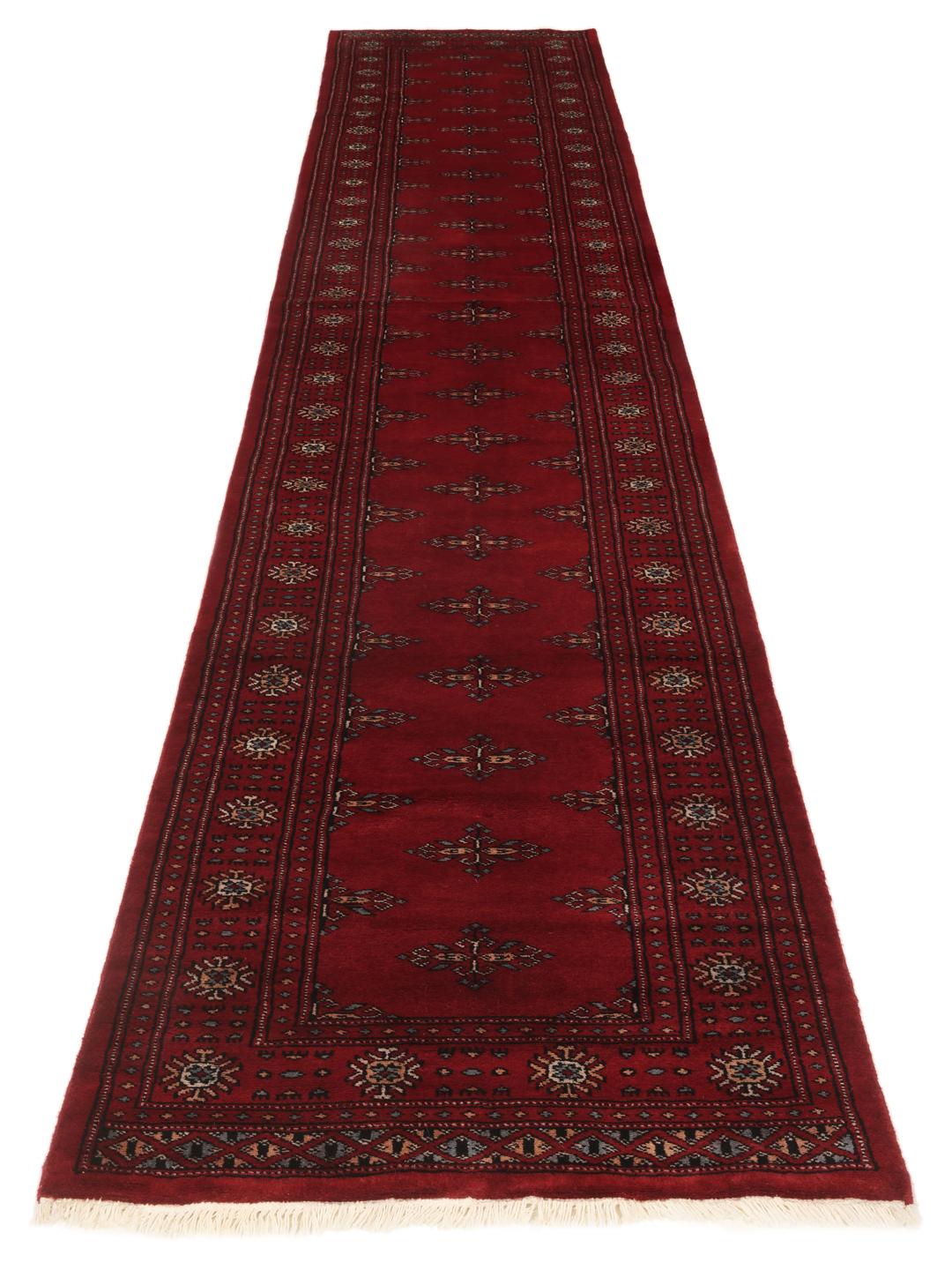
Bokhara rugs are among the most celebrated traditions to emerge from the broader Central Asian region, though today, the finest examples are crafted in Pakistan. Historically, these rugs were inspired by the nomadic weaving traditions of the Tekke tribe, whose intricate designs were once traded along the ancient Silk Road. Over generations, these patterns have evolved, with Pakistani weavers refining the techniques to create a more consistent and polished aesthetic that is highly sought after by collectors today.
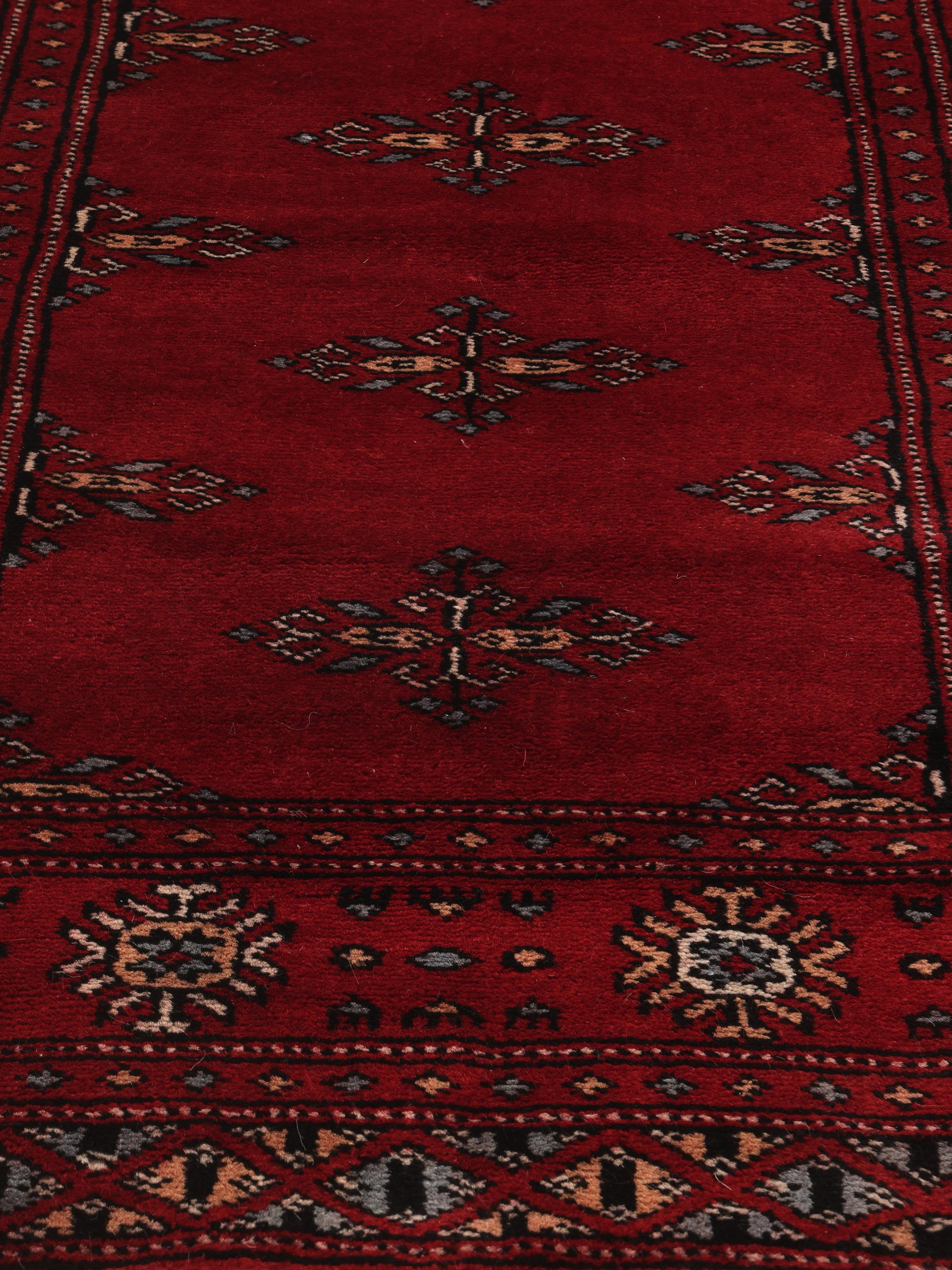
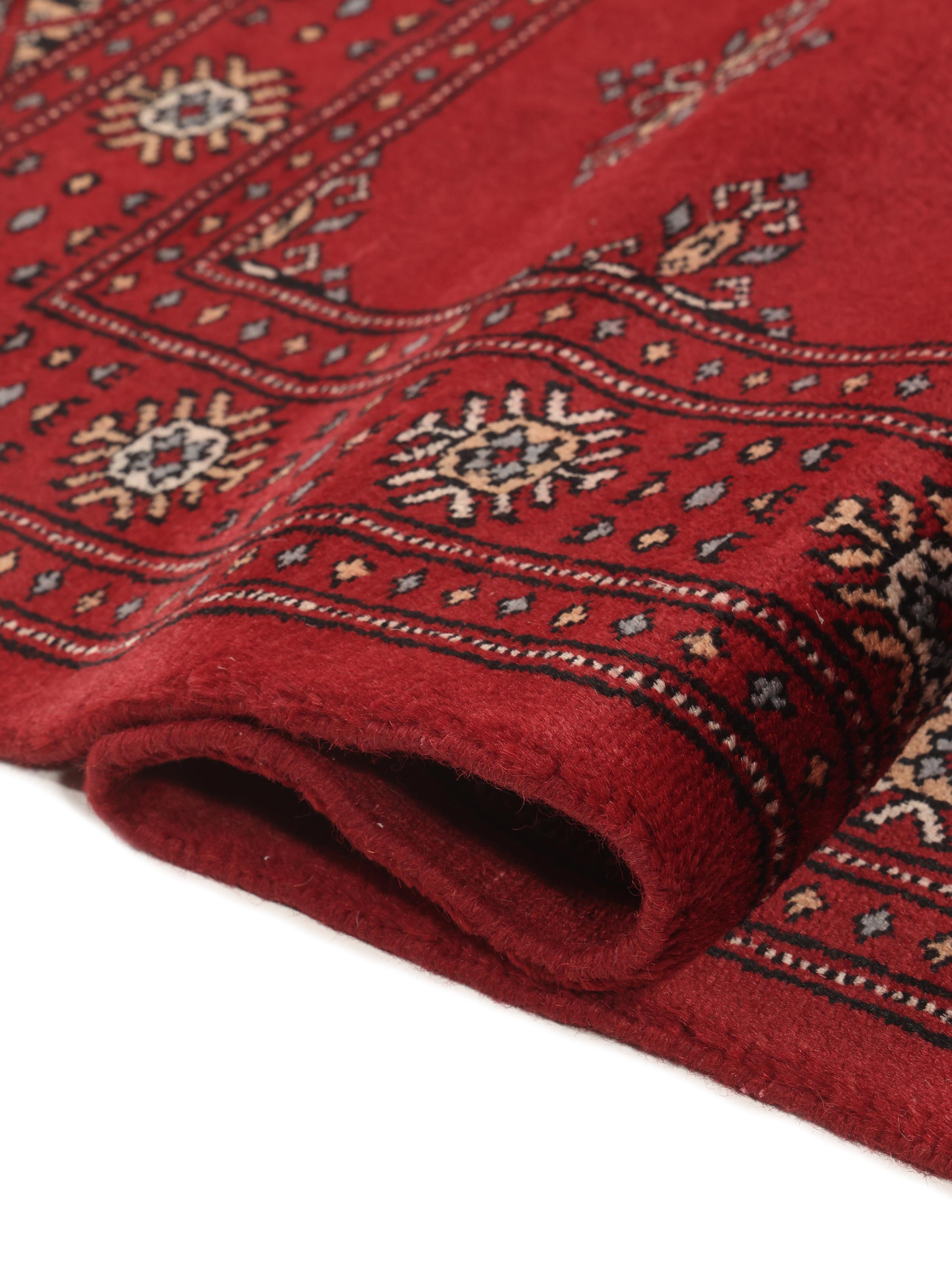
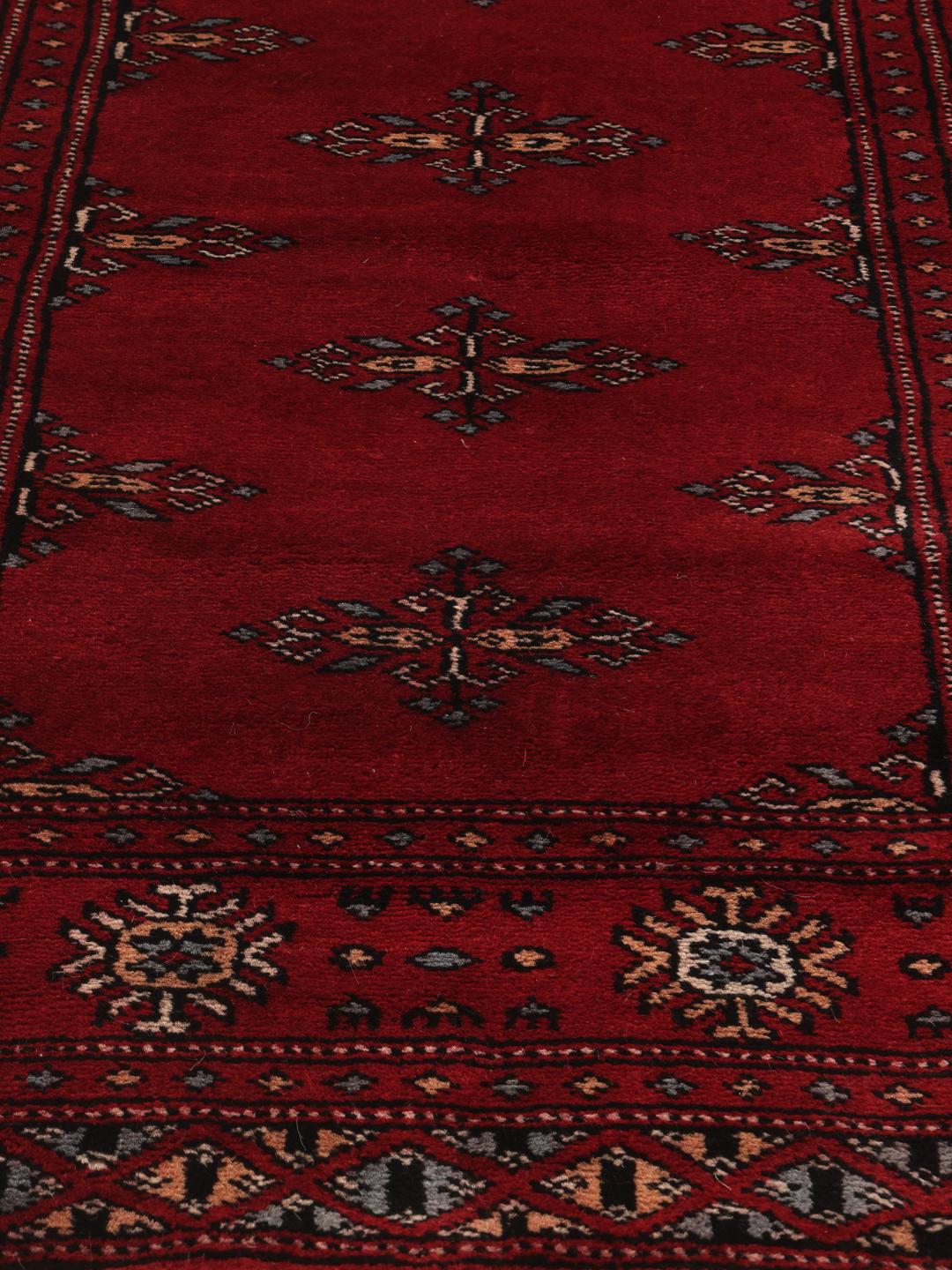
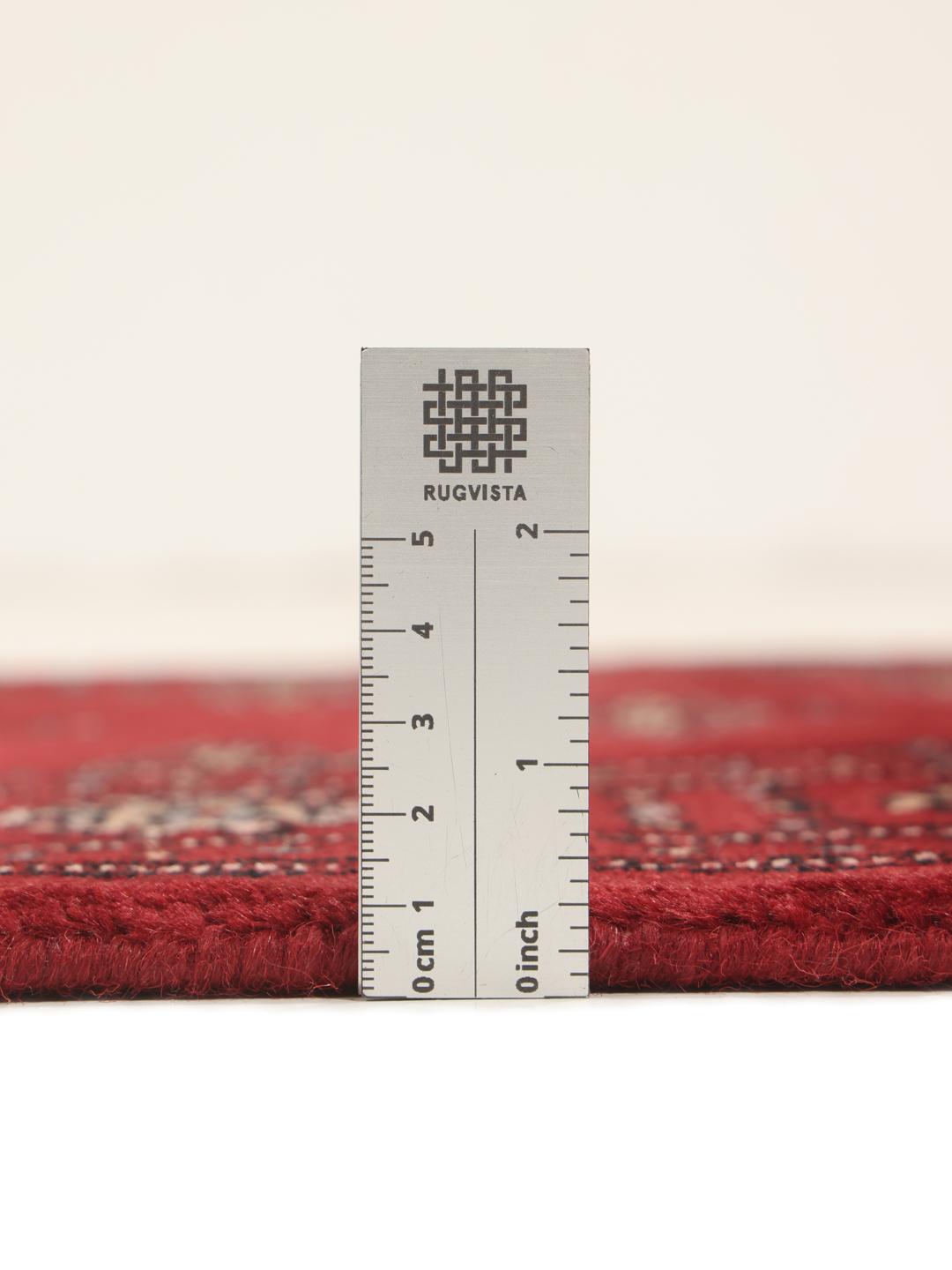
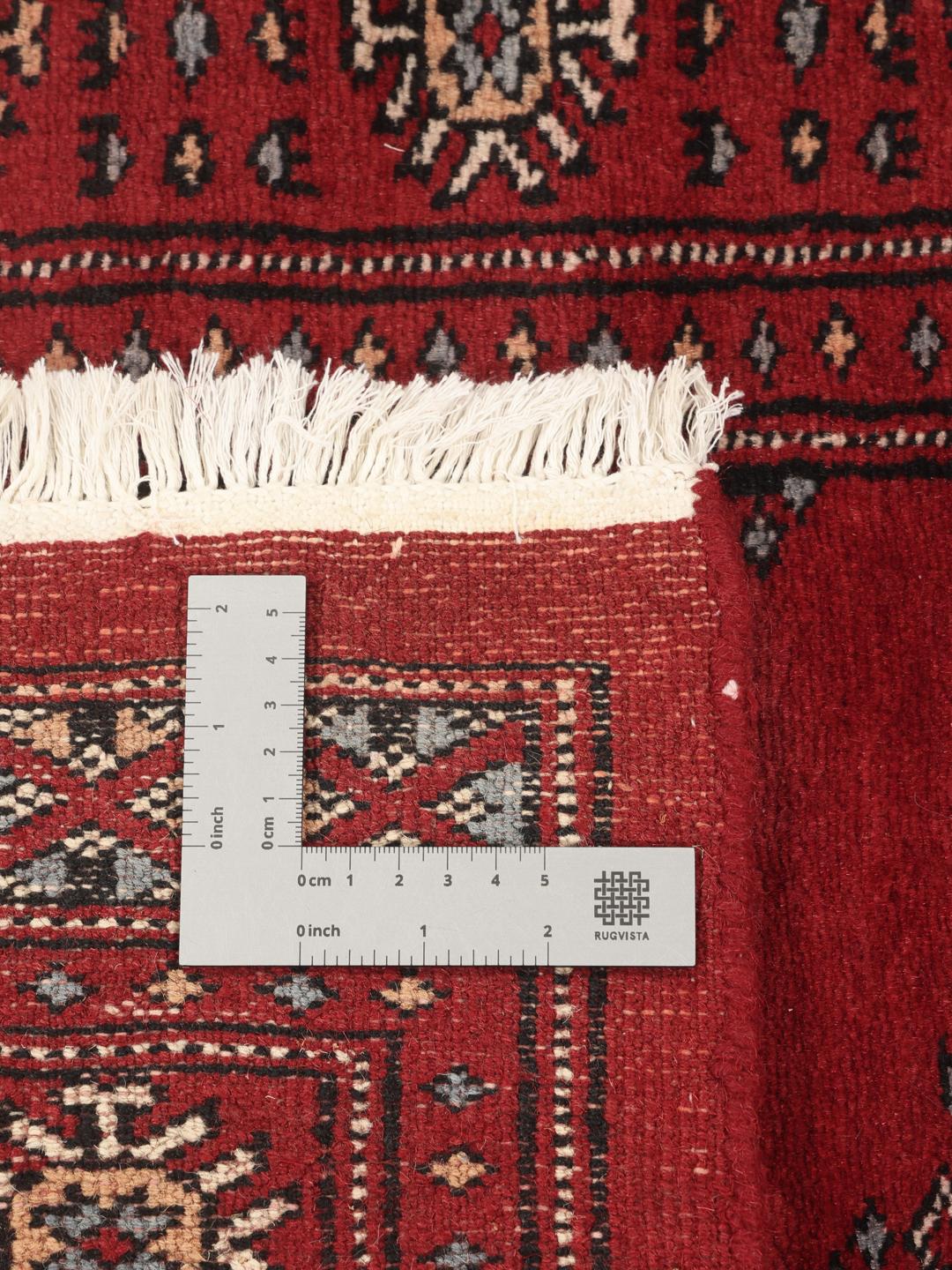
The term '3ply' refers to the construction of the yarn used for the pile. By twisting three strands of wool together, the artisan creates a yarn that is significantly stronger, more lustrous, and more durable than a single-ply alternative. This technical detail is vital for the customer because it results in a pile that stands up better to foot traffic while retaining a soft, luxurious sheen that catches the light beautifully.
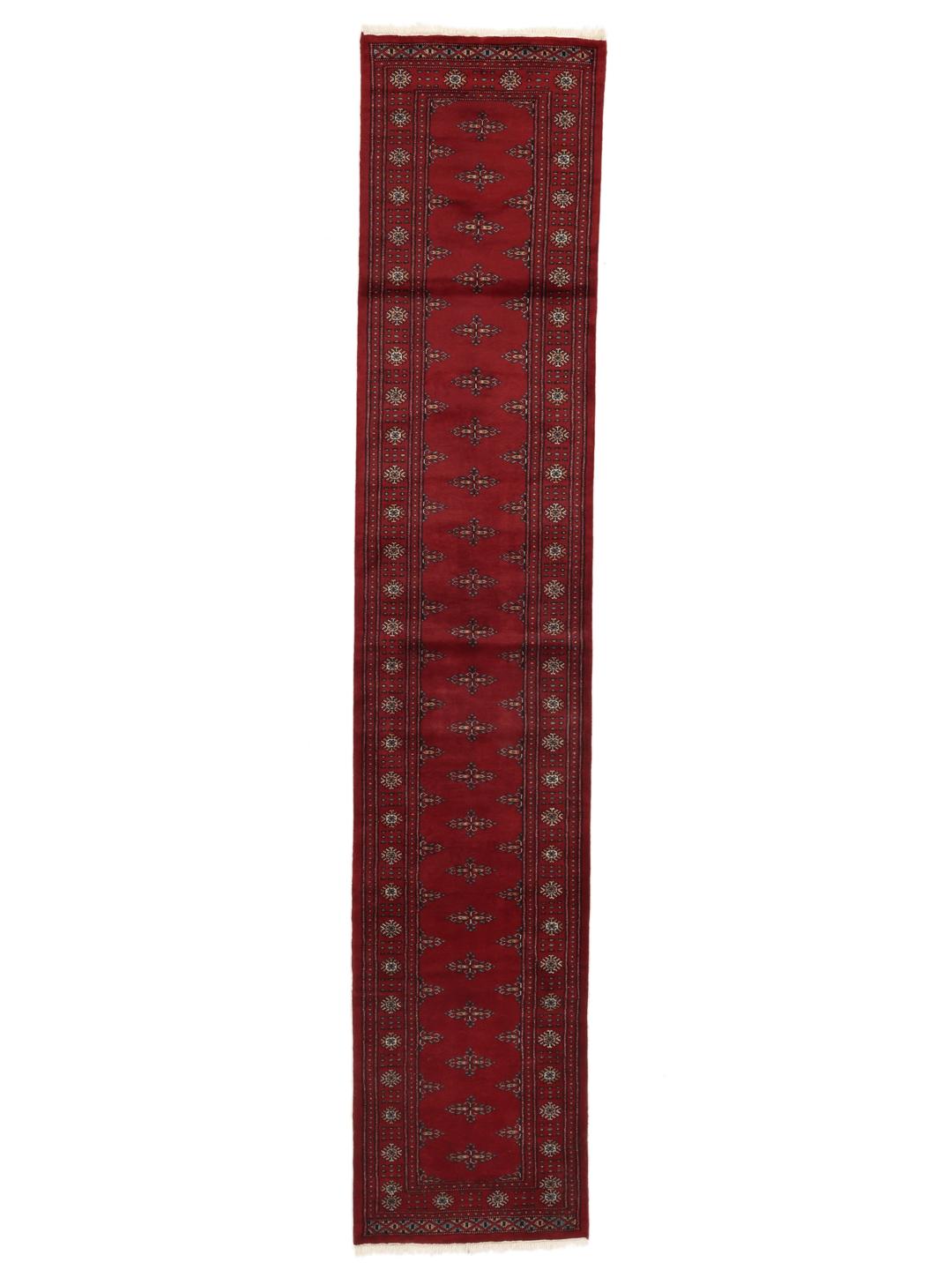
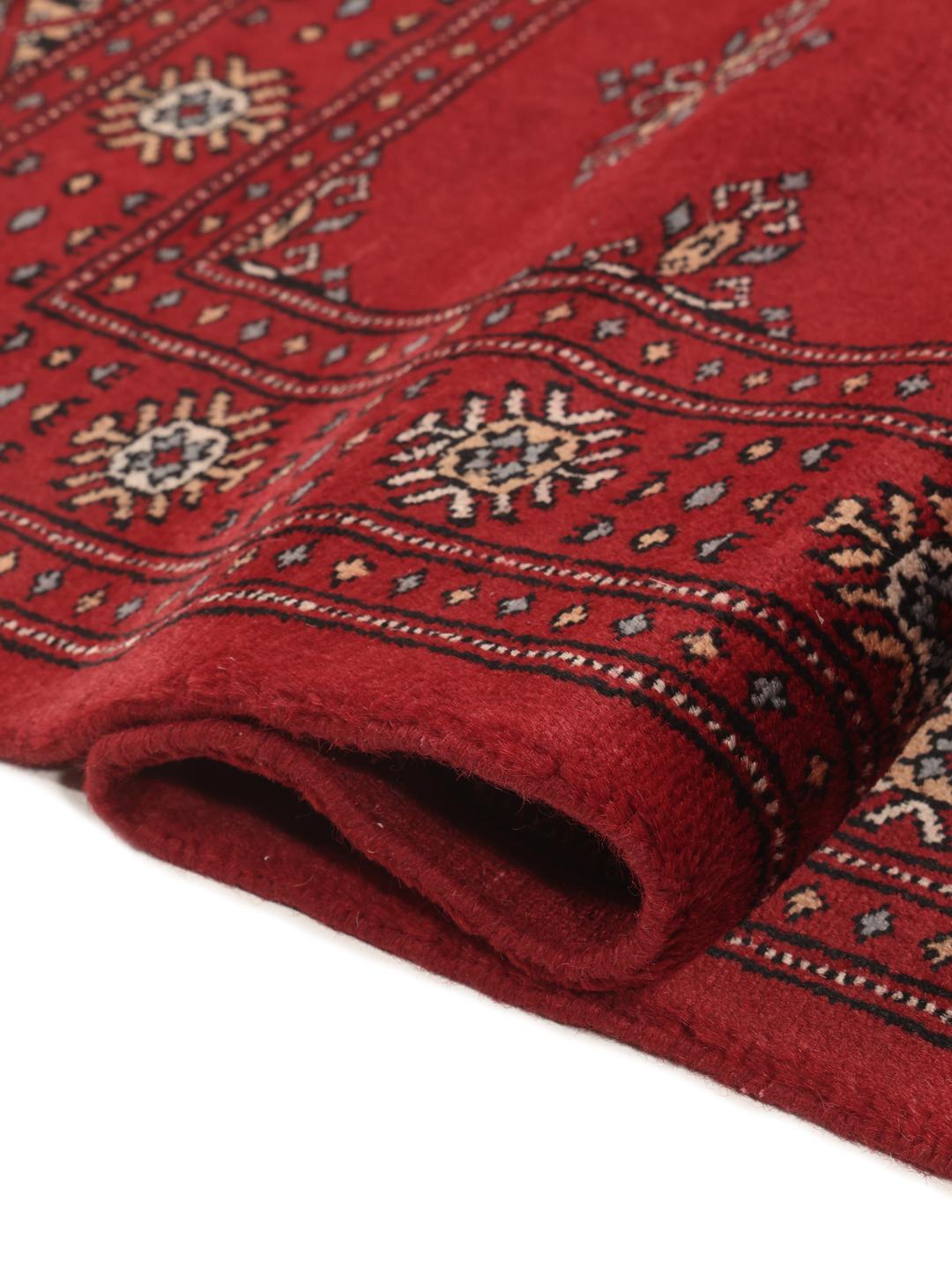
Visually, these rugs are defined by the repeating 'gul' motif, which is an octagonal or elephant-foot shape that creates a rhythmic, hypnotic effect across the field. This specific runner features these classic symbols arranged in orderly rows, bordered by complex geometric patterns that frame the composition. The use of a deep red palette is traditional, symbolising warmth and prosperity, and it remains the most iconic look for this style.
Collecting a rug from this tradition is an act of preserving a rich cultural legacy. These pieces are valued not only for their aesthetic beauty but for the immense skill required to execute such complex, repeating geometry by hand. Owning one serves as a connection to a centuries-old craft, offering a sense of heritage and enduring quality that brings real cultural weight to any home.