The Bokhara rug tradition is deeply rooted in the history of Central Asia, taking its name from the ancient Silk Road city of Bukhara, which served as a vital hub for trade and craftsmanship. While the designs have their origins in nomadic tribal weaving, the finest modern examples are primarily crafted in Pakistan, where artisans have refined these classic motifs into a sophisticated art form.
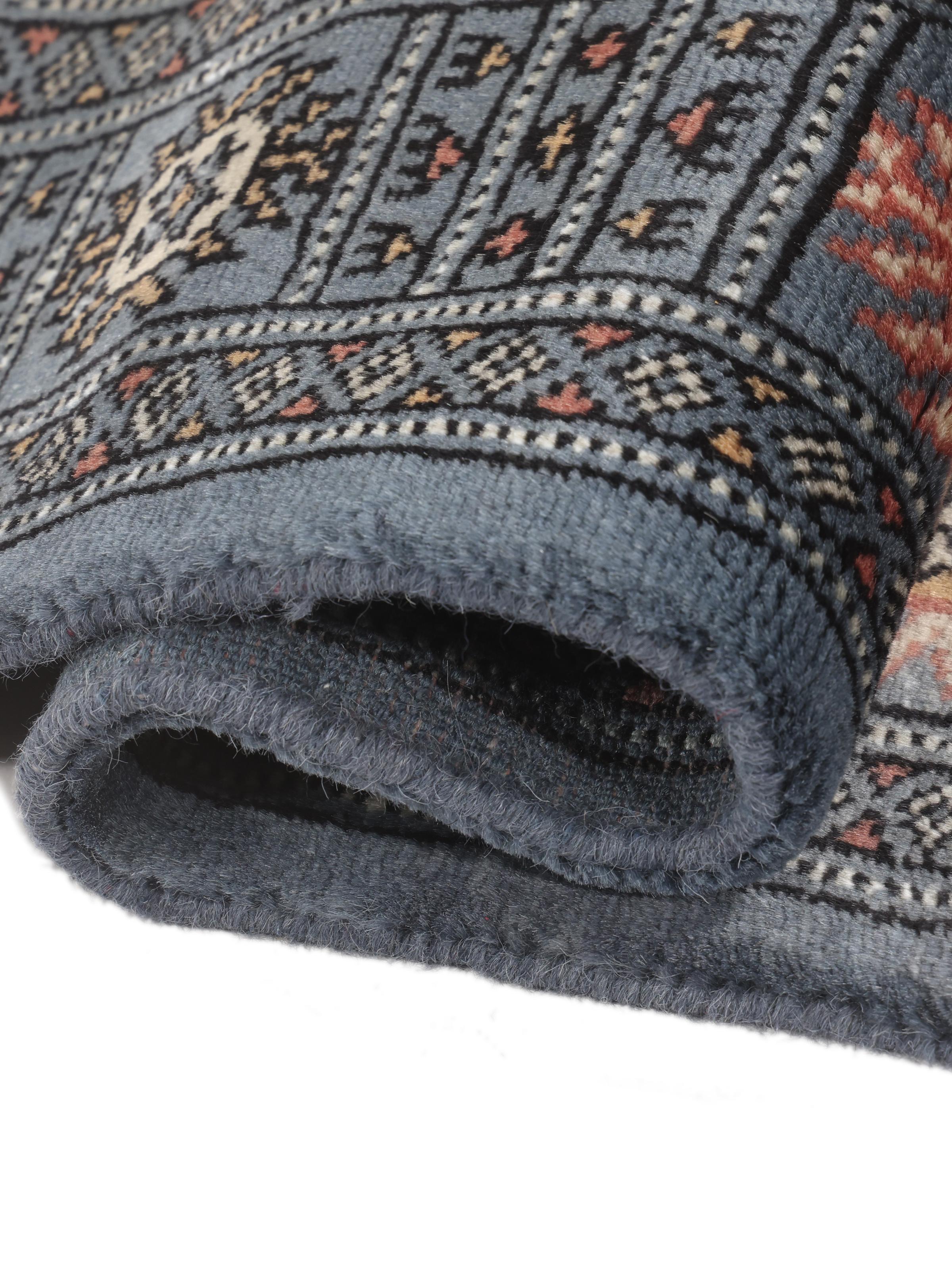
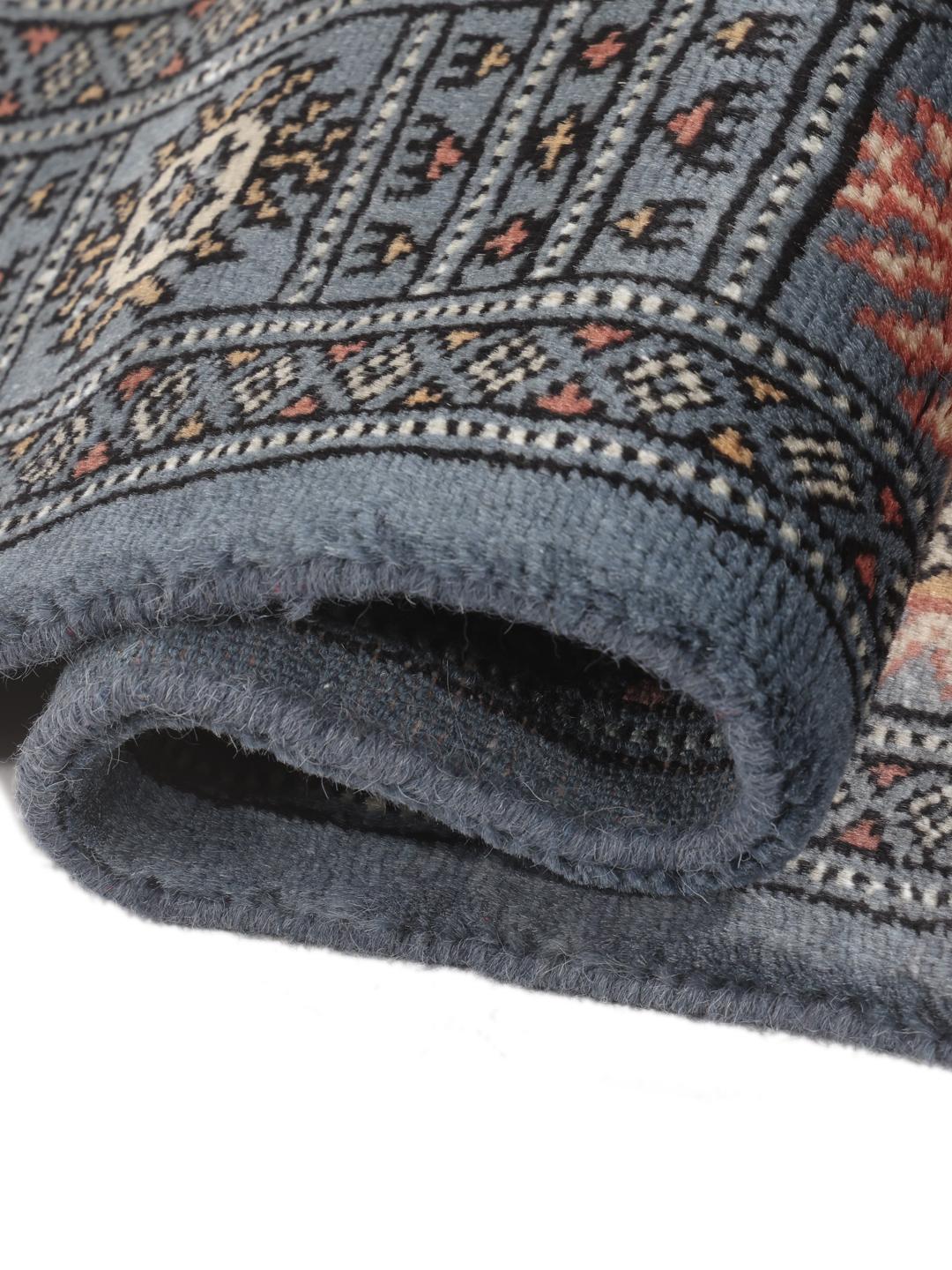
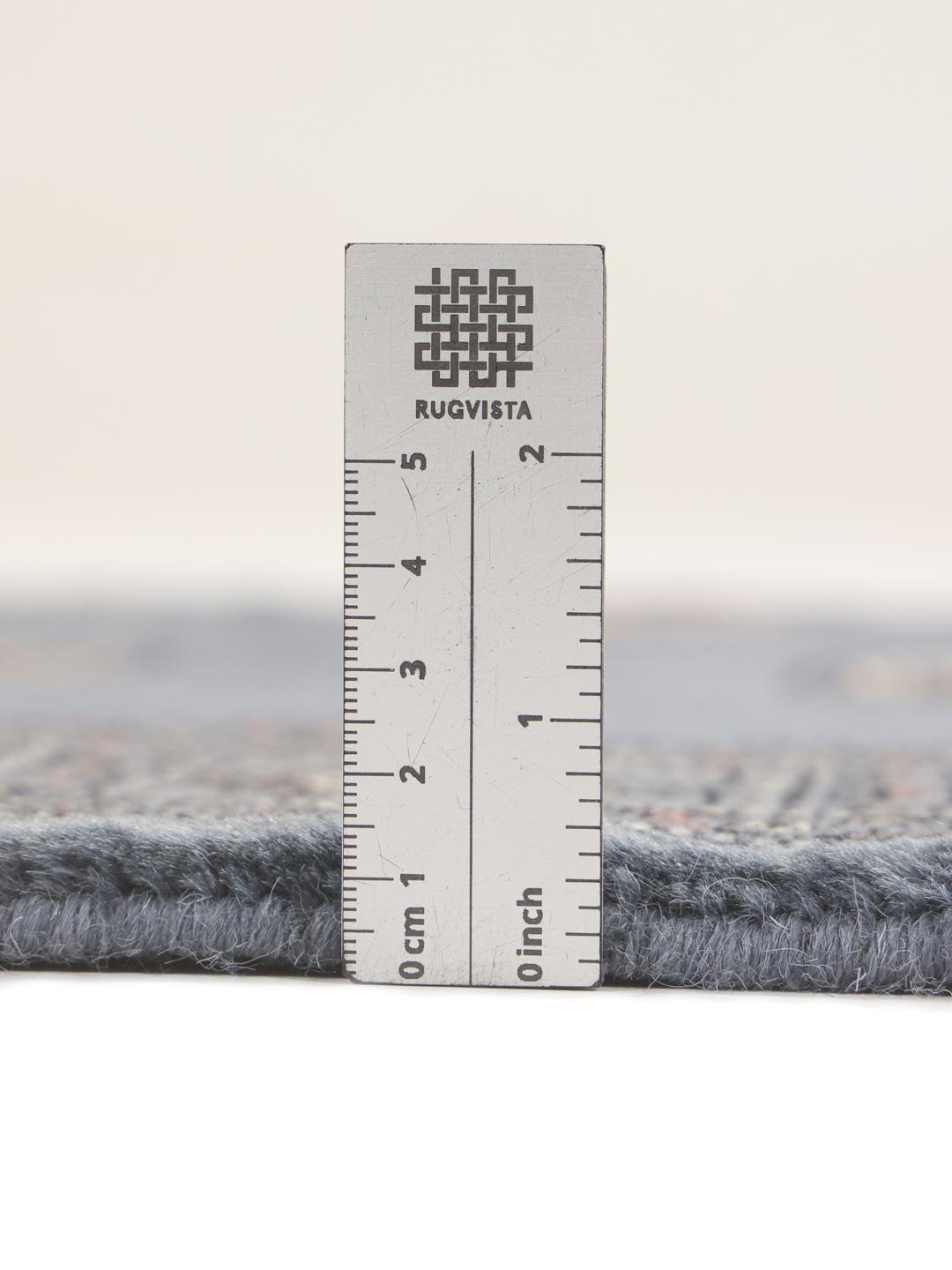
The term 3ply refers to the construction of the yarn, where three individual strands of Wool are twisted together before knotting. This technique is highly valued because it creates a thicker, more durable, and more lustrous pile that is exceptionally soft underfoot. This added density enhances the rug's longevity, making it a practical choice for high-traffic areas without sacrificing comfort.
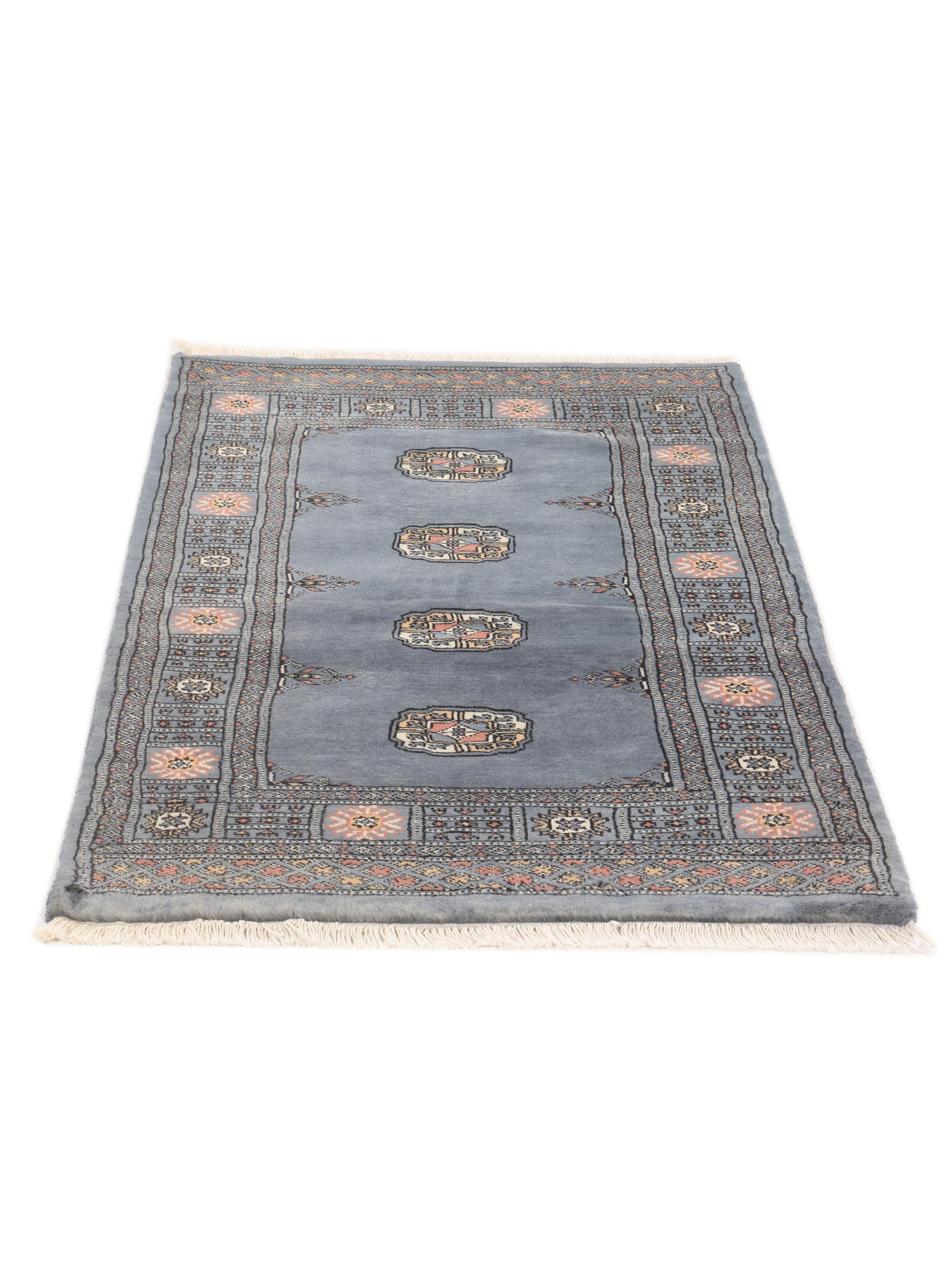
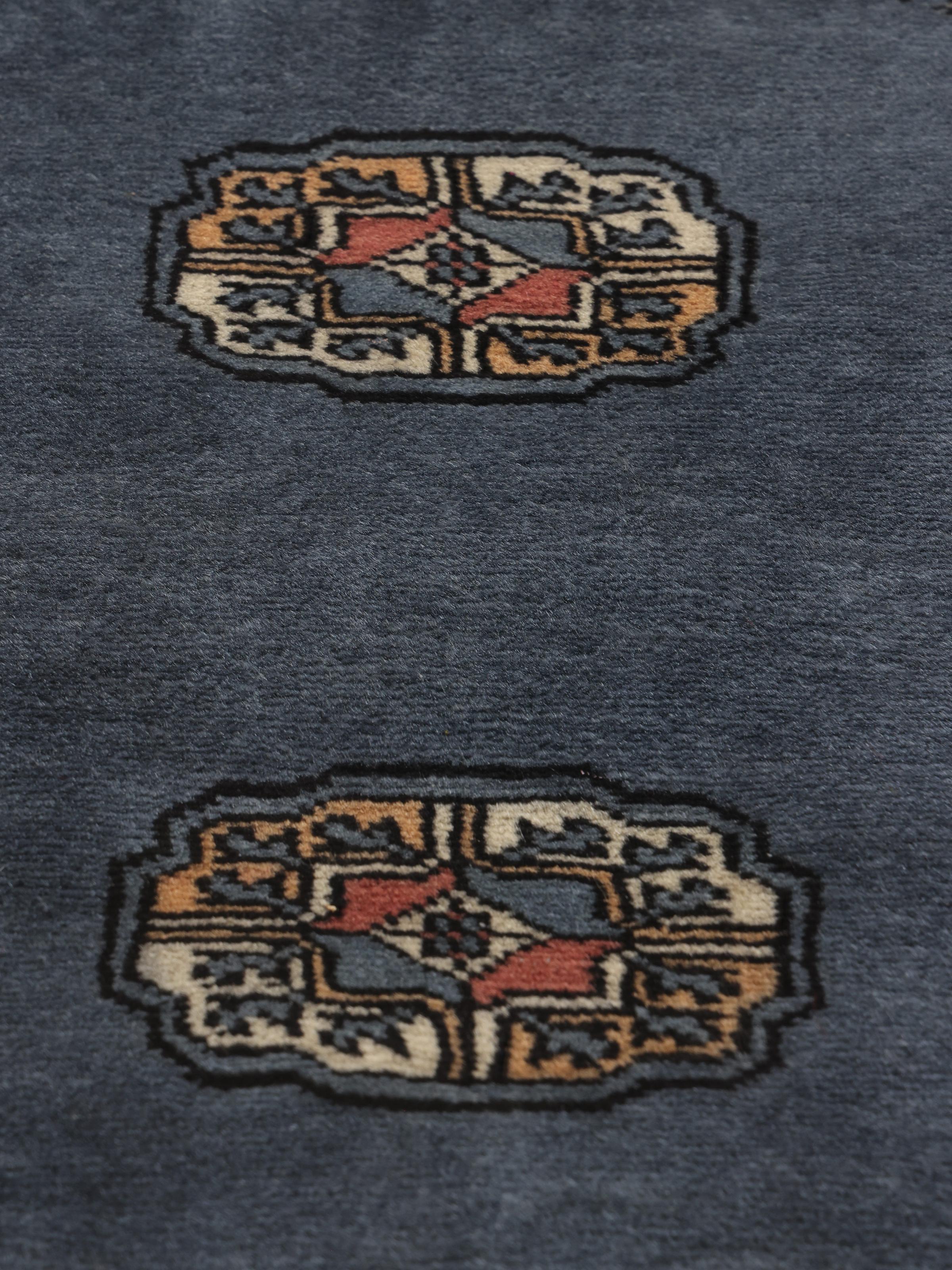
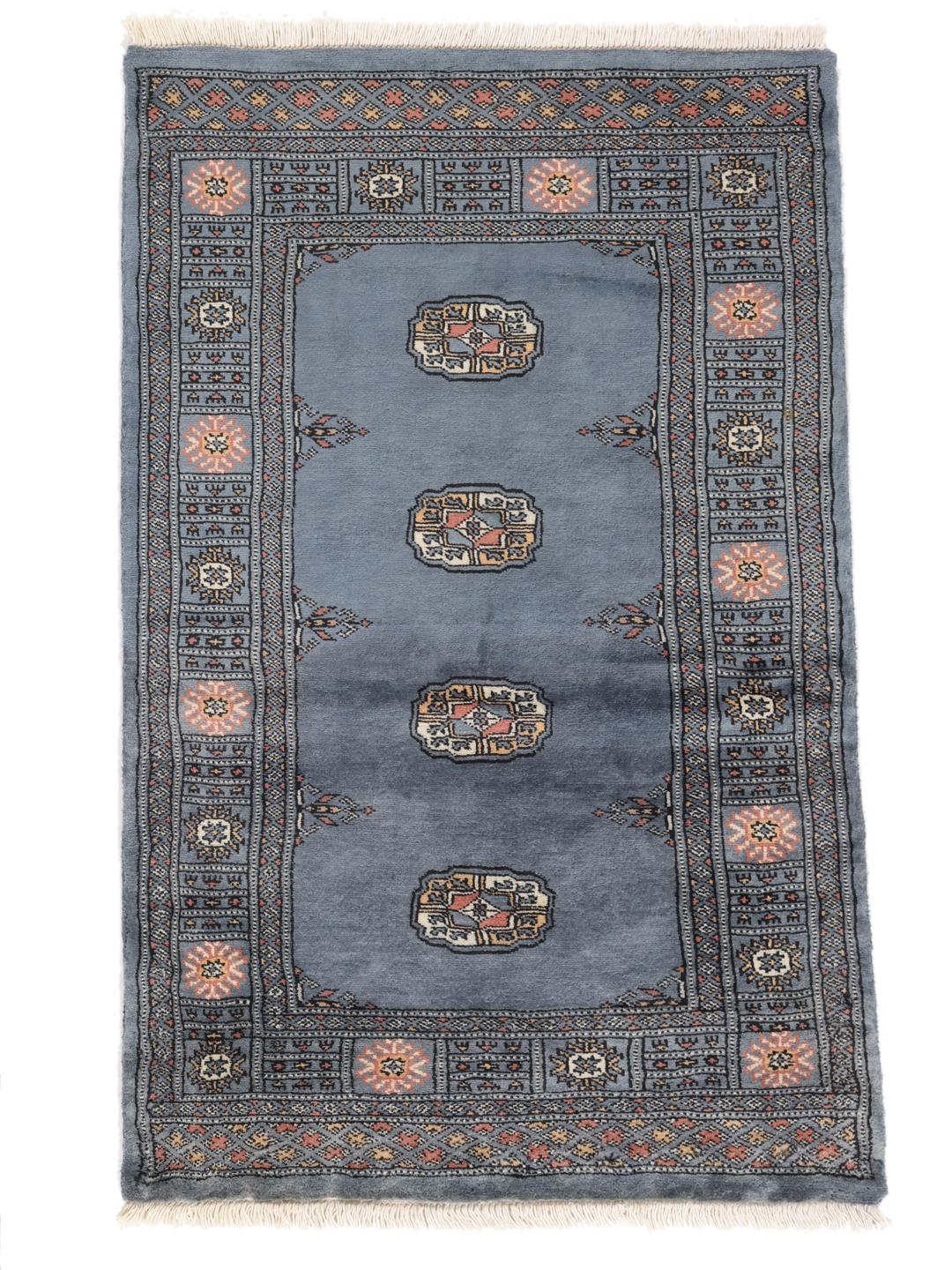
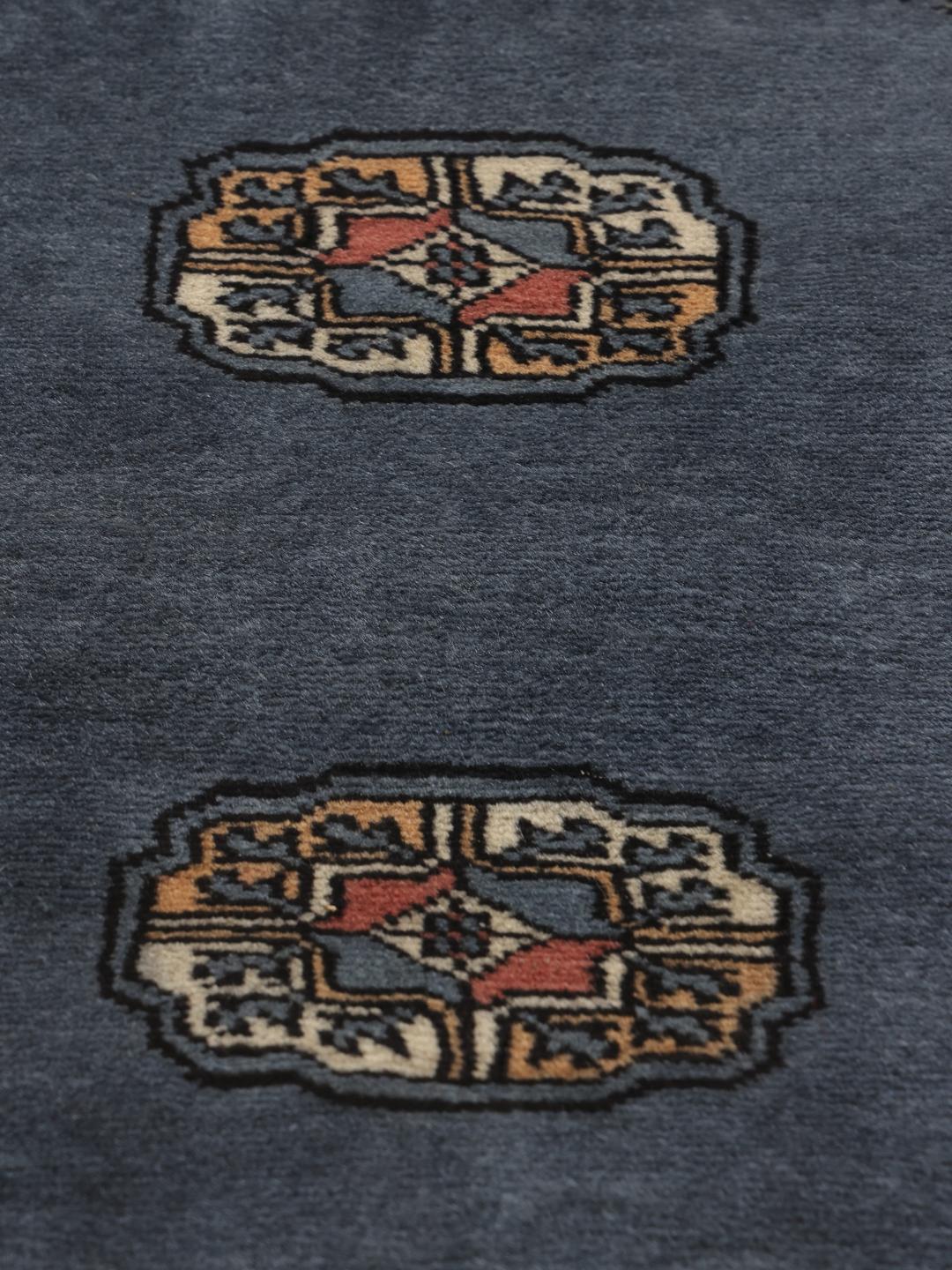
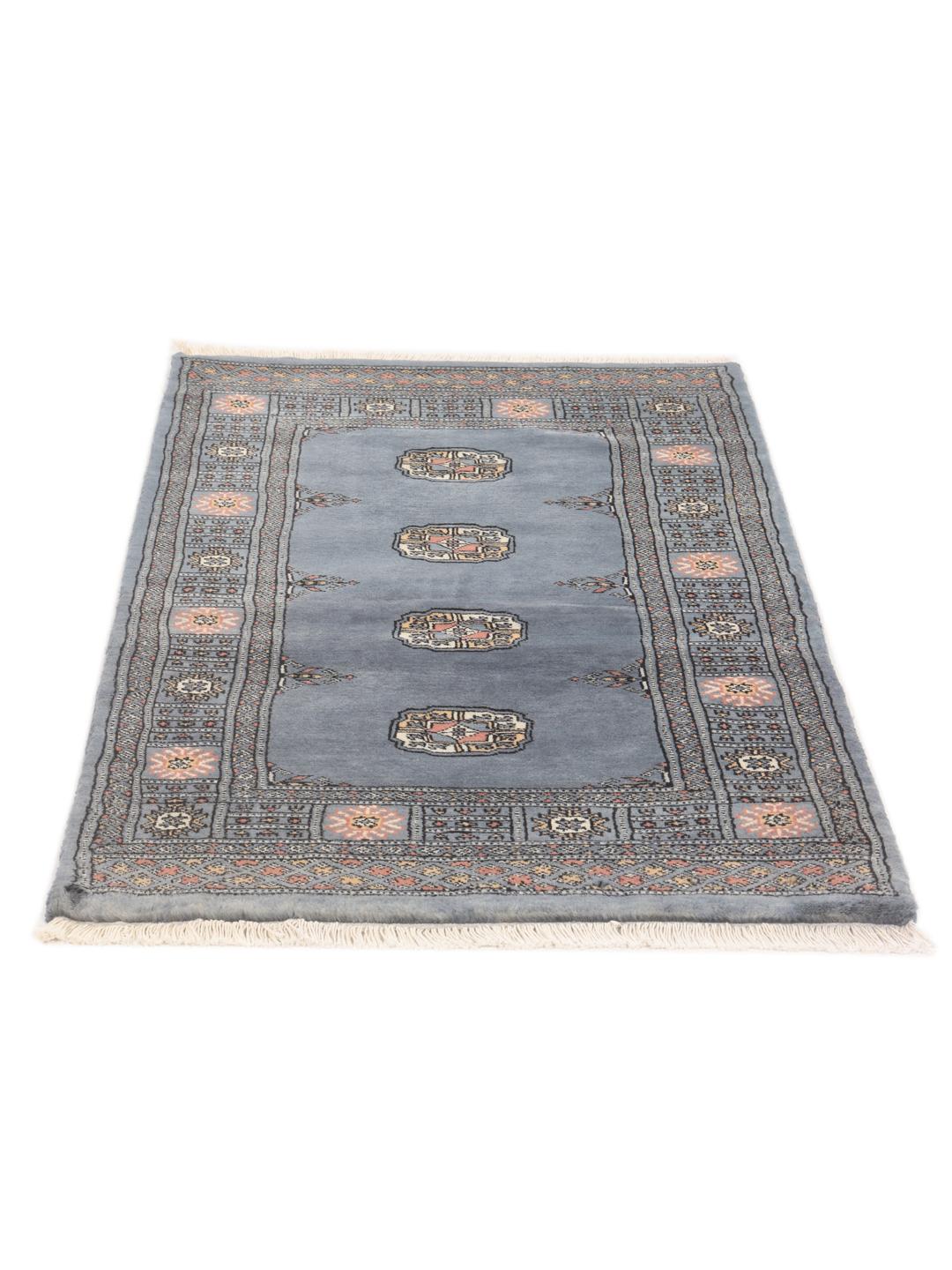
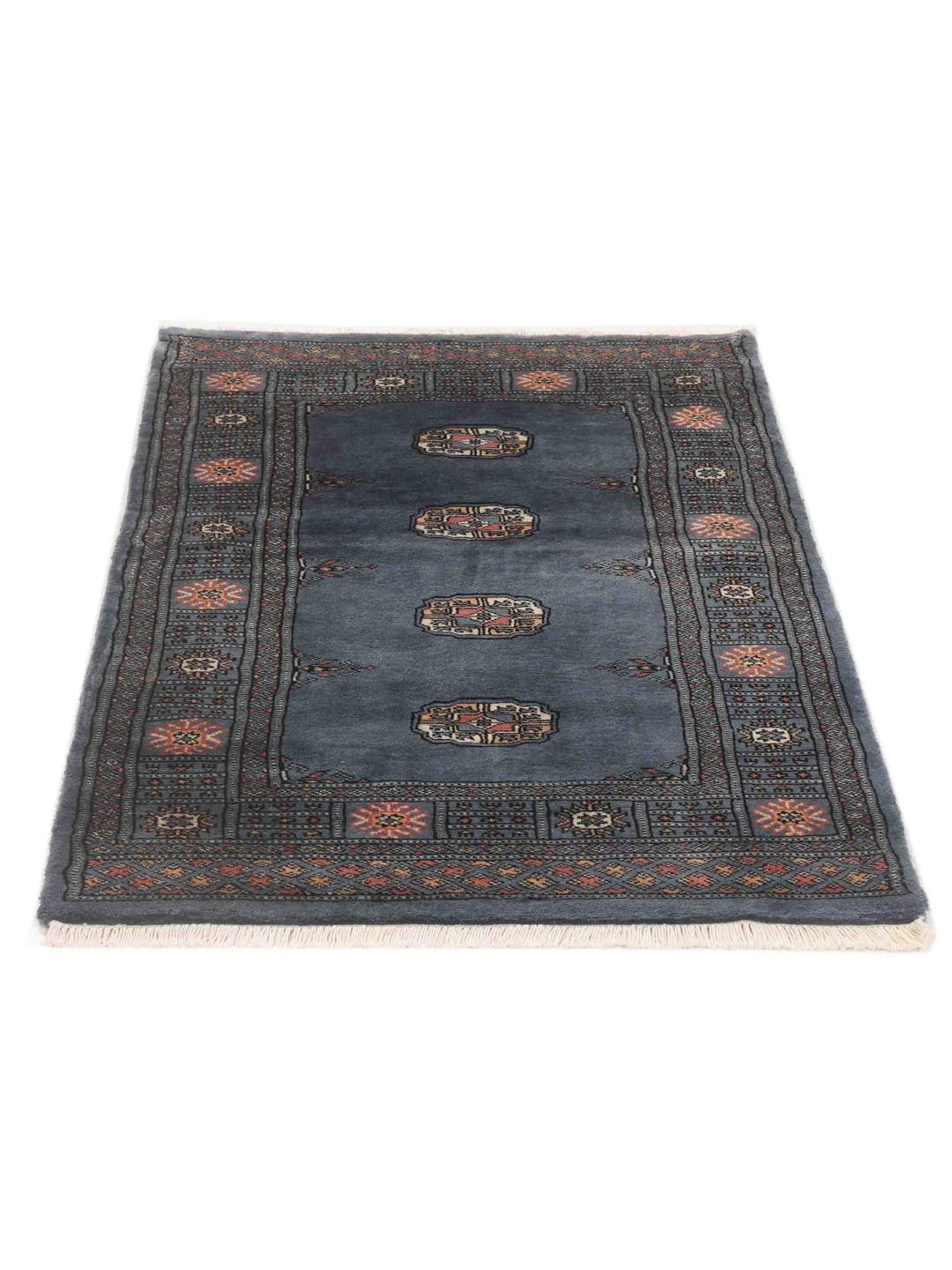
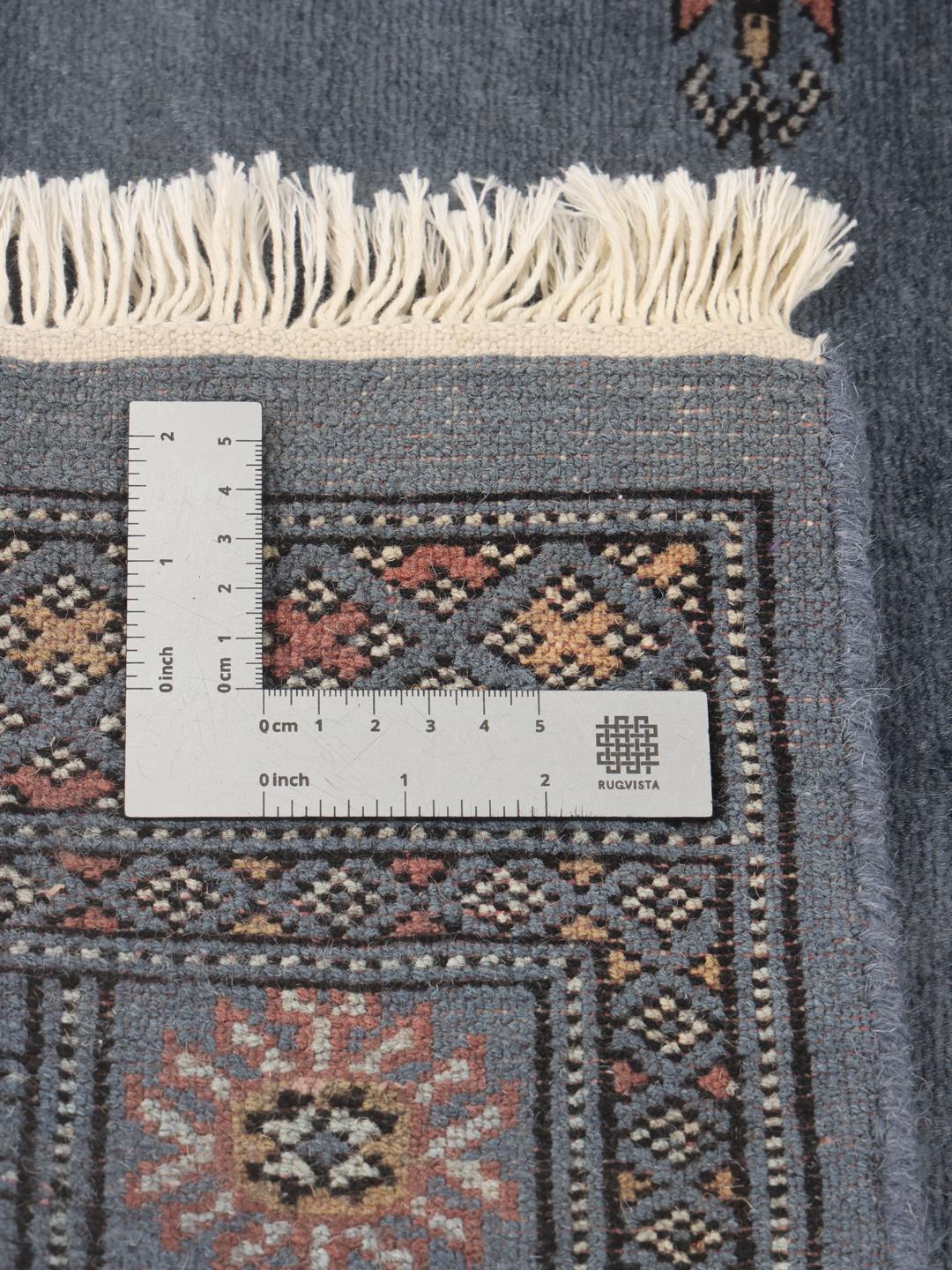
Visually, these rugs are defined by their rhythmic, repeating patterns known as guls, which are often octagonal or elephant-foot medallions. This particular piece showcases a beautiful, simplified iteration of these motifs, framed by intricate borders that reflect the precision of the weaver. The use of blue as a primary field colour is a refreshing departure from the traditional deep reds, offering a versatile aesthetic that feels both timeless and modern.
Owning a hand-knotted Pakistan Bokhara is an investment in cultural heritage and skilled artistry. These rugs are collected not only for their beauty but for the stories they tell through their motifs and the sheer human effort required to bring them to life. By bringing one into your home, you are preserving a craft tradition that has been passed down through generations, ensuring that this history continues to be appreciated for years to come.