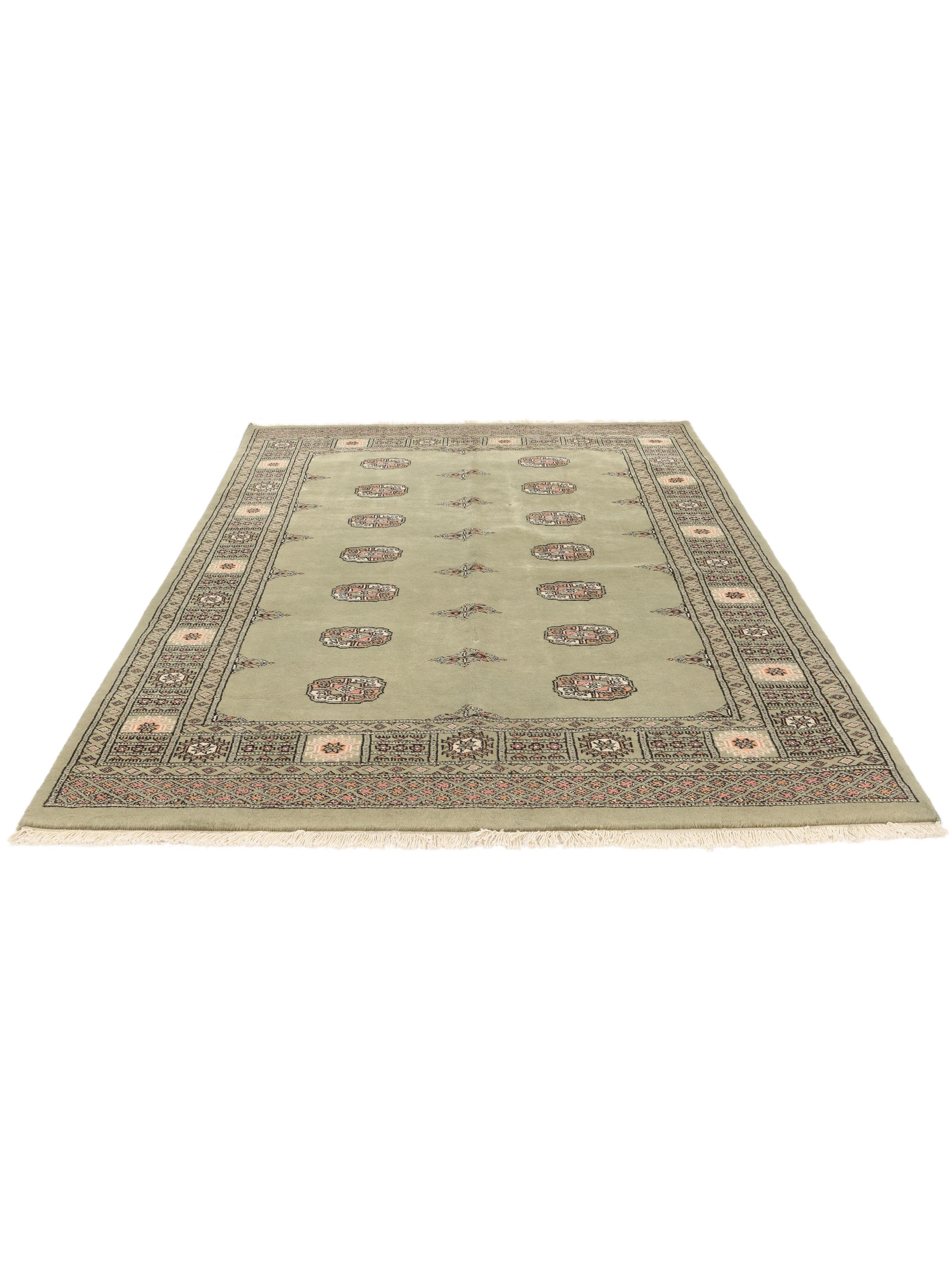
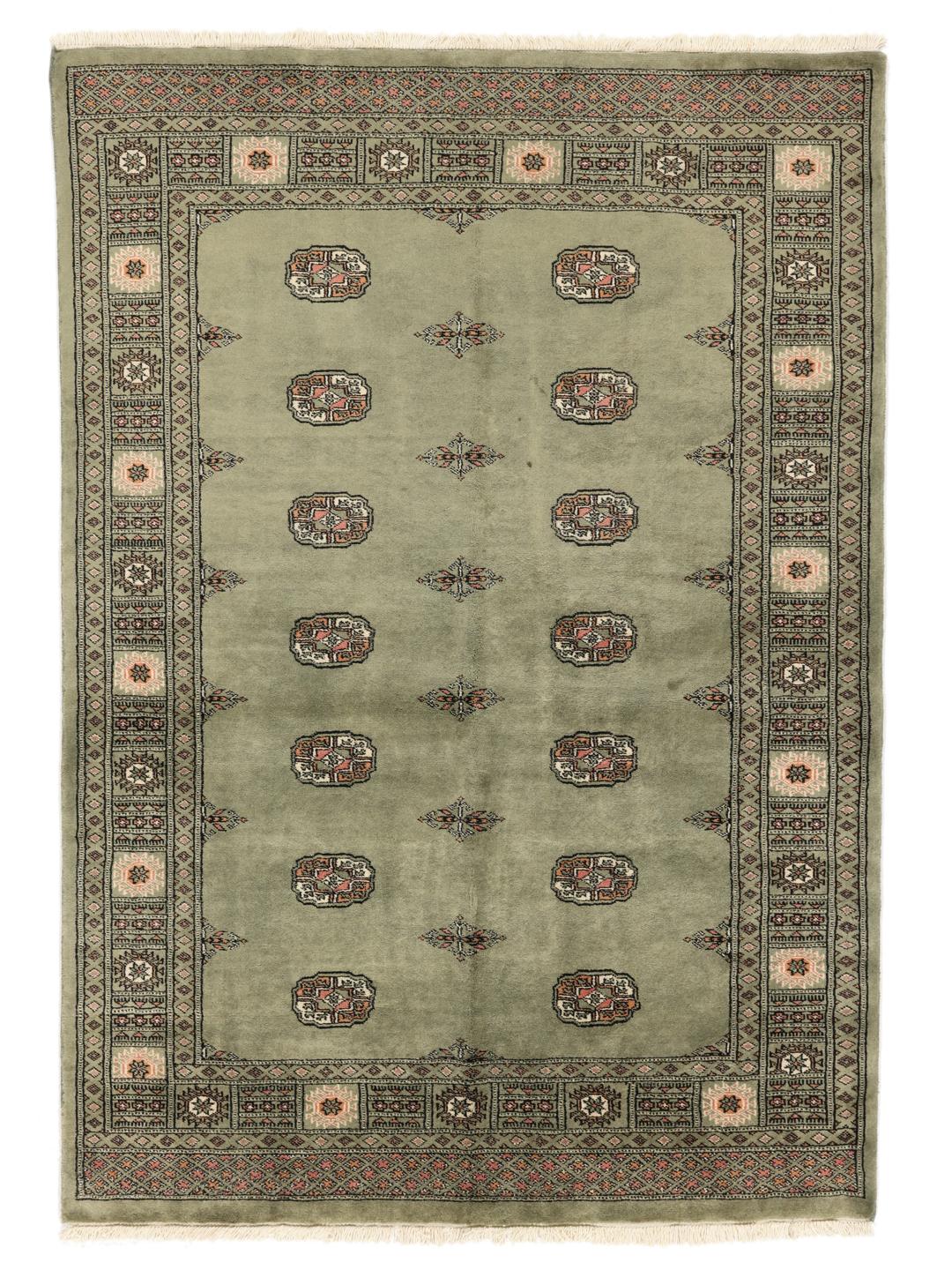
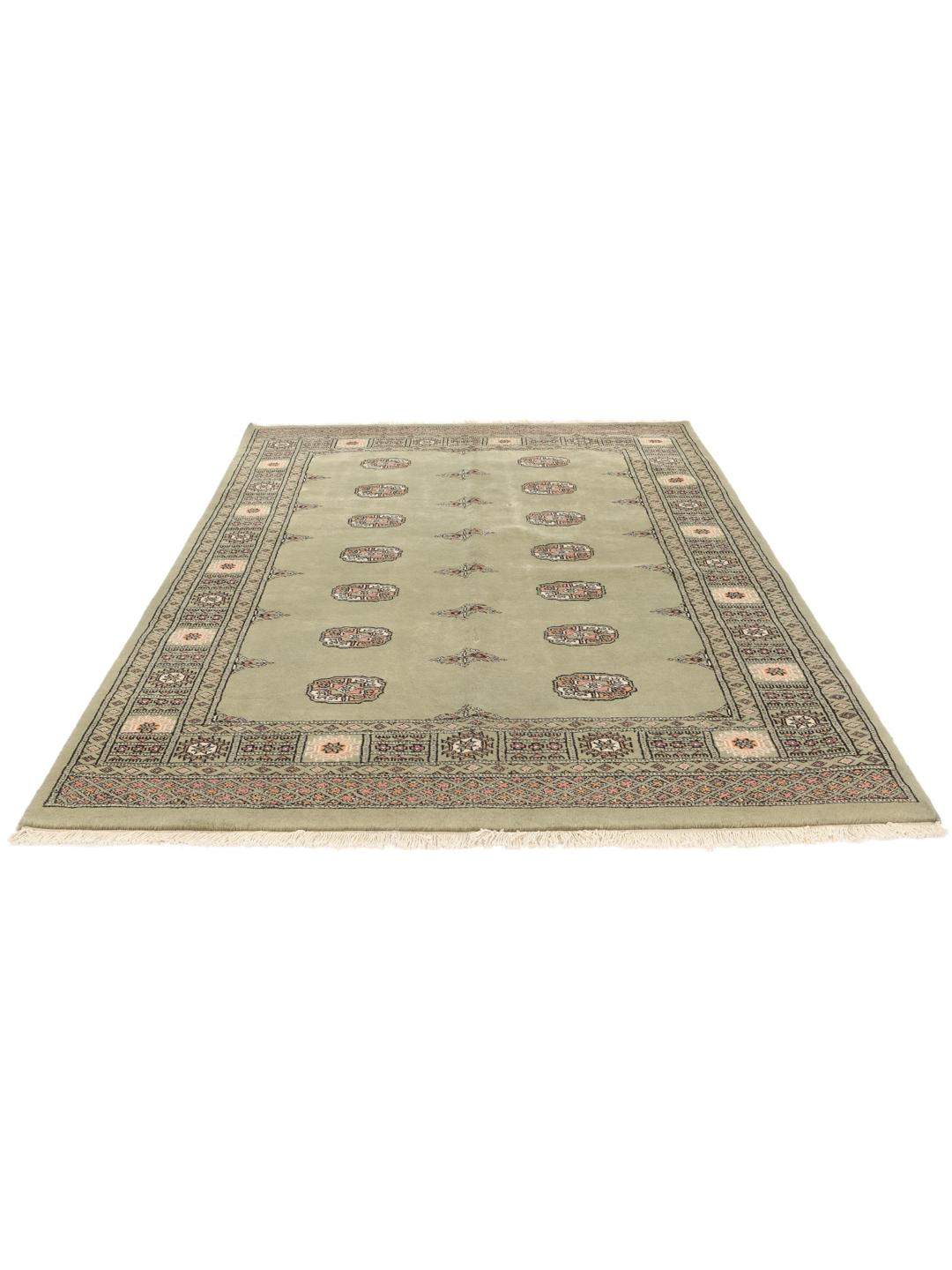
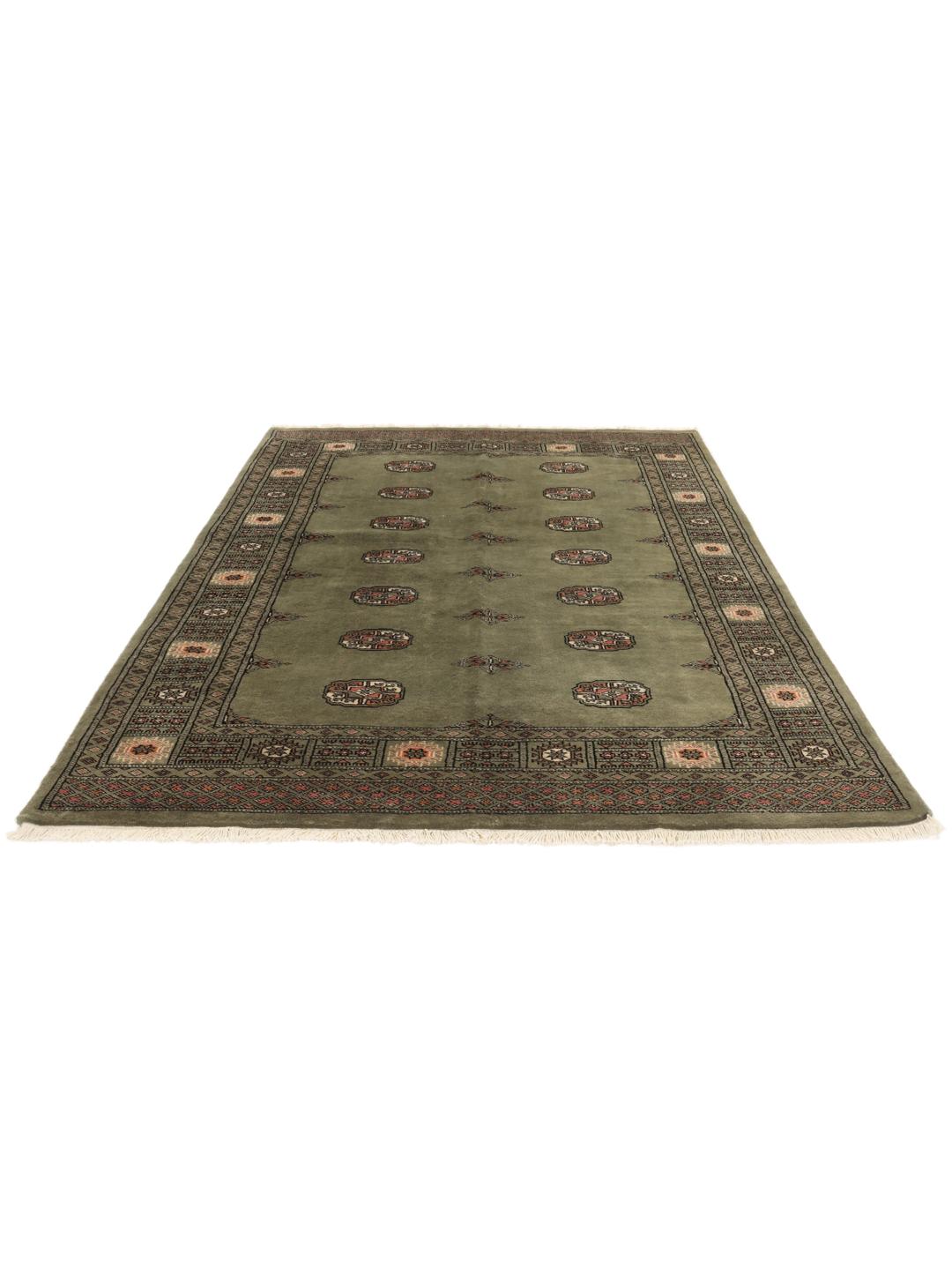
Bokhara rugs are deeply rooted in the history of Central Asian nomadic traditions, though today the finest examples of this style are predominantly woven in Pakistan. These rugs take their name from the ancient Silk Road city of Bukhara, a historic hub for trade and textile artistry. Over generations, the techniques and designs migrated, evolving into the refined, high-quality pieces we admire today, which continue to honour their nomadic heritage through precise, repetitive patterns.
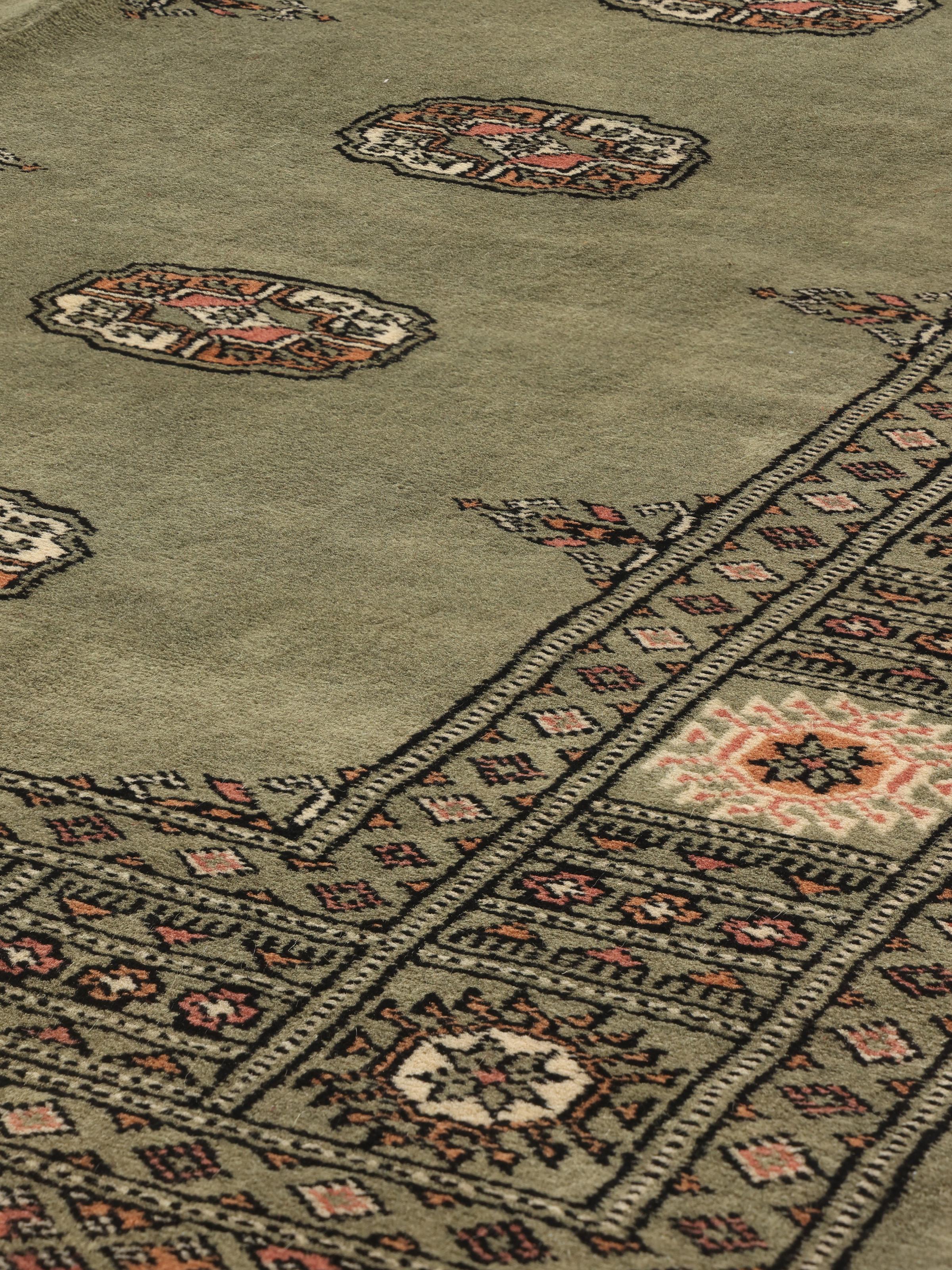
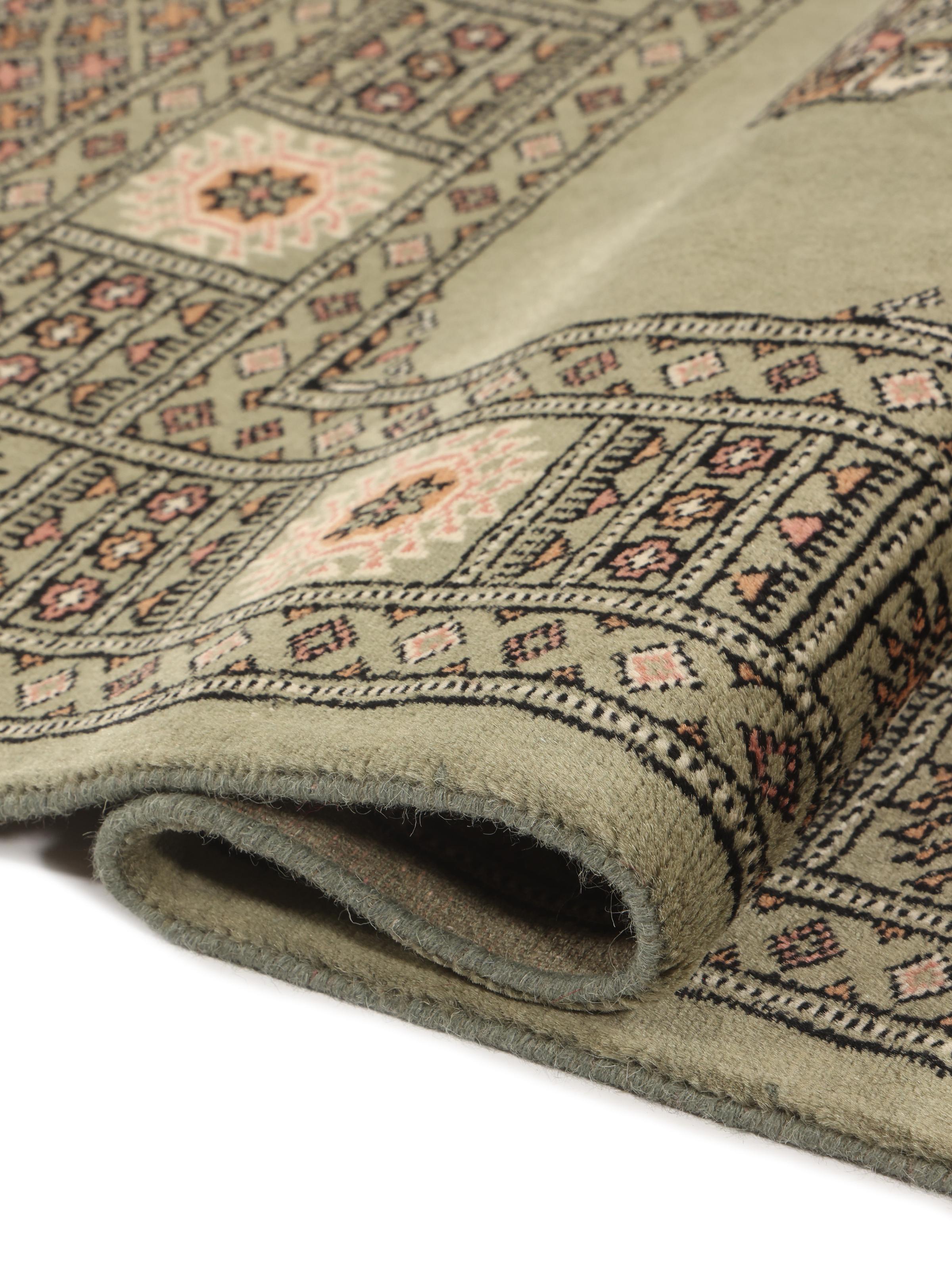
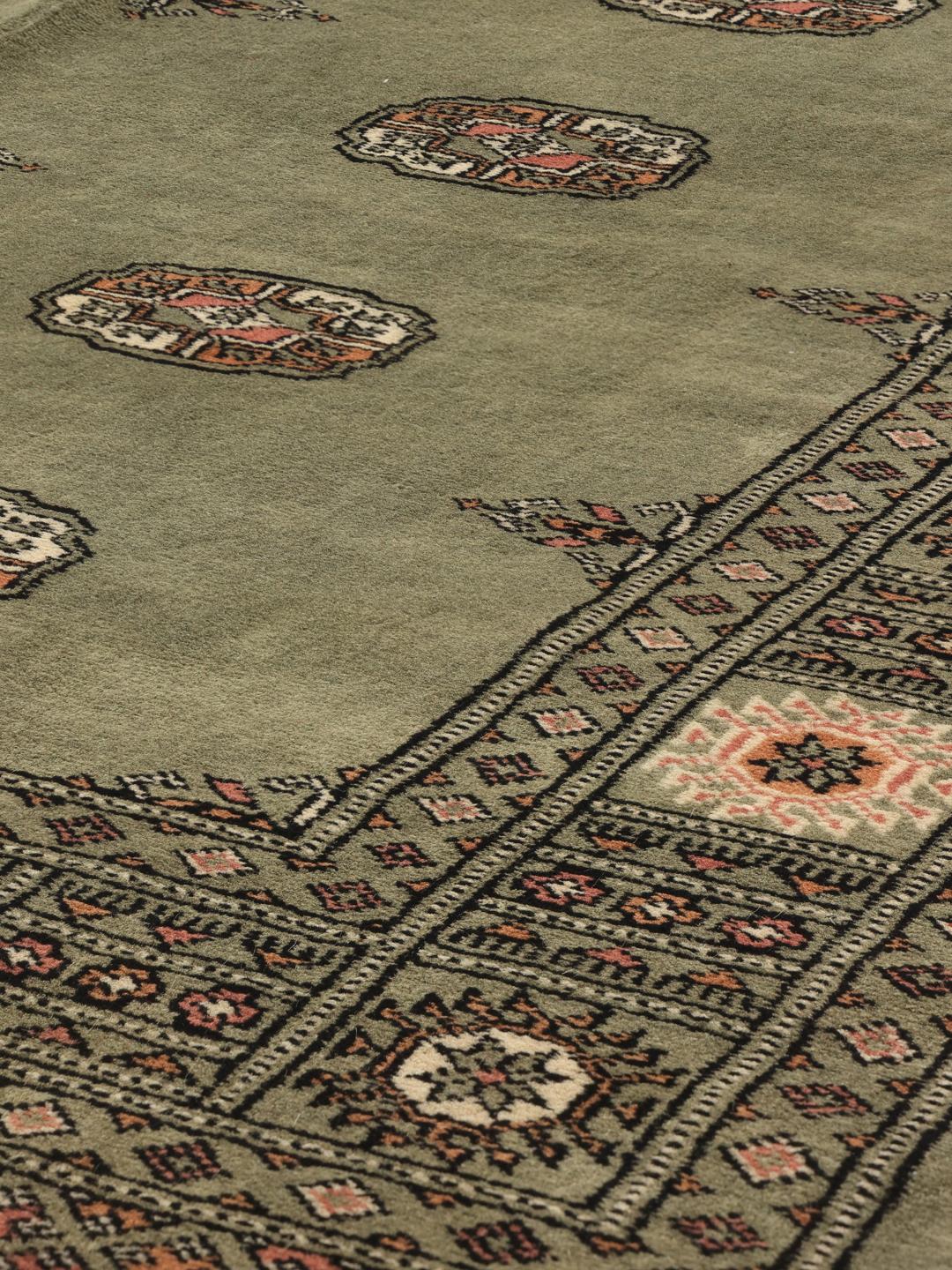
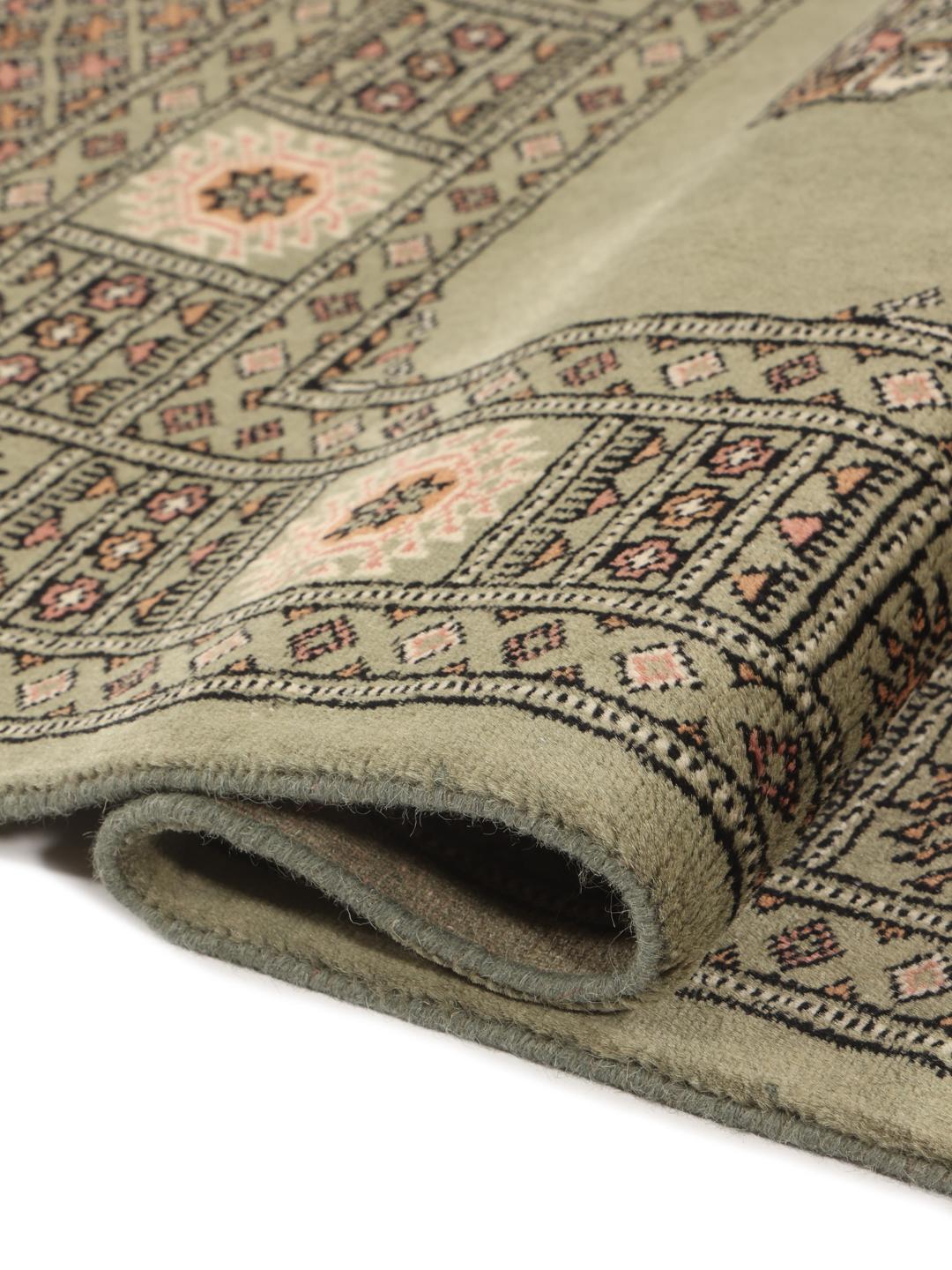
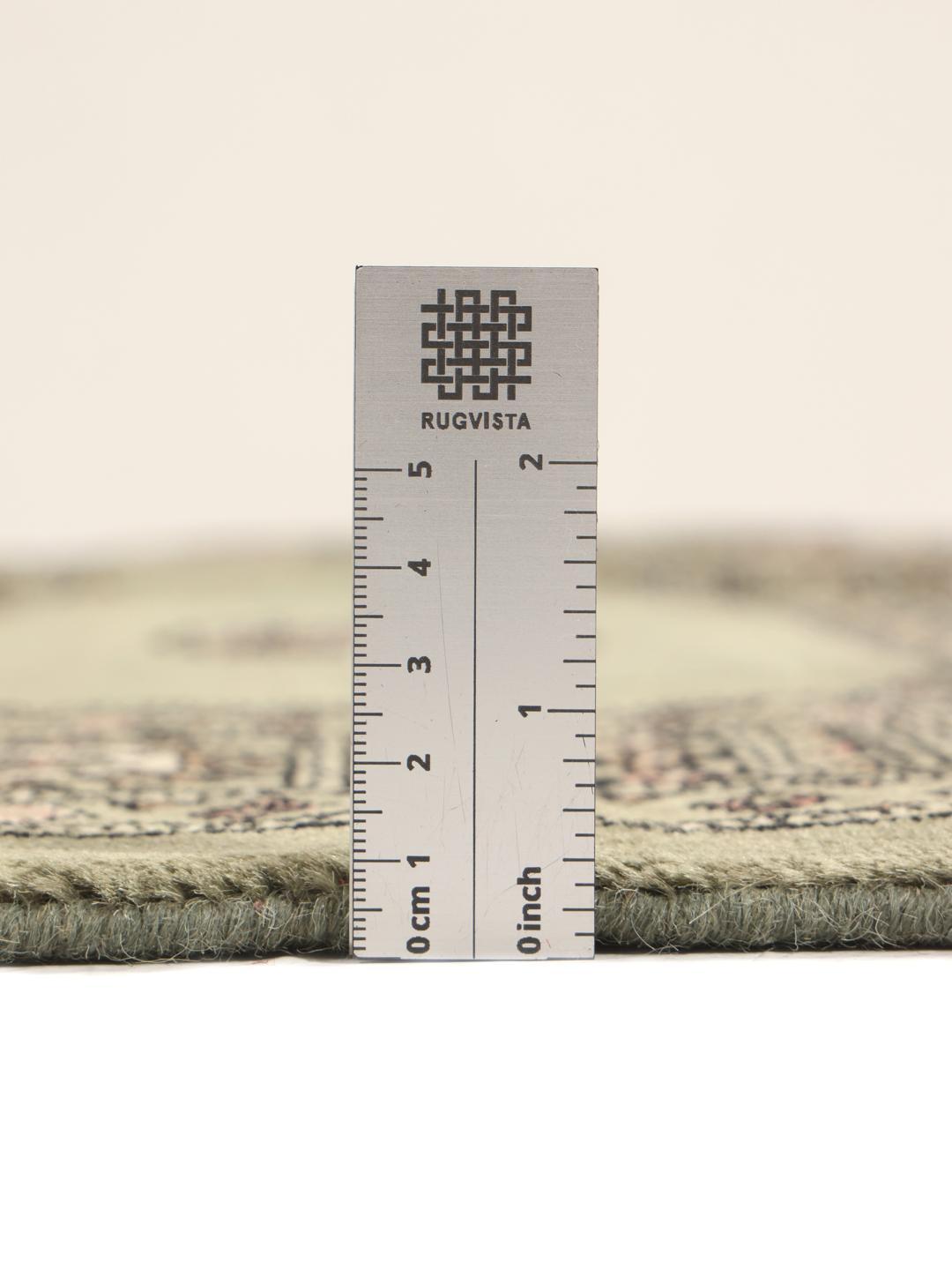
The '3ply' terminology refers to the construction of the wool pile, where three individual strands of yarn are twisted together before being knotted. This technical choice is significant because it results in a much thicker, more durable, and more lustrous pile than single-ply alternatives. For the owner, this means a rug that not only feels exceptionally soft and dense underfoot but also maintains its vibrant look and structural strength despite the demands of daily life.
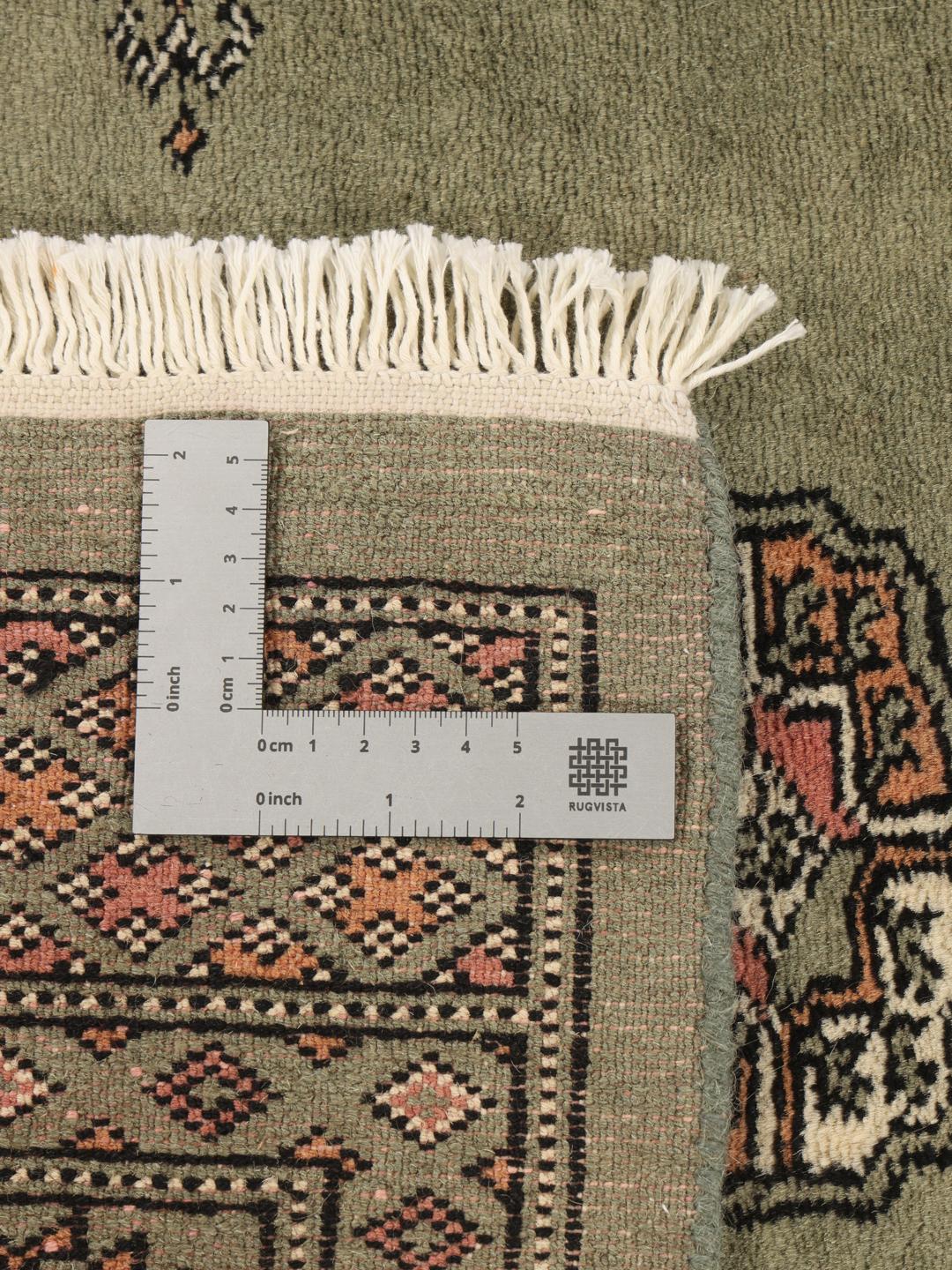
Visually, these rugs are defined by their iconic gul motifs—octagonal or elephant-foot shaped medallions arranged in clean, repeating rows. The borders are typically formal and geometric, framing the field with intricate, repetitive detail. While traditional colours often lean toward rich reds, this particular piece features a sophisticated sage green, offering a versatile and contemporary take on a classic design that remains grounded in historical tradition.
Collecting a Pakistan Bokhara rug is an act of preserving a specific cultural legacy. They are prized by enthusiasts for their balance, symmetry, and the immense human effort required to create them. Owning one is a sign of an appreciation for enduring skill and cultural depth, making it a masterpiece that brings both character and a sense of history into a modern home.