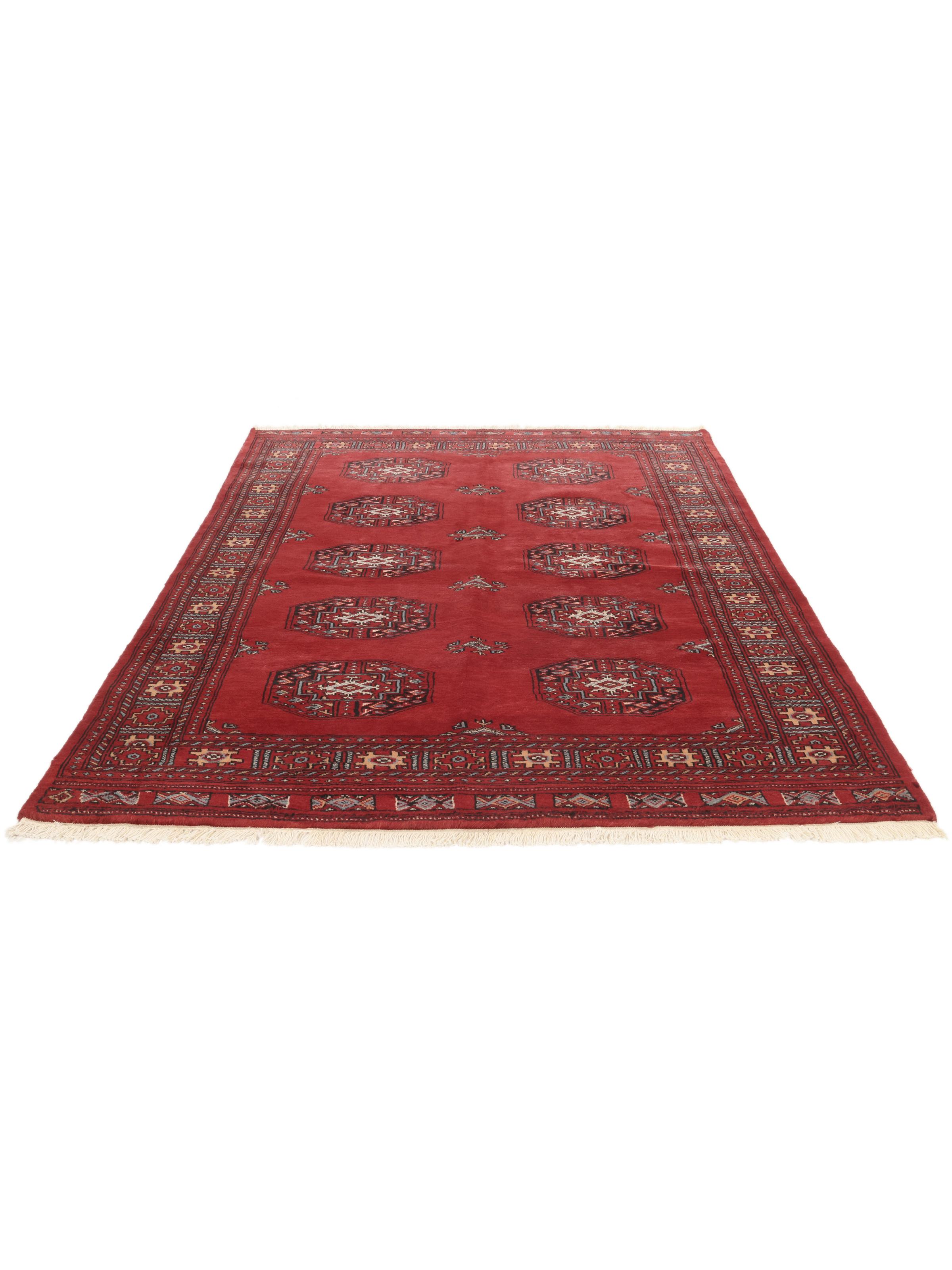
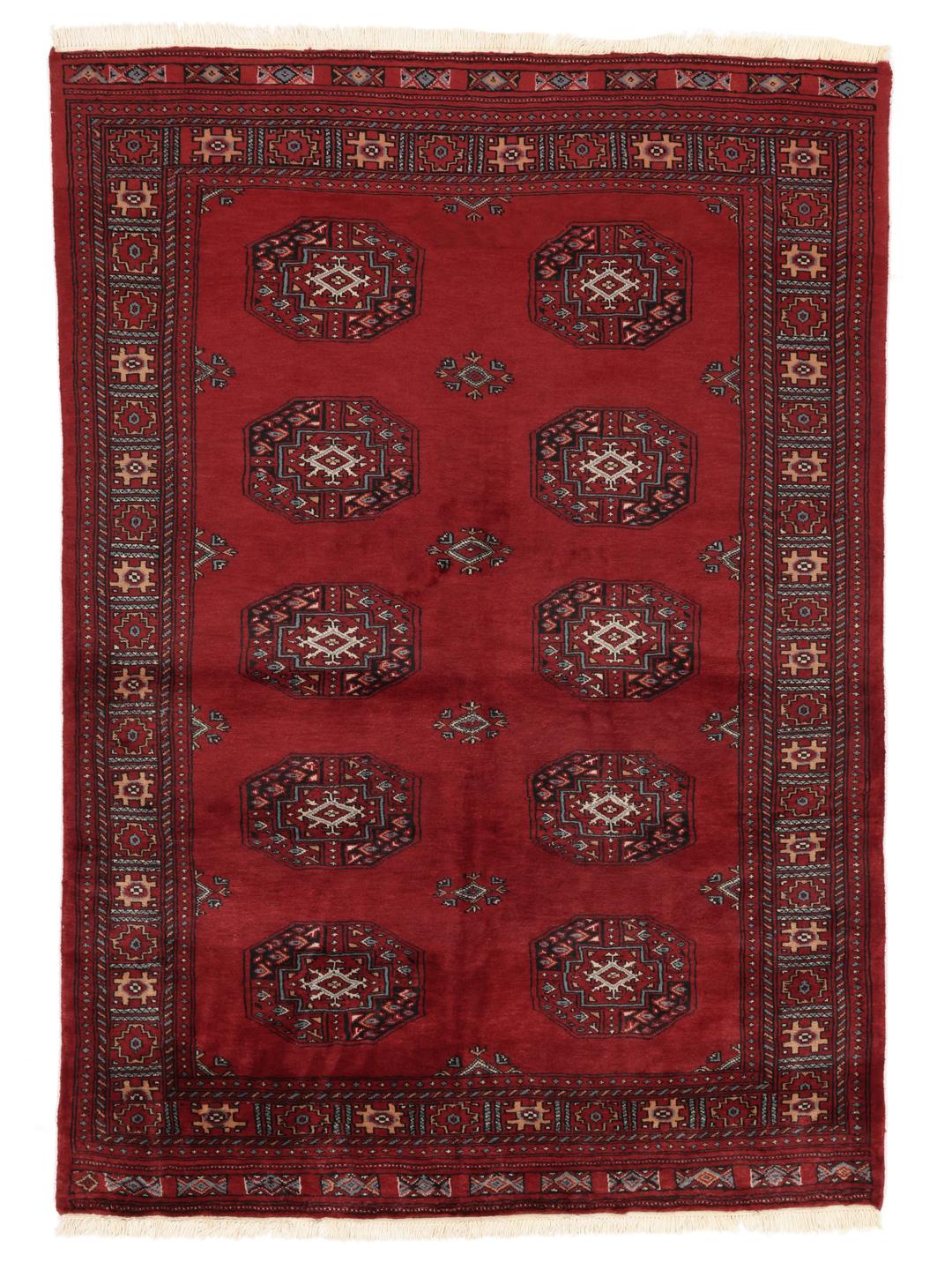
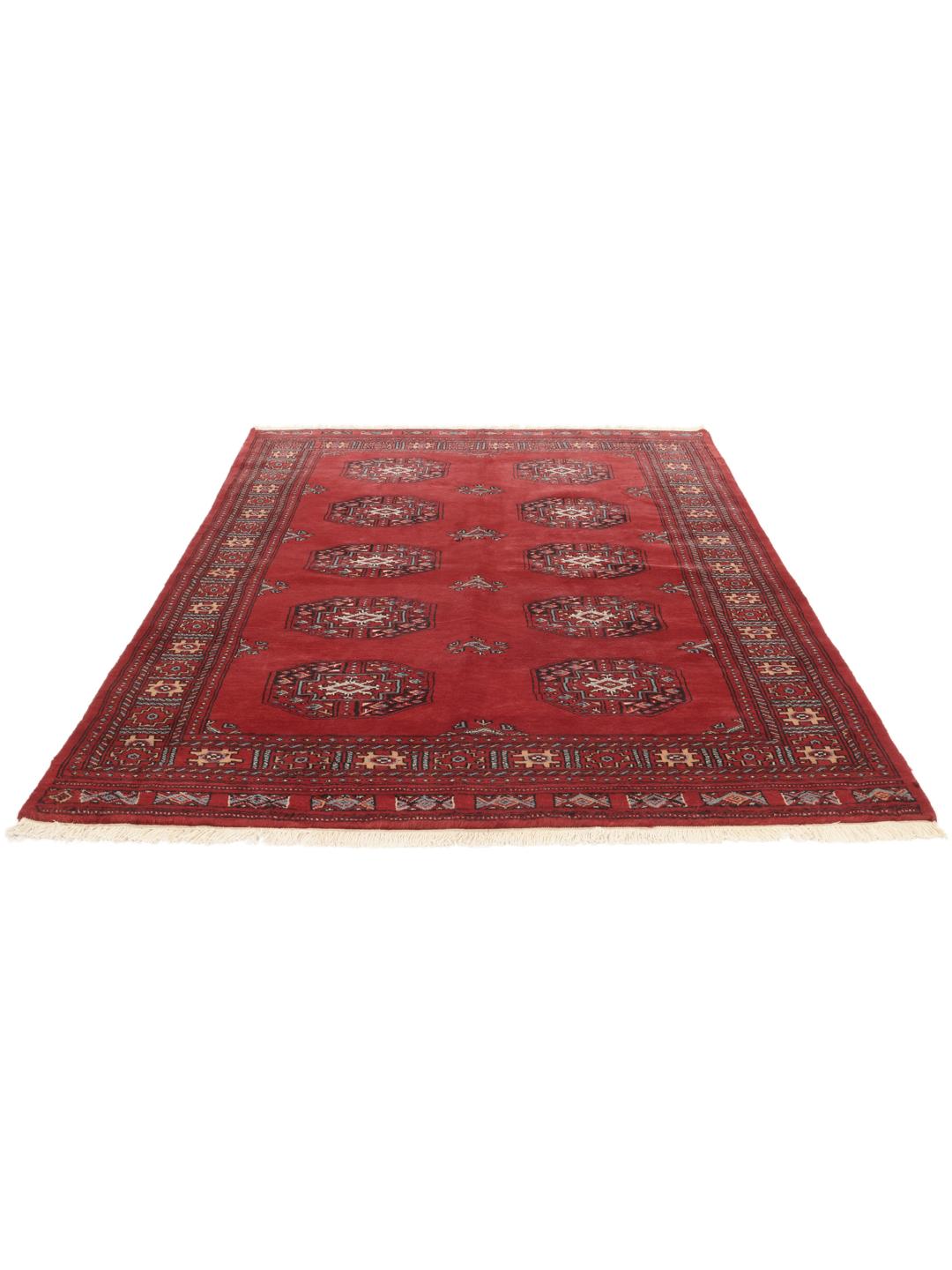
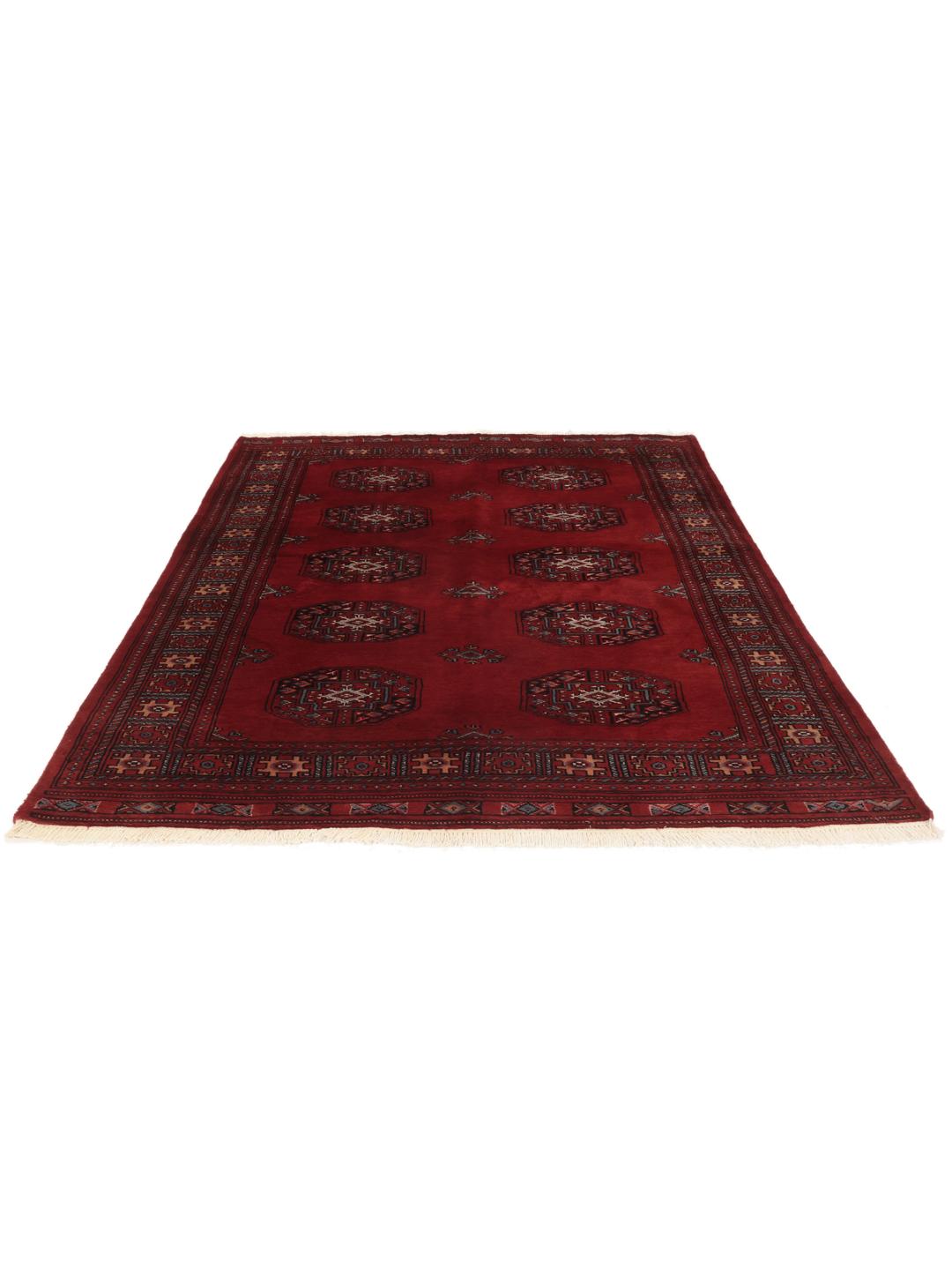
The Bokhara rug tradition is one of the most recognised in the world, taking its name from the ancient Silk Road city of Bukhara. While its roots are deeply embedded in the nomadic tribes of Central Asia, the finest examples of these rugs today are expertly woven in Pakistan. This evolution reflects the migration of weaving skills across borders, blending ancient tribal artistry with refined, modern production standards.
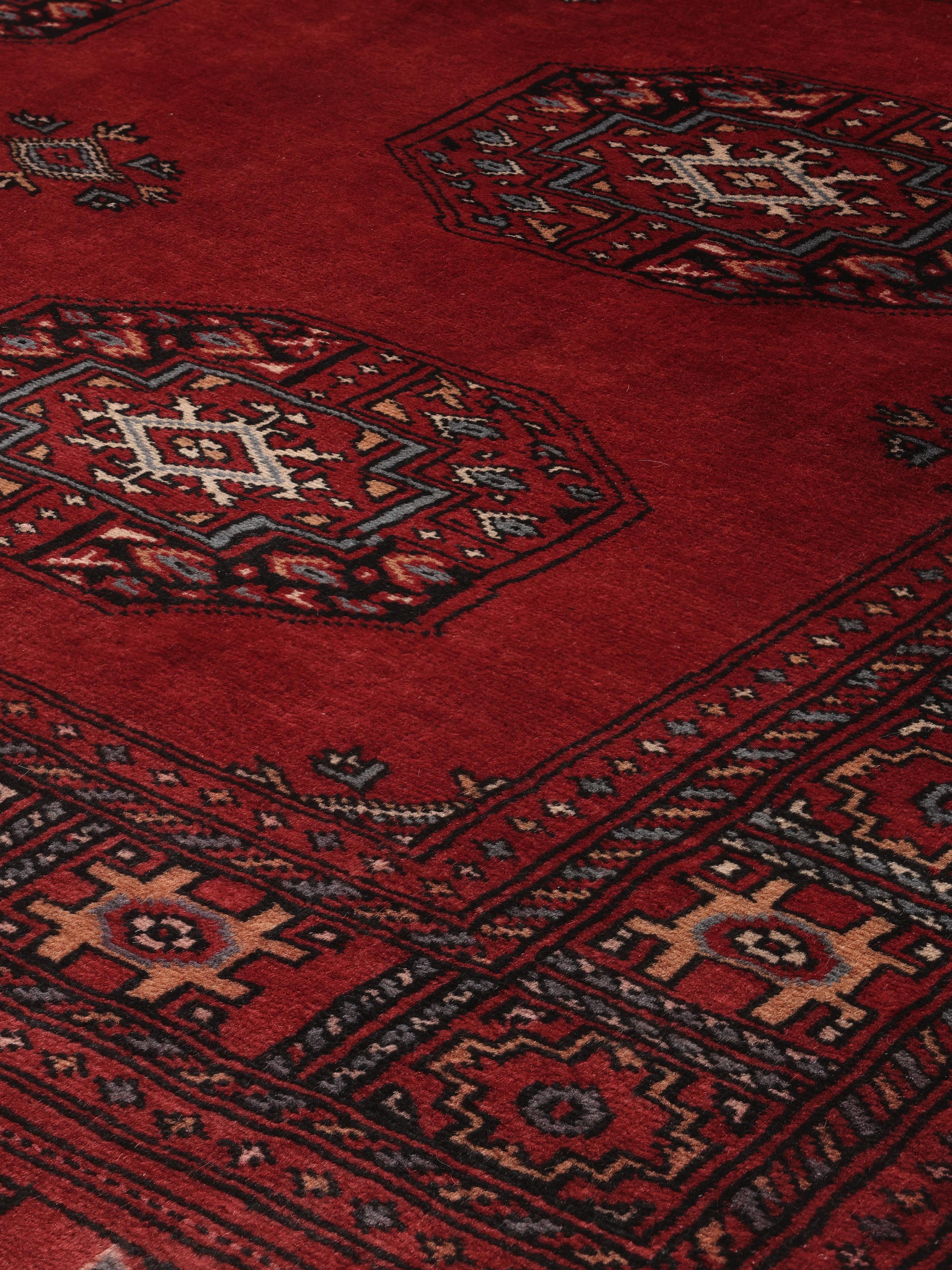
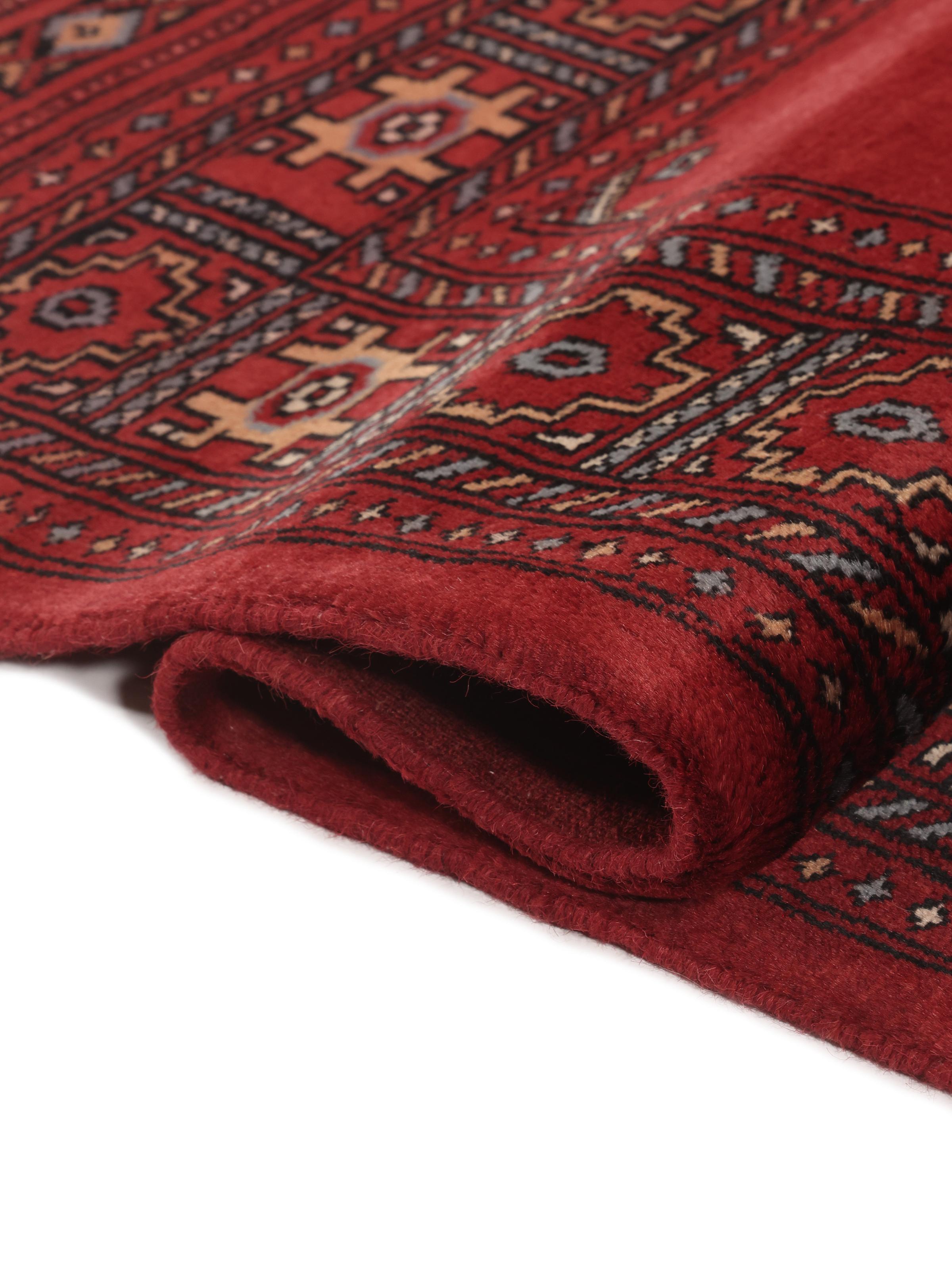
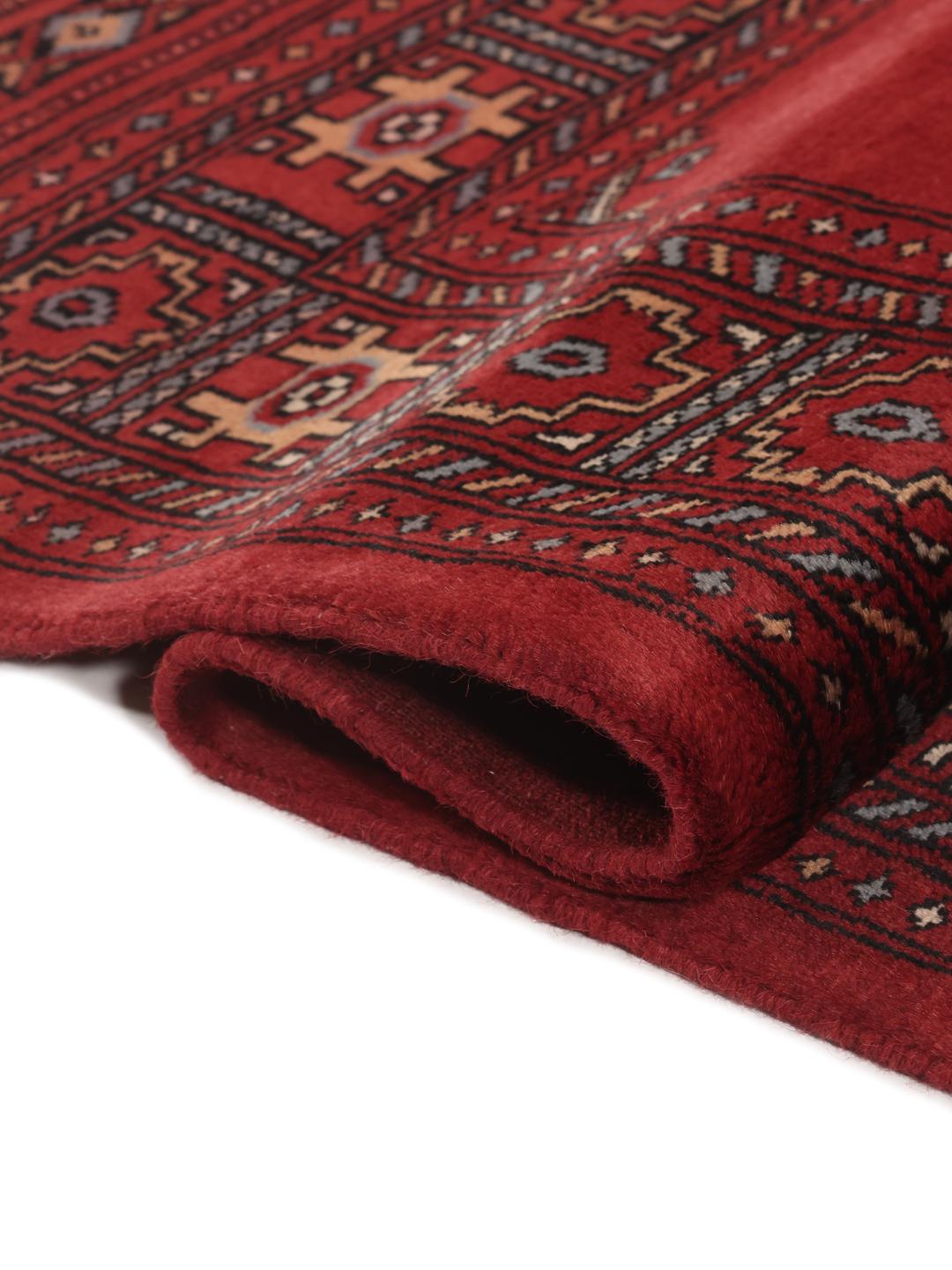
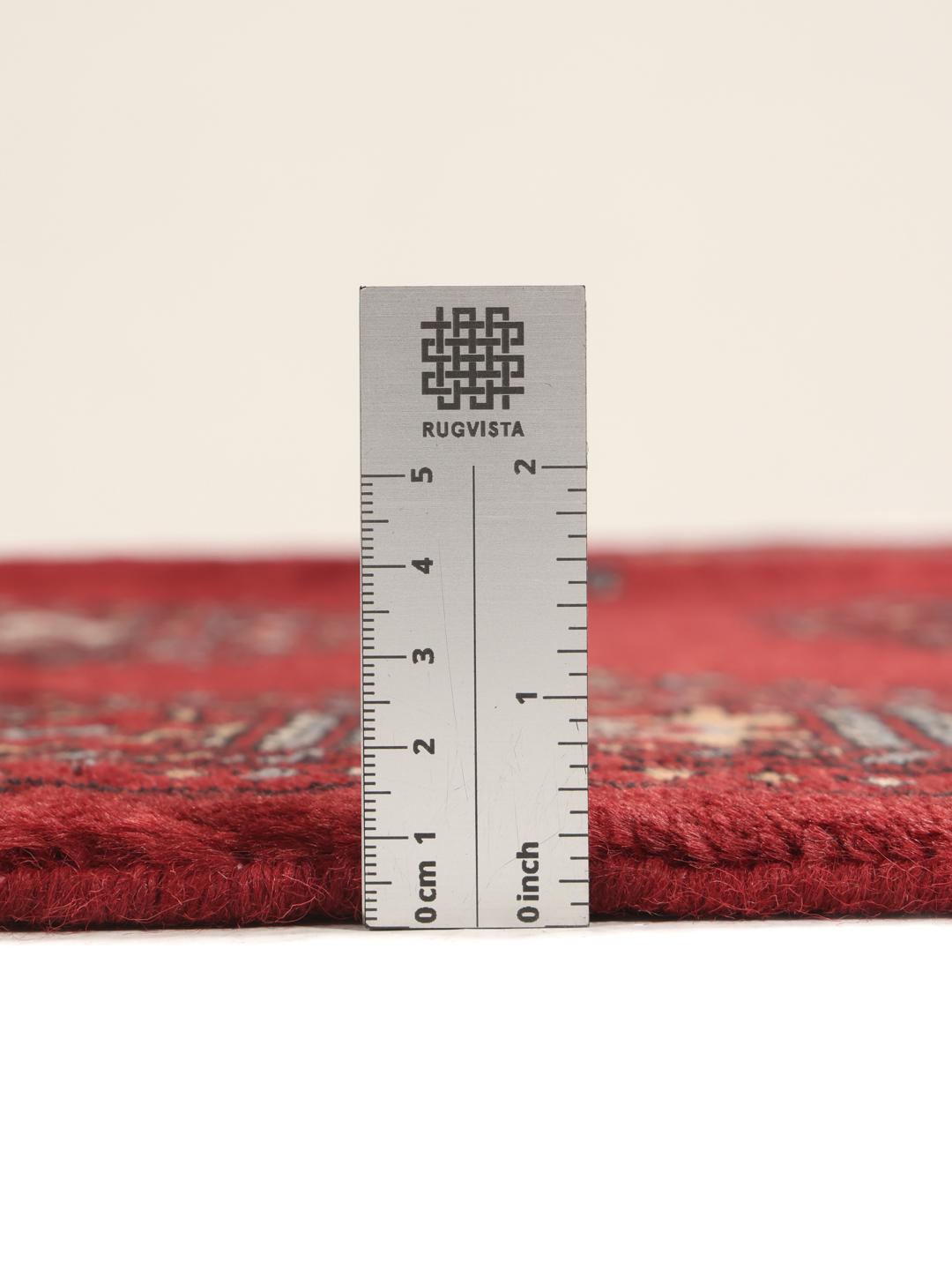
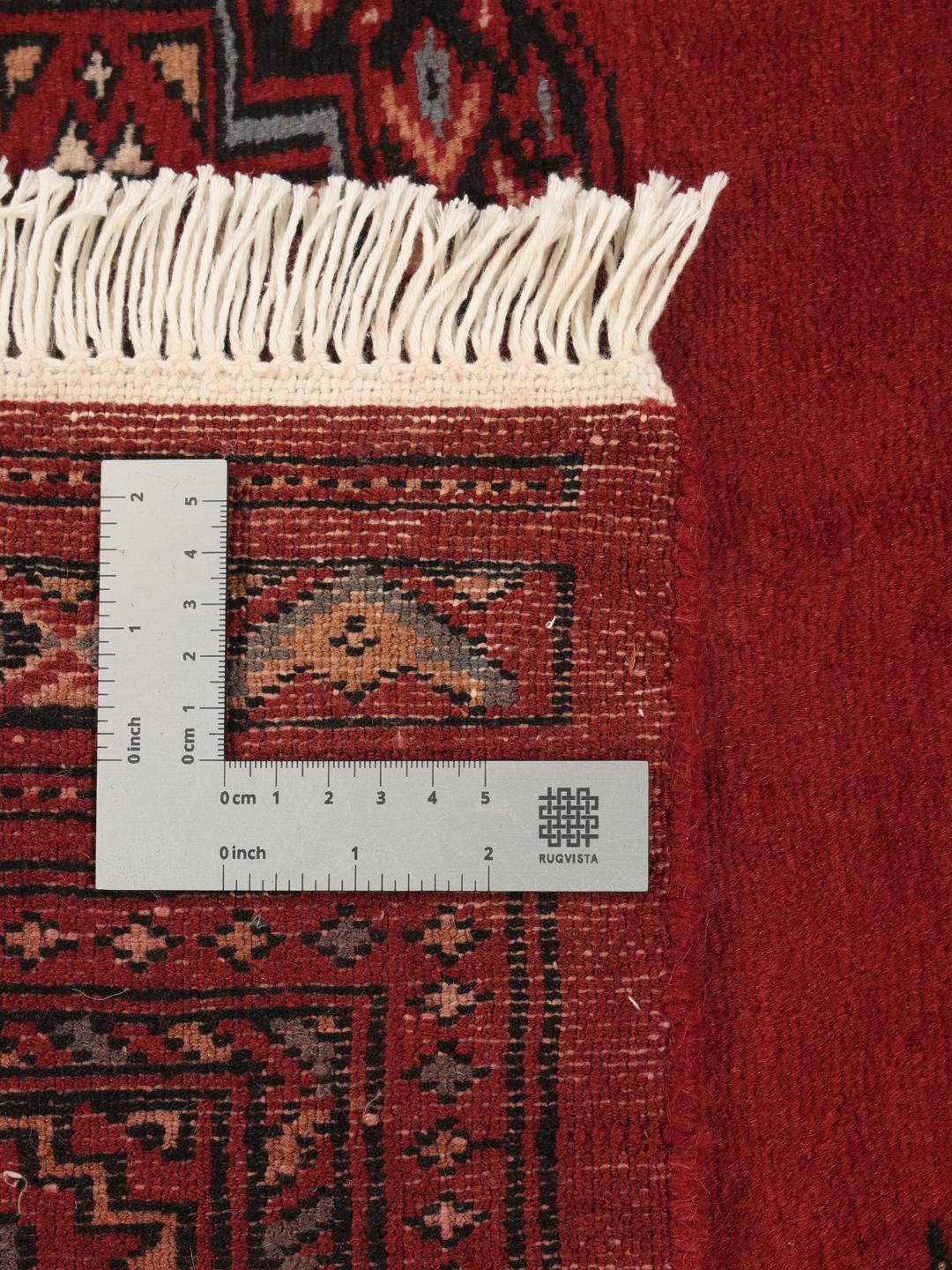
The 3-ply term in this rug's name is a mark of high-quality craftsmanship. By twisting three strands of wool together, the weavers create a pile that is thicker, more lustrous, and more resistant to wear. This technical choice is what gives the rug its signature bounce and depth, ensuring that the wool fibres remain upright and vibrant even with frequent use.
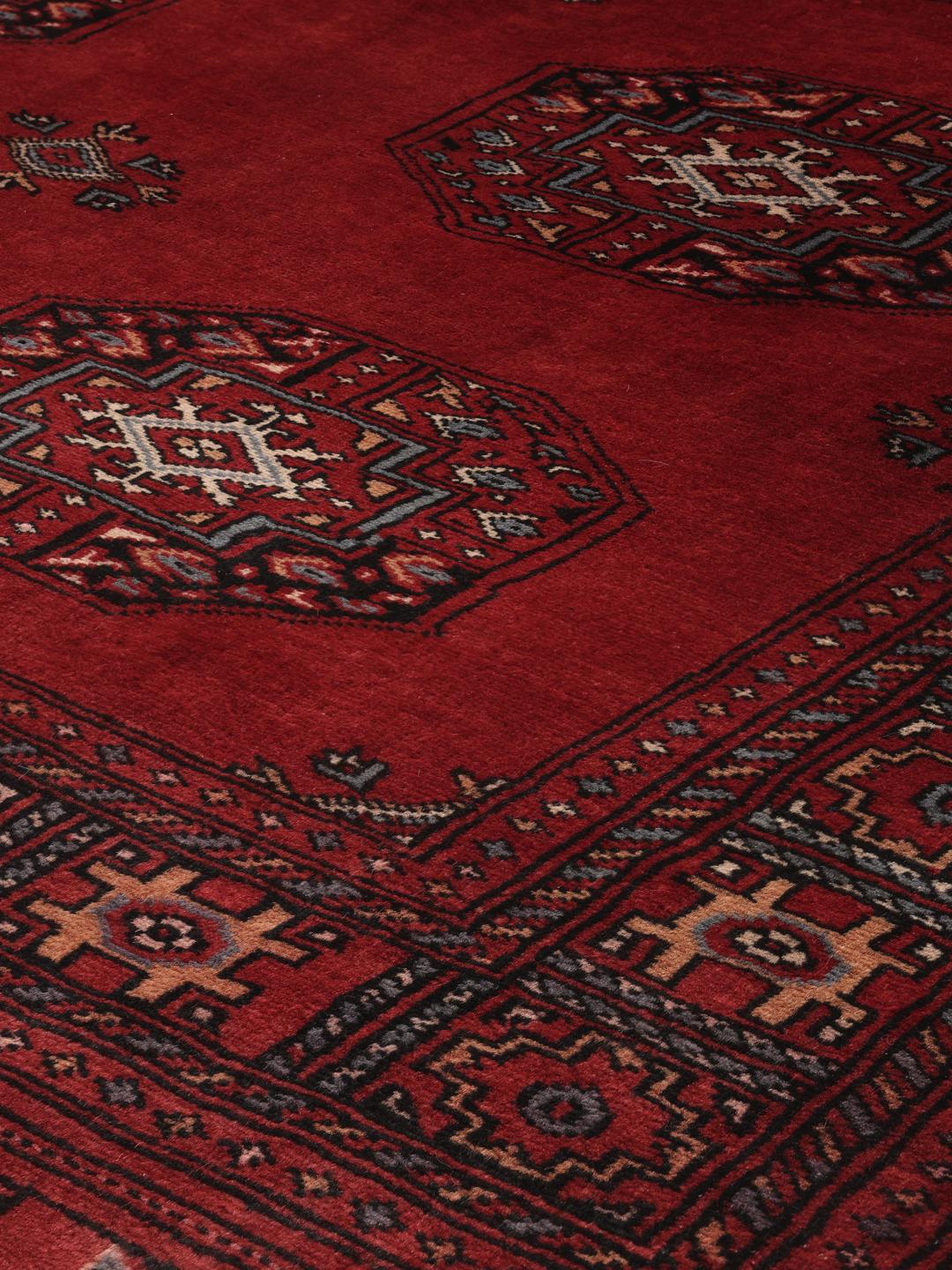
Visually, these rugs are defined by the repeating gul motif, which are octagonal, elephant-foot shaped medallions arranged in precise rows across the field. These patterns are enclosed by elaborate, formal borders that frame the centre design. The deep, saturated red used here is the traditional hallmark of the style, symbolising warmth and prosperity in the cultures from which these designs emerged.
Owning a hand-knotted Bokhara is an investment in a living tradition. These rugs are highly valued by collectors not just for their aesthetic beauty, but for the human skill and cultural history they represent. To bring one into your home is to connect with a legacy of artistry that has been passed down through generations, offering a sense of permanence and quality that is rare in today's world.