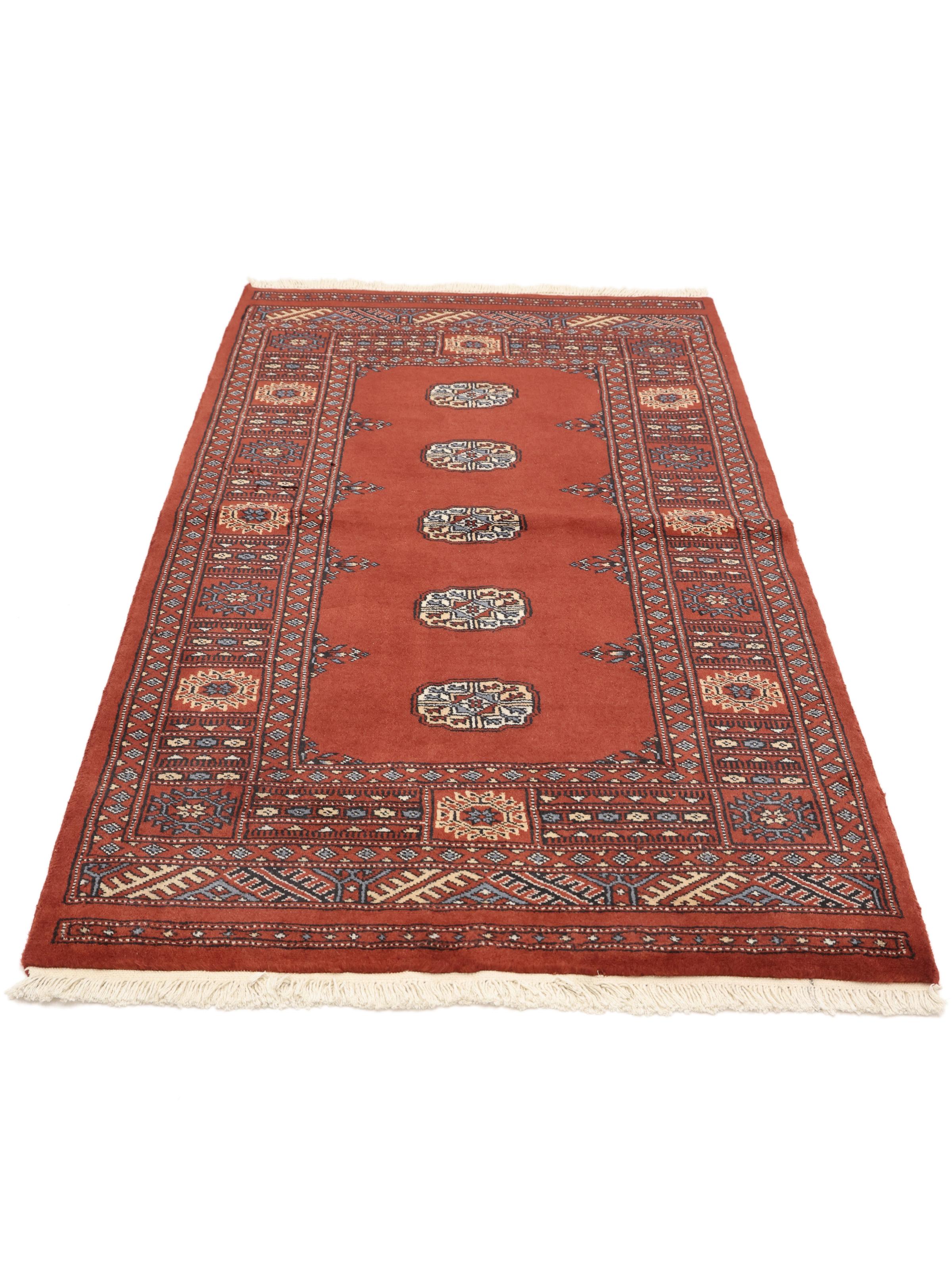
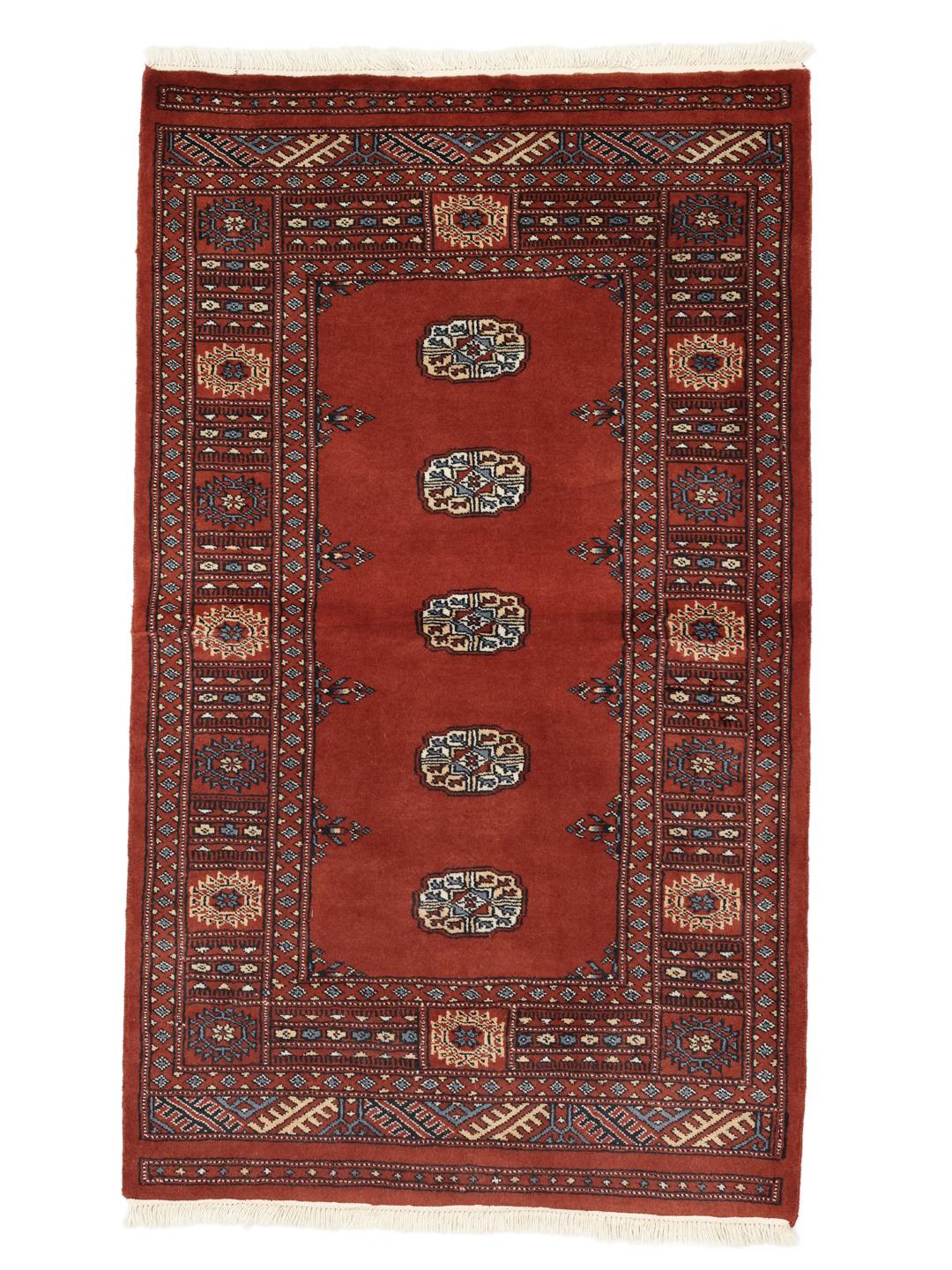
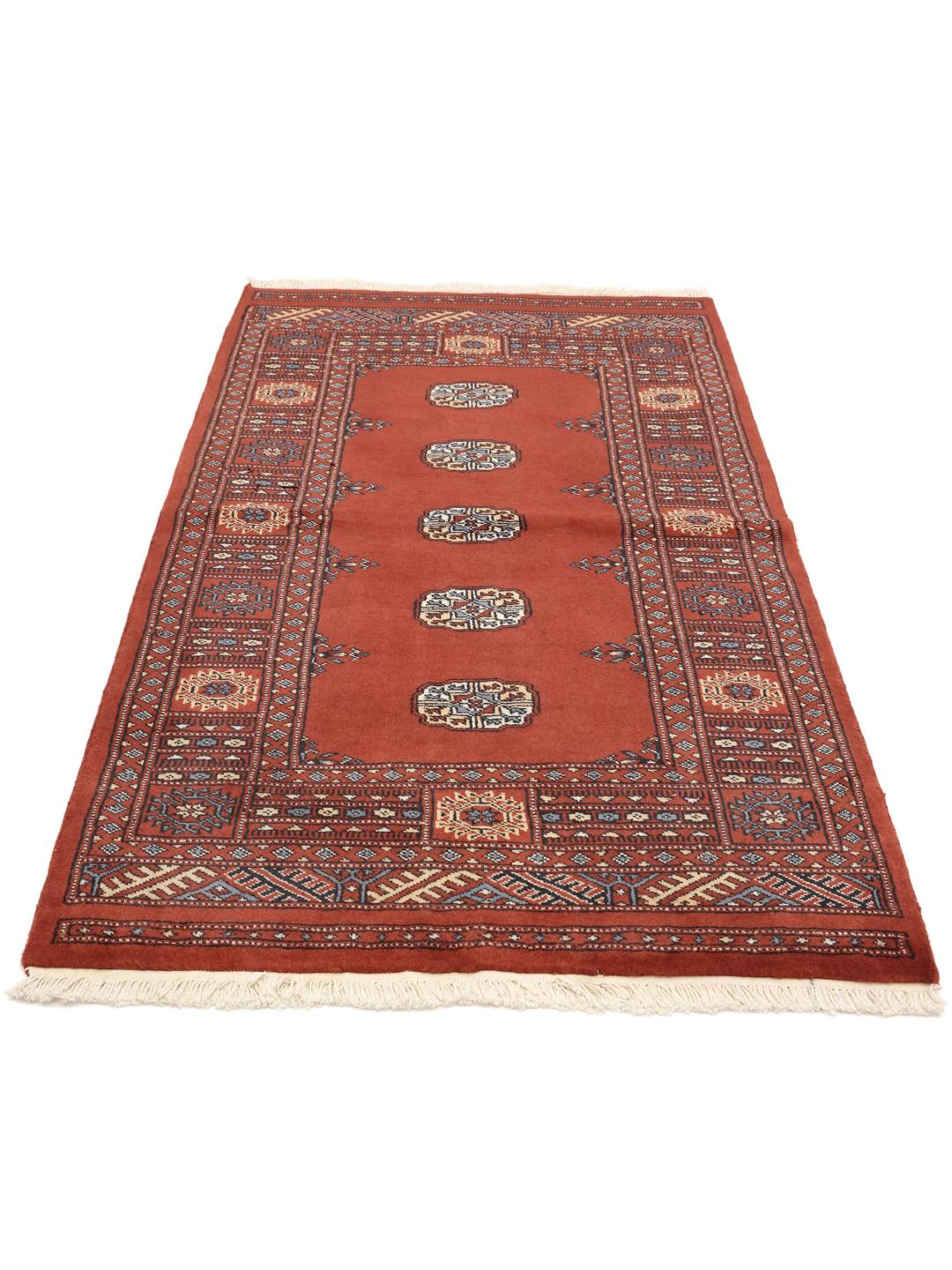
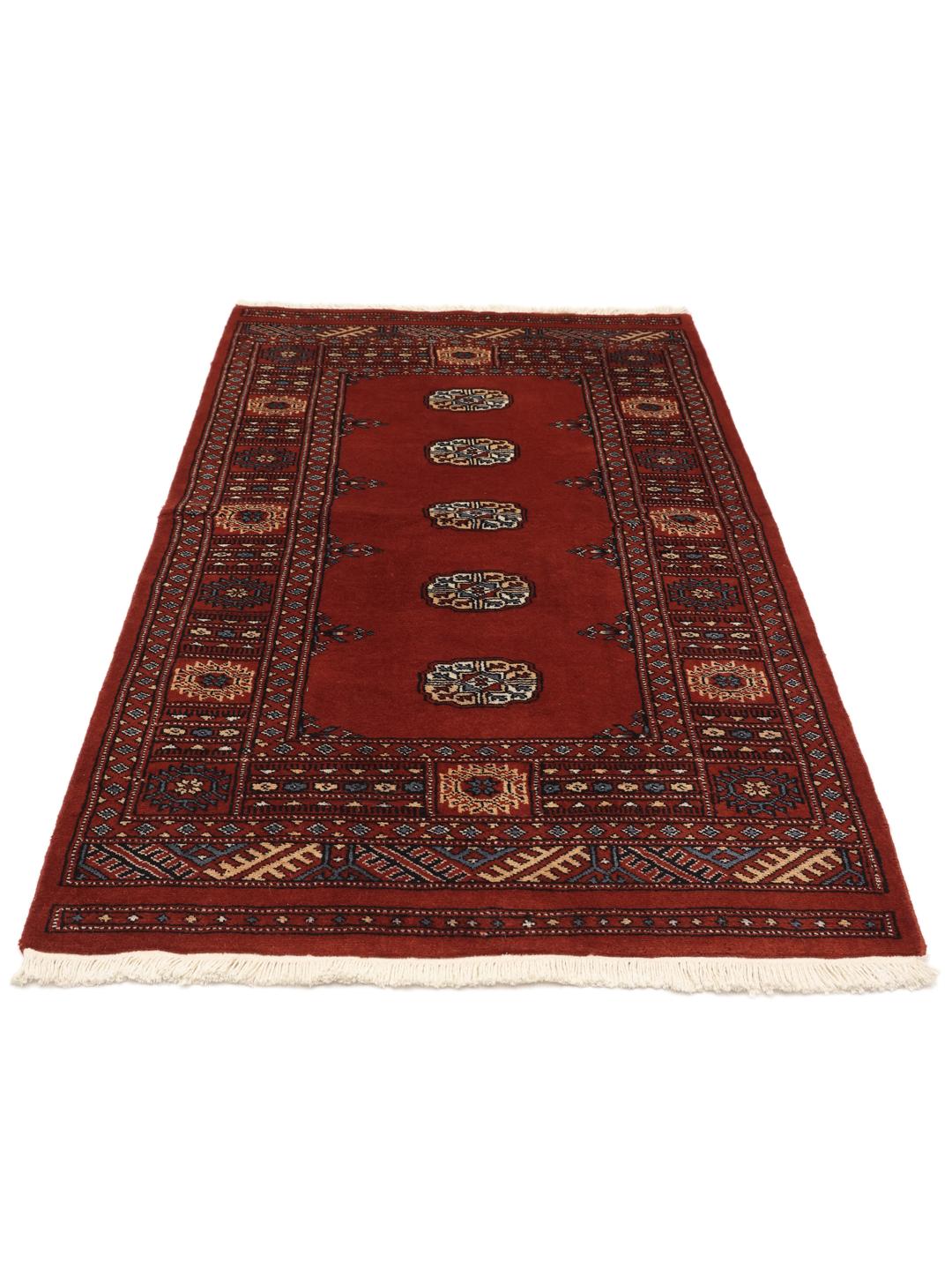
The Bokhara rug tradition is deeply rooted in the history of the ancient Silk Road, taking its name from the historic city of Bukhara in modern-day Uzbekistan. While these designs originated among nomadic tribes who needed portable, durable textiles for their tents, the craft has evolved significantly over centuries. Today, some of the most refined and high-quality examples are produced in Pakistan, where weavers have mastered the art of combining ancestral patterns with modern standards of excellence.
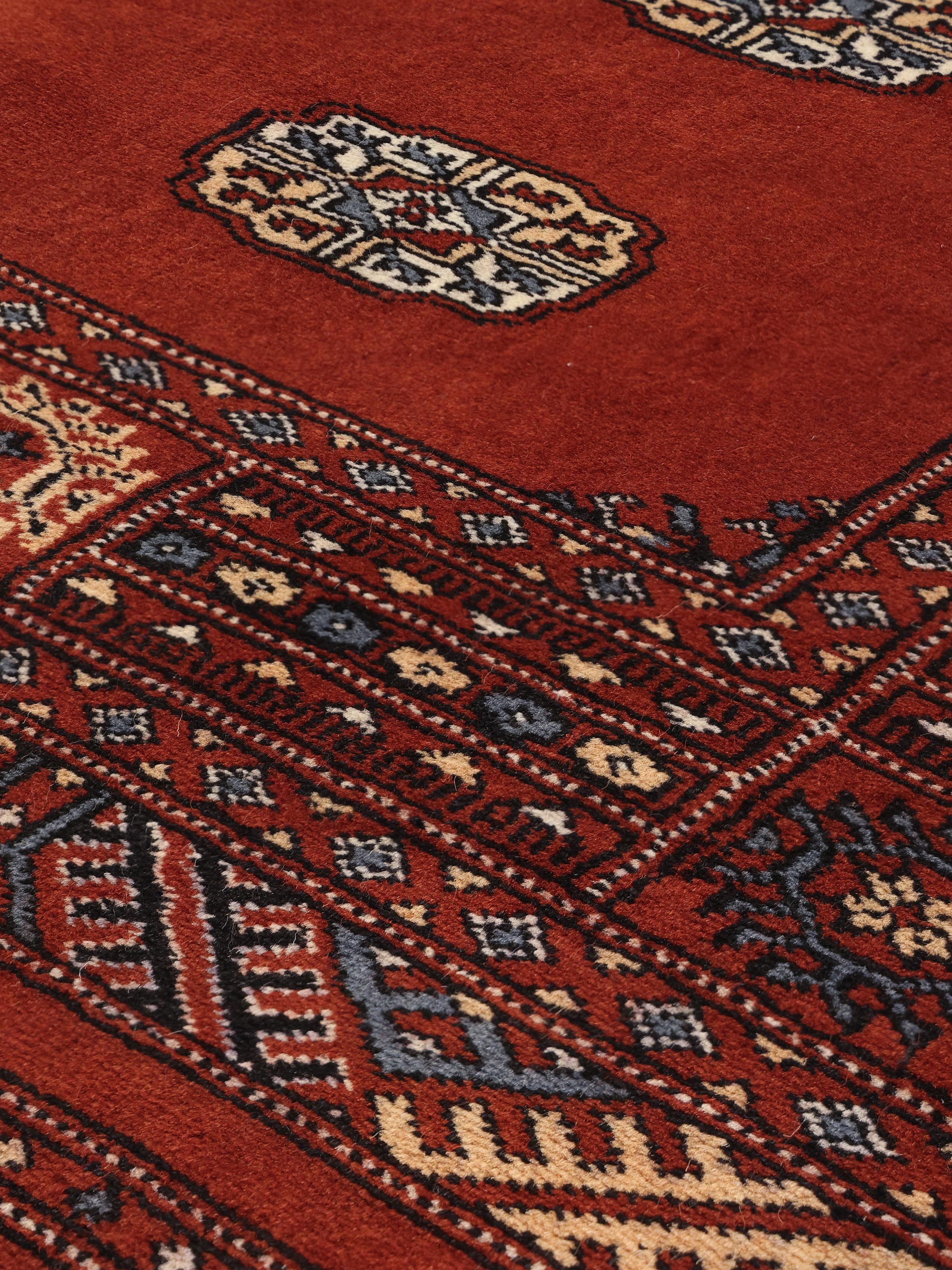
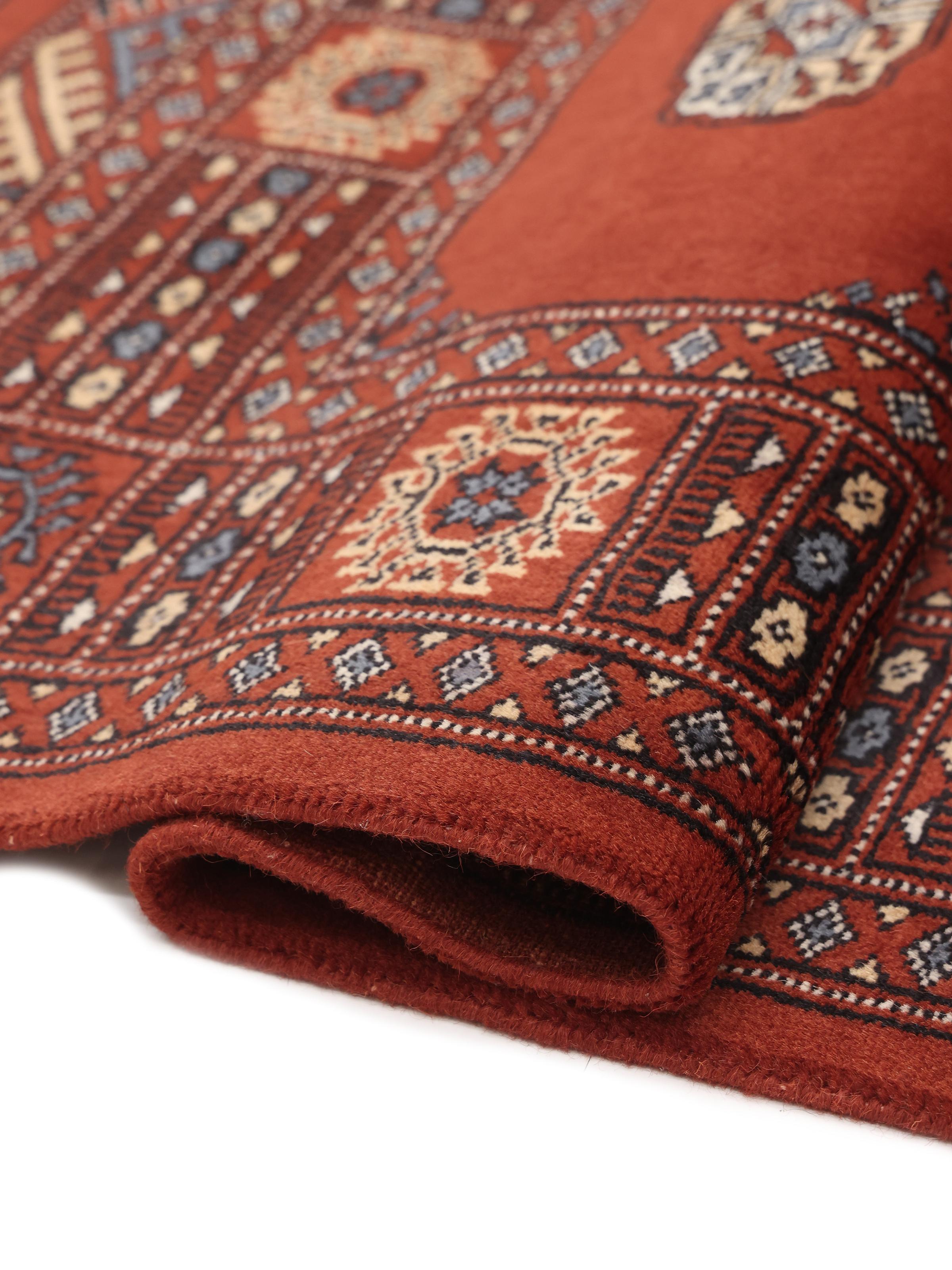
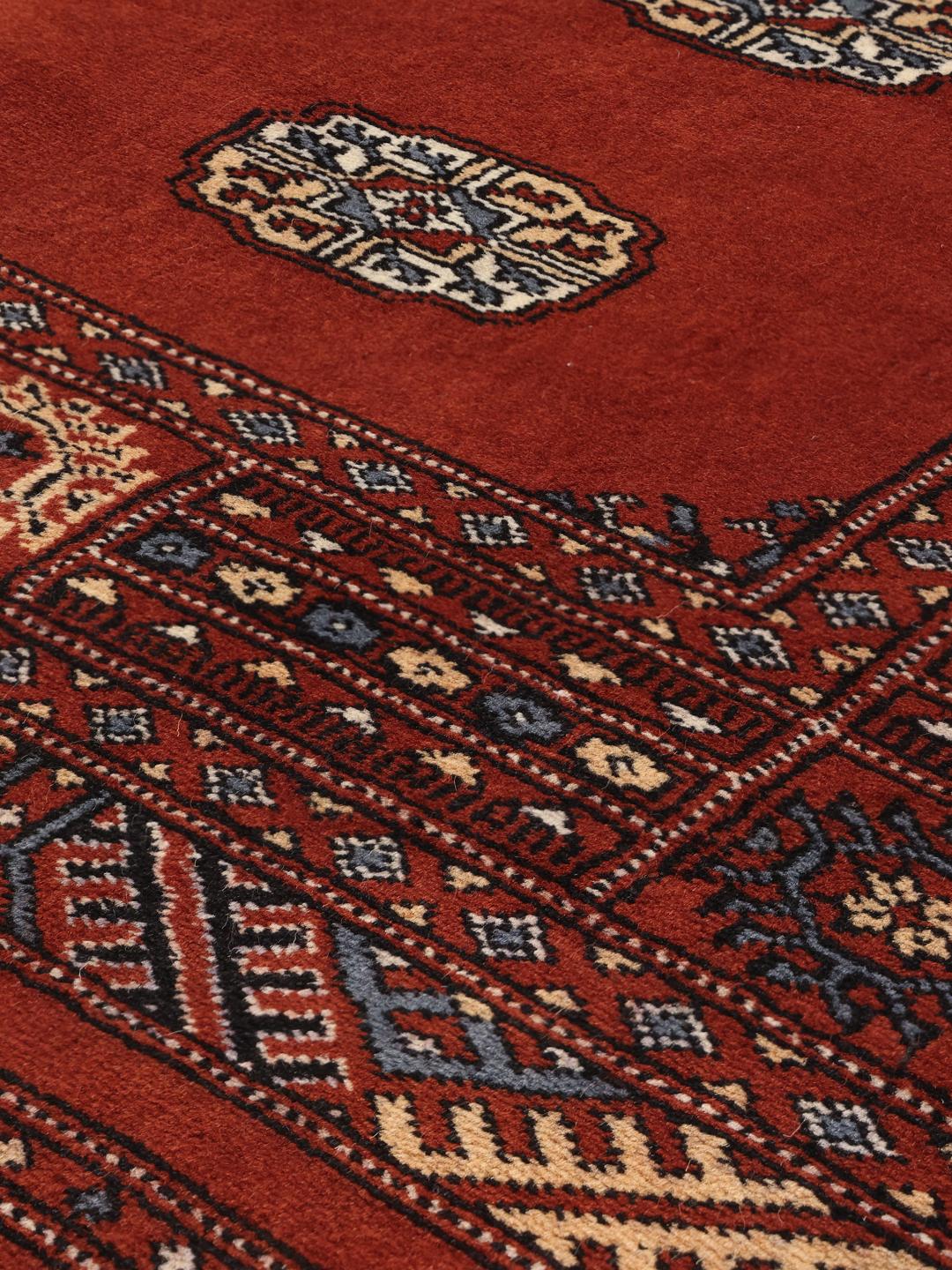
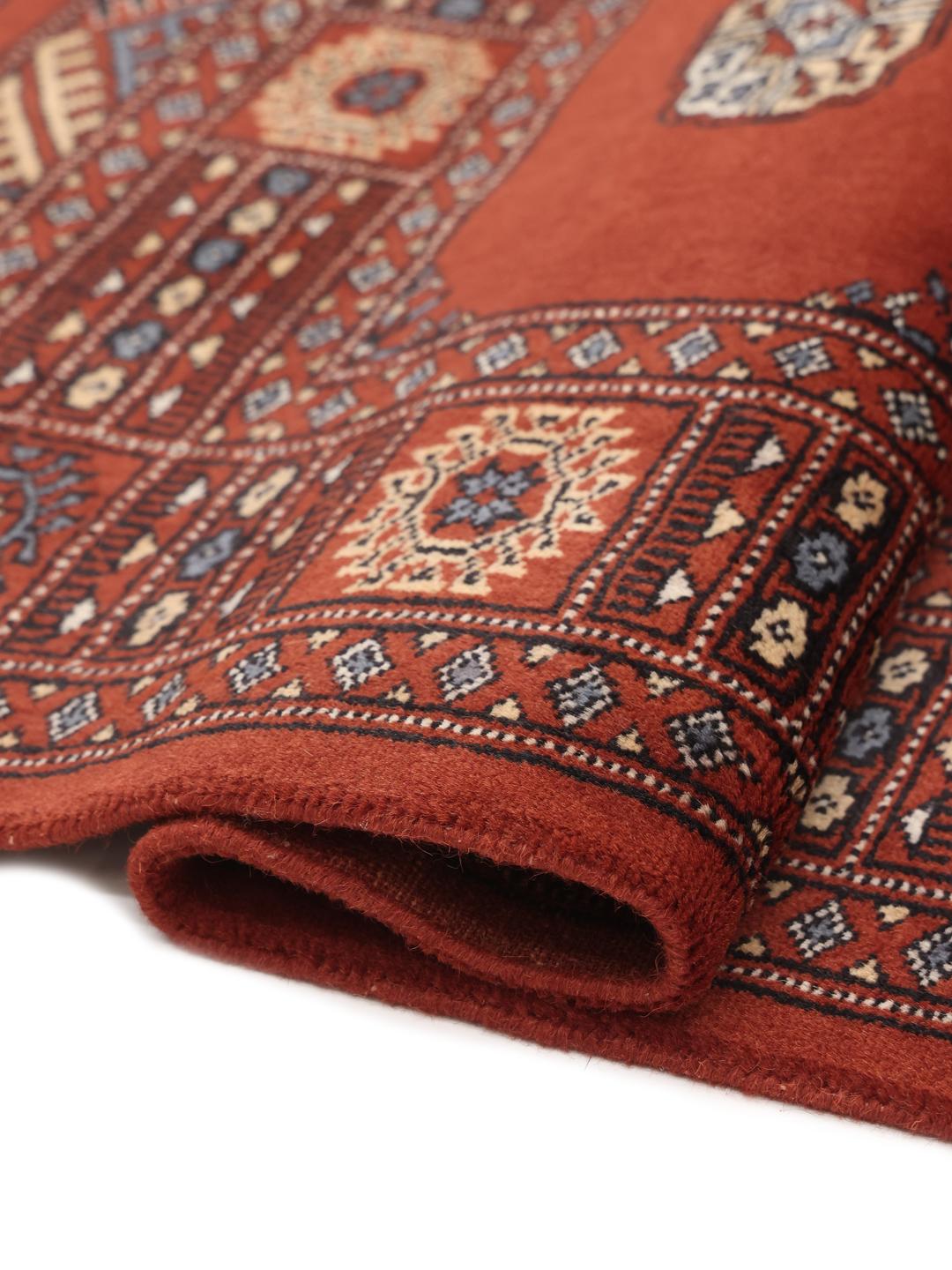
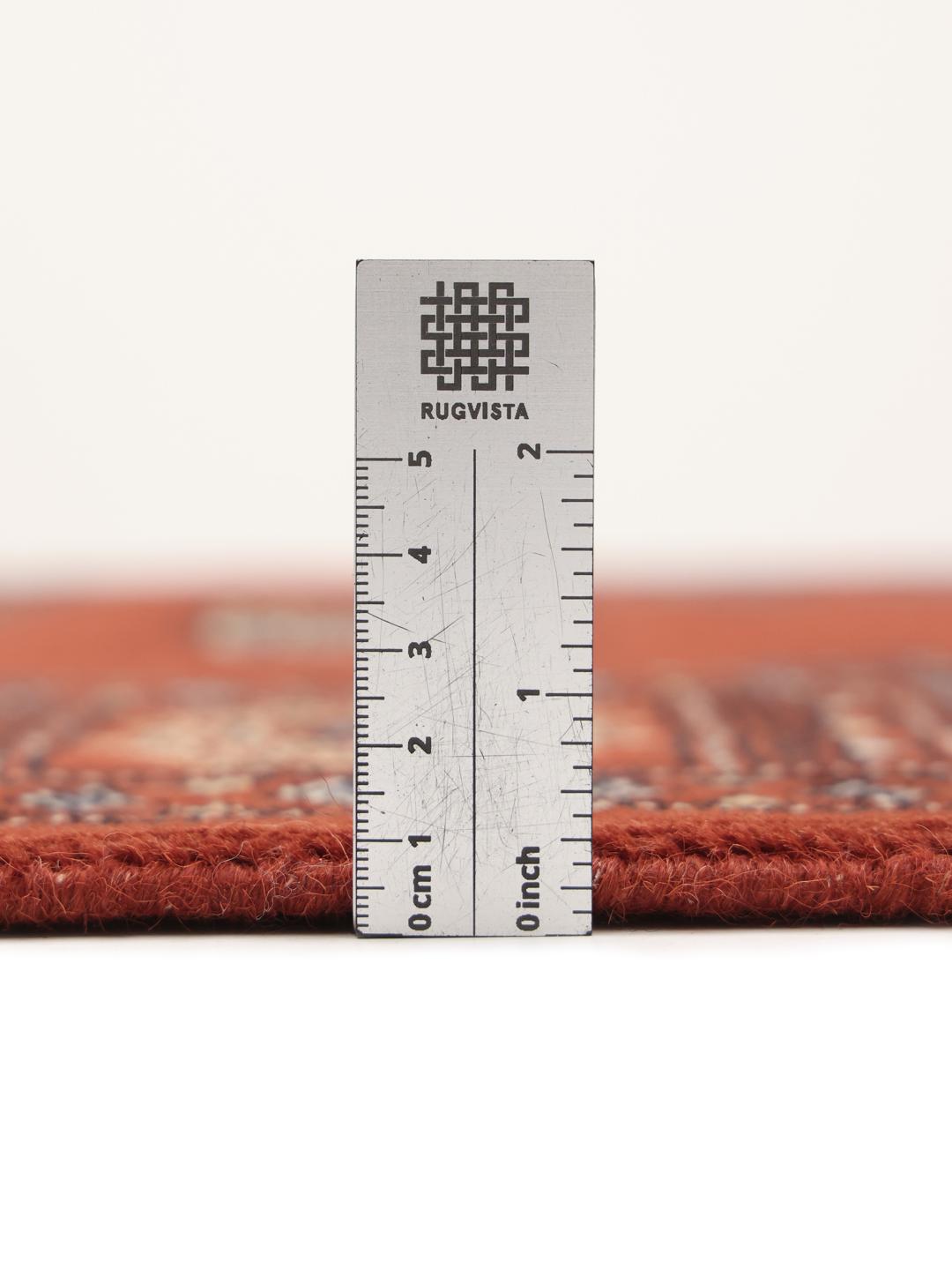
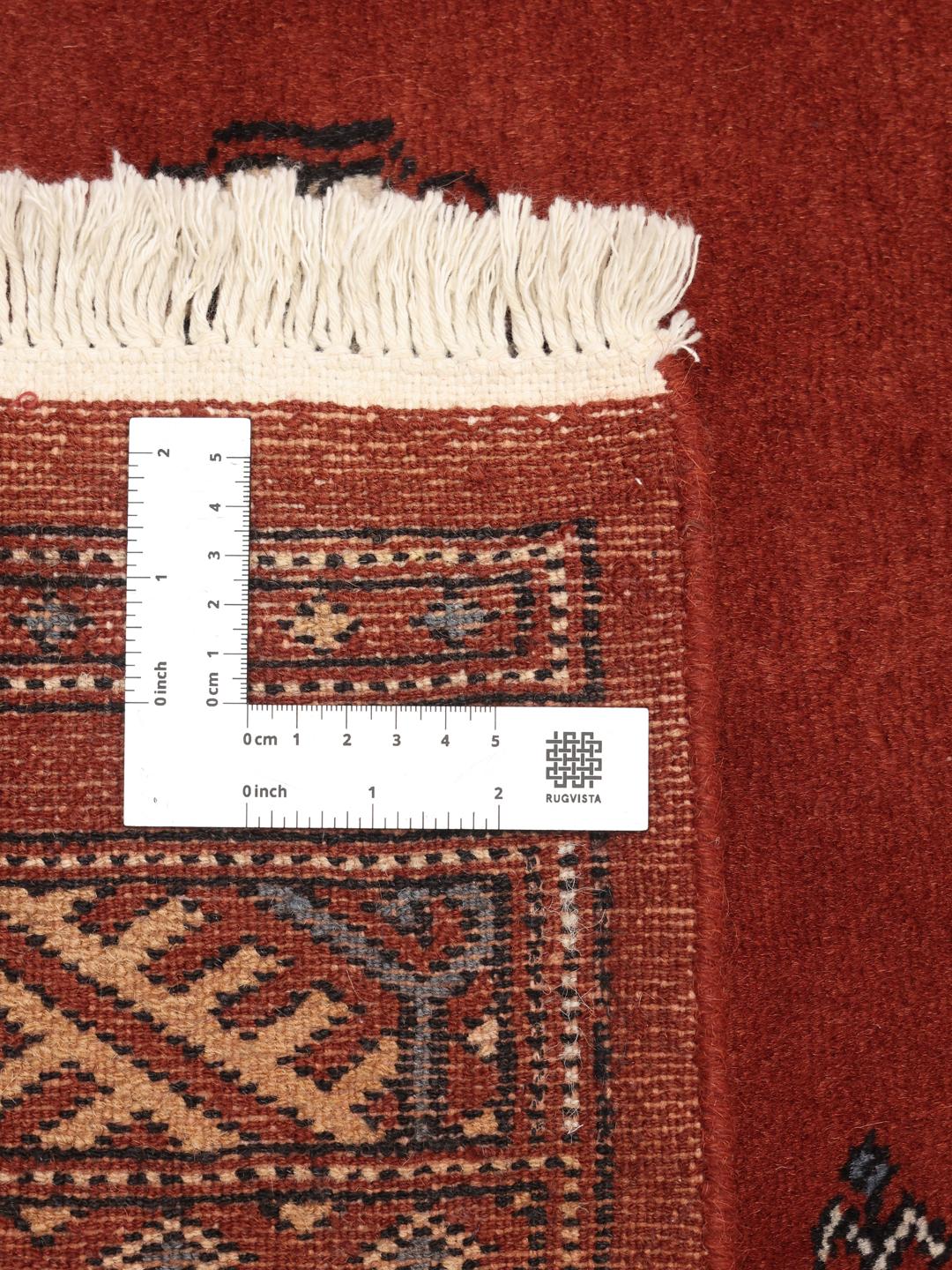
The term 2ply refers to the construction of the wool pile, where two individual strands of wool are twisted together before being knotted into the foundation. This technique is vital for quality because it creates a stronger, more resilient pile that resists matting and wear. It also adds a subtle, sophisticated lustre to the surface, allowing the wool to catch the light and showcase the depth of the dye.
Visually, these rugs are defined by the repeating gul motif, which are stylized, octagonal medallions that represent traditional symbols of protection and identity. These medallions are typically arranged in clean, geometric rows across the field and framed by complex, decorative borders. The use of deep, rich tones like dark-red creates a grounded and warm aesthetic that has remained a favourite in home decor for generations.
Collecting a Pakistan Bokhara 2ply rug is an investment in cultural heritage. Because these rugs are crafted by hand using techniques passed down through families, they represent a connection to a long-standing history of artistry. Owning one means participating in a legacy of skill and dedication, ensuring that your home is furnished with an item of genuine substance and lasting value.