Bokhara rugs take their name from the ancient Silk Road city of Bukhara in Central Asia, a historical hub for trade and textile artistry. While the design roots are deeply embedded in the nomadic traditions of the region, the finest examples today are primarily woven in Pakistan. This migration of craft has allowed the tradition to evolve, blending ancient aesthetics with refined, contemporary weaving standards.
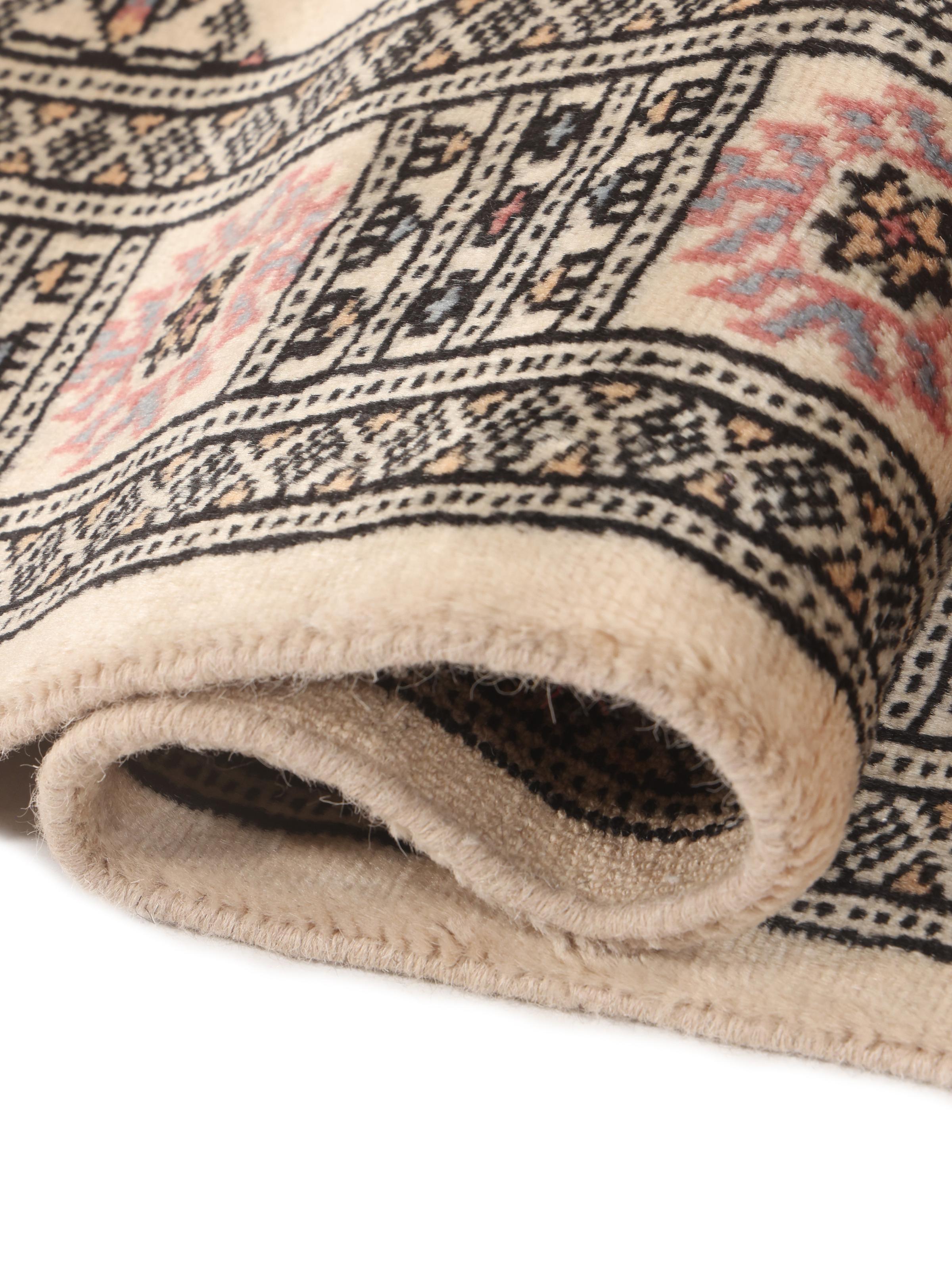
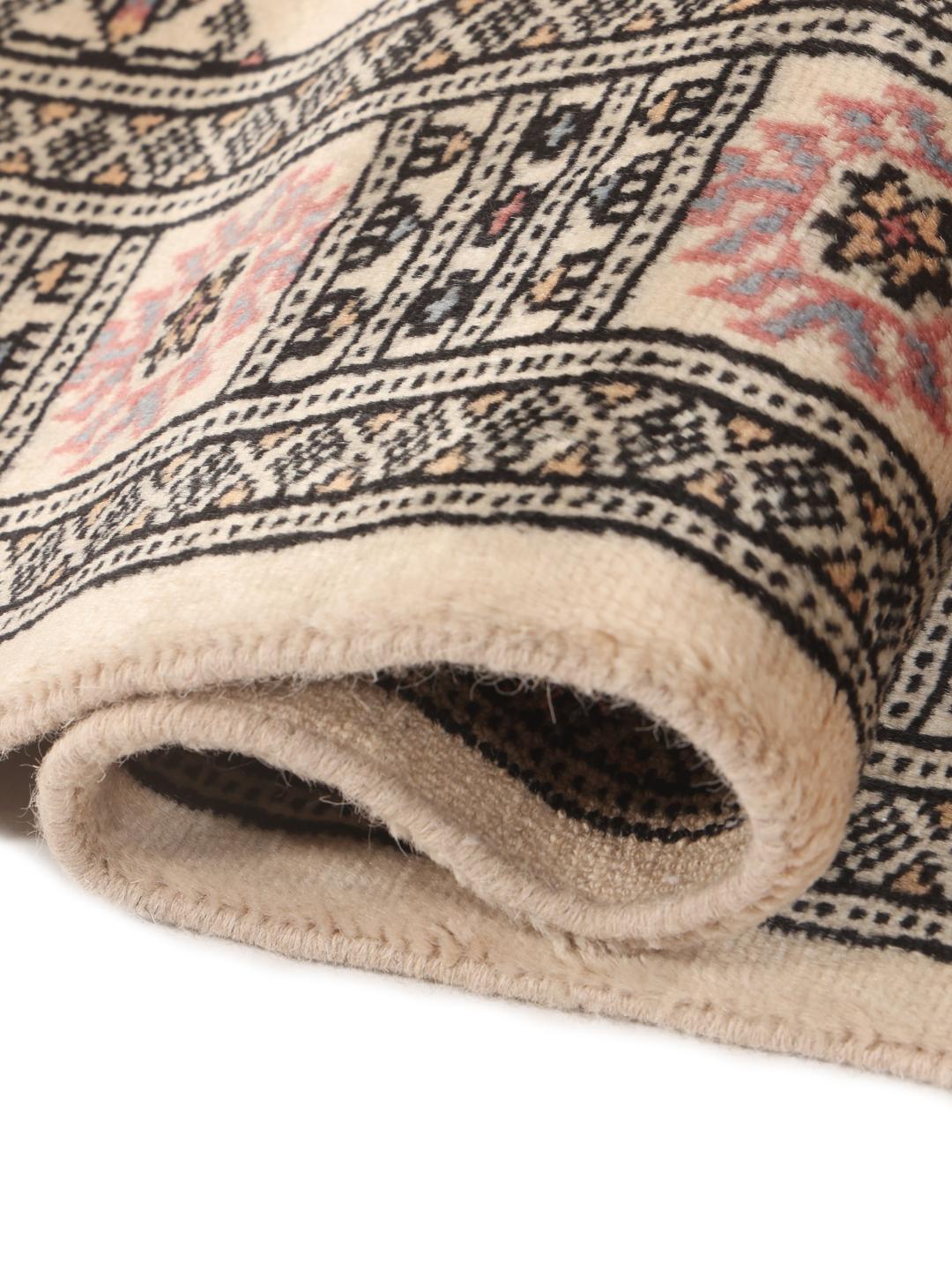
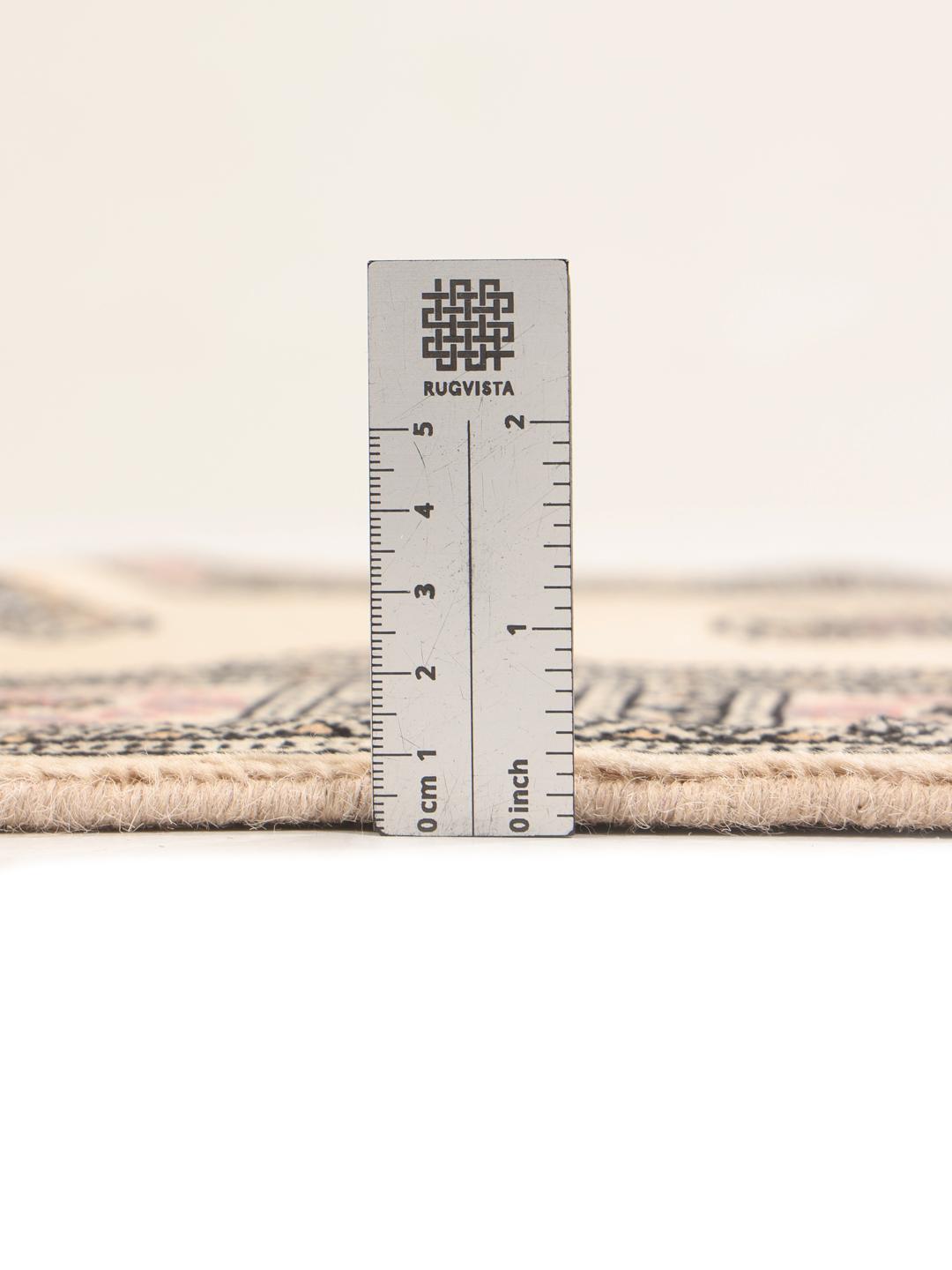
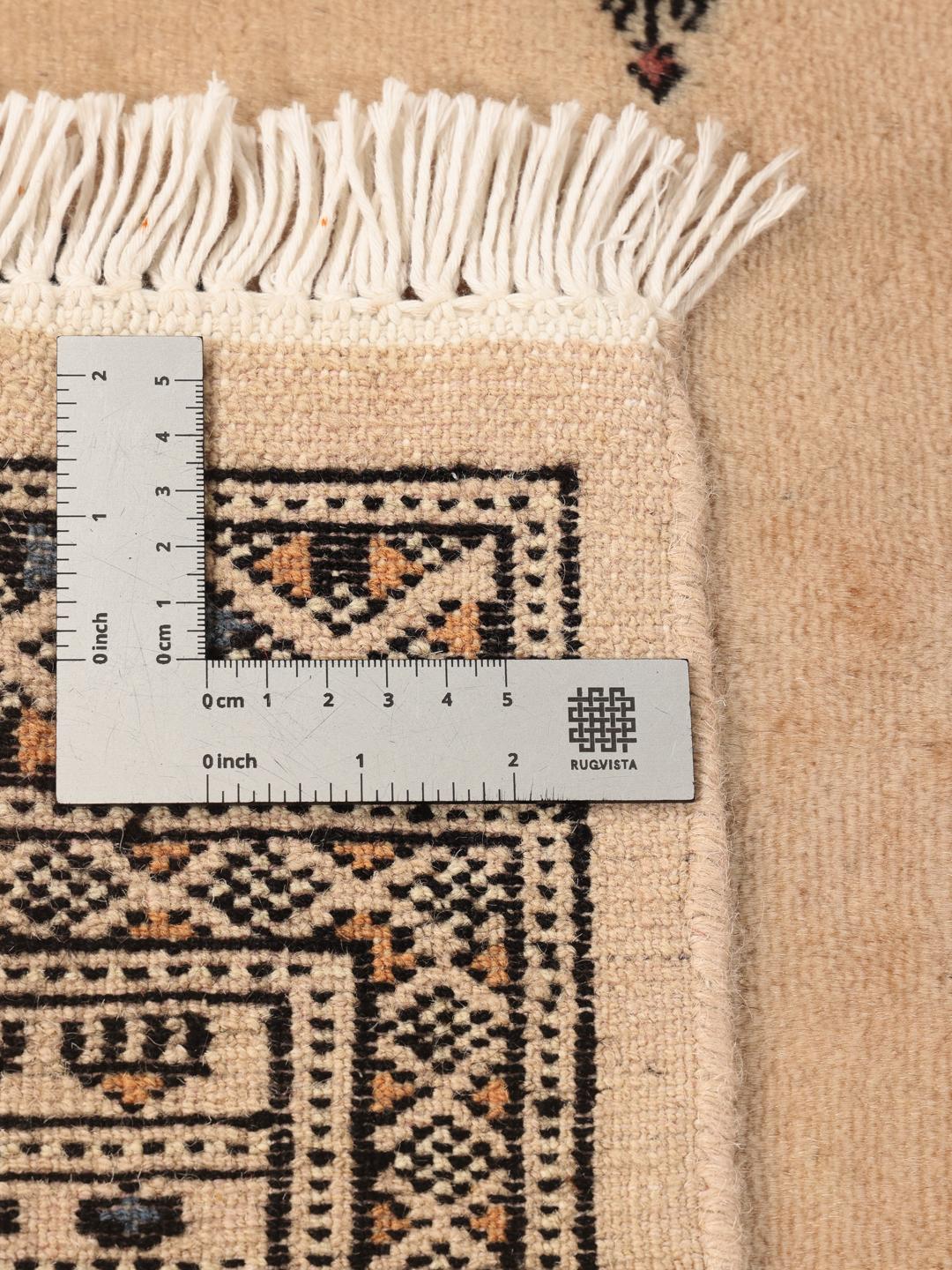
The term 2ply refers to the construction of the yarn, where two strands of wool are twisted together before being knotted. This technique is significant because it produces a pile that is not only denser and more lustrous but also far more durable than rugs made with single-ply yarn. For the owner, this means a rug that keeps its plush feel and vibrant appearance even with regular use.
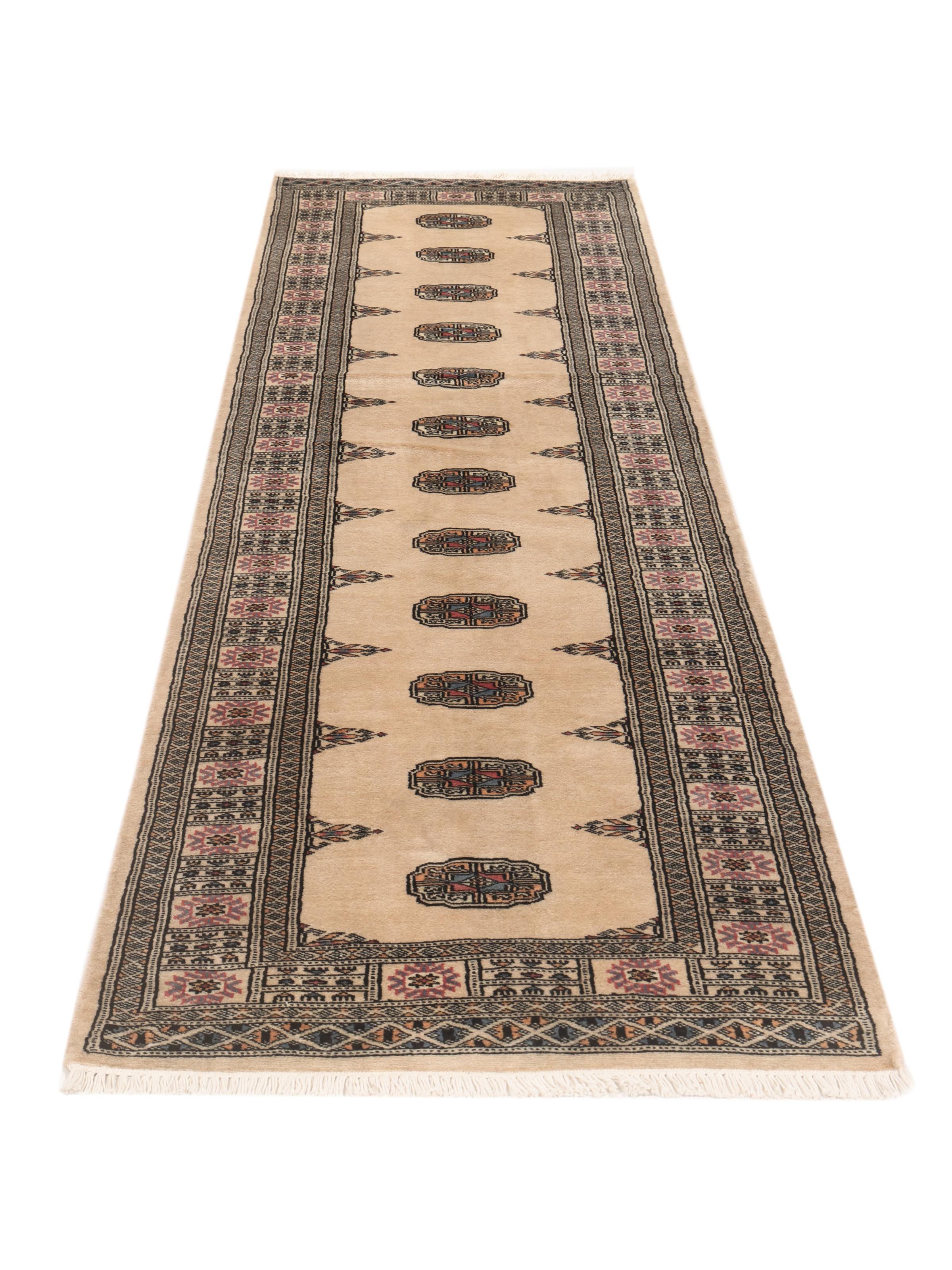
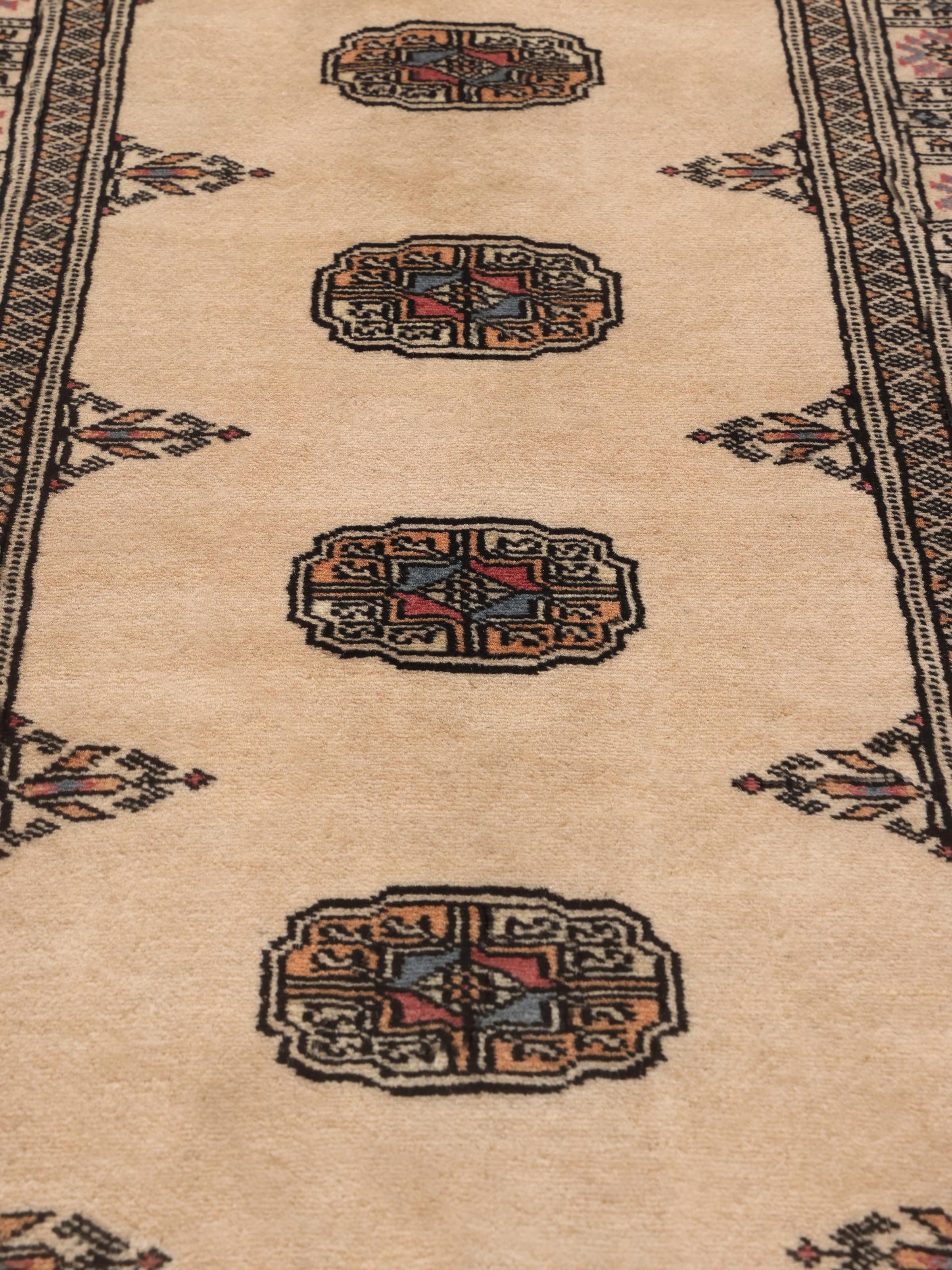
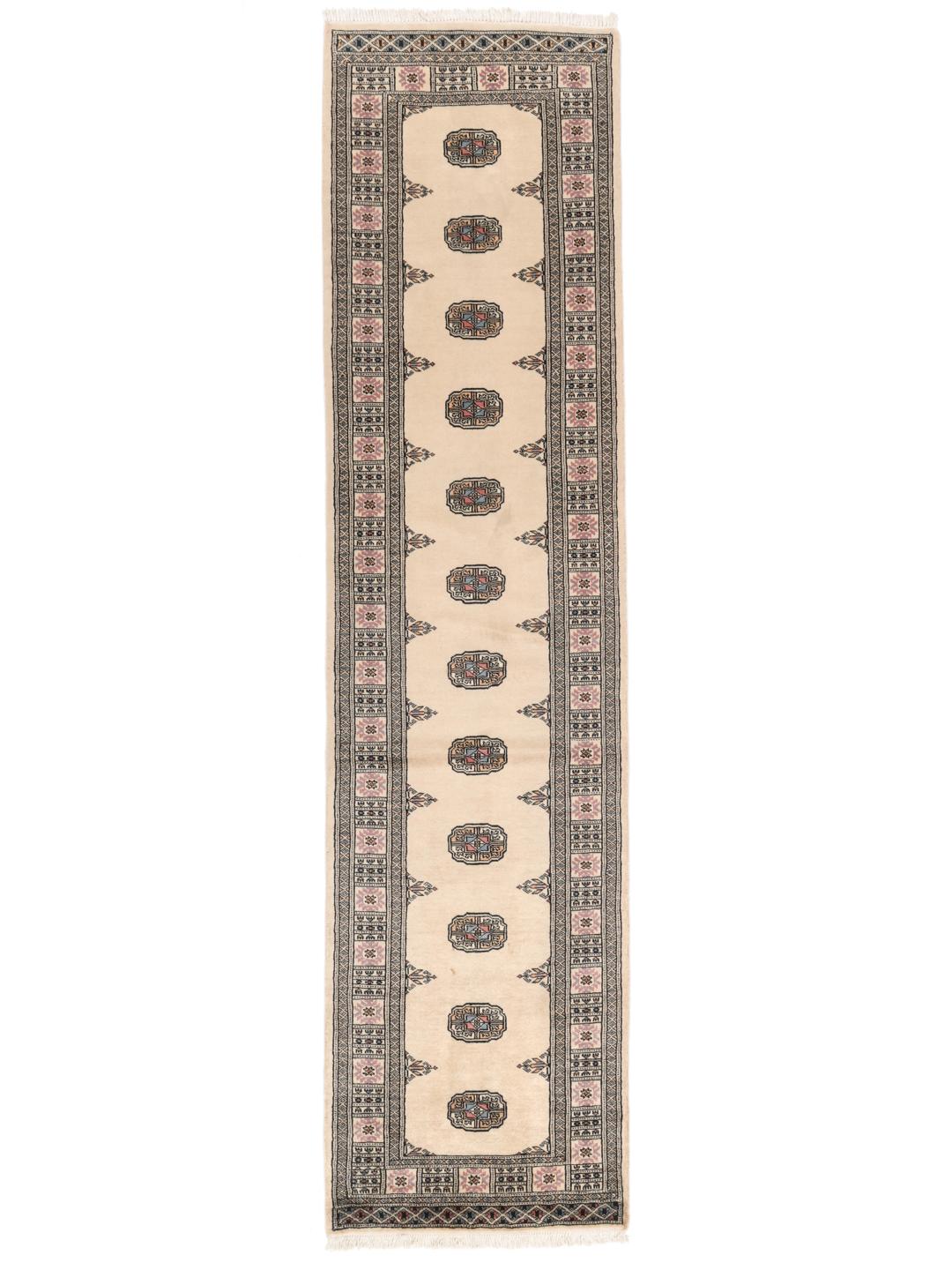
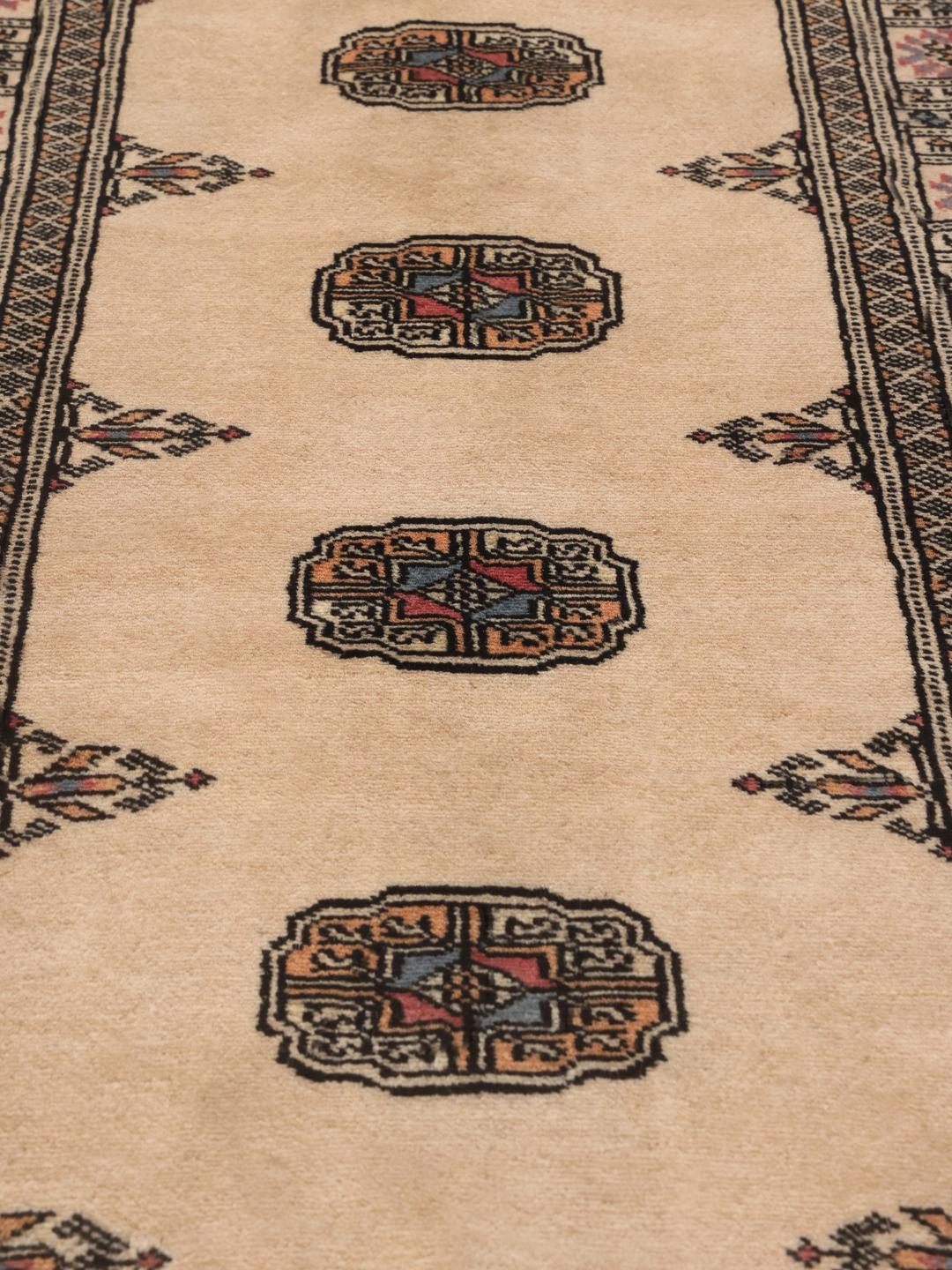
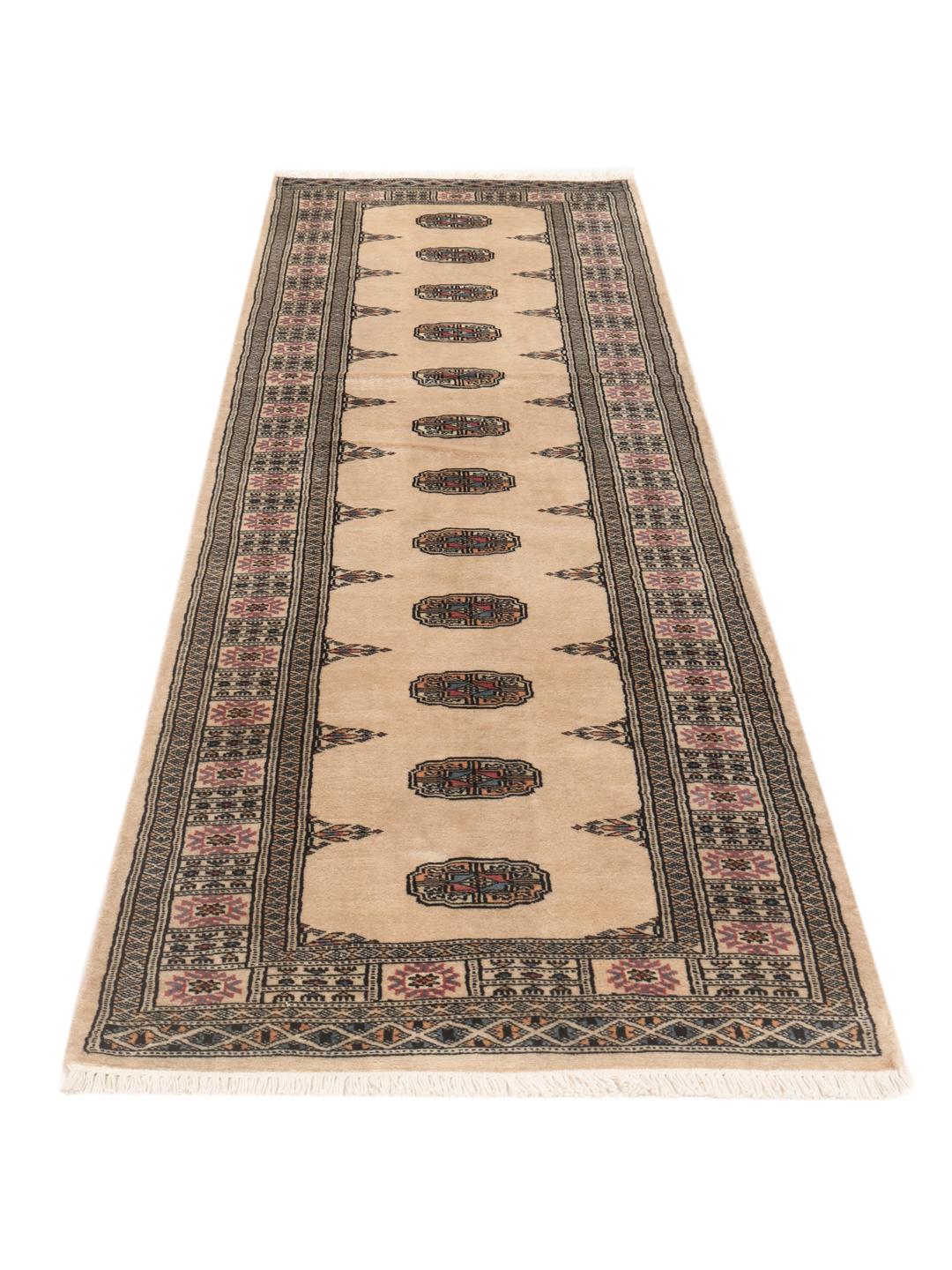
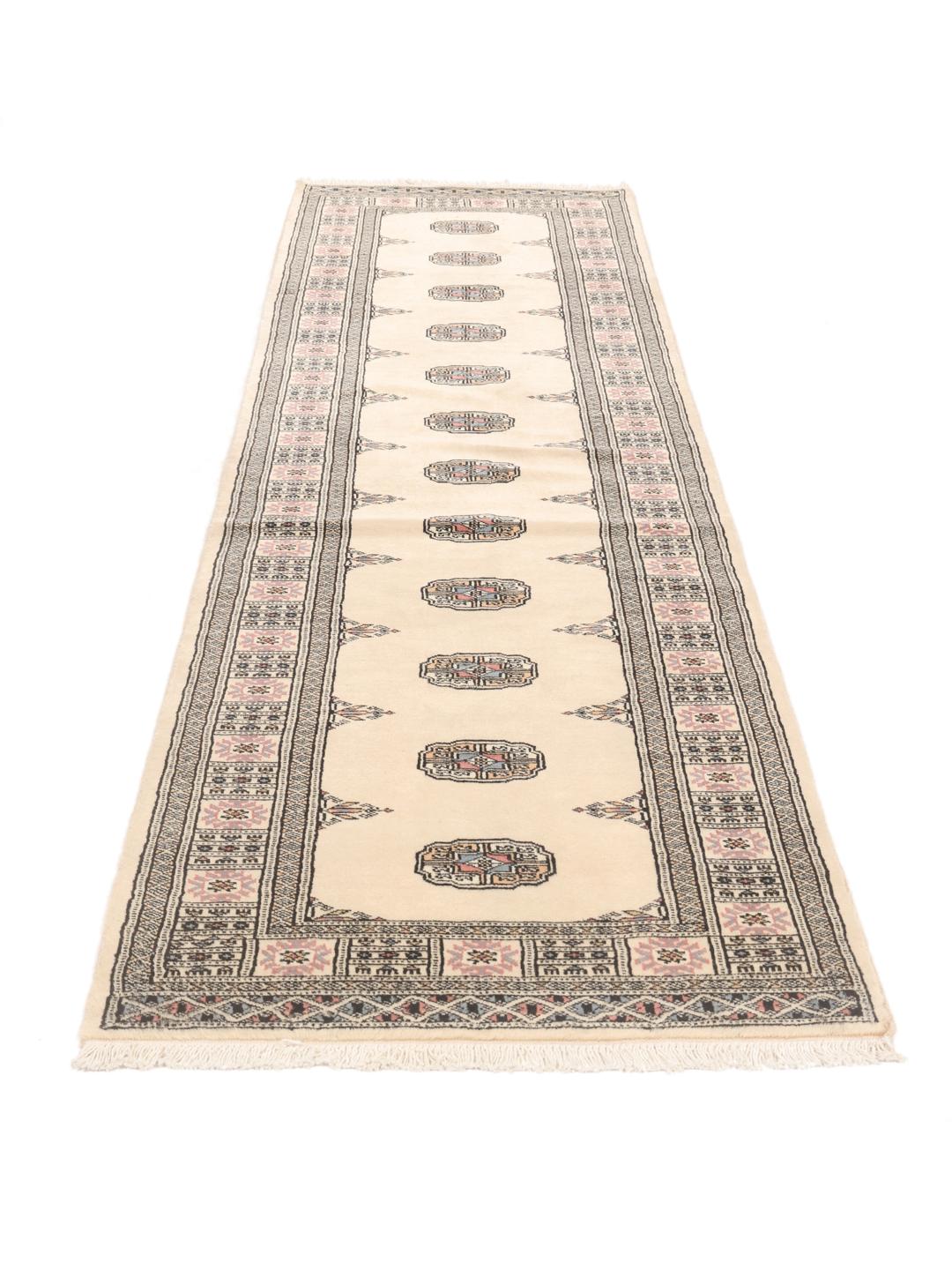
Signature design elements of these rugs include the repeating gul motif, which often takes the form of octagonal or elephant-foot shaped medallions arranged in precise rows. These are typically framed by elaborate, multi-layered borders that balance the field. In this specific piece, the neutral tones offer a sophisticated take on the traditional aesthetic, making it an adaptable choice for modern interiors while remaining true to its historical roots.
Rugs from this tradition are highly valued by collectors and homeowners alike for their combination of heritage and technical skill. Owning one is a commitment to quality, as these pieces are crafted to be passed down through generations. The dedication required to master this weaving style is evident in every detail, representing a link to a long-standing cultural history that brings depth and character to any home.