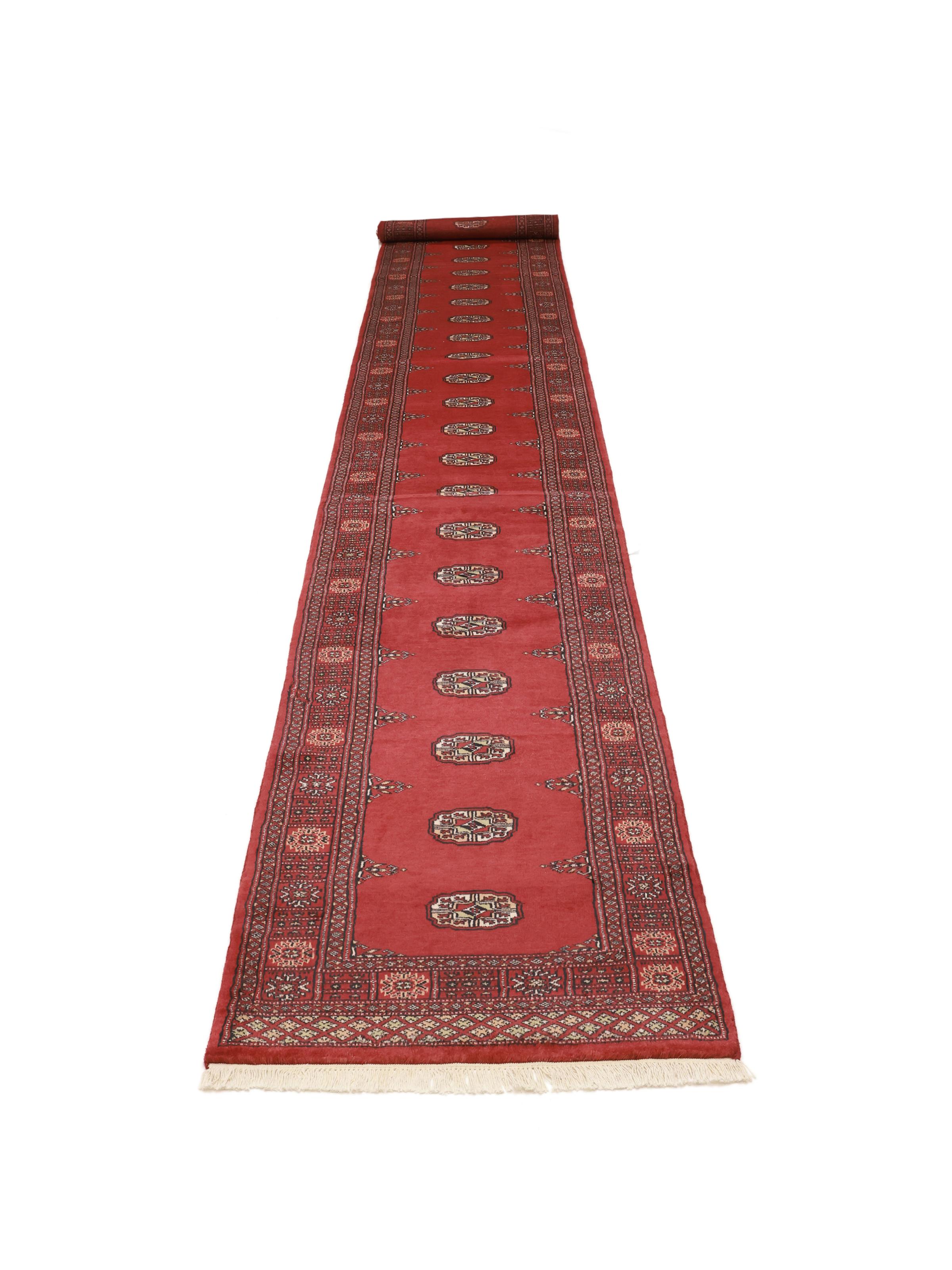
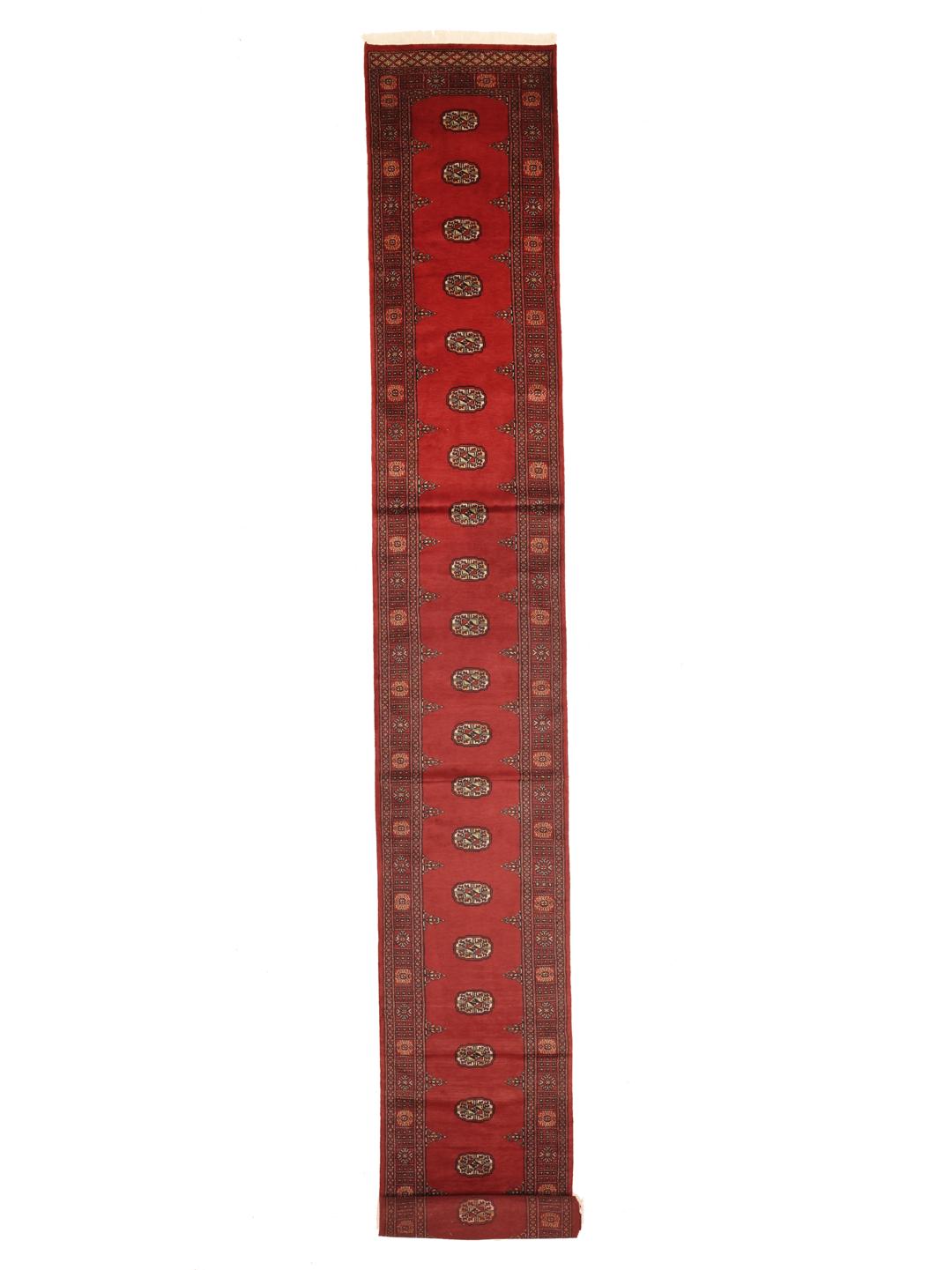
The Bokhara rug tradition is deeply rooted in the historical crossroads of the Silk Road, taking its name from the ancient city of Bukhara in modern-day Uzbekistan. While the original designs were developed by nomadic tribes in Central Asia, the finest modern examples are primarily woven in Pakistan, where artisans have perfected the art of adapting these ancestral patterns for contemporary homes.
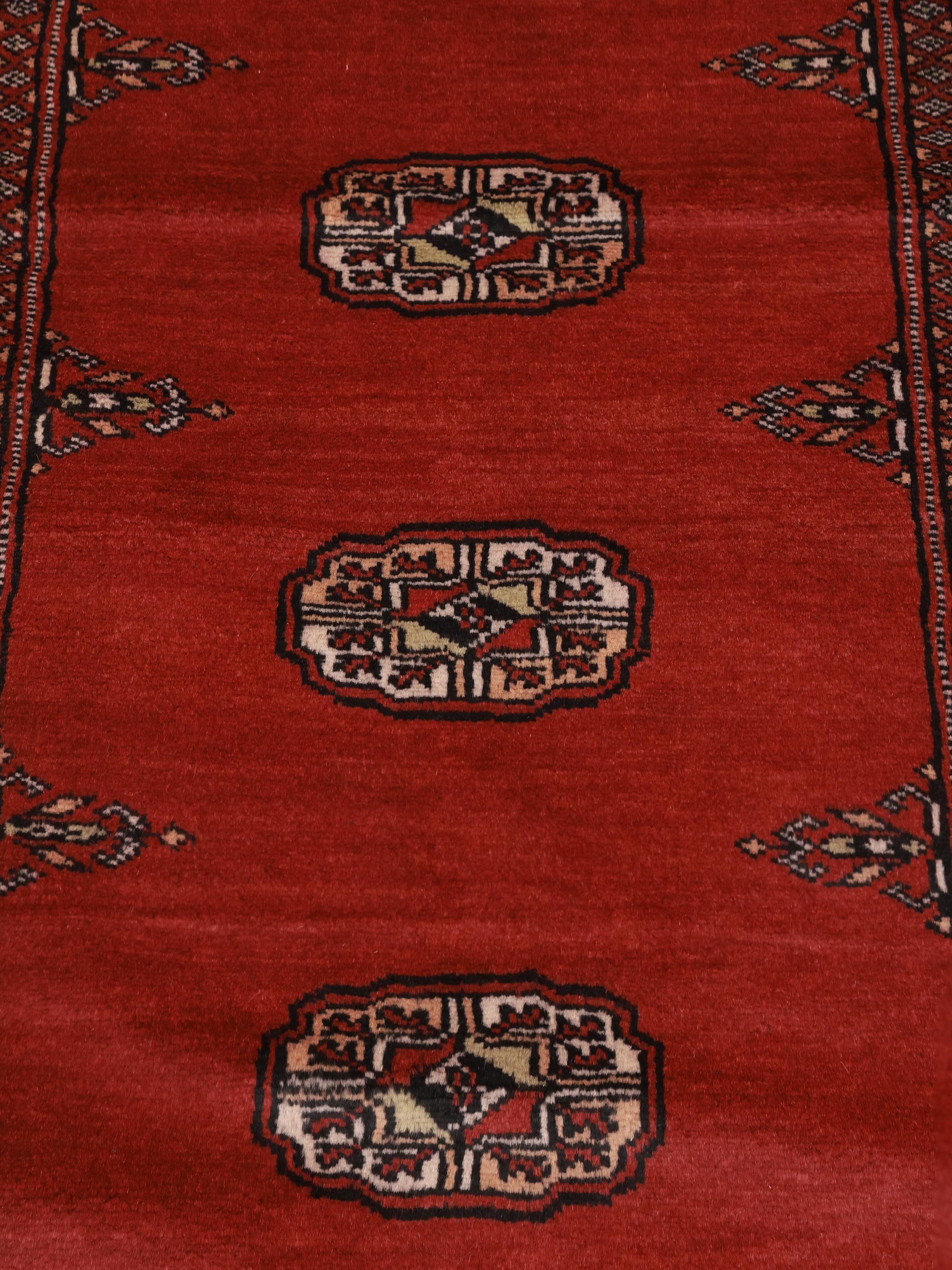
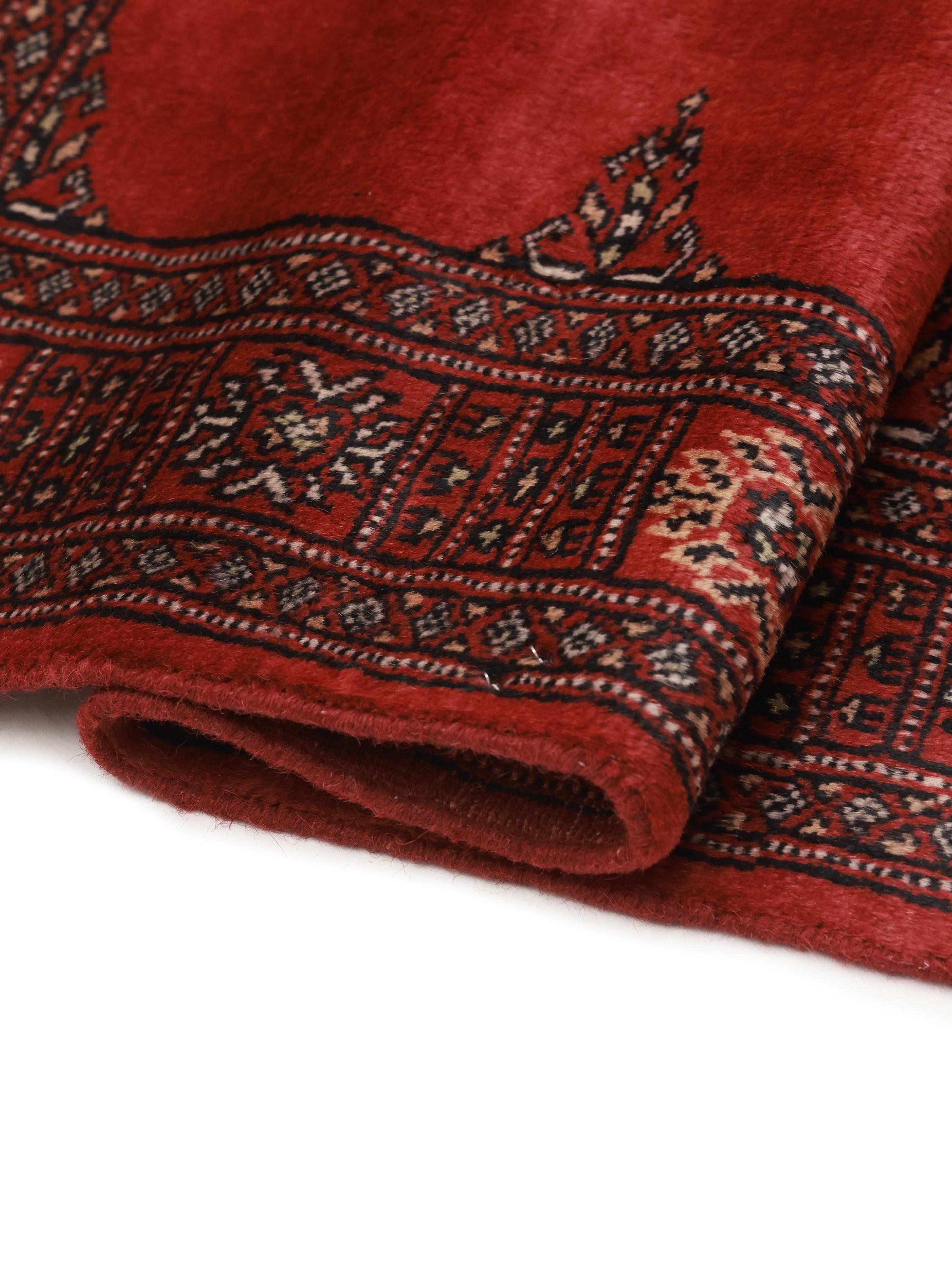
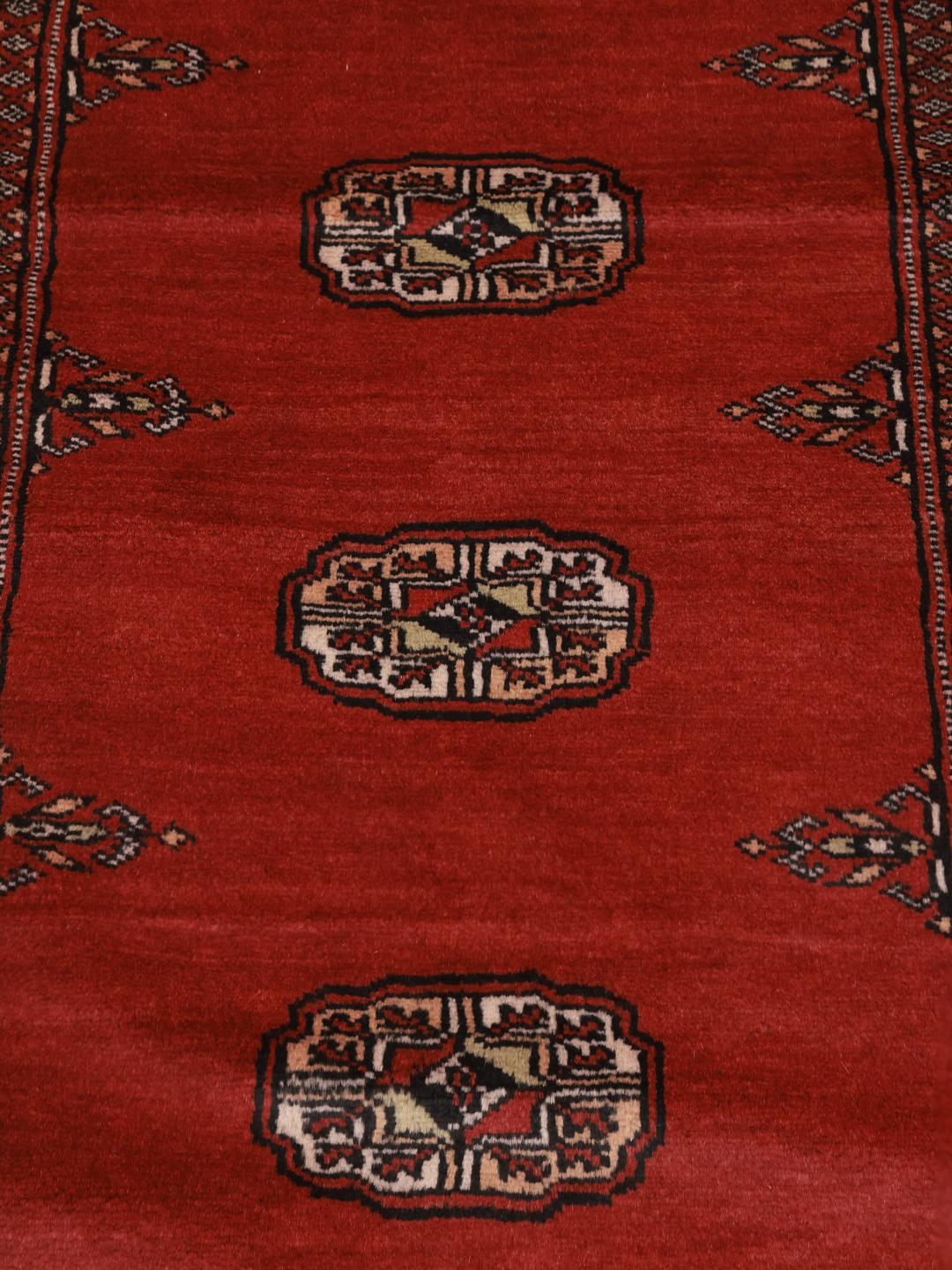
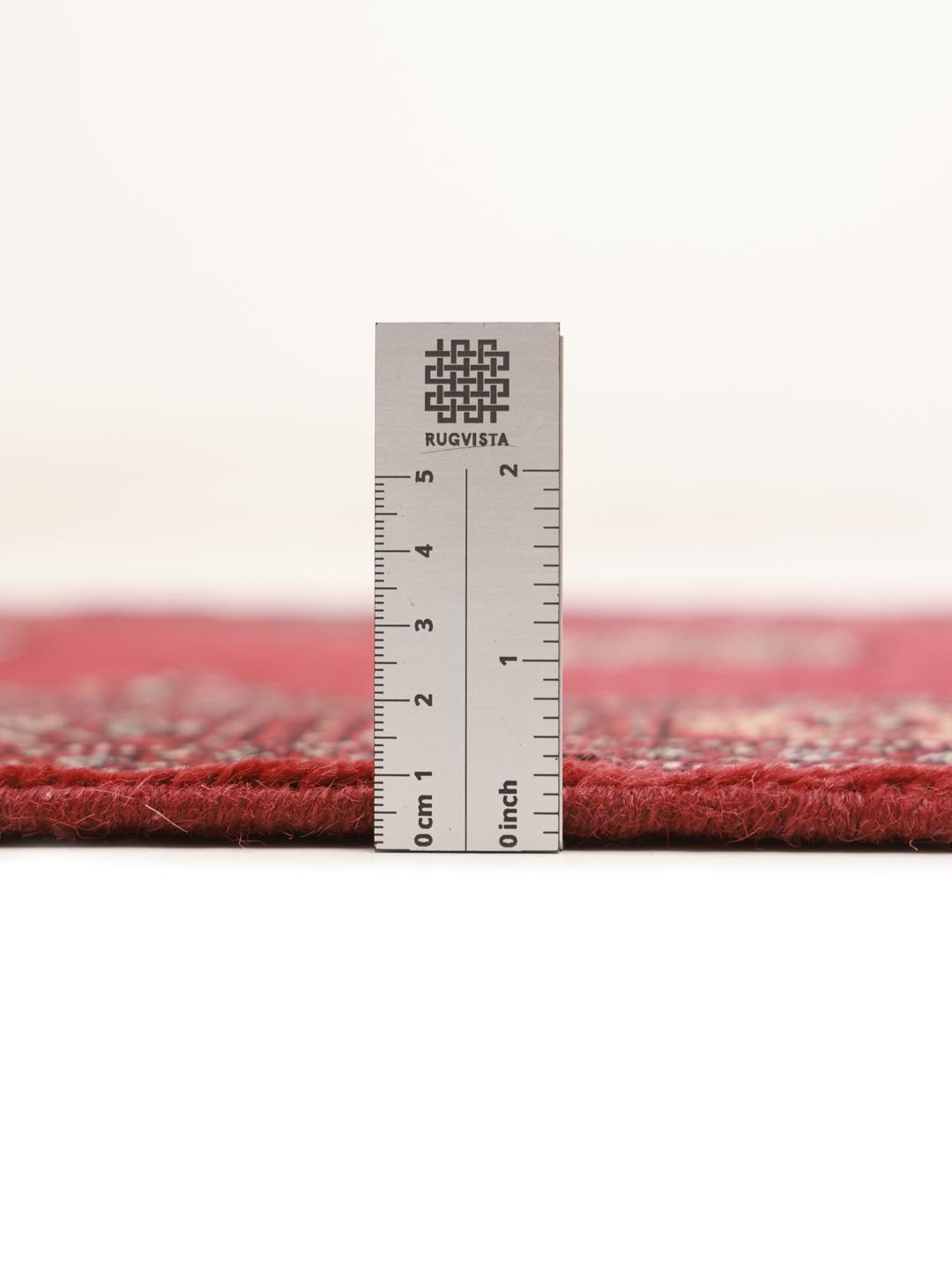
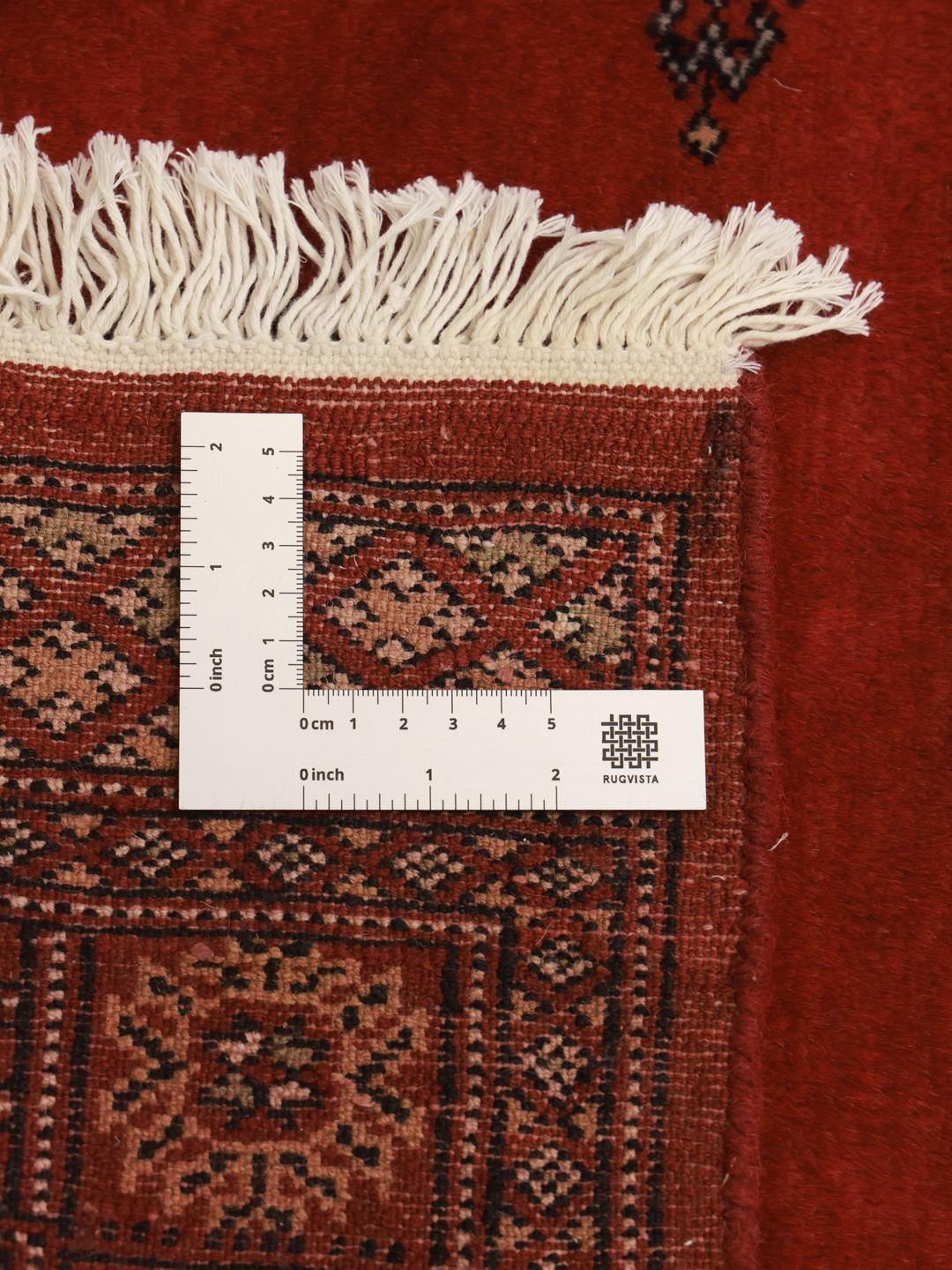
The term 2ply refers to the specific way the wool is prepared before knotting. By twisting two strands of wool together, the yarn becomes significantly stronger, more lustrous, and more durable than single-ply alternatives. This technical choice is what gives the runner its signature soft, dense pile that feels so luxurious underfoot while ensuring it can withstand years of regular use.
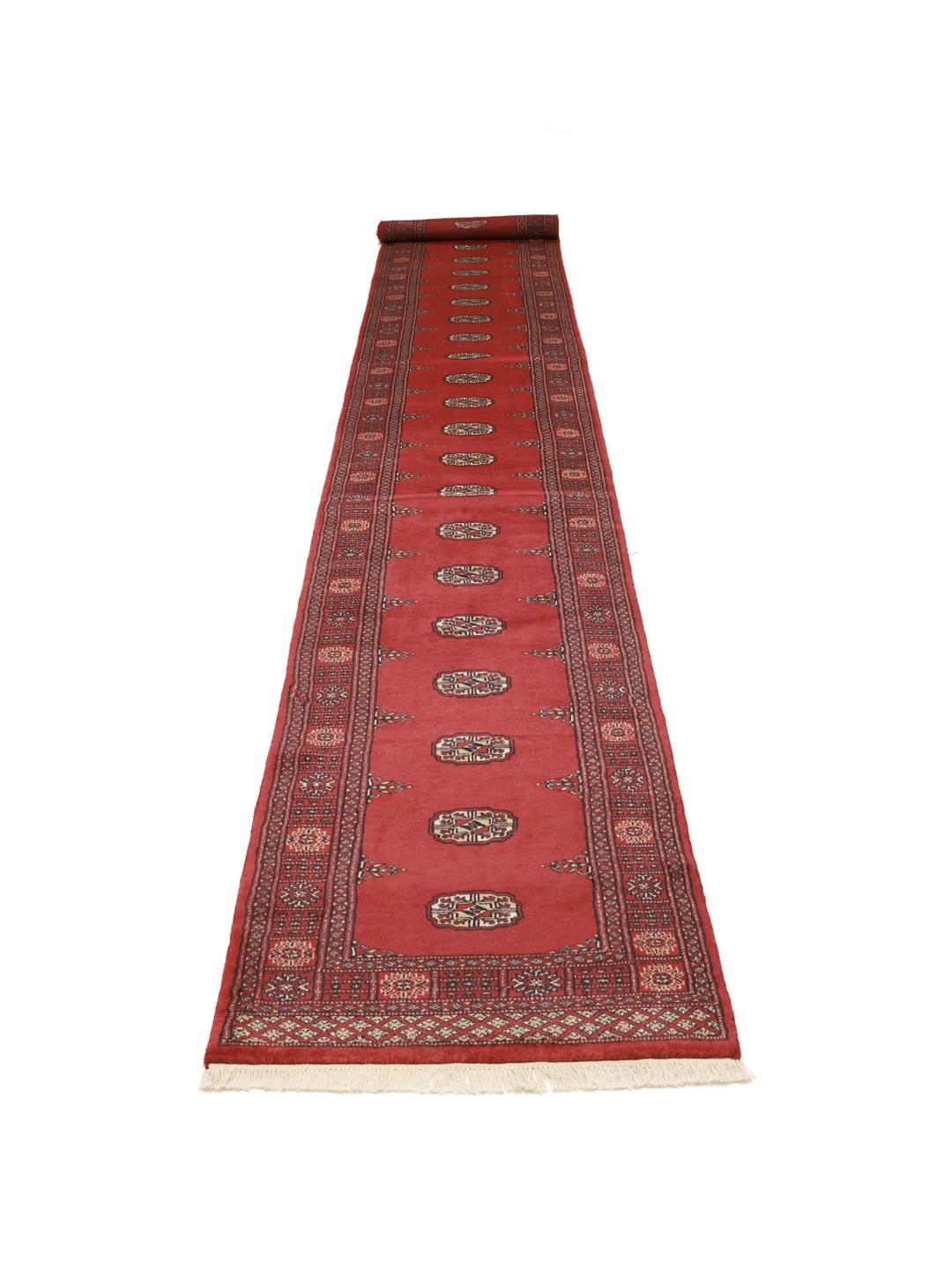
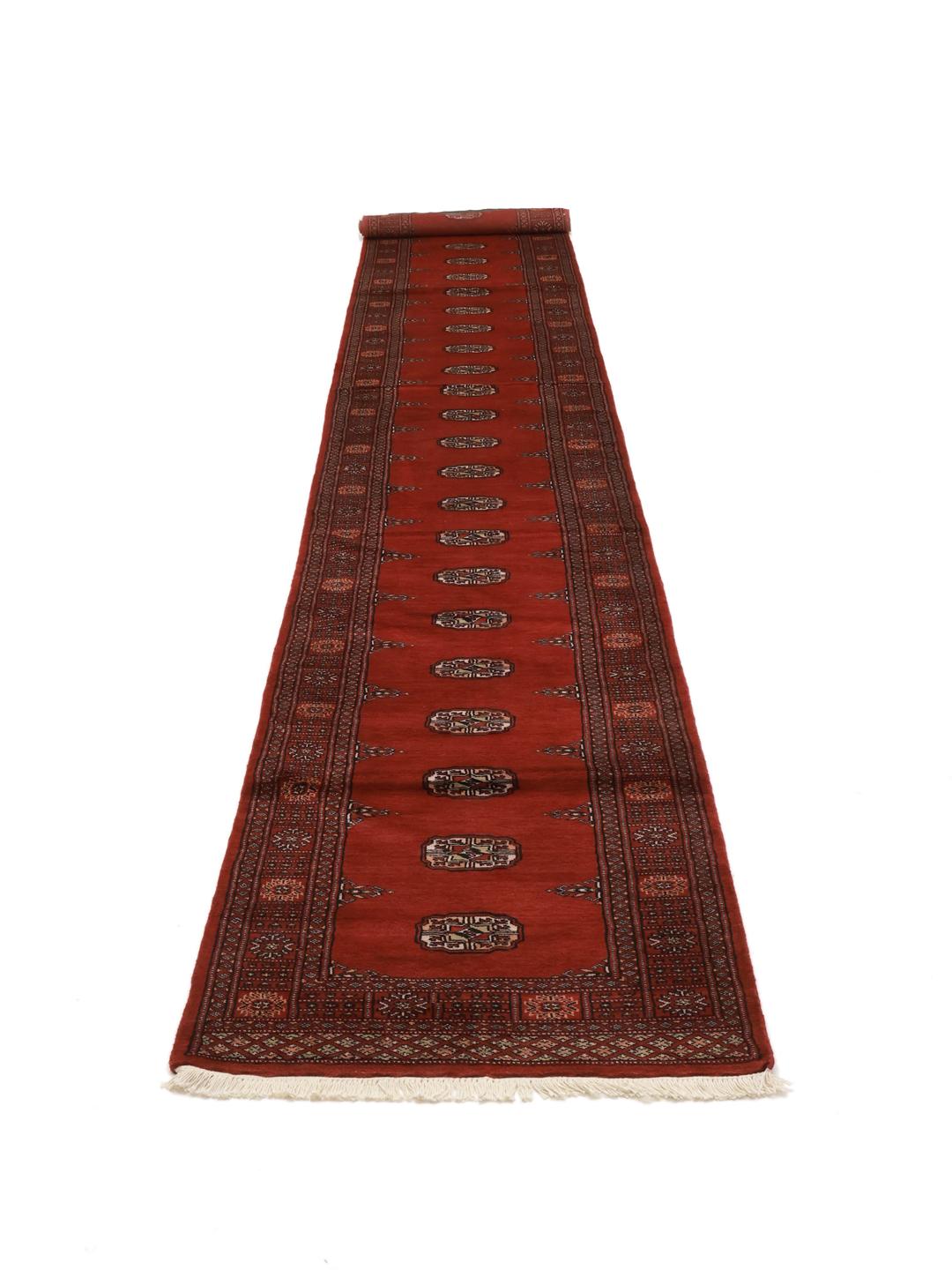
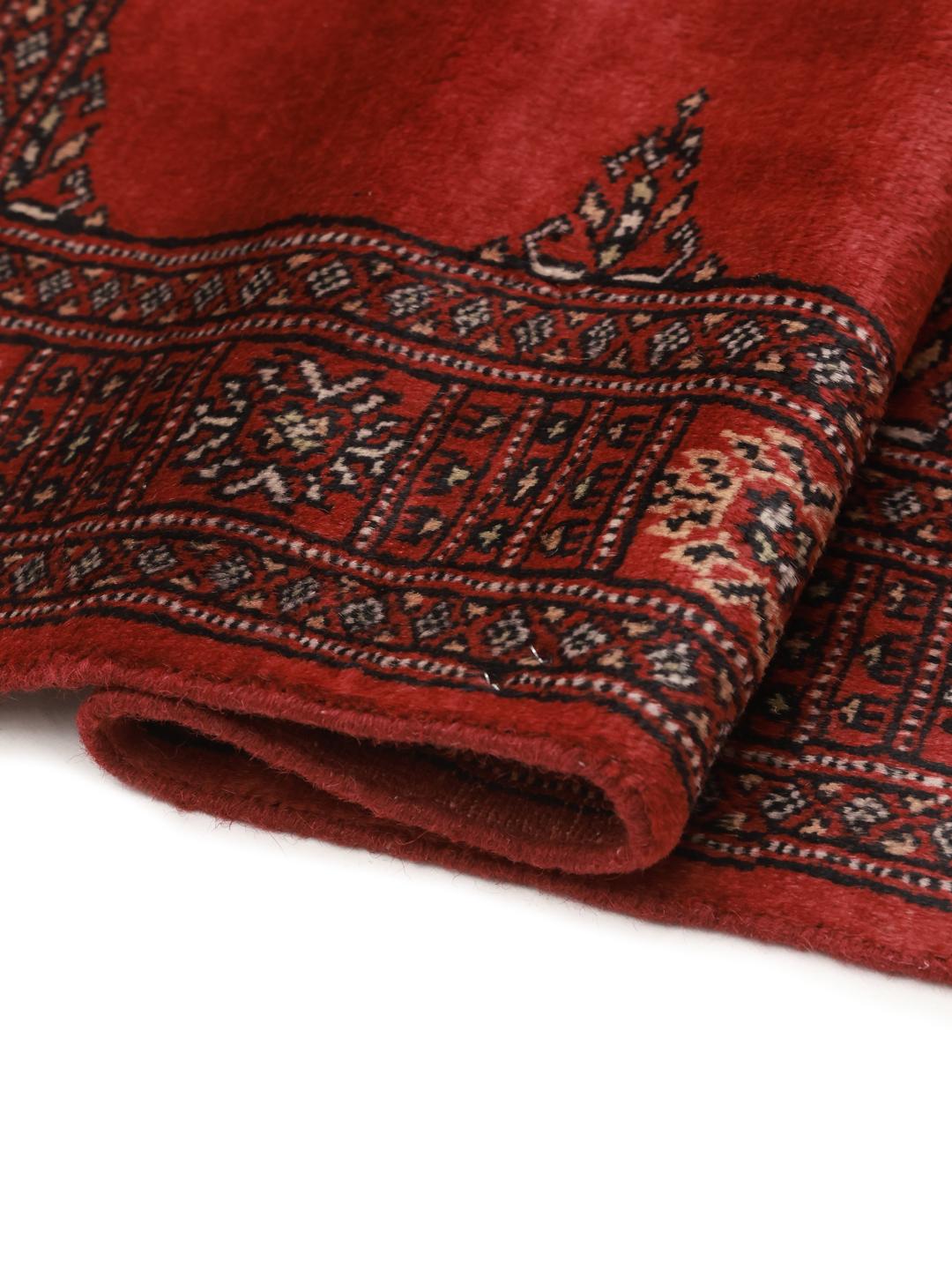
The visual language of this runner is defined by the iconic gul motif, a repeating, elephant-foot-shaped medallion that symbolises status and protection in tribal lore. Arranged in precise, orderly rows, these medallions are framed by complex, decorative borders that showcase the geometric precision for which Pakistani weavers are world-renowned. The deep, rich red field is a classic hallmark of this style, chosen for its warmth and its ability to hide signs of wear.
Rugs from this tradition are highly valued by collectors and homeowners alike for their synthesis of ancient skill and lasting utility. Owning a piece like this is more than just a decor choice; it is an investment in a living craft tradition that has been passed down through generations. It serves as a bridge to the past, bringing a sense of cultural weight and enduring quality to any room it occupies.