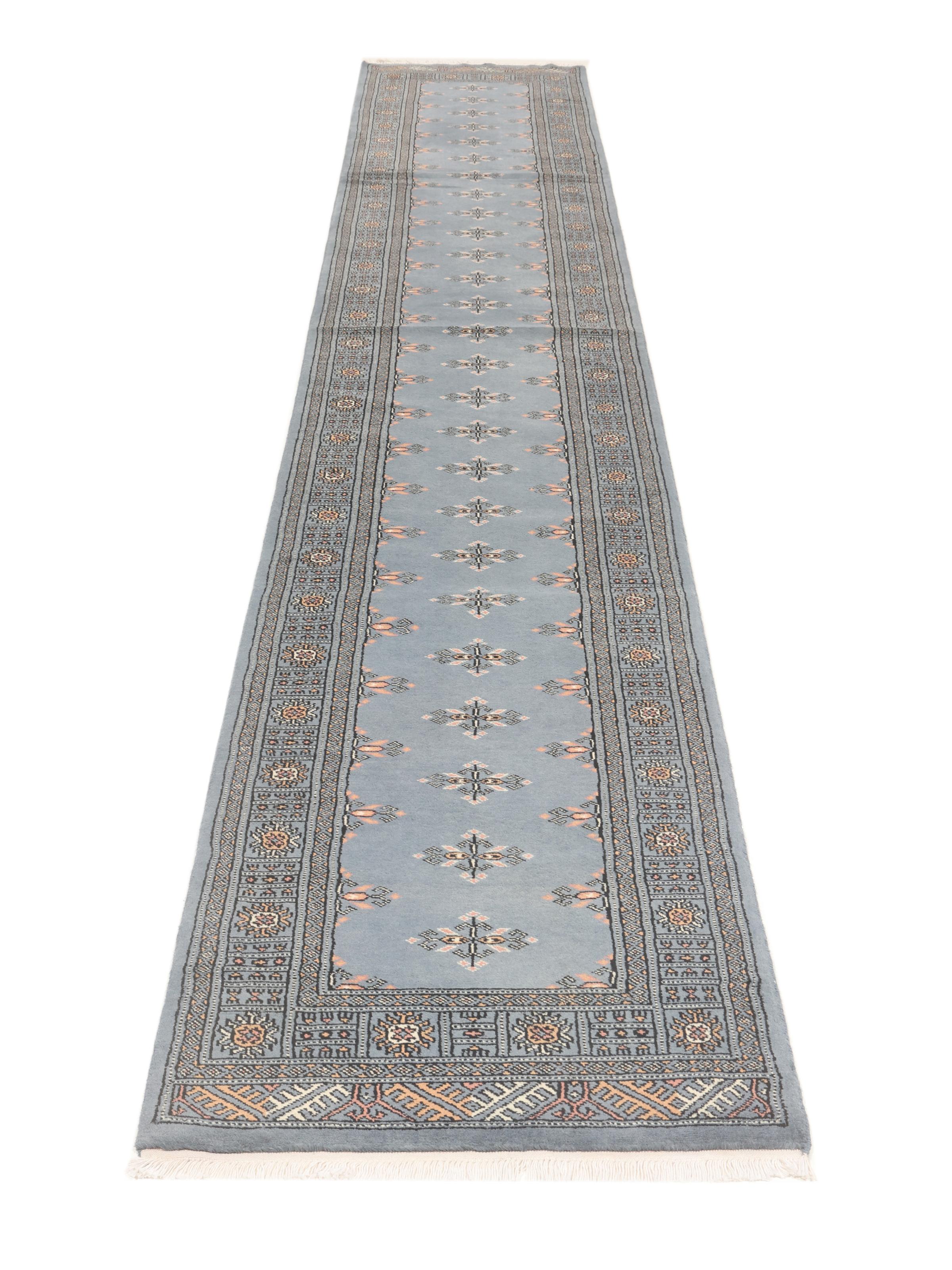
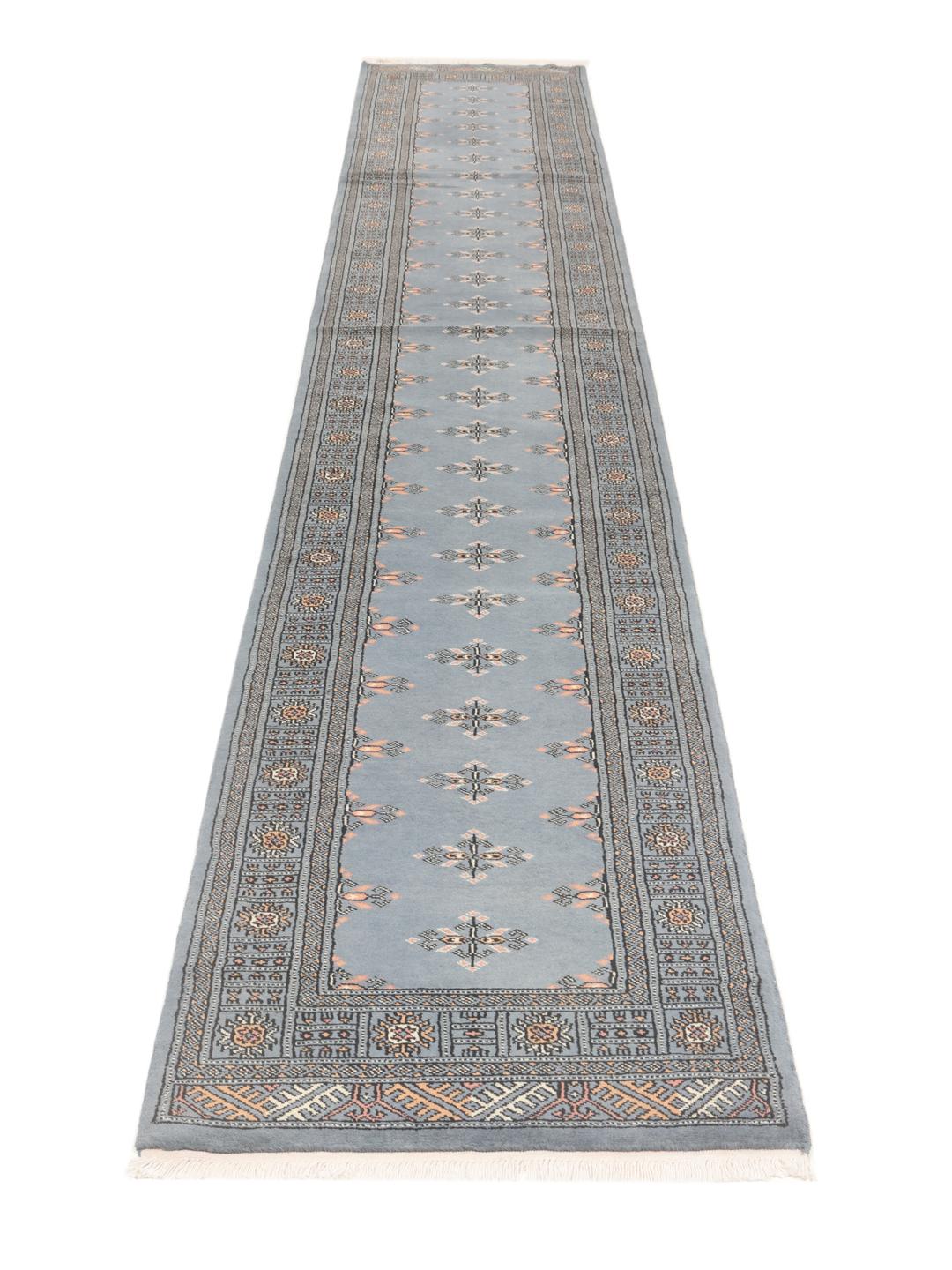
Bokhara rugs take their name from the ancient Silk Road city of Bukhara in Central Asia, a historical hub for trade and textile artistry. While the design roots are deeply embedded in the nomadic traditions of the region, the finest examples today are expertly crafted in Pakistan. This evolution represents a migration of skill, where traditional motifs were preserved and refined by local weaving communities into the sophisticated style we recognise today.
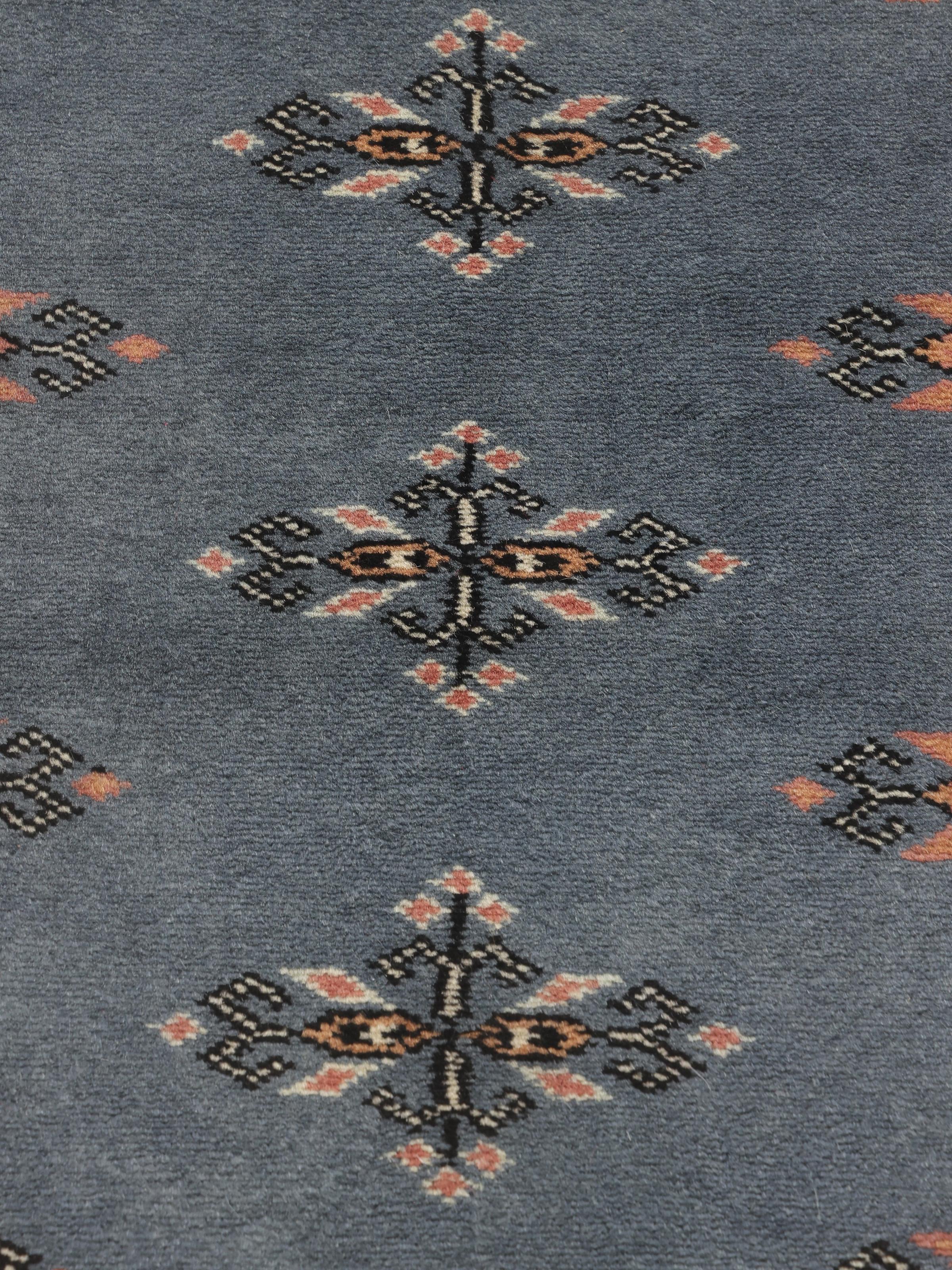
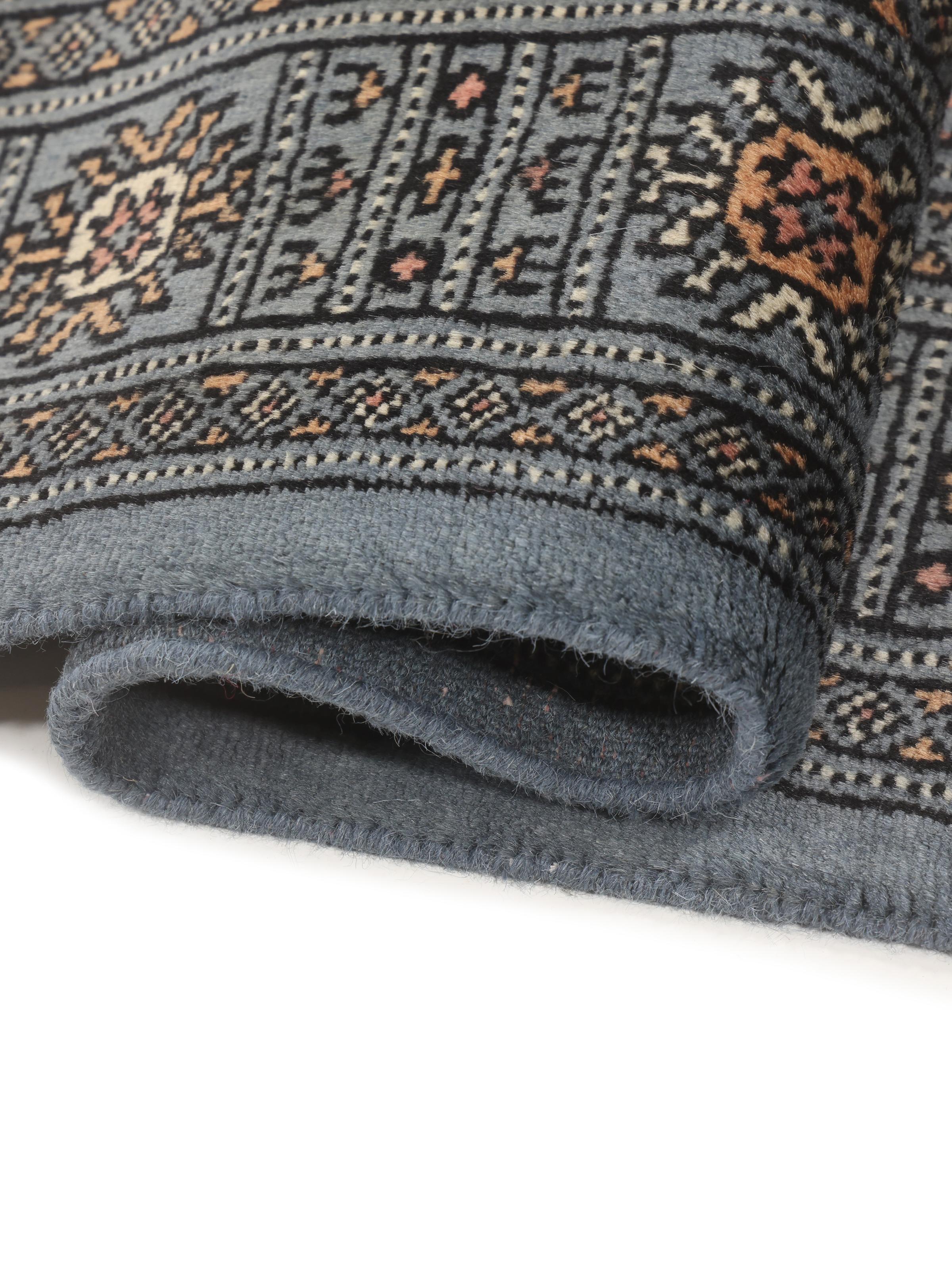
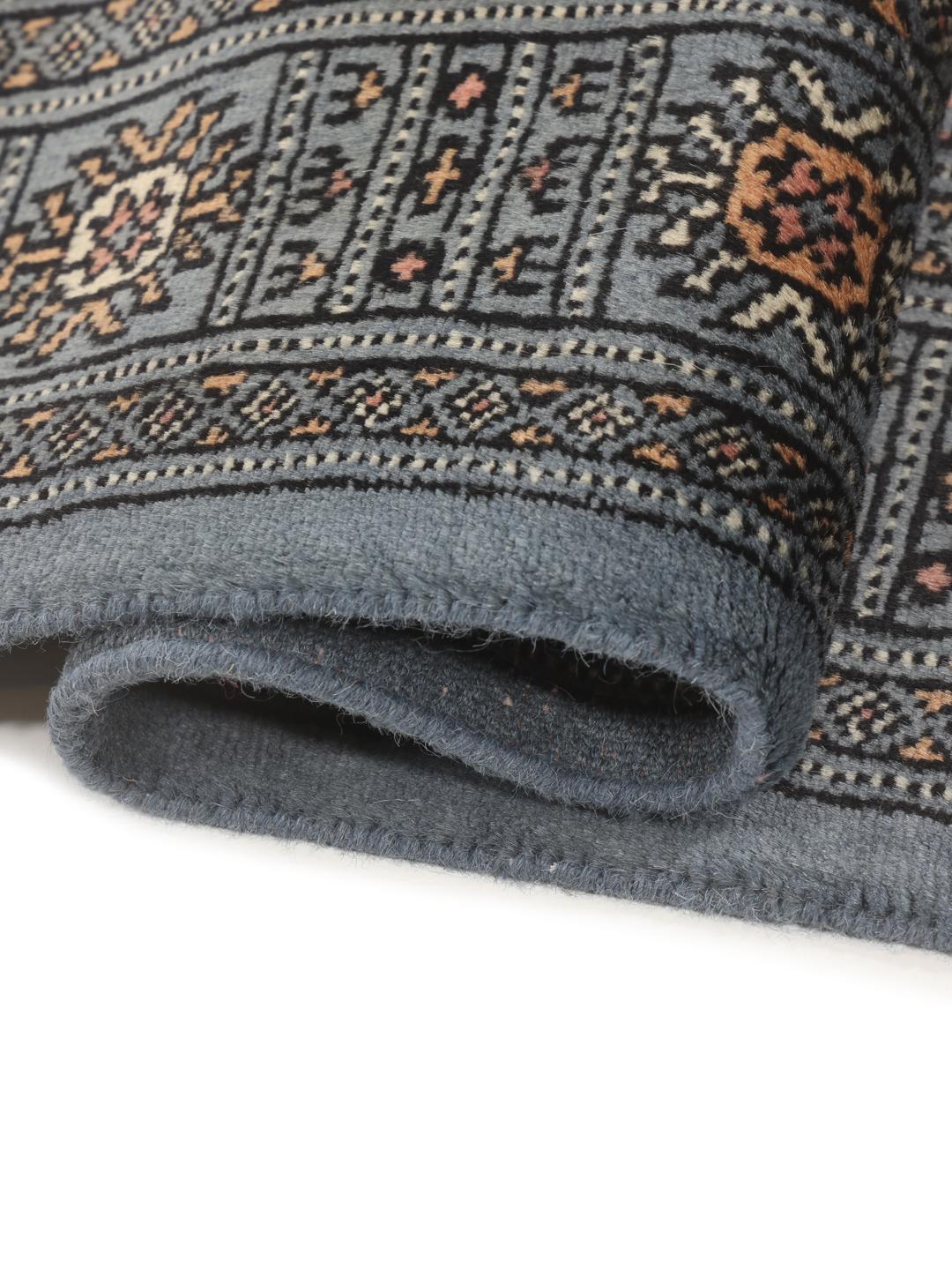
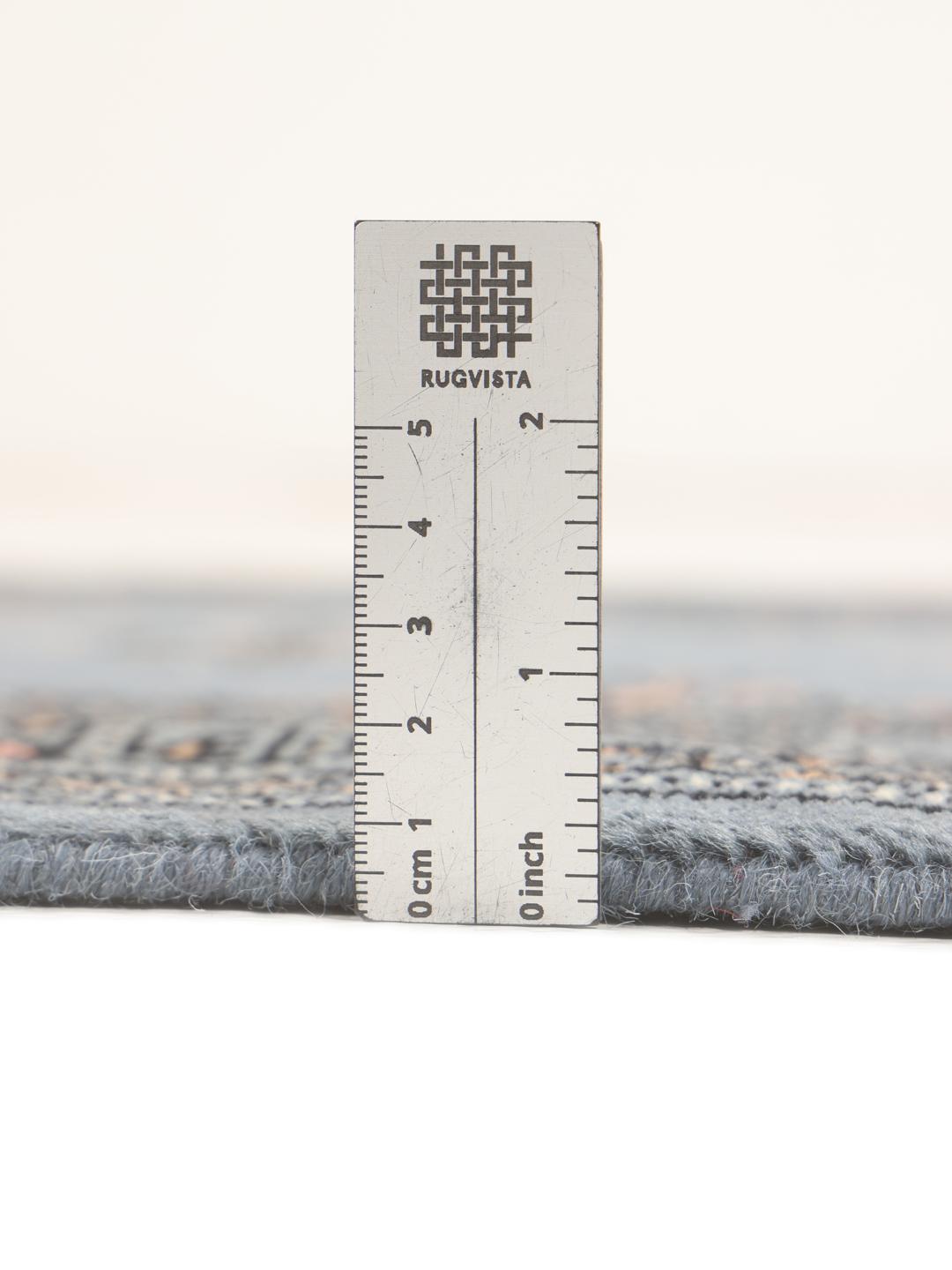
The term 2ply refers to the construction of the pile, where two strands of wool are twisted together before being knotted. This technique is significant because it results in a denser, more lustrous, and remarkably durable pile compared to single-ply alternatives. For the owner, this means a rug that is not only softer and more comfortable underfoot but also one that resists wear and retains its rich colour and texture over time.
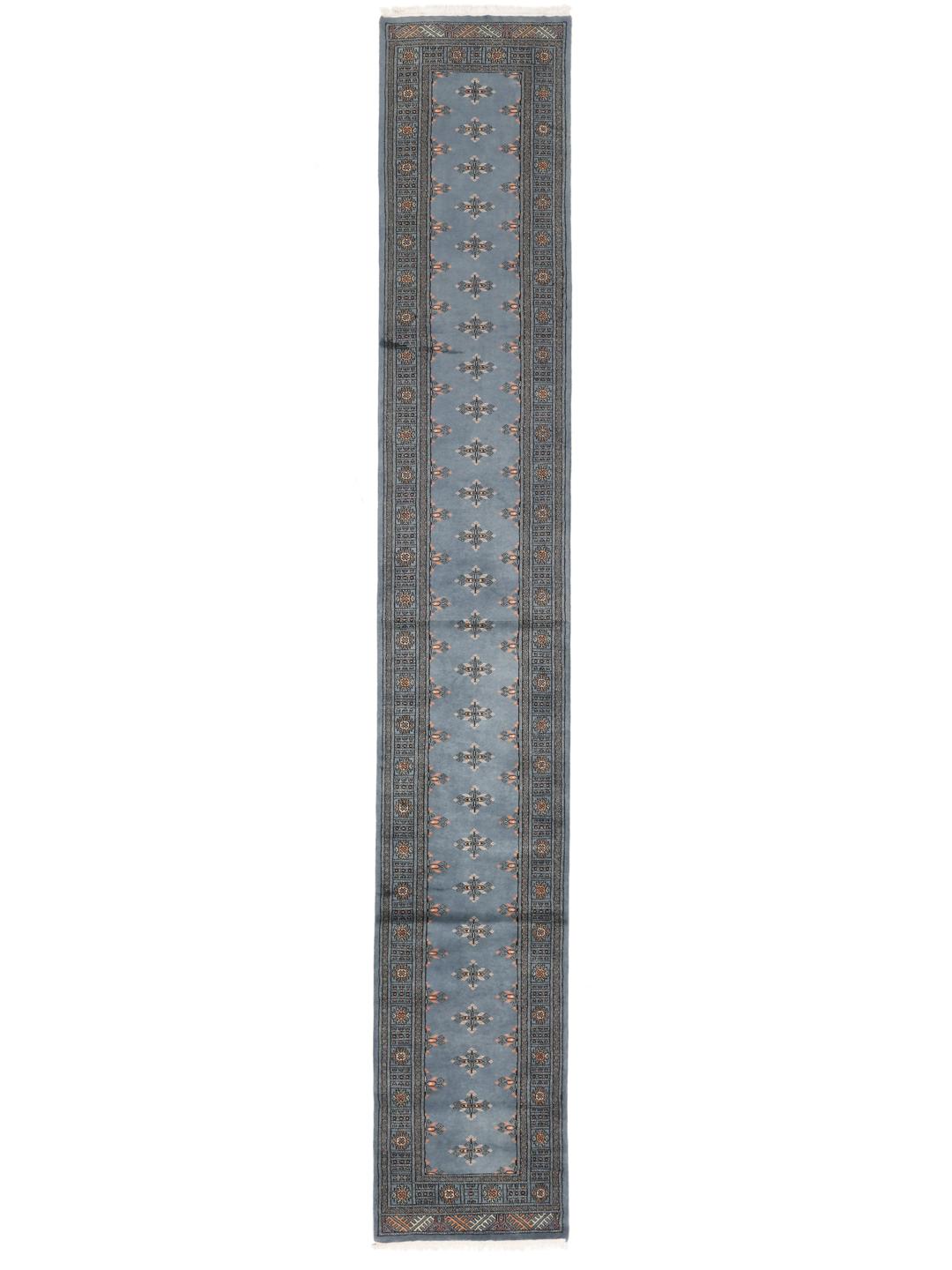
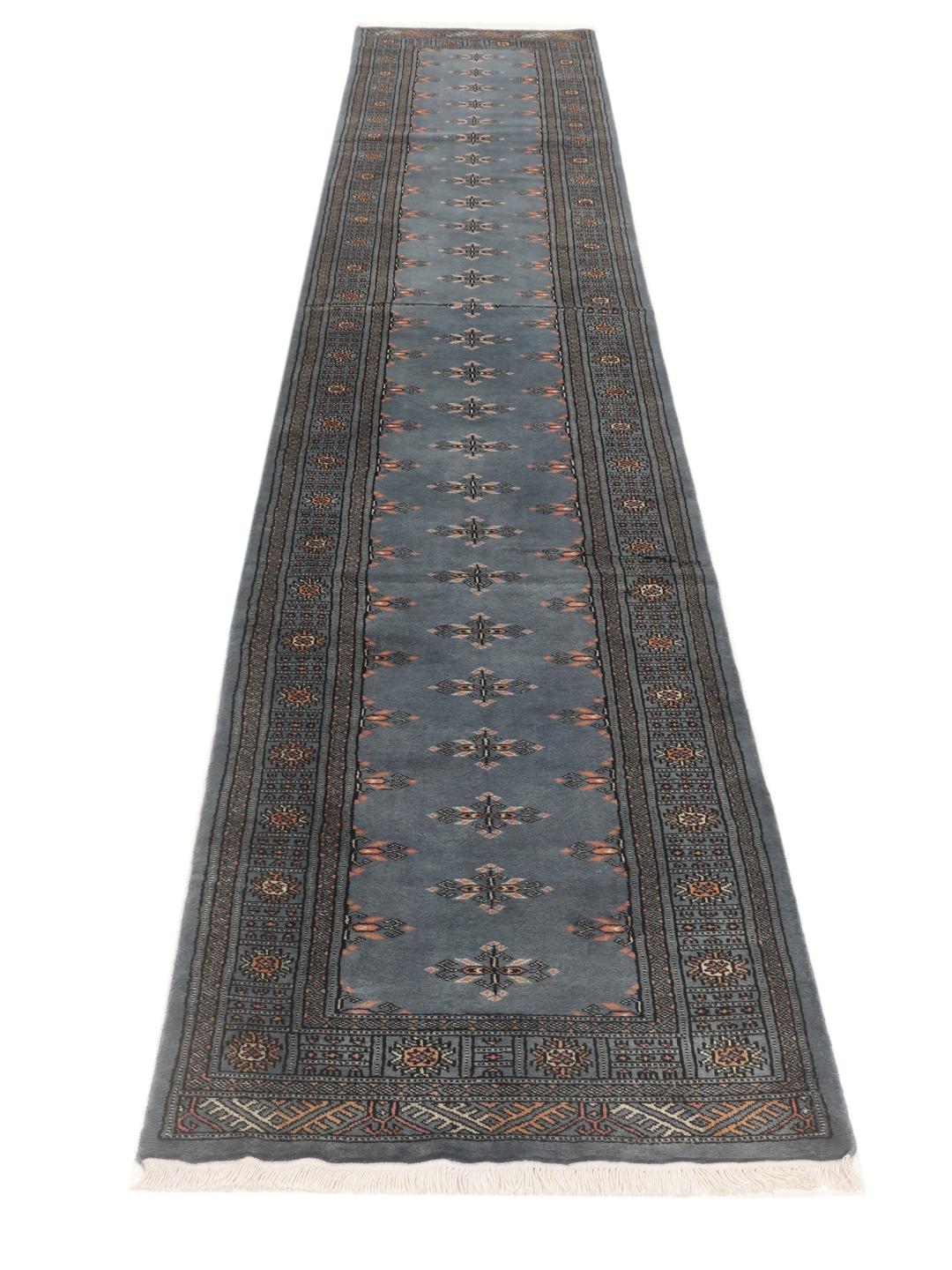
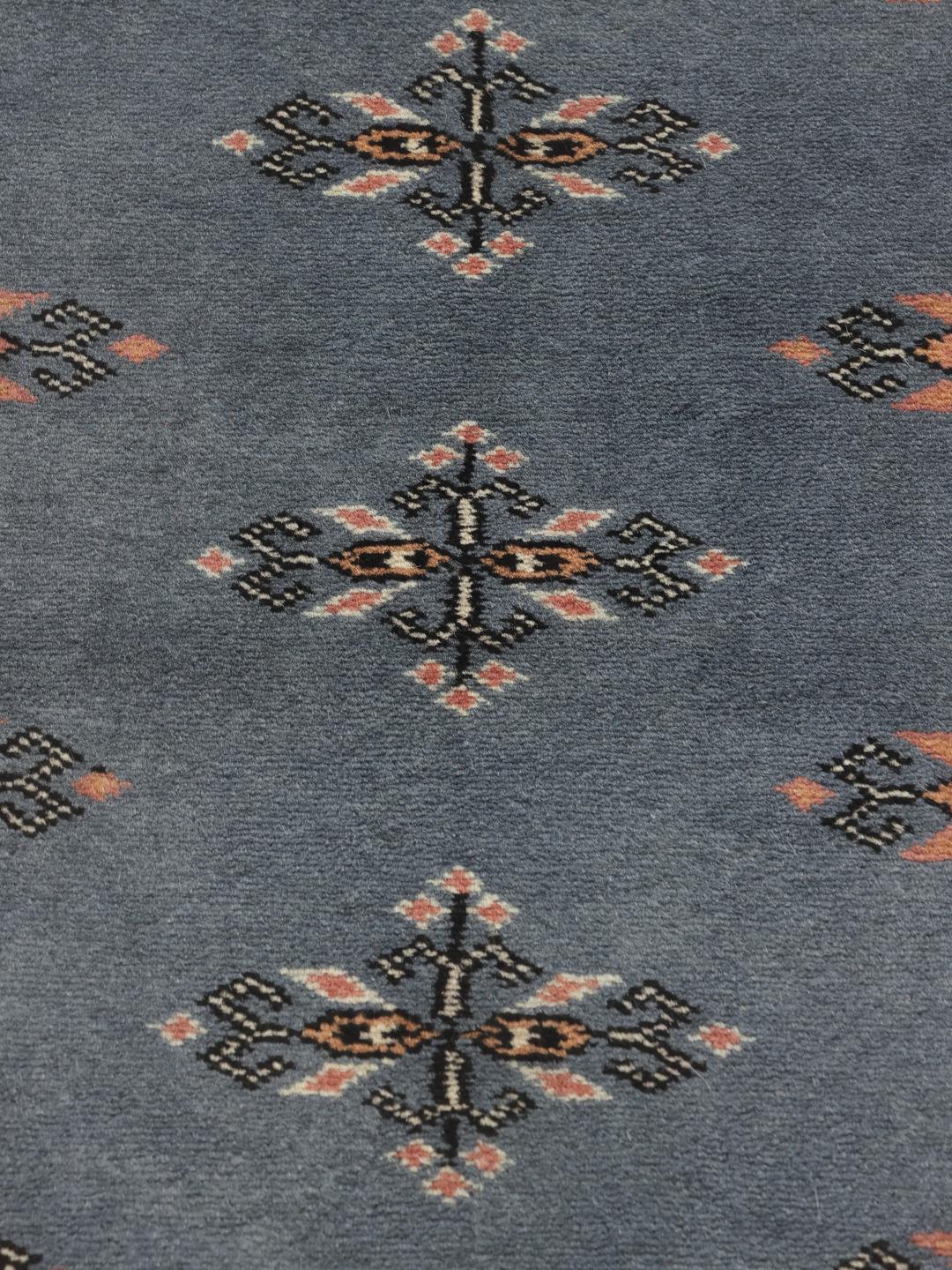
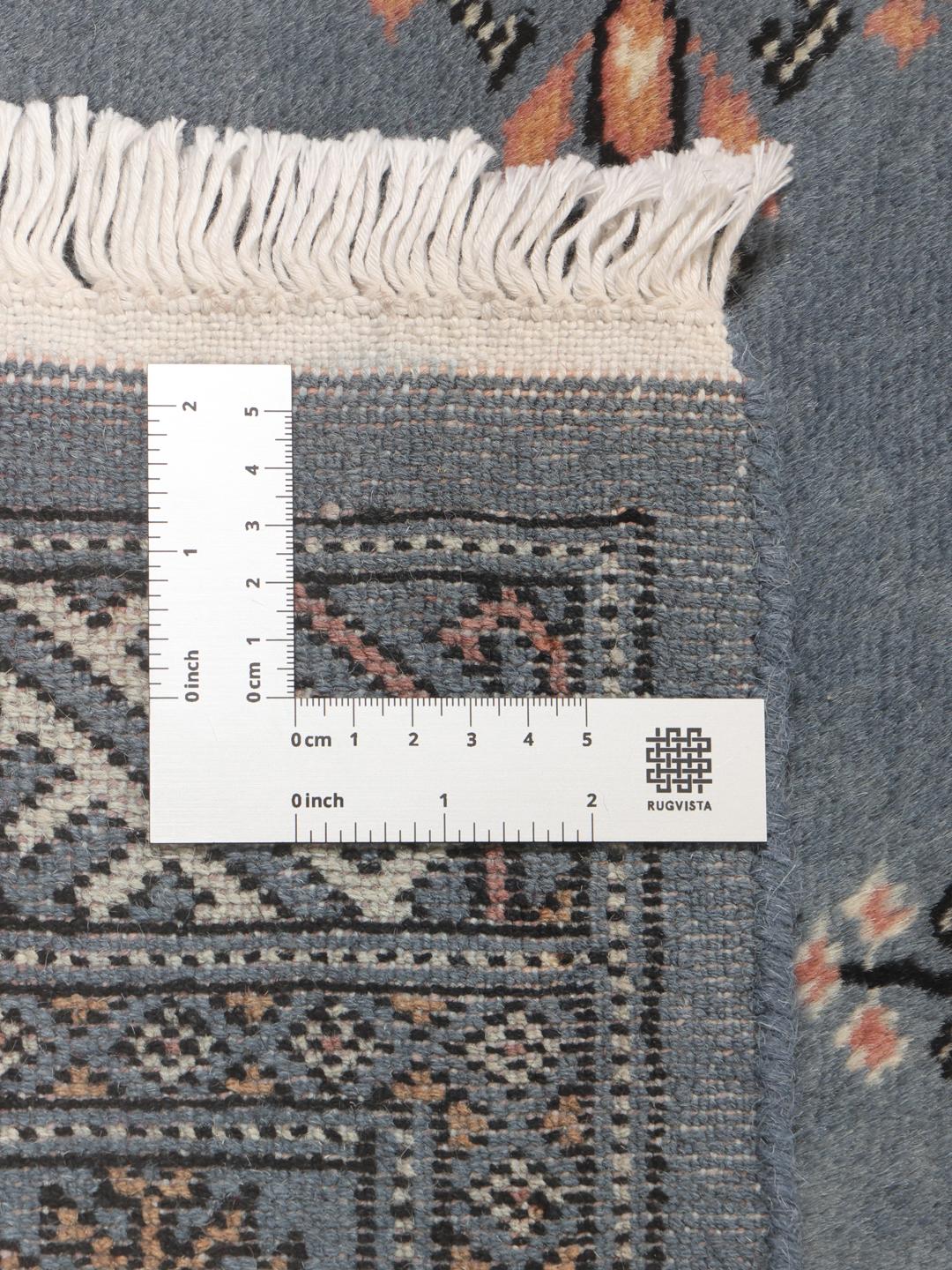
The signature design of this tradition is defined by the repeating gul motif, which are geometric, medallion-like shapes arranged in orderly rows. These are often enclosed by intricate, formal borders that frame the field. The use of a soft blue field in this particular piece is a beautiful variation that offers a more contemporary and serene take on the traditional, typically more vibrant, colour palettes associated with this style.
Owning a hand-knotted rug from this tradition is an investment in cultural heritage and human skill. These pieces are valued by collectors and homeowners alike for their ability to bring a sense of history and warmth into a modern home. Each runner is a testament to the patience of the weaver and the longevity of a craft that has been passed down through generations, offering a tangible connection to a rich, global design legacy.