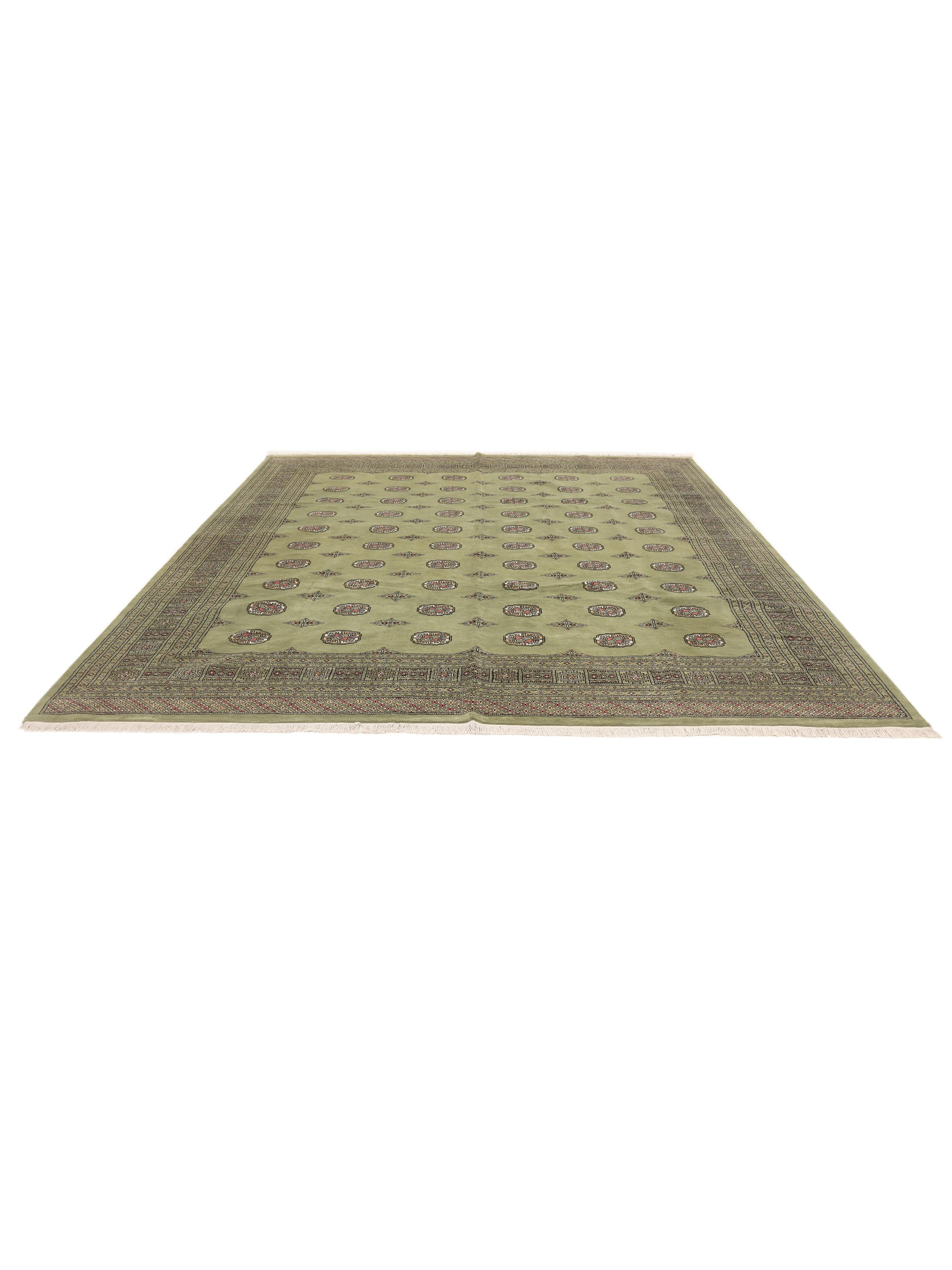
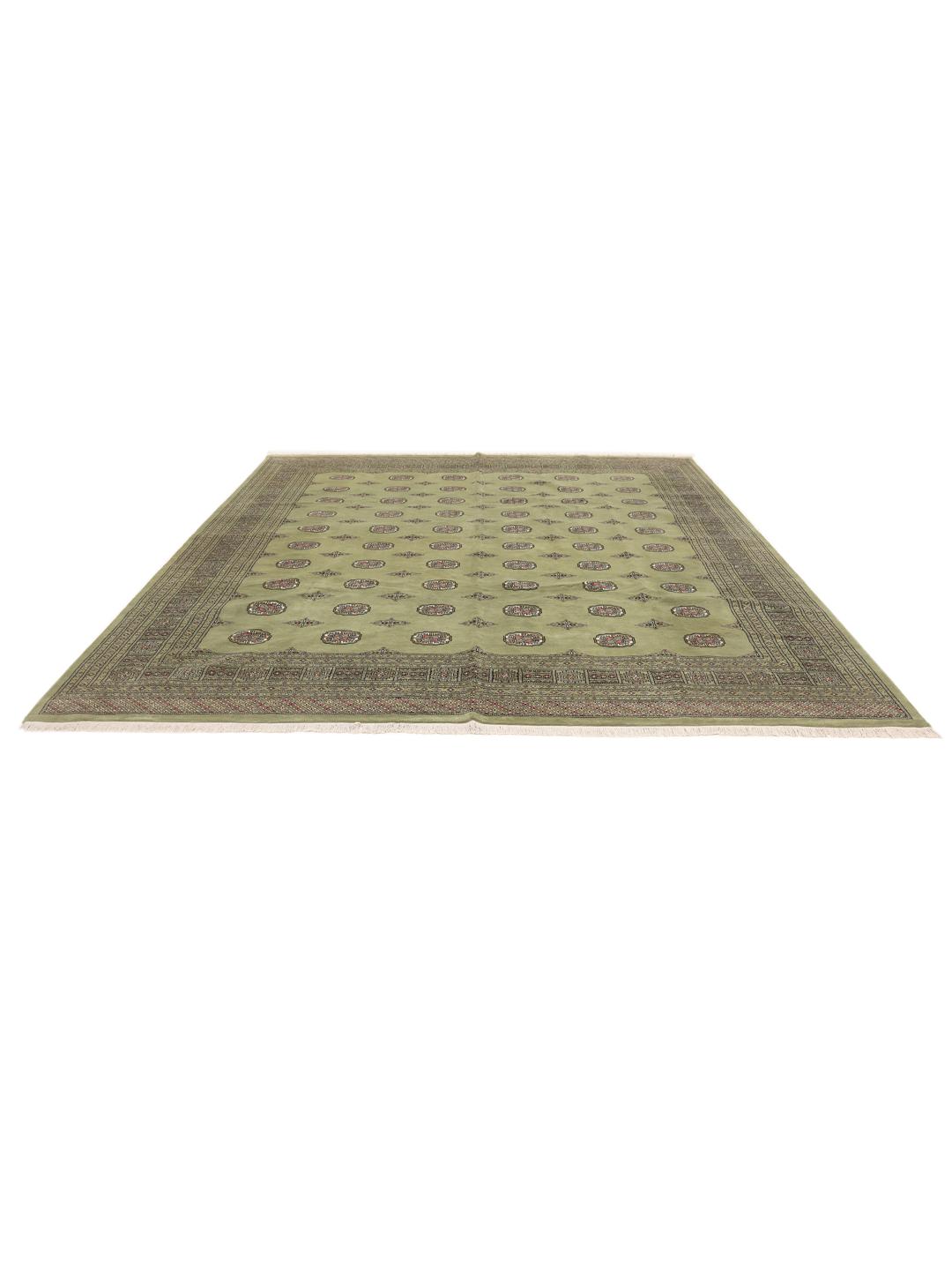
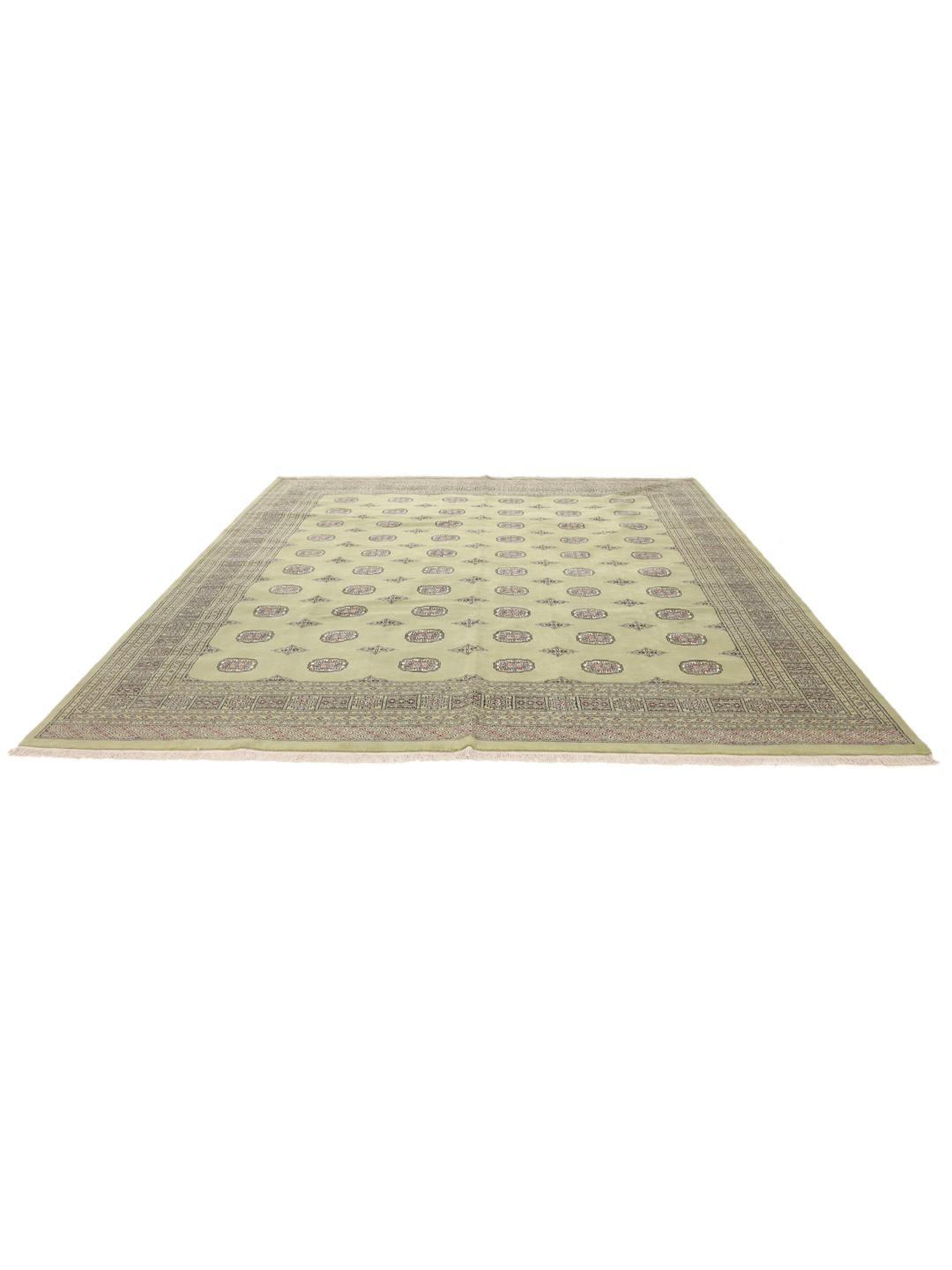
The Bokhara rug tradition is deeply rooted in the history of Central Asian nomadic tribes, who developed these designs to reflect their cultural identity and environment. While the name traces back to the historic Silk Road city of Bukhara, the craft found a new, thriving centre in Pakistan, where weavers have refined the style to achieve a level of consistency and softness that is highly prized by collectors today.
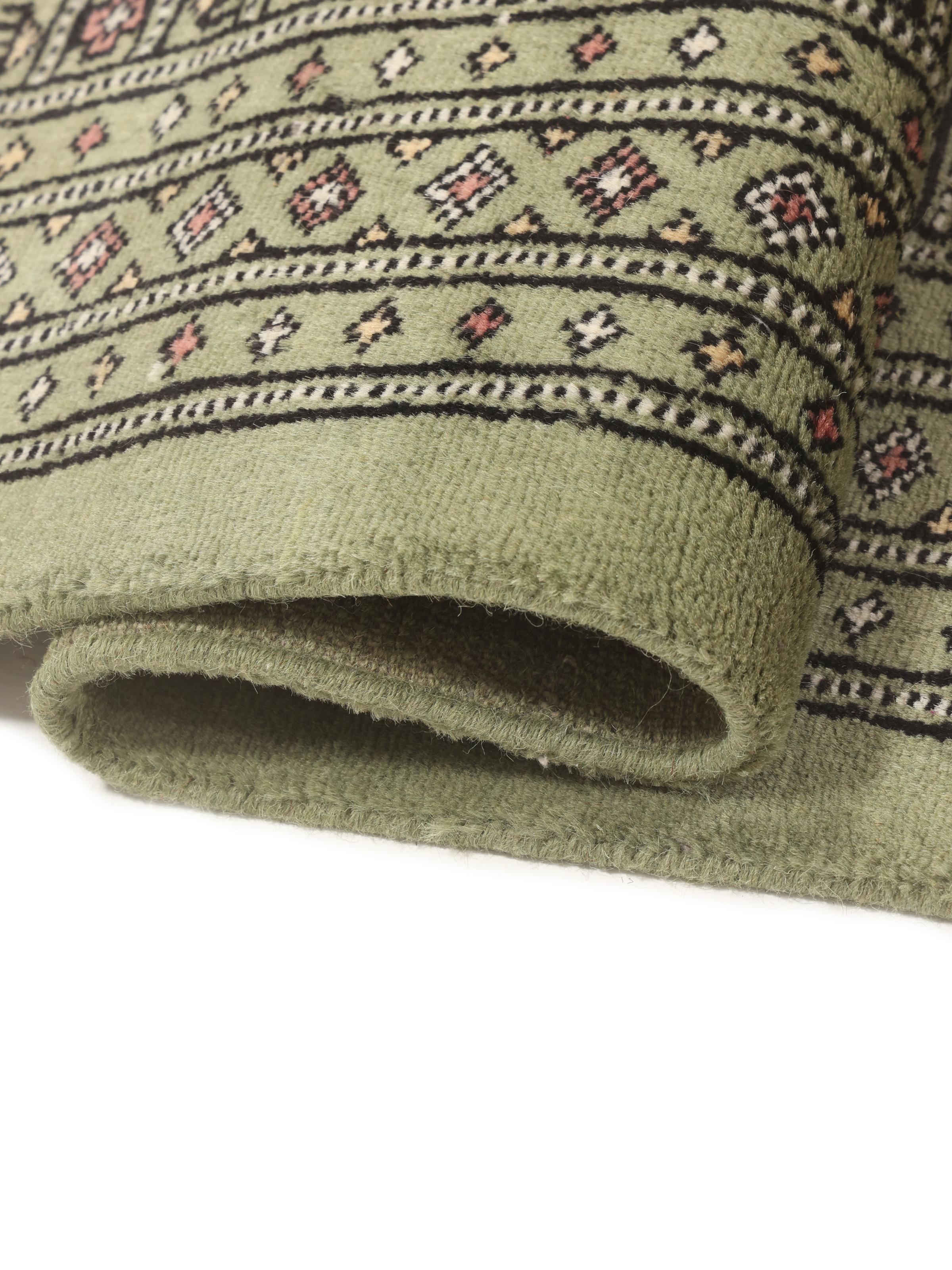
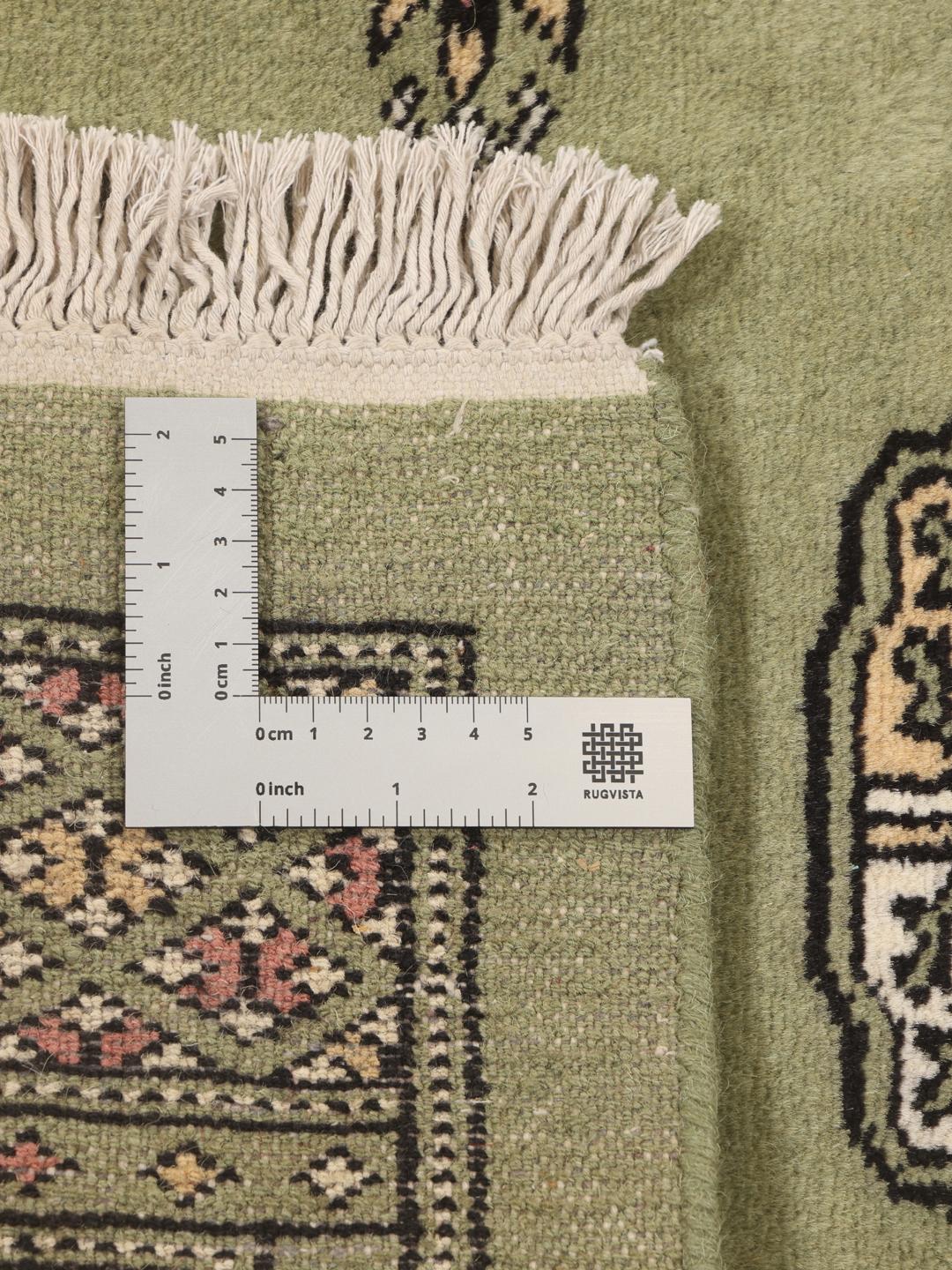
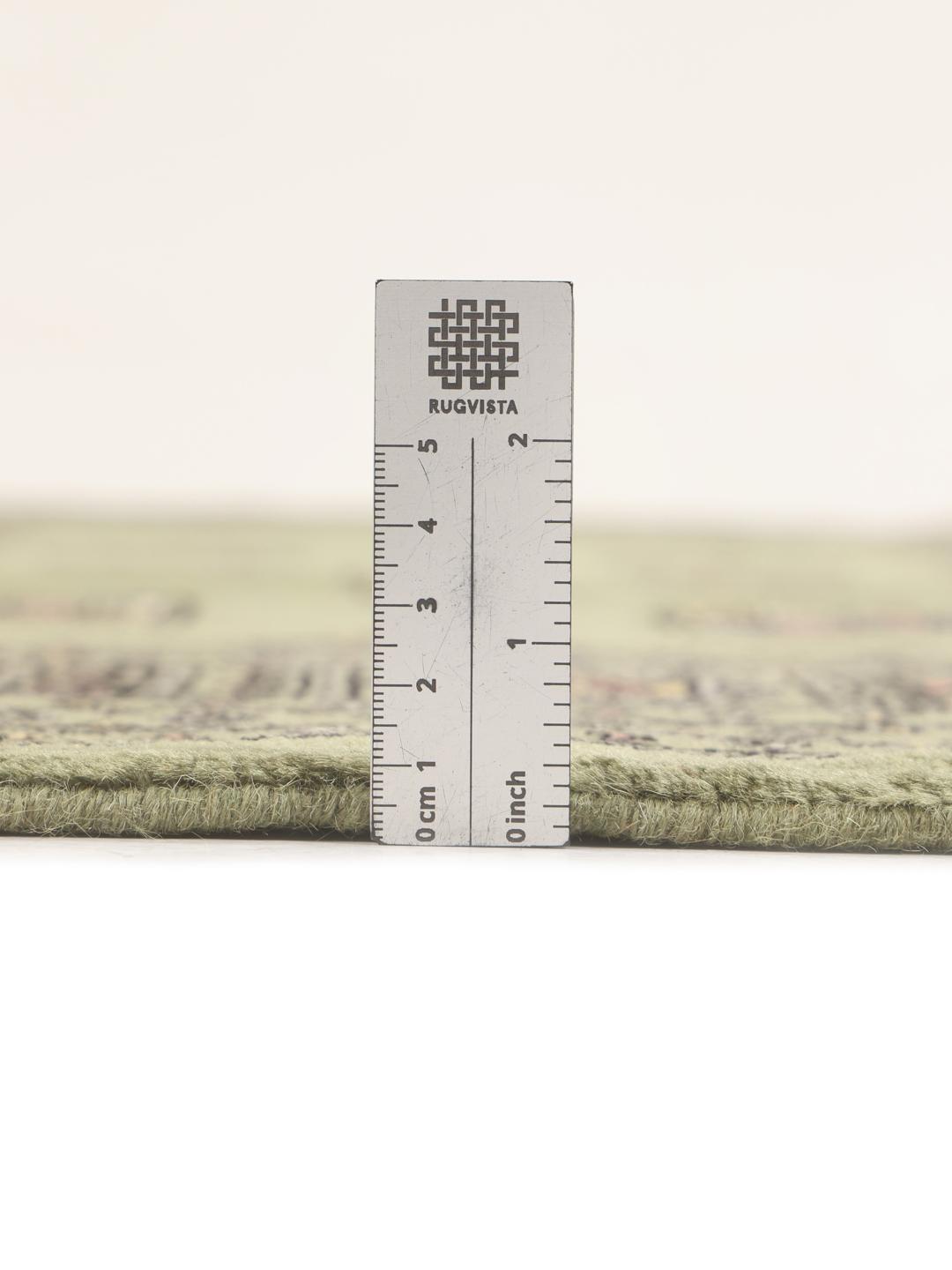
The 2ply designation refers to the construction of the yarn, where two strands of wool are twisted together before being knotted. This technique is significant because it results in a thicker, more lustrous, and remarkably durable pile compared to single-ply yarns. It is this specific approach to material preparation that gives these rugs their signature plush feel and long-term performance.
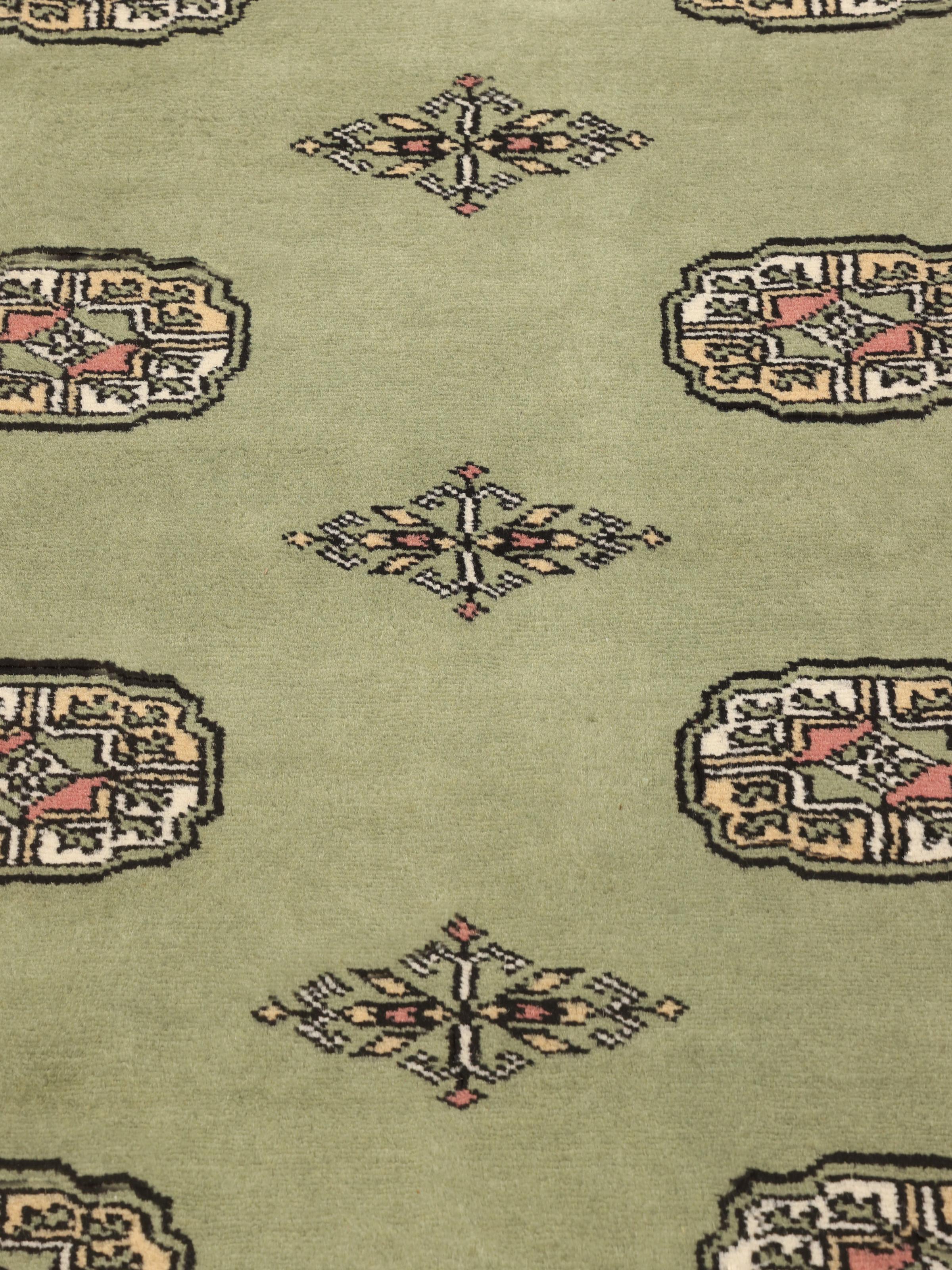
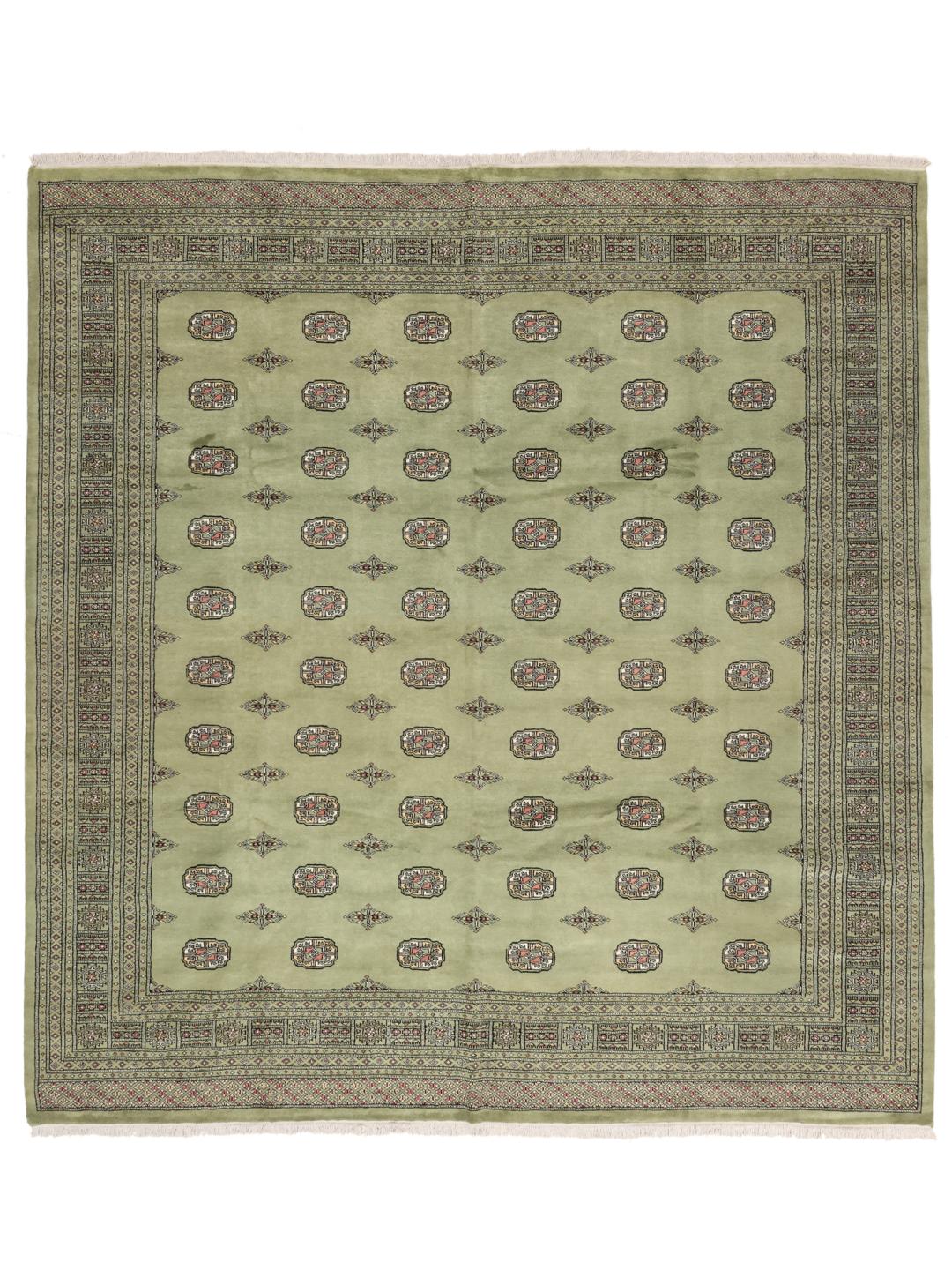
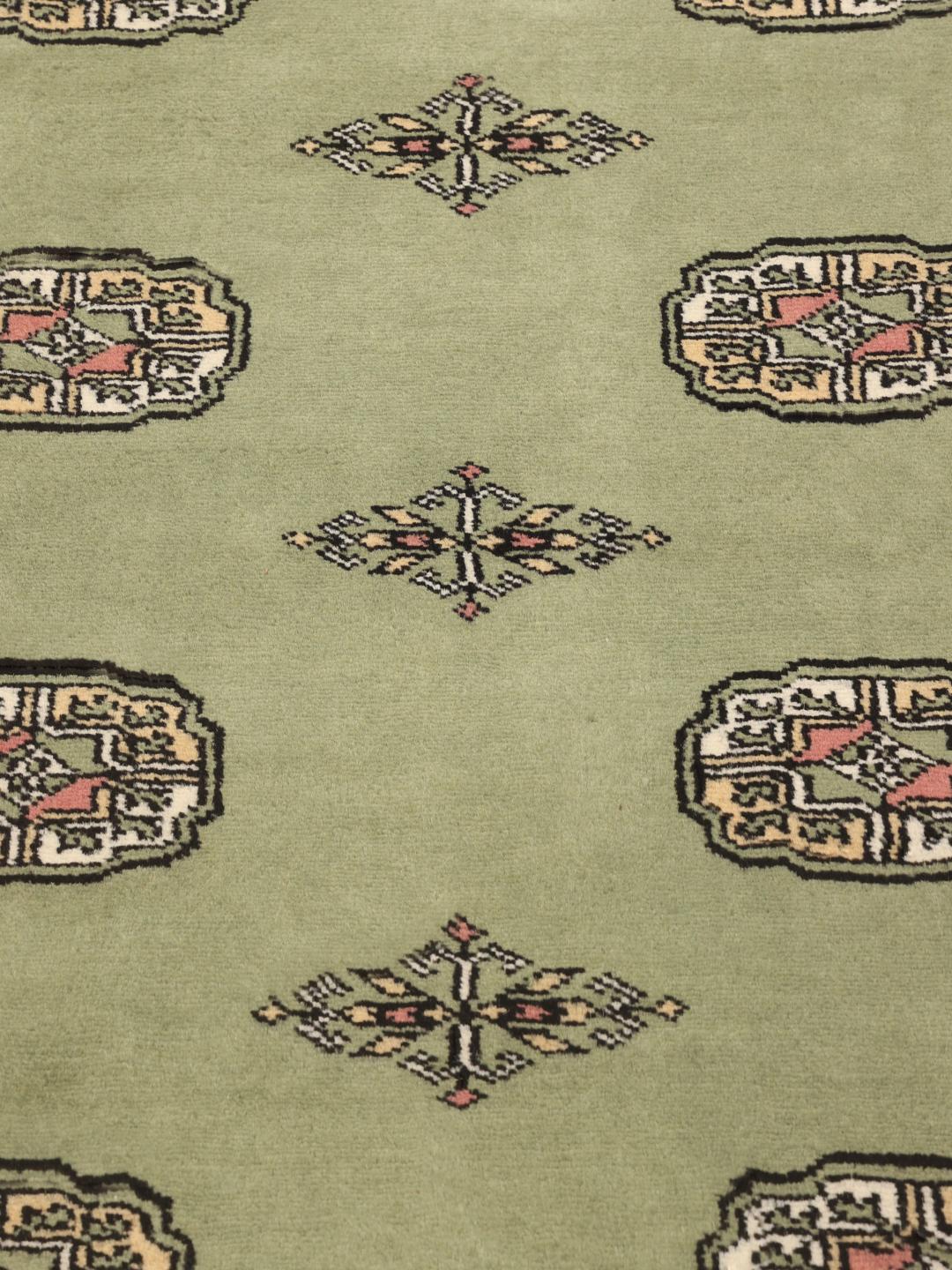
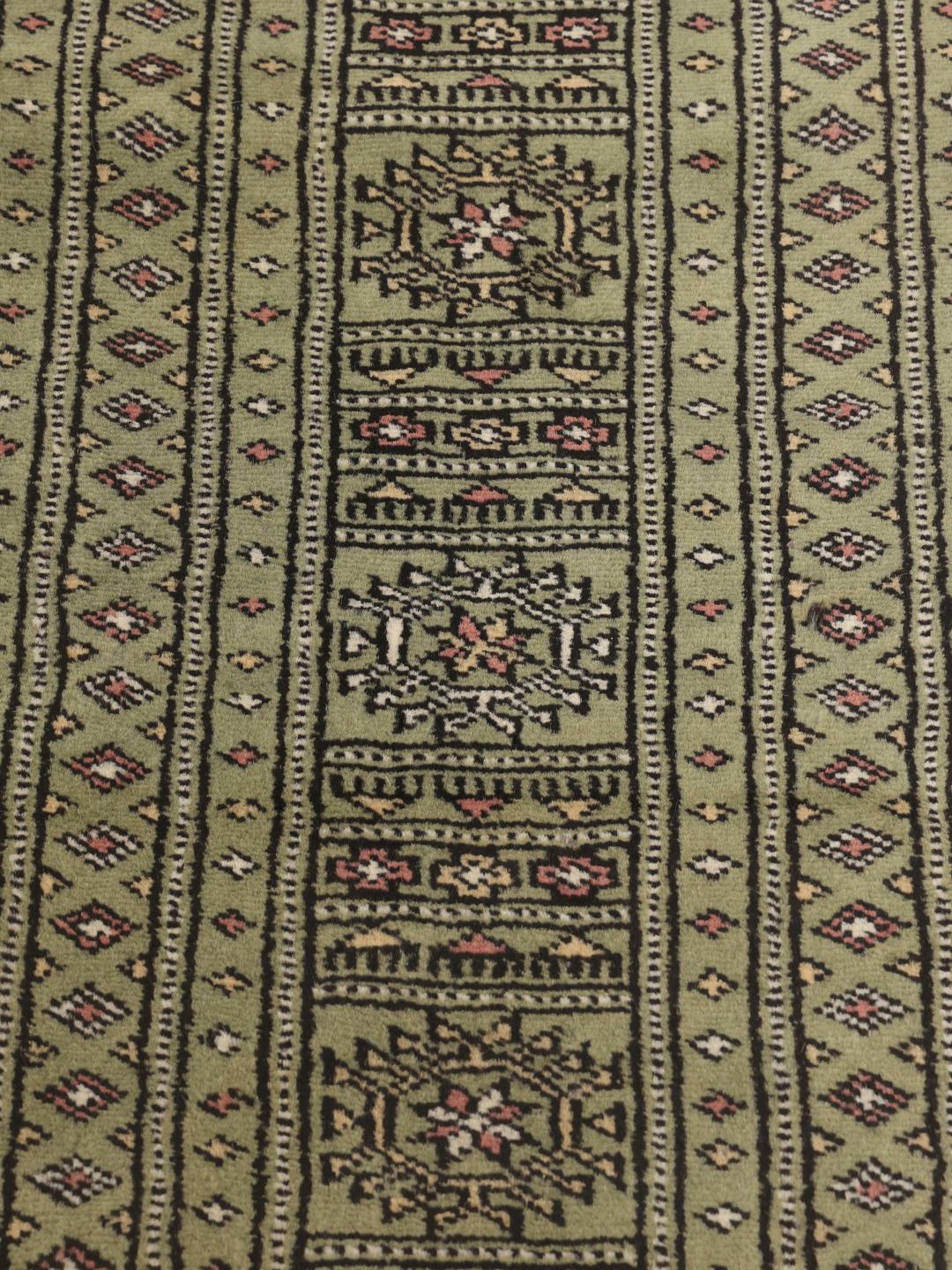
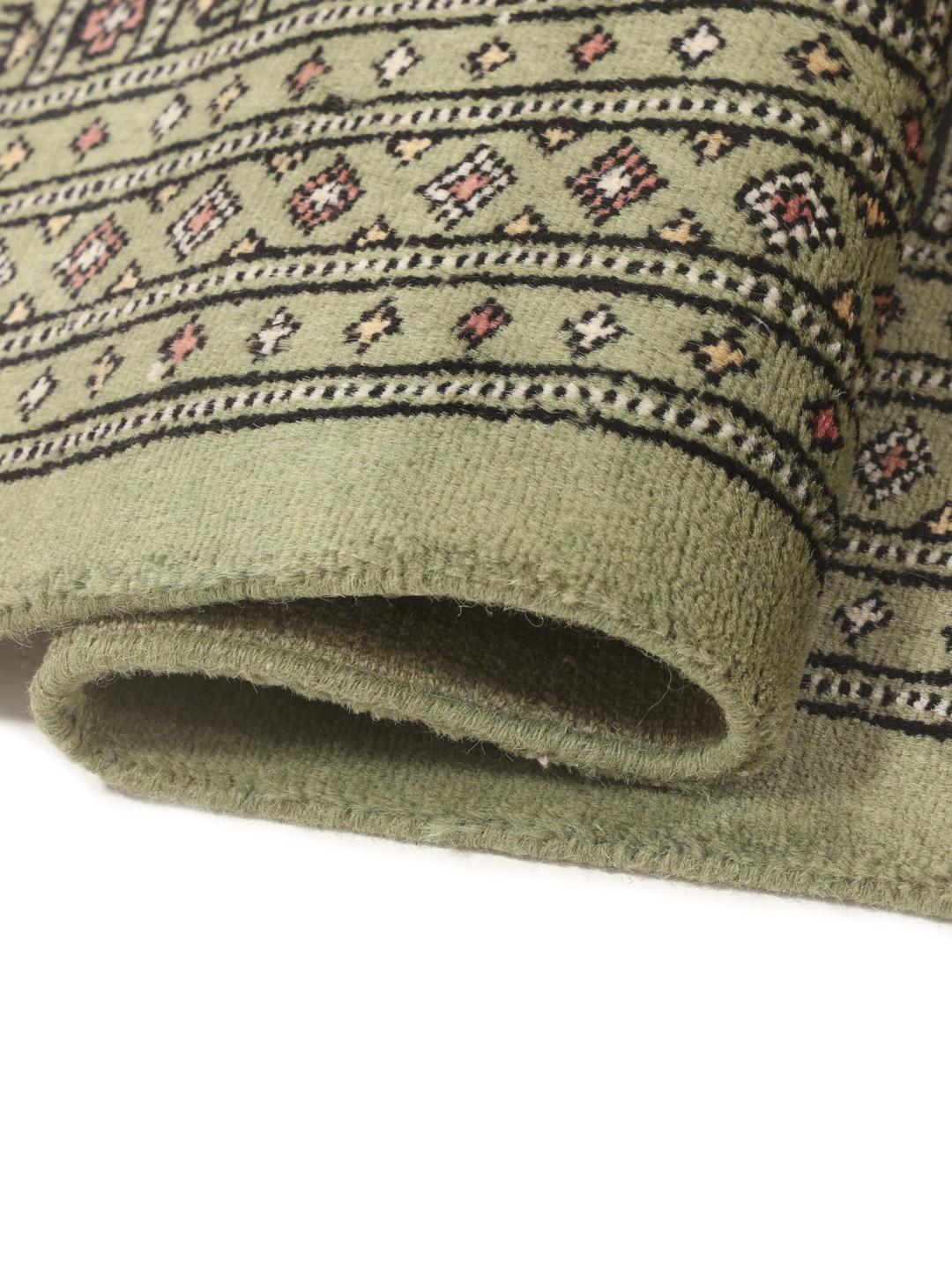
Visually, these rugs are defined by their elegant gul motifs, which are repeating, octagonal medallions often described as elephant-foot shapes. These are typically arranged in clean, geometric rows across the field, framed by a series of precise, decorative borders. While often seen in warmer tones, this green variation offers a refreshing, modern take on a classic aesthetic that remains true to the traditional geometry.
Owning a hand-knotted rug from this tradition is about more than just decor; it is about preserving a legacy of skill that has been passed down through generations. These pieces are collected for their ability to balance formal design with a grounded, human touch, making them a meaningful addition to any home that values craftsmanship and the quiet beauty of traditional motifs.