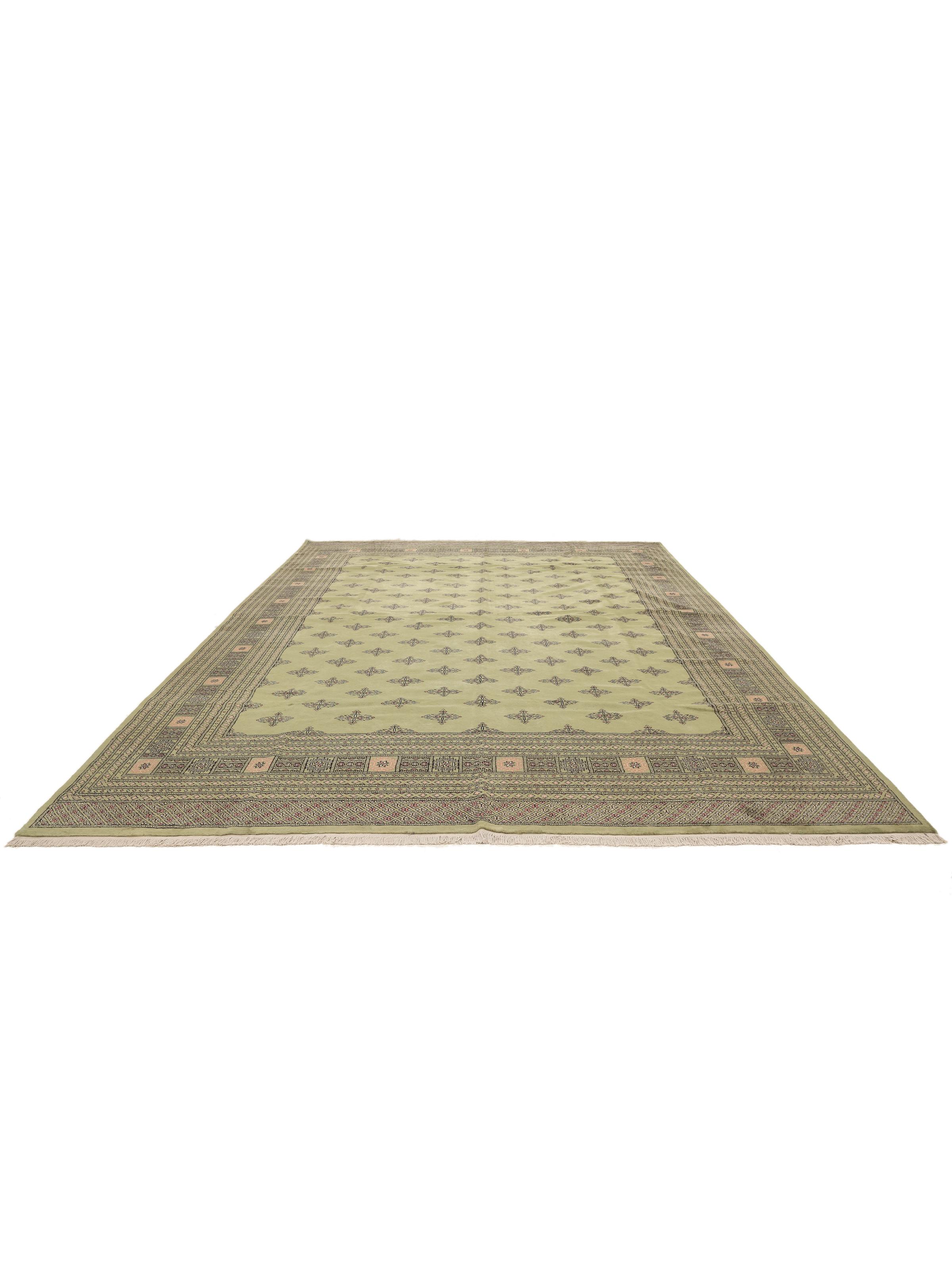
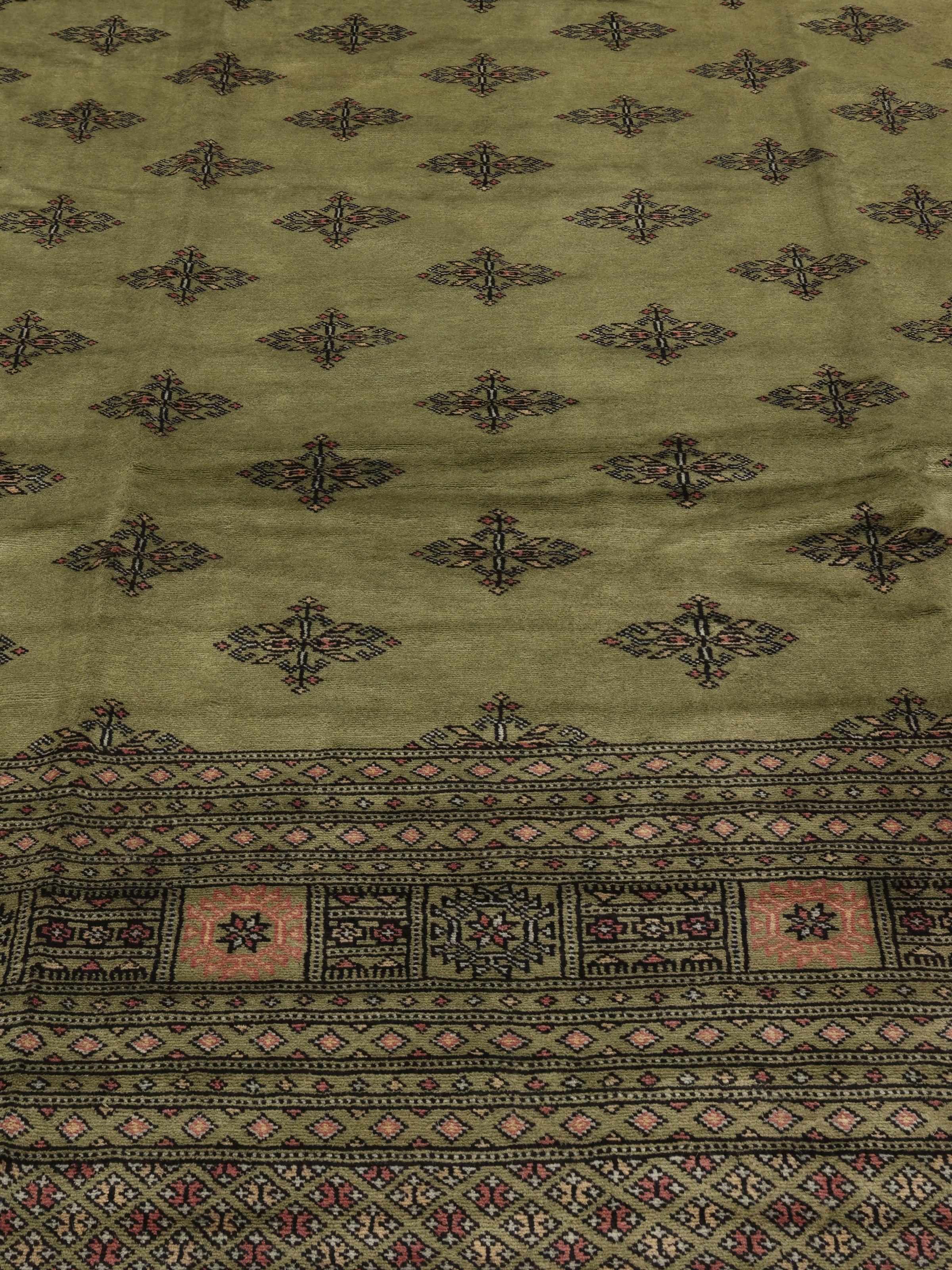
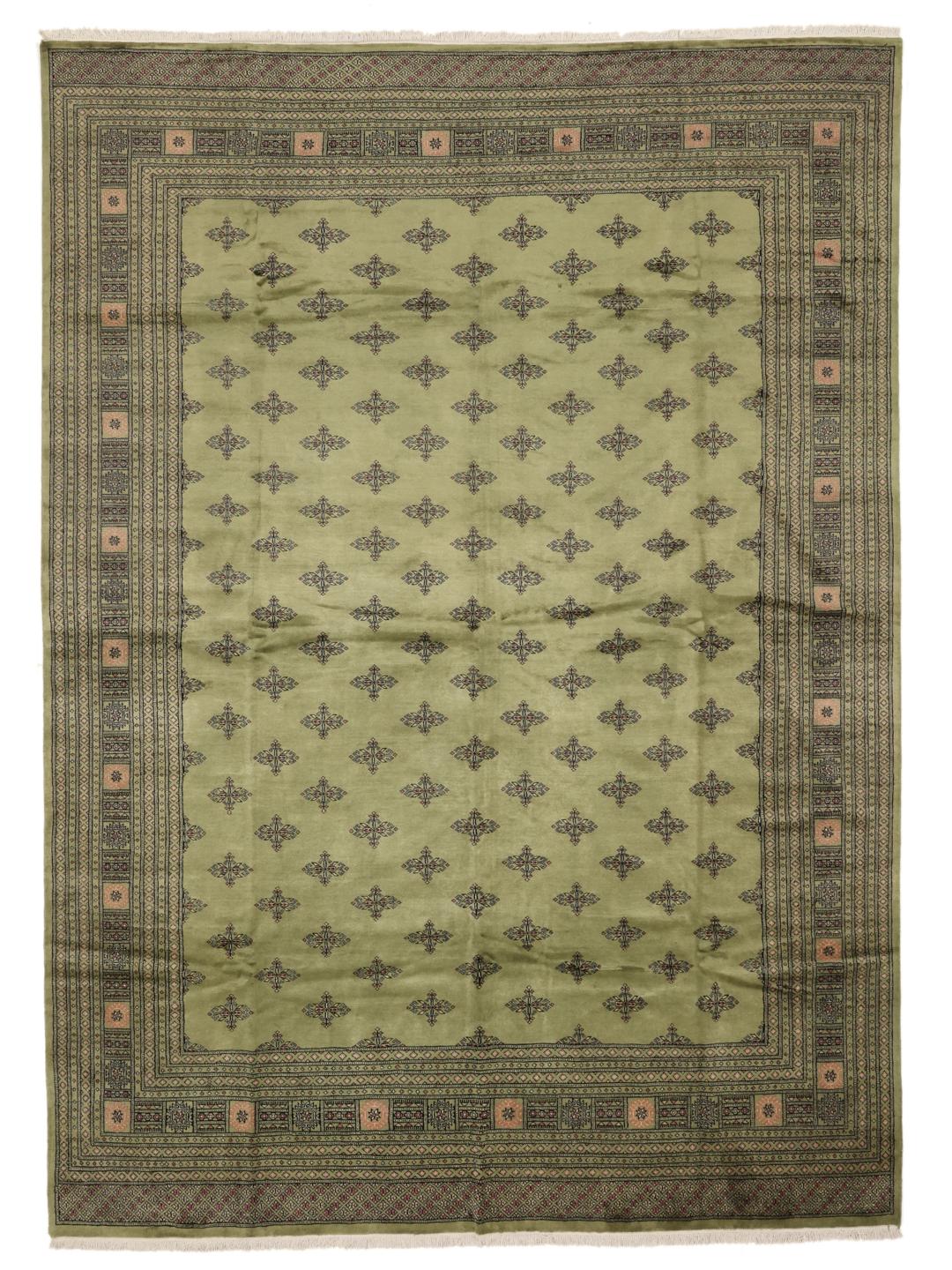
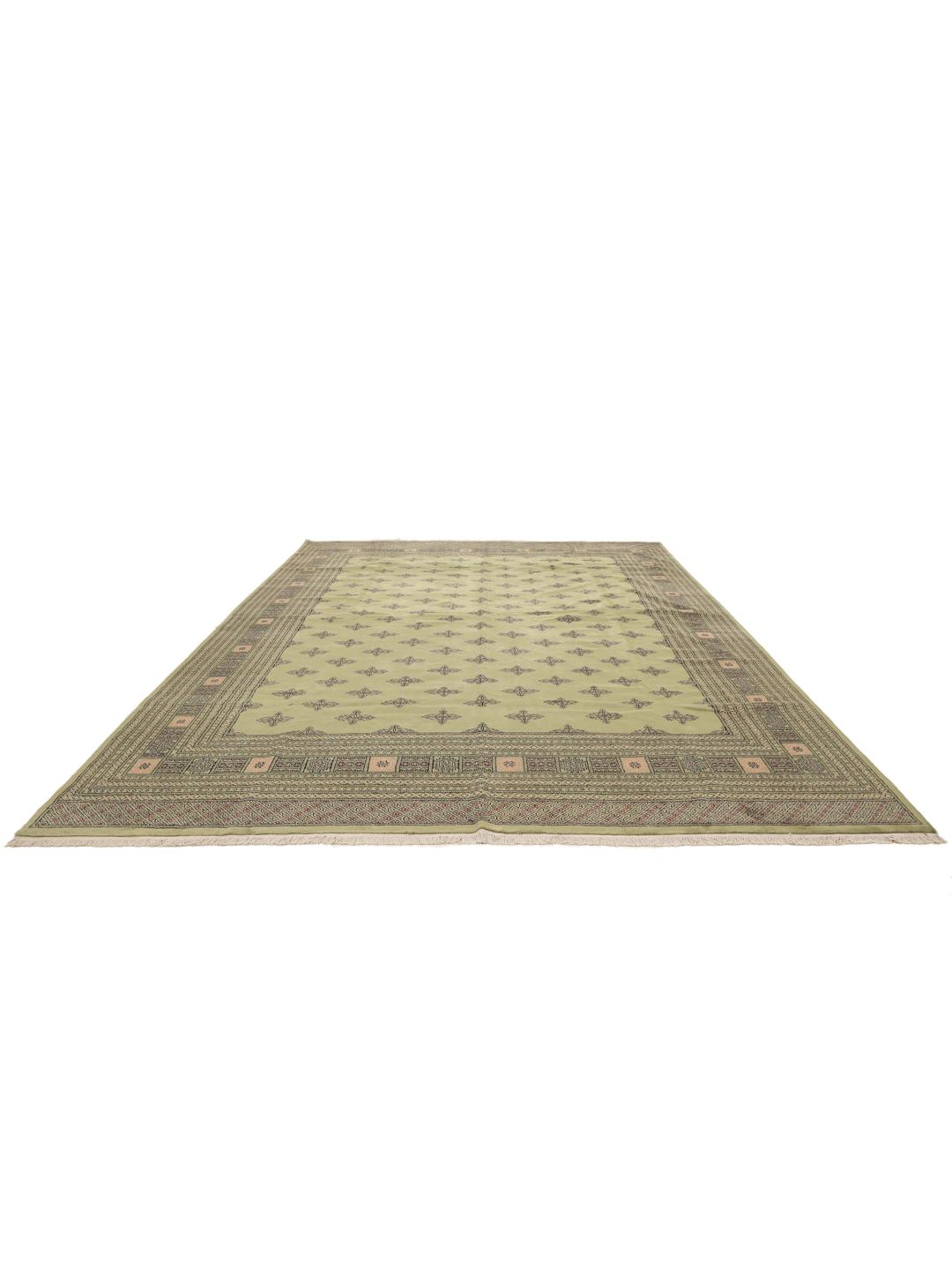
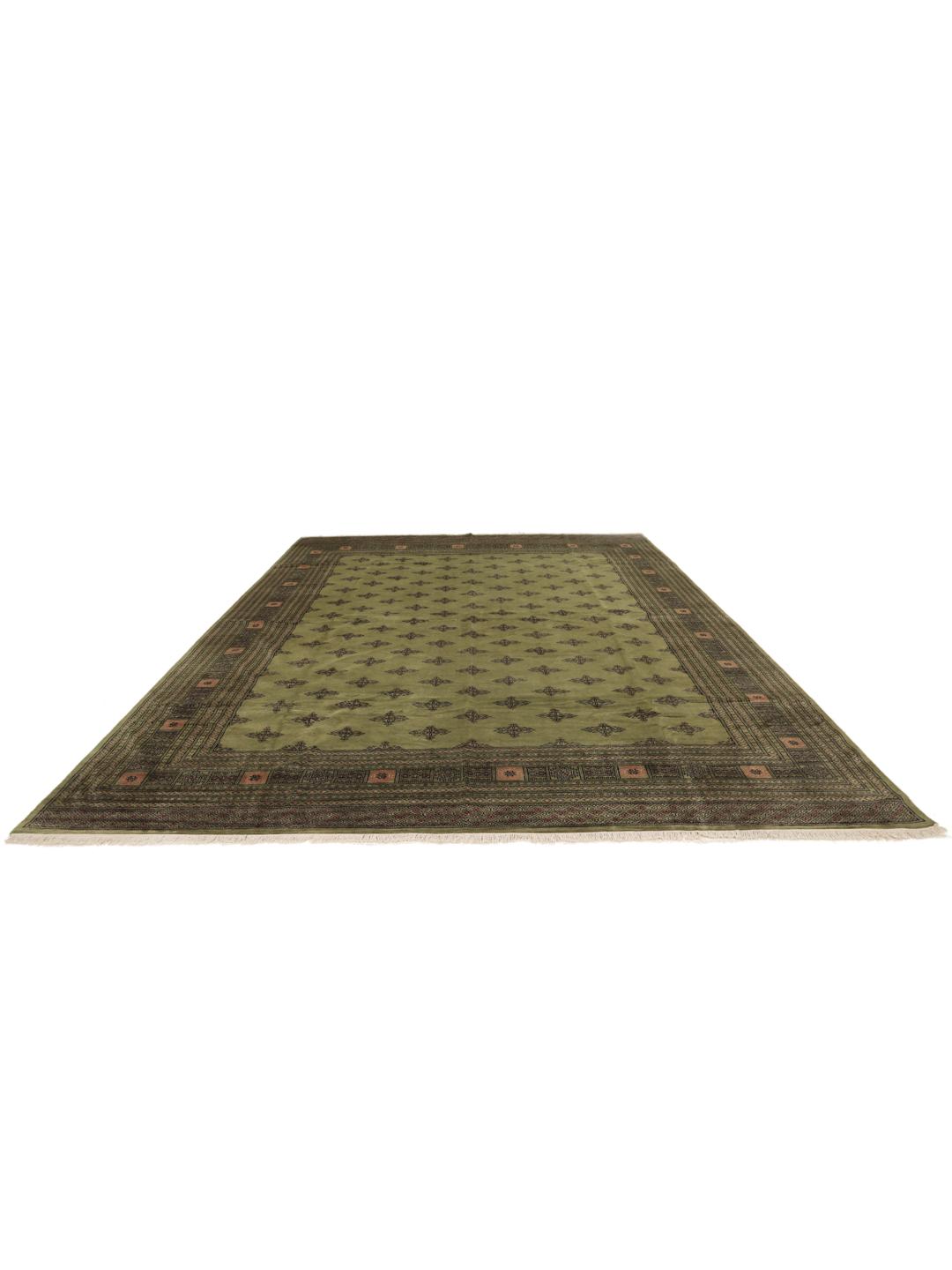
The Bokhara rug tradition is deeply rooted in the history of the Silk Road, taking its name from the ancient city of Bukhara in present-day Uzbekistan. While the original designs were created by nomadic tribes in Central Asia, the production of these rugs eventually migrated to Pakistan. Today, Pakistan is renowned for producing some of the finest examples of this style, blending historical motifs with modern standards of excellence.
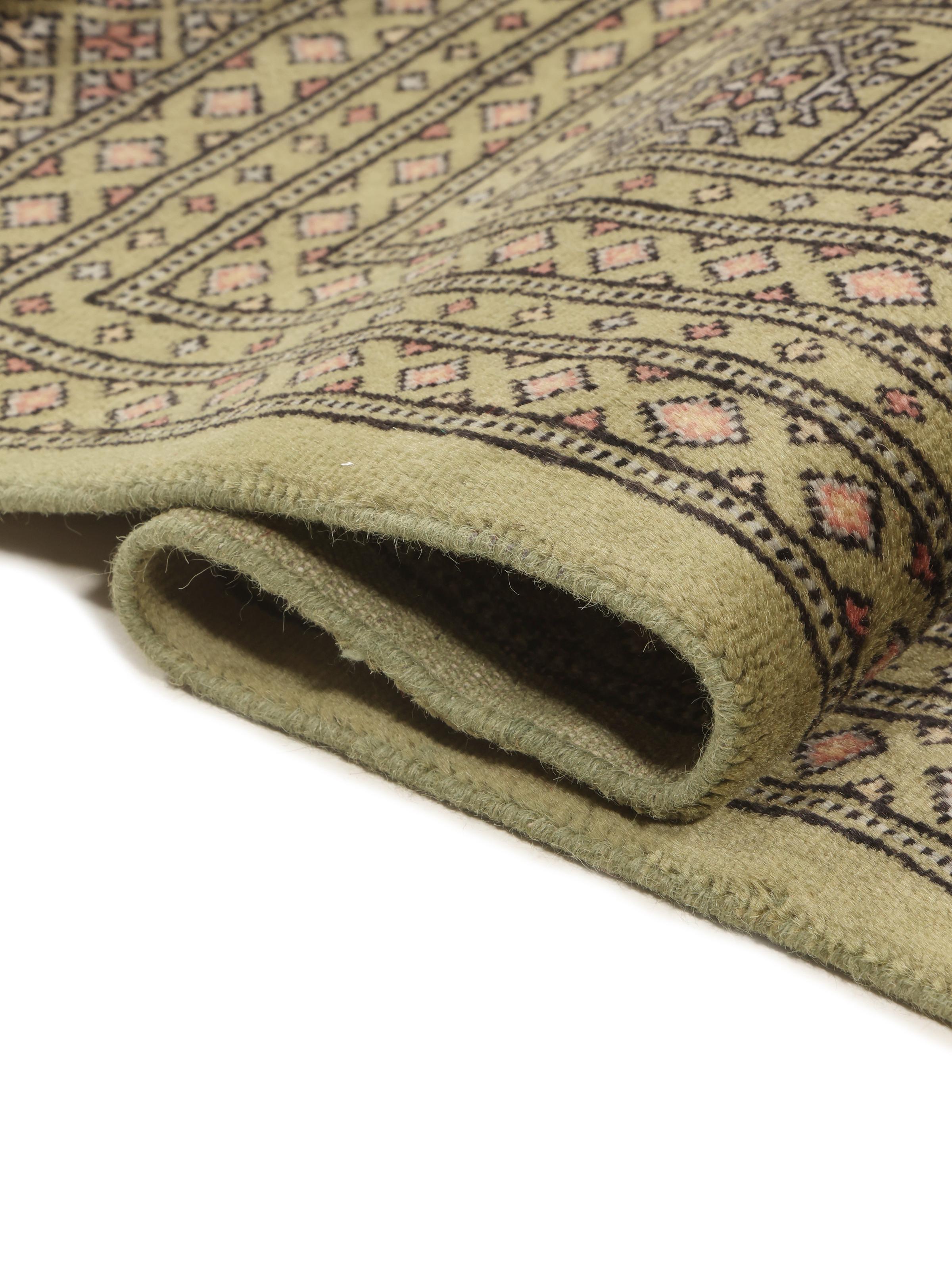
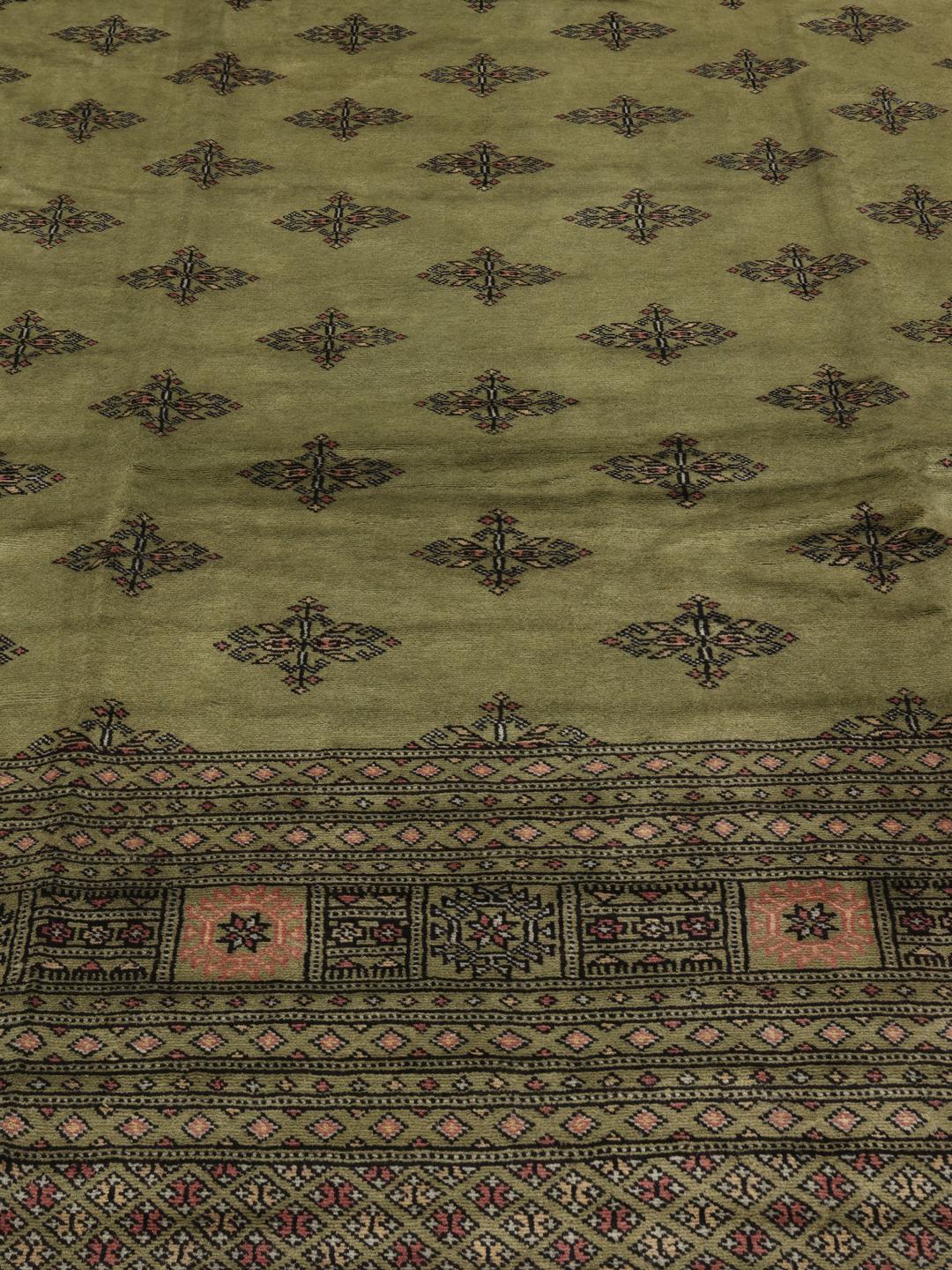
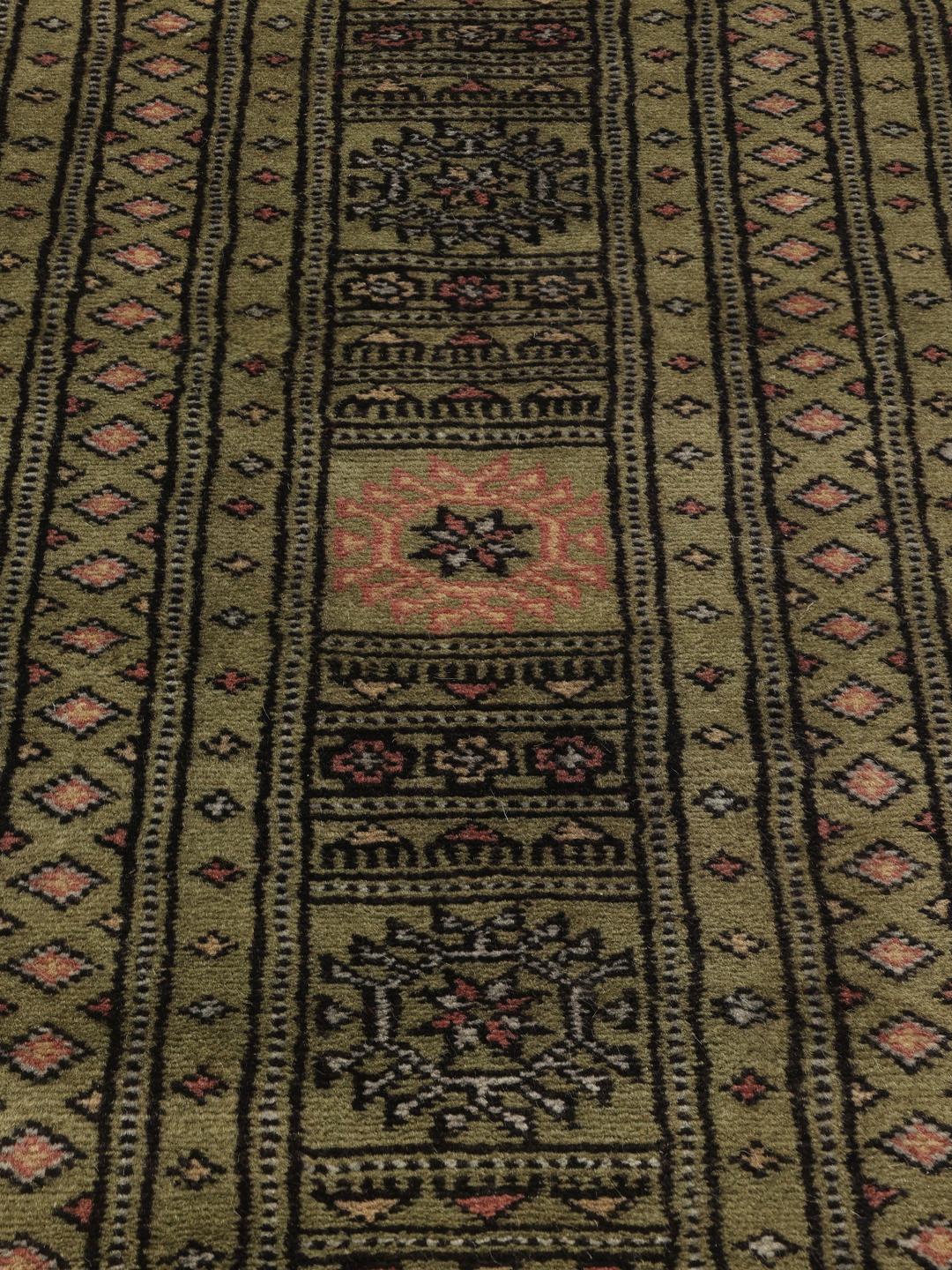
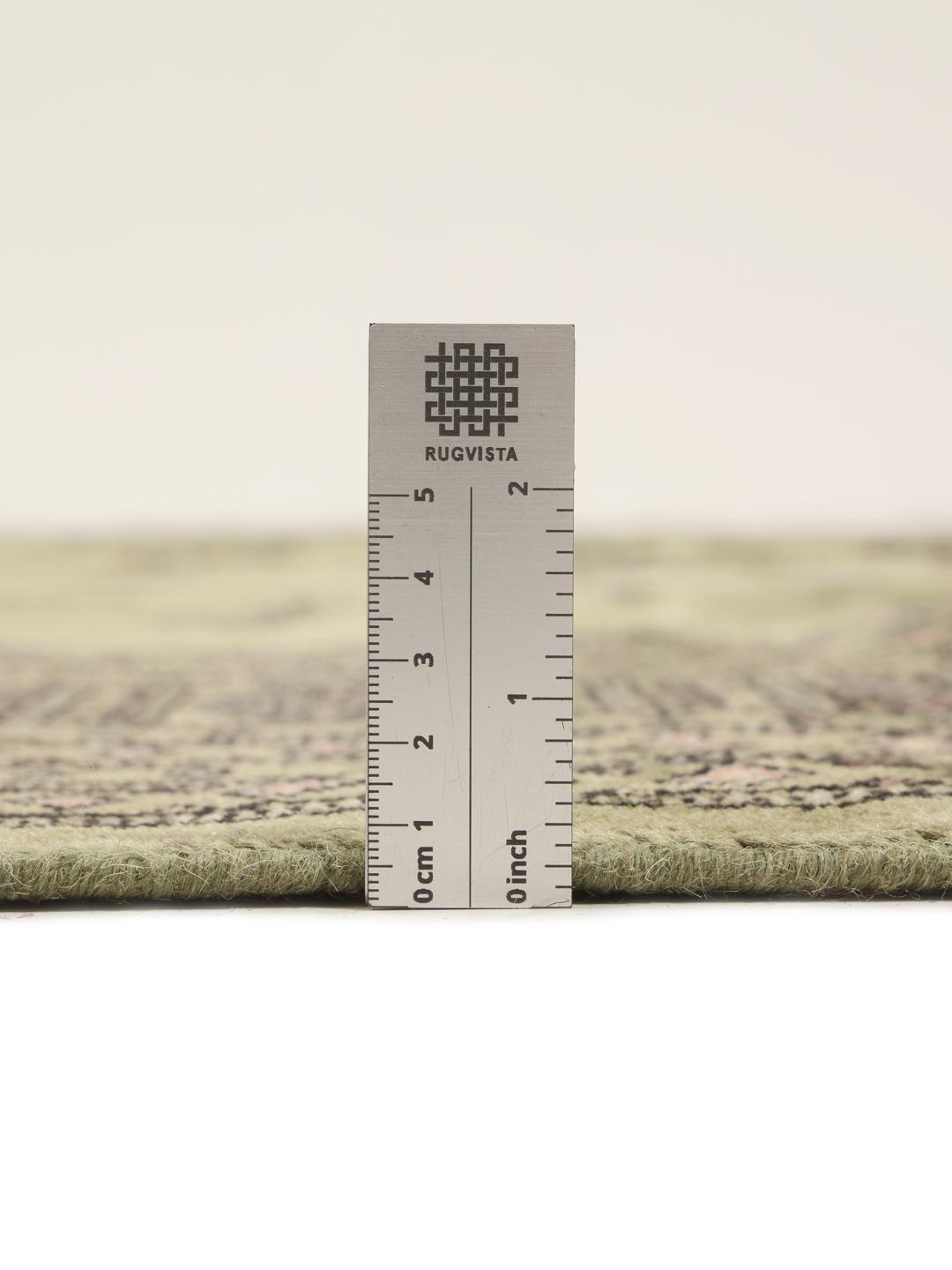
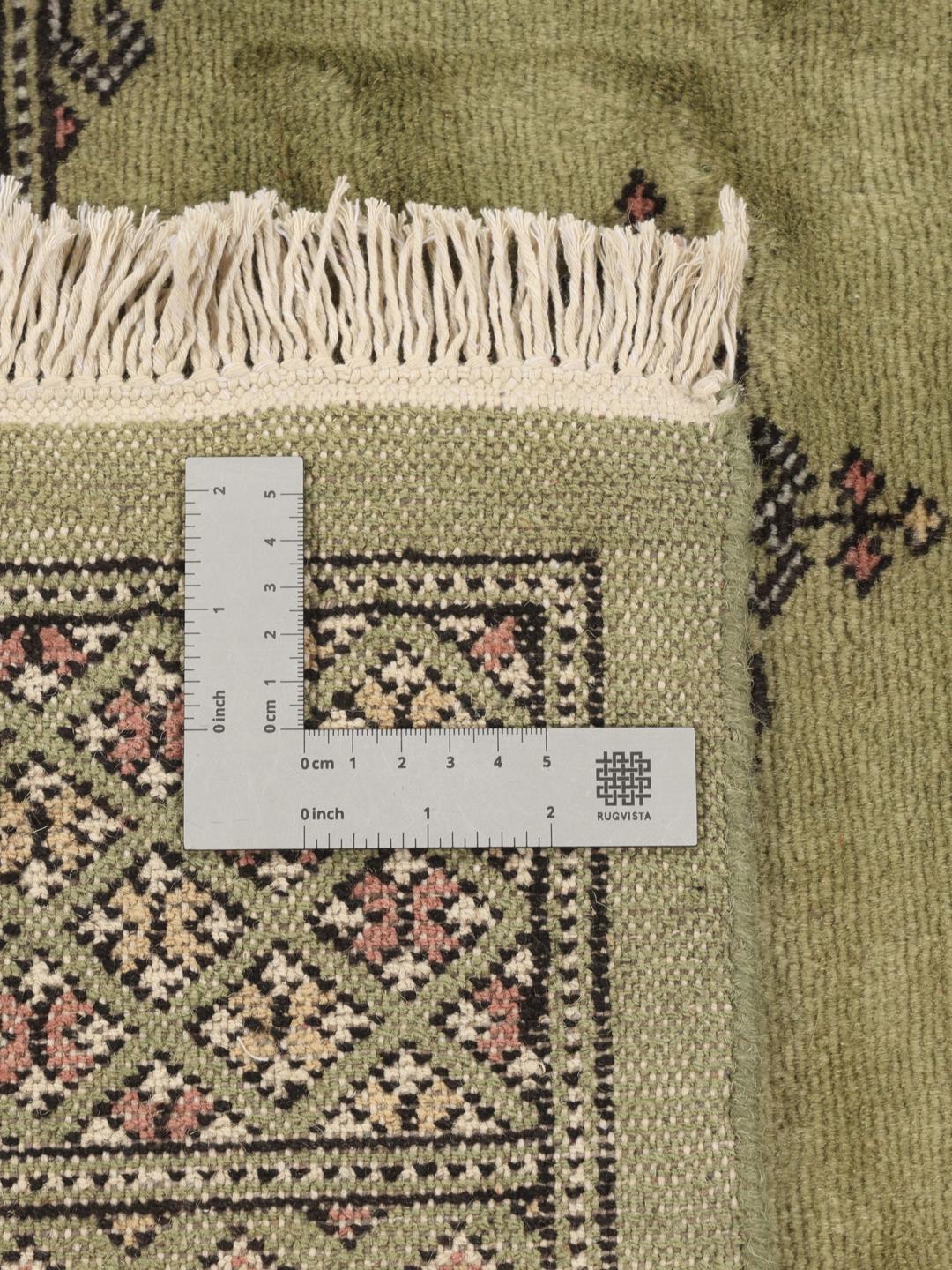
The term 2ply refers to a specific technique where two strands of Wool are twisted together before being knotted into the rug's foundation. This practice is vital for creating a pile that is not only denser and more lustrous but also significantly more durable than single-ply construction. This added strength ensures that the rug remains a functional, beautiful part of your home for generations.
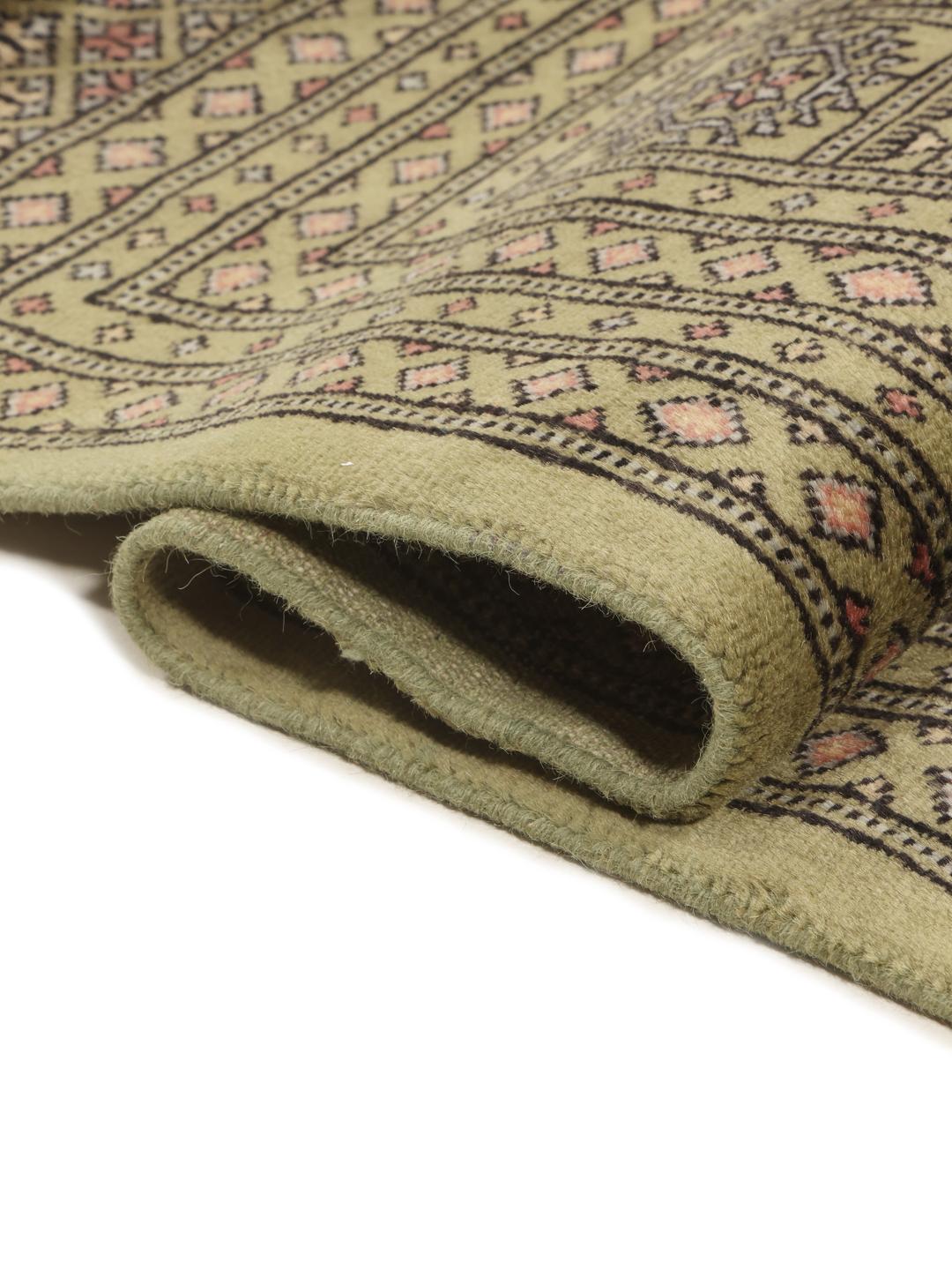
Signature design elements of the Bokhara style include the repeating gul motifs, which are elegant, octagonal, or diamond-shaped medallions arranged in orderly rows. These motifs are framed by intricate, formal borders that mirror the geometry of the field. The use of a vibrant green field in this particular piece is a sophisticated variation on the more traditional deep red tones, offering a fresh and inviting aesthetic.
These rugs are highly valued by collectors and homeowners alike for their blend of historical significance and enduring craft. Owning a piece from this tradition is an appreciation of the patience and skill required to preserve such complex patterns. It represents a connection to a long-standing cultural heritage, where every knot tells a story of tradition, precision, and the pursuit of lasting quality.