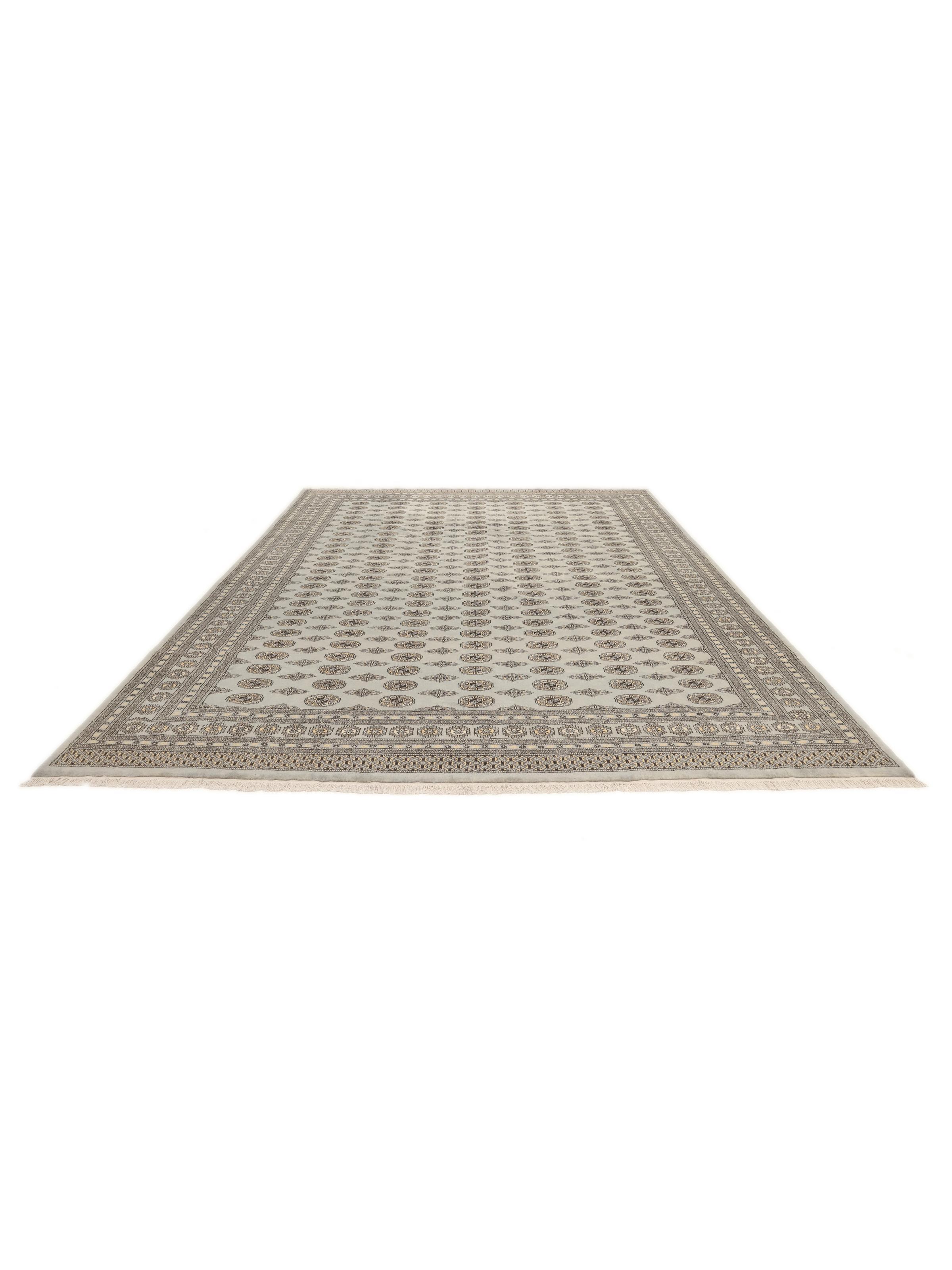
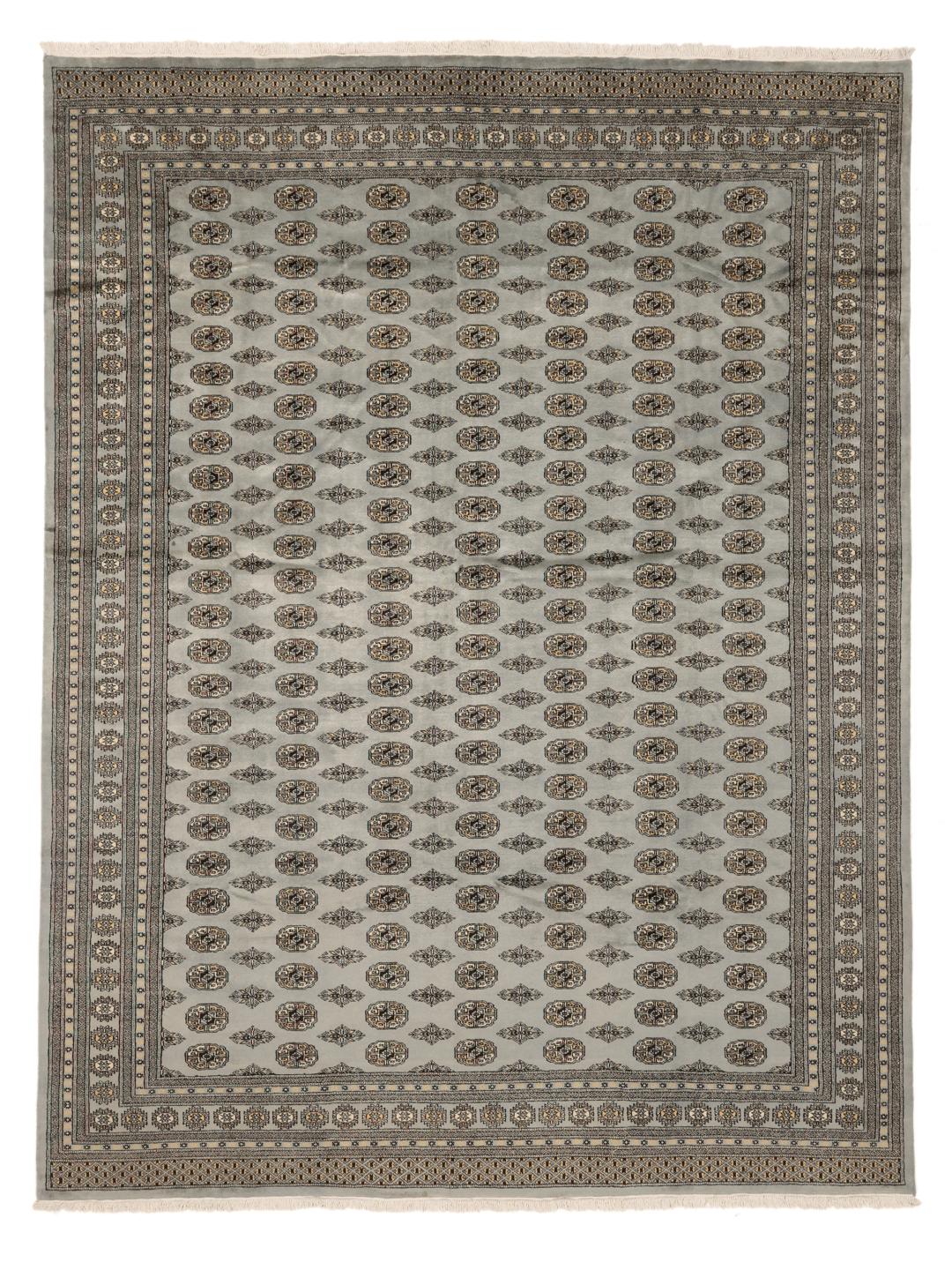
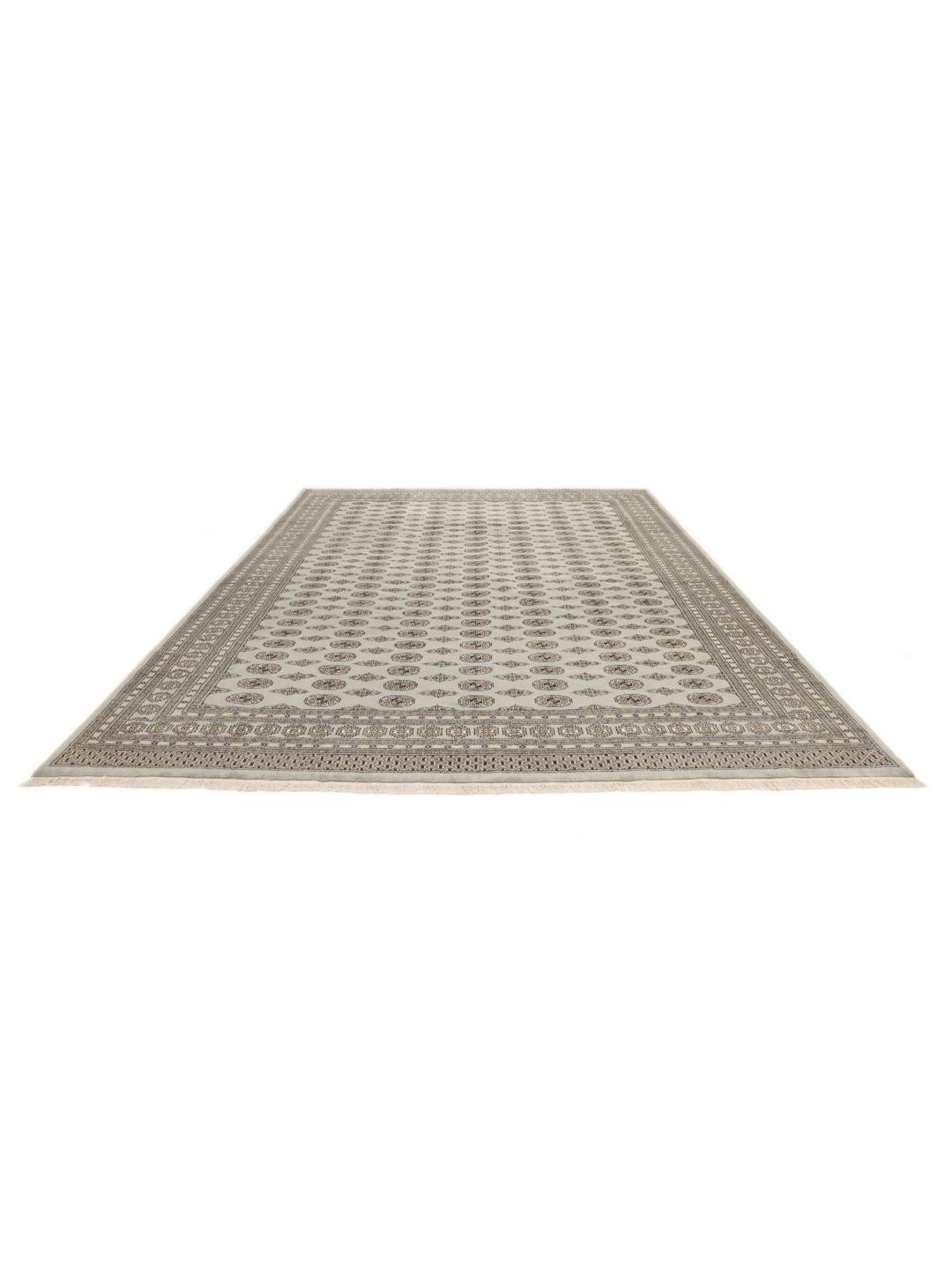
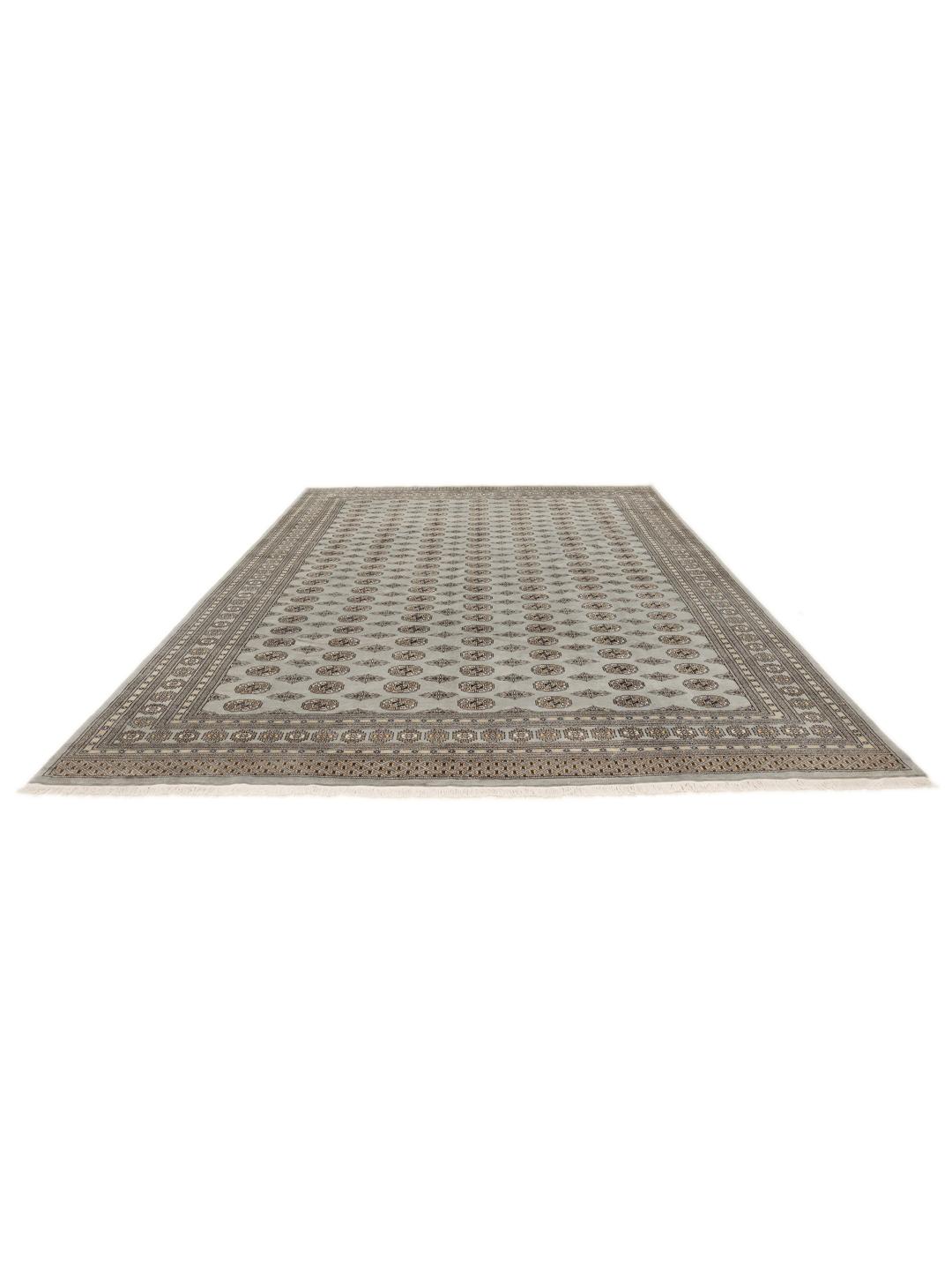
The Bokhara rug tradition is deeply rooted in the history of the Silk Road, taking its name from the ancient city of Bukhara in modern-day Uzbekistan. Historically, these designs were associated with nomadic tribes who moved across Central Asia, carrying their weaving traditions with them. Over time, the production of these iconic rugs migrated, with Pakistan becoming a preeminent centre for weaving the finest contemporary examples.
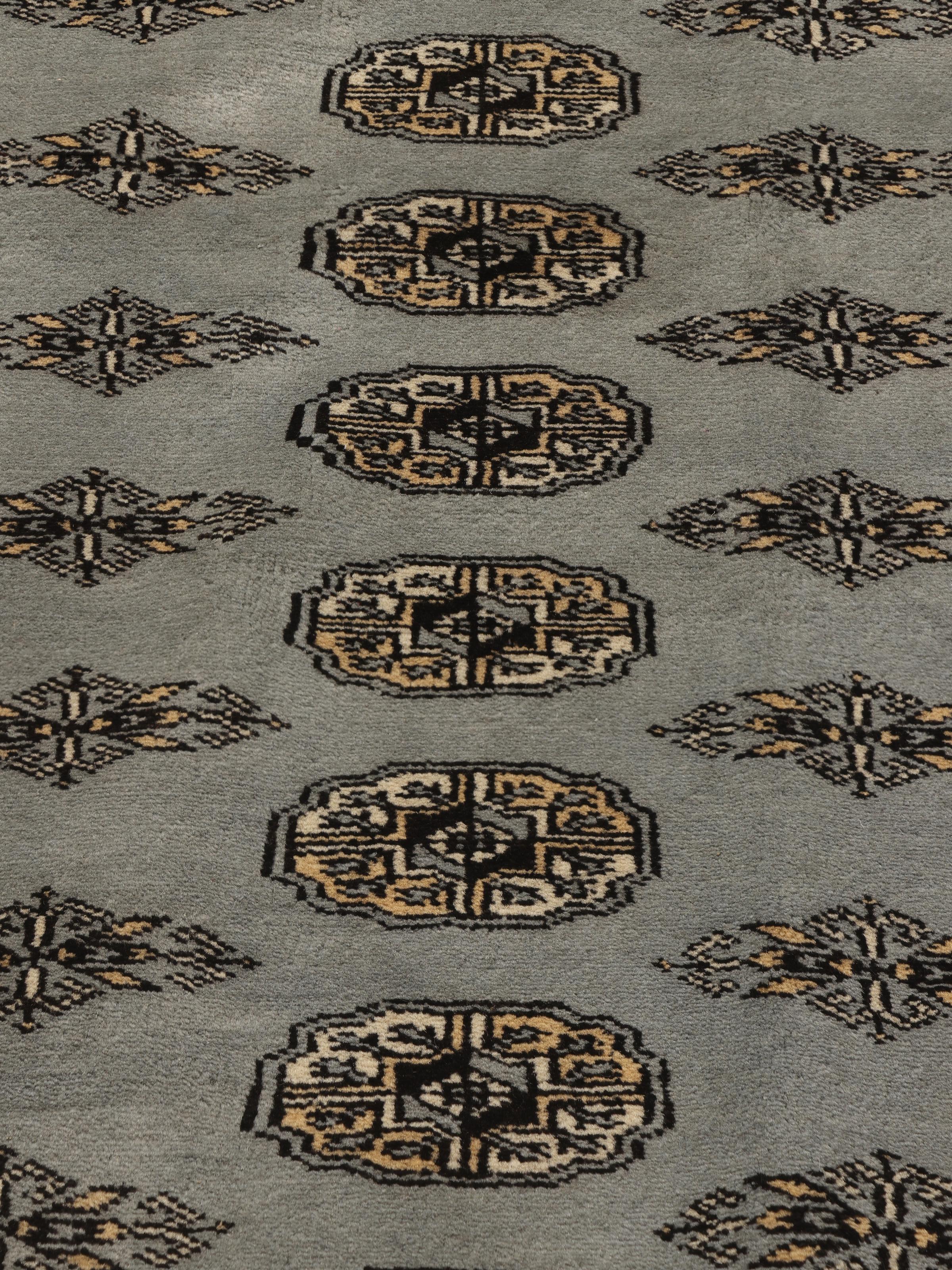
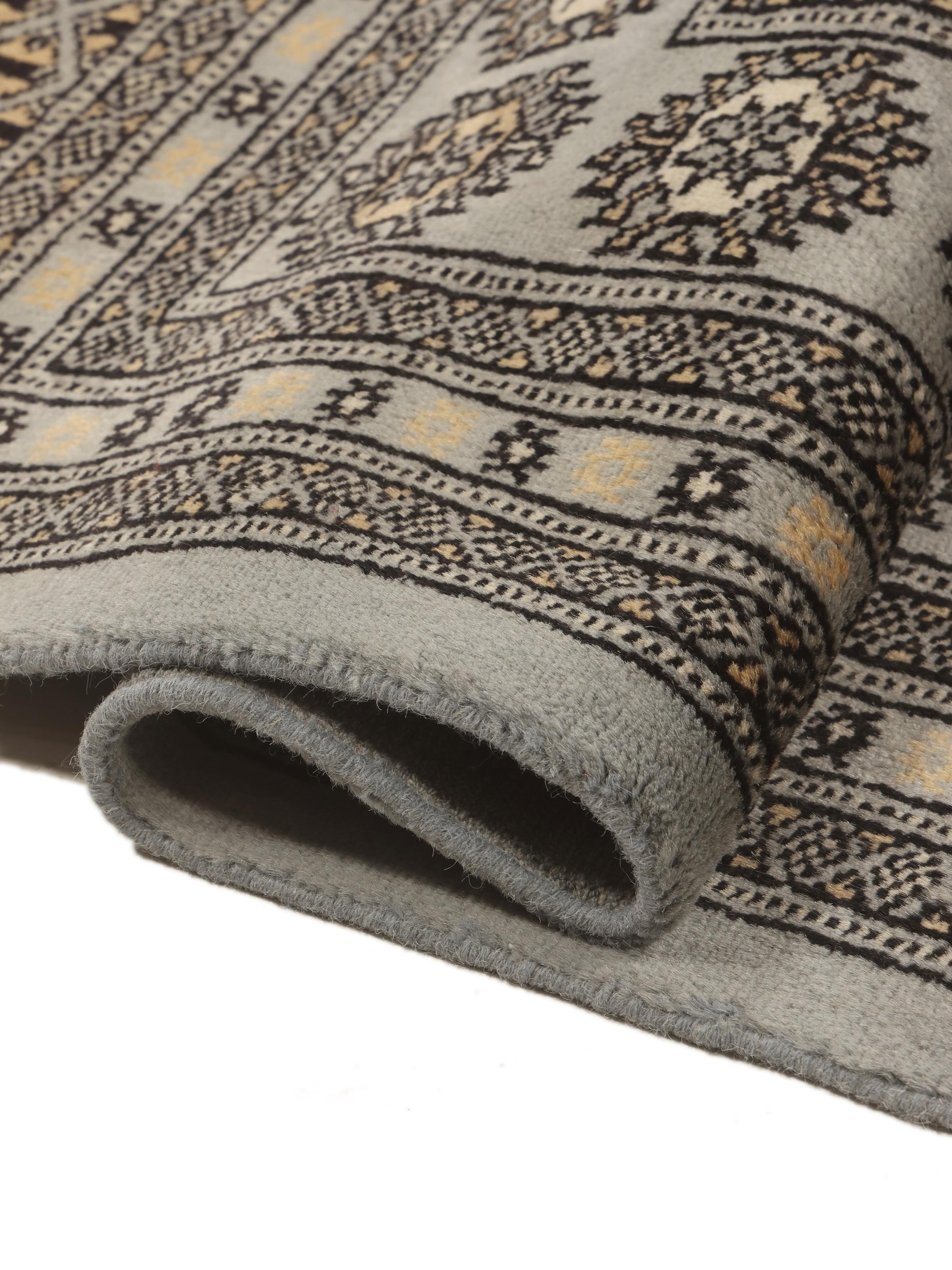
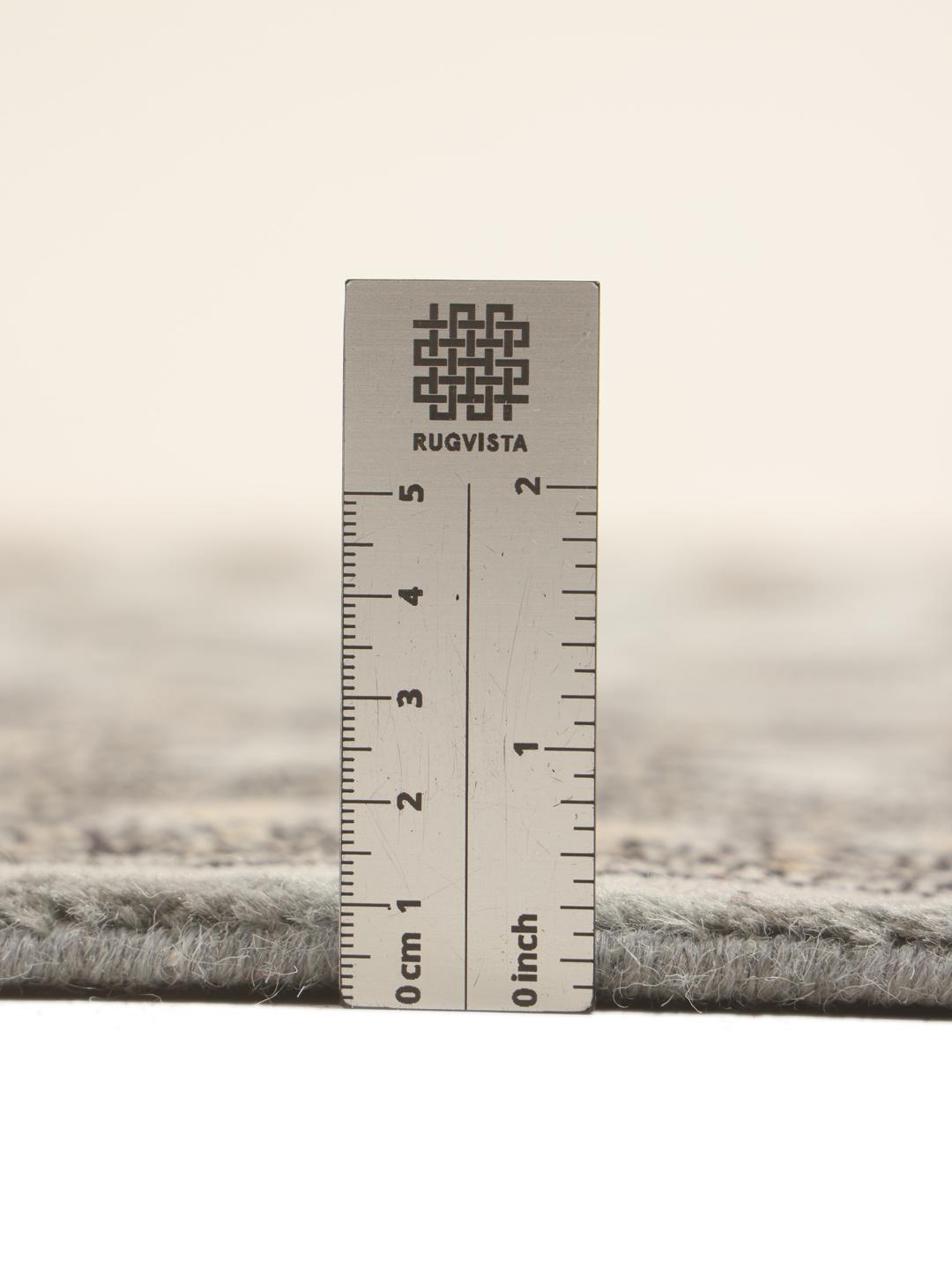
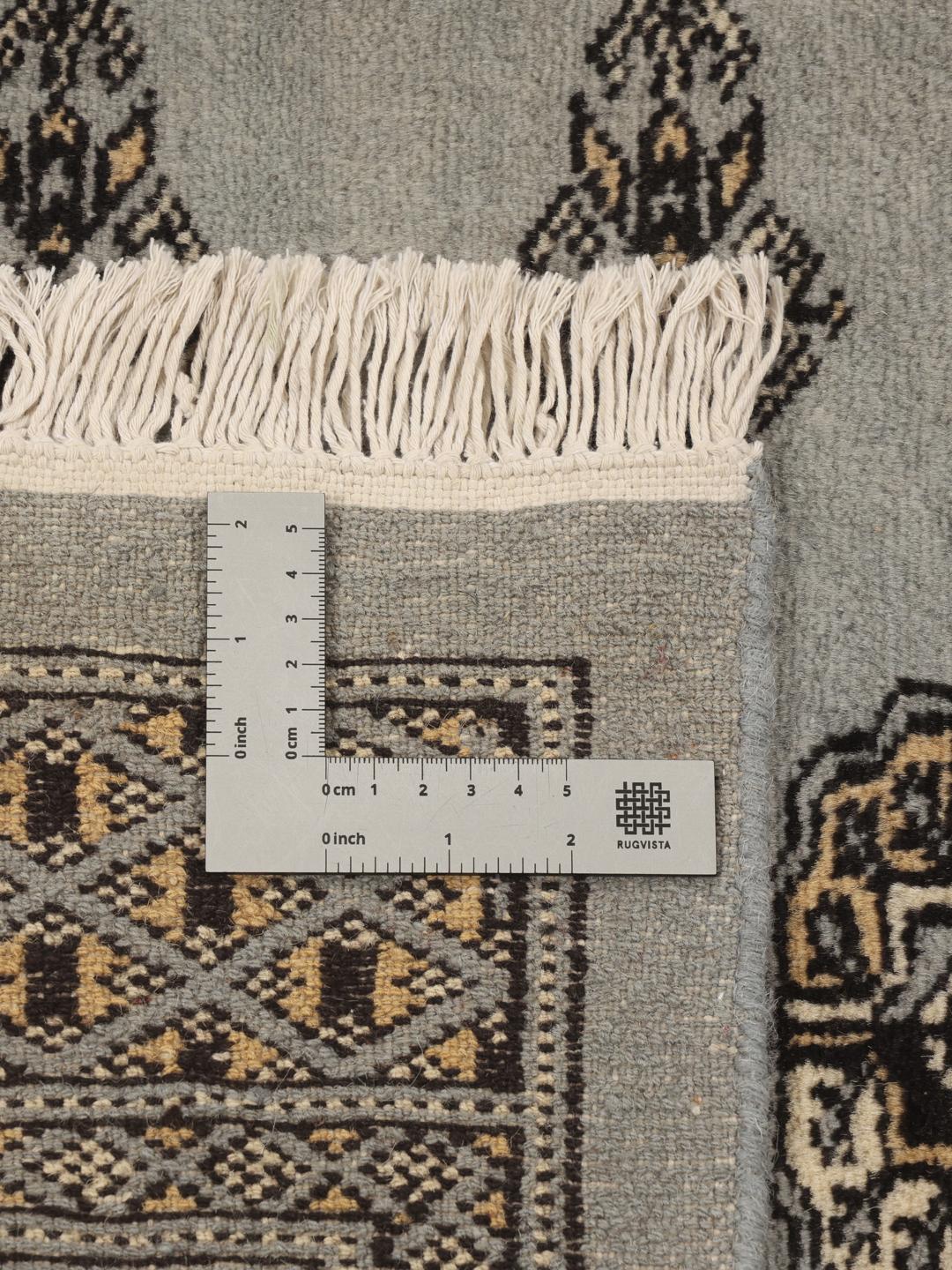
The term 2ply refers to the specific way the wool is prepared before weaving. By twisting two strands of wool together, the artisan creates a yarn that is significantly more durable and lustrous than single-ply alternatives. This technical choice is vital for the longevity of the rug, as it allows the pile to maintain its soft, plush texture even after years of use in a busy home.
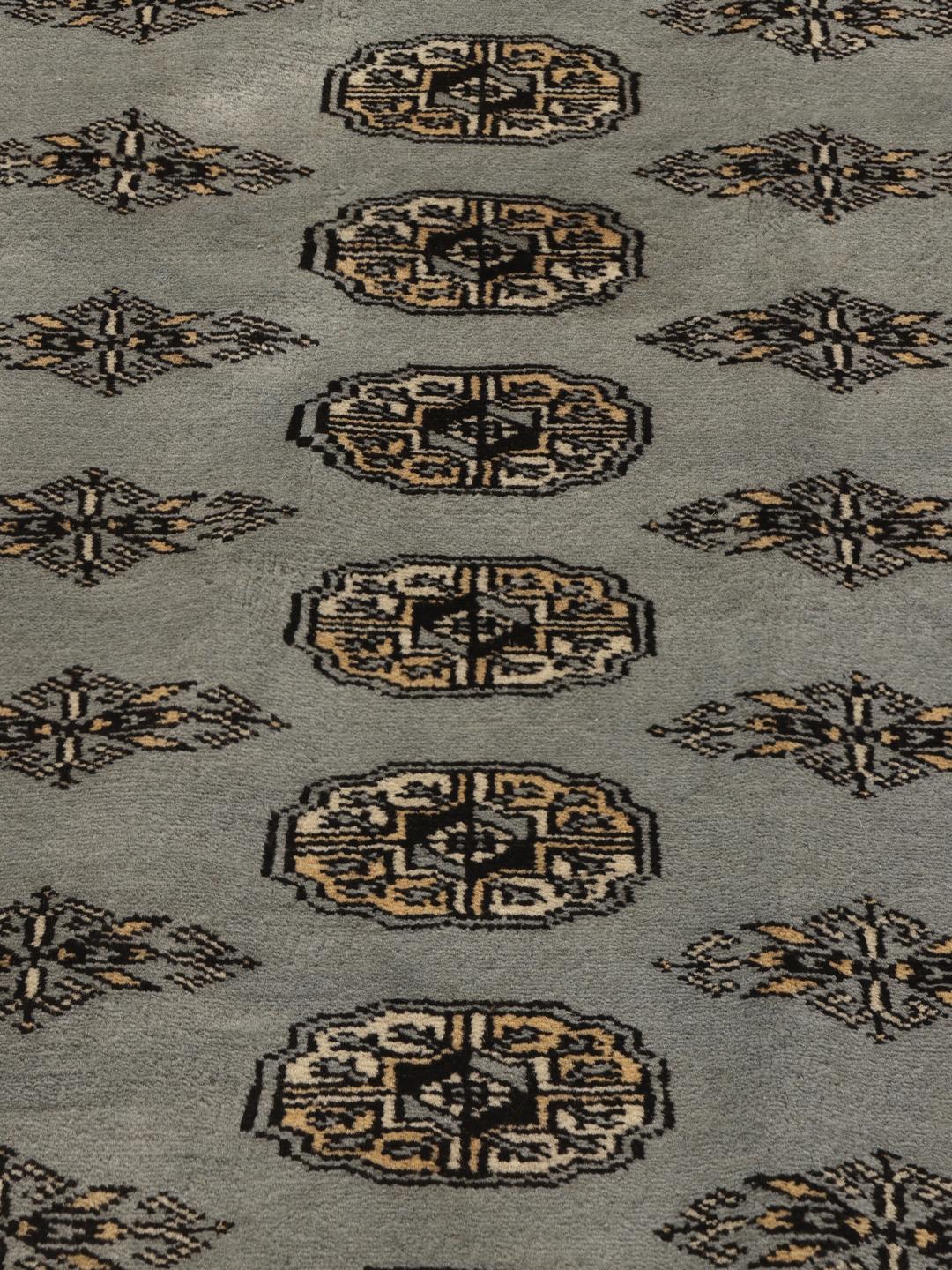
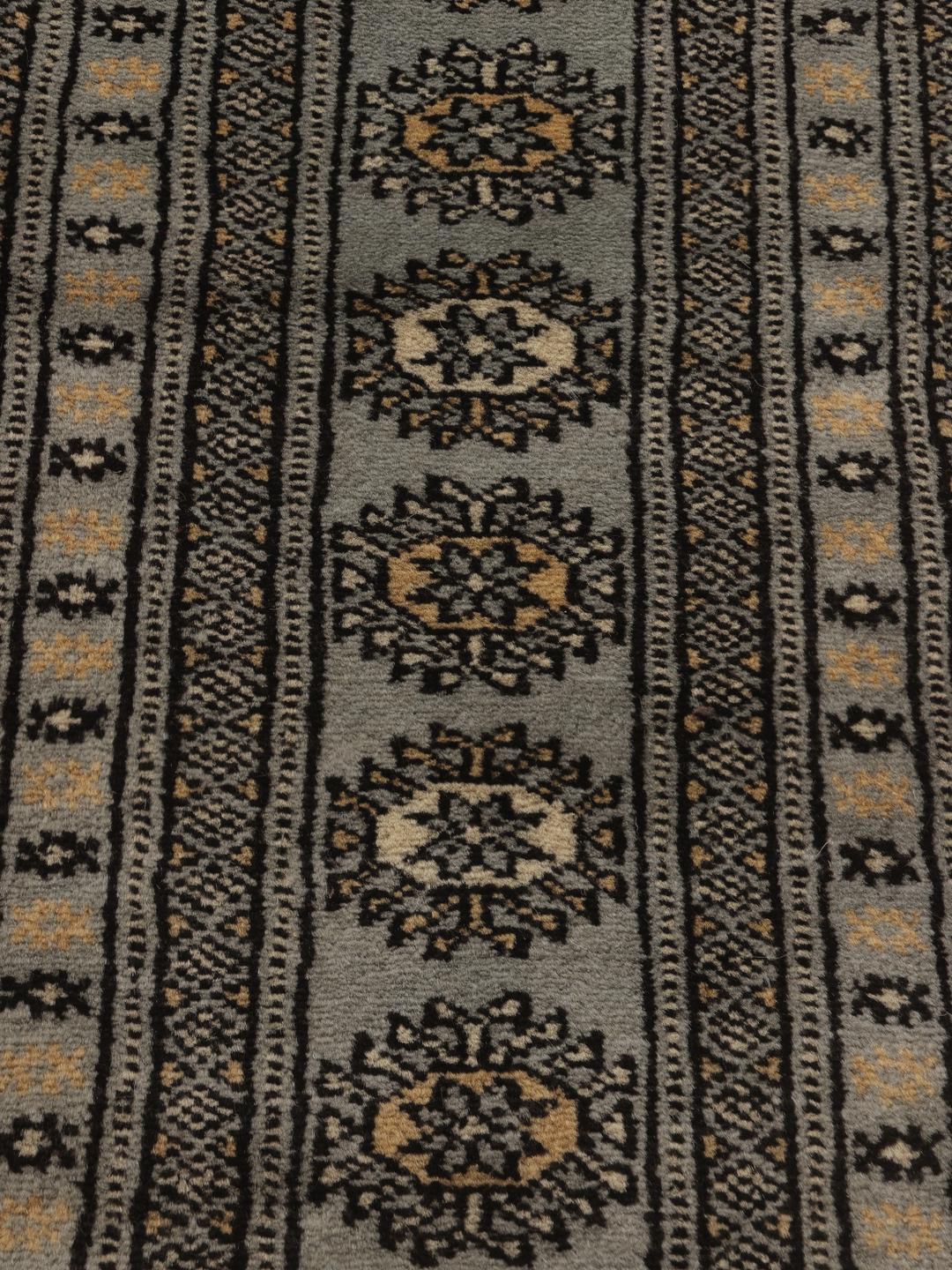
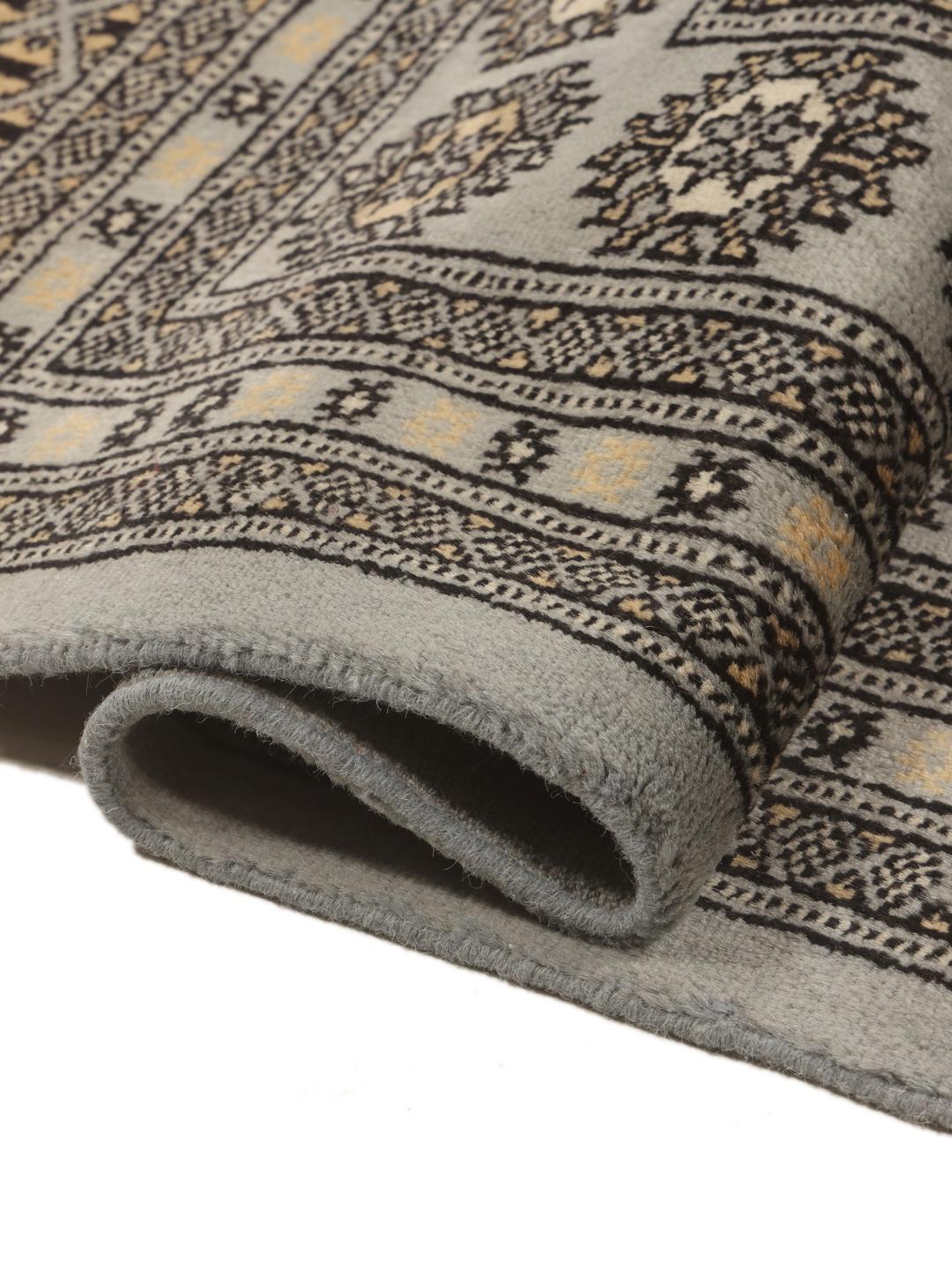
Bokhara rugs are instantly recognisable for their repeating gul motifs, which are stylized, octagonal shapes often said to represent elephant footprints. These medallions are typically arranged in clean, horizontal rows and are framed by elaborate, geometric borders. While the traditional palette often leans toward deep reds, this particular piece features a striking light-grey tone, offering a fresh and modern interpretation of a classic design language.
Collectors value Bokhara rugs for their combination of symmetry, precision, and cultural heritage. Owning one is more than just a decor choice; it is an appreciation of a craft that has been refined over centuries. These rugs are seen as symbols of skill and dedication, and they are collected by those who value pieces that tell a story of regional traditions and human artistry.