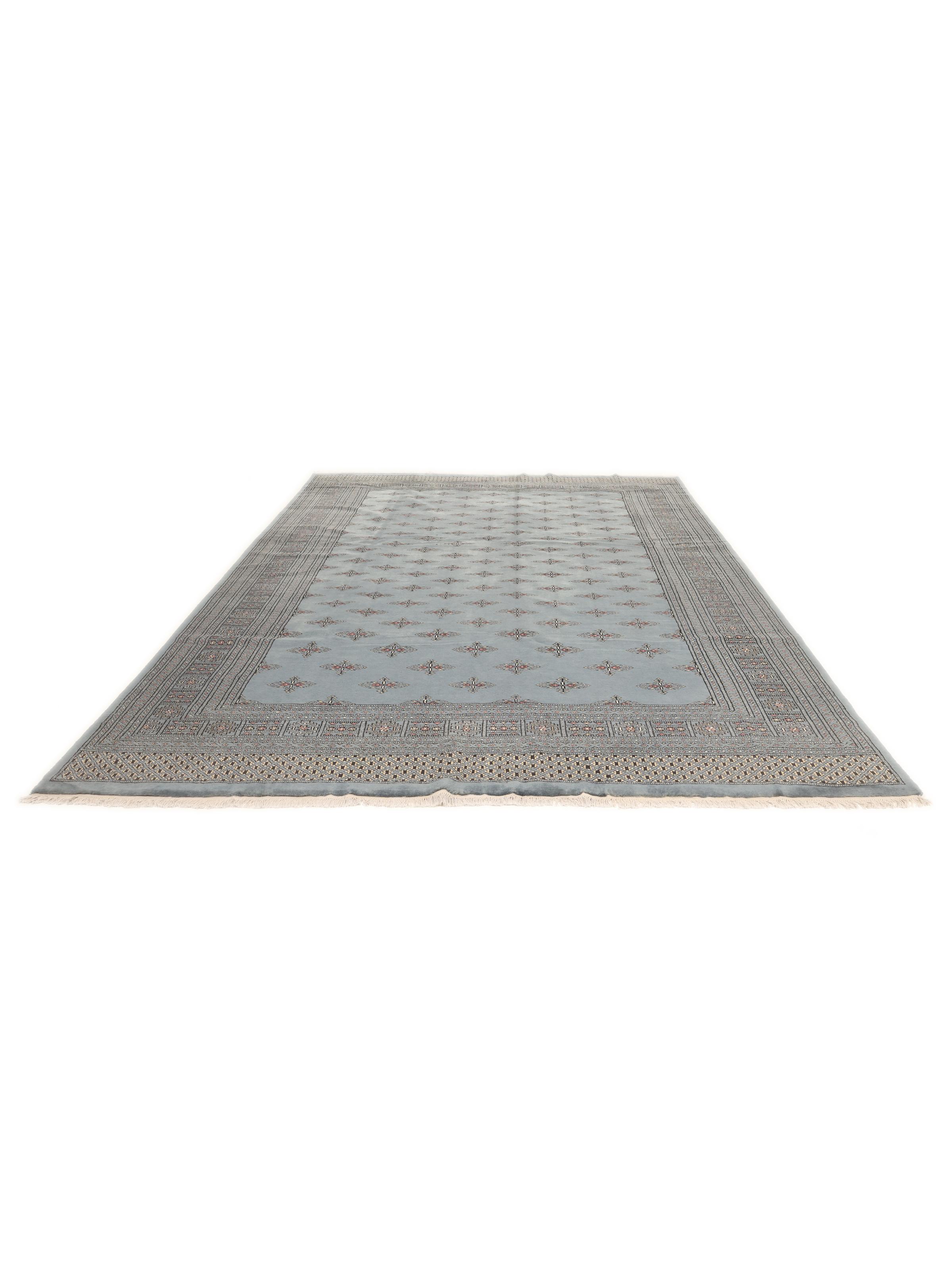
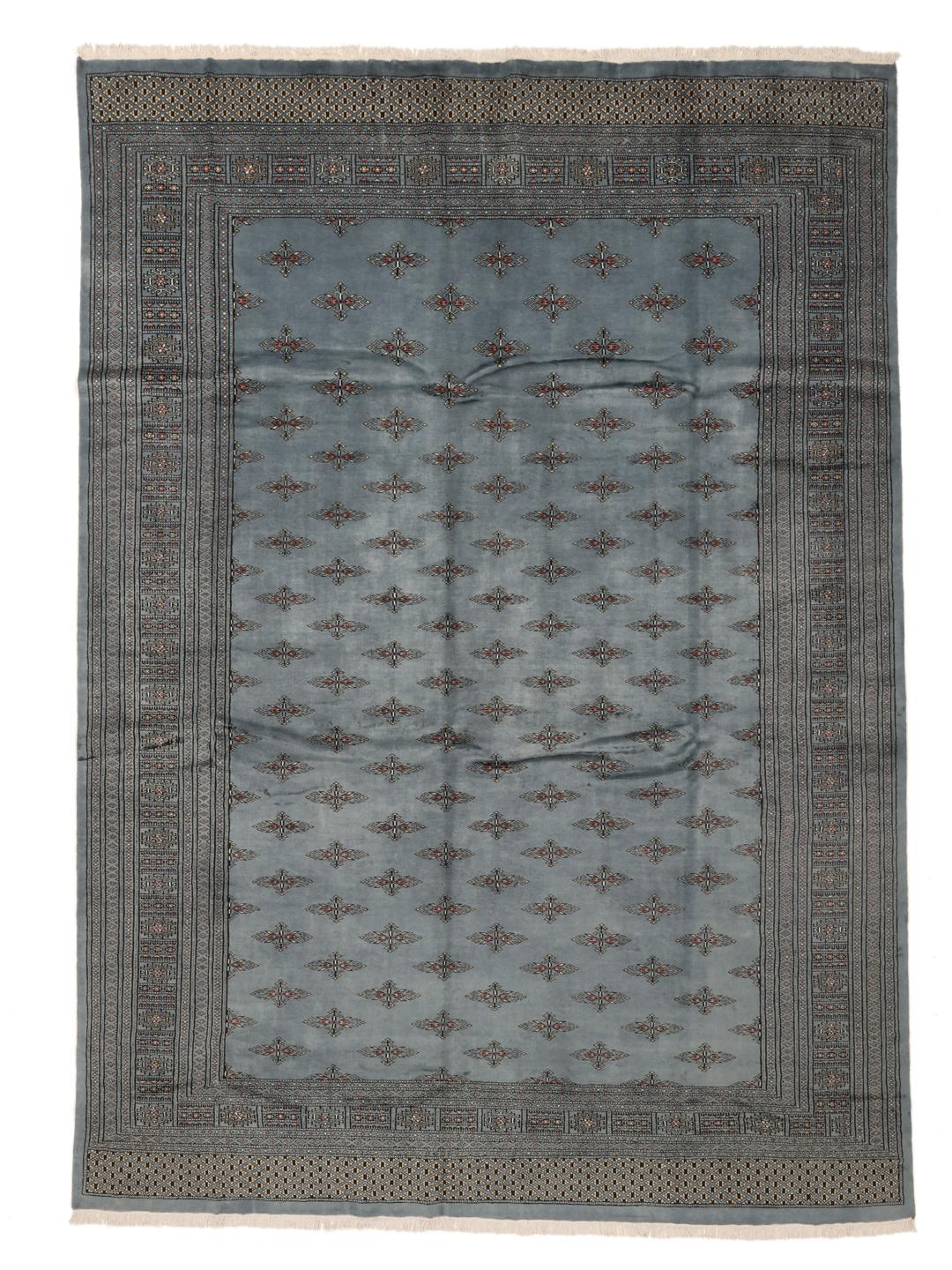
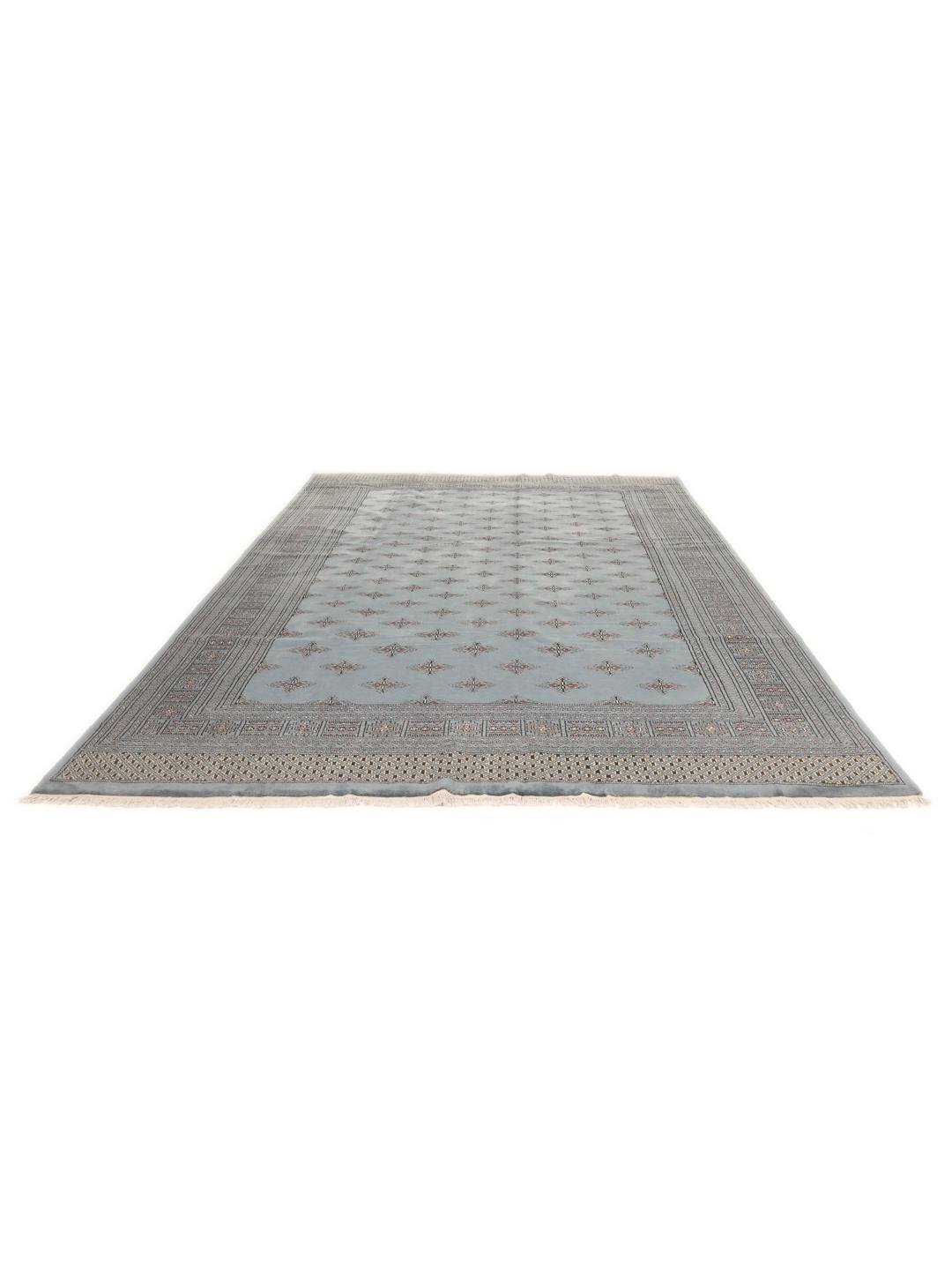
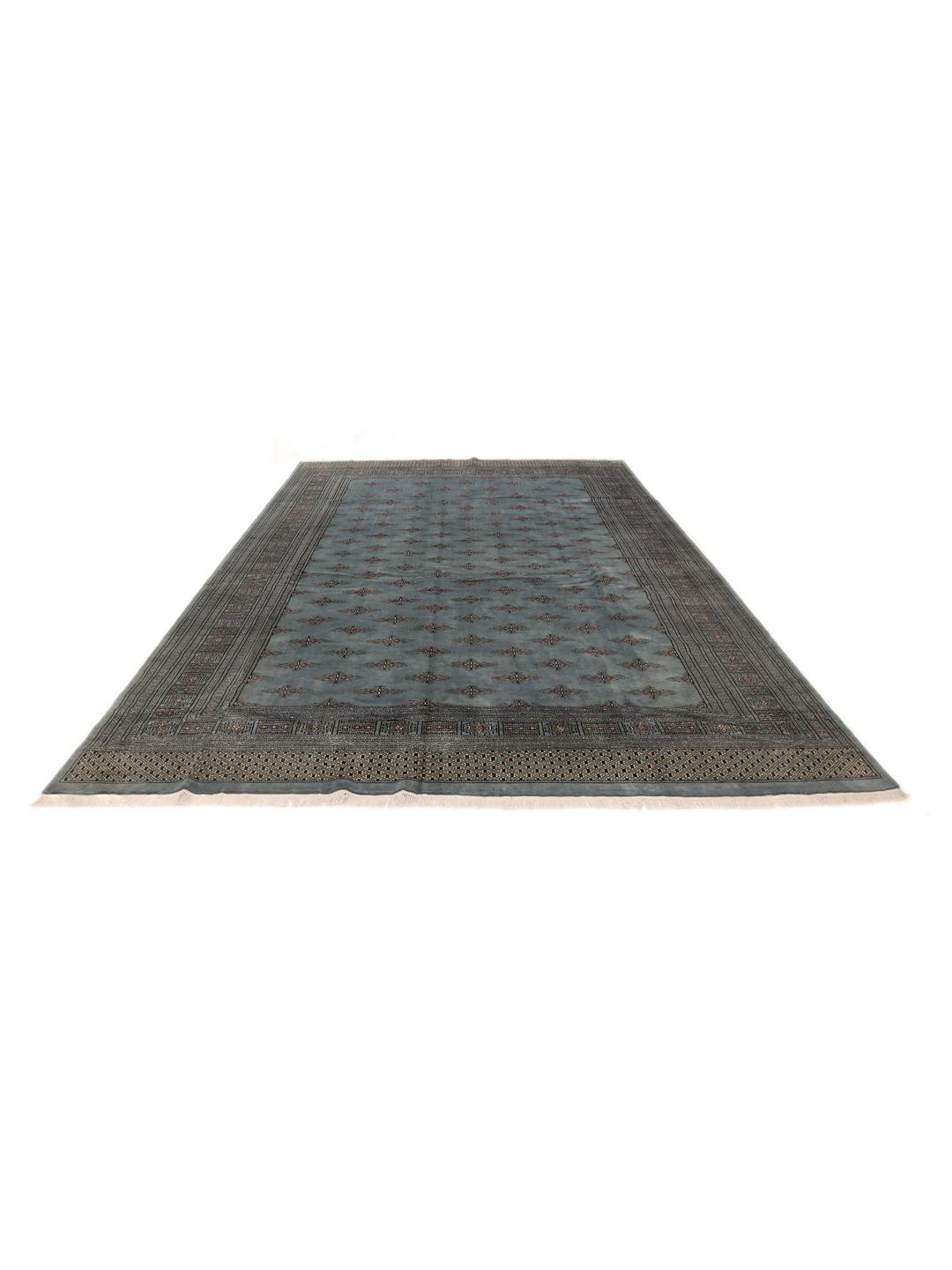
Bokhara rugs are deeply rooted in the historical tapestry of Central Asia, taking their name from the ancient Silk Road city of Bukhara, which served as a vital hub for trade and craftsmanship. While the designs originated among nomadic tribes, the finest examples of these rugs today are expertly crafted in Pakistan. This evolution reflects a migration of tradition, where nomadic patterns were refined into the sophisticated, highly consistent styles we admire today.
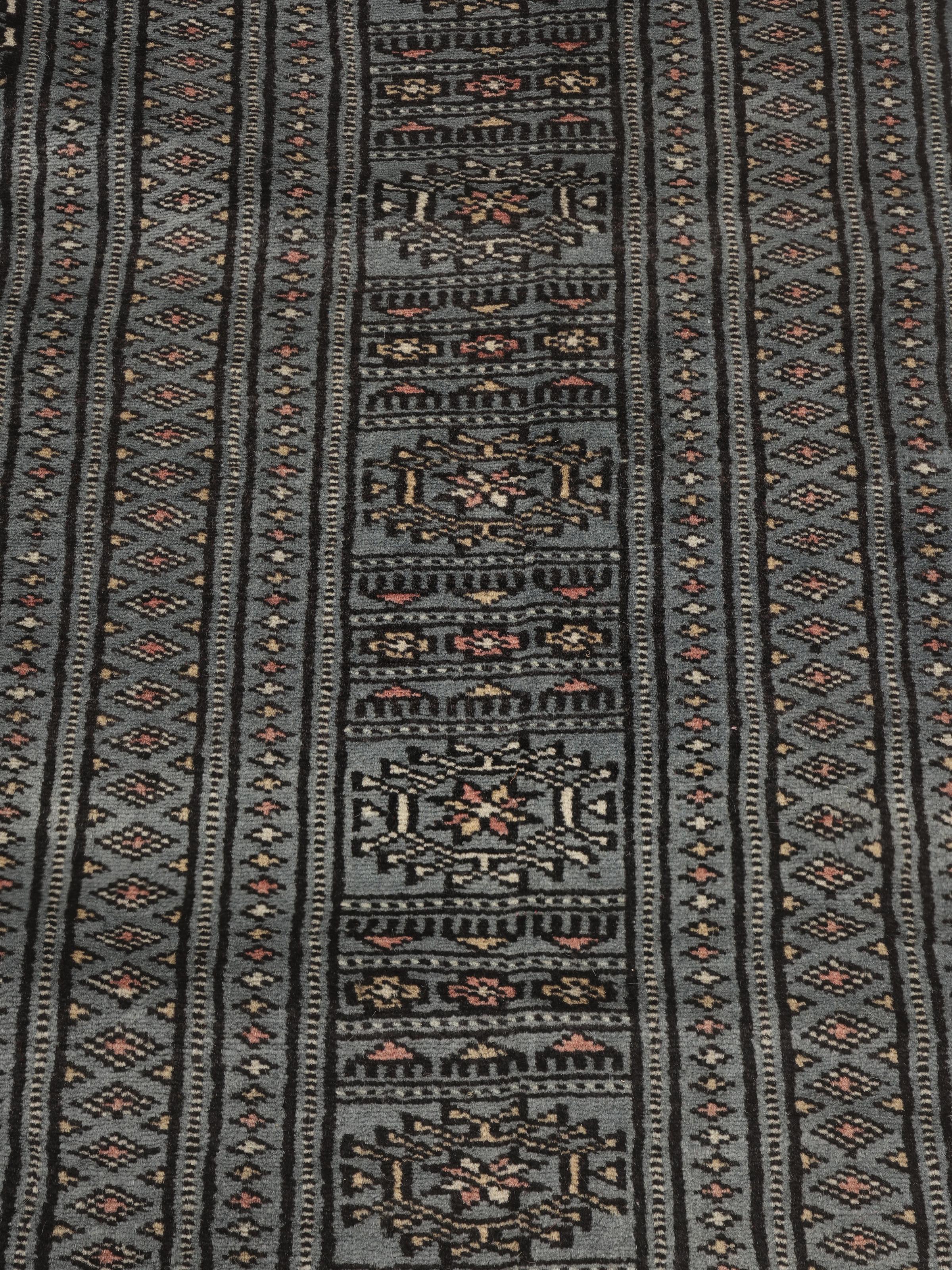
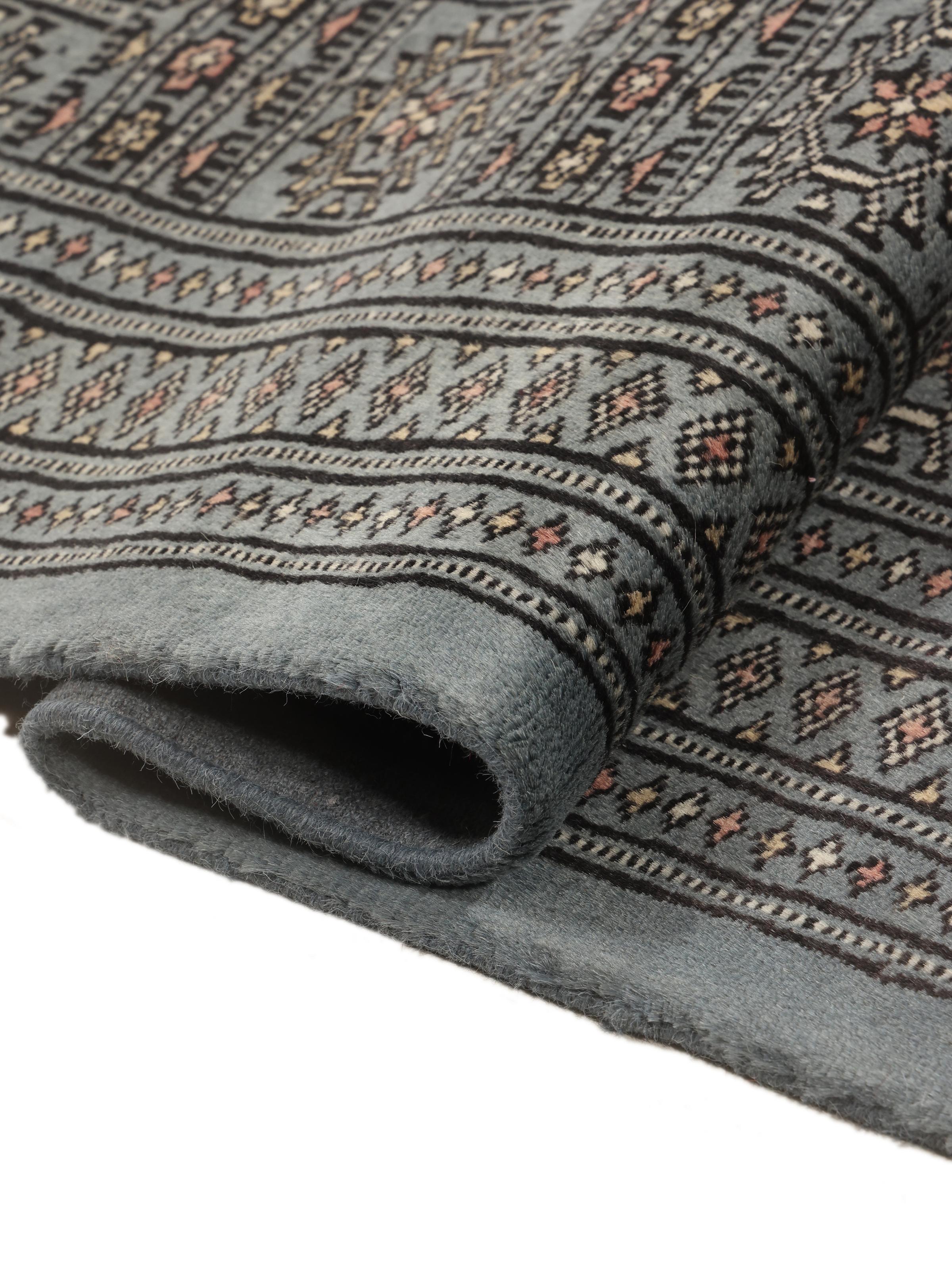
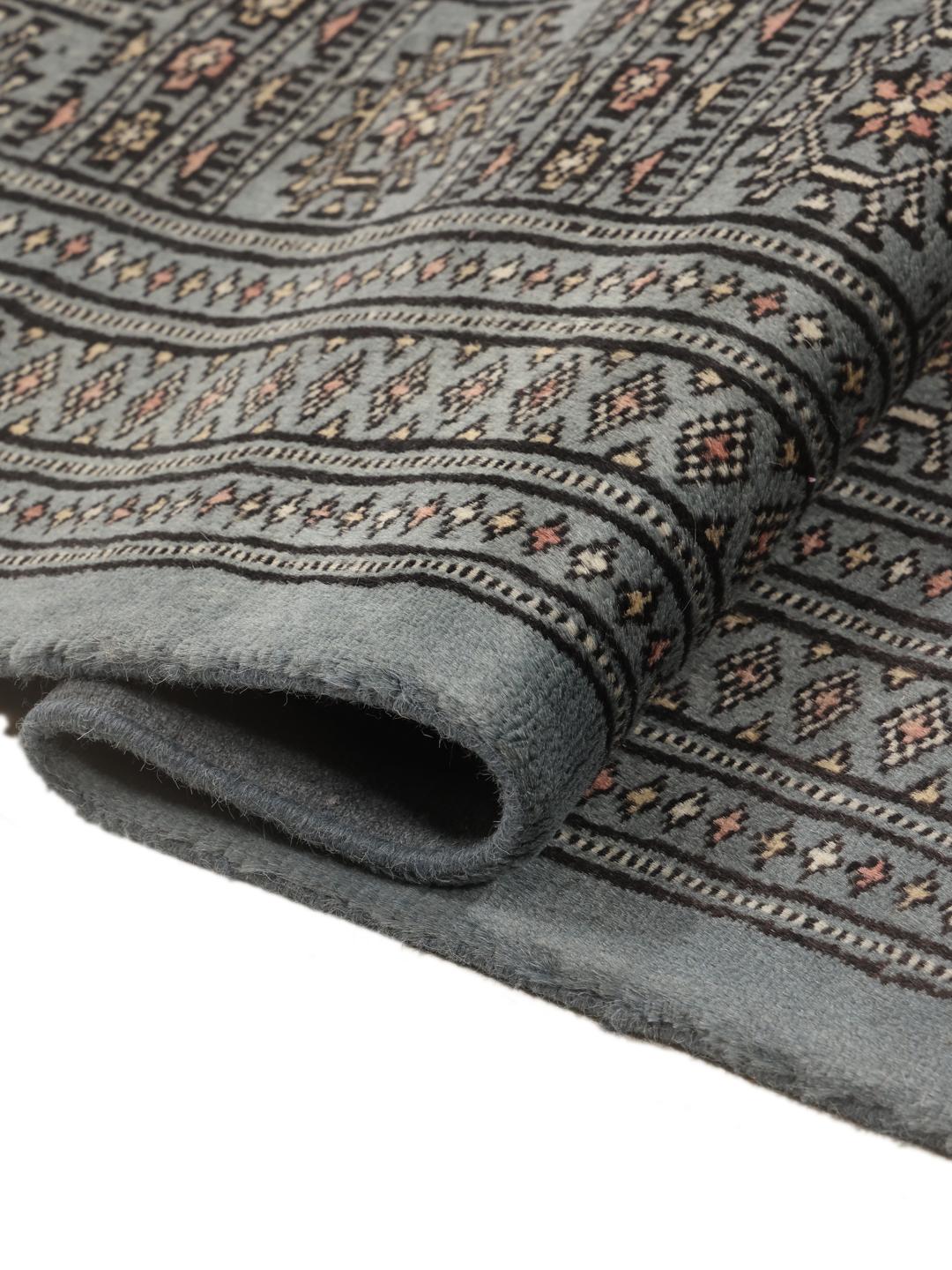
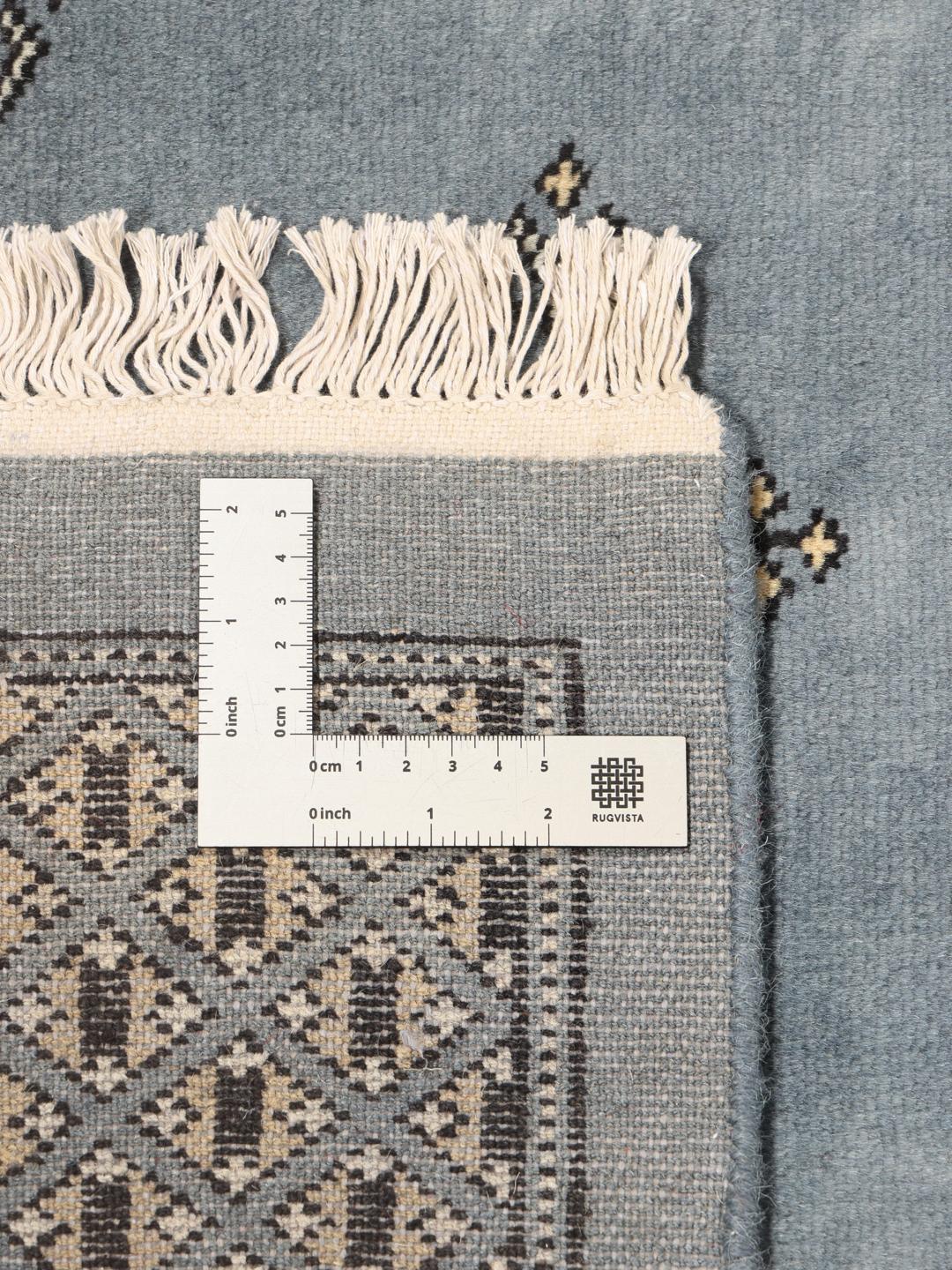
The '2ply' designation is a mark of quality that refers to the construction of the wool yarn. By twisting two strands of wool together before knotting, the artisan creates a pile that is significantly more durable, lustrous, and resistant to wear than single-ply alternatives. This technical detail is why these rugs feel so robust and maintain their rich appearance over decades of use.
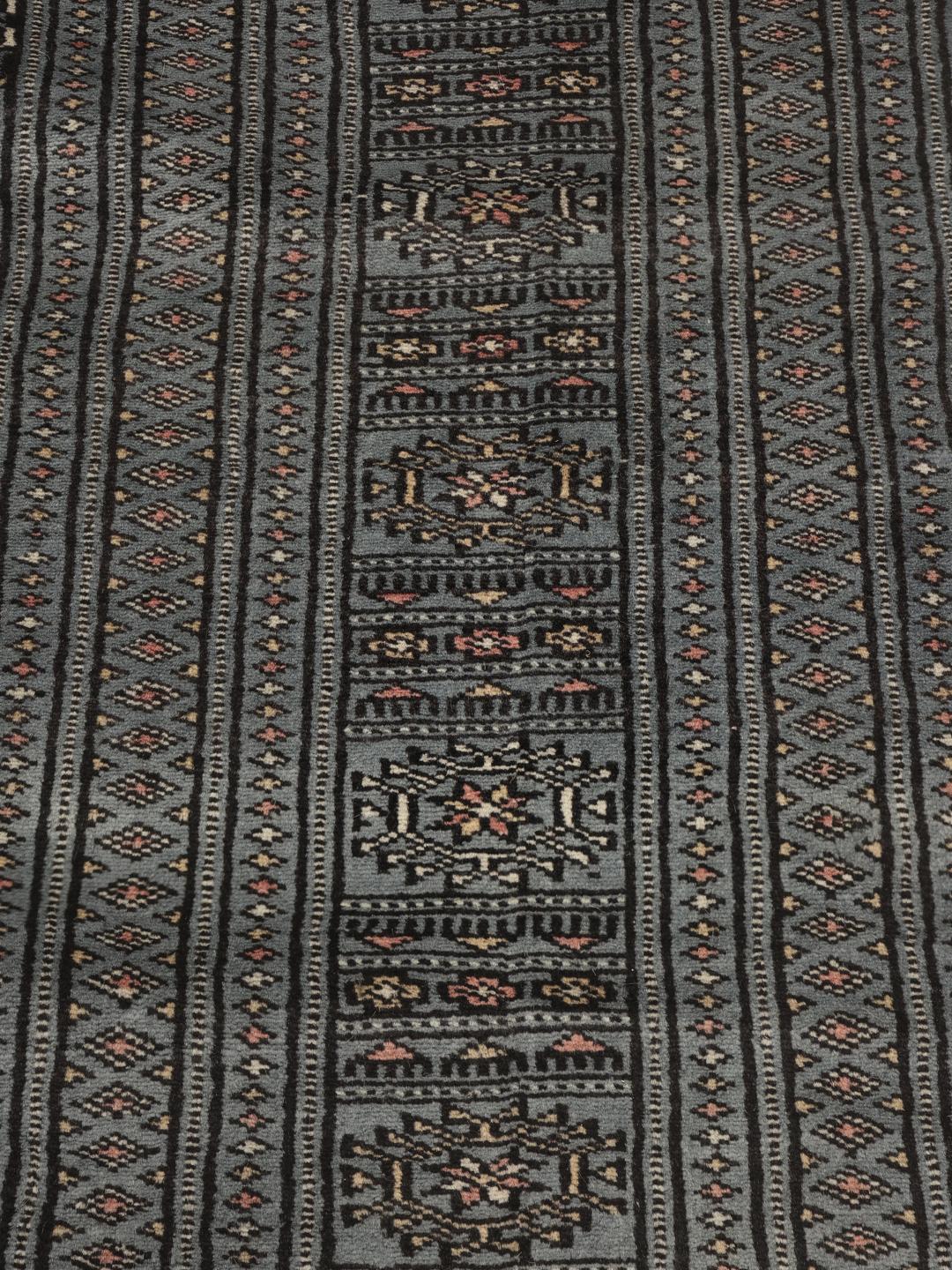
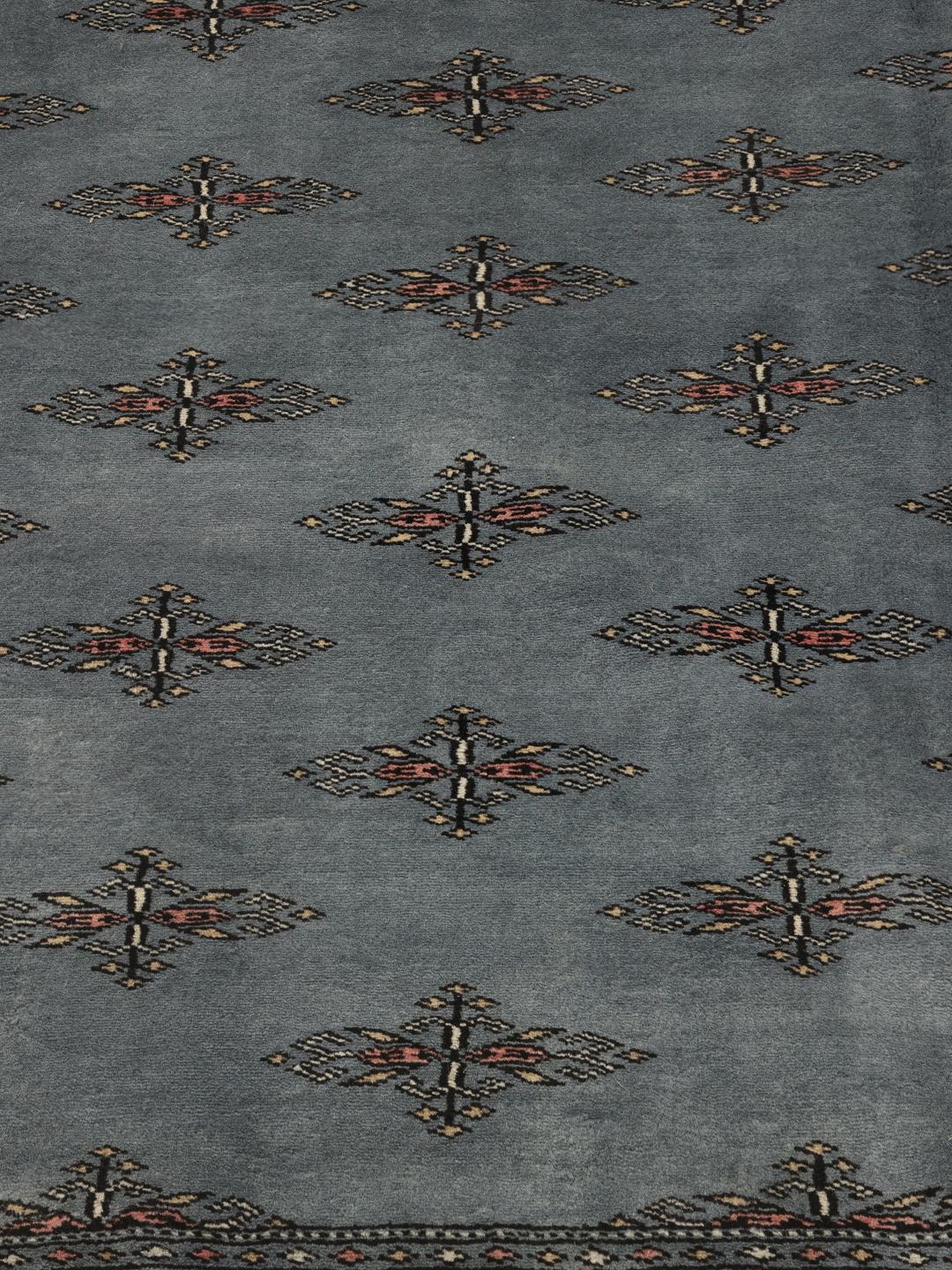
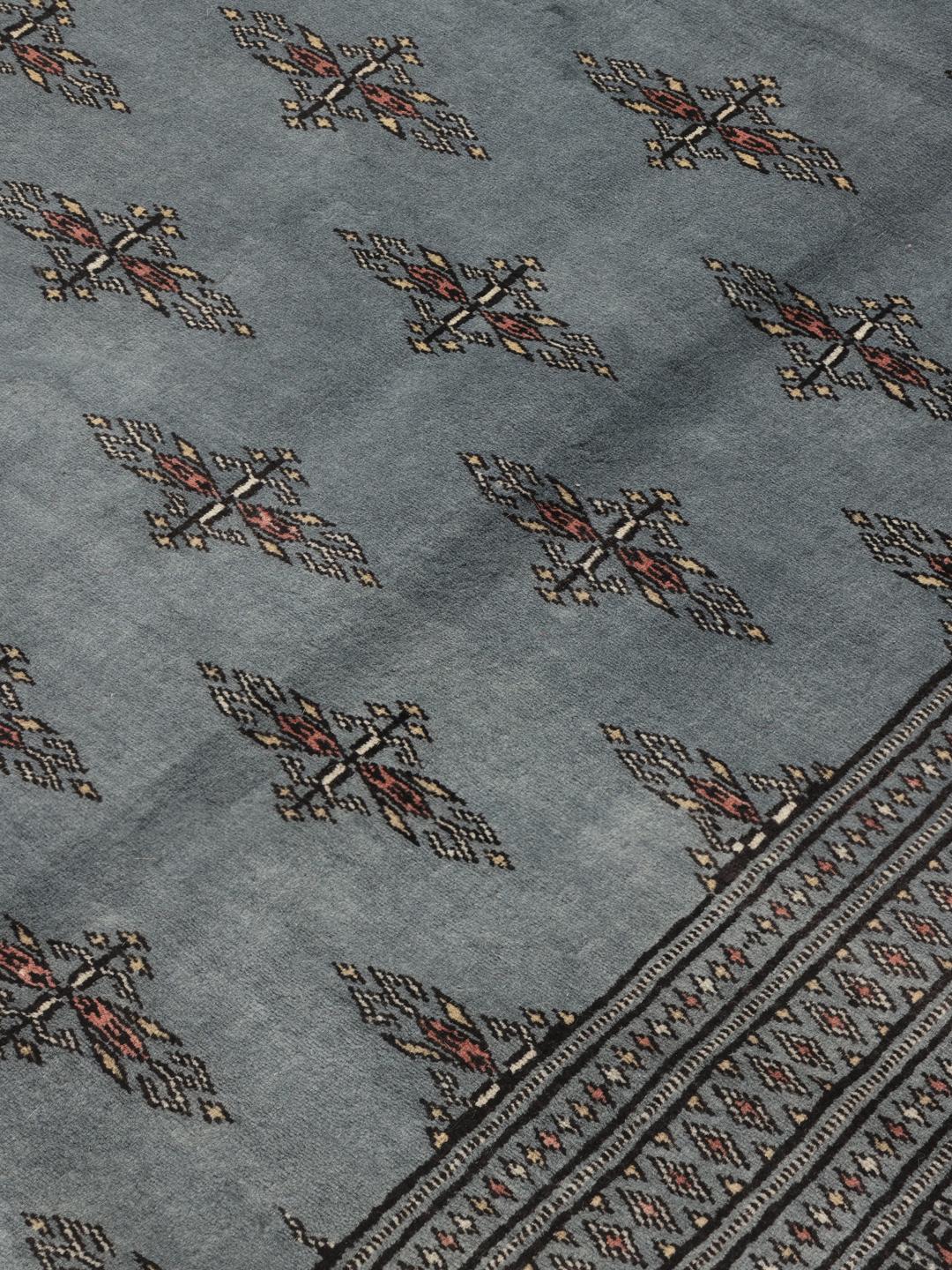
Signature design elements of the Bokhara tradition typically include rows of repeating gul motifs. These are often stylized, geometric representations that create a rhythmic, meditative field. While many traditional examples feature deep red hues, this piece is distinct for its elegant blue tones, which offer a refreshing and contemporary take on a classic, time-honoured visual language.
Owning a hand-knotted Bokhara is more than just a decor choice; it is an investment in cultural heritage. These rugs are highly valued by collectors for their consistency, precision, and the sheer amount of human effort required to bring them to life. To possess one is to own a piece of history that continues to tell the story of generations of weavers, grounding your home in authentic skill and lasting beauty.