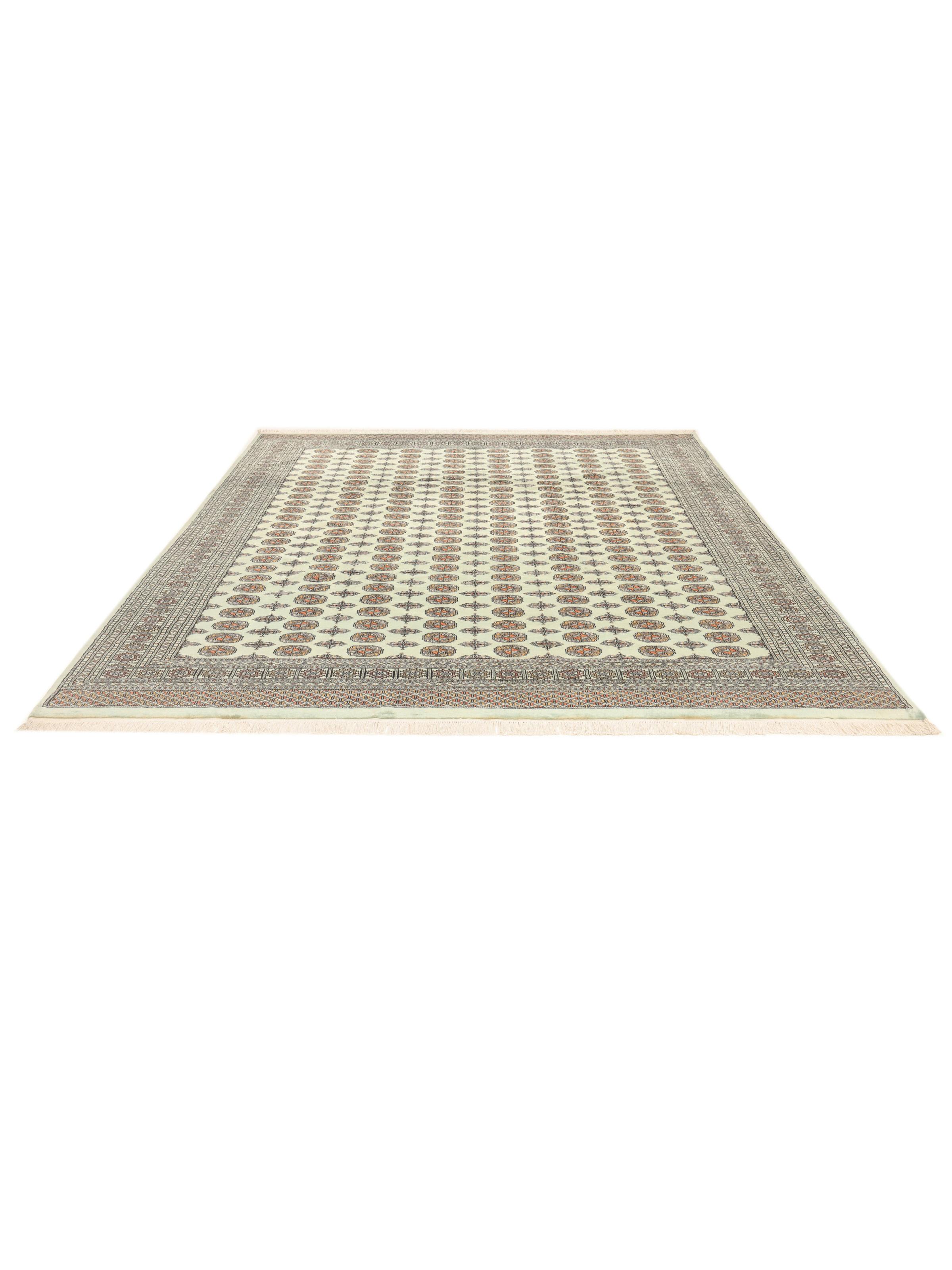
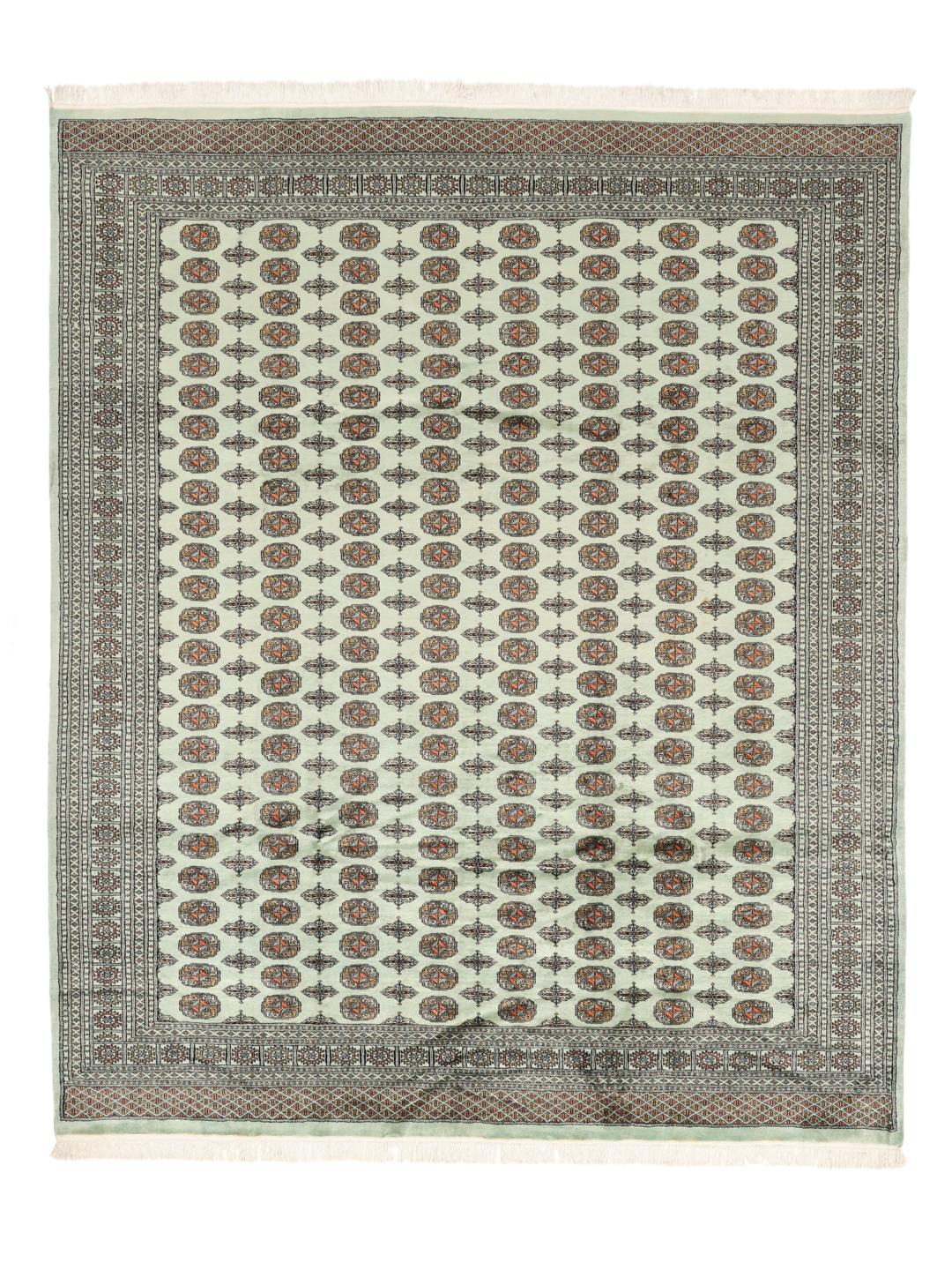
Bokhara rugs are deeply rooted in the ancient traditions of the Silk Road, taking their name from the historic city of Bukhara in Central Asia. While the nomadic tribes of the region originally developed these designs, the finest modern examples are primarily crafted in Pakistan, where the tradition has been refined and elevated to meet contemporary standards of quality and aesthetics.
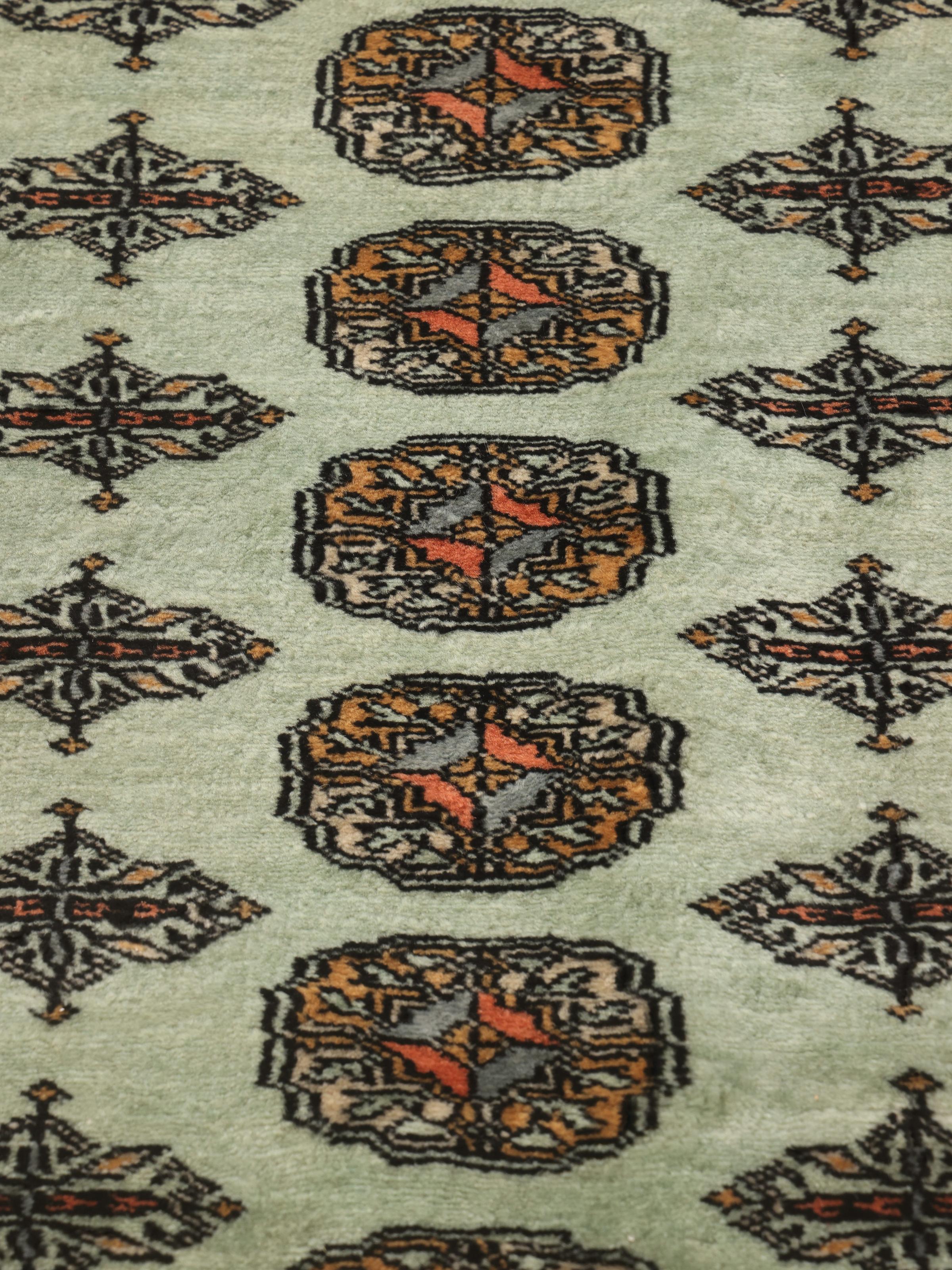
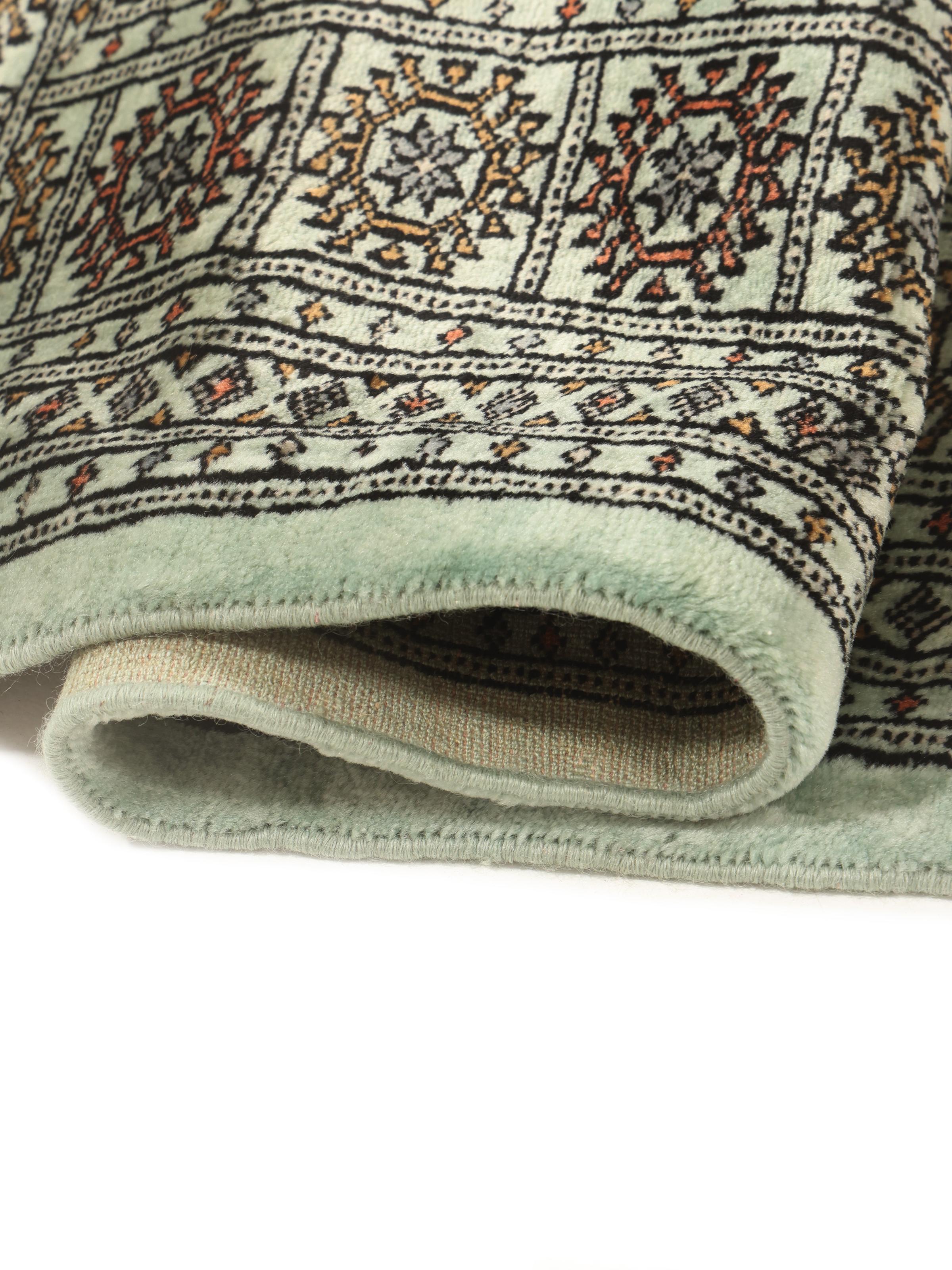
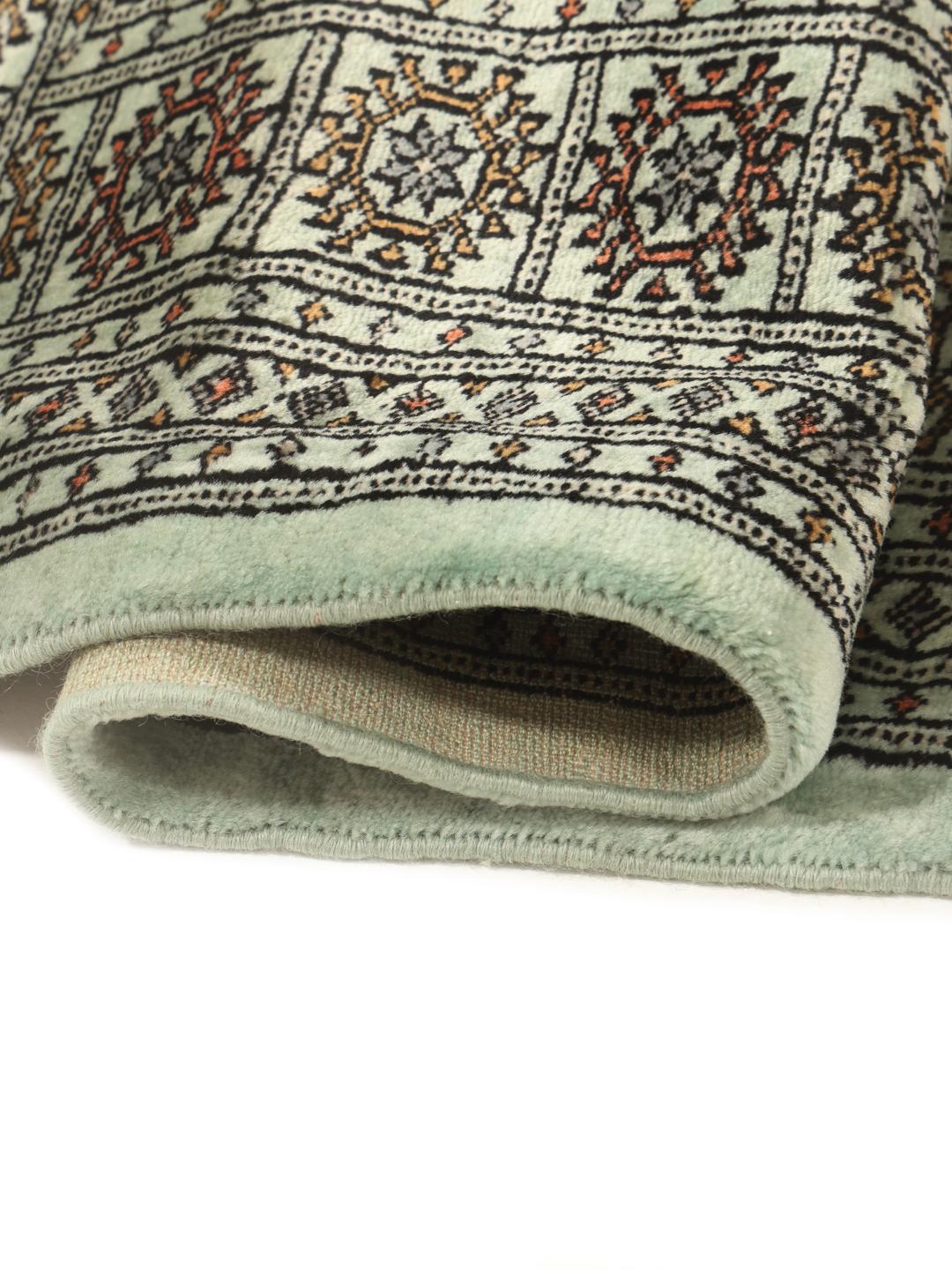
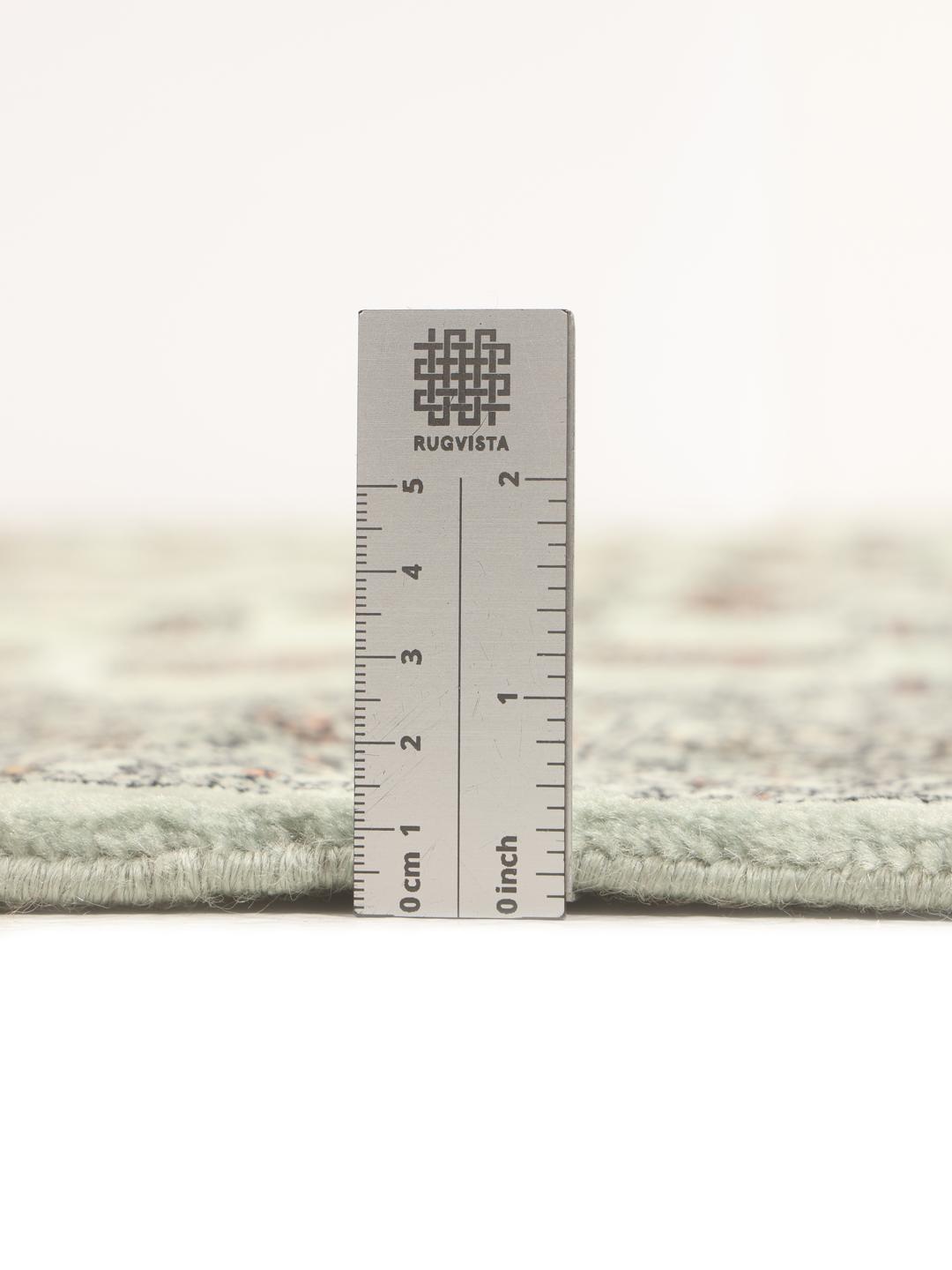
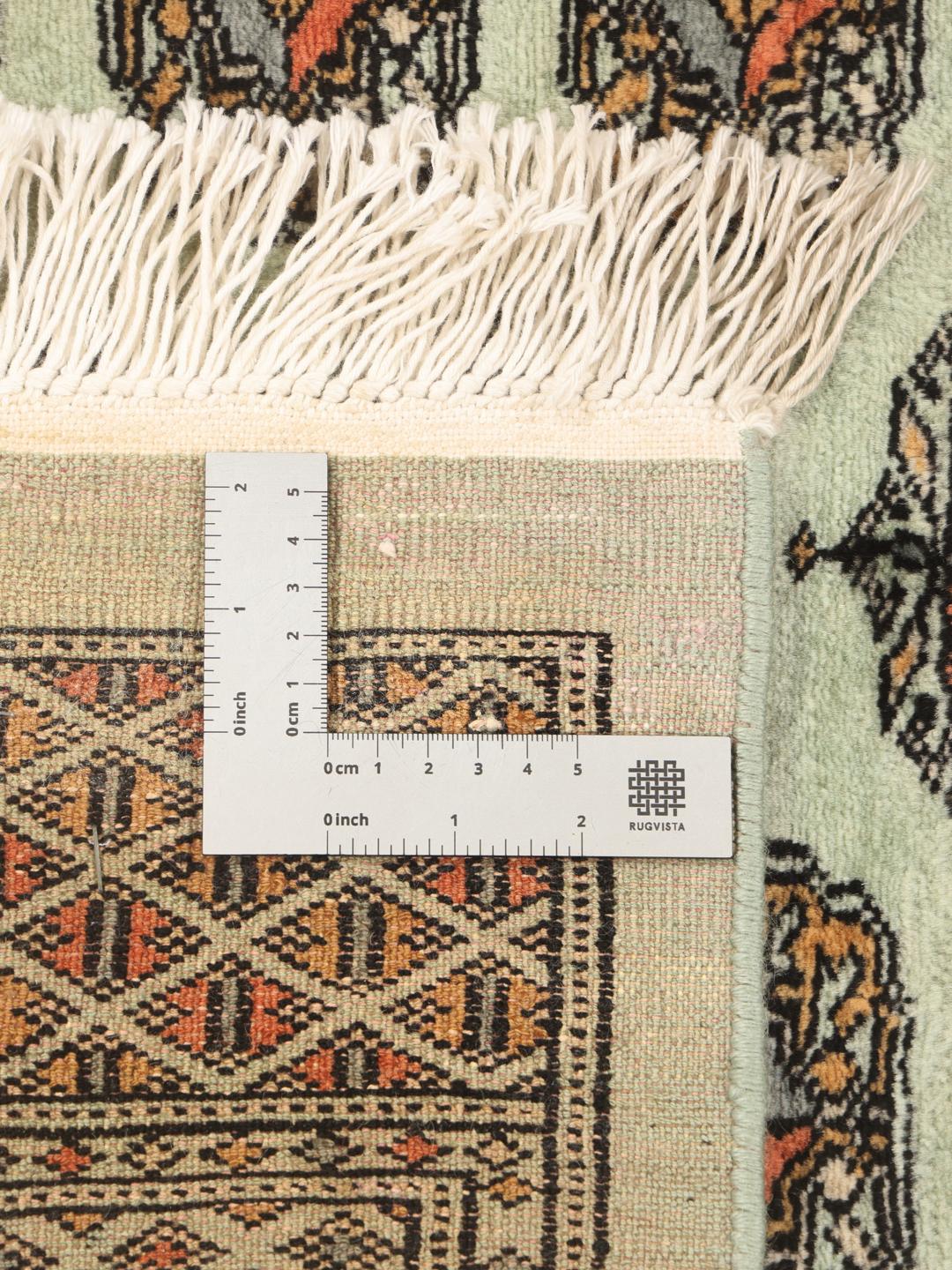
The term 2ply refers to the specific construction of the pile, where two strands of wool are twisted together before being knotted. This technique is essential for creating a pile that is not only denser and more lustrous but also significantly more durable than single-ply alternatives. It is this construction choice that gives the rug its signature plush feel and long-lasting resilience.
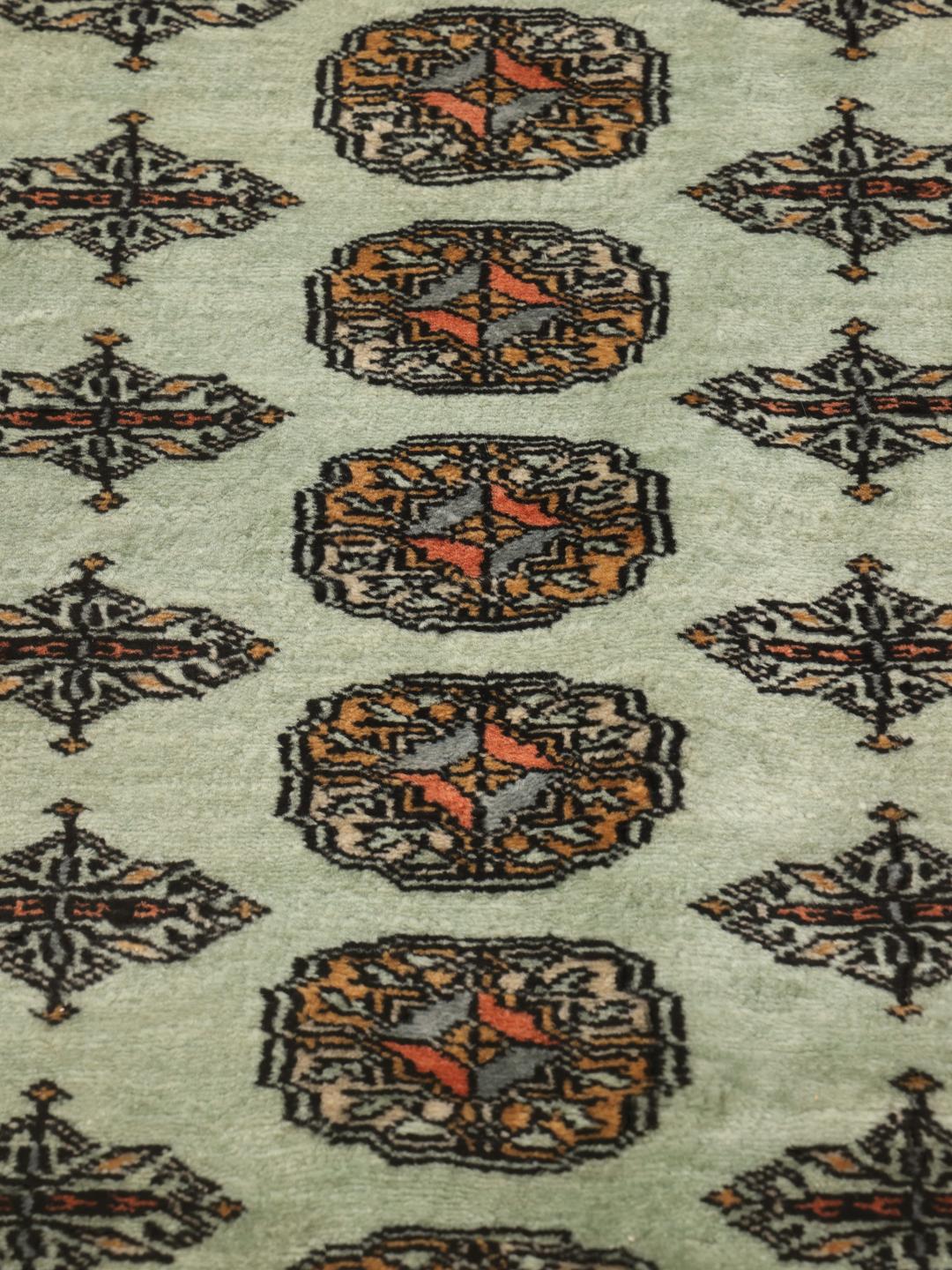
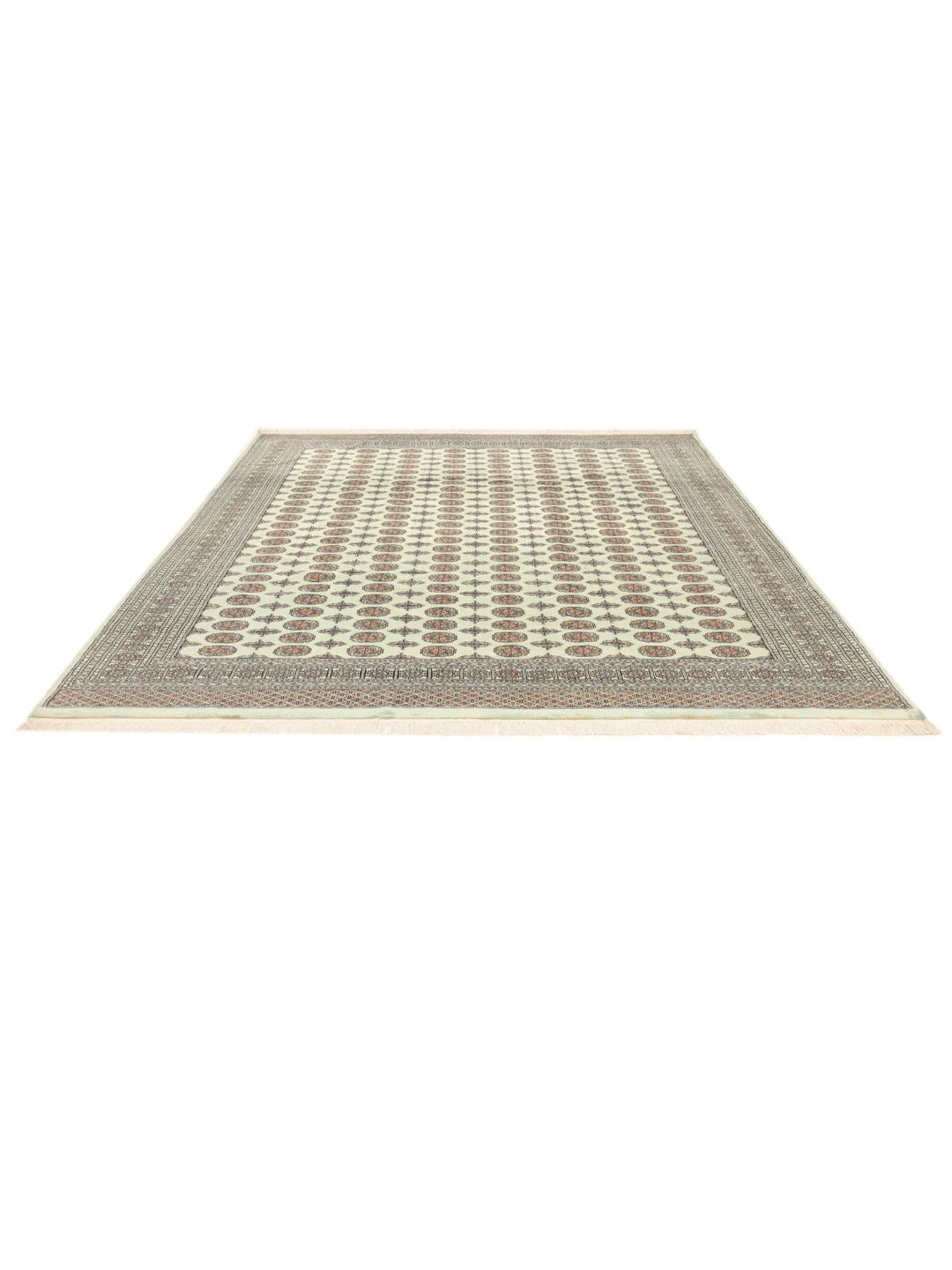
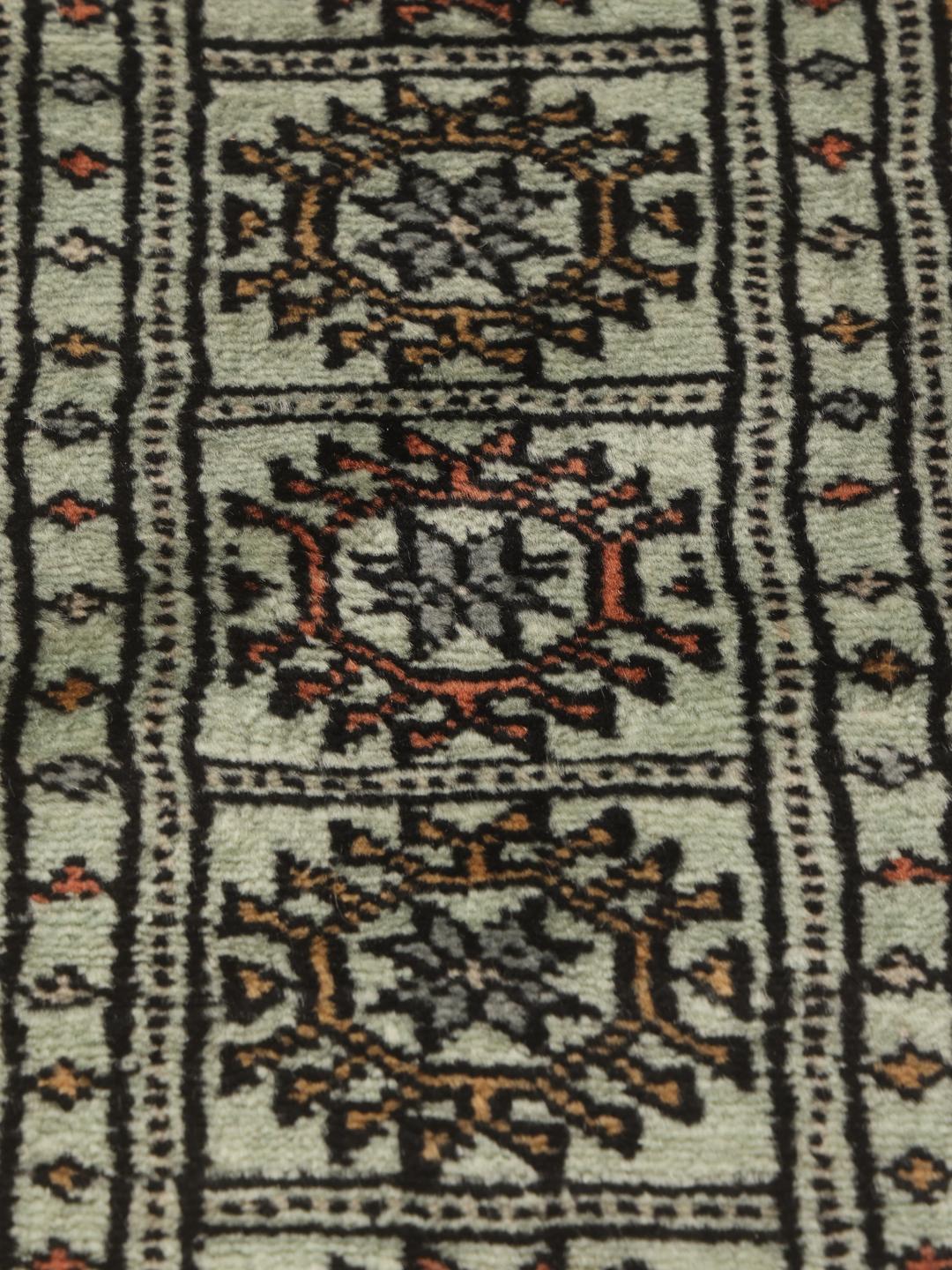
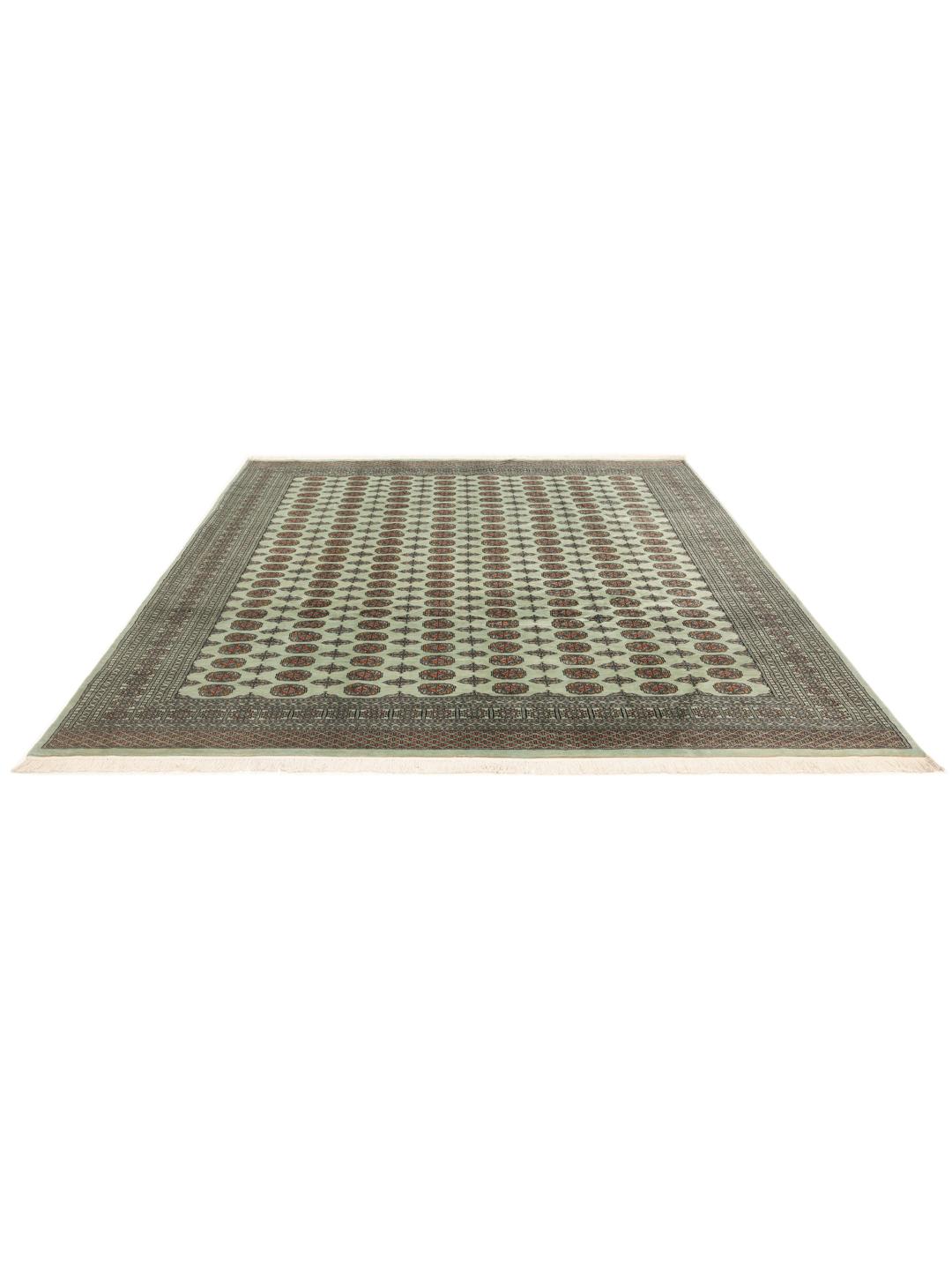
Visually, these rugs are defined by their repeating gul motifs, which are stylised, octagonal medallions often said to represent elephant footprints or tribal symbols. The field is typically organised in precise rows, creating a sense of rhythm and harmony. While deep reds are traditional for this style, this particular example features a unique pale green palette that offers a refreshing, lighter take on the classic design.
Owning a hand-knotted rug from this tradition is a connection to a centuries-old craft. These pieces are valued by collectors and homeowners alike for their cultural weight and the undeniable skill required to produce them. By acquiring this rug, you are not just covering a floor, but participating in a lineage of artistry that prioritises heritage, skill, and enduring beauty.