The Bokhara rug tradition is deeply rooted in the history of the Silk Road, taking its name from the ancient city of Bukhara in Central Asia. While the designs originated with nomadic tribes who required portable and durable floor coverings, the modern evolution of these rugs has found a vibrant home in Pakistan. Today, Pakistani artisans are celebrated for refining these traditional techniques, producing some of the most sought-after examples of this style in the world.
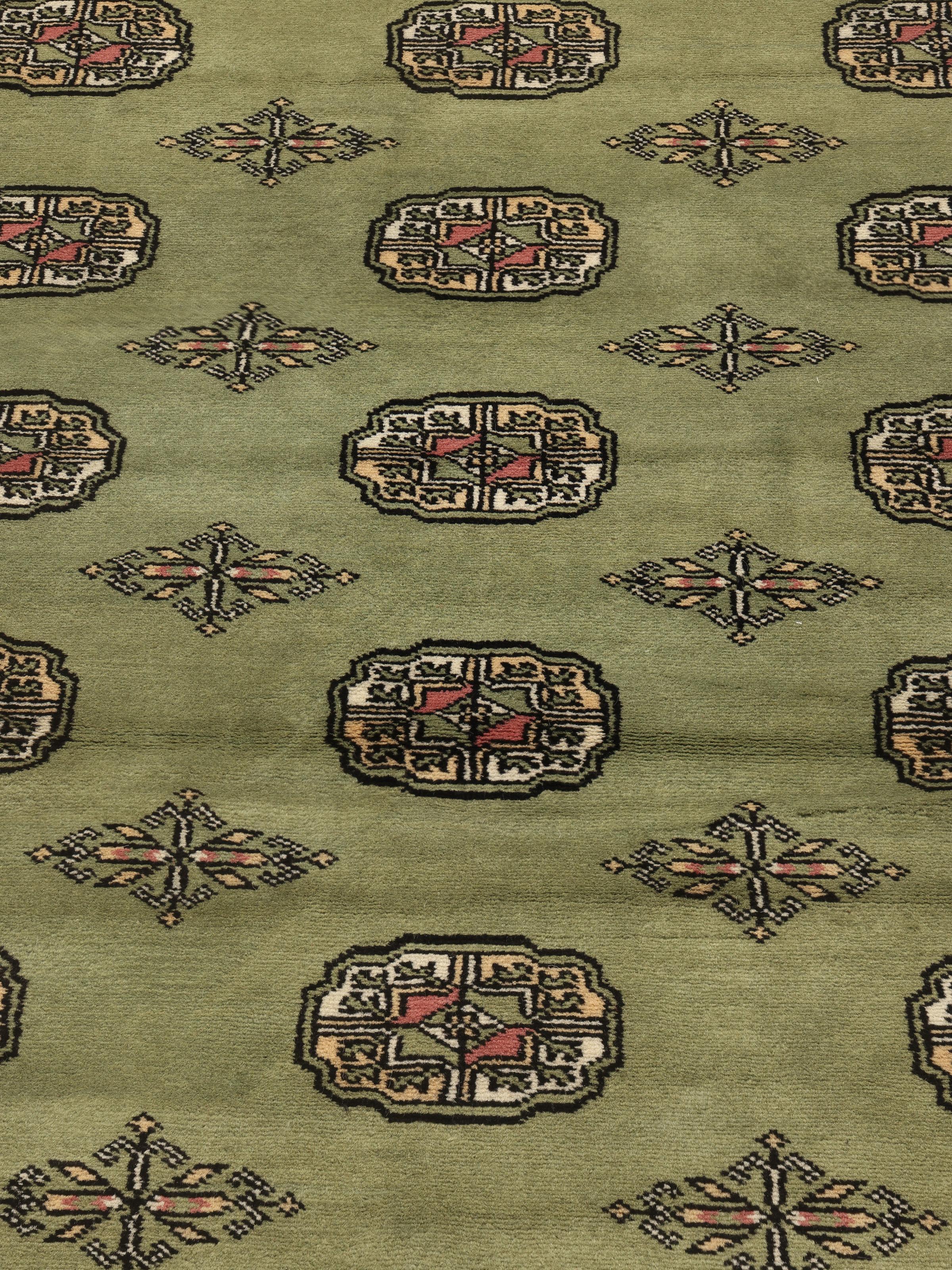
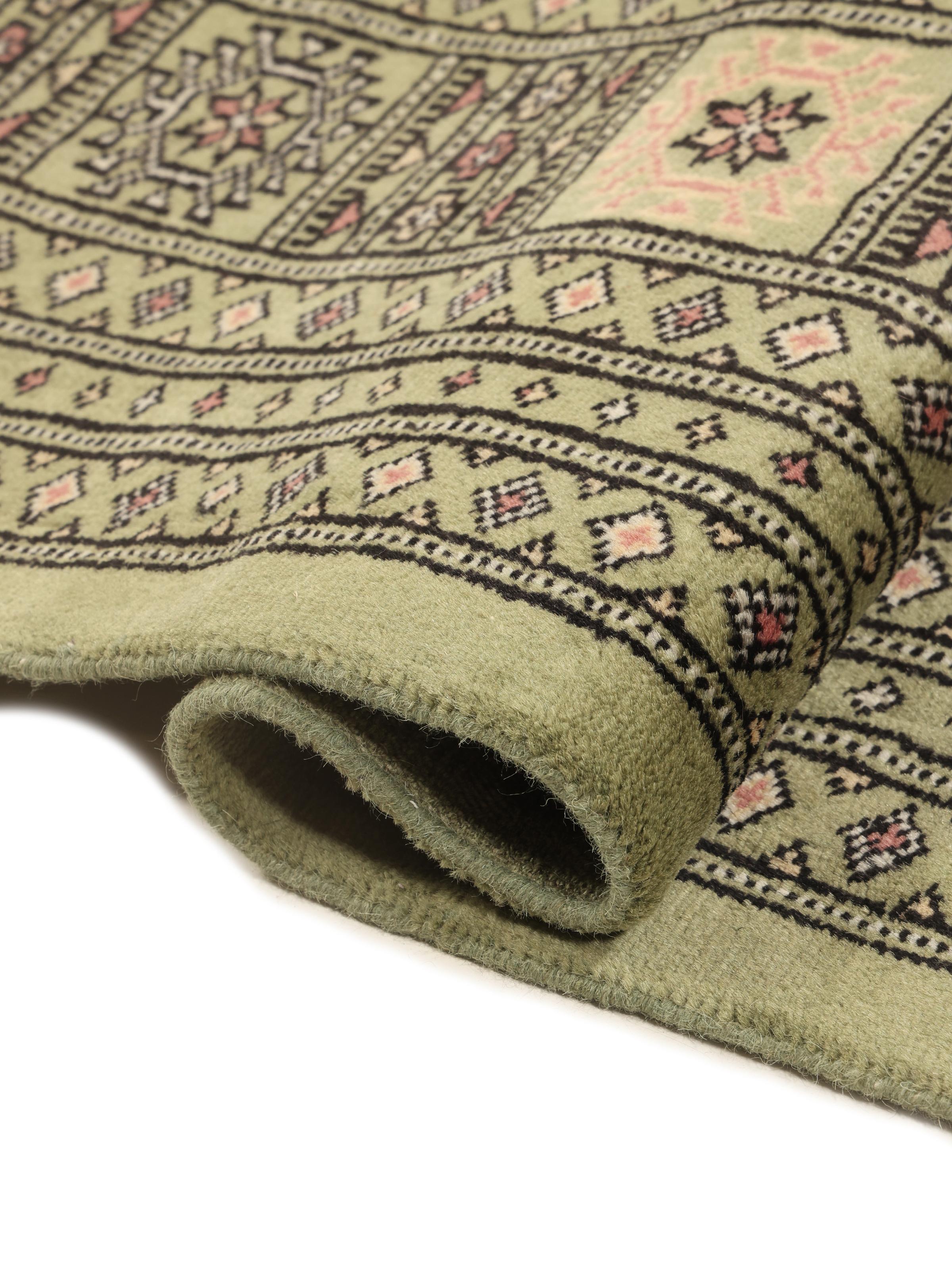
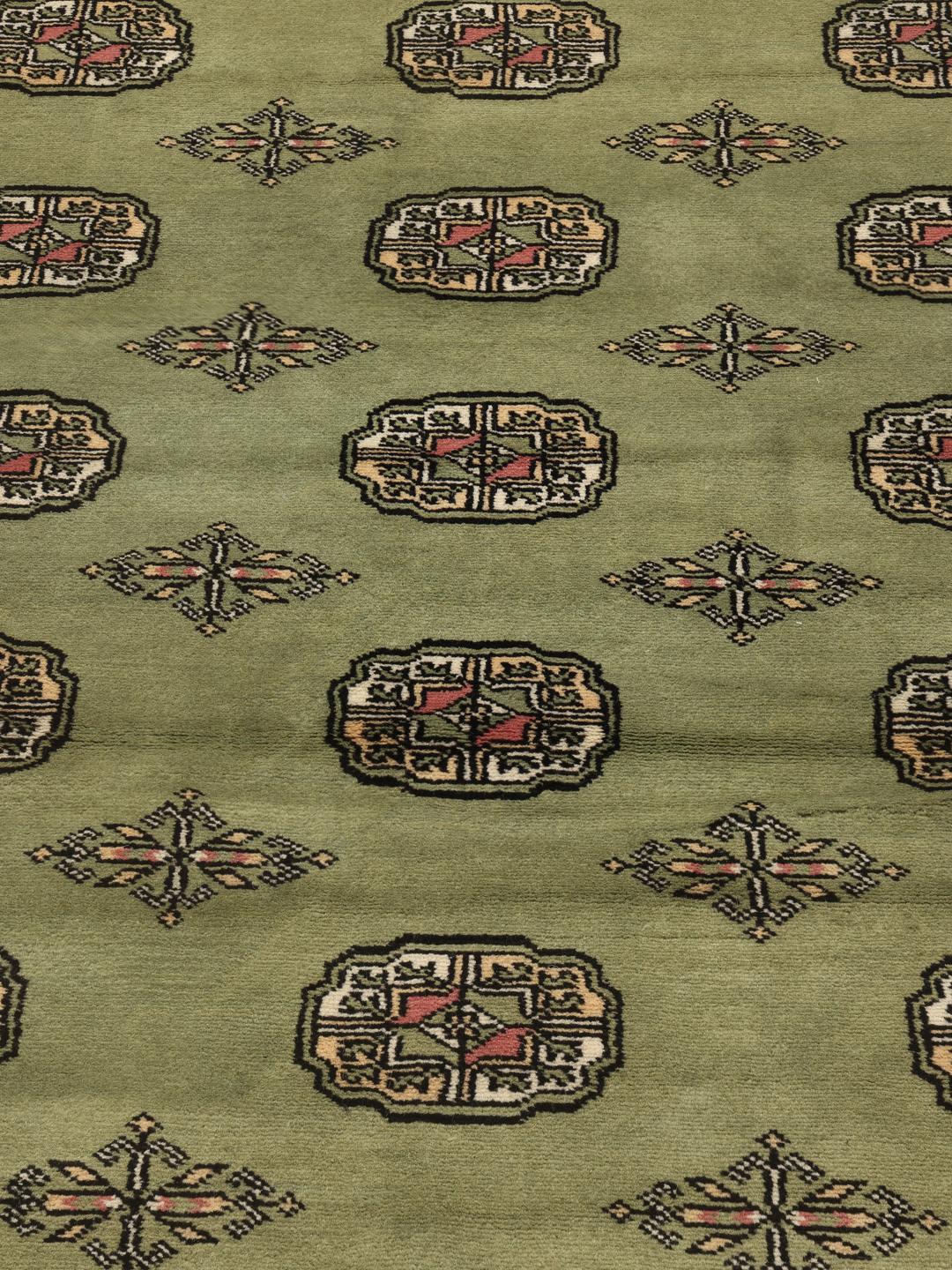
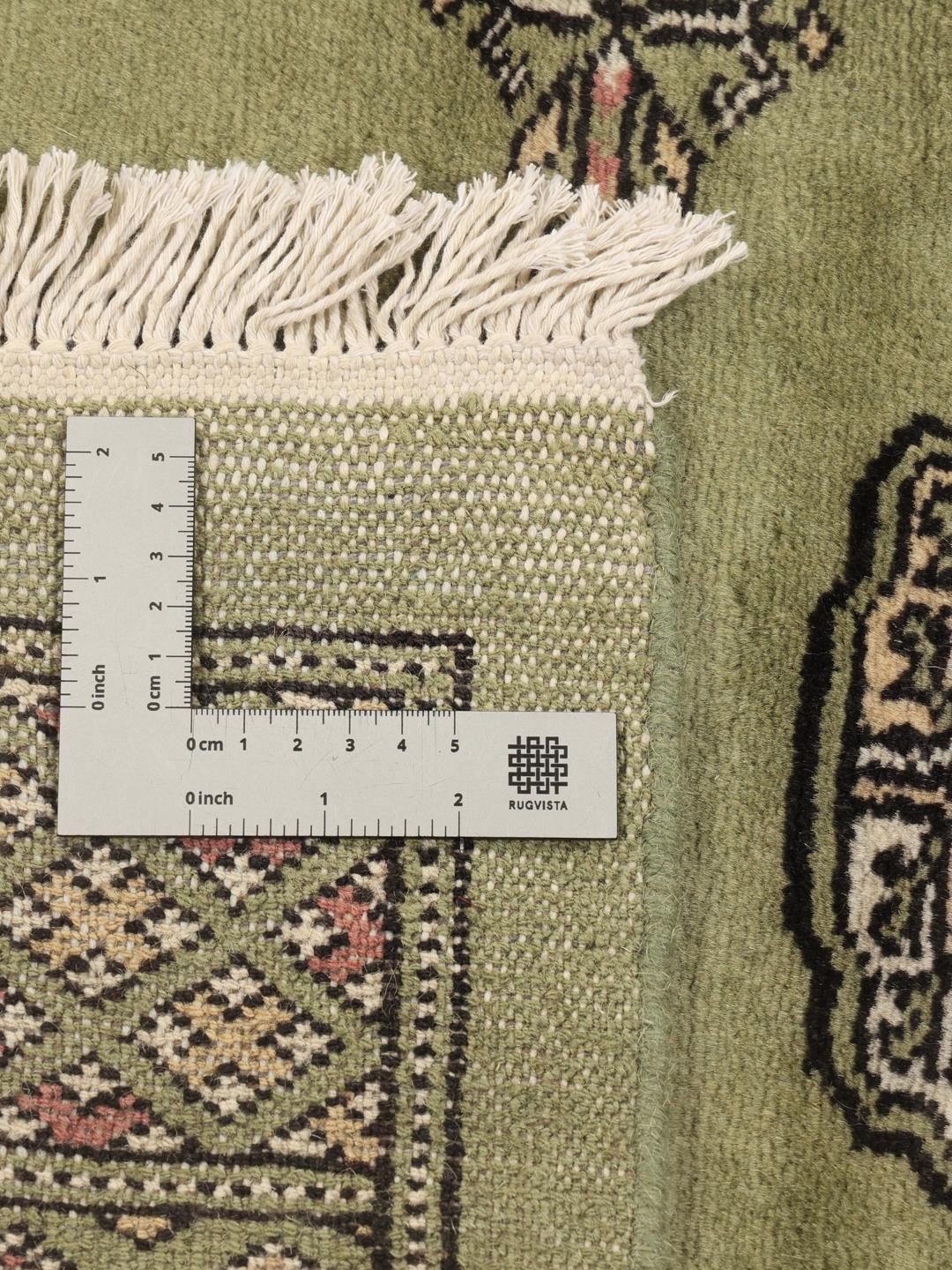
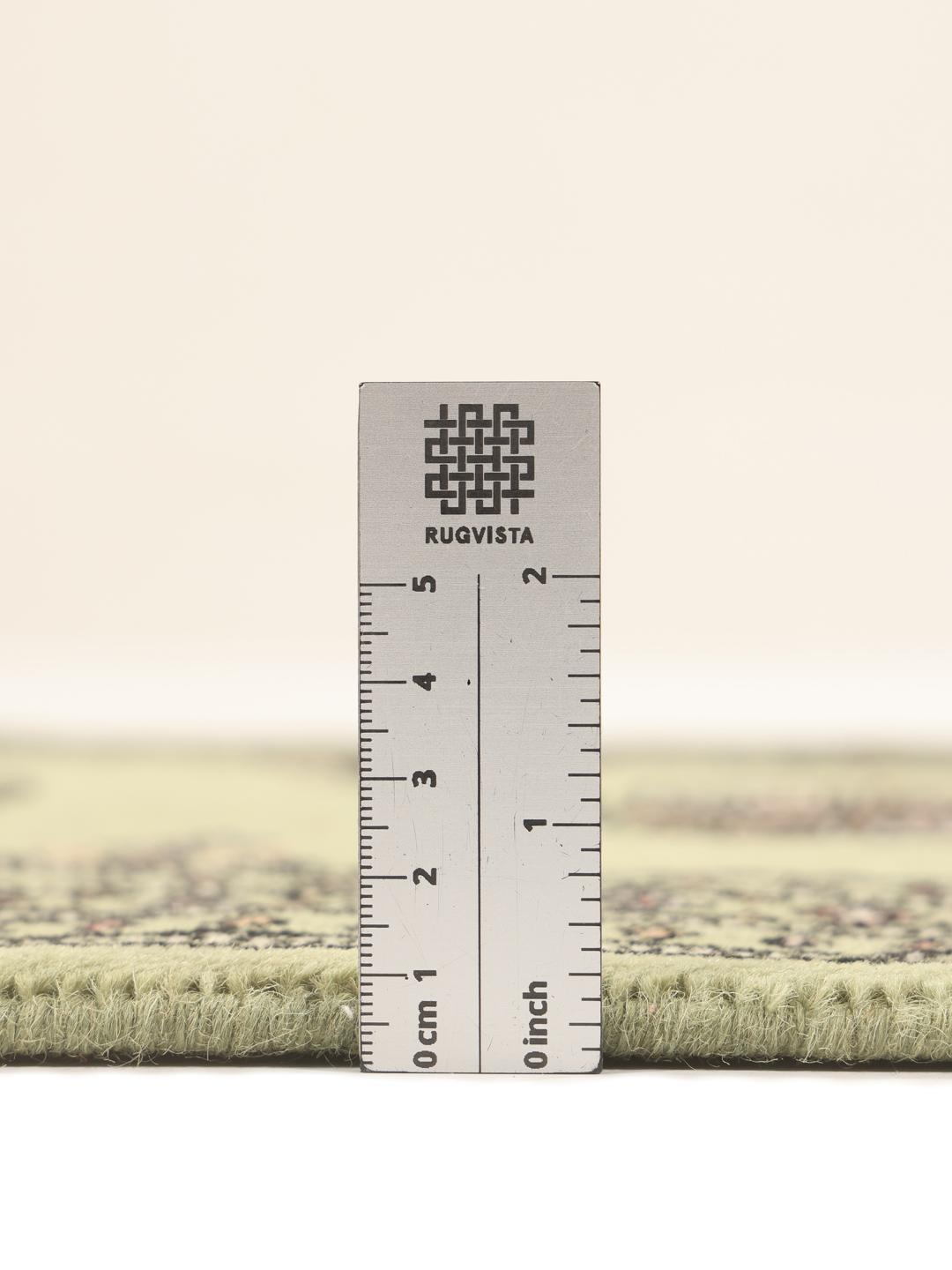
The term 2ply refers to the construction of the wool yarn, where two individual strands are twisted together before being knotted. This technique is vital for quality, as it creates a much stronger, more resilient pile that is less prone to shedding and wear. It also adds a subtle lustre to the wool, allowing the colours to catch the light beautifully while providing a soft, cushioned feel that single-ply rugs simply cannot match.
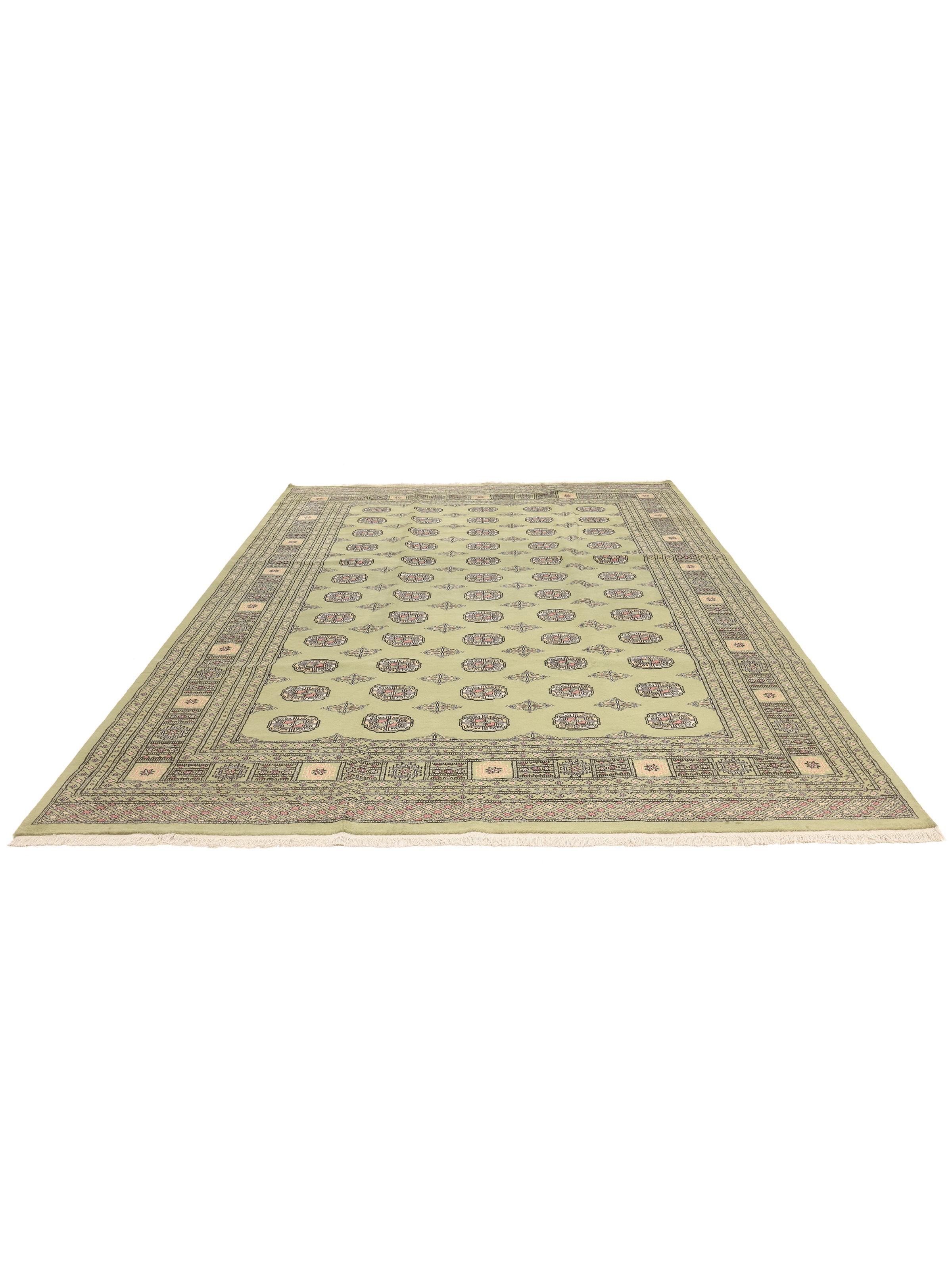
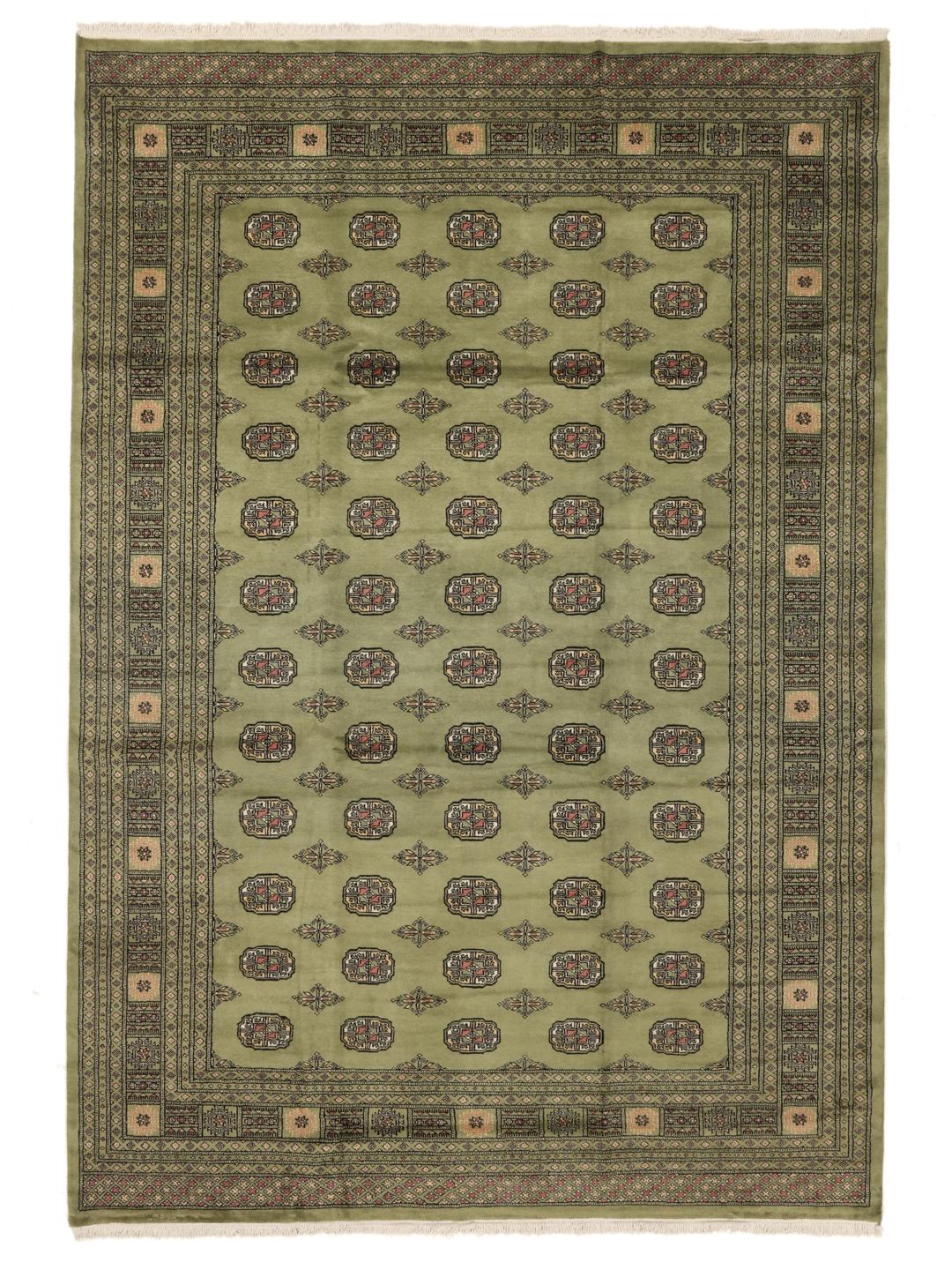
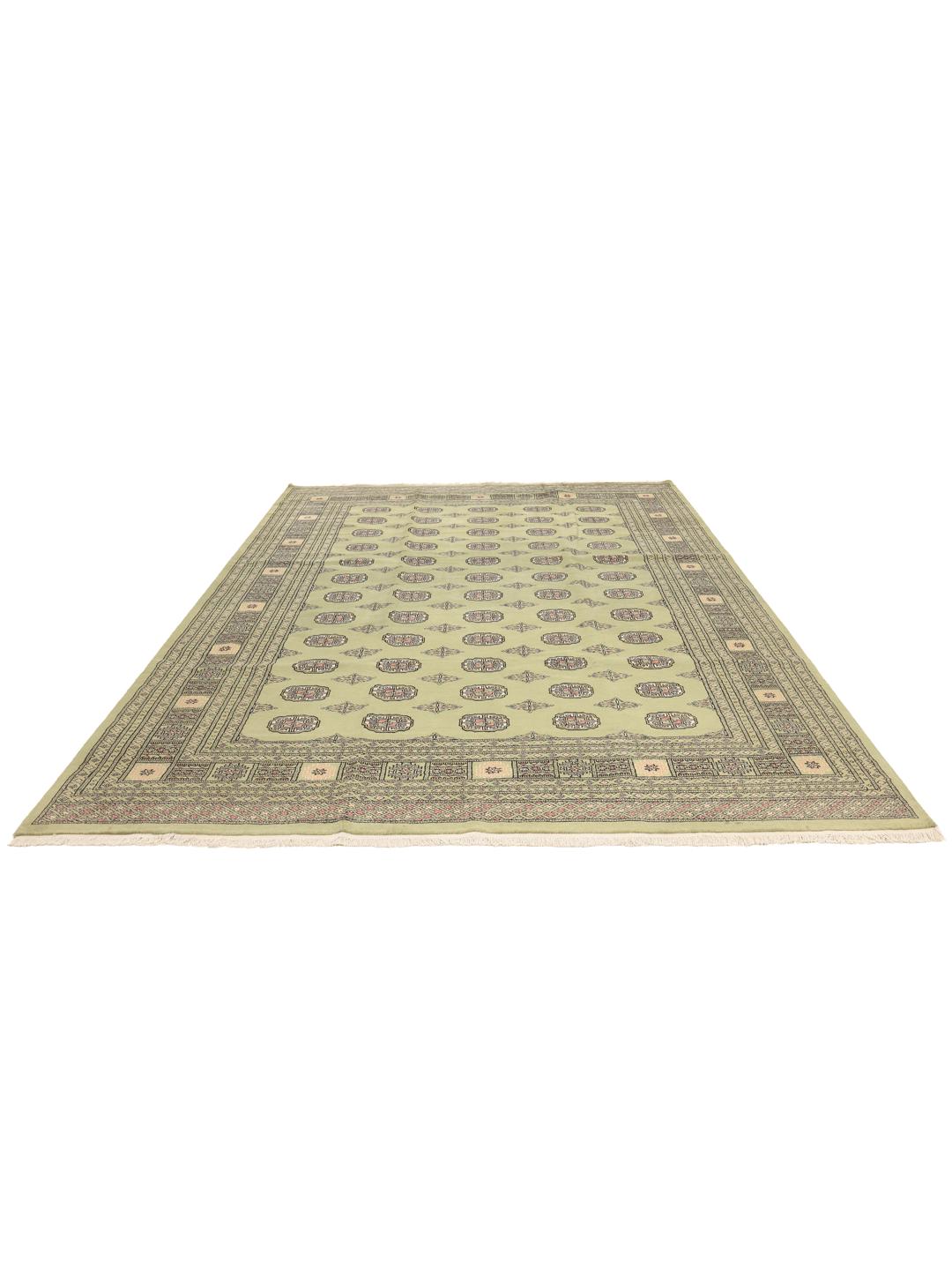
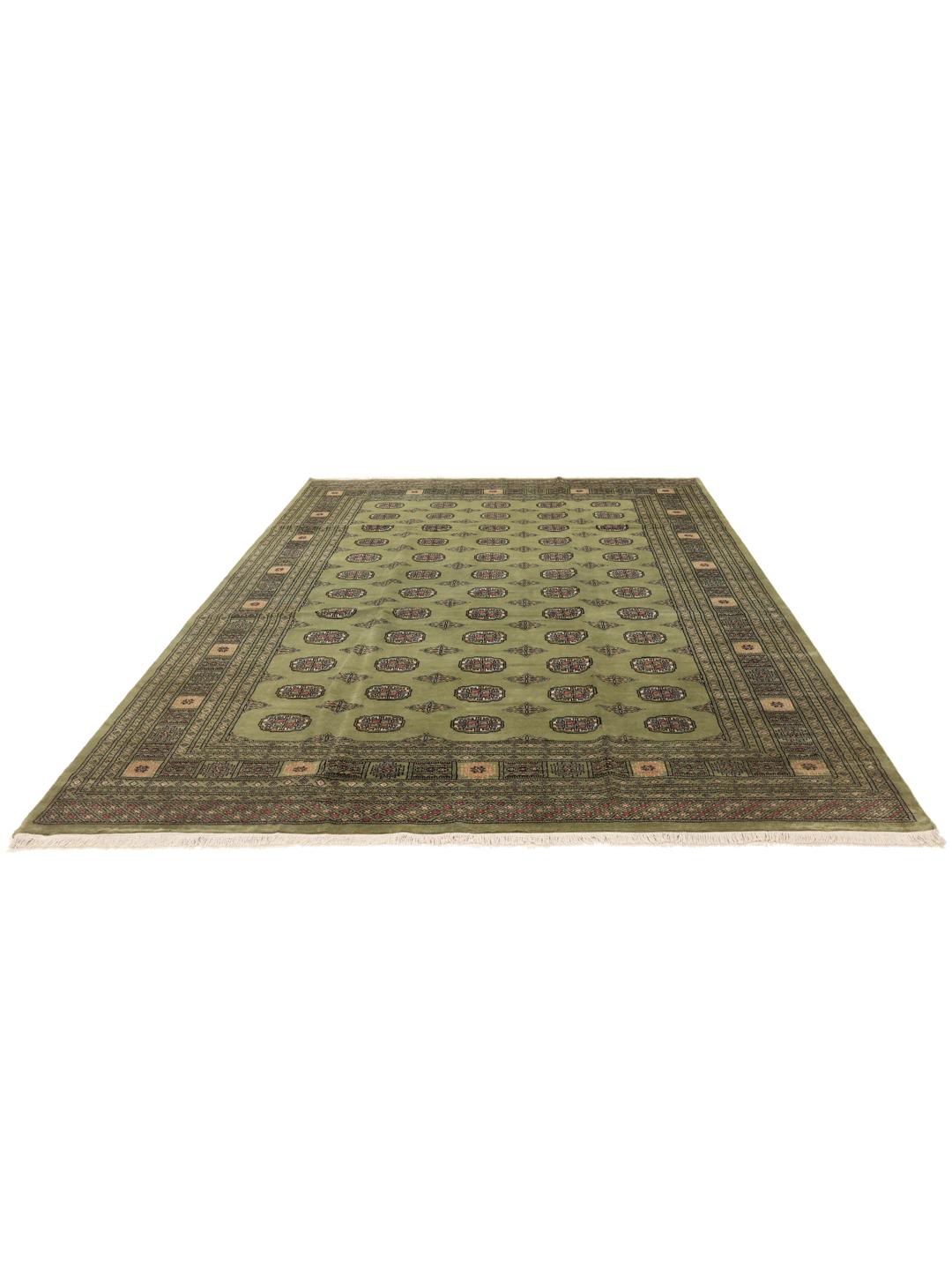
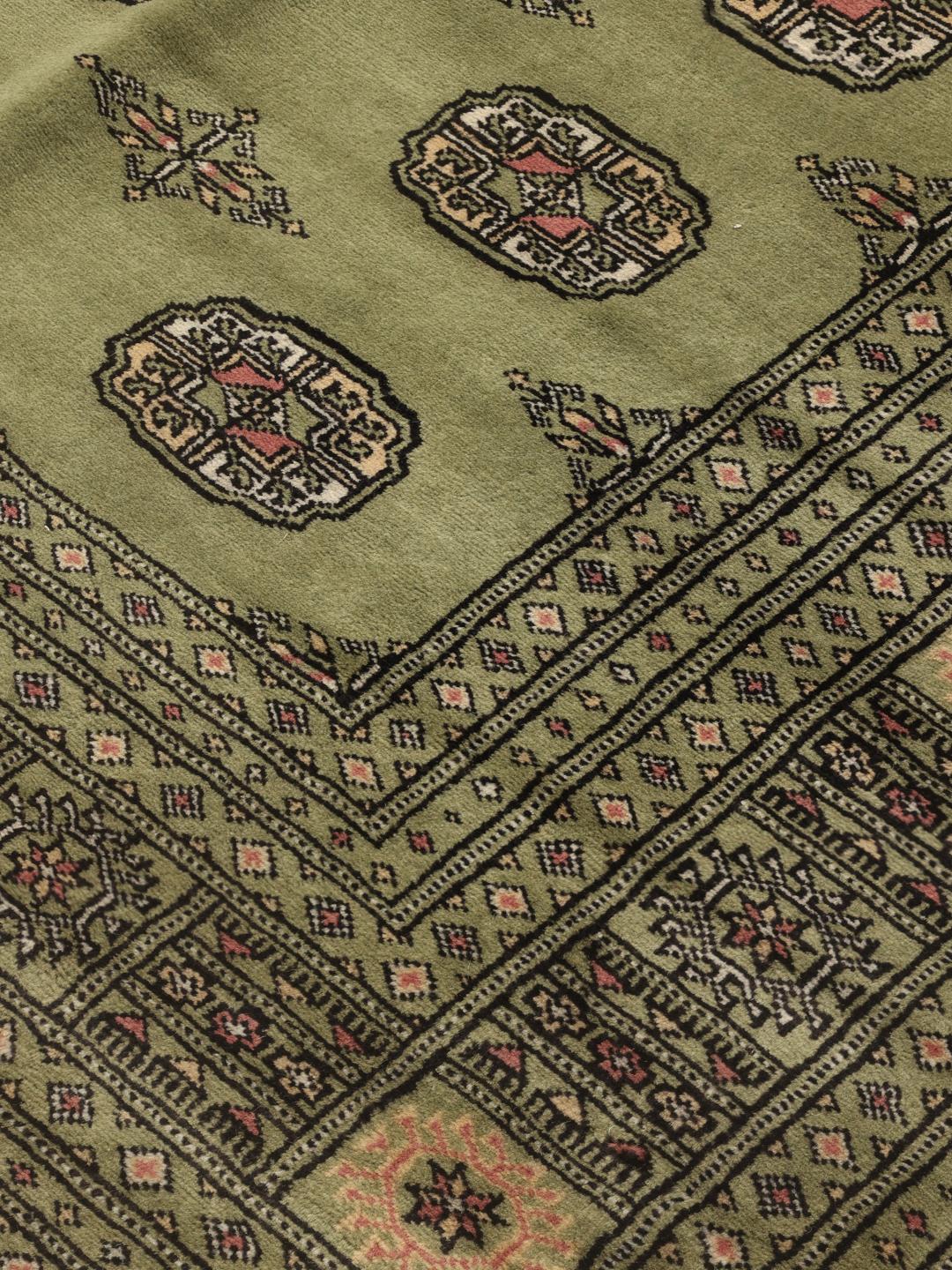
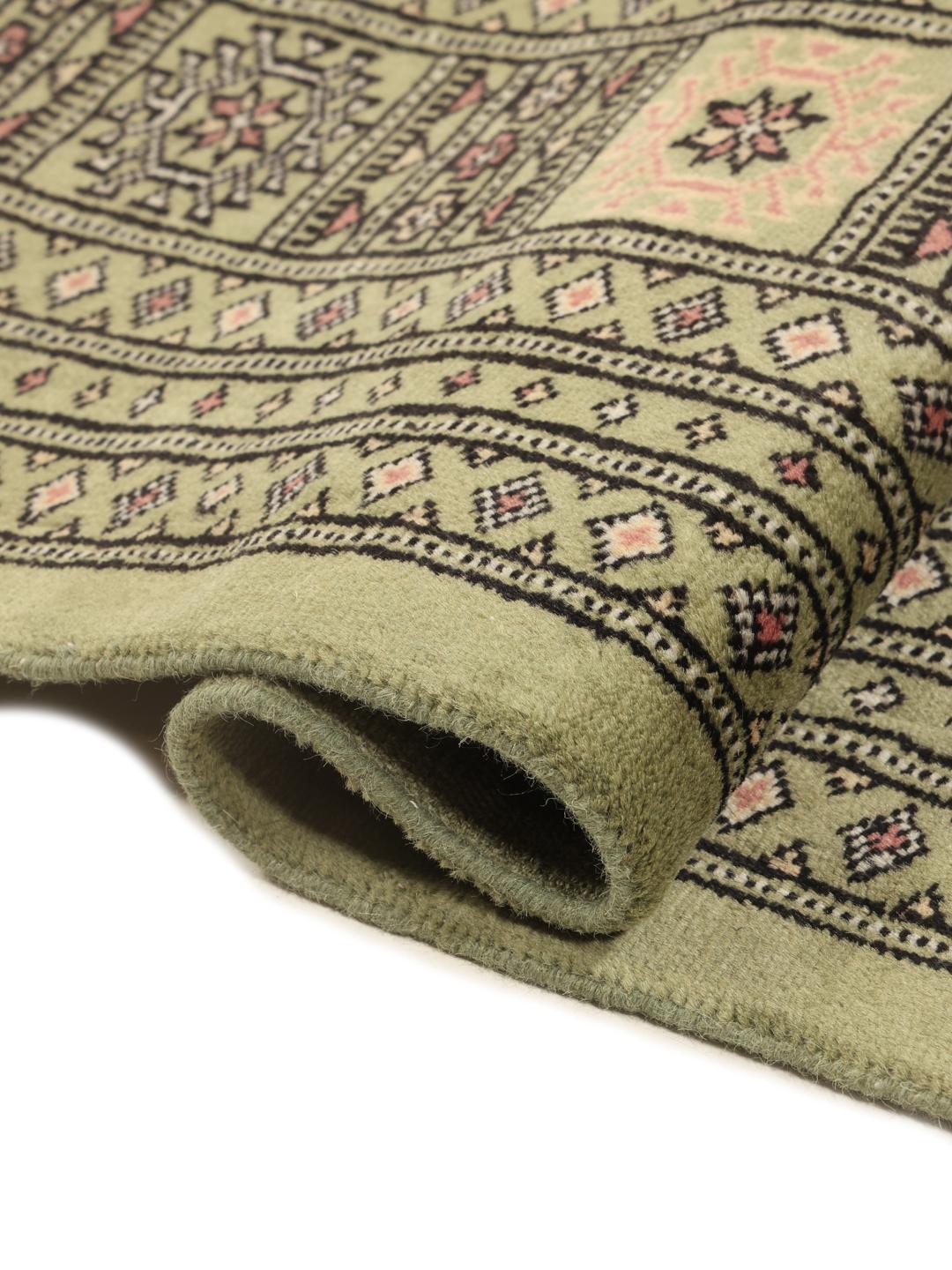
The visual language of the Bokhara is iconic, characterised by the repeated gul motif. These elephant-foot medallions are arranged in precise rows across the field, framed by elaborate geometric borders that provide a sense of structure. While traditional Bokhara rugs often feature deep red tones, this specific piece in green offers a unique and sophisticated interpretation of the classic style, making it a rare find for those who appreciate traditional motifs in a fresh, unexpected colourway.
Owning a hand-knotted rug from this tradition is an investment in cultural heritage and artisanal skill. These pieces are highly valued by collectors not only for their aesthetic consistency but for the history embedded in every knot. By acquiring such a rug, you are preserving a craft that has been passed down through generations, ensuring that this legacy continues to add value and warmth to modern homes.