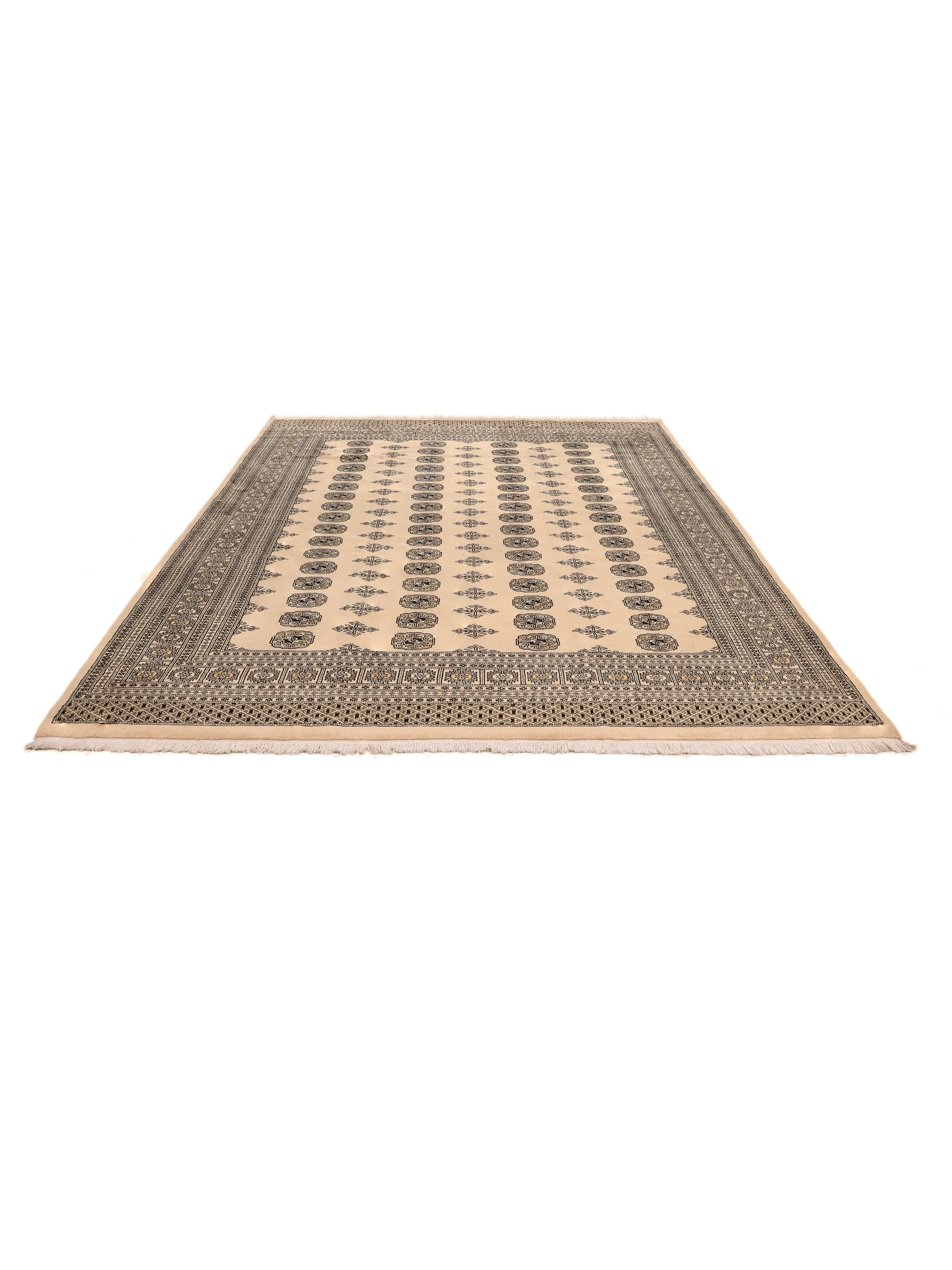
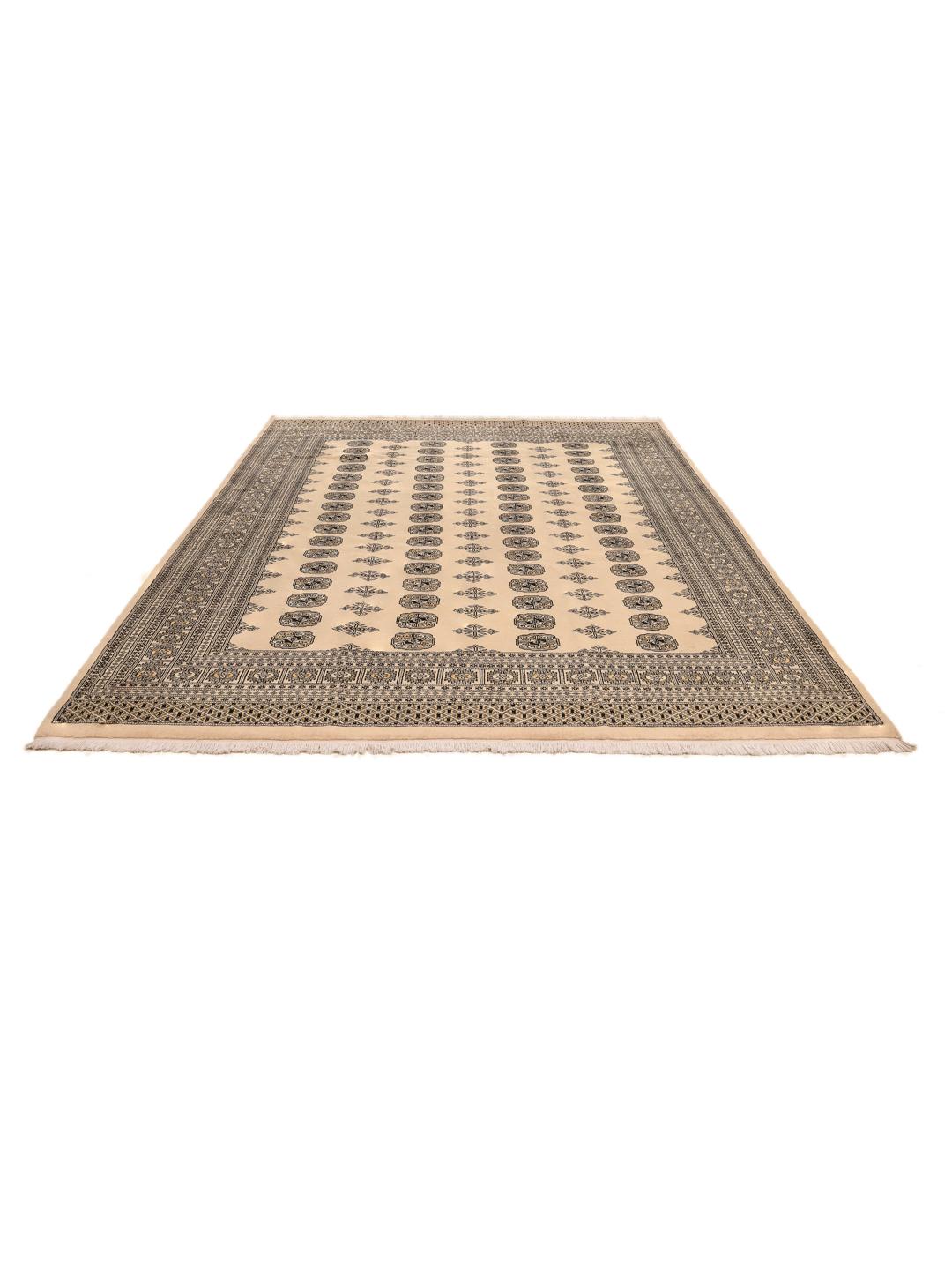
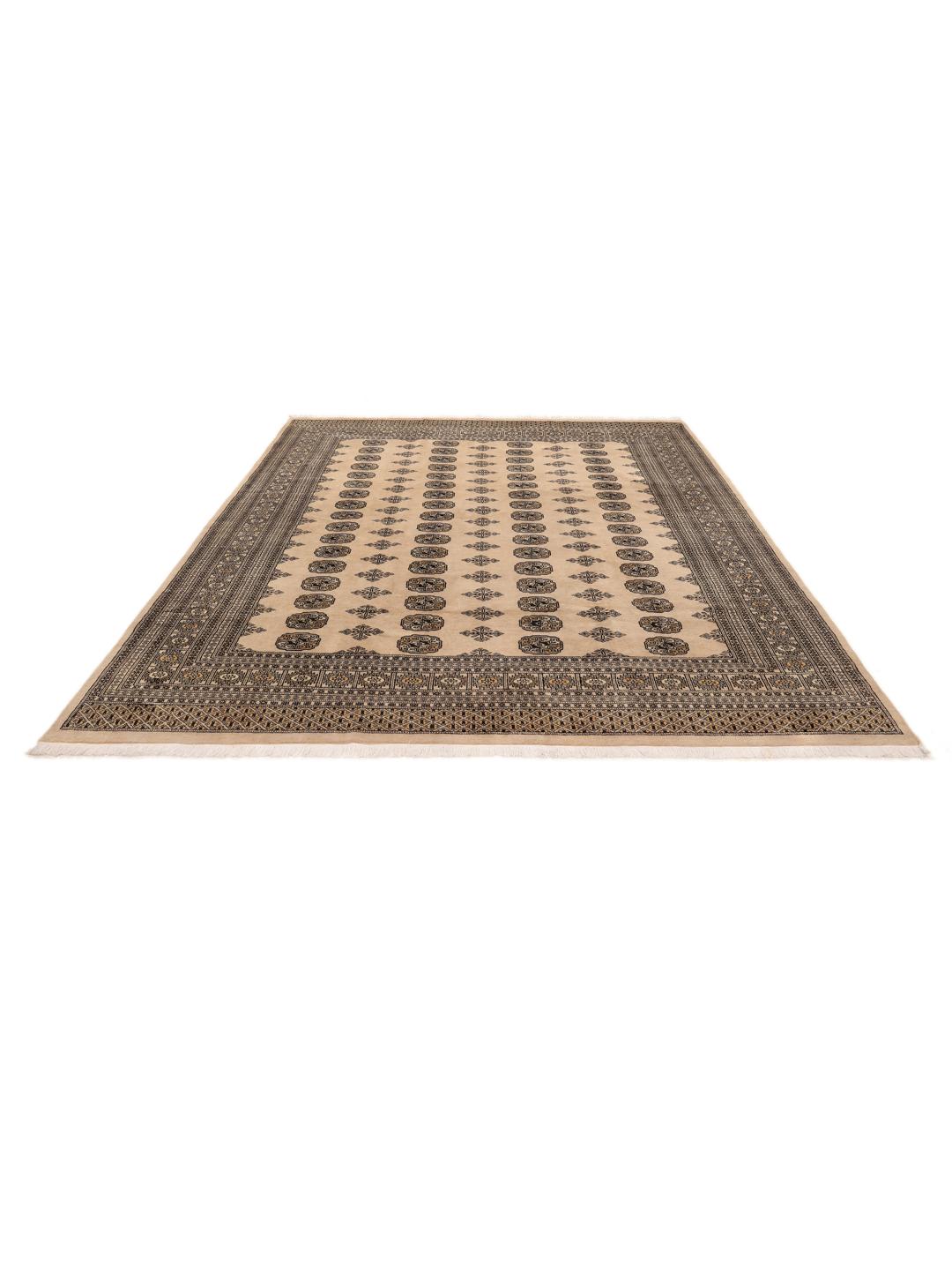
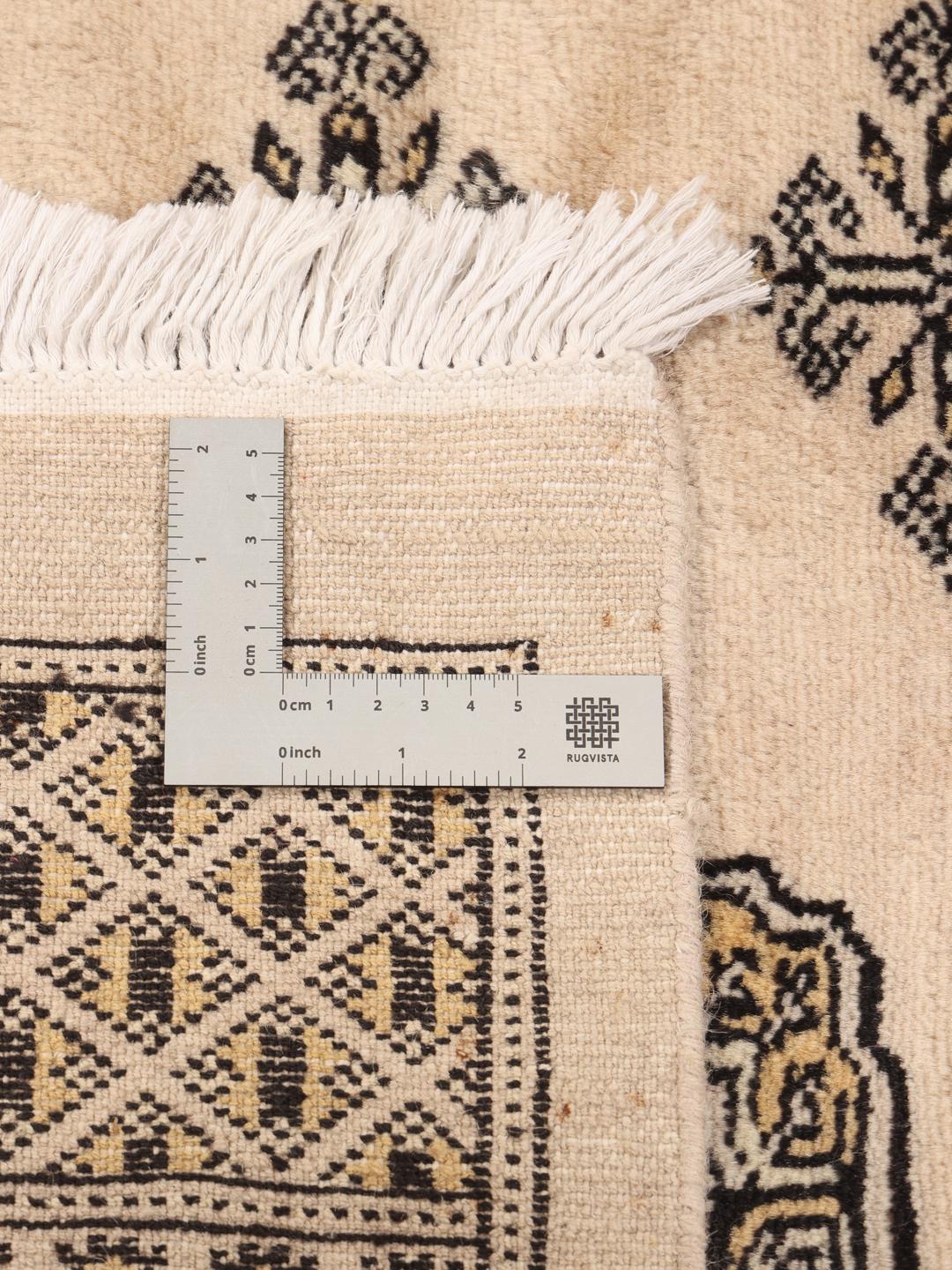
The Bokhara rug tradition takes its name from the ancient Silk Road city of Bukhara, which served as a vital hub for trade and cultural exchange between East and West. While the design roots are deeply embedded in Central Asian heritage, the finest contemporary examples of this style are woven in Pakistan. This evolution reflects the migration of master weavers who carried these intricate techniques across borders, preserving the legacy of the design while adapting it to new environments.
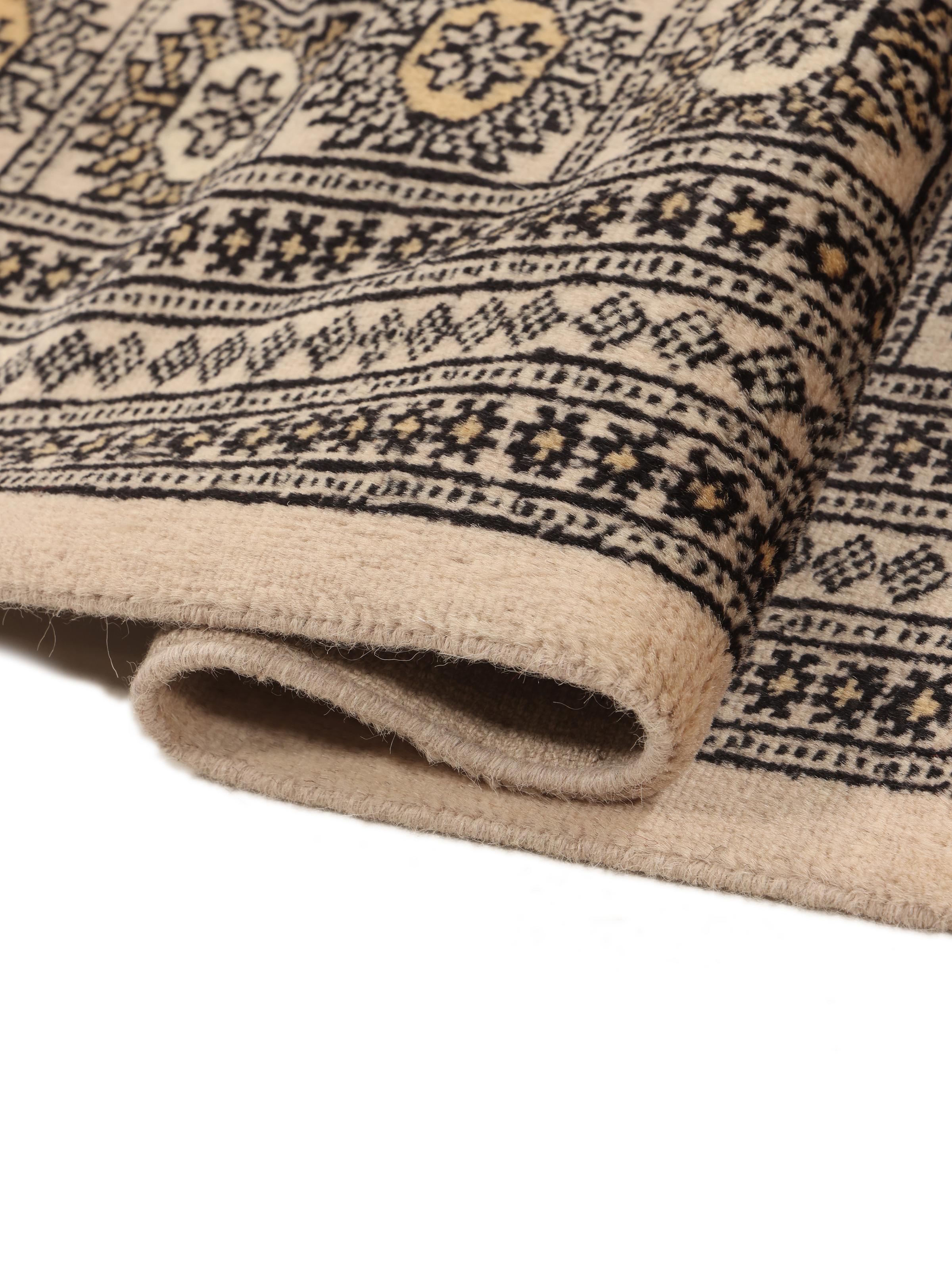
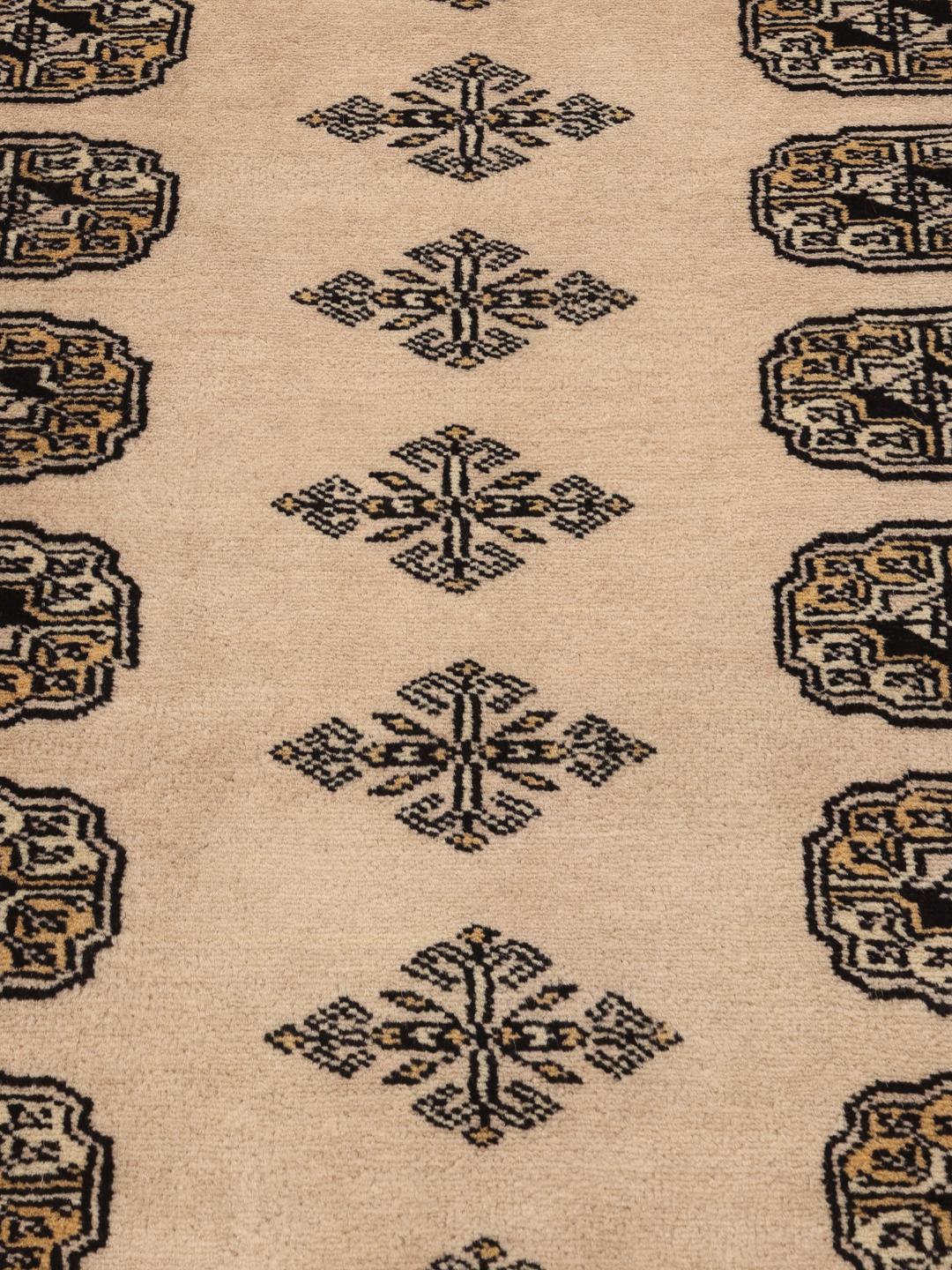
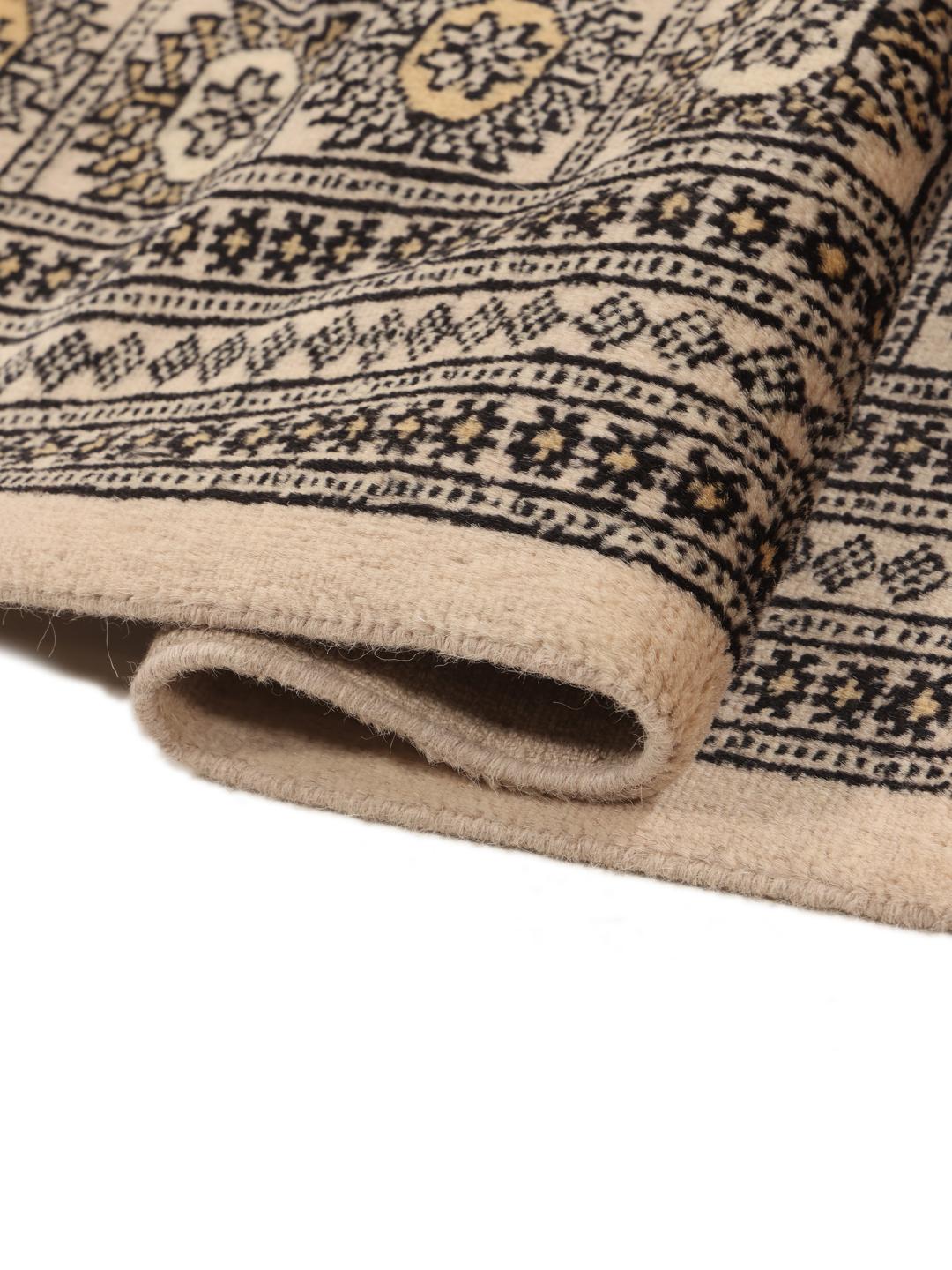
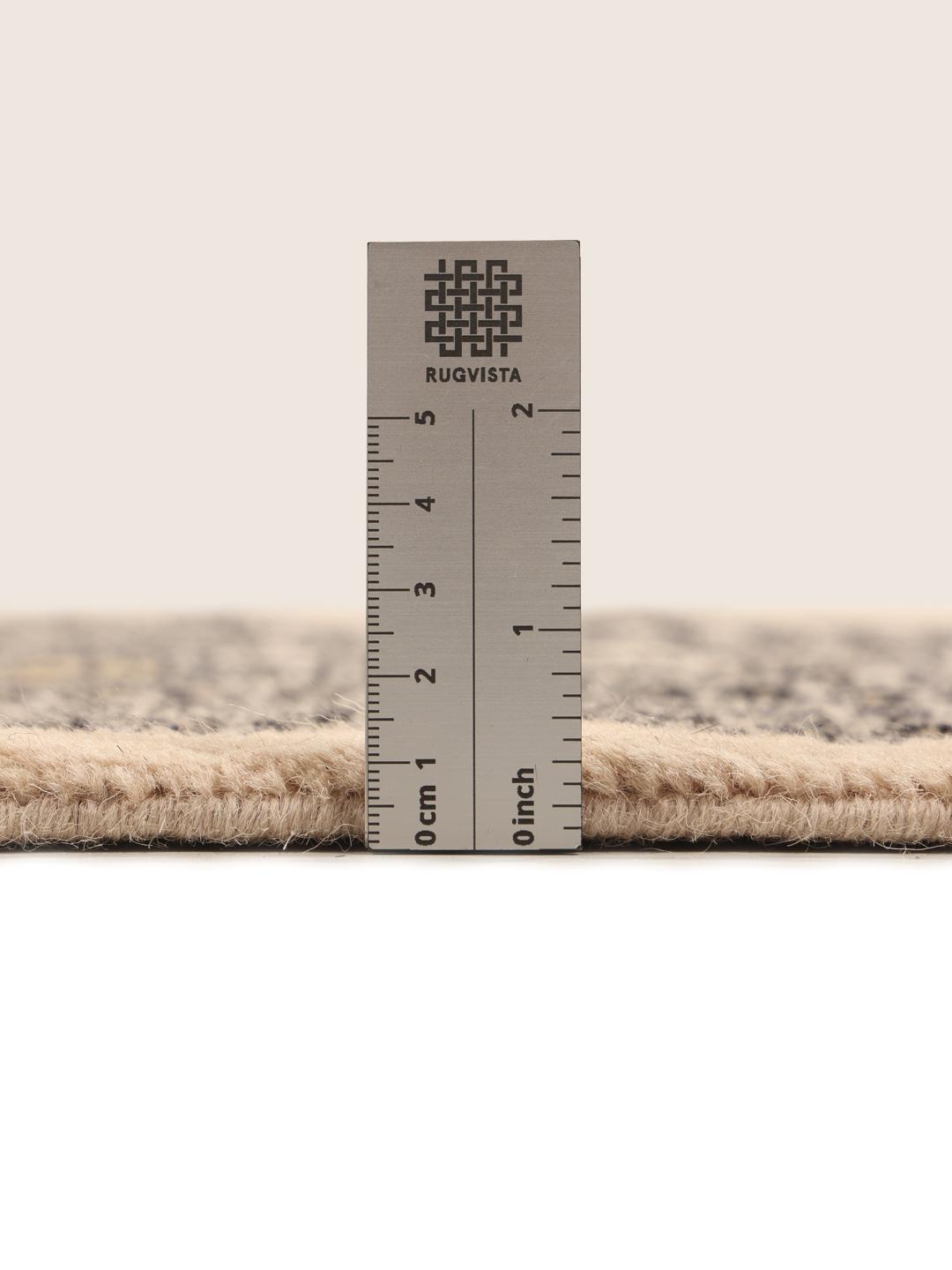
The term 2ply in this rug’s classification is a technical hallmark of quality. It refers to the practice of twisting two strands of wool together before they are knotted into the foundation. This creates a stronger, more lustrous, and thicker yarn compared to single-ply construction. For the owner, this means a pile that feels more substantial and luxurious underfoot, while also offering superior resistance to flattening over time.
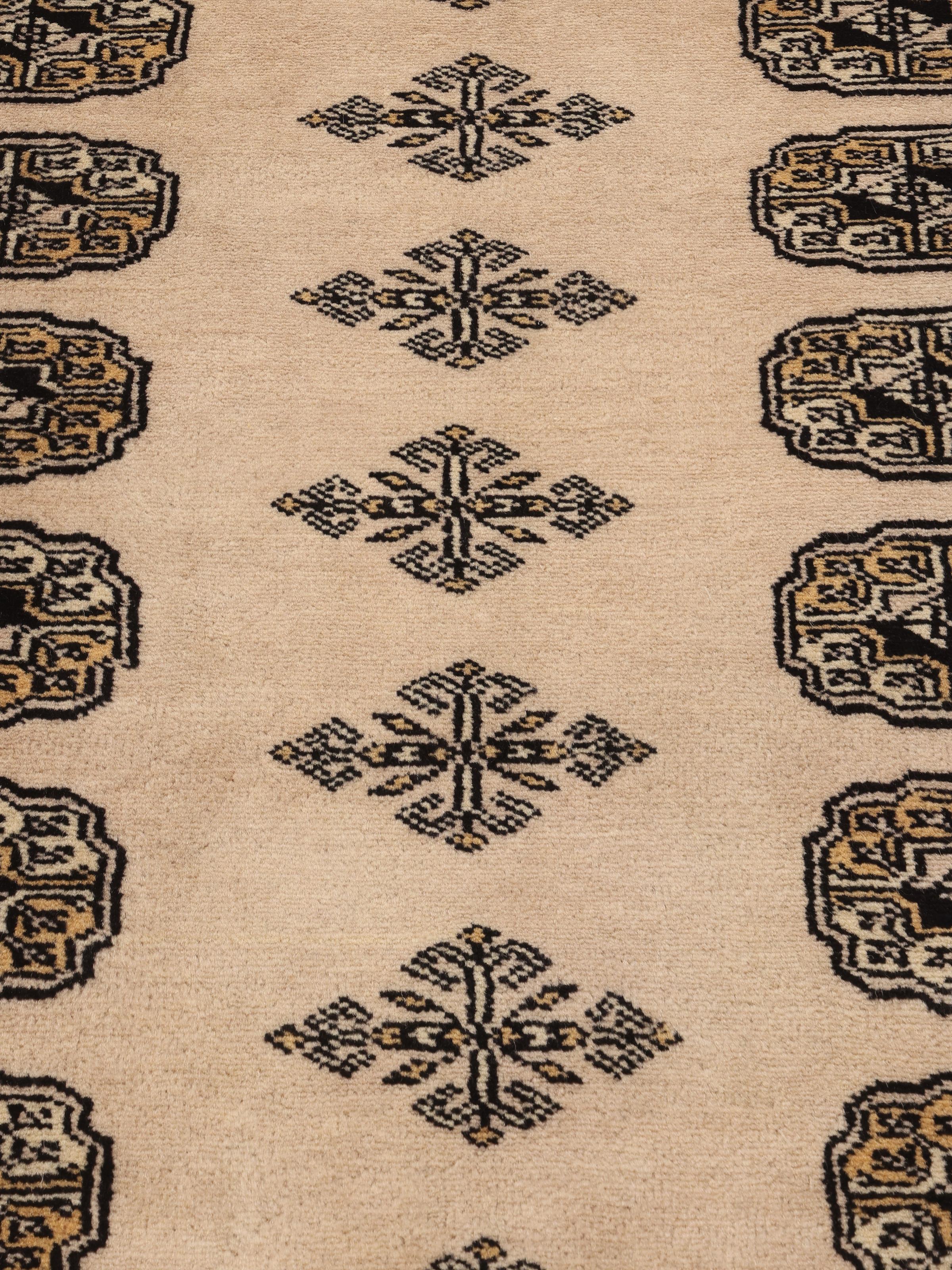
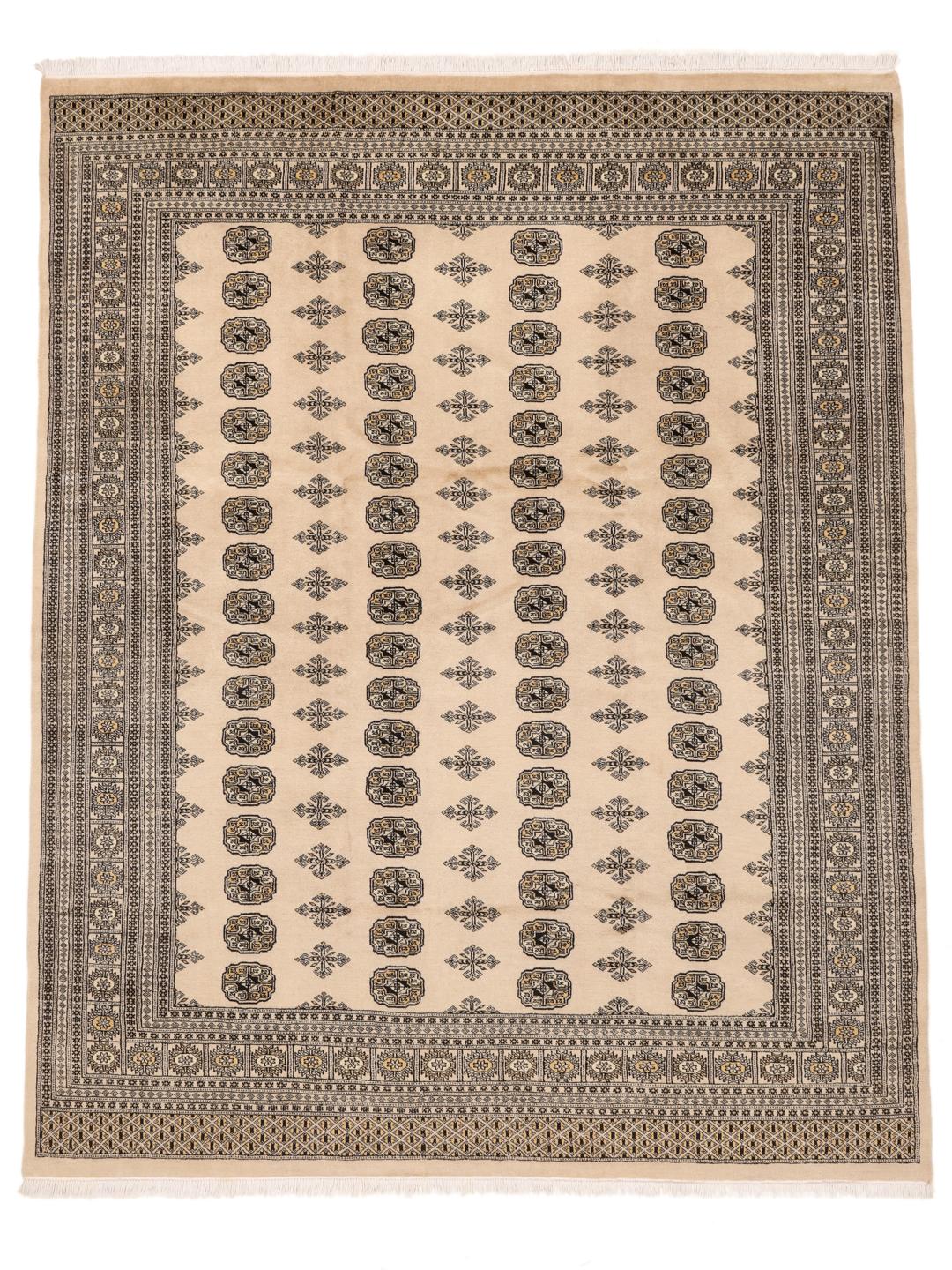
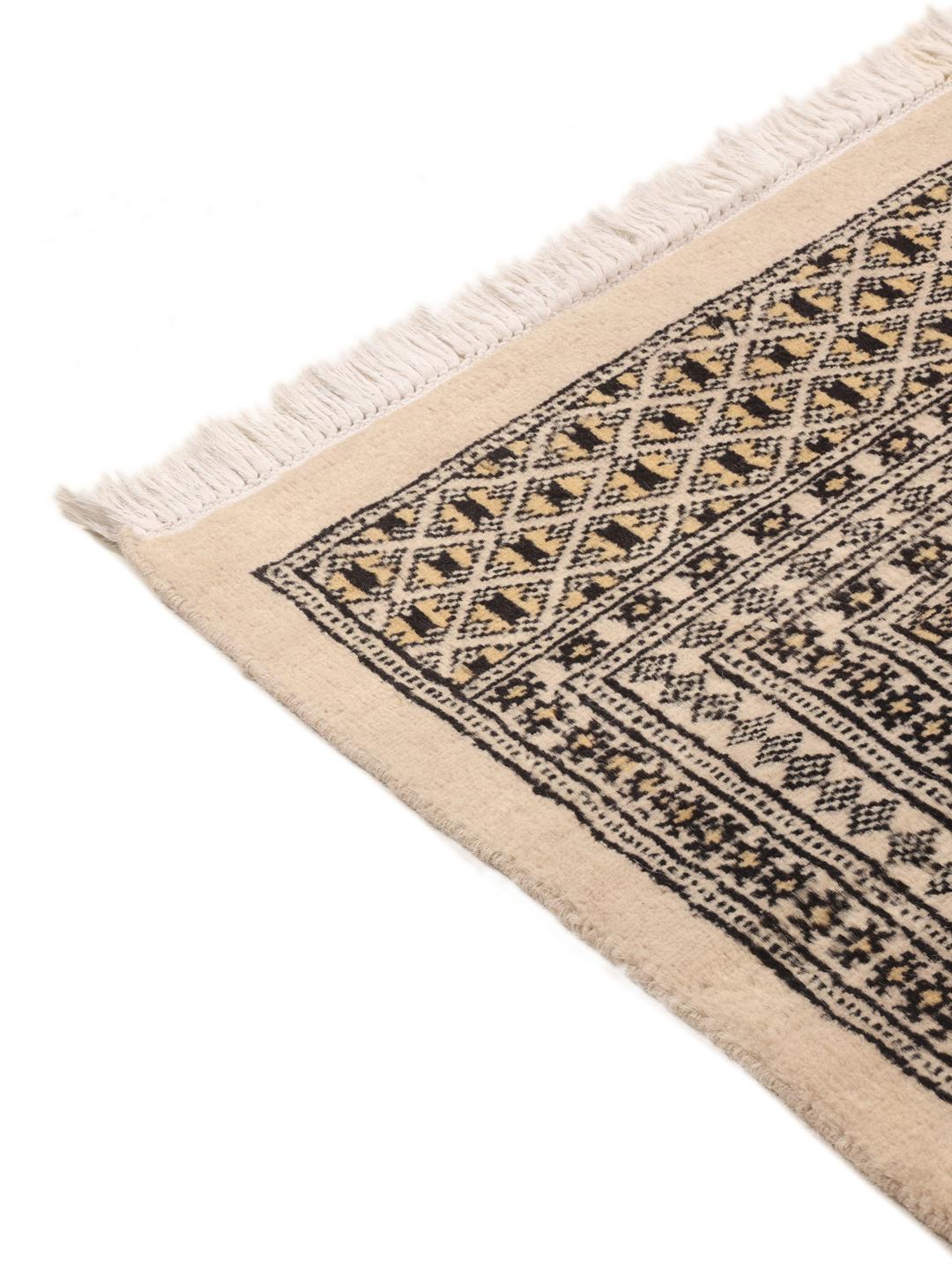
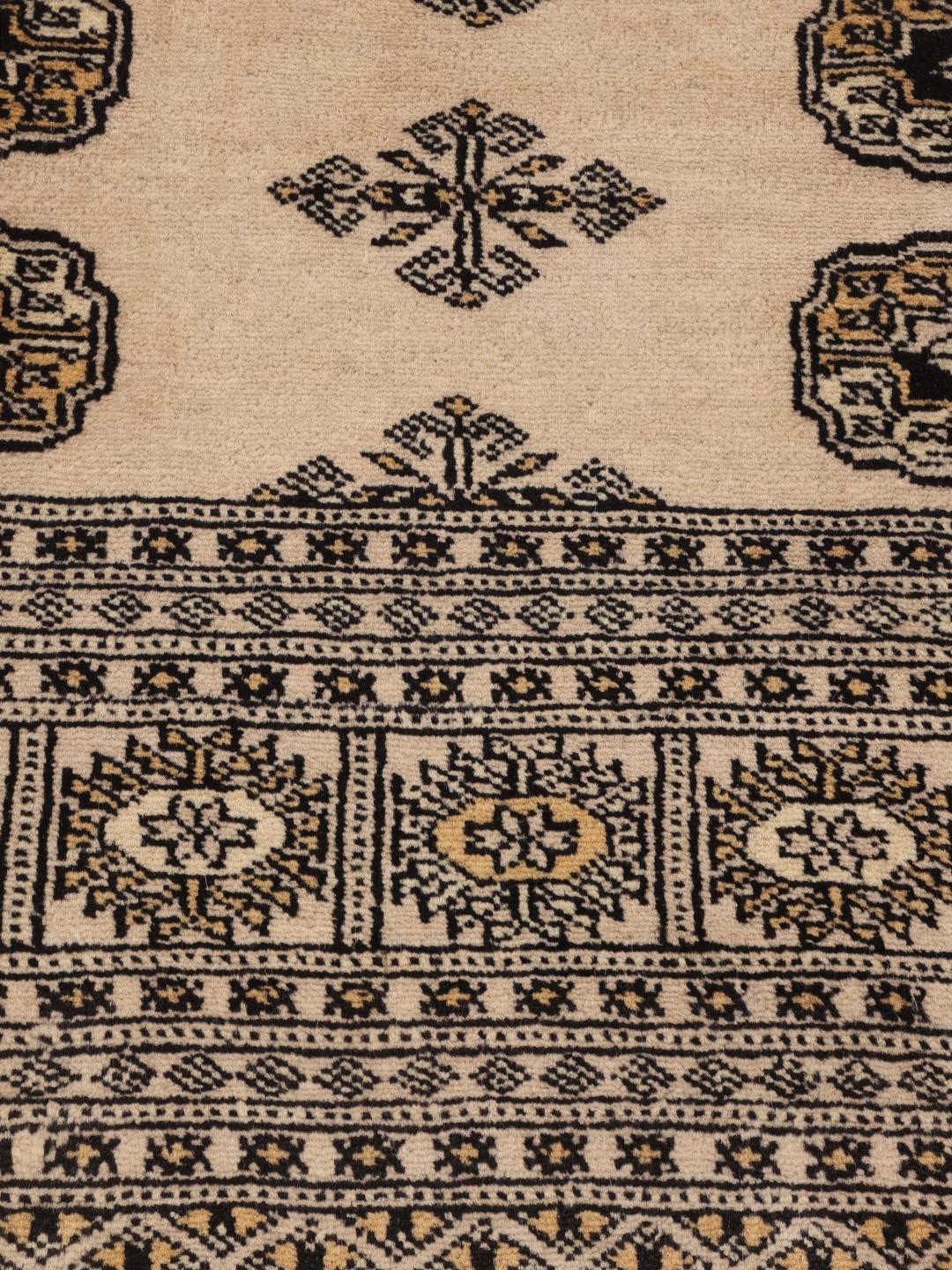
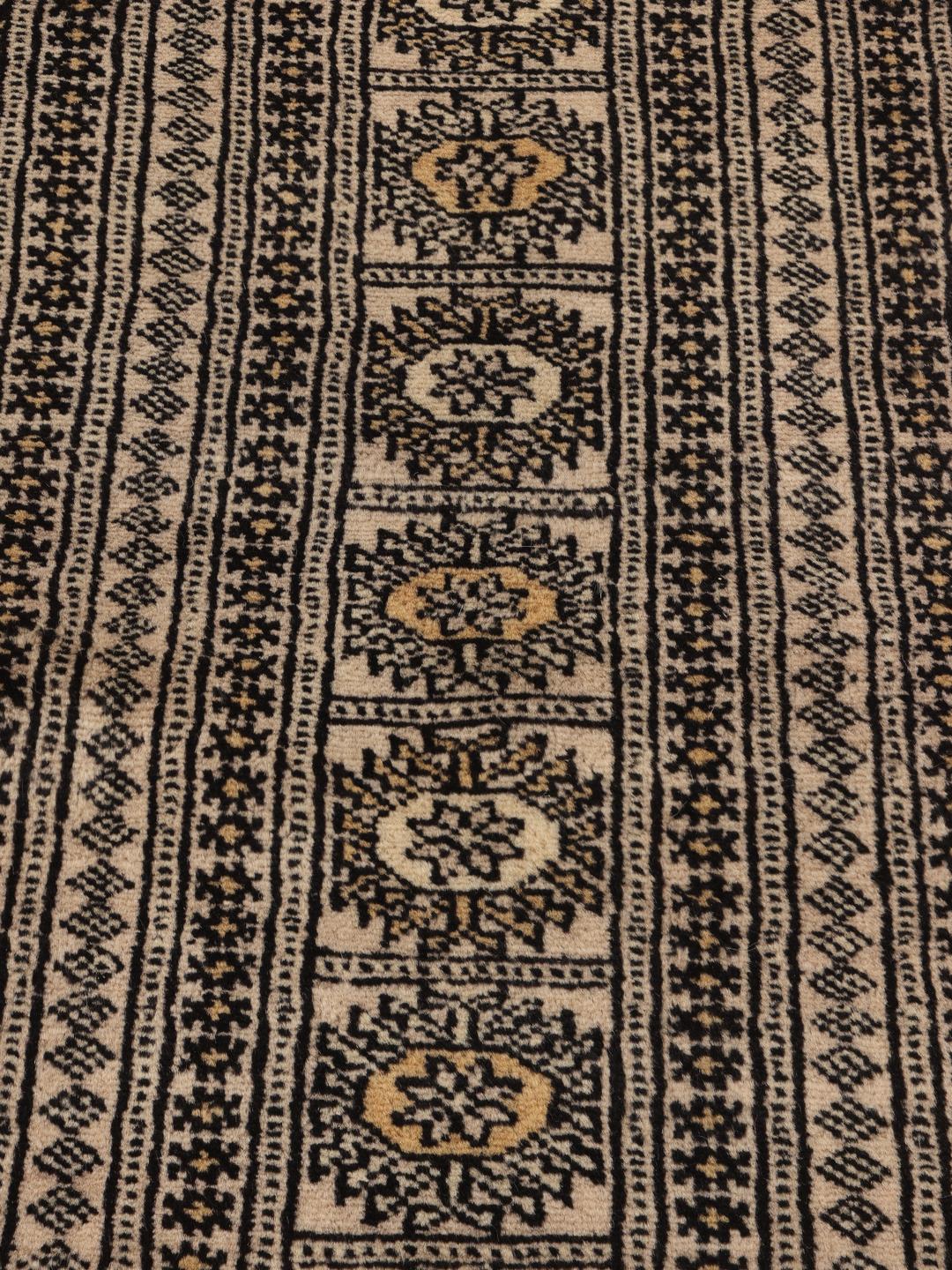
Visually, this rug is defined by the classic gul motif, which appears as repeating octagonal or elephant-foot shaped medallions arranged in precise rows. These medallions are framed by elaborate, geometric borders that provide a formal sense of balance and structure. The choice of a soft, neutral field is a hallmark of the Pakistan weaving school, which often uses these lighter palettes to highlight the clarity of the darker, intricate motifs.
These rugs are highly valued by collectors because they represent a marriage of ancestral skill and enduring design. Owning a hand-knotted piece from this tradition is more than just purchasing a floor covering; it is an act of preserving a craft that has been passed down through generations. The dedication required to create such a detailed, balanced composition ensures that these rugs remain timeless centerpieces in any home.