The Bokhara rug tradition is deeply rooted in the nomadic history of Central Asia, taking its name from the ancient Silk Road city of Bukhara. While these rugs were historically woven by tribal groups, the finest examples today are produced in Pakistan. This migration of the craft has seen the evolution of the Bokhara style into a highly refined art form, known for its consistency, technical mastery, and sophisticated use of repeating motifs.
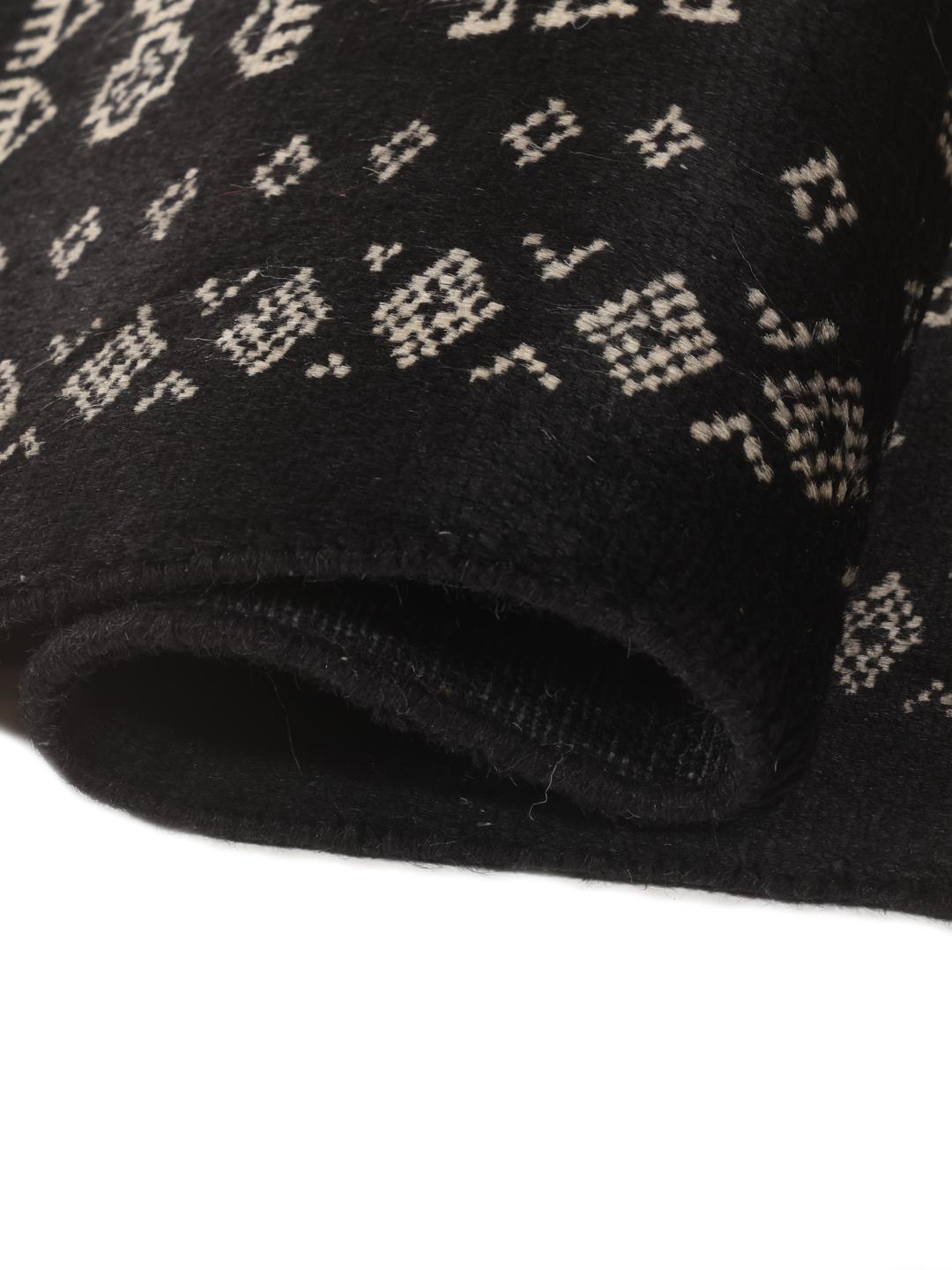
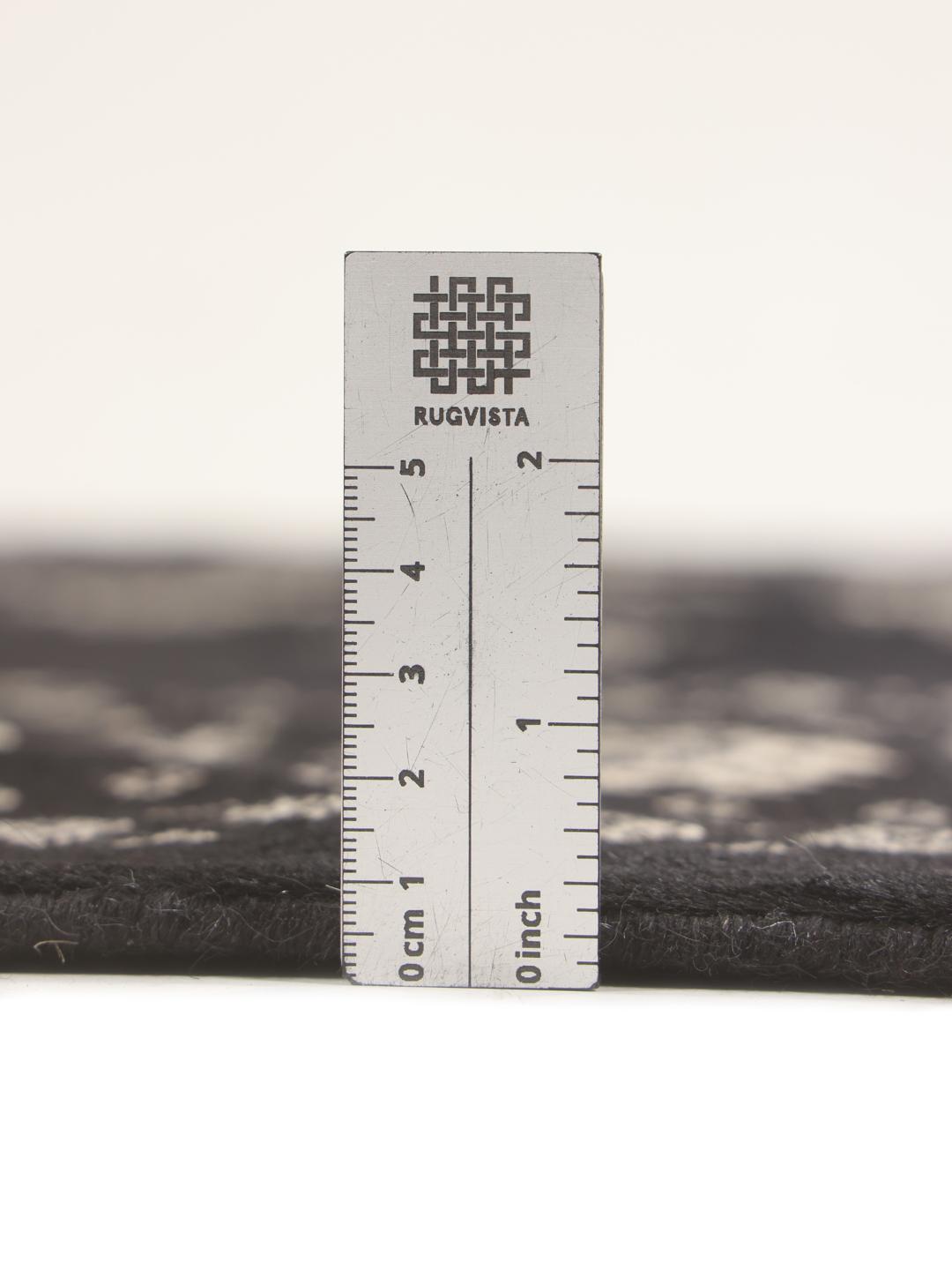
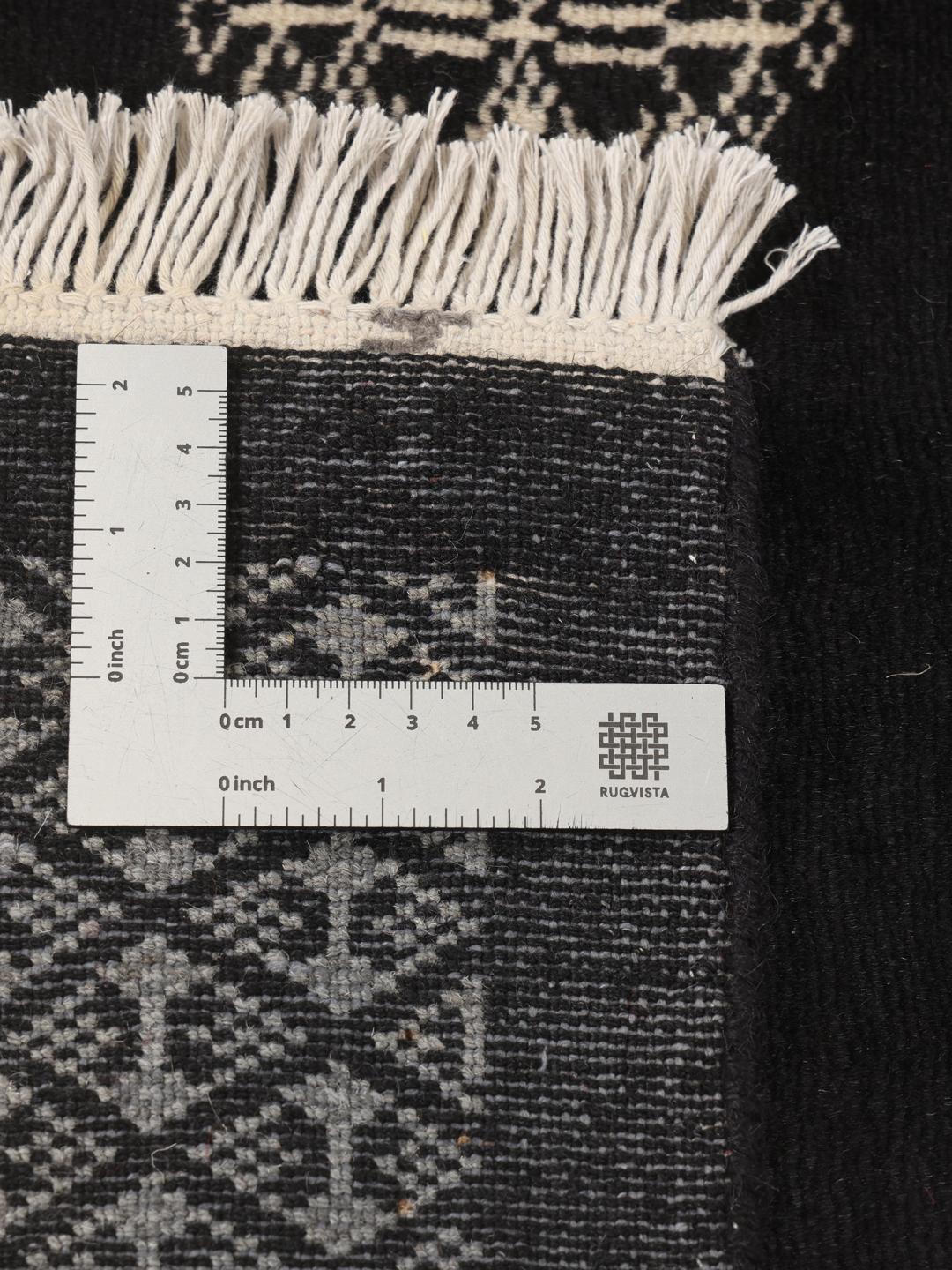
The term 2ply refers to the construction of the pile, where two strands of wool are twisted together before being knotted. This technique is significant because it produces a much denser, more lustrous, and durable pile compared to single-ply alternatives. For the owner, this means a rug that is more resistant to shedding and wear, while offering a softer, more luxurious touch that enhances the overall comfort of the home.
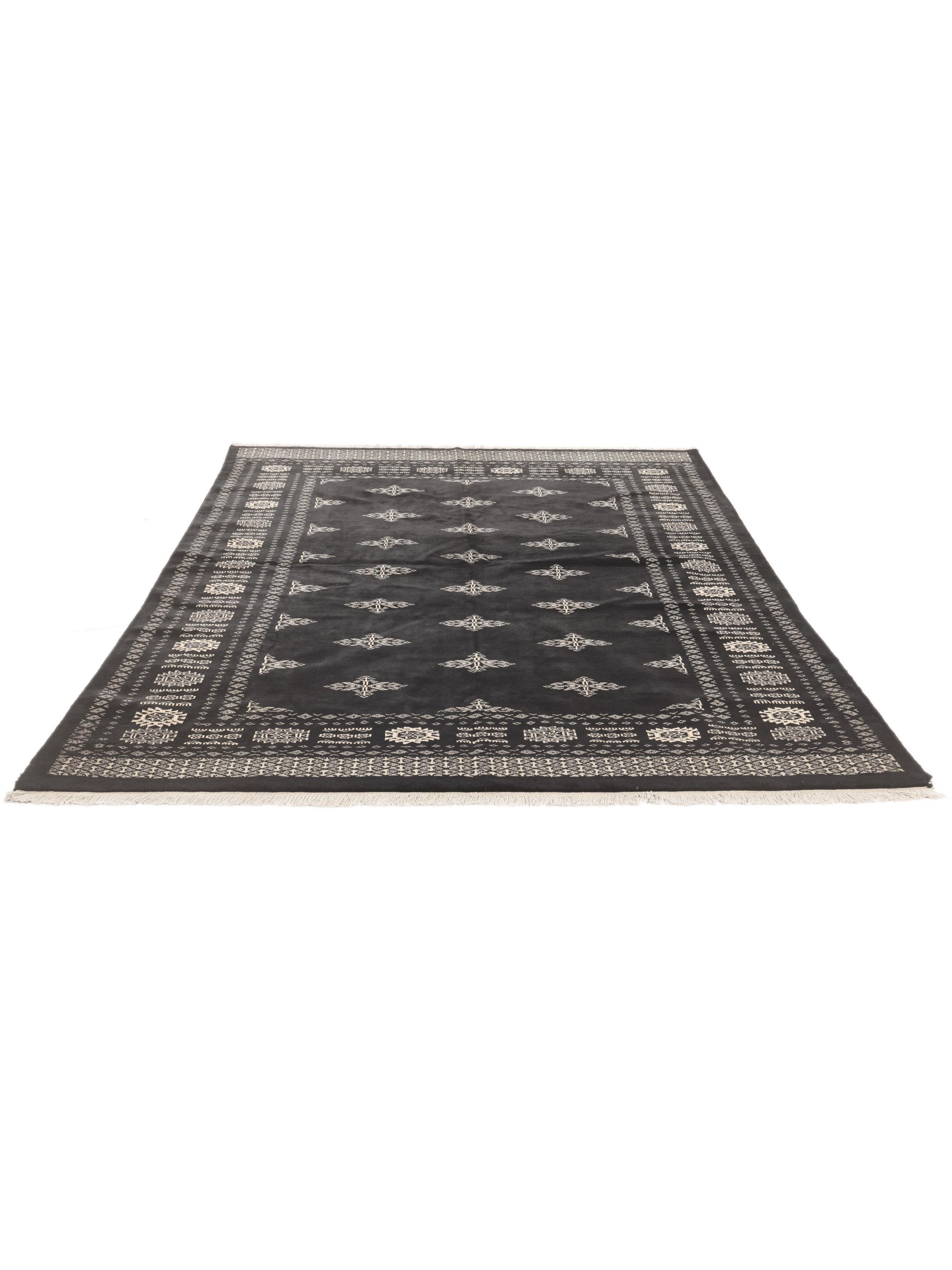
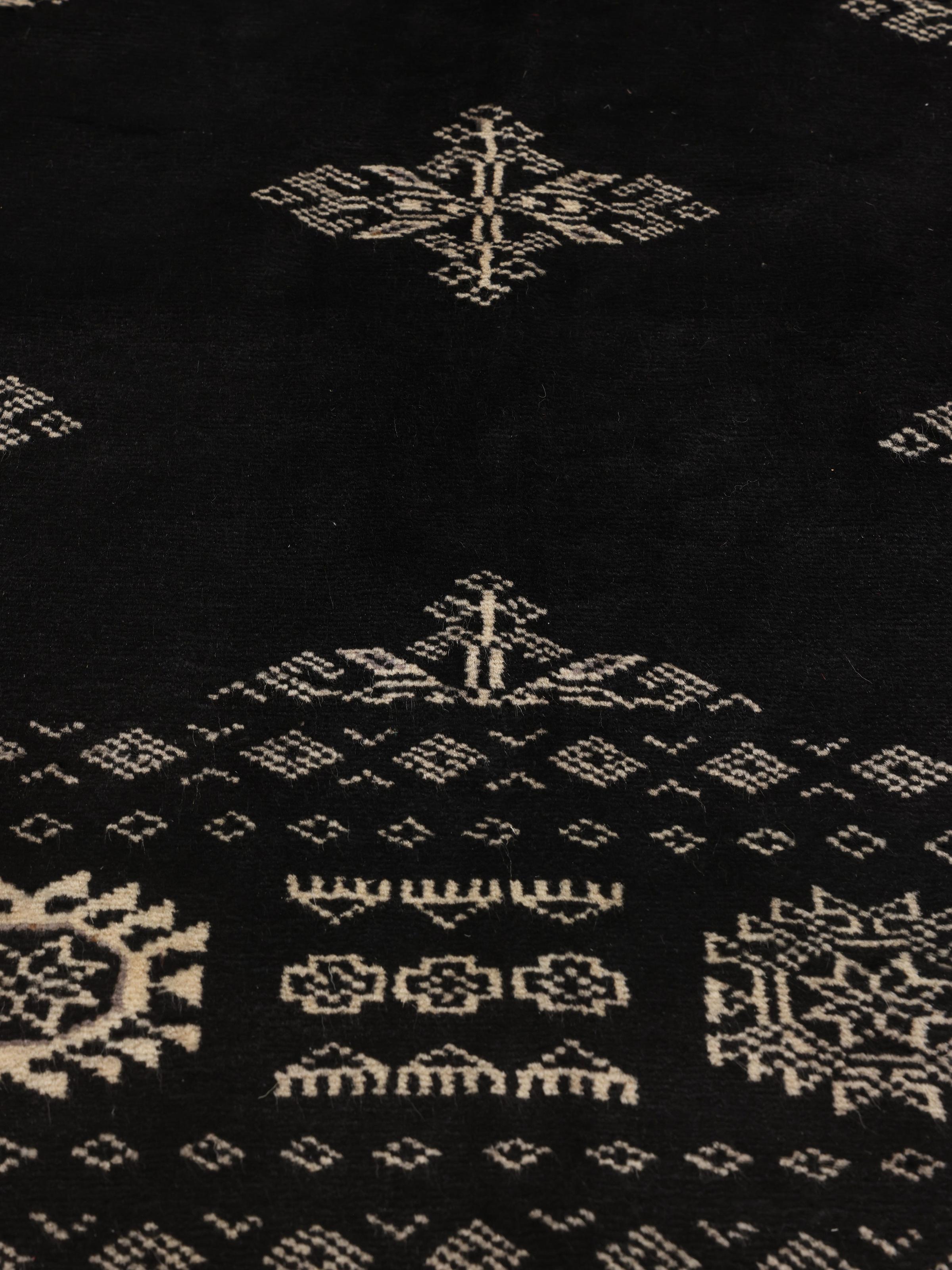
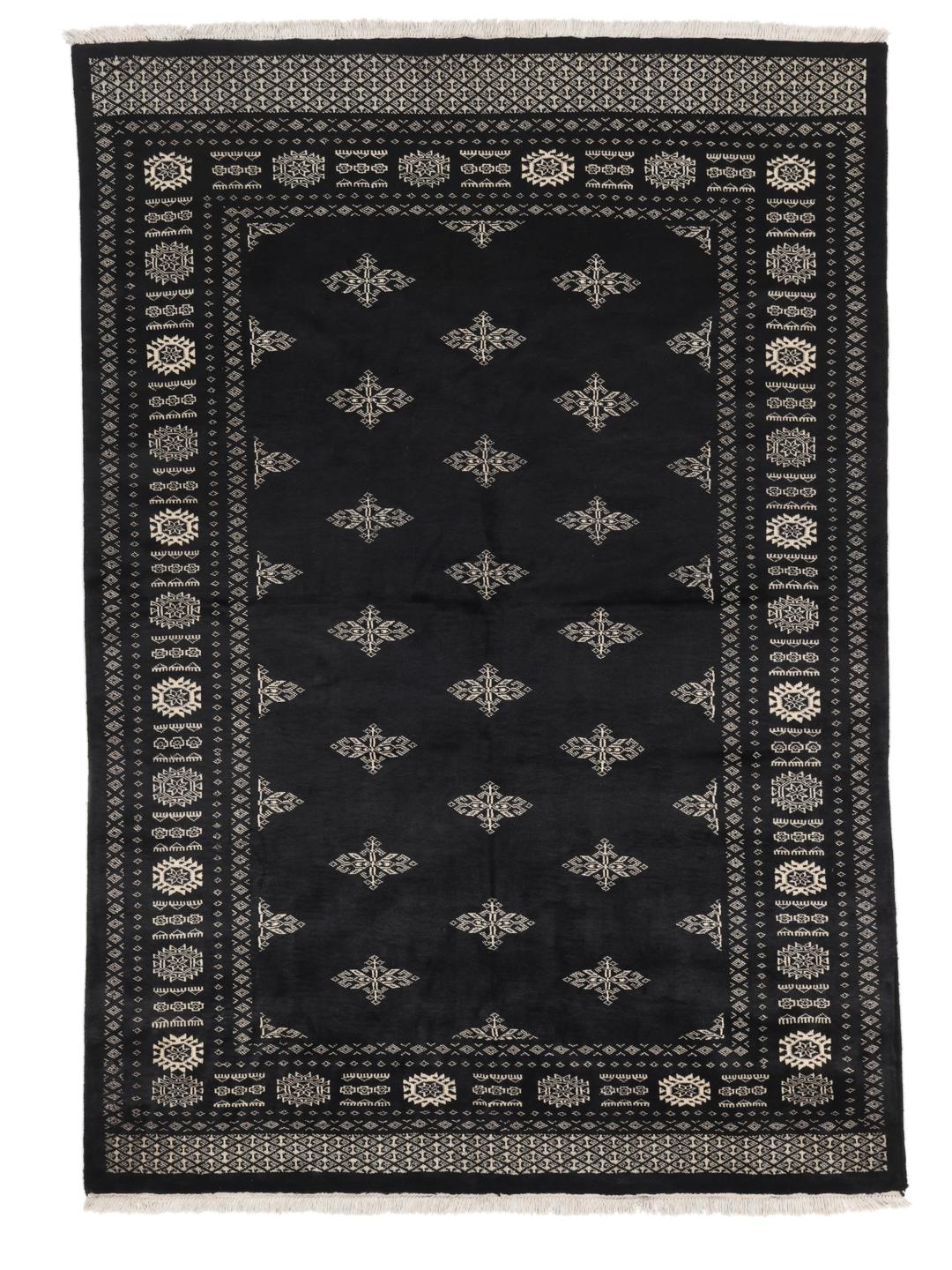
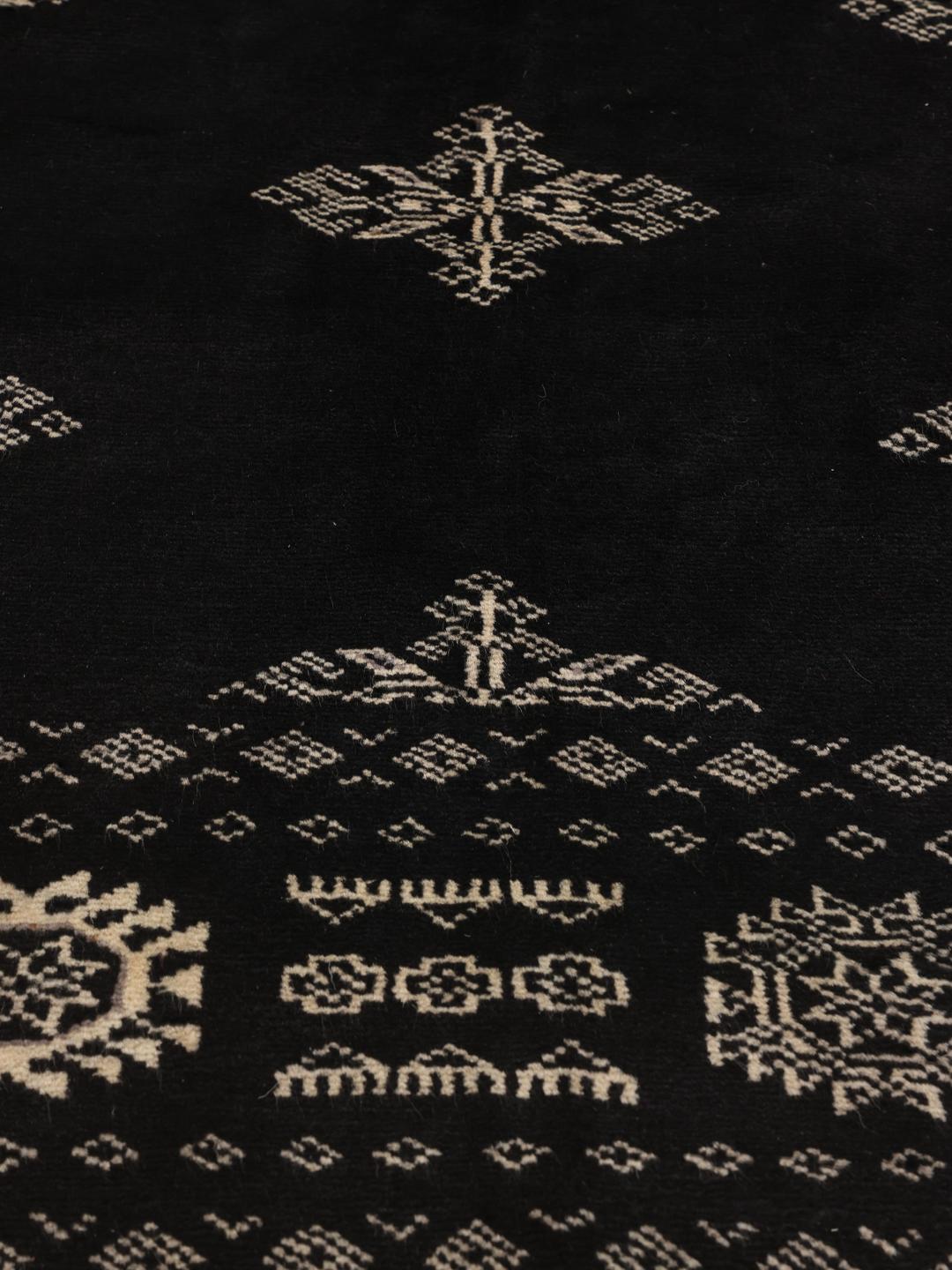
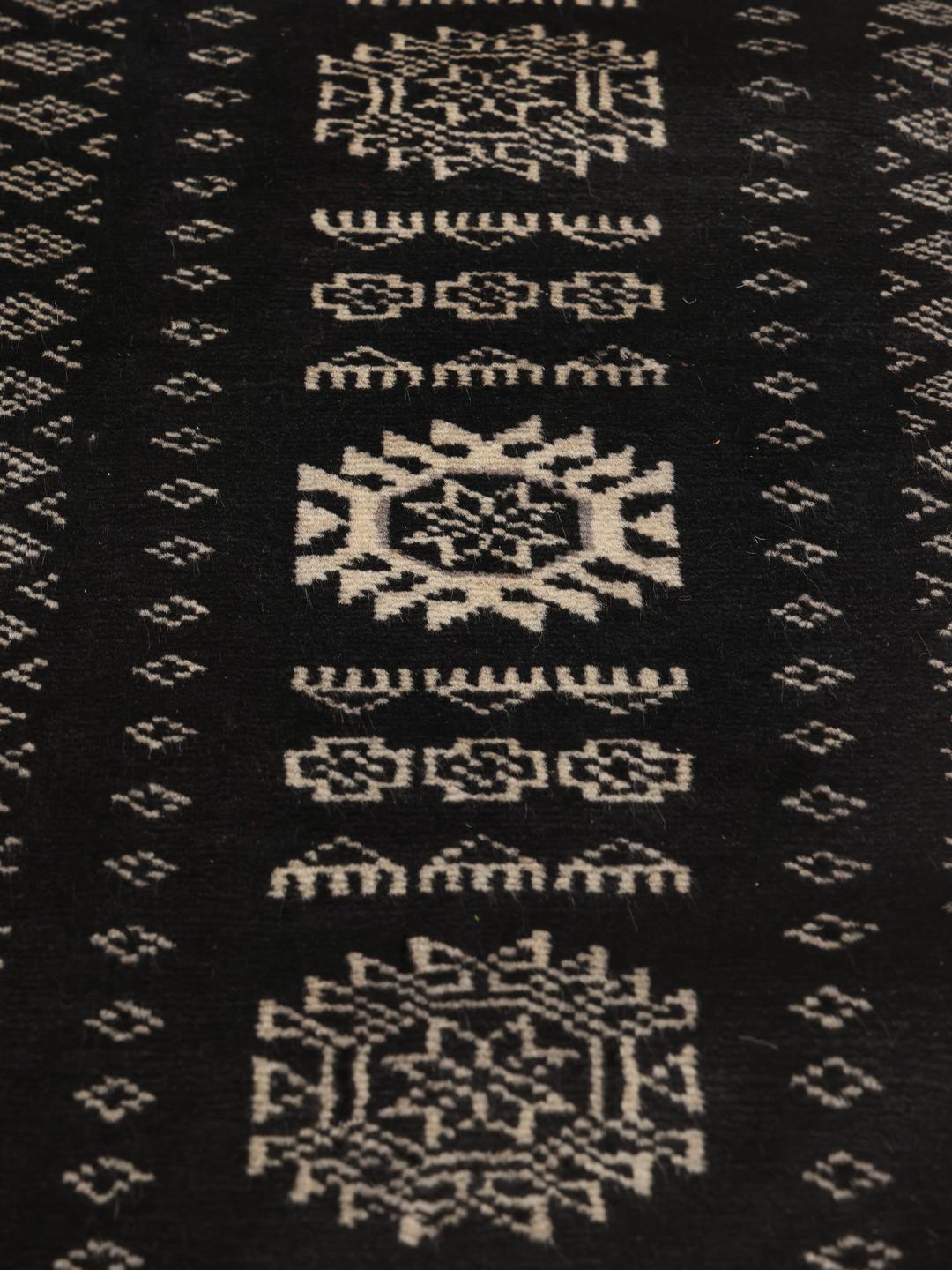
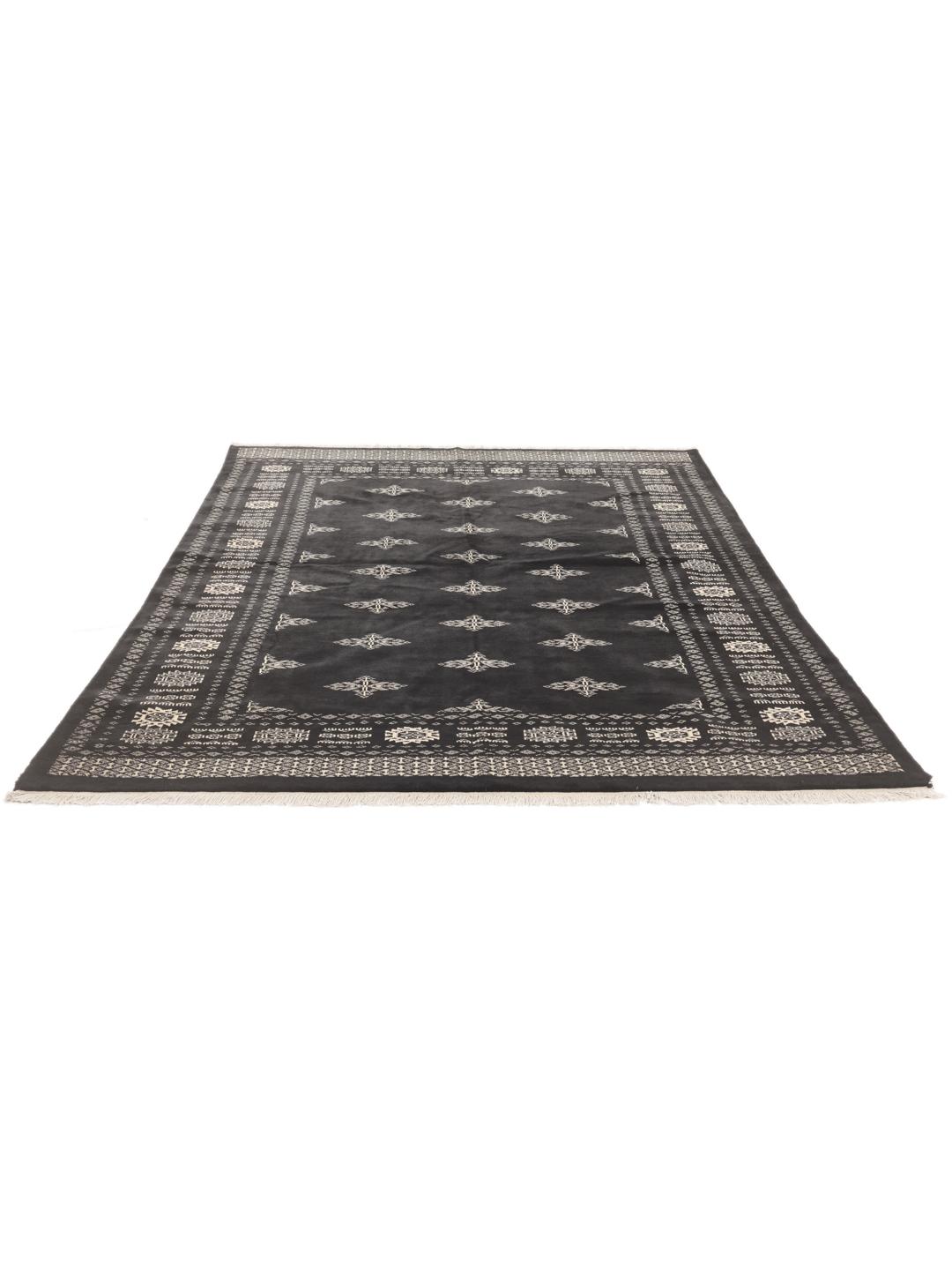
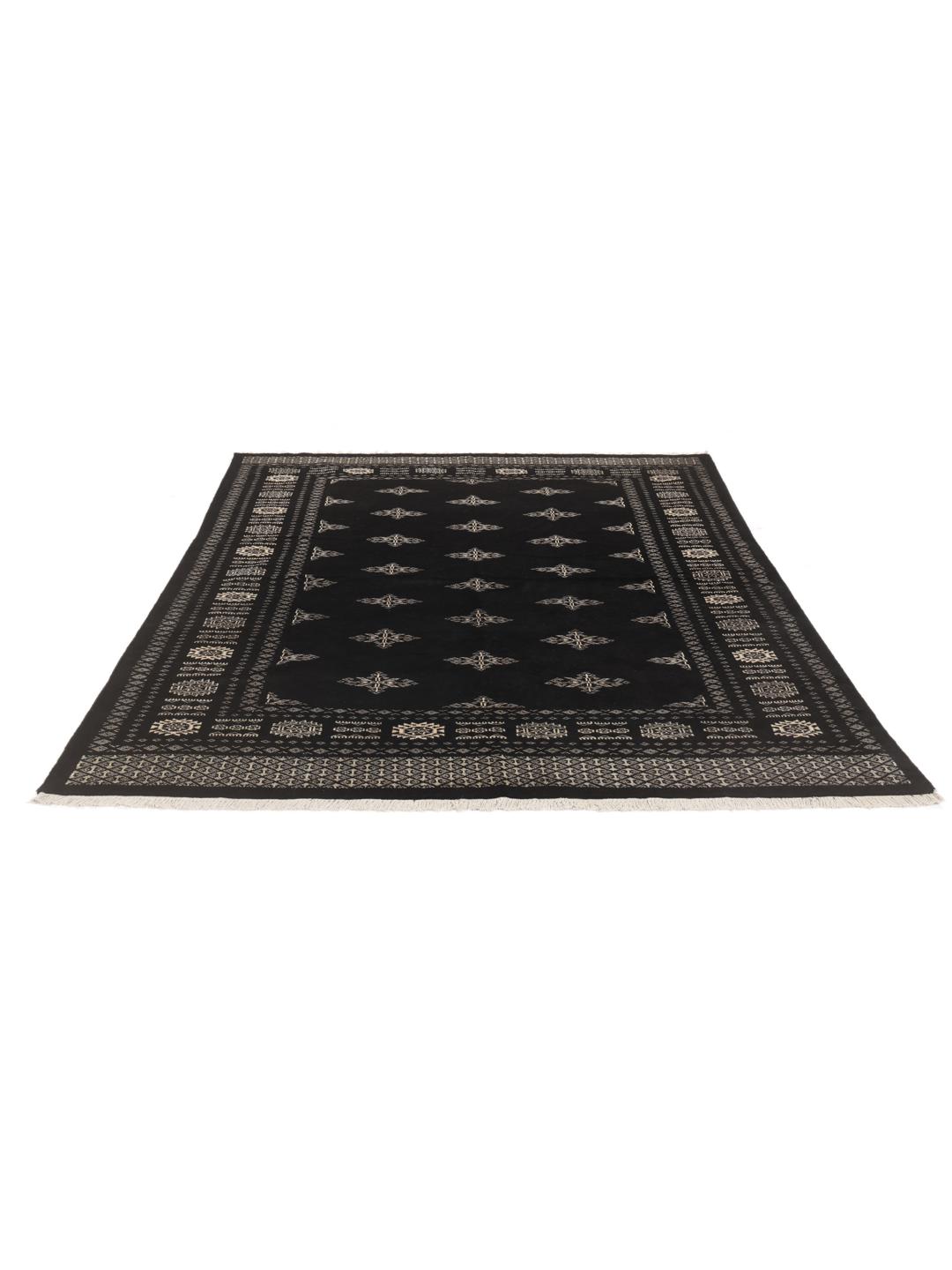
Signature design elements of the Bokhara tradition include the formal, repeating 'gul' motifs, which are often octagonal or diamond-shaped. In this particular piece, the geometric motifs are arranged with precision across the black field, framed by an intricate decorative border. While traditional Bokhara rugs often feature red tones, this black version offers a modern, striking interpretation that makes it highly distinctive within the broader tradition.
Owning a hand-knotted rug from this lineage is an investment in cultural heritage and human skill. These pieces are highly valued by collectors not only for their beauty but for the immense effort and tradition embedded in every knot. To own one is to participate in a centuries-old story of craft, acquiring a piece that carries real cultural weight and serves as a testament to the enduring appeal of traditional, hand-made textiles.