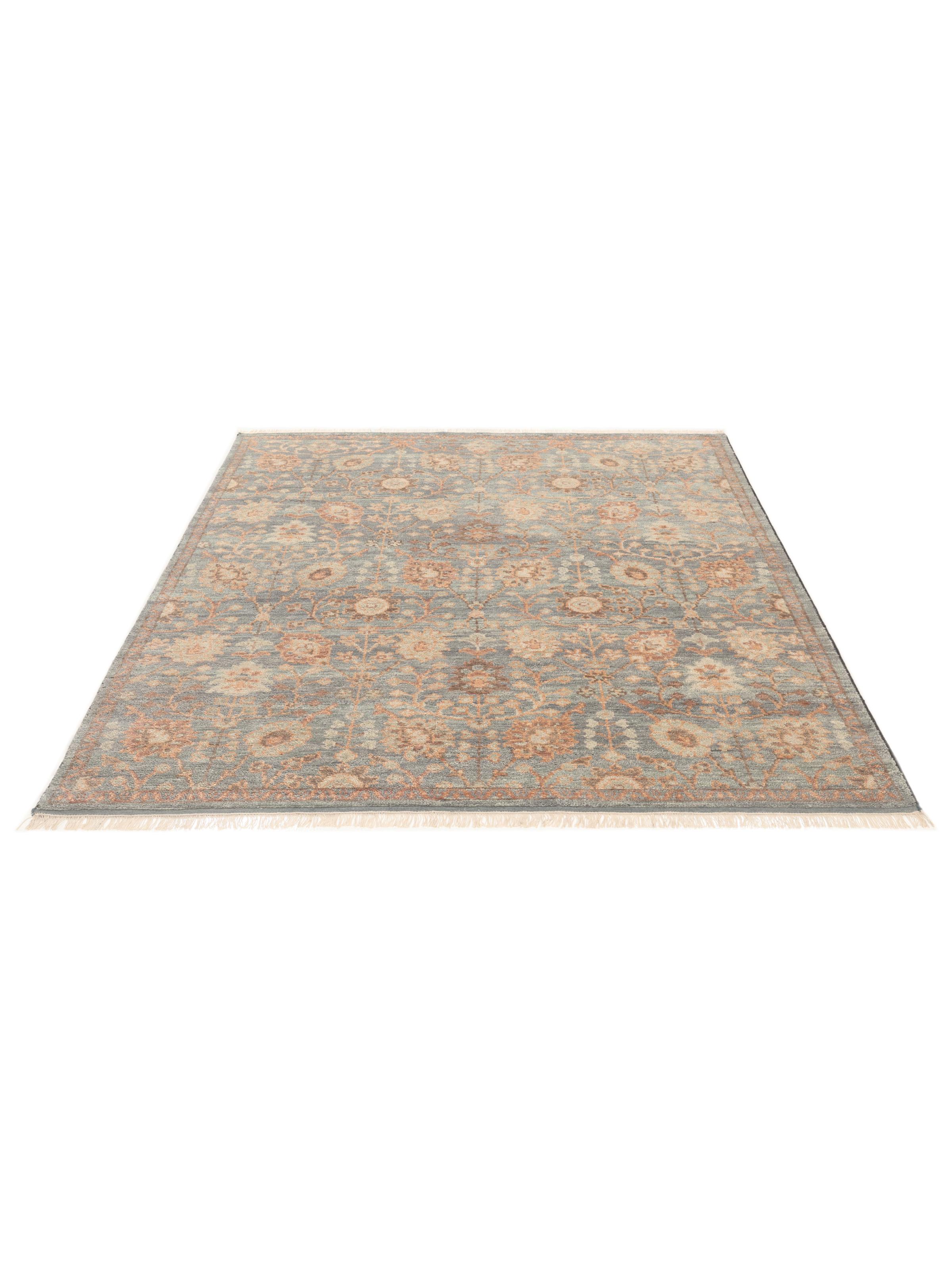
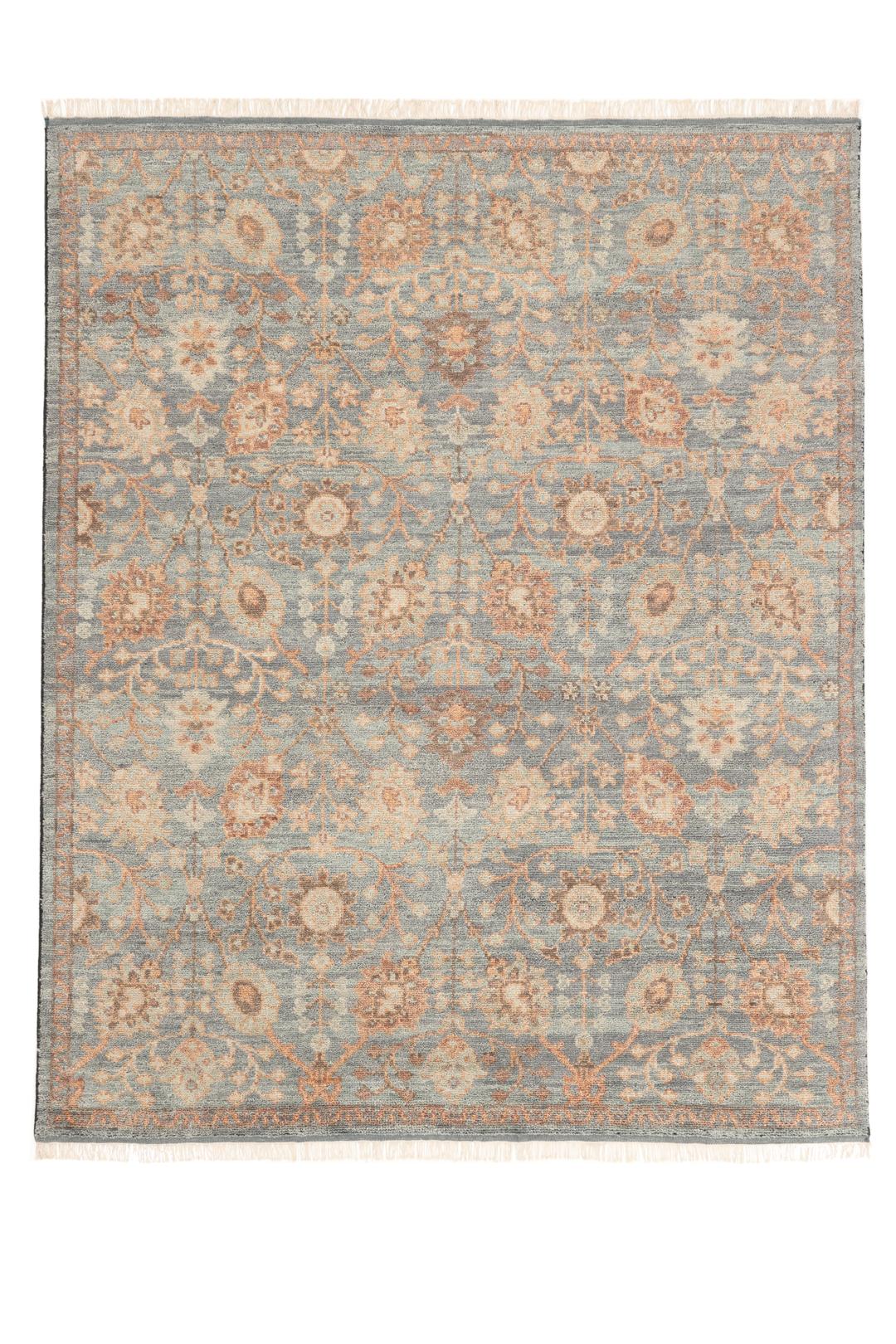
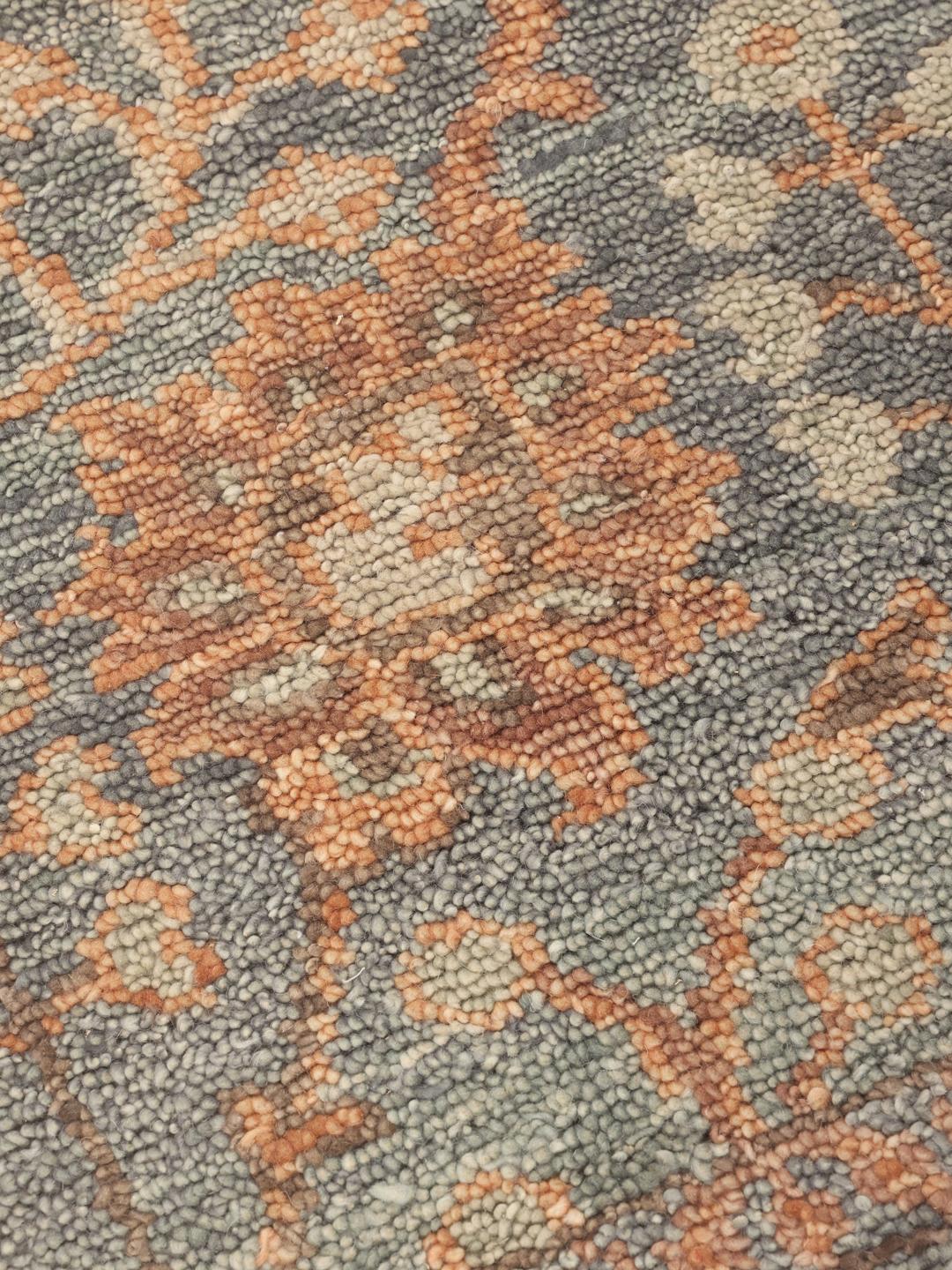
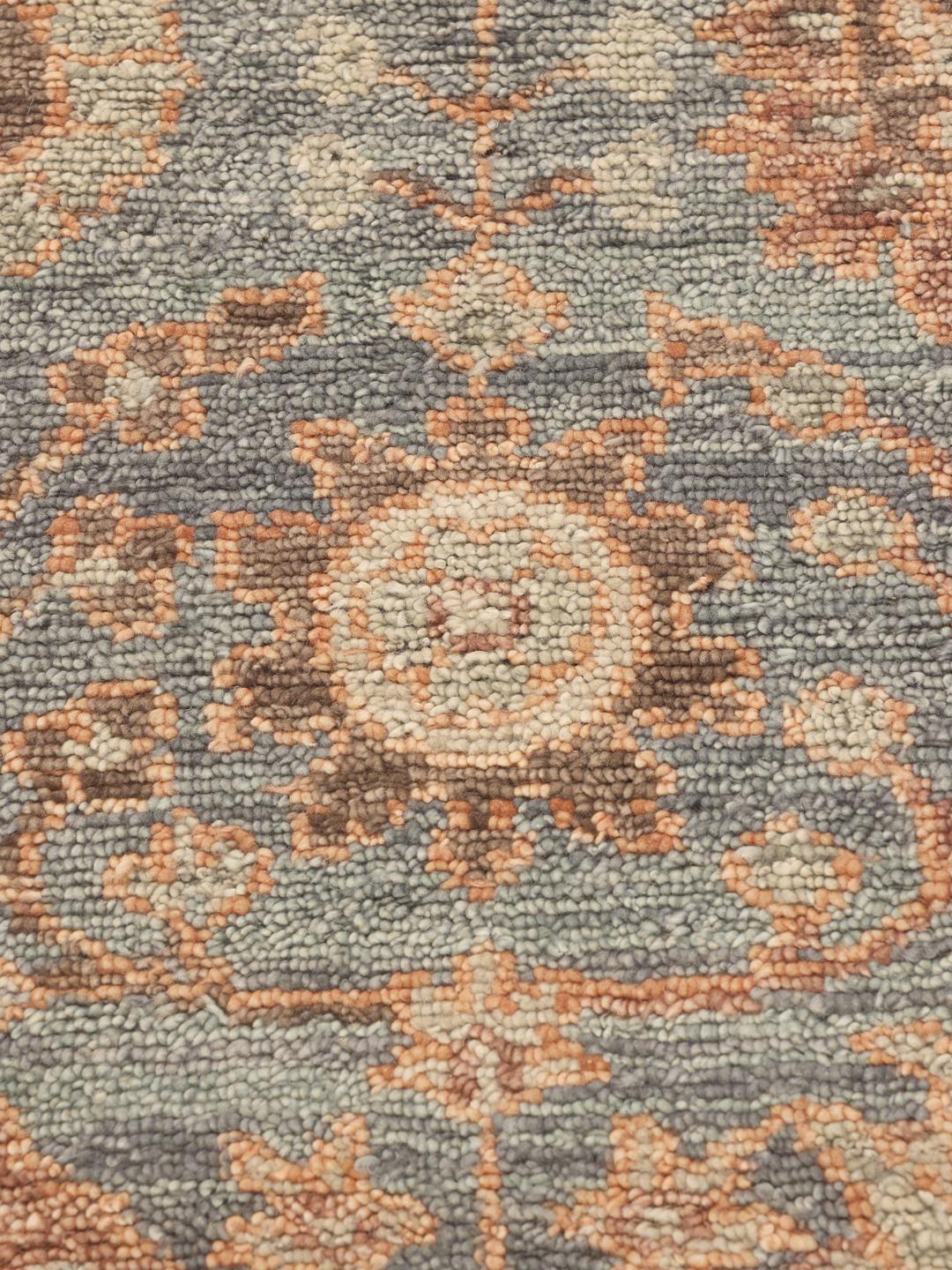
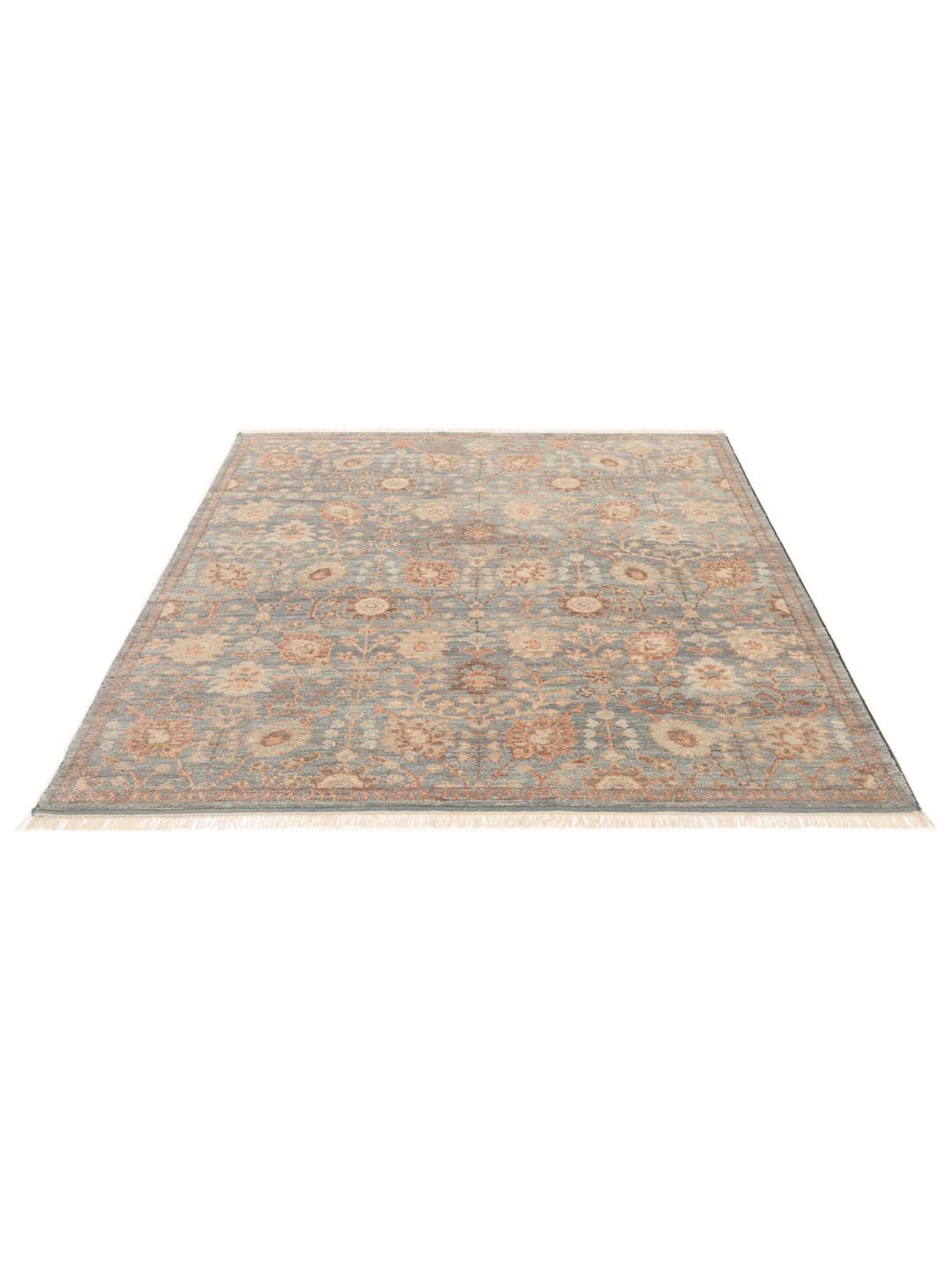
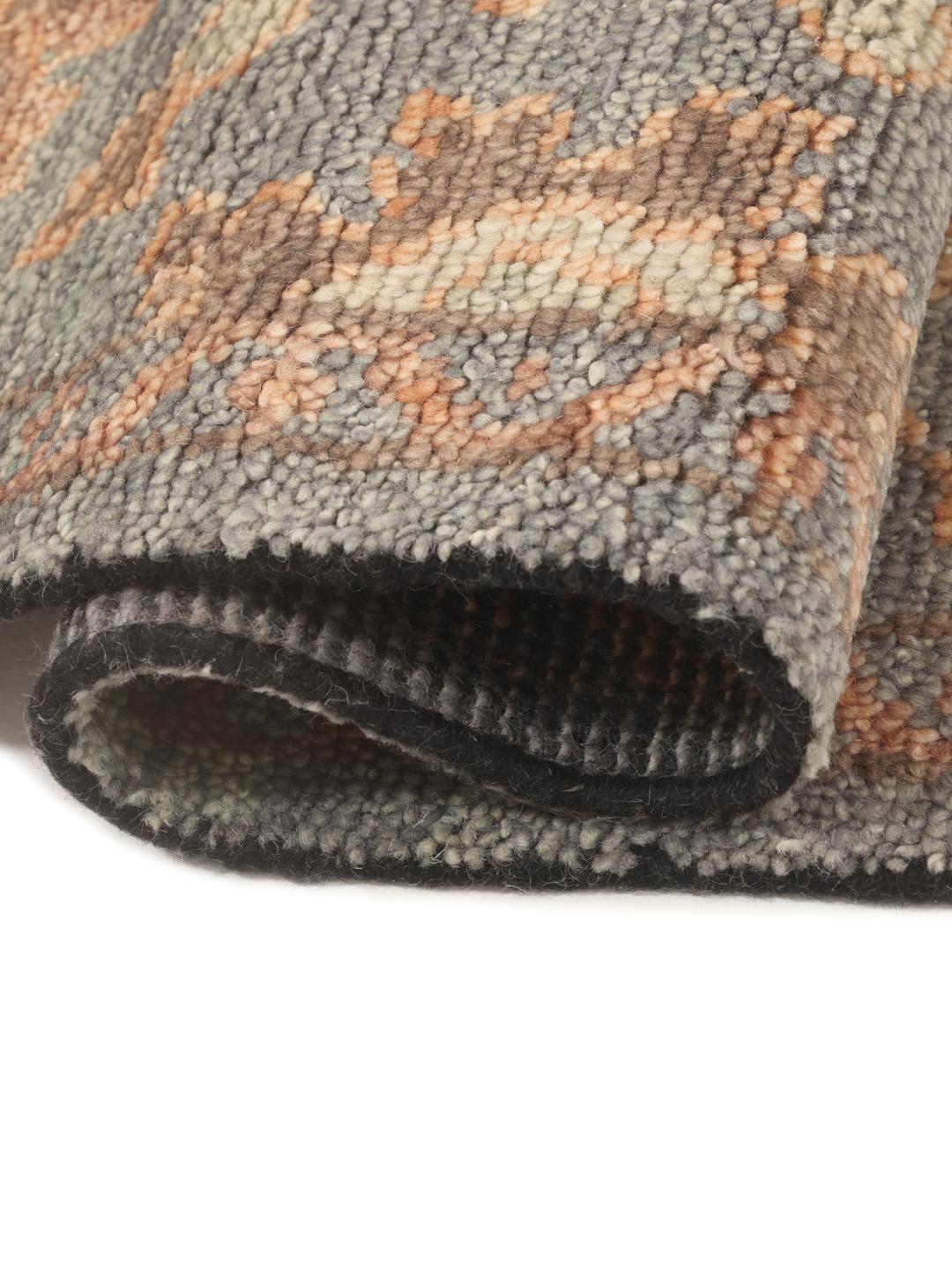
The Usak rug tradition traces its roots back to the historic town of Uşak in western Turkey, which was a major centre for rug production during the Ottoman Empire. These rugs were highly prized for their grand, large-scale floral patterns and were often commissioned for mosques and palaces. Over centuries, the techniques and aesthetic sensibilities of this region travelled, finding a new and vibrant home in the skilled workshops of India.
The term Usak refers to a specific design lineage characterised by its focus on large-scale, curvilinear floral motifs and a balanced, open composition. Unlike more densely packed geometric styles, the Usak aesthetic is defined by its elegance and restraint. This evolution in design has allowed the tradition to remain relevant, as it seamlessly bridges the gap between historical grandeur and modern interior needs.
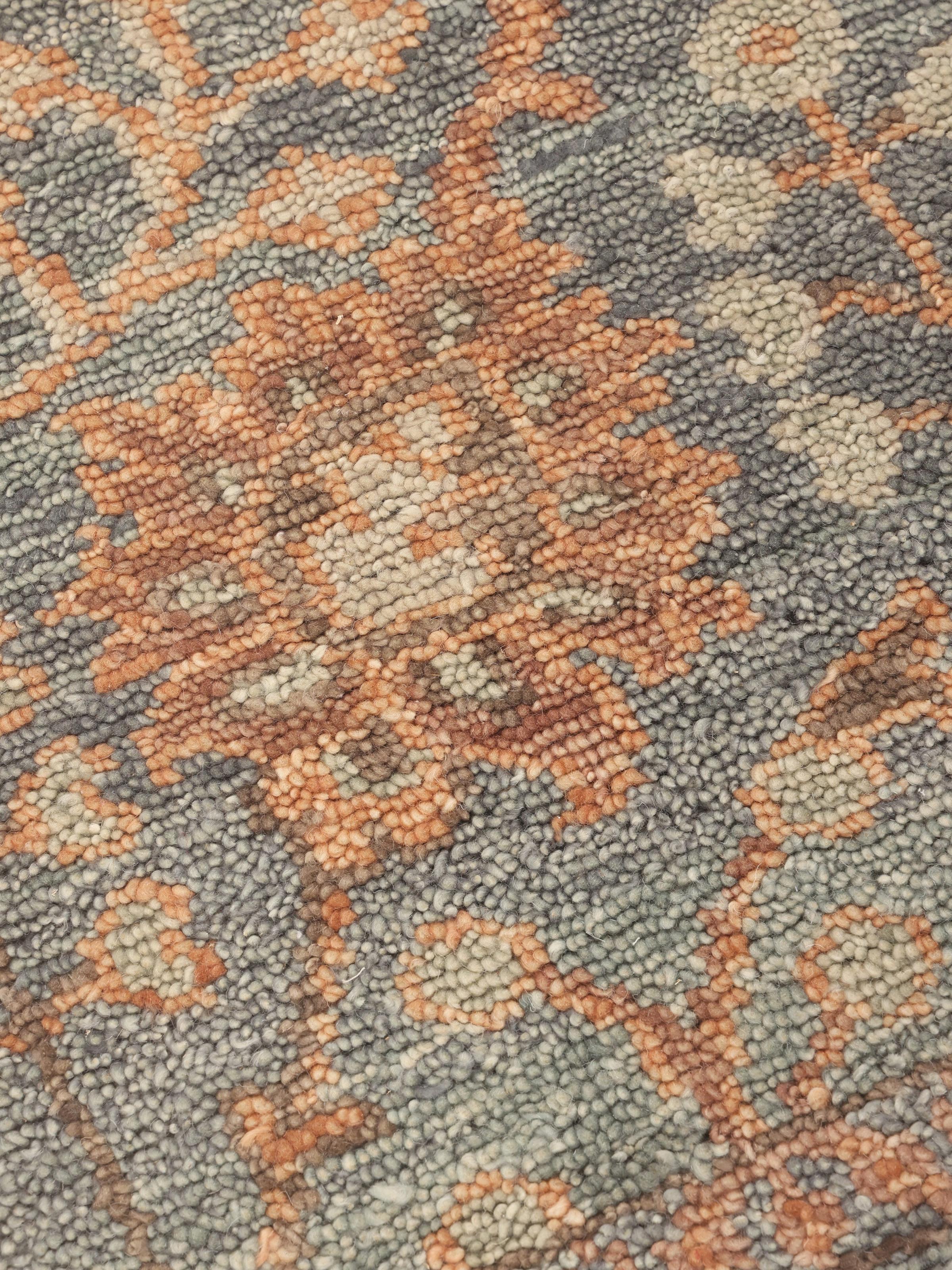
Signature design elements of this tradition include expansive medallions, scrolling vines, and large palmettos, all arranged in a way that creates a sense of harmony. The colour palettes are typically soft and muted, allowing the intricate patterns to emerge gently rather than overwhelming the eye. This specific rug carries forward these traditional design principles, adapted into a form that feels both authentic and accessible.
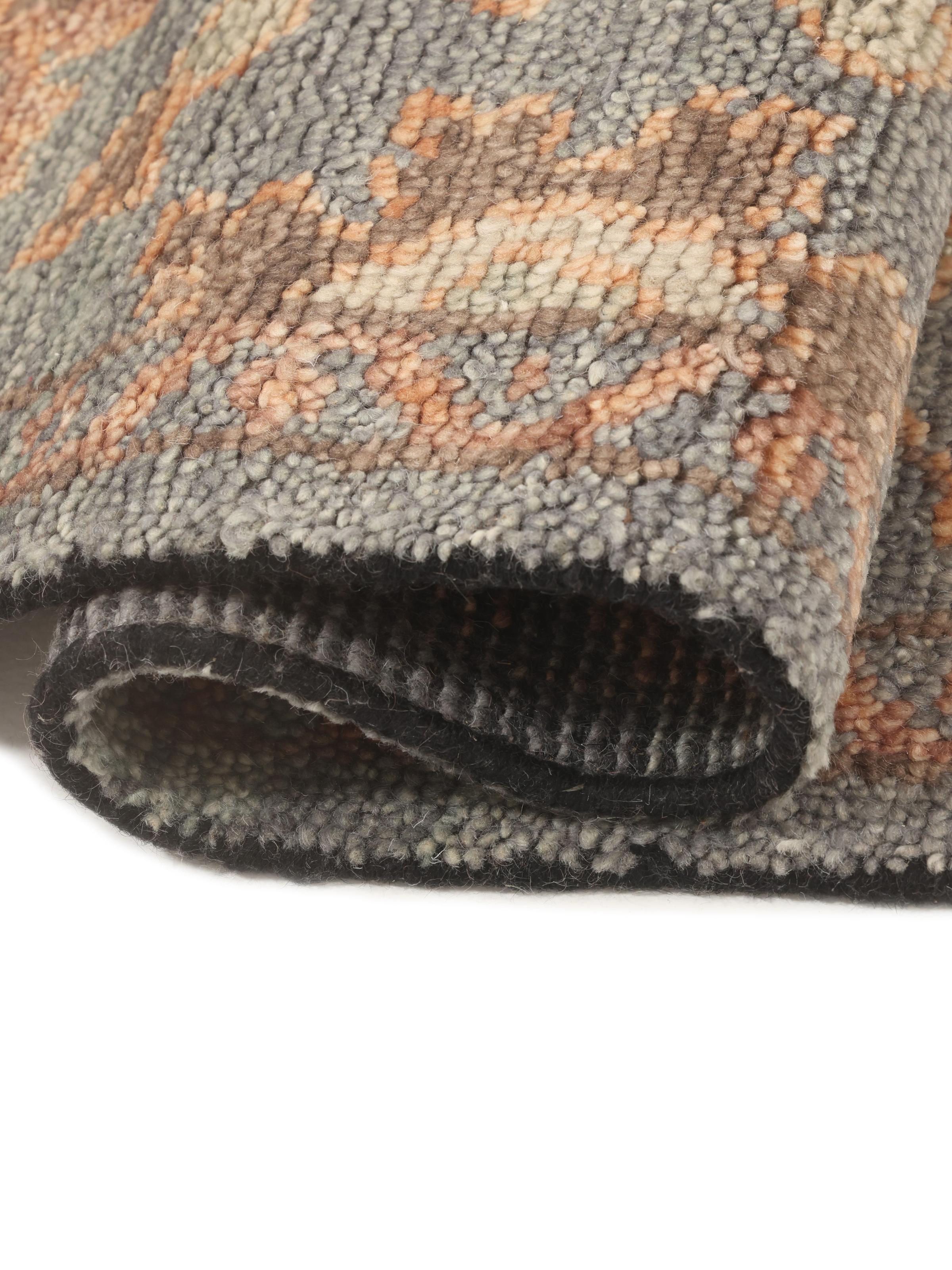
Collectors and design enthusiasts value Usak-style rugs for their artistic heritage and the immense skill required to weave such flowing, organic shapes by hand. Owning a piece from this tradition is about more than just floor covering; it is about keeping a lineage of craftsmanship alive. It represents a connection to the artistic history of the Middle East, translated through the talented hands of modern-day weavers.