The rugs originating from China in the early 20th century, particularly those associated with the Nichols brand, represent a fascinating bridge between traditional Eastern weaving techniques and the emerging Art Deco movement of the West. During this era, Chinese workshops began to adapt their centuries-old craft to cater to international tastes, blending classical Chinese symbolism with the bold, clean lines popular in global design.
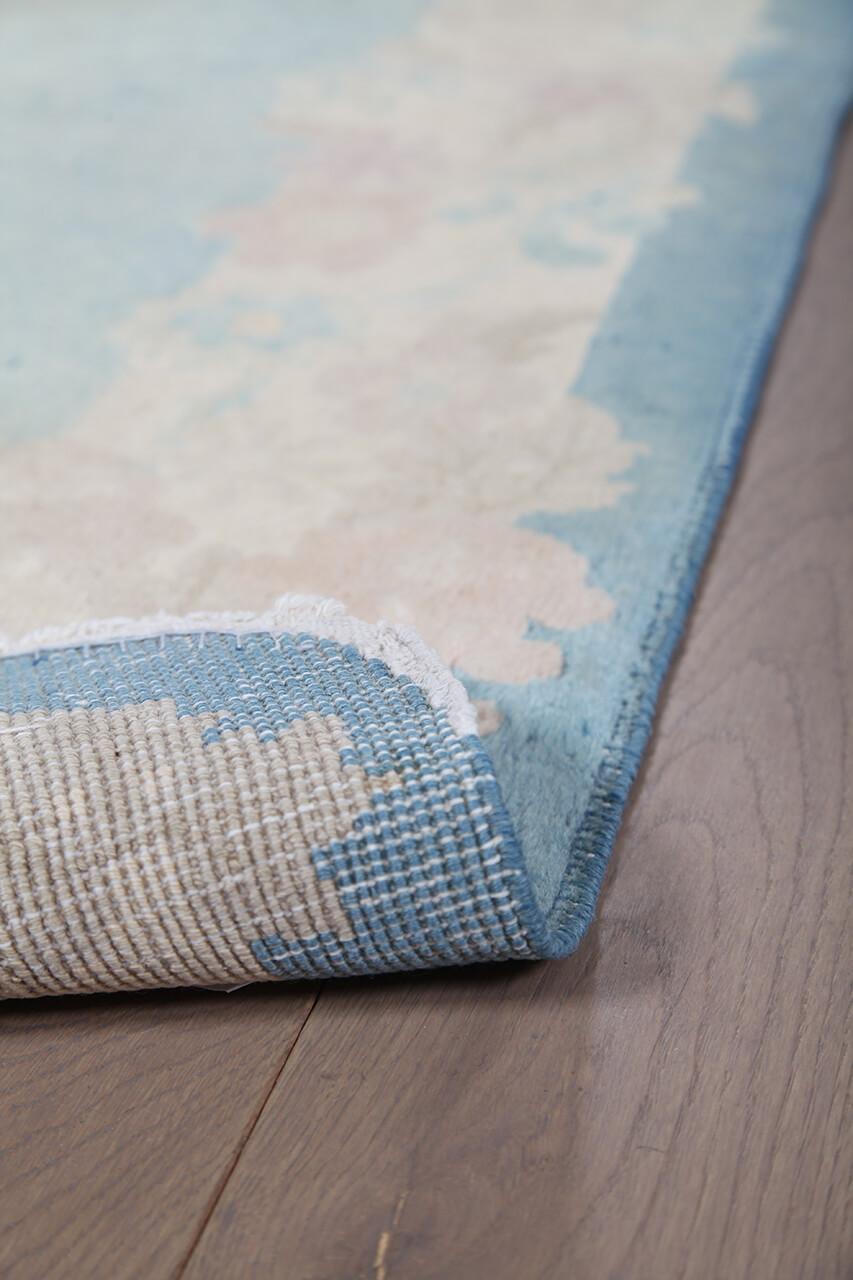
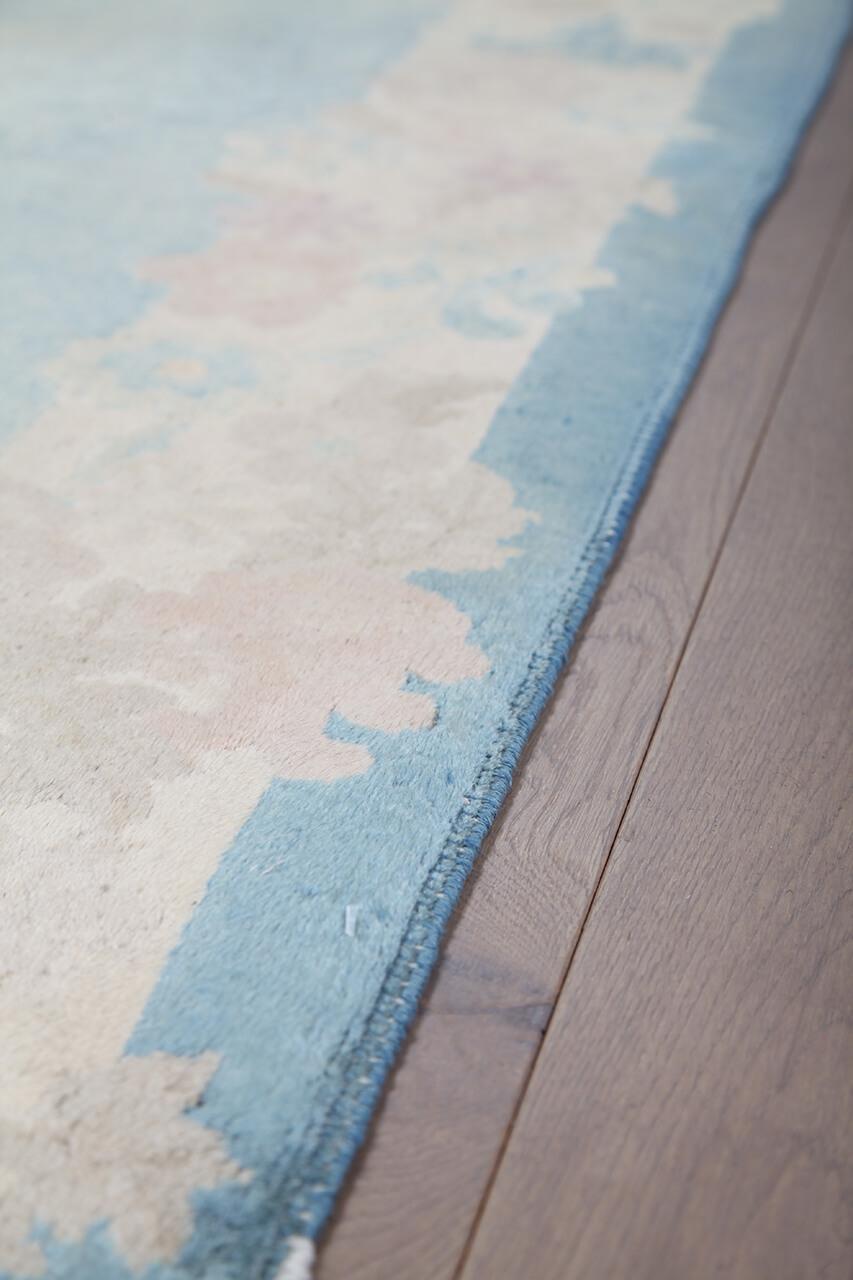
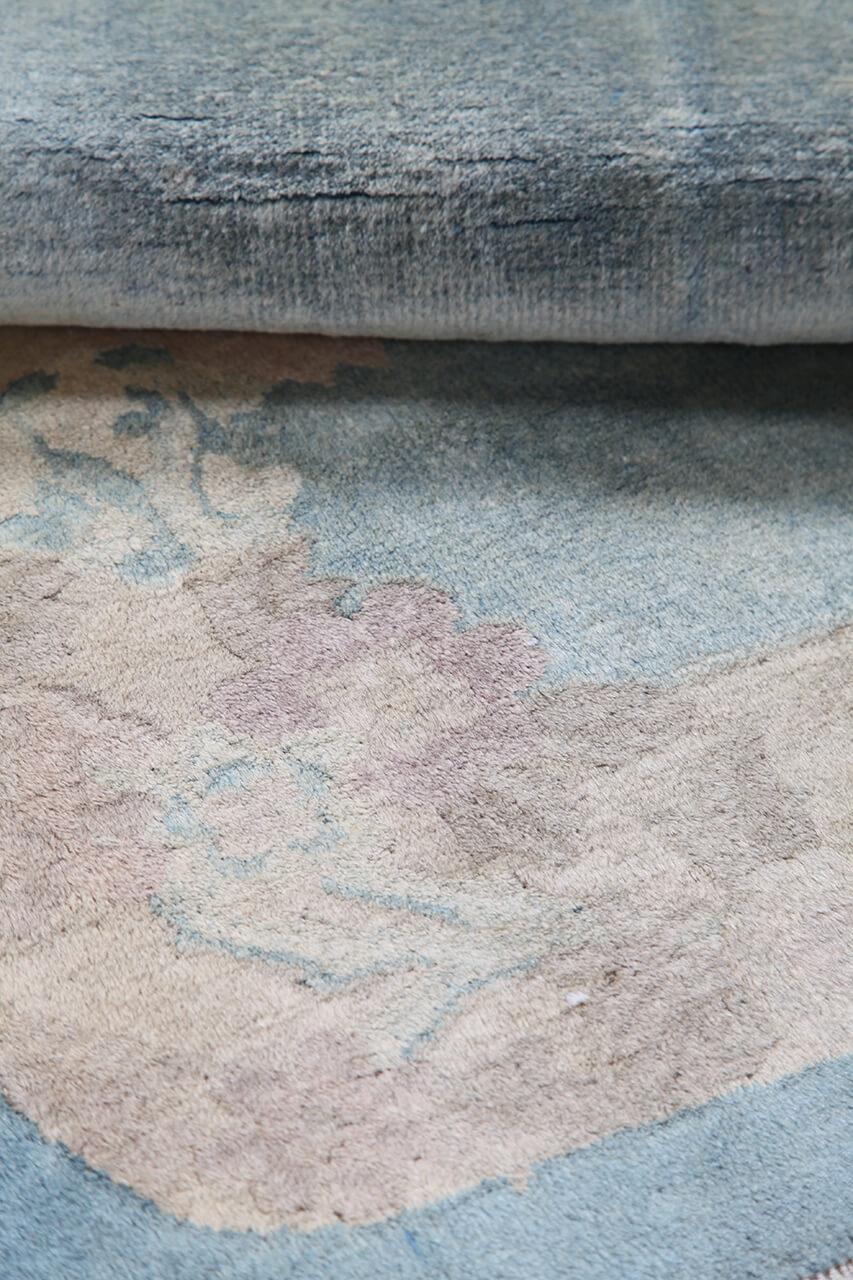
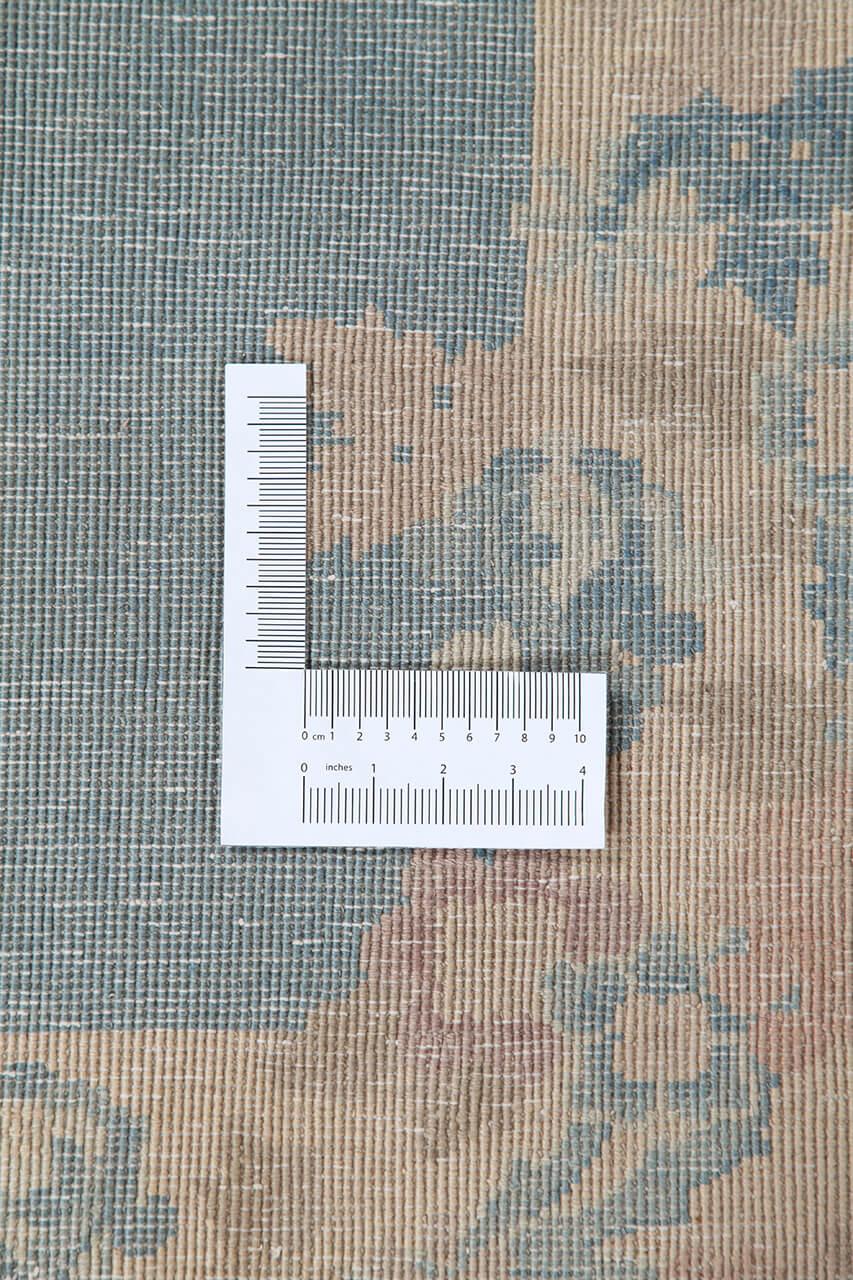
Technical mastery is at the heart of these pieces, characterised by a specific approach to pile shearing and colour saturation. The Wool used is often processed to achieve a particular lustre and softness, which, when combined with the specific knotting tension of the region, creates a rug that is both supple and remarkably sturdy. This balance of softness and strength is why these rugs have remained sought after by collectors for generations.
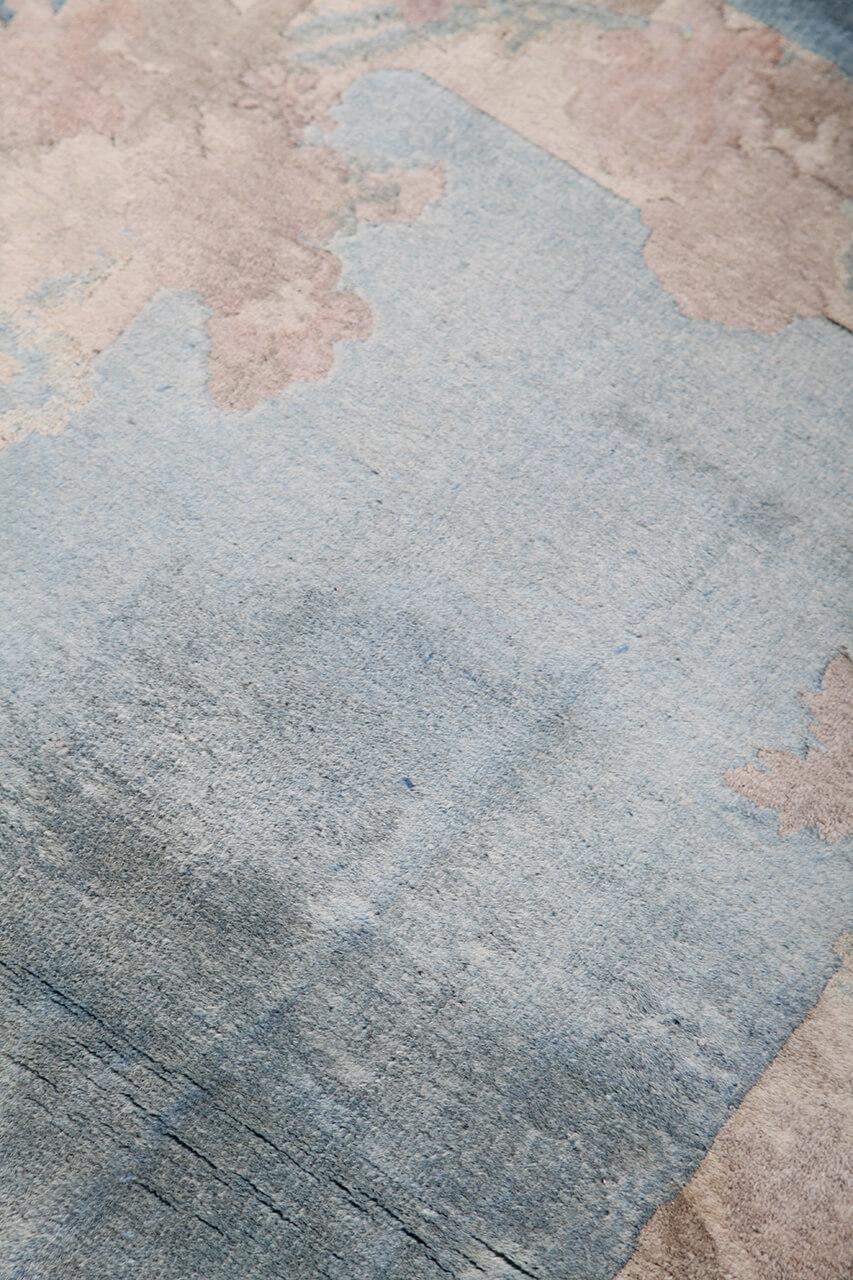
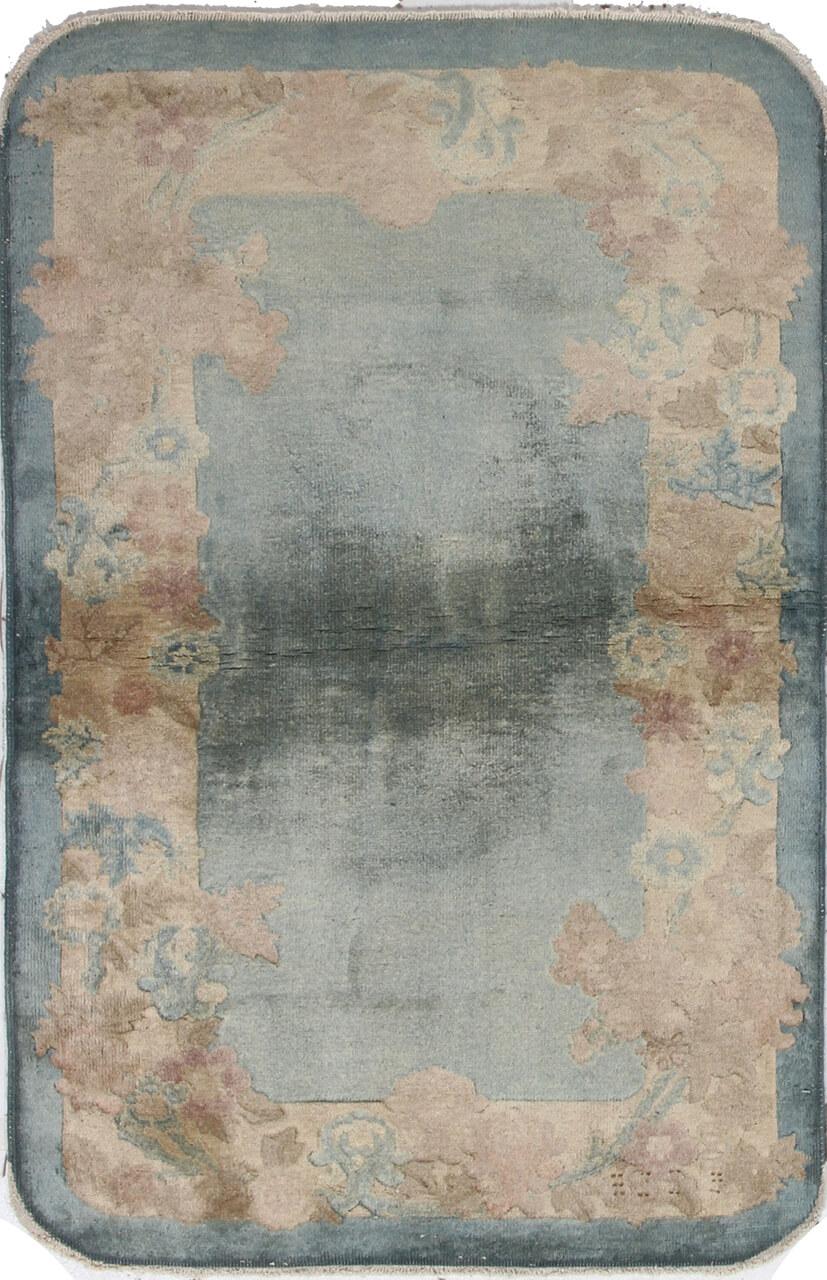
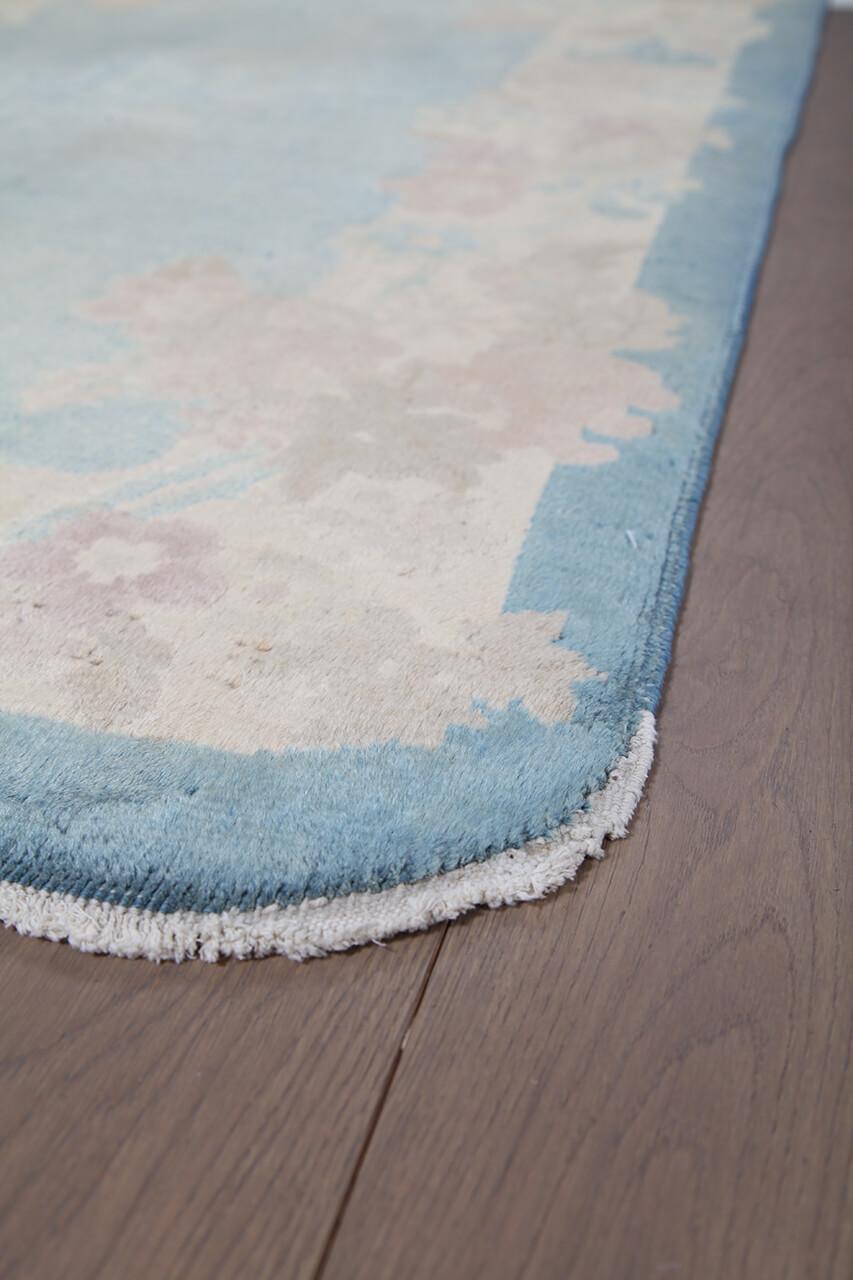
Visually, these rugs are defined by their open fields and carefully placed floral or pictorial motifs, often framed by decorative borders. Unlike the busy, all-over patterns seen in many other traditions, the Chinese Art Deco style favours a more spacious and elegant aesthetic. The use of blue, as seen here, was a signature choice, often paired with subtle neutrals to create a sense of calm and sophistication.
Owning an antique rug of this pedigree is an investment in cultural heritage. These pieces are not merely floor coverings but are artefacts of a time when global design was in a state of beautiful transition. They are valued for their rarity and the high level of skill required to produce them, offering a sense of history and permanence that modern, mass-produced items simply cannot replicate.