Nain rugs originate from the town of Nain in the Isfahan province of the Middle East. While historically known for producing high-quality woollen cloaks, the town transitioned to rug weaving in the early 20th century as the demand for traditional garments declined. Weavers adapted their exceptional skills to create some of the finest rugs in the region, quickly establishing a global reputation for elegance.
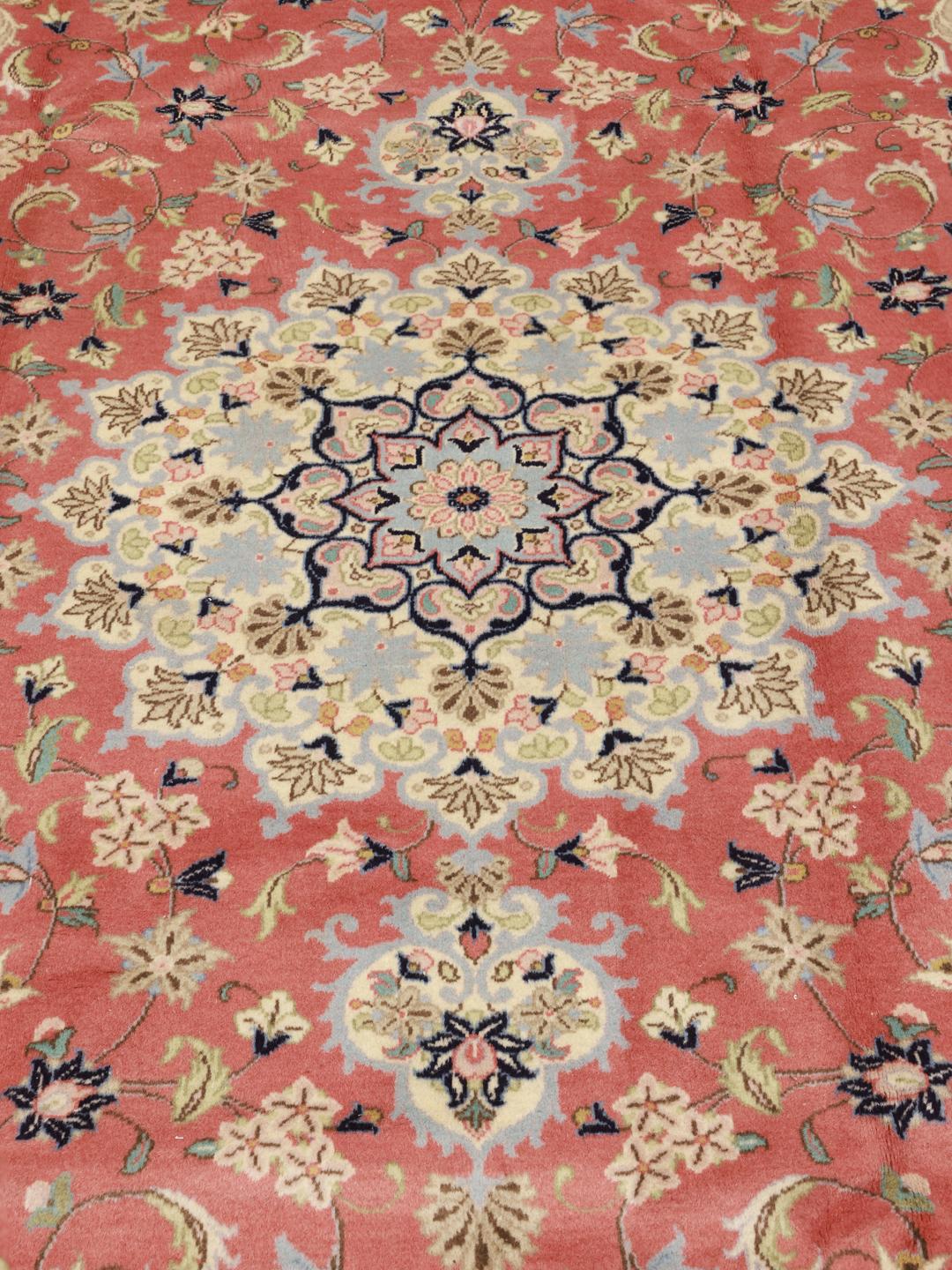
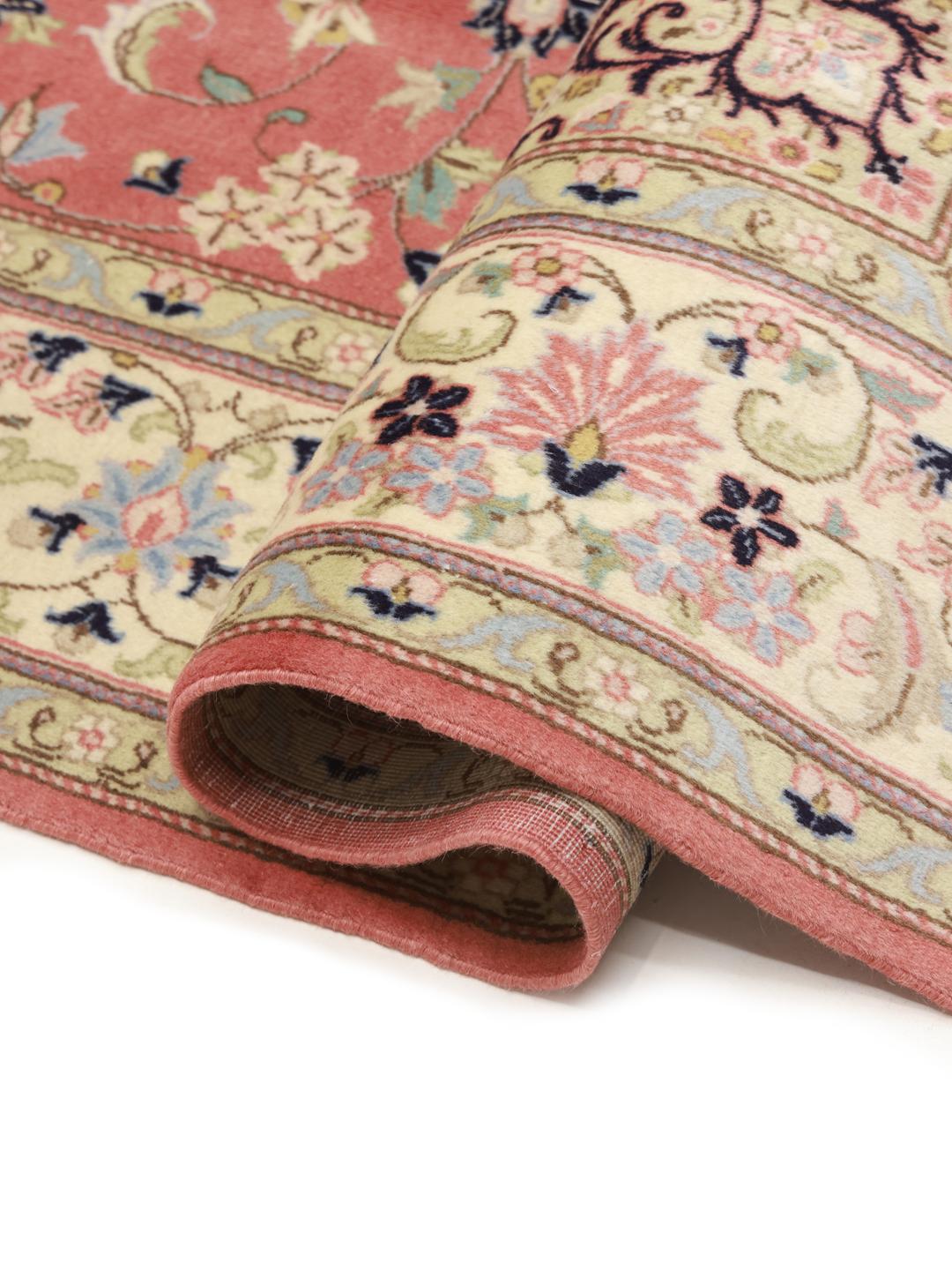
Traditional Nain rugs are famous for their precise construction and distinctive colour palettes. They often feature a central medallion surrounded by intricate floral motifs, typically using soft ivory, beige, and blue tones. The use of high-quality wool in the pile ensures a soft, lustrous finish that highlights the complexity of the design, making these pieces highly sought after by collectors.
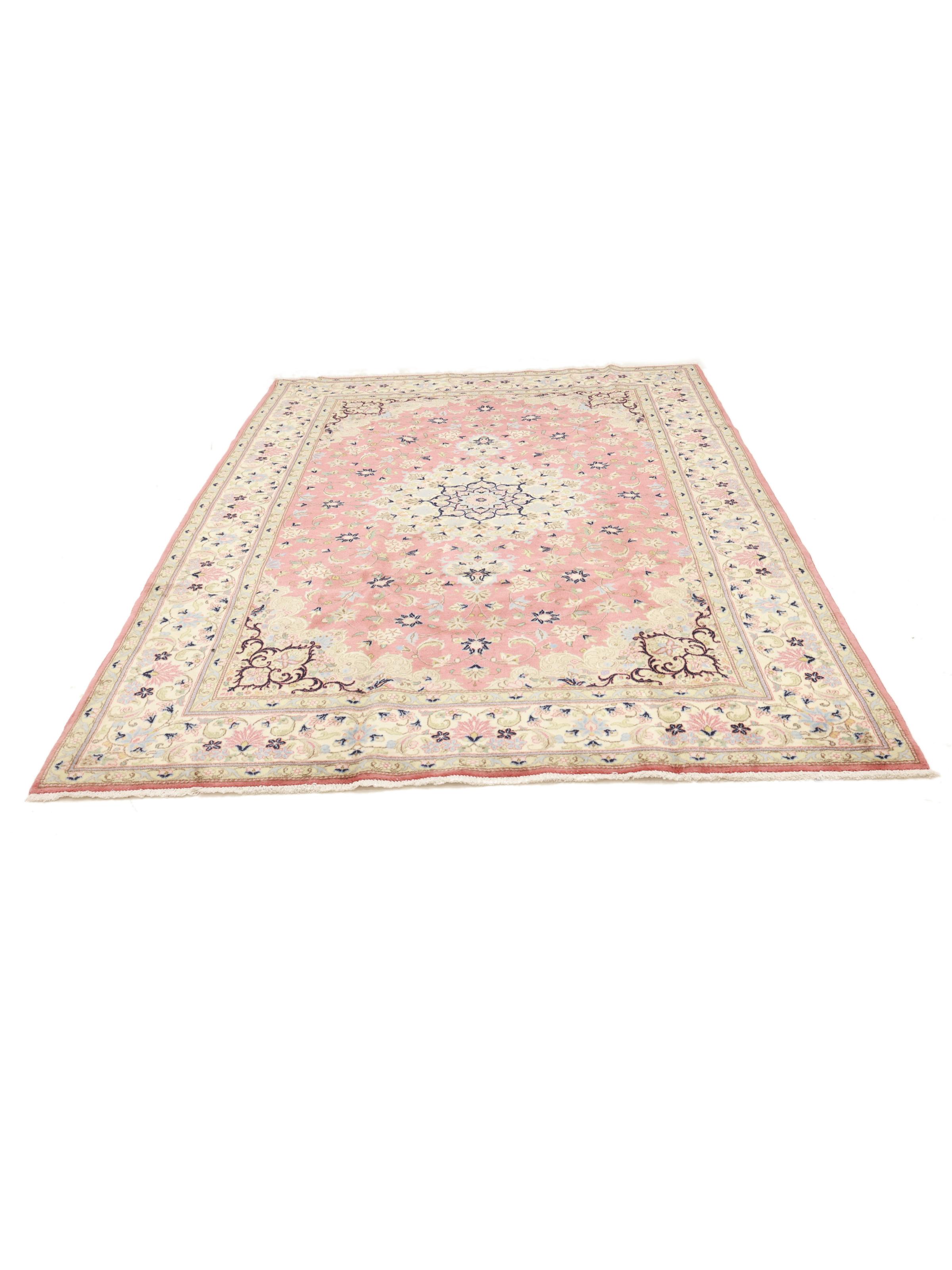
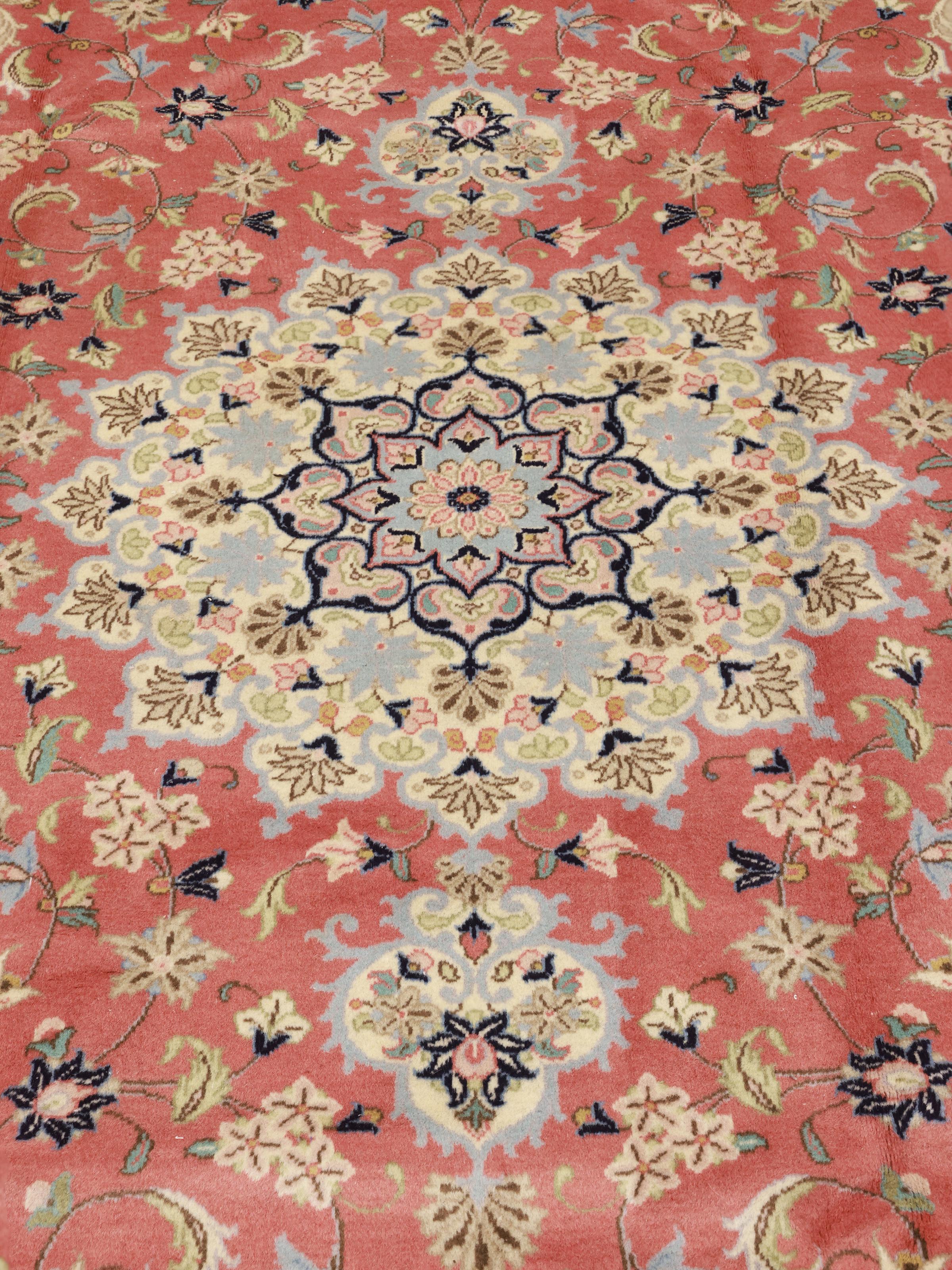
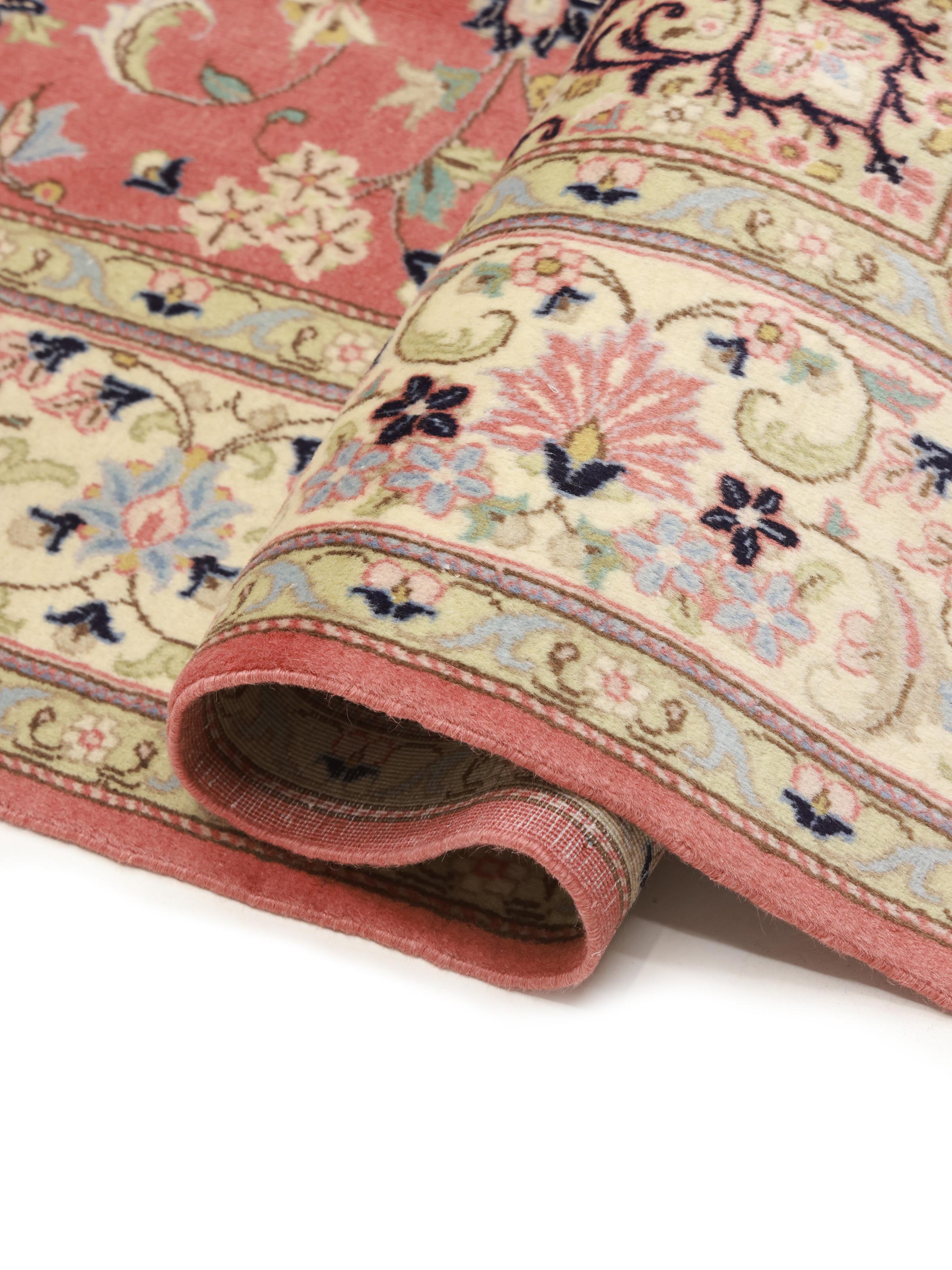
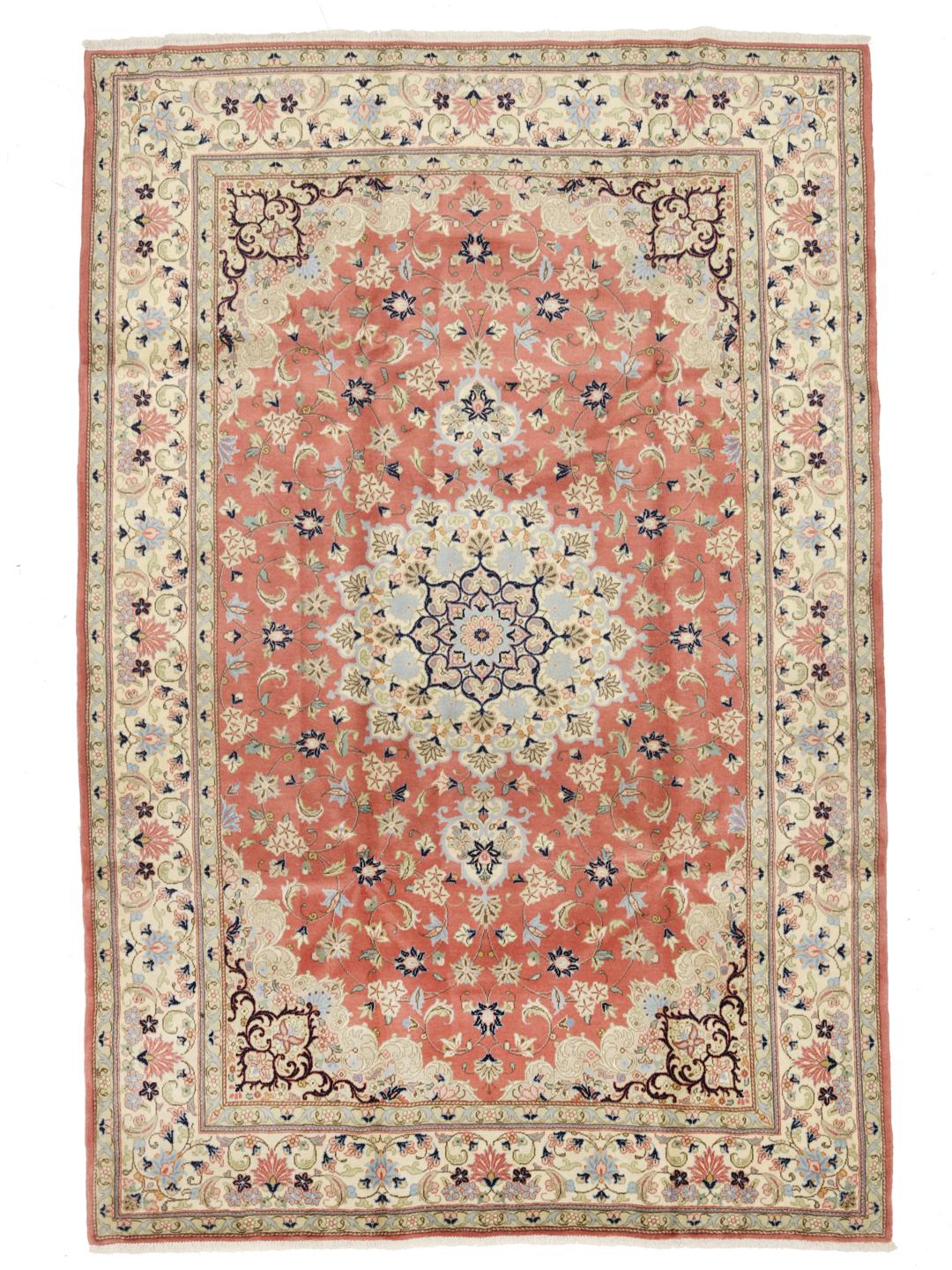
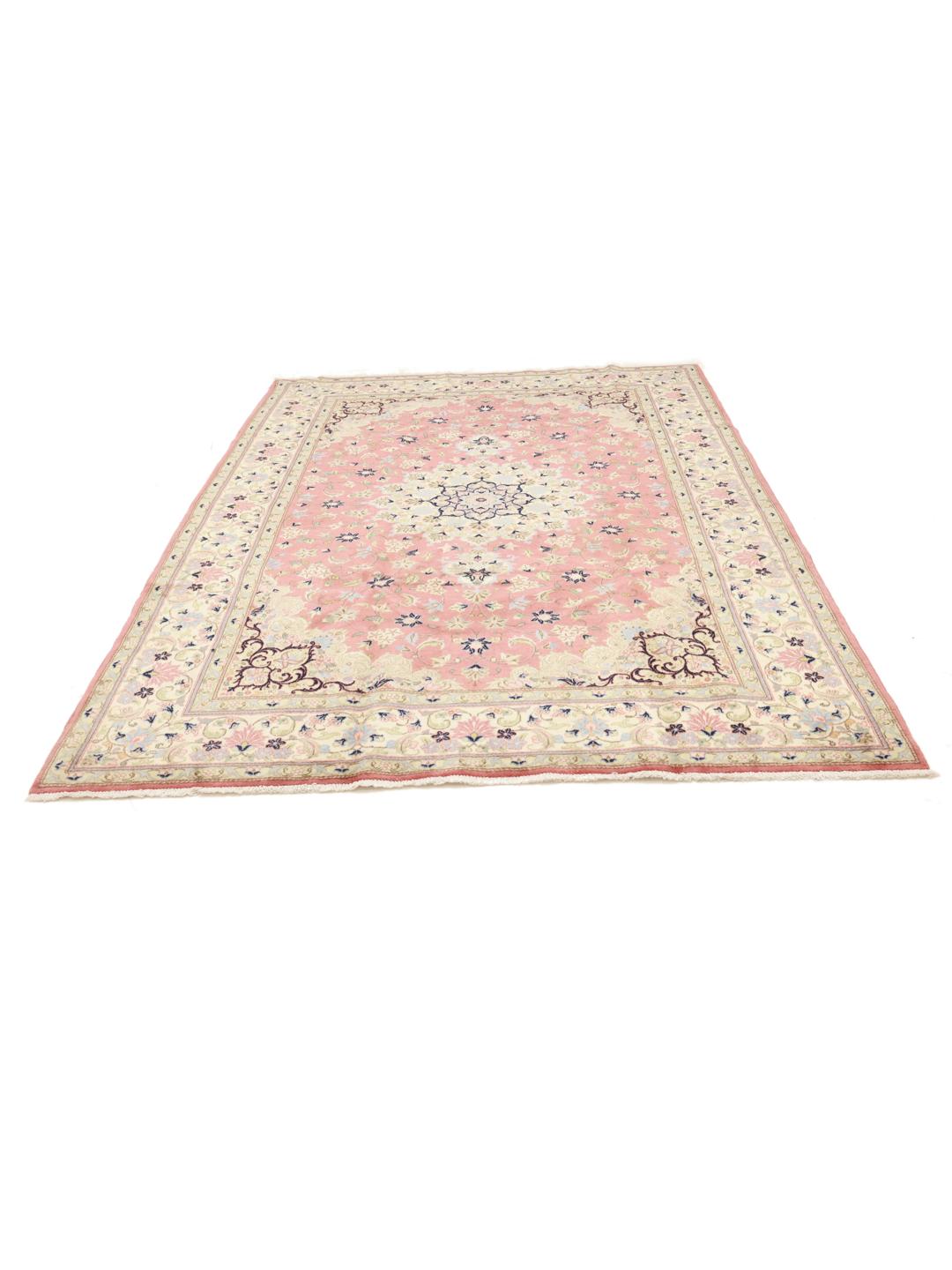
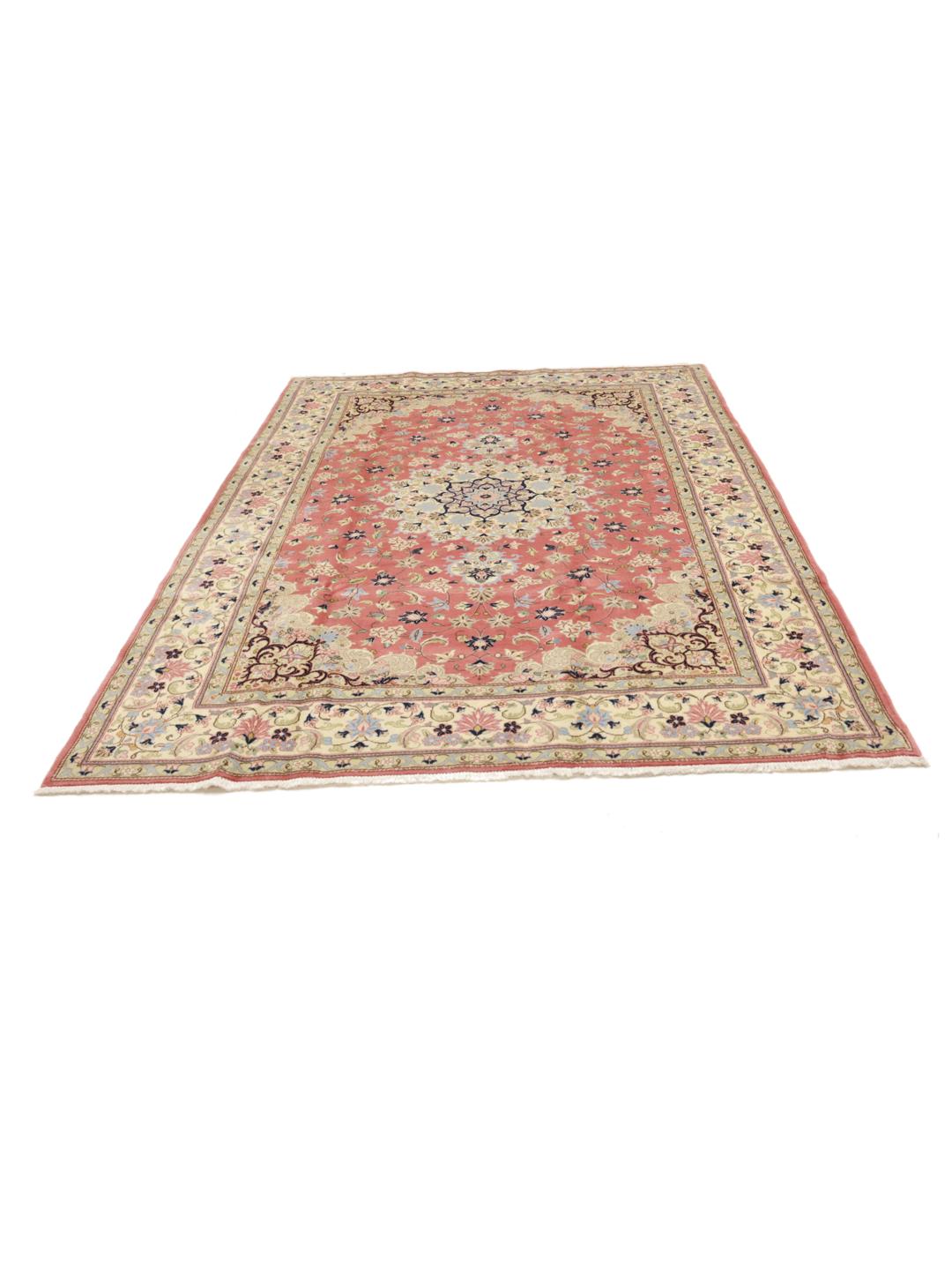
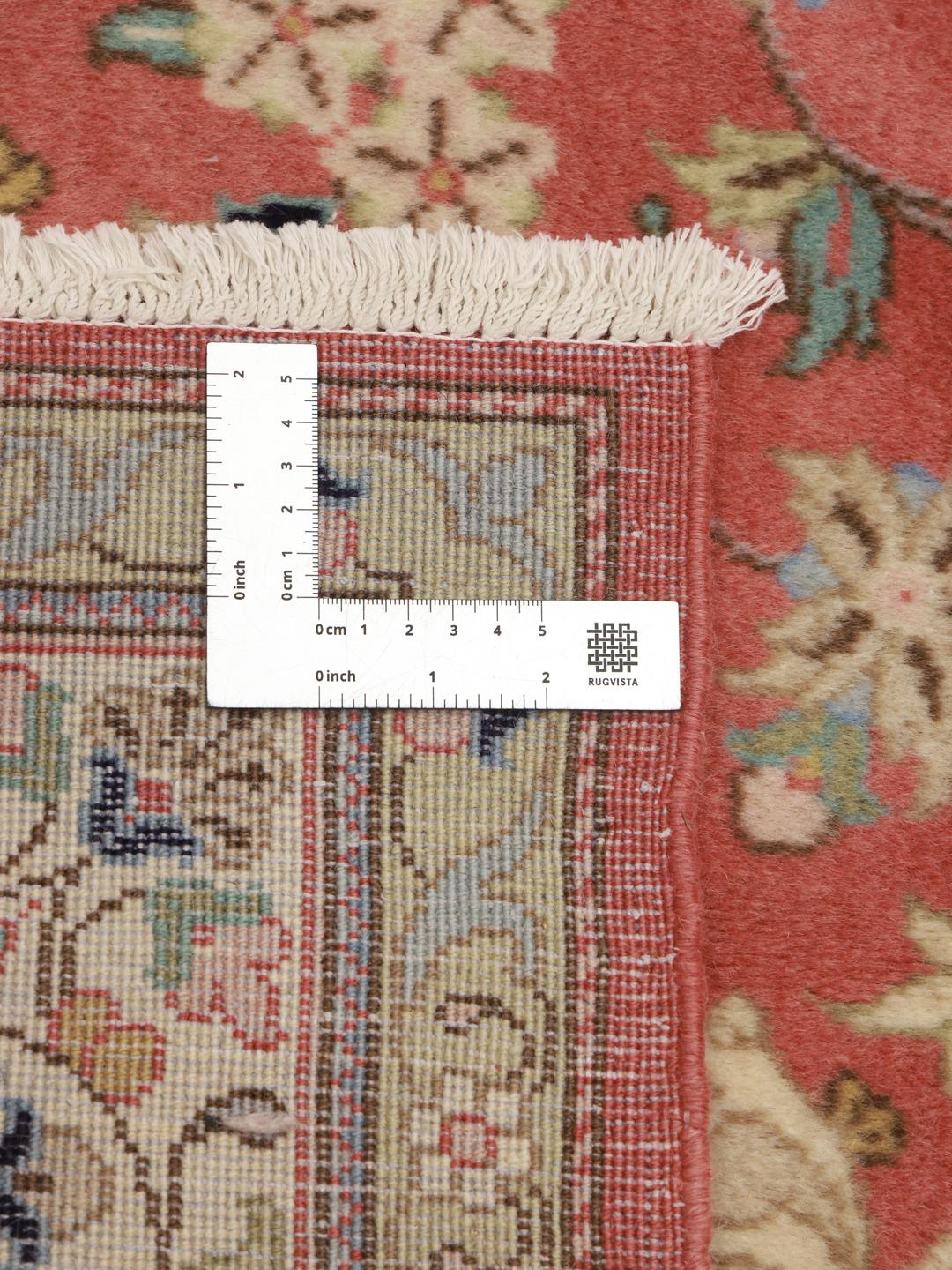
The visual composition of this piece is defined by its classic central medallion and elaborate floral borders. The delicate scrolling vines and palmette motifs are characteristic of the region's classic design language, offering a balanced and symmetrical aesthetic. The choice of a soft pink field provides a warm, contemporary variation on the traditional cream and blue palettes.
Owning a Nain rug is an appreciation of Middle Eastern artistry and cultural heritage. These rugs are valued not only for their beauty but also for the incredible skill required to execute such detailed patterns. They represent a living tradition of craftsmanship, bringing a sense of history, culture, and enduring quality into modern living spaces.