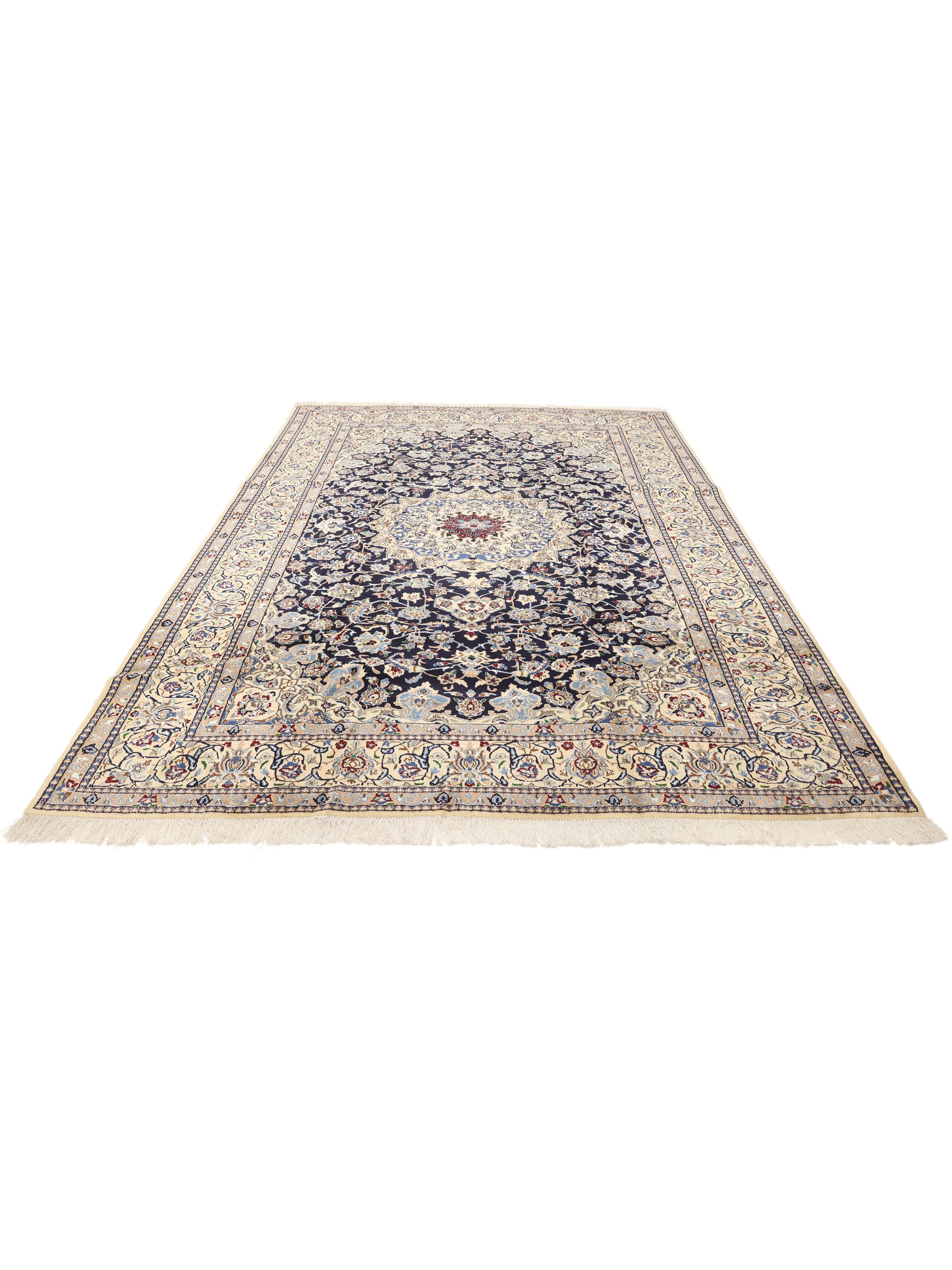
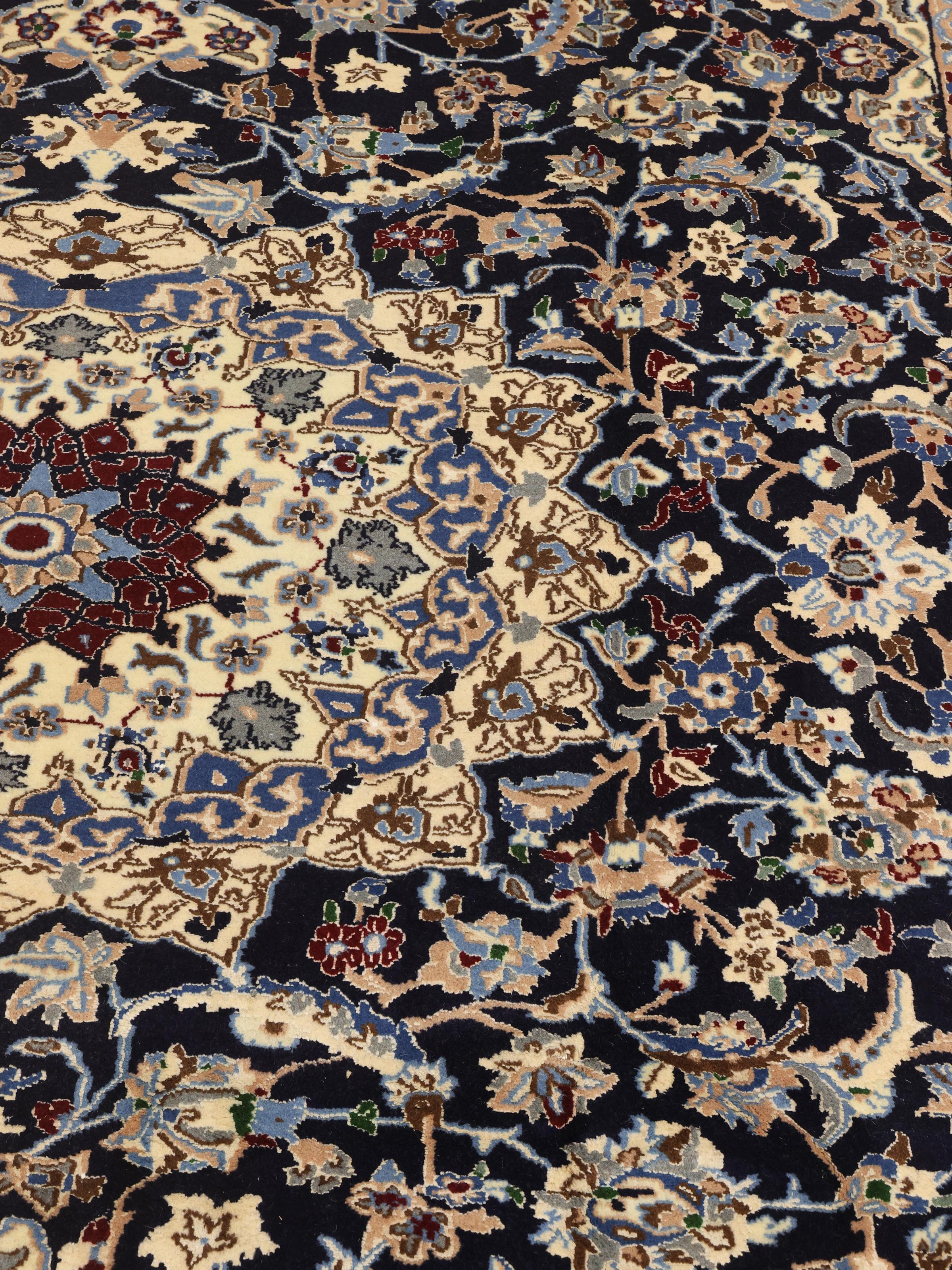
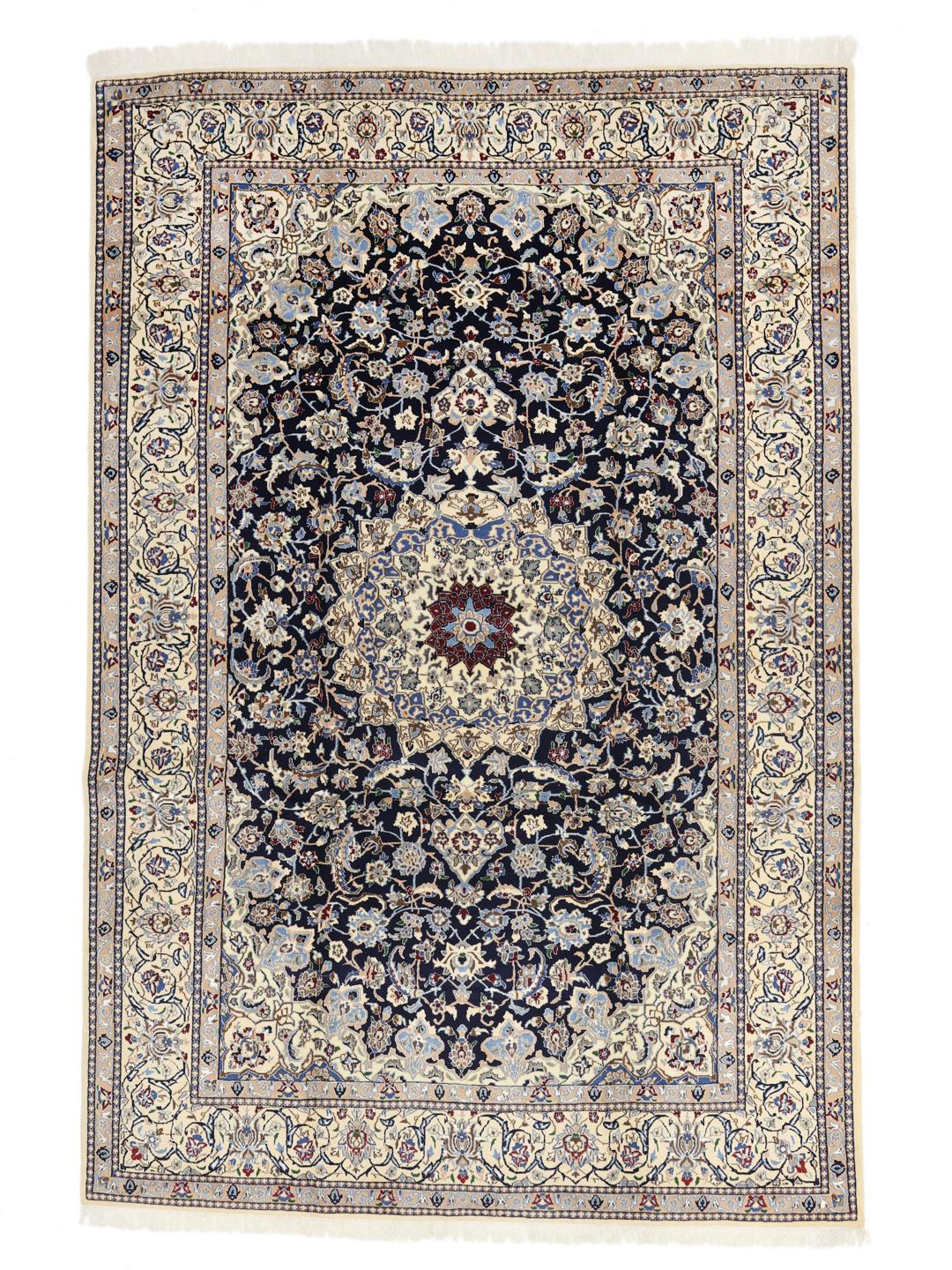
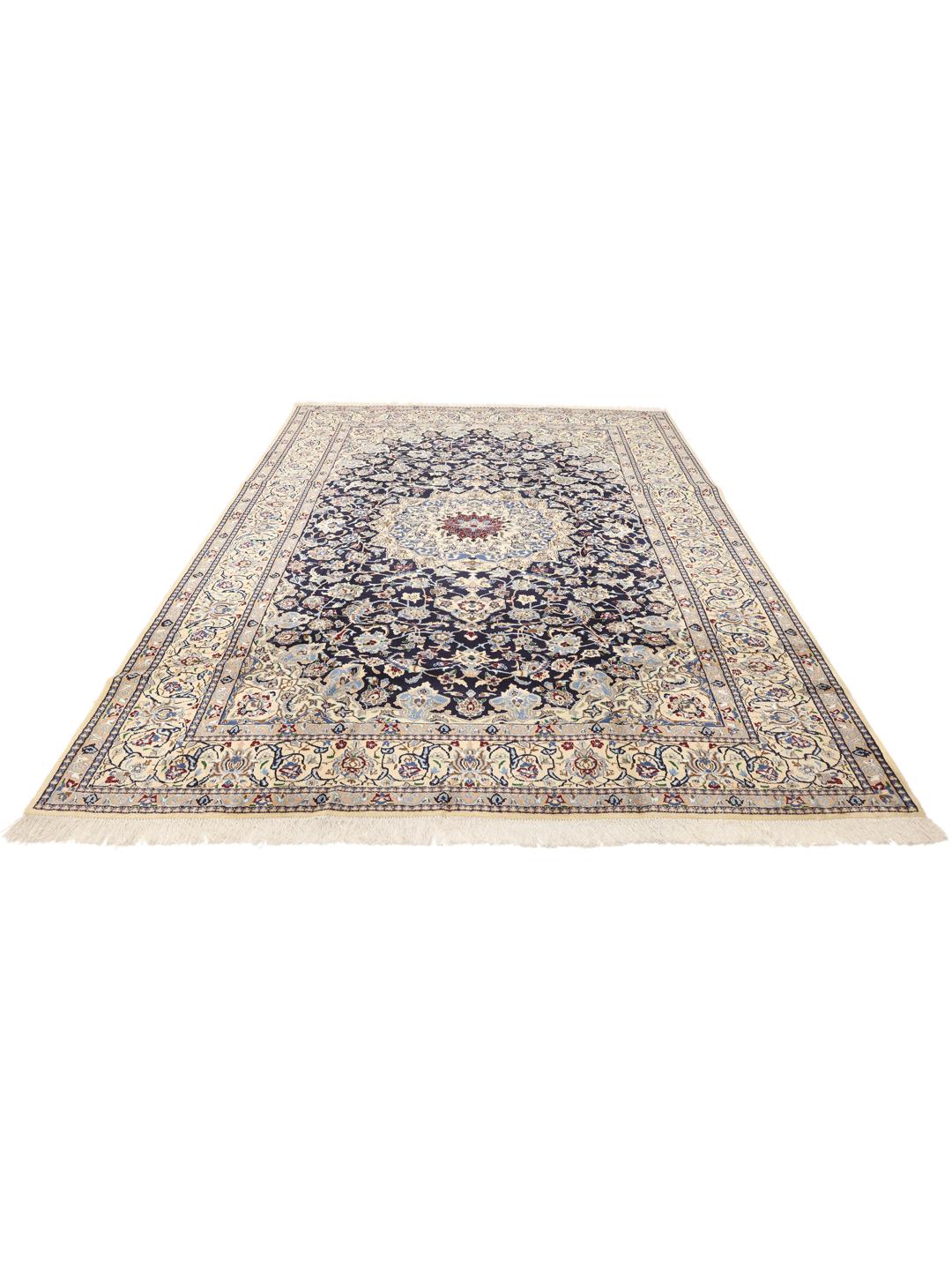
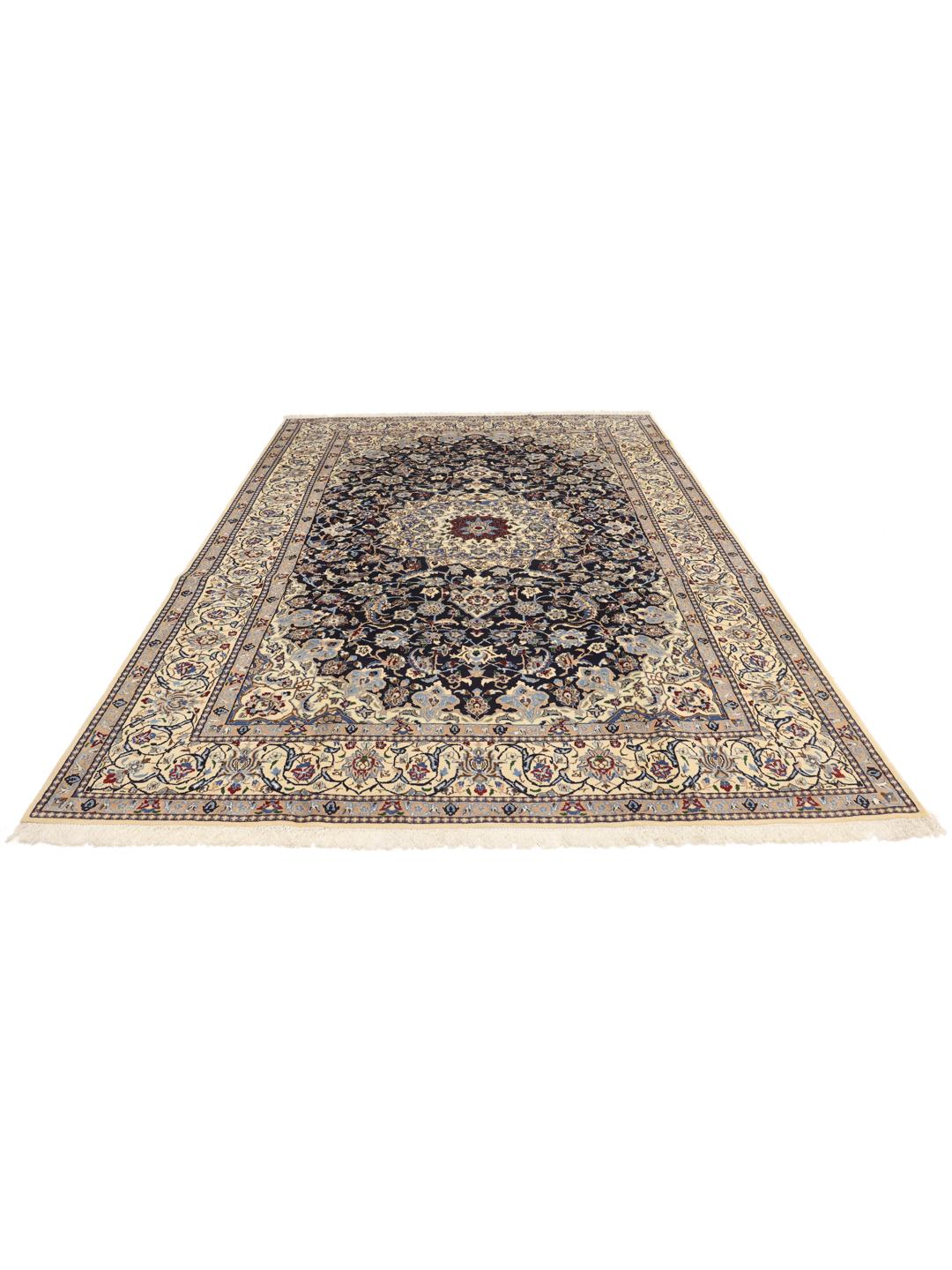
The Nain region is globally renowned for its contribution to Middle Eastern rug-weaving traditions, particularly for its ability to produce pieces of immense delicacy and fine detail. While many regions focus on tribal or geometric styles, Nain rugs are celebrated for their highly sophisticated, formal aesthetics that often incorporate soft, flowing floral designs inspired by the architecture and gardens of the area.
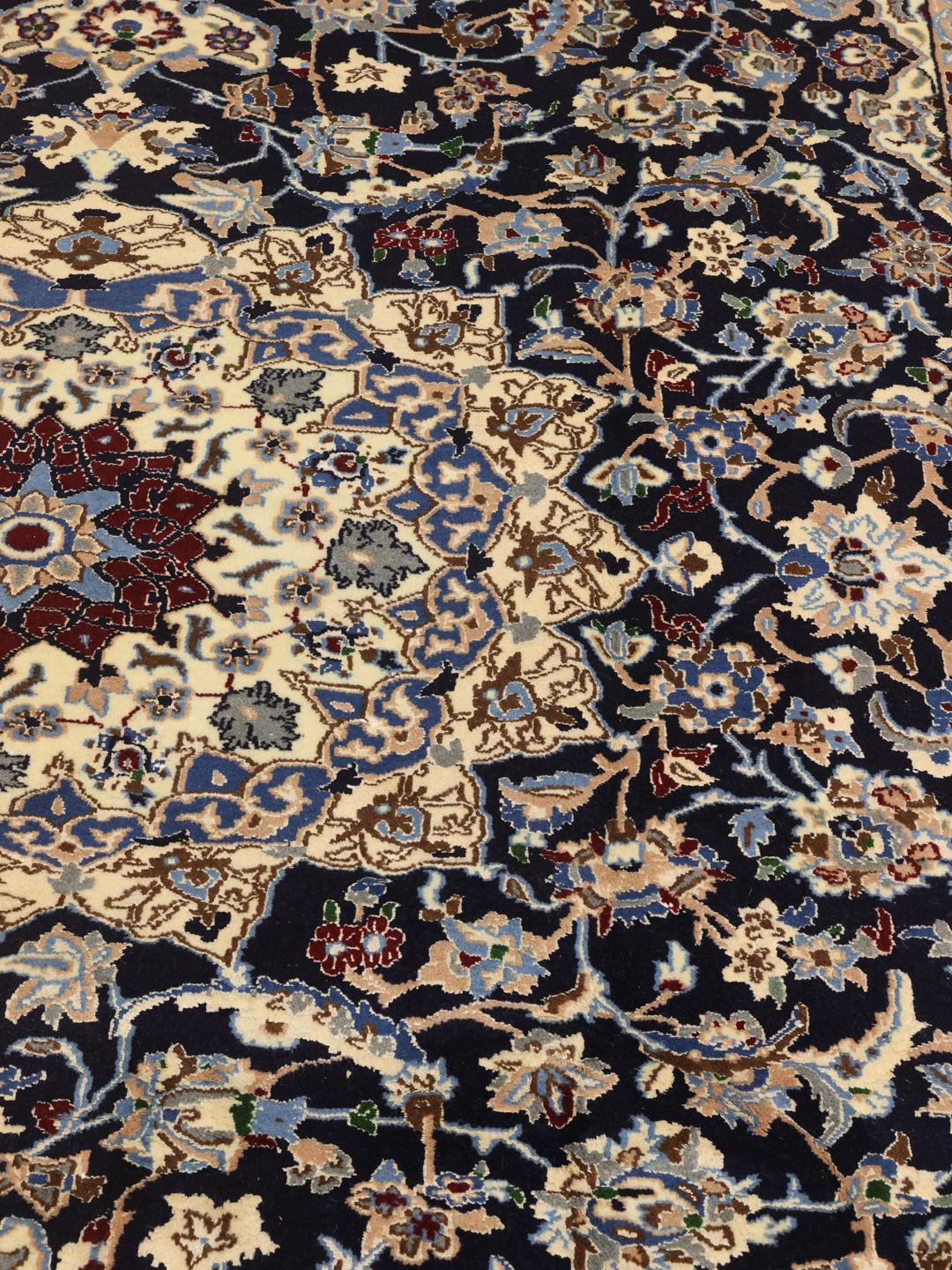
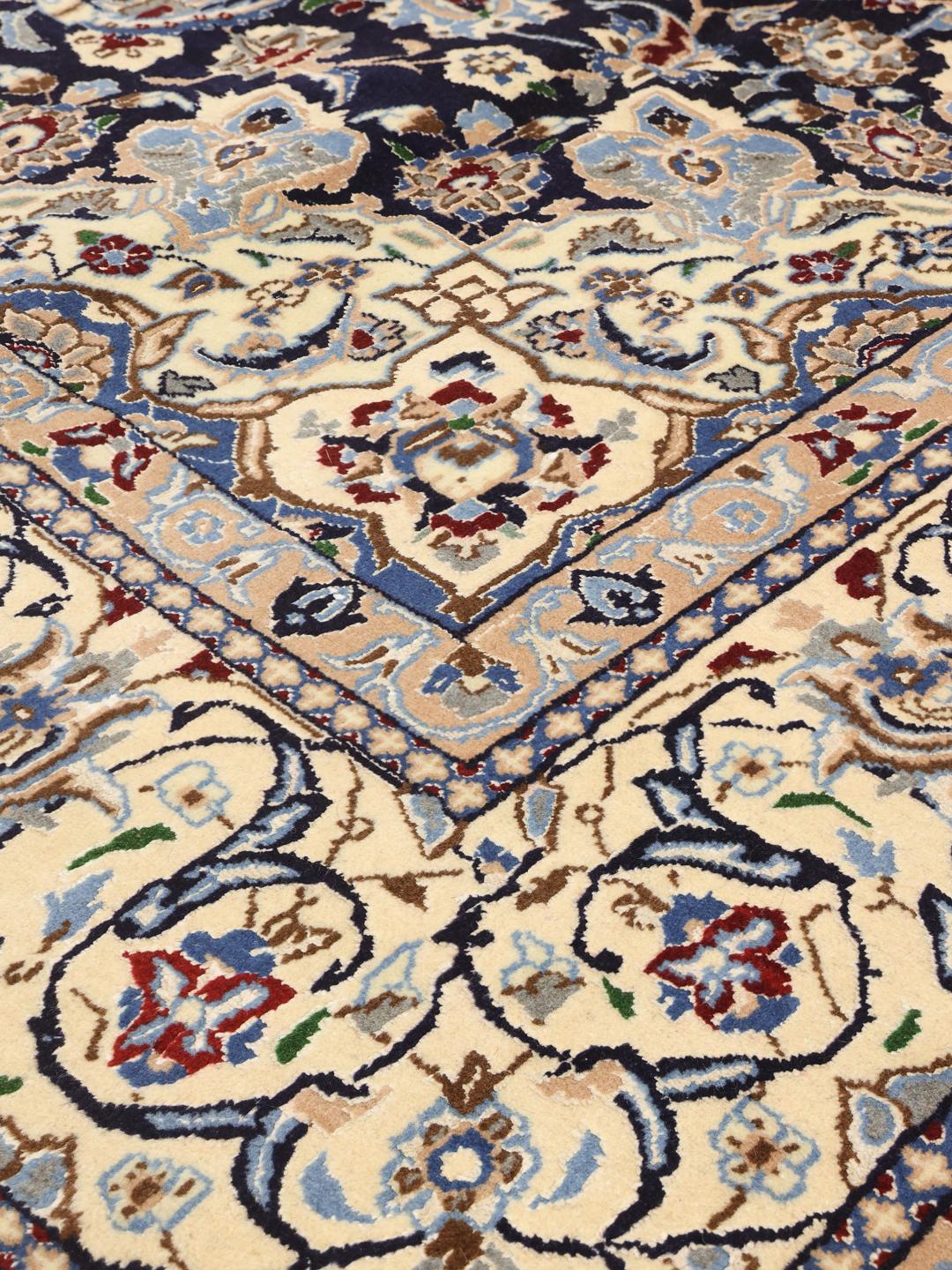
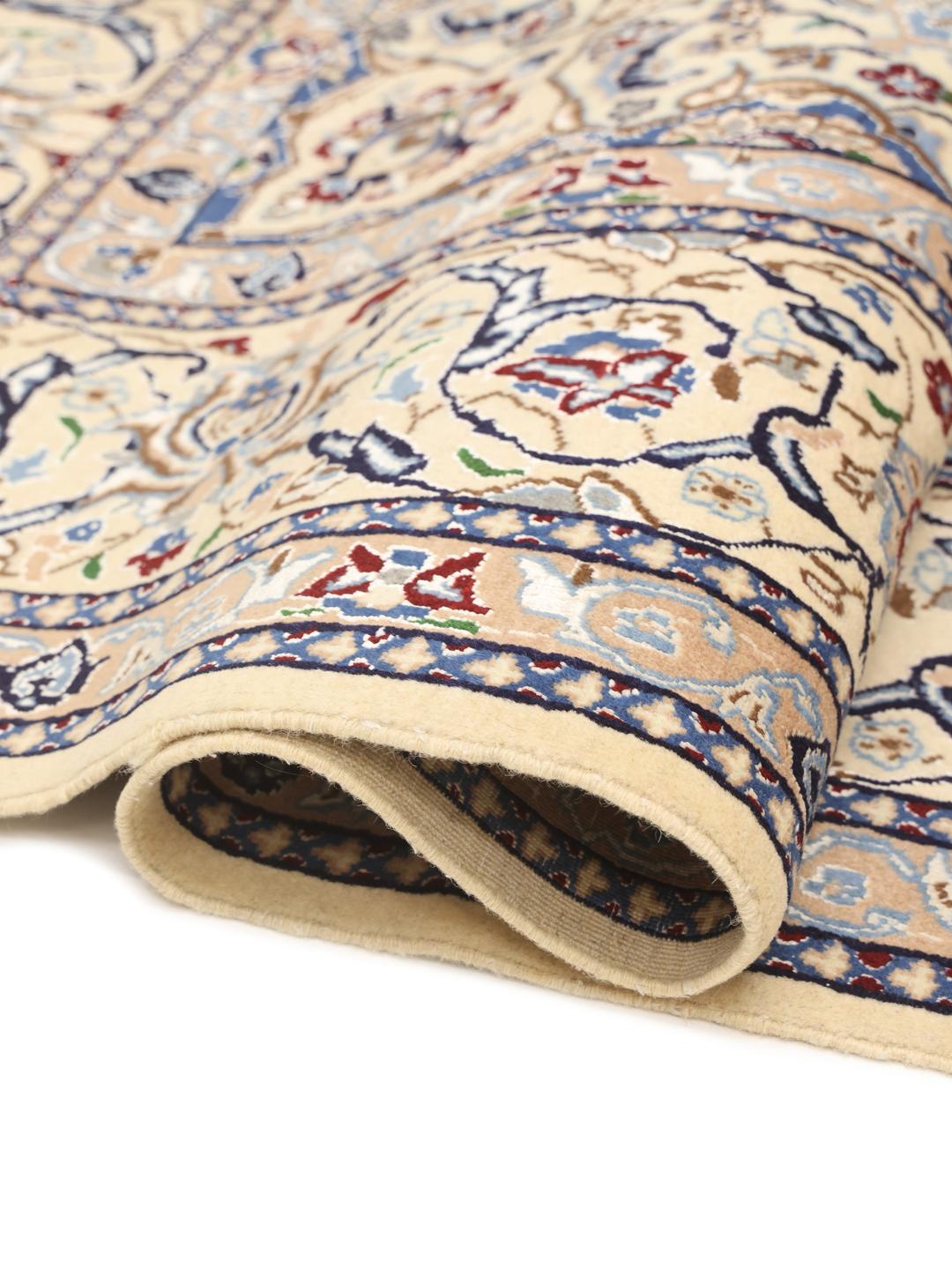
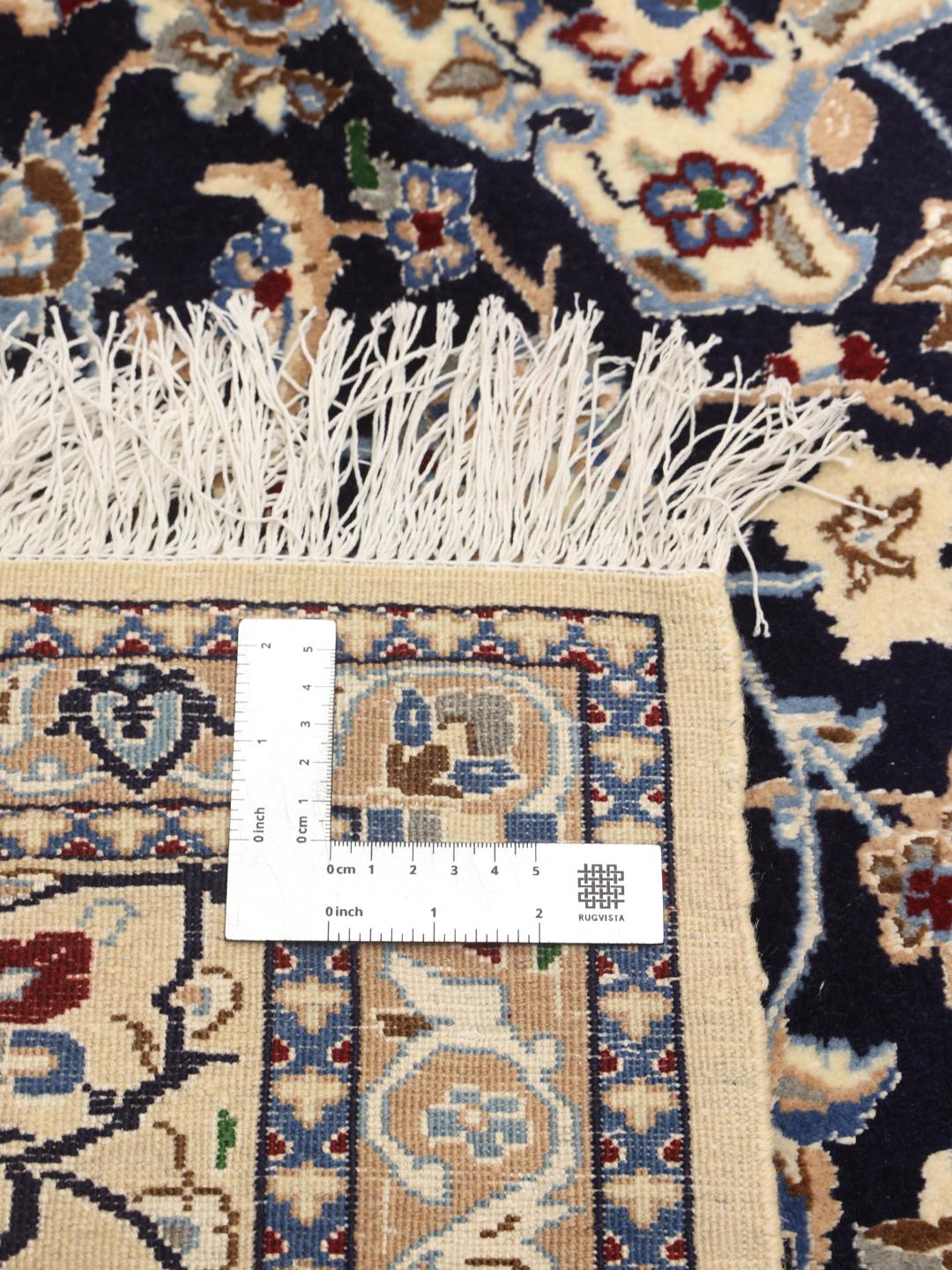
The designation '9La' is a vital piece of terminology that denotes the quality of the rug. In the local dialect, 'La' refers to the number of threads used in the fringe, and '9La' indicates a specific, high-level quality where the pile is crafted with precision to achieve a fine, intricate pattern. This technical standard is a hallmark of the region, ensuring that the finished product has a smooth, refined texture and a high level of pattern clarity.
Visually, these rugs are defined by a distinct language of design. You will often find a central, star-like medallion at the heart of the rug, surrounded by delicate arabesques, scrolling vines, and palmettes. The colour traditions usually favour shades of blue, ivory, and beige, though the contrast between dark and light tones is what truly brings the intricate patterns to life, creating a sense of depth that is characteristic of the finest local work.
Collectors and design enthusiasts value these rugs for their immense cultural weight and the skill required to produce them. Owning a Nain rug is considered an acquisition of heritage, representing a long history of artistic evolution in the Middle East. It is a testament to the artisan's ability to balance complex, formal design with a durability that allows these rugs to be cherished for generations.