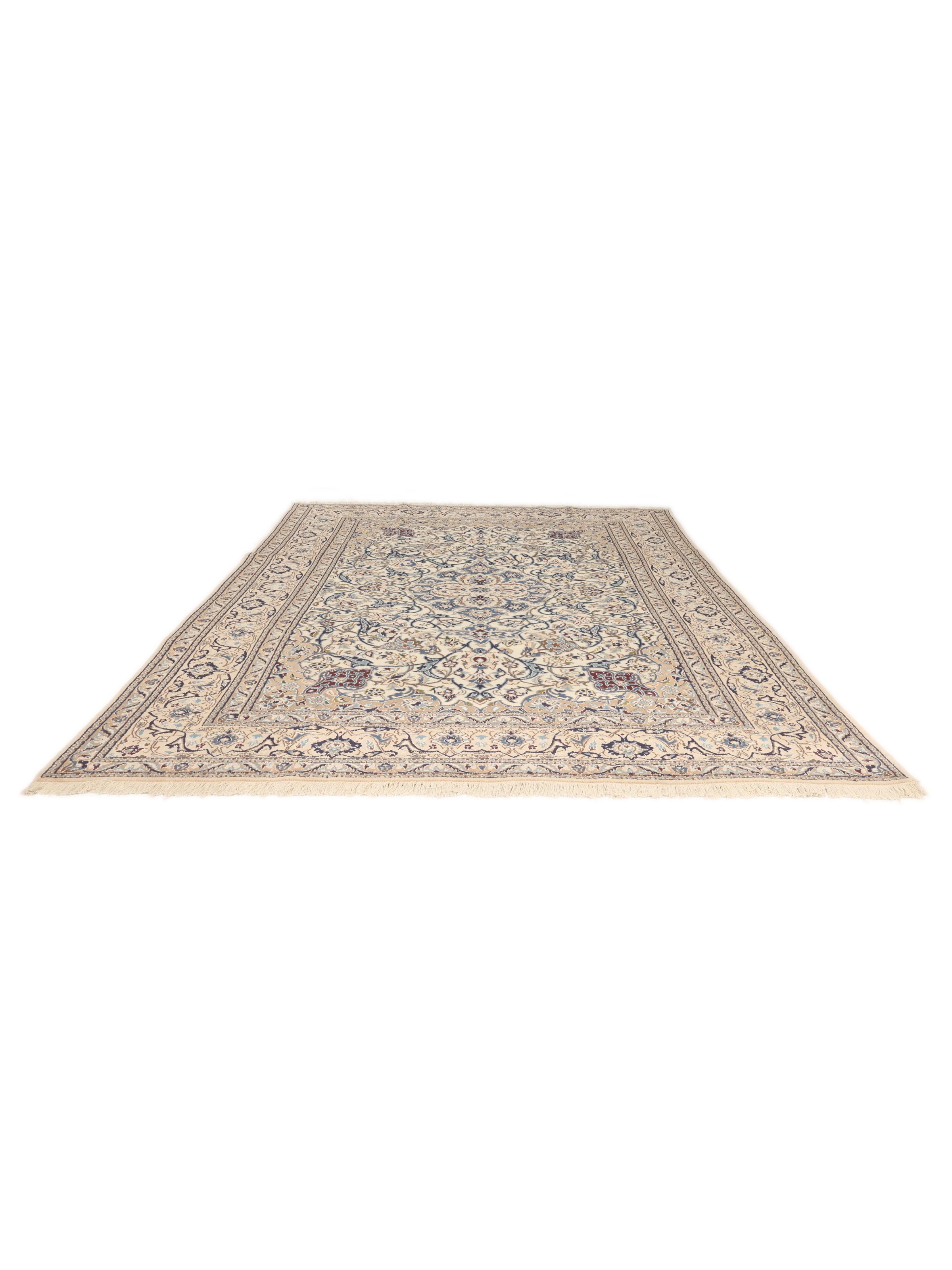
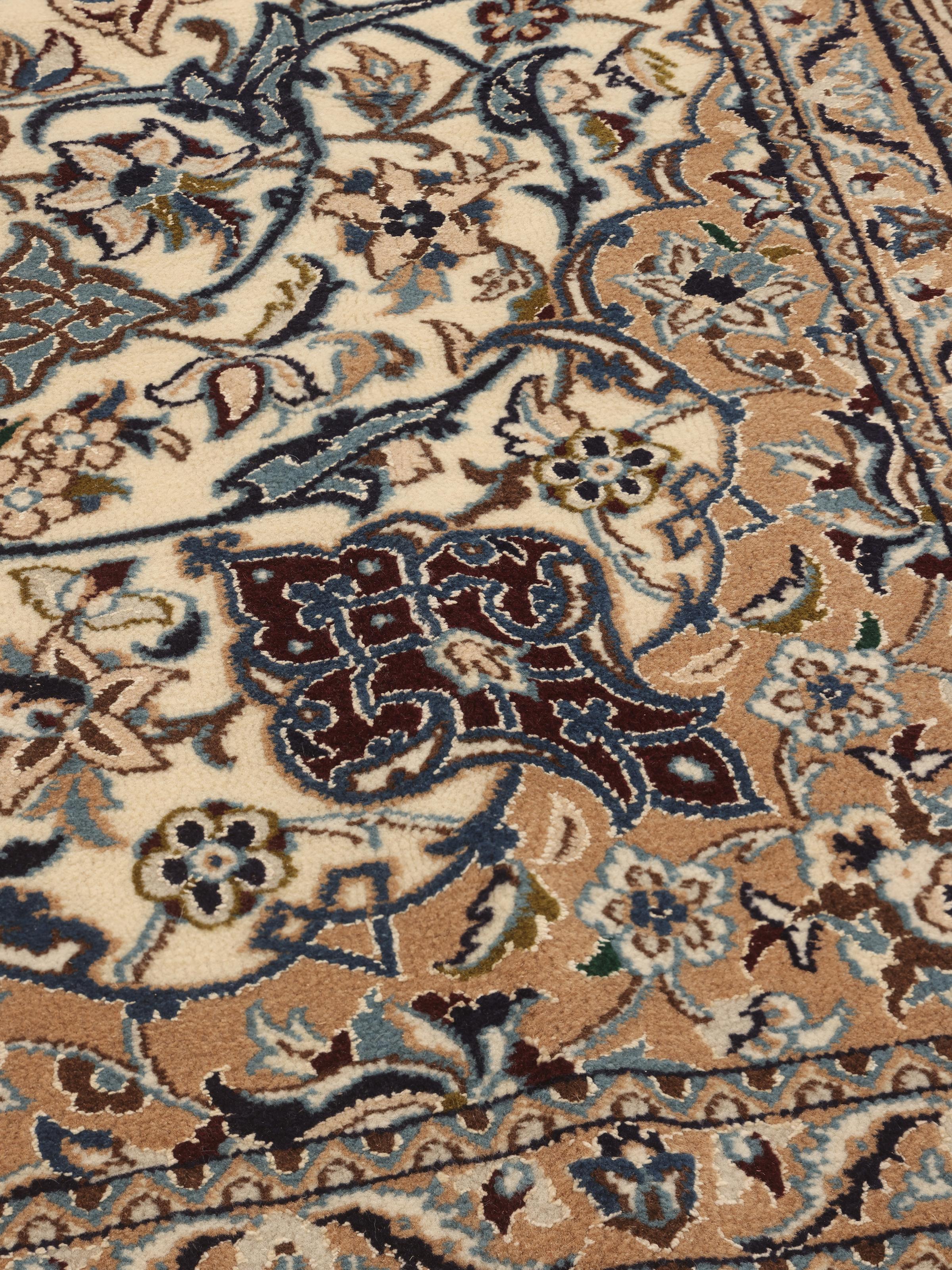
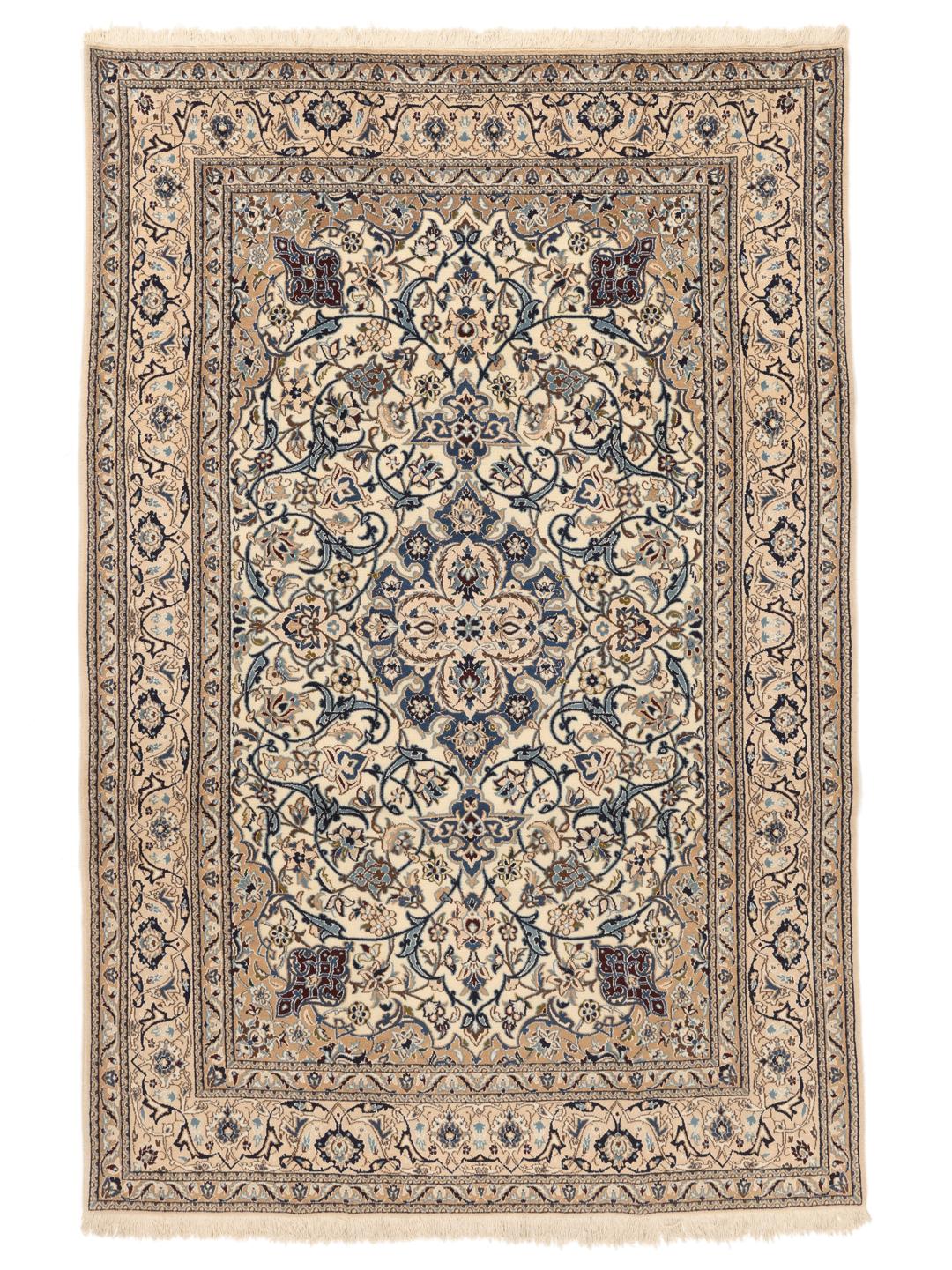
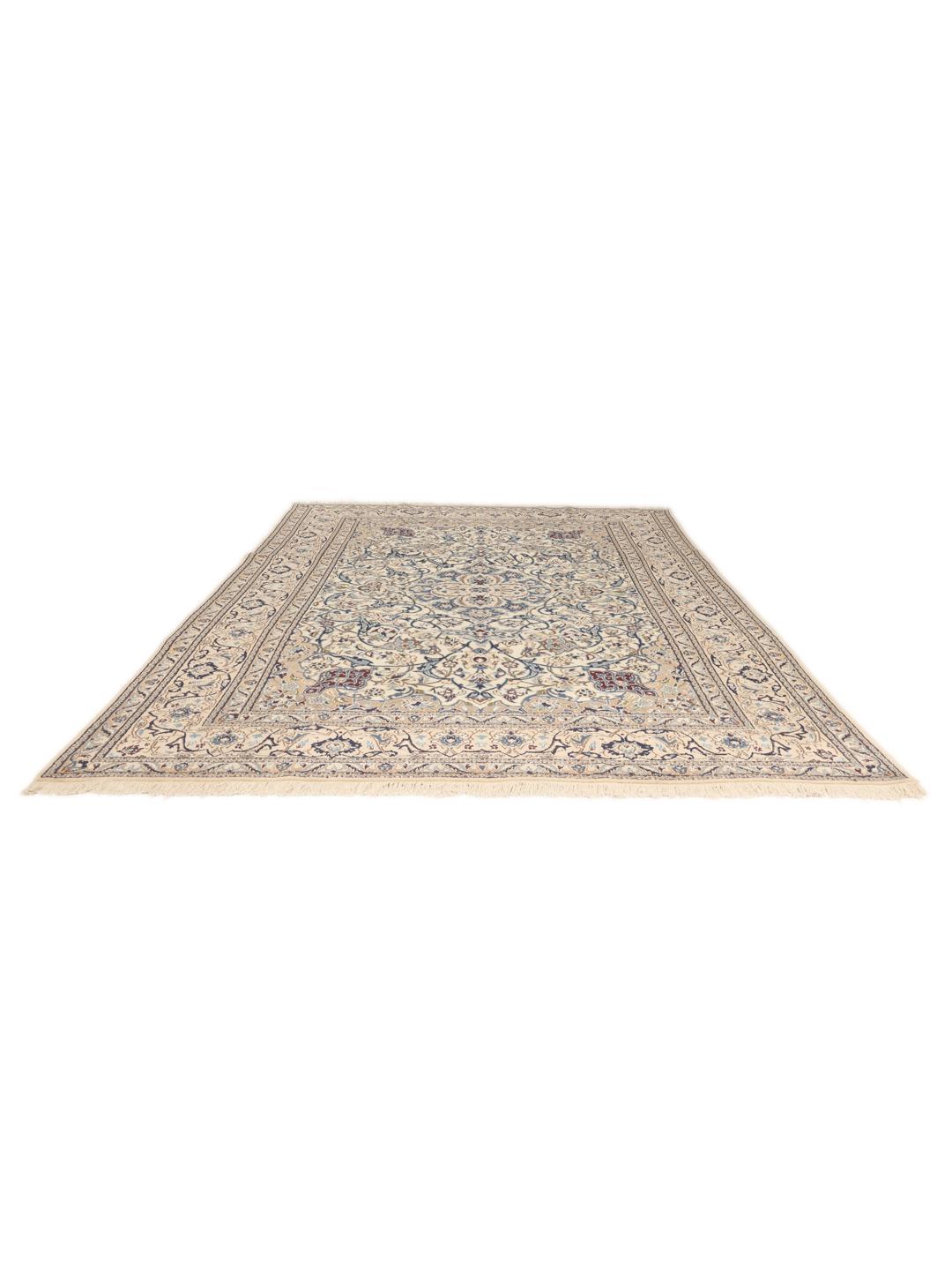
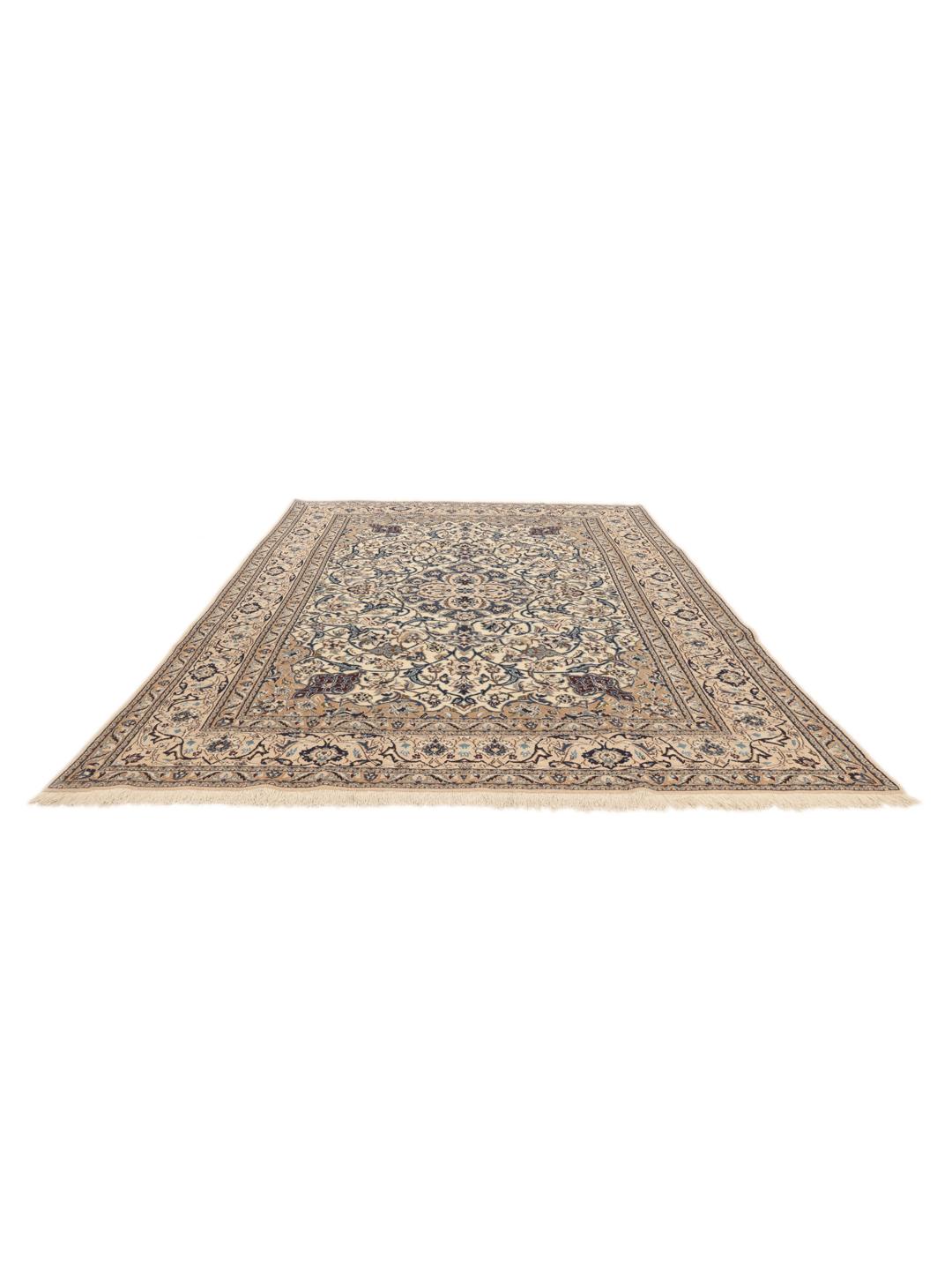
The Nain rug tradition hails from the historic city of Nain, located on the edge of the central deserts in the Middle East. Originally known for producing high-quality wool cloaks, the region transitioned its immense skill and precision into the art of rug weaving during the early 20th century. Today, these rugs are celebrated worldwide for their exceptionally fine detail and sophisticated colour palettes.
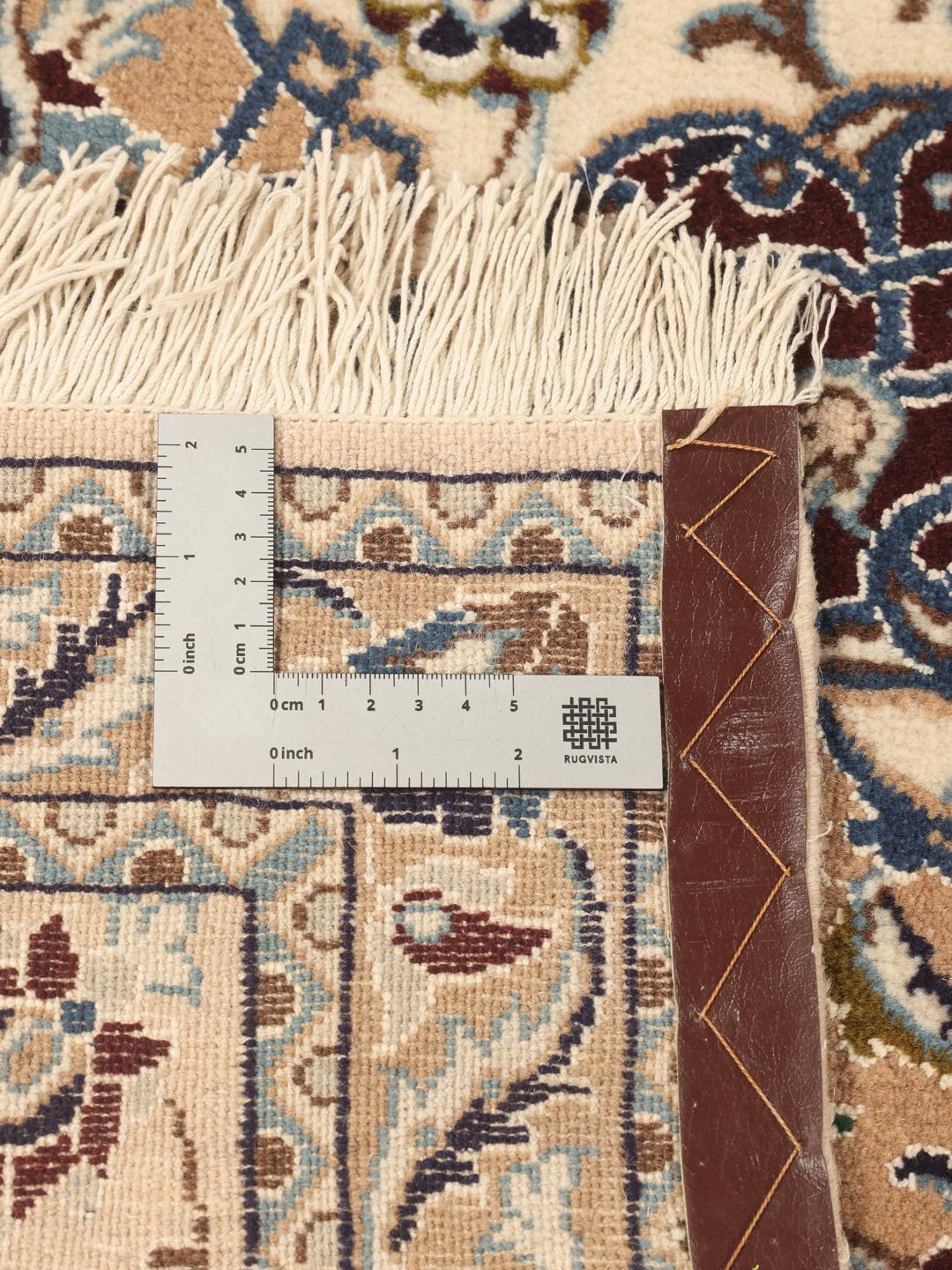
The term 9La refers to the specific thickness and quality of the yarn used in the construction of the rug. In this context, the 'La' system measures the number of threads used in each warp strand, with lower numbers indicating a finer, more delicate, and higher-quality weave. A 9La classification represents a balance of durability and fine detail, resulting in a product that is both resilient and remarkably intricate in its execution.
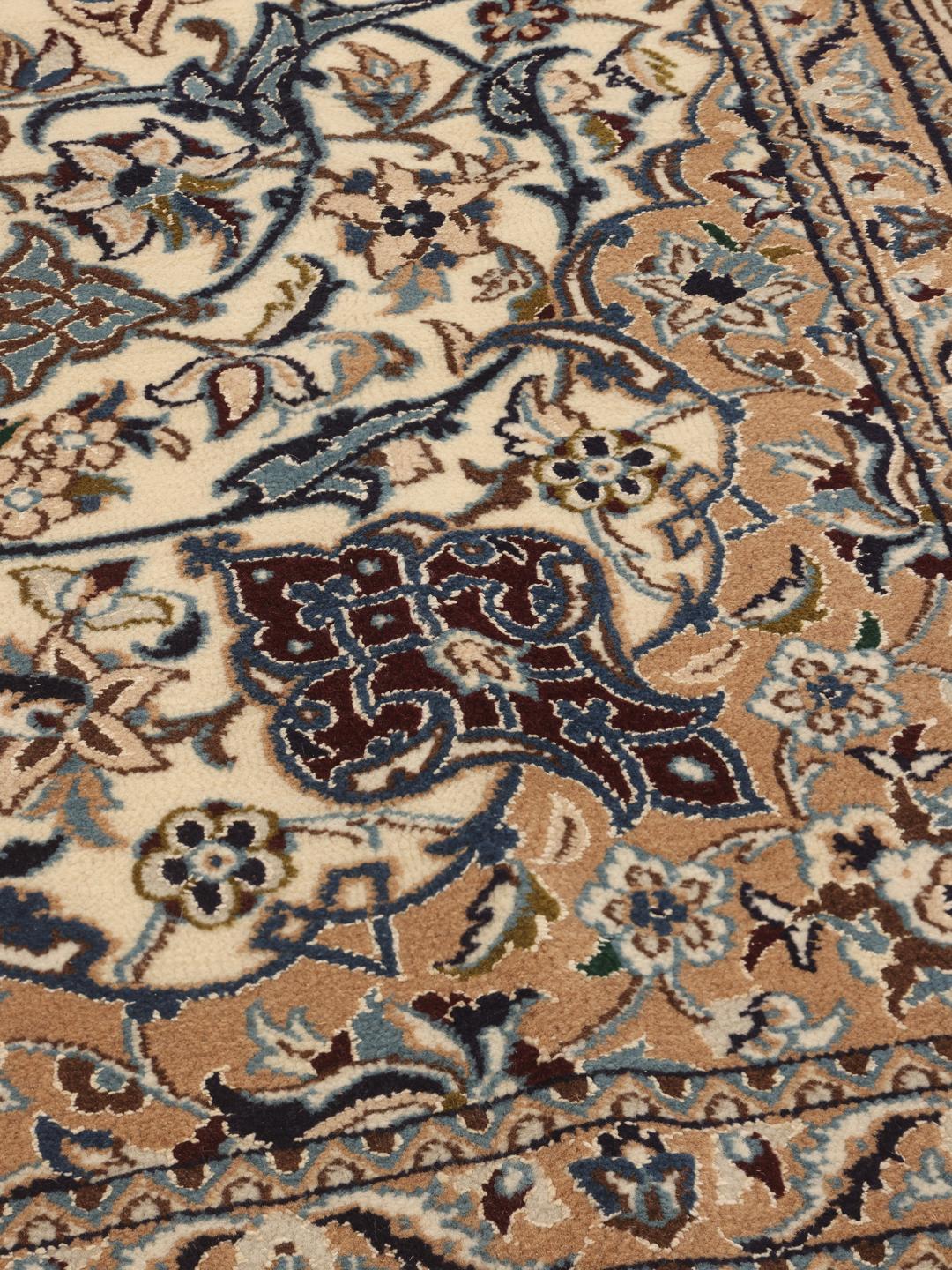
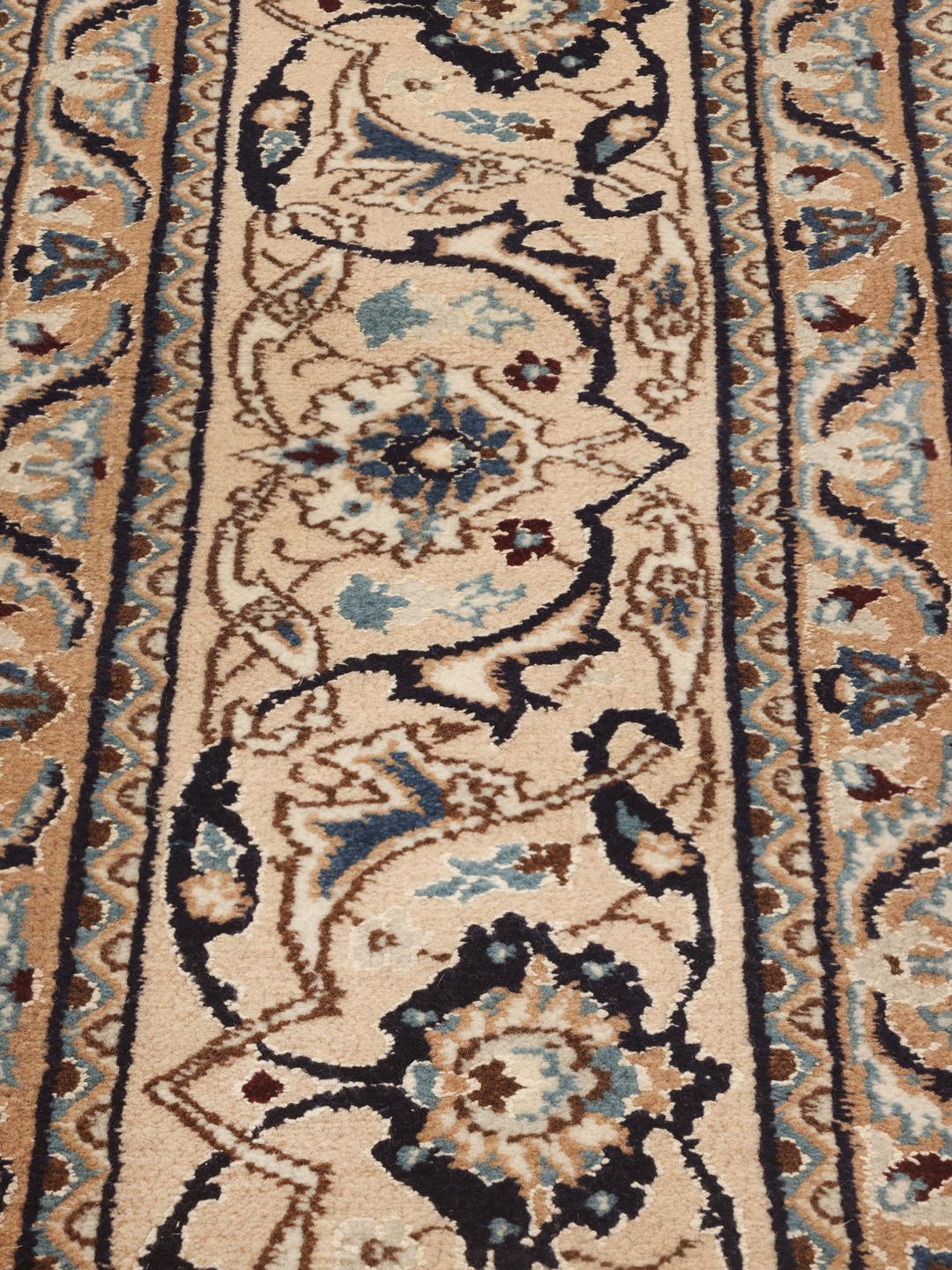
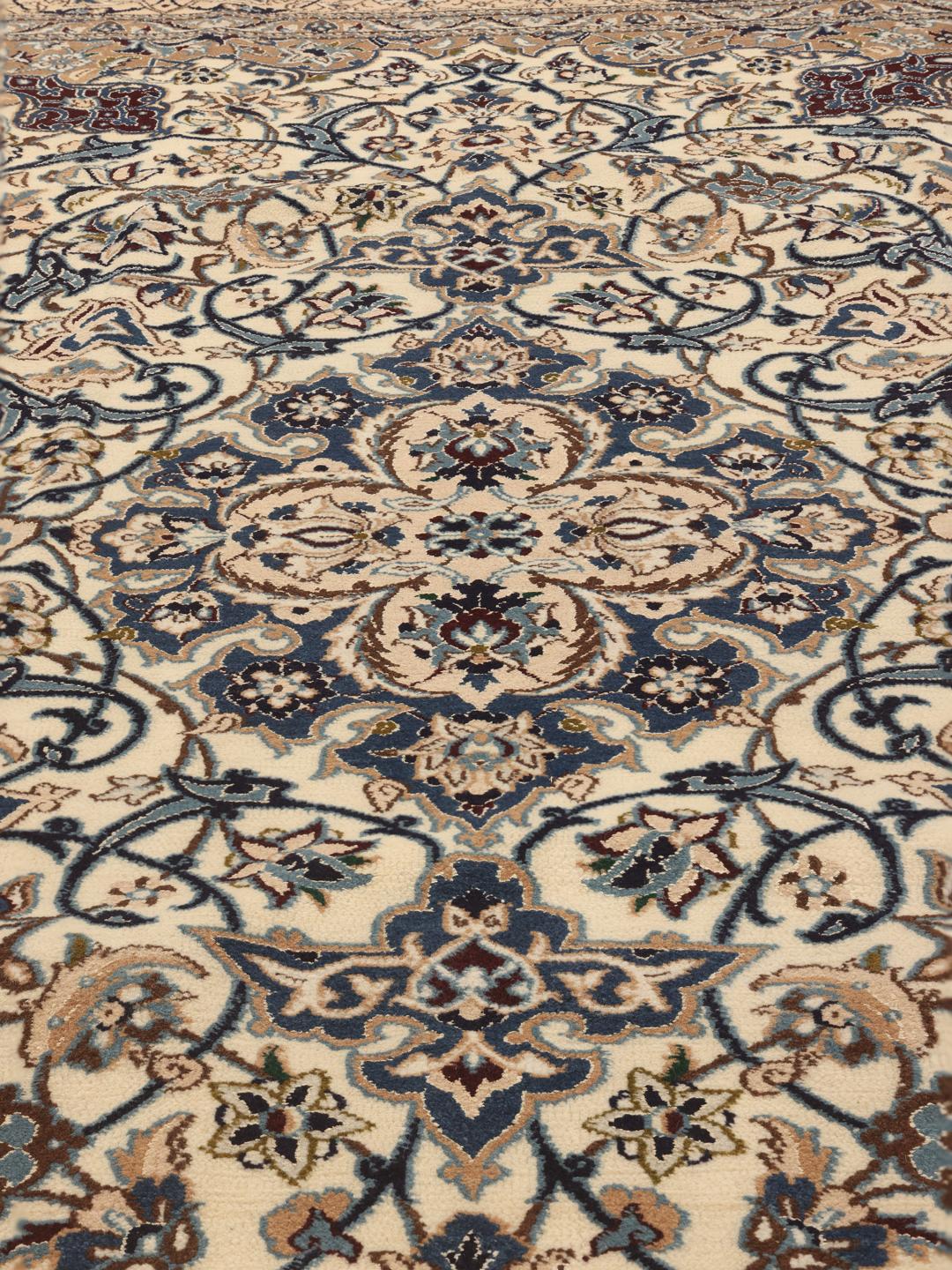
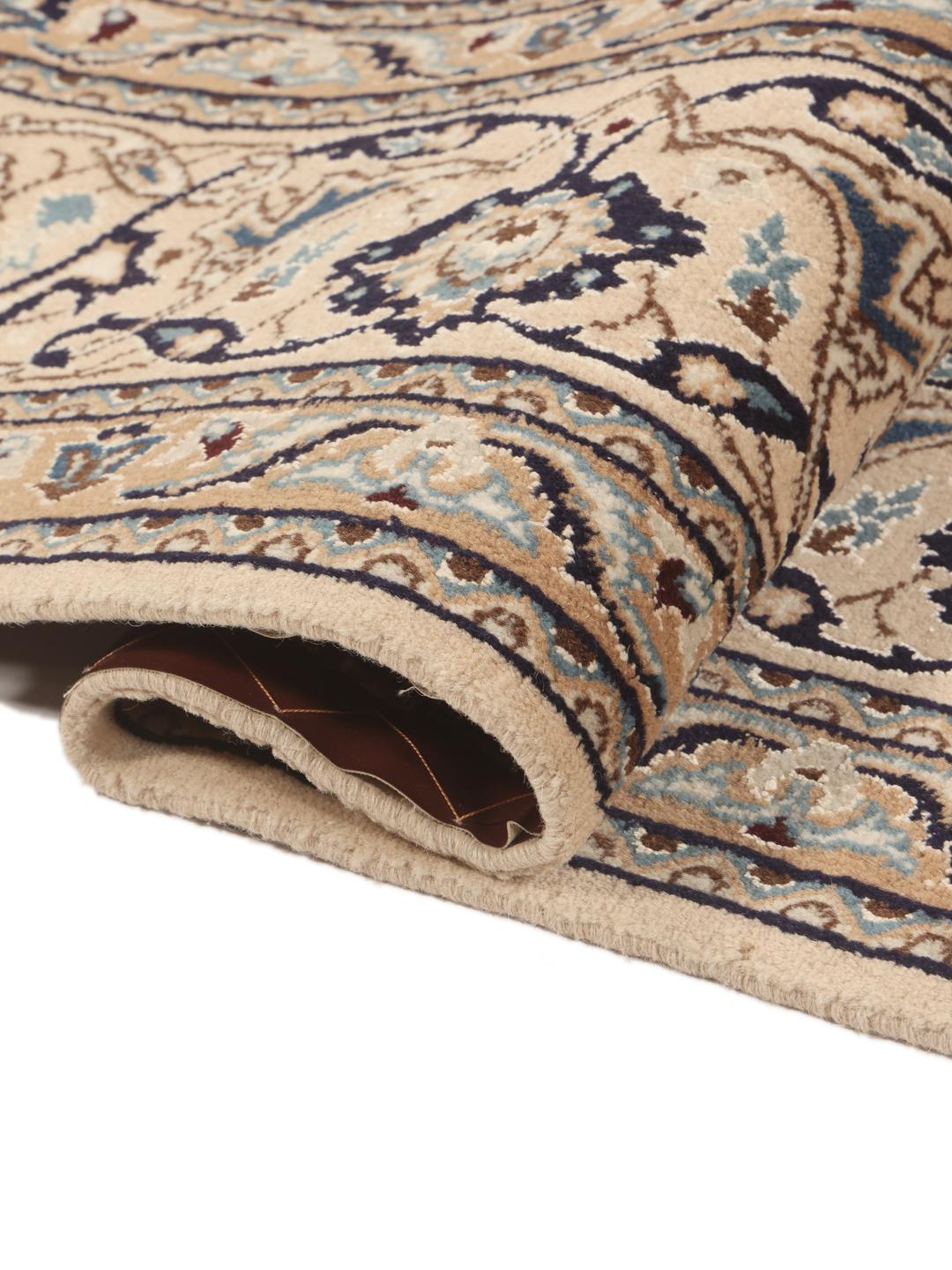
Visually, these rugs are defined by their elegant floral motifs, curved arabesques, and central medallions. They often utilise a soft, light-toned field—frequently in cream or beige—which allows the deep blues and earthy tones of the patterns to stand out with clarity. The borders are typically filled with complex, repeating floral vines that frame the central design, creating a sense of balance and formal harmony.
Collected for their immense cultural significance, Nain rugs represent the pinnacle of Middle Eastern craftsmanship. Owning a piece from this tradition connects you to a legacy of artistry where patience and precision are held in the highest regard. These rugs are highly sought after by those who appreciate the intersection of heritage, skill, and the enduring beauty of hand-wrought textiles.