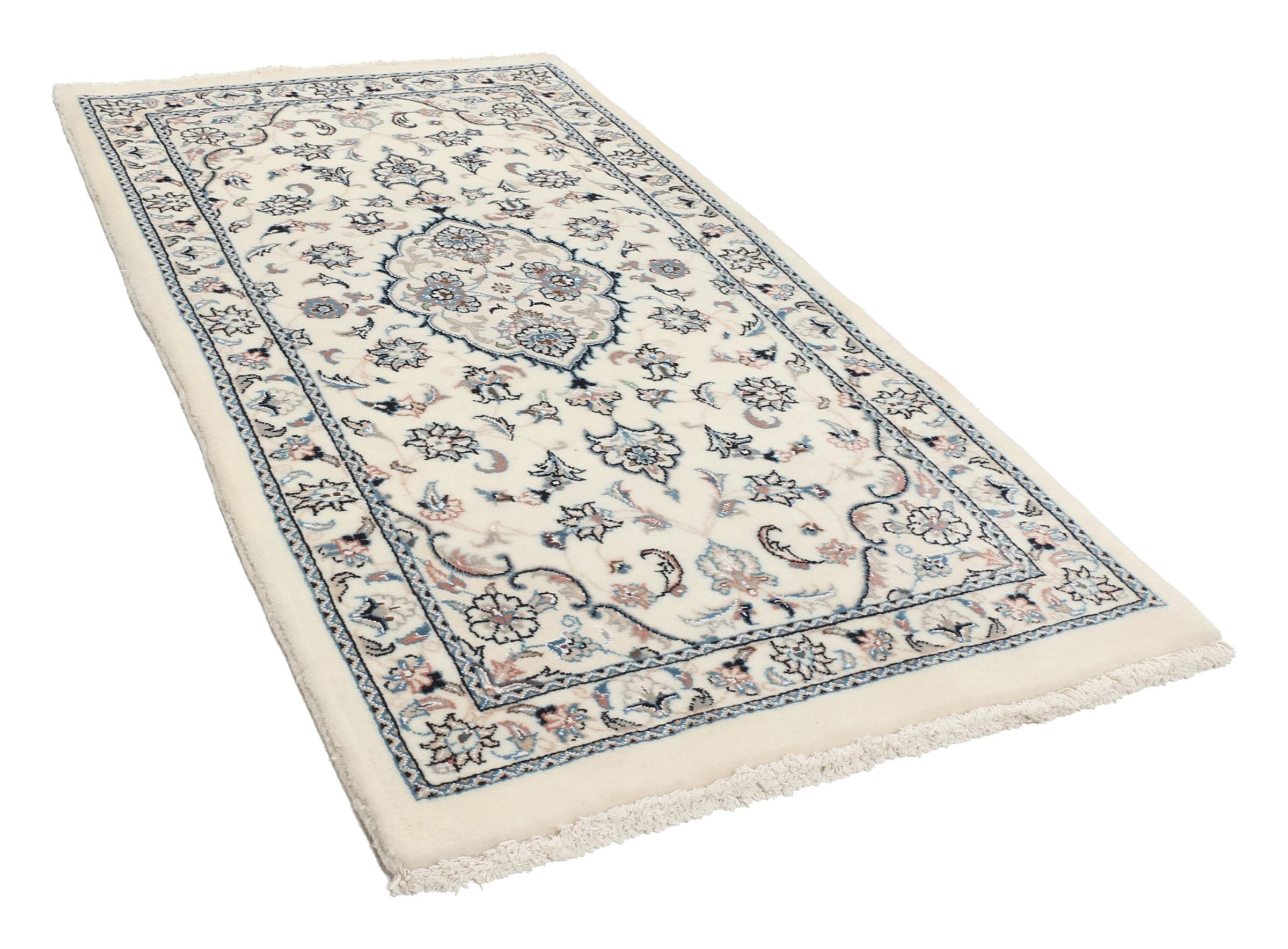
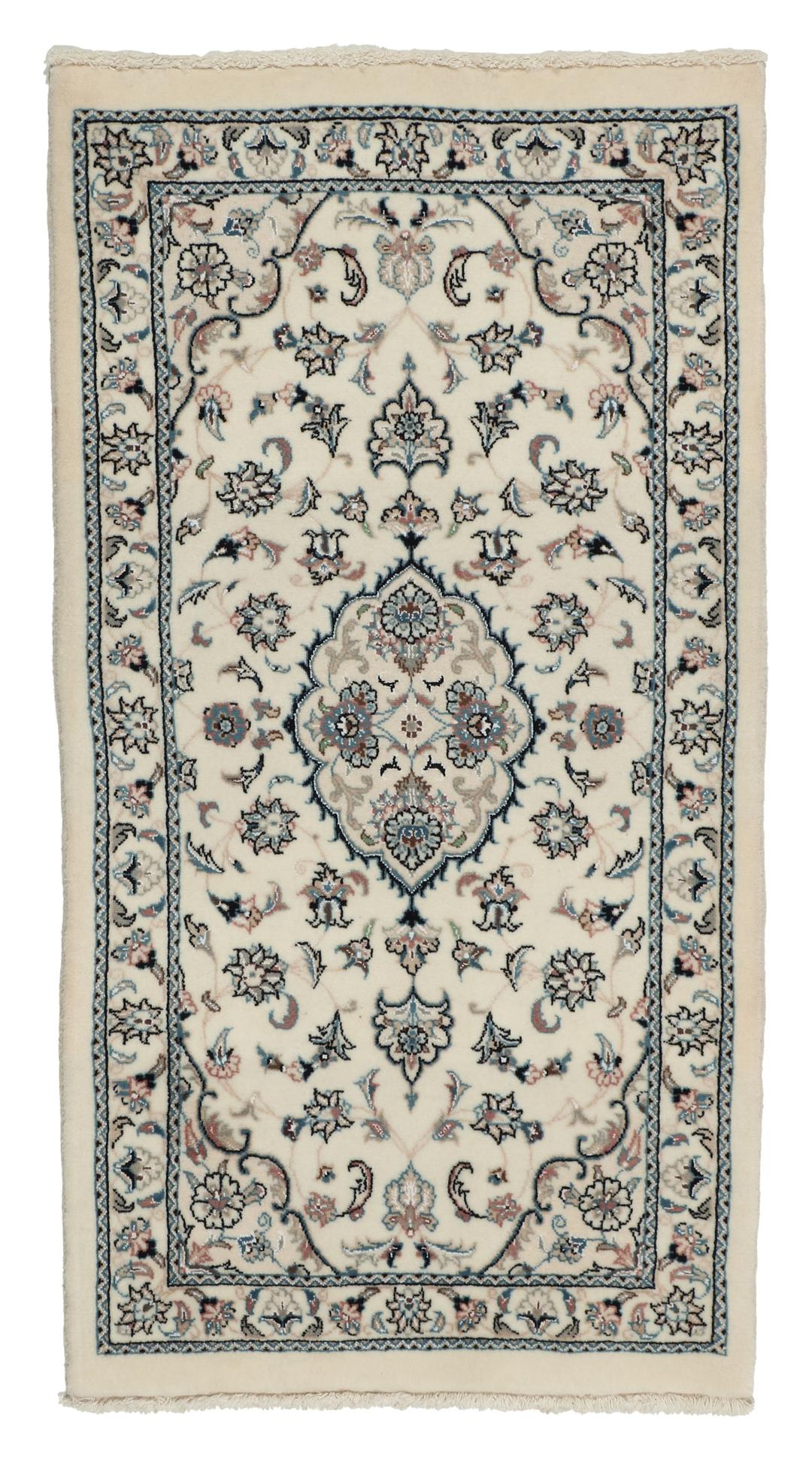
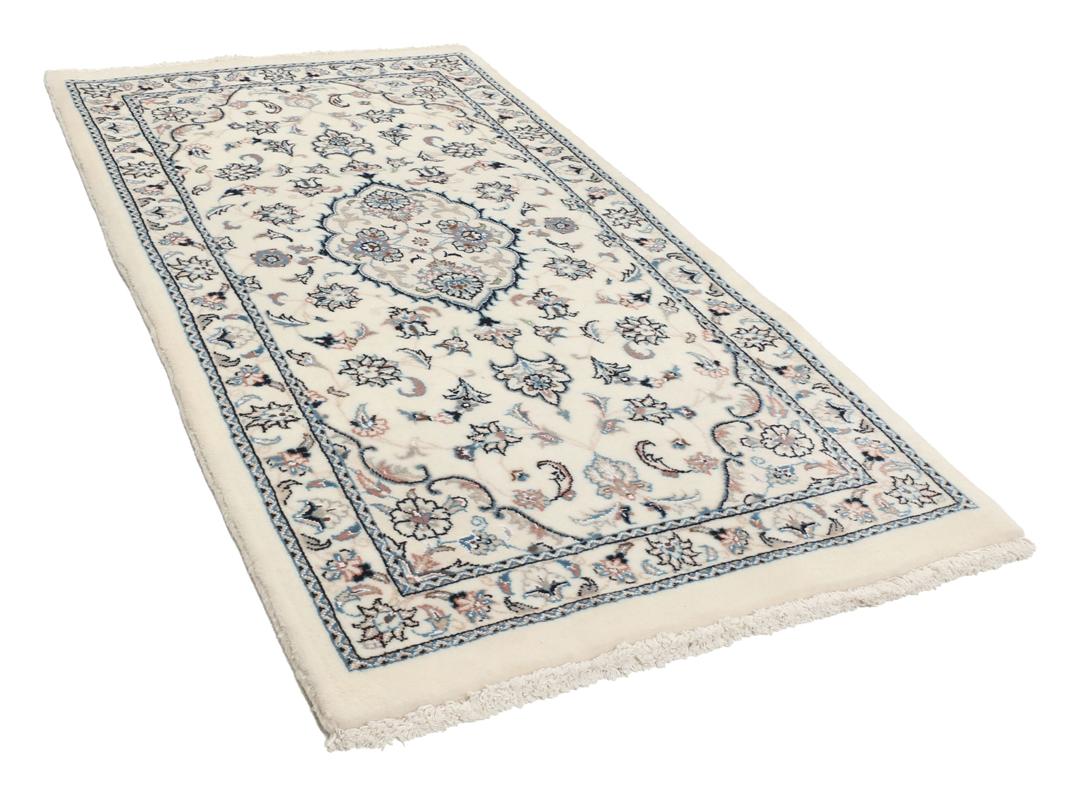
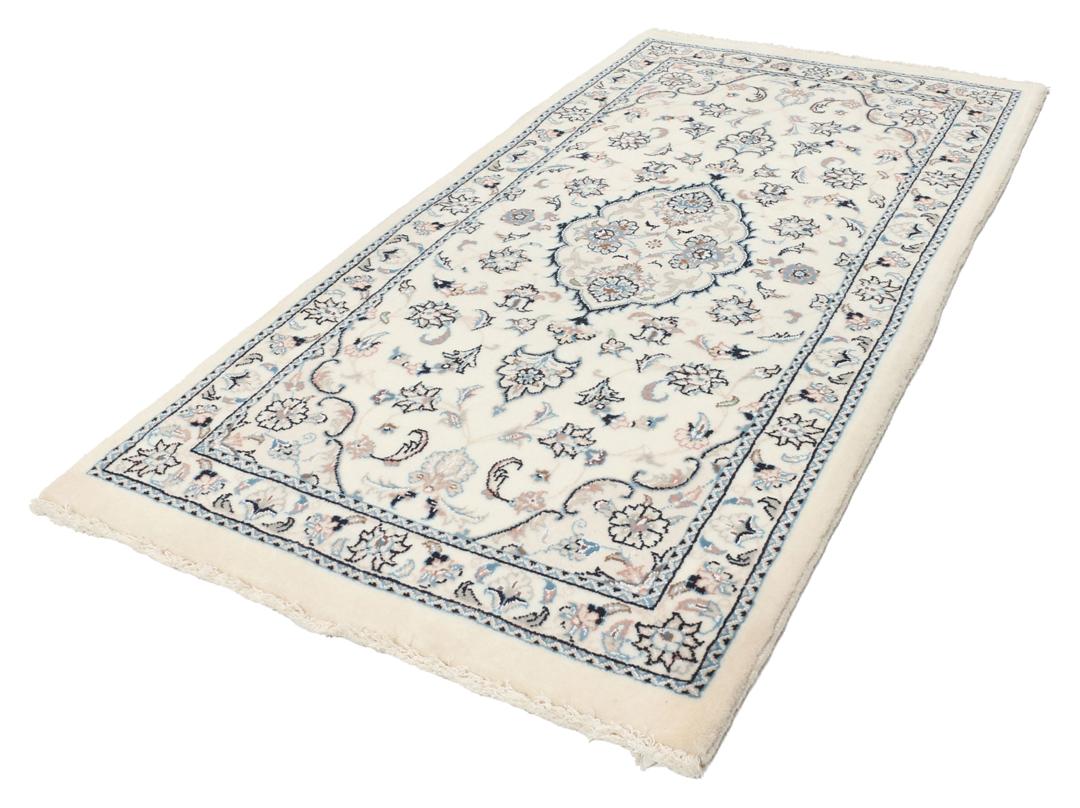
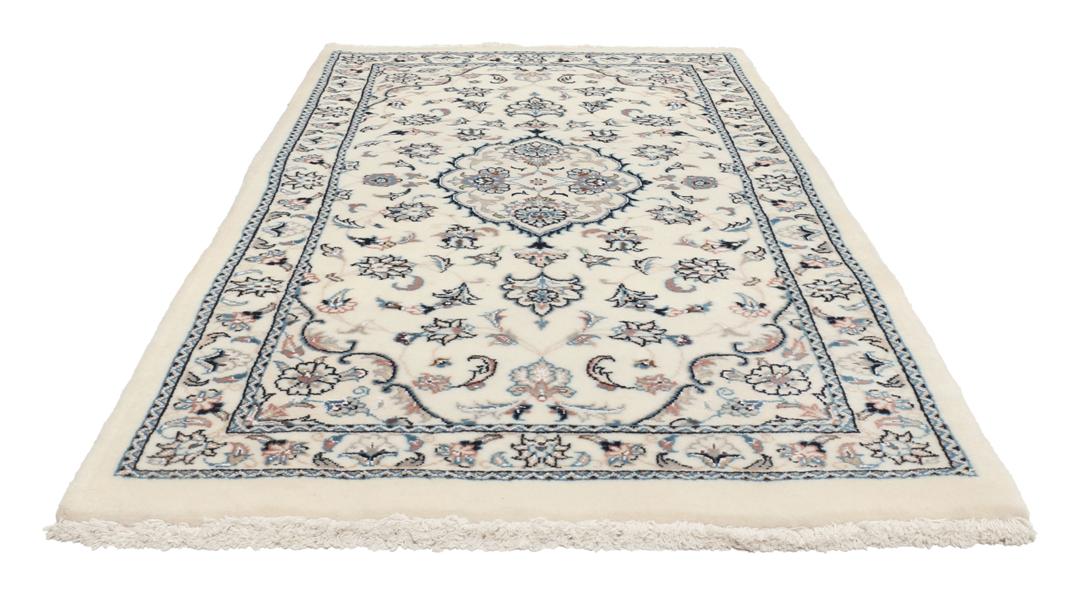
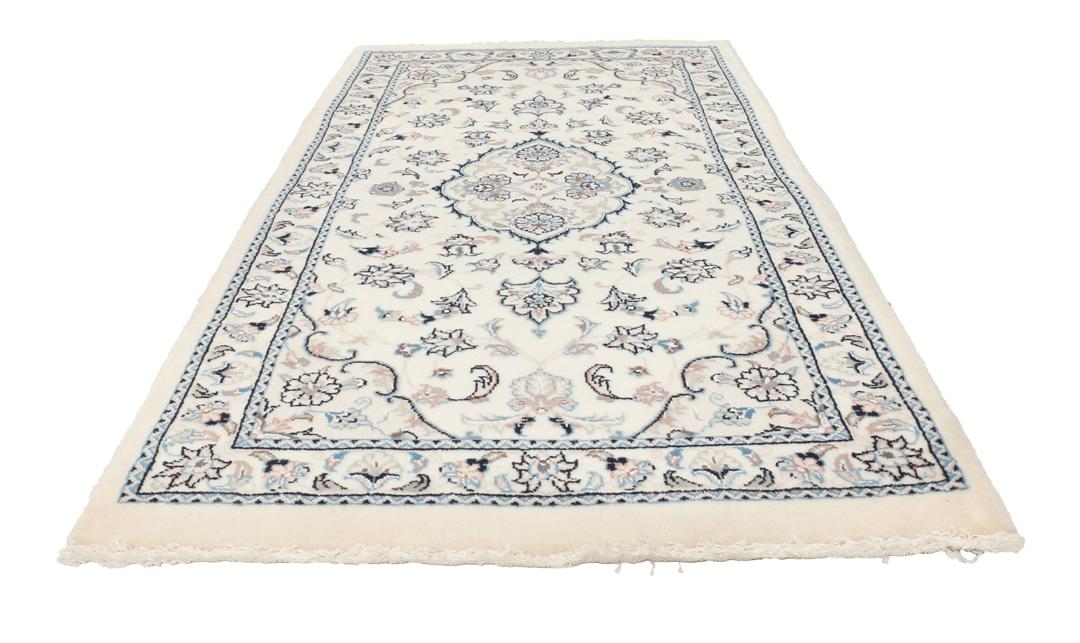
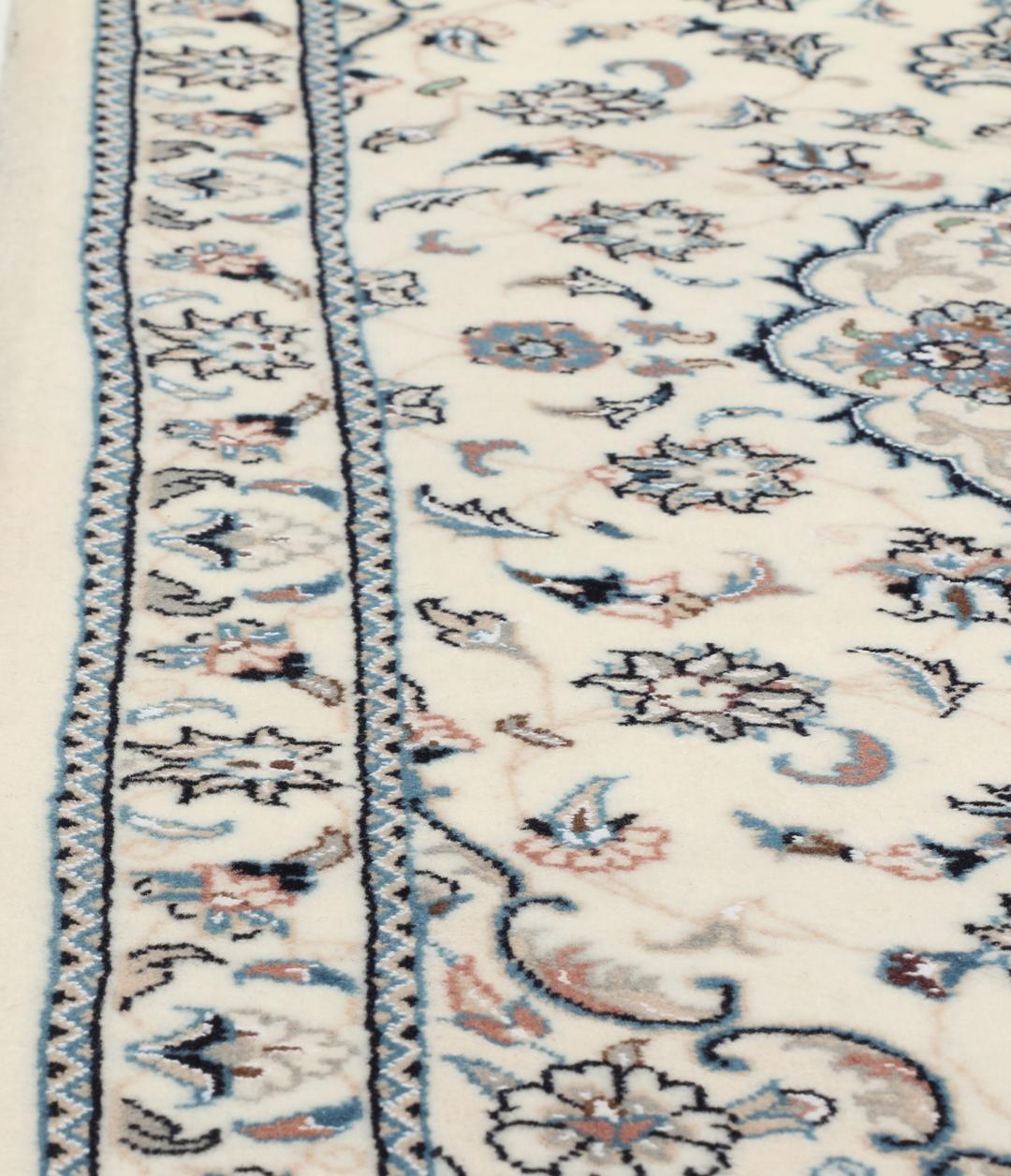
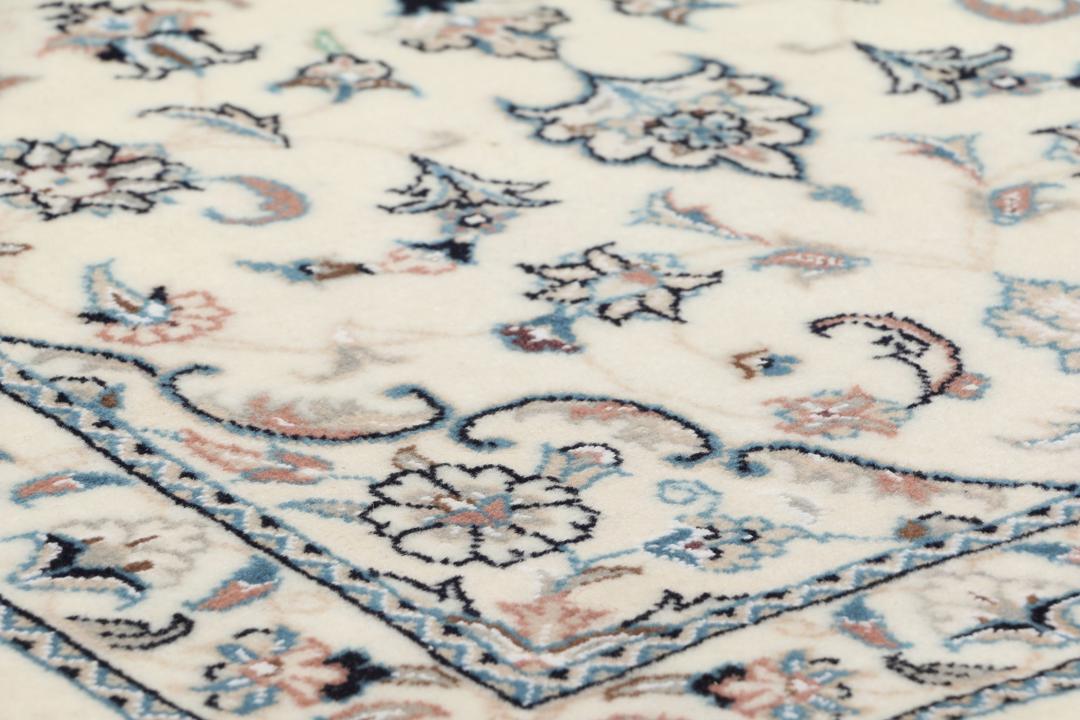
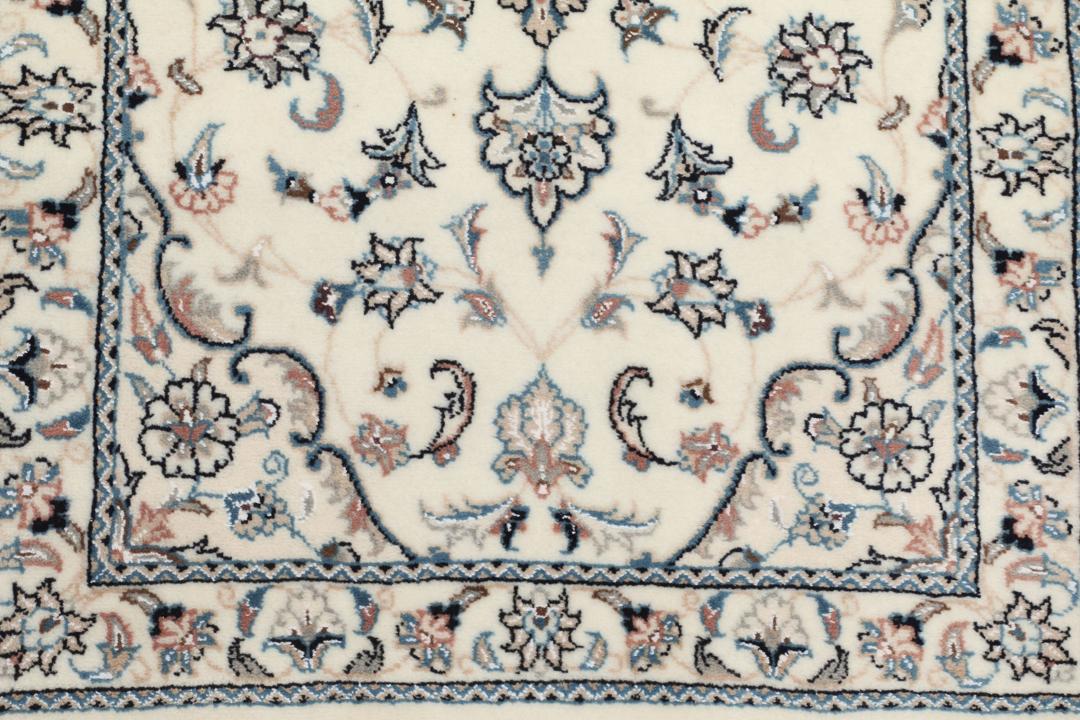
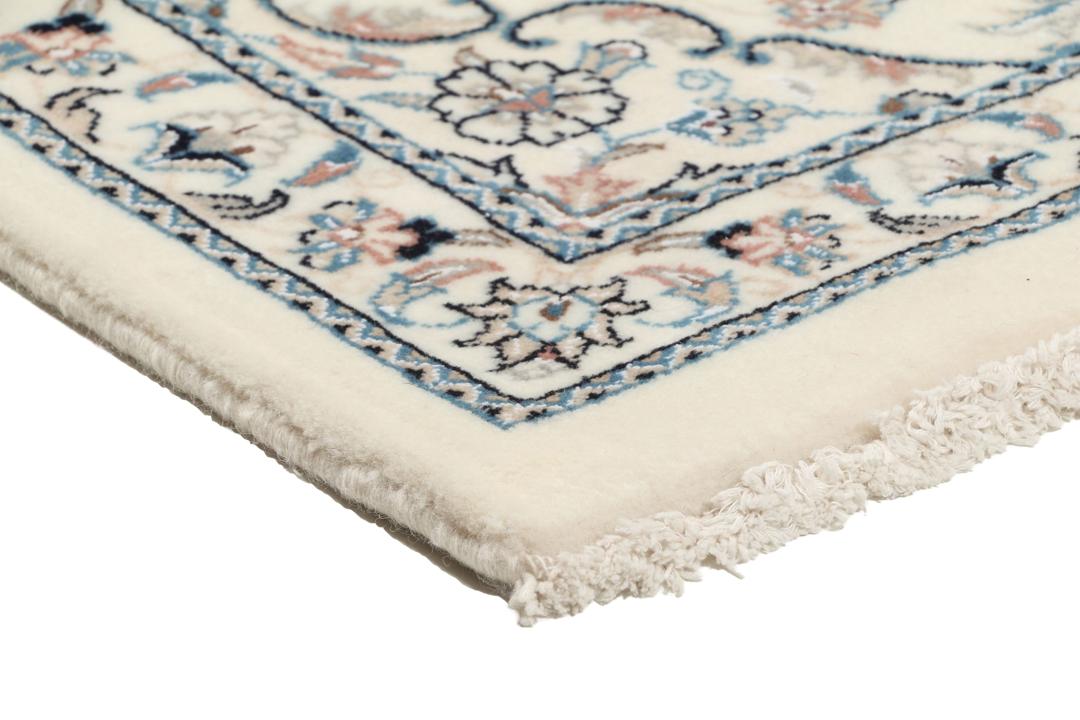
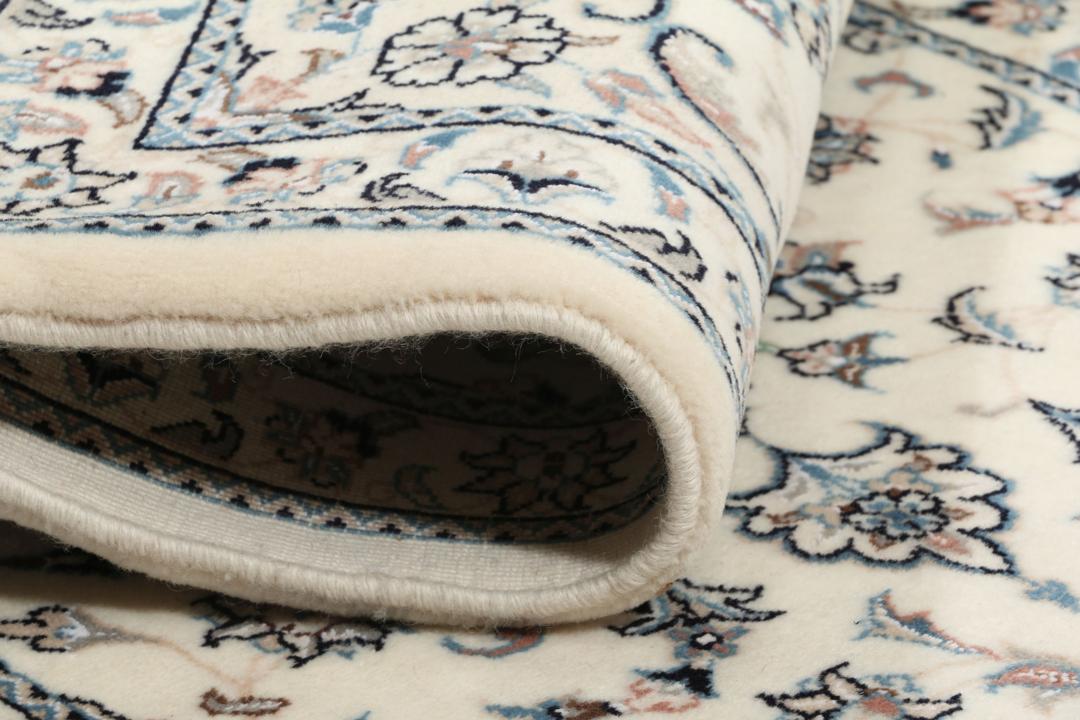
Nain rugs originate from the city of Nain in the Middle East, a place once famous for producing fine religious textiles and cloaks. Over time, the local artisans transitioned their exceptional skills to the creation of high-quality floor coverings. This shift marked the beginning of a tradition known for its elegance, fine materials, and subtle colour palettes, often favouring shades of cream, blue, and white.
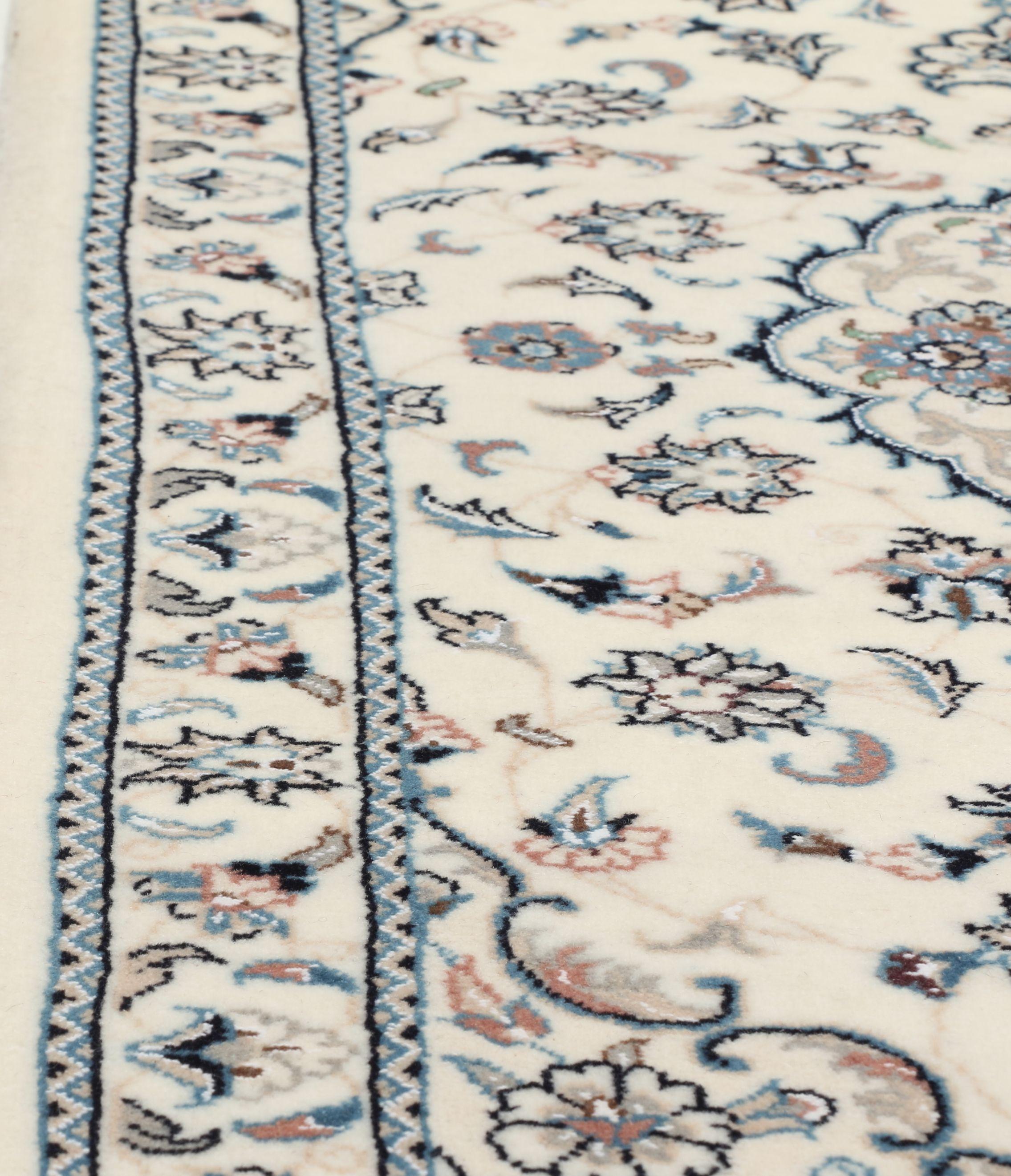
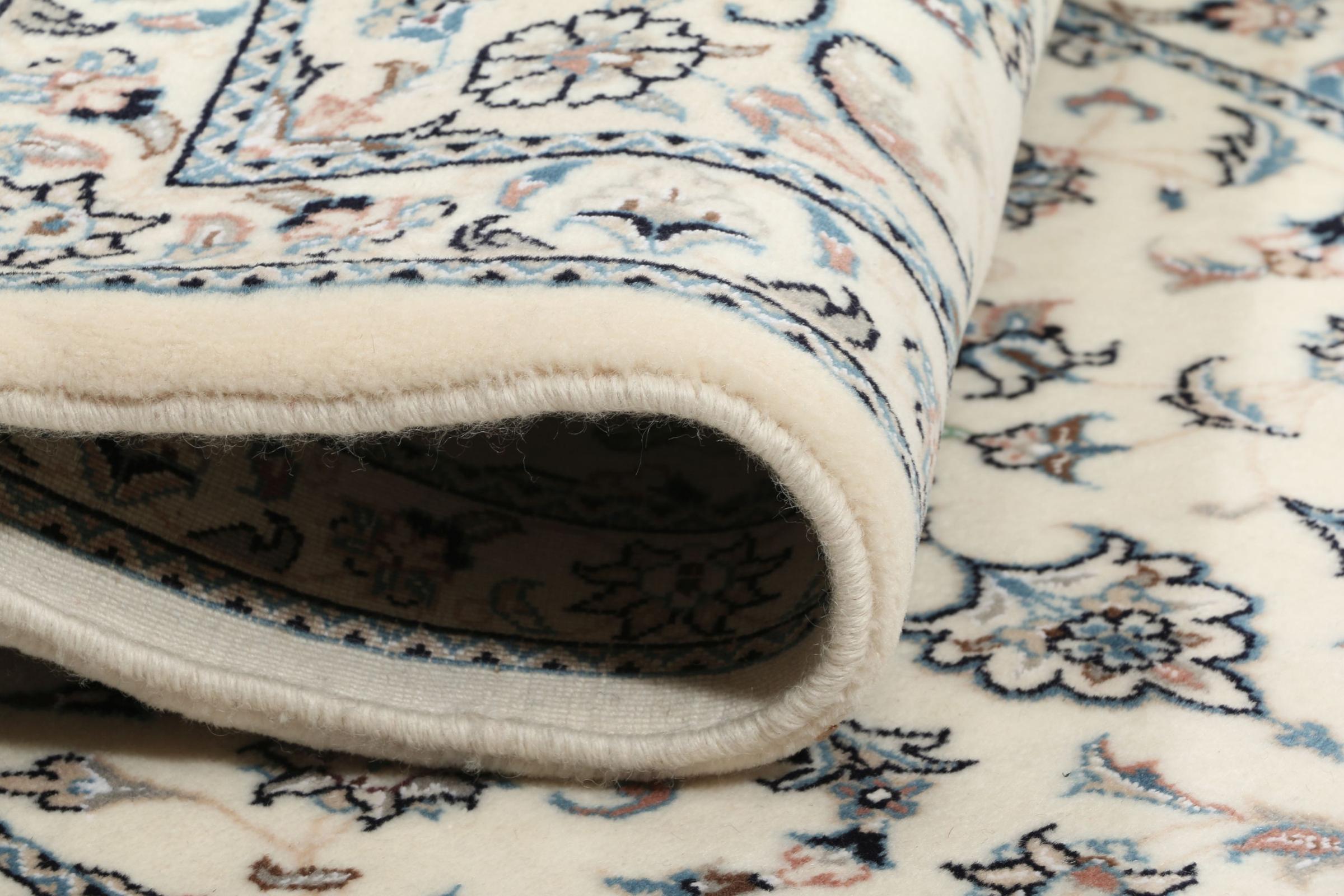
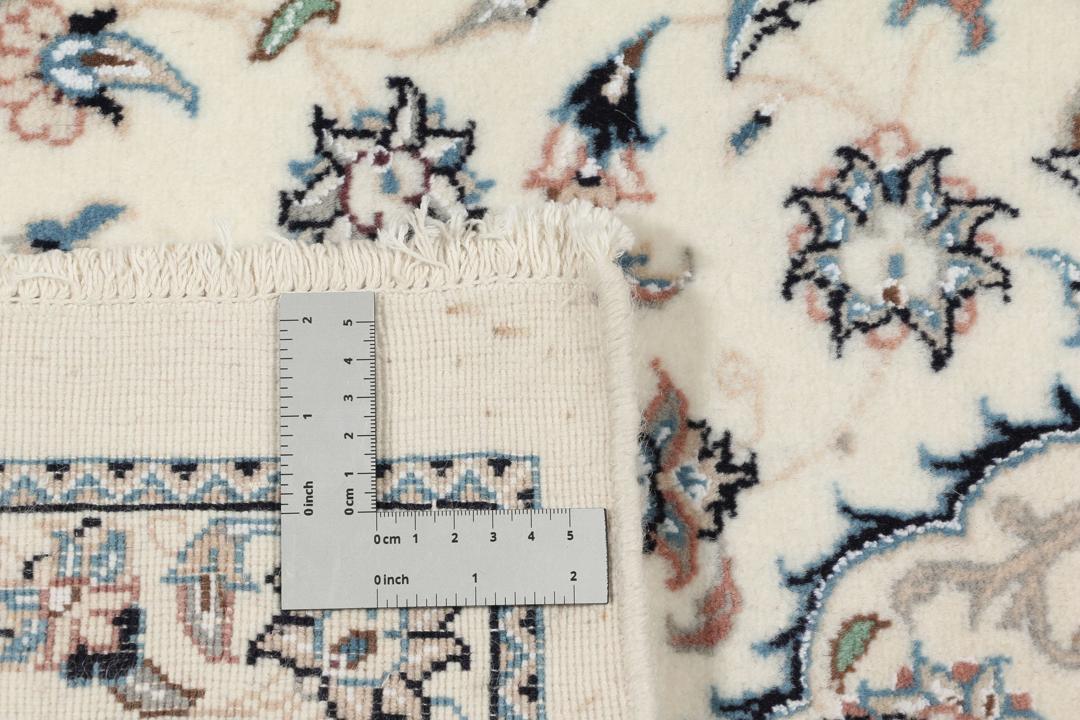
The designation 9La refers to the number of threads used in the fringe of the rug, which indicates the fineness of the construction. In the context of Nain rugs, a lower number signifies a higher density of knots, making the 9La a highly regarded category. This technical detail is a hallmark of the craft, ensuring that the final product is not only beautiful but also durable and capable of holding intricate patterns that would be impossible to achieve with coarser methods.
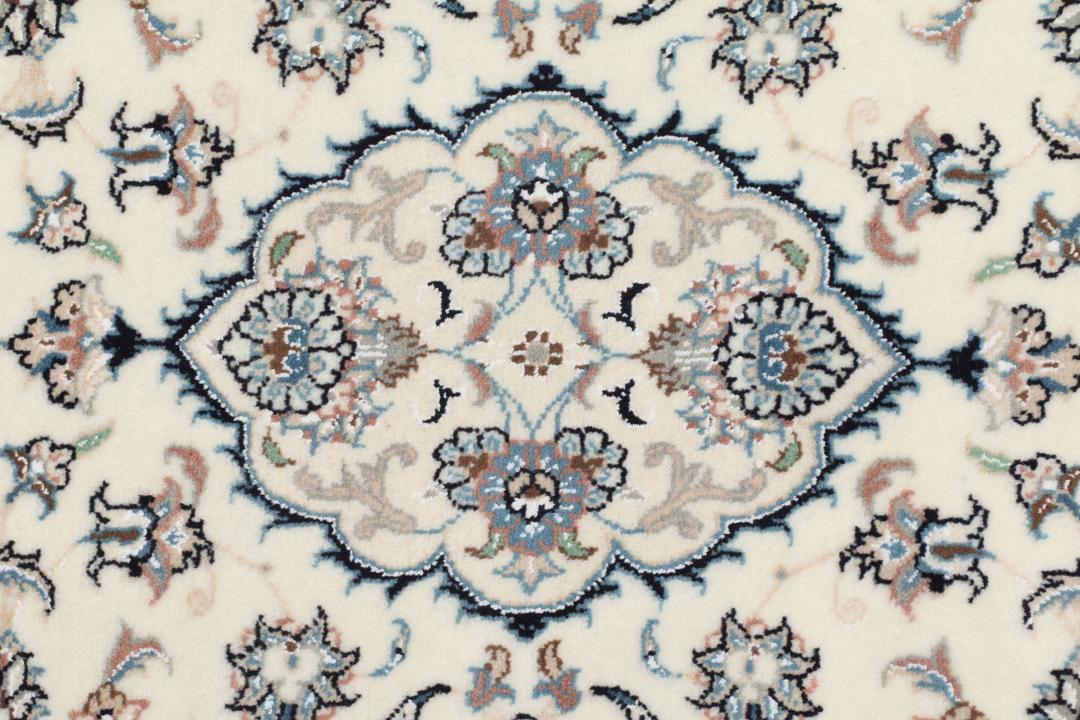
Visually, Nain rugs are defined by their balanced designs, often featuring a central medallion surrounded by scrolling floral vines, leaves, and intricate arabesques. The use of a light, neutral field contrasted with soft blue or pink tones is a signature style that provides a sense of openness and grace. These rugs are celebrated for their ability to bring a sense of order and serenity to a room, acting as an elegant anchor for any interior.
Collectors value Nain rugs for their refined aesthetic and the clear evidence of human skill. Owning one is an opportunity to connect with a long-standing tradition of excellence. Because each piece is crafted with such attention to detail, they are seen as lasting treasures that gain character over time, representing a blend of cultural heritage and artistic mastery that remains relevant in modern homes.