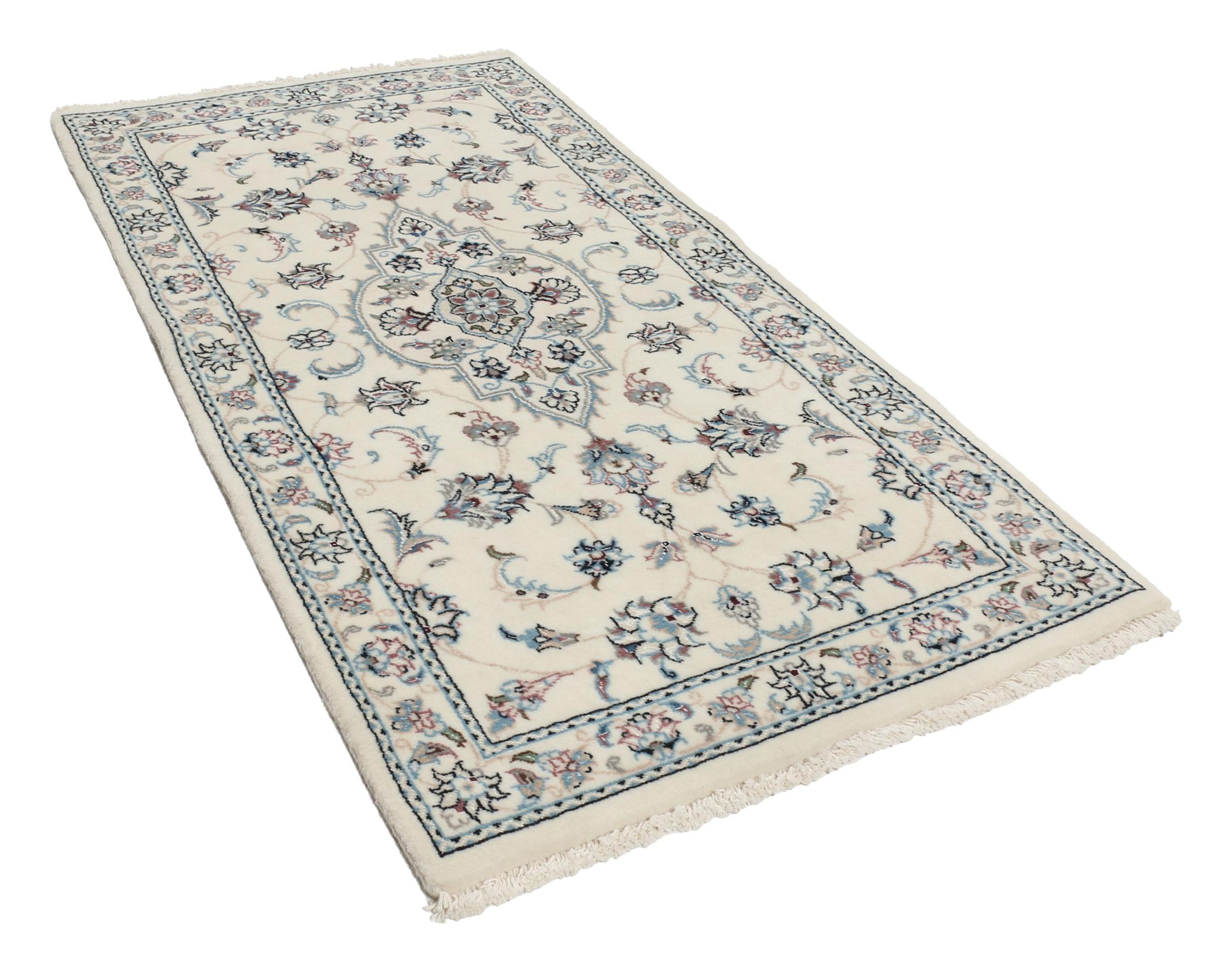
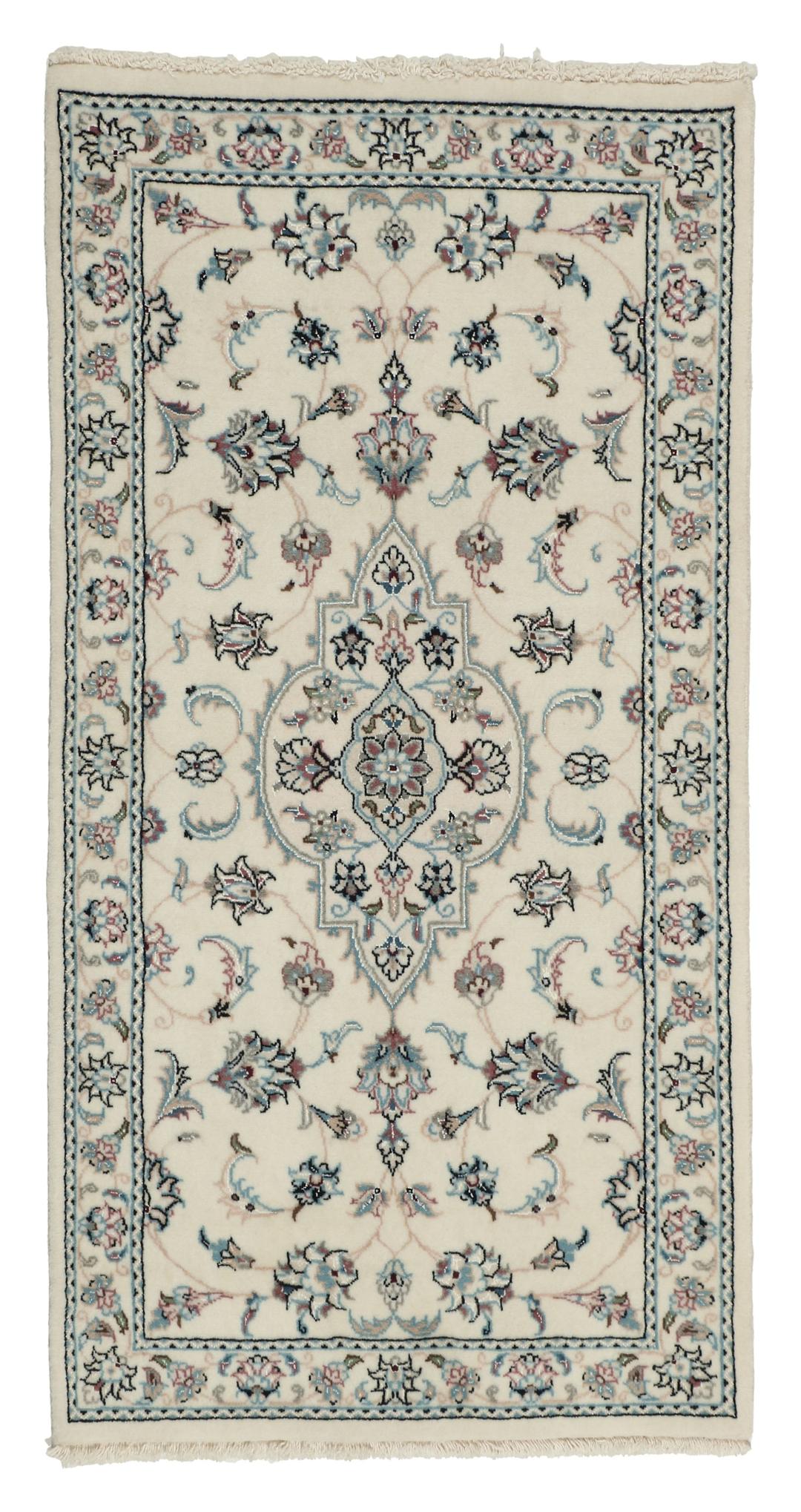
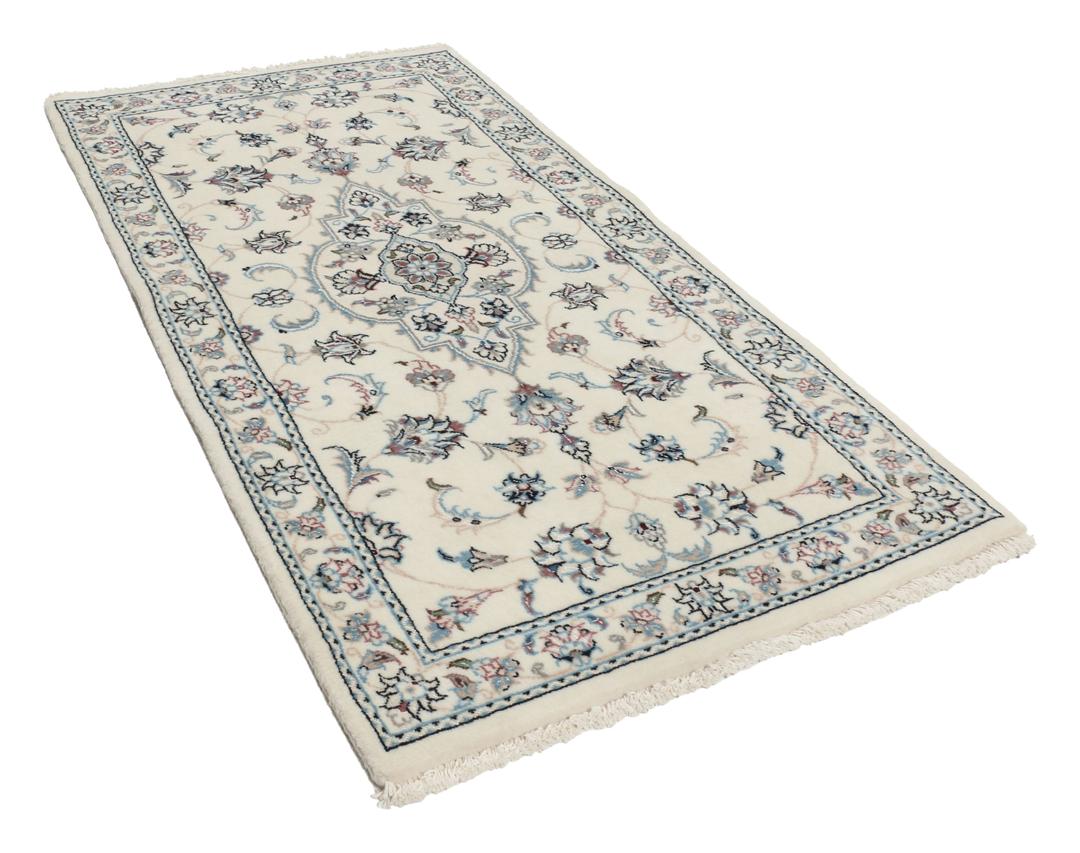
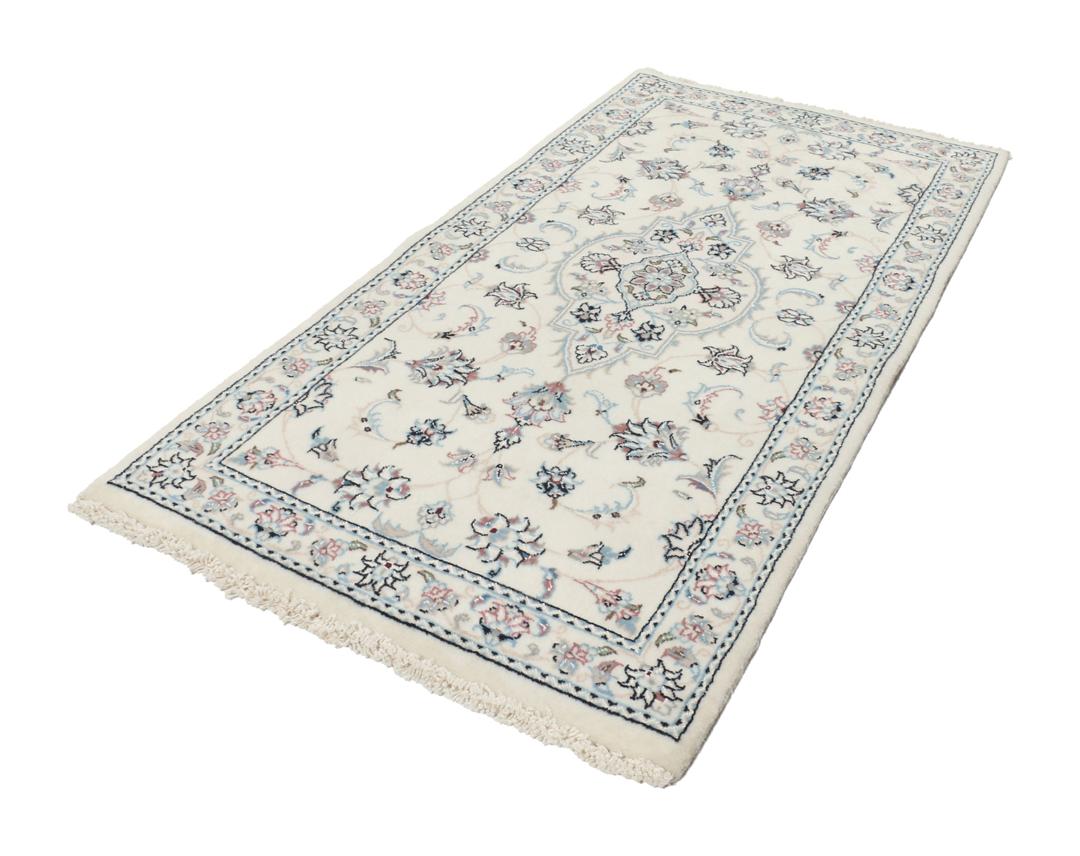
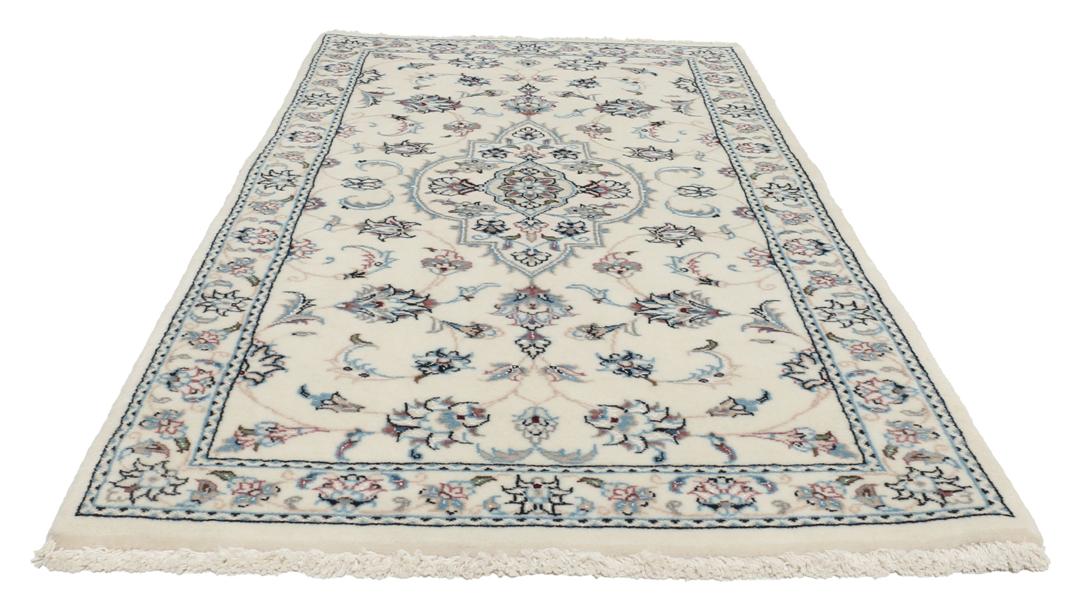
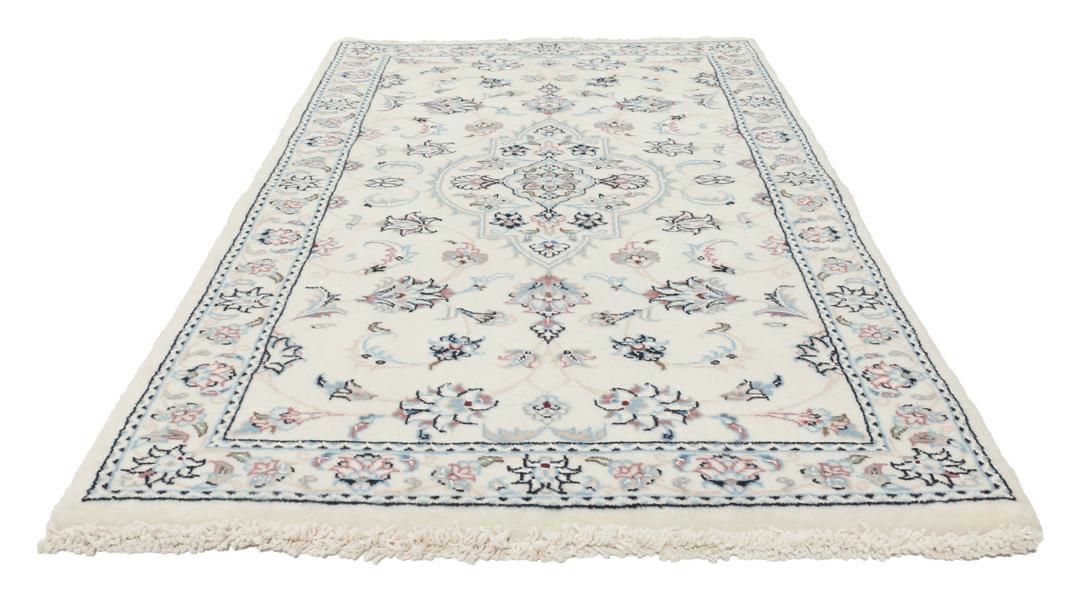
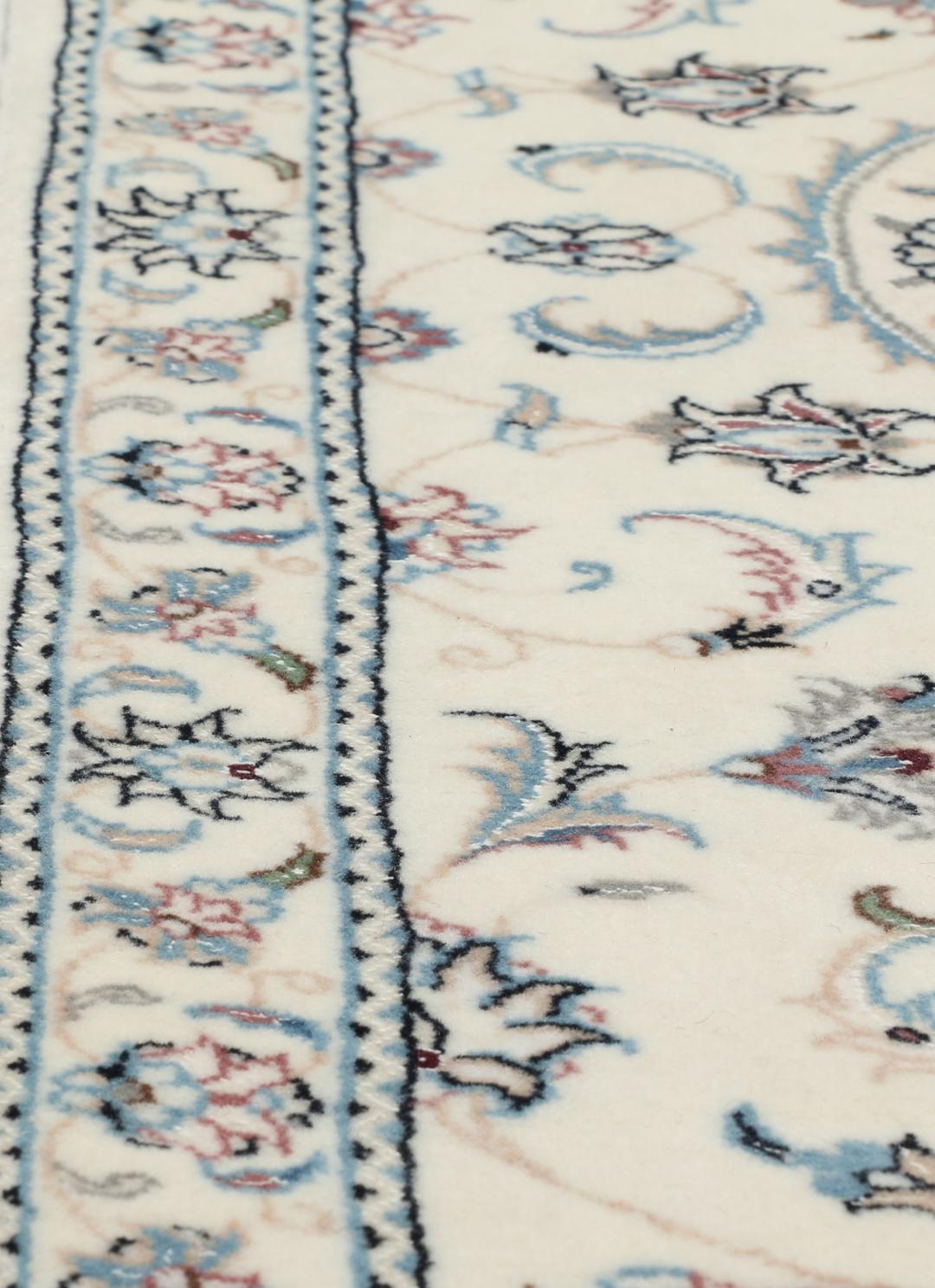
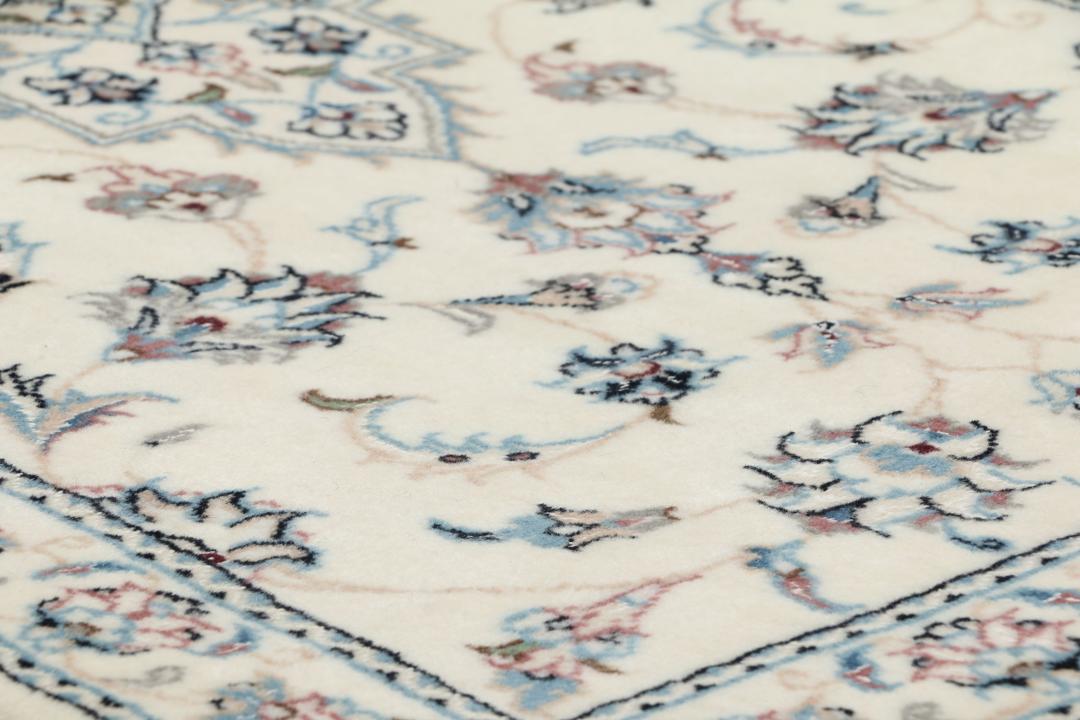
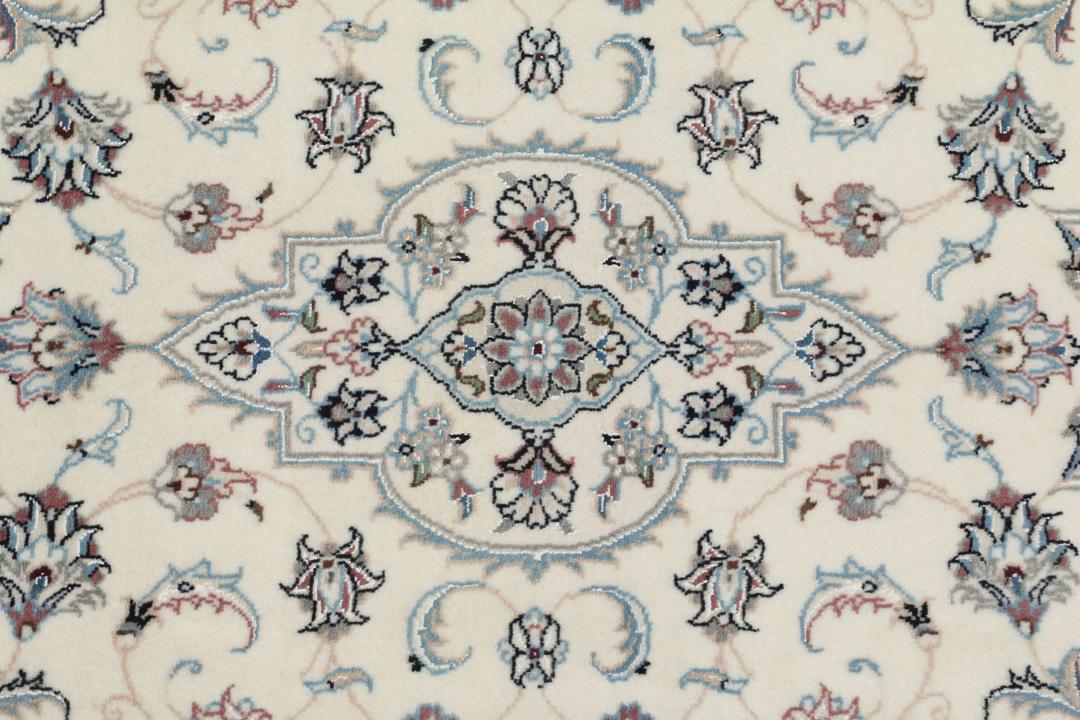
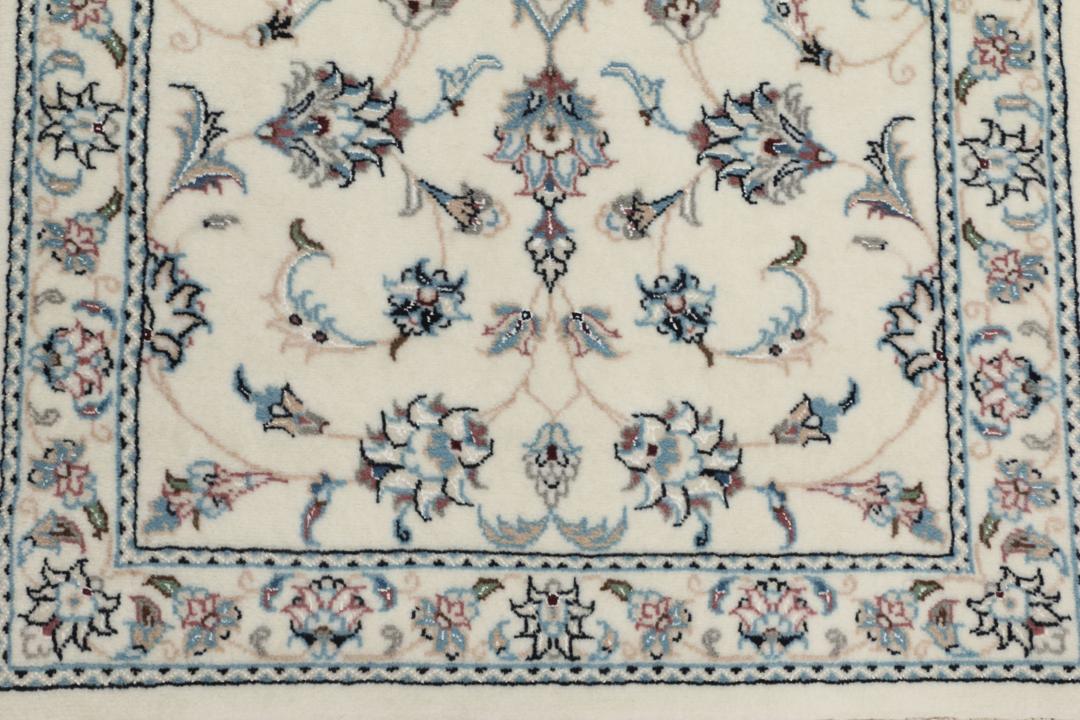
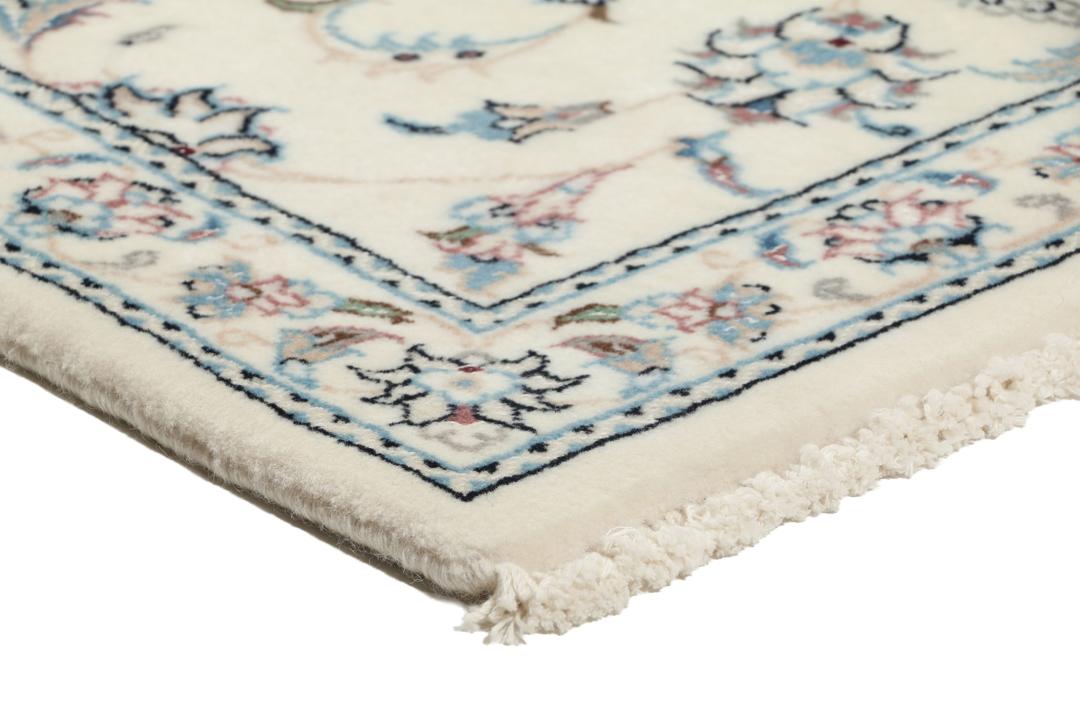
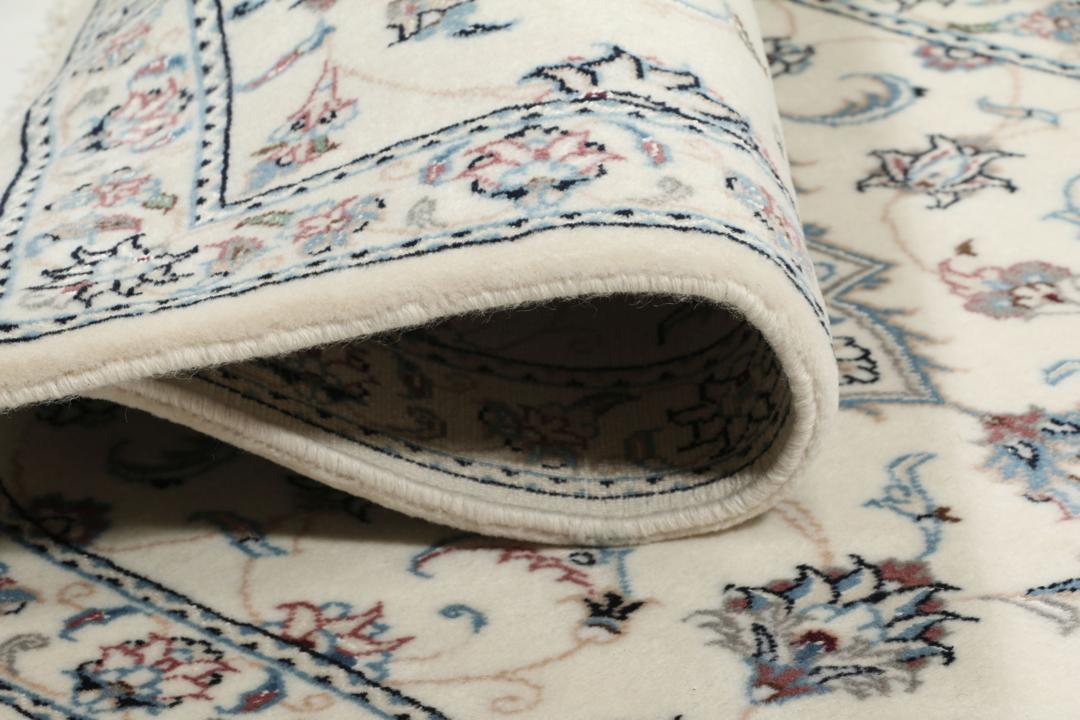
Nain rugs originate from the city of Nain, situated in the central desert region of the Middle East. Originally known for producing high-quality wool textiles and cloaks, the city pivoted to rug weaving in the early 20th century. By drawing on the sophisticated design traditions of nearby weaving hubs, Nain artisans developed a distinct style characterised by intricate floral patterns and a refined colour palette, often incorporating light blues, creams, and whites.
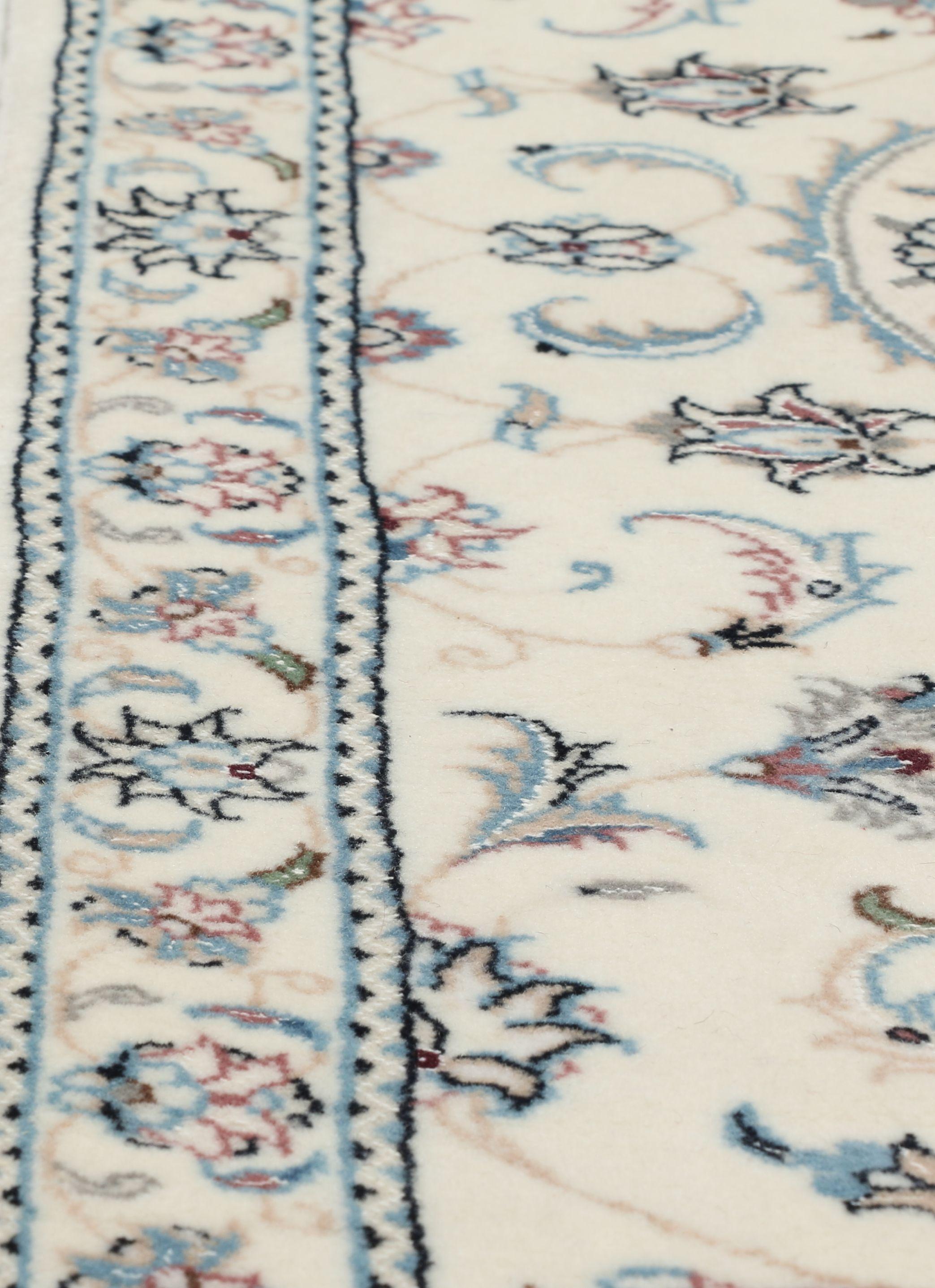
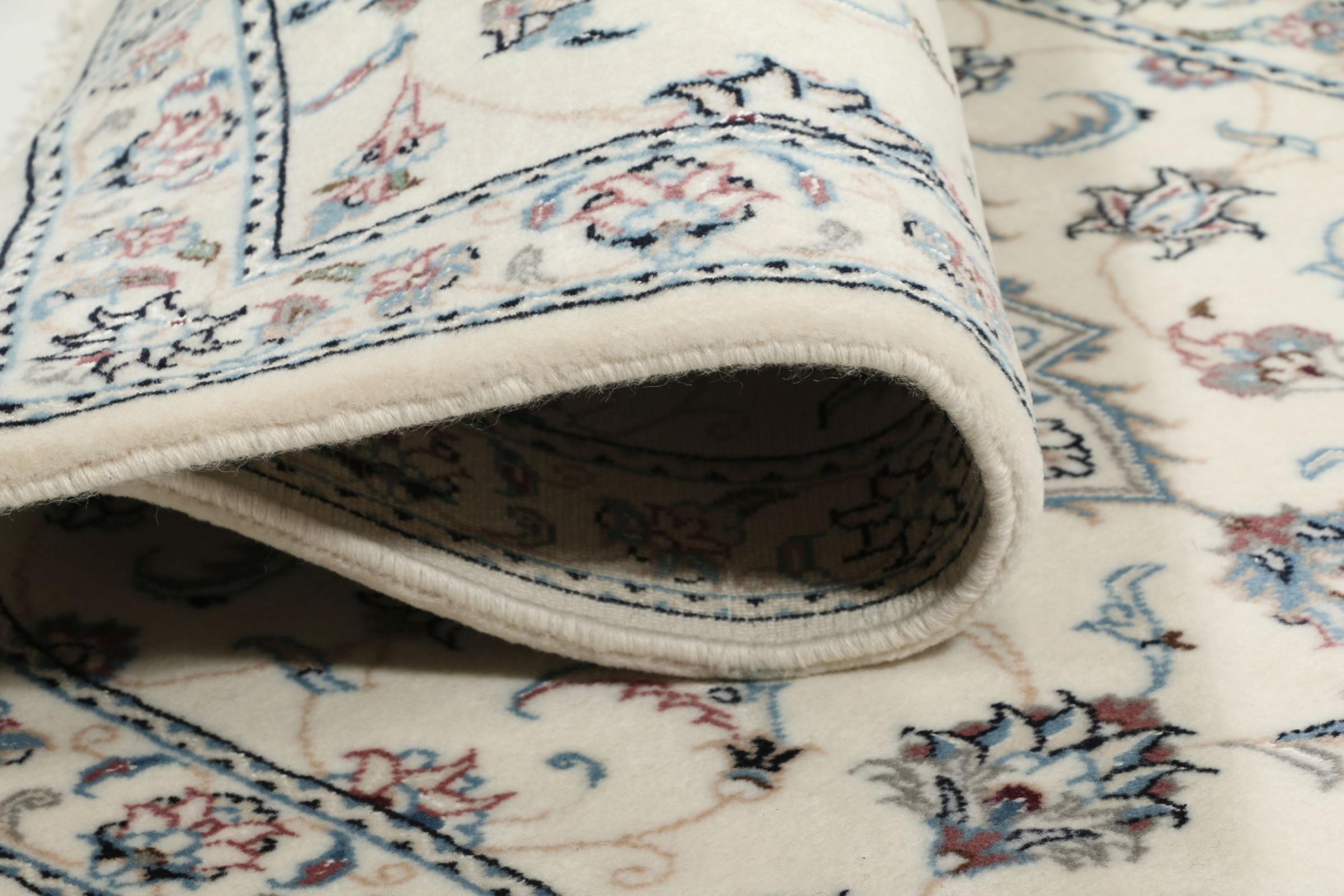
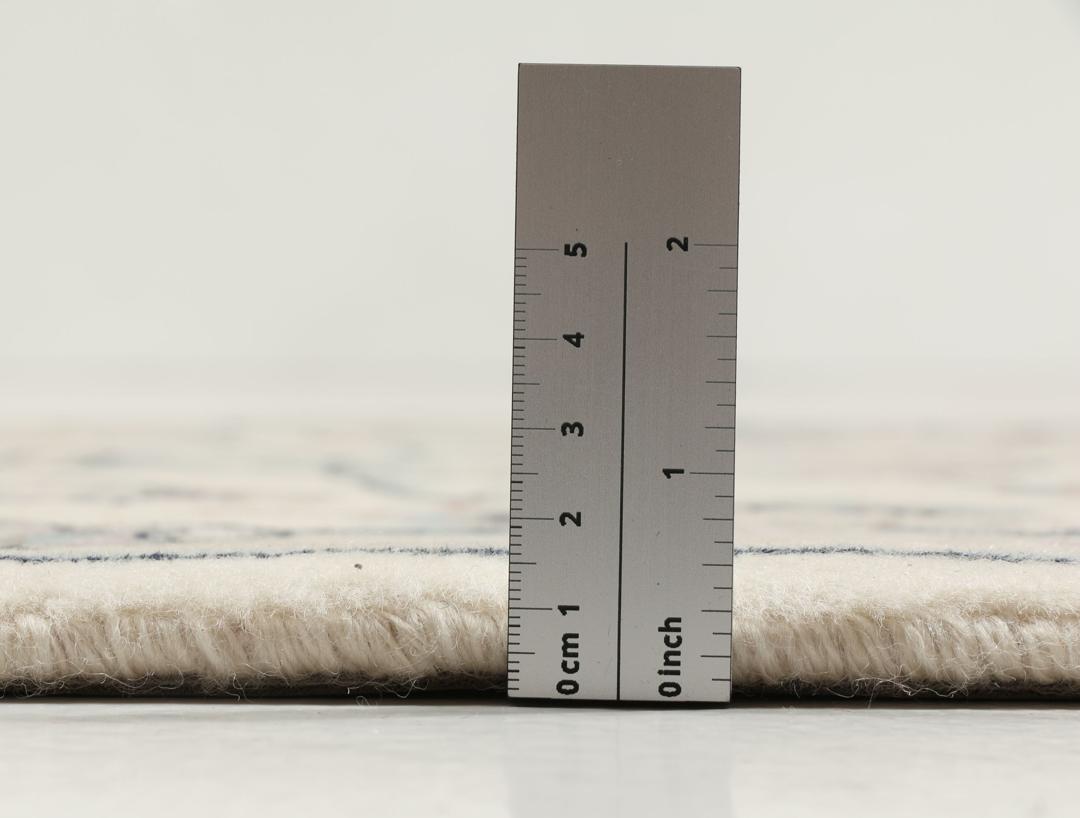
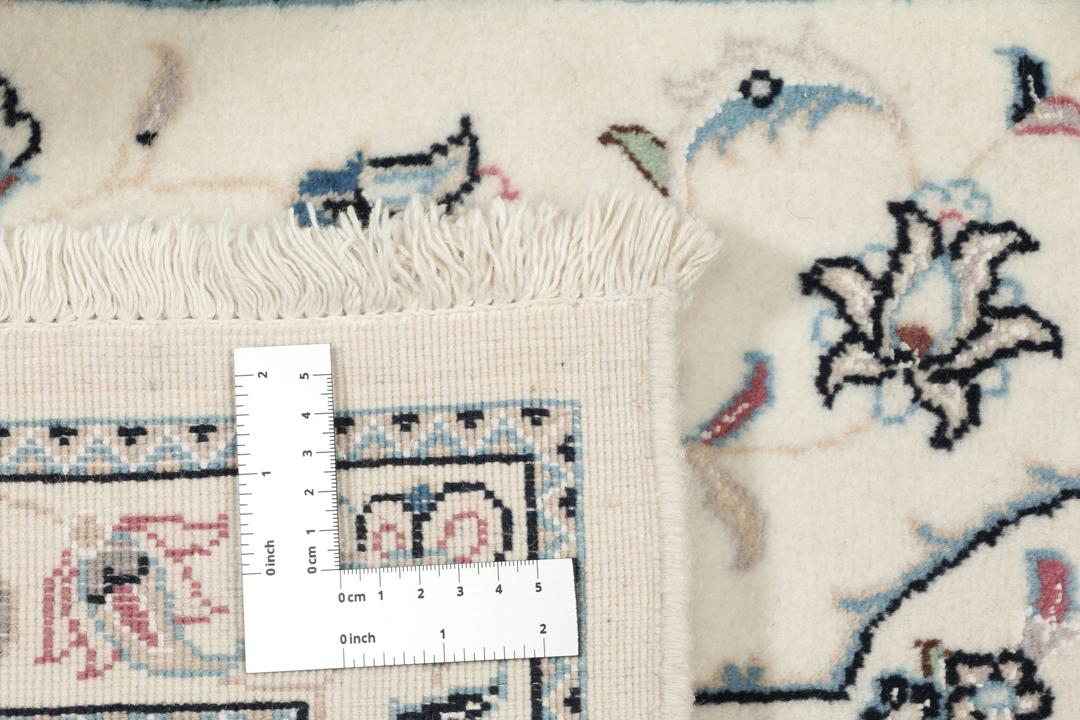
The term 9La refers to the specific thread count used in the weaving process. In the nomenclature of these rugs, the 'La' indicates the number of strands in the foundation threads. A 9La classification signifies a high level of detail and a fine, dense pile, which allows the weavers to execute complex, curvilinear designs that would be impossible with coarser materials. This technical standard is a hallmark of the city's commitment to quality and precision.
Visually, these rugs are celebrated for their balanced compositions. They typically feature a central, ornate medallion that draws the eye, surrounded by a field dense with delicate vine scrolls, leaves, and flower heads. The borders are equally detailed, often mirroring the motifs found in the centre to create a sense of harmony. The use of a light, neutral field is a classic choice, designed to brighten interiors and highlight the intricacy of the darker, contrasting floral elements.
Collecting a Nain rug is an entry into a legacy of artistic dedication. They are highly sought after by those who appreciate the intersection of technical mastery and aesthetic grace. Because each rug is a product of months of careful work, owning one is a testament to the enduring value of human skill. These pieces are not merely decorative, but are considered cultural artefacts that hold their beauty and significance across generations.