Nain rugs originate from the desert town of Nain in the Middle East, a region that evolved from a centre of fine woollen cloth production into one of the world's most prestigious hubs for high-end rug weaving. While the town has a long history of textile artistry, its reputation for rugs truly blossomed in the early 20th century, drawing upon a legacy of refined craftsmanship.
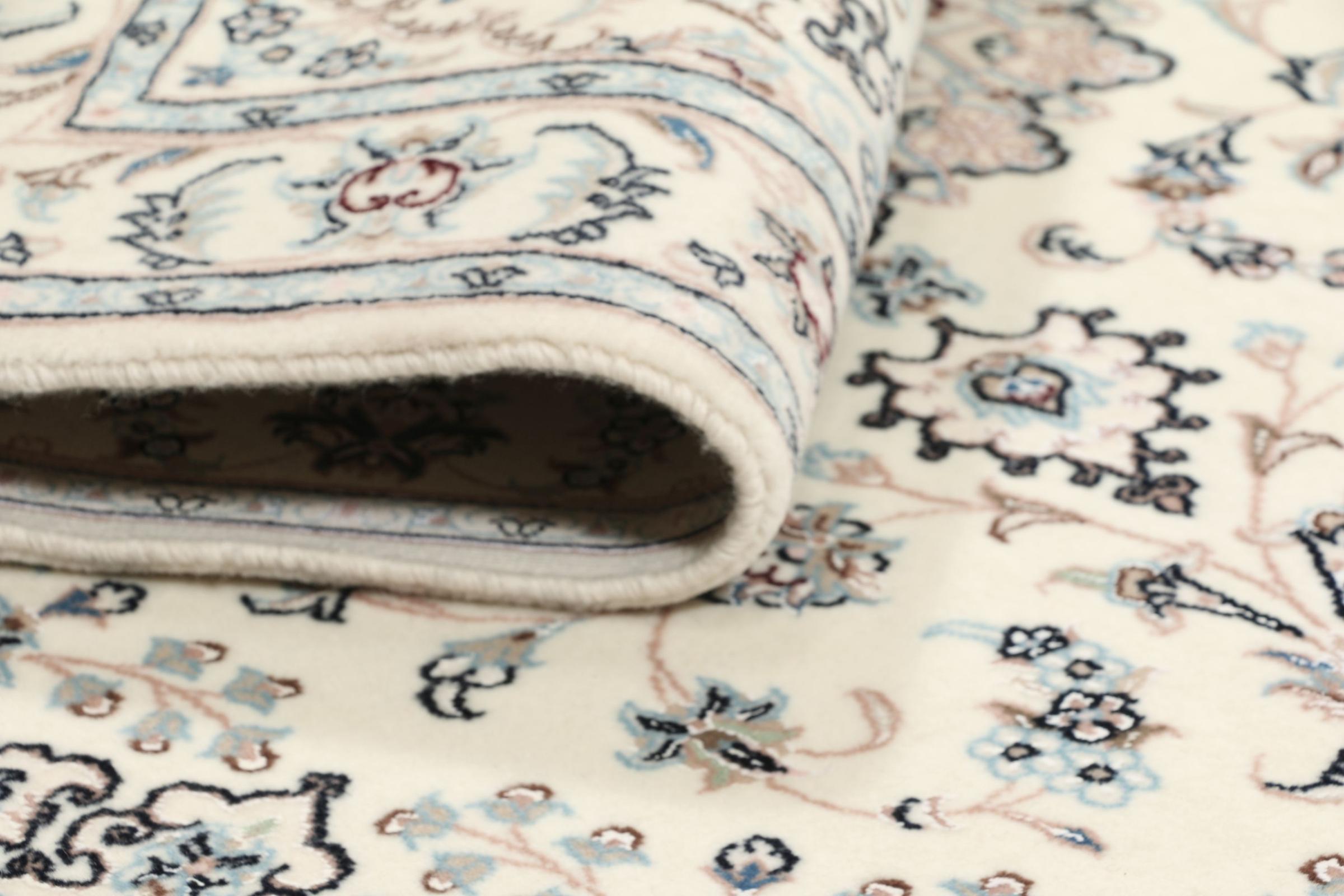
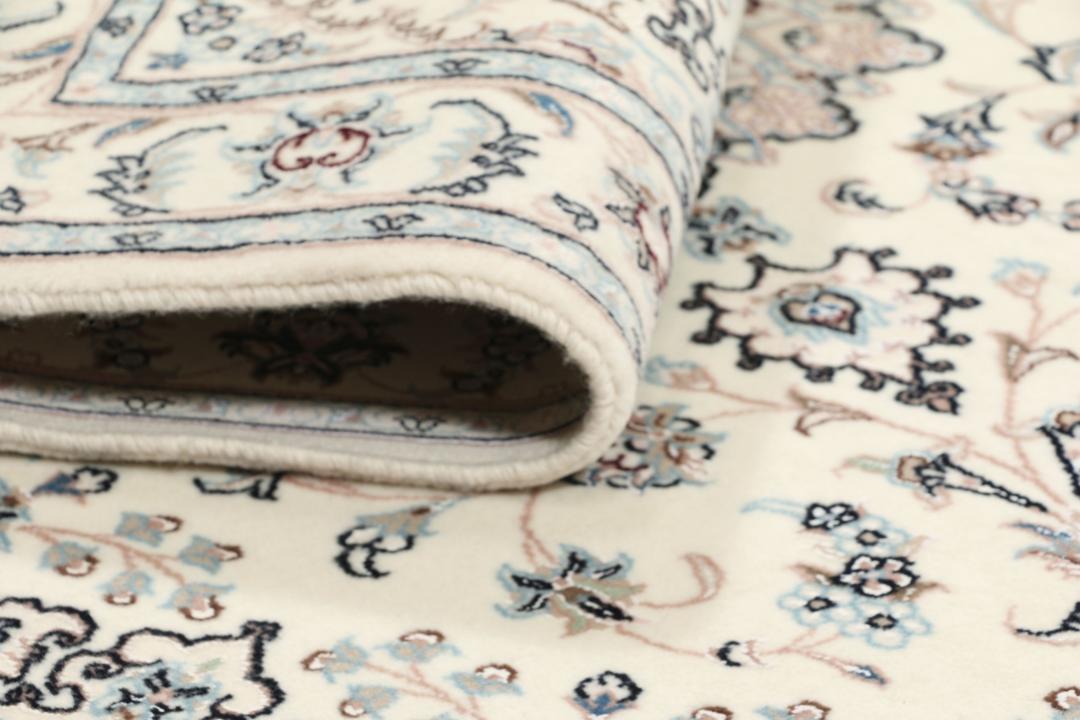
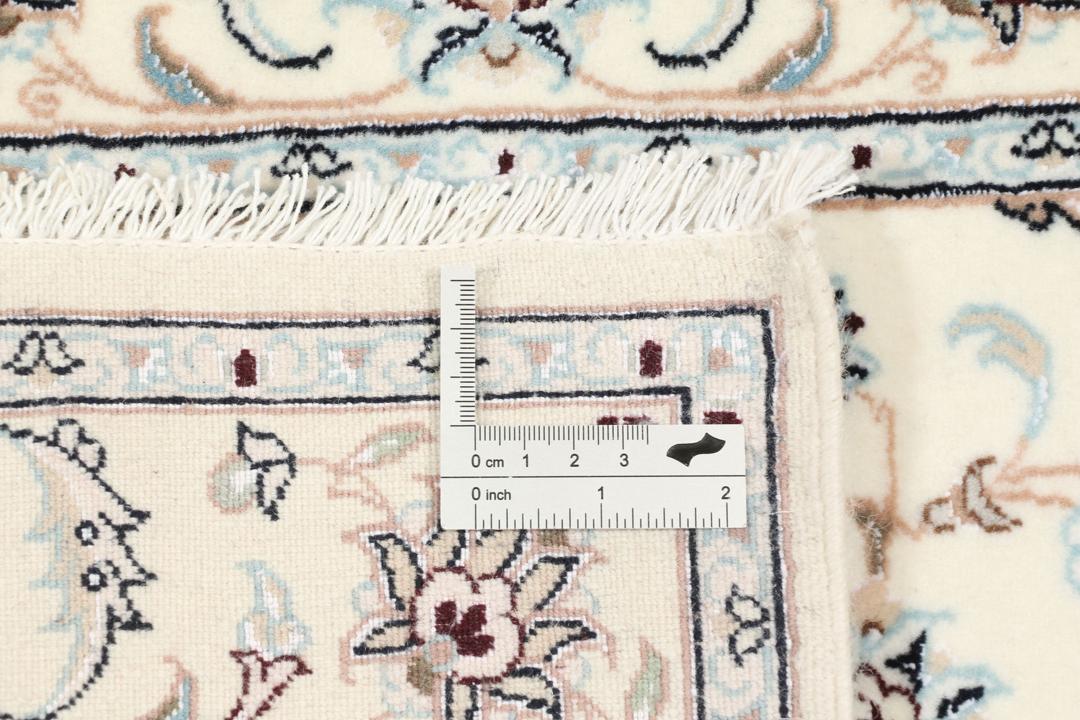
The term '6La' refers to the thickness and fineness of the rug, specifically the number of threads in the fringe. The 'La' system is a unique classification used in Nain to denote quality, where a lower number indicates a finer, more intricate weave. A 6La rug is considered among the highest standards, requiring extraordinary skill to manipulate the wool into such dense, clear, and detailed patterns.
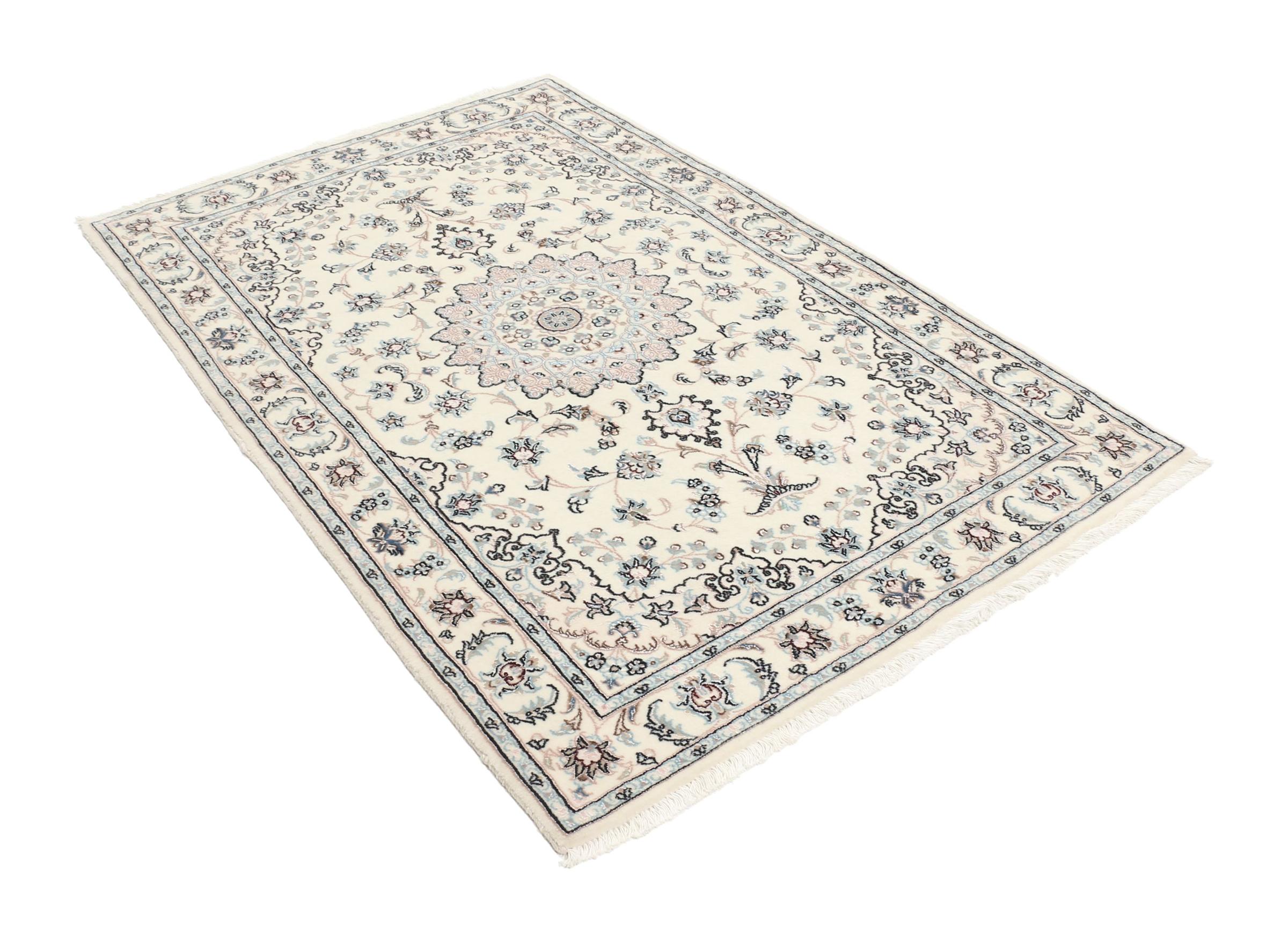
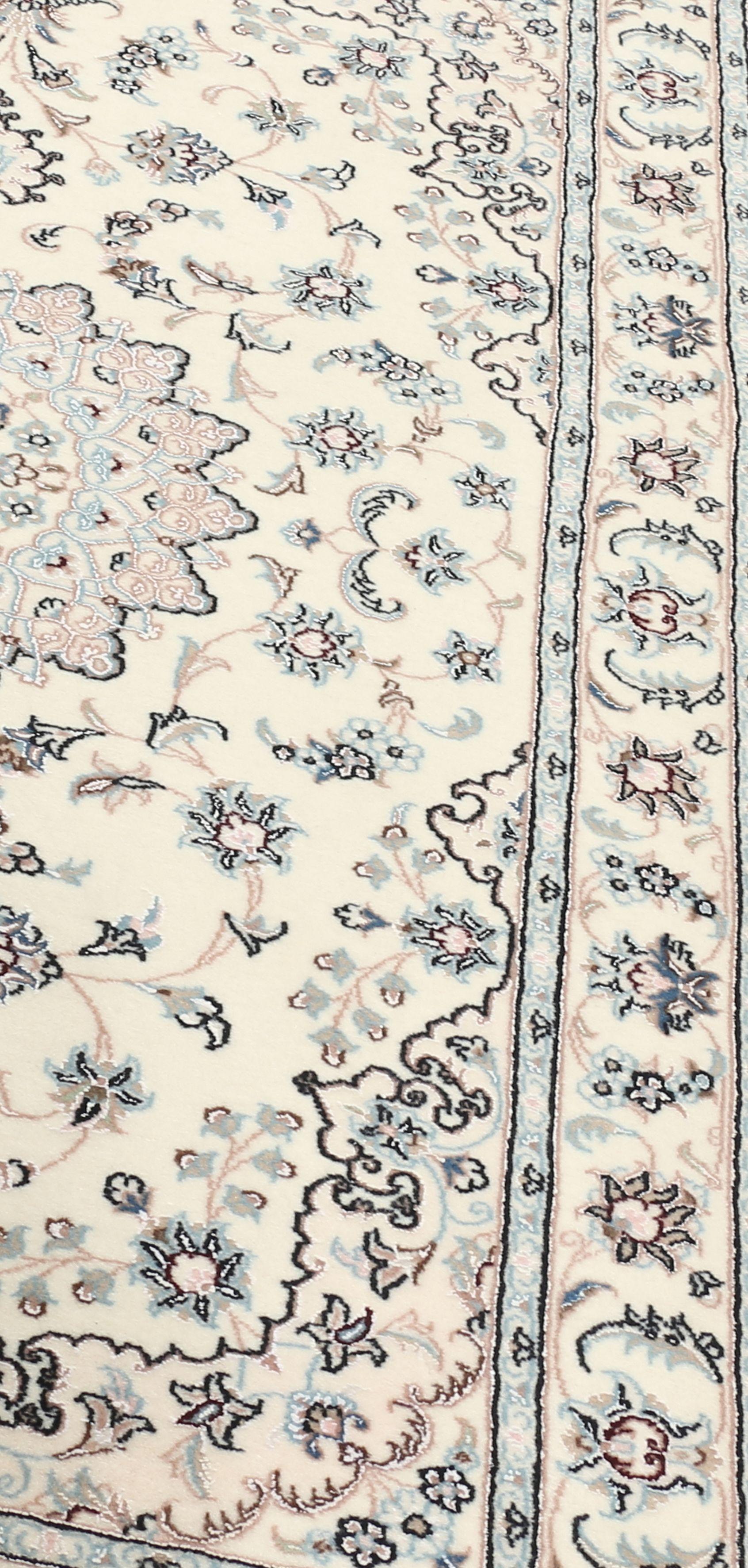
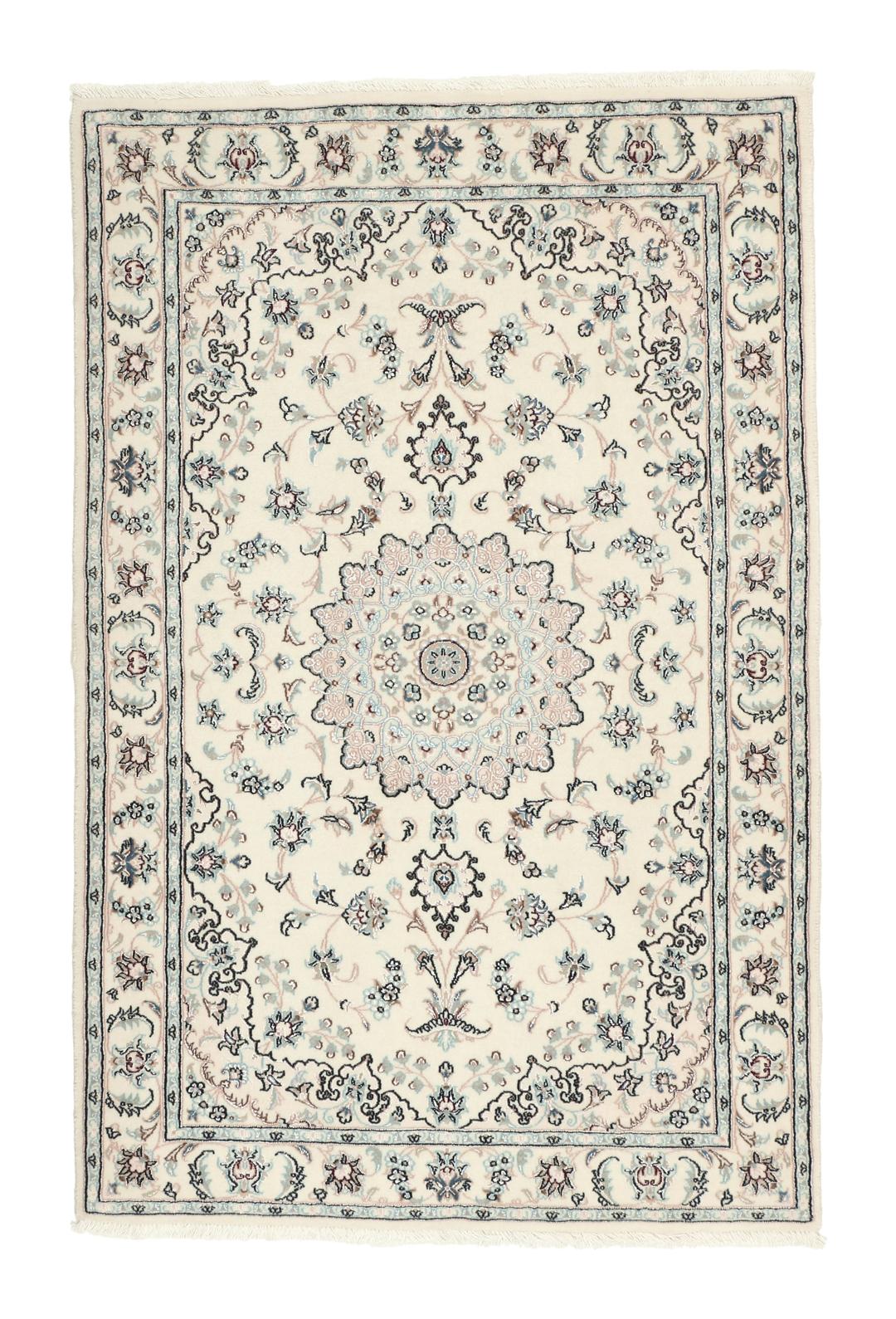
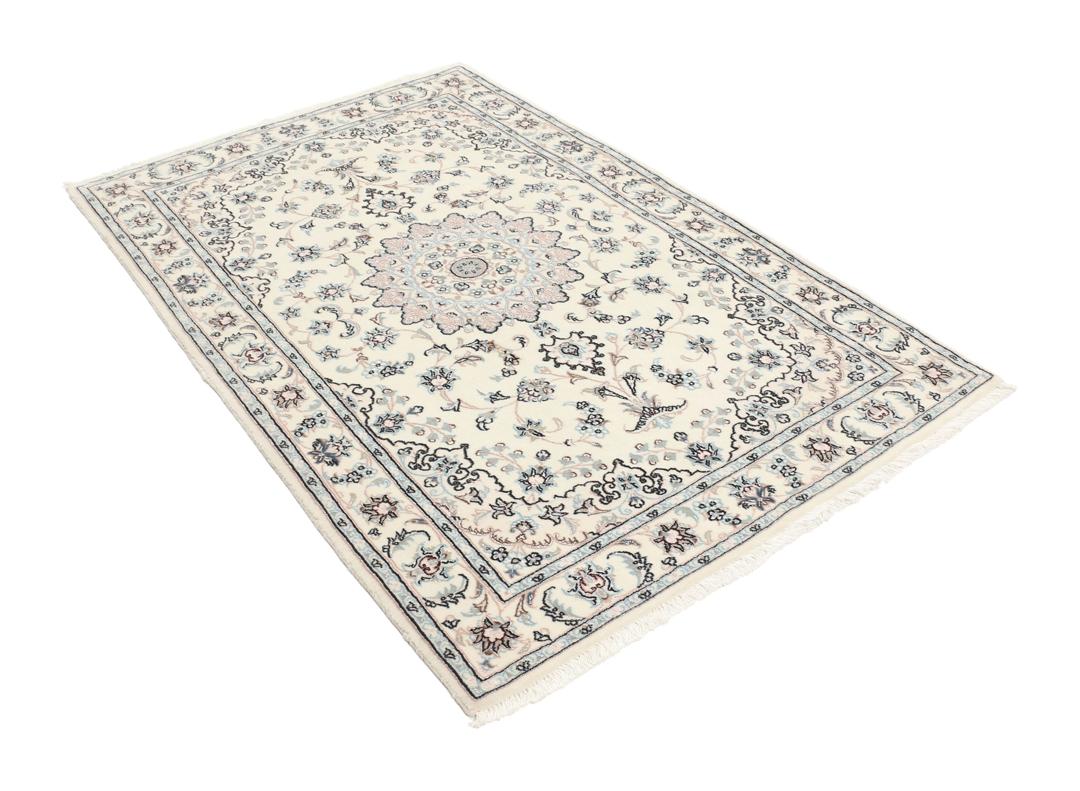
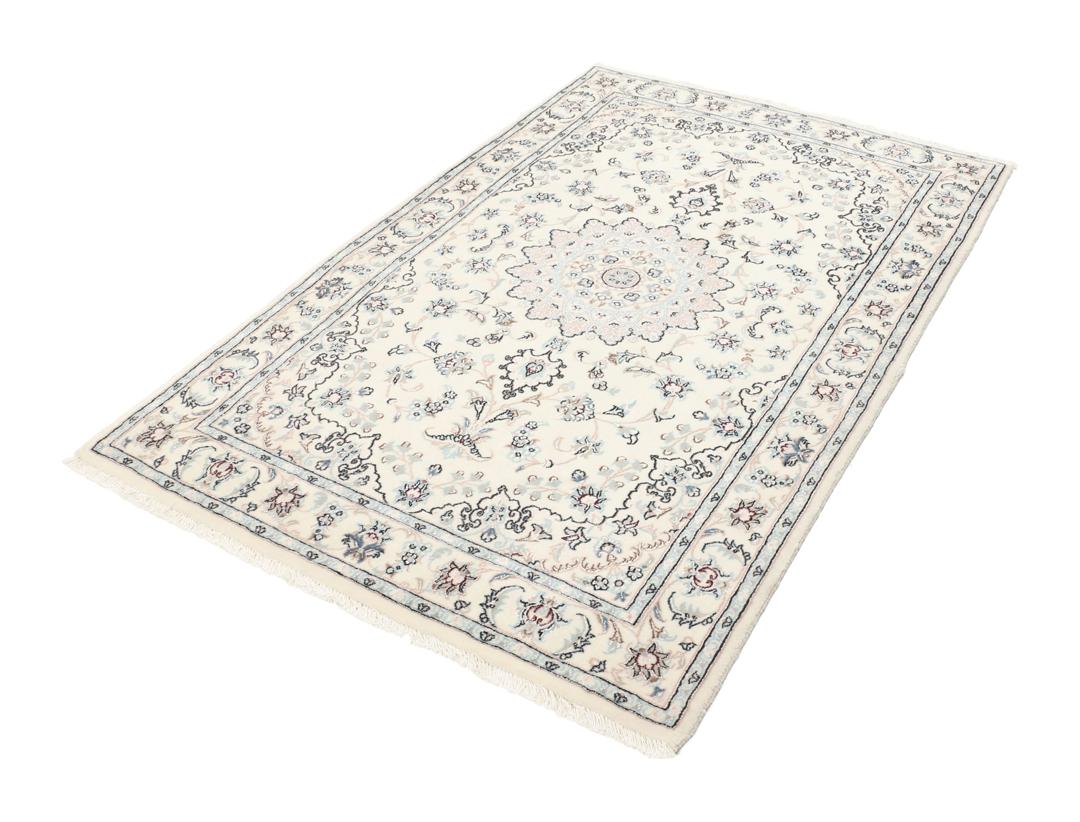
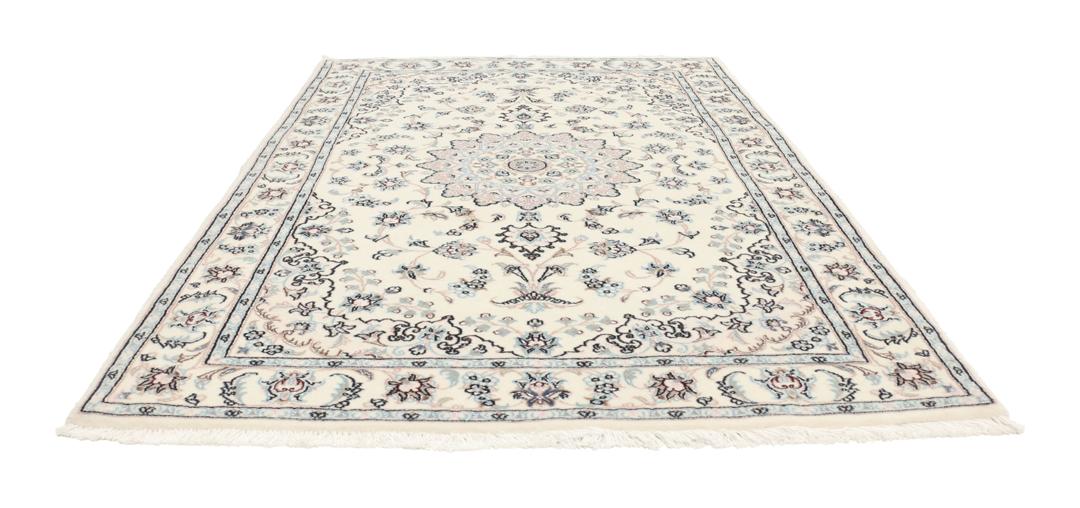
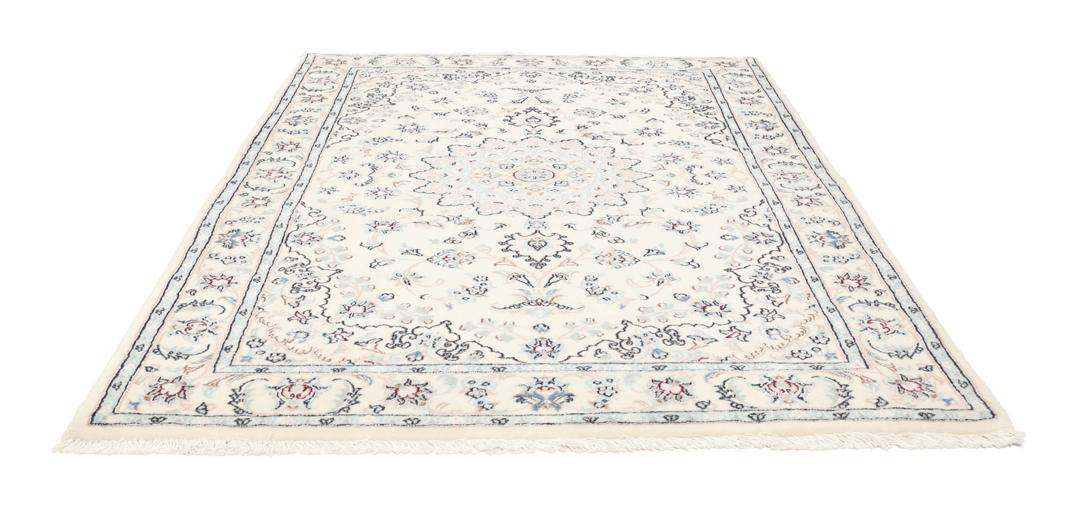
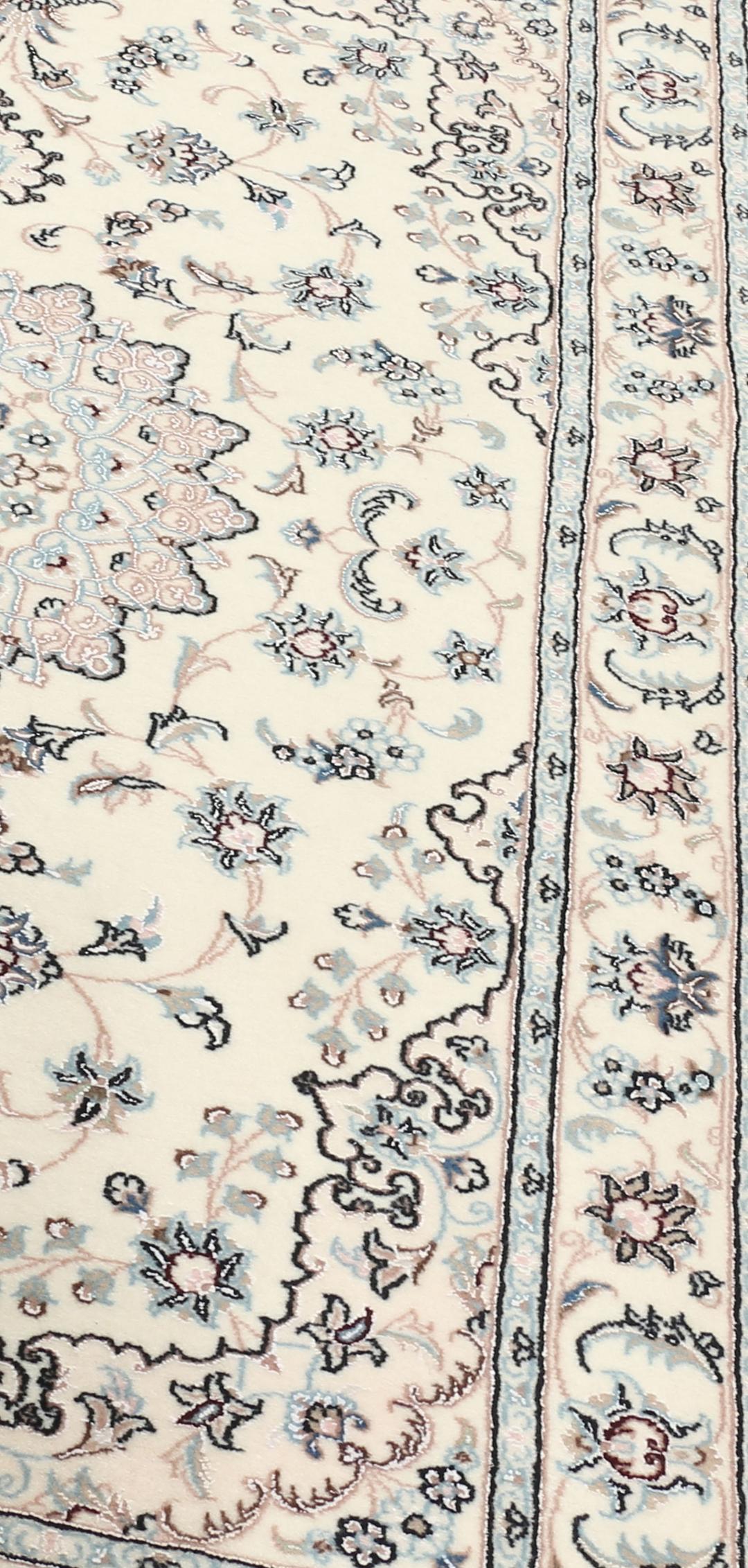
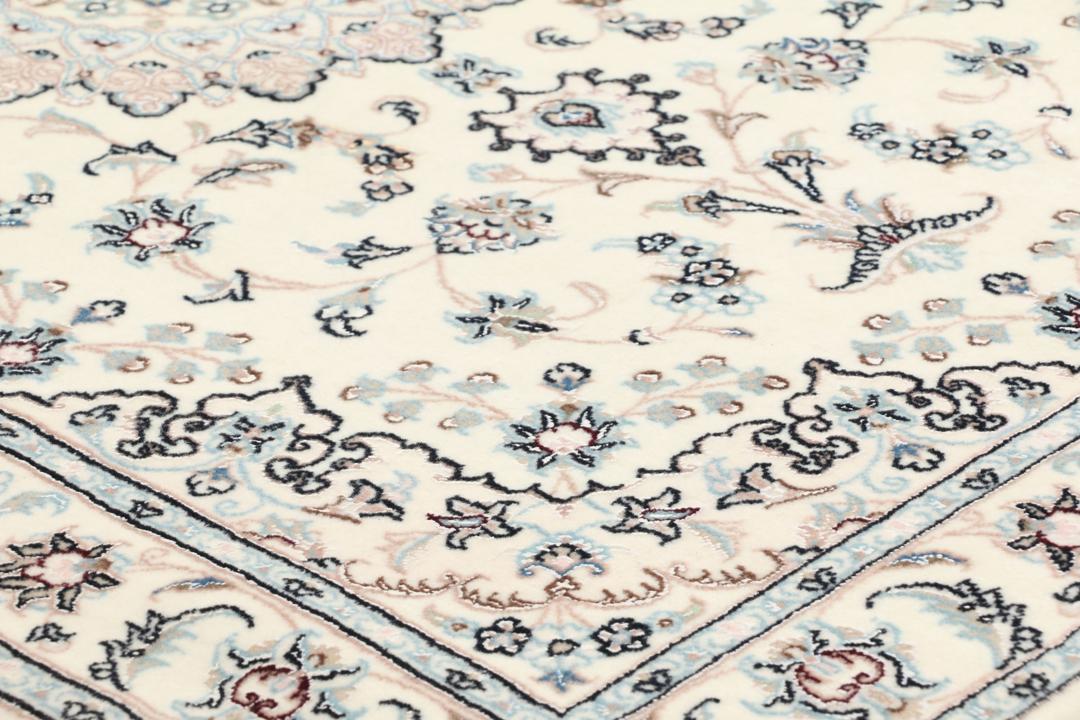
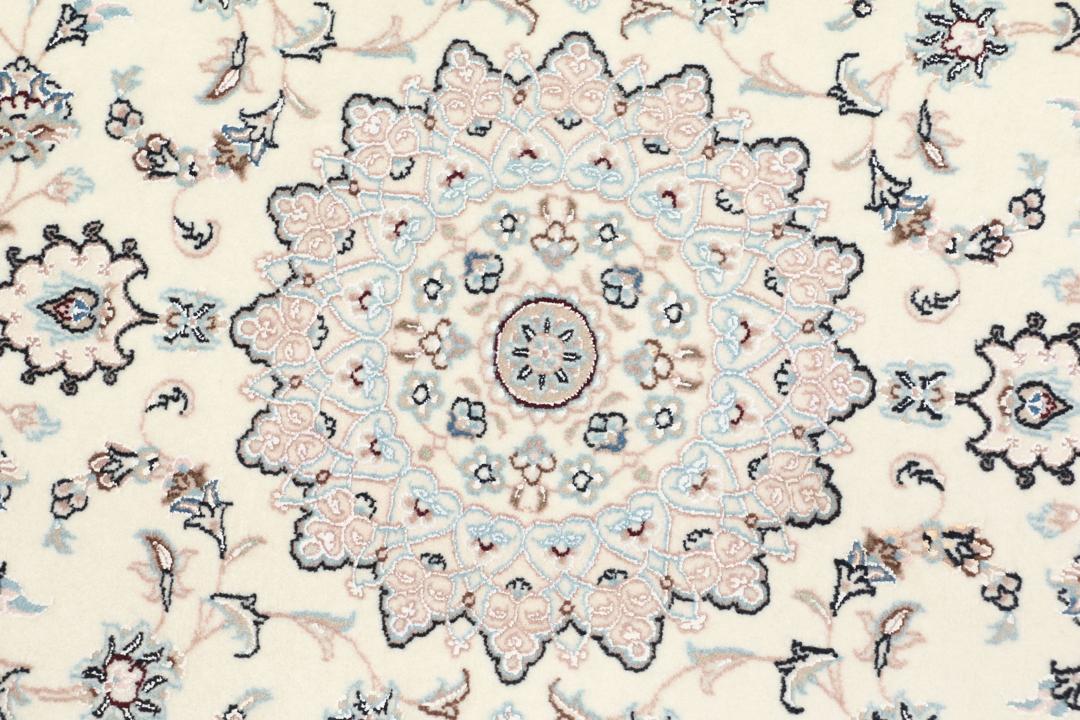
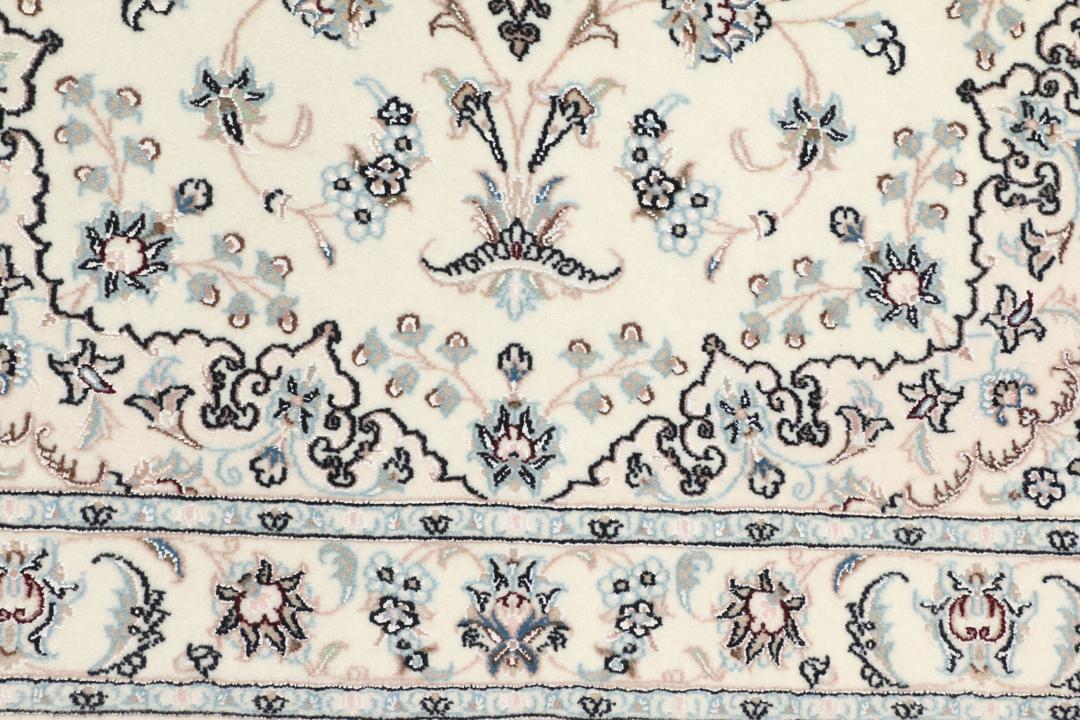
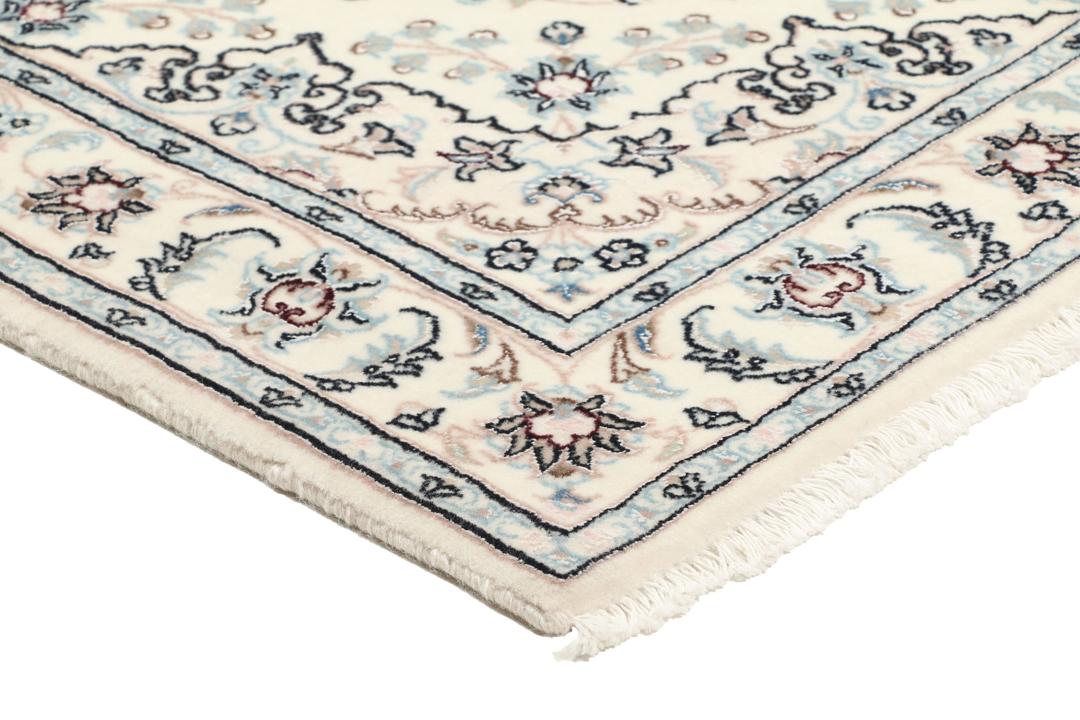
Signature design elements of these rugs typically include a central medallion surrounded by lush, flowing floral patterns and arabesques. The colour palette is often restrained, favouring soft creams, beiges, and subtle blues, which allow the complex detail of the weave to take centre stage. This particular piece captures that tradition perfectly, utilising a balanced, formal layout that is typical of the finest Nain workshops.
These rugs are highly prized by collectors and enthusiasts who value the intersection of artistic design and technical mastery. Owning a Nain is considered an investment in cultural heritage, representing a standard of skill that has been refined over generations. It is a piece that carries the weight of a storied tradition, offering lasting quality and beauty that transcends fleeting trends.