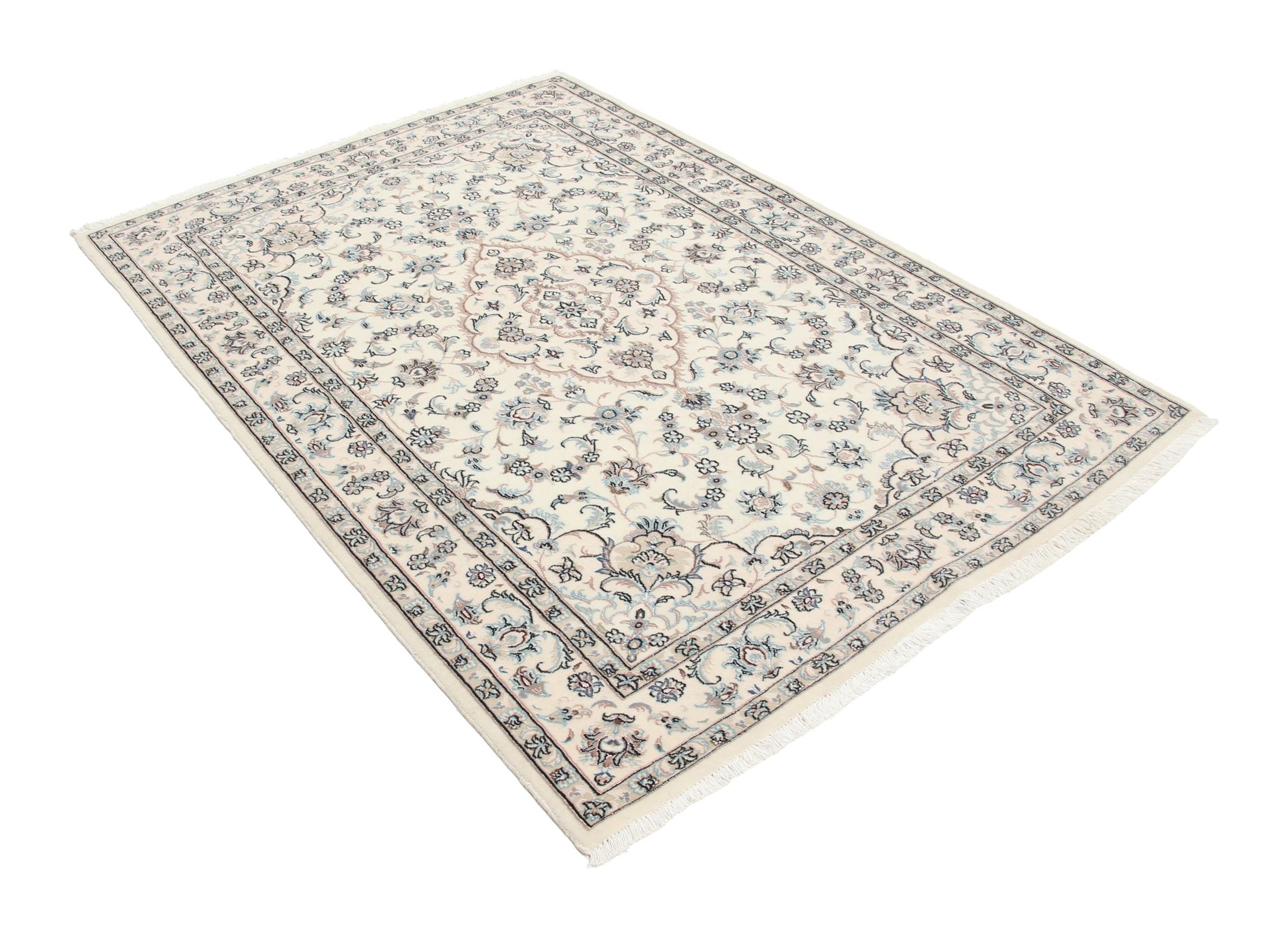
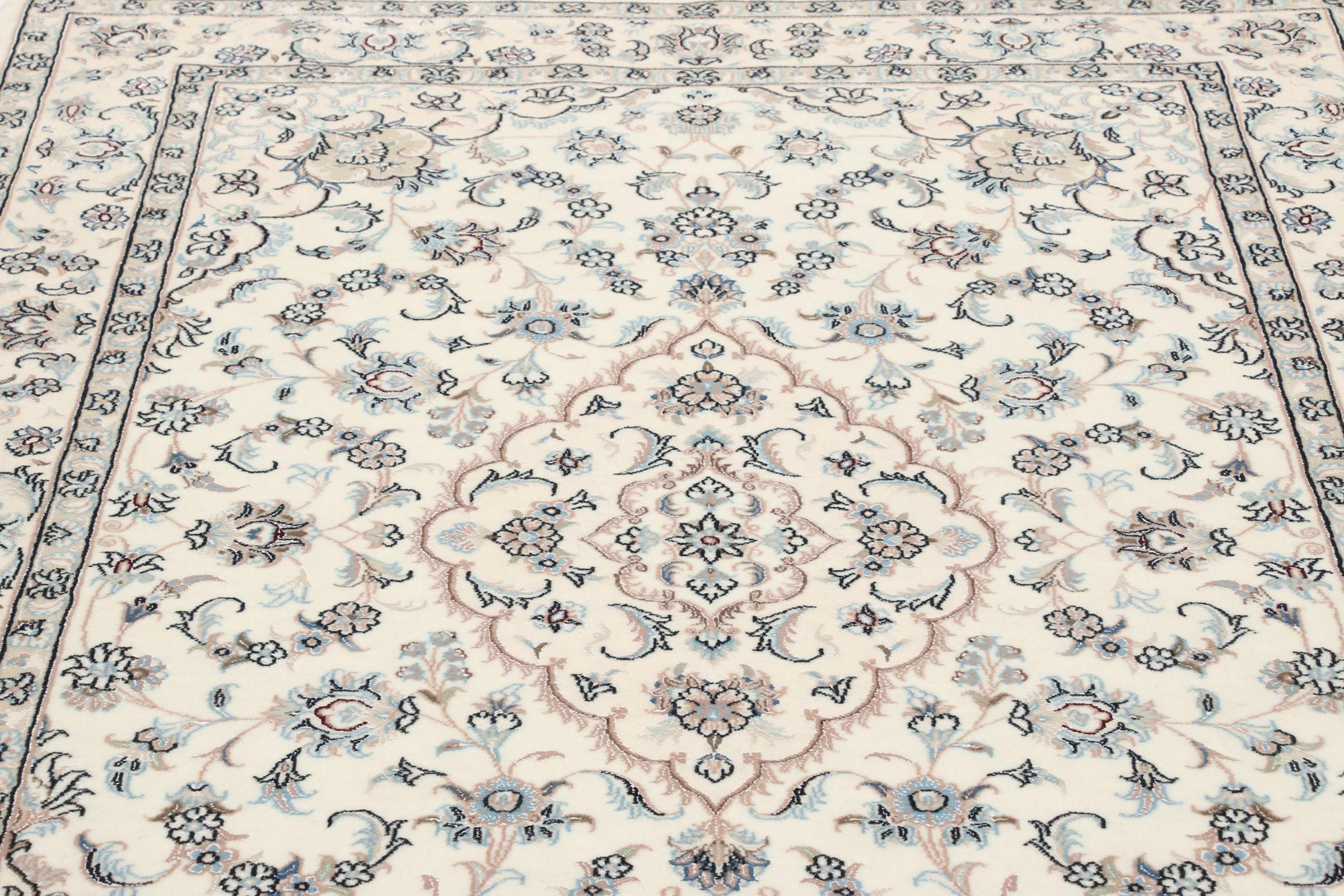
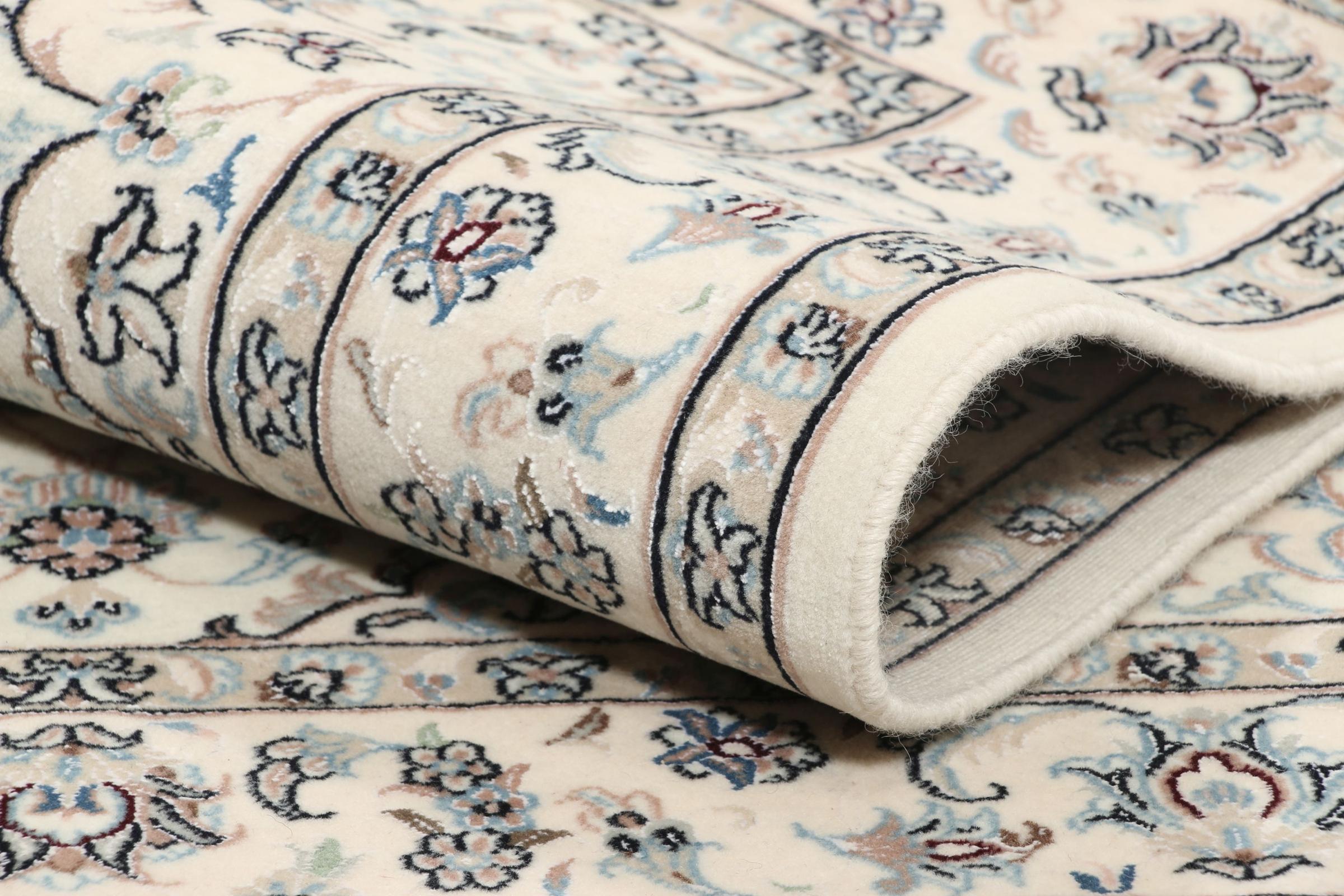
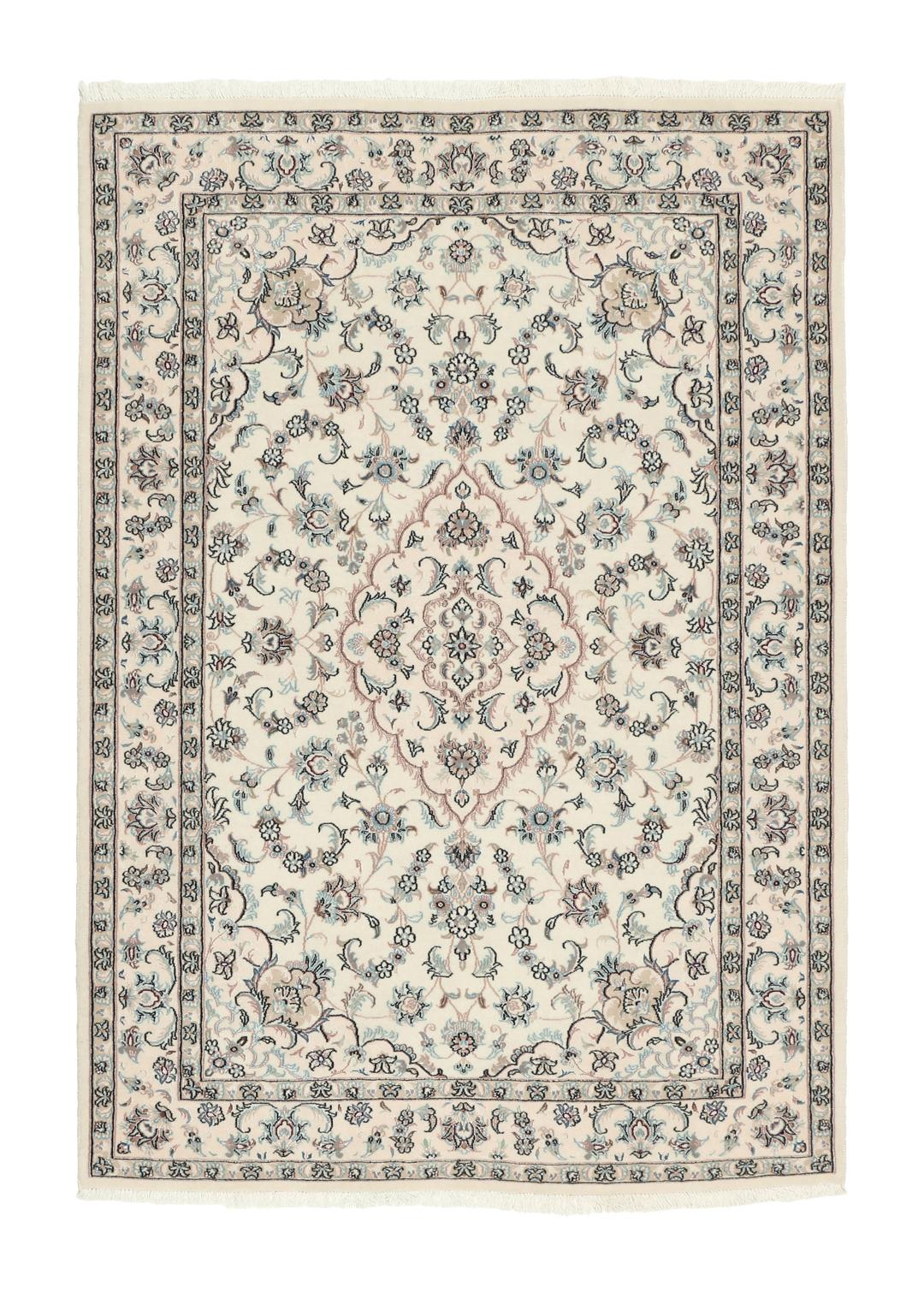
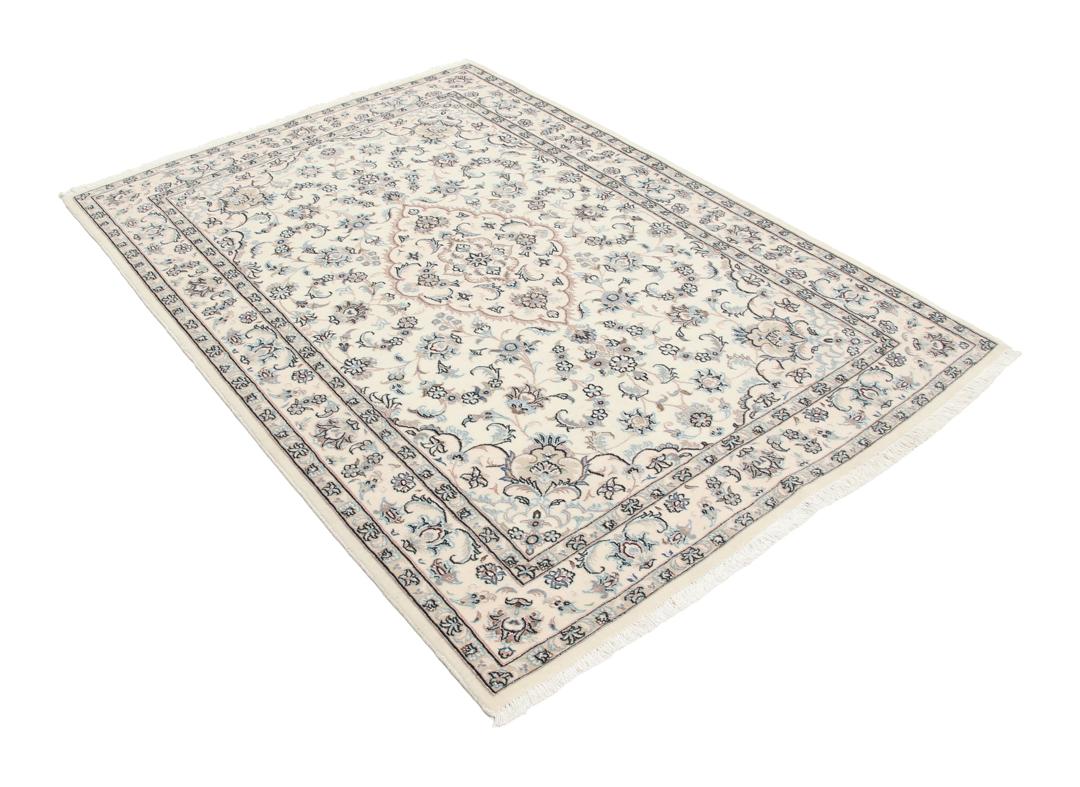
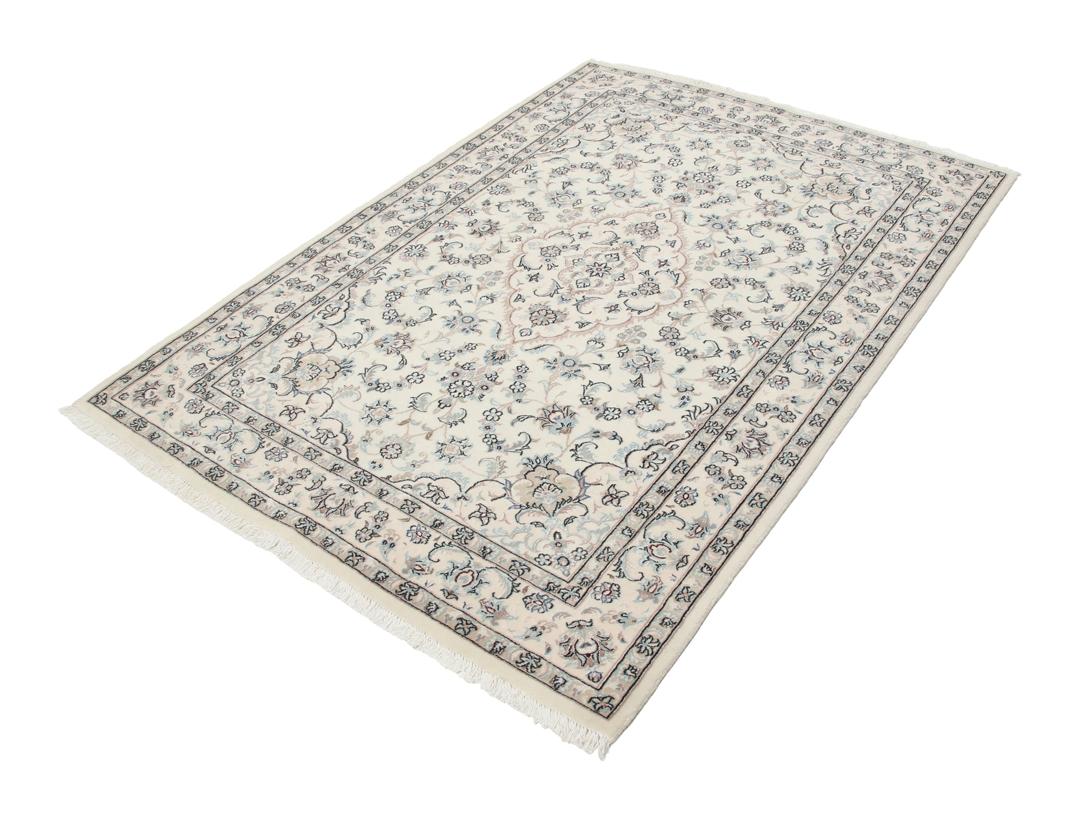
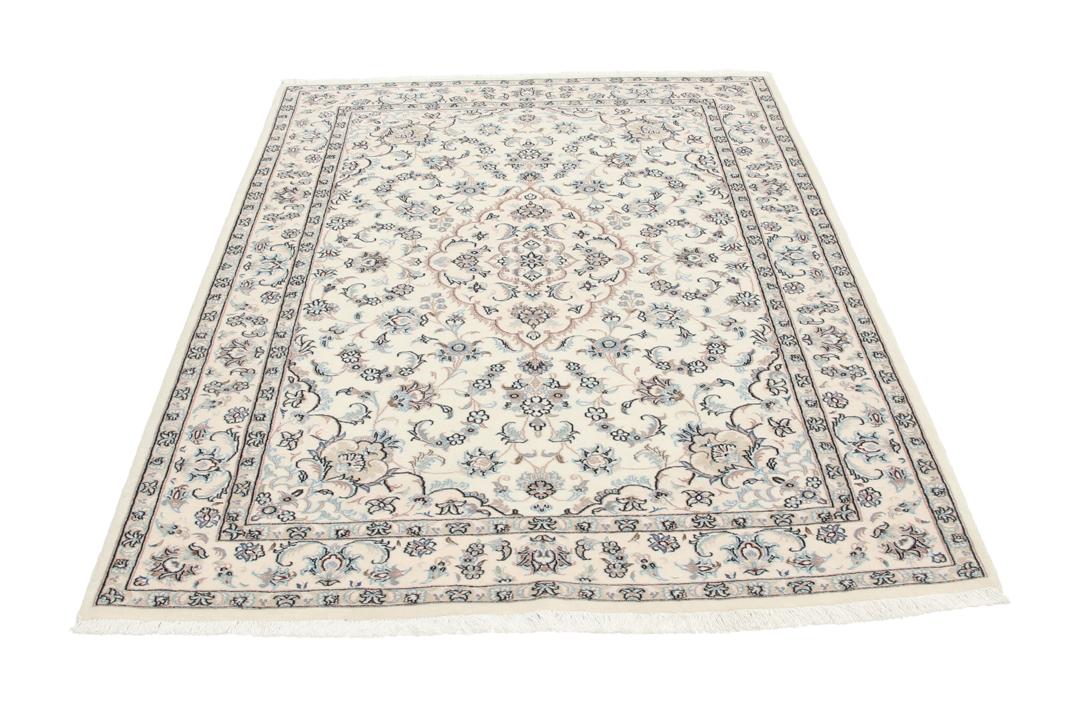
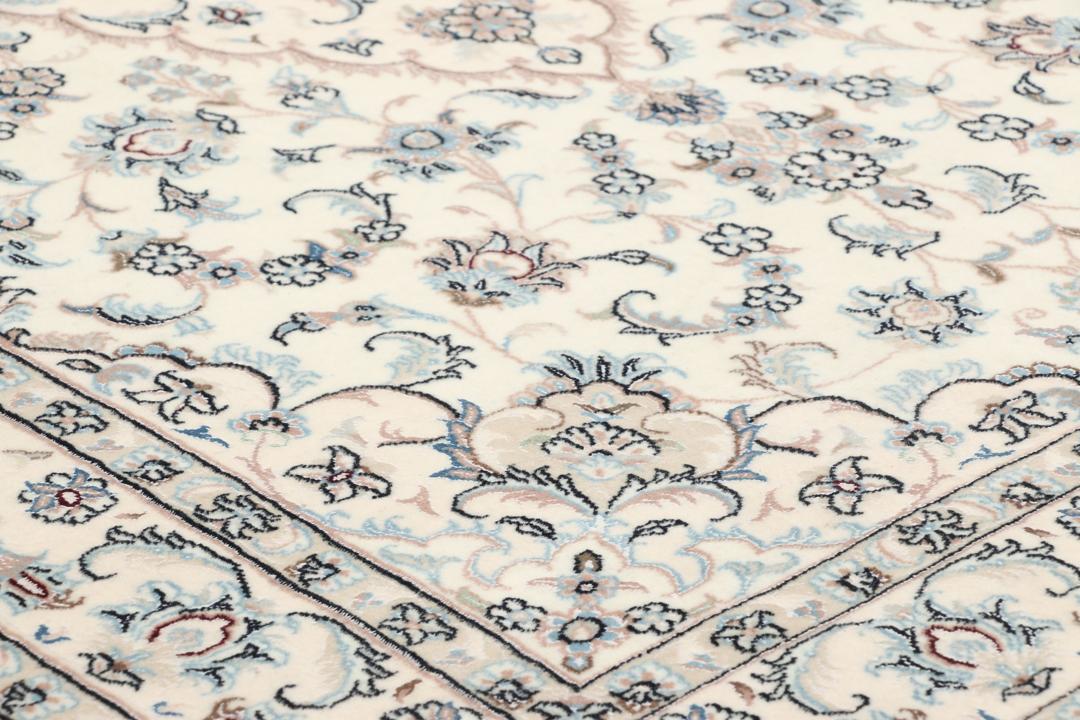
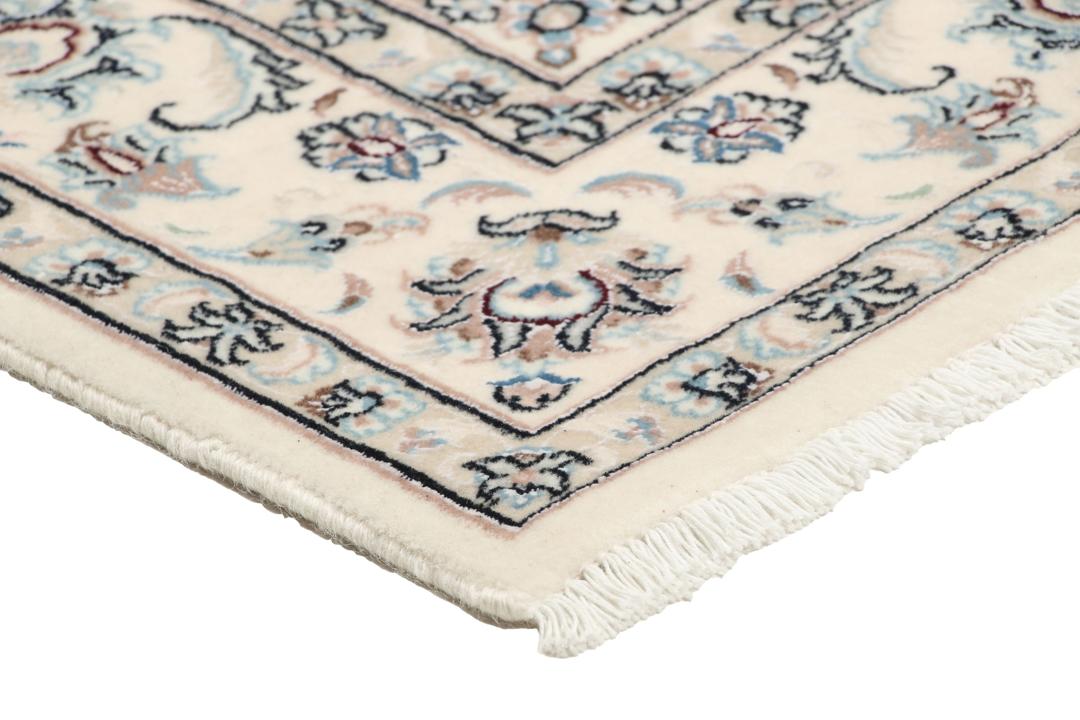
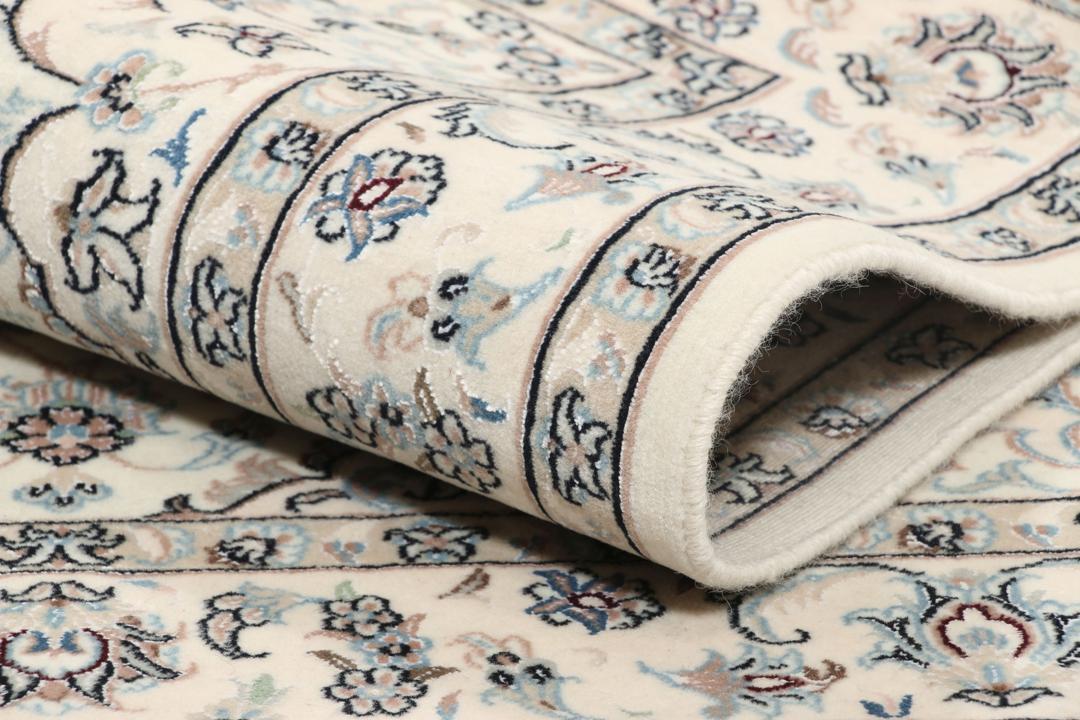
Nain rugs originate from the city of Nain, located in the central part of the Middle East. Historically, the city was known for its high-quality woollen textiles and cloaks, but in the early 20th century, weavers transitioned their skills to rug making. This shift quickly established the region as a centre for some of the most refined and elegant floor coverings in the world, often incorporating silk highlights to accentuate the wool designs.
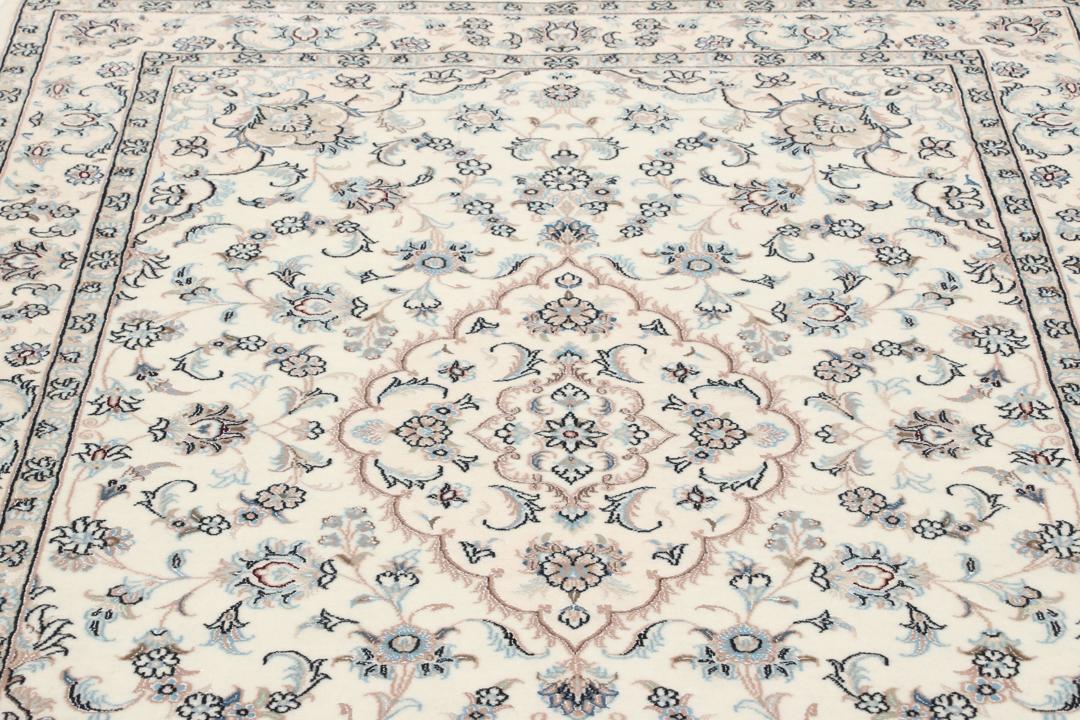
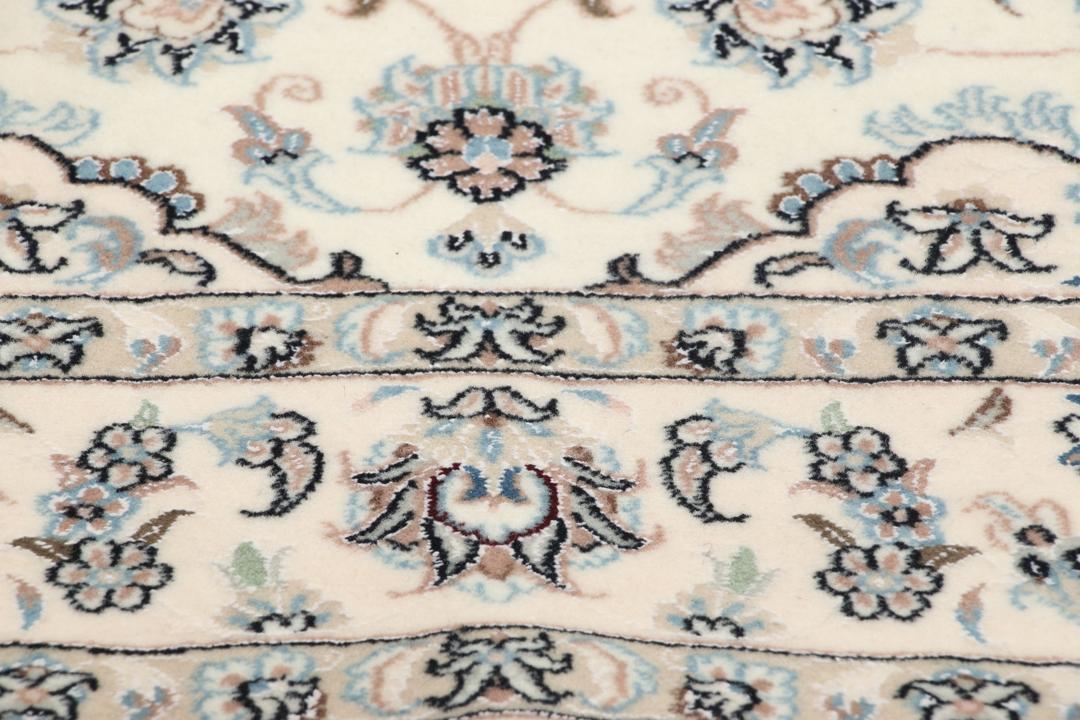
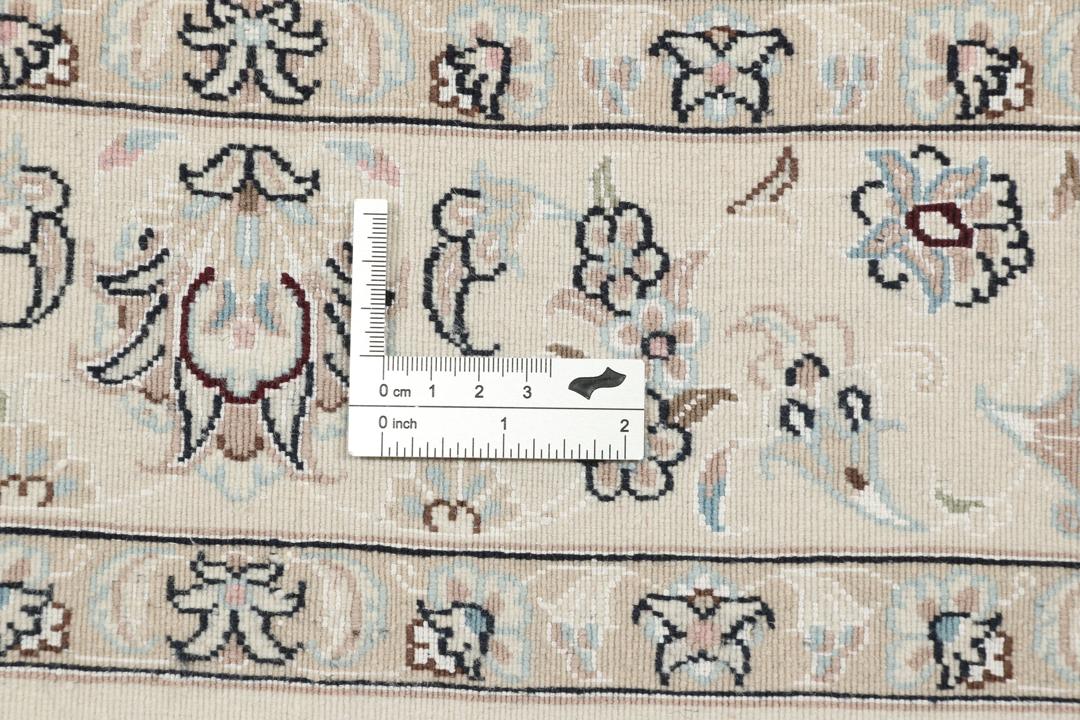
The designation 'La' is a technical term specific to Nain rugs, referring to the number of strands used in the foundation threads. A '6La' rug represents a very fine construction, where the foundation is composed of thin, high-quality threads. This allows for a much higher knot density and a thinner, more flexible rug that can accommodate highly complex and intricate floral patterns that would be impossible to achieve in coarser weaves.
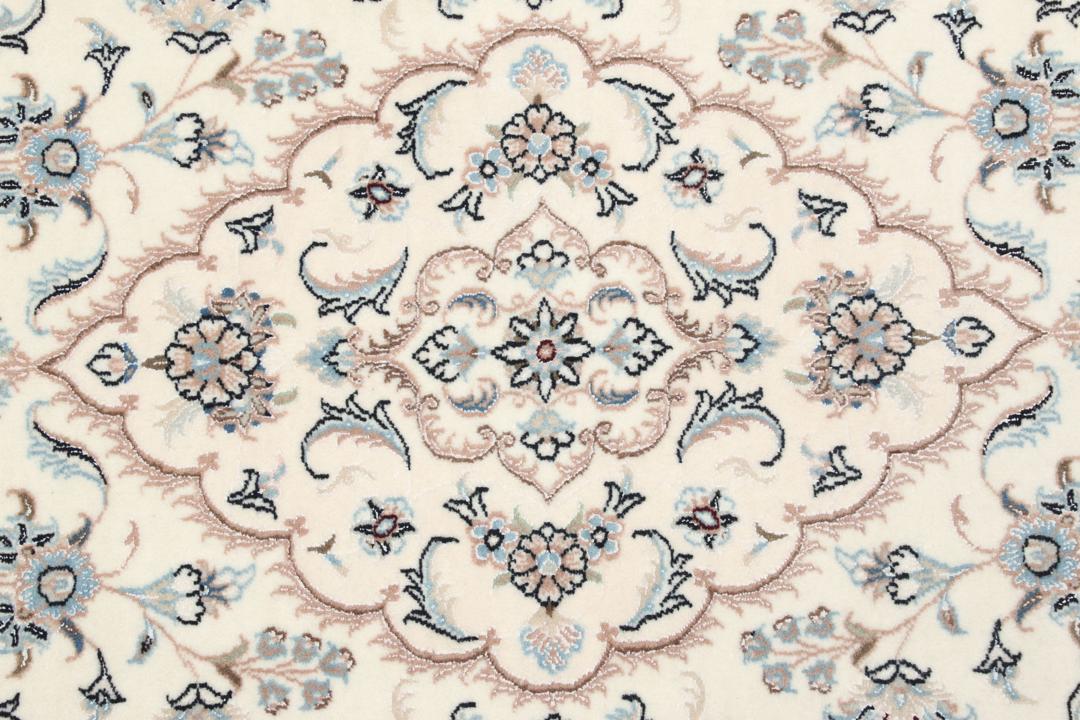
Signature design elements of the Nain tradition include a central medallion, often surrounded by delicate arabesques, floral sprays, and scrolling vines. The colour palettes are typically restrained, favouring soft creams, beiges, and muted blues or light greens. This understated approach to colour is what gives Nain rugs their reputation for timeless elegance, making them perfect for interiors that value subtlety over bold, contrasting colours.
Collecting a Nain rug is an entry into a tradition that values precision above all else. These rugs are highly sought after by those who appreciate the evolution of craft from traditional textile weaving to fine art. Owning one means holding a piece of cultural history, where the skill of the weaver is preserved in every knot, offering a sense of heritage and enduring quality to any home.