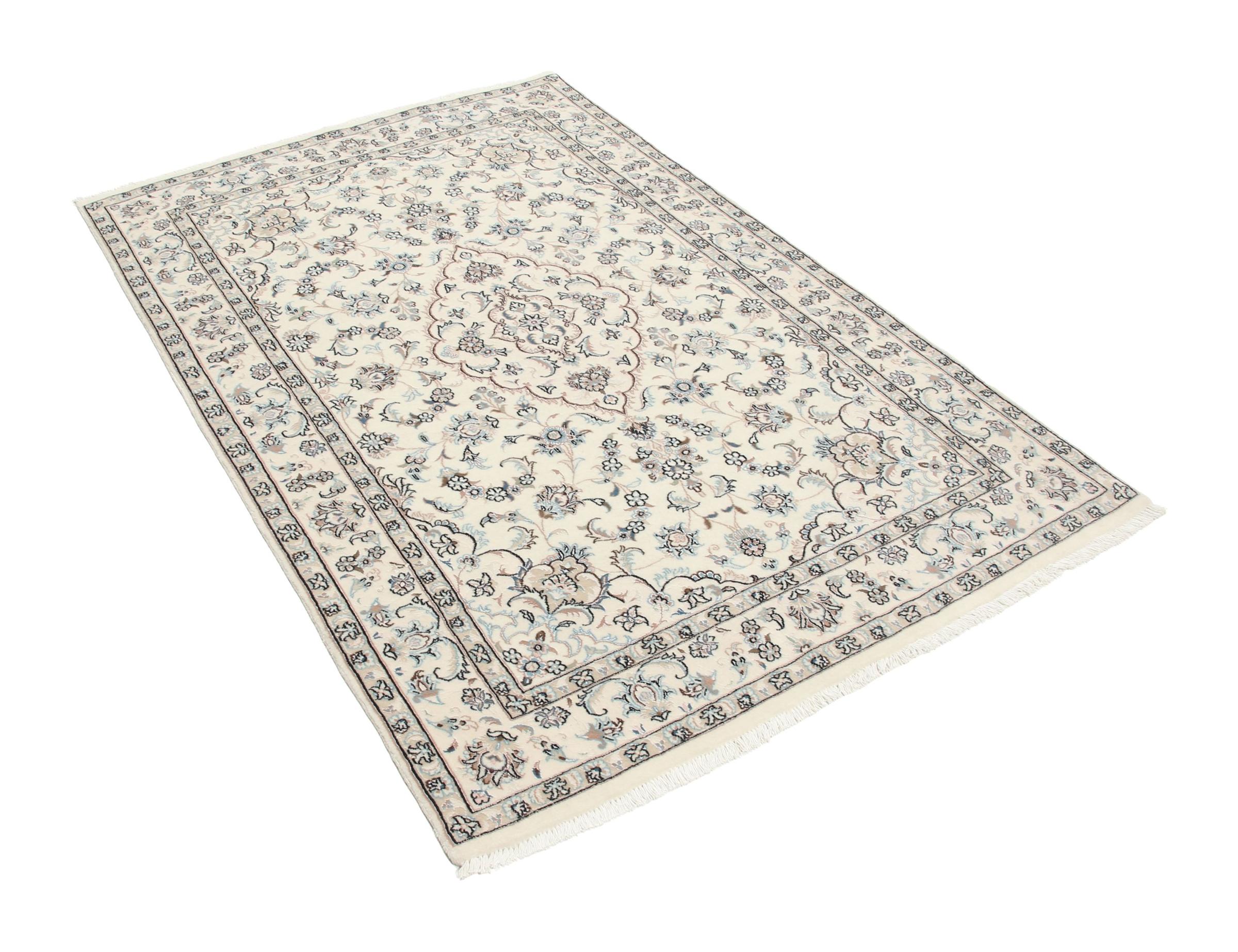
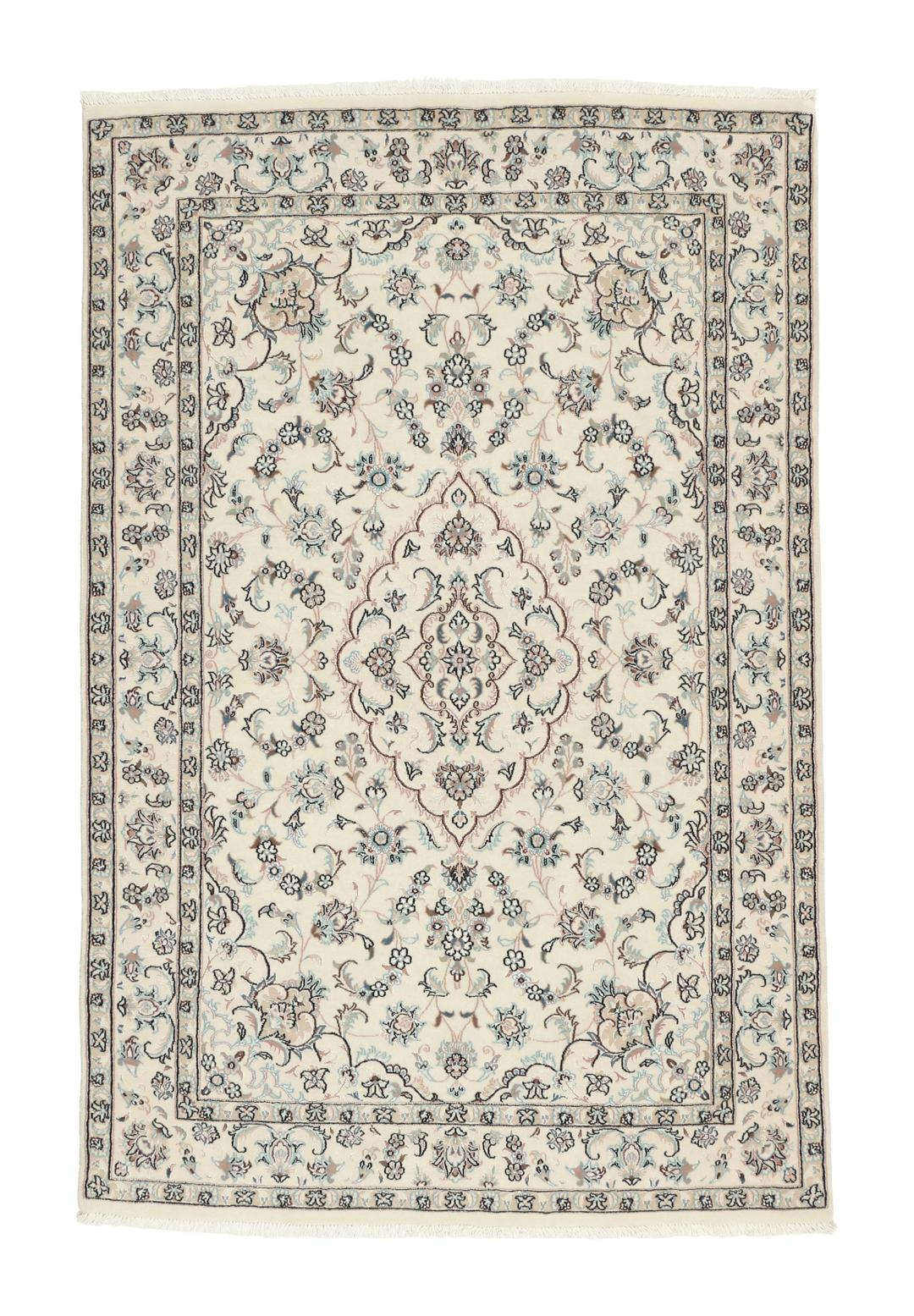
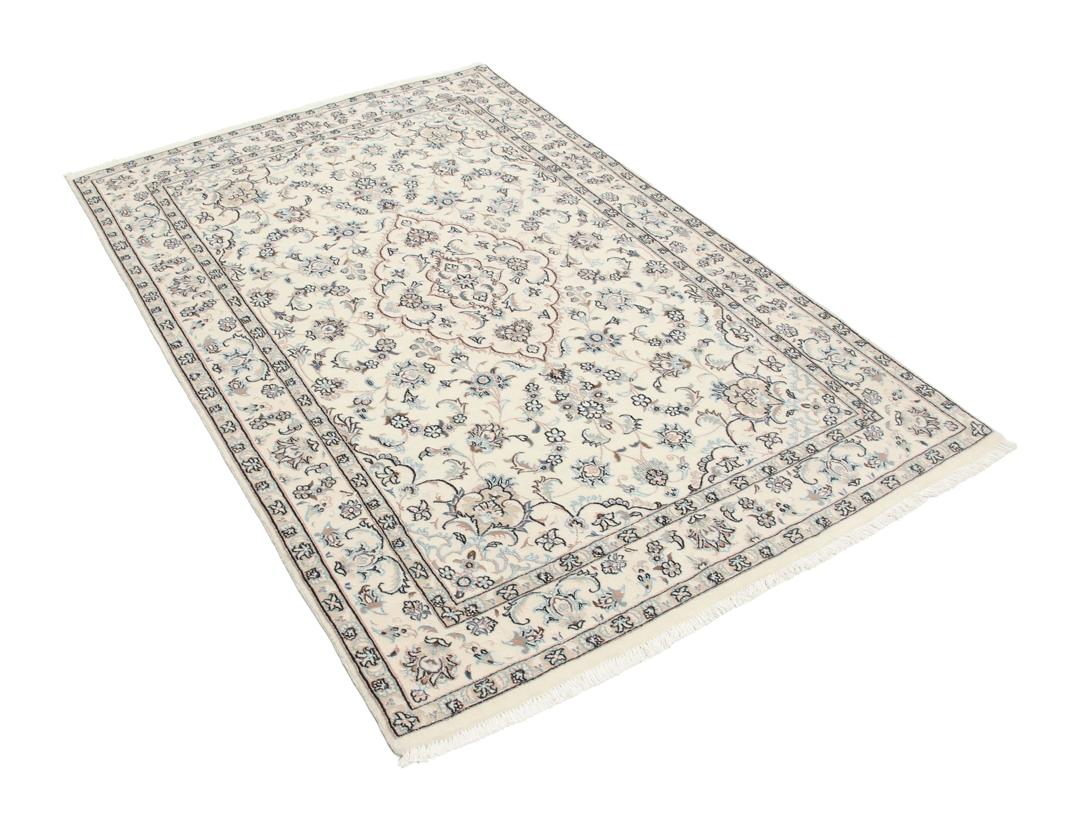
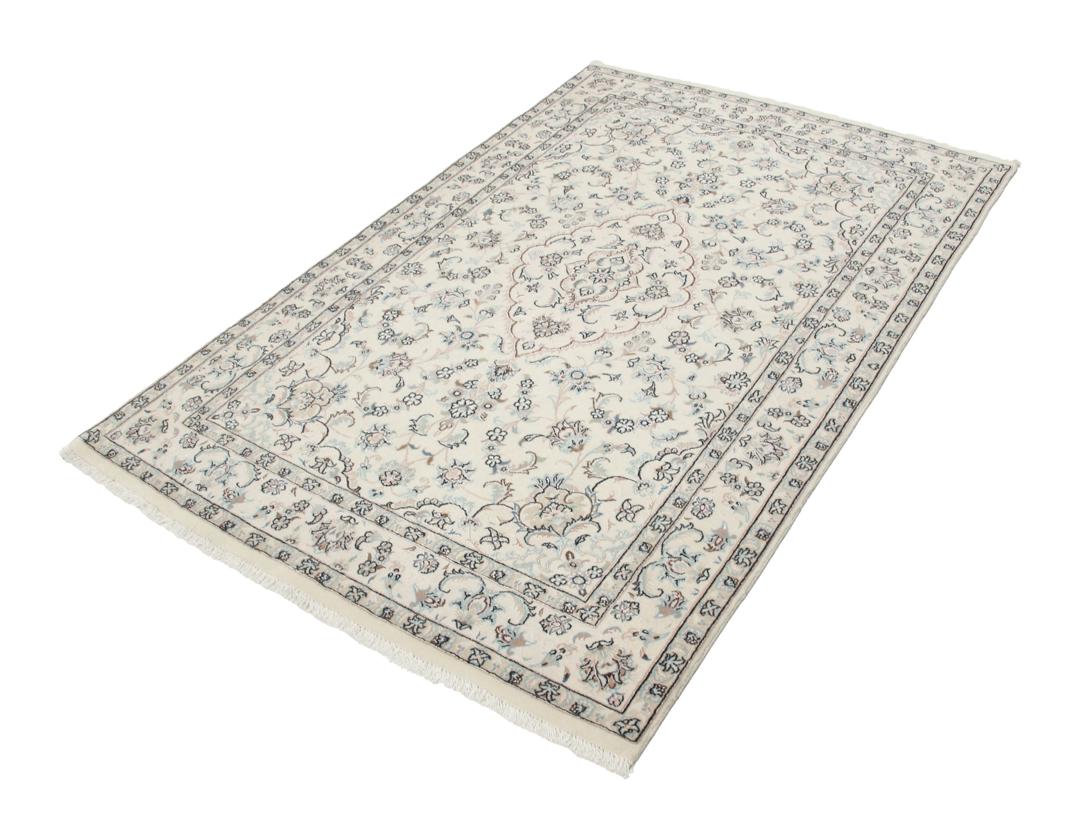
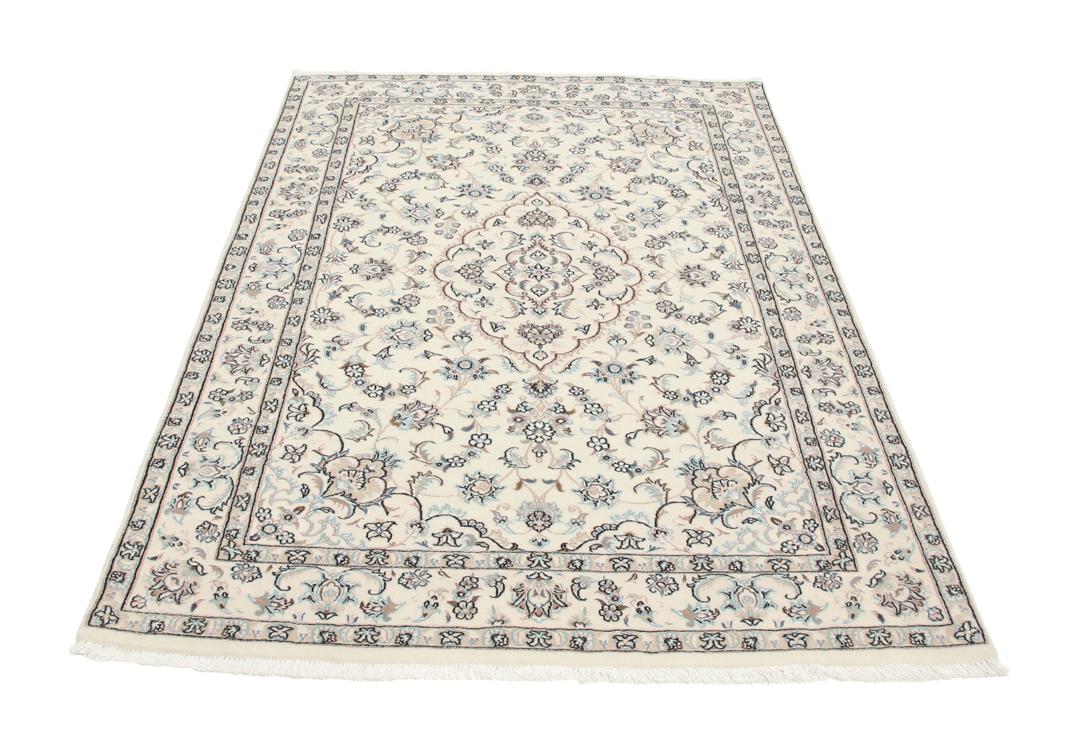
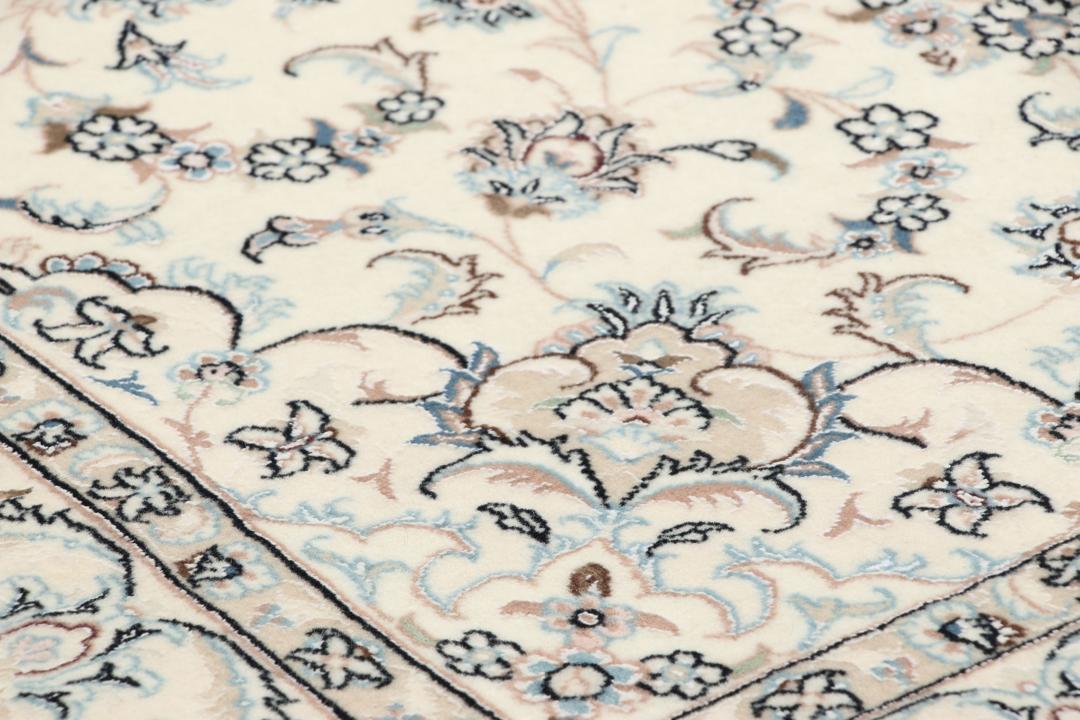
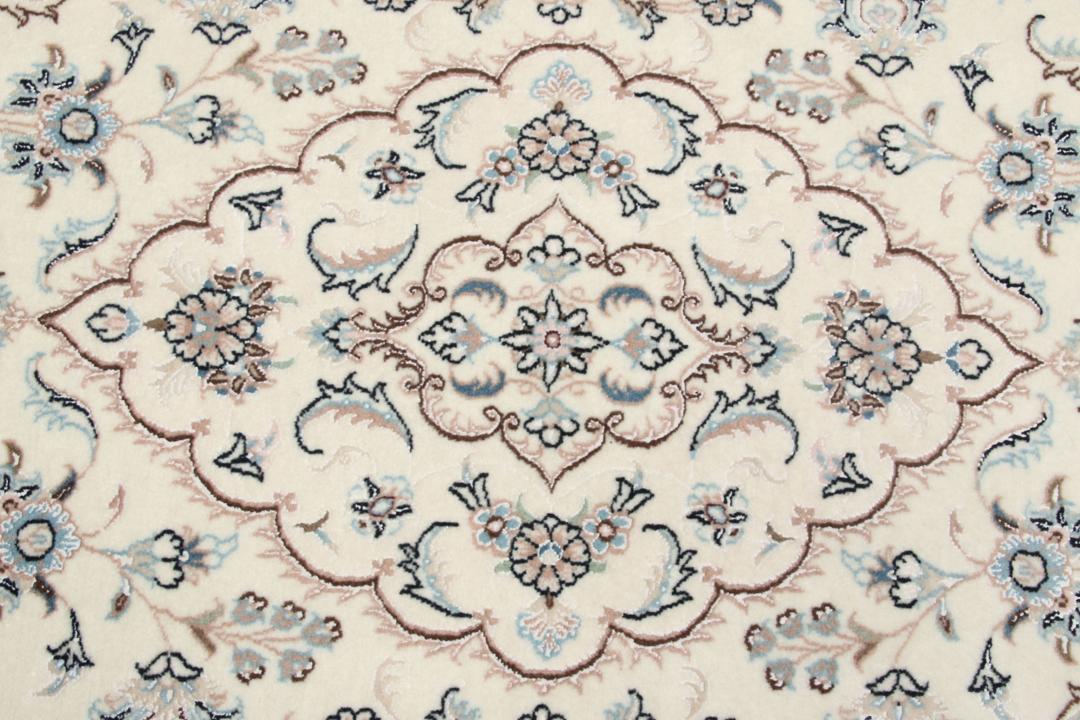
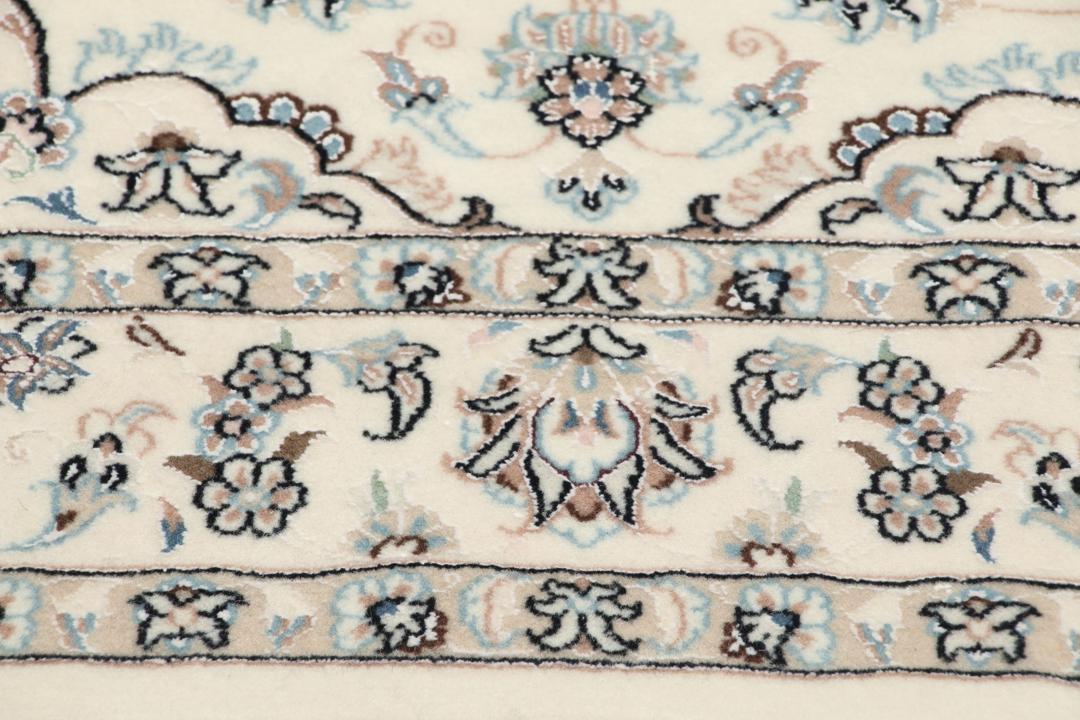
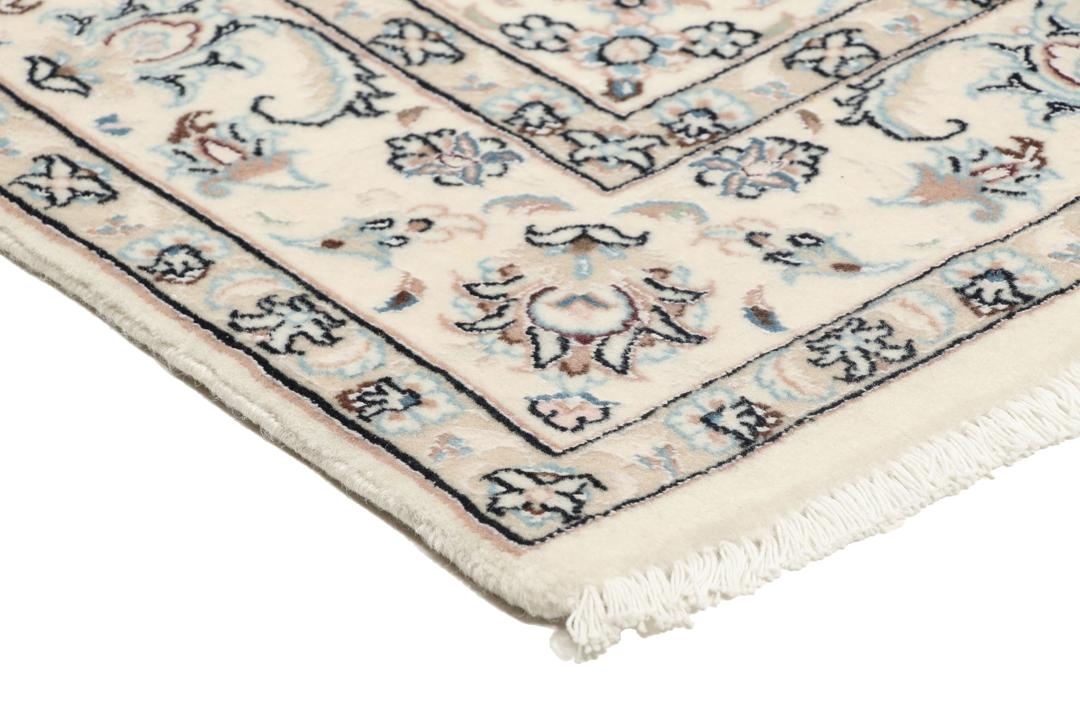
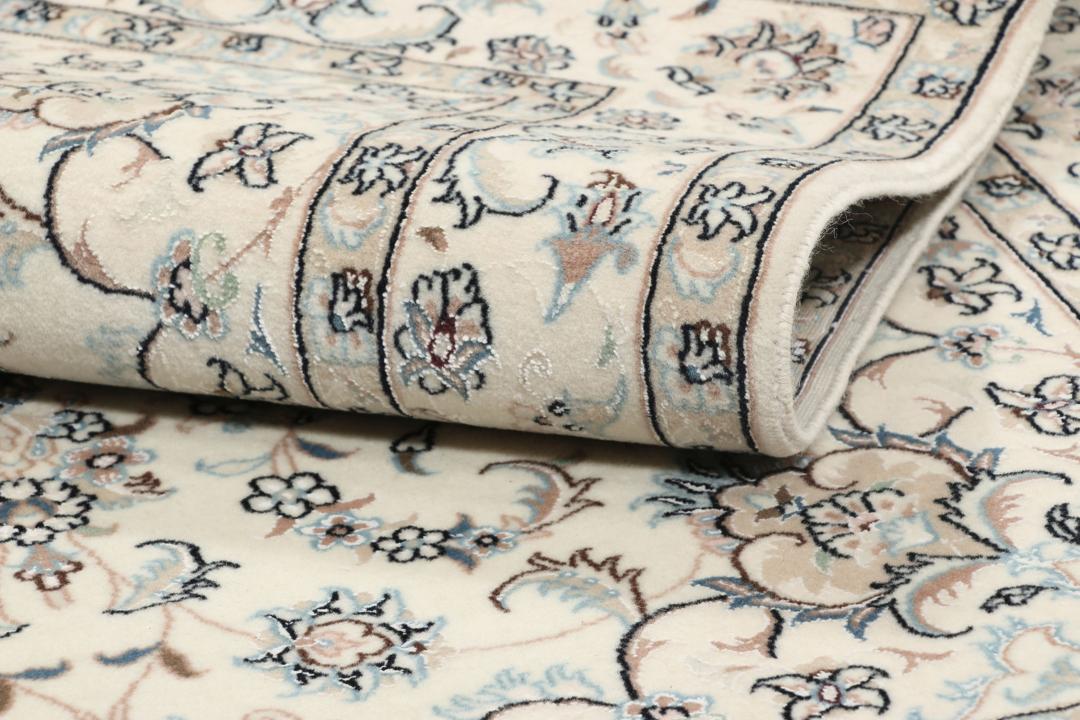
Nain rugs are celebrated for their elegance and originate from the city of Nain in the Middle East. Historically, this region was known for its fine woollen textiles and clothing, but by the early 20th century, it transitioned into producing some of the most sought-after rugs in the world. These rugs are highly regarded for their sophisticated colour palettes and intricate designs, often incorporating silk highlights to define the patterns.
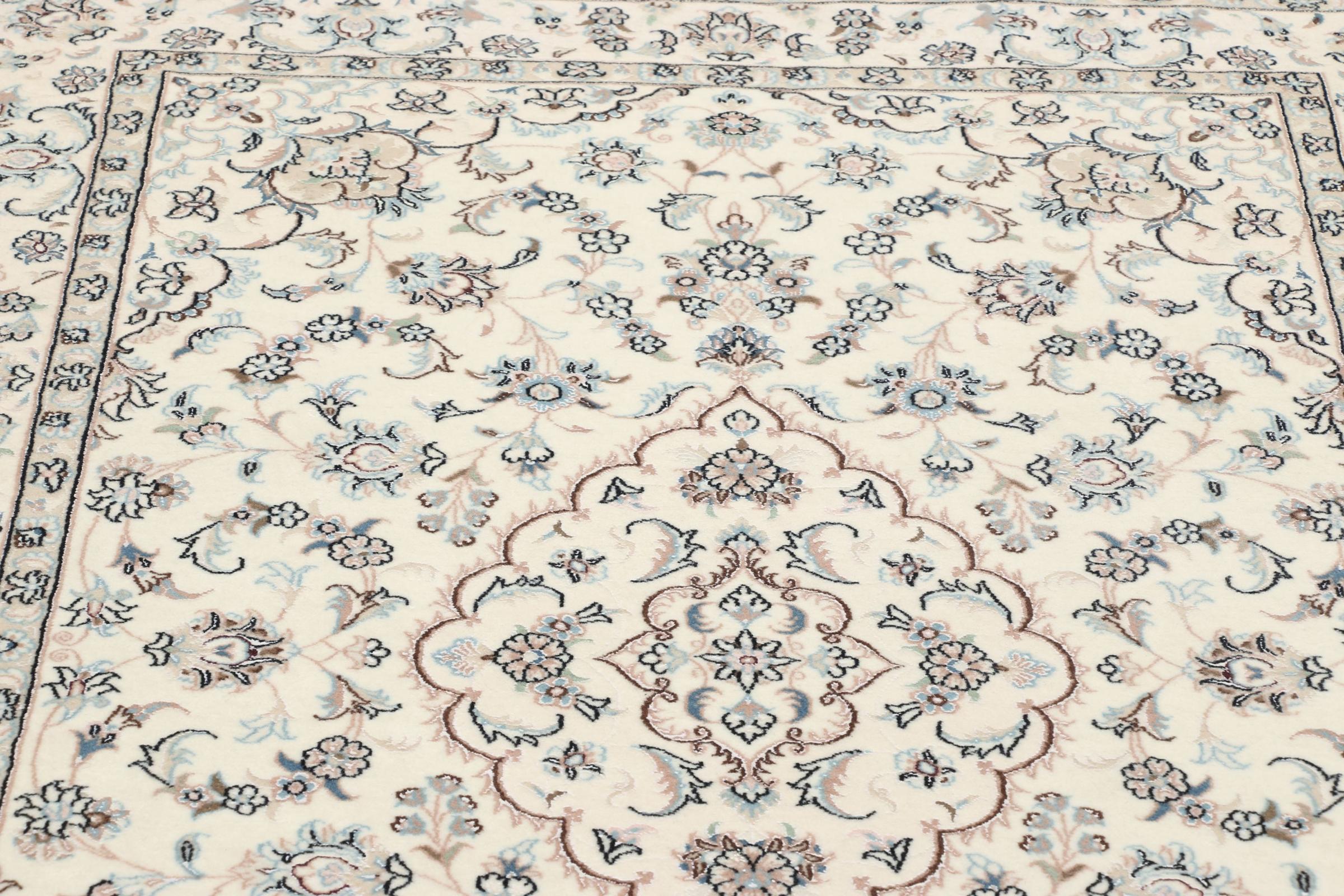
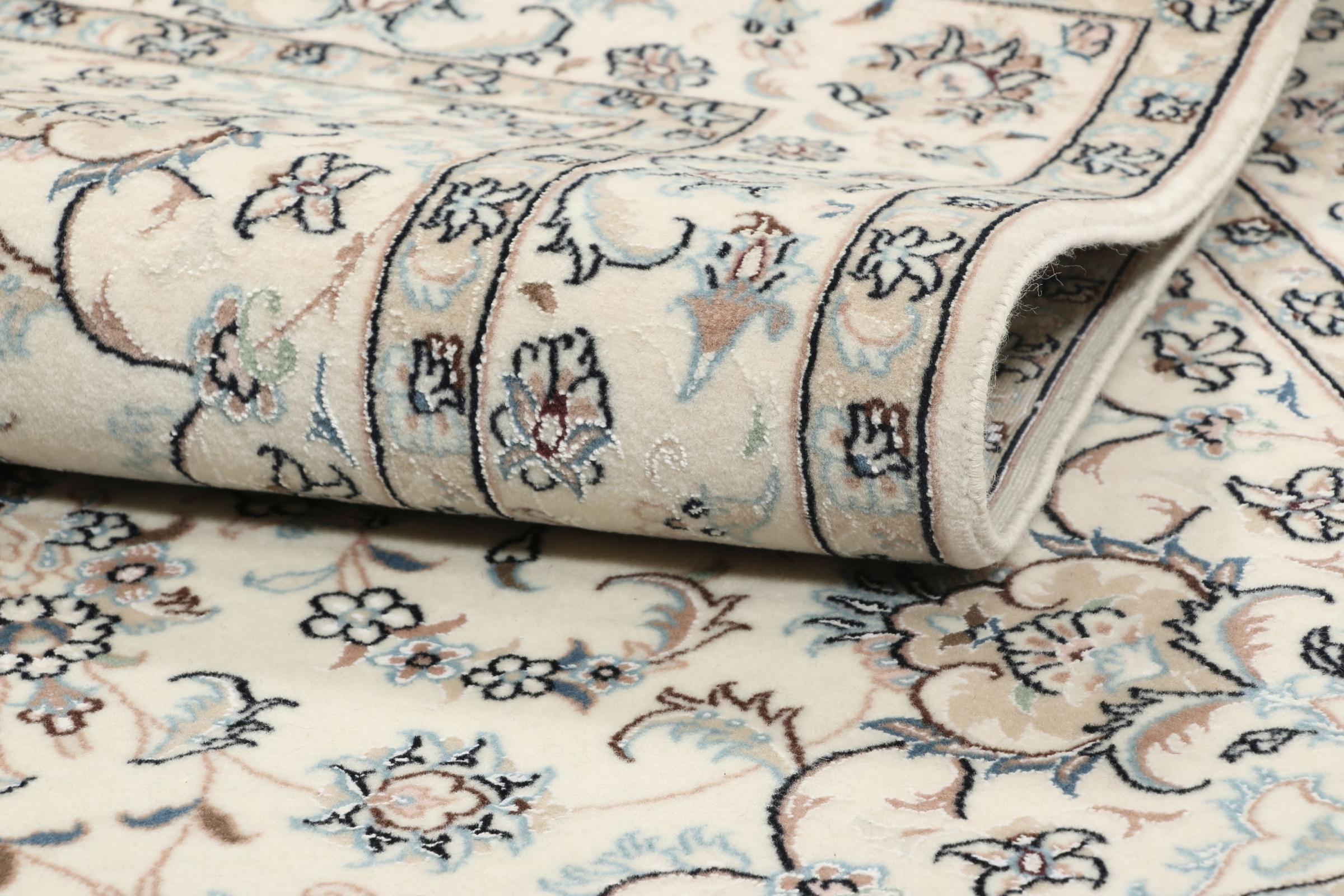
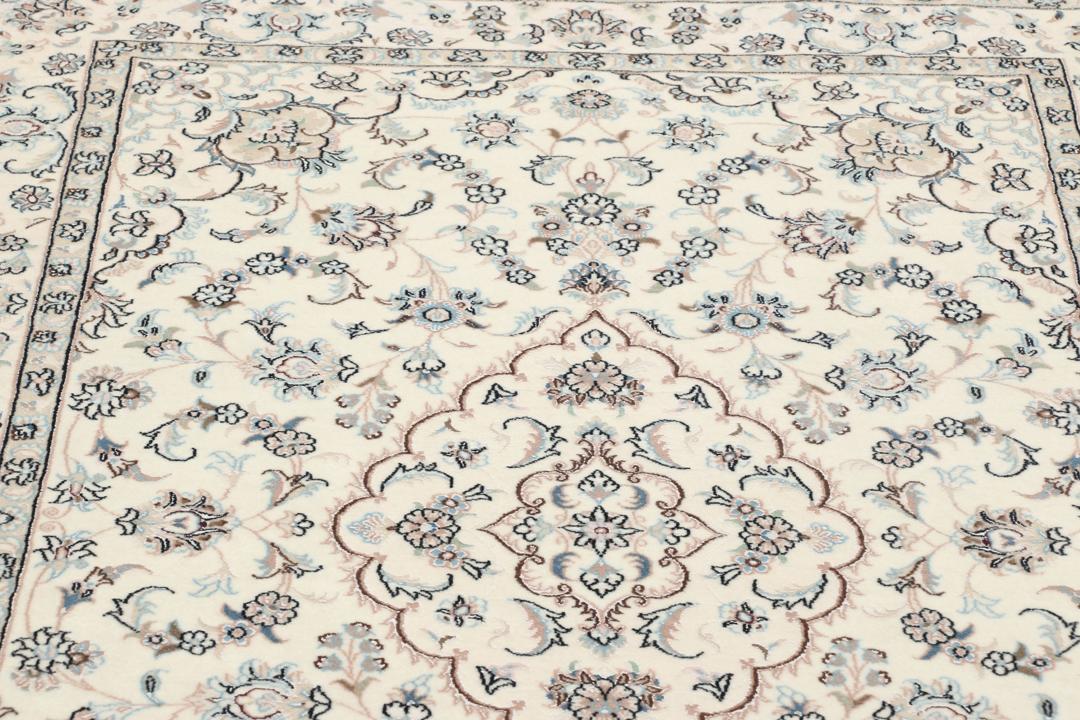
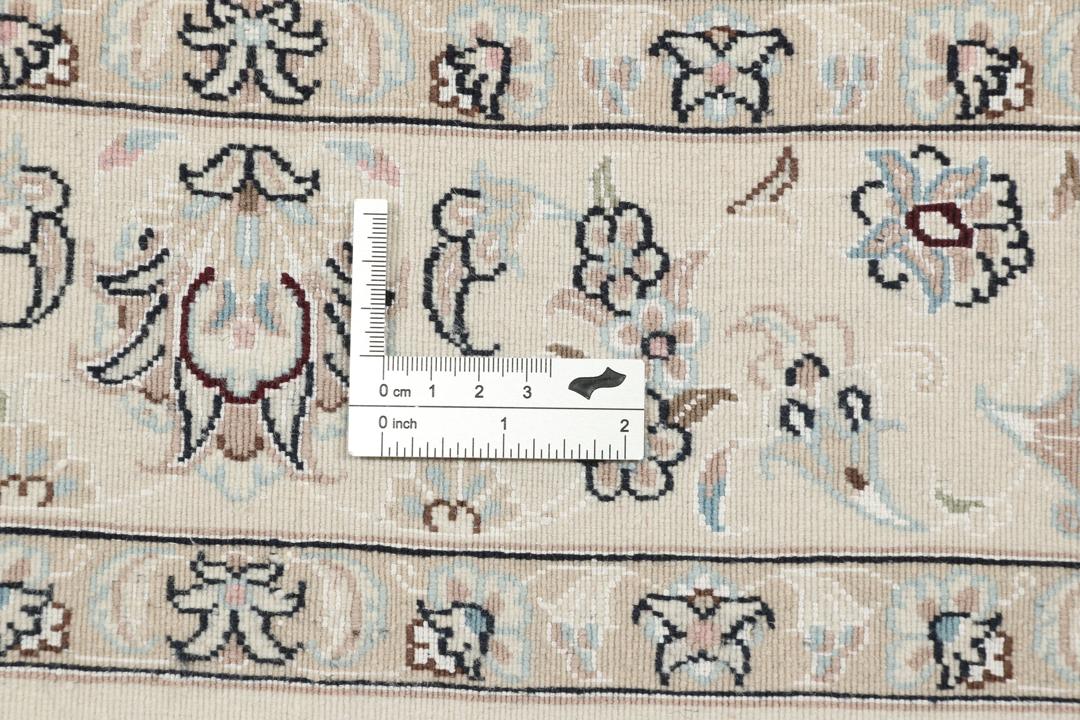
The 'La' designation, such as the 6La seen here, refers to the number of threads used in the construction of the warp. A lower number indicates a finer, more complex weave. In a 6La rug, the artisan uses a very thin foundation, allowing for an incredibly high knot density. This technical precision is what enables the rug to feature such delicate, flowing floral motifs and a crisp, detailed appearance.
The visual language of a Nain rug is typically defined by a central medallion surrounded by lush, scrolling floral patterns and vines. The borders are usually narrow and formal, framing the field with grace. While many feature traditional cream and blue tones, the subtle variation in these colours is what gives every individual rug its own personality and depth, making it a favourite among collectors.
Owning a Nain rug is an investment in cultural heritage. These pieces are valued for the immense skill required to produce such a fine weave, which has become rarer in a world of mass production. By bringing such a rug into your home, you are preserving a tradition of artistry and ensuring that a piece of history remains vibrant and relevant in a modern setting.