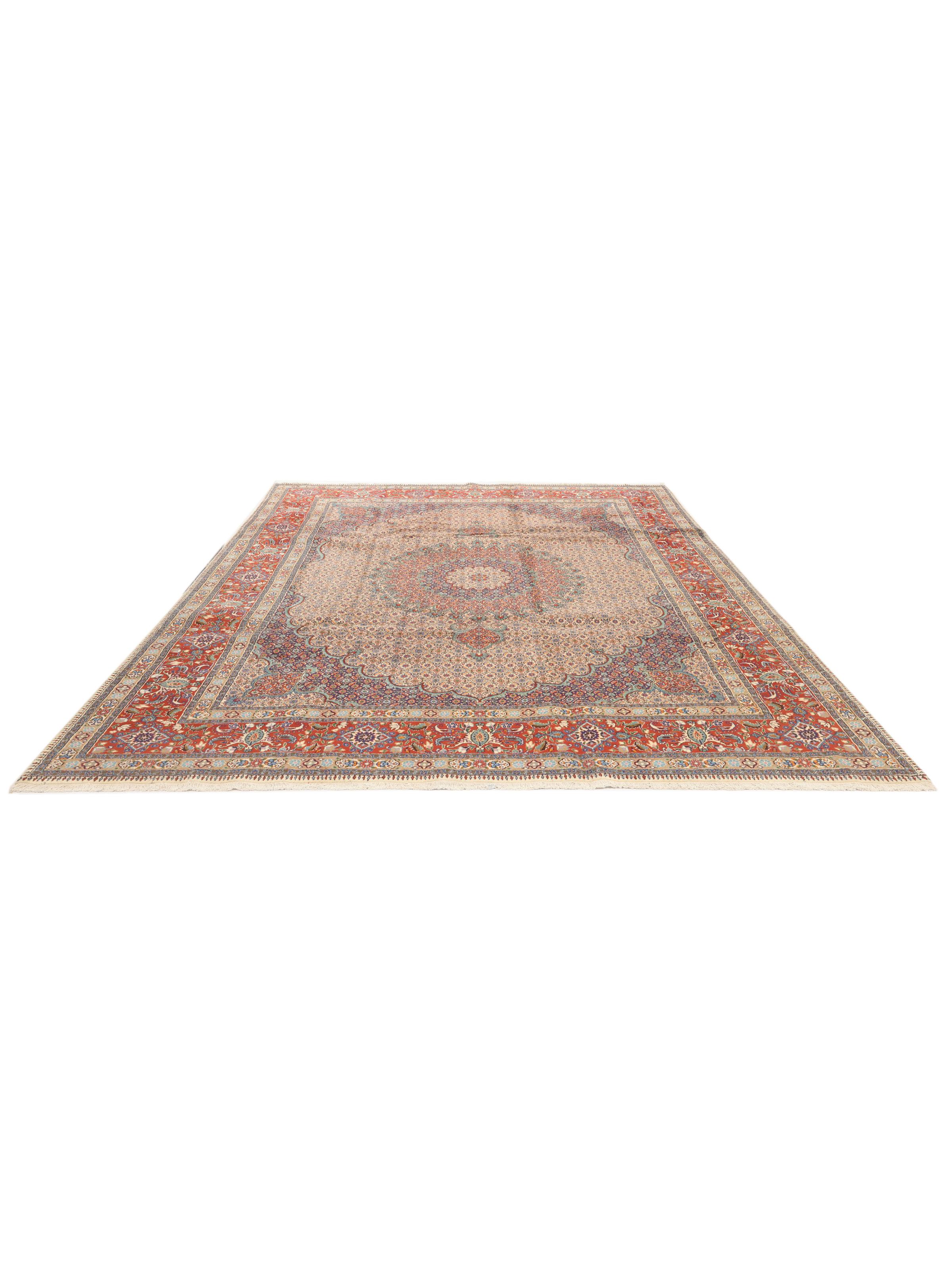
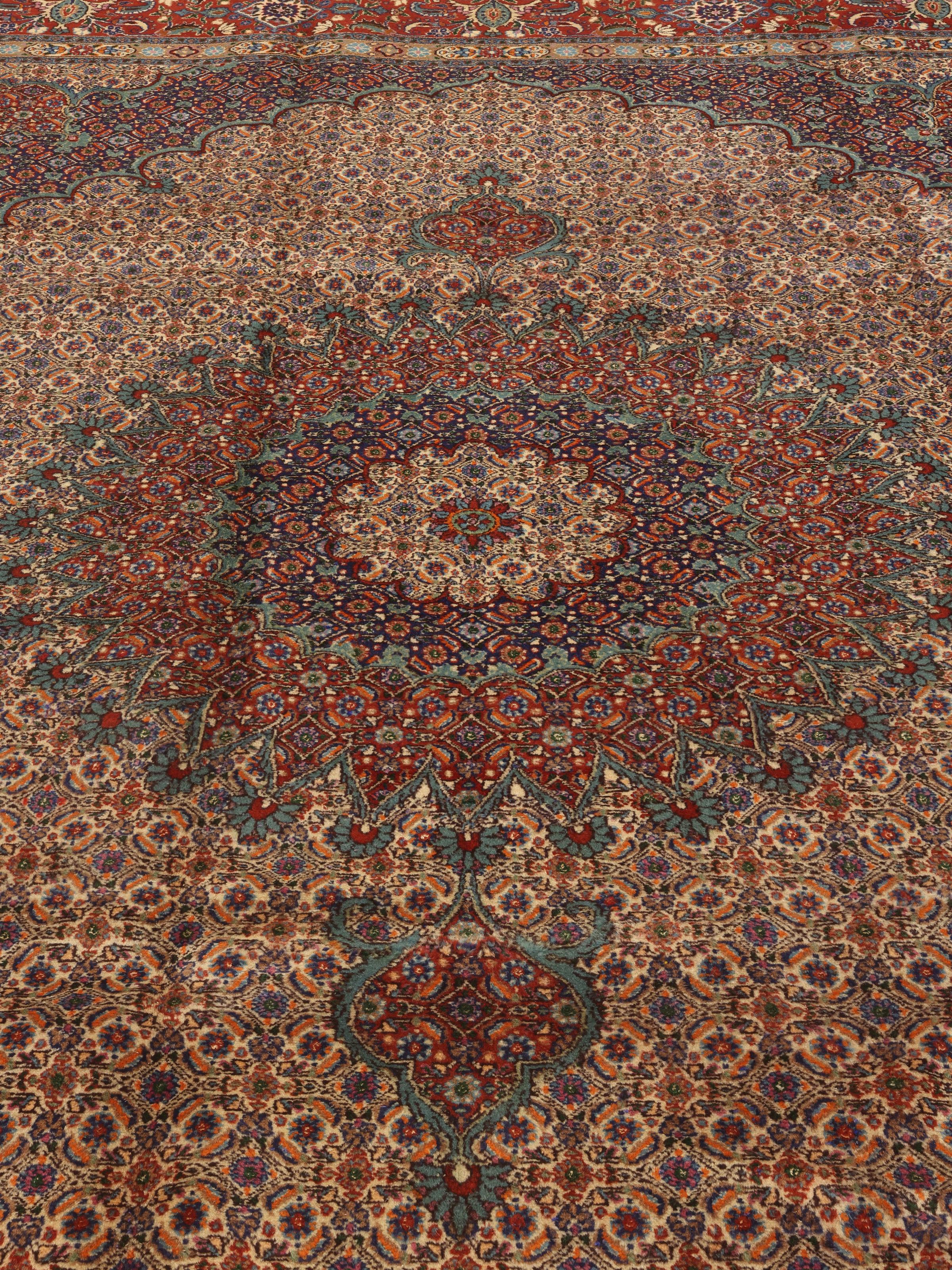
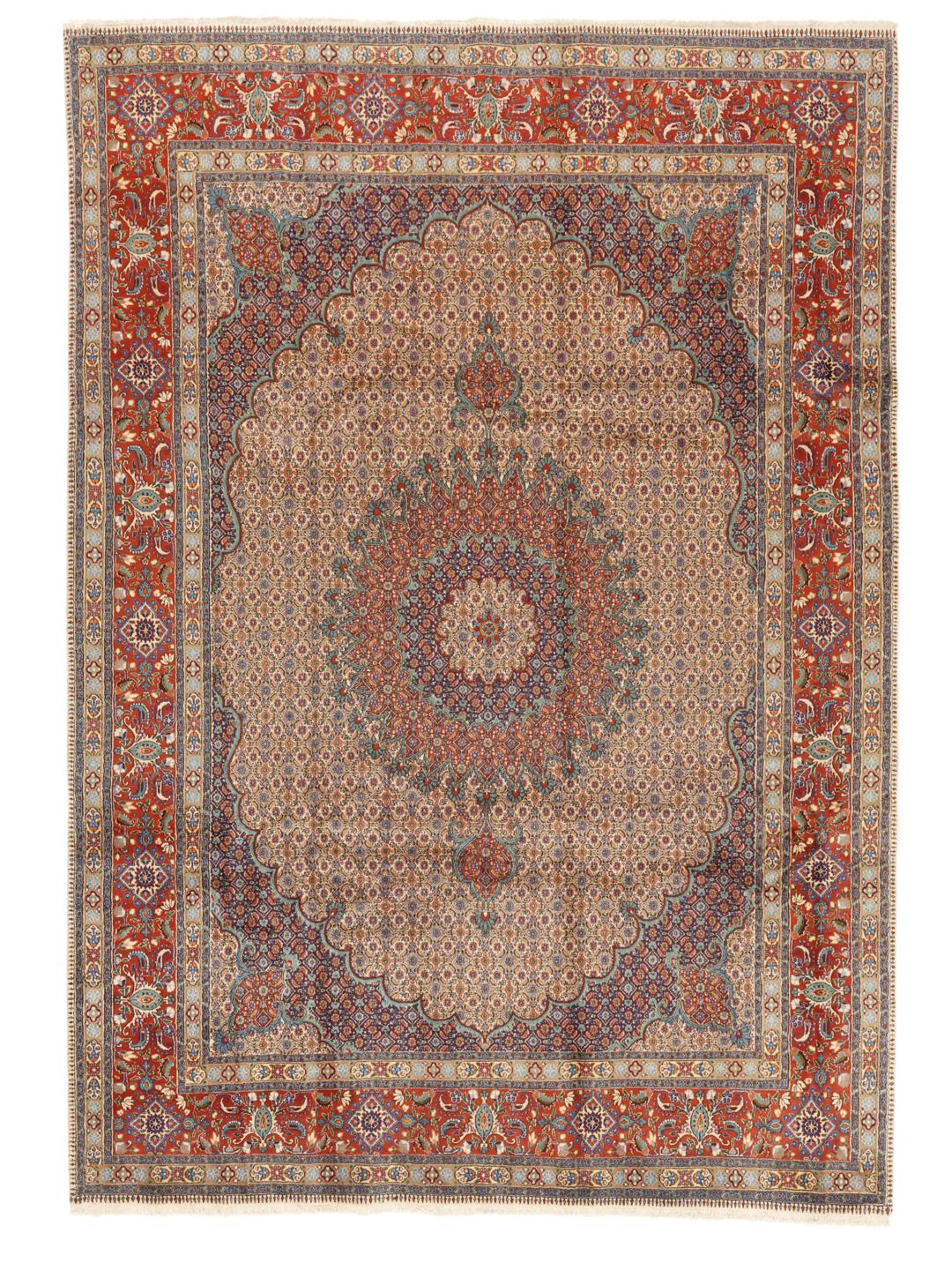
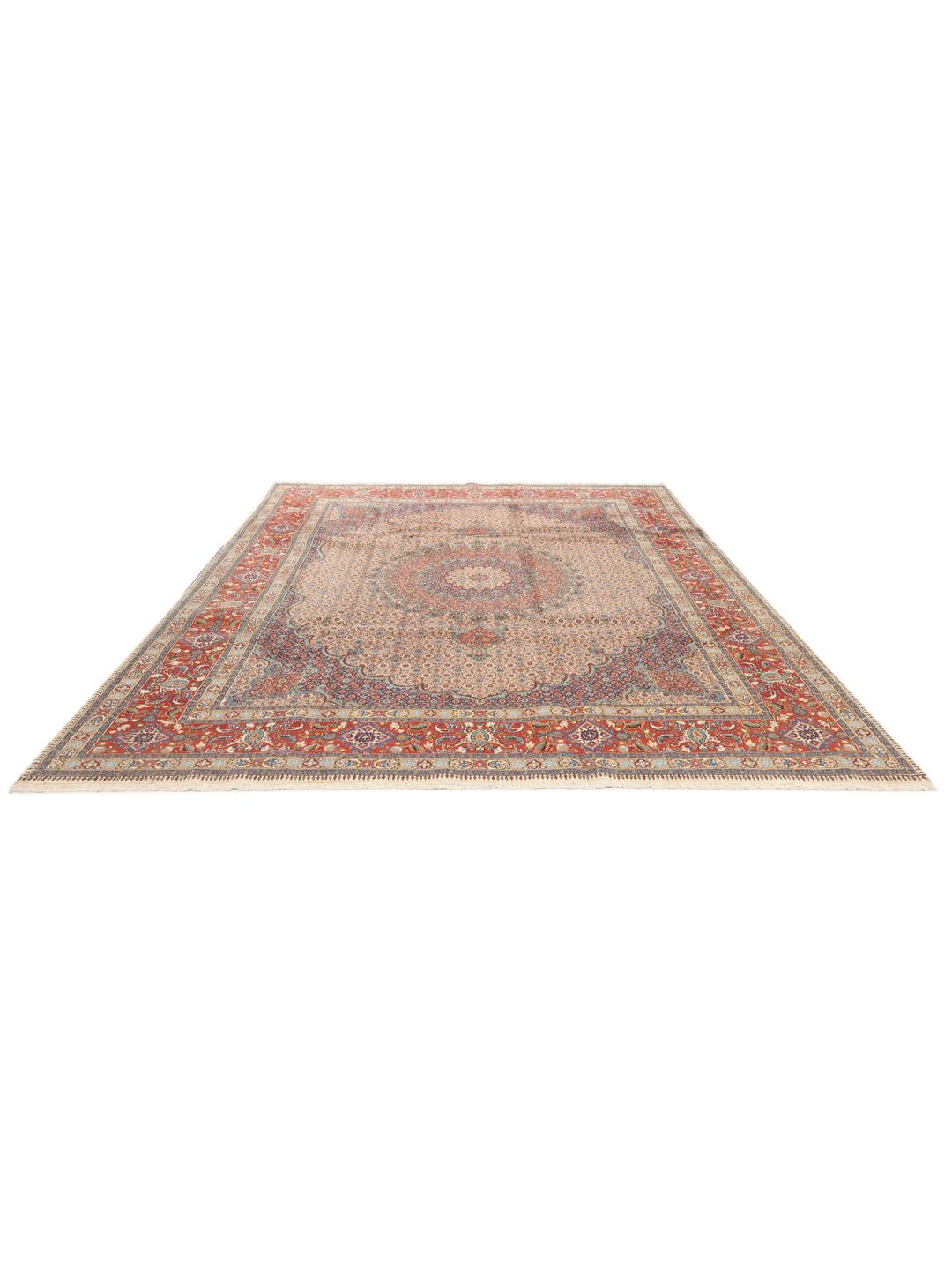
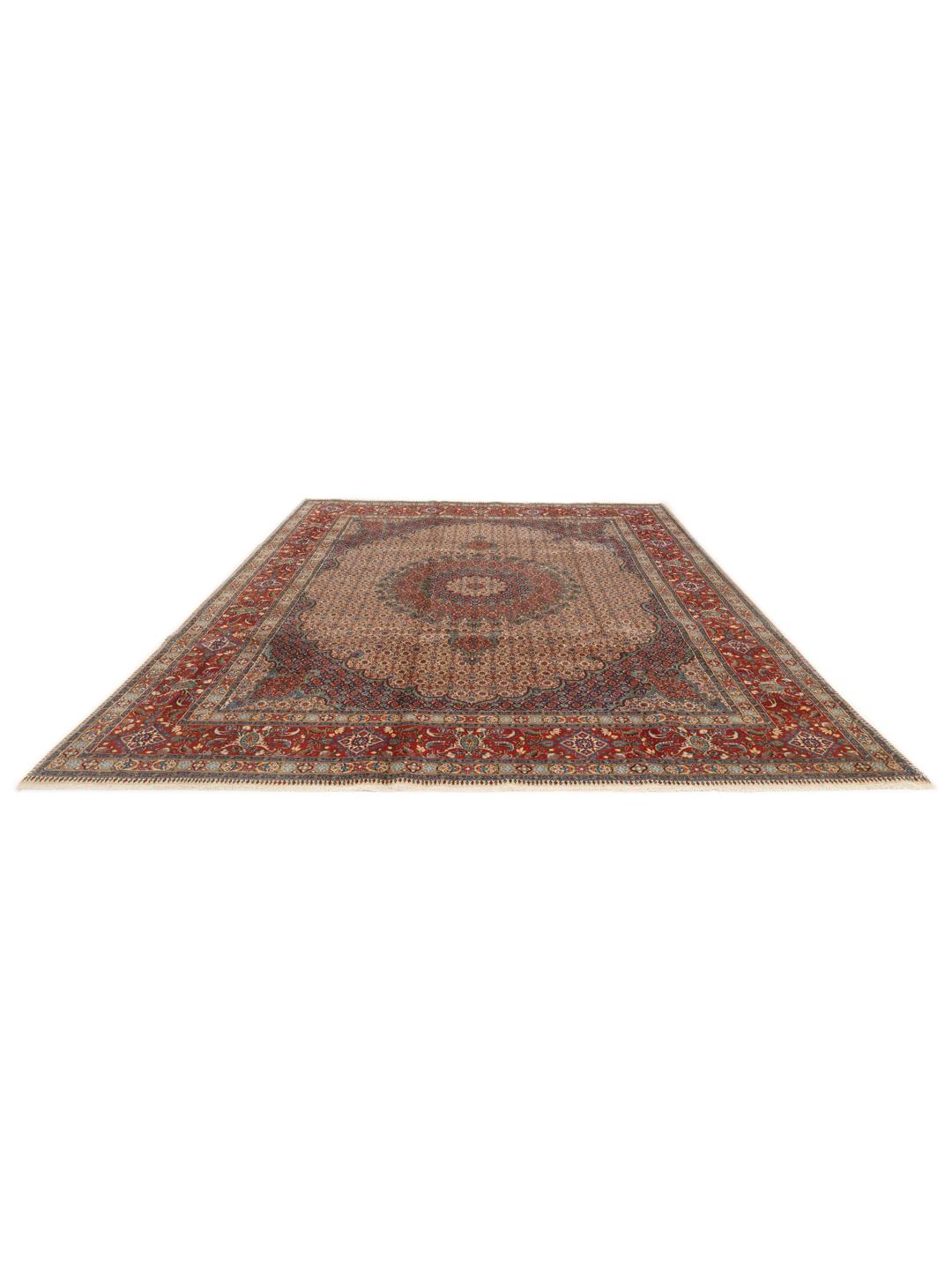
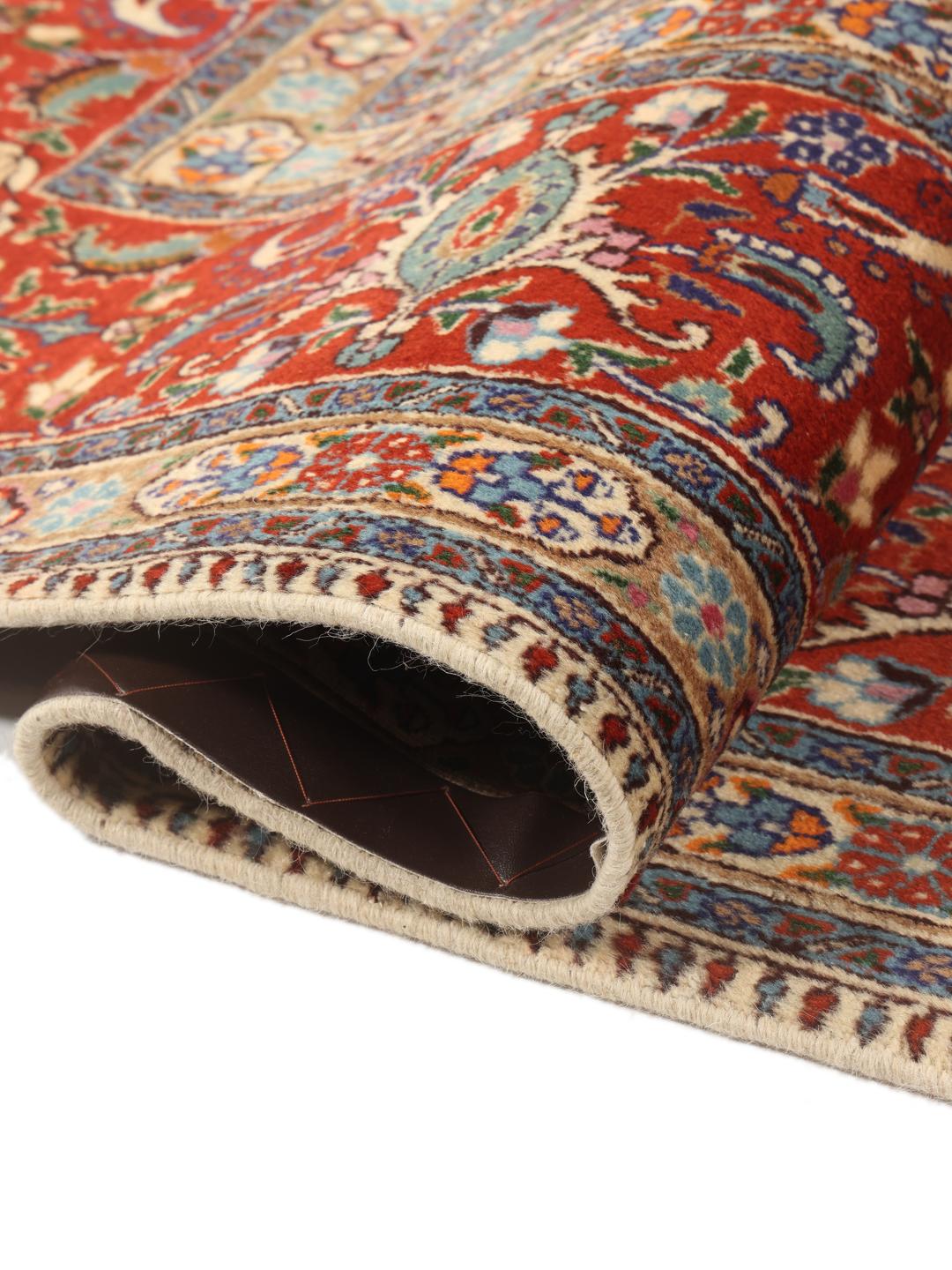
The Moud rug tradition originates from the Khorasan province in the Middle East, a region with a long and storied history of textile excellence. These rugs are celebrated for their distinctive style, which often features a sophisticated blend of floral elements and geometric precision. The region's weaving heritage has evolved over centuries, drawing inspiration from both nomadic traditions and the refined tastes of urban artisan workshops.
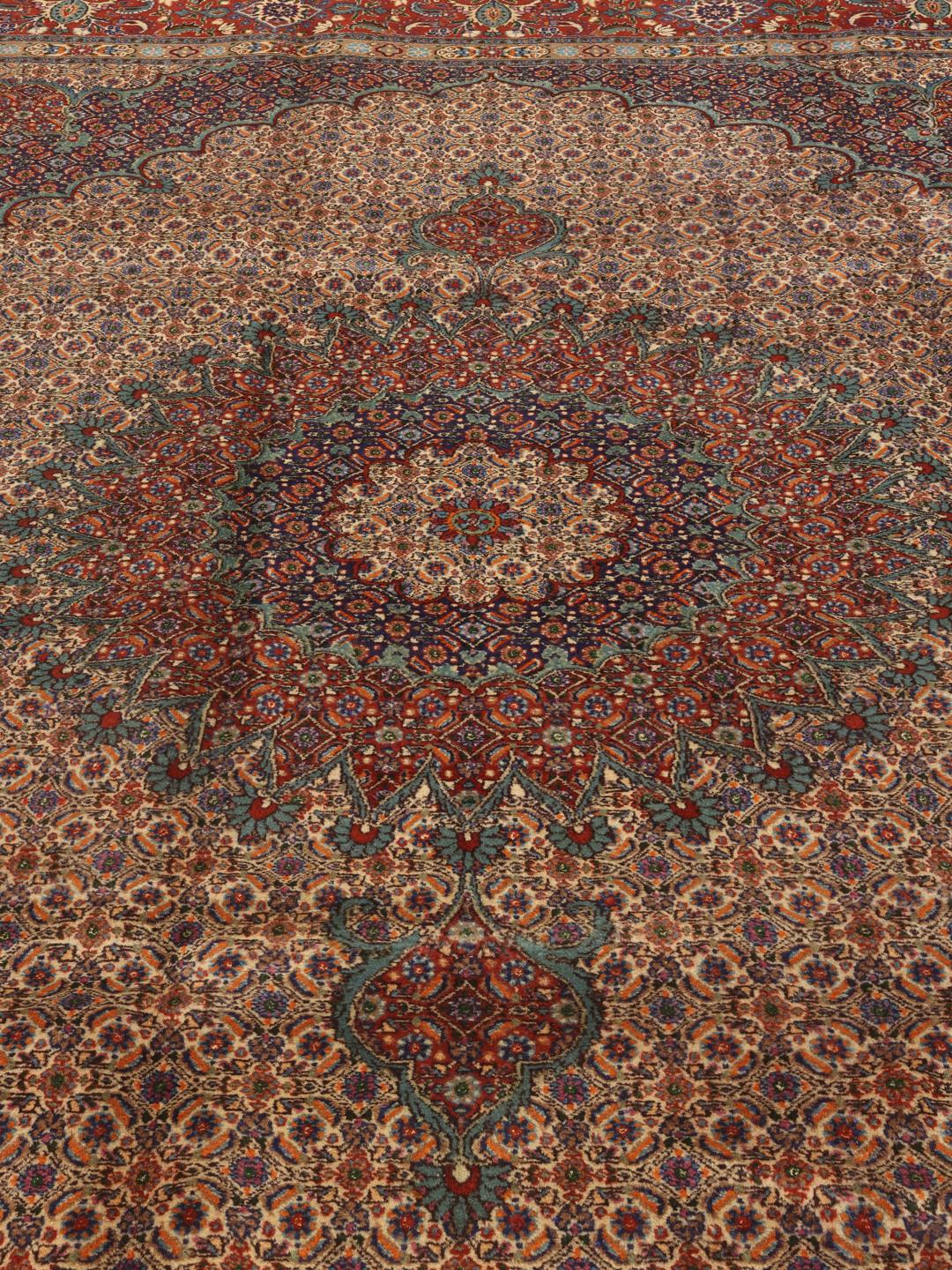
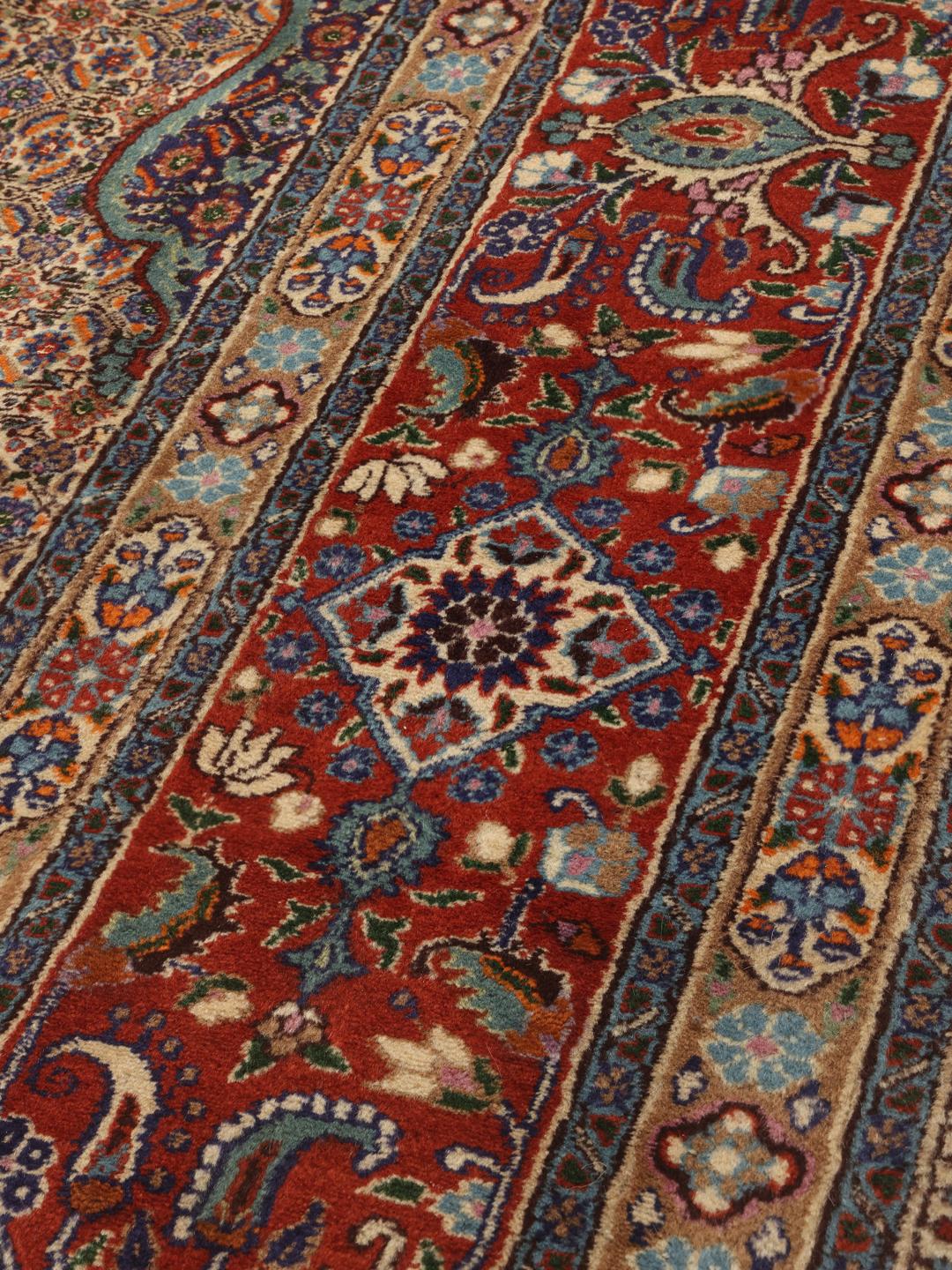
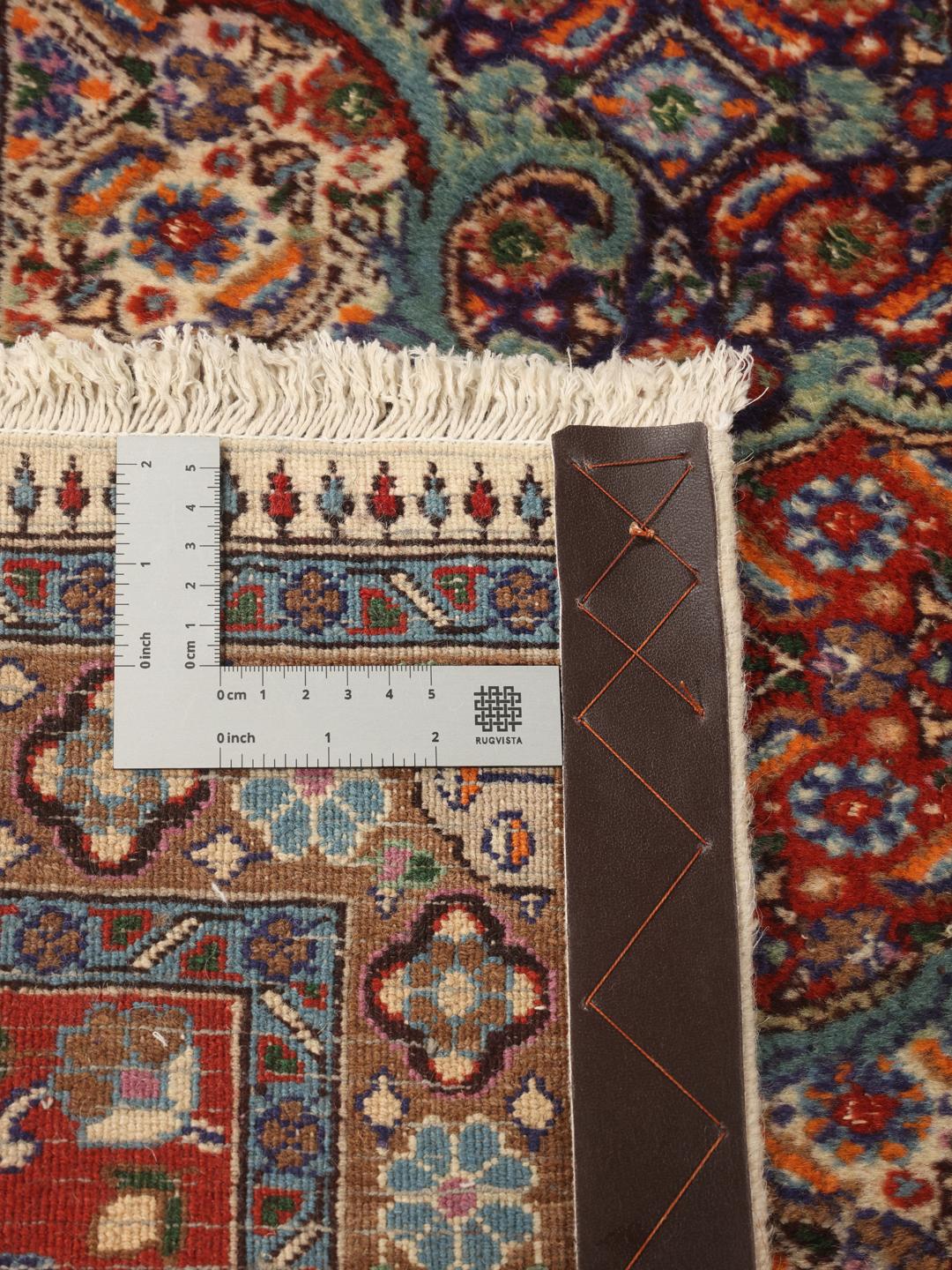
A defining characteristic of Moud rugs is the balance between the field and the border, often showcasing a central medallion surrounded by a sea of delicate, repeating motifs. The technique involves a meticulous approach to symmetry and colour placement, resulting in a harmonious visual experience. The use of high-quality wool ensures that these intricate patterns remain sharp and clear, a testament to the technical prowess of the weavers who have perfected this craft over generations.
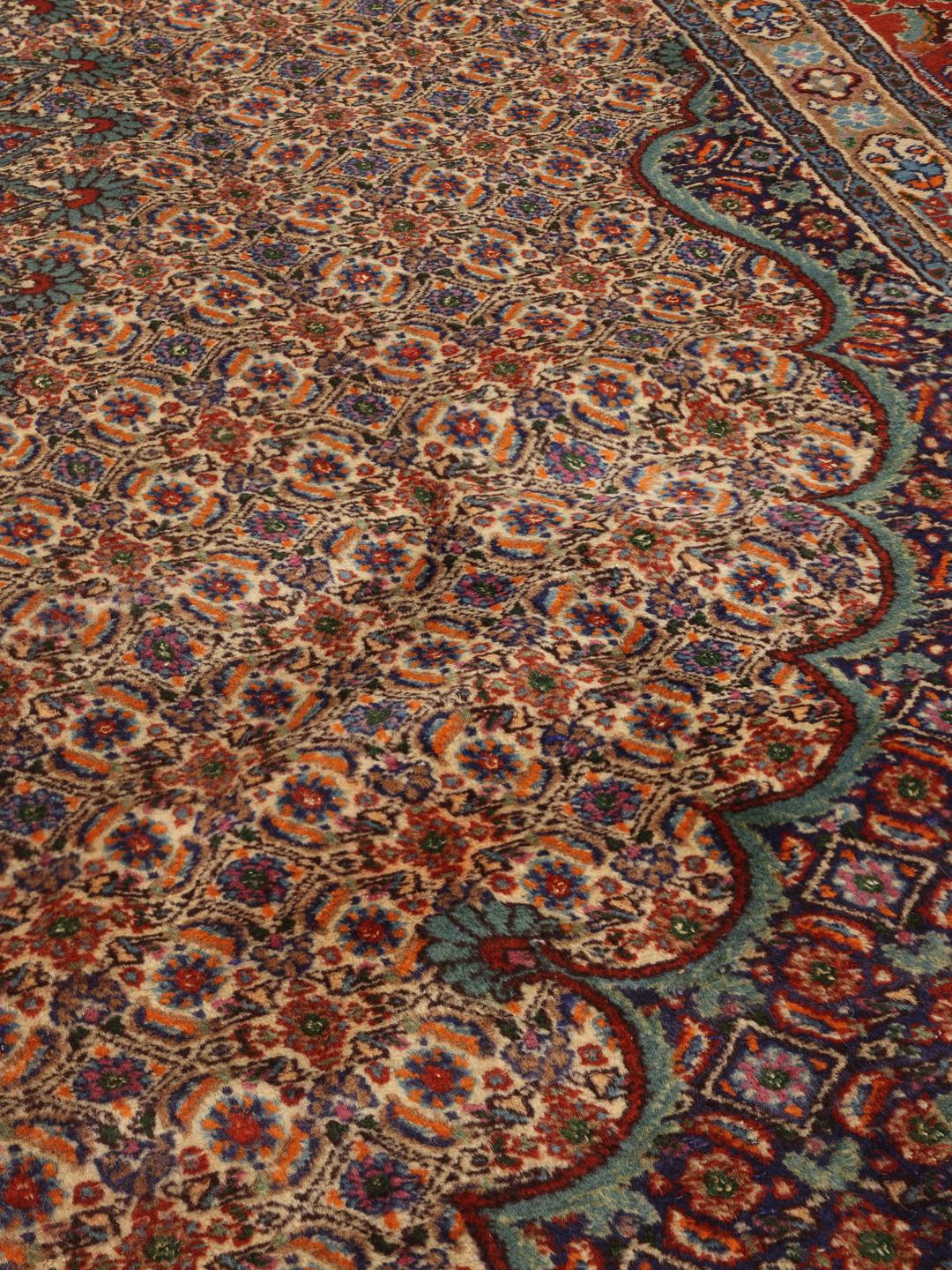
The signature design elements often include the 'Herati' or 'fish' pattern, which fills the field with a sense of rhythmic movement and depth. When combined with a central medallion, this creates a structured yet fluid aesthetic that is both traditional and timeless. The colour palettes are typically warm and earthy, often utilising deep reds and soft blues that ground the intricate designs and give the rug its characteristic depth.
Collectors and enthusiasts value Moud rugs not only for their beauty but for their cultural significance as representatives of a specific, high-level weaving tradition. Owning a Moud rug is an investment in heritage, skill, and the enduring nature of human creativity. It is a piece that tells a story of a place, a people, and a dedication to craft that persists in an increasingly automated world.