Moud rugs are named after the small, historic town of Moud in the Middle Eastern region of Khorasan. This area has long been a center for fine rug production, known for an aesthetic that bridges the gap between traditional tribal influences and the sophisticated, refined styles favoured by urban centres. The region's history of weaving is deeply tied to the local climate and culture, where the creation of a rug is seen as a way to translate the natural beauty of the surrounding landscape into a functional, portable work of art.
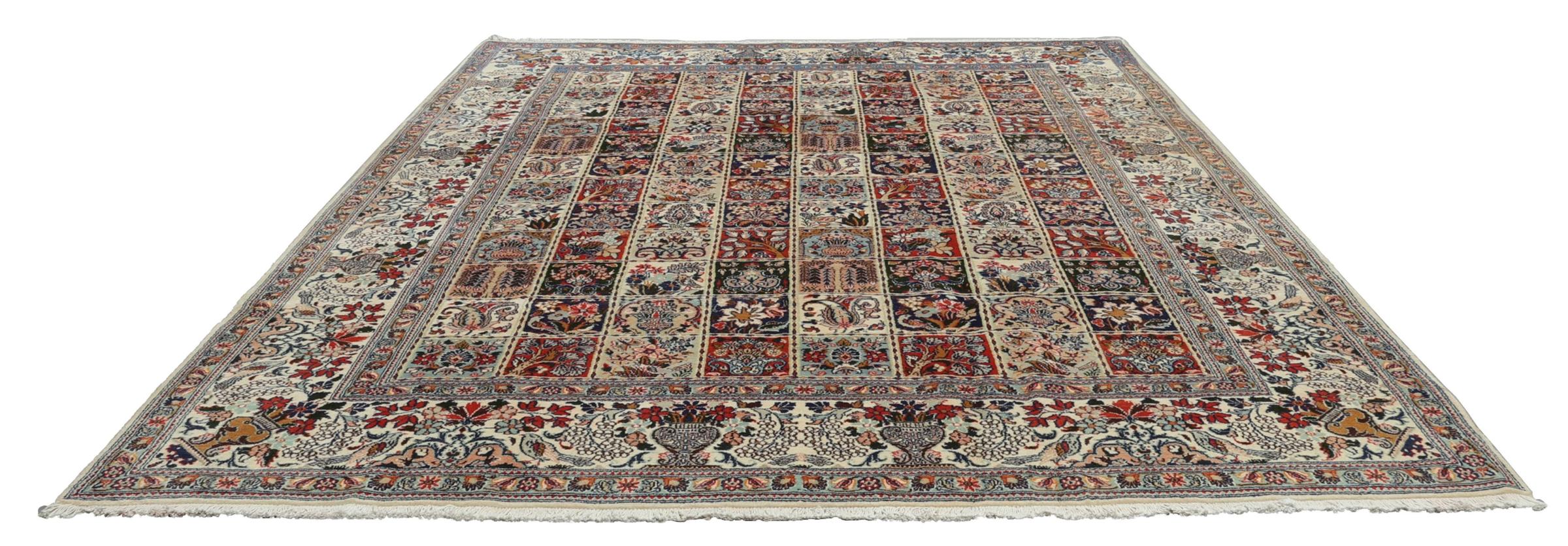
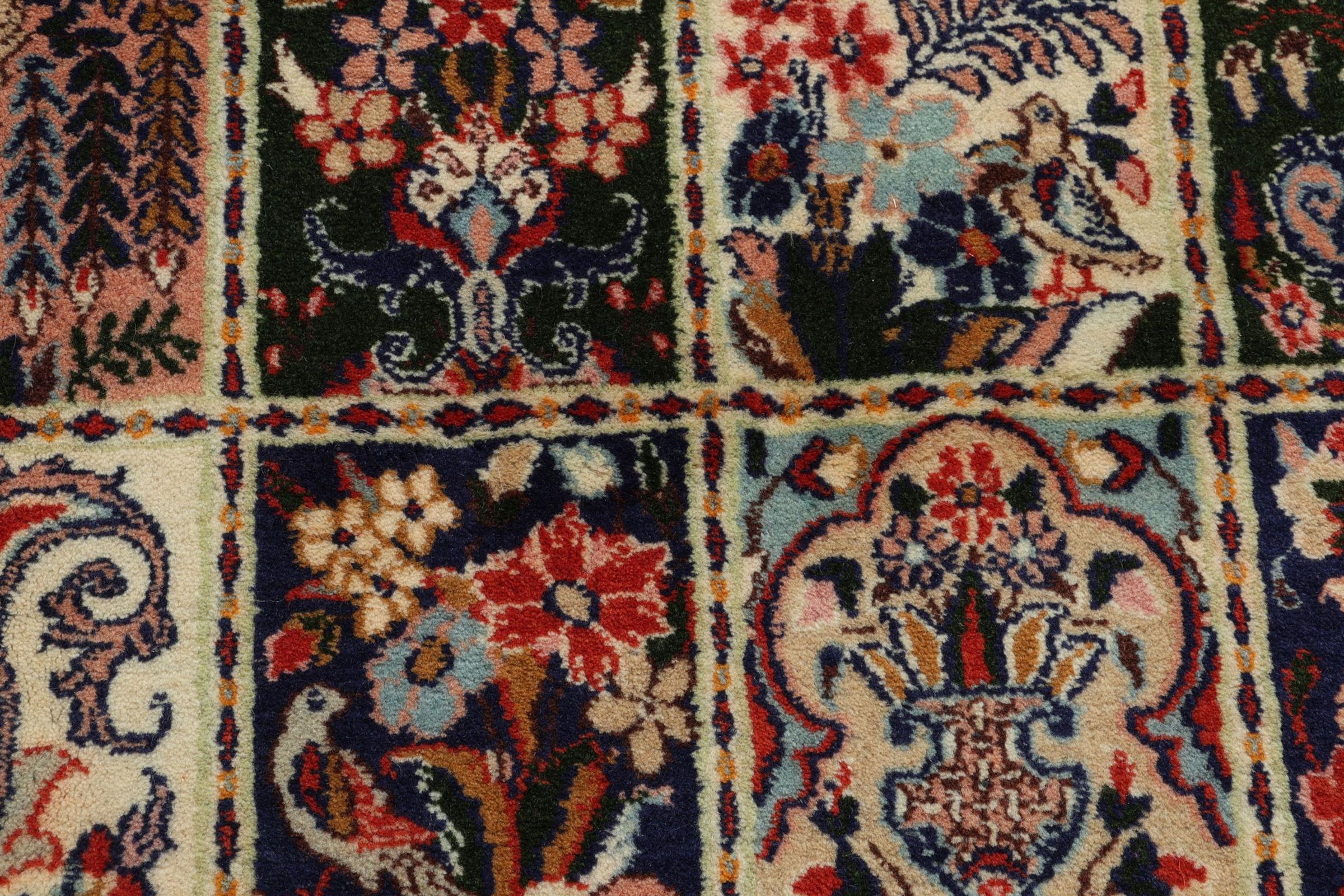
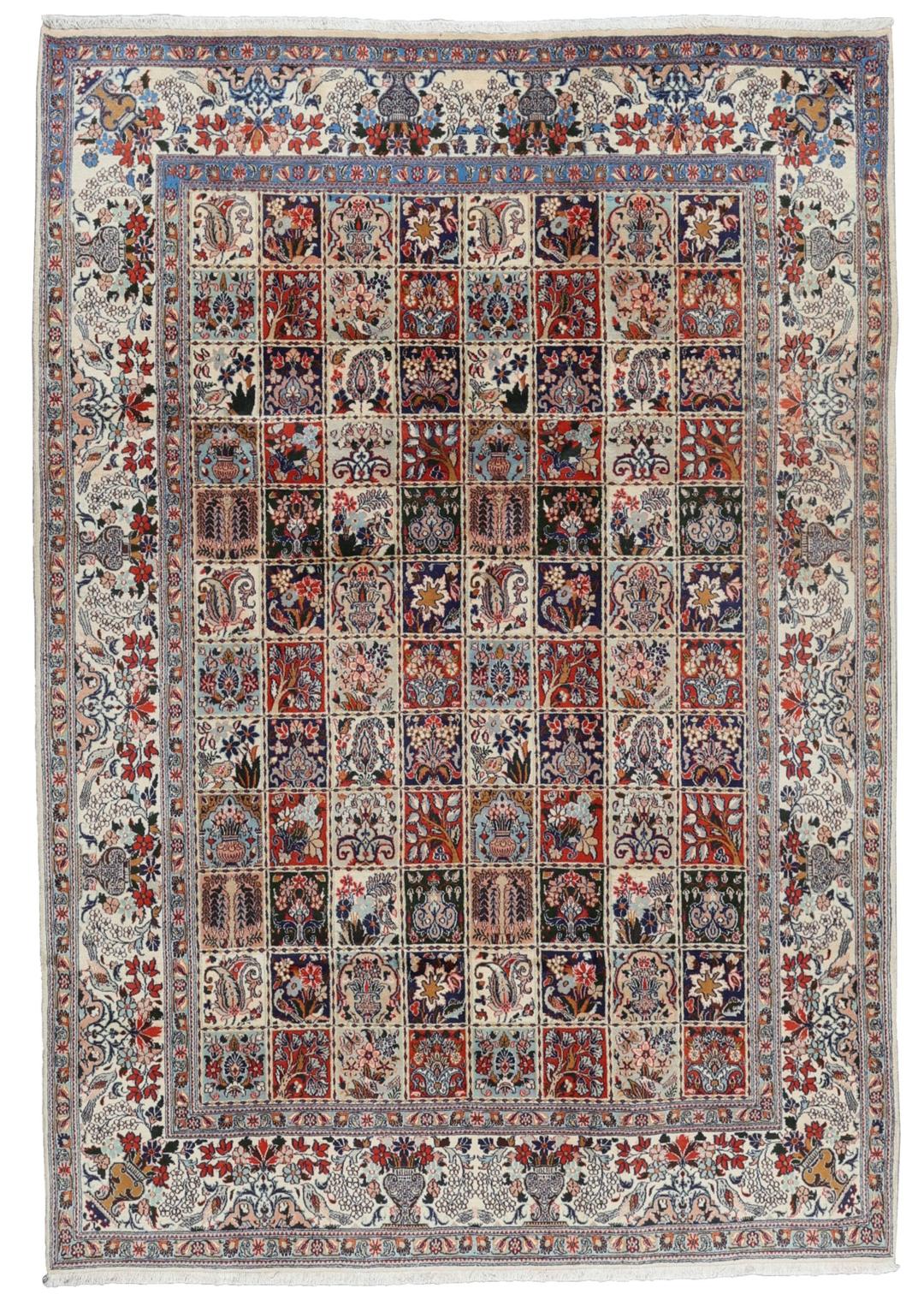
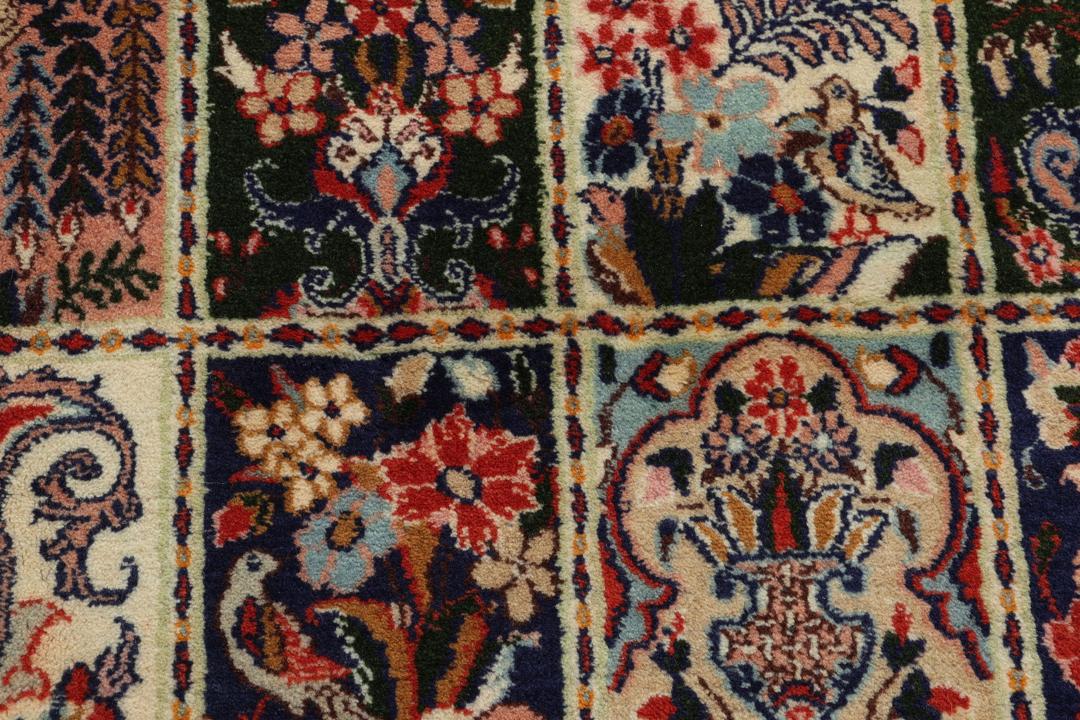
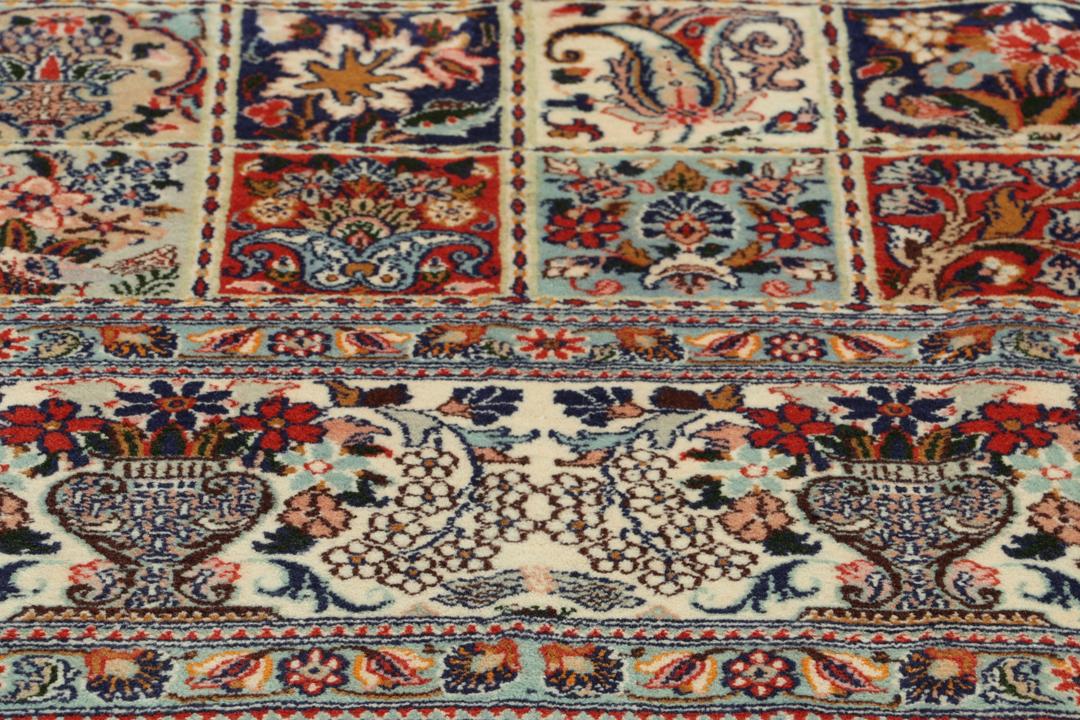
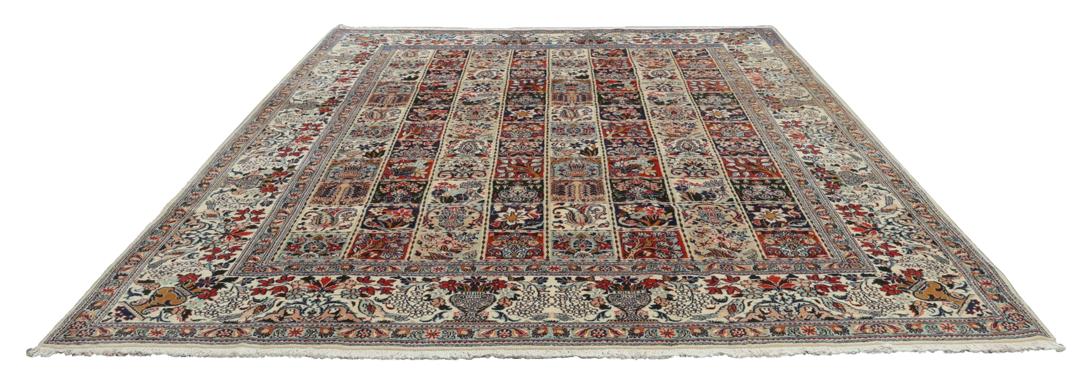
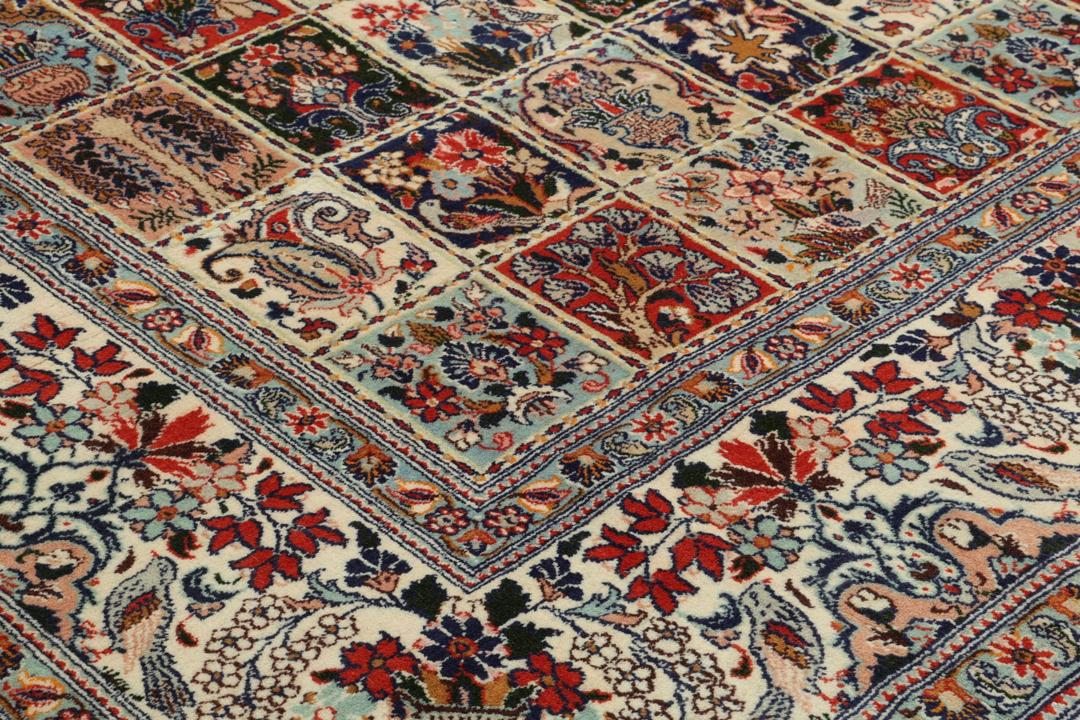
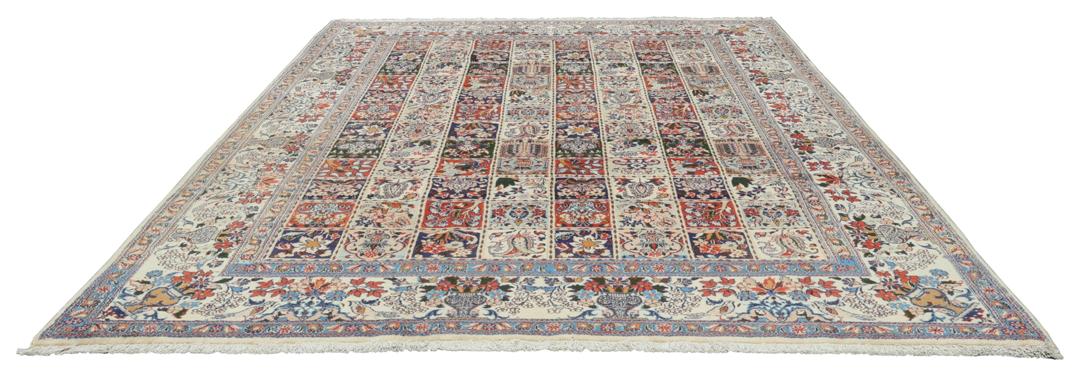
The signature design element of the Moud tradition is the herati motif, often accompanied by the 'garden' or 'bakhshayesh' style partition. This rug features a classic compartmented layout, where the field is divided into distinct, repeating sections. Each square is a canvas for intricate floral sprays, vases, and stylized botanical elements. This structured, grid-like approach requires immense discipline from the weaver, as each section must be perfectly aligned to maintain the symmetry and harmony of the entire composition.
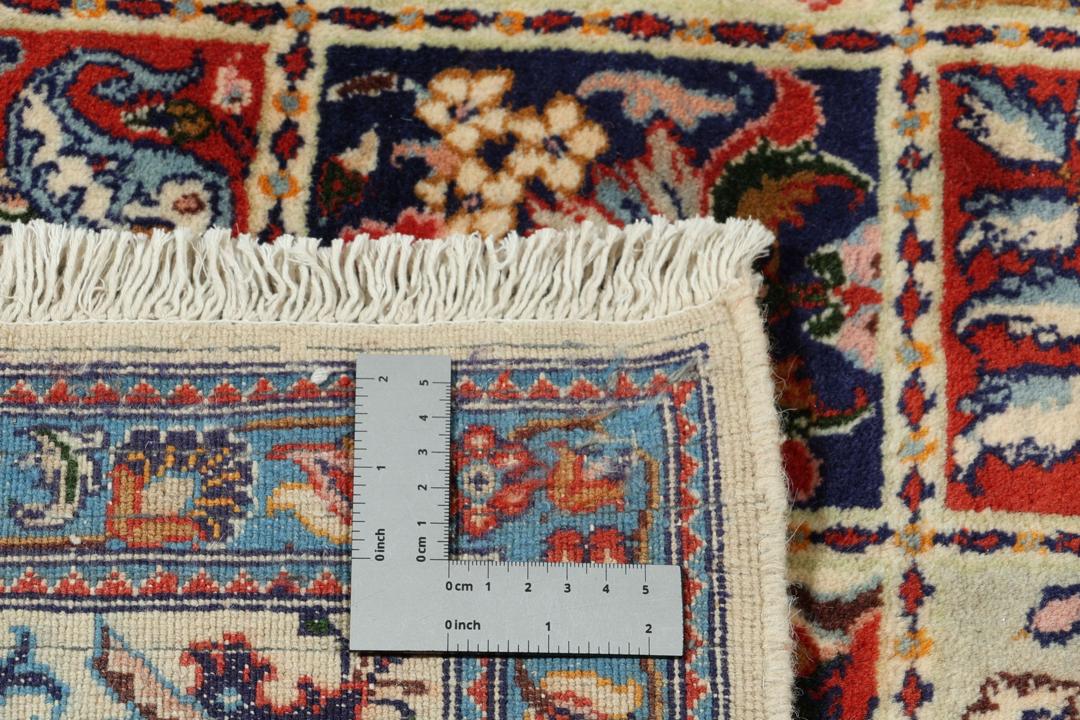
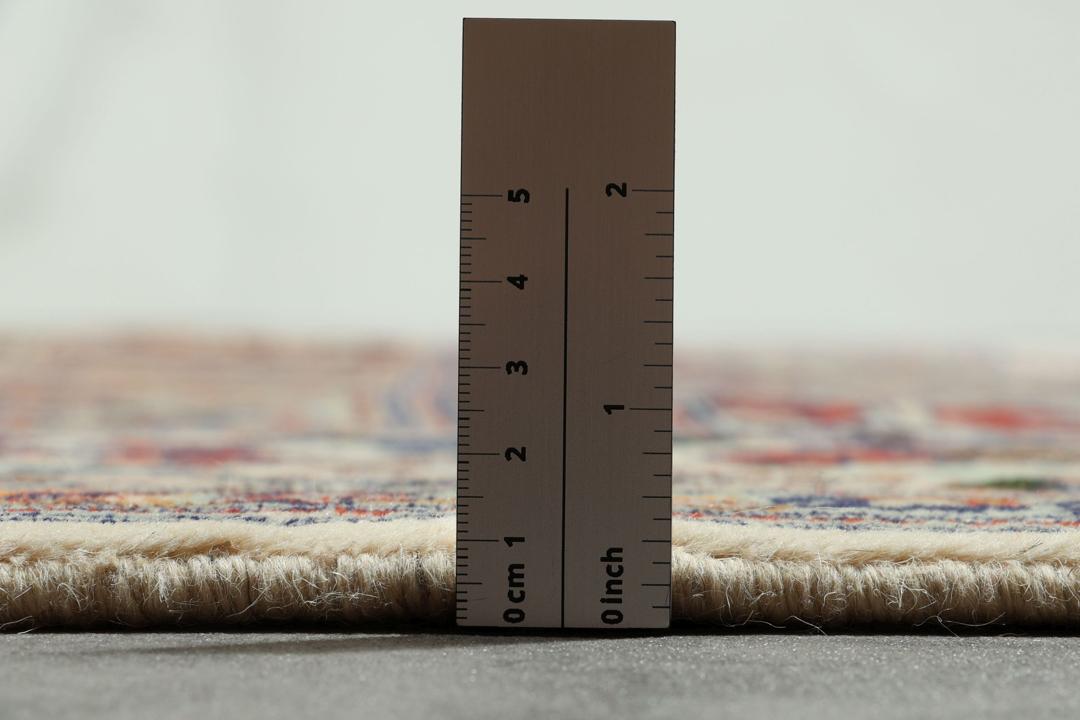
Quality in Moud rugs is often identified by the use of high-grade wool and a tight knot density. These rugs are prized for their durability, a result of the specific way the wool is prepared and the tension applied during the hand-knotting process. The tradition of using a cotton foundation provides a stable, long-lasting base that allows the intricate floral designs to remain crisp and well-defined even after decades of use.
Collectors value Moud rugs for their ability to balance complexity with a sense of order. Owning a piece from this tradition is an investment in cultural heritage and human skill. Because every rug is created by hand, the slight variations in colour and pattern are celebrated as marks of authenticity. To possess a Moud rug is to hold a connection to the generations of artisans who have refined these techniques, ensuring that the legacy of this craft continues to thrive in homes around the world.