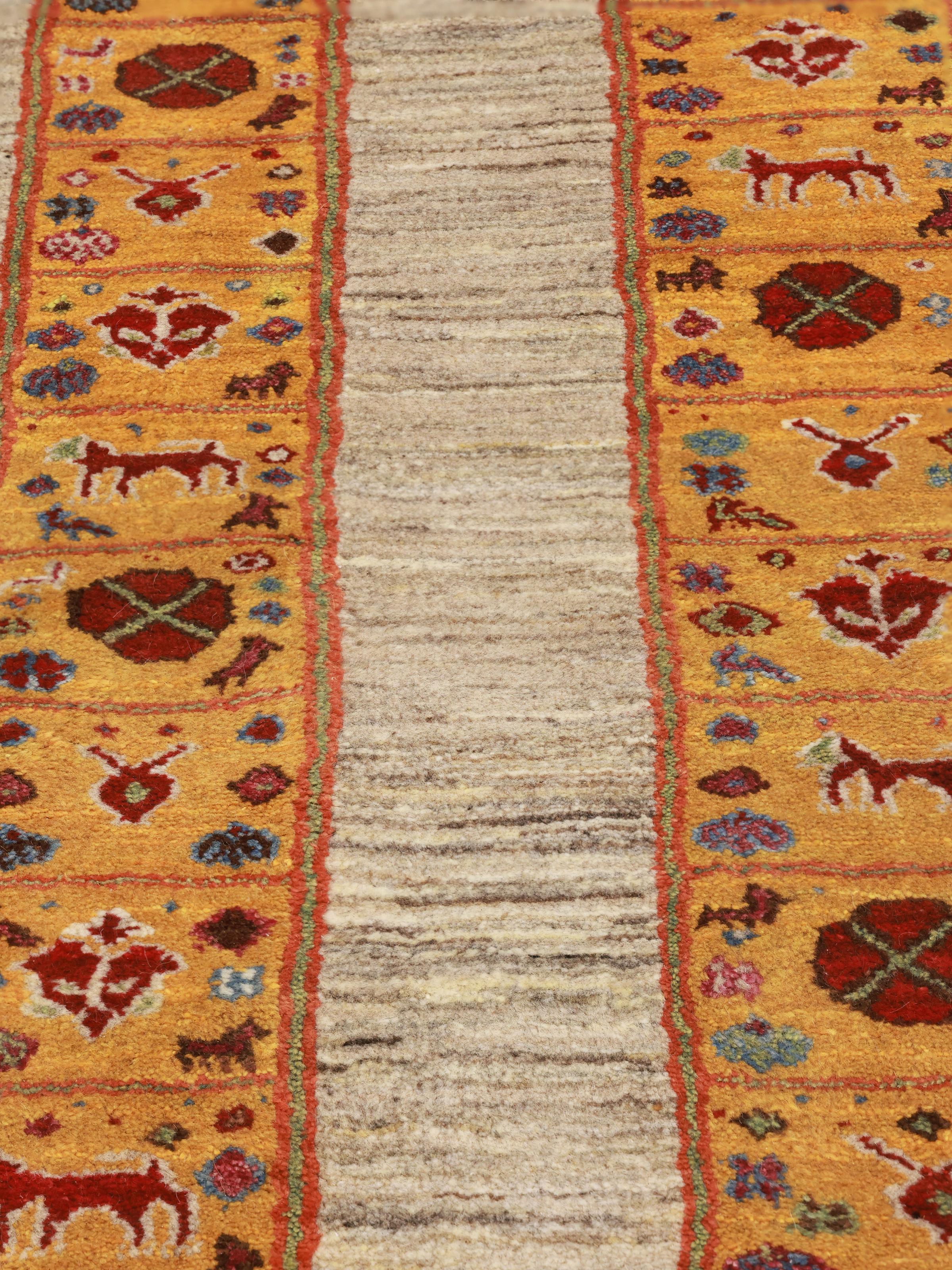
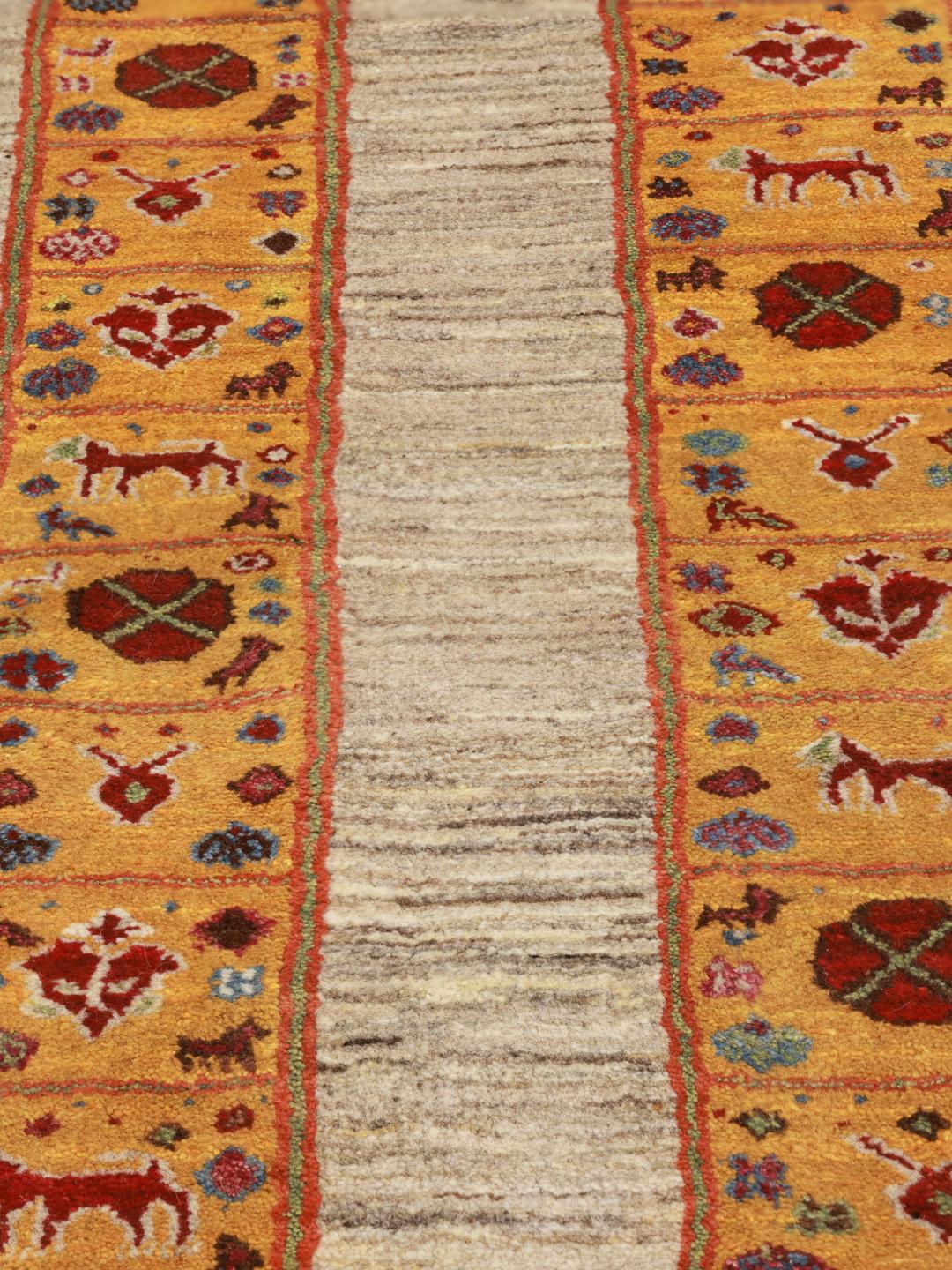
Loribaft rugs originate from the nomadic tribes of the Middle East, specifically the Luri and Qashqai people. These rugs are deeply connected to the landscape and the migratory lifestyle of their weavers, who traditionally created these pieces for their own use. The designs often reflect the natural world, incorporating symbols of protection, fertility, and the local flora and fauna that the tribes encountered during their seasonal travels.
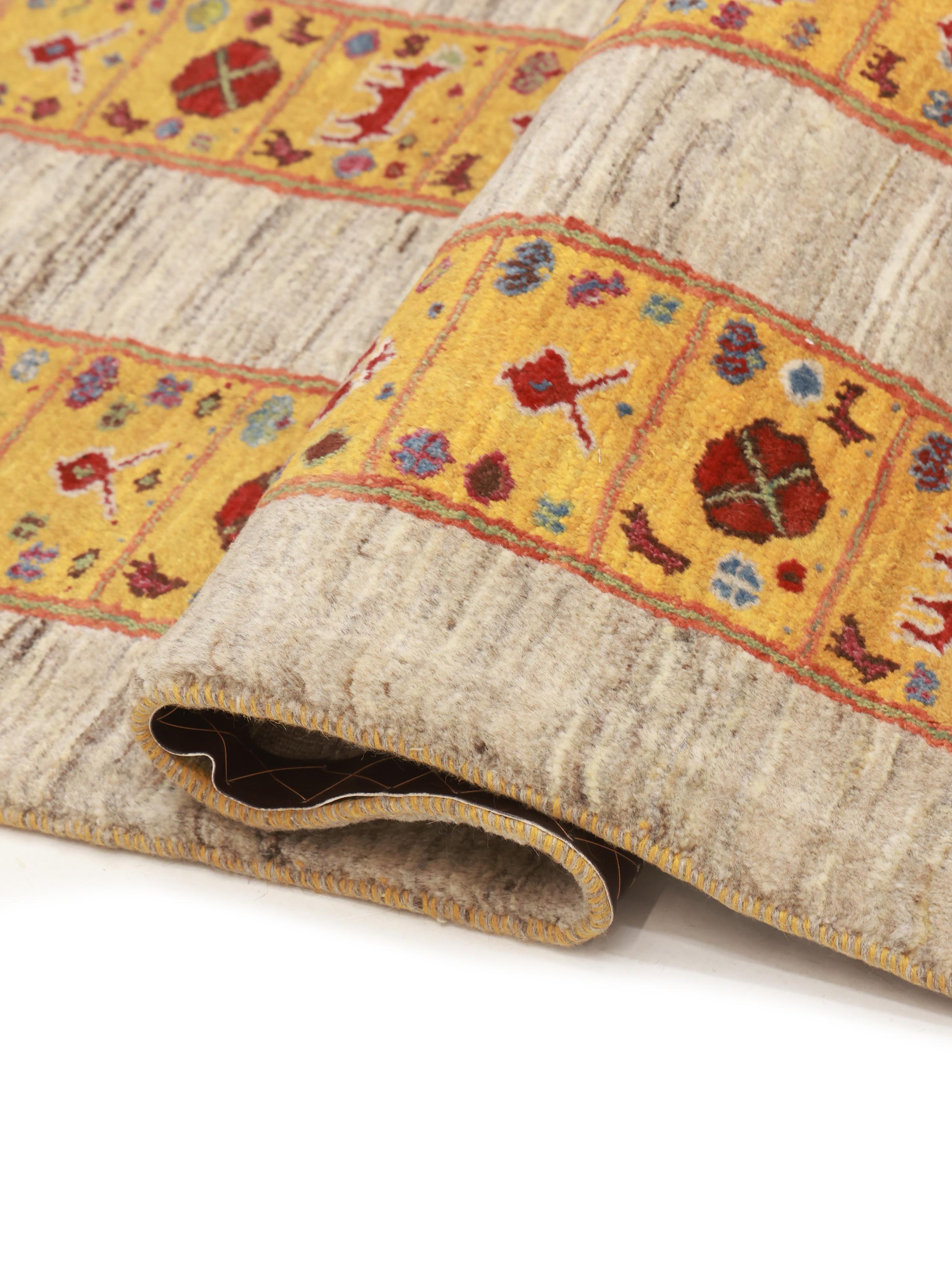
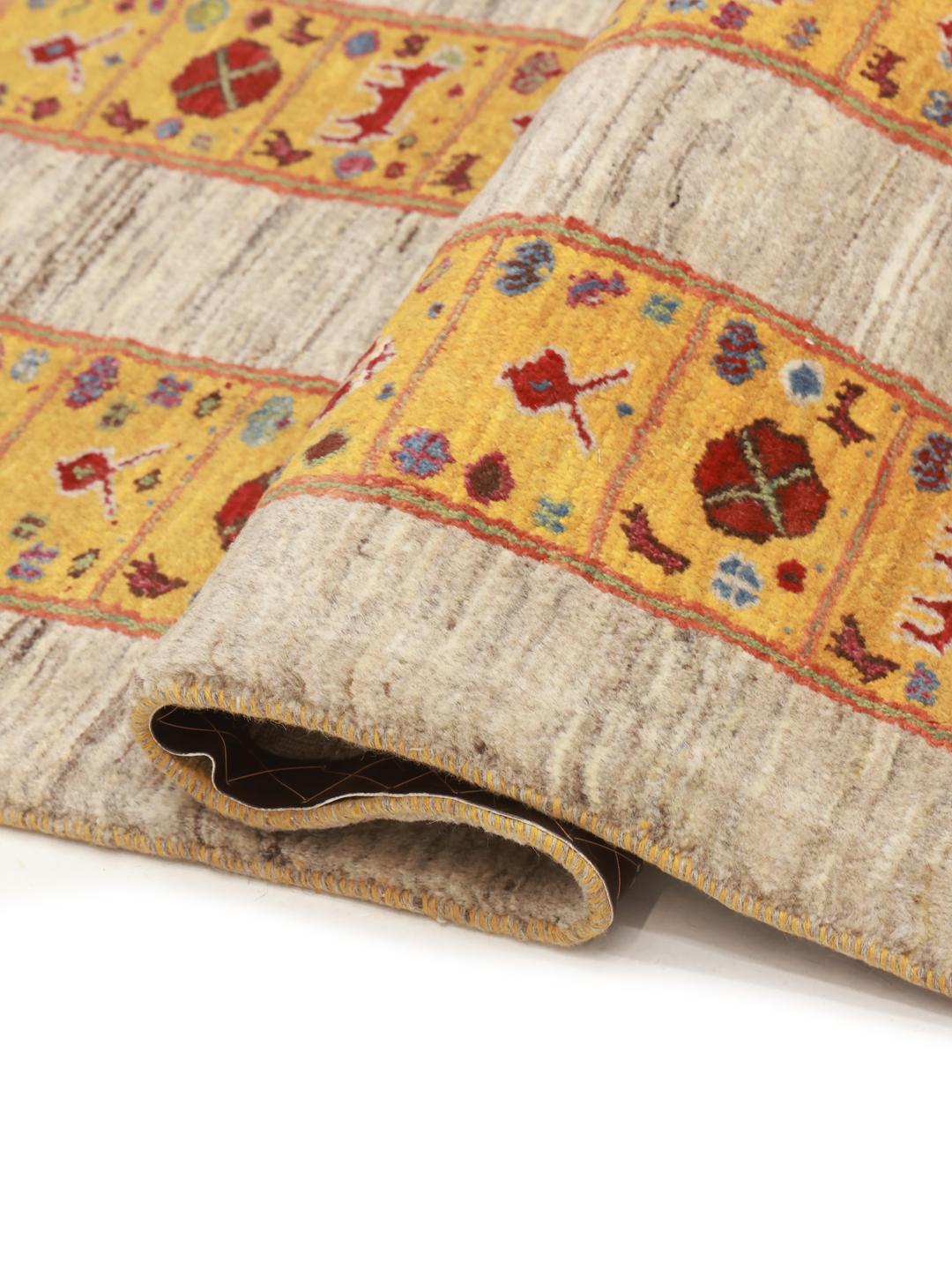
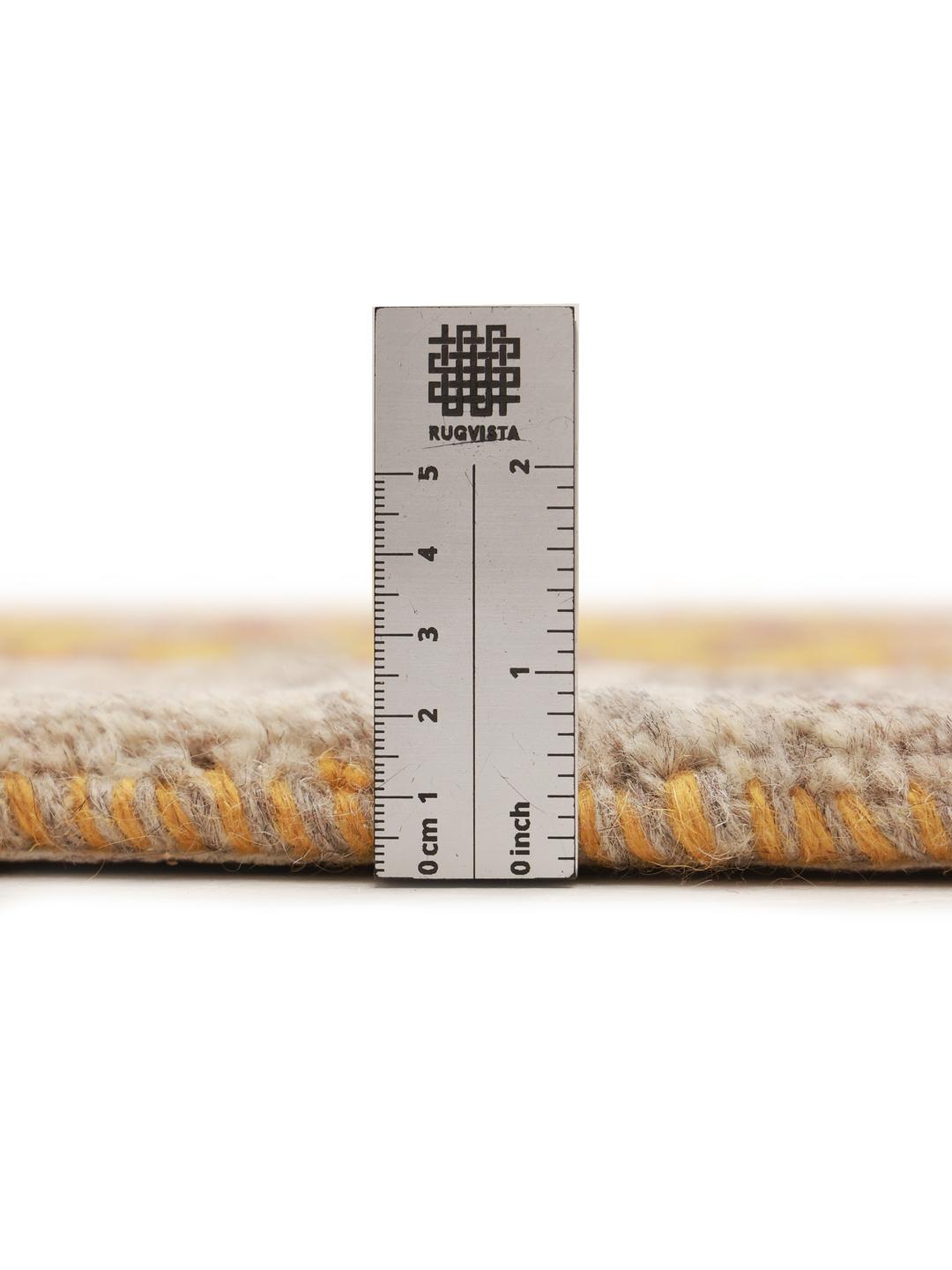
The term 'Baft' refers to the weaving process itself, signifying a specific type of knotting that creates a thicker, more durable pile. This construction is highly valued because it provides both longevity and a dense, soft feel that is characteristic of the finest nomadic textiles. The use of high-quality wool, sourced from sheep raised in the mountainous regions of the Middle East, ensures that the rugs are both resilient and capable of showcasing vibrant, long-lasting colours.
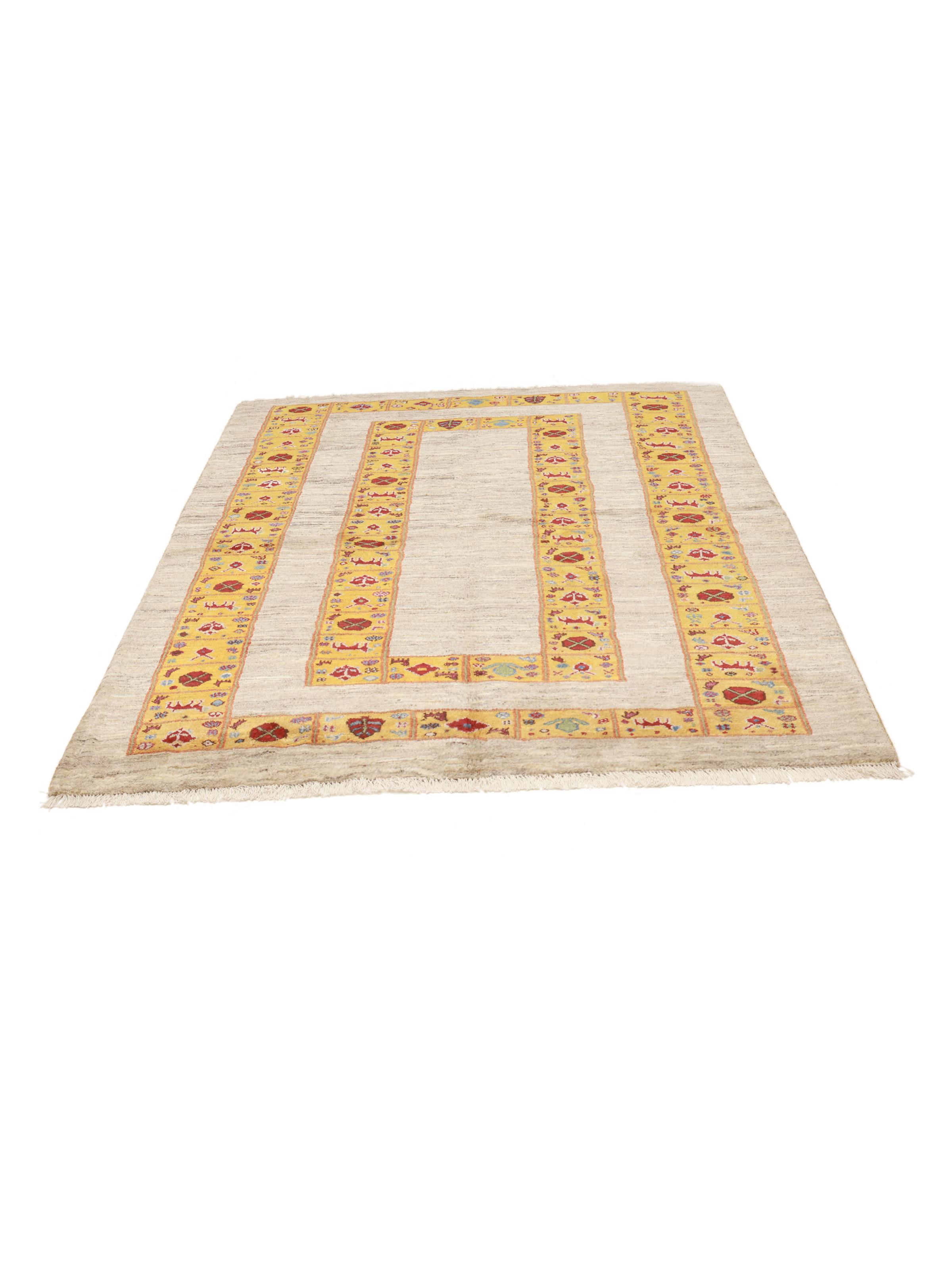
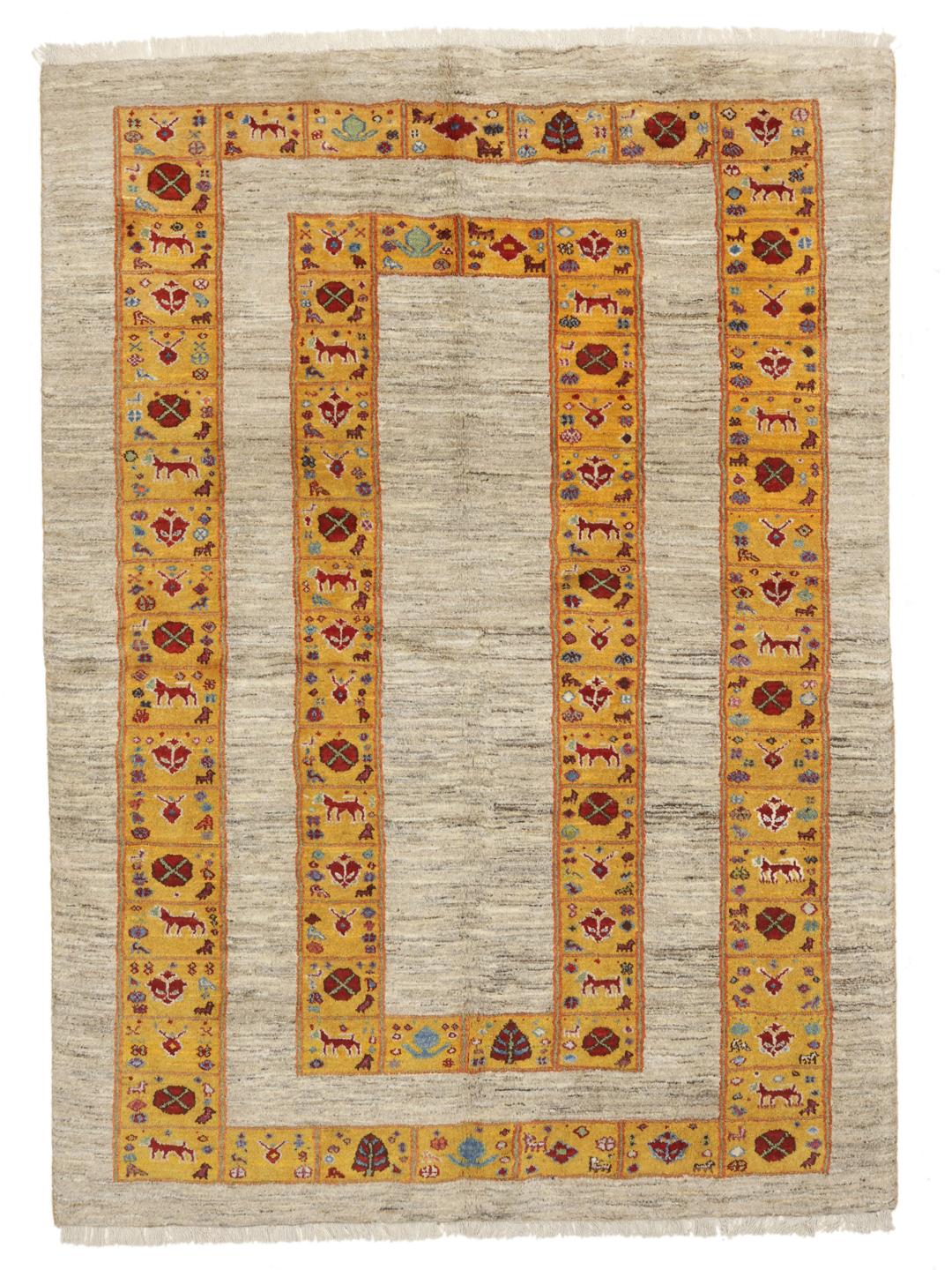
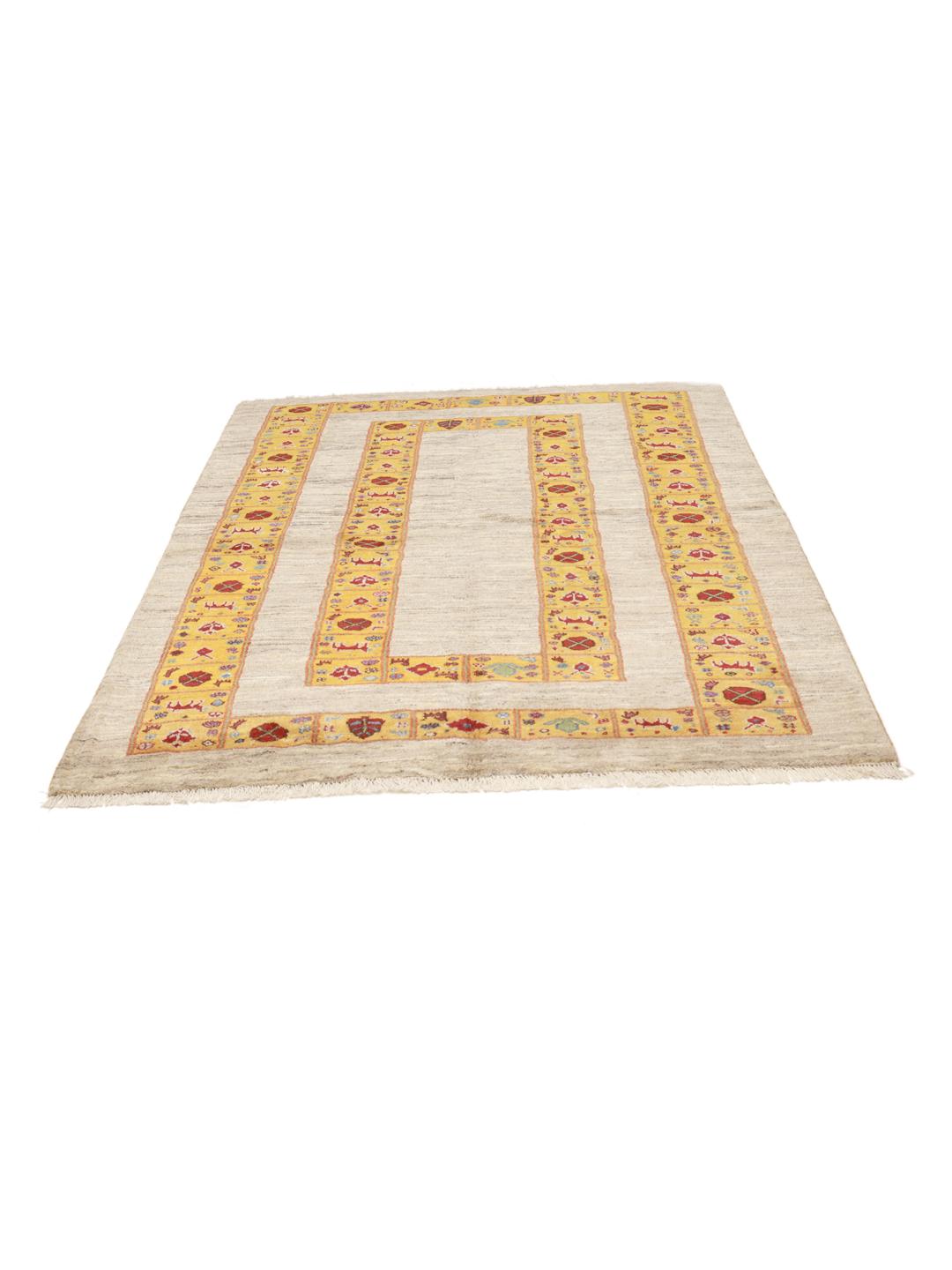
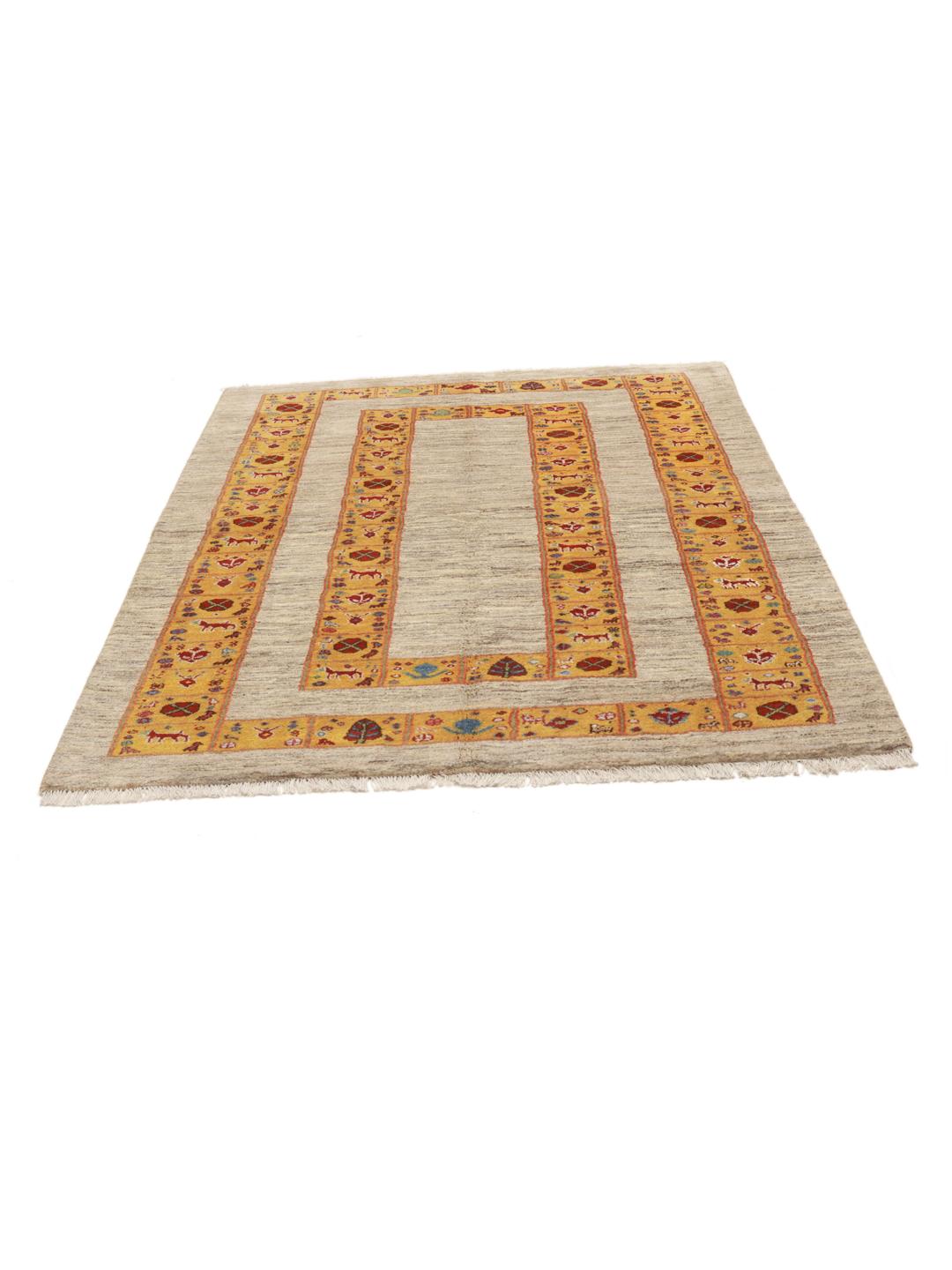
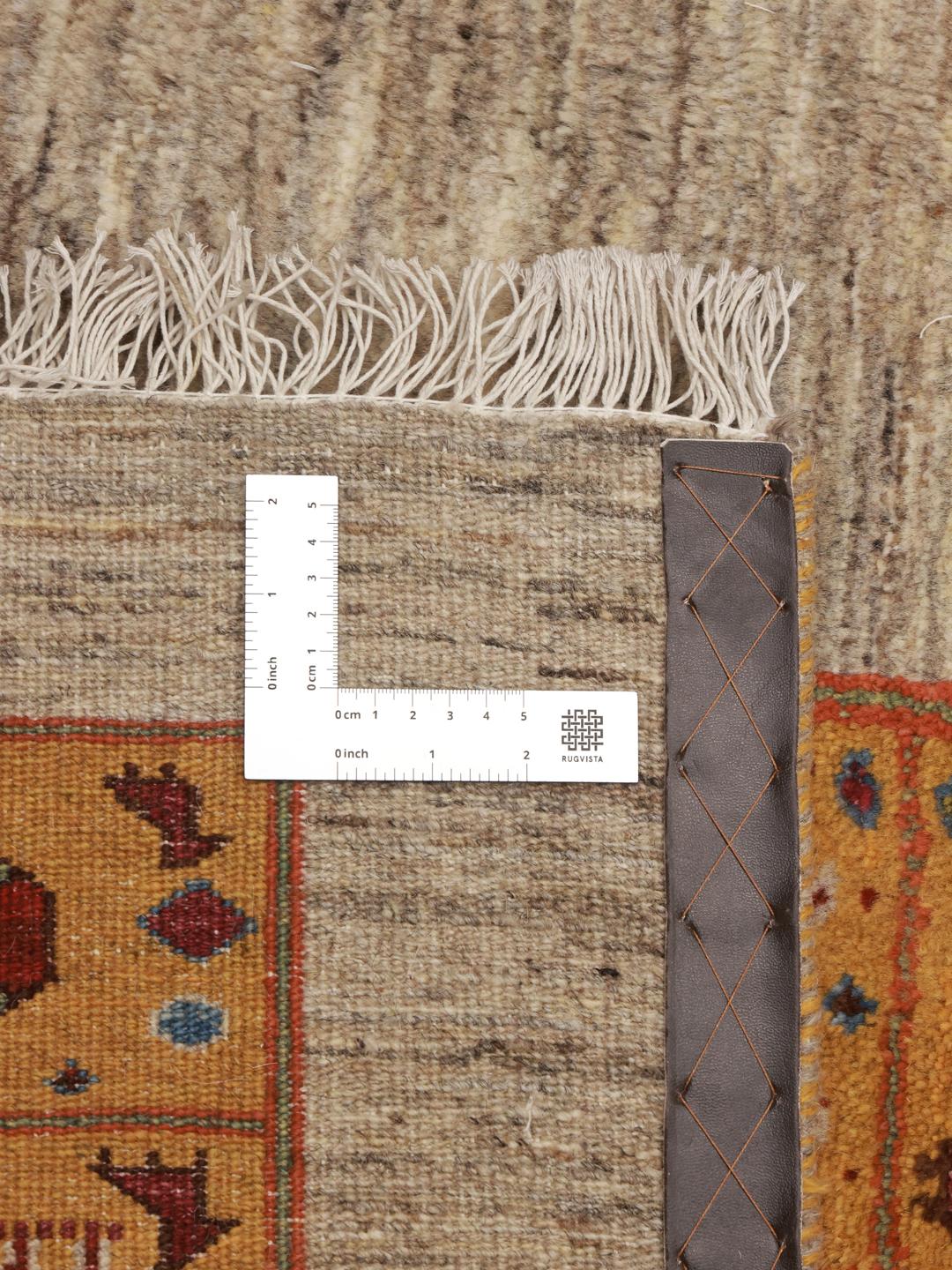
Design-wise, these rugs are celebrated for their spontaneous and expressive patterns. Unlike more rigid urban designs, Loribaft rugs often feature open spaces and playful, folk-art inspired motifs like birds, trees, and domestic animals. The borders are particularly significant, often acting as a frame for the central story being told. This specific rug showcases a beautiful interplay between a neutral, textural field and the vibrant, storytelling borders that define the tradition.
Collecting a Loribaft rug is an opportunity to own a piece of living history. These rugs are highly regarded for their cultural authenticity and the individual spirit of the weaver. Because they are not produced from a static blueprint, each rug is a unique record of a moment in time, representing a skill set passed down through generations. To own one is to preserve a tradition of nomadic artistry that remains as relevant and beautiful today as it was centuries ago.