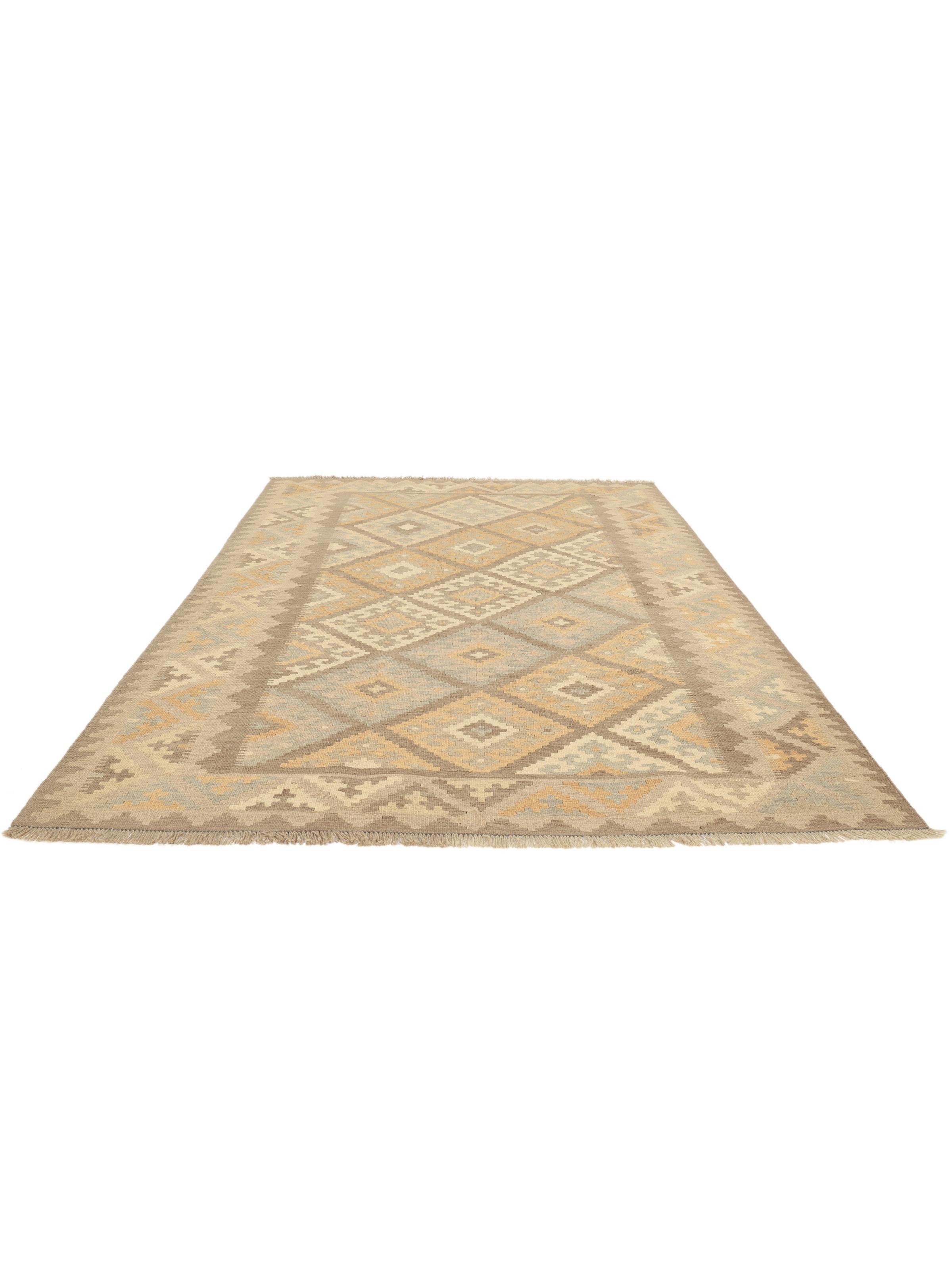
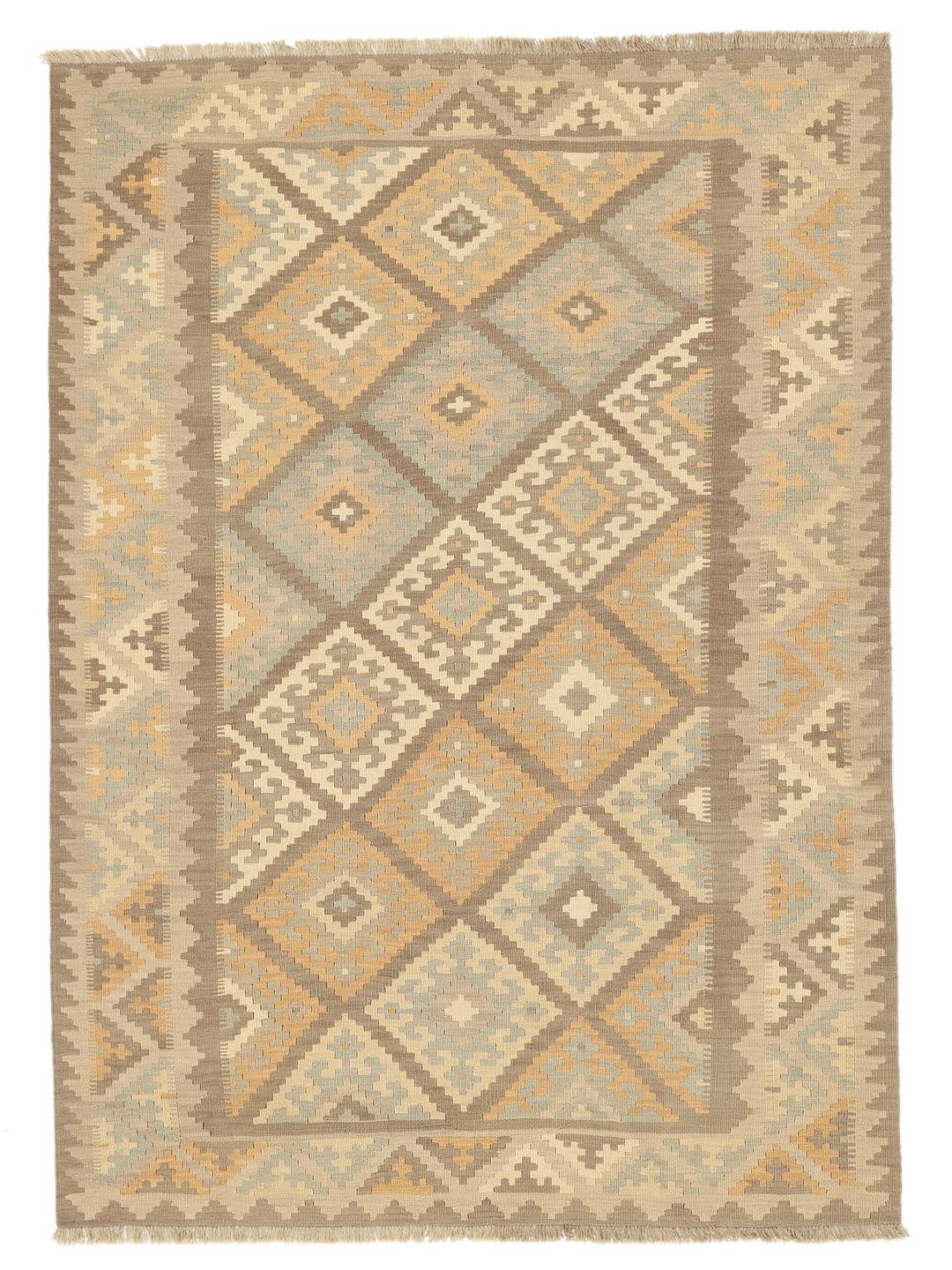
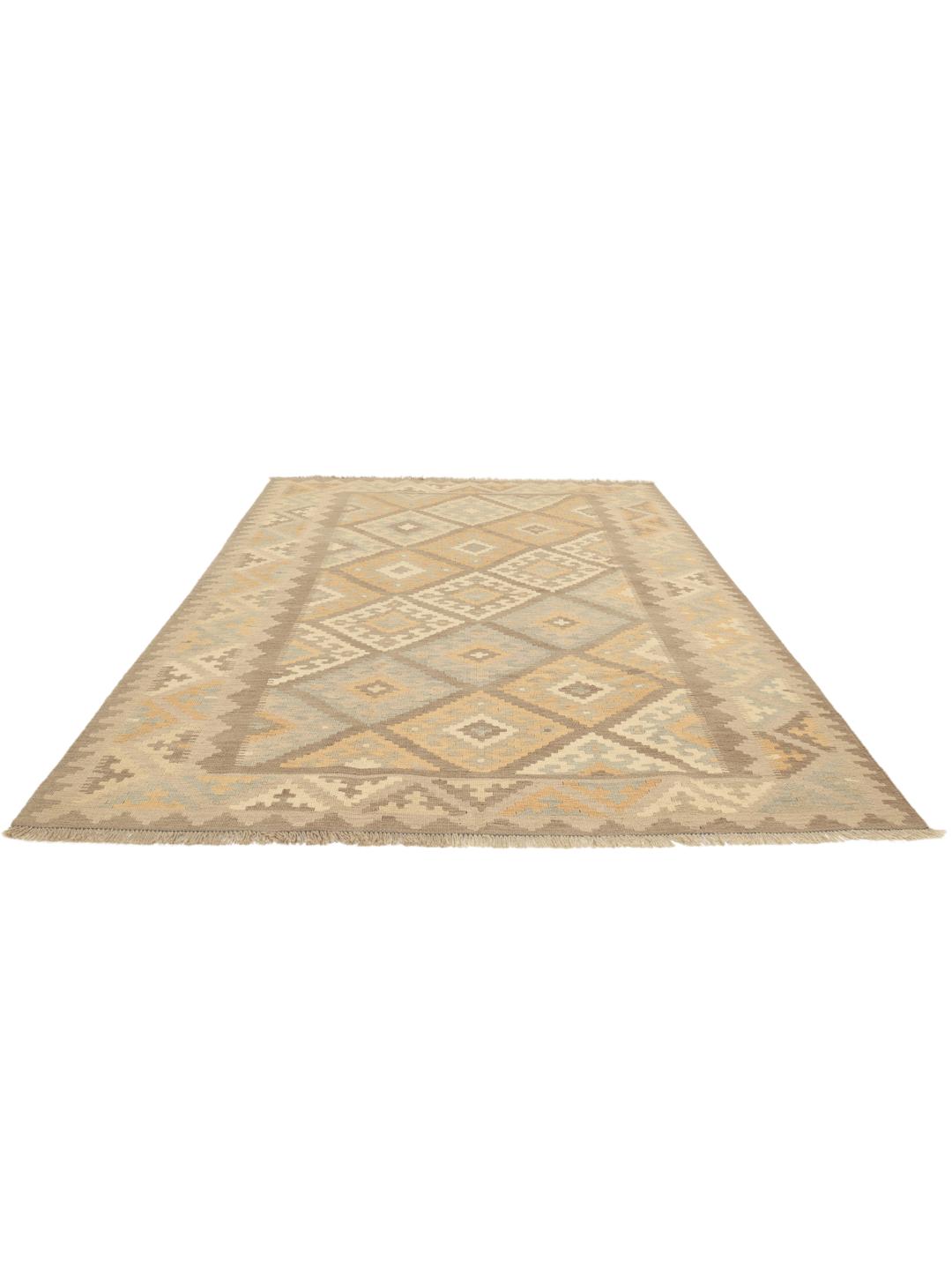
The Ghashghai kelims originate from the nomadic tribes of the Middle East, a region with a deep and storied history of textile production. These tribes, known for their migration across diverse landscapes, developed a distinct weaving tradition that reflects their environment and cultural identity, creating rugs that served as both essential shelter items and expressions of artistic heritage.
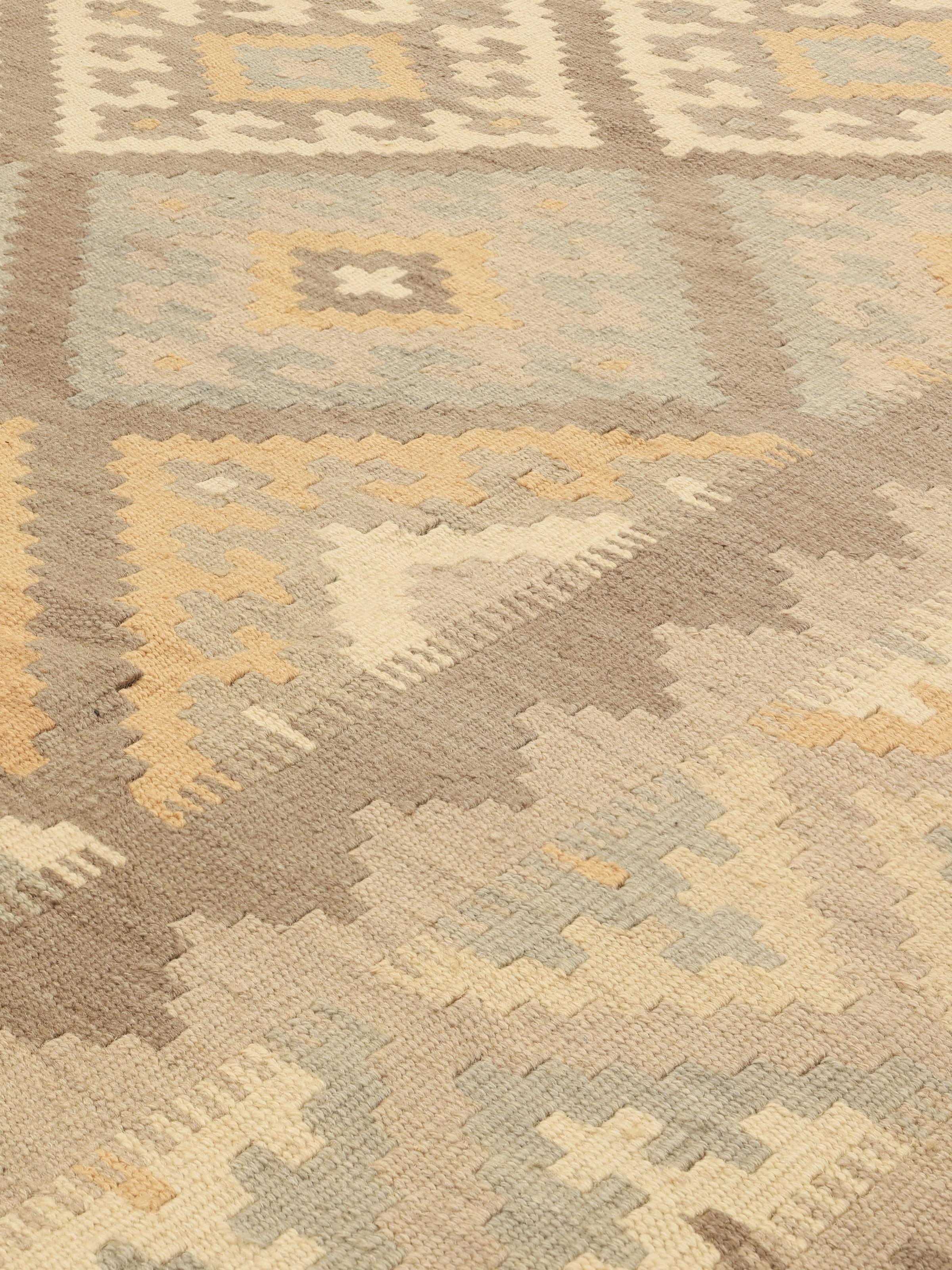
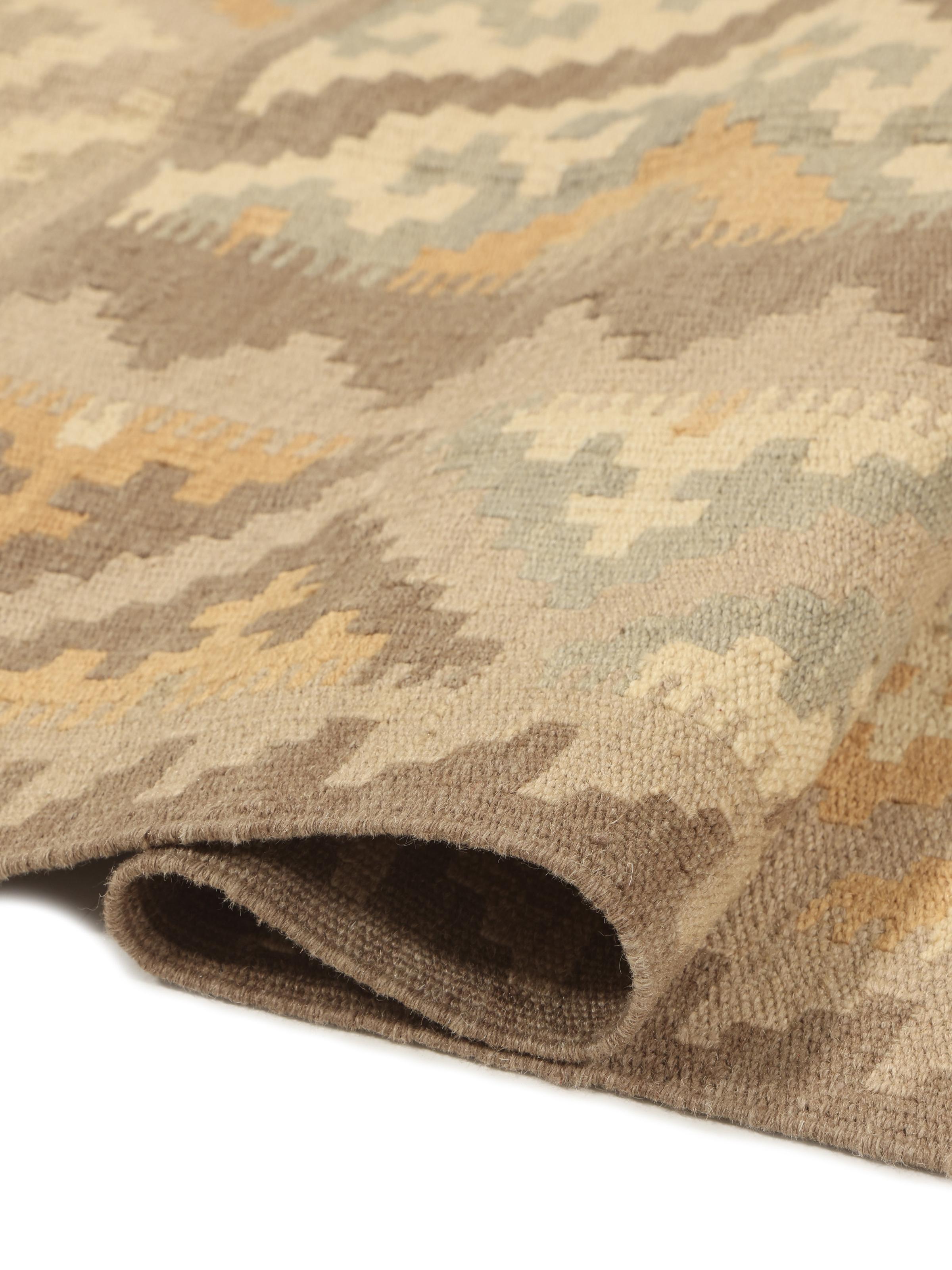
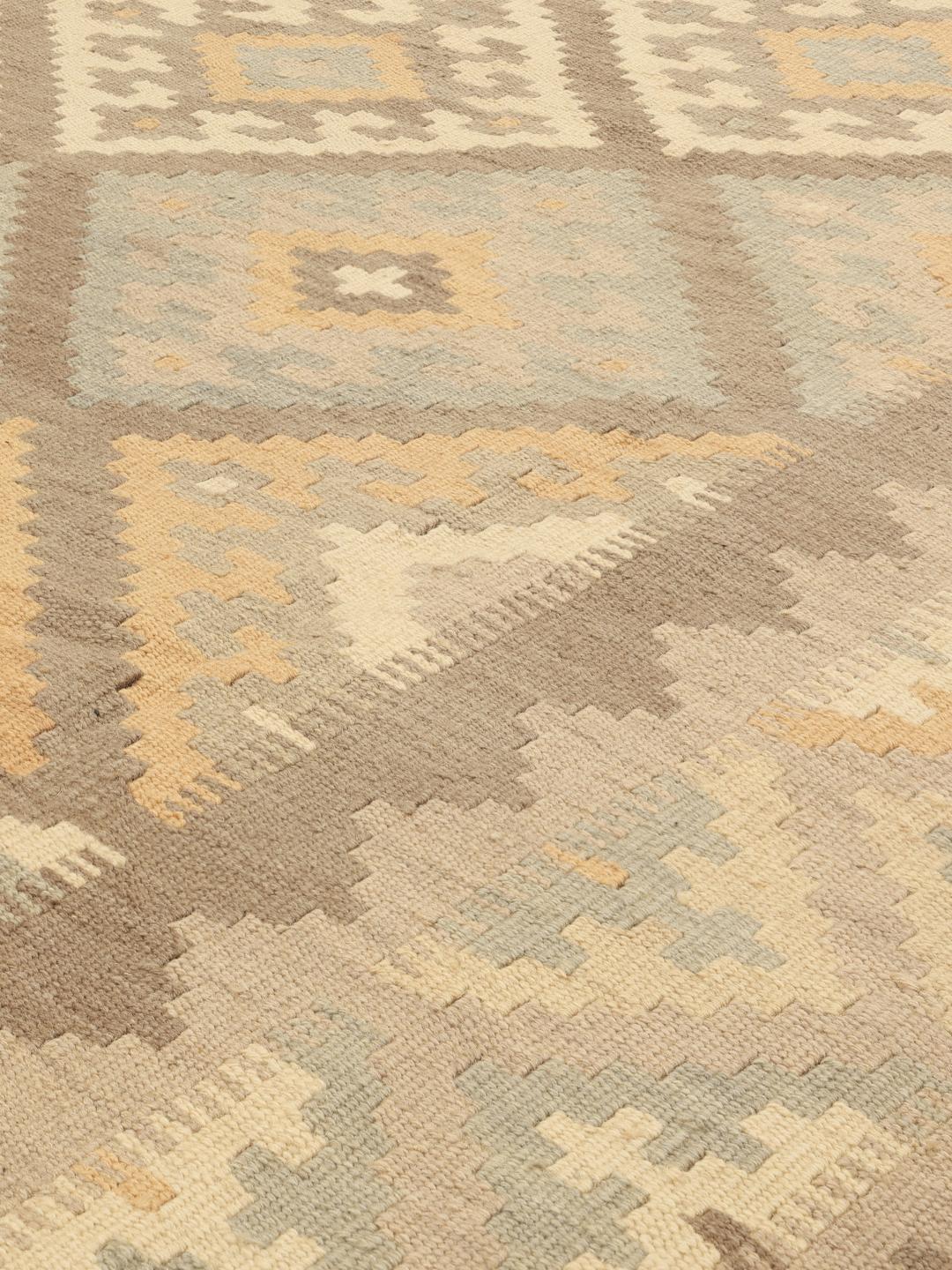
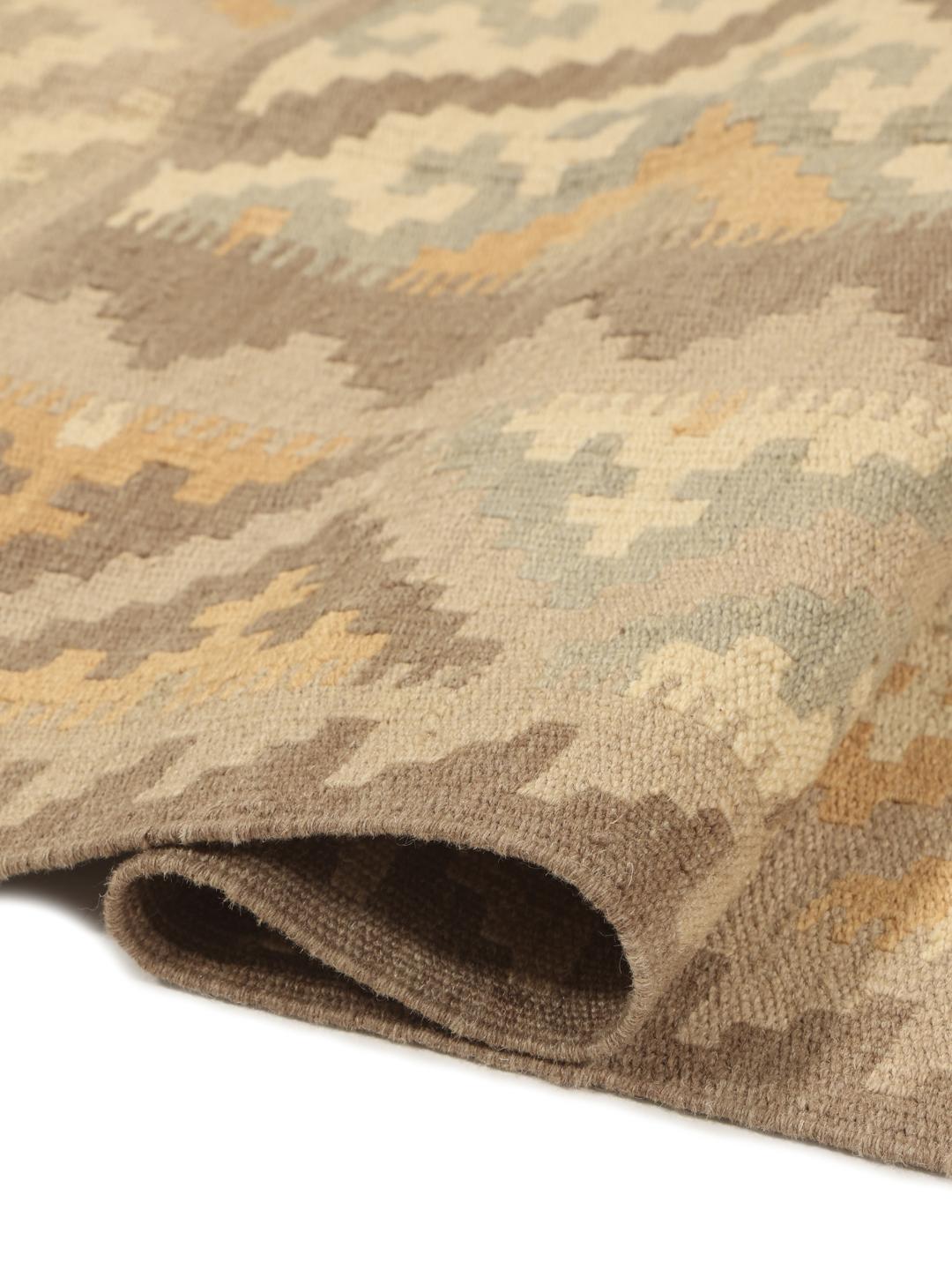
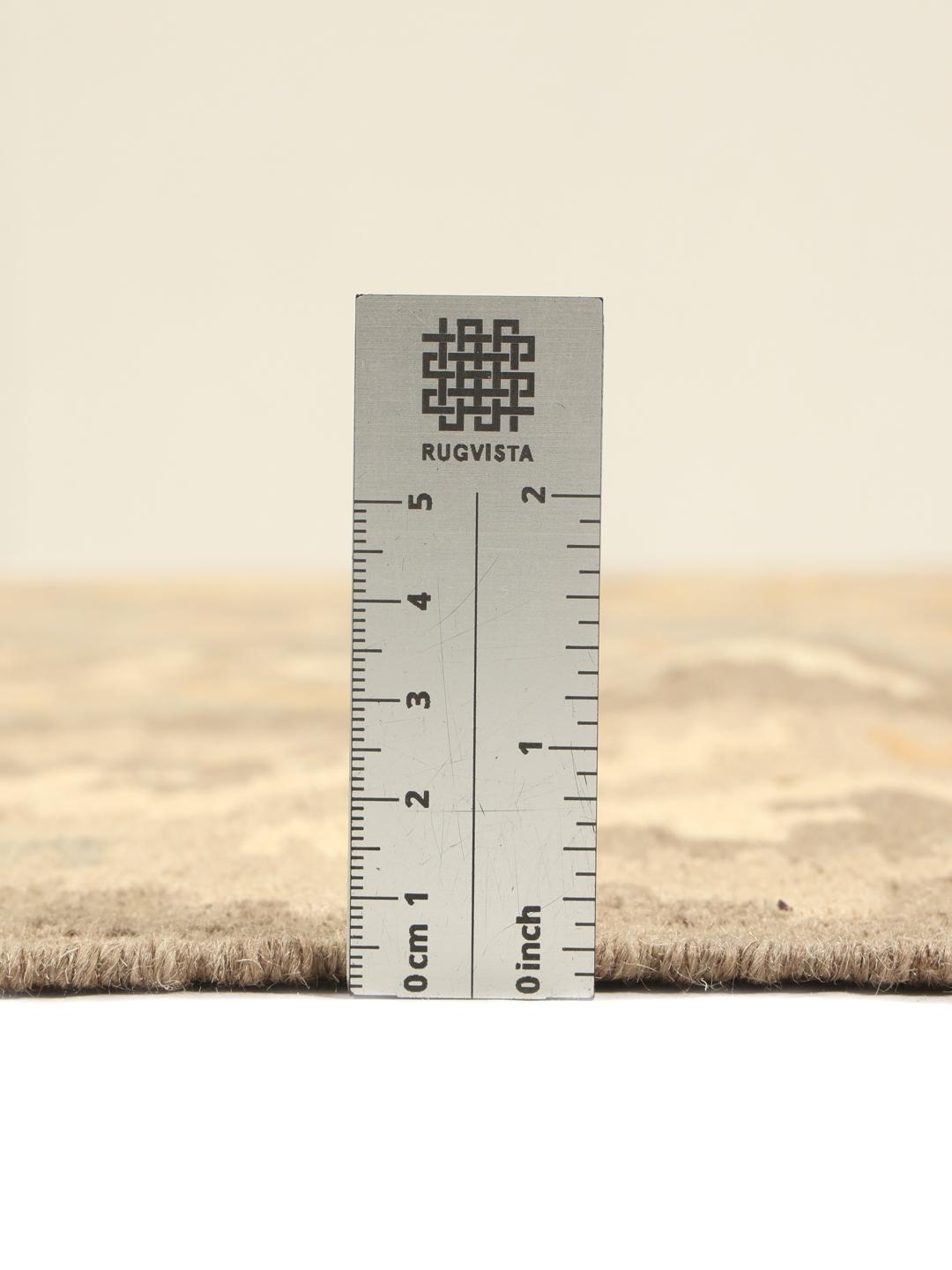
A kelim is a flat-woven rug, meaning it lacks a pile, which is achieved by interweaving the warp and weft threads to create a smooth, tapestry-like surface. This technique allows for sharp, crisp geometric designs that are iconic to the region. The lack of pile makes these rugs highly versatile, lightweight, and durable, perfect for the nomadic lifestyle where they were frequently moved and used in various ways.
The visual language of Ghashghai textiles is defined by bold geometric shapes, such as diamonds, medallions, and stylised floral motifs. These patterns are often arranged in a repeating grid or a central focal point, framed by intricate borders that represent the weaver's connection to their tribal history. The use of natural dyes often results in the soft, harmonious colour transitions seen in this piece.
Owning a Ghashghai kelim is more than just acquiring a floor covering; it is an investment in a living tradition. These rugs are highly valued by collectors for their authenticity and the human story woven into every thread. By bringing this piece into your home, you are preserving the legacy of the weavers who dedicated their lives to mastering this complex and beautiful craft.