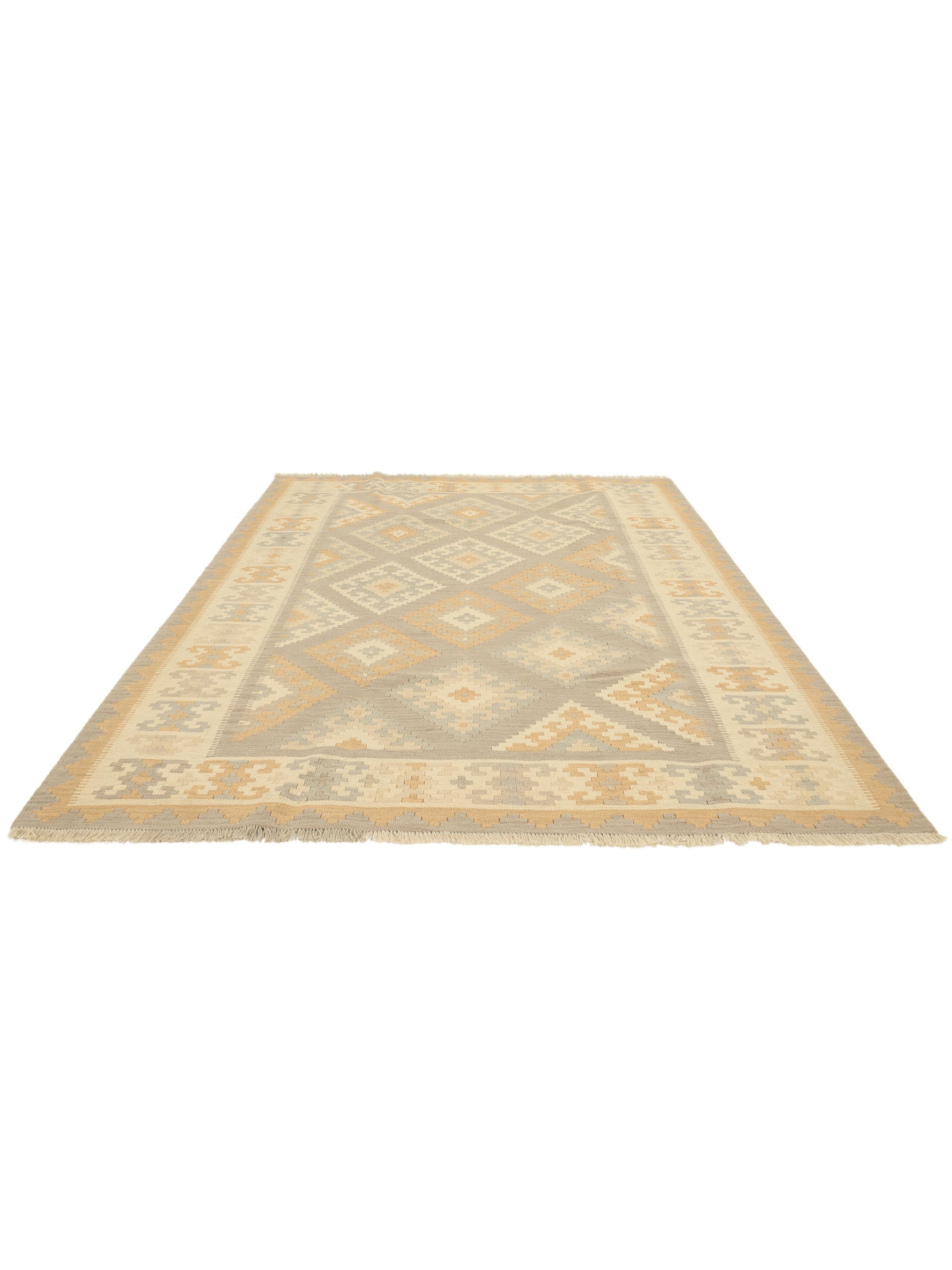
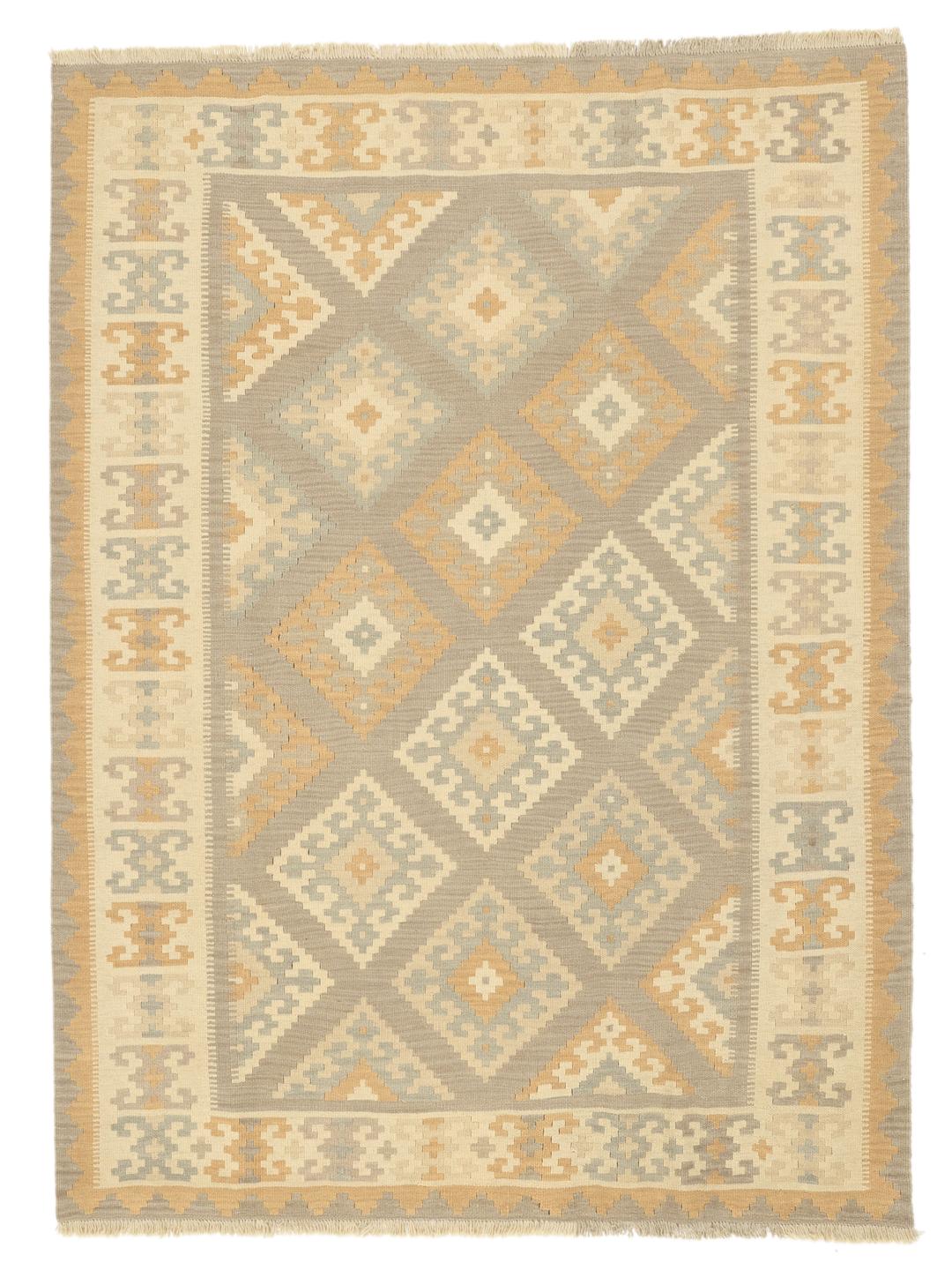
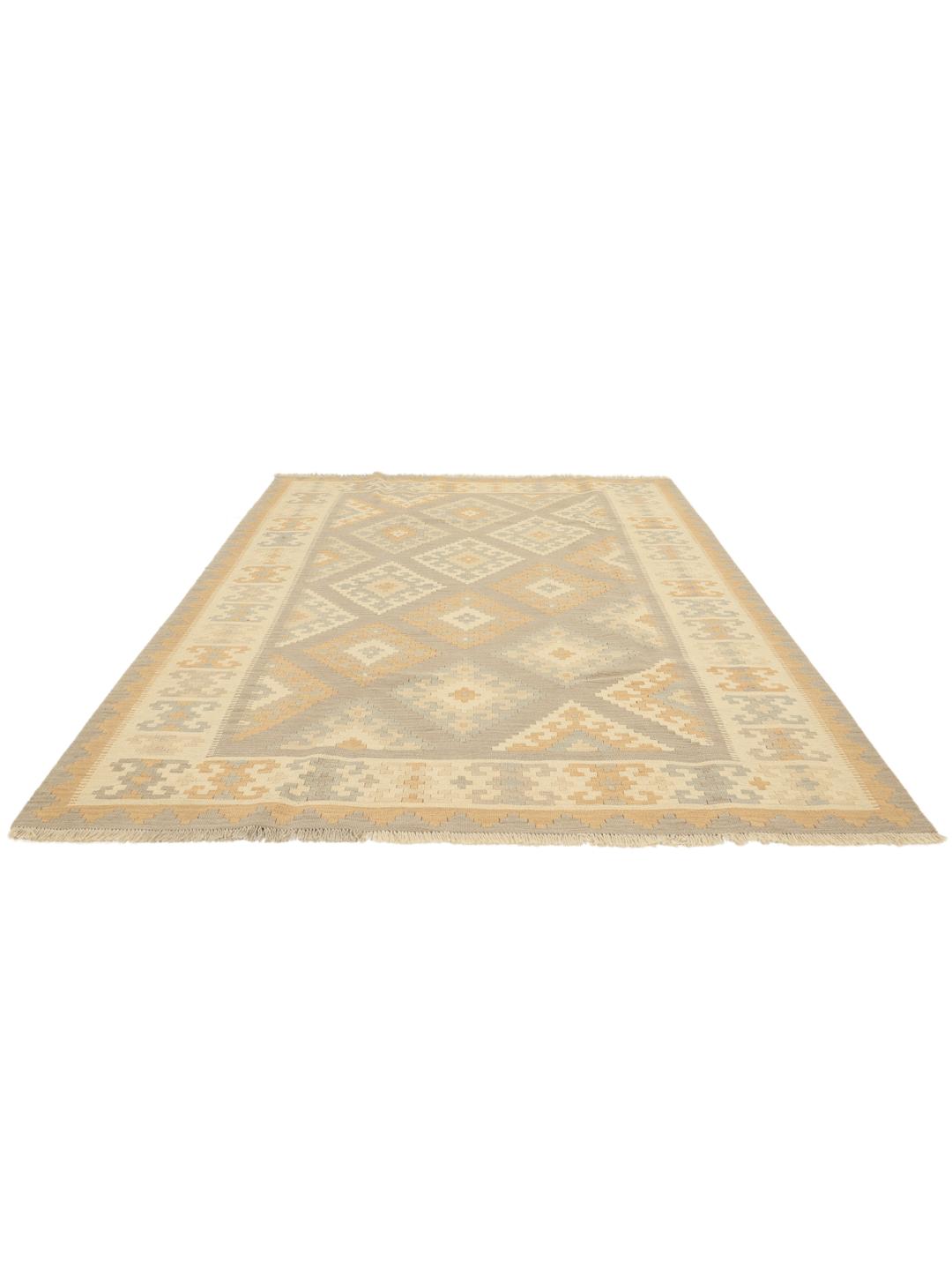
The Kilim Ghashghai rugs emerge from the storied weaving traditions of the nomadic tribes in the Middle East. These tribes have long practised the art of flat-weaving, a technique developed out of necessity for creating durable, portable textiles that could serve as floor coverings, blankets, or tent bags during their seasonal migrations. This nomadic heritage is deeply embedded in every rug, reflecting a lifestyle that values both functionality and artistic expression.
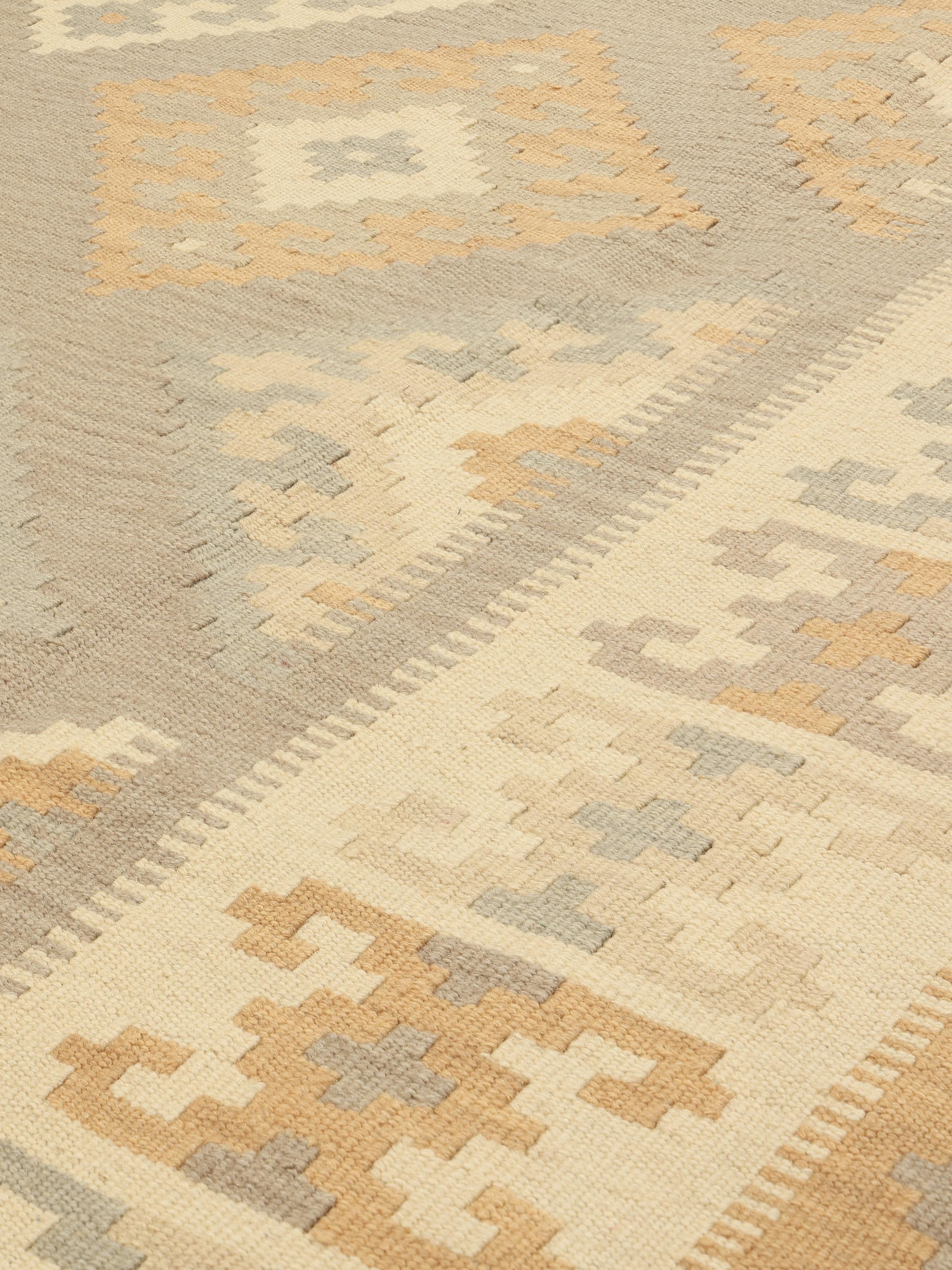
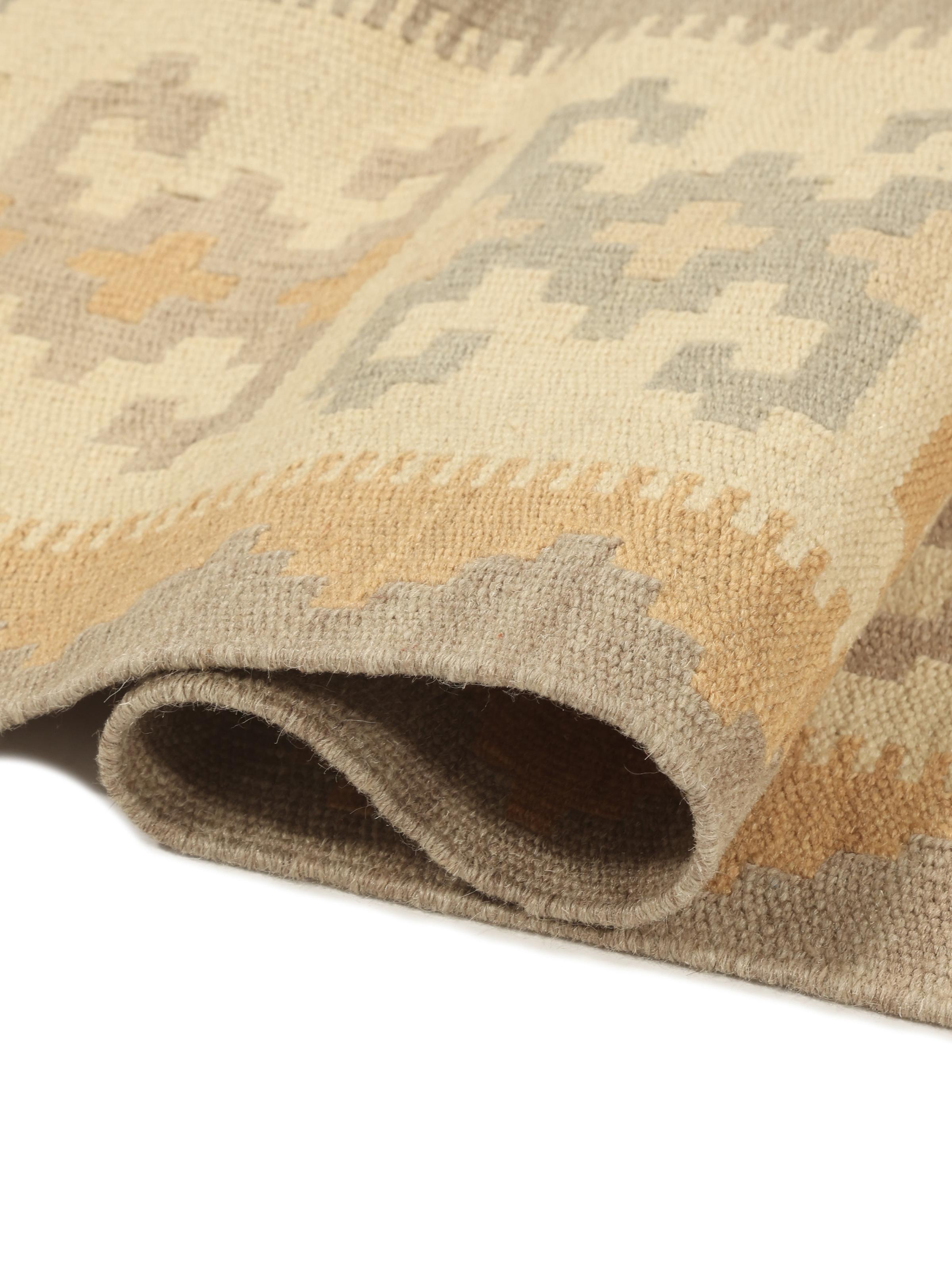
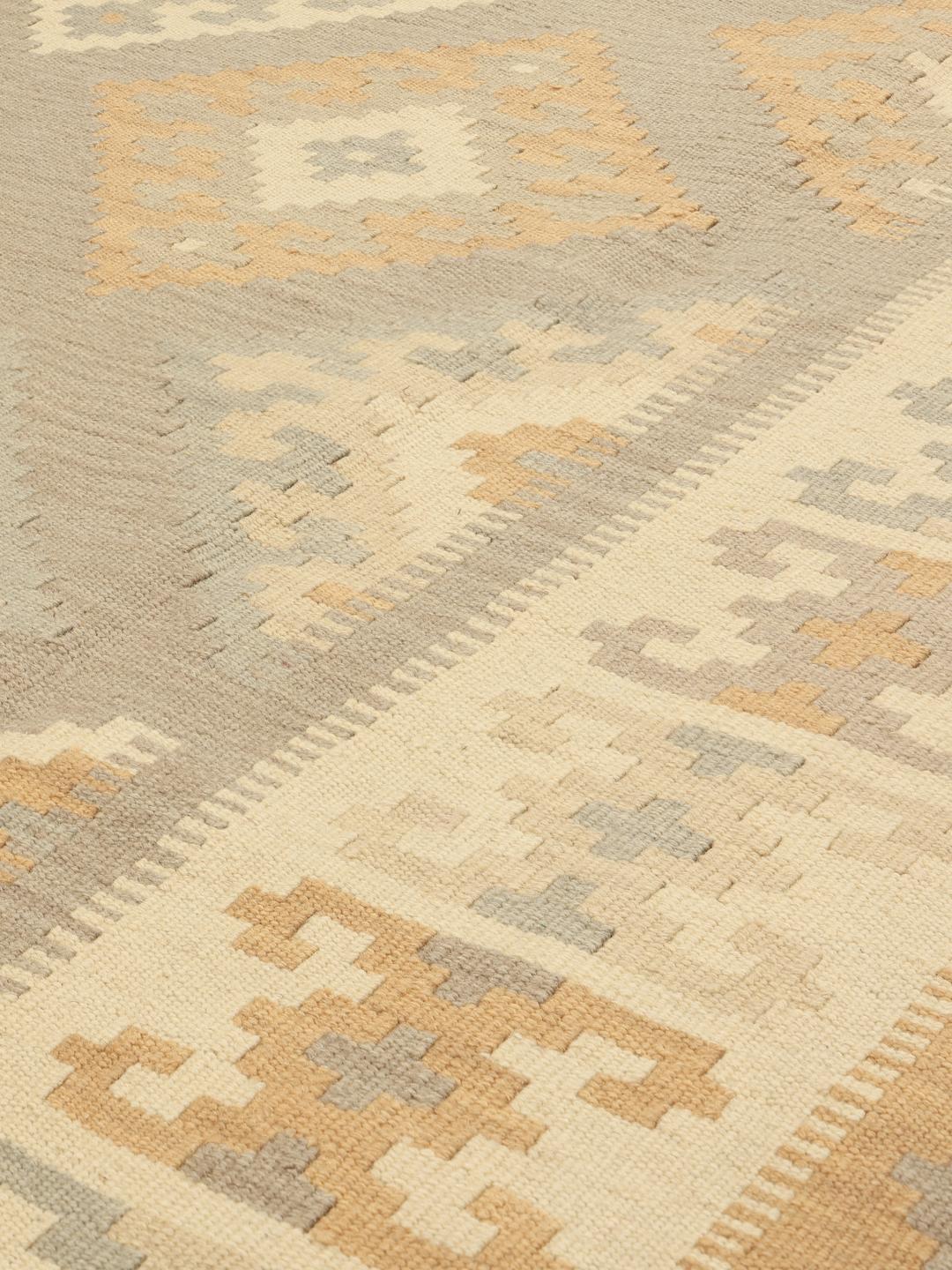
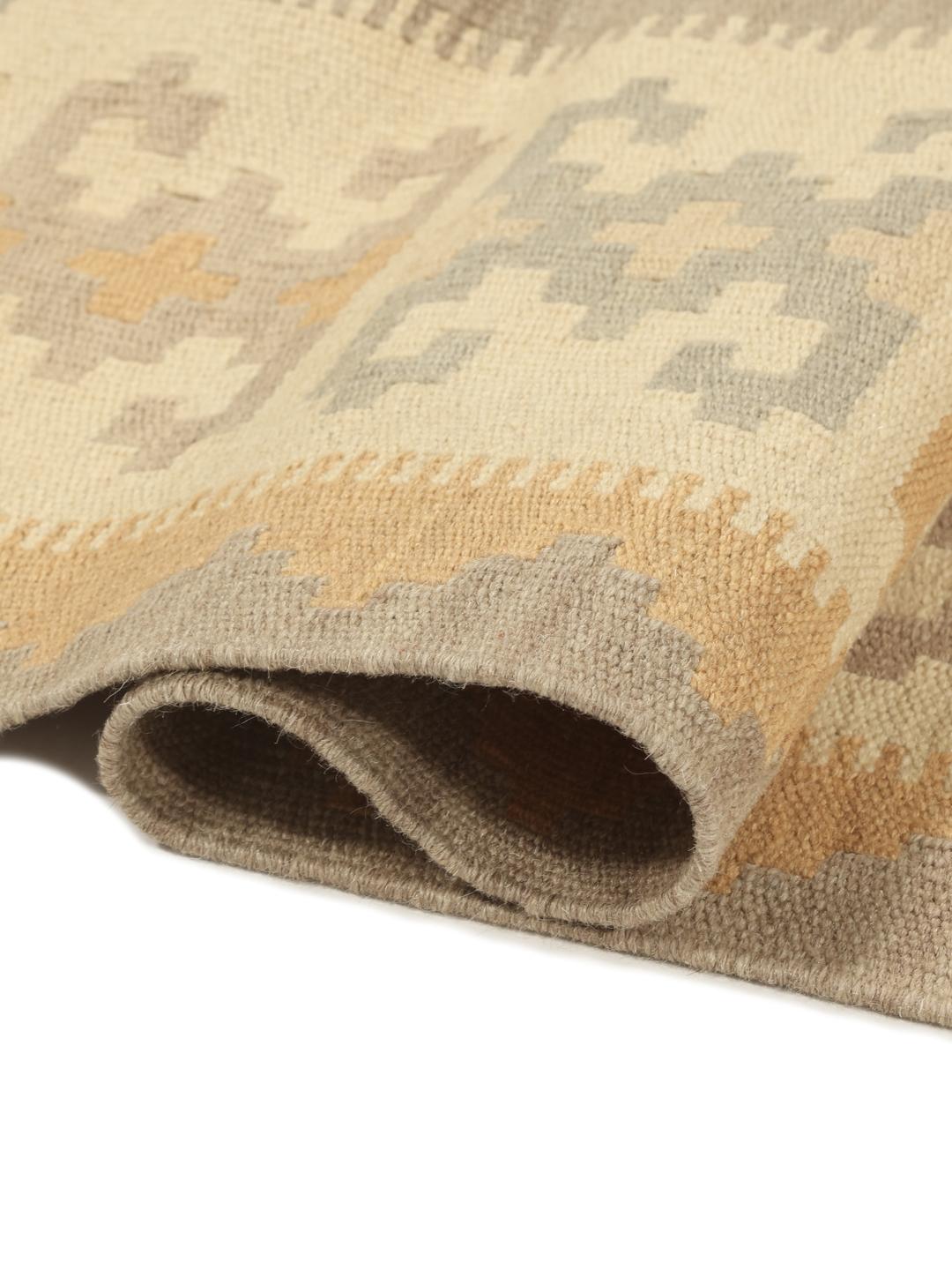
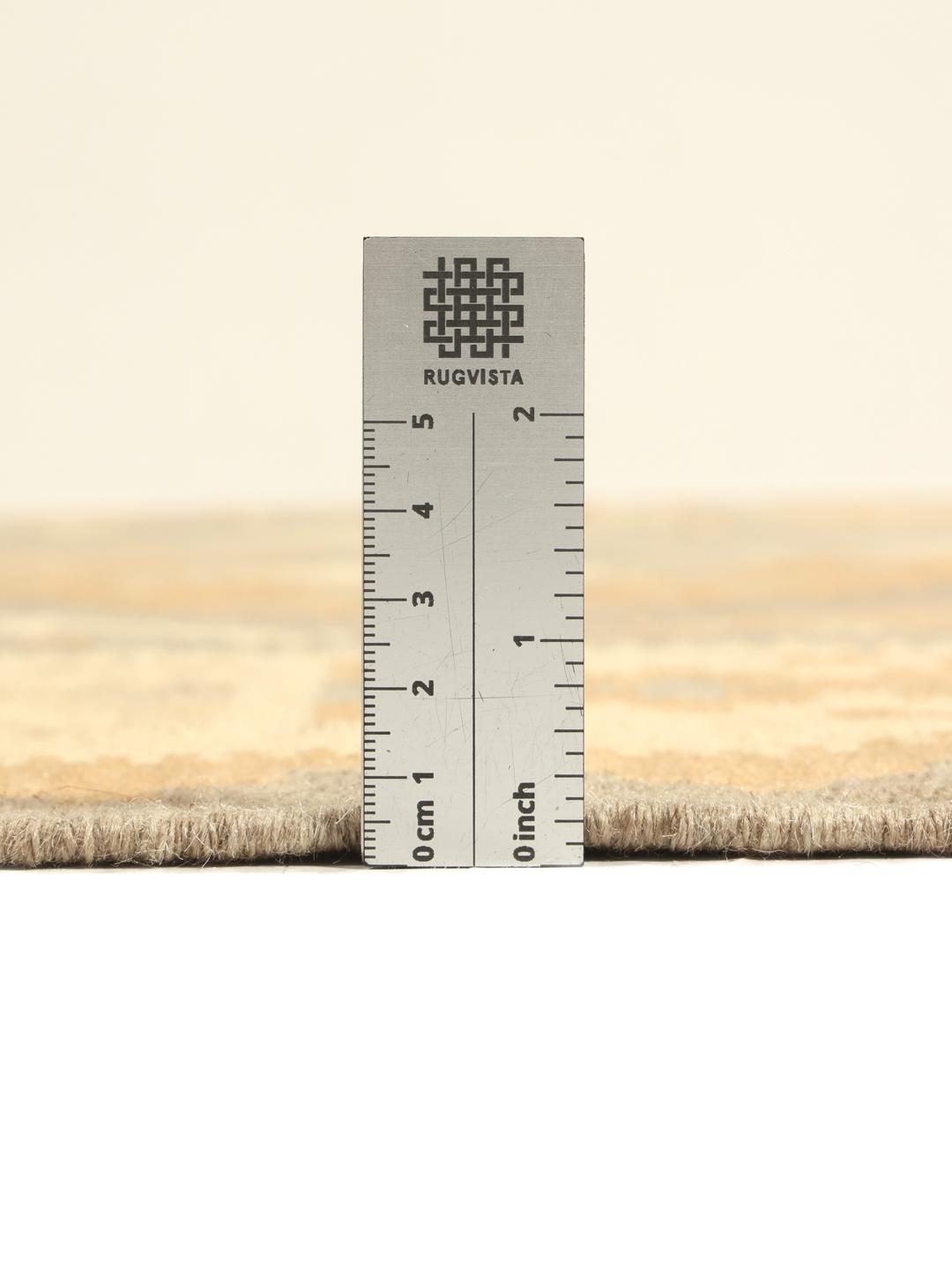
A Kilim is defined by its flat-woven construction, meaning it is made without a pile. Instead of knotting individual strands of wool into a foundation, the artisans interweave the warp and weft threads to create the pattern directly. This method results in a reversible rug that is lightweight yet incredibly strong, making it a perfect example of how technique directly influences the performance and look of a textile.
The visual language of the Ghashghai style is famous for its bold, geometric motifs. Diamonds, triangles, and stylized floral elements are common, often arranged in rhythmic, balanced patterns that reflect the natural surroundings of the weavers. The use of natural dyes and earthy, neutral colours is a hallmark of this tradition, allowing the intricate, angular designs to take centre stage without the need for bright, artificial colours.
Owning a Kilim Ghashghai is an opportunity to connect with a legacy of craftsmanship that has survived for centuries. These rugs are highly valued by collectors for their authenticity and the human story behind each design. By choosing this piece, you are acquiring a work of art that represents a unique cultural narrative, preserving a historic craft while bringing a warm, grounded, and sophisticated aesthetic into your modern home.